 |
For the first time in 300 years, politicians managed to interfere with press freedom in the UK, producing the foundations for a new watchdog, which will essentially have the power to “decide what is factual and what is true”, reminding dangerously of the infamous Ministry… |
Category: News
-
Farewell to the freedom of speech in the UK
-
Dealing with rejection from your ‘un-family’ of origin

Some families are not close and supportive, were never set up to be close and supportive. Rather, they are dysfunctional. This is not pessimism, but a hindsight view of families based on research that some family conflict is perpetual. It has no resolution, because… -
Cyprus government’s rejected seizure of private bank accounts may still set off ‘systemic consequences’ across Europe

If you still believe European-style socialism is the correct course for America, as President Obama and progressive Democrats seem to, what is currently happening in Cyprus – and what could soon take place across the Eurozone – ought to finally convince you of the fallacy… -
Google expands its high-speed Fiber service to second Kansas location

-
Amazon is reportedly preparing to launch a subscription music service

-
Motorola X Phone won’t have customizable hardware after all

Remember that awesome rumor about the Motorola X Phone’s customizable hardware we told you about less than 12 hours ago?! Well, turns out it was just a rumor. Sources close to the development of the X Phone have
completely destroyed our high hopesdebunked that rumor, saying it will be very unlikely for the X Phone to launch with customizable hardware.But, there’s a silver lining to this. The X Phone isn’t the only device Motorola will ever launch again, so the same sources say there is a possibility that Moto will release a phone at some point in the future that does feature user customized hardware. Google wants Motorola devices to be more innovative, so hopefully we don’t see this idea scrapped before it’s tested in a few consumer devices.
source: Phone Arena
Come comment on this article: Motorola X Phone won’t have customizable hardware after all
Visit TalkAndroid for Android news, Android guides, and much more! -
Google’s Play Store Android App May Soon Get Another Facelift
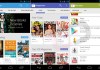
Google’s been awfully busy these past few weeks, but it seems that between sunsetting Reader (and pissing off most of the Internet in the process) and rolling out new services like Google Keep, the company has been working on a redesigned version of the Google Play Store for Android. That’s what the folks at Droid-Life claim, anyway. They appear to have obtained and installed the unreleased 4.0 version of the Google Play Android app ahead of a wider release.
The Play Store’s current mobile design first rolled out in July 2012, and while Google has seen fit to rebrand and tinker with a few things since then, more than a few bits look essentially the same as they did back then. If this is the real deal (and I strongly suspect that it is), then Google Play is about to get quite a facelift. Gone are the gloomy blacks and dark grays that used to permeate the app. This new version returns to a lighter color scheme that’s highly reminiscent of the old Android Market days. On the whole, the new app also looks much cleaner and more spacious than the Play Store that so many of us have gotten used to.
It’s not hard to see some similarities between the updated Play Store app and the Google Now design — there’s a more pronounced focus on bigger images and italicized text. What’s more, individual app listings are separated into little cards rather than being displayed in a more traditional list, yet another sign that Google’s Play Store developers are cribbing UI flourishes from Google Now. If anything, the unification of design between these two services makes me wonder just how far Google plans to go here. After all, Google Now and the Play Store are cornerstones of the Android experience. It wouldn’t be a huge shock to see the next version of Android take a similar approach to aesthetics.
At this point there’s no firm word on when (or if) this update is slated to go live, but it’s very possible that Google could wait until I/O to officially pull back the curtain on a redesigned Play Store app. In the meantime, major mobile players like Facebook are exploring ways to bypass the Play Store completely and push new updates to users, so here’s hoping Google pushes the update out before others follow suit.
-
Sprint allowing MNVOs to sell modified Sprint Android handsets

Sometimes, a customer doesn’t want to go with one of the big name carriers like Sprint or Verizon. Smaller MNVOs are popular alternatives to the larger (usually contract-centric) carriers. Both options have their place with consumers, but in many situations, MNVOs don’t have a good enough device selection to sway as many costumers. Well, Sprint is looking to give them a hand with a new program that will allow MNVOs to modify certain Sprint handsets to resell to customers.
To start off, Sprint is using three handsets to kick off the program. The LG Optimus G, the LG Mach, and the Sprint Flash will be the first three devices to be offered, and all three devices do an excellent job of covering entry level phones up to high end phones. Sprint does also mention that other phones will eventually be added to the program.
The devices can also be loaded with Mobile ID and Mobile Zone, which are the generic versions of Sprint ID and Sprint Zone. Those aren’t major features, but it’s definitely an extra tool that will surely help some MNVOs push a few more phones. No word on exactly when any of these reference devices are going to hit shelves, but it’s definitely something to look forward to when deciding on your next carrier and device. Hit the press release below for the full details.
Sprint Introduces Custom Branded Device Program, Enabling MVNOs to Custom-Brand White-Label Android Phones
For the first time, MVNOs have greater access to completely de-branded devices from Sprint
Coupled with white-labeled Mobile ID and Mobile Zone products from Sprint, MVNOs can extend their brand elements to end users more efficiently
OVERLAND PARK, Kan. (BUSINESS WIRE), March 20, 2013 – As the proliferation of smartphones continues to grow, Sprint (NYSE:S) Emerging & Wholesale Solutions today introduced the Custom Branded Device Program. Through the program, MVNOs will have greater, and potentially quicker, access to a large selection of completely de-branded marquee Android handsets out of Sprint and Boost Mobile device inventory with volume pricing included.
Select Android devices can be automatically modified through Mobile ID and Mobile Zone, giving MVNOs the ability to extend their own brand directly to end users through over-the-air activation. Currently, Sprint has three devices available for this program – LG Optimus G, LG Mach and Sprint Flash. Several additional devices are expected to be added to the lineup by the end of this month.
Industry analyst firm Strategy Analytics reported in January that 70 percent of the world smartphone market share belonged at the end of 2012 to Android Meanwhile, in early February, research firm comScore released its quarterly U.S. smartphone market share numbers, which showed Android leading in market share with 53.4 percent of the total smartphone market.
“The Android operating system provides such incredible flexibility and supply chain economy of scale that, when coupled with the Sprint Mobile ID and Mobile Zone products, can now extend a value and a new branding opportunity to our wholesale customers,” said Bill Esrey, vice president, Emerging & Wholesale Solutions at Sprint. “The Custom Branded Device Program enables our MVNO customers to extend a personal and direct relationship that transcends outside of the store walls, at Sprint’s volume pricing.”
Sprint continues its commitment to the “open” mobile ecosystem through open platforms Mobile ID and Mobile Zone, which are white-labeled variations of the popular Sprint ID and Sprint Zone applications. These platforms enable Sprint’s international and wholesale customers to replicate Sprint’s success with the retail versions of the same services – driving enhanced customer engagement and revenue growth opportunities for MVNOs.
- Mobile ID – Mobile ID delivers a complete mobile experience – centered on consumers’, students’ or businesses’ interests or favorite brands – including applications, widgets, ringtones and wallpapers, all in a couple of simple clicks. With more than 6 million downloads in the United States, Sprint smartphone users have already begun to harness the power of ID packs to create their own experiences while catering to different tastes and hobbies. Mobile ID enables personalization for the end user that offers access to a broad array of categories, allowing MVNOs to deliver a successful customized application to defined markets and customer segments.
- Mobile Zone – Mobile Zone provides a messaging gateway for end users to receive communication from their MVNO and enable customers with self-help services. Mobile Zone can enhance the user experience while improving MVNO-to-customer interaction. An interactive and relevant mobile application, Mobile Zone allows users who are always on-the-go a way to manage their account and discover new content anywhere and at any time.
About Sprint Nextel
Sprint Nextel offers a comprehensive range of wireless and wireline communications services bringing the freedom of mobility to consumers, businesses and government users. Sprint Nextel served more than 55 million customers at the end of 2012 and is widely recognized for developing, engineering and deploying innovative technologies, including the first wireless 4G service from a national carrier in the United States; offering industry-leading mobile data services, leading prepaid brands including Virgin Mobile USA, Boost Mobile, and Assurance Wireless; instant national and international push-to-talk capabilities; and a global Tier 1 Internet backbone. The American Customer Satisfaction Index rated Sprint No. 1 among all national carriers in customer satisfaction and most improved, across all 47 industries, during the last four years.Newsweek ranked Sprint No. 3 in both its 2011 and 2012 Green Rankings, listing it as one of the nation’s greenest companies, the highest of any telecommunications company. You can learn more and visit Sprint at www.sprint.com or www.facebook.com/sprint and www.twitter.com/sprint.
Come comment on this article: Sprint allowing MNVOs to sell modified Sprint Android handsets
Visit TalkAndroid for Android news, Android guides, and much more! -
Yahoo eyes major stake in YouTube alternative Dailymotion

-
Google Currents adds support for audio playback in app

With many people looking for replacement news readers after Google announced the demise of Google Reader, Google has struck while the iron is hot with another one of their products. They have added audio playback support to their Google Currents app for Android devices. According to Google’s list of new features in the news reader, audio playback will work with publications that enable audio. Control can be achieved both in app and via the status bar with audio easily launched using icons in a story. Along with the new audio features, Google Currents can now sync read state between devices and some bug fixes were included in this release.
If you haven’t tried Google Currents or want to update, use the download link below.
Come comment on this article: Google Currents adds support for audio playback in app
Visit TalkAndroid for Android news, Android guides, and much more! -
Is Amazon Working on a $99 7-Inch Kindle Fire HD? Rumors Say Yes

Word around the rumor mill has Amazon pegged as creating a 7-inch Kindle Fire model that would sell for $99. If rumors are true, it would carry the same TI processor as its predecessor and come with a 1280×800 display. With Amazon slashing prices on its current models, one can expect to see a new version coming soon. While a sub-$100 seems to be a bit on the low side, Amazon has been known for its cheaper tablets with its forked version of Android.
While it may not entice those looking for a more robust tablet like the Nexus 7, it would certainly appeal to those who don’t want to spend a lot. This would make an enticing entry in a market flooded with tablets from unknown manufacturers found at your local pharmacy or Bed, Bath & Beyond stores. IDC Research Director on tablets, Tom Mainelli, believes this to be a reasonable move. He was quoted to say:
“The infrastructure is definitely in place for Amazon to go even lower. If they can sell the product at roughly what it costs to build, that fits their long-term vision to make money selling you content on that device. It’s entirely possible – physically possible – to create a device that costs $99, particularly at the scale that Amazon would do it.”
With TI getting out of the chip game, Amazon could potentially buy up the remaining stock for a bargain, which could help them in achieving a cheaper Kindle Fire. With Amazon shipping 4.8 million Kindle Fires in the the 4th quarter of 2011, and roughly the same in 2012, they’ve moved a decent amount of tablets. This $99 tablet could give them the opportunity to move even more, however, Amazon isn’t saying anything. We’ll just have to wait and see.
source: TechCrunch
Come comment on this article: Is Amazon Working on a $99 7-Inch Kindle Fire HD? Rumors Say Yes
Visit TalkAndroid for Android news, Android guides, and much more! -
UK to See Quad-Core Galaxy S 4 Instead of Octa-Core Version

We knew that the Galaxy S 4 would have two different versions coming out. One will house the new Exynos Octa-core processor and the other will carry the quad-core Snapdragon 600 series. While some expected, and others hoped, that the UK would see the Exynos version, that appears to not be the case. According to Samsung the UK will see the Snapdragon variety. When questioned by various UK blogs they were quoted to say:
“Samsung Galaxy S4 is equipped with a 1.9GHz Quad-core AP or a 1.6GHz Octa-core AP. The selection of AP varies by markets … In the UK, the Galaxy S4 will be available as a 4G device with a 1.9GHz Quad Core Processor.”
While most of you may not notice the difference in your day to day use of it, it certainly does deflate the “my phone can beat up your phone” argument. For those of you across the pond, does it affect you decision to buy the device? Sound off below.
source: Eurodroid
Come comment on this article: UK to See Quad-Core Galaxy S 4 Instead of Octa-Core Version
Visit TalkAndroid for Android news, Android guides, and much more! -
Google Play Store Version 4.0 Gets Leaked and Previewed

Just like other Google apps (and Android has a whole) the Play Store has been going through a constant metamorphosis. The last major makeover for the Play Store was back in July of 2011 with subsequent tweaks since. It appears that it will be seeing another major facelift here soon. The folks over at Droid-Life gave everyone a taste of what’s to come with Google Play 4.0. As you’ll see from the images the UI has been redesigned with a more holo-esque theme in mind. The shift gives the Play Store a cleaner and more appealing look. Images are more prominent and eye-catching while text is used sparingly.

We have no idea when we’ll see this new version. Maybe we’ll see it unveiled at Google I/O this year, but we may see it sooner as the Play Store updates have always been independent of the big OS announcements. Either way its an update to look forward to as it brings some much needed polish to an app we constantly use.
source: Droid-Life
Come comment on this article: Google Play Store Version 4.0 Gets Leaked and Previewed
Visit TalkAndroid for Android news, Android guides, and much more! -
Sorry Google; you can Keep it to yourself
Google today launched Keep, an app that allows you to save things, clip stuff from the web, hoard notes and what not and put them all onto your Google Drive. Yup, you guessed it — it is an imitation to Evernote and many other such applications. It is a good thing that Google has decided to compete with the likes of Evernote — it validates their market.
It might actually be good, or even better than Evernote. But I still won’t use Keep. You know why? Google Reader.
I spent about seven years of my online life on that service. I sent feedback, used it to annotate information and they killed it like a butcher slaughters a chicken. No conversation — dead. The service that drives more traffic than Google+ was sacrificed because it didn’t meet some vague corporate goals; users — many of them life long — be damned.
 Looking from that perspective, it is hard to trust Google to keep an app alive. What if I spend months using the app, and then Google decides it doesn’t meet some arbitrary objective? Evernote has my data and frankly, I’m glad to pay them to keep it because they are who they are. One of the reasons I use Evernote is because it is their only thing. (For now.) Evernote is focused on making the service better. And it keeps that focus every year.
Evernote is like Derek Jeter, playing shortstop and trying to win every day. Google? It is the digital Mr. Ripley.
Sorry Google, but you might not realize that you are acting like the company you wanted to replace: Microsoft. The Barons of Redmond used to float products into the market — smart displays and weird stuff — that companies like Samsung and LG would put out in the market, only to yank them later. In the end, I stopped believing in Microsoft and shifted my dollars and attention to other brands.
And by the way – how is this app strategic for you guys and Reader is not? A little clarity would certainly be appreciated.
How about a pledge? If you build it, we use it, and you use our personal data to make your other products better or your ad sales executives richer, then you will keep it around.
Image courtesy of Flickr user Dano

Related research and analysis from GigaOM Pro:
Subscriber content. Sign up for a free trial.- The 2013 task management tools market
- How consumer media will change in 2013
- Social 2013: The enterprise strikes back


-
Who knew? This is Microsoft’s big gaming week

While we all wait on the edge of our seats for the Xbox 720, or whatever the next-generation console will be called — and I doubt it will be 720 — there is a lot more going on in the Microsoft gaming world than there perhaps should be, given that E3 is getting closer. Some is, of course, pure speculation, which seems to drive the tech industry these days. Some is purported leaks of console information. And then, low and behold, some is actually real information.
I have no desire to discuss rumors — just tell me when you actually know something. I also do not plan on touching a leaked document because who knows if it’s real? What I can tell you is what actually is real.
First, Microsoft’s Fuse Labs today announced the latest version Kodu Game Lab. The company claims the project is “a complete 3D game development environment designed to let kids create their own 3D games”. Microsoft describes the engine thus: “Kodu is built around a custom visual programming language that makes it easy for everyone to learn how to program”.
The new version of Kodu supports touch as an input, new water game characters, programmable control for some of the world settings and programmable control of some character settings.
Kodu is not all that is going on in the Microsoft gaming universe this week, though. This also marks the PAX East show in Boston. Larry Hryb of Xbox Live lets it be known that visitors will get to preview some of the upcoming hot Xbox games at the show.
For instance, Halo 4’s Castle Castle Map Pack will receive its first playable demo, as will Gears Maxim Map Pack, State of Decay, Max: Curse of the Brotherhood and Motocross Madness as well as some new Windows 8 and Windows Phone games.
Hryb also teases that “there is a lot more we’ll have in the booth, from Windows 8 and Windows Phone 8 games, to upcoming Xbox LIVE Arcade titles”.
And you thought you had to wait for E3 in June to get some big Microsoft gaming news…well, okay that may be just slightly bigger, but at least this should hold you over until then.
-
Study finds iPhone owners to be more data hungry than Android users

-
Google can keep Keep, I will stick with Evernote
I don’t really like to play the part of the curmudgeon. But, I am getting a bit tired of the Google “me too” way of doing business, despite the fact that I have to admit I have followed it to a large degree in the past. The company was not the first (obviously) with a web browser, but got me to switch from Firefox — a move I have begun to regret, given recent problems. Google was not the first with cloud storage and, though I signed up for the free version, I pay for real storage on Amazon Cloud and use Crashplan for backup services.
I have used Google Docs, but I prefer Office. In fact, beyond Android, there is really not much being offered that I cannot live without. Don’t get me wrong — I am not being as bold as my colleague Wayne Williams and his total switch, but I have become a bit ambivalent to all of Google. I could switch to Bing. I could go back to Firefox. Neither would really cause me stress.
However, recent events have not helped my perception of the company. And, yes, by that I refer to the whole Reader debacle. I know there are alternatives, though most seem snowed under at the moment. That one simple kill, which is a part of much broader strokes the company has taken lately, was enough to leave a rather permanent bad taste in my mouth.
And now, today, the information giant would like me to trust it with all of my notes, lists and other data with the new Google Keep — or perhaps I should say “keep until the next spring cleaning”.
Give me one good reason why I should leave Evernote, where all of this data is already stored, works across every platform known to man, is completely free and has proven an ability to stay up and running and honest in the face of attacks from hackers?
Keep works on fewer platforms, has fewer options and comes with the headache of knowing that Google may simply decide it is no longer relevant to some future business model.
Honestly, if I were to leave Evernote, which would only happen if the business somehow goes south, I would sooner trust Microsoft and OneNote with my information. The company has a much better track record of trust than that search giant does.
-
Microsoft insists $100 payouts aren’t the only way to draw developers to Windows 8

-
Family app Life360 launches premium version that emphasizes safety
There’s a good deal of focus on family-oriented social networks right now, including apps like Path or neighborhood-focused sites like Nextdoor. But Life360 CEO Chris Hulls, who is launching the company’s premium features this week, thinks he has the better approach — and the user numbers and traction to back it up.

While Life360 might not get as much attention as a deliberately limited social network app like Path, it boasts more than 30 million registered users — not bad considering Path just hit 6 million registered users, and Nextdoor declines to provide specific user numbers. However, none of the companies, including Life360, have elected to disclose active user numbers.The premium version of the app will include a few safety-oriented features for $5 a month or $50 per year. The company provided full details on what the premium plan includes:
“In addition to in-app features like being able to set up unlimited Places (Life360′s geo-fencing feature) and view an expanded family location history, Life360 Premium also offers helpful features like 24/7 Live Advisor. Simply push the Live Advisor button in-app and you will instantly be connected to a real person who can see your location, dispatch roadside assistance, coordinate a locksmith, call a taxi for your unruly teenager and more. Life360 Premium also enables users to locate up to six non-smartphones for free and provides stolen phone protection in the amount of $100, which you can put towards your next phone if your current one is stolen and not able to be located using Life360.”
The company raised a $3.5 million Series A funding round back in December 2011. Life360 creates a communication and geo-location app for use by families, but don’t call it a child-tracking app:
“There’s a misperception that we’re a child-tracker. We’re much more of a family communication tool,” Hulls said. “And we like to avoid connotations of being a safety app.”
But in reality, the app, which came out of an Android developer challenge back in 2008, does all of these things. It allows you to track family members by their location, set up safety alerts, and communicate quickly with other people in both emergency and daily situations.
“We think that the real family network is not a social network at all. It’s much more of a utility network. We are trying to be the app that’s used on a daily basis,” Hulls said. “We are a little bit snarky to people we call the Facebook juniors. People who say, ‘Oh, Facebook worked, so let’s do the same things with a newsfeed and photo-sharing for family sharing.’”
My colleague Kevin Fitchard wrote earlier this month about a recent investment in the company by BMW that will lead to the two working to develop an in-car tracking solution, and Hulls said he’s passionate about taking the company further than your smartphone:
“We don’t want to be limited to the phone long-term,” he said. “We really do envision ourselves as having a much broader reach than just an app. If in a few years we’re just an app, then I think we’ve failed.”

Related research and analysis from GigaOM Pro:
Subscriber content. Sign up for a free trial.- Forecast: the future of the digital music industry
- Connected world: the consumer technology revolution
- How consumer media will change in 2013

-
News story: Brighter Futures Workshop is the latest Big Society Award Winner
The organisation helps young, disabled and disadvantaged people gain life skills and independence by recycling mobility equipment which is then sold to those in need.
The workshop enhances the lives of people with disadvantages and disabilities by teaching hands-on and useful skills. Those involved in the scheme refurbish donated and discarded mobility equipment, which is then sold to those who need it. The new skills help trainees build more self-confidence while reducing the levels of isolation that people who are disadvantaged or disabled often feel, while at the same time providing equipment to those who need it at a lower cost.
BFW also helps to reduce the amount of mobility equipment destined for landfill – including wheel-chairs, power chairs, scooters, and fully-functional hospital beds by recycling them in the workshop and returning the equipment back into the community.
The organisation, which opened in 2005 with three part time employees and two trainees, has now grown to include 16 full time employees, and 18 trainees, winning over 10 international national and regional awards, including England’s Best Small Social Enterprise and UK’s Best Social Enterprise. Their ‘can do’ approach wins them much repeat business, as well as plenty of goodwill from suppliers and clients.
Since commencement accomplishments have included:
- helping over 1000 disabled people regain or retain mobility, ensuring independence
- helped train 130 young people achieve over 1000 AQA certificates
- recycled over 7,000 items of mobility equipment of otherwise discarded pieces of mobility equipment saving them from landfill
- provided over 3,500 day-training places
- raised over £2 million for the charity
Brighter Futures also acts as a supplier of community prescription equipment as well as Motability agents for scooters and power chairs, and also offer services including breakdown and emergency call out, cost-effective servicing of mobility equipment, contract servicing for other mobility equipment suppliers and manufacturers.
Commenting on the award Prime Minister David Cameron said:
I’m delighted to see the fantastic work of Brighter Futures Workshops being recognised with a well-deserved Big Society Award. The work they do in their community to improve mobility for people with disabilities, while supporting disadvantaged young people is something to celebrate.
By providing training in practical skills Brighter Futures is helping young people who are disabled or disadvantaged to realise their potential and help boost their self-confidence. These skills are put to great use in recycling vital equipment which helps improve mobility and sense of independence to others with disabilities. I wish them every success in the future.
Peter Cousins MBE and founder of Brighter Futures Workshop said:
We are enormously proud of all our hardworking staff members and the individuals we serve who enable more and more of those with disabilities to gain independence.; from the 82-year-year old man who is now able to get his own newspaper for the first time in 11 years because the social enterprise sold him an affordable scooter to the lady who needed a wheelchair to attend a family funeral and was given one for free even though it normally takes 12 weeks for the initial wheelchair assessment. These stories amongst many drive our team of volunteers and staff.
We are thrilled to be recognised by the Prime Minister for our efforts, and awards like this enable more people with disabilities to be aware of our services and gain access to our recycled equipment.