Category: News

  • News story: PM call with Premier Li Keqiang of China

    A Number 10 Spokesperson said:

    The Prime Minister spoke to Premier Li Keqiang of China this morning to congratulate him on his recent appointment. Premier Li thanked the Prime Minister and spoke warmly about his last visit to Downing Street in 2011.

    They agreed that the bilateral relationship was one of great importance and that they were keen to build on this strong partnership which was based on mutual respect. Both leaders placed a high priority on trade and investment and stressed their commitment to championing free trade. The Prime Minister said that Britain was very much open for business and that he greatly valued Chinese investment.

    They said they looked forward to meeting and continuing their discussions in due course.

  • Samsung drops second patent case against LG

    Samsung LG Patent Dispute
    Samsung (005930) has decided to drop a patent infringement suit against LG (066570) regarding LCD technologies, the Yonhap News Agency reported. The two companies have been embroiled in a patent battle over OLED and LCD technologies over the past year, however Samsung and LG have dropped recent claims and are moving closer to patent peace.

    Continue reading…

  • What I learned at TEDxDeExtinction

    James Tate

    James Tate, an urban biologist, talks about the public policy of de-extinction and what laws affect bringing back a wooly mammoth and releasing it into the wild.

    How amazing would it be to see a wooly mammoth, raised from the dead, walking the permafrost of the North again? Or to look up at the sky and see a flock of passenger pigeons fly by? Or to witness a gastric-brooding frog hiccup tadpoles out the mouth from an embryo located in its stomach? These incredible animals, as well as others beyond our wildest imaginations, existed — walking whales, marsupial lions, carnivorous kangaroos and even crocodiles that climbed trees.Stewart Brand: The dawn of de-extinction. Are you ready?Stewart Brand: The dawn of de-extinction. Are you ready?

    TEDxDeExtinction, held on March 15 in Washington, D.C., explored the fascinating possibility of bringing back extinct species. Organized by Stewart Brand and Ryan Phelan’s nonprofit Revive & Restore in conjunction with the National Geographic Society, the event was an all-day exploration of the biology, technology and ethics involved in de-extinction.

    So what was it like? TEDxDeExtinction felt like stepping into a time machine that whipped me from the past to the future, and then back again, at high speeds. We leapt from the Pleistocene epoch (about 2,588,000 to 11,700 years ago) to the year 2080, then from1936 (when we killed off the last of the Tasmanian tigers) to tomorrow, when we’ll work towards completing the wooly mammoth genome.

    Illustration by Mauricio Anton

    An illustration of wooly mammoths.

    As I watched the speakers in this strange bubble of mashed-up time, I became fascinated by the very human themes emerging in the narrative of de-extinction: the nature of wonder, which binds us not only to our ecosystem but to our hubris and hope. Wonder is both the catalyst and the goal of scientific progress, and asking questions about the things that amaze us opens new conversations that lead to innovation. When paleontogist Michael Archer peered at a baby thylacine, pickled in a jar of alcohol, he marveled at its potential. The alcohol was a DNA preservative and could be used to create a viable embryo. Ben Novak, the passenger pigeon expert, admired the passenger pigeon’s beauty and unique social behavior: “No book, no museum can give you the majesty of what this bird was.” And forensic paleontologist Hendrik Poinar’s childhood appreciation of the mammoth became a lifelong quest to figure out how to bring it back.

    But asking the questions is the easy part. The most difficult task is answering them. A few of the speakers brought up valid criticisms of de-extinction and the costs it could have, especially on conservation. Stanley Temple described the future of species as a well-balanced three-legged stool; the legs are “protect,” “conserve” and “restore.” Now, we’re adding another leg, “revive,” so the balance needs to shift. David Ehrenfeld, a conservation biologist, believed we need to lose our arrogance and ease up on the hype of de-extinction because, in the end, it’s only “recreational conservation,” that negatively detracts from current conservation efforts. Plus, animal welfare might be an issue — revived species could negatively impact human health or became invasive to other species. And what happens when extinction is not forever?

    Hank Greely also touched on the idea of whether this is something God (or even Darwin) would have wanted us messing around with. And Kate Jones, a conservation biologist who spent years creating an evolutionary tree of mammals, lamented the loss of evolutionary history that would occur with the resurrection of extinct species.

    The last thylacine; a pickled thylacine pup preserved in alcohol; and the passenger pigeon.

    The last thylacine; a pickled thylacine pup preserved in alcohol; and the passenger pigeon.

    Our role in the story of extinction has not exactly been heroic. We hunted the thylacine to death. The baiji, a freshwater dolphin living in the Yangtze River became extinct as its habitat grew increasingly polluted. Farmers thought Carolina parakeets were ruining their crops, so shot them to death. Would de-extinction be our way of righting a wrong? Or should we learn from our mistakes in trying to intervene and focus our efforts on conserving the endangered species that need our attention now?

    One speaker who helped resolve these questions for me: evolutionary biologist Beth Shapiro, who explained that we still haven’t completed the first step of bringing back a wooly mammoth. We only know 3.8 billion base pairs of the genome, which is about 50% of the entire puzzle. She thinks de-extinction is a pipe dream, but a pipe dream worth pursuing. “This is going to stimulate a lot of research,” she said on-stage. “It’s going to bring together the conservationists, ethicists, molecular biologists, and people, like me, digging up bones in the permafrost to converse at the same table. We’ll learn about cloning, about genomes. We’ll learn about where genes are and how they interact with other genes. We’ll learn about what happens when genes from two different species come together.”

    The speakers at TEDxDeExtinction take a bow.

    By the end of the day, I found that the question, “Should we de-extinct?” was answered with a resounding: “We have no choice.” The trajectory of scientific innovation, in the end, is unstoppable. But dizzied from my time travels, I worried that it was all happening too fast.

    Ryan Phelan, co-host of TEDxDeExtinction, assured me that there will be enough time for discussion. “Things are moving slowly, right now. But, at some point, change is going to be exponential, just like the first computer,” she said. “Now, we have time to think: How do we shape the future that we want? How do we do it in a responsible way? There’s time for citizen participation.”

    And that set my feet back down in the present.

  • Six ideas from entrepreneurs for solving your big-data problems

    Entrepreneurs from six big data startups took the stage Wednesday at GigaOM’s Structure:Data conference to share insights on the industry as a whole. Taken together, one gets a sense of the ideal way to crunch big data in an enterprise or any other organization with large data sets on their hands.

    • Just because you have a lot of data doesn’t mean you’re doing a good job of acting on it. Numenta CEO Rami Branitzky made the point with an example. Data scientists working at utility companies might act on just 0.5 percent of data, and it might take them three weeks to build a model, let alone deploy it. A better solution, Branitzky said, would derive insights immediately as fast as data streams come in, just as the brain processes information pretty much as soon as a person captures it through the five senses.
    • Sure, Hadoop is hip and hefty — just ask my colleague Derrick Harris, who recently wrapped up a four-part series on it — but it ain’t necessarily easy for statistics-savvy data scientists familiar with quick and dirty programming languages such as Python to wrangle data with Hadoop in Java, said Doug Daniels, chief technology officer of Mortar Data. Hence the company’s offering of Hadoop available for deployment through Python, which could make more sense for certain customers.
    • Airlines have modernized pilot dashboards over the years, although multiple iterations haven’t necessarily added more new measurements for pilots to keep track of, said Stephen Messer, co-founder and vice chairman of Collective[i]. Instead, the companies put right in front of pilots’ eyes the information most relevant to them at any given moment. “Is this the best technology out there? No. It’s taking existing technology and reutilizing it,” Messer said. Similarly, his company seeks to give customers existing technology that’s easily accessible and therefore very powerful.
    • Asking questions of your data is only effective if you know the right questions to ask. But what if you don’t? Arijit Sengupta, CEO of BeyondCore, showed off his company’s answer to that question — software that quickly computes thousands of options based on all available variables to show charts and actually talks to you to identify the biggest drivers of, say, profit.
    • The number of “open-data APIs” that can provide data freely to the public has grown in the past five or six years from fewer than 100 to more than 8,000, said Sharmila Shahani-Mulligan, founder and CEO of ClearStory Data. Companies should be able to take advantage of all that publicly available sets by easily crossing it with privately held data to draw new insights, she said.
    • As Ayasdi Co-founder and CEO Gurjeet Singh sees it, the popular word “insight” should have a commonly accepted definition. He proposed one: an actionable truth about a problem discovered from data. By “actionable,” he meant that it should be compact, because otherwise it’s unlikely that anyone will act on it. Regarding “truth,” it can’t be random. “In large data sets, it’s easy to find whatever you want to find.” There must be statistical proof bearing out a theory. And it must be “discovered” as a result of a customer’s questions.

    Check out the rest of our Structure:Data 2013 coverage here, and a video embed of the session follows below:


    Related research and analysis from GigaOM Pro:
    Subscriber content. Sign up for a free trial.

  • Engineers working to make sapphire a viable material for smartphone screens

    Sapphire Smartphone Screens
    The word “sapphire” typically conjures up images of luxury gems, but it could soon be associated with high-end smartphone displays as well. Technology Review reports that engineers at New Hampshire-based GT Advanced Technologies are working on ways to make sapphire a practical alternative to Corning’s ever-popular Gorilla Glass as a building material for smartphone screens. While Technology Review concedes that sapphire screens will likely remain much more expensive than Gorilla Glass screens going forward, the publication points out that sapphire screens would be roughly three times more durable and resistant to scratching than Corning’s displays. The key will be to get sapphire display costs down to around $20 per unit, which would still represent a major premium compared to a typical $3 Gorilla Glass screen, but would at least make the material viable for a limited number of high-end smartphones.

  • FACT CHECK: Did Sally Jewell Build the Trans-Alaska Pipeline?

    This week, the Senate Committee on Energy and Natural Resources released the responses of Sally Jewell, President Obama’s nominee to succeed Interior Secretary Ken Salazar, tomore than 200 questions submitted by members of the United States Senate. The Institute …

  • Microsoft pays developers to write Windows apps

    What’s that ditty about the kid so nasty that when ransomed the kidnappers end up paying the parents to take him back? That kind of describes Microsoft’s platform problem — paying developers $100 per app submitted and accepted for either the Windows 8 or Windows Phone 8 store. Surely Apple and Google don’t need to take such a rash approach.

    You think I’m going to rake Microsoft, right? Not in the least. This is exactly what the company should do — jumpstart the ecosystem. With smartphones and tablets choking the life out of PC sales, Android and iOS huge stores of applications, Windows Phone’s tiny global market share and Windows 8 marking a major desktop architectural transition, Microsoft must do something. This short-term program is sensible and appropriately timed.

    Microsoft calls the promotion “Keep the Cash“. I only learned about it today, but must assume the program is weeks old given timeframe: March 8 to June 30. “You can get a $100 virtual Visa card for every qualified app you enter (up to $2000)”, according to the program’s terms. Developers publish apps to either the desktop or mobile OS store. Up to 10 for each, but only 10 per developer ID.

    The goal is to get new apps, which explains restrictions: “The app may not be a modification, rework, redesign or other change to an existing and previously published app. Apps submitted with the same code base or clones are not eligible. Apps that have been previously published to the Windows Store and/or Windows Phone Store do not qualify as a new app for purposes of this published offer”.

    Procrastinators, don’t wait to collect: “The Virtual Visa must be activated within 30 days of receiving the email activation code, will expire 6 months after issuance and can only be used online”.

    Greatness Gives

    Seriously, this is a great promotion — that is for anyone thinking a $100 Virtual Visa is suitable compensation ahead of any direct proceeds from the app. I haven’t looked but can imagine some of the snickering rancorous blog posts from the Android or Apple fan camps. Frak them.

    Every Friday, my colleague Martin Brinkmann writes “Best Windows 8 apps this week”. Since Christmas, the U.S. Windows Store has grown from 22,876 to 32,552 apps, he reports. Growth is good but pales before the many hundreds thousands more available from Apple’s App Store or Google Play. Staunch Microsoft defenders will say you can’t compare Windows apps to those for the other operating systems. Oh but you can and should.

    Many of the important apps are the same for all the platforms. Meanwhile, Modern UI offers a touch-oriented Windows 8 motif that competes with Android and iOS, on tablets if nowhere else. Then there’s change in distribution model, particularly Windows RT, where developers must distribute their goods through Microsoft’s store.

    When you’re behind, you swallow your pride and do what’s necessary to get ahead. The playing field isn’t level, so Microsoft changes the rules. The tactic is especially important for Windows Phone 8, where Microsoft provides critical apps like Facebook and Google is nearly persona non grata — by deliberate choice. When Facebook won’t develop for you…

    Microsoft’s mobile OS is in a pickle, and sour one at that. PU! Global smartphone sales share was a puny 3 percent in fourth quarter, according to Gartner. By comparison Android was 69.7 percent and iOS 20.9 percent.

    Thing is: What the company needs is more of the right apps, not just more of them. I say: Better to pay big bucks to get critical apps rather than not have them at all. But do something better than Virtual Visa.

    Photo Credit: NinaMalyna/Shutterstock

  • GoPro Sends Reviewer A DMCA Takedown Notice, Internet Explodes – But Wait! It Was An “Unfortunate Miscommunication”

    hero

    Word travels fast on the Internet. Especially when you don’t want it to.

    Early this morning, DigitalRev (a hybrid blog/photography store/photo sharing social network) replaced a review of GoPro’s Hero 3 with the text of a DMCA takedown they’d received. “@GoPro is bullying us with DMCA. We’ll have to remove this article soon”, they tweeted.

    According to DigitalRev, GoPro was claiming foul on the site’s use of the “GoPro” and “Hero” trademarks. (That’s ignoring that the Digital Millenium Copyright Act only applies to copyright infringement. Hence, uh, the name.)

    Within a few minutes, the sharpening of pitchforks could be heard from all around. Tweets started pouring in pledging to never buy another GoPro product. Word of the notice shot to the top of r/photography, r/gopro, and a few other relevant sub-Reddits. People were angry.

    I reached out to GoPro’s head of communications for confirmation and comment, who responded “Hey Greg, We are posting to Reddit.”

    Er, weird. But okay. A few minutes later, this went up:

    Hey all- I’m out at X Games Tignes right now with the Director of PR for GoPro. I showed this to him as soon as I saw it (it had 3 comments). He dropped everything to address this issue, and it’s an unfortunate miscommunication. Below is the blurb he just wrote out for my favorite GoPro community.

    Thanks for the heads up on this issue. The letter that was posted next to the review on DigitalRev was not sent in response to the review. Obviously, we welcome editorial reviews of our products. This letter was sent because DigitalRev is not an authorized reseller of GoPro products and they were using images and had incorrect branding and representation of our product in their online commerce store. As part of our program – we ask merchants who are selling our product to use authorized images. That is why DigitalRev was contacted. But – our letter did not clearly communicate this and that is something we will correct.

    tl;dr: Whoops — we weren’t trying to have the review taken down. We just didn’t want them using the images they were using.

    GoPro quickly went into damage control mode, firing off links to their reddit comment to just about anyone who’d mentioned the matter. Expanding on their comment further, GoPro later tweeted that they only meant for them to take down the images being used in the sidebar:

    “But wait!” yelled the crowd. If GoPro only wanted a few images to be taken down, why did they seemingly target just the review? According to GoPro, they didn’t:

    What a mess.

    If someone chopped up the DMCA in a way that changes the implications, that person screwed up.

    Whatever GoPro’s actual initial intent was, however, someone seriously screwed up there too. Wanting to protect your brand is great, but DMCA notices aren’t meant to be thrown around like friggin’ parade candy. If you’re tossing them out to the point that it’s not even clear why they’re being sent, you might want to tighten the lawyer leash a bit.

    How easily could this have been avoided by just calling the guy?

  • Samsung working to patch flaw that allows total bypass of Galaxy lock screens

    Samsung Lock Screen Exploit
    Samsung (005930) says it’s working hard to patch a security flaw in its Galaxy phones that could let people completely bypass the devices’ lock screens. A company spokesperson tells AllThingsD that Samsung is “aware of this issue and will release a fix at the earliest possibility” without providing any details about when a patch might be released. The security flaw, exposed by blogger Terence Eden on Wednesday, is a fairly involved process that requires hackers to repeatedly dial non-existent numbers into Galaxy devices’ emergency calling screen. Doing this briefly opens up the device’s home screen for less than a second, which gives quick-fingered users the ability to activate voice commands and download lock screen bypassing applications from Google Play. Exploiting this flaw requires a good deal of patience and it’s unlikely to be used by all but the most determined hackers, but it’s nice to see that Samsung is already on top of it. A video explaining the security flaw is posted below.

    Continue reading…

  • People will give up their personal info if you give them a good reason

    We face a constant barrage of requests for our personal information everyday, and more often than not our first concern is who has access to that information and how will it be used. At GigaOM’s Structure:Data conference on Wednesday, a panel of experts from the worlds of biology, location analytics and data science talked about how the concepts of personalization and privacy concerns don’t have to be at odds with each other. People will give up their personal information if you give them something they find personally valuable, Ken Chahine of Ancestry.com, Naveen Jain of Inome and David Shim of Placed agreed.

    Just like people used to be afraid of browser cookies and their implications for privacy and now accept them as standard, Shim, Placed’s founder and CEO, said he believes our attitudes toward our location data will undergo the same transition once people understand the inherent value of what they’re getting back in exchange for what they’re giving up.
    “Right now everyone’s afraid of [sharing] location … as people start to understand the benefit of sharing this kind of data it will start to become more open,” said Shim. “People won’t mind sharing data if you get something back in return. That perception will chagne over time.”
    Jain, founder and CEO of Inome agreed: while some mothers may object in theory to location sharing for privacy reasons, if they were given the ability to know their young child’s exact location and whether they had arrived after walking to school, they may feel differently. Similarly, he noted that people will be willing to offer up even more personal information like DNA or medical histories if they know that the result is (someday) personalized medicine for people with specific genome types.

    Chahine, who is SVP and General Manager of Ancestry.com’s DNA service, said he’s seen some of that with DNA. “People aren’t concerned about giving us their DNA,” he said. “They give us their DNA, we give them their result — and you won’t be surprised to learn — we don’t give them a generic result.” In other words, individuals get something out of it, the value of which is highest to them: who else they’re related to. That “value exchange” is crucial and what makes Ancestry.com customers comfortable handing over such personal information. And, he said, they’ll continue to do so “as long as we strike the right balance between privacy and personalization.”

    Check out the rest of our Structure:Data 2013 live coverage here, and a video embed of the session follows below:


    Related research and analysis from GigaOM Pro:
    Subscriber content. Sign up for a free trial.

  • Power Outage Knocks DreamHost Customers Offline

    Web hosting provider DreamHost experienced an extended outages when power systems failed at its data center in Irvine, Calif. The incident created hours of downtime across Tuesday and Wednesday for many of DreamHost‘s more than 350,000 customers, who host 1.2 million blogs, websites and apps with the company.

    The problems started at 3 pm Pacific time on Tuesday, when the uninterruptible power supply (UPS) system failed suddenly at the Irvine facility operated by DreamHost’s data center provider, Alchemy Communications. When the UPS systems died, the emergency back generators also failed to start properly.

    “The power failure lasted just a few minutes, however it created a number of major issues with our network and systems in the Irvine DC that took many hours for our operations teams to recover from,” wrote DreamHost CEO Simon Anderson on the DreamHost status blog .” Not the least of which was the loss of several critical pieces of networking hardware which did not survive the power event.”

    Second UPS Issue Prompts More Downtime

    Anderson said Alchemy has a “good track record” in maintaining uptime at the Irvine facility, but may have been conducting unannounced UPS maintenance. At 4:30 a.m. Pacific on Tuesday, the UPS systems failed again.

    “This resulted in another complete power outage and another intense period of reboots, restores and system checks from our team,” said Anderson. “The time to restore most services in the wake of this second power outage was much quicker, mainly because there were no resulting hardware failures and we had learned from the first failure. Alchemy has opted to run the Irvine DC on generators until the UPS issues are fully identified and resolved.”

    Anderson apologized to customers for the outage and said that DreamHost would offer service credits to affected customers.

    ” I fully recognize that any disruption to services can affect important production environments and projects,” the CEO said. “Our team will work diligently to ensure that we mitigate the power issues going forward, including a full audit of all facilities that house DreamHost customer data. We will learn from this event and continuously improve our operations and services.”

    DreamHost has been involved in a number of high-profile outages over the years, but those incidents never seemed to slow the growth of the company, which has focused on affordable web hosting accounts.

    Last year DreamHost expanded its data center footprint to the East Coast, adding a presence in Ashburn, Virginia as part of a broader effort to improve its reliability and boost network performance.

  • Do we need internet exchanges for public cloud data portability?

    As more data is moving to the cloud, customers often have to make a tough choice: Do they want to make use of the most advanced offering, or do they want to rely on standardized solutions that offer them an easy way to move their data to another provider if necessary? “You have innovation, and then you have standards,” CloudSigma Co-Founder and CTO Robert Jenkins remarked at GigaOM’s Structure:Data 2013 conference in New York Wednesday.

    William Gerhardt, director at Cisco’s Internet Business Solutions Group agreed, adding that the lack of portability also holds back investment in the cloud. “Once I go down a path, it’s hard to change my path,” he said, adding: “Data portability is critical.”

    So how can cloud services make data more portable? Jenkins said that other industries have tackled similar problems before. For example, service providers established internet exchanges. Eventually, cloud providers would have to offer similar exchanges to allow customers to easily move data from cloud to cloud.

    Gerhard also pointed that governance around data portability has to ultimately be about the consumer as well. “Today, the consumer is unaware of how their data is used,” he lamented, adding that consumers should eventually be able to have insights into and get value of the use of their data. “If the consumer is not part of that process, it will be a big problem,” he said.

    Check out the rest of our Structure:Data 2013 live coverage here, and a video embed of the session follows below:


    Related research and analysis from GigaOM Pro:
    Subscriber content. Sign up for a free trial.

  • Bettinelli Becomes Affiliated Exec of Freeman Spogli

    Freeman Spogli & Co. said Wednesday that Greg Bettinelli has become an Affiliated Executive of the firm. Bettinelli will help facilitate investments in the eCommerce sector for Freeman Spogli and work with existing portfolio companies to enhance their online businesses.

    PRESS RELEASE

    Freeman Spogli & Co. is pleased to announce that Greg Bettinelli has become an Affiliated Executive of the firm.

    Greg is a senior executive with over 15 years of experience in the Internet and eCommerce industries.  Greg began his relationship with Freeman Spogli & Co. in connection with the firm’s 2011 investment in Boot Barn and he currently serves on that company’s Board of Directors.  Looking forward, Greg will assist Freeman Spogli & Co. in facilitating investments in the eCommerce sector.  Additionally, Greg will work with existing portfolio companies to enhance their online businesses.

    From June 2009 to March 2013, Greg was the Chief Marketing Officer of HauteLook, a leading online flash-sale retailer.  Launched in December 2007, Los Angeles-based HauteLook was acquired by Nordstrom, Inc.  in March 2011.  Prior to joining HauteLook, Greg served as Executive Vice President of Business Development and Strategy at Live Nation where he was responsible for strategic direction and key business partnerships for Live Nation’s ticketing and digital businesses.  Before Live Nation, Greg held a number of leadership positions at eBay, including Senior Director of Business Development at StubHub.  In this role he led business development, partnerships, sales and seller development, including managing StubHub’s landmark relationship with Major League Baseball.  Prior to his transition from eBay to StubHub, he ran eBay’s Event Tickets and Media businesses and also led eBay’s acquisition of StubHub in 2007.

    Greg is also a Venture Partner with GRP Partners, one of the oldest and largest venture capital firms in Los Angeles and is a co-founder of MuckerLab, a leading mentorship-driven startup accelerator focused on technology entrepreneurs in Los Angeles.  He earned a Bachelor of Arts in Political Science from the University of San Diego and a Master of Business Administration from Pepperdine University’s Graziadio School of Business and Management.

    Greg is Freeman Spogli & Co.’s sixth Affiliated Executive.  These individuals are all experienced operating executives who add significant value in the sourcing and evaluation of investment opportunities as well as the development and implementation of growth strategies for the firm’s portfolio companies.

    Freeman Spogli & Co. is a private equity firm dedicated exclusively to investing in and partnering with management in consumer-related and distribution companies in the United States.  Since its founding in 1983, Freeman Spogli has invested $3.1 billion in 48 portfolio companies with aggregate transaction value of over $18 billion, and currently manages three investment funds totaling approximately $2.7 billion in committed capital.  Freeman Spogli has offices in Los Angeles and New York.  For additional information, visit www.freemanspogli.com.

    The post Bettinelli Becomes Affiliated Exec of Freeman Spogli appeared first on peHUB.

  • Arlington Capital Buys Micron Technologies

    Arlington Capital has acquired Micron Technologies. Financial terms weren’t announced. Malvern, Pa.-based Micron provides particle size engineering and related analytical services to the pharmaceutical industry.

    PRESS RELEASE

    Arlington Capital Partners (“Arlington”), a Washington, DC-based private equity firm, today announced the acquisition of Micron Technologies, Inc. (“Micron”), in partnership with the company’s management team. Headquartered in Malvern, PA, Micron is a leading global provider of particle size engineering and related analytical services to the pharmaceutical industry.

    Micron focuses on solving the pharmaceutical industry’s most difficult bio-availability and drug delivery challenges through multiple particle size reduction technologies. The Company is the leading independent provider of micronization services for solubility enhancement of active pharmaceutical ingredients (“APIs”). Micron maintains state of the art facilities offering industry leading capabilities including distinctive containment technology for processing highly potent compounds. Micron’s personnel have unique expertise in jet milling, mechanical milling, containment processing and associated analytical services including material characterization testing and stability monitoring.

    “Micron’s ability to provide leading bio-availability solutions across the drug development spectrum, from clinical phases to the commercial market, positions the Company as a trusted long-term partner with its pharmaceutical clients for their most demanding drug development needs,” said Matt Altman, a Partner at Arlington Capital Partners. “We are enthusiastic about building upon the Company’s leadership position and eager to continue to support the Company as it enhances and expands its global particle size engineering and analytical service offerings.”

    Joseph Drost, CEO of Micron, commented, “We are extremely excited about our partnership with Arlington Capital. Arlington has a successful history of investing in healthcare and pharmaceutical services and shares our vision for growing Micron’s global capabilities and service offerings. Arlington’s ability to provide significant strategic and capital support will further enable Micron to continue to expand our leading global position and better serve our worldwide pharmaceutical client base.”

    David Wodlinger, a Principal at Arlington Capital said, “Micron is an ideal platform investment in a compelling growth industry and we look forward to working closely with the company’s management team to expand the business aggressively, both organically and through acquisition.”

    Greenberg Traurig served as counsel to Arlington Capital Partners for the transaction. Fairmount Partners advised Micron on the transaction.

    About Arlington Capital Partners

    Arlington Capital Partners is a Washington, D.C.-based private equity firm with $1.5 billion of committed capital focused on middle market investment opportunities in growth industries including: healthcare services, aerospace/defense, government contracting, business services and software. The firm’s professionals and network have a unique combination of operating and private equity experience that enables Arlington to be a value-added investor. Arlington invests in companies in partnership with high quality management teams that are motivated to establish and/or advance their company’s position as leading competitors in their field. www.arlingtoncap.com

    About Micron Technologies

    Micron Technologies provides advanced solubility enhancement services including particle size reduction and analytical services for pharmaceutical companies worldwide. Operating a new state-of-the-art 84,000 square foot cGMP facility in Malvern, PA and a 19,000 square foot cGMP facility in Dartford, U.K., Micron is uniquely positioned to serve the global needs of its clients from research and development to commercial scale volumes of APIs. Micron’s highly skilled workforce of approximately 100 employees utilize advanced equipment and possess unique expertise to perform various processes including jet milling, mechanical milling, containment processing and associated analytical services including material characterization testing and stability monitoring.

    The post Arlington Capital Buys Micron Technologies appeared first on peHUB.

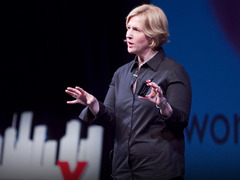
  • Brene Brown interviewed by Oprah in a two-part episode of “Super Soul Sunday”

    On Sunday, Oprah Winfrey revealed that she and TED speaker Brené Brown are “soul mates.”

    Brené Brown: The power of vulnerabilityBrené Brown: The power of vulnerabilityAs the pair sat down for an in-depth discussion on Super Soul Sunday — part one of which aired last Sunday, with part two to air next Sunday — they excitedly talked about many of the concepts which Brown raised in her classic TED Talk, “The power of vulnerability.” One interesting moment came when Brown shared a counterintuitive thought on what scares us the most.

    “As someone who studies shame and scarcity and fear, if you asked me, ‘What is the most terrifying, difficult emotion we experience as humans?,’ I would say joy,” says Brown. “When we lose our tolerance for vulnerability, joy becomes foreboding. Brené Brown: Listening to shameBrené Brown: Listening to shameSo what we do in moments of joyfulness is we try to beat vulnerability to the punch … We try to dress-rehearse tragedy.”

    In fact, says Brown during the first part of this intervie,  fear seems to be an ever-present part of our experience.

    “I think there’s a thin film of terror wrapped around us,” says Brown. “If it’s not, ‘I’m not safe enough’ or ‘I’m not secure enough,’ it’s ‘I’m not liked enough,’ ‘I’m not promoted enough,’ ‘I’m not loved enough’ … at the very bottom, ‘I’m not good enough.’”

    Watch part one of Brown’s “Super Soul Sunday” appearance here »

    And stay tuned to the Oprah Winfrey Network this Sunday, March 24, at 11am (EST) to see part two.

  • Rumored next-gen Nexus 7 specs point to 4G LTE support

    Nexus 7 Sequel Specs
    Google (GOOG) is rumored to be readying the second-generation version of its 7-inch Nexus tablet that will debut later this year. Earlier reports claimed the next-gen Nexus 7 will be equipped with a 1080p full HD display and a quad-core Qualcomm (QCOM) Snapdragon processor. According to Digitimes, Google and ASUS (2357) decided to ditch NVIDIA (NVDA), which supplied Tegra 3 processors for the original Nexus 7, because of Qualcomm’s tight integration with 4G LTE radios. NVIDIA recently announced the quad-core Tegra 4i processor with an integrated LTE chip, however the company may be unable to meet Google’s launch schedule for the second-generation Nexus 7, which is rumored to be set for a debut at the annual I/O Developers Conference in May. Losing Google as a customer will be hard on NVIDIA, which could now see 2013 processor shipments drop by as many as eight million units.

  • Featured Android App Review: Movie Twist [Entertainment]

     Movie_Twist_Splash_Banner

    Have you ever sat down to watch a movie, but you didn’t have a clue what you wanted to watch? Well I have an app that will help you find that perfect movie to watch whether you’re alone, with your significant other, or with the family. All you have to do is grab Movie Twist from the Google Play Store. It was created by Saguru and it’s the first real Artificial Intelligence (AI) powered movie search and exploration app. There are so many ways to search it’s mind boggling.

    For starters, it will find similar movies based on another movie. That’s just the tip of the iceberg. The Explore option will let you find movies based on Loving, Humor, Violence, Thrilling, and Cleverness. Not only that, each category has a slider bar so you can set how much that category should play a role in the results. You can also select from 21 genres to include such as Action, Comedy, Family, Horror, Thriller, etc. Oh there’s still more as you can add a keyword such as an actor’s name and you can control some finer details like Pace, Sex, Drugs, and Ordinary. Last but not least, you can throw in what years you would like the movie to fall into as well as the minimum and maximum run times.

    The app itself it very easy to use. Upon opening the app, you will get a search box so you can quickly type in a movie and get similar results. You will also find a few random movies at the bottom to get things started. You can tap on Search at the top left where you will find the Explore option I mentioned above as well as Movie Concepts that let you pick movies based on your mood, category, or tag. You can also tap Auto Recommend to have Movie Twist give you recommendations based on your favorites and past searches.

    Each movie is listed with its artwork poster so you can get a quick idea of what it is. If you tap on the movie, you will be taken to an information page where you can add it to your favorites or your watch list as well as hide it from future searches. You will even get the description as well as the tags associated with it. Want to see the trailer? Just hit the play icon and the trailer will open in YouTube. Last but not least, there is also an option to find similar movies to refine things even more.

    Movie Twist is absolutely free so give it a shot the next time you and your significant other can’t figure out what to watch. Check out my hands on video below and hit one of the download links to get started. As always, let me know what you think.

    Movie_Twist_01
    Movie_Twist_02
    Movie_Twist_03
    Movie_Twist_04
    Movie_Twist_05
    Movie_Twist_Splash_Banner


    Click here to view the embedded video.

    QR Code generator

    Play Store Download Link

    Come comment on this article: Featured Android App Review: Movie Twist [Entertainment]

  • Google Keep — for notes, memos and ideas best kept in the cloud

    Confession: I’ve never used Evernote, much to the abash of colleague Alan Buckingham (or so he expressed in group chat a little while ago). But I would use Google Keep, which released today. Russell Holly calls Keep “the not-quite Evernote clone” — for anyone making bold comparisons.

    You tell me. Does this sound familiar, Evernote and OneNote users? “With Keep you can quickly jot ideas down when you think of them and even include checklists and photos to keep track of what’s important to you”, Katherine Kuan, Google software engineer, says. “Your notes are safely stored in Google Drive and synced to all your devices so you can always have them at hand”. She adds: “If it’s more convenient to speak than to type that’s fine — Keep transcribes voice memos for you automatically. There’s super-fast search to find what you’re looking for and when you’re finished with a note you can archive or delete it”.

    Other features include color-coding (something geeks seem to like, right), swipe to archive, and note-to-checklist conversion. Users of Android 4.2 or higher also can keep Keep as a homescreen widget — for when the idea is immediate and you need to express it fast or forget.

    Device sync, dictation capabilities and Google Drive integration are the three features that pique my interest. Whether or not I actually keep Keep beyond initial testing is yet to be seen. Evernote didn’t grab me.

    I started writing this post at 4:53 pm EDT, when there was one review of the app on Google Play. Fifteen minutes later there are 179 — 147 of them five stars.

    “Finally!” expresses Galaxy Nexus user Yuriy Melnik: “A native note/to do app is long overdue, a bit surprised to see no Google Tasks sync? This would be nice”.

    Michael Bau gives three stars and expresses disappointment: “This app is just a plain app to take notes. You can record audio notes, include pictures, and write text with your keyboard, and make lists. That’s pretty much it. Other than that I would love to see a way to add deadlines and alerts to notes, and some kind of drawing support. I would love to replace Wunderlist with Keep, but it’s not quite there yet”.

    Aaron Carvalho gives five stars, but asks for more, too: “Simple and neat interface. Easy to use. Very beautiful UI. I just wish it had the option of adding pictures from the gallery as a note. So far only option is to take a picture with the camera. Now let’s just hope it stays live”.

    Nathan Burke and I share similar experience. “I can take a photo, add a list, create a note, but when I try to view anything on Chrome, I just get an error, and it keeps reloading”, he expresses. I have the same problem. What a crock! Error on Chrome. Google’s browser. For shame!

    Matthew Kelly has “Keep on both the Nexus S and Nexus 7 devices is working well on both. Helps to be an Android ‘ecosystem’ user, and I’m eager to see how easily it extends into my Google Drive. Fast sync, easy to add images and quickly type content. Will try the dictation/transcription feature, as it will be a significant addition to the Google cloud toolkit. Excellent application with no issues thanks to its simplicity!”

    Sentiments are a little different elsewhere, if the first comments to the above YouTube video indicate anything.

    Vitruviux: “I don’t want Google Keep, I want Google Reader”. TheTimmant: “Now Google can spy on your notes! Yay!!!”

    And you? Will you do Google Keep, or keep the note app (if any) you already use?

  • Making A News Reader For Android? You’ll Want To Watch This

    Google is killing off Google Reader on July 1. The move opens an opportunity for somebody, maybe Digg, to come up with a news reader of their own. Now the very same company that’s killing the most popular RSS reader on the net is now offering suggestions for developers building their own news readers:

    Join Nick Butcher, Adam Koch and Roman Nurik as they discuss various elements of Android Design. This week, we’ll discuss design ideas for news consumption apps and get into some design math—specifically about various units of measure and common grids for designers.

  • Facebook Tries Pestering You to Post a Status with a Push Notification

    Apparently, Facebook is trying to get people to engage with the network with a new push notification that asks them to post an update.

    “Name, tell friends what’s on your mind. Post an update,” reads the new iOS notification.

    Here’s a screenshot of the new push notification, via Bijan Sabet:

    Facebook confirmed to Mashable that the new push notification is part of a “small test” that they are currently running. If just looking at this annoys the hell out of you, find solace in the fact that Facebook tests tons and tons of features all the time, and only a small percentage of them ever come to fruition.