Let’s try something a little different for a change.


Regardless of what happens in the Bay State tomorrow, it’s too early to write off healthcare as dead.
Nancy Pelosi told reporters today that Democrats will get a bill some way or another, according to ABC News.
And now the New York Times reports that the way forward is to have the House vote directly on the Senate version which wouldn’t require a second vote in the Senate.
Of course, that will be tough, as it will require all of the supporting Democrats to support a bill they’re not crazy about, even in the face of a stunning election result.
Yesterday we outlined six possible scenarios, including this one, that healthcare might take in the event of a Scott Brown victory.
We’ll say this, in all sincerity: If Pelosi can get this done, she and Reid deserve MAJOR credit for what will be a triumph of party unity, to pass something this gigantic on 100% party-line votes, in the face of overwhelming political risk. Nothing like this has ever been done.
Join the conversation about this story »
See Also:
 I’m glad I only discovered Alex Posada’s “Particle 1.0” on the internet, because if I came across this kinetic sculpture in real life, I would only do two things: duck and cover.
Created in Barcelona, Posada’s sculpture uses all sorts of unique gadgetry to respond to its environment, translating the movement around it into a terrifying spectacle of light and sound.
A pair of sensors above the sculpture detect exhibit-goers’ movements and relays them to several LED lights, spinning on a concentric structure resembling an atomic diagram. A surround sound system in the exhibit space is synchronized with the lights.
What does all of that tech amount to? A spinning, whirring neon orb that looks like some sort of bomb, moments after detonation. Or an alien pod, hovering menacingly. Or some other thing that’s threatening my life. All I know is that art appreciation has never been scarier. [Designboom]

Engineers at the University of Michigan have developed a strip of paper infused with carbon nanotubes that can quickly and inexpensively detect a toxin produced by algae in drinking water. The paper strips perform 28 times faster than the complicated method most commonly used today to detect microcystin-LR, a chemical compound produced by the blue-green algae (cyanobacteria) commonly found on nutrient-rich waters. Microcystin-LR is among the leading causes of biological water pollution and is believed to be the culprit of many mass poisonings going back to early human history…
Tags: Algae,
Bacteria,
Biosensor,
Detect,
Detection,
Drinking,
Environmental,
Health,
Monitor,
Nanotubes,
Pollution,
Research,
University of Michigan
Related Articles:
Found under: HTC, Supersonic, Sprint, WiMAX, Android,

Read more in mobile format
http://www.chicagotribune.com/sports…,1790453.story
|
In conjunction with the 100-year anniversary of Wrigley Field in 2014, the Cubs are planning "a complete renovation of the ballpark." The project will be called "Wrigley 20-14" and include construction projects during the season so the Cubs can use it "for another 100 years," according to President Crane Kenney. The focal point of the massive restructuring will be the long-talked-about "triangle building" to the west, a project that will include knocking down the outer wall on the third-base side to form a large open-air courtyard that would include concession areas and shops. In the end, all of the concourse will be widened and include expanded restrooms, some of which will be completed for this season. It also means construction will be ongoing during the 2011 and 2012 seasons. Although plans still are sketchy, there also could be a restaurant below the third-base terrace "suites." The only parts of the park that will not be reconfigured are the bleachers, which already have been altered by more seats and a restaurant. "A lot of spots in the ballpark haven’t been touched in years," Kenney said. "We put millions (of dollars) in every offseason just to keep it moving forward without really changing much. "We have to be re-thinking long term." During a Cubs Convention panel discussion about the business of baseball, Kenney told the audience: –"I can’t imagine the ballpark not being called Wrigley Field," when asked about naming rights, even though former Tribune Co. ownership seemed amenable to it. –The "L" flag will continue to fly for the time being, although there is internal debate about it. Kenney took a show-of-hands survey during the discussion that showed "4- or 5-to-1" against changing the tradition. –No Friday night games and no Jumbotron screen will be added soon, if ever, and the Cubs don’t envision going to personal seat licenses for ticket-holders. |
|
A 2005 sketch of a proposed Wrigley Field expansion project under Tribune Co. The Ricketts family wants to complete something similar by 2014. (Tribune lab) |
These are from the Cubs website on the "Improvement Illustrations" section:
http://chicago.cubs.mlb.com/chc/ballpark/expansion.jsp
|
|

Donations by text message have now exceeded $22 million to the Red Cross alone for the Haiti earthquake relief effort.
Update: Tallies are being kept by two primary organizations, both Denver-based mGive and Bellevue, Wash.-based Mobile Giving Foundation, which offer competing services to various non-profits. Together, they are helping more than a dozen organizations, including the Red Cross, The Salvation Army, UNICEF, the Clinton Bush Haiti Fund and World Vision, raise funds for Haiti.
A comprehensive number for how much money has been raised to date—across all the organizations—is not readily available, but mGive said today that the Red Cross campaign alone has raised $22 million. That easily makes it the largest campaign that mGive has ever administered. Last year, it raised a total of $1.25 million via text message, and the largest single campaign was the Keep a Child Alive campaign, which raised $450,000 to support services to children and families whose lives have been affected by HIV/AIDS in Africa and India.
While the figures are impressive, the donations continue growing at an increasing rate as additional short codes become available. The Red Cross became one of the first organizations on Jan. 12 to start getting the word out with the help of the U.S. State Department. A list of some of the texting campaigns are available at the end of the post.
One problem with using cellphones is that it takes awhile for the money to get from the carriers to the people in need. However, given the dire circumstances in Haiti, a handful of carriers, including Verizon Wireless and T-Mobile USA, said they will pass along the money as soon as possible. In a statement today, T-Mobile said: “Recognizing the severity of the situation in Haiti and the need to make funds donated via text message by our customers available as quickly as possible, T-Mobile is speeding up the process to pass along these donations. We plan to deliver funds generously donated by T-Mobile customers this week.”
Meanwhile, Verizon Wireless said it has already transmitted nearly $3 million to the American Red Cross, on behalf of their customers. The company said it would continue to advance funds pledged by customers to the Red Cross, which is “outside normal operation procedures.”
Here’s a staggering list of U.S. organizations offering mobile giving campaigns:
—On behalf of the American Red Cross: Text the word “Haiti” to 90999 to donate $10.
—On behalf of the Yéle Foundation (founded by Wyclef Jean): Text the word “Yele” to 501501 to donate $5; Text the word “Yele10” or “YeleTen” to 501501 to donate $10.
—On behalf of The Clinton Bush Haiti Fund: Text the word “QUAKE” to 20222 to donate $10.
—On behalf of the Clinton Foundation Haiti Relief Fund: Text the word “Haiti” to 20222 to donate $10.
—On behalf of the Salvation Army: Text the word “Haiti” to 52000 to donate $10.
—On behalf of UNICEF: Text the word “Hope10” or “UNICEF” to 20222 to donate $10.
—On behalf of the National Religious Broadcasters (NRB): Text the word “Haiti” to 40579 to donate $10.
—On behalf of Save the Children Federation: Text the word “Save” or “Safe” to 20222 to donate $10.
—On behalf of World Vision: Text the word “Give” or “World” to 20222 to donate $10.
—On behalf of the International Medical Corps: Text the word “Haiti” to 85944 to donate $10.
—On behalf of the International Rescue Committee: Text the word “Haiti” to 25383 to donate $5.
—On behalf of Oxfam America: Text the word “Oxfam” to 25383 to donate $10.
—On behalf of Cooperative for Assistance and Relief Everywhere: Text the word “PP” to 25383 to donate $10.
—On behalf of Americares: Text the word “Americares” to 25383 to donate $10.
—On behalf of Habitat for Humanity: Text the word “Habitat” to 25383 to donate $10.
—On behalf of the MTV telethon: Text the word “Give” to 25383 to donate $10.
—On behalf of the American Jewish World Service: Text the word “AJWS” to 25383 to donate $10.
Related

Sony has stated December 2009 PlayStation 3 sales in the U.S. rose nearly 90 percent shattering the existing monthly record after a 25 percent price cut attracted holiday shoppers to the rapidly evolving console. PlayStation 3 game sales also advanced 60 percent from a year earlier, Sony said in an e-mailed statement. Software numbers were obviously incredible with massive hits like Uncharted 2: Among Thieves, Assassin’s Creed II, Call of Duty: Modern Warfare 2 and Final Fantasy XIII smashing sales charts. In the USA, Sony sold 726,000 PS3 players last December, according to NPD Group Inc. and Sony stated that in the five weeks following the last week in November they sold 3.8 million units worldwide. However, things are not so sunny overall in comparison to last year, where there has been a $1.3 billion drop in Sony’s revenues from its line of PlayStation systems.
Gamasutra has written some excellent thoughts towards PlayStation’s performance in 2009,

According to comments made by Wedbush Morgan analyst Michael Pachter, we estimate that PlayStation 2 software revenues dropped by around $700 million in 2009, compared to 2008. That decline alone would explain more than half of Sony’s loss. The PlayStation 2 hardware also received a price cut in 2009, which could have contributed another $150 million in lost revenue.
Another $225 million or more have come from the annual loss of 1.3 million PSP system sales. According to Creutz of Cowen & Company, the handheld software segment shed $200 million in annual revenue from 2008 to 2009, and we estimate at least half of that loss can be attributed to declining PSP software sales.
Without more precise figures, we cannot illuminate the situation further. However, the general outline is clear: The PlayStation 3 platform — albeit the subject of a recent price cut — is still growing, but the contraction in Sony’s legacy and handheld segments has overwhelmed those gains. Sony cannot revive the PlayStation 2, and that system’s revenue contribution is on a terminal trajectory. (To use Pachter’s terms, the PlayStation 2 will “cease being relevant in 2010.”) We furthermore remain skeptical that Sony can reverse the fortunes of the PSP, at least at retail.
By mid-2010 we should know more about whether Sony will continue to back the PSP platform, and in particular the premium PSP Go model. We would not be surprised to hear of a successor to the PSP in 2010, especially if it provides backward compatibility to first-generation PSP software and network integration comparable to modern mobile devices.

Sony does have several ace cards coming to the PS3 console in 2010 that could really capitalize on the momentum brought forth by the cheaper PS3 slim. Sony is planning to vigorously enhance the network content and services aspect of the PS3, as well as tapping into a wider audience through the introduction of a new Motion Controller. PlayStation 3 units will become available to play 3D stereoscopic games through a firmware update, scheduled to be available in summer of 2010. Playback of 3D content on “Blu-ray” discs will also be possible by upgrading PlayStation 3 with a further firmware update.
PS: não fui no Rio para tirar fotos… fui para curtir, portanto, não reparem na qualidade das imagens…
Baixada Fluminense ou Zona Norte do Rio?

ABC – Atlantico Business Center

Centro do Rio visto da ponte Rio Niterói

Centro do Rio visto do Cristo Redentor

Praia de Copacabana – Reveillon

Hotel em reforma

Copacabana

Copacabana

Ventura Corporate Towers

Av. Presidente Vargas

Av. Presidente Vargas

Centro do Rio, visto da Urca

Niterói visto da Urca

Rio visto da linha vermelha

Refinaria Duque de Caxias

Baía de Guanabara

Tchau!

 According to the WSJ, HarperCollins Publishers is in talks with Apple about providing ebooks for Apple’s tablet. It’s speculated that ebook markets such as Amazon’s would seriously suffer if such an arrangement were finalized.
Based on explanations by Brian Murray, the chief executive of HarperCollins, the reason Amazon would initially have something to fear is that “e-books enhanced with video, author interviews and social-networking applications could command higher retail prices for publishers than current e-books” in the future. Apple’s tablet would, of course, be ideal for such enhanced content, and we already know that they’ll be digging for mags, newspapers and college textbooks but this is some of the first we’ve heard of Apple negotiating with publishers for regular e books.
Ah, I suppose we’ll be able to speculate some more on January 27th, in the meantime—on the tablet or not—”enhanced ebooks” sound like a blast. Just imagine how often you’ll say that something was way better with the author commentary. [WSJ]
Found under: Nokia, Ovi, Media, Event, ,

Read more in mobile format
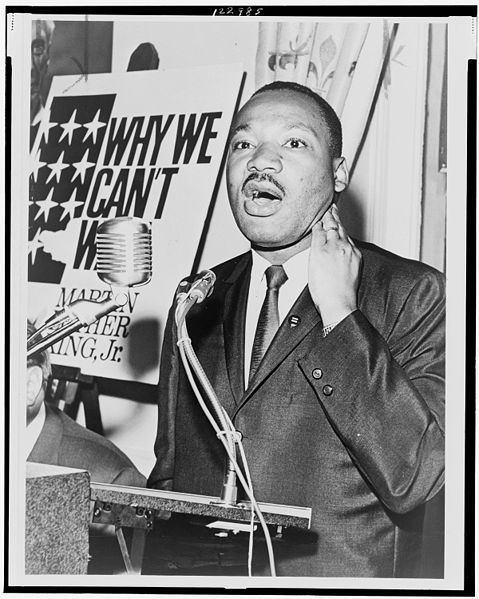
Today we mark the 81st birthday of Martin Luther King, Jr., and pause to consider a nation and world that has made great progress toward racial, economic and social justice in eight decades. But we still have a long way to go, and nowhere is that more evident than in our criminal justice policy.
More than one in 100 Americans will spend tonight behind bars, and the vast majority of them are poor. The country is 75% white, but our prisons are 59% black or Latino. Fifty-five years after a young Martin Luther King, Jr., led the Montgomery bus boycott, something is still very, very wrong with social and racial justice in our country.
In his famous Birmingham Jail letter of April 16, 1963, King wrote perhaps his second most-quoted line: “Injustice anywhere is a threat to justice everywhere.” These words, written behind bars, continue to inspire activists today in the fight for justice in our courts, our police stations and our jails.
 Remember those rumored HTC Android / Chrome OS touch tablets that were supposedly being shown behind the scenes at CES? In a brief statement given to Australia’s Channel News, Sales and Marketing Director Anthony Petts not only confirms the existence of the aforementioned project, he also announces in the same breath —
way to be efficient, guys — that the slate are on hold as the company is now “focusing their efforts on a new generation of mobile phones.” He’s not saying never, but don’t get your hopes up for the near future. At any rate, if a 4.3-inch device like the HTC HD2 is still considered a phone by its standards, we can be happy with that — maybe they can try five on for size while they’re at it.
Rumored HTC tablet project both confirmed and suspended in one fell swoop originally appeared on Engadget on Mon, 18 Jan 2010 19:04:00 EST. Please see our terms for use of feeds.
Permalink  WMPoweruser |
  Channel News | Email this | Comments
Buy This Item: [Click here to buy this item]

We’ve seen KIST’s Marhu robot tooling around here before, but now they’re showing off the latest models, the Mahru-Z (with some help from Mahru-M), in some super useful scenarios. Mahru-Z and M have been successfully demonstrating their service abilities by carrying cups of tea, and retrieving toast from toasters and delivering it as well. The Z-version bot is a bit shorter than previous iterations, and also sports different, more dextrous arms. He stands about 4 feet 3 inches tall and weighs 122 pounds. Both bots are networked and use 3D object recognition in their task completion. Overall, the improvements to the Mahru bots are iterative, but it sure is great to hear that one day we’ll have someone to bring our breakfast to us in bed. Video is after the break.
Continue reading KIST Mahru-Z waits on you very, very slowly
KIST Mahru-Z waits on you very, very slowly originally appeared on Engadget on Mon, 18 Jan 2010 18:14:00 EST. Please see our terms for use of feeds.
Permalink | Plastic Pals | Email this | Comments
Buy This Item: [Click here to buy this item]
Flagship Studios is long gone, but part of its legacy remains. The ill-fated Hellgate: London is alive and kicking in Korea, and HanbitSoft has plans to bring it back west as well.
HanbitSoft has finally acquired the full rights from Namco Bandai, paving the way for its return to North America. Namco Bandai previously held the western publishing rights, which hampered HanbitSoft’s plans for a relaunch.
“We would like to thank Namco Bandai Games America for allowing us to acquire the Hellgate publishing rights and are thrilled to have eager gamers worldwide return and enjoy the franchise,” said HanbitSoft CEO Kee-Young Kim.
Buy This Item: [Click here to buy this item]
With a thicker stylus and a larger screen, some people have made the argument that Nintendo’s new DSi XL’s only potential market is old people. That’s simply not the case, Nintendo contends, and there are far more people that just those in the “old people” demographic that will be interested in the XL when it’s released outside of Japan this year.
“It’s absolutely not [just for old people]. DSi XL appeals to as many people, if not more, than its predecessors,” Nintendo’s DS senior product manager, James Honeywell, explained to CVG. “With bigger screens and a larger pen-like stylus it’s likely that older users may find the DSi XL easier and more comfortable to use but there are many more people it can and will appeal to. Gamers will undoubtedly appreciate the bigger screens so they can experience their favourite and the latest DS titles bigger and in a greater level of detail than ever before.”
But how about specifically — just who would take advantage of those features? Honeywell offered, “We certainly know that a lot of families who play DS together will enjoy the wider viewing angle the DSi XL allows so they can play together at home and the fact the bigger stylus is less likely to get lost down the back of the sofa is another bonus for them.”
Buy This Item: [Click here to buy this item]

Ready go on sale in the UK in May 2010, the 2011 Ferrari 458 Italia will carry a starting price tag of £169,545 ($277,124 USD). Ferrari is also offering racing seats at £4276 ($6,989 USD), a Ferrari shield on the wings for £945 ($1,544 USD), power seats at £2,120 ($3,465 USD) and a luggage set for the rear bench for £2987 ($4,882 USD).
We’re still waiting for Ferrari to release pricing details for the United States. Stay tuned.
Click here for more news on the Ferrari 458 Italia.
Refresher: Power comes from a mid-rear mounted 4.5L V8 producing 570-hp at 9,000 rpm with a maximum torque of 398 lb-ft at 6,000 rpm. Mated to a dual-clutch 7-speed F1 gearbox, 0 to 62 mph comes in just 3.4 seconds with a top speed of over 202 mph.
Ferrari 458 Italia:


– By: Omar Rana
Source: AutoCar
Mar de Ajó – Argentina
Photos:
2005-2006-2007


 Synchronicity strikes again. The seeds of this post were sown when Gary Taubes emailed me about a study published in early 2009 in the New England Journal of Medicine (NEJM) that I had seen at the time, briefly skimmed and tossed aside as worthless. Gary agreed that the study was of little value, but notice that it contained a peculiar statement by the authors, an interesting admission about HDL, the lipophobes favorite lipoprotein. And not only had the authors made this strange admission, but so had another prominent lipophobe who wrote the accompanying editorial.
I pulled the study, read it more thoroughly and still found it mediocre at best. But I did come across the strange HDL statements that Gary had mentioned. (More about which later.)
As I was shaking my head over the amount of money spent on what was a truly abominable study, the synchronicity occurred. I got a ding that I had a new email. It was a notice from the American Heart Association telling me that this august body had deemed the very study I was holding in my hands as one of the ten most important papers published in 2009. The sheer stupidity of it nearly took my breath away.
Before we get into the study – which we wont get into very deeply because, believe me, theres not much depth – I want to use a parable to show just how silly this study is.
Lets set our story in the wonderful country of Stupidland where a debate has been raging about the feeding of dogs. A vociferous old woman who kept dogs had been insisting that different breeds of dogs eat different amounts of food The majority of the populace were of the opinion, however, that all breeds eat the same amount (it is Stupidland, after all) and looked down their noses at those who believe a chihuahua may eat less than a collie. To put an end to the bickering, scientists at Stupidland U ( who were believers in the all-dogs-eat-the-same doctrine) decided to do a definitive study. They went to the Stupidland pound and procured a German Shepherd, a Labrador Retriever, an Irish Setter and an Alaskan Malamute.
They provided the four dogs with pleasant accommodations and all the food they wanted to eat. The scientists carefully measured every gram of food eaten by each dog and recorded it. At the end of the two year study, they reviewed the data and confirmed what they already suspected to be the case: the different breeds of dogs ate just about the same amount. They did notice one little disparity, however: the larger dogs ate a little more than the smaller dogs, but they were able to correct for that by controlling for size. Their paper proving that different breeds of dogs ate the same amount of food was accepted for publication in one of Stupidlands most prestigious scientific journals, The Stupidland Journal of Veterinary Medicine. Buried deep within the paper was a sentence few noticed stating that size was a biomarker for food consumption by dogs.
The Stupidland press picked up on the study and headlines proclaimed that all breeds of dogs eat the same amount. The mainstream Stupidlanders nodded their heads sagely; they, after all, had been right all along. But the old woman, who didnt actually live within the borders of Stupidland, but who lived close enough to cause trouble, kept insisting that different breeds of dogs didnt eat the same amounts. She had a beagle and she had a Great Dane, and she had kept careful records of the food consumption of both. She insisted that the Great Dane not only ate more than the beagle, but that it ate a huge amount more. She would bend the ear of anyone who took the time to talk to her, and her data was so persuasive that she was beginning to make converts. Just as the population of Stupidland was once again starting to wonder about the dog breed verses food enigma, the Stupidland Heart Association came out with its annual bulletin announcing that the paper by the brilliant scientists from Stupidland U showing that all breeds of dogs ate the same was the most important paper of the year. The old womans first impulse was to attack the Stupidland Heart Association for its sheer stupidity, when suddenly a sense of calmness and clarity settled over her. She experienced a spiritual awakening (just as did the Grinch in another tale) and finally realized the real meaning of Stupidland. She took her dogs and moved far away, leaving the denizens of Stupidland alone to marinate in their stupidity.
The paper that inspired this parable was published in Feb 2009 in the New England Journal of Medicine and titled Comparisons of Weight-Loss Diets with Different Compositions of Fat, Protein, and Carbohydrates. (This is another one of those studies the editors feel is so important that they provide the full text free of charge as a public service.) The authors include Frank Sacks, George Bray, Steven Smith and an entire rogues gallery of lipophobes. All the usual suspects, as they say.
What the NEJM study sets out to demonstrate is that different breeds of dogs different weight-loss diets of varying macronutrient compositions all bring about the same loss of weight. According to these authors, it doesnt matter if you go on a low-carb, high-fat diet or a low-fat, high-carb diet, youll lose the same amount of weight. Doesnt matter how the protein, fat and carbohydrate stack up in your weight loss diet, youre going to lose the same amount of weight. So, you can go to the bookstore, stand by the diet-book shelf, close your eyes and pick. Whatever diet book you end up with wont matter because youll lose the same amount of weight regardless of which one you choose. And, even more importantly – again, according to the authors of this study – whichever diet book you select will help reduce your heart disease risk factors.
As Dave Barry says: I AM NOT MAKING THIS UP. Its right there in black and white in a study done at Harvard and published in the New England Journal of Medicine.
Whats more, the American Heart Association (AHA) deemed this study to be one of the top ten most important studies published in 2009. And they put it #1 on their list. Now they said that they listed these ten studies in no particular order – and you can call my cynical – but Im just betting that they put this one right at the top for a reason.
Said the president of the AHA, Dr. Clyde W. Yancy
We all thought the statement made in that study was pretty profound. It really dismissed the notion that there’s something clever about weight loss, [showing] that it really is about calorie consumption or, to make it even more straightforward, portion control. You can spend a lot of time wringing your hands about which diet and the composition of which diet, but it really is a simple equation of calories in and calories out.
Give me strength.
My disgust aside, you may be thinking: Why isnt the study valid? If they did analyze all those diets and found them to bring about the same results, whats the problem?
The problem is that the diets they used in the studies were similar. They didnt vary all that much in carbohydrate. The diet with the highest carb intake contained 65 percent of calories as carbohydrate while the lowest carb diet was made up of 35 percent. To put this into the gram figures were all used to, the highest-carb diet contained 325 gram of carb while the lowest-carb version contained 175 gram of carbohydrate. Now, as those of us who have ever followed a low-carb diet know, 175 gram of carbohydrate does not a low-carb diet make. Granted, its lower in carb than the diet with the 65 percent of calories as carb, but it doesnt even approximate a low-carb diet. As Ive written before, youve got to get the carbs substantially below 100 g per day before good things start happening metabolically.
What this study has done is to study roughly similar diets for two years and pronounce that all produce about the same results. What the authors (and, apparently the AHA) want you to take away from this study is that real, honest-to-God low-carb diets dont perform any better than low-fat, high-carb diets. Which, as most of us know from bitter experience, is not the case.
There are major problems in doing studies such as this one that make their outcomes suspect. And these problems arent necessarily the fault of the researchers – they are simply a fact of life.
When you try to do a dietary study by recruiting people who want to lose weight then randomizing them to a particular diet, you are asking for trouble. If you run the study out over a long period of time – two years, for example, as this study did – you are asking for even more trouble. People go into diets with a lot of enthusiasm and pretty rigorously stick to them at first. But as time goes on, people tend to cheat a little, then cheat a little more and pretty soon find themselves pretty much trending back toward and finally squarely back on whatever their regular diet was before they started the study diet. (Sadly, its not just subjects in studies who follow this pattern, but is the fate typical of most dieters.) For this reason, after time, all the people in all the different arms of the study are eating about the same thing. This is why you always see the charts showing weight loss and macronutrient composition start out wildly diverging then converge as the end of the study draws near. In other words, they all end up consuming the same diet, so they all end up with about the same result.
How can researchers overcome this dismal outcome. Well, you can put out the call for people who really believe in low-carb diets to fill one arm of the study. And recruit people who love the Ornish diet for another, and the Zone for another. These subjects are more likely to stay enthused and stick with their respective regimens for the duration of the study. But then you havent randomized your sample and you will be accused of generating worthless data because your sample groups self selected.
The other way, of course, is to randomize subjects into various diet groups, then put them under lock and key for a year or two and feed them like you would lab animals. Another impractical solution from a cost perspective if in no other reason.
Its extremely difficult – virtually impossible, I would say – to conduct accurate studies on diet over a long period of time with a large number of subjects. Consequently, it is nonsensical to rely on the data from such studies to make the case for anything other than how difficult these studies are to carry out. I certainly dont think for all the reasons above that the study in question merits being listed as one of the top ten studies of 2009 by anyone, much less the AHA.
In their discussion of this mishmash of questionable data, however, the authors did make a most interesting statement. Almost an admission, if you will, of the superiority of a lower carb diet. This statement is what Gary emailed me about.
(Before we go on with this, I have to make this aside. HDL and LDL and IDL (intermediate density lipoprotein) and VLDL (very low density lipoprotein) arent really cholesterols. Even though we often refer to them as LDL cholesterol and HDL cholesterol, they really arent. These different groups of letters refer to transport proteins that carry cholesterol through the blood, not to cholesterol itself. Cholesterol is cholesterol. It is a specific molecule that doesnt change. Cholesterol is a waxy lipid (fat) that virtually every cell in the body synthesizes (because is it so important). Cholesterol, like all fats, is not soluble in water and therefore cant dissolve in blood (which is a watery substance), which means that the body has to package cholesterol in a form in which it can be transported from place to place in the blood. The body attaches a specific protein (a lipoprotein) to cholesterol to make it dissolve in the blood. The names LDL, HDL and the rest refer to the specific type of lipoprotein being discussed.)
Heres what the authors wrote:
There was a larger increase from baseline in the HDL cholesterol level, a biomarker for dietary carbohydrate [my italics], in the lowest-carbohydrate group than in the highest-carbohydrate group (a difference in the change of 2 mg per deciliter at 2 years)…
Even Martijn Katan, a lipophobe if there ever was one, and the author of a number of anti low-carb diatribes that Ive taken to calling the Katanic Verses echoes the same fact – carbohydrates drive HDL down – in an editorial he wrote about the above paper.
…compliance was assessed with objective biomarkers.
The authors used the difference in the change in HDL cholesterol levels between the lowest- and highest-carbohydrate groups to calculate the difference in carbohydrate content between those diets.
Now the differences werent all that spectacular, but the drop in HDL in those on the higher carb diet was there and noticed by the researchers.
I find this extremely revelatory because if there is one lipid parameter a lipophobe loves, its HDL. And here you have an entire cluster of lipophobes admitting that HDL varies as the inverse of carbohydrate intake. Take any of these folks individually – or, heck, take em together – and theyll tell you that low-carb diets are bad because they give you too much fat. Yet they admit that their beloved HDL goes up when carbs go down. Doesnt make a lot of sense, does it?
When these folks compared these fairly similar diets they found that all of them reduced the risk for heart disease. They used the fact that HDL went up on the lower-carb diets to deem them heart healthful; and they pronounced the higher-carb diets as heart healthful, too, because the LDL declined on those.
As Yogi Berra said: You can observe a lot by just watching. And they watched LDL go down on the higher-carb diets and HDL go up on lower-carb diets. But the reverse of the Yogi-ism is also true: you can also fail to observe if you dont watch.
This refusal to watch is what really gets my dander up.
The researchers whose names are listed at the top of this paper are all affiliated with prestigious institutions. I am quite sure that there is not a single one of them who is unfamiliar with the work over the last 15 years or so of Ronald Krauss, the researcher who made the discovery of the differences between LDL particle sizes. (The same Krauss, by the way, who published the paper about the meta-analysis of saturated fat and heart disease much in the blogosphere currently.) Krauss and his team showed that large, fluffy LDL particles arent particularly harmful whereas the small, dense LDL particles are the ones that cause the problems. He also discovered that increasing carbohydrate in the diet caused LDL to shift to a smaller, denser pattern while decreasing carb and adding fat made LDL change to the larger, fluffier non-problematic kind. (You can read a nice review of LDL particle size in this article published in the popular press.)
If you reduce carbs and add fat to the diet, not only does your HDL go up, but your LDL makes a particle size change for the better. However, when you increase carbs and reduce fat, your HDL goes down and your LDL goes down too, but it changes for the worse. So even though the high-carb, low-fat diet decreases LDL, it doesnt decrease risk – it increases it because even though LDL is lower, it is made up of a dangerous particle size,which negates any possible value of the fall in LDL. All of these researchers know this.
Why didnt they check LDL particle size on these subjects? Had they done that, they would have found that those subjects on the higher carb diets would have lowered their HDLs and althought they lower levels, would have shifted to more of the dangerous, smaller, denser LDL particles. They couldnt have then made the case that not only did all diets work the same where weight loss was concerned but they all decreased heart disease risk. They would have had to say that although all diets brought about the same degree of weight loss, the lower-carb diets clearly reduced the risk factors for heart disease the most. And thats an admission I suspect they didnt want to make. Therefore they refused to observe.
I dont know what the deal is with these folks. Why dont they simply tell it as it is? Do the long-term lipophobes who have ridiculed low-carb diets for years and built their careers on the rickety edifice of the low-fat diet not want to admit they were wrong? Thats understandable, I suppose, but what about the young ones? Why are they stampeding over the low-fat cliff like Gadarene swine? Do the younger lipophobes not want to offend the older ones? Why do they fail to reconcile their theories with what amounts to basic biochemistry and physiology? Whatever the reason, they are fighting a losing battle. Ultimately the truth will out and when it does, all these people who have tenaciously clung to the low-fat, high-carb fantasy will be – like the phrenologists and other failed theorists of the past – so much detritus in the history of medicine. And their books and papers will be displayed as curiosities of the boneheaded thinking of an earlier day. A sad but fitting fate.
Photo: Set of phrenological heads, England circa 1831
via The Pollo Web


