Category: News
-
Washington D.C. – o centro do poder mundial!
Chegamos na capital do mundo hahah.Washington foi uma belíssima surpresa. Eu não dava muito crédito pra essa cidade, não tem muito destaque nas agências de turismo e nem entre as escolhas dos brasileiros que vão aos Estados Unidos.
Chegamos na cidade dia 5 e fomos direto pro hotel dormir, já que chegamos logo depois da meia noite. No dia seguinte acordamos e fomos dar uma caminhada no Mall (Mall = a parte mais turística de Washington, com os museus e tal). O nosso hotel ficava a umas 3 quadras da casa branca, lugar que foi o primeiro ponto turístico que visitamos. Depois vimos o obelisco, o museu de ar e espaço, o capitólio e a biblioteca do congresso. Pode soar pouco, mas as distâncias pra se caminhar em Washington são bem grandes, então preencheu bem o dia.
O museu de ar e espaço é interessantíssimo! Recomendo especialmente pela parte que (tenta) explica(r) o universo e como tudo foi descoberto, fiquei fascinado! Depois de lá fomos pro capitólio, que abriga o congresso e o senado americanos. A construção é muito bonita por fora E por dentro. O ponto alto foi a cúpula vista de dentro, a 20 metros de altura do chão, muitíssimo imponente! De lá pegamos o túnel e fomos direto pra biblioteca, a qual só vimos por ver e vazamos.
No dia seguinte, visitamos o Lincoln Memorial, Arlington Cemetery e Georgetown – tudo a pé, claro. Essas três atrações também são muito interessantes e vale a pena visitar, gostei muito do Lincoln Memorial e de Georgetown.
Sobre as minhas impressões da cidade – bom, Washington definitivamente é mais calma que Nova Iorque e Chicago, e a cidade estava quase tão vazia quanto Chicago! Isso foi muito bom pro turismo, é claro. O urbanismo é outro fator ímpar em Washington. A cidade tem os subúrbios típicos de uma cidade americana, claro, mas na região central, ao contrário das grandes cidades americanas, predominam edifícios médios, de uns 12 andares, todos com a mesma altura. Me senti em uma cidade europeia, lembrou em alguns aspectos Pariser Platz, em Berlim e alguns lugares de Lisboa (pela arquitetura dos edifícios modernos). Sobre a limpeza não preciso nem comentar. Outra coisa que eu achei interessante é que as estações de metrô são todas iguais! Eu só tinha visto isso em Copenhague, mas em Washington elas seguem um padrão de concreto que, apesar de não parecer tão moderno, não fica ruim. Acredito que o único ponto negativo que eu posso mencionar é que em alguns lugares eu vi muitos mendigos juntos, mas nenhum dormindo em calçadas ou praças, mais nas entradas do metrô mesmo.
Vejam as fotos:
1 – Perto do nosso hotel, na Rua 15 com a Avenida M
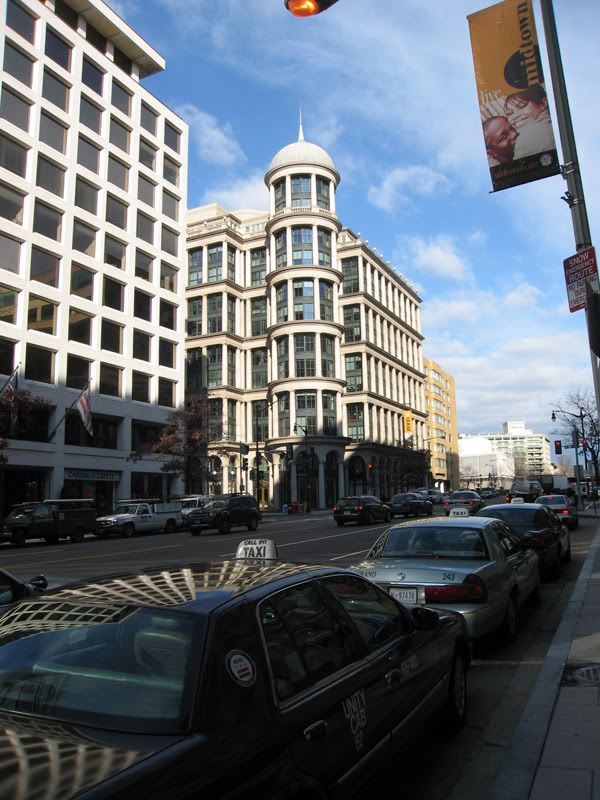
2

3

4 – Eis a estação de metrô onde eu vi os mendigos acumulados!

5

6 – Perto da casa branca

7 – Praça Lafayette

8 – Algumas das construções que eu achei parecidas com Berlim

9 – A Havan

10 – O da direita se chama Banco PNC ( 😆 )

11

12 – Um pouco da influência francesa na arquitetura da cidade (achei isso interessante em D.C.)

13 – Esse hotel dos 3 telhadinhos é famoso (tava no guia :D)

14 – Obelisco

15 – Capitólio (esse lugar em volta é o Mall)

16

17 – Museu de história natural

18

19

20

21 – Vejam o verde ao redor do capitólio

22 – A cúpula que mencionei

23 – Hall da biblioteca do congresso

24 – A biblioteca, por fora

25

26 – A cidade é cheia de edifícios como esses

27

28

29

30 – Aqui novamente perto da casa branca

31

32

33

34 – No Mall, em direção ao Lincoln Memorial

35 – Memorial da Guerra do Vietnã (à frente há livros onde pode-se consultar o nome das pessoas que morreram lá)

36 – Lincoln Memorial

37 – Lago congelado

38

39 – Oops, ficou torta, mas não tenho outra 😀

40 – Arlington, Virginia (do outro lado do rio Potomac)

41 – Arlington Cemetery

42

43 – Georgetown, em Washington de novo

44

45

46

47

48

49

50 – Complexo Watergate

51

52

53 – Embaixada russa, perto do nosso hotel

54 – Um edificio um pouco mais moderno que o normal

55

56

57

58 – Aqui estamos na região do centro antigo da cidade

59

60

61

62 – E aqui acaba o nosso tour!

C’est finite! 😎
-
RIM New Web Browsing to Bring New Surfing Speeds?
Found under: RIM, Proxy, Patent, BlackBerry,

Read more in mobile format
-
“Chef” Pollan’s Daily Special: Lousy Advice
Self-styled food guru Michael Pollan’s latest rant against modern farming, Food Rules: An Eater’s Manual, lists 64 rules for healthy eating. Pollan says they are meant to be taken as “Food Don’ts” — for the sake of our health and the environment. And as usual, America’s “foodies” are going ga-ga over someone whose claim to fame is repeatedly lecturing others to “Eat Food.” So let’s take a close look at what this journalism professor has to offer in his latest diatribe on what you eat.
Pollan admits he ignores nutrition science, which he derides as inexact. But perhaps the real reason he avoids citing actual research is because he knows it doesn’t support his pseudo-scientific beliefs.
Take Rule #22, “Eat mostly plants.” Pollan claims vegetarians are “notably healthier” and live longer than meat-eaters. Yet, a 2006 study by researchers at the University of Oxford found that vegetarians died of strokes and cancers of the colon, breast and prostate at the same rate as omnivores. The mortality rate, the Oxford team wrote, “appears to be similar in vegetarians and comparable non-vegetarians.” In other words, vegetarians don’t live longer than meat-eaters – though life may seem interminably long if you spend most of your time choking down Tofurky and soy-cheese lettuce wraps.
Pollan blows it again with Rule #27, which holds that meat from “wild” free-range animals eating grass is more nutritious than from grain-fed animals raised in feedlots. Before you drop half your paycheck on “artisanal” porkchops, know this: Free-range meat carries health risks that slow-food advocates like Pollan won’t tell you about.
A study published in the journal Foodborne Pathogens and Disease found significantly higher rates of salmonella in free-range pigs when compared with pigs raised on larger farms. Pigs raised in the roof-covered, environmentally-controlled surroundings of the much-maligned Concentrated Animal Feeding Operations (CAFOs) are actually less conducive to disease. And pigs that spend time outdoors are more likely to come into contact with disease-carrying animals.
And if you don’t eat for your health, how about the health of Planet Earth? Pollan’s advice may actually lead to greater environmental damage. The CAFOs that he demonizes use less land to raise more animals than the free-range method. Grass-fed cows, for instance, can require up to 10 acres of pasture per head. If today’s cattlemen exclusively used 1950s technology, they would need an additional 165 million acres of land – roughly the size of Texas — to produce the same amount of beef. And since niche-market cows don’t grow as big as their more conventional counterparts, a wholesale backpedal to old-school farming would increase levels of animal-waste pollution by nearly 30 percent.
Is this the environmental outcome Pollan seeks?
Maybe it’s not fair to criticize Pollan for his scientific illiteracy. After all, he gives himself an out in his final Rule #64, “Break the Rules Once in a While.” If there’s a sequel, we think it should begin with Rule #65: Break most of Pollan’s rules most of the time.
-
Process data transmission via GSM/GPRS with PLICSMOBILE
VEGA Grieshaber KG has introduced a new component for wireless communication: PLICSMOBILE.
The transmitting and receiving unit PLICSMOBILE is equipped with a standard SIM card and sends the measured values via GSM-GPRS service. With this module, remote diagnosis and teleservice can also be carried out worldwide over the public telephone network. PLICSMOBILE can be integrated into the double chamber housings of the plics®plus series or separately connected to any plics®plus or plics® sensor.
PLICSMOBILE has an integrated energy management system at its disposal and the module operates in an autonomous standby mode. Data transmission is time or event driven, depending on the settings.
The power supply for the connected sensor is provided via the PLICSMOBILE. The low operating voltage enables supply for both module and sensor via an integrated accumulator or a separate battery. In detached operation, the module can be independently powered by an external power supply.
The adjustment of PLICSMOBILE is carried out via the PC with PACTware and DTM. This allows comprehensive, remote access to sensors with HART, Profibus PA or Foundation Fieldbus interface.
Areas of use for PLICSMOBILE are applications in which one single measurement takes place at a remote location. Examples of this are mobile silos, deep wells, high containers, waste oil gathering points as well as river and sea levels.
The data can be passed on to the Internet portal WEB-VV or made available per e-mail or SMS.PLICSMOBILE from VEGA stands for simplified installation and great flexibility in operation, parameter adjustment and diagnosis from a distance.
-
Eriez Europe Launches Competitively Priced ProGrade Products
Eriez Magnetics Europe Ltd announces the launch of the new and high quality ProGradeTM range. The line includes Grate Magnets available in XtremeTM Rare Earth magnetic strength, ideal for application in all processing industries. All ProGrade products are available for immediate despatch to meet the ever increasing demands of customers.
The ProGrade Square, Rectangular and Round Permanent Magnetic Grates are designed to remove ferrous contamination in hoppers, chutes, floor openings and other areas where free flowing materials are present. They are of a sanitary construction which makes them ideal for the food industry and other processing applications.
The ProGrade Easy to Clean Grate in Housing is also available. Consisting of two rows of staggered magnets, it is designed to enable operators to quickly remove accumulated fine iron contamination and clean the magnets. All of the Grates in the ProGrade range are manufactured to the highest quality with a glass bead surface finish and stainless steel construction.
Another new ProGrade product is the Eriez Ceramic Permanent Magnetic Hoppagrid. The Hoppagrid Magnet is a simple yet effective low strength device for removing tramp iron from free-flowing granular or powdered materials. It is predominantly used in the plastics industry to stop damage to equipment resulting from ferrous metal contamination like nails, nuts, bolts and screws.
Paul Fears, Managing Director at Eriez Europe commented, “We [Eriez] always try to respond to the needs of our customers. The ProGrade range is our latest initiative to achieve this goal by supplying standard size products at very competitive prices and offering immediate despatch. We have also not only maintained, but improved the quality and finish. The benefits for our customers are clear for all to see.”
For more details on the ProGrade range please visit en-gb.eriez.com or alternatively email [email protected]
-
Eco range – Cleaning
The parts to be cleaned are placed into a revolving basket Rapid cleaning is achieved by spraying hot detergent solution from three spray pipes located around the backet.
Applications:
– Cleaning of parts
– Cleaning of tools
– Surface treatment
– Cleaning of parts for reconditioning and renovation.
– Degreasing of heavily contaminated parts within a few minutes.. -
Hydraulic brake ID 800 N
We have developed a new spring-applied / oil-released brake named ID800-N. It’s the spring applied version of our traditional brake ID800 and it can supply a braking force up to 13 kN in a compact size. Its modular design is an innovative solution in this range of clamping force. Ideal for applications such as handling and lifting of small and medium capacity.
ü Brake body made in steel and not cast iron: Improved mechanical strength and lower risk of oil leaking;
ü Pads guided by pins so the tangential braking load is transferred to the brake body and not to the piston; longer life of piston and seals, lower risk of oil leaking;
ü Pads fixed with a magnet for fast replacement and sure release;
ü Cup springs and seals are accessible from the top of the thruster for easy maintenance;
ü Polyuretahne seals for better performance at high pressure; suitable for vegetable oil too;
ü Steel body and steel parts treated with manganese phosphation for protection against corrosion;
ü Piston treated with Tenifer QPQ (Quench-Polish-Quench) for high resistance to corrosion, high surface hardness and surface lubrication;
ü Pads supplied with wear indicator as a standard;
ü On-off switch available as an option; explosion-proof version available upon request. -
Best in class with minimum footprint – Epson PROSIX C3
The Epson six-axis ProSix C3 robot combines the best qualities of Epson’s longstanding tradition of robot expertise.
The compact model embodies optimal functionality for assembly of electronic parts, as well as for the food, pharmaceutical, medical and the automotive industry.
As the robot can be controlled by the reliable
Epson RC180 robot controller or the PC-based RC620 controller, it eliminates the need for comprehensive courses and training when integrated into existing systems.In addition to this, the Epson ProSix C3 provides outstanding value for money.
QUICK AND RELIABLE
Thanks to the innovative Epson Smart Motion Technology, the Epson ProSix C3 combines high-speed and high-precision. Average cycle time in the 0.37 seconds range (1 kg load) with repeatability of ± 0.02 mm can be achieved. This makes the ProSix C3 the best six-axis robot in its class. -
Schmitt Europe Launches New Lasercheck® Surface Roughness Measurement Gauges
Schmitt Europe Ltd are proud to announce the launch of its new Lasercheck® Surface Roughness Measurement Gauges. These products are designed to perform high speed, accurate, non-contact measurements of surface roughness on a large variety of manufactured, machined and engineered parts. Lasercheck® works on any material including metals, ceramics, glass and rubber and is suited to ground, sanded, polished, honed, super-finished, fine-turned or even shot blasted surface finishes.
These gauges are specifically designed for portable or on-line use in production and manufacturing environments. Patented light scatter detection technology provides superior durability, measurement speed (less than 1 second) and repeatability without high maintenance and re-calibration costs. Operators on the production floor can use Lasercheck® to easily and quickly monitor surface finish quality without concern for damaging other fragile measurement equipment or surfaces.
Measurements can be performed by manual pushbutton operation, or continuous high speed measurements controlled by Windows software, or fully automated high speed on-line measurements triggered by external signals and Windows software, displaying real time Ra values in graphical and numeric format with statistical parameters.
Lasercheck® has been designed for a nominal height standoff of ~ 2.5 mm from the measurement surface in which, any motion or vibration is continuously monitored and corrected for during every measurement cycle to ensure accurate results. The Lasercheck® “Micro 8826” Head measures ~2.5 x 1.9 x 5.1 cm with a surface roughness measurement range of 0.025 to 2.0 mm and the Lasercheck® “Mini 6212” Head measures ~7.5 x 3.5 x 4.4 cm with a surface roughness measurement range of 0.0125 to 2.0 mm. Three controllers are available. The Automated “A” Controller is a stand alone unit capable of 10 measurements per second, the Portable “B” Controller a hand held unit capable of storing up to 10,000 Ra values and an OEM Card “C” Controller for mounting in the customer’s own electronics panel. For more information please contact Schmitt Europe Ltd.
-
Cost Efficiency and Increased Performance with Electric Cylinders
The concept of the CA series which comes with diameters of 8, 12, 16, 24, 35, 36, 50, 75 and 150mm has been proved to be successful: robust linear actuators with a round design that use moving coil technology. Available strokes – depending on the model – range from 10 to 50mm with encoder resolutions of 20, 5, 1, 0.5, 0.1 or 0.05 microns.
SMAC electric cylinders have a low moving mass and are equipped with a self-lubricating splined shaft linear guide which significantly decreases friction. This enables the unit to generate a low controlled contact force while using the SMAC patented Soft-Land function. This eliminates any damage to components during handling. Position, force and speed are individually, programmed through a standard PC interface. Thus, re-calibration for applications with different sized components can be carried out in a very short period of time.
As costs drop and capabilities increase SMAC moving coil electric cylinders are rapidly replacing older technologies such as pneumatics, moving magnet linear motors, ball screw and belt drive actuators. SMAC electric cylinders provide better force control for glass applications, and better force control and quality feedback for medical product manufacturing and assembly. SMAC electric cylinders are high speed, low cost and have the ability to measure what cameras and lasers cannot during part inspection. They also enable quick adjustment and provide longer life. SMAC electric cylinders are therefore rapidly replacing older linear actuator technology and camera and laser measuring systems.
-
Z/A – Zirconia alumina coated, stainless steel and heat-treated steel.
Used for blending and finishing in one operation, CGW flap discs replace the traditional T-27 depressed centre discs and fibre discs.
Suitable for:
Grinding and finishing of welds Deburring, rust removal and snagging Excellent for surface finishing
Flap discs and wheels are suitable for:
Grinding and finishing of welds
Deburring, rust removal and snagging
Suitable for most ferrous & non-ferrous materials
Excellent for surface finishing -
NEED HELP CALLING A NUMBER IN VIETNAM
I want to call this number in VN:84 0972051111
So when I dial, should I dial (09) or just (9) ?
-
Cat who boarded same bus every day for four years killed in ‘hit and run’
:ohno: killed by plymothian chavs no doubt.Quote:
A cat which became famous for catching the same bus every day for four years has been run over and killed – while crossing the road to catch its daily lift.
Crafty Casper died in a hit and run accident as he tried to board the No3 service.
He hopped on the bus around 10am every morning and sat on the back seat throughout its entire 11 mile route.
The freeloading Feline would travel around his home city of Plymouth, Devon, for up to an hour before arriving back at the same stop.
But after an estimated 20,000 miles on the bus Casper was killed crossing the road to catch his daily ride.Devastated owner Susan Finden, 65, said whoever ran over her cat failed to stop and help him.
She said: ‘Many people knew Casper, who loved everyone.
‘He enjoyed the bus journeys. Sadly a motorist hit him and did not stop.‘Casper died from his injuries. He will be greatly missed – he was a much loved pet who had so much character.
‘Thank you to all those who befriended him.’
During his regular trips the 12-year-old cat passed an historic dockyard and naval base, a city centre, several suburbs and a red light district.
He took his daily rides for so long that all First Bus drivers were told to look out for him to ensure he got off at the right stop.
Grandmother-of-three Susan added: ‘I called him Casper because he had a habit of vanishing like a ghost.
‘But then some of the drivers told me he had been catching the bus.
‘I couldn’t believe it at first, but it explained a lot. He loved people and we have a bus stop right outside our house so that must be how he got started.’Care worker Susan got Casper from a rescue centre in 2002 and drivers say he started riding the bus in 2005.
She has now put up a sign at the bus stop breaking the bad news to other commuters who regularly shared a ride with her pet.
Mrs Finden said that despite his regular bus rides Casper had ‘no road sense whatsoever’.
She said: ‘Casper was quite quick for his age but I was trying to stop him from riding the bus so much.
‘He had no road sense whatsoever but he loved people.
‘He’d queue up in line good as gold – it’d be ‘person, person, person, cat, person, person’.’
A spokesman for First Bus added: ‘He’d just curl up at the back of the bus. He never caused any trouble.’
Susan believes Casper may have begun life at a haulage yard as he was so fond of large vehicles.
Read more: http://www.dailymail.co.uk/news/arti…#ixzz0d0ljYY6i
-
New to Forum and Diabetes
Was diagnosed with type 2 in July of 2009. My A1c at time of diagnosis was 6.7 and after 3 months it was 6.1! We had already stopped using white sugar and white flour the previous year as part of treatment of DH’s cancer treatment but it wasn’t enough to head off diabetes. I am using a Freestyle lite meter and am taking 500 mg of Metformin twice a day. Still having a hard time giving up carbs but am really trying to use more complex carbs and trying to make time to walk daily. Still trying to figure out what works and why. I am halfway through my first goal of losing 50 pounds and will set a new goal when I get there. -
Review: A Case Report of Catatonia
The article reviewed here is ‘Catatonia. Treatment and Recognition’ by Cottencin and colleagues. This is a paper consisting of a case report with discussion. The authors describe the case of a 54-year old lady with a history of hypomania (later revised to Bipolar Disorder) who was initially admitted to hospital for an alcohol detoxification. After being noted to have depression with anxiety she was then discharged on an antidepressant as well as an antipsychotic with sedative properties – Cyamemazine which acts at D2 and serotonin 2c receptors. She was readmitted 2 days later with a number of symptoms including mutism, disorientation, flight of ideas, wandering, rigidity and oppositionalism. The authors included Neuroleptic Malignant Syndrome as a differential but there is no mention that I could find of the CK’s or autonomic features. The authors focus on their main differential that of catatonia. They found that she scored highly on the Catatonia Rating Scale (although commenting on the reliability and sensitivity of catatonia scales) and then proceeded to initiate a Zolpidem challenge. She responded well to this and there was a marked improvement on the Rating scale scores which peaked at 45 minutes before returning to (roughly) baseline levels after 3 hours. The authors conclude that a Zolpidem challenge is a useful confirmation test for catatonia before speculating that the withdrawal from a number of GABAergic medications prior to the episode may be related to the onset of the catatonia. The difficulty in interpreting a case-report is that it is difficult to control for a number of potentially important factors – medications, mood, alcohol withdrawal, abrupt withdrawal of multiple medications to name but a few. The opportunistic case-report also differs from the more ‘controlled’ settings of the clinical trial where subjects with certain characteristics are selected for inclusion. Nevertheless they offer initial evidence and the speculation here has led to a useful hypothesis which can be further assessed.
References
Cottencin O, Danel T, Goudemand M, Thomas P and Consoli S. Catatonia recognition and treatment. Med Sci Monit. 15(8). CS 129-131. 2009.
Twitter
You can follow ‘The Amazing World of Psychiatry’ Twitter by clicking on this link
Podcast
You can listen to this post on Odiogo by clicking on this link (there may be a small delay between publishing of the blog article and the availability of the podcast).
TAWOP Channel
You can follow the TAWOP Channel on YouTube by clicking on this link
Responses
If you have any comments, you can leave them below or alternatively e-mail [email protected]
Disclaimer
The comments made here represent the opinions of the author and do not represent the profession or any body/organisation. The comments made here are not meant as a source of medical advice and those seeking medical advice are advised to consult with their own doctor. The author is not responsible for the contents of any external sites that are linked to in this blog.

-
Chicken and Dumplings
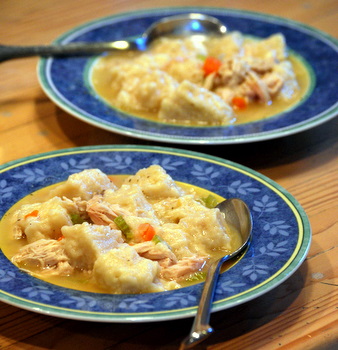
Chicken and dumplings is classic American comfort food. It’s one of those dishes that you just want to curl up with on a cold winter night since it’s hearty, flavorful and can be very easy to make. If you’ve never had it, chicken and dumplings is a lot like chicken soup (very heavy on the chicken) with steamed biscuits floating in it. The chicken and broth portion of the dish already has a comforting, homey flavor to it and adding steamed biscuit dough makes the dish filling and lends a nice buttery flavor to everything.
This version of chicken and dumplings – and you should know that there are as many ways to make this dish as there are ways to make a chocolate chip cookie – is a quick one-dish meal that you can make in less than an hour from start to finish. I start with a whole rotisserie chicken and shred the meat. I make a chicken soup base using onions, carrots, celery, garlic and chicken stock (storebought, but homemade is good if you have it) and add the shredded chicken into it. I make homemade biscuit dough, drop it in small chunks into the boiling soup, then put the lid on the pot and cook everything until the biscuits are soft and tender.
I think that the homemade biscuit dough is the key to this dish. The finished dumplings are so buttery and flavorful, and they even have a bit of a flaky texture to them that you’re not going to get from a can of biscuit dough dropped into the soup. It’s worth noting that you’re not going to get the same kind of rich, buttery flavor from canned dough, either, since most are made with shortening. The dumplings will be done when they are cooked through and fluffy, no raw dough in the center; you will probably have to cut one open to double check and can cook the whole dish a few minutes longer if you need to. It reheats well, but is best fresh!
(more…) -
An Ad For Apple’s Original Tablet, the Newton [Apple Tablet]
The Newton might be in the valley between an iPhone and Apple’s upcoming tablet, but it’s essentially Apple’s first stab at the form factor. And here’s how they promoted it.
Setting aside the ’90s taint on the ad, it’s strange to see how much Apple pumped the faxing angle on the Newton in its subsequent TV spots, which we’ll be revisiting soon.
-
NIA: Seniors Should Take Precautions To Avoid Hypothermia
 In addition to producing high heating bills, the cold weather that has gripped much of the country poses health dangers related to hypothermia, especially in the elderly. However, there are ways to protect oneself from excessive loss of body heat both at home and outdoors.
 Hypothermia occurs when body temperature falls to 96 degrees Fahrenheit or less. Its symptoms include slowed or slurred speech, sleepiness or confusion, shivering or stiffness in the arms and legs, poor control over body movements or slow reactions as well as a weak pulse.
According to the National Institute on Aging (NIA), seniors are particularly vulnerable to hypothermia due to underlying medical conditions and because they tend to be less active than younger people and produce less body heat.
Consequently, NIA experts recommend keeping the temperature of the home at a minimum of 68 degrees. To stay warm inside it is a good idea to wear long underwear, socks and slippers. A blanket can be used to keep legs and shoulders comfortable, while a hat or cap can warm the head.
Venturing outdoors, it is important to wear a scarf and gloves or mittens to prevent loss of body heat through the hands and feet. A hat is particularly important because a significant portion of body heat loss occurs through the head.
In addition, wearing several layers of warm loose clothing can help keep warm air close to the body.
Finally, NIA advises seniors to check with their healthcare providers as some medicines may increase the risk of hypothermia.

-
Samsung Corby Beat M3710 to Bring on bada Features?
Found under: Samsung, Corby, Beat, M3710, bada,,

Read more in mobile format


