
Category: News
-
Verizon to offer BlackBerry Z10 on March 28th for $199, pre-orders begin tomorrow
-
Verizon starts $199 BlackBerry Z10 pre-orders March 14
BlackBerry is gearing up for a big March in the US: Verizon has announced pre-orders to start for the Z10 handset on March 14. The phone will cost $199.99 with contract and be available in either black or a Verizon exclusive white color. In an updated press release, Verizon says the phone will be available online and in retail stores on March 28.
The news from Verizon was announced not long after BlackBerry itself published a press release, saying it had received it’s largest handset order from a single company in history: one million BlackBerry Z10′s were purchased from an unnamed company. Given Verizon’s solid support for BlackBerry in the past, it could be that unnamed partner.
Verizon has previously said it intends to sell the BlackBerry Q10, a device with touchscreen and hardware keyboard, but there are no additional details about that phone. BlackBerry executives have said that the Q10 is being tested by US carriers and the company is hopeful to see the phone launch in April.

Related research and analysis from GigaOM Pro:
Subscriber content. Sign up for a free trial.- Analyzing the wearable computing market
- LTE changes everything; LTE changes nothing
- Updated: Forecast: global mobile subscribers, 2010-2015


-
Twitter Now Supports Line Breaks in Tweets on the Web
In how in the hell was that not already a thing news, Twitter has just added support for line breaks on the web.
Before, users could only experience the great fun of fragmented tweets on mobile, but starting today you should be able to see line breaks on Twitter on the web.
Now, you can properly view a haiku, or perhaps another type of poem. Of course, that’s the optimistic take on how people will use this ability.
As you can see, this ability doesn’t translate to embedded tweets:
Guess what you can doView line breaks on Twitter webLet the fun begin.
— Twitter (@twitter) March 13, 2013
But here’s a screenshot of what that tweet really looks like now:

Let’s
Just
Hope
This
Doesn’t
Get
SuperA
N
N
O
Y
I
N
GLINEBREAKS#newattwitter
— Twitter for News (@TwitterForNews) March 13, 2013
-
Minecraft Xbox 360 Edition Makes Its Way To Retail In April
Minecraft Xbox 360 Edition has already proven to be the best selling Xbox Live Arcade title ever released on the platform. Now the indie hit has a chance to become the best selling retail Xbox 360 game of the year.
Microsoft announced today that it will be launching a retail version of Minecraft Xbox 360 Edition in stores on April 30. The new retail version of the game will include all the latest features of its digital counterpart including the ninth title update that’s on the way.
The retail version will be identical to the digital version in every way. That means retail players will be able to play online with those who only own a digital copy. As expected, the retail copy will also receive all future updates.
There’s no word on if the retail copy will come with any special features or extras, but it would be a great opportunity on Microsoft’s part to encourage those who already own the digital version to buy the retail version. Minecraft diehards will probably pick up the retail release anyway, but a little something extra – like a download code for the Minecraft documentary – definitely wouldn’t hurt.
Minecraft Xbox 360 Edition will launch in the U.S. on April 30 for $20. Gamers in Australia, Hong Kong, India, New Zealand, Singapore and Taiwan will be getting it in early June.
-
MediaPortal 1.3.0 supports Windows 8
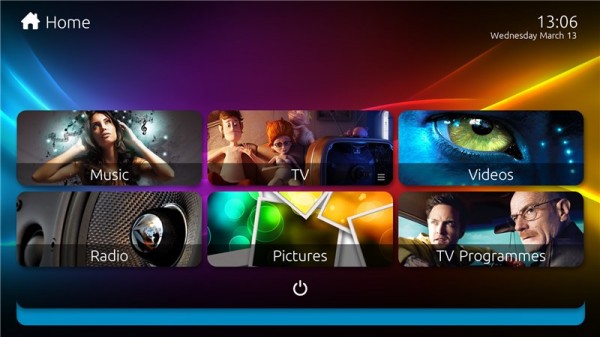
Open-source Windows media-center tool MediaPortal 1.3.0 has been released after an extended period in Release Candidate mode. Version 1.3.0 debuts a fresh new skin, optimized for widescreen full HD displays, and also adds support for unencrypted Blu-ray disc playback.
The new build also adds official support for Windows 8, improved settings dialog within MediaPortal itself and an option to install LAV filters, ensuring playback of most media formats.
The new Titan skin is the first default skin optimized for a widescreen, 1080p HD display. The developers — Team Titan — have also created the Titan Extended extension, which adds support for many community plugins, including its own Titan Skin Updater for implementing future changes and bug fixes to the skin.
MediaPortal 1.3.0 also improves its built-in skin engine, which will allow developers to offer multiple themes for each skin, including font, color and layout changes. Also added is a new menu-button control, support for user-definable skin settings and custom coloring.
Version 1.3.0 is also the first release of MediaPortal to offer any form of native Blu-ray support, with support for menus and extras as well as playback of the main feature, although only unencrypted discs are currently supported.
The new build also offers a fix for stuttering video playback through the inclusion of the MediaPortal Audio Renderer (MPAR). It aims to simplify the process of keeping video and audio in sync, and in addition to offering perfectly smooth playback will allow users to speed up the video stream to counter lower screen refresh rates.
When first installed, MediaPortal 1.3.0 offers to install the LAV Filters extension by default — this plug-in includes most of the audio and video codecs required to play even obscure media files, and supports major video acceleration standards including DXVA, Intel QuickSync and NVIDIA CUDA. All codecs and filters can also be configured directly from the MediaPortal Configuration interface.
Speaking of configuration, version 1.3.0 also integrates almost all available MediaPortal options within the main program’s own Settings section to minimize the need to exit the program and access the Configuration tool.
The My Videos section has also been extensively reworked, with view screens for Folders and Database, movie and actor information screens and a configuration + scan option. Text file support for videos has also been added, allowing users to place a simple text file with the IMBid number next to its corresponding movie file.
MediaPortal 1.3.0 is available now as a free, open-source download from Team MediaPortal for PCs running Windows XP SP3 or later.
5 reasons why a successful Silver Spring IPO is important
After almost two years, Silver Spring Networks has finally held its long-awaited IPO. And with a couple hours left until the market closes on its debut, the IPO could be considered a modest success. Silver Spring priced at the middle of its expected range ($17 per share), and then saw its shares soar almost 30 percent on its debut.
While the $81 million that the company raised in the IPO wasn’t as much as the maximum value of the $150 million that Silver Spring originally filed for back in the summer of 2011, the sale was “oversubscribed,” said Silver Spring Networks CEO Scott Lang, and the company opened up a million more shares to sell on Tuesday night. We’ll still have to see how the company’s stock fares over the following weeks and months, but the overall debut day has been positive.
Here are five reasons why it’s important that Silver Spring Networks had a relatively successful IPO:
1). Priming the smart grid IPO market (Opower?): At the Distributech show earlier this year, smart grid execs told me that all eyes were on Silver Spring’s planned IPO to see how the market would react. If the IPO was successful that would mean that a company that has been growing, like Opower, could potentially follow in its footsteps. Opower, like Silver Spring, has been considering an IPO since late 2011. 2012 was clearly a difficult year for IPOs from energy-focused companies, but it looks like 2013 could be better. Opower and Silver Spring also share an investor: Kleiner Perkins.
2). A modest win for cleantech investors: While it wasn’t a huge return, the IPO represents one of the rare successful exits for venture capitalists that put money into cleantech companies. Foundation Capital owns 12.26 million shares after the IPO and its private placement (it agreed to buy $12 million more worth of shares at the IPO price). At, say, $21 per share, Foundation’s shares are worth $257.46 million. Kleiner owns 5.66 million worth of shares, and at $21 per share, that’s worth $118.86 million. So yep, not huge, but at least these are exits.
3). Silver Spring needs to be a big public company: The IPO is important for Silver Springs because the company is competing with large public companies for utility business. Utilities like to do deals with big, stable firms, that they feel will be around for awhile. It’s hard to break into the utility sector as a startup. To take business and sales to the next level, Silver Spring needed to bulk up. The funds, of course, will also be helpful to grow the smart grid business.
4). The smart grid is real and being built: The rollout of the smart grid has suffered from PR problems due to smart meter security fears, and an expected slow down of the installation of smart meters in the U.S. Successful moves by smart grid pioneer Silver Spring shows how the smart grid continues to be built out in the U.S. and internationally.
5). The importance of patient investors and entrepreneurs: Silver Spring was founded in 2002, and has been building its business for over a decade. Foundation Capital was an early investor in the company and has supported Silver Spring’s ups and downs over the years (including an early time when the tech hit some hurdles). Now a decade later, Foundation has gotten its exit and still owned a little over 30 percent just before the IPO. (Foundation owned over 40 percent when Silver Spring first filed for its IPO in 2011). Foundation’s Warren Weiss, sits on the board. The company was co-founded by Eric Dresselhuys who still remains at the company as Executive Vice President and Chief Marketing Officer.

Related research and analysis from GigaOM Pro:
Subscriber content. Sign up for a free trial.- Ups and downs for cleantech in Q1
- Cleantech and investment in 2013
- Locating data centers in an energy-constrained world

With Q4 Earnings Two Weeks Out And Stock Dipping, BlackBerry Suddenly Announces Mystery Order Of 1M BB10 Handsets
BlackBerry issued a press release today that amounts to little more than “Look! We’re selling handsets!” The four paragraph release hit the wire at 3:17 ET, and shares (which had been down on the day on the NASDAQ) shot up immediately afterwards. BlackBerry provides no details about who placed the order or why, noting only that it’s the single largest purchase order for the devices “in history.” They ended the release with a reminder that BlackBerry’s fiscal 2013 fourth quarter earnings results will be reported in two weeks time.
From the release:
BlackBerry® (NASDAQ:BBRY)(TSX:BB) announced today that one of its established partners has placed an order for one million BlackBerry 10 smartphones, with shipments starting immediately. This order marks the largest ever single purchase order in BlackBerry’s history.”An order for one million devices is a tremendous vote of confidence in BlackBerry 10,” said Rick Costanzo, EVP Global Sales, BlackBerry. “Consumers are ready for a new user experience, and BlackBerry 10 delivers. With strong partner support, coupled with this truly re-invented new platform, we have a powerful recipe for success.”So, to recap: BlackBerry says ‘Here’s a wildly sizable order we got, with no real information provided (and no timeline for the delivery of the order, either), at a crucial time for our company when stock was slumping based on a dip after an earlier surge about acquisition rumors, ahead of quarterly results which will almost certainly be disappointing because they don’t yet represent and incorporate the launch of our new platform.”
BlackBerry told us via an emailed statement that they can’t reveal the identity of the buyer due to confidentiality agreements with the partner.
The release itself was pretty hilarious, but the chart of what happened to stock price immediately following the news is even better:
The jury is still out whether Blackberry is simply whistling past the graveyard here or if the nascent trend of major buyers upgrading their BB fleets (and bolstering the stock) will hold.
New Pope Chosen, @Pontifex Twitter Account Reactivated
With a plume of white smoke, the papal conclave has just selected Jorge Mario Bergoglio, a cardinal from Argentina, as the 266th pontiff of the Roman Catholic Church. He will be called Pope Francis and is the first ever pope to hail from the Americas.
And the Vatican wasted no time in reviving the dormant @Pontifex Twitter account, which served as the official account for Pope Benedict during his final months in the papacy.
On March 1st, the @Pontifex Twitter account went “sede vacante,” or “vacant seat” upon the official resignation of Benedict. All of his 39 tweets were archived and the Twitter account was put into hibernation – not deleted like some speculated would be the case.
The last tweet ever sent out by pope Benedict read “Thank you for your love and support. May you always experience the joy that comes from putting Christ at the centre of your lives.”
And here’s the first tweet from the Vatican as they welcome a new leader:
HABEMUS PAPAM FRANCISCUM
— Pontifex (@Pontifex) March 13, 2013
According to the Vatican’s social communication head, it’ll be up to Pope Francis to determine whether he wants to continue to tweet his message to the account’s nearly 1.7 million followers.
“Obviously we leave all decisions to the new man. But we would hope that he might continue to use @pontifex, which would maintain continuity,” said Secretary of the Pontifical Council for Social Communications Paul Tighe.

BlackBerry says an unnamed partner has ordered 1 million BlackBerry 10 phones

First Lady Michelle Obama Challenges America’s CEOs To Be Bold in Finding Ways to Hire Veterans

First Lady Michelle Obama delivers remarks on the Joining Forces Initiative to business leaders at the Business Roundtable Conference Center in Washington, March 13, 2013.
(Official White House Photo by Lawrence Jackson)
First Lady Michelle Obama today met with the Business Roundtable, an association of chief executive officers of leading U.S. companies which combined have nearly 16 million employees, and challenged these leaders to make bold commitments to hire our veterans and military spouses and help them reach their full potential within their companies.
Mrs. Obama highlighted the need for action, referring to the hundreds of thousands of veterans and military spouses currently looking for work, and pointing out that in the coming years, over one million more will be hanging up their uniforms and transitioning back to civilian life. "These men and women will be returning to their families, rejoining their communities, and figuring out what’s next in their lives," said the First Lady. "And as they do all of that, the one thing that they're going to be thinking about is a job."
Bieber Hamster Dies While in Fan’s Care
Last December, pop star Justin Bieber gave his pet hamster, Pac, to a grateful fan in Atlanta. This week, that fan sadly announced that Pac the hamster has died.
Tori McClure, the girl who received the hamster, tweeted out this week that Pac “probably won’t make it much longer.” Though some Bieber fans are rudely accusing McClure of not taking care of the small mammal, hamsters, depending on the type, don’t live long lives. Most do not live longer than three years.
TMZ spoke with McClure, who told the publication that Pac has been buried in her backyard.
Justin Bieber himself has not yet responded to McClure via Twitter and hasn’t yet acknowledged the rodent’s death. The pop star is currently touring in Europe, where rumors of his “diva-like” behavior led to a long Twitter rant in which Bieber lashed out against “fake stories” and “rumors.” The star also recently cancelled his second scheduled concert in Portugal, citing “logistical issues” with local unions.
They say PAC probably won’t make it much longer. He’s like an old man. My feelings couldn’t be more hurt ):
But they also said” on the bright side he got to live a healthy lavish life of a popstar, not many hamsters coulda been the Biebs” #feelings
I just wish he could get better. One final picture! He was OUR baby & @justinbieber I still can’t thank u enough http://t.co/szr8KHfgZo

He will be one of my sweetest memories! Thank u @justinbieber so much again. He will always be OUR boy ♡ http://t.co/UFXTphnYP7

BBM 7 Brings Brings Free Voice Calls to BlackBerry OS 5 With BBM Voice
BlackBerry OS 5 users have received a significant update to BBM this week with the latest 7.0.1 version featuring BBM Voice. Since the launch of BBM 7 on BlackBerry 6 and 7 this last December, over 50 million free voice calls have been made.

The latest BBM features baked-in multitasking so users can continue to chat or send attachments while they talk. Your friends list clearly shows which friends of your on on Wi-Fi and able to receive a BBM Voice call. BBM Voice also works seemlessly with your existing mics, bluetooth or otherwise.
Click here if the BBM 7 preview video below doesn’t load.
11 entertainers who sidestepped the usual avenues and found creative ways to make a living
 Musician Amanda Palmer has spent her career seeking out connection: first as a living statue on the street, who traded intimate eye contact and a rose for a passerby’s money; then, as one half of the band The Dresden Dolls, who didn’t hesitate to ask fans for support, either in person or over Twitter.
 Amanda Palmer: The art of asking “I think when we really see each other, we want to help each other,” Palmer explains in her talk from TED2013, which has already surpassed a million views. Her experience bears out this theory: her fans are not just willing, but eager, to lend a hand in exchange for the reward they get from her music.
The Dresden Dolls built a loyal following, playing extra shows on their nights off from opening for Nine Inch Nails. Soon, they were picked up by a major label and sold 25,000 copies of their second album. For Palmer, it was a triumph — but the record label considered it a flop.
At a show, though, a fan walked up to Palmer with a $10 bill. “I’m sorry, I burned your CD from a friend,” he said. “I just want you to have this money.”
The exchange brought a realization. “This is the moment I decide I’m just going to give my music away for free, online, whenever possible,” Palmer says. She resolved to encourage people to download and share, but to ask for help in exchange — just as she had from passersby on the street. To fund her next album with her new band, Amanda Palmer and the Grand Theft Orchestra, she set up a Kickstarter page. Her goal was to raise $100,000. She got $1.2 million — from about 25,000 people.
When people ask how she made so many people buy her album, she says, “I didn’t make them. I asked them.”
Palmer is part of a cohort of artists who are finding methods of disintermediation. Instead of proceeding down the well-trod roads of signing with a record label, finding a book publisher or getting a video game distributor, this group is finding new ways to make a living through connection. Here are other examples — some successful, some not — but all fascinating new models for making a living in the changing creative landscape.
Who: Radiohead
What they gave away: Their 2007 album, In Rainbows. Downloads cost whatever fans wished to pay, from nothing up through £99.99 (about $212, at the time). The box set cost £40.
Why’d they do it? It was manager Chris Hufford’s idea, frontman Thom Yorke told David Byrne in Wired that year. “We all thought he was barmy,” Yorke said. “But it was really good. It released us from something. It wasn’t nihilistic, implying that the music’s not worth anything at all. It was the total opposite.”
The results: “In terms of digital income, we’ve made more money out of this record than out of all the other Radiohead albums put together, forever — in terms of anything on the Net. And that’s nuts,” Yorke said. Still, however, Radiohead returned to the traditional model for its next album, The King of Limbs.Who: Nine Inch Nails
What they gave away: The first volume of the 2008 album Ghosts, on BitTorrent with a Creative Commons license. The entire four-volume album was available as a $5 download on the band’s website.
Why’d they do it? “We believe in finding ways to utilize new technologies instead of fighting them,” Nine Inch Nails said at the time.
The results: A week after the release, Trent Reznor reported that he’d gotten more than $1.6 million in orders and downloads.Who: Louis CK
What he gave away: His latest standup special, Live at the Beacon Theater, which he made available for download on his website for $5 in December 2011. Not pay-what-you-wish, but still far less than a large company would have charged.
Why’d he do it? “The experiment was: if I put out a brand new standup special at a drastically low price ($5) and make it as easy as possible to buy, download and enjoy, free of any restrictions, will everyone just go and steal it?” Louis CK wrote on his website. “Will they pay for it? And how much money can be made by an individual in this manner?”
The results: In less than two weeks, he’d earned $1 million. A good chunk of which went to costs, bonuses for his crew … and charity.Who: Aziz Ansari
What he gave away: His new comedy special, Dangerously Delicious, also for $5, a few months after Louis CK released Live at the Beacon.
Why’d he do it? Ansari noted on his website that he was inspired by Louis CK, and pointed out the freedom, for both artist and fans, that comes with controlling the terms of sale for your work. “I wanted to release it online because I saw how many people viewed clips from my last special online on sites like YouTube,” he writes. “I also like releasing it myself because there are no commercials, bleeps, or any of that stuff.”
The results: “As soon as I did it, the overwhelming response was, ‘I’m so glad you did it, too. I hope more comedians do this,’” Ansari told Fresh Air’s Terry Gross. Later that year, comedian Jim Gaffigan again put the model into practice, too, selling Mr. Universe on his website for $5.What: Santorini Grill in Williamsburg, Brooklyn
What they gave away: Greek food. Name your price point.
Why’d they do it? Proprietor Paula Douralas planned to run the pay-what-you-wish promotion for a month, “but it’s worked so well and attracted so few freeloaders that she’s decided to make it permanent,” New York Magazine wrote in December 2011.
The results: Sadly, the restaurant closed four months later—not because people abused the flexible cost scale, Douralas told Gothamist, but because they stopped coming. (In a 2010 interview in Salon, an economist points out that pay-as-you-wish makes much more sense for a musician, since an album is cheap and requires a single purchase, than for a restaurant, which necessitates repeat business and higher prices.)What: One World Everybody Eats in Salt Lake City, Utah
What they gave away: Café food, “pay what you can,” starting in 2003.
Why’d they do it? To bring healthy, delicious food to patrons who couldn’t otherwise afford it.
The results: Founder Denise Cerreta found the business model challenging, and One World Everybody Eats is now owned by a nonprofit group. In 2009, Cerrata closed the original café and now directs her efforts toward helping other, nonprofit-backed restaurants bloom. According to the website of the eponymous One World Everybody Eats Foundation, the organization “has directly or indirectly helped launch 30 community cafes and is mentoring over 50 cafe groups in the planning stage worldwide.”Who: 2D Boy, an indie game development duo
What they gave away: Pay what you wish for “World of Goo,” their award-winning physics-based puzzle game, for two weeks in 2009.
Why’d they do it? To celebrate the one-year anniversary of the game’s release.
The results: A week in, about 57,000 people had bought the game off 2D Boy’s website at an average price of $2.03, and there was a spike in sales for a couple other games by the company. 2D Boy ran a survey to find out more, and reported that “few people chose their price based on the perceived value of the game. How much the person feels they can afford seems to play a much larger role in the decision.”Who: Joost “Oogst” van Dongen, a game developer
What he gave away: The game “Proun,” pay-what-you-want, in 2011.
Why’d he do it? As an experiment.
The results: In a very thorough analysis on his blog in 2011, after three months of Proun sales, van Dongen notes that he made a lot of money for a hobby project—€14,105—but estimates that if he’d set a fixed price, he would have made five to 10 times as much. Only 1.76% of Proun’s 250,000 players paid for it. (The Humble Indie Bundle, through which you can buy a group of video games from indie developers for whatever you want to pay, has done better—possibly, Techdirt has noted, because it offers the option of donating the money to charity, which Proun did not.)Who: Moby
What he gave away: Music, for use in non-commercial or non-profit films and videos, via the website Moby Gratis. (Use in a commercial film requires that you apply for a license; proceeds are donated to The Humane Society.)
Why’d he do it? “I have a lot of friends in the independent film world and working for non-profits, and one of the problems that they have is getting music for their films, because a lot of times record companies and publishing companies make it difficult and want to charge too much,” Moby said.
The results: Moby Gratis is still going strong! The service even provided music for the montage featured in Yves Rossy’s talk from TEDGlobal 2011, “Fly with the Jetman.”
Amazon drops Kindle Fire HD 8.9 to $269 in the U.S., LTE version now only $399

Featured Android App Review: Sharpee – Powered by Behance [Social]

Whether you’re a creative genius or someone trying to be more creative, you might want to check out Sharpee – Powered by Behance. If you’re not familiar with the Behance Network, it’s a an online site that allows creative professionals to share their portfolios. At the same time anyone can view these portfolios and utilize them for inspiration.
Anyone can create an account and set up a profile on Behance. Then it’s time to upload projects. For now it can only be done on the desktop, but that feature is coming soon to the Sharpee app. Projects can consist of just about any type of creative field imaginable including advertising, architecture, animation, drawings, graffiti, graphic design, illustrations, photography, visual effects, web design, and 57 others. Portfolios can be complete collections or simply a work in progress.
The cool thing about Sharpee is that you don’t need to be an artist to enjoy the app. Thanks to apps like Instagram, we have become a very visual world and Behance has not only incredible images to enjoy, but professional as well. Behance isn’t about taking a picture of a salt shaker at the diner, adding a filter to it, and calling it art. Behance is about people who know what they are doing. Aspiring artists will love Sharpee because you can get a lot of inspiration and ideas by looking through all the incredible works.
The app itself is as easy as it gets. Upon opening the app, you will get a quick glance at all the featured portfolios, which include the titles, author name, creative field, how many people appreciated it, and how many people have commented on it or viewed it. Tap on the portfolio, and you will be taken to the artist’s description as well as all the images associated with it. You will find an option to view comments at the bottom of the page. By tapping on any of the images, you will be taken to a gallery-like experience where you can swipe through the collection of images. From here you can tap the icon at the bottom left that will give you options to download the image, set it as a wallpaper, share it via email or various social networks like Facebook, Google+, and Twitter. If you’re searching for something in particular, you can tap the search icon to further refine things by keyword, creative field, collections, work in progress, or artists. If there is one negative it’s the wallpaper aspect in that you can’t download high resolution images, so if you have a high-end phone or tablet, you can forget it.
If you’re looking for something new to inspire your own works of art or just simply enjoy looking, you should definitely download Sharpee today. It’s absolutely Free so give it a shot. For now it’s only for phones, but a tablet version is coming soon. Hit one of the download links below to get started, and as always, let me know what you think.
Features:
- search & explore projects, collections, works in progress and artists from Behance network
- filter your search over creative field, time or country
- download images to your device
- set artworks as wallpaper
- share artworks with your friends
New features coming soon: login, works upload, creating collections, appreciations etc. to make application full functional.
For more information: Sharpee and Behance Network


Come comment on this article: Featured Android App Review: Sharpee – Powered by Behance [Social]
Visit TalkAndroid for Android news, Android guides, and much more!Google I/O tickets sold out in under an hour

This shouldn’t surprise anyone. Last year, Google I/O tickets didn’t last very long, and this year they went just as fast. If you didn’t manage to snatch your $900 ticket up in under an hour, you were just out of luck. While it didn’t break the record for 23 minutes last year, it’s still pretty impressive. Did any of you manage to get a ticket? Let us know in the comments.
Come comment on this article: Google I/O tickets sold out in under an hour
Visit TalkAndroid for Android news, Android guides, and much more!Samsung Ramped Up Advertising In 2012, Outspent Apple By $68 Million

Samsung is the top manufacturer of Android devices and to maintain its dominance in the marketplace, outspent Apple by $68 million in 2012. According to ad research and consulting firm Kantar Media, Samsung spent $401 million advertising its devices in the U.S. last year while Apple spent $333 million. Prior to that, Apple spent three times more on advertising in 2011 than Samsung. The increase in advertising is definitely noticed with the South Korean company investing millions in Super Bowl Ads, having a big presence at Mobile World Congress, and even consuming commercial time during the Oscars.
Wireless carrier executives claim that Samsung also spends a sizeable chunk on advertising off the screen with in-store advertising, promotions, and training for sales representatives who help get devices into the hands of consumers. Better yet, that advertising backs quality products. Patrick Remy, VP of Devices at Orange in the UK, says customers rarely ever return Samsung devices.
Source: The Wall Street Journal
Come comment on this article: Samsung Ramped Up Advertising In 2012, Outspent Apple By $68 Million
Visit TalkAndroid for Android news, Android guides, and much more!Kindle Fire HD 8.9″ Gets A Permanent Price Cut, Launches In Europe And Japan
The Kindle Fire HD 8.9″ launched late last year for a rather affordable $300. To perhaps undercut the competition even more, Amazon has decided to make its flagship tablet even cheaper.
Amazon announced today that the 16GB Kindle Fire HD 8.9″ now retails for $269. The 32GB model now retails for $300. The Kindle Fire HD 8.9″ 4G LTE also got a price cut as the 16GB model now retails for $400, while the 64GB model retails for $500.
The price cut coincides with the tablet’s launch across select European countries and Japan. The Kindle Fire HD 8.9″ will set UK consumers back £229 ($341 USD) for the 16GB model or £259 ($386 USD) for the 32GB model.
“We’re thrilled with customer reaction to Kindle Fire HD 8.9”. Customers tell us they love our large-screen version of Kindle Fire HD for web browsing, email, gaming, watching TV shows, reading magazines, and more,” said Dave Limp, Vice President, Amazon Kindle. “As we expand Kindle Fire HD 8.9” to Europe and Japan, we’ve been able to increase our production volumes and decrease our costs. Across our business at Amazon, whenever we are able to create cost efficiencies like this, we want to pass the savings along to our customers.”
With the price cut, the Kindle Fire HD 8.9″ is now the most affordable tablet of its size. Apple and Google best be taking notes on how to subsidize costs through content sales because Amazon has proven that it’s still king of this rather risky, but so far profitable, venture.
Google CEO Larry Page’s memo about Android leadership changes
This afternoon, in a rather shocking and unexpected move, father of Android Andy Rubin stepped down — or was forced to — in a leadership change sure to shift the direction of Google platform development. Sundar Pichai, senior vice president for Chrome and Apps, assumes responsibilities for Android.
Larry Page broke the news, offering praise alongside Google cofounder Sergey Brin for Rubin’s enormous contribution. The follow memo follows.
Sergey and I first heard about Android back in 2004, when Andy Rubin came to visit us at Google. He believed that aligning standards around an open-source operating system would drive innovation across the mobile industry. Most people thought he was nuts. But his insight immediately struck a chord because at the time it was extremely painful developing services for mobile devices. We had a closet full of more than 100 phones and were building our software pretty much device by device. It was nearly impossible for us to make truly great mobile experiences.
Fast forward to today. The pace of innovation has never been greater, and Android is the most used mobile operating system in the world: we have a global partnership of over 60 manufacturers; more than 750 million devices have been activated globally; and 25 billion apps have now been downloaded from Google Play. Pretty extraordinary progress for a decade’s work. Having exceeded even the crazy ambitious goals we dreamed of for Android—and with a really strong leadership team in place — Andy’s decided it’s time to hand over the reins and start a new chapter at Google. Andy, more moonshots please!
Going forward, Sundar Pichai will lead Android, in addition to his existing work with Chrome and Apps. Sundar has a talent for creating products that are technically excellent yet easy to use — and he loves a big bet. Take Chrome, for example. In 2008, people asked whether the world really needed another browser. Today Chrome has hundreds of millions of happy users and is growing fast thanks to its speed, simplicity and security. So while Andy’s a really hard act to follow, I know Sundar will do a tremendous job doubling down on Android as we work to push the ecosystem forward.
Today we’re living in a new computing environment. People are really excited about technology and spending a lot of money on devices. This is driving faster adoption than we have ever seen before. The Nexus program—developed in conjunction with our partners Asus, HTC, LG and Samsung—has become a beacon of innovation for the industry, and services such as Google Now have the potential to really improve your life. We’re getting closer to a world where technology takes care of the hard work — discovery, organization, communication — so that you can get on with what makes you happiest, living and loving. It’s an exciting time to be at Google.
Photo Credit: Joe Wilcox
BlackBerry Partner Purchases One Million BlackBerry 10 Smartphones

There’s no doubt that excitement about BlackBerry 10 has been mounting. Those who already have a BlackBerry Z10 in their hands have given us hugely positive feedback. Well, our partners are hearing this loud and clear, and I’m happy to let you know that we recently received our largest ever single purchase order in BlackBerry’s history.
“An order for one million devices is a tremendous vote of confidence in BlackBerry 10,” said Rick Costanzo, EVP Global Sales, BlackBerry. “Consumers are ready for a new user experience, and BlackBerry 10 delivers. With strong partner support, coupled with this truly re-invented new platform, we have a powerful recipe for success.”
BlackBerry unveiled the new BlackBerry Z10 and BlackBerry Q10 smartphones on January 30th. BlackBerry Z10 is now available for purchase in a number of markets around the world and will be available in the United States starting this month.


