Ahora toca comenzar el año fuerte para seguir a buen ritmo. Los descuentos que nos presentan son bastante jugosos, 6.500€ en el SsangYong Kyron, pudiendo acceder a él desde tan solo 18.990€. Más de un millón de las antiguas pesetas para fomentar las ventas y aumentar el número de coches en la calle procedentes de sus fábricas es un buen reclamo sin lugar a dudas. Tras el salto tenéis el resto de promociones disponibles.
ACTYON desde 17.250€. Descuento promocional de hasta 2.500€ en la gama Actyon.
ACTYON SPORTS desde 19.990€. Descuento promocional de 1.600€ en toda la gama Actyon Sports.
KYRON desde 18.990€. Descuento promocional de 6.500€ en toda la gama Kyron.
REXTON II desde 26.900€. Descuento promocional de hasta 7.000€ en la gama Rexton II.
RODIUS desde 18.490€. Descuento promocional de hasta 6.130€ en la gama Rodius. Además regalo de un equipo integrado multimedia DVD en toda la gama.
Del SsangYong Rodius tenemos publicada una prueba aquí, si te interesa el modelo (y los 6.500 € de descuento es posible que ayuden a que te interese) puedes consultarla para comprobar el rendimiento, acabado e interiores del coche por nuestros compañeros de HighMotor.
ASUS announced some radical product designs at the CES this week. Chief among the new designs is the NX90 notebook, a sleek, stylish beast of a notebook. The NX90 incorporates audio work by Bang & Olufsen to set this $2,500 notebook apart from the crowd.
It’s not new but it was fun to see the Eee PC 1005PE in person. The 10-inch netbook is as good as any on the market.
I love convertible notebooks, and I love multitouch Tablets. The T101MT fits the bill with the swivel screen that handles multitouch.
ASUS discussed some long-term research projects called Waveface that uses translucent bendable displays to build useful devices. The prototype wristband has a smartphone become a thing of beauty, and the slate on the right a very timely device. According to ASUS this technology is 5 to 10 years out so don’t get too excited yet.
I wouldn’t want everything in my house to have a family photo on it, but sometimes it is really nice to have a few small personalized things around your home. Paying for a personalized item that someone else designs for you can be costly. That’s why I prefer to do the personalization myself. There are two ways to do this.
Using Print on Demand Services Like Cafe Press or Zazzle
Using one of these services, you can make your own small accessories, such as mouse pads, canvas prints, mugs, or sculptures. They are fairly easy to use. Uploading a photo, adding text and playing around with fonts and the way things are aligned is really just a matter of clicking on things and dragging stuff around.
Doing Personalization Completely on Your Own
Printable iron on products make creating your own placemats, pillows, or virtually anything else made with fabric a snap. Just use your photo editing software to adjust your picture, add text and follow the instructions on the iron on paper to print out a transfer. You can also make transfers with a ton of different mixed media products, like gel medium and transfer mediums. Some of these products work on glass or wood. I used gel medium to transfer a laser printed color copy of a heron onto a flat piece of driftwood that I’d primed in the spot where I was putting the transfer. I painted the last name of the person I was giving it to on the driftwood, sealed it several times and now she has a completely unique sign for her house by the water.
Do you make your own personalized home accessories?
1. de VPRO had onlangs een programma over stedenbouw 2040. Een Amerikaanse planoloog had het over de agglomeratie AmBrusTwerp: Kijk naar de nightsky op Google-earrth en je ziet in west-Europa een agglomeratie die zich uitstrekt van Amsterdam tot Brussel. Dat is kennelijk de stedenbouwkundige schaal waarop gedacht moet worden.
2. Onlangs heb ik wat ANWB-plattegronden gekocht van het gebied zuid-Randstad: In de hoek Den Haag – Zoetermeer – Westland – Capelle / Rotterdam wonen 3,5 miljoen inwoners. Dat is Rome. Met Dordrecht erbij is het nog giga’er. En dan heb je het enkel over de zuidvleugel van de Randstad. Op een steenworop daarvan ligt de noord-vleugel met dito inwoners. Dat is een dubbelstad Rome-Berlijn.
Wat doe je daar in stedenbouwkundige zin mee? Wat doe je daar qua infra mee?
3. Die amerikaanse planoloog had het over Amsterdam als kernpunt in die agglomeratie. Rdam zou een Oakland van Frisco zijn. Een giga buitenregio waar kunst en newthings kunnen bloeien.
Colônia do Sacramento (em castelhano Colonia del Sacramento) é uma cidade do Uruguai, capital do departamento de Colônia. Tem origem na antiga cidade de Colônia do Santíssimo Sacramento fundada em 1680 por Manuel Lobo, a mando do Império Português no século XVII. A área onde localiza-se a fundação portuguesa, hoje faz parte do Centro Histórico, reconhecido pela UNESCO como Patrimônio da Humanidade.
A Coroa Portuguesa expressou novamente os seus interesses em estender as fronteiras meridionais de sua colônia americana até ao rio da Prata quando determinou ao governador e capitão-mor da capitania do Rio de Janeiro, D. Manuel Lobo (1678-1679), que fundasse uma fortificação na margem esquerda daquele rio. Desse modo, com o apoio dos comerciantes do Rio de Janeiro, desejosos de consolidar os seus já expressivos negócios com a América Espanhola, em fins de 1679 a expedição de D. Manuel Lobo partia de Santos, alcançando a bacia do Prata em Janeiro do ano seguinte. A 22 desse mesmo mês, as forças portuguesas iniciaram o estabelecimento da Colônia do Santíssimo Sacramento, fronteiro a Buenos Aires, na margem oposta. O núcleo desse estabelecimento foi uma fortificação simples, iniciada com planta no formato de um polígono quadrangular.
Colonia foi palco de muitos confrontos entre Espanha e Portugal, ao longo dos anos seu território mudou de mãos diversas vezes, como pode ser visto através da seguinte tabela (só disponível na versão em inglês):
Cada um desses conflitos e tratados estão descritos no Wikipedia para quem quiser saber mais detalhes.
Cheguei a Colonia de barco vindo de Buenos Aires. Três empresas realizam a travessia (Buquebus Turismo, Colonia Express e SeaCat). Existem duas opções: lenta – 3h e expressa – 1h (que foi a que peguei). É possível fazê-la no ferry especial que também transporta automóveis.
1 – Deixando BsAs pra trás.
2 – Já em Colônia, próximo a entrada do antigo muro construído pelos portugueses para proteger a entrada.
3 –
4 –
5 – Vejam o brasão da Coroa Portuguesa
6 – Rua dos Suspiros. Notem a rua, em pedra, naquele formato similar a Paraty, feito em forma de V para que a água e o esgoto fossem para o centro da rua e com a alta do rio, levadas para fora da cidade, mantendo-a limpa.
07 – Esse farol foi construído nas ruínas de um convento destruído em um do inúmeros conflitos travados na cidade entre Portugal e Espanha.
Ao longo do Barrio Historico é possível identificar muitas casas com influências arquitetônicas portuguesas, espanholas e a mistura entre os dois estilos.
08 –
09 –
10 –
11 –
12 – Na ocaisão da declaração de patrimônio da humanidade, muitas escavações foram feitas e nessa praça encontraram as ruínas do que foi a casa de um administrador português, destruída e enterrada pelos espanhóis.
13 – Catedral
14 –
15 –
16 – Essa pia foi trazida da Bahia na ocasião da construção
A partir daqui fotos do alto do Farol. Infelizmente minha máquina amadora não conseguiu captar, mas é possível ver BsAs lá do alto.
17 –
18 –
19 –
20 –
21 –
Para quem quiser conhecer a cidade, ela dispõe de 7 museus que funcionam em esquema de rodízio, a cada dia fecham 02.
Only a few days ago, the AllThingsDigital team left home freshly pressed, pockets full of cash (or at least as full as journalist’s pockets get these days) and ready to take on the geek horde at CES 2010 in Las Vegas. They had big plans but in the end even a copy of Eric Boyd’s How to Count Cards Like an MIT Freshman could not save them. They did do a heck of a lot of reporting on CES though. At least they could bring back some news, if not new Ferraris from the dealership at the Wynn.
John was a CES coverage juggernaut this week, churning out post after post or indispensable, up to the minute CES nerdery. Early in the festivities, Intel (INTC) opened the door on their newest family of Core processors. With model names like i3 and i5, and with a feature called “Turbo,” you know they have to be good. The real story is that the release of these chips puts Intel a solid year ahead of expected releases from AMD (AMD). Though there were no reported sightings of any iSlates, John did deliver a little nugget from the CES rumor mill about their manufacture. Analysts are expecting the device to have an aluminum chassis when it may or may not be shown to the world at an unconfirmed Apple event Jan. 27th. John was our correspondent in the audience at AllThingsDigital’s Mini D event at CES. While there were posts aplenty, it was comments from Palm (PALM) CEO Jon Rubinstein that have been making the rounds on the internet. Everyone was a little surprised when Rubinstein claimed never to have used an iPhone. Weekend Update has used a Pixi and we might just believe him.
Our very own Mr. and Ms. CES (Walt and Katie) may come home with blisters and a bad case of “qwerty thumb” after handling so many new gadgets this week. The Personal Technology column was all about Google’s Nexus One, the latest super smartphone from everyone’s favorite search giant. Walt’s review was a mixed bag for the Nexus One, which got high marks for advancing the Android platform forward, for forcing the other super smartphone giants to up the ante on their cameras and for some of it’s cool Google-connected features. He wasn’t as upbeat on the menu-driven interface of the phone, and also had qualms about the four hard-wired buttons. The battery life for some features also wasn’t as competitive as it might have been.
Katie spent some pre-CES time investigating the so called mega-zoom digital camera offerings from Nikon, Panasonic and Casio. These in-between cameras aren’t quite as cumbersome as DSLRs, but offer serious zooming capabilities with lots of other pro level features. Katie fell in love with the higher picture quality and flexibility, even if these cameras were a little bulkier than the smartphone she’d been using for her photo needs previously. All in all though, she gave the class of cameras high marks and said they were a great next step for people looking to take their pictures a little further.
Weekend Update has to get going. Its our job to prepare the ibuprofen, cold medicine, ice, bandages, crutches and bail money that may be needed by the staff as they make their way back from CES. Stay tuned through the weekend for a few more tech revelations, and please try not to play your stereo too loud if you’re driving near our Noe Valley HQ this week. Hangovers after a gadget binge are the worst.
The gloves have come off in the battle for Cadbury, with the British confectioner accusing Kraft Foods boss Irene Rosenfeld of not being truly in control of her American company.
Cadbury chairman Roger Carr said Rosenfeld ‘may be the chief executive, but the executive chairman is in Omaha’.
He was referring to billionaire investor Warren Buffett, the ‘Sage of Omaha’ whose Berkshire Hathaway investment company is based in Omaha, Nebraska.
War: There are several firms batting for Cadburys, but Kraft is still the favourite if a takeover is to happen
Buffett, who owns 9.4 per cent of the Oreo cookies-to-Dairylea manufacturer, warned against hurting shareholder value and urged Kraft to keep a lid on the spiralling acquisition price.
Carr said: ‘He’s boxed her in and the ratings agencies will stop her borrowing more. It must have been extremely embarrassing for Kraft to have been so publicly reprimanded by its largest shareholder.’
On Tuesday, Cadbury will launch its final defence, which will focus on future performance and its long-term strategic value. Cadbury also has until Friday to give a detailed update on trading over Christmas.
The figures are expected to show that margins have improved consistently through 2009 and the trend should ensure the company comfortably meets tough new trading targets of good, mid-teen margins by 2011.
‘They’re not going to disappoint,’ said a source close to the company. Cadbury, which has repeatedly said Kraft is trying to ‘steal the company on the cheap’, wants to ensure its shareholders know the likely growth in underlying value that should be the starting point for the Kraft offer.
A source at Kraft said the company would watch Cadbury’s statements ‘with interest’ but added that reported talks between Cadbury and US chocolate maker Hershey indicated that Cadbury had ‘already given up thoughts of independence’.
Sources close to Cadbury believe a rival bid is now unlikely, though Carr insists ‘the door is open to a fully financed’ bid.
Kraft has until January 19 to give more information about its bid and raise its offer, thought likely to go up to 800p.
Kraft’s cash and shares bid was worth 768p on Friday. Cadbury shares closed at 778p. Shareholders have until February 2 to accept or reject Kraft’s offer unless a rival bid emerges.
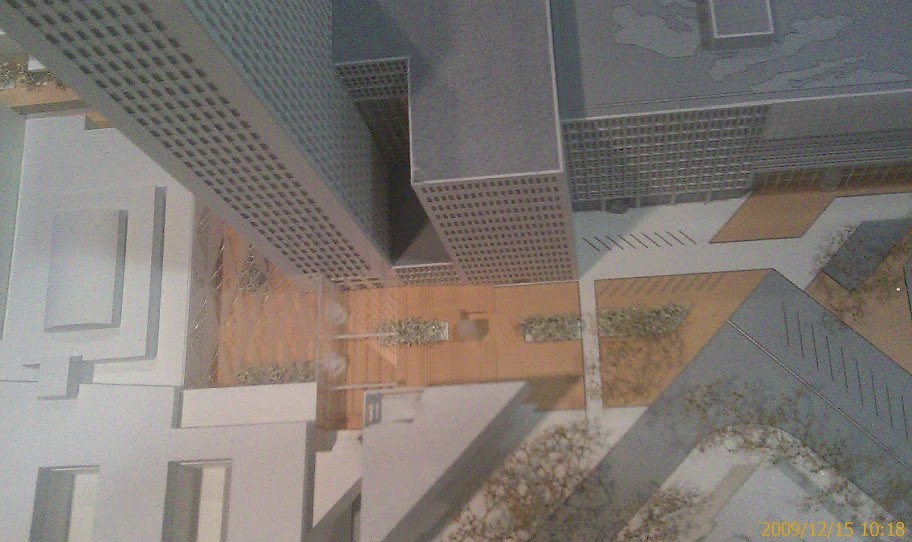
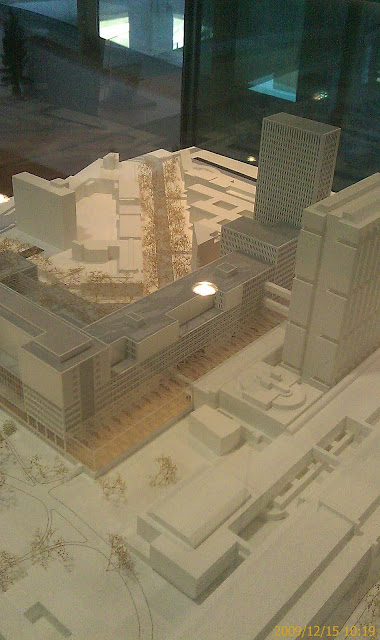
Last December, construction started on expansion of one of the largets hospitals in the Netherlands,
the Erasmus Medical Center. The construction is expected to last until 2017. 🙂
We swung by the Audiovox / RCA booth in search of the new Lexi e-reader but sadly were met with a non-working version that was effectively useless. We’ve heard about the specs but were lacking in the image department, so it was good to at least see what the thing will look like when it hits the increasingly crowded e-reader space. The design is basic, and from the signage in the booth, so is the UI on the handheld itself. There’s not much else to say here, and the PR reps weren’t the most helpful, but we managed to snag a bunch of shots anyway so check them out below.
I hopped off the plane at LAS with a dream and my MacBook Pro
Welcome to the show of tech and glow, whoa will I make a big win?
Jumped in a cab, here I am for the third time
Look to the right, and I see the CES sign
This is all so crazy, everybody seems so nerdy
My tummy’s turnin’ from some cheese I ate at DigEx
Too much e-ink and I’m wired
That’s when the podcast man turned on the radio
And the Miley song was on
And the Miley song was on
And the Miley song was on
[iTunes] Subscribe to the Podcast directly in iTunes (enhanced AAC).
[RSS MP3] Add the Engadget Podcast feed (in MP3) to your RSS aggregator and have the show delivered automatically.
[RSS AAC] Add the Engadget Podcast feed (in enhanced AAC) to your RSS aggregator.
[Zune] Subscribe to the Podcast directly in the Zune Marketplace
Good news and bad news: the good news is that we got to look at Synaptics’ Fuse concept phone, which pairs capacitive touch overload with tilt sensing, squeeze sensing and a fair bit of haptics. The bad news is that Synaptics is holding off on showing the actual UI until MWC in February. So for now we’ve got a working prototype that demonstrates that the sensors really do work. It’s an abstract affair, involving the formation of little 3D spheres that roll around on the screen and can be tweaked, pushed and generally confused by the various input methods. Everything works great, with wonderful touch sensitivity on the back of the “phone” being one of our favorite elements we’d like to see in more devices. One thing that became clear while playing with the phone is that while it’s targeted at improving one-handed operation, it’s actually impossible to actuate all the various sensors simultaneously with one hand, which we suppose Synaptics should see as a mark of distinction. Check out a couple videos of the demo in action after the break.
I was diagnosed type 2 diabetes about 9 months ago & am pretty much in denial to be honest however, i have needed to change my job & in about 4 weeks i will be starting 12 hour shifts 7-7 days & nights & i am quite worried about this.
I would be grateful if there is anyone else in this situation who can give me some advice on what to expect health wise.Thank you very much in anticipation
Qualcomm (NSDQ: QCOM) is becoming a major software supplier in mobile for mid-range devices in the U.S., but rather than make money on the platform, it hopes to sell more phones with its chipsets inside.
Up until now, Verizon Wireless was the largest customer of Qualcomm’s Brew Mobile platform, but at CES this week, AT&T (NYSE: T) committed to it for all of its mid-range devices starting by the second half of year, and Sprint (NYSE: S) confirmed to mocoNews that it was also planning to use it. Sprint’s President Steve Elfman: “I am comfortable with it becoming a standard…We’ll definitely be using Brew Mobile platform.”
By having the three largest carriers in the U.S. using the platform, Qualcomm becomes a significant middleman in the delivery of applications and other mobile content. If developers didn’t consider building their applications on Brew before, they most likely will now. The platform is free to carriers, developers and the handset makers; Qualcomm will make money by selling chipsets inside the phone. But that wasn’t always Qualcomm’s business model. Previously, Qualcomm charged everyone in the Brew ecosystem, including developers, who had to have their applications certified. Qualcomm’s CEO Paul Jacobs said during AT&T’s keynote: “It’s an open platform now. It’s free to OEMs and operators. This is as open of a platform we know how to make.”
As part of AT&T’s announcement, it said that Pantech, LG (SEO: 066570) and Samsung have committed to using the Brew platform. HTC was also named, despite the company only previously making smartphones using the Windows Mobile and Google (NSDQ: GOOG) Android platforms. By adding Brew, HTC opens itself up to a much bigger market that includes lower cost phones. HTC said its Brew phones will carry the name “HTC Smart,” and will come with its Sense user-interface overlay that’s found on some of its Windows Mobile and Android devices. Generally speaking, these mid-range devices are fairly functional, and commonly have full Qwerty keyboards or touchscreens and have access to email and a browser. But typically, they have cheaper hardware components and are given away for free. Subscribers may not have to pay for an unlimited data plan either, like you do on the iPhone and other devices. AT&T calls the category “quick messaging” and said by the end of 2011, 90 percent will be running Brew.
One of the potential outcomes of both AT&T and Sprint choosing Brew will be less fragmentation in mobile—or at least that’s AT&T’s hope. Currently, mid-range devices run a plethora of systems, from Java to Flash and to homegrown proprietary ones built by handset makers. The idea is for all Brew applications in existence today to be able to work across a larger footprint. Qualcomm’s Jacobs: “It’s backwards compatible to other Brew apps, and supports Java and Flash.”
As part of adopting Qualcomm’s Brew platform, AT&T said it will launch a new app store called AppCenter. AT&T said developers will be able to keep 70 percent of the revenues and AT&T will take 30 percent, which is the same formula Apple (NSDQ: AAPL) uses. John Zehr, the SVP and GM of mobile, said he was very excited about the announcement. “With all the fragmentation going on, it will make it easier. We are encouraged by it,” he said. ESPN (NYSE: DIS) already has a number of applications built on the Brew platform with the help of UIEvolution, a mobile-application shop.
Earlier this week we saw the launch of the Google Nexus One, the second very high profile Android launch in as many months. And, as should be expected, the phone is drawing numerous comparisons to the iPhone — it seems you can’t find a related review, blog post, or tweet that isn’t gauging the device based on how it compares to Apple’s juggernaut. That’s as it should be. But for anyone considering making the jump to Android, you need to keep one thing in mind: many of these early adopters have been using their iPhones non-stop for years. And it takes days, if not weeks, to unlearn your iPhone habits and judge Android on its own merits.
Imagine if you took a longtime Windows user and sat them in front of a Mac for a couple days. They’d probably complain about superficial things like the change in mouse acceleration and the “unintuitive” button placement (the Close button is on the opposite side of the window). It’s not until a week or two after you start using a Mac as your primary computer that you overcome these issues and begin to fully grasp some of the benefits it offers. No, it may not be for you, but there’s really no way you can tell for sure without taking the plunge and using one as your primary computer. It’s the same way with Android.
I know, because I had the same experience when I made the leap from the iPhone to Android a few months ago. When I got my Droid, I was initially very pleased with it: the screen is amazing and the device flies. But as the luster wore off, I began to have my doubts. I couldn’t figure out how to access options that should have been readily visible. Menus weren’t where they should have been. All in all, Android made me feel stupid, because much of what I had learned about using the iPhone — habits that had become nearly instinct — no longer applied.
A week or so later, it clicked. When I want an option that isn’t already visible, I hit the dedicated ‘Menu’ button just beneath the screen. Need to jump to a previous screen in an app or the web browser? Hit the dedicated ‘Back’ button. In some ways, these are actually better than the soft buttons located in iPhone apps, because they’re always in the same place. It also saves some screen real estate. Using them has become totally second nature to me. But they aren’t the reason why I’ve decided I prefer Android over the iPhone.
Which brings me to the things that have turned me into a full-time Android user. Gmail on Android kicks the pants off of the iPhone’s Email client — something that I’m not the only person to notice. As someone who does a lot of Emailing, that makes a huge difference to me. Google Voice integration is fantastic. The ability to run multiple applications at the same time is a breath of fresh air. Those three things were enough to seal the deal.
Had I only used an Android device for a few days, these aforementioned pros may have been overshadowed by the fact that the phone felt so unfamiliar. Or I may have been turned off by one of the things Android gets wrong, like that there’s no way to update multiple applications at the same time and the default music player is remarkably ugly. But when it comes to using the phone in real life on a day-to-day basis, those problems aren’t enough to outweigh the productivity benefits Android offers me.
And, really, that’s my point. Many of these iPhone users who are testing out Android for the first time tend to get hung up on things that feel unfamiliar, or are griping about issues that will only affect them once in a blue moon. No, Android isn’t as pretty as the iPhone, and there are plenty of things it doesn’t do as well as it could. But until you’ve taken the plunge to see what lies beneath its less-polished exterior, you haven’t really seen what it has to offer.
Press release: Continuing the global expansion of Destinator GPS navigation software across geographic markets, smartphone application stores, and mobile handset makers, Intrinsyc Software International, Inc., a leading provider of software solutions for mobile devices, announced today the expansion of its Windows Mobile applications into the UK, Australia and Western Europe – which are available immediately for download through Destinator NavStore (www.destinatornavstore.com). From the company that has powered the GPS solutions of the biggest mobile brands and navigated millions of people worldwide on mobile devices, Destinator 9 is the newest and brightest turn-by-turn app for your smartphone. Destinator 9 goes beyond navigation and brings a fresh GPS experience across the hottest mobile platforms across the globe.
Destinator Delivers Beyond Navigation
At its core, Destinator 9 is a solid and reliable turn-by-turn navigation application with the highest quality on board maps and a routing engine that exceeds performance benchmarks. In addition to a host of new features designed to get people to their destinations easily, quickly and safely, Destinator 9 takes the navigation experience to a new level with added functionality to make navigating the application and the road ahead more enjoyable and less stressful.
* More features. Destinator delivers the biggest and best set of features on the market. Here’s a few to highlight – Google Local Search. Real-Time Traffic Updates. StickyPOIs. NavStrip™. NAVTEQ maps. Destinator makes it easier to find what you need and get there with less effort and stress.
* More social. Destinator taps into the new wave of social mapping. What’s better than a feature to send your location or your favorite POI to a friend? It’s the beginning of a social mapping revolution and Destinator is at the leading edge.
* More integrated. Destinator’s secret ingredient is the ability to work better with your phone. Destinator seamlessly blends with your smartphone functions allowing you to simply route right from your existing contacts or your messages.
* More…for free. A first among on board turn-by-turn application providers, you can experience Destinator 9 first-hand courtesy of a free trial. The 14-day trial of the full application will allow users to see the unique features and functionally that make Destinator the best choice for navigation and location based services on their mobile device.
A GPS App that Packs a Punch
Destinator 9 delivers an unmatched navigation experience with a host of exclusive, next-generation features. The intuitive NavStrip™ delivers one-click access to key navigation functions such as address entry, route, and search. This provides the quickest path to navigation with the fewest taps while displaying the map. Users can browse maps in 2D or 3D views. The 3D display includes a horizon display that automatically updates based on weather conditions. Destinator 9’s weather feature provides a 3 day forecast for the user’s current location or destination. Users can navigate to any map location using the TapNGo™ feature by simply using a long press on any point on the map and then tapping “Go” for voice-guided turn-by-turn navigation. TapNGo also features other actions such as “Call”, “Save” location, and “Add to Trip Planner”.
“We have developed and delivered a navigation app that is both reliable and exciting at the same time. Destinator 9 is a premier GPS app with a fresh set of features that makes your travels easier and less stressful while also delivering an element of fun and usability,” said Souheil Gallouzi, Senior Vice President and General Manager of Mobile Products Development, Intrinsyc. “Destinator has a heritage of providing exceptional, reliable turn-by-turn navigation solutions and we are proud to bring the latest generation of our application to the hottest mobile platforms around the globe. We are confident that our customer base will continue to appreciate the Destinator Experience.”
Windows Mobile users will now be able to enjoy reliable, true turn-by-turn voice guided navigation that not only works in areas of limited mobile coverage but also takes advantage of the phone’s data connection. This seamless connectivity enables integrated online search powered by Google and weather forecasts as well as the sending of locations with rich map content and easy-to-use interface.
With Destinator, users can also enjoy multi-destination routing by setting multiple trips with various stops to help plan a day’s drive to different locations – all with the fewest clicks possible and an easy-to-use interface. A one-click widget brings up a Google Map view of the current location, when available on a device with a data connection. Destinator’s revolutionary StickyPOI™ feature allows users to quickly display popular Points of Interest (POI) categories with a just a couple of screen taps. Tapping on a category, such as hotels or restaurants, automatically displays the nearby POI on the map. In addition to turn-by-turn navigation, drivers and pedestrians can view a direction list or route summary by a simple tap or two. Destinator delivers voice-guided, turn-by-turn directions with complete visual dashboard information in portrait mode and on the Side Bar in landscape mode. Users can set destinations by browsing a location on a map or entering an address, street, city, intersection, or postcode, keyword search of POI, history, favorites, and SMS. All these features are delivered with a crisp, clear and rich map view in 2D or 3D that can switch automatically to day or night view mode depending on GPS or system time.
Intrinsyc is a 2009 winner of the Microsoft Windows Embedded Excellence Award. Read more at www.intrinsyc.com.

















_Vogel_view_04_d1.jpg)







 Earlier this week we saw the launch of the Google


