VOTO PÚBLICO
1. Fly away
JohnnyMass

2. Brincadeiras
Barragon

3. Mãe, é ali que se fazem as nuvens?
daniel322
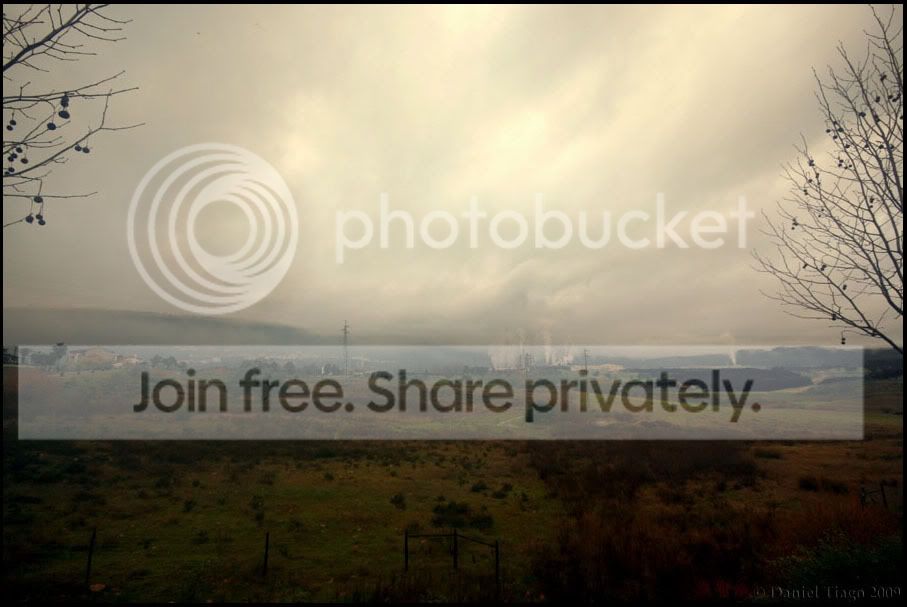
1. Fly away
JohnnyMass
2. Brincadeiras
Barragon
3. Mãe, é ali que se fazem as nuvens?
daniel322
1. Sentinels
JohnnyMass

2. Modern Beauty
Barragon

3. Ilha Urbana
DanielFigFoz

4. A minha modesta casinha
daniel322

Filed under: Motorsports, Coupe, Chevrolet, Racing

Back in August when General Motors introduced the all-new GT2 class Corvette C6.R, it ran downsized 6.0-liter version of the 7.0-liter V8 from the long-dominant GT1 car. At the launch, Corvette Racing program manager Doug Fehan told us the 6.0-liter was just an interim engine. With revised GT rules on tap for 2010, GM was already planning a brand-new engine for its race Vette.
Unlike the 6.0/7.0, which is a ground-up race engine that only shares basic architectural dimensions with the production small block, the 2010 C6.R’s V8 is a new 5.5-liter unit that will indeed be derived from the production engine found in roadgoing Corvettes. In fact, the 5.5-liter race engine will be built at GM’s Performance Build Center alongside ZR1 and Z06 V8s.
Fehan has confirmed that the 5.5 is running on the dyno and will make its race debut at the 12 Hours of Sebring in March. We don’t have any additional details on the new engine yet, although we were told earlier that it is based on the next-generation production small-block, which we expect to see in the Corvette soon.
Gallery: Mid-Ohio 2009: Corvette GT2 racing


Photos Copyright (C)2009 Sam Abuelsamid / Weblogs, Inc.
[Source: General Motors]
Continue reading Corvette Racing boss Doug Fehan confirms new 5.5L V8 for Sebring debut
Corvette Racing boss Doug Fehan confirms new 5.5L V8 for Sebring debut originally appeared on Autoblog on Sat, 02 Jan 2010 19:55:00 EST. Please see our terms for use of feeds.
 The idea of working at Google is a dream job for many engineers all around the world. So where better to go to get ready for this career than the Googlle Institute of Software of Software Studies, right? Hold on a second. Read that name again.
Yes, it appears that some jokers in India are attempting to leverage not only Google’s name, but their logo and even favicon to trick people into thinking they their quite-possibly-bogus online university is related to the real Google somehow. Dubbed the “School For Future Software Engineers,” the Googlle Institute has a website that looks like it could some sort of legitimate online training school — if it weren’t for the sketchy naming, branding, and plethora of dead links.
They apparently offer two certifications: “GCPA – Googlle Certified Professional in Advanced Computing,” which promises to teach you technologies related to “Windows Professional” and “Linux Professional.” The other certification is “GCPE – Googlle Certified Professional in E-Commerce,” which gives you more consumer-oriented skills, such as Photoshop. These courses take two years to complete, but the site notes that they also offer “Modular courses – duration 60 days to 90 days that can enhance your computer skills and offer you “GOOGLLE” certification, no matter what your specific requirement.” Oh goody, a Googlle certification.
The site also features a bunch of pictures of students sitting around outside at a campus, sitting in a classroom, graduating, the works. The only problem? As far as I can tell, there is no actual campus. Actually, almost every link on the site leads to dead end pages that don’t actually exist.
This “Googlle” is apparently a division of C.B.Online Pvt. Ltd., which is some sort of online business “solutions” provider based in India. Googlle’s headquarters is apparently in Orissa, India at the Rajarani Petrol Pump Complex. That sounds a lot like a gas station to me, but who knows. Regardless, I’m sure it’s not as nice as Google’s actual offices in India (they have four main hubs for the bustling and burgeoning tech scene there). Hopefully they have something to say about this site.


[thanks Deb]
Crunch Network: CrunchBoard because it’s time for you to find a new Job2.0


Buy This Item: [Click here to buy this item]
 What is it about the dawn of a new year – and, in this case, a new decade – that inspires such an interminable parade of lists? The 100 best albums of the decade (The Strokes? Seriously?), the 30 best TV series of the decade (The Wire? Seriously?), the 10 most influential games of the decade (The Sims? Seriously?) – even the 10 best conservative movies of the decade (just — seriously?).
Apparently in the days between Christmas and New Year, the world stops demanding actual journalism – or writing. Instead, stuffed large with leftover turkey and re-gifted booze, we’re happy to accept any old rehashed crap, provided it’s appended with the words “…of the year” (2.5 billion results on Google) or “…of the decade” (72.8 million results).
But not so at TechCrunch. There’s a reason why we had more stories on Techmeme’s list of the ‘ten objectively biggest tech stories of 2009‘ than any other single news source, and that’s because – even in a week when no one is reading anything we write – we retain our passion for real journalism and impassioned campaigning, along with our hatred of lazy, crowd-pleasing bullshit.
Nah, just kidding. Here’s this week’s list of the best lists published on TechCrunch this past week…
2010: My Fifth Annual List Of The Tech Products I Love And Use Every Day
Arrington has been doing this for five years now: naming the 24 products and services he can’t live without, presumably so that his legions of fanboys can use the self-same apps and in doing so become even closer to their hero. Let’s just hope Foursquare’s servers can cope with the tsunami of new users signing up just to fake check-in at the Pyramids.
Snapstream’s Top TV Trends of 2009
Leena reports on Snapstream’s interesting – if utterly predictable – research into the most frequently used words and phrases on American TV in 2009. According to their findings, which are generated by analysing closed caption text from all of the major channels, this year’s top television obsessions were “Iran, Michael Jackson, Swine Flu, North Korea, AIG, Pirates, Hamas, (The) Inauguration, Ted Kennedy, and Balloon (boy).” In other “no shit” news, we also learn that over-exposed media darling Twitter was mentioned more frequently than Facebook, MySpace and other social media platforms. Twemendous.
Amazon’s Best-Selling Products of 2009
If you were in any doubt that 2009 was the year that ebooks finally reached their tipping point then consider Amazon’s list of best-selling products for 2009, as analysed by CrunchGear. Not only was the Kindle their best-selling electronic item but the utterly mainstream Dan Brown was the device’s best-selling author. What was it Clay Shirky said? Here’s comes everybody!
370 Passwords You Shouldn’t (And Can’t) Use On Twitter
From the depressing to the terrifying, Robin scored an interesting scoop this week by uncovering Twitter’s (not very well hidden) list of banned passwords. To save you the effort of paging through all 370 words and phrases, all you need to know is that there are no fewer than five euphemisms from vagina (not counting vagina itself, which is also there), but only two for penis (with penis itself curiously absent). The word ‘monkey’, meanwhile, is inexplicably on the list twice. Can’t be too careful with monkeys.
Ten Technologies That Will Rock 2010
And finally, while everyone else on TechCrunch was looking backwards, Erick whipped out his crystal ball and tried to predict what we’ll be looking back on this time next year. No surprise to see “the tablet” on the list, or Geo(location) or real-time search. In fact, no surprises at all: if Erick is right (and when is he not?) then 2010 is going to be the most dull and predictable year ever. I mean, HTML5 is going to rock 2010? Would it have killed him to have included hoverboards or robot maids?
X-ray sunglasses?
Cybergeese?
Come on!
…
Still hungry for lists? Here are twelve Lists That Didn’t Make My Top List Of TechCrunch Lists…
Six New Years Resolutions For Apple And The iPhone In 2010
Top Ten Mobile Voice Searches Of 2009
Flixster Users Name Top 2009 Movies
The Top 10 MobileCrunch Posts of 2009
The Best iPhone Apps Of 2009 (Appvee Edition)
Single Most Innovative Product of the Decade
Unexpected Success Stories
Biggest Losers in Tech
The best console games of the decade
PC Games of the Decade
The Biggest Product Flops of the Decade
…and of course…
JibJab’s Year In Review Plays Off 2009, With Help From Keyboard Cat
Have a great year! Of the decade!
Crunch Network: CrunchBoard because it’s time for you to find a new Job2.0


Buy This Item: [Click here to buy this item]
Here’s our rundown of the week’s business and tech news. (Due to the holiday-shortened week, I’m including fewer posts than usual.) First, the most popular stories VentureBeat published in the last seven days:
 Nine startups dreams and industries Google crushed in 2009 – A lot of folks, from tiny startups to companies in established industries, found themselves in the search behemoth’s path this year. We looked back some of the dreams that were destroyed.
Apple’s new gadget is an e-reader, says latest rumor — There are reports that Apple’s new tablet computer has a specific purpose: It’s a Kindle-killer designed for reading books, magazines, and news on-the-go.
These are the ten best video games of the decade, dammit! — VentureBeat games writer Dean Takahashi compiles a list of his favorite games from the past 10 years, supposedly because his “annoyance [with other best of decade lists] built up so that it overflowed” and he “felt compelled to retaliate” by creating his own list.
Droid clobbers other Android phones in Xmas app downloads — More evidence that the new Droid is the king of the Android phones: On Christmas Day, the number of Android app downloads from the new Droid phones roughly equaled the number of downloads from all leading Android phones combined, according to a report from app market analysts Flurry.
And here are four more stories we thought were important, thought-provoking, or fun:
 Peering into MySpace’s collective consciousness with real-time search — We look at the differences in how conversations play out on different online communities. Of course, our comparison is extremely unscientific, but it support speculation that class divisions are playing out on the web.
Our favorite horribly wrong or amusing tech covers — As everyone makes predictions about 2010 and beyond, we tried to provide some perspective by reminding readers of decades of bad predictions from the tech press. We’ll have our own predictions up soon, and some will certainly be wrong, but hopefully they won’t deserve too much ridicule a decade from now.
Stealthy C3 raises $26M to manage carbon, but what will it actually be doing? — C3 already seems to be setting itself apart by recruiting heavyweights like former Secretary of State Condoleezza Rice and former Secretary of Energy Spencer Abraham for its board. The star power isn’t surprising, considering that the San Mateo, Calif., company was founded by Thomas Siebel — the man who sold Siebel Systems to Oracle for $5.7 billion.
Does voice-to-text technology actually work? — Voice-to-text technology is entering more and more industries, and has the potential to make recording, dictating and communicating a whole lot faster. But after trying out the different services available now, it’s clear that they’ve still got a long way to go.


Buy This Item: [Click here to buy this item]

sto lat :kiss:
Indiana, US | Follies and Grottoes
Constructed over ten years on the site of a former handball court on the grounds of the Providence Home, the Geode Grotto was the idea of Father Phillip Ottavi, an Italian immigrant who was inspired by religious grottoes in Europe. As a child he was orphaned by the Messina earthquake, which killed 100,000 or more people in Italy in 1908, which led to his involvement with the Order of the Sons of Divine Providence who are dedicated to helping the less fortunate.
Grottoes have long been associated with Catholic fervor and devotion. The grotto at Lourdes, France, became famous when an appearance of an apparition of Mary to a young girl was followed by miraculous cures. A frenzy of grotto building in Europe began even earlier in the mid 1600s and continued through the Victorian period, fueled by the apparition at Lourdes, with dozens if not hundreds of grottoes being built both on church land and at private residences. In the US the trend never took off with as much gusto, but there is still a good number of religious grottoes primarily in the midwest.
Geodes are abundant in southern Indiana, and the soft rocks with crystal-filled centers have been used locally as building and decorative material for generations. The geodes that are in the Providence Home grotto come from nearby Heltonville, where a ready supply was found early in the project. The main material is the local geode stones, mixed with bits of marble, carved limestone, and found objects, set into poured concrete. The white Carrara marble statues were imported specially from Italy.
The style of the grotto was intended to imitate the famous grotto at Lourdes, but as one builder put it, there were “No blueprints, just inspiration.” The result covers four city blocks in fountains, planters, cave-like openings and gardens. It was built between 1960-1970 under the guidance of Father Ottavi with the help of residents and coworkers from the home. One worker tells the story about Ottavi’s passion – one day he fell from a platform while working on the main grotto, the Mother of God Shrine, but he was back the next day continuing to work.
There are two major shrines: the Mother of God Shrine on the south end, and the St. Joseph Shrine in the north.
The entrance is through Mother of God Shrine, just north of the Providence Home on Bartley Street.

Continuing the ‘best of 2009″ series, here’s Inhabitat’s top energy stories – TOP 5 GREEN ENERGY STORIES OF 2009.
As the world energy crisis mounts and the threat of catastrophic climate change looms near, the need for clean and green energy sources has never been greater. Fortunately, the future is bright and 2009 saw no shortage of sustainable energy solutions! From space-age solar power beamed down from above to glitter-sized solar sequins to power producing plasma plants, check out our top 5 energy stories from 2009 and vote for your favorite!


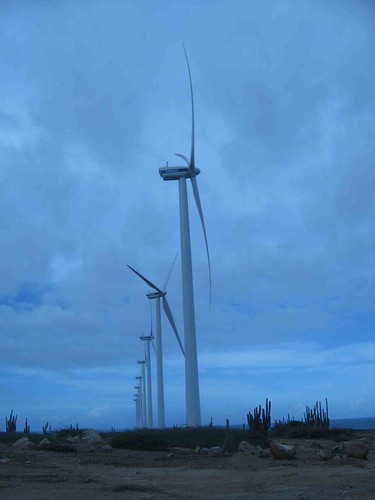
Jerome a Paris has a post at TOD on a wind farm in the Caribbean that he helped finance – Aruba’s New Windfarm.
As Copenhagen ended, unsurprisingly, in confusion, I have the opportunity to give you a more positive tale, and show you it is possible for people – including even bankers amongst them – to work towards a more sustainable future without necessarily endangering our way of life.
In this case, it involves the construction of a windfarm in a place where it will directly replace fuel-oil-burning power plants. As you’ll be able to see below, this wind farm is quite remarkable in a number of ways which means that this experience will not be replicable as easily everywhere, but it shows that there are many places and energy systems which it is possible to materially improve under almost all criterai using renewable energy.
Amongst notable features, one can find:
* at around 60%, it has one of the highest capacity factors in the world, with 50% more power output per turbine than European offshore windfarms…; located on the Eastern coast of the island, it is exposed directly to the trade winds, which are highly regular and almost always in the same direction (allowing to put the turbines very close to one another); their almost constant strength also mean that tear and wear is actually likely to be less than usual, as there are very few brutal changes in regime and torque;
* it is now providing 20% of the island’s overall electricity needs, replacing dirty and expensive fuel-oil in the process. At night, it will produce up to 60% of the demand. And thanks to the highly regular wind regime, this is very stable and predictable production; (even though they pushed for this project to happen, the local power company had quite a shock to see ‘for real’ how big a portion of their system the windfarm has suddenly become – as is still frequent, utilities have trouble taking wind seriously, but it this case the reality was quite compelling);
* the utility will save money on fuel imports and, more importantly, will actually end up with cheaper power: it buys the electricity from the wind farm at a fixed price over 15 years which is roughly equivalent to what it costs to produce electricity from their traditional oil-fired generators with oil prices at $45/bbl. Who wants to bet on oil being consistently under $45 for the next 15 years? In fact, the prime minister of the island, who was present at the inauguration, used the opportunity of that ceremony to announce lower power prices for the poorest households on the island…

Some awesome builds by Rob Morrisseau:


Some awesome builds by Daniel Jassim:
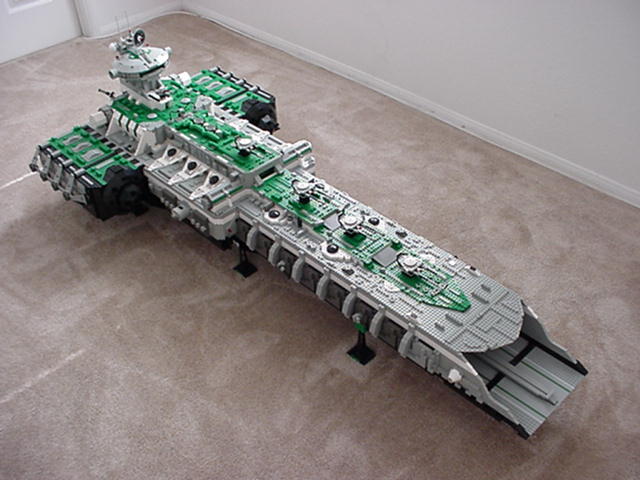


And this dude looks satisfied with himself:

Someone called Mark Kelso also did a disgustingly detailed Star Wars ship:

Thats just the bridge.
As i said in my post i have been a Type 1 for 20 years. For the most part things have been good. I have had my ups and downs but overall good….I have had regular blood testing to check my A1c and Liver and Kidneys and everything has been good…
But this past summer my Liver numbers for whatever reason were spiked…So they checked my gallbladder thinking i had gallstones and it came back clear….So thankfully my endo decided it was something to worry about and asked if we could do a biopsy on my liver just to be safe…So we did and it came back that i had Cirrhosis of the Liver. She wouldn’t tell me how damaged my liver was but demanded i go see a Gastroenterologist…So i went and she sent me for bloodwork to check for other Auto Immune disorders to see if that is what causes such quick liver damage….I am waiting for the results and i go back in a week to see her but i was just wondering….can anyone relate to my story? Do you think it may have been the years of insulin useage that damaged my kidney? (for the record i don’t drink or smoke) Also i have oster arthritis in my left knee that has gotten worse in the past year and i am wondering if there is a auto immune disorder that maybe can cause this?
Anyway i was just wondering if anyone had stories to share to help ease my mind until i get my results! Thanks 🙂
 Approximately 1 in 6 people live in informal settlements, or slums. In developing countries, some 1 in 3 people living in cities are living in slum areas.
While there have been some successes in reducing the number of people living in such areas in recent years by about a tenth (mostly in China and India), numerous problems persist.
Some settlements are not officially recognized despite being present for decades and being home to thousands of people. This then means that residents have been denied a range of essential services provided by the government to other residents such as water, sanitation, electricity, garbage collection, health, education, access roads and transport.
In some places, people face an almost daily threat of forced eviction without notice or appropriate compensation. Human rights groups have filmed cases where bulldozers come in without warning while residents are there. This often occurs when developers want the land for further development and may include state collusion.
Due to the very conditions in which people live, their ability to stand up for their rights and have their voices heard is greatly reduced. And yet, despite this, there is much of humanity to be found in these areas, with vibrancy and enterprising people struggling to make a living.
The poverty around the world page has been updated to explores some of these aspects further, with additional information and videos.
Filed under: TUAW Tips, Snow Leopard
 Mac OS X 10.6 Snow Leopard introduced a lot of under-the-hood changes and many are not very obvious. One such change is to the authentication requirements for logging in remotely via SSH.
In 10.5 logging in remotely via SSH was a pretty standard affair. In 10.6, however, security has been beefed up a bit to require case-sensitive login credentials. While this requirement has already been imposed on passwords, Snow Leopard now requires a case-sensitive user name as well.
In other words, when logging in via SSH, Snow Leopard differentiates between the username “aron” and “Aron.” This threw me for a loop for quite some time and is another one of the numerous reasons I have held off upgrading my Mac mini to 10.6.
TUAWSSH and the case-sensitive username in Snow Leopard originally appeared on The Unofficial Apple Weblog (TUAW) on Sat, 02 Jan 2010 18:30:00 EST. Please see our terms for use of feeds.
Read | Permalink | Email this | Comments
Buy This Item: [Click here to buy this item]

Paseo Santa Lucía, Monterrey.


