Category: News

  • Official Windows Mobile 6.5 ROM for Orange HTC Touch Pro 2 now available

    orangetp2HTC has finally released an official Windows Mobile 6.5 ROM for the HTC Touch Pro 2 on Orange UK.

    Like other updates from HTC, this version will also bring an updated version of TouchFlo3D 2.1.

    Read more and see HTC here for the download.

    Via Softpedia.com

    Share/Bookmark

  • Cream Cheese Noodle Kugel

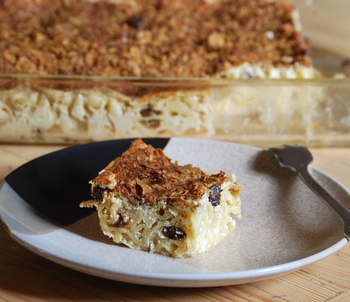
    Cream Cheese Noodle Kugel

    The first time I was served kugel, I was very young and eating dinner at a friend’s house. Her mom made brisket and kugel for dinner and, while I liked the brisket, I kept clear of the kugel. A noodle casserole? A sweet noodle casserole? Were they kidding? Fortunately, her mom wasn’t offended that I didn’t want to try it right off the bat and managed to convince me to taste a bite.

    I’m glad I did!

    Kugel is a traditional Jewish casserole that can be made in a huge variety of different ways. It can be sweet or savory, and can be made with noodles, potatoes, matzoh, bread or other starches as a base – not entirely unlike a bread pudding. That first kugel I had consisted of egg noodles cooked with milk and cream cheese, sweetened lightly with sugar and cinnamon. I’ve had many other kinds, but this is still pretty much my favorite.

    This recipe is one I put together after seeing a recipe in Bon Appetit a few years ago where the noodles were not precooked before adding them to the casserole dish. This saves a lot of time and the noodles cook perfectly as the whole kugel bakes. I use cream cheese, some sour cream and add vanilla and a bit of sugar to my kugel. The flavor reminds me a little bit of cheesecake, but the whole thing is pretty unique to kugel. I also add a topping made with crushed cornflakes (or bran flakes, whatever I have on hand), brown sugar and cinnamon, which gives the kugel a nice little crunch and an extra bit of sweetness.

    I tend to make a batch of this around Hannukah – especially if I need something to bring to a potluck holiday dinner – but it is good all year round. It can be served both warm and cold, and makes for great leftovers, too.

    (more…)

  • 2009 Holiday Gift Guide: LG 47LH50

    LG 47LH50

    We wanted to find a nice mid-range HDTV we could recommend this year, and we think the LG 47LH50 is it.This is LG’s 47-inch, widget-powered television, and it brings the heat with a 1080p display, and 5.1 surround sound output. Why would you want to output sound from the display? Well, thanks to the Yahoo! widget support, you get things like Netflix, YouTube, and a bunch of other embedded media playback services, including the Vudu streaming movie service. Just connect the LG 47LH50 to your home network, and the content is right at your fingertips. The part, though, is the price. These typically sell for about $1500, but Amazon is selling it for $1,139.


    Tags:
    ,
    ,
    ,
    ,
    ,
    ,
    ,
    ,
    ,
    ,
    ,
    ,

    2009 Holiday Gift Guide: LG 47LH50 originally appeared on Gear Live Holiday Gift Guide on Wed, December 09, 2009 – 1:56:06


  • VIDEO: Thermahelm motorcycle helmet is swell. Err… not swell

    Filed under: , ,

    Thermahelm helmet animation – Click above to watch the video after the break

    We’re sure this comes as a shock to nobody, but here we go anyway: brain swelling is bad. Very bad. That thick, hard skull surrounding your brain is great at providing a good deal of protection, but when things go awry in a big way, there isn’t much room in there to let your brain expand.

    Cooling the brain in some manner is apparently a good way to reduce swelling, and a company from the U.K. called Thermahelm has worked up a new motorcycle helmet that incorporates a layer ammonium nitrate and water that instantly mixes in the event of a crash. The chemical reaction will maintain a 37-degree brain temperature, which is said to stave off oxygen loss to the brain.

    According to Thermahelm, its technology will add roughly $250 to the cost of a helmet, and the company is currently working on a retrofit kit that will allow riders to install the system in their own helmets. Click past the break to watch a nifty video animating the technology.

    [Source: Thermahelm]

    Continue reading VIDEO: Thermahelm motorcycle helmet is swell. Err… not swell

    VIDEO: Thermahelm motorcycle helmet is swell. Err… not swell originally appeared on Autoblog on Wed, 09 Dec 2009 16:55:00 EST. Please see our terms for use of feeds.

    Read | Permalink | Email this | Comments

  • Oak Beams, New College Oxford

    Oxfordshire, U.K. | Extraordinary Flora

    The anthropologist/philosopher Gregory Bateson used to tell this story:

    Founded in 1379, New College, Oxford is one of the oldest Oxford colleges. It has, like other colleges, a great dining hall with huge oak beams across the top, as large as two feet square, and forty-five feet long each.

    A century ago, some busy entomologist went up into the roof of the dining hall with a penknife and poked at the beams and found that they were full of beetles. This was reported to the College Council, which met the news with some dismay, beams this large were now very hard, if not impossible to come by. “Where would they get beams of that caliber?” they worried.

    One of the Junior Fellows stuck his neck out and suggested that there might be some worthy oaks on the College lands. These colleges are endowed with pieces of land scattered across the country which are run by a college Forester. They called in the College Forester, who of course had not been near the college itself for some years, and asked him if there were any oaks for possible use.

    He pulled his forelock and said, “Well sirs, we was wonderin’ when you’d be askin’.”

    Upon further inquiry it was discovered that when the College was founded, a grove of oaks had been planted to replace the beams in the dining hall when they became beetly, because oak beams always become beetly in the end. This plan had been passed down from one Forester to the next for over five hundred years saying “You don’t cut them oaks. Them’s for the College Hall.”

    A nice story, one which raises an immediate question, “What about the next time? Has a new grove of oaks been planted and protected?”

    The answer to this is both yes and no. The truth of the story, is that there was probably no single patch of trees assigned to the beams. It was standard practice for the Foresters to plant oaks, hazel, and ash. While they would harvest the Hazel and Ash every twenty years or so, they allowed the oaks to grow quite large for use in major construction work. (The oaks were also occasionally used in ship building.)

    Additionally, the trees from which the oaks used to rebuild the hall came from land that was not acquired by the college until 1441, nearly sixty years after the hall was originally built, and the roof of the hall had already rebuilt once before in 1786 using pitch pine timbers, because the large oak timber was apparently unavailable.

    The answer to the question, have new oaks been planted, is probably. Somewhere on the land owned by the New College are oaks that are, or will one day, be worthy of use in the great hall, assuming that they are managed in the same way they were before. It is in this management by the Forester in which lies the point. Ultimately, while the story is perhaps apocryphal, the idea of replacing and managing resources for the future, and the lesson in long term thinking is not.

    In conjunction with the Long Now Foundation. Modified from original video and text by Stewart Brand at the Long Now Blog.

  • Gold Is On A Four-Day Losing Streak

    For the fourth day in a row, gold continues to fall hard. Looking at this chart below, we can see that just five days ago, the SPDR Gold Trust ETF (GLD) was trading near $120 a share. Today, it closed at $110.

    GLD1209_chart

    Join the conversation about this story »

    See Also:

  • Hospital stay

    I was in a local hospital as a cardiac patient for six day after Thanksgiving. During that time, they changed my insulin form regular to novolog, but continued to maintain my nph regimen.
    During that time my blood sugars ranged between 450 and 49 with an average around 390. The cardiologist and endocrinologist said it was ok and they were trying to avoid a low blood sugar incidence.

    Is this normal?

    I have a MD friend who told me that when his wife died in the hospital of heart failure, they maintained her blood sugar level in the 800 to 1,000 range. He suggested I file a complaint with the hospital and Medicare regarding my treatment.

  • Windows Mobile Call Block will block your unwanted calls on your Windows Mobile phone

    Windows Mobile Call Block ScreenshotSynergeTech Solutions, the makers of Windows Mobile SMS Sync and Windows Mobile Monitor, have released a new application called Windows Mobile Call Block. 

    As the name would suggest, the purpose of the application is to block unwanted callers.  Unlike other software available for doing this, they have managed to keep the application as simple as possible.  You simply add numbers to the blacklist and the program prevents those numbers from calling you.  Also unlike other applications available, the software does not simply ignore calls from those numbers – it actually picks up and then instantly hangs up on the calls.  This prevents the unwanted callers from even reaching your voicemail!

    The application runs on Windows Mobile 5, 6, 6.1, and 6.5 and is available from SynergeTechSolutions.com for only $9.99.

    This post was submitted by Brian Hamachek.

    Share/Bookmark

  • First Post: Type 2 change in meds

    Hi, I have been a Type II diabetic for the past 4 years. Up until recently I used Metformin 500mg twice a day. My A1Cs were always less than 6. Now they are over 6. My worst time of day is a couple hours after lunch….I become tired and irritable. I tried 1000 mg twice a day and the nausea and diarrhea was really bad. I am now trying 500 mg three times a day: with breakfast, with lunch and with dinner. This seems to have helped the first couple days, but I do not have much experience with this dosage. Does anyone have experience with using Metformin three times a day?

    How about, my MD has suggested starting Januvia. Is the combination of Januvia and metformin common? what is your experience? Thanks.

  • Kia K9 super sedan sneak peeked in Seoul

    Filed under: , , , ,

    When the Volkswagen Phaeton launched here in the States, nobody liked it. Well, that’s not true. Every journalist we know who drove the mighty VW went on and on about how it’s probably actually the greatest car in the world (especially all decked out with a W12 engine) and how the HVAC system is a full generation ahead of the competition (you can’t beat in-car radiators!) and how the seats so awesomely massaged their fat butts. That said, it was still a terrible car in terms of branding, marketing, etc. And now we have no Phaeton.

    Then came the Hyundai Genesis. The big sedan version with the Tau (whatever that means) 4.6-liter V8. “Hmmm,” our motor-mouthed brethren chimed. “Hyundai might just be on to something here.” Lots of good ink got spilled in the Genesis’s general direction and the Mercedes-Benz lookalike Korean luxury car got picked as the 2009 North American Car of the Year. It even appears to be selling. How things change.

    Well guess what? Kia wants in. AboutCAR caught a glimpse of the proposed Kia K9 at a design conference in Seoul. Standing next to the proposed super sedan is Peter Schreyer, best known for designing the original Audi TT, he is now Kia’s chief of design. Should the K9 show up, expect it to arrive in the U.S. with a Genesis-sourced chassis and a big fat V8. Other parts of the world will get other engines. Will it work? As Hyundai America CEO and President John Krafcik told us at the LA Auto Show when he was asked which he liked better, the new Sonata or Tucson, “I just really love my Genesis.” And there you have it.

    [Source: Aboutcar.co.kr]

    Kia K9 super sedan sneak peeked in Seoul originally appeared on Autoblog on Wed, 09 Dec 2009 16:30:00 EST. Please see our terms for use of feeds.

    Permalink | Email this | Comments

  • New to pre diabetes and a little confused

    Hello:)
    I am hoping to gather some insight from this forum.
    I am a 32 year old female, I am 5’4" and weigh 107, so under weight for my height.
    For the past 3 years when I have blood work drawn my fasting glucose is 104-112, so I am told this puts me in a pre diabetic range. My dr.s just say to eat more protein and snack throughout the day. Most of what I am reading on pre diabetics is to lose weight and diet. But since I am already underweight and oddly mainly suffer from symptoms of low blood sugar, I am confused on what I should be doing proactively to help my situation. I usually eat high protein meals and eat good foods.
    There is no diabetes in my family. My low blood sugar symptoms and high glucose readings started after the birth of my 3rd child, over 3 years ago, however I did not have gestational diabetes during the pregnancy.
    Any thoughts or advice would be well appreciated.
    Thanks
  • Trulia: High-End Home Price Reductions Set To Accelerate Next Year

    (This guest post originally appeared at the author’s blog)

    Trulia, the listing search site, recently developed a Monthly Price Reduction report on the US housing market. Its intriguing because Trulia is able to aggregate this from a data set of millions of active listings – they have 80% coverage…plus the mapping presentation is amazing (way cool). (disclosure: I am on their industry advisory board)

    reductions map

    Here’s the press release and some highlights:

    • 22 percent of homes currently on the market in the United States as of December 1, 2009 have experienced at least one price cut, the lowest level since Trulia started tracking price reductions in April, 2009.
    • The total amount slashed from home prices also dropped from $28.1 billion in November to $24.7 billion in December, representing a 12 percent decrease.
    • The average discount for price-reduced homes slightly increased to 11 percent off of the original listing price compared to 10 percent in the previous four months.
    • The number of listings on Trulia also decreased by 9 percent from the previous month.

    The trend over the past several months shows darker (higher price reductions) areas of inventory transitioning from September 2009 to December 2009. If its sensory overload, focus on Alaska to get my drift moving from the above chart down the post through the older charts. More discounting means that sellers are adapting to the new (lower) housing market. Less discounting in this market suggests that list prices are approaching market value when originally priced.

    Other than a brief reprieve this month in discounting, which is likely due to the transition from the first time home buyers tax credit to the new program, listing prices are trending lower, perhaps “chasing” the market.

    from the press release

    “We saw some of the highest levels of reductions last month, as home owners raced to sell their homes in advance of the November 30 expiration of the tax credit,” said Pete Flint. “We are now seeing fewer reductions at the low end of the market as those sellers are increasingly in sync with market prices. With the expansion of the tax credit to repeat home buyers and extension to April 30, we expect to see an increase in price reductions at the higher end of the market in the first quarter of 2010.”

    For the first time since Trulia started tracking price reductions in April 2009, one major U.S. city has reached 40 percent of listings with price reductions – Minneapolis. This is the second straight month that Minneapolis has held the top spot for highest percentage of price reductions.

    Here’s an archive of prior month maps.

    reductions map


    reductions map

    reductions map

    Join the conversation about this story »

    See Also:

  • How to Thrive on 50% Less Income

    Whether you’ve been forced to take unpaid furloughs, reductions in pay (or increases in insurance premiums and out-of-pocket medical expenses) or find only one person in your household with a job instead of two, you’re not alone in having to rediscover how to live on as much as 50 percent less in household income.

    According to Kenneth Couch, a University of Connecticut economics professor who studies worker pay issues, displaced workers who eventually find a job may experience pay cuts as much as 40 percent. It’s no surprise the latest productivity numbers nationally are as high as they are; corporate America is getting more work out of their employees for the same or less amount of hours and, of course, paying those who do have a job less.

    What thousands of Americans have discovered is that you can actually thrive by getting by with less, a large part due to adopting a more sustainable approach to living and working, often, for yourself.

    Here’s a few approaches I’ve discovered while writing ECOpreneuring, Rural Renaissance, and Edible Earth:

    Read more of this story »

  • Nutrient Showdown: Best Sources of Vitamins & Minerals

    oysters

    We often discuss vitamins and minerals and their essential role in human health; however, that can be rather abstract until you take the time to examine nutrients and foods on a case-by case basis.  How exactly does vitamin K or riboflavin or selenium support our health?  Is liver really a nutritional powerhouse? How so?

    Moreover, we consistently hear that plant foods – fruits, vegetables and whole grains – offer the very best sources of vitamins and minerals and while they certainly play a critical role in a wholesome diet, plant foods do not always represent the best source of nutrients.  Indeed, animal foods – particularly liver, roe and shellfish – offer some of the most concentrated sources of vitamins and minerals.  Turkey liver offers 3 times more vitamin A than the same quantity of sweet potato.   Keep in mind that vitamin A from animal foods (retinol) is more easily absorbed and metabolized than beta carotene from plant foods.  Smoked salmon offers 40% more riboflavin than peanuts.  Plant foods are grossly lacking in all but nominal amounts of vitamin D and completely lacking in vitamin B12, while one could conceivably receive all one’s vitamins and minerals from animal foods alone – though I wouldn’t recommend it.  In the end, what you see in this chart is a beautiful balance between nutrient-dense animal foods and nutrient-dense plant foods: an omnivorous diet.

    In examining these foods – a few nourishing foods kept appearing over and over again.  Liver appears 34 times on this list, while sesame appears 9 times and oysters 7.  Many of these foods are sacred foods – foods cherished by our ancestors and they should regain their rightful place on the kitchen table.  You’ll note that grain, dairy and even fruit are barely mentioned among these nutrient-dense foods which, I imagine, will pique the interest of many of Nourished Kitchen’s primal readers.  While all truly natural foods can also be truly health-giving foods,  a mindful eye to maximizing nutrient-dense foods is vital.

    As you examine these foods, their nutrients and the value they should play in your kitchen, please note that while much of the data regarding fish and shellfish is based on wild-caught seafood, the data regarding animal foods are based on conventionally-raised animals.  Data on the nutrient content of pasture-raised foods is very difficult to find on such a massive scale; rest assured that data consistently indicates that grass-fed and pasture-raised animals produce more nutrient-dense food than their confined, industrial counterparts.   Moreover, please note that while muscle meat is rarely listed – that doesn’t mean it offers no value, only that it is simply not as nutrient-dense as offal.  Quite often muscle meat scored higher than the plant food sources listed.  Similarly, in many instances, plant foods not listed scored higher than animal foods that are listed.

    I omitted obscure ingredients – whale blubber and walrus meat for instance – as they’re unlikely to be widely available.  I also omitted heavily processed, fortified foods, choosing to rely instead of the natural value of food in their naked and unadulterated state as much as possible.

    Nourish yourself mindfully and well.

    Nutrient

    Why You Need It:

    Best Animal Food Sources1:

    Best Plant Food Sources1:

    Vitamin A
    • Vision Health
    • Skin Health
    • Reproductive Health
    • Immune Function
    • Turkey Liver (75,337 IU)
    • Calf Liver (70,559 IU)
    • Beef Liver (31,718 IU)
    • Liverwurst (27,671 IU)
    • Lamb Liver (25,999 IU)
    • Baked Sweet Potato (19,217 IU)
    • Boiled Carrots (17,036 IU)
    • Raw Kale (15,376 IU)
    • Boiled Dandelion Greens (14,545 IU)
    • Dried Apricots (12,669 IU)
    Vitamin C
    • Skin Health
    • Immune Function
    • Heart Health
    • Antioxidant Activity
    • Anti-inflammatory Properties
    • Cured Beef Pastrami (35 mg)
    • Chicken Liver (28 mg)
    • Pork Liver (24 mg)
    • Steamed Clams (22 mg)
    • Raw Fish Roe (16 mg)
    • Raw Acerola (1,677 mg)
    • Rosehips (426 mg)
    • Green Chili Peppers (242 mg)
    • Raw Guava (228 mg)
    • Sweet Yellow Peppers (183 mg)
    Vitamin D
    • Immune Function
    • Reproductive Health
    • Bone Health
    • Cognitive Health
    • Longevity
    • Pickled Herring (680 IU)
    • Dried Trout (628 IU)
    • Mackerel Sashimi (360 IU)
    • Raw Oysters (320 IU)
    • Caviar (232 IU)
    • Mushrooms (21 IU)
    • NO OTHER SOURCES
    Vitamin E
    • Antioxidant Activity
    • Reproductive Health
    • Skin Health
    • Heart Health
    • Formation of Red Blood Cells
    • Raw Fish Roe (7 mg)
    • Baked Conch (6 mg)
    • Salmon Sashimi (4 mg)
    • Raw Egg Yolk (3 mg)
    • Butter (2 mg)
    • Hazelnut Oil (47 mg)
    • Sunflower Oil (41 mg)
    • Almond Oil (39 mg)
    • Grapeseed Oil (29 mg)
    • Palm Oil (19 mg)
    Vitamin K
    • Bone Health
    • Cognitive Health
    • Heart Health
    • Blood Clotting
    • Anti-inflammatory Properties
    • Broiled Beef (17 mcg)
    • Braised Veal (7 mcg)
    • Butter (7 mcg)
    • Broiled Lamb (6 mcg)
    • Fried Egg (6 mcg)
    • Amaranth Leaves (1,440 mcg)
    • Raw Swiss Chard (830 mcg)
    • Cooked Kale (817 mcg)
    • Raw Dandelion Greens (778 mcg)
    • Cooked Collards (623 mcg)
    Thiamin
    • Conversion of Carbs to Energy
    • Heart Health
    • Nerve Health
    • Emotional Well Being
    • Cognitive Health
    • Grilled Tuna (1 mg)
    • Pan-fried Pork Chops (1 mg)
    • Broiled Venison (1 mg)
    • Salami (1 mg)
    • Chorizo (1 mg)
    • Flaxseed (2 mg)
    • Sesame Tahini (2 mg)
    • Sunflower Seeds (1 mg)
    • Pine Nuts (1 mg)
    • Macadamia Nuts (1 mg)
    Riboflavin
    • Bone Health
    • Energy Metabolism
    • Healthy Skin
    • Healthy Vision
    • Maintenance of Body Tissues
    • Lamb Liver (5 mg)
    • Beef Liver (3 mg)
    • Calf Liver (3 mg)
    • Turkey Liver (3 mg)
    • Chicken Liver (2 mg)
    • Dried Shiitakes (1 mg)
    • Dried Lychees (1 mg)
    • Almonds (1 mg)
    • Sesame Tahini (1 mg)
    • Cloud-ear Fungus (1 mg)
    Niacin
    • Enzymatic Functions
    • Nerve Health
    • Digestive Health
    • Hormonal Balance
    • Cognitive Function
    • Smoked Salmon (23 mg)
    • Skipjack Tuna (19 mg)
    • Tuna Sashimi (16 mg)
    • Chicken Liver (16 mg)
    • Calf Liver (14 mg)
    • Peanuts (16 mg)
    • Dried Shiitakes (14 mg)
    • Sundried Tomatoes (9 mg)
    • Sunflower Seeds (8 mg)
    • Buckwheat (7 mg)
    Vitamin B6
    • Macronutrient Metabolism
    • Blood Synthesis
    • Immune Function
    • Maintenance of Blood Sugar Levels
    • Wild Salmon (1 mg)
    • Grilled Tuna (1 mg)
    • Roast Pork (1 mg)
    • Roast Bison (1 mg)
    • Roast Elk (1 mg)
    • Pistachio Nuts (3 mg)
    • Sunflower Seeds (1 mg)
    • Dried Shiitakes (1 mg)
    • Sesame Seeds (1 mg)
    • Dried Prunes (1 mg)
    Folate
    • Reproductive Health
    • Heart Health
    • Bone Health
    • Hormonal Health
    • Cognitive & Emotional Health
    • Fetal Development
    • Turkey Liver (691 mcg)
    • Lamb Liver (400 mcg)
    • Chicken Liver Pâté (392 mcg)
    • Beef Liver (260 mcg)
    • Broiled Conch (179 mcg)
    • Peanuts (246 mcg)
    • Sunflower Seeds (238 mcg)
    • Boiled Black-eyed Peas (208 mcg)
    • Boiled Cranberry Beans (208 mcg)
    • Raw Spinach (194 mcg)
    Pantothenic Acid
    • Macronutrient Metabolism
    • Adrenal Support
    • Stress Response
    • Production of Healthy Fats
    • Chicken Liver (8 mg)
    • Beef Liver (7 mg)
    • Calf Liver (7 mg)
    • Pork Liver (5 mg)
    • Caviar (4 mg)
    • Dried Shiitakes (21 mg)
    • Sunflower Seeds (7 mg)
    • Triticale Flour (2 mg)
    • Boiled Mushrooms (2 mg)
    • Sundried Tomatoes (2 mg)
    Vitamin B12
    • Brain Health
    • Nerve Health
    • Production of Healthy Fats
    • Maintenance of Red Blood Cells
    • Clams (99 mcg)
    • Lamb Liver (86 mcg)
    • Calf Liver (85 mcg)
    • Beef Liver (83 mcg)
    • Steamed Oysters (35 mcg)
    • NO SOURCES
    Choline
    • Cellular Health
    • Emotional Health
    • Cognitive Health
    • Fetal Development
    • Raw Egg Yolk (682 mg)
    • Caviar (491 mg)
    • Beef Liver (426 mg)
    • Chicken Liver (327 mg)
    • Salt Cod (291 mg)
    • Dried Shiitakes (202 mg)
    • Sundried Tomatoes (105 mg)
    • Flaxseed (79 mg)
    • Miso (72 mg)
    • Pistachio Nuts (71 mg)
    Betaine
    • Cardiovascular Health
    • Digestive Health
    • Smoked Whitefish (88 mg)
    • Mutton (34 mg)
    • Chicken Breast (29 mg)
    • Braised Beef (18 mg)
    • Braised Veal (17 mg)
    • Boiled Spinach (577 mg)
    • Raw Lambsquarters (332 mg)
    • Dark Rye Flour (146 mg)
    • Raw Beets (129 mg)
    • Bulgur (83 mg)
    Calcium
    • Bone Health
    • Nerve Health
    • Muscle Health
    • Heart Health
    • Renal Function
    • Parmesan Cheese (1,184 mg)
    • Romano Cheese (1,064 mg)
    • Gruyere Cheese (1,011 mg)
    • Goat Cheese (895 mg)
    • Dried Whitefish (810 mg)
    • Poppyseeds (1,438 mg)
    • Sesame Seeds (989 mg)
    • Fireweed (429 mg)
    • Lambsquarters (366 mg)
    • Almonds (291 mg)
    Iron
    • Blood Health
    • Muscle Health
    • Maintaining Energy Levels
    • Cellular Function
    • Neural Development
    • Steamed Clams (28 mg)
    • Pork Liver (18 mg)
    • Chicken Liver (13 mg)
    • Oysters (12 mg)
    • Caviar (12 mg)
    • Pumpkin Seeds (15 mg)
    • Sesame Seeds (15 mg)
    • Poppyseeds (10 mg)
    • Sundried Tomatoes (9 mg)
    • Natto (9 mg)
    Magnesium
    • Carbohydrate Metabolism
    • Muscle Function
    • Nerve Function
    • Regulating Blood Sugar
    • Heart Health
    • Caviar (300 mg)
    • Broiled Conch (238 mg)
    • Fish Sauce (175 mg)
    • Salt Cod (133 mg)
    • Grilled Salmon (122 mg)
    • Pumpkin Seeds (535 mg)
    • Cocoa Powder (495 mg)
    • Sunflower Seed Butter (369 mg)
    • Sesame Tahini (353 mg)
    • Poppy Seeds (347 mg)
    Potassium
    • Heart Health
    • Skeletal Health
    • Renal Health
    • Digestive Function
    • Dried Trout (1,720 mg)
    • Salt Cod (1,458 mg)
    • Gjetost Cheese (1,409 mg)
    • Dried Whitefish (1,080 mg)
    • Smoked Salmon (960 mg)
    • Sundried Tomatoes (3,427 mg)
    • Cocoa Powder (2,509 mg)
    • Dried Apricots (1,850 mg)
    • Raw Hearts of Palm (1,806 mg)
    • Dried Shiitakes (1,534 mg)
    Zinc
    • Immune Function
    • Reproductive Health
    • Skin, Hair & Nail Health
    • Prostrate Health
    • Sexual Function
    • Oysters (182 mg)
    • Calf Liver (12 mg)
    • Lamb (10 mg)
    • Bison (9 mg)
    • Cooked Crab (8 mg)
    • Sesame Tahini (10 mg)
    • Poppyseeds (8 mg)
    • Dried Shiitakes (7 mg)
    • Pumpkin Seeds (7 mg)
    • Peanuts (7 mg)
    Copper
    • Maintenance of Connective Tissue
    • Bone Health
    • Immune Health
    • Formation of Red Blood Cells
    • Calf Liver (15 mg)
    • Beef Liver (15 mg)
    • Lamb Liver (15 mg)
    • Oysters (8 mg)
    • Squid (2 mg)
    • Dried Shiitakes (5 mg)
    • Sesame Tahini (4 mg)
    • Cocoa Powder (4 mg)
    • Cashew Nuts (2 mg)
    • Sunflower Seeds (2 mg)
    Manganese
    • Macronutrient Metabolism
    • Bone Development
    • Healing
    • Collagen Formation
    • Mussels (7 mg)
    • Oysters (1 mg)
    • Clams (1 mg)
    • Grilled Bass (1 mg)
    • Trout (1 mg)
    • Hazelnut Flour (13 mg)
    • Pine Nuts (9 mg)
    • Fireweed (7 mg)
    • Poppyseeds (7 mg)
    • Pecans (5 mg)
    Selenium
    • Skin, Hair & Nail Health
    • Neutralizing Free Radicals
    • Thyroid Health
    • Immune Function
    • Pork Kidneys (312 mcg)
    • Oysters (154 mcg)
    • Turkey Skin (153 mcg)
    • Chicken Skin (137 mcg)
    • Lamb Liver (115 mcg)
    • Brazil Nuts (1,917 mcg)
    • Sesame Seeds (98 mcg)
    • Sunflower Seeds (79 mcg)
    • Whole Wheat Flour (71 mcg)
    • Dried Cloud Ear Fungus (43 mcg)

    1. Nutrient data is based on 100-gram servings of foods listed. Nutrient information was sourced from NutritionData.com and is provided exclusively for educational and informational purposes.  I make no warranties about its accuracy or reliability.

    2. Photo credit.

  • Getting Past The ‘But Artists Should Just Be Artists’ Myth

    At Monday’s excellent SF Music Tech Summit, there was a really good discussion in the final panel of the day, that crystallized in my mind why it’s hogwash when some repeat the refrain that “artists should just be artists” and not worry about business models, connecting with fans or social networking. It’s a claim that is made over and over again — sometimes by musicians themselves. In the past, we’ve pointed out that this is fine, if artists just want to be artists then they need to do one of two things: either not expect to make much money or partner with someone who can focus on the business model and social networking side of things. Dave Allen, who was on that panel, used his manifesto on why artists needed to stop whining and start taking charge as a kicking off point, and brought up his concept of why all bands needed “a fifth Beatle” to manage that side of their efforts. In many ways, it reminded me of Andrew Dubber’s recent manifesto that pointed out that if you wanted to make money as a musician, you had to become a musical entrepreneur.

    But, two other comments on the panel made the point even more clear. First was Sebastien Keefe, from the band Family of the Year, who talked about how the band (more his bandmates than himself, actually) did a really good job connecting with fans online, including a special private concert that only Twitter followers found out about, and a cool postcard promotion, where people would pay $5 for a postcard, and the band would send it back to the fans from their tour. When the question came up of artists claiming that they didn’t want to spend the time on social networks to connect with fans, he noted first that it wasn’t that much time, and second that an artist unwilling to do that was “selling themselves short,” in not really building up their audience.

    Though, what’s really cementing the myth of “artists should just be artists” was Tim Quirk’s comment. Quirk, of course, got a lot of publicity recently for revealing how major record label royalty statements are often total works of fiction, using his own royalty statements as an example. On this topic, however, he noted that the people who tell artists that “you should just focus on being an artist” were almost always “feeding them bullshit” in order to gain more control over the artist. That is, it’s a line you often hear from record labels or managers who want more control over a musician’s business. So all three of those musicians (Allen, Quirk and Keefe) highlighted how the claim that “musicians should just be musicians” isn’t just a myth, but it’s often used to limit the potential of musicians.

    Right after that panel, there was a short (and very sparsely attended) talk given by Stephan Jenkins, of the band Third Eye Blind — and without realizing it, he put the exclamation point on this particular discussion from the previous panel. While he said he was grateful for his major label experience, he also talked about how being on a major label actually made it harder for the band to really focus on their music and artistic ideals — because the label started dictating everything that the band should be doing. From that, he felt like the band really got away from the sort of music that it wanted to create, that had helped make the band big in the first place. He talked about how piracy has given the band “a second chance” by letting a new generation of fans discover their original music, and that has resulted in the band’s most recent album, which he felt was much more true to the band’s musical roots. He noted also that, now that they were out of the major label system, they were making a lot more money, even if they were selling fewer units.

    All in all, it really helped solidify the idea that the claim that “artists just need to be artists” and shouldn’t be concerned about business models or talking to fans is really just a line used by record labels to try to gain more control over artists, at their own expense. That doesn’t mean that artists shouldn’t try to find that “5th Beatle,” to help them when it becomes necessary, but that they should make sure that whoever that 5th Beatle is, he or she is really aligned with their thinking in where they want to go with their career.

    Permalink | Comments | Email This Story


  • Telemetry receiver

    The telemetry receivers range includes products with minimum features up to the most complete which satisfy any installation requirement. The digital receivers allow the control of P&T and motorized zoom lenses up 1200 m (3900 ft) distance, by a twisted pair cable. In case of using the DTRX3 receiver with the DTCOAX optional card and DTMRX2, a coax cable, which is used for the video signal, can be used for data transmission together with Videotec matrix.

  • 2009 Holiday Gift Guide: Western Digital WD TV HD Media Player

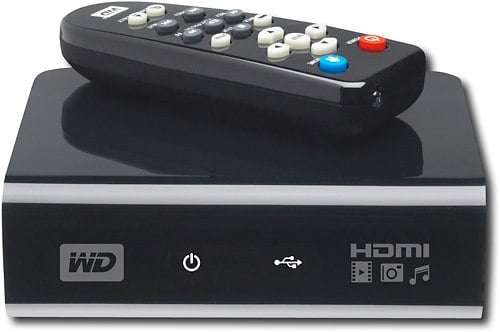
    Western Digital WD HD TV

    The Western Digital WD TV HD Media Player allows you to attach any external hard drive or USB flash drive to the device, which lets you watch videos, listen to music, or even create your own slideshows from your photos, right on your television. The WD TV HD Media Player can accept up to two external drives at once, and supports Dolby Digital and DTS 5.1 sound, making it ideal to play movies stored on those devices in glorious 1080p. They typically sell for $129, but Amazon has them for $99.


    Tags:
    ,
    ,
    ,
    ,
    ,
    ,
    ,
    ,
    ,
    ,

    2009 Holiday Gift Guide: Western Digital WD TV HD Media Player originally appeared on Gear Live Holiday Gift Guide on Wed, December 09, 2009 – 12:58:53


  • Mitsubishi launches big incentives through Sam’s Club

    Filed under: , , ,

    2010 Mitsubishi Outlander GT – Click above for high-res image gallery

    Twin pack of bread, 36 bottles of water, 24 rolls of toilet tissue, a 64-oz. box of cereal and… a 2010 Mitsubishi Galant. That may sound a bit odd, but if you want certain 2009 and 2010 Mitsubishi models with zero percent financing or discounted lease pricing, you’ll apparently have to head over to your local Sam’s Club. Automotive News is reporting that the discount warehouse is offering special deals on select Mitsubishi models through its Auto Buying Program that could well be better than the offers you’ll get at your Mitsubishi dealer. Eligible models for zero percent financing for 60 months include the 2009 Lancer, Eclipse and Outlander and the 2010 Galant and Endeavor. Discounted leases will also be available for the 2010 Lancer Sportback and the 2010 Outlander.

    The Japanese automaker reportedly struck a deal with the retail giant to display some of its models at select stores. Mitsubishi Motors Credit America will supply the special financing, which will be reserved for Sam’s Club customers with sufficient credit. The discount warehouse club will display the cars through February. With Sam’s Club’s 500 stores and over 40 million members, this could be a pretty good program for the struggling Mitsubishi, although we don’t see it doing anything to combat the brand’s discount perception.

    [Source: Automotive News – subs req’d]

    Mitsubishi launches big incentives through Sam’s Club originally appeared on Autoblog on Wed, 09 Dec 2009 15:58:00 EST. Please see our terms for use of feeds.

    Read | Permalink | Email this | Comments

  • WiFi for America’s Heartland — Roll-ups Roll Out Their Plans

    The centerpiece on the federal government’s holiday table may be the surprisingly fast pace of repayment of bailout funds by the big money-center banks.  There are also claims for job creation from spending the stimulus money, especially considering the initial jobs report for November showed only 11,000 jobs were eliminated in the month.  But inevitably (this is Washington DC after all) there are also charges of money slipping through the cracks and — uh-oh — disappearing.  And more than one boffin has noticed a cart-before-the-horse pattern to some stimulus programs.

    The Rural Broadband stimulus package, for instance, is being administered by the RUS and the NTIA (Rural Utilities Service and National Telecommunications and Information Administration), neither of which has much experience with awarding big grants — and it may that neither of them has a MAP of which areas are underserved by current broadband suppliers.  If you can stand the boredom, there is a report by the Government Accountability Office (GAO) with the revealing title: “Agencies are Addressing Broadband Program Challenges, but Actions are Needed to Improve Implementation.”  (http://www.gao.gov/products/GAO-10-80).  Here is a take on the situation from The Industry Standard: http://www.thestandard.com/news/2009/12/02/groups-urge-changes-broadband-stimulus-programs?page=0%2C0

    But however you look at it, there are some pretty interesting little companies in the  broadband services market, and some of them stand to find a bonanza in the RUS/NTIA sweepstakes.  It’s a fairly safe bet than any company in this sector has applied for some of the stimulus money, since there were reportedly $28 billion in requests for the $7.2 billion that was set aside by Congress.  I have read, but cannot say for sure, that there are 2,000 or more wireless broadband service providers in the US as I write this, which is why there are business plans popping up that want to “roll up” these small suppliers into a larger powerhouse company. 

    Consider Rushville IN-based Omnicity Corp (OTCBB: OMCY; http://www.omnicity.net/), which is seeking to provide broadband services to rural users in the Midwest using wireless technologies.  OMCY announced last week that they have agreed to buy the assets of AAA Wireless, which will give them 39 wireless towers with “a footprint of 80,000 homes.”  OMCY says it has more than doubled its subscriber base in the last six months (they became public in February this year), and is on track to double again in the next six months.  It must be largely undiscovered if that is true, because the shares are trading at $0.30 vs a high of $0.95 on average volume of less than 40,000 shares a day.  But when you think about it, part of the problem of rural communities is that people seldom pay much attention to them, so it’s not a surprise that OMCY has a small audience, at least for now.

    Or consider Reno NV-based Yonder Media* (http://www.yondermedia.com)  , which is currently private, but has signed an intent to merge with Salt Lake City-based Bayhill Capital Corp (OTCBB: BYHL) in what is commonly called a reverse merger (http://finance.yahoo.com/news/Yonder-Media-Architects-Merge-iw-3536792173.html?x=0&.v=1) .  What would happen is that Bayhill would be renamed Yonder Media, and the management of Yonder Media would take over the reins, including the current “affiliate marketing” operations of Bayhill’s Commission River subsidiary (http://commissionriver.com/) .  Together they have a run rate of about $3.5 million to $4.0 million.  BYHL shares are selling for $0.30, and it’s hard to say what the market cap is realistically, since in these reverse mergers, there is almost always a substantial “adjustment” to the ownership.  Yonder has a similar goal to Omnicity — but aims to cover more ground, serving 500-750 rural communities inside a few years from their current base in Nevada and California.  Management at Yonder are Silicon Valley vets with successes under their belts; the funding to date has come from the insiders, which is never a bad sign.  Of course the Yonder-Bayhill deal is contingent on several things, and there’s many a slip twixt the cup and the lip, so do your diligence, as you should on anything you buy, sell or trade.

    The great city of Houston is home to Internet America Inc (OTCBB: GEEK; http://www.internetamerica.com/), which claims to have about 8,100 wireless subscribers, and has applied for ARRA stimulus funds to serve Southeast Texas.  They are making losses at present, at least partly because their older dial-up services are getting ditched as people move to better solutions, but they seem to be running at a revenue rate of close to $4.5 million annually, which does represent a year-over-year slight gain (http://finance.yahoo.com/news/Internet-America-Reports-bw-2418740372.html?x=0&.v=1) .  GEEK shares are changing hands at $0.32 today, vs a 52-week high of $0.52, for a market cap of a little over $5 million and almost negligible daily trading.  Their toll-free telephone is 1-800-BE-A-GEEK.  You gotta love that. 

    Omaha NB-based KeyOn Communications Holdings (OTCBB: KEYO;  http://www.keyon.com/)  is probably the slickest of these rural broadband roll-up companies, which is not surprising since they are being packaged by a very slick and aggressively promotional PR firm.  KeyOn’s CEO announced this week the acquisition of a north-central Texas wireless broadband shop, SkyWi, which, according to the release dated December 7, will contribute $300,000 in annual revenues and $150,000 in EBITDA (http://finance.yahoo.com/news/KeyOn-Closes-First-bw-660239622.html?x=0&.v=1) .  If you can make 50% EBITDA margins, you probably will get asked to the Prom this spring, but one is tempted to say “Show Me.”  KEYO is trading today at $1.89, down from a 52-week high of $2.60, and in spite of all efforts to the contrary, average volume is still only about 30,000 shares per day, for a market cap of about $39 million, which by a rough count is about 5 times revenue.  KEYO has applied for $150 million in stimulus funding, by the way.

    We do not recommend investments; please do your own diligence.

    *Client of Allen & Caron, publisher of this blog.

  • VCs voice their likes, dislikes about university spinoffs

    In his blog on start-ups and university entrepreneurship, serial entrepreneur and angel investor David B. Lerner summarizes some observations made by VCs at the annual University Startups Conference held recently in Washington, DC, hosted by the National Council for Entrepreneurial Tech Transfer (NCET). “Through the course of multiple panels and discussions, a good cross-section of venture investors from very reputable firms weighed in candidly on both what they like to see and what they don’t like to see when they try to spin-out companies from university tech transfer offices,” Lerner writes. “Many colorful stories were exchanged, to say the least.”

    Lerner offers some quick bullets “straight from the proverbial horses’ mouth” that may help TTOs position university technologies favorably.

    VC’s like to see:

    • Platform technologies
    • Great faculty “stars,” great scientists, and great science
    • Rich entrepreneurial culture and community throughout the university
    • A “go-to person” at the TTO who has entrepreneurial experience
    • A TTO that’s “all about throughput” and getting deals done quickly
    • Deal terms that are flexible, recognizing that “business models change over time”

    VC’s do not like to see:

    • Slow-moving offices that take too long to complete a deal
    • “Mismatches” in the respective legal counsel in terms of the turnaround time, skill, and expertise
    • “Greedy” TTOs with onerous deal terms
    • “Big egos” at the TTO that obstruct deals
    • Business plans. “VCs prefer to have a short summary and decide for themselves,” Lerner says.

    Source: David B. Lerner