Category: News

  • HP Glisten software tour

    After the HP Glisten has been panned by Infosync, Pocketnow’s video review of the software installed in the device may provide a counterpoint.

    While the smartphone is clearly basic Windows Mobile without much encroûtement the device appears fast and easy to navigate, and certainly, compared to a Blackberry for example, appears pretty full featured.

    Are any of our readers thinking of picking up this device?  Let us know in the comments below.

    Share/Bookmark

  • REPORT: VW confirms Jetta name for small sedan, upcoming coupe concept could enter production

    Filed under: , , , ,

    VW Jetta

    It seems that we’ll be getting a new Jetta sedan next June, and it apparently won’t be a slightly restyled Golf with a trunk grafted to the rear end. According to Car and Driver, VW’s so-called New Compact Sedan, which will be built at the same Mexican plant that assembles the current Jetta, will indeed retain the Jetta nameplate.

    Following its June debut here in the States, Volkswagen will prep the car for its European launch later in the year, and it may or may not be called Jetta overseas. A sportier GLI variant will continue to be offered on the new model. Looking farther down the model-range totem pole, there’s a decent chance that VW will bring the Polo to the U.S. market to rival the new Ford Fiesta, possibly as both a sedan and a hatchback.

    Lastly, we’re told that we should expect to see a new U.S.market-tailored two-door notchback coupe concept on the show circuit in short order. If public reaction to it is positive, there’s a good chance VW will greenlight the car for series production.

    [Source: Car and Driver]

    REPORT: VW confirms Jetta name for small sedan, upcoming coupe concept could enter production originally appeared on Autoblog on Sat, 05 Dec 2009 10:47:00 EST. Please see our terms for use of feeds.

    Read | Permalink | Email this | Comments

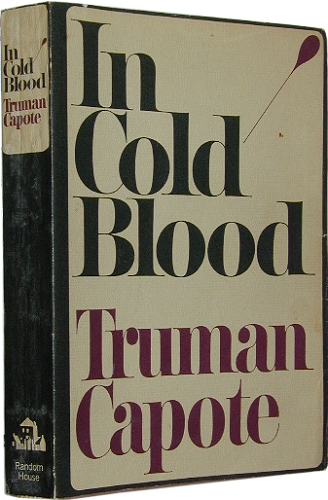
  • In Cold Blood, 50 Years Later

    This year marks the 50th anniversary of the publication of Truman Capote’s “In Cold Blood,” a classic work of non-fiction credited with creating the true crime genre we’re still obsessed with today.

    But the book does more than that. It’s one of my favorite books not only because it deals so thoughtfully with the issues of violence, prisons and the death penalty, but also because it’s a stunning work of storytelling. Capote was a master wordsmith and reporter, and this was his opus.

    Several stories this month have revisited Holcomb, Kansas, and the tale of the tragic murders of the Clutter family in 1959. The crime that shook a community, and the book that put the town on the map forever, still resonates in town.

    While readers and historians continue to celebrate Capote’s work, some in Holcomb still consider it an unnecessary, sensational and opportunistic book. They wish aloud that the book — and the movies that followed it — hadn’t forced the town to relive the crimes over and over for five decades.

    Holcomb residents — and readers around the world — also wonder if the Clutter murders would be so remarkable in 2009 or if they’d fade into the constant stream of violence and crime to which we’ve become accustomed. It’s a valid point.

    Writing in the Guardian last month, Ed Pilkington wondered why the book still resonates in an era that violent crime has become so routine:

    There are many reasons why In Cold Blood has become so ingrained. There is the precision of Capote’s writing, which resonates from the first sentence: “The village of Holcomb stands on the high wheat plains of western Kansas, a lonesome area that other Kansans call ‘out there’.” There is the depth of his research, which he carried on to the end as a witness at the killers’ hanging in 1965.

    There is also something monumental about the timing of the book. America in 1959 was at a crossroads. It was still bathing in the victory of the second world war and ensuing economic boom. The country was confident and secure, and the body blows of Vietnam still lay ahead.

    After the jump, a great 12-minute video posted by Newsweek last week with interviews with many of the key players in the case.

    (more…)

  • TouchLockPro for all Windows Mobile Professional phones demonstrated

    TouchLockPro *FREE* version 2.8.2 is a general purpose locking program for the newer HTC phones (see later on for known supported phones) and also for other types of phones having Windows Mobile with a touchscreen (best to have VGA screen for easier setting options in TouchLockAction).

    Why is TouchLockPro better than other locking solutions?  TouchLockPro is designed not to interfere with running applications and is a multipurpose locking application. Other locking solutions are often specific for locking only incoming calls/SMS. A lot of locking solutions also place a (transparant looking) Window on top of the running application (e.g. slide 2 unlock), so the information of the background application is no longer visible. This is not the case for TouchLockPro, so it can be kept lean and mean. Also the resource use is very, very low.

    Even if  all sensors are not available on your phone type, you can still use TouchLockPro for locking.  The software can be configured key to unlock by a key sequence, by default Volume Down/Volume Up. 

    Read more at Zuinigerrijder here.

    This post was submitted by ZuinigeRijder.

    Share/Bookmark

  • Massive SE Experia X2 Walkthrough

    Paul from MoDaCo, who previously published an epic walkthrough of the HTC HD2 has now posted a similar one for the X2.

    If’ you’re interested in the phone, it’s well worth the watch, though at 26 minutes long you might want to get a cup of coffee now :D

    From MoDaCo.

    Share/Bookmark

  • The Garrett, Watts Report (December 7, 2009)


    garrett-watts1

    To Our Clients, Colleagues and Friends, 

    • We normally stay at the Olympic Hotel in Seattle , but this time, our assistant booked us into the Monaco , just a block away.  We liked it and we’ll probably stay there again.  It’s just as elegant as the Olympic but not as stuffy.
    • The Texas Ratio is a pretty good predictor of bank failure, and a number over 100% means things are pretty grim.  These days, anything under maybe 20% is pretty good. Maybe even under 40%. Here are a few California banks and their Texas Ratios, chosen mainly because we know them or figure you would:

      5%   Commonwealth Business Bank

      53%  Hanmi Bank

      7%   Bank of San Francisco

    103%  Saigon   National Bank

    19%   Silvergate Bank

    109%  Tamalpais Bank

    25%   Bridge Bank

    157%  Imperial Capital Bank

    28%   City National Bank

    204%  First Regional Bank

    43%   Far East National

    248%  Pacific Coast National

    A few others are WestAmerica Bank (32%), Bank of the West (28%), Bank of Marin (5%), and Union Bank (17%).  We counted 17 banks with a 0% ratio, but they were all pretty small.

    • The state of Washington has eight banks with a ratio over 200%, while one out of every four banks there is above 100%.  Uh oh.
    • In college many years ago, we took introductory Physics from Edward Teller, a Nobel Laureate and the Father of the Hydrogen Bomb. He hated having to deal with undergraduates, and his politics didn’t exactly lend themselves to Berkeley at the time.  He showed up for the first few lectures, announced that he didn’t want to be there anymore than we did, and told us we were a bunch of unkempt, spoiled, and ungrateful unpatriotic brats who would be fighting communism in the rice paddies of Vietnam if we truly loved our country.  He then disappeared for the rest of the semester, with the lectures given by a graduate student who didn’t speak English. 
      Anyway, Teller once told us all that “When you get to the end of all the light you know and it’s time to step into the darkness of the unknown, faith is knowing that one of two things will happen: either you will be given something solid to stand on, or you will be taught to fly.”  That was pretty inspiring, especially from someone so uninspiring.  Ten years later, he became an advisor to President Reagan and came up with the idea for Star Wars.  He also thought we should launch a pre-emptive nuclear strike against Russia and bring them to their knees.   He won the Nobel Prize but was a crummy teacher and kind of a nutcase as well.
    • Did you know that this is the 75th anniversary of the FDIC?  Roosevelt pushed it through Congress in the darkest days of 1934 with the Great Depression at its worst.  That year, unemployment was a horrific 25%.
    • You know how an opened coke or diet coke tastes flat the next day, even if you chill it?  We just discovered that this isn’t the case with Cherry Coke or Cherry Coke Zero.  Next time you have an open can sitting around for a day or two, put it in the freezer for 15 minutes and it will still taste good.
    • Remember in 9th grade when you thought that you’d get drunk if you drank coke and swallowed an aspirin at the same time?  Aren’t you glad you’re no longer in 9th grade?
    • Forty years ago today on December 5, 1969, Greg Noll surfed a 65-foot wave on the North Shore of Oahu, still the highest wave ever recorded. And today is Tyra Banks’ 36th birthday.  If you have a teenage daughter, you’ve probably seen her on America’s Next Top Model, and they don’t come any prettier.
    • A great video of a French stuntman.   http://glumbert.com/media/stuntman
    • The San Francisco Chronicle noted yesterday that if the ice at both poles melted, the ocean level would reach the road deck on the Golden Gated Bridge .  And not to be an alarmist, but we’ve seen those photos from satellites of the North Pole, now and 20 years ago, and it sure appears to be shrinking and doing so rapidly.
    • The Class of 2004 California de novos is celebrating its fifth birthday.  The excellent Findley Report points out that of these eleven banks, the biggest has grown to $262 million (Santa Cruz County Bank) and the smallest is only $62 million (Mother Lode Bank).  With an average of $192 million, that’s not a whole lot of growth over five years.
    • It’s shocking to read that six months after mortgage loans have been modified, half of them are in default again!  There’s a new verb, with borrowers re-defaulting.
    • The Pontiac Silverdome was where the Detroit Lions played for years. It was sold last week for $583,000.  You’d think someone would have paid more if only to get their hands on the 127 acres. But the 80,000 seat stadium, built thirty years ago for $56 million, went for less than a one room condo in New York City .
      j1
      The same week a Macau casino was the winning bid for Michael Jackson’s white rhinestone glove.  They paid $350,000.
    • In 1960, 50% of all working-age adults hadn’t graduated from high school.  That’s kind of stunning, isn’t it?  Today, only 8% don’t graduate from high school.
    • Regulators think that brokered CDs always lead to bad loans, but isn’t it really the opposite? Aren’t banks that are chasing poor quality loans the precise ones that then chase brokered CD’s? Better regulate inferior lending and you’ll go along way to eliminating brokered CD’s.
    • But wait a minute.  Check in the Wall Street Journal, and a lot of the brokered CD’s have rates that are lower than your local rates.  In cases like this, aren’t brokered CD’s good for you, bringing down your cost of funds?
    • A few thoughts on blogs, social networking sites, and all that….stuff.  So many people and businesses are using them now, but are they really effective?  It seems that the more blogs exist and the faster they grow, the fewer people will visit them. Their growth leads to an oversupply, and when there are just way too many of them, the overkill may overwhelm people and numb them.  Kind of the Law of Diminishing Returns, where their very growth and success might lead to their very failure.  We   met the head of corporate communications for a $2 billion bank which is now twittering (or tweeting).  It sounded like no one was reading it. Anyway, we may be totally wrong.  But we still wonder.
    • Remember when Orange County ( John Wayne Airport ) and Ontario were funky little airports where you walked out on the tarmac to the plane? We kind of miss them, Burbank ’s airport ( Bob Hope Airport ) may be one of the last of that type.  Old, tired, no fancy bars or white tablecloth restaurants, small and uncrowded. And we like it.
    • And what’s with this naming of airports after people like Bob Hope or John Wayne?  If someone’s going to do that, why not name the airport nearest Queens the Joey Ramone Airport , and Memphis can be renamed Elvis Presley Airport . Actually, there was an attempt to rename the San Francisco airport Joe DiMaggio International. It died when people learned what a jerk he’d been. A great ballplayer but a real arrogant and unpleasant person.
    • One of the pleasures of our job is to meet and work with people with extraordinary courage, and these are people like Jack Choi (Commonwealth Business Bank, CA), Bill Valerian (Liberty Bank, Ohio) Joe Adams, (1st Security Bank, Washington), and Donn Costa (Golf Savings, Washington). These four are Presidents of their banks, and no matter how well their bank is doing, it takes great courage, undaunted courage to run even the healthiest of banks in this period of intense regulatory scrutiny.  Hemingway defined courage as “Grace under pressure”, and all four of these bankers fit that definition. 

    And a few thoughts for today:  Be responsible for your own actions,  demonstrate perseverance, don’t complain, keep your promises, be a good listener, don’t hold grudges, be tolerant, show compassion, study the lives of great people, try new things, and have fun.
    Garrett, Watts & Co.  Check out:  Laws of Lending    and   Board DecisionsHelping mortgage lenders increase revenues, control costs, and better manage risk.

  • Almond Banana Pancakes

    pancakes Almond Banana PancakesTry as we might, many of us find the temptation of pancakes too hard to resist. Maybe it’s the sweet, buttery aroma of the batter on the griddle or the soft doughy texture, or that eating something with the word “cake” in it for breakfast just feels so deliciously naughty. But it doesn’t have to be. There are decent Primal substitutes. Pancakes made with almond meal or coconut flour are a good option, but can be pretty heavy and, for some, overly filling. And then there’s this dish sent in by Jack Etherington for the Primal Cookbook Challenge. His Almond Banana Pancakes contain just three ingredients: banana, egg and almond butter. You can whip up a batch in five minutes flat and top the pancakes with a pat of butter, a scoop of nut butter, or fresh berries.

    Almond Banana Pancakes are slightly delicate so you’ll want to keep the size fairly small and wait until the edges are nicely browned before flipping them. This shouldn’t deter you from trying the recipe – the delicate texture of Almond Banana Pancakes is the very thing that makes them so irresistible. If you’ve tried pancakes made from almond or coconut flour and find them slightly grainy, you’ll really love the silky, airy texture of these cakes. The flavor is sinfully close to banana bread; add a little vanilla and cinnamon to the batter if you really want to get decadent.

    As is evident from the comment board of last week’s recipe, this (very similar) recipe may be too carb-centric for some of you. For those that are no-carbers or are restricting carbs for weight loss purposes this recipe might not fit into your personal Primal plans. For others it might be part of your 20%. And for others that are extra active or have already achieved your preferred body composition this recipe might be a perfect fit. In any case, remember that the Primal Blueprint is primarily about guiding principles. It’s up to each of us to adapt recipes and fitness choices within the context of the PB as it relates to our personal goals and circumstances. Enjoy!

    Ingredients:

    ingredients 12 Almond Banana Pancakes

    Instructions:

    Mash the bananas, add the egg and mix well.

    banana egg Almond Banana Pancakes

    Stir in the almond butter, adding more than a tablespoon if you want a more pancake-like texture.

    batter 1 Almond Banana Pancakes

    Warm butter in a pan and pour batter into small cakes.

    cooking pancakes Almond Banana Pancakes

    Brown on each side and serve warm.

    pancakes Almond Banana Pancakes

    Get Free Health Tips, Recipes and Workouts Delivered to Your Inbox

    Related posts:

    1. The Many Uses of Almond Meal
    2. The Many Uses of Coconut Flour
    3. No Oat Oatmeal… It’s No-atmeal!

  • Kids & Grandparents’ Holiday Memories

    Grandparents have wonderful holiday memories to share with grandchildren if the middle generation (the children) will encourage this rather than considering it simply, “Grandma’s ramblings.“  Even those with Alzheimer’s can contribute to the memory lore.  Sometimes we might say, “especially those with Alzheimer’s”, because those memories become very vivid for them at certain stages of the illness.

    Holiday memories image: sxc.hu

    Holiday memories image: sxc.hu


    Grandparents’ memories, and those of other older relatives, contribute to the family heritage.  Record them, write them down, compile them in scrapbooks.  Those help children realize who they truly are and help form a family bond.

    If grandchildren can work on Holiday memory projects with grandparents, these have special meaning, too.  My mother and mother-in-law shared their memories with my daughter. I encouraged my daughter to take part in it, or at least be a good listener.  We now reminisce about some of the things they did and said, passing them along to my grandchildren.

    These memories are somewhat like the oral histories of various cultures, when stories were passed along through the generations by word of mouth.  However, so they don’t get lost in time, make sure you record them in some fashion.  The holiday memories are especially precious.

    Post from: Blisstree

    Kids & Grandparents’ Holiday Memories

  • Weekend Meditation: Peace Offering

    2009_12_06-sorry.jpgWe all make mistakes. We also do bad, or at least not very helpful, things. We misread a situation, forget something important, say something stupid, follow an unwholesome impulse, act selfishly, cause harm, screw up.

    The ability to say we’re sorry and extend our hand in peace is the mark of our courage, civility and compassion. When we back that up with a plate of homemade cookies, well, sometimes we can move heaven and earth.

    Read Full Post


  • 24 Hours of LeMons announces 2009 Season Champions

    Filed under: , ,

    24 Hours of LeMons

    Another day in LeMons paradise – click above to view hi-res image gallery

    In case you missed it, the 2009 LeMons season ground to a halt a few weeks back at Thunderhill after the third running of the Arse-Freeze-A-Palooza (full disclosure — I work as a Judge for the 24 Hours of LeMons). Filthy 2009 proved to be a pretty hectic season for LeMons, what with ten $500 car races at various mud pits locales around this great country of ours. However, ’09 will pale in comparison to the frenzied, property-devaluing idiocy that the 21-race 2010 season is sure to bring. We’d like to apologize to our understanding women-folk and potential home buyers in general in advance.

    Still, the 2009 season was filled with all the wonderful elements that make LeMons the fastest growing motorsport in the world: namely, fires, terrible driving, whiny drivers, cheating mechanics and totally excellent BBQ. Oh, and lots of cars blowing the hell apart. You’ll learn all about this year’s champs after the jump, but we’d just like to point out that the 2009 Deconstructor Championship belongs to Ford. If you don’t know, the Deconstructor goes to the manufacturer that builds the cars that blow up the most often.

    Why Ford? Mostly for the numerous SHOs that lunched their engines and transmissions all over various LeMons paddocks, coast to coast. To quote LeMons’ second banana, Nick Pon, after he strolled through a typical three SHO/three dead cars pit in Louisiana, “Looks like someone tossed a Taurus grenade in here.” Just seems to be the Taurus’s week for winning awards. OK — now make the jump.

    Continue reading 24 Hours of LeMons announces 2009 Season Champions

    24 Hours of LeMons announces 2009 Season Champions originally appeared on Autoblog on Sat, 05 Dec 2009 09:15:00 EST. Please see our terms for use of feeds.

    Permalink | Email this | Comments

  • HP Glisten reviewed

    Infosync has given the HP Glisten a good going over and are pretty unimpressed with the smartphone.  Scoring the device only 69/100, they were happy with the hardware, battery life, and business features, but marked the smartphone down for not having good non-business features, calling the camera poor and lamenting the lack of a good media player of social networking features.

    They concluded:

    hpglistenWith the HP iPaq Glisten, we wonder if HP has been paying attention to the phone market for the last couple of years. The phone is the most basic, barebones Windows Mobile 6.5 device you could imagine, with almost no extra software or convenient tweaks to improve the user experience. Business users will enjoy the tight integration with Microsoft Exchange and the solid build quality. The phone also packs a large battery and can hold a charge through a busy day’s use. Plus, the keyboard is nice and large for easy typing, definitely a solid competitor to RIM’s BlackBerry Bold 9700. But beyond the basic business features, the phone comes up short. As more business users rely on a single device for their work and personal lives, the HP iPaq Glisten performs poorly at Web browsing, multimedia functions, taking pictures and just about anything other than serious work. The interface is difficult to use by touch alone, which is why most manufacturers, like HTC with their Tilt 2 on AT&T, improve it with some sort of enhancements. But with the HP iPaq Glisten, all you get are the basics, and that might not be enough for many users. Release: December 2009. Price: $180.

    Pros: Solid build quality. Great battery life. Large, easy full-QWERTY keyboard.

    Cons: Barebones set of Windows Mobile features. Web browsing, multimedia and camera features all below average. Interface still not entirely touch friendly.

    Read their full review here.

    Share/Bookmark

  • HP Pavilion dv7-3085dx Review

    I’m excited to share with you the review on the new HP Pavilion Entertainment Dv7 series. One of the best things about the DV7 is it’s Fast Core i7 processor; generous RAM and hard drive; 17.3-inch screen. You can imagine your laptop as a great entertainment.

    The not so good about it is that it lacks 1080p or Blu-ray limits home theater appeal; gaming performance is middling. So when you are a gamer this will really bug you.

    Here is the complete review by the CNET, check it out:

    **********

    HP Pavilion dv7-3085dx

    Reviewed by: Scott Stein from CNET

    HP Pavilion Entertainment DV7 3085dx

    Editors’ note: This review is part of our 2009 Retail Laptop and Desktop Holiday Roundup, which covers specific fixed configurations of popular systems found in retail stores.

    This holiday season, the field of high-end laptops was redefined by the release of Intel’s Core i7 processor, which offers improved next-generation multicore performance. While some of the initial Core i7 machines were quite expensive, the technology has already trickled down to more affordable laptops such as the HP dv7-3085dx. Is it worth your while to consider? That depends on whether you want a machine that’s fast or a machine that’s fast with games.

    At $1,299, the dv7 remains relatively slim for a gaming laptop, but with a GeForce 230M GPU, it’s not really an enthusiast machine. Instead, consider its greatest assets to be the Core i7, a massive 17.3-inch screen, and higher-end Altec Lansing speakers, making this a compelling desktop home theater.

    The package sounds great, especially since, other than the GPU, it has the same specs as the HP Envy 15-1050nr, which costs $700 more. On the other hand, some unfortunate cutbacks were made on this model: there’s no Blu-ray (even while the much cheaper, but slower, dv7-3065dx includes it), and the very large screen isn’t 1080p, although it comes close at 1,600×900 pixels.

    This laptop represents a $300 price bump up from other high-end retail machines like the Sony Vaio FW560F/T, but the addition of a Core i7, solid gaming graphics, a fast hard drive, and plenty of RAM could make this a contender.

    Price as reviewed $1,299
    Processor 1.6 GHz Intel Core i7 720QM
    Memory 6GB, DDR3 1066MHz
    Hard drive 500GB 7,200rpm
    Chipset Quanta 363C
    Graphics Nvidia GeForce GT 230M, 1GB
    Operating System Windows 7 Home Premium (64-bit)
    Dimensions (WD) 16.2 x 10.9 inches
    Height 1.7 inches
    Screen size (diagonal) 17.3 inches
    System weight / Weight with AC adapter 7.5 / 9 pounds
    Category Desktop replacement

    The design of this HP Pavilion dv7 is familiar to us; we’ve also reviewed a lower-spec midrange model in a nearly identical chassis, the HP Pavilion dv7-3065dx. Clad in a very glossy espresso finish with chrome pattern flourishes on the outer lid and inner palm rest area, the design of the Pavilion dv7 leans more toward multimedia sleek than gamer clunky. The slightly rounded edges and chrome highlights lend a nice formal look, but the fingerprints will mount up quickly.

    The keyboard and adjoining number pad that span the width of the laptop’s interior use glossy-topped tapered keys. While we’re not a fan of shiny surfaces on our keyboards, the responsiveness and decent key spacing on this model made up for it. The touch pad wasn’t our favorite, as HP tends to top their high-end models with smooth mirrored touch pads that, while looking stark, are prone to smudging and have poor traction. It didn’t ruin our experience, but this is a laptop that cries for a mouse.

    Above the keyboard is a set of touch-sensitive media keys, controlling volume, basic play, fast forward and rewind, and a Wi-Fi on/off toggle. The touch controls worked better than many, and were easy to locate.

    The glossy 16.9 ratio 17.3-inch LED screen on the HP dv7-3085dx has a native resolution of 1,600×900 pixels, which is better than 720p but not quite 1080p “full HD” resolution. While this machine doesn’t have a Blu-ray playing drive, it would have been nice to get fuller resolution for HD playback on a screen this size. In its existing max-resolution settings, images were large and clear but suffered from a slight lack of crispness. Side viewing angles were decent, but the tremendous glossy-screened surface area created many opportunities for glare.

    On the audio front, the built-in multispeaker Altec Lansing array, with SRS surround effects, worked well and was one of the better laptop audio systems we’ve heard. Overall, the HP dv7-3085dx is a compelling audio/visual hardware setup, especially for the price, but, again, we really wish this had 1080p. And it’s positively baffling that the cheaper $729 dv7-3065dx includes a Blu-ray drive, while this $1,299 model doesn’t.

    HP Pavilion dv7-3085dx Average for category [desktop replacement]
    Video VGA-out, HDMI, notebook expansion port 3 VGA and HDMI or DisplayPort
    Audio Stereo speakers, dual headphone jacks, microphone jack Stereo speakers with subwoofer, headphone/microphone jacks.
    Data 4 USB 2.0, SD card reader, SD card reader, mini-Firewire 4 USB 2.0, SD card reader
    Expansion ExpressCard/54 ExpressCard/54
    Networking Ethernet, 802.11 b/g/n Wi-Fi, modem Ethernet, 802.11 b/g/n Wi-Fi, Bluetooth
    Optical drive DVD burner DVD burner [high-end: Blu-ray]

    The 6GB of DDR3 RAM and large 500GB 7,200rpm hard drive are extra bonuses that are nice adds for the serious computer user, and beat the included specs in the lower-cost Sony and Asus high-end retail configs. The dv7 also has a nice array of ports, with nothing really left to be desired except for the oddly eliminated Bluetooth. Ports are arrayed mainly on the left side of the laptop, with a few ports stuck in near the right-side DVD drive; the back is port-free, which on a laptop this wide feels a little silly.

    In the laptop CPU pecking order, the Core i7 is at the top of the list performance-wise, and in this regard the dv7-3085dx is a big winner. Equipped with its 1.6GHz Core i7 processor plus a good amount of speedy RAM and a 7,200rpm hard drive, the HP Pavilion dv7-3085dx was our fastest-performing laptop in the high-end range in terms of handling multimedia like Photoshop and iTunes, as well as engaging in multitasking.

    That’s great news for someone looking for a speedster laptop, but the gaming benchmark scores tell a different story. Because of its above-mainstream but below-enthusiast GeForce 230M GPU, its framerates playing Unreal Tourament III were the lowest among all four high-end retail laptops in our Holiday 2009 roundup. That’s not to say the dv7-3085dx is bad at gaming by any means: UT3 ran at 55fps in 1,440×900, and Street Fighter 4 achieved 60fps at 1,600×900 resolution (using SF4’s built-in benchmark, with all settings set to high but no antialiasing). The dv7-3085dx should be good enough for plenty of games, but it’s not a screamer.

    age 2

    Juice box
    HP Pavilion dv7-3085dx Mainstream (Avg watts/hour)
    Off (60%) 0.53
    Sleep (10%) 1.5
    Idle (25%) 22.29
    Load (05%) 78.62
    Raw kWh Number 136.70
    Annual Energy Cost $15.51

    Annual power consumption cost
    HP Pavilion dv7-3085dx

    $15.51

    With its included eight-cell battery, the HP Pavilion dv7-3085dx lasted for 2 hours and 6 minutes under our rigorous video-playback battery drain test. That’s not bad for a laptop with such a huge screen running a powerful processor, and with more judicious use of power management settings and under more casual usage conditions it should last longer. The HP Pavilion dv7-3085dx is, like may laptops, Energy Star qualified.

    HP backs the Pavilion dv7-3065dx with an industry-standard, one-year warranty. Toll-free telephone support is available 24-7 during your warranty period, and the HP support Web site includes real-time chat with a technical support representative. If you want to troubleshoot problems yourself, you can search through the site’s thorough FAQ database.

    Multimedia multitasking test (in seconds)
    (Shorter bars indicate better performance)
    HP Pavilion dv7-3085dx

    679

    Adobe Photoshop CS3 image-processing test (in seconds)
    (Shorter bars indicate better performance)
    HP Pavilion dv7-3085dx

    110

    Apple iTunes encoding test (in seconds)
    (Shorter bars indicate better performance)
    HP Pavilion dv7-3085dx

    148

    Unreal Tournament 3 (in fps)
    (Longer bars indicate better performance)

    1,280×800, 0X AA, 8X AF*
    1,440×900, 4X AA, 8X AF*

    Video playback battery drain test (in minutes)
    (Longer bars indicate better performance)
    HP Pavilion dv7-3085dx

    126

    Find out more about how we test Windows laptops.

    System configurations:

    HP Pavilion dv7-3085dx
    Windows 7 Home Premium (64-bit); 1.6GHz Intel Core i7 720QM; 6144MB DDR3 SDRAM 1066MHz; 1GB Nvidia GeForce GT 230M; 500GB Seagate 7,200rpm

    Asus G60VX-RBBX05
    Windows 7 Home Premium (64-bit); 2.13GHz Intel Core 2 Duo P7450; 4096MB DDR2 SDRAM 800MHz; 1GB Nvidia GeForce GTX 260M; 320GB Seagate 7,200rpm

    HP Envy 15-1050nr
    Windows 7 Home Premium (64-bit); 1.6GHz Intel Core i7 720QM; 6144MB DDR3 SDRAM 1066MHz; 1GB ATI Mobility Radeon HD 4830; 500GB Seagate 7,200rpm

    Sony Vaio VGN-FW560F/T
    Windows 7 Home Premium (64-bit); 2.13GHz Intel Core 2 Duo P7450; 6144MB DDR2 SDRAM 800MHz; 512MB ATI Mobility Radeon HD 4650; 500GB Hitachi 5,400rpm

    *********

    The bottom line is it is quipped with a big screen and a fast Core i7 processor, the HP Pavilion dv7-3085dx is a speedy all-around Windows 7 laptop. This might not be the right for you if you have a limited budget because it’s price range you expect either Blu-ray or faster gaming graphics. Hope you enjoyed this HP Pavilion Entertainment Review and feel free to share this.

    Source


  • Loan Mods Are Still A Disaster

    foreclosure homeowner sad

    How badly are the government’s loan modifications doing? 

    Here’s the money shot from NYT reporter Floyd Norris’s investigation earlier this week:

    Chase disclosed in November that:

    • nearly a quarter of trial modifications had failed because the borrower did not make even a single payment
    • nearly half had failed to make all three payments required before the modification could become permanent.
    • Of those who had made all three payments, only about a quarter had submitted all the required documents.

    Add all that up and approximately 25% of applicants are making it through the loan-mod trial period.

    So what’s the real reason the mods aren’t working?  Because the loans never should have been made in the first place.

    Join the conversation about this story »

    See Also:

  • Demo of Xperia X2 Panels on Touchpro2

    WMPoweruser recently made a video showing off some new things happing with the Touchpro2. The video demo’s the Xperia Panels running on the T-mobile Touchpro2, check it out.

    Share/Bookmark

  • Here’s The Real Reason Loan Modifications Aren’t Working

    foreclosure_low_ykur.jpg

    Why are so few temporary mortgage modifications turning permanent?

    One reason may be the same one that a lot of bad loans were made in the first place. Borrowers can declare their income, and the banks are willing to grant temporary modifications based on those figures, without any evidence to confirm them.

    But to make a modification permanent, the banks have to see proof of income, and the borrower has to make three monthly payments of the new lower amount. In most cases, those requirements are not being met…

    Continue reading at NYT >

    Join the conversation about this story »

    See Also:

  • Handling Disputed Borders and Names in Google Earth and Maps

    Mapping the world online poses a lot of different challenges not only from a technical perspective but also from a political one. Google has some of the best software engineers in the world so it’s safe to assume they can tackle any technical issue to overcome and, for the most part, so far they have. Some problems, though, are a little more tricky and don’t have anything to do with the actual product, but with trying to satisfy all the different views, customs and opinions of the people around the world.

    One problem that arose time and time again when creating Google Maps was how to handle regions or geographical features on which different countries had different and a lot of times conflicting views. One common issue is with water bodies that regularly have different names in the countries bordering them or which they cross. Google exemplifies with the “Yellow Sea” as it’s known in the English-speaking world. However, in China, it is known as “Huáng Hǎi” and in Korea it is known as the “West Sea” or “Sŏ Hae” in Korean.

    Google handles this by showing both labels in the English or other international versions of Google Earth and Maps. In Earth, there is also a text box explaining the existence of the two names. However, the local ve… (read more)

  • Blog Review: Practice What I Preach

    The blog reviewed here is ‘Practice what I Preach – A Child Psychiatrist Becomes a Parent‘. After receiving a comment on this blog from the author, an Australian Child Psychiatrist, recently, I became curious and had a look at the blog. I thought the premise for the blog was extremely interesting – what happens when a child psychiatrist becomes a parent and writes about the experience?

    Appearance and Design

    At the time of writing the blog has a grey background, blue title pane and white background for the articles. The articles consist of black text on a white background. On the right hand panel there are links to an About section, categories, a calendar as well as recent posts, blog statistics and a blogroll. The reader can also subscribe to the blog. There are also pictures in some of the articles which add to the presentation.

    Content

    The author who I will refer to as Dr D, an Australian Child Psychiatrist starts with this post explaining the motivations behind the blog. In this next article, Dr D describes the experience of being a patient and the thoughts she has about her interactions with the staff in this situation as a doctor patient. I thought this article was very interesting and reminded me of theme in the film ‘The Doctor‘. I think this will always be an interesting subject and can be very important for the introspection that contributes to the development of a speciality. In discussing this Dr D generated comments and this shared introspection was very interesting. In this post, Dr D discusses the issue of not getting enough sleep while in this article, Dr D talks about emotional attunement with the baby and mentions briefly theory in this area, an area which Winnicott wrote about (see review here). In this post, Dr D tells us about the sounds that her baby is beginning to make. What I found particularly interesting was when Dr D reviews the evidence base for when to use solid foods for feeding in coming to her own decision.

    Conclusions

    I found the premise behind Dr D’s blog extremely interesting and enjoyed reading through the articles which were filled with insights about the parenting process and also areas where the research or literature had something helpful to say.  Dr D writes candidly on the experience of parenting and I look forward to future posts.

    Twitter

    You can follow ‘The Amazing World of Psychiatry’ Twitter by clicking on this link

    Podcast

    You can listen to this post on Odiogo by clicking on this link (there may be a small delay between publishing of the blog article and the availability of the podcast).

    TAWOP Channel

    You can follow the TAWOP Channel on YouTube by clicking on this link

    Responses

    If you have any comments, you can leave them below or alternatively e-mail [email protected]

    Disclaimer

    The comments made here represent the opinions of the author and do not represent the profession or any body/organisation. The comments made here are not meant as a source of medical advice and those seeking medical advice are advised to consult with their own doctor. The author is not responsible for the contents of any external sites that are linked to in this blog.

  • Force Google Chrome to Open Links in New Processes

    When Google decided to create a new browser, it knew it had an opportunity to avoid many of the problems facing existing browsers by coming up with new ways to do things and building a solid basis from the start. One of the smartest decisions was to give each individual tab its own process thread, which would solve a lot of security and stability issues.

    It was a more complex technical approach, but it paid off in the end. However, it’s not possible to give each tab its own process every time, as there may be shared resources between them, so Chrome had to make a compromise between security and compatibility. Now, though, Google is giving developers the possibility to force links to be opened in new processes thanks to a little HTML 5 trickery.

    “Google Chrome already uses separate OS processes to isolate independent tabs from each other in the browser, so that crashes or slowdowns in one tab won’t affect the others,” Charlie Reis, software engineer, writes on the Chromium blog.

    “In many cases, though, Google Chrome needs to keep pages from related tabs in the same process, since they may access each other’s contents using JavaScript code… In practice, web developers may find situations where they would like links to other pages to open in a separate process. As on… (read more)

  • Digg Turns 5, Gets an Official Day in San Francisco

    Digg may not be the hottest thing in Silicon Valley at the moment, thanks to Facebook and Twitter stealing all the spotlight, but don’t discount the social news aggregator just yet. As it turns five years old, the site is looking forward to a new chapter in its history as the features implemented over the past year begin to shift Digg towards a new but promising direction. Oh, and it also gets a rather official recognition, as December 4 gets proclaimed Digg.com Day in San Francisco where its headquarters are.

    “Five years ago today, Digg.com went live. What started as a simple idea has certainly come a long way. From a vision of a new way to surface news, and a team of three, to 40+ million monthly visitors and 80+ passionate employees…well, suffice it to say that I’m very proud of what we’ve become,” Digg Co-founder Kevin Rose wrote on the site’s blog.

    “There have been a lot of memorable moments over the years. From the Paris Hilton phone hacking incident to cracking the HD-DVD key, you guys have defined Digg and are the reason for our growth. To date, we’ve had over 14 Million stories submitted and Dugg by you,” he added.

    The site has come a long way from its launch five years ago but, at the same time, it has managed to maintain its co… (read more)

  • Samsung Omnia 2 vs HTC HD2

    Omnia-2-vs-HD2-screen-517x495

    PDAfanclub.com has published a comparison between the two Windows Mobile titans at the moment, and it is interesting to see the Omnia 2 really holding its own in many ways.

    The most striking is in screen quality (above) where the vibrancy of the AMOLED screen on the Samsung Omnia 2 really shines through.

    Samsung’s attention to detail is also obvious in the camera comparison, with the Omnia 2 clearly taking much better quality pictures.

    Macro-HD2-595x357 Macro-Omnia-2-595x446

    HTC HD2 (left)           vs                  Samsung Omnia 2 (right)

    See PDAfanclub.com for further comparisons, including video quality comparison and a table comparing the specs.

    Via CareAce.net

    Share/Bookmark