Category: News

  • XOWA makes Wikipedia available offline

    When you’re permanently connected to the internet via one device or another, then checking something on Wikipeda is very easy: just browse to the site, enter the topic and you’ll be reading more within seconds.

    Life isn’t so simple for everybody, though. If you don’t have a smartphone, perhaps can’t get a signal, or are in an area with unreliable broadband (or maybe none at all) then accessing the site will be much more of a challenge. Fortunately there are other options, and although it’s still only an alpha build, XOWA is already one of the best.

    The Java-based program takes a little time to set up. After unzipping the download, it must download Simple Wikipedia (a subset of the full site, though with more than 90,000 pages), as well as ImageMagick and Inkscape if you want to display images. This could obviously be a problem if your internet access is slow, but XOWA does at least make the process simple: click a couple of links and the appropriate files are automatically downloaded and installed for you.

    There was one small glitch here, as after installing the graphics components we just got an error message when trying to view any page. This wasn’t anything major, though, and after restarting XOWA worked just fine.

    The core interface looks and feels just like the normal website. There’s the search page top right, the usual tabs, and simple navigation tools (bookmarks, your browsing history). Every page is rendered very accurately (you’ll forget you’re not in a browser), and you can even edit your local copy of the current page.

    What’s more, if you really need more offline resources, then the program can link those in, too. So while editing a page in your offline Wikipedia, for instance, you could in theory look up the spelling of a word in your offline Wiktionary.

    Of course none of this will help very much if you regularly use Wikipedia to provide more information on current events. The web version can be updated with the latest developments on some topic within minutes, but this offline subset will be out of date before you even download it. And so you have to think of XOWA as more like a print encyclopedia; it’s not going to cover what happened yesterday, but is still just fine for general reference purposes.

    And of course there are a few issues. As you’re not working in a browser, for instance, XOWA provides a “forward” and “back” button of its own. But these are so small that it took us a while to even notice them. Hopefully clearer navigation is on the list of “things to do”.

    Problems like this are to be expected for an alpha build, though, and elsewhere XOWA performs very well. If you need a portable and cross-platform mini-Wikipedia which you can use anywhere, then go grab a copy right away.

    Photo Credit: Diego Cervo/Shutterstock

  • New From NAP 2013-02-25 00:00:00

    Final Book Now Available

    The principal goals of the study were to articulate the scientific rationale and objectives of the field and then to take a long-term strategic view of U.S. nuclear science in the global context for setting future directions for the field. Nuclear Physics: Exploring the Heart of Matter provides a long-term assessment of an outlook for nuclear physics.

    The first phase of the report articulates the scientific rationale and objectives of the field, while the second phase provides a global context for the field and its long-term priorities and proposes a framework for progress through 2020 and beyond. In the second phase of the study, also developing a framework for progress through 2020 and beyond, the committee carefully considered the balance between universities and government facilities in terms of research and workforce development and the role of international collaborations in leveraging future investments.

    Nuclear physics today is a diverse field, encompassing research that spans dimensions from a tiny fraction of the volume of the individual particles (neutrons and protons) in the atomic nucleus to the enormous scales of astrophysical objects in the cosmos. Nuclear Physics: Exploring the Heart of Matter explains the research objectives, which include the desire not only to better understand the nature of matter interacting at the nuclear level, but also to describe the state of the universe that existed at the big bang. This report explains how the universe can now be studied in the most advanced colliding-beam accelerators, where strong forces are the dominant interactions, as well as the nature of neutrinos.

    [Read the full report]

    Topics: Math, Chemistry and Physics

  • Vanedge Capital Leads $5M Financing of Playnomics

    Canadian venture capital firm Vanedge Capital led a US$5 million Series B financing of San Francisco-based Playnomics Inc., a provider of data science and predictive analytics for mobile, social and browser games. Joining in the round were existing investors FirstMark Capital and XSeed Capital. Tony Lam, principal of Vancouver-based Vanedge, has joined Playnomics’ Board of Directors.

    PRESS RELEASE

    PLAYNOMICS CLOSES $5M IN SERIES B FUNDING FOR PLATFORM EXPANSION

    Vanedge Capital Makes Strategic Investment in Leading Data Science Company for Mobile, Social and Browser Games

    SAN FRANCISCO – February 20, 2013 – Playnomics, the global leader in data science and predictive analytics for mobile, social and browser games, today announced a $5M Series B funding raised in a round led by Vanedge Capital and joined by existing investors FirstMark Capital and XSeed Capital. Founded by former Electronic Arts Inc. (NASDAQ: EA) veterans Paul Lee and Glenn Entis, Vanedge Capital is a venture capital fund focused on investments in interactive entertainment and digital media. With today’s announcement Tony Lam, Principal at Vanedge Capital, will also join the Playnomics board.

    The current round will be leveraged for the company’s continued focus on games and gamification mechanics and further expansion of the existing PlayRM Platform, which already profiles a total of over 100 million unique players across dozens of leading online games and brands worldwide.

    “Playnomics has always been focused on determining why and how audiences play, and enabling game developers and brands to measurably increase player retention, engagement and monetization using our PlayRM platform,” said Chethan Ramachandran,
    CEO of Playnomics. “With this new round of funding, we’ll be able to further expand the features and capabilities of the platform to meet the growing needs of our partners worldwide. Developers can expect several new product releases this year that leverage our predictive scoring and segmentation engine.”

    “As veterans in interactive entertainment and video game technology, we recognize that access to big data science, improved analytics and advanced marketing software is an absolute requirement for successful games. Playnomics has already made significant moves in this space, creating real value for their partners, and our fund was created to support companies like Playnomics as they move forward building out their vision,” said Lam.

    Playnomics’ PlayRM Platform and PlayScience Engine currently supports game developers and consumer brands worldwide across over 100 games and applications, both web-based and mobile, scoring data from over 30 million monthly active players and processing over 5 billion in-game events. While the PlayScience Engine scores players across multiple facets, including predictive scores and personality scores, the PlayRM platform puts a comprehensive suite of tools at the developers’ fingertips. This includes the PlayRM™ Segmentation Engine, PlayRM™ Messaging Engine and PlayRM™ Player Marketplace. Developers can effectively segment, target, acquire and engage players based on key game behaviors, ultimately driving increased revenue and retention. The PlayRM Messaging Engine enables developers and publishers to communicate directly with individual users through personalized messages and cross-promotion, based on their gameplay behavior and optimized to encourage engagement, monetization and virality. As player activity and spending continues to grow in mobile, and user acquisition costs skyrocket upwards, the importance of re-engaging the right players rises as well. With today’s funding news, Playnomics plans to continue focus and growth of their platform in this area to meet market demand.

    To learn more about Playnomics, visit www.playnomics.com.

    About Playnomics
    Founded in 2009, Playnomics is the global leader in quantifying play behavior. Comprised of entrepreneurs and industry experts who pioneered data mining in finance, information security and bioinformatics, Playnomics was the 2010 winner of the VentureBeat startup competition “Who’s Got Game”. In 2012, Playnomics launched the first-ever CRM platform for games called PlayRM™, and grew its predictive PlayScience Engine to score a total of over 100 million unique players across dozens of the leading online games and brands worldwide. San Francisco-based Playnomics is backed by leading venture investors, including FirstMark Capital, Vanedge Capital,
    XSeed Capital, MetamorphicVentures, Accelerator Ventures, and TriplePoint Capital.

    Media Contact
    Salley Chan, Playnomics
    [email protected]
    415-322-9192

    Photo courtesy of Shutterstock.

    The post Vanedge Capital Leads $5M Financing of Playnomics appeared first on peHUB.

  • OMERS Private Equity Drives Pension Fund’s Returns

    Ontario Municipal Employees Retirement System (OMERS) saw its net assets under management rise above the C$60 billion mark in 2012, increasing C$5.7 billion year over year. The Canadian pension fund said it posted a 10% return on its total investments last year, based on “strong performance in its private market portfolio.” OMERS’ overall private market portfolio had a 13.8% investment return, led by returns of 19.2% from the internally-managed buyout fund OMERS Private Equity.

    PRESS RELEASE

    OMERS Net Assets Surpass $60 Billion in 2012 with 10% Investment Return

    Strong cash generation and continuing AAA credit rating mark solid year

    TORONTO (February 22, 2013) — OMERS, one of Canada’s largest pension plans, today announced its 2012 financial results. OMERS net assets grew to $60.8 billion, rising by $5.7 billion in 2012 and by over $17 billion since the 2008 global credit crisis. Now in its 50th year, OMERS is an active, diversified investor, pension innovator, and an engine of economic growth and employment in Ontario and Canada.

    OMERS total Plan investment return of 10% was driven by strong performance in its private market portfolio and solid public market performance in line with expectations and current market conditions. “OMERS had a strong year in 2012. The $5.7 billion increase in our net assets demonstrates the strength and robustness of OMERS business model with the capacity to generate growing investment cash yields and more than ample liquidity to withstand market shocks under stressed financial conditions,” said Michael Nobrega, OMERS President and CEO.

    OMERS private market portfolio had a 13.8% investment return – with returns of 19.2% (OMERS Private Equity), 16.9% (Oxford Properties), 12.7% (Borealis Infrastructure) and negative 10.1% (OMERS Strategic Investments). OMERS Strategic Investments, which represents less than two and a half per cent of OMERS net investments, has its principal assets in Alberta’s oil and gas sector. The year-end valuation of these assets was negatively impacted as oil and gas prices fell to their lowest levels in five years.

    OMERS Capital Markets, which manages the public market portfolio including public equities, fixed income and debt investments, generated a 7.5% return.

    Progress against Strategic Goals

    In 2003 OMERS adopted its current strategic plan including an investment strategy designed to provide balance between public and private market assets and to generate long-term, stable cash flows while maintaining liquidity. The strategy has evolved to incorporate avenues for the growth of Plan assets and a “direct-drive” ownership model providing OMERS with greater control of its investments at a lower cost.

    “As a pension plan we are focused on our ability to pay pensions to our members over the long term in spite of factors such as the increasing average age of Plan members, low interest rates and volatility in the public equity markets. Our strategy is continuing to evolve to provide us with a fortress-like balance sheet that enables the growth of our assets while maintaining the necessary liquidity to withstand market disruptions,” said Mr. Nobrega.

    One of the key drivers of the strategic plan is OMERS asset mix. OMERS ended the year with 60% of its assets in the public markets and 40% in private market assets, compared with 82% public and 18% private before the new strategy was implemented nine years ago. Our long-term goal is to achieve a mix of approximately 53% public and 47% private market investments.

    A second key driver is the strategic priority to directly own and actively manage investments rather than retaining external fund managers. OMERS ended the year with 88% of the portfolio now managed in-house, up from 74% five years ago. The long-term goal is to reach 95% of the portfolio managed internally.

    Funding Deficit

    OMERS has a strong and growing balance sheet, currently with more than $60 billion in net assets. In 2012, OMERS collected $3.2 billion in contributions and paid out $2.7 billion in benefits, clearly demonstrating its ability to meet its pension obligation in the short and medium term.

    Annually the Plan makes a projection regarding its ability to pay pensions over the long-term. At the end of 2012, the total pension entitlements earned to date by all Plan members exceeded OMERS actuarial net assets by $10 billion, resulting in a funding deficit. This projected, long-term deficit is mainly the result of increasing liabilities and the impact of investment losses incurred as a result of the 2008 global financial crisis.

    In 2010 OMERS implemented a plan aimed at eliminating the deficit over time through measures that include a contribution increase phased in over three years assuming a 6.5% net investment return on an annual basis.

    “This deficit is based on a long-term projection going out several decades and in no way reflects our ability to pay pensions in the short term. Solid investment returns which have averaged 8.9% per year in the four years since the financial crisis, and 8.24% over the past 10 years, combined with contribution increases, are already having a positive impact on reducing the deficit. Sustained returns at this level could bring the Plan back to fully funded status earlier than anticipated,” said Patrick Crowley, OMERS Chief Financial Officer.

    Awards

    In 2012 OMERS marked its fifth time as one of Aon Hewitt’s 50 Best Employers in Canada, third year as Pension Fund of the Year: Canada (World Finance Magazine), and was named one of Canada’s Passion Capitalists.

    OMERS 50th Anniversary

    A critical component of Canada’s retirement system, the OMERS defined benefit plan was created to provide financial security to municipal workers in Ontario and their families when they retire. Before OMERS, many municipal employers across the province did not participate in a pension plan to support their employees’ retirement. By bringing municipalities and local boards together, OMERS brought strength in numbers through a stable pooled investment fund with secure benefits. Since the first plan members enrolled in 1963, OMERS has grown into one of the country’s largest pension plans. Today, as OMERS enters its 50th year, Plan membership is at a new high of 429,000. For the 124,000 current retired members and survivors, the average annual pension being paid is approximately $18,600.

     Photo courtesy of Shutterstock.

    The post OMERS Private Equity Drives Pension Fund’s Returns appeared first on peHUB.

  • Developers Lead When It Comes To The Future Of iOS User Interface Design

    haze

    Apple hasn’t done much to change the way iOS works at its core, in terms of navigating within and between apps and the home screen. In fact, iOS is maybe the mobile OS that has remained the most fundamentally the same since its introduction, at least among those that are still in active use. But while Apple hasn’t been making huge changes to the basic iOS user interface, third-party developers have been pushing the boundaries and creating great examples of how things could be better for a next-generation version of Apple’s mobile OS.

    The requirements for capturing attention in the App Store have changed dramatically over the last few years. When Apple’s mobile software store was new, just releasing an app at all could nab headlines and significant download numbers. But now it takes something special, especially when you’re building an app whose job is already adequately handled by countless competitors with existing apps.

    That special ingredient lately has come in the form of innovative new methods for user interaction. Designs that do away with buttons, standard user interface elements suggested by Apple and built into the iOS development SDK, mean taking risks since you’re asking customers to start in unfamiliar territory, but in the base cases, they also result in a kind of new life for your iOS device.


    Gestures are where it’s at for a lot of the newest apps out there. Gestures handle everything from data entry, to deleting and adding new items, to switching views and updating information. Apps like to-do list Clear began to expand the concept of what developers could do with touch-based interfaces, and lately others have taken up the case and pushed the boundaries even further.

    Now there’s a whole cadre of apps that are doing similar things, including two featured this week by Apple: budget management app Bdgt and weather app Haze. Weather apps seem particularly ripe for this kind of change in design, with Solar also offering a similar experience. But no category seems likely to be left untouched: Mailbox uses a lot of gesture navigation not seen elsewhere for its inbox management commands, and Rise is a new alarm for iOS that hides virtually every control interface, relying entirely on finger swipes and drags and eschewing anything resembling a button.

    Some of the interaction methods introduced in these apps are so intuitive you find yourself trying to use them throughout iOS and in other apps. For example, swiping left and right to access settings or preferences, or swiping down and up to switch views and access additional info. The good news is Apple need only pay close attention to what these third-party devs are doing to start charting a path to fresh new interface design for iOS. It’s beyond time the mobile OS got a significant, modern upgrade, and there are plenty of developers out there who are already helping that happen.

  • Digital lighting slowly claiming a spot in the Internet of Things

    The digital lighting industry is in a quandary. Prices for LED lights are falling quickly, making the technology more compelling to customers, particularly owners of office buildings and warehouses. But the price decline has come at the expense of manufacturers who have over built production capacity and now need to idle some of their equipment.

    This imbalance of supply and demand is also happening at a time when market researchers are expecting growth for the LED market to slow in the next several years. Our new report on the LED lighting sector on GigaOm Pro (subscription required) focuses on the latest LED technology, new applications, and the role that LEDs are playing in the increasingly digitized home.

    While LED lighting isn’t widely used in homes yet, the technology isn’t new. LEDs are commonly used for indicator and traffic lights. But improving the technology so that it can radiate the same intensity, warmth and even distribution as incumbent incandescent and fluorescent lighting continue to be a challenge.

    Bridgelux

    Already, the making of the diodes themselves is cornered by rivals with large factories. Eleven companies control over 70 percent of the market for LEDs packaged to be turned into bulbs and fixtures. That makes it more difficult for startups to fight for market shares against the likes of Philips, Samsung, Cree and Osram Opto Semiconductors. Many of the large LED manufacturers also design and make their own LED bulbs and lighting systems.

    Meanwhile, venture capitalists in recent years have shied away from investing in manufacturing technologies. Manufacturing technologies often take a lot longer to scale and more money than expected to reach the market. Even when they do, many forces — from strong competition to changes in public incentives that have driven clean tech’s growth — have gutted the ambitions of new entrants who thought their technology breakthroughs would naturally lead to high customer demand and profits.

    What will be interesting to watch are new business models that go beyond just the sales of LEDs and their bulbs and fixtures. LEDs share a similar DNA as other semiconductor-based technologies, from sensors to wireless networking. Marrying lighting with these technologies can deliver uses in sectors from farming to location-based services. LED lighting, in effect, will serve multiple functions and occupy a spot in the widening web of Internet-dependent goods and services.

    Related research and analysis from GigaOM Pro:
    Subscriber content. Sign up for a free trial.

  • News and the new amplification reality

    A few days ago, in wake of the lively war of words between Elon Musk’s Tesla & The New York Times,  my colleague Mathew Ingram pointed out that thanks to the Internet and the social web, everyone from companies to governments are acting like media entities and spreading their messages, bypassing the messengers – aka the media outlets. Given that, one might ask: who needs traditional media then?

    I tried to help answer that question in my post from last year: Amplification and the changing role of media. The gist of that post was that “as more sources of news start to go direct by posting their thoughts to their blogs, Twitter and Facebook pages, a journalist’s role becomes more about deciding what to amplify and what to ignore.”

    …the rise of the social web, that has changed. Blogs, Tumblr, Twitter, Facebook, Instagram and other such platforms have made it easy for news makers to go direct to their constituents. So what is the role of today’s media person? In addition to reporting news, I think picking things to amplify is also important. Back in the day, news people made a choice by deciding which stories to write. Today, we have to adopt a similar rigor about what we choose to share and amplify. In sharing (on Twitter or even re-blogging) we are sending the same message as doing an original news report.

    The big media outlets still have one thing that they can leverage: attention. By leveraging that attention and highlighting things worth highlighting, they can continue to bring the news to their constituents and at the same time add veracity to it — and thereby add the kind of value that makes them worth keeping around.

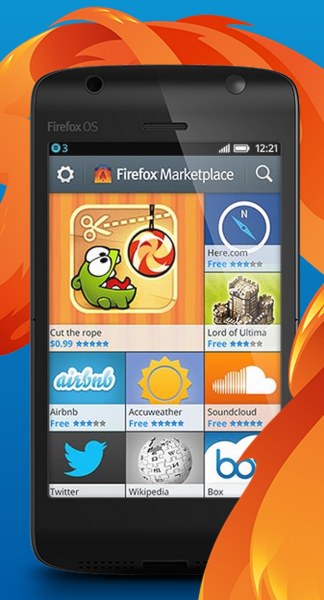
  • Firefox OS races for third place

    Mozilla means serious business about Firefox OS, if today’s Mobile World Congress announcement is any indication. Timing couldn’t be more serious. Gartner says there is little room for a third smartphone platform; in fourth quarter, Android and iOS dominated with 90.1 percent share, based on actual sales. The race for third place is on, with BlackBerry and Windows Phone established, but weak, contenders.

    Mozilla proposed Firefox OS nearly two years ago, when BlackBerry OS still had appreciable market share and smartphone growth was strong. But as the first Firefox OS devices come to market, much is changed. Mature markets already rapidly saturate, China is the largest for smartphones, feature phone share is expected to fall below 50 percent this year and Samsung has replaced Nokia as global handset leader. The best place for a newcomer, based on who will partner and where there is room to grow: Second-world and emerging markets — and that’s where Firefox OS is headed.

    Alcatel One Touch, LG and ZTE are early hardware launch partners. Eighteen carriers are committed to offering Firefox OS smartphones: América Móvil, China Unicom, Deutsche Telekom, Etisalat, Hutchison Three Group, KDDI, KT, MegaFon, Qtel, SingTel, Smart, Sprint, Telecom Italia Group, Telefónica, Telenor, Telstra, TMN and VimpelCom.

    América Móvil will bring Firefox OS phones to Mexico; Deutsche Telekom to Poland and other parts of Europe; Telefónica to Brazil, Colombia, Spain and Venezuela; and Telenor to Eastern Europe and other countries. Full list of launch destinations: Brazil, Colombia, Hungary, Mexico, Montenegro, Poland, Serbia, Spain and Venezuela. Most of the carriers expect rollouts to begin by mid-year and none are markets where smartphones yet have much traction.

    This circumstance is crucial to future growth. Smartphones, unlike feature phones, bring platform commitment as users download and purchase apps and get add-ons specific to operating systems and devices. Firefox OS devices face heaviest headwinds in countries where smartphone adoption is greatest and supporting ecosystems with it.

    In total, the world belongs to Android and iOS. Anshul Gupta, Gartner principal research analyst, says that “2013 will be the year of the rise of the third ecosystem”. Globally, with 3.5 percent and 3 percent sales market share, respectively, BlackBerry OS and Windows Phone are biggest contenders to be No. 3. But on the macro-level, particularly in countries where feature phones dominate, any platform conceptually can beat others — even those successful in markets like the United States or Western Europe.

    From that perspective, Mozilla CEO Gary Kovacs’ boast isn’t so outlandish as Android or iPhone supporters might think: “With the support of our vibrant community and dedicated partners, our goal is to level the playing field and usher in an explosion of content and services that will meet the diverse needs of the next two billion people online”.

    Critics might look at the situation differently — that Mozilla can’t find partners for major markets and gets the dregs. Even if true, none of the first distribution wave is a country with high smartphone adoption, which again to emphasize is pure opportunity for Mozilla and carriers.

    Hardware partners are an interesting lot. None are top-tier. While ZTE and LG rank fourth and fifth for global handset sales — with 3.4 percent and 3.2 percent market share in Q4, according to Gartner — they declined year over year. Third place Apple has greater share than both combined. Sixth-ranked Huawei will join the three this year. Alcatel One Touch is the other Firefox OS partner.

    Samsung would be the feather in Mozilla’s cap — but accounting for 42.5 percent of Android sales in Q4, the South Korean electronics giant has little incentive to add a fourth smartphone operating system. Nokia is committed to Windows Phone and Apple will never do anything but iOS. Devices from three of the top-six is a good start, considering Mozilla builds everything new and comes to market late.

    The challenge now: Getting devices to market and supporting ecosystem in place. BlackBerry 10 is out, and Windows Phone sales grew 124.2 percent year over year during fourth quarter, according to Gartner, arguably from a small base. So the race for third place is on.

  • TED Fellow Greg Gage turns a smartphone into a microscope

    At TED2012, DIY neuroscientist and TED Senior Fellow Greg Gage shocked the TED audience when he cut the leg off a live cockroach onstage to demonstrate his Spiker Box – a device that allows anyone to see and hear spikes in the neural activity of insects.

    A year later, his company Backyard Brains is coming up with new science education products — like the MicroManipulator, which allows you to place electrodes on tiny things. These products are affordable enough to allow students of all ages to learn about and experiment with electrophysiology, an experience previously only accessible in professional labs.

    Here at TED2013, he demonstrates the BYB SmartScope – affectionately known as the RoachScope. This sturdy, portable microscope, currently in beta, uses smartphones to view, snap and share magnified objects over Facebook, Twitter and email, and costs $80 – putting cutting-edge experimentation into the hands of students, teachers and the just plain curious.

  • Onex Completes Sale of 50% Stake in RSI

    Canadian buyout firm Onex Corp. has completed its sale of a 50 percent interest in RSI Home Products Inc. back to the Anaheim, California-based company. Proceeds from the transaction totaled US$323 million. Onex first invested in RSI in 2008. With the company buyback finalized, Onex announced it has received proceeds of US$471 million, including prior distributions, which results in a multiple of invested capital of approximately 1.5 times and an 11% rate of return.

    PRESS RELEASE:

    Onex Corporation (“Onex”) (TSX: OCX) and its affiliates (the “Onex Group”) today announced that they have completed the sale of their 50% interest in RSI Home Products (“RSI”) to the company for proceeds of $323 million.

    The Onex Group made a $318 million preferred equity investment in RSI in October 2008. The Onex Group has received proceeds of $471 million, including prior distributions, which results in a multiple of invested capital of approximately 1.5 times and an 11% rate of return. Onex’ portion of the proceeds is $186 million, including the prior distributions.

    About Onex
    With offices in Toronto, New York and London, Onex is one of the oldest and most successful private equity firms. Onex acquires and builds high-quality businesses in partnership with talented management teams. The Company has approximately $15 billion of assets under management, including $5 billion of proprietary capital, in private equity, credit securities and real estate. Onex invests its proprietary capital directly and as a substantial limited partner in its Funds.

    Onex’ businesses have assets of $43 billion, generate annual revenues of $37 billion and employ approximately 250,000 people worldwide. Onex shares trade on the Toronto Stock Exchange under the stock symbol OCX. For more information on Onex, visit its website at www.onex.com. The Company’s security filings can also be accessed at www.sedar.com.

    This news release may contain forward-looking statements that are based on management’s current expectations and are subject to known and unknown uncertainties and risks, which could cause actual results to differ materially from those contemplated or implied by such forward-looking statements. Onex is under no obligation to update any forward-looking statements contained herein should material facts change due to new information, future events or otherwise.
    For further information:
    Emma Thompson
    Vice President, Investor Relations
    Tel: 416.362.7711

    Photo courtesy of Shutterstock.


    The post Onex Completes Sale of 50% Stake in RSI appeared first on peHUB.

  • News from 21st to 24th February

    Copied from Twitter @egyptologynews

    Free article: The Calendars of Ancient Egypt. By R.A. Parker. University of Chicago Press, 1950. Hist.of the Anc.Wrld http://bit.ly/Wkz6yM

    A thorough reflection reveals a long-forgotten link between the foundation of Granada (Spain) and Cairo. Ahram Online http://bit.ly/YOopGf

    Mystery fibres on the painted coffin of Tawahibre. Penn Artifact Lab http://bit.ly/WjKtqO

    3D Petrie exhibition in the news: “Where Science meets Heritage at UCL-Qatar.” UCL http://bit.ly/W2gY2i

    Virtual Autopsy at British Museum in last few days: British Museum http://bit.ly/UK2hJN

    Karnak: Where the digital age meets ancient Egypt. By Andrew Lawler. Humanities magazine http://1.usa.gov/WhuKbE

    Disappearing heritage of Sudan,1820-1956: Photographic and filmic exploration in Sudan 17th Jan–30th Apr 2013. Durham http://bit.ly/4t44h4

    Lady Wallis Budge Junior Research Fellowship in Egyptology. University of Oxford http://bit.ly/13fdrPI

    Obituary: André et Etienne Bernand, jumeaux, égyptologues et morts le même jour http://bit.ly/Vz3E2x

    Egypt Salfists forced to cancel preaching event at ancient Pharaoh temple. Al Arabiya http://bit.ly/11ZCmYb

    Book review by Valentino Gasperini: Jaime Alvar, Los cultos egipcios en Hispania. Bryn Mawr Classical Review. http://bit.ly/W2Bgsq

    AE blue pigment used 5,000 years ago is giving modern scientists clues toward the development of new nanomaterials http://bit.ly/Yo4sX1

    BBC interview with Professor Dimitri Laboury re the newly discovered Vizier’s tomb with its small pyramid in Luxor. http://bbc.in/UR3Z1x

    Ancient Worlds: Mummy exhibition in Manchester. Click link at bottom of page to see more pages and pics on the story. http://itv.co/XOx4JE

    Trabajos en las excavaciones en la Tumba Tebana 39, Luxor: un complejo que funcionó como lugar de peregrinaje http://bit.ly/ZBAa7D

    High Definition Surveying (HDS) at Malqata.. HDS scanning is a relatively new tool in surveying. iMalqata dig diary http://bit.ly/YJzgzS

    The annual report on Abu Simbel solar event. Al Masry Al Youm. http://bit.ly/15czCoi

    Wood-turning in Manchester and Ancient Egypt. Report with photos re Geoff Killen’s AE wood-turning demonstration http://bit.ly/ZoCH1b

    Old projects, new projects. Brooklyn Museum team back at the Temple of Mut, updating their dig diary. Lots of photos. http://bit.ly/YQ7hP5

    Amara West dig diary: a kaleidoscope of life and death in Egyptian Kush http://bit.ly/Yig7Z5

    What’s the use of a PhD? Can we remake the humanities PhD to have better job prospects? Megan McArdle The Daily Beast http://thebea.st/YFxhhe

    Book Review by Tim Reid: Sunken Egypt: Alexandria. Franck Goddio, Andre Bernand. Periplus Publishing. Egyptians blog http://bit.ly/YpK1KZ

    Pigmento de la era faraónica puede ayudar a la nanotecnología. Prensa Latina http://bit.ly/UXbHHg

    Via Willeke Wendrich ‏@wzzw. Two new and related articles in the UCLA Encyclopedia of Egyptology: The Akh and the Northern Bald Ibis (Akh-bird). http://escholarship.org/uc/nelc_uee

    Via Kate Wong ‏@katewong. Check out @hpringle’s spectacular cover story on the evolution of human creativity in the March @sciam http://www.scientificamerican.com/article.cfm?id=the-origin-human-creativity-suprisingly-complex

    Via Kasia Szpakowska ‏@SakhmetK. Another Egyptology position! http://www.ku.dk/english/available_positions/vip/

    Via Chris Naunton ‏@chrisnaunton. Two Egyptological jobs going in Copenhagen: http://www.offentlige-stillinger.dk/sites/cfml/kbhuni/kbhuniVis.cfm?plugin=1&englishJobs=Yes&nJobNo=211129&nLangNo=2 … and http://www.offentlige-stillinger.dk/sites/cfml/kbh

  • NVIDIA Hates The Benchmark Game, But Lifts The Veil On Tegra 4 Performance Anyway

    tegra-test

    Flash back a month or so to CES — NVIDIA CEO Jen-Hsun Huang officially pulled back the curtain on the company’s new Tegra 4 chipset, and called it the “world’s fastest mobile processor.” It was a hell of a claim to make, but the company did little to justify it at the time aside from pointing to its array of Cortex A15 CPU cores and its “72 GPU cores.”

    Fortunately, NVIDIA is much chattier here at MWC, and was eager to show off some rather impressive synthetic benchmarks for its latest and greatest mobile chipset.

    Well, maybe “eager” isn’t exactly the right word — NVIDIA really hates playing the mobile benchmark game. I don’t blame them. In many ways the sorts of numbers that these tests spit out just don’t accurately reflect the experience that users will actually have. During our early testing for instance, the Nexus 4 consistently put up some strangely anemic Quadrant scores — which its cousin the Optimus G handily blew past — despite working like a dream.

    All that said, benchmarks are largely are for the most part inescapable, and the Tegra 4 SoC does a rather nice job on them anyway. Quadrant is one of our go-to mobile benchmarking tools, and the Tegra 4 did not disappoint — it scored in the mid-16,000s, topping out at 16,591. To put that in a little perspective, Samsung/Google’s Nexus 10 (which itself is powered by a relatively new dual-core 1.7 GHz Samsung Exynos chipset) usually scores in the mid-to-high 4,000s. Asus’ Transformer Pad Infinity TF700 (powered by a 1.6GHz quad-core NVIDIA Tegra 3) fared about the same, if not a hair higher.

    The results were much the same when we looked at AnTuTu scores — while tablets like the Nexus 10 and Asus’ TF700 will yield scores in the mid-8000s to low-9000s, the Tegra 4 demo tablet consistently hit scores above 36,000.

    Curious about how the Tegra 4 compares in your preferred benchmarking suite? You can see the full gallery of Tegra 4 benchmark results below:


    One of NVIDIA’s most prominent competitors these days is Qualcomm, and NVIDIA Product Marketing director Matt Wuebbling was eager to chat about the performance differential when I let slip the Q word.

    When asked about how much NVIDIA knows about Qualcomm’s updated Snapdragon chipsets, he replied simply enough: “we know a lot.” By his count, the Tegra 4 is about two to three times faster than Qualcomm’s Snapdragon 600 (used in devices like the new HTC One). He went on to say that the top-tier Snapdragon 800 is about 25 to 35 percent faster than the 600, with the implication that the Tegra 4 still comes out on top.

    Though his response has based on Qualcomm’s published Snapdragon claims, I’d still advise you to take that comparison with a grain of salt. That’s nothing against Wuebbling, but these sorts of simple comparisons don’t always paint the most accurate picture. I couldn’t reach Qualcomm for response at time of writing, but I’ll update if/when they respond to these claims.

    You would think that this sort of horsepower would suck a battery dry in jiffy, but that doesn’t appear to the be the case. Another Tegra 4 demo had a video running at full resolution on a small 1080p display, an exercise that never drew more 1 watt of electricity at the most. Power consumption typically fell within the 900-950 milliwatt range — devices like the Droid DNA for instance tend to draw around 1.2 watts for similar tasks.

  • TED speakers who’ve won Oscars

    OscarsThink quick: what was the best film of 2012? Amour, Argo, Beasts of the Southern Wild, Django Unchained, Les Miserables, Life of Pi, Lincoln, Silver Linings Playbook or Zero Dark Thirty? This question will be decided tonight at the 85th annual Academy Awards. As you prepare your Oscars ballot and debate whether Seth MacFarlane will make a great host (is it just coincidence that he made a movie called Ted this year?), here is a celebration of TED speakers who have won Oscars.

    Al Gore warns on latest climate trendsAl Gore warns on latest climate trends Al Gore, who has given three TED Talks in total, won Best Documentary for An Inconvenient Truth in 2006. Three years later, at TED2009, he showed the latest climate data, revealing that damage to the planet was accelerating more quickly than expected. He also offered a potential solution: clean coal.
    Rob Legato: The art of creating aweRob Legato: The art of creating awe Rob Legato has won multiple Oscars for Best Visual Effects — for Hugo, Titanic and Apollo 13. At TEDGlobal 2012, he gave the talk “The art of creating awe,” revealing snippets of how the memorable effects in each were created. He also shared his penchant for recreating moments that actually happened on film. (See Legato’s picks for the 5 movies that floored him visually.)
    Andrew Stanton: The clues to a great storyAndrew Stanton: The clues to a great story Director Andrew Stanton won Best Animated Feature for WALL-E and Finding Nemo. He also gave the talk “The clues to a great story” at TED2012. His bold idea: starting at the end and working back to the beginning.
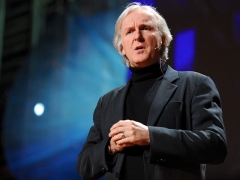
    James Cameron: Before Avatar ... a curious boyJames Cameron: Before Avatar … a curious boy James Cameron has been nominated for six Academy Awards and won three. Known for his ability to create engrossing worlds, in the talk “Before Avatar … a curious boy” at TED2010, Cameron shares why he has long been enthralled by the fantastic.

    Sharmeen Obaid-Chinoy: Inside a school for suicide bombersSharmeen Obaid-Chinoy: Inside a school for suicide bombers The 2012 documentary Saving Face follows a plastic surgeon as he journeys through Pakistan, performing reconstructive surgery for women who’ve been the victims of acid attacks. The powerful film won the Oscar for Best Documentary. At TED2010, director Sharmeen Obaid-Chinoy — a TED Senior Fellow — shared footage from another project, taking us “Inside a school for suicide bombers.”

    Jane Fonda: Life's third actJane Fonda: Life's third act Jane Fonda won her first Oscar for Klute in 1971, and her second for Coming Home in 1978. At TEDxWomen 2011, the actress and exercise video enthusiast shared her thoughts on “Life’s third act.”
    Jeff Skoll makes movies that matterJeff Skoll makes movies that matter At TED 2007, Jeff Skoll gave us the one rule he has for picking projects to produce: that they must be movies that matter. Skoll’s film company, Participant Media, has made five Oscar winners, including Syriana, An Inconvenient Truth and The Help.
    Don Levy: A cinematic journey through visual effectsDon Levy: A cinematic journey through visual effects Don Levy took us through a cinematic journey of visual effects with the help of the Academy of Motion Picture Arts and Sciences at TED2012. The head of marketing and public relations for Sony Pictures Imageworks, he led the awards campaigns for the studio’s first win, for the short The ChubbChubbs in 2003, through their win for Best Visual Effects for Spider-Man 2 in 2005.

    Other TED connections worth noting:

    • Producer Jake Eberts — known for taking on bold projects like Chariots of Fire, Gandhi, Dances with Wolves and March of the Penguins — has been involved with the making of movies that garnered 66 Oscar nominations, including nine Best Picture nominees. Eberts sadly passed away in 2012, but before his death, often showed film clips at TED — generally unposted because the footage was embargoed. Here, a recap of his talk from TED2009.
    • Morgan Spurlock, who gave the talk “The greatest TED Talk ever sold” at TED2011, was nominated for his documentary Super-Size Me.
    • Composer James Horner won two Oscars for his work in Titanic, including Best Original Song for “My Heart Will Go On.” Horner desconstructed a scene from the epic film at TED2005.
    • Jeffrey Katzenberg, founder and CEO of DreamWorks Animation, spoke several times at TED in the early days. His company made Beauty and the Beast, the first animated film to be nominated for Best Picture, and won Best Animated Feature Film in 2001 for Shrek.
    • Producer Lawrence Bender, whose films have gotten 29 Academy Award nominations in total, has also spoken briefly at a TED.
    • Ben Affleck, who created a playlist of his favorite TED Talks, directed and starred in Argo — nominated for seven awards this year, including Best Picture and Adapted Screenplay.
    • Longtime TED community member Philipp Engelhorn got a Best Picture nod this year for Beasts of the Southern Wild, which he executive produced.

  • How Google did the right thing with the NASCAR crash video, and why it matters

    At a NASCAR event on Saturday, debris created by a serious crash flew into the stands and injured a number of fans. As with many such events, a bystander caught the disaster on video and quickly uploaded it to YouTube, but within a matter minutes it was removed due to a copyright claim by NASCAR. It seemed like yet another case of a commercial entity taking advantage of copyright law to smother free speech — until Google reinstated the video and said NASCAR had overstepped its bounds. In this case at least, the search giant did the right thing.

    The NASCAR crash followed much the same pattern so many news events do now, in the age of real-time and social media: moments after the crash occurred, there were multiple eyewitness photos and videos of the incident, including one particularly horrific one captured by university sophomore Tyler Anderson, who was sitting just to the left of the section that was hit by the debris — including a tire that flew off the race car in question. Soon, a link to the video on YouTube was racing through Twitter and other channels.

    In this case, Google decided to over-rule NASCAR

    Suddenly, however, the video was no longer available, and in its place was a standard YouTube message about the content being removed because of a copyright claim by NASCAR. This raised a host of questions for those who were trying to access it, including: How could the racing entity remove the video so quickly? Why didn’t YouTube protest that it should be protected by the principle of fair use, since it was a news event? And how could NASCAR claim that it had copyright over a video that was created by a fan?

    The latter of those questions was answered a number of hours later, when YouTube reinstated the video and released a statement saying that partners such as NASCAR are only allowed to remove content that breaches their copyright, and the content in question didn’t pass that test (even though NASCAR asserts in the fine print when you buy a ticket that it owns everything fans produce while at an event). Said the YouTube statement:

    “Our partners and users do not have the right to take down videos from YouTube unless they contain content which is copyright infringing, which is why we have reinstated the videos.”

    The other two questions people had are even easier to answer. In a nutshell, Google provides its YouTube partners with an easy way to have content removed almost immediately: it’s a tool called Content ID, and it’s essentially a back-door to the YouTube content-management system. When a company like CNN or NBC or some other partner sees their TV shows or news clips being shared on YouTube without permission, they can submit a form and have it pulled down.

    One of the main reasons why Google does this — and why it doesn’t bother (except in extreme cases) to protest or demand an explanation for takedown requests — is that the Digital Millennium Copyright Act or DMCA only gives services like YouTube “safe harbor” from copyright-infringement charges so long as the company acts quickly when it receives a takedown notice. In effect, there is virtually no leeway for protests or attempts to get a provider to defend their demands.

    As a number of observers — including Jillian York of the Electronic Frontier Foundation — noted during the NASCAR incident, this is just one of the many ways in which the DMCA actually fosters bad behavior, or at least behavior that seems bad if you believe in free speech and freedom of the press. The fact that Google acted quickly to put the content back up is admirable, but it shouldn’t have to do this, and there are no doubt many other important cases in which it hasn’t that don’t involve something as attention-getting as a race-car crash.

    And as Jason Pontin of MIT’s Technology Review pointed out in a recent essay on free speech in a digital era, our speech is to a large degree controlled by private corporations like Google and Twitter and Apple, and in many ways we are still coming to grips with what that means for us as a society.

    Post and thumbnail images courtesy of Flickr user Petteri Sulonen

    Related research and analysis from GigaOM Pro:
    Subscriber content. Sign up for a free trial.

    • HP’s Android-Powered Slate 7 Tablet Is Cheap And It Works, But Is That Really Enough?

      slate7-1

      HP surprised more than a few people earlier tonight when it officially revealed the Slate 7, a $169 Android tablet that’s set to ship in the U.S. for $169 in April. It struck me as a safe move for HP, especially after it whiffed so profoundly with its ill-fated TouchPad. After all, people are buying plenty of Nexus 7s, so clearly there must be a market for a cheap, small tablet.

      I got the chance to muck around with the Slate 7 at Pepcom earlier tonight though, and to be quite honest, I’m not convinced HP has a winner on its hands.

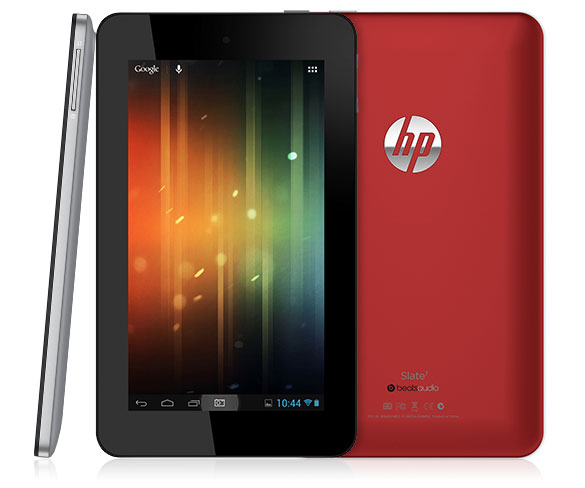
      One of the first things you’ll notice about the Slate 7 is its elongated 16:9 display, and the thick black bezel that runs around it. It’s actually rather reminiscent of Samsung’s 7-inch Galaxy Tab 2.0, another underwhelming Android tab that banked on its price tag to sell. The screen itself (running at 1024 x 600) was decent enough — it was generally very bright, but the colors displayed seemed dull and lifeless.

      The Slate 7 seems to have been designed to be as inoffensive as possible. That’s not completely a bad thing — the stainless chassis and the soft-touch plastic that the Slate’s rear is swathed in are rather nice — but there are precious few other design niceties to be found here. Those looking for a little splash of color may be interested to know that a red version will also be available. The Slate 7 is also apparently loaded up with Beats Audio support, a trait it shares with its notebook cousins, but I couldn’t get a feel for it amid all of the noise of Pepcom.

      As far as performance goes, what else is there to say? It works just about as well as you would expect a $169 tablet to: not that great. Swiping between home screens could be a little jerky (if it worked at all; quick swipes didn’t always get the job done), and there was a bit of delay as I went to fire up new apps — though some non-final software probably has something to do with that. The Slate 7 has a dual-core 1.6GHz processor and 1GB of RAM to work with, which is usually enough to tackle stock, unfettered Android 4.1 without too many hiccups, but I’m willing to chalk all this jerkiness up to a pre-production lack of polish for now.

      Click to view slideshow.

      While we’re talking about performance, HP’s booth representatives didn’t have many specifics on the dual-core processor, but a quick look at the settings revealed an option called “Rockchip system updates,” proving nicely that HP sourced the processor from China’s illustrious Fuzhou Rockchips Electronics company. Now I couldn’t care less who the chip came from if it does the job admirably, but the internals here don’t do much to wow. When asked about how HP was able to produce such an inexpensive tablet, HP’s pitchman pointed to economies of scale — order enough parts and the end product shouldn’t cost too much — but opting to go with a SoC from a largely unknown Chinese company probably didn’t hurt either.

      What almost certainly will hurt HP, though, is the crowded playing field it’s diving into. There’s the Nexus 7 to compete with of course, but don’t forget devices like the Kindle Fire HD and the Nook HD. Each of them brings higher resolution displays into the mix, as well as tight access with each of their respective media environments for only $30 more out of pocket. That’s not to say that HP won’t work to solidify the ties between its new tablet and the rest of the HP ecosystem — the Slate 7 comes with the ability to wireless print to compatible HP printers.

      For better or worse (my money’s on the latter), HP just doesn’t seem concerned with trying to differentiate the Slate 7 from any other Android tablet out there. To its credit, HP isn’t trying to position the Slate 7 as anything other than what it is: a very cheap mass-market play. I’m not convinced that this thing is going to be able to pull away from the pack just by undercutting the competition on price, but I could be wrong — the Slate 7 may be the right tablet with the right price tag at the right time.

    • HP’s budget Android takes on Amazon and Google tablets

      The death knell for WebOS has sounded. HP promised a lot when purchasing the Palm mobile operating system back in 2010, only to abandon ship. The company is among Google’s newest and most-important partners. Earlier this month, HP unveiled its first Chromebook, which is followed by its first Android tablet, the Slate 7.

      Despite the fact that Mobile World Congress does not technically start until tomorrow, the big announcements have already been rolling out from Barcelona, Spain. HP, not to be left out, unveiled its new seven-inch Android tablet, clearly designed to go head-to-head with Amazon Kindle Fire HD and Google Nexus 7.

      The new device packs Android 4.1 Jelly Bean, meaning buyers get Google Now, but no Photosphere, which requires version 4.2 of the Android operating system. The Slate 7 also packs in a 3-megapixel rear camera, embedded Beats Audio, micro USB port, VGA front camera and a dual-core ARM Cortex-A9 at 1.6 GHz. The Slate 7 also features HP’s ePrint technology. There is nothing about storage capacity included in the announcement.

      Alberto Torres, the HP senior vice president of Mobility Global Business Unit, says the Slate 7 is designed to “address the growing interest in tablets among consumers and businesses alike, the company will offer a range of form factors and leverage an array of operating systems”. HP also produces Windows 8 tablets. 

      As for pricing and availability, the company announced that the Slate 7 will arrive in April and tempts buyers with a $169 price tag — a full $30 below that of the Amazon and Google competitors.

      For now, HP teases potential customers with a product wesite that provides additional information. By the way, the website contradicts the press release by stating “available in May 2013”.

      So, will this tempt you away from a different purchase?

    • New playlists: “Spoken-word fireworks” and “That’s absurd!”

      spoken_word_fireworksTED playlists are collections of talks around a topic, built for you in a thoughtful sequence to illuminate ideas in context. This weekend, two new playlists are available: Spoken-word fireworks and That’s absurd!

      That’s absurd!
      5 quirky talks remind us that life is funny, weird, sweet, absurd. Watch talks by Improv Everywhere’s Charlie Todd and Postsecret’s Frank Warren, and more.

      Spoken-word fireworks
      7 brave and beautiful expressions from some of the world’s most talented spoken-word performers — like Anna Deavere Smith, Sarah Kay and Rives — who weave stories in words and gestures.

    • Google’s plan to eat Amazon’s lunch and dominate retailing

      Marc Andresseen, the kingmaker of Silicon Valley,  is fond of pointing out that “software is eating the world.” Google’s recent purchase of Channel Intelligence, a data management platform for retailer inventory, underscores its unstated, Borg-like goal of slowly gobbling up every industry it encounters.

      This particular move, though, is a not-so-subtle signal to the marketplace that Google intends to become the dominant player in global ecommerce – which in the U.S. alone is already a $186 billion goldmine. Yes, for Google this is not just about going deeper into the ads business. The ever-expanding behemoth’s intention is to take a bite out of retailers margins too, starting first with those generated by ecommerce websites.

      The first stop for shoppers

      The Channel Intelligence purchase adds to the buzz that Google created back in October when it shifted its Google Shopping property to a fully paid ad marketplace, which by many accounts generated some $1 billion in the fourth quarter. And a Conductor study says that Google already influences over a quarter of all e-commerce transactions through its little search engine. These recent moves indicate that it seeks not only to go toe-to-toe with Amazon, but also to sneak up on other retail giants that sell both online and in stores.

      Channel Intelligence (now part of Google) has a robust set of leading retail advertisers, which provides Google access to detailed retailer pricing and inventory data. Even more importantly, Google will get more valuable data on how those retailers convert browsers into customers. The ability to use its vast data resources to better understand retailer margins ultimately gives Google more pricing power for its ads.

      Being able to offer retailers an easier way to deliver product inventory into its search engine will make Google a more formidable player in online shopping. Judging from the growing volume of retail-driven search on both Google and Amazon, it is clear that users are choosing to go to one of those spots to get the most up-to-date pricing and product availability. This is a two-way battle to be the consumer’s first stop. The winner of this battle will become the gatekeeper of the consumer through which all retailers will have to go to sell products.

      Evolution to a digital store shelf

      With the advent of today’s on-demand culture, Google is betting that it no longer matters who actually sells the product. Consumers are squarely in control and Google will increasingly help them find that product they are looking for, and do so at the right location for the right price. This was traditionally the role of ecommerce players like Amazon and massive offline retailers like Wal-Mart and Target.

      However, with the growth of Google Shopping and the integration of those results into its core search engine, Google is quickly becoming the “digital store shelf” that it had always promised. For example, Google web search results today for retail queries tend to have at least 10 to 15 product images in addition to the traditional blue links. As Google starts to aggregate retailers’ local inventory – a probable next step on its roadmap with Channel Intelligence – it will be able to compete more aggressively in the mobile commerce space as well, directing consumers to physical stores in exchange for more ad dollars.

      Not just ecommerce but all commerce

      Make no mistake about it, Google is making a play for all retail with its recent moves and every retailer should be worried about the implications. (Rumors are swirling this week that the company has plans for its own branded retail outlets.) However, while Google is dominant in search, it is not the global ecommerce leader yet. It does not own significant pieces of the customer relationship (e.g. shipping, customer support, and retention marketing) and retailers can remain competitive by investing in areas that will stave off commoditization. Because as we all know, once you are a commodity, you will be traded like pork bellies and sold to the highest bidder. And that’s no place for a great retail brand to be.

      The promise of e-commerce is having informed consumers finding the products they need from the brands that they love. Here are a few things marketers should employ to fend off Google’s advances:

      • Focus on your brand’s value proposition and how it will be perceived in a Google search and other ad channels. Highlight what makes you unique so that you don’t become just another slot in a price list.
      • Stay away from Google’s tools that track revenues/profits. Otherwise you’re simply handing over your business’s most valuable data.
      • Develop mobile sites and apps that are a first stop for shoppers on the go, offering a better alternative to a Google search for prices.
      • Devote resources to customer experience and personalization as a way of differentiating and bettering a basic search that’s more challenging for consumers.

      Jason Lehmbeck is CEO and co-founder of DataPop, an online advertisement optimization company that works with retail, travel and automotive brands.

      Photo courtesy of Anneka/Shutterstock.com.

      Related research and analysis from GigaOM Pro:
      Subscriber content. Sign up for a free trial.

    • Wireless charging platform Qi lands its second automaker

      The Wireless Power Consortium’s Qi charging technology will be making its way into Korean automaker Ssangyong’s future vehicles. Ssangyong isn’t revealing which car model it will embed the wireless charging surface in, but at Mobile World Congress this week the WPC is demonstrating how the technology will be implemented in Ssangyong’s future interior console designs.

      Ssangyong doesn’t have quite the international pedigree of the WPC’s first car partner Toyota, but in an automotive market that traditionally takes years to plan and develop its products, the fact that Qi is making headway with any carmakers is nothing to scoff at. While the Qi platform has seen interest from many automakers, some are going to faster than others in adopting the technology, said Peter Hoehne, VP of sales and marketing for Leggett & Platt, which designed the automotive charging system.

      Some are introducing Qi at the beginning of the design and development process, meaning their Qi-enabled cars won’t be out for several years, Hoehne said. Meanwhile, others are choosing to include the technology into vehicles relatively late in their development processes, he said. That was the approach Toyota adopted for the Avalon, getting the technology into its most recent 2013 model for the North American market.

      Instead of relying on a cord, Qi uses induction to transfer an electric charge to your mobile phone. Typically users buy a separate charging pad they can place their phones, but in a few cases the technology is getting embedded directly into furniture and on other surfaces people are likely to place their phones. There are now 36 different Qi-integrated or Qi-ready devices, according to the WPC. Many of them, like the Samsung Galaxy S III, don’t support the technology out of the box, but require customers to buy a separate battery back plate embedded with the Qi receiver coils.

      Related research and analysis from GigaOM Pro:
      Subscriber content. Sign up for a free trial.

    • Want a smarter spell checker? Try Ginger

      Everyone makes spelling mistakes from time to time, and if it’s just the occasional typo on an internet forum then most people aren’t going to care.

      If you’re prone to more regular errors, though, even when you’re working on more important documents, then this could lead to problems. And that’s where Ginger comes in.

      The program is a cloud-based spell checker which works with Office 2003, 2007 and 2010, as well as Firefox and IE (other options, including an Android app, are apparently coming soon). And unlike most of the competition, Ginger doesn’t just detect errors by checking individual words. It also looks at the context of the current sentence, and adapts itself accordingly.

      Suppose you type “were are you?”, for example. There’s no spelling error here, but Ginger will recognise there’s an issue with context, and know that you really meant “where are you?”.

      The program can detect missing words, too, spotting a missing “the” in “the dog chased cat”.

      Split words aren’t a problem, with “I went in side” becoming “I went inside”.

      And in some cases you can watch this process at work, while you type. Enter the phrase “Juzt tipe sum words”, for instance, and Ginger will highlight the first two words, which it knows should be “Just type”. But if you then end the sentence with a full stop, it will also highlight “sum”, which although spelled correctly is clearly used out of context.

      Whatever your errors happen to be, correcting them is very straightforward. There’s no need to work through the errors individually: just hover your mouse cursor over one of the highlighted words, and Ginger displays a pop-up alert containing what it believes to be the correct sentence. If you’re happy, clicking this will update your document immediately. And a second editing option allows you to delete some corrections, while keeping others.

      Ginger also has a few issues. It really needs to cover a wider range of programs, for instance. The program is cloud based, so you need an internet connection for it to work. And it’s heavier on system resources than we expected. Apart from installing an Office addon, browser extensions and so on, it also adds a couple of background processes which grabbed around 90MB of RAM on our test system.

      These aren’t critical problems, though, and on balance Ginger remains a capable and effective spell checker.

      Photo Credit: Creativa/Shutterstock