Lawmakers are calling for new legislation that would require businesses to provide paid emergency sick-leave because of the swine flu pandemic. The Los Angeles Times reports: “Sen. Christopher J. Dodd (D-Conn.), chairing a health subcommittee hearing Tuesday, said that requiring businesses with 15 or more employees to offer seven paid days off a year would end a dangerous choice ‘between staying healthy and making ends meet.’” Some conservative lawmakers argue, though, “that Democrats are using a public health crisis as momentum for faulty legislation that would harm businesses by inviting abuse by workers. … There currently is no requirement for businesses of any size to provide paid sick leave” (Markman, 11/11).
Category: News
-
Lawmakers Call For Emergency Sick-Leave Requirement
-
Health Insurance Industry Profits Examined
The characterization of the health insurance industry as high-profit is “a little mystifying” and “rather silly” given that their profit margins are thin compared to other industries, according to analysts interviewed by ABC News.
“Insurance companies are not money trees. They (go) out into the market and buy health care services and resell those services at some markup at health care consumers. I would argue that markup is not that much,” one analyst said. ABC reports, “the profit margins the health insurance companies report — often below 5 percent — pace some industries and lag behind many others” (Gomstyn, 11/10).
-
Google Latitude Introduces Location History, Smart Alerts
A quick, but important, note: the stuff we’re about to discuss is only available on an opt-in basis. So there’s no need to stop halfway through this article and drown your phone or tape it to a neighbor’s car. Now, with that out of the way, let’s move on to the news that Google Latitude’s gained two features called Google Location History and Google Location Alerts (which is in beta).
Google Location History may be either the less cool or the less creepy offering, depending on one’s point of view. A post on the Google Mobile Blog explained that, with it, you can "store, view, and manage your past Latitude locations." Then, "You can visualize your history on Google Maps and Earth or play back a recent trip in order."
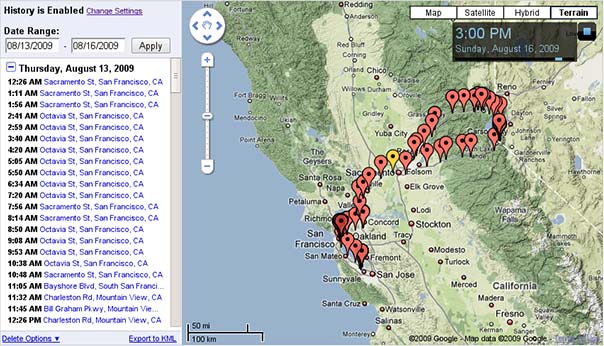
In another nod to personal privacy, it’s possible to delete part or all of your location history, too.
As for the second feature, it builds on the first and tries to intelligently connect you with acquaintances. According to the post, "Location Alerts can recognize your regular, routine locations and not create alerts when you’re at places like home or work. Alerts will only be sent to you and any nearby friends when you’re either at an unusual place or at a routine place at an unusual time."
You can enable these offerings here if they suit your style. And should you later change your mind, Google promises that you can disable them rather than head for the nearest sink or roll of duct tape.
Related Articles:
> Google Puts All Of Your Personal Info In One Place
> Google Tracks User Data To Monitor Load Times
> iPhone Finally Gets A Google Latitude App
-
Family Guy’s “Something Something Something Dark Side” trailer
Everyone agrees that the first Family Guy Star Wars parody, Blue Harvest, was TV at its finest, right? It was such a big hit that Fox is going to release the second one on DVD on December 22 before airing it on TV with the hope fans will actually spend money and buy the damn thing. If the trailer is any indication of the episode’s awesomeness, some people might actually do just that. Who knows, maybe even me.
-
P4P May Be Coming to a Network Near You
 Several Internet service providers in the U.S. and around the world (including a large Chinese ISP) are currently implementing P4P technologies on their networks to help alleviate congestion caused by peer-to-peer files, and they will soon be joined by other ISPs doing the same. Indeed, P4P efforts that were showcased in August 2008 are taking on more relevance as broadband demand escalates and the FCC tries to regulate the principles by which carriers can deal with congestion on their networks.
In the August 2008 tests, which were performed by Comcast, Verizon, Yale and Pando Networks, users reported seeing see an 80 percent improvement in speed for P2P files using the technology, while it reduced traffic on the ISP network by 34 percent. That’s nothing to scoff at considering P2P traffic still accounts for 38 percent of global Internet traffic. So after more than a year of relative quiet, I checked in to see where the much-vaunted P4P efforts currently are.
The good news is that P4P is alive and well and several researchers and ISPs are testing its use for P2P downloads such as BitTorrent as well as for P2P streaming, which could help alleviate two of the largest anticipated sources of congestion on the web. Some popular P2P streaming applications consumers may have encountered are Spotify, the UK music service, and Octoshape, the company that streamed the Obama inauguration and still works with CNN.
The P4P standards-setting process is still underway at the IETF (the topic will be discussed at a meeting in Hiroshima this week) so there’s no official P4P protocol to report on yet, but we’re “halfway through a 2-3-year process,” said Marty Lafferty, the CEO of the Distributed Computing Industry Association, which works with the P4P working group.
The lack of an industry standard isn’t stopping anyone from testing out P4P technology in their own networks, however. Robert Levitan, CEO of Pando Networks, which participated in the August trials, says companies are already coming to Pando to implement P4P-like technologies. One large U.S. and one international ISP are using P4P technology commercially on their networks, he said, and a Chinese ISP is testing it as well. However, the technology has its difficulties, namely how it might be used.
Peer-to-peer file sharing is pretty much code for pirating content, and rights organizations aren’t keen on losing ISPs as an ally in their fight against P2P file-sharing. Another issue is the coming net neutrality debate in the U.S. Lafferty says that ISPs are so focused on fighting these rules that they have little time to collaborate on solving network congestion problems through technologies such as P4P. There’s also a question as to whether prioritizing P2P files as P4P does would violate future net neutrality principles. However, at a time when network congestion is already a topic of federal debate, getting more information out about ways to relieve it can only be a good thing.

-
Disability Plan Could Be Another Roadblock To Health Reform Bill
The Washington Times reports that an “insurance plan championed by Sen. Edward M. Kennedy that would help elderly or disabled people avoid nursing homes ironically adds yet another sticking point to the comprehensive health care reform plans” in Congress.
Moderate Democrats and Republicans worry the Community Living Services and Support Act will increase the deficit and make the federal government responsible for another insurance program. “Under the proposal in the House-passed version of the overhaul, the CLASS Act fund would collect monthly premiums, estimated to be $65 in 2011, from the wages of all working Americans, unless they elect to opt out — a technique used to help drive participation. Once they pay premiums for five years, participants would be eligible for cash benefits to help them buy in-home care, if they can no longer care for themselves.” Several senators have expressed concerns that purported savings on the plan don’t start until 2016 and that benefits paid will outweigh premiums gathered (Haberkorn, 11/11).
-
Google Programming Language on the “Go”
Update: Philipp Lenssen notes that someone has already developed a language called Go! (with an exclamation point). There is a book on it here. The author wants Google to change the name. This could get confusing for developers looking to use Go, although, it could also help sales of the Go! book. It wouldn’t make for very happy customers, however.
Original Article: Google has open sourced its own programming language, which it simply calls "Go." The company still calls Go experimental. Google’s Go Team describes the language:
Go combines the development speed of working in a dynamic language like Python with the performance and safety of a compiled language like C or C++. Typical builds feel instantaneous; even large binaries compile in just a few seconds. And the compiled code runs close to the speed of C. Go lets you move fast.
Go is a great language for systems programming with support for multi-processing, a fresh and lightweight take on object-oriented design, plus some cool features like true closures and reflection.
Go comes with built-in support for concurrency, what Google calls a "novel" type system, and as mentioned above, it is apparently really fast. Google says most builds take well under a second.
The following clip provides some more info about the language:
The Go site offers a number of documents, such as a tutorial, a FAQ page, a tech talk, language specification, memory model, and more. There are how-tos for installing Go and contributing code. There is command documentation, package documentation, and source files. If you’re a developer itching to mess around with a new language, go dig in.
Related Articles:
> Google Developers Produce New Programming Language
> Open Android Alliance Poses Problem For Google
> Google Gives Android Developers a Donut
-
Cost Control Issues Take Center Stage In Health Care Reform
Cost issues continue to receive attention as bipartisan support emerges on the Hill for a commission to control health care costs. Kaiser Health News reports: “The drive on Capitol Hill to create a bipartisan entitlement and tax reform commission to help ‘bend the cost curve’ of health spending and address mounting deficits picked up momentum yesterday, as Senate Minority Leader Mitch McConnell and a handful of moderate Democrats and Republicans voiced support for the effort. The commission would draft proposals to control the long-term costs of Medicare, Medicaid and Social Security, which together account for 40 percent of all federal spending other than interest on the debt. The recommendations would require a swift up or down vote by a supermajority of members of Congress, to assure bipartisan support for unpopular measures to cut sensitive spending programs or to raise taxes if necessary.”
The measure’s chief architects, “Senate Budget Committee Chairman Kent Conrad, D-N.D., and Republican Sen. Judd Gregg of New Hampshire, say they will attempt to attach their plan to must-pass legislation raising the government’s debt ceiling in the coming weeks. … McConnell, R-Ky., said he would have to see the composition and mandate of a commission before signing on, to make sure Republicans were adequately represented. But his comments echoed those of Conrad and others who believe a commission may be the only way to force Congress to come to grips with unsustainable spending on entitlement programs, the major cost drivers in the federal budget. … The government is on track to accumulate deficits totaling $9 trillion between now and 2019, according to the Treasury and the Office of Management and Budget. … Experts say that these problems are not being addressed as part of the health care overhaul bill passed by the House last weekend or the plans being considered in the Senate” (Pianin, 11/11).
On the News Hour, Judy Woodruff interviews Peter Orszag, director of the White House’s Office of Management and Budget, who says premiums “will go down” under the health bill (Woodruff, 11/10).
In a separate segment on the News Hour, Woodruff interviews Gail Wilensky, a former administrator of the federal Medicare program, to examine whether health care reform can change the system and cut costs. Wilensky describes her two wish list items to control costs, the tax treatment of high-cost Cadillac plans and pilot programs.Wilensky says: “‘It’s absolutely true we don’t know how to get from a — a system where most physicians are paid on a fee-for-service basis, each individual service that’s provided, to paying for taking care of somebody with diabetes, or to pay all the physicians that take care of somebody who is having a bypass procedure or a hip replacement. That’s called a bundled payment. We need to experiment how to do it. But our history with pilots is that, if there is not the authority up front to implement the pilots that work, they’re not likely to actually find their way into action. And that’s a big problem’” (Woodruff, 11/10).
The Wall Street Journal reports on Congress’ history of reversing Medicare cuts and notes: “That history shows why some critics believe billions of dollars in budget savings Congress is promising through its health-care overhaul might never materialize. Under both Democrats and Republicans, Congress repeatedly has waived curbs it has tried to place on spending” (McKinnon, 11/11).
Meanwhile, The New York Times column “The Economic Scene” explores why the House bill fails to live up to its goals. It is “important to step back and understand precisely what health experts mean when they argue for reforming the delivery system. It is not simply about bending the curve, or slowing the growth, of Medicare’s projected spending. … Making the medical system more efficient is, in short, about saving lives and giving Americans a long overdue raise. It is arguably the single most important step that the federal government could take to improve people’s lives. And the bill that the House of Representatives passed last weekend simply does not get it done” (Leonhardt, 11/10).
-
How sets intersect via Beach Boys
 via posterous.com
This is definitely a great way many information and computer science concepts could be taught.
-
Google Wave Simplified: How it Basically Works
As you may know, Google has been sending out Google Wave invitations for a little while now. Many people are still finding these hard to come by, but others have been lucky enough to be selected and get their hands dirty.
Those who have been granted access to Google Wave have the ability to nominate people for invitation, but not directly invite people themselves. So in other words, you’re not getting in unless Google wants you to. They have to approve your nomination.
Unfortunately, that means those outside of the tech-savvy developer crowd and those who can actually access Google Wave, there is still a lot of mystery around the service. People want to know how it works.
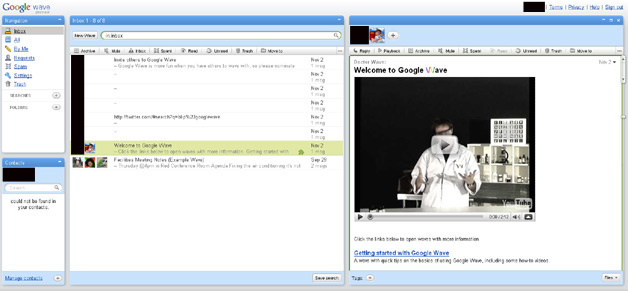
The preview comes with a wave featuring a video from "Dr. Wave," or Product Manager Greg. The video is embedded below, but he points to different features within the interface, so imagine that it is placed as it is in the above screenshot.
Google Wave brings its own terminology to the table. For one, a wave itself is a collection of messages. Those messages within a wave are "blips." Blips can be edited and replied to. Anyone that is in the wave at the same time can see replies and blips being typed live in real time. That’s live. You can see the characters appear as they are typed.
If you really want to see how Google Wave works, watch this series of videos that Google provides in the preview (they’re all very short):
There are other videos that appear in the preview, but these are probably the most useful ones for showing how Wave works.
Now the version of Google Wave that people have access to is just a "preview." It doesn’t even come with a beta tag. It’s still quite early. Even parts within the preview version are clearly marked as under construction (things like key settings).
The videos provided do not begin to scratch the surface of the potential of Google Wave. With Google allowing developers to create apps or "gadgets" for it, the possibilities will likely be limitless. But as a general "getting to know you" for the common user, the videos provided pretty much explain the core of Google Wave.
Have you used Google Wave yet? Share your thoughts.
Related Articles:
> Will Google Wave Shape the Future of Online Communication?
> Is Google Wave Getting An App Store?
> Google Wave Invitations Roll Out/span>
-
Health Care Sector Leaves Small Environmental Footprint
The Associated Press reports that the first estimate of health care’s carbon footprint has found that the industry “emits less than its share of the gases that promote global warming, compared to its size in the economy.”
“Hospitals, nursing homes, drug companies and the rest of the sector contributed 8 percent of U.S. emissions, according to an analysis in Wednesday’s Journal of the American Medical Association. Health care makes up 16 percent of U.S. gross domestic product.” The analysis was done by the University of Chicago based on 2007 federal health spending data and takes power consumption and emissions into account. Many hospitals are trying to reduce their emissions (Johnson, 11/10).
-
Young Adults Don’t Welcome Health Insurance Mandate
Young people who don’t view health insurance as a priority are wary of health-overhaul legislation now in Congress that would require them to buy it or face a penalty. For instance, “Poor and bludgeoned by debt accrued over four years of college – but otherwise healthy – medical insurance just isn’t in the cards for aspiring-artist Joanna Zobjeck,” the Oshkosh (Wis.) Northwestern reports.
The bill requires insurers to cover people with pre-existing conditions, bans them from adjusting prices based on health factors or gender, and limits the amount plans can charge older people – all provisions that will cost insurers. “Young adults are the balance to the new rule, which also forces those least likely to need medical care to participate in a health plan in order to keep prices from inflating” (Rodewald, 11/11).
-
PlayStation’s daddy has a new baby
Ken Kutaragi, the man known as the Father of PlayStation, also has creds under his belt apart from his phenomenal consoles. Back in 2007, he pushed …
-
Boceprevir Study Doubles Hepatitis C Clearance Rate
Learn about a phase II trial, whereby Boceprevir was added to standard Hepatitis C therapy (pegylated interferon and ribavirin) and was twice as effective at eliminating the Hep C virus compared to standard therapy alone.
Schering hep C drug promising in Phase II study
By Bill Berkrot
NEW YORK, Nov 1 (Reuters) – The addition of Schering-Plough Corp’sSGP.N experimental hepatitis C drug boceprevir after four weeks of treatment with standard medicines led to highly encouraging sustained response rates in a mid-stage study.
The triple combination of boceprevir and the current treatments of pegylated-interferon and ribavirin appeared to knock out the virus at double the rate of the standard drugs alone, according to researchers.
Continue reading the entire article:
http://www.reuters.com/article/rbssHealthcareNews/idUSN3043814620091101 -
Buy A Blackberry From Walmart Get A $100 Gift Card
Walmart has introduced yet another holiday promotion, this time the retailer is offering a $100 gift card with the purchase of any Blackberry device, both in stores and online.
Staring Saturday, November 14 at 8 am through November 20, shoppers will receive a $100 Walmart Gift Card with the purchase of Blackberry devices with a two-year contract.
Walmart’s one-week promotion includes the following Blackberry devices:
- AT&T Curve 8310
- AT&T Bold 9000
- Sprint Curve 8330 (Red & Titanium colors)
- T-Mobile 8520 (Black, White, and Frost)
- T-Mobile Pearl 8120 (Emerald)
- Verizon Storm
- Verizon Storm II
“We know customers are very focused on value, and we have promised each week to deliver new savings to help them stretch their dollars this holiday season,” said Greg Hall, vice president Media Services, Walmart U.S.
Shoppers who order a Blackberry online will have their $100 gift card emailed to them in four to six weeks.
Related Articles:
>Walmart.com Offering Top 10 Pre-Order DVDs For $10
>Amazon And Walmart Engage In Price War Over Holiday Book Shoppers
>Google Launches Commerce Search To Boost Your Conversion Rates
-
Health Overhaul Proposals Test Limits Of Democrats’ Unity
Politico reports that votes on a health care bill are subjecting some Democrats to fierce attacks – from other Democrats. “For some of 39 House Democrats who opposed the bill, there are protests outside their offices and promises of retribution. For others, there are attempts to shut off their campaign money spigot. Still more are about to get drilled in a television ad campaign paid for by Democratic donors.” Advertisements, primary challenges and other signs of protest are being considered as ways to express frustration with the votes (Isenstadt, 11/10).
The Christian Science Monitor reports that “Three days after the House’s historic passage of comprehensive healthcare reform, Democrats are grappling with the downside of being a ‘big tent’ party: Their coalition is diverse, and internal tensions rise to the boiling point when major legislation is on the line.” MoveOn.org and NARAL are among the groups that are playing a role in this intra-party fight. MoveOn.org, for instance, has spent $500,000 on ads critical of Democratic “no” votes on health reform. “A spokeswoman for MoveOn.org Political Action, Ilyse Hogue, denies that the organization is promoting a split in the Democratic Party over healthcare reform by running ads against some members” (Feldmann, 11/10).
McClatchy Newspapers reports that “a number of the Democratic members of Congress in conservative districts are running into” difficulty on health care votes. Rep. Ben Chandler, D-Ky., a target of Republican and Democratic criticism who voted “no” on the health reform bill, is a case in point. “Indeed, scarcely had votes been cast Saturday night than the conservative Americans for Limited Government sent an e-mail to its members and media outlets condemning Chandler for supporting the measure that would create a government-run health insurance plan.” The organization had to make a retraction of the e-mail. Chandler has also been the subject of primary challenge chatter from other Democrats (Abdullah, 11/11).
In the meantime, “Republicans are looking to resurrect the angry town halls of August in the last few weeks of November,” Politico reports in a separate story. “Senate Republican Conference Chairman Lamar Alexander said Republicans are ‘quietly’ planning some 50 in-person and telephone town hall gatherings over the next three weeks to drum up opposition to Democratic health care bills.” Senate Republicans are seeking to seize on new poll numbers that reveal that more Americans are worried their health care costs would increase under pending health care reform legislation. “The Senate Republican Conference sought to seize on those concerns and distributed talking points to its members Tuesday, saying that the Democrats’ bill would lead to higher premiums, more debt, increased taxes and a ‘Washington takeover’” (Raju, 11/10).
These recent developments have some wondering if bipartisanship on health reform is dead, ABC News reports. “Now, after only one Republican supported the House bill and few of them are inclined to endorse the Senate version, the spirit of bipartisanship — which helped forge nearly every major piece of legislation, from the Civil Rights Act of 1964 to tax policy overhaul in 1986 and No Child Left Behind in 2001 — appears largely absent from the process” (Dwyer, 11/10).
-
WCM and DAM in Denmark – J. Boye conference wrap up
Last week I attended J. Boye’s 5th annual conference in Aarhus, Denmark, which always attracts a high quality of speakers, and (unlike many other conferences) focuses on case studies and end-user implementation challenges. Since we at CMS Watch focus our research on end users and technology buyers, we were elated that the conference provided a wealth of information on the current plight of website and intranet managers. Jarrod Gingras and I attended presentations and case studies given by Wipro and Philips, as well as CMS Watch advisory clients Nokia, the UK National Trust, and The British Museum.
Several themes repeated themselves:
- Getting people up to speed on technology, and training, is vital to adoption
- Waterfall project management and development methods don’t allow for the agility needed to incorporate iterative testing and ongoing improvement of websites
- Many organizations are new to managing video and audio on websites, and these content types require special handling, and WCM technology often falls short
- Rich media improves website and brand engagement for all types of organizations
- Applying standards increases accessibility and makes code easier to maintain
For many these may seem like obvious points – and though the nodding was universal in the audience as case studies were presented, the application of change management, agile methodologies, and standards remains an ongoing challenge. It’s often what keeps our advisors and consultants involved with our clients even after they’ve picked a technology.
As a buyer and end-user of content technologies, be sure to keep these at the forefront of your plans. They tend to get under-emphasized, and will contribute more to your success than the technology you choose. Also feel free to e-mail us if you have questions about how you might best apply standards, change management, or rich media on your organization’s web site.
Also, note that J. Boye’s 2010 Philadelphia conference is already booking speakers. We hope to see you there to continue the knowledge exchange.
-
Staples Black Friday ad

Staples’ Black Friday ad has finally made its way to the outside world. Stores open at 6AM on Black Friday, which almost seems late considering a bunch of other retailers will be opening two hours earlier. Hooray for (sort of) sleeping in!
Here’s a list of the electronics items being offered. Doorbusters are marked with an asterisk and will be available from 6AM to 10AM on Black Friday:
Blank Media
Sony CD-R Media 100/Pack – $16.98
Sony CD-R Media 50/Pack – $9.98
Staples CD/DVD Jewel Cases 50/Pack – $4.99
Staples CD-R 100/Pack – $4.98 *
Cell Phones
Motorola H710 Bluetooth Headset – $39.99
Computer Accessories
Altec Lansing VS2621 PC Speakers – $19.99
Any Business Case, Sleeve, or Backpack – 40% Off
APC 450VA Battery Backup – $19.99
Belkin 6-Outlet Surge Protector w/Left Extension Cord Combo – $5.99
HP Wireless Mouse (Black) – $9.99
Logitech C600 Webcam – $39.99
Logitech Illuminated Keyboard – $29.99
Logitech V450 Wireless Laser Notebook Mouse – $14.99
Microsoft 4000 Wireless Laser Keyboard/Mouse Set – $29.99 *
Microsoft VX-3000 Webcam – $9.99
Targus 208-CD/DVD Album – $9.98
Targus Notebook Fan – $9.99
Computers
Dell Desktop PC w/AMD Athlon X2 215 Processor, 4GB RAM, 640GB Hard Drive, 20-inch LCD Monitor – $499.98
Dell Studio 15.6″ Laptop w/Intel Core 2 Duo T6600 Processor, 4GB RAM, 500GB Hard Drive – $599.98
HP 15.6″ Laptop w/Intel Celeron Processor 900, 3GB RAM, 160GB Hard Drive, Windows 7 – $299.98 *
HP 15.6″ Laptop w/Intel Pentium Processor T4300, 4GB RAM, 250GB Hard Drive, Windows 7 – $399.98 *
HP 17.3″ Laptop w/Intel Core 2 Duo T6600 Processor, 4GB RAM, 320GB Hard Drive – $599.98
Sony 15.5″ Laptop w/Intel Core 2 Duo T6600 Processor, 4GB RAM, 320GB Hard Drive – $649.98
Digital Cameras
Canon PowerShot A1100 12.1 MegaPixel Digital Camera w/4x Optical Zoom, 2.5″ LCD (Silver) – $129.99 *
Flip Ultra Camcorder w/2″ LCD – $129.99
Free Canon Photo Printer With Purchase Of Any Digital Camera (After Rebate) – $0.00 *
Kodak 10.0 MegaPixel Digital Camera w/Memory Card And Bag – $79.99 *
Kodak EasyShare M340 10.2 MegaPixel Digital Camera w/3x Optical Zoom, 2.7″ LCD – $109.99 *
Nikon Coolpix L100 10.0 MegaPixel Digital Camera w/15x Optical Zoom, 3″ LCD (Black) – $199.99 *
Nikon Coolpix L20 10.0 MegaPixel Digital Camera w/3x Optical Zoom, 3″ LCD – $99.99 *
Nikon Coolpix S570 12.0 MegaPixel Digital Camera w/5x Optical Zoom, 2.7″ LCD – $149.99 *
Nikon D3000 10.0 MegaPixel Digital Camera – $499.99 *
Olympus Stylus FE4000 12.1 MegaPixel Digital Camera w/4x Optical Zoom – $99.99 *
Sony Cyber-Shot W220 12.1 MegaPixel Digital Camera w/4x Optical Zoom – $129.99 *
Digital Media Cards
SanDisk 4GB Memory Stick PRO Duo – $12.99 *
SanDisk 4GB SDHC Memory Card – $9.99 *
SanDisk 4GB Ultra II CF Card – $12.99 *
SanDisk 4GB Ultra SDHC Card – $12.99 *
SanDisk 8GB Memory Stick PRO Duo – $24.99 *
SanDisk 8GB microSD Memory Card – $14.99 *
SanDisk 8GB Netbook SDHC Memory Card – $14.99 *
SanDisk 8GB SDHC Memory Card – $14.99 *
SanDisk 8GB Ultra II CF Card – $24.99 *
DVD Players
Coby 7″ Portable DVD Player – $49.99
Electronics
4-Device Universal Remote – Free After Rebate
AT&T DECT 6.0 Cordless Phone With Digital Answering System – $49.99 *
Coby 7″ Portable Digital TV – $99.99
HP 10″ Digital Picture Frame 512MB Memory – $139.99
HP 8″ Digital Picture Frame 512MB Memory – $109.99
Maxell Noise-Canceling Headphones – $20.00
Memorex iPod Clock Radio – $25.00
Midland LXT360VP3 2-Way Radios – $24.99
Motorola H390 Bluetooth Headset – $9.99 *
Omnitech 12″ Digital Picture Frame – $69.99 *
Omnitech Bluetooth Speakerphone – $20.00
Omnitech Digital Photo Ornament – $10.00
Omnitech Mini-Speaker – $9.99
Panasonic DECT 6.0 Expandable Cordless Phone w/Digital Answering Machine – $49.99
Sharp Handheld Calculator – Free After Rebate
Skull Candy Ink’d Earbuds – $9.99
Sony Reader Pocket Edition And Cover With Light Combo – $214.98
Sony Reader Pocket Edition Cover With Light – $54.99
Sony Reader Pocket Edition With 5″ Display – $199.99
Sony Reader Touch Edition And Cover With Light Combo – $319.98
Sony Reader Touch Edition Cover With Light – $59.99
Sony Reader Touch Edition With 6″ Screen – $299.99
Sungale 7″ Digital Picture Frame – $29.99 *
Uniden DECT 6.0 Cordless Phone w/Digital Answering Machine – $59.99
GPS Navigation Systems
Garmin Nuvi 255W Portable GPS – $119.99 *
Magellan RoadMate 1700 Portable GPS – $199.99
TomTom Go 830 Portable GPS – $169.99
TomTom XL 330 Portable GPS – $99.99 *
TomTom XXL 530S GPS – $149.99
Hard Drives
Seagate 1.5TB External Hard Drive – $139.99
Seagate 1TB External Desktop Hard Drive – $69.99 *
Western Digital My Passport Essential 500 GB Portable Hard Drive – $69.99 *
Memory
PNY 1GB DDR PC3200 Desktop Memory – $49.99
PNY 2GB DDR PC5300 Desktop Memory Kit – $49.99
Monitors
Acer 23″ Widescreen LCD Monitor – $139.98
eMachines 21.5″ Widescreen LCD Monitor – $89.98 *
Samsung 23″ TV/Monitor Combo – $249.98
MP3 Players
Coby 2GB MP3 Player – $14.99
Trio V418 4GB MP3 Player – $29.99
Networking
Linksys Dual Band Wireless-N Gigabit Router – $89.99
Netgear WNR1000 RangeMax 150 Wireless Router – $34.99
Portable USB Storage
HP 16GB USB Flash Drive – $29.99 *
HP 4GB USB Flash Drive – $7.99 *
HP 8GB Portable Flash Drive – $12.99 *
PNY 4GB USB Flash Drive – $11.99
Printers
Brother HL2170W Laser Printer – $89.98
Brother HL3040CN Color Laser Printer – $179.98
Brother MFC-295CN All-in-One Printer – $59.98
Brother MFC-7340 Laser Multi-Function Printer – $99.98
Caanon imageCLASS MF4350d Laser Multifunction Printer – $149.99
Canon Pixma MP560 Wireless Photo All-in-One Printer – $99.98
Canon Pixma MP640 Wireless Photo All-in-One Printer – $49.98
Epson Stylus 1400 Wide-Format Photo Printer – $89.98
Epson Stylus NX415 All-in-One Printer – $49.98
Free HP Inkjet Printer w/Purchase of Any PC or Laptop (After Rebate) – $0.00
HP Color LaserJet CP1518ni Printer – $199.98
HP Deskjet F4280 All-in-0ne Printer – $39.99 *
HP LaserJet P1005 Printer – $49.98
HP LaserJet P1006 Printer – $89.98
HP OfficeJet 6000 Wireless Inkjet Printer – $59.98
HP OfficeJet J4680 All-In-One Printer – $64.98
HP OfficeJet Pro 8500 All-In-One Printer – $149.98
HP Photosmart C6380 All-in-One Printer – $79.98 *
HP Photosmart Plus All-In-One Printer – $74.98
HP Photosmart Premium All-In-One Printer – $99.98
Lexmark E260dn Laser Printer – $124.98
Software
Adobe Photoshop Elements – $49.99
Microsoft Office Home & Student 2007 – $69.99
Norton 360 With PC Purchase Or Staples Rewards Members – $9.99 *
Norton AntiVirus 2010 – $9.99
Peachtree Pro Accounting 2010 (After Rebate) – $0.00
Staples Black Friday Ad [BlackFriday.info]
-
South Florida Man Inspires ‘Ian’s Law’
McClatchy/The Miami Herald reports on Ian Pearl, a South Florida man born with muscular dystrophy who is drawing attention to discriminatory health insurance practices against the disabled. Pearl is the “inspiration for ‘Ian’s Law,’ legislation being introduced by two New York state legislators that would require insurance companies to get approval from the state before dropping coverage plans for existing clients.”
Pearl has “lived the last 18 years on a ventilator hooked to a tracheal tube. Although the procedure is known for helping those with muscular dystrophy live longer, it can come with a cost: the need for 24-hour medical attention.” Pearl’s health insurance, which was purchased by his father in 1981, covered this treatment. “But Guardian Life Insurance, which is based in New York, notified the Pearls that it was dropping Ian’s coverage in December as part of a companywide restructuring of its insurance policies. … With his insurance set to expire in weeks, Pearl and his family mobilized to draw attention to their case” (Figueroa, 11/10).
-
Frutas Exóticas – Açaí – Euterpe oleracea
Ela se desenvolve próxima aos ribeirões, rios, igapós, várzeas e nas matas de terra firme, principalmente nos estados do Pará, Amapá, Maranhão, Tocantins, nas Guianas e na Venezuela. Atualmente é um coqueluche nos EUA onde é conhecido como “Amazon açai” . É a principal fonte de matéria-prima para a agroindústria de palmito no Brasil.O açaizeiro, Euterpe oleracea, da família das Arecáceas é uma planta de onde se aproveita praticamente tudo. O caule é usado para assoalho, forro em barracões, lenha, construção de cercas, pontes e currais;. palmito. As sementes são muito utilizadas no artesanato da região Norte. Suas folhas verdes servem de forragem para animais e é também muito utilizada em paisagismo. As folhas também são utilizadas no artesanato local.Originária do Brasil, é conhecido como açaí-do-pará, palmito-açaí, jussara, açaizeiro. Na Venezuela é conhecido como Manaka. O seu caule (estipe), é liso, roliço e longo, de cor clara, sem espinho e no topo estão as folhas. Na bainha da folha que envolve o topo do caule se encontra o palmito. A planta se desenvolve e produz bem em regiões de clima quente, solo com boa disponibilidadede água , boa precipitação, não tolerando geadas. Se propaga através de sementes (mais eficiente) ou por divisão das touceiras. Dos frutos do açaizeiro é extraído o vinho, polpa ou simplesmente açaí, como é conhecido na região, e em todo o país. O melhor vinho é produzido das frutas amadurecidas na época da chuva – de julho a dezembro. O açaí pode ser consumido em forma de sucos, doces, sorvetes e geléias. É muito consumido na tigela, onde a polpa é acompanhada de frutas e até mesmo de outros alimentos.
Na região amazônica, a polpa do açaí é muito consumida com farinha de mandioca ou tapioca. É rica em proteínas, zinco, fibras, lipídeos, vitaminas C, B1 e B2, ferro, cálcio e fósforo. Dentre os principios ativos encontrados no açaí, destacam-se as antocianinas e os flavonóides. O açaí é um antioxidante natural que atua na eliminação dos radicais livres.
Até a década de 1980, o palmito retirado de açaí era a principal fonte de renda dos ribeirinhos do baixo Amazonas e de outros estados brasileiros produtores.
Embora em cada touceira tenha várias plantas, a retirada de cada palmito significa o corte de uma planta. Estudos mostraram que a exploração predatória e sem um manejo adequado de corte provocavam danos no desenvolvimento das plantas e na sua frutificação. A partir daí, além do manejo adequado para a exploração do palmito e incentivo para novos plantios, a exploração comercial de frutos passou a ser prioritária. Estima-se que produza 10 a 12 toneladas de frutos por hectare com densidade de 400 plantas. São necessários de 2,5 quilos de frutos maduros para a produção de um litro de suco de açaí. Hoje, a polpa congelada é encontrada nas grandes cidades brasileiras, principalmente nas casas especializadasem sucos naturais, nos restaurantes e nas quitandas.- Globo RuralCrédito da foto: amazonlink.org

