Category: News

  • Verizon announces the BlackBerry Curve 8530

    vzw-bb-curve-8530

    We’re sure that most of you are sick and tired of all of this Verizon news (how do you think we feel having to write about it?), but they’re on a tear. Today Verizon announced that it will be carrying the BlackBerry Curve 8530 starting November 20th. To go for $99.99 on contract after a $100 mail-in rebate, the new Curve offers the following: full-QWERTY keypad, optical trackpad, 2 megapixel camera, GPS, dedicated multimedia keys, 3.5mm headphone jack, 256MB of app memory, 528MHz processor, EV-DO connectivity and last but not least, Wi-Fi! Yes, indeedy, Verizon is definitely looking like the front runner in the smartphone arms race of the 2009 Holiday Season.Read

  • AT&T gearing up to launch $99 8GB iPhone 3GS?

    Definitely not confirmed, but rather interesting nonetheless. We’ve heard now from two sources that AT&T, and we guess Apple, are contemplating launching an 8GB iPhone 3GS at the $99 price point before Christmas. One source said this was AT&T’s way of combating the DROID madness.

    275x100 (Logo)

  • Silly study looks at iPhone users’ dating habits. Yeah.

    There’s a silly study, conducted by Retrevo, making the rounds that purports to analyze how iPhone users fare in the dating world. I know, right? One stat to whet your beak: one in three iPhone owners have admitted to breaking up with their significant other via text message. Amazing.


  • Sick and stunning – the Modern Warfare 2 launch trailer

    Now this is how a game should be. I dunno if Modern Warfare 2 will indeed be the biggest entertainment release of all time, but damn, they sure know h…

  • Art or Virus? Symantec Villifies Spoof Apple “Trojan”

    loseloseSecurity firm Symantec is warning computer users about a new Mac-specific Trojan that deletes files on the user’s hard drive, according to Techworld.com. It has dubbed the piece of malware “OSX.Loosemaque,” and uploaded a YouTube video of how it goes about its nefarious purpose.

    Basically, it’s a Space Invader clone wherein when you kill an alien, a file in your home folder is deleted. It looks like it’s evil — and designed to perform such a task without the knowledge of the Mac owner on which the program resides. But it isn’t. It’s an art project that clearly advertises its purpose and nature to all who would wish to use it.

    The game, dubbed Lose/Lose, is the brainchild of Zach Gage, who created the program as part of an online art installation and released it for public download in September. It’s intended purpose is not to dupe unsuspecting gamers, but to pose questions about the relationship between killing in video games and real-life moral issues. Gage says as much in a statement on his web site:

    By way of exploring what it means to kill in a video-game, Lose/Lose broaches bigger questions. As technology grows, our understanding of it diminishes, yet, at the same time, it becomes increasingly important in our lives.

    Even if a user were to download the game from a different, less well-intentioned place, the game itself warns users right when it opens, stating that “Killing in Lose/Lose will likely result in files on your hard drive being deleted. You have been warned.” Of course, that doesn’t mean that an intelligent programmer couldn’t remove or change said message, and redistribute the game themselves with the intent of causing harm.

    That’s what Symantec’s worried about, and why the firm decided to issue its warning about the so-called Trojan. Of course, the company took the opportunity to recommend installing security software as a means to protect against this kind of dangerous artistic expression, seeing as that’s the business it’s in.

    Should you worry about this game or threats derived from it? Not unless you are one of the slim few whose retro Mac gaming addiction is so acute that you feel the need to hunt around the digital frontier in suspicious and shady locations looking for independent games of questionable quality and without any sort of legit distribution channels. Or if you happen to be a devoted patron of the arts, and therefore can’t resist the urge to download software you know full well will harm your computer and destroy your files, all for the sake of the artistic effect it has. In either case, anti-virus software won’t help.

  • Could America default on its debt? And what the past tells us about the future

    In Monday’s Washington Post, under an Op-Ed headed ‘Could America Go Broke?’ columnist Robert Samuelson raises the prospect of the U.S. or another major economy defaulting on its national debt. Says Samuelson: “It’s still a very, very long shot, but it’s no longer entirely unimaginable. Governments of rich countries are borrowing so much that it’s conceivable that one day the twin assumptions underlying their burgeoning debt (that lenders will continue to lend and that governments will continue to pay) might collapse… The question is so unfamiliar that the past provides few clues to the future.”

    Well, this raises the question of whether the past tells us anything about the future, and if so what? There’s a common wisdom attributed to Mark Twain (why is it that aphorisms are always attributed to Twain or Winston Churchill?) that goes: “History doesn’t repeat itself, but it often rhymes,” and this is the position that most educated future-thinkers would hold.

    So what would the ‘rhyme’ be? From cases such as Argentina, Russia, South Africa, and many developing world countries over the past 50 years: lenders loose confidence in a country’s ability to repay on its national bonds and stop lending; the country is faced with a choice of drastic spending cuts (great social and humanitarian cost) or major tax increases (pointless, because it stifles business, therefore lowers tax revenue) or default. Going broke, into national “Chapter 11,” suing for time and ‘debt restructuring’ becomes the best among the bad options event though it pretty much ensures a deep and dark recession.
    .
    Thinking the unthinkable

    Could this be the future of America? As I’ve written before here and other places, after the ‘unimaginable’ Credit Crunch was ignored due to its ‘low probability,’ it’s a relief to know that remote but plausible outcomes with serious consequences are getting attention, at least in the Washington Post.

    Clearly major economies are in a more precarious situation than they were 5 years ago. Too much debt is always precarious, for the smallest household or the biggest country alike. On the other hand, an economy’s size and enduring wealth counts too. As Samuelson observes, it created the unexpected effect in Japan’s case where debt at 200% of GDP (America’s is currently about 40%) should have raised the cost of its debt (lower confidence of repayment) but this hasn’t happened because domestic Japanese households and businesses rather than foreigners have easily (and confidently) bought the debt — and this may well hold true for the U.S. too. In other words, the rhyme may go this way.

    The ‘more likely’ future is incremental raising of taxes and lowering of public service provision as Western economies incrementally claw their way back to stability. But at least this default wild card on the margins of plausibility has the oxygen of some attention and this is no bad thing. As with all good foresight work, it predicts nothing, but it does allow us to think through the roadmap to the outcome, and press for the right decisions now, in plenty of time and in a measured way.

    .

    Post to Twitter Tweet This Post

  • Jake & Micah Giveaway Winner

    Jake & Micah Winner

    Congratulation to Jen (comment #135), your kitties will get to enjoy a trio of delicious treats from Jake & Micah! Try not to eat them all at once!


  • Video: Wil Wheaton’s Star Trek cameo


    Did you know that Wil Wheaton was in JJ’s Star Trek? He just went public with the secret cameo voice overs and details the entire experience on his personal blog. If you’re even the slightest Star Trek fan, click over and read the whole thing. It’s awesome to me that he was so honored and humbled to do just voice over work in the new movie even though he played such a major part in introducing Star Trek to a new audience. The clip after the jump is apparently the only one in the film that’s his unaltered voice.


  • How RIM can avoid a premature endgame for BlackBerry

    By Carmi Levy, Betanews

    Once not so long ago, if you wanted bulletproof e-mail on a mobile device, you bought a BlackBerry. Research In Motion, the company that practically defined wireless messaging a decade ago, has done quite nicely for itself since then, garnering over 56% of the market for smartphones in the US and about 20% of the overall wireless handset market that includes smartphones as well as conventional feature phones. Its end-to-end encryption and still-unique service paradigm that routes messaging traffic through secure Network Operations Centers further endeared the platform to enterprise buyers, even as the company was successfully pushing the franchise into the consumer space.

    Unfortunately for RIM, nothing stays the same in the increasingly competitive wireless market. The BlackBerry is no longer a market of one, and many of the features that defined the platform — including push e-mail and enterprise-class security — are no longer unique. Worse, the critical feature set for a modern smartphone has expanded to include rich Web access, broad application availability, and an integrated, Web services-aware operating system. It’s no secret that the BlackBerry platform lags in all of these areas with its fine-for-the-1990s browser, relatively paltry app ecosystem, and an OS that despite regular incremental updates still betrays its decade-old roots.

    As investors push RIM’s share price down, and the drumbeats grow louder to aggressively address these shortcomings, the company finds itself at a crossroads. Either it radically changes the strategy that’s driven its growth to-date or it risks becoming an also-ran in the US market. Nokia, whose devices once accounted for over 35% of all US sales, lost the script when it misread Americans’ growing taste for affordable, feature-packed, and well-integrated smartphones. Today it’s American market share languishes at barely 7%.

    Carmi Levy: Wide Angle Zoom (200 px)It’s a lesson that RIM would do well to learn, because at this critical inflection point in its history, a stay-the-course mentality could doom RIM to a Nokia-like fate.

    To maintain leadership in a market that grows more competitive by the day thanks to continued strength from Apple’s iPhone and a rapidly building frontal assault by Google’s Android, RIM needs to focus on some fundamental changes, including:

    • Simplify the product lineup. The almost overflowing BlackBerry product tree stands in stark contrast to the singular focus of Apple’s iPhone hardware. RIM sells dozens of devices through countless carriers, often so subtly differentiated that even hard-core fans can’t keep track. Sure, most BlackBerry aficionados know that a device number that ends in 30 has built-in GPS, while one that ends in 20 includes Wi-Fi. But the finely sliced marketing messages demanded by such a broad product line tend to dilute the branding effort. As beneficial as multiple devices and form factors have been in terms of appealing to consumers (and carriers) with different needs, they’ve also dimmed how the BlackBerry is perceived in the minds of potential buyers.
    • Get serious about courting developers. Application developers care about two things: development effort and profit potential. As it stands now, RIM loses on both fronts. The tools to develop software on the BlackBerry platform are too cumbersome to use, which extends development time and effort. And since the BlackBerry app market itself is just a fraction of the size of its major rivals, there’s less opportunity to drive revenue. Compared to iPhone and, increasingly, Android (which already has well over 10,000 apps to RIM’s 3,000 or so) it’s a no-brainer: BlackBerry development loses every time. RIM has had ample time to bring a streamlined SDK to market along with easily accessible training and support resources for developers. It’s also had lots of time to go for Apple’s jugular and point-for-point pick off the things about iPhone development that tick developers off (I’m looking at you, opaque approval process). And to be fair, it’s making progress. Just not as fast as it should.
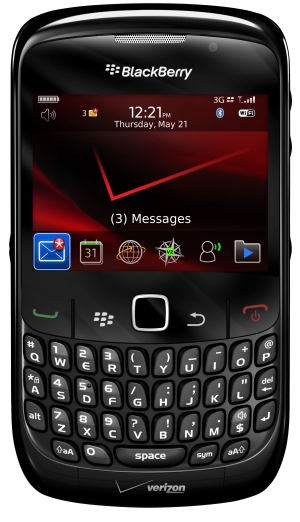
    • RIM BlackBerry Curve 8530 from Verizon Wireless

    • Fix the browser. You can’t write a product review of any BlackBerry without calling out its lame browser. While competitors have moved on to multitouch-capable interfaces that closely mimic the conventional desktop Web, RIM’s offering hasn’t changed much since it was first introduced. The result is a stripped down, slow, often frustrating online experience. In fairness to RIM, it’s doing something about it. This summer, it acquired Torch Mobile, which makes the WebKit-based multiplatform Iris browser — a deal that’s expected to bring a new standard browser to the BlackBerry sometime in 2010. It can’t come a moment too soon.
    • Find a new differentiator. Rock solid, enterprise-class, push-based e-mail is yesterday’s news. And even if it wasn’t, consumers don’t much care about it anyway. Apple’s got the application ecosystem to end all application ecosystems. Google has tight Web services integration. Palm has an innovative UI that blurs the line between local apps and the cloud. What’s RIM’s unique story going to be? The company isn’t saying, but unless it comes up with something to differentiate itself, its good-enough strategy that matches competitors feature for feature will guarantee a long, less-than-comfortable decline as newer, more unique solutions hit the market. Motorola’s Droid may hold some lessons here, as it illustrates how a hardware vendor can come back from the dead with an offering that moves the mobility bar solidly beyond basic e-mail and Web browsing.
    • Learn from the Storm. RIM’s first touchscreen device, rushed to market to capture holiday shoppers’ interest, was by all accounts a botch. Yes, it ultimately sold well, but its rocky launch tarnished the formerly invincible brand and illustrated the perils of timing product releases to unrealistic seasonal buying patterns. If the engineering isn’t fully baked, no product should ever see the light of day. Similarly, devices without Wi-Fi have no place in today’s market. While RIM avoided ticking Verizon off by deleting the feature from the first generation Storm, it alienated consumers who simply expect this in anything they buy today. RIM repeated the no-Wi-Fi mistake with the Tour, and one hopes it won’t happen again.

    While the BlackBerry franchise doesn’t face an immediate risk of extinction, its long-term success — and the success of the company that spawned it — could be compromised…unless RIM drops the overly conservative mentality, and starts swinging for the fences. Nothing short of a radical re-think will keep the BlackBerry as dominant in the future as it has been in the recent past.

    Carmi Levy is a Canadian-based independent technology analyst and journalist still trying to live down his past life leading help desks and managing projects for large financial services organizations. He comments extensively in a wide range of media, and works closely with clients to help them leverage technology and social media tools and processes to drive their business.

    Copyright Betanews, Inc. 2009


    Add to digg
    Add to Google
    Add to Slashdot
    Add to Twitter
    Add to del.icio.us
    Add to Facebook
    Add to Technorati


  • Battlefield: Bad Company 2 “exclusive” PS3 beta confirmed

    Good news, PS3 owners. DICE and Electronic Arts have officially set a date for Battlefield: Bad Company 2’s PS3 beta: November 19. PC gamers, on the o…

  • Dear RIAA: It’s Not ‘Working Together As A Team’ When It’s Under Threat Of Regulation

    I’ve been trying not to respond to every RIAA blog post these days, but it’s hard to let certain things go when they so rarely make any sense. For example, RIAA President Cary Sherman recently talked up the new regulations that force colleges and universities to “take proactive steps” to stop file sharing. He goes on to make it sound like universities decided to do this in the spirit of “teamwork” with the RIAA, rather than because they risked serious financial consequences under the law for not complying. He also leaves out the fact that tons of colleges and universities are pissed off and complaining about how much time, effort and money they’re wasting on this just because Sherman and his friends still don’t seem able to embrace modern music business models. Colleges and universities have enough to worry about without the government forcing them to act as the RIAA’s police force. If it were truly about teamwork, Cary, you wouldn’t have had to spend so much time getting Congress to pass a law to force them to do this.

    Permalink | Comments | Email This Story


  • Watch, Discuss, Engage at 4:45: Jared Bernstein and Sen. Sherrod Brown Talk Health Reform

    At 4:45 EST today the White House and Deputy Assistant to the President on Economic Policy Jared Bernstein welcome Senator Sherrod Brown of Ohio for a live video chat. They’ll be answering the questions the Senator gets most from Ohioans on health insurance reform, as well as questions taken live from our Facebook chat application.

    Watch the chat via WhiteHouse.gov/live 
    Watch, discuss, and engage via Facebook

  • So much for that MLB 09 The Show prediction!

    yankees

    Well that didn’t exactly pan out, now did it? Sony’s MLB 09 The Show predicted last week that the Philadelphia Phillies would win the World Series in seven games. As y’all know by now, the New York Yankees (booooo!) beat the Phillies in Game Six last night to win their 27th championship. Congratulations, Yankees, you’re the Real Madrid of baseball with a terrible stadium.

    So hooray, [bandwagon] Yankees fans! Your group of men was better at hitting a ball with a stick than the other group of men.


  • Army Guard premieres new recruiting campaign

    Guardmembers assigned to the National Capital Region got a chance this week to
    preview the Army National Guard’s new recruiting advertising campaign, which is
    scheduled to launch Nov. 13…

  • Guardsmen honor ‘Band of Brothers’ paratroopers in march to Atlanta

    The Georgia Army National Guard’s long range surveillance unit will again honor
    their World War II predecessors by completing a 118-mile march from Toccoa, Ga.,
    to Atlanta this week…

  • As Iraq tour nears end, truckers’ mission continues

    When a deployed unit approaches its end-of-tour date, the focus begins to shift
    from the deployment at hand to redeployment stateside…

  • Oregon to host F-15C training at Kingsley Field

    F-15C training for active duty and Air National Guard pilots will be merged during
    this fiscal year and hosted by the Oregon Air National Guard based here, Guard
    officials recently announced…

  • Arizona Guardsman garners Jewish Institute award

    The Air Force chief of staff and two Airmen were among the honorees at the Jewish
    Institute for National Security Affairs awards dinner here Nov.
    2…

  • McKinley visits New York on fourth day of Vigilant Guard

    Air Force Gen. Craig McKinley, the chief of the National Guard Bureau, visited the
    Erie and Niagara counties on Nov. 4 as the Vigilant Guard exercise entered its
    fourth day…