 |
Choosing better foods to eat is only half the battle when you’re goal is to improve your overall wellness. The road to a better diet is also paved with better preparation methods, not just better foods. ”While most people know to ditch the fryer when cooking up healthy… |
Category: News
-
How to use the healthiest cooking methods to improve your wellness
-
Please don’t file for divorce — I didn’t mean to nuke my wife’s data
 I do not generally use our desktop computer. I prefer my laptop, but my wife likes that desktop and uses it daily. She also keeps her precious files on it, and I have the folder set to backup to Crashplan automatically, as well as to sync with the home server. However, she also uses a small four gigabyte USB drive for files — I assumed ones that she just wishes to move around with her. I was wrong.
I am not making excuses for myself. Even if I had known the files were backed up I would not have deleted them — I had no reason to wipe her drive. The truth is that it was in the wrong place at the wrong time and was a victim of my own oversight.
Here is the story — and take heed because it can happen to all of us at anytime. After complaints from wife and kids that the computer had become slow over time, I decided it was an opportunity to start over fresh. I copied the User folder to an external drive, knowing it was also in the cloud for good measure. I then inserted a CD containing the ISO of a small program known as “Derrick’s Boot and Nuke” or DBAN to most. It is frequently used by businesses to wipe data before getting rid of a drive. Without thinking I booted to DBAN, set each drive to “wipe” and let it run. I failed to notice that the little Kingston USB was one of those drives.
DBAN works very well. It eradicates all traces of data, rendering the drive so unrecoverable that you need to reformat to just get back a file system and use it again.
The files contained on that little piece of portable hardware, as it turns out, did not exist in my wife’s backed up documents folder — or anywhere else. Meaning that they now existed nowhere at all. And that I could be facing that same fate.
I have said many times that one copy of a file is the same as zero, because zero is what you could have at any second. Drives die and, in this case, accidents happen. I backup everything to home server and cloud — three copies for good measure. I will be adding the thumb drive to that routine providing I survive to do so.
Photo Credit: argus/Shutterstock
-
Coursera expands foreign-language classes with help of new international partners
Providers of massive open online courses (MOOCs) tend to be based in elite pockets of the United States (Silicon Valley and Boston, for example), but their students increasingly come from all corners of the world. And to attract and accommodate a more global student body, online education startup Coursera on Thursday said that it had added even more school partners, about half of which are international, to offer more courses reflecting different languages, perspectives and disciplines.
The Palo Alto-based company said it had added 29 new academic partners, 16 of which are international, nearly doubling its list of institutional partners (you can see a full list of new schools below). With its new partners, the startup will not only offer courses in French (it already launched a course with the Ecole Polytechnique Fédérale de Lausanne), but also Spanish, Italian and Chinese.
Since launching nearly a year ago, the company said it has registered almost 2.8 million users and gets about 1.45 million enrollments per month. It has also launched certificate-oriented tracks and received approval from the American Council on Education (ACE) for credit equivalency for a few of its courses to give its students more opportunities to earn degrees and find jobs.
But that fast growth has not come without some pain. In the last month, the startup has twice run into a bit of turbulence with its classes. Earlier this month, it suspended a class after student complaints about technical glitches and the design of the class. And, this week, a professor departed a course midway through.
While those incidents throw a bit of cold water on the MOOC hype, they show that the model is still in its infancy and, hopefully, the lessons from their aftermath will be instructive for classes to come.
With its new partners, Coursera now has agreements with 62 academic institutions. You can see a full list of its new partners below:
California Institute of the Arts (CalArts)
Case Western Reserve University
Chinese University of Hong Kong
Curtis Institute of Music
Ecole Polytechnique, France
IE Business School
Leiden University, Netherlands
Ludwig-Maximilians-Universitat München
National Taiwan University
National University of Singapore
Northwestern University
Penn State University
Rutgers University
Sapienza Università di Roma
Technische Universität München (TUM)
Technical University of Denmark
The University of Tokyo
Universidad Nacional Autónoma de México
Universidad TecVirtual del Sistema Tecnológico de Monterrey
Universitat Autònoma de Barcelona
University of California, San Diego
University of California, Santa Cruz
University of Colorado, Boulder
University of Copenhagen, Denmark
University of Geneva, Switzerland
University of Minnesota, Twin Cities
University of North Carolina, Chapel Hill
University of Rochester
University of Wisconsin-Madison
Related research and analysis from GigaOM Pro:
Subscriber content. Sign up for a free trial.- GigaOM Research highs and lows from CES 2013
- How HR can make the case for workforce analytics
- The 2013 task management tools market


-
New From NAP 2013-02-21 00:00:00
Final Book Now Available
Problems stemming from the misuse and abuse of alcohol and other drugs are by no means a new phenomenon, although the face of the issues has changed in recent years. National trends indicate substantial increases in the abuse of prescription medications. These increases are particularly prominent within the military, a population that also continues to experience long-standing issues with alcohol abuse. The problem of substance abuse within the military has come under new scrutiny in the context of the two concurrent wars in which the United States has been engaged during the past decade–in Afghanistan (Operation Enduring Freedom) and Iraq (Operation Iraqi Freedom and Operation New Dawn). Increasing rates of alcohol and other drug misuse adversely affect military readiness, family readiness, and safety, thereby posing a significant public health problem for the Department of Defense (DoD).
To better understand this problem, DoD requested that the Institute of Medicine (IOM) assess the adequacy of current protocols in place across DoD and the different branches of the military pertaining to the prevention, screening, diagnosis, and treatment of substance use disorders (SUDs). Substance Use Disorders in the U.S. Armed Forces reviews the IOM’s task of assessing access to SUD care for service members, members of the National Guard and Reserves, and military dependents, as well as the education and credentialing of SUD care providers, and offers specific recommendations to DoD on where and how improvements in these areas could be made.
Topics: Health and Medicine | Conflict and Security Issues
-
PlayStation 4 comes to stores this year
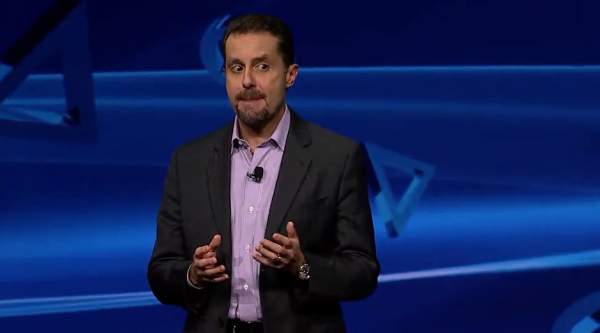
This evening, Sony captured geekdom for two hours, during a live event announcing PlayStation 4. If you’re not prostrate on the floor crying like a baby, desperate to get the console now, you must have missed the stream — or perhaps you’re holding out for E3 in a few months and the promise of Xbox 720.
PS4 will go on sale this year — that’s right, holiday 2013. So Microsoft better get its shtick together and have Xbox in stores, too. Consumers will make some hard choices this year about gaming platforms. Whichever, or both, console gaming is going to be a whole lot more exciting come Black Friday.
Sony didn’t exactly break out the specs, but expect PC in a console, so to speak — x86 processor, PC graphics chip and 8GB of GDDR5 RAM. (Excuse me while I wipe the drool, and from so little information.) The platform splits up tasks such that downloads are handled separately from gameplay. Benefit: Begin playing while a game downloads, something movie watchers get from many streaming services. Now Games, too.
Recognizing how much tablets, and even smartphones, are used as second screens on the couch, Sony plans to support them — and also PlayStation Vita — for gameplay.
PS4 comes with the new Dual Shock 4 controller, which features a touchpad and share button, which got big attention tonight. Sony is suddenly serious about social gaming and wants everyone to know it. Gamers will be able to share screenshots and video clips, which includes making personal game trailers and sharing with friends. Facebook and USTREAM are among the supported social services.
Friends also can join live-streamed games and even take control of them. That’s a great cloud benefit and good for driving game sales. What better recommendation than playing with someone you know before buying.
Rumors dogged Microsoft early this month about locked-down games. Don’t expect much better from Sony, which owning a movie studio has a long tradition of tight rights management. I see the streaming in this vein, presuming based on what little Sony shared today that the approach will make sharing (other than authorized Sony streaming) or reselling games nearly impossible. The concept of tying digital content to a single account isn’t new, but this feels pretty locked down to me, while granted, providing clear user benefits.
Like PS3 at launch, the new console is not backward-compatible with existing games. As a user, I take that as a “screw you approach” — Sony wanting to sell more stuff and help early-supporting game developers to do likewise. Game streaming is given as reason, and Sony suggests PS1, PS2 and PS3 streaming might come in the future. Oh yeah? For the games I already own?
PlayStation 3 launched in 2006, about a year after Xbox 360. Microsoft has had more success by the numbers, lifted in part by services, such as Xbox Live. That has long baffled me, seeing as Sony is a media company, too, with rich entertainment assets. Then again, Sony divisions are known for not always working well together. PlayStation 4, while primarily a game console, will be much more an entertainment platform than its predecessor. Microsoft will similarly reposition Xbox, as I explained last week.
-
Disruption: It moves in mysterious ways
A friend and a long time reader emailed earlier this morning, offering his observation regarding Google Glass. His prognosis – it was a hands-free camera. Laughs aside, it is an easy deduction to make from the new video shared by the Google Glass team. Sure, the video focused on ballerinas, balloon rides and bubbles, but Google was trying to get maximum oohs-and-aahs from as wide a set of people as possible.
That said, I have been intrigued by Google glasses from the very beginning, mostly because despite being nerdy and in a very early stage, it represents a bit of the old Google. As I previously wrote: “It represents the kind of things the company needs to do in order to leap over its rivals.”
So, if you focus on just the video, I guess, the shrug of shoulder is an appropriate response. However, when I watched that video, I saw three things that were possible.
- A new way to interact with information Google indexes: Google’s original premise was to make sense of all the messy data on the web. The mess has become bigger and finding information has become more difficult. We have to start looking at information we need in context of where we are, who we are and to what purpose we need that information. While it is easy to provide the “where” and “who” information, nothing adds “purpose” than what the eye is seeing. So, from that perspective, this is the right evolution of Google’s basic utility.
- A decent working voice-based user interface: Siri is cute. Siri is helpful … sometimes. But Siri is still not the answer. However, the Google Glass UI seems to have found the answer to the age old voice-based UI question. And with increased usage, the UI will get smarter and better. (Well, that is what I hope.)
- And lastly, it gives us the ability to add more contextual information to the real world around us: With Google glasses, everything becomes searchable. I think this is the most underrated part of Google Glass. So far, we have restricted “information lookup” to the computers.
That said, this is just a video. And as a cynic I am going to withhold final judgement on the glasses and what changes they might unleash, until the time I can get my hands on the actual devices. That said, the video released today definitely makes me even more keen on trying them on.
Google is working to get developers to sign-up and develop apps for this new class of anywhere, anytime computers. And we don’t know just yet, what the creative minds might do and what impact their efforts might have on how we live, create and consume.
iPad, the slate for disruption
 Three years ago, when everyone saw a bigger iPhone, I first saw the iPad and my initial response was that it was a slate “to reinvent pretty much how we think of media, information and in fact the whole user experience.” I saw a blank slate that was ready for lack of better words: creation and disruption. It is just that no one knew how it would disrupt and who it would disrupt. I was reminded of that today when I saw this news release from Jack Dorsey’s Square, a San Francisco-based payments company.
Business in a Box: all the hardware you need to run Square Register on your counter: Historically, business owners were forced to piece together multiple hardware components from various manufacturers, manage complicated contracts and pricing structures, and pay for expensive software licensing and service plans. Now, they can be up and running with Square Register in minutes.
Three years ago, it wasn’t clear if iPad was going to clean VeriFone’s clock or give an underclass of merchants a chance to participate in the mobile and electronic economy. It certainly wasn’t clear that it would become the engine for the people-to-people economy I often talk about. The sharp decline in the fortunes of laptops is another disruption.
The fact is that when you combine software with connectivity and use data to create new experiences, you end up disrupting old industries and building new fortunes.
 When I look at Google Glass today, I see a big similarity between them and Tesla — the electric car, not the company. Both are a bit nerdy, both are a bit cool and both are showing us the way to the future.
Elon Musk would like us to believe that he is building the new Toyota — and I for one am glad that he is — but the real impact of his car is on the business of transportation. Tesla for me is the marriage of electronics with data, software and connectivity.
The Big IF
“The big if” for both Tesla and Google Glass is going to be how they think about the interaction of humans and the machine. If they keep using data without an emotional quotient, then they are going to get nowhere fast. If they don’t build systems that constantly learn, evolve and become smarter with usage — much like human brain — they are not going to go anywhere. They should take a cue from IBM and its Watson effort: that’s where some of the answers lie for them.
And as for disruption, as the title says, it moves in mysterious ways.

Related research and analysis from GigaOM Pro:
Subscriber content. Sign up for a free trial.- CES 2012: a recap and analysis
- The state of cross-platform media measurement
- Analyzing the wearable computing market

-
Online education provider edX goes global, doubles number of school partners
edX, the nonprofit online course provider launched by Harvard and MIT, has long had a highly international student population — 70 percent of its students are from overseas. But now it will draw its content from schools around the world as well.
On Wednesday, the group announced that it had expanded its X University Consortium with six schools, including its first partners based outside the U.S. The new partners include: Australian National University (ANU), Delft University of Technology in the Netherlands, Ecole Polytechnique Federale de Lausanne (EPFL) in Switzerland, McGill University and the University of Toronto in Canada, and Rice University in Texas. With the new additions, edX now counts 12 academic institutions as partners.
“Our mission is to offer the best courses from the best professors from the best universities – and quality, of course, is a key part of what we’re doing,” said Anant Agarwal, president of edX. “I like to think of edX as a startup company but a nonprofit startup. We put principle over profit.”
In the last year, there’s been much ado about massive open online courses (MOOCs) and edX, along with Silicon Valley startups Coursera and Udacity, has been at the center of the action. But as recent incidents on Coursera — one in which a professor departed the course midway through and another in which the startup suspended a class after student complaints — have shown, it’s still early days for massive online classes.
Agarwal said edX’s focus is on offering high-quality content, creating an open source platform and researching how students learn online. For edX’s university partners, the platform is a way to experiment with new online learning formats that can be used for distance programs as well as blended programs for on-campus students, and it’s a medium for sharing data and learning from other universities. Given that some of edX’s partners also partner with other MOOC-providers — Rice, EPFL and others, for example, are Coursera partners — it will be interesting to see how nonprofit edX distinguishes its courses from those of its for-profit peers.
While Coursera and Udacity mostly keep student interaction to online discussion forums, some edX students can already communicate with each other via open live online dialogues, poll questions and video conferences with smaller discussion groups. Agarwal said future partners plan to experiment further, for example, Delft said it plans to release all of its MOOC course material under a Creative Commons license. As of now, all of the edX classes are taught in English but he said EPFL is looking into offering classes in French and ANU is interested in classes in Sanskrit and Hindi.
To date, about 675,000 people have enrolled in edX classes but edX says its goal is to educate one billion people in the next ten years. The platform currently offers about 25 courses and with the new partners Agarwal said they expect to offer 50 to 100 courses, in a range of disciplines, by the fall.

Related research and analysis from GigaOM Pro:
Subscriber content. Sign up for a free trial.- The Internet of Things: What It Is, Why It Matters
- GigaOM Research highs and lows from CES 2013
- How HR can make the case for workforce analytics

-
The “LTE-Advanced” silicon keeps coming: Altair has a new super-chip
Altair Semiconductor is the latest silicon company to lay claim to an LTE-Advanced chip. In preparation for Mobile World Congress next week in Barcelona, the Israeli vendor on Wednesday announced its latest-generation LTE silicon for USB dongles, mobile hotspots, smartphones and, eventually, gadgets in the internet of things.
As I wrote earlier this week, LTE-Advanced is a much-abused term, used increasingly throughout the industry to make LTE products seem much more significant than they actually are. Carriers and vendors have latched onto a single technique in LTE-Advanced standard to justify their use of the moniker.
Altair is no exception, though to be fair its new super-chips are more advanced that others. It’s incorporated into its designs two techniques from the LTE-Advanced standard: carrier aggregation, which bonds together disparate swathes of spectrum into one big super-carrier, and enhanced inter-cell interference coordination (eICIC), which will allow small cells and big macrocells to coexist in the same airwaves.
What’s more, Altair co-founder and marketing VP Eran Eshed said that whatever LTE-Advanced techniques its chips don’t support today will be supported in the future through software upgrades. “In contrast to competitive solutions, Altair’s solution is based on a very advanced and powerful SDR (Software Defined Radio) architecture which means that we have the ability to deploy a chipset and upgrade its features as standards evolve,” Eshed told me via email.
Perhaps the most notable detail in Altair’s new chip specs, though, is its use of envelope tracking. It’s an obscure little technology being developed by companies like Nujira and Quantance, but envelope tracking has the potential to significantly boost 4G-device battery life by tempering LTE’s innate power hunger. Eshed wouldn’t tell me whose envelope tracking technology Altair is using, but this is the first implementation of the technology I’ve seen in a chipset.
Photo courtesy of Shutterstock user alphaspirit

Related research and analysis from GigaOM Pro:
Subscriber content. Sign up for a free trial.- The big theme of MWC: How to live in a connected world
- Updated: Forecast: global mobile subscribers, 2010-2015
- How to deliver the next-generation web experience

-
5 startups from Rock Health that want to use technology to make you healthier
Digital health is a hot right now, and when it comes to digital health startups, Rock Health is one of the first places to look. The company held a demo day Wednesday for its fourth class of startups, bringing its total portfolio of companies to 49.
This class, which includes 14 companies, has raised a total of $13.9 million outside of the funding from Rock Health, and all of the accelerator’s portfolio companies have raised $43 million, with an average of $900,000 per startup. Rock Health initially gave startups $20,000 in funding, but was then joined by Kleiner Perkins last August to increase funding per startup by another $100,000.
Among the companies that presented Wednesday at UCSF’s campus in San Francisco, here were some of my favorites that you might want to check out:
- Eligible helps doctors submit forms to insurance companies to make sure they’ll get paid for procedures before performing them and then submit paperwork afterward. Eligible charges a fee for use, and the platform integrates different programming languages and systems through the company’s product. Eligible has raised $1.5 million in funding so far.
- OpenPlacement works to improve the process of pairing up seniors and senior care providers in the Bay Area. The company helps consumers analyze the offerings and costs for each provider, and then pick providers based on their individual needs.
- Wellframe allows doctors to connect with their patients to provide out of office care through mobile apps after patients have been discharged from the hospital. It’s a Boston-based company that lets a doctor monitor patient care from a distance and check in when intervention is necessary. The company says that it uses “mobile technology and artificial intelligence to translate clinical protocols into personalized, adaptive to-do lists.”
- Wildflower Health works to improve the health of pregnant mothers and lower health care costs by flagging potential complications much earlier in pregnancy through real time updates and mobile apps. The company provides a mobile platform for pregnant women, letting them check out their progress toward delivery and alerting them to options existing from their health care providers.
- Zipongo targets consumer diets. The company has created a product called GroceryRx that works with major grocery chains to provide users with both recipes and tips for discounts and deals. The recipes are aimed at helping consumers eat more healthfully, targeting particular diet areas where they can change their habits. The company has raised $2 million in seed funding so far and is looking to raise more.
Other companies from the batch that GigaOM has previously covered (Rock Health announced this current class back in October), include Beam Technologies, which makes connected toothbrushes, Mango Health, which does gamified mobile health apps, Wello, the video platform that lets users work out from home via webcam, and LabDoor, which helps users understand what’s in their supplements and vitamins.


Related research and analysis from GigaOM Pro:
Subscriber content. Sign up for a free trial.- GigaOM Research highs and lows from CES 2013
- Crowdfunding’s rapid growth and future opportunity
- Analyzing the wearable computing market

-
Sony announces PlayStation 4, touts speed and social but media vision unclear
A lot has changed since Sony last announced an update to its video game console in 2006. Since that time, the era of discs and cartridges has receded and consumers have entered a world of cloud and mobile computing. Meanwhile, the PlayStation has lost ground to Nintendo and Xbox while Sony’s one-time dominance in electronics has long faded.
On Wednesday in New York, Sony announced the PlayStation 4, which comes with souped-up hardware that the company says will virtually eliminate the time video game players must wait for their games to load. The company also touted a new “share” button on its controller that will let players capture video clips, not just screenshots, of their game play to send to friends.
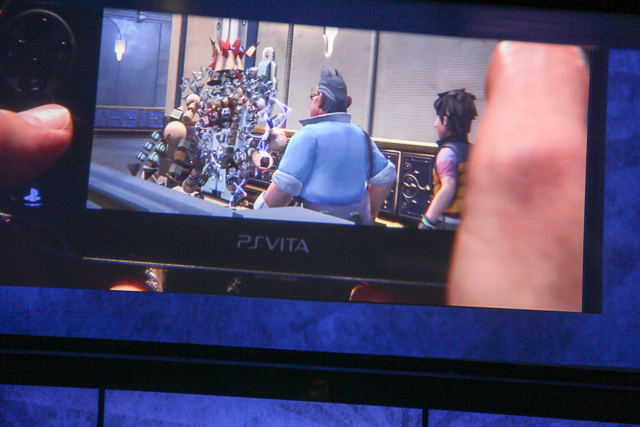
During a presentation heavy with video game demos, Sony also touted its Vita portable device as the vanguard of mobile play. An executive explained how a player, bumped by others from the living room big screen, can immediately continue his game on the handheld Vita — a tablet experience of sorts.
Reaction by video game fans on Twitter and live blogs at Wired and the Verge was underwhelming. This included disappointment that the new PlayStation 4 would not include backwards compatibility via streaming with earlier PlayStation games.
Perhaps surprisingly, Sony spent little time addressing the role of consoles like the PlayStation as an onramp to the larger world of media. In this context, the PlayStation is just one of a growing number of devices — including Roku, Boxee, Apple TV(i aapl) and (soon) Intel — that link consumers to movies, music and more.
A Sony executive did note that the PlayStation was the most popular device for accessing NetFlix. But the company didn’t devote time to expounding a larger media vision such as that of Microsoft’s entertainment and digital media president who, at a recent media event, announced the company is producing its own interactive TV shows.
Sony did not announce a price or even display the console itself during the two-hour long event, but did announce in closing that the device will be available around “holiday 2013,” presumably in time for the November/December shopping season.

Related research and analysis from GigaOM Pro:
Subscriber content. Sign up for a free trial.- Connected Consumer Q2: Digital music meets the cloud; e-book growth explodes
- OTT technologies and strategies for broadcasters
- What the shift to the cloud means for the future EPG

-
PS4 Is Sony’s Last Stand, And It’s Wasting It On A Tired Strategy That Ignores How The Gamer Is Changing

Sony’s PlayStation 4 made its grand debut today in a presentation with all the theatrical flair to be expected from an electronics company that’s also a media company that’s also a producer and publisher of blockbuster video games. But the pomp hides a hurting heart: Sony’s FY 2012 financial results saw it swallow a $5.74 billion loss, with PS3, PSP and PS2 hardware sales all down versus the previous year. And Microsoft is playing the home media center card to perfection, hedging bets against a future where a dedicated gaming console isn’t the draw it once was.
Sony did more than unveil a next-gen gaming platform today: it answered the question of how it would adapt to this changing world. And the answer might not be what you were expecting: Sony made a point of saying it was moving away from the living room, and putting the gamer at the center of the new platform. The company then went on to talk for at least 10 minutes about hardware and specs, and after a brief interlude to discuss cloud gaming, launched into a series of gaming demos. Which, if you’ve ever seen gaming demo videos, delivered exactly what you’d expect. And that was not excitement.
There was another Killzone, which looked pretty much like the others with better graphics. There was a racing simulator that was supposedly about some innovative team play, but whose developer focused on showing suede textures more than anything else. Then there was Sucker Punch’s Infamous spinoff game about mutant, which is actually decently cool since I really liked the first two Infamous titles. There were some indie games, which were more interesting than the AAA titles if only because they offered a little variety. Then there were a bunch more games from usual suspects like Square Enix and Ubisoft, Blizzard with a Diablo III port, and Bungie’s latest. But overall the message was clear: Sony’s PS4 is an evolution, not an about-face, or a realization that being a game console might not mean what it used to mean.
Here’s a typical reaction to what Sony was showing off during the bulk of its presentation, in case you think I’m only expressing my own opinion:
All these games just look like tech demos for particle rendering. Are we sure it’s not called ParticleStation 4? #PlayStation2013—
Eric Leamen (@ericleamen) February 21, 2013it’s so stark how different nintendo and sony prioritize. nintendo sees the game mechanics themselves, sony sees GRAPHIX—
Ellis Hamburger (@hamburger) February 21, 2013Later they brought out the Move controller. That’s crazy, Sony. You’re crazy if you think the Move controller will be saved by the PS4 when across the aisle is the Kinect with its hands-free, truly innovative full body movie tracking. If you think people will build 3D sculptures with a wand with a ball on the end you’ve absolutely lost your mind. There’s something to be said for trying something different, but these are things that are already better done by existing tools, or by competitors. Cutting their losses would’ve been a better strategy with the Move.
What was missing from Sony was a discussion of anything that could’ve made it a more broadly appealing device. Sony needed the introduction of streaming media partners; cable and satellite providers willing to use it for IPTV delivery; integration that would make connections with mobile devices more than just a way to have a tiny screen for select, old games and some leftover social functions; at a bare minimum it needed a physical device, and a date beyond “Holiday 2013.” It (and we, as potential customers) needed way more than a falling back on graphics, eye candy and tech demos, which may have served the gaming industry well in the past, but which have done nothing to stem the rising tide of mobile platforms like iOS and Android.
-
ZTE to use Nvidia’s latest Tegra 4 chip in next-gen phones
Fresh off the launch of its Tegra 4i chips that integrate a modem and the tegra applciaiton processor, Nvidia is announcing a customer win for its standalone Tegra 4 applciaiton processor. ZTE, the Chinese handset and equipment maker, will produce a smartphone using the Tegra 4 processor and Nvidia’s i500 LTE modem.
The handset is anticipated in the first half of 2013 according to Nvidia, and follows ZTE’s use of Nvidia’s Tegra 2 and 3 processors and Icera modem in earlier phones. It’s also the beginning of handsets designed to wow users with full HD playback and other features that require some serious processing power.
Nvidia isn’t the only company pushing more powerful application processors and flexible modems; ST-Ericsson announced a 3GHz monstrosity today as part of its NovaThor line of integrated chips. While ST-Ericsson is only showing off a prototype, the specs clearly show that it too has visions of faster phones that require a lot of processing power.
The NovaThor also supports a huge variety of mobile radio technologies that make it useful in many geographic areas. For those who want to get technical, the NovaThor L8580 supports downlink speeds up to 150Mbps as well as LTE-FDD, LTE-TDD, HSPA+, GSM and TD-SCDMA. It has up to 17 bands in the same device and a single radio for carrier aggregation, which is what enables it to tune into frequencies in many markets. Like Broadcom’s latest modem, ST-Ericsson and Nvidia are pushing the bar when it comes to building radios that can travel far and wide even if a country uses different frequencies for their LTE deployments.
In many ways the future of phones is the same has it had been, more performance in more places. Technology is awesome.

Related research and analysis from GigaOM Pro:
Subscriber content. Sign up for a free trial.- CES 2012: a recap and analysis
- Who and what to watch in the new era of the living room
- Tablet market to hit over 377 million units by 2016

-
ZTE Aims To Launch The First Tegra 4 Smartphones In China By The End Of 1H 2013

When NVIDIA officially pulled back the curtains on its new Tegra 4 SoC at CES, it had no shortage of praise for the thing — the company referred to it as “the world’s fastest mobile processor” — but there was something missing from the announcement. Who would be using be using it?
Sure, Vizio revealed a 10.1-inch, T4-powered tablet just a day later, but there was nary a phone partnership in sight until tonight. NVIDIA has just announced it is working with the folks at ZTE to launch the first Tegra 4-powered smartphones in China during the first half of this year.
Here’s a quick refresher on the Tegra 4 in case you haven’t been keeping up with the wild and woolly world of mobile systems-on-chips. This particular SoC sports 72 GPU cores, as well a quad-core processor that feature’s ARM Cortex A15 core, and LTE support by way of NVIDIA’s Icera acquisition.
NVIDIA’s deal with ZTE honestly seems like a mixed bag. Don’t get me wrong — the Chinese company is capable of crafting some nice hardware (and we’re sure to see some of it at Mobile World Congress next week), but one can’t help but wonder if NVIDIA would’ve preferred a higher-profile partner to help usher in the age of Tegra. That’s not to say that NVIDIA isn’t getting anything out of this deal though. Far from it, actually — continued buy-in from a notable Chinese OEM will only help NVIDIA strengthen its position in a fast-growing mobile market.
For now, there’s no word on exactly what ZTE devices the Tegra 4 will find itself in, but NVIDIA is awfully fond of throwing the term “superphone” around, so I’d expect something with at least a little bit of wow factor.
Meanwhile, some of rival Qualcomm’s recently revamped chipsets have appeared in high-end hardware — HTC’s new One has a Snapdragon 600 ticking away inside of it, and it may not be alone. Rumor has it that Samsung is having some heat management problems with its newer in-house Exynos chipsets, and is mulling a switch to a Qualcomm SoC for its flagship Galaxy S IV. Couple that with the high-end 800 we saw at CES and the Snapdragon 200 and 400 chipsets that just officially got the nod and NVIDIA’s certainly got a fight on its hands.
-
Your next Kindle could be embedded in your car
Amazon’s first connected car app, Amazon Cloud Player, went live last week, allowing its customers to pull their music collections out of the airwaves and into their Ford dashboards. It’s certainly a new milestone for Amazon, which is adding the car to the growing number of devices and platforms it supports. It also got me thinking about what Amazon’s next connected car app might be, and the answer seems obvious: the Kindle.
 Books have always been Amazon’s bread and butter, and much of Amazon’s ebook strategy has focused on finding more ways and identifying new devices for people to enjoy the pastime of reading. The car is the logical next step, considering how much time people spend their automobiles on their daily commutes and simply running errands. In fact, a lot of drivers already do plenty of reading in their cars with audiobooks, using both physical and digital media. Some people have even managed to cram Amazon’s Audible books into their car stereos using USB drives or auxiliary ports.
Amazon stands to gain plenty by embracing that trend, and I don’t just mean by selling audiobooks in the car. (In case you’re wondering, it’s not possible today to stream an Audible book through Cloud Player). While there is a healthy segment of readers who just want audiobooks, I bet there’s a far bigger market of people who normally read their books in ink — in either the printed or digital variety — but would like the option of switching to audio when they get behind the wheel.
No large-scale development required
For Amazon to make that work it would have to supply its books in dual-media formats. You would then read from your Kindle or Kindle smartphone app when otherwise unoccupied, but once you stepped into your vehicle the device would automatically pair with the Kindle app in the car, which would immediately start reading your book aloud at the exact point you left off.
 Amazon already has much of this technology in place. Last year, Amazon introduced Whispersync for Voice, which allows you to pair an Audible book with an ebook for a few extra bucks. Amazon isn’t just selling the same media in two formats, it’s integrating them. A narration feature allows you to listen along as you read from the Kindle — after each word is spoken the text is highlighted on the screen. Customers can switch between audio to visual-only formats with just a touch of the button.
It would be cinch for Amazon to integrate that technology into the car. It would merely have to develop software for the Kindle and Kindle apps that would integrate with the various automakers’ connected car interfaces, just as it’s done for Cloud Player on Sync AppLink.
It could also tap into the automakers’ speech recognition systems, allowing readers to pause the audio stream or navigate their books with simple voice commands. Amazon has invested plenty in voice and speech interface technologies over the last two years, buying both Ivona and Yap. Those acquisitions could come in handy when developing any new connected car technology.
Amazon stays mum
I should say now that we have no specific knowledge that Amazon is working on Kindle for the car, but just to be sure we put the question to the company itself. While an Amazon spokesperson confirmed that the company today has the technology to seamlessly switch between book formats, Amazon wouldn’t comment on any future connected car plans. The spokesperson said as a matter of policy Amazon doesn’t comment on future product plans.
 That’s pretty much what we expected to hear, but if Amazon does wind up pursuing this technology, I for one would buy it. Today I have an uneasy relationship with ebooks. I download the occasional tome on iBooks or Kindle, but for the most part, I still have an irrational attachment to paper books. I can get away with that attachment because today I can read a physical book in the same places I can read an ebook — on a train or in plane, while camping or lying around on the couch — but one place I cannot read a physical book is in the driver’s seat of a car. By creating a connected car app, the Kindle and ebooks in general would become immensely more valuable to me.
It’s not just consumers who would get excited about Kindle for the car. The automakers would fall all over themselves lining up to support it. One of the reasons the automakers have proceeded so cautiously with app development is a concern over safety — distracting apps could cause accidents. But the auto industry has been quick to sign off on any audio-only multimedia service, as evidenced by all of streaming music and radio apps that populate connected car dashboards.
In fact, audiobook apps have already made their way into many cars. Harman’s Aha content platform has already made into Honda’s connected car platform HondaLink, offering audio book libraries among its many channel choices. I’m actually surprised Audiobooks.com, a cloud-based streaming service, hasn’t launched a connected car app already.
Featured photo courtesy of Shutterstock user Rob Byron

Related research and analysis from GigaOM Pro:
Subscriber content. Sign up for a free trial.- Monetizing music in the post-scarcity age
- What Amazon’s new Kindle line means for Apple, Netflix and online media
- How to deliver the next-generation web experience

-
Pinterest raises $200 million in new funding, company now valued at $2.5 billion
Pinterest has raised a new funding round of $200 million led by Valiant Capital Management, putting the company’s valuation at $2.5 billion, AllThingsD first reported and Pinterest has now confirmed.
The company said it will use the new funding to develop new technology, continue hiring, expand its user base internationally, and make strategic investments. Existing investors Andreessen Horowitz, Bessemer Venture Partners and FirstMark Capital all participated in the round as well.
“Our focus is on helping millions of people discover things they love and get inspiration to go do those things in their life,” said Ben Silbermann, Pinterest co-founder and CEO announced in a statement provided by the company. “This investment gives us more resources to help realize that vision.”
It was reported earlier this month that the company was in funding talks that would raise its valuation above $2 billion. Most recently, Pinterest had raised $100 million in May 2012, putting the company’s valuation at $1.5 billion at the time. The May round was led by Japanese site Rakuten, in addition to Andreessen Horowitz, Bessemer Venture Partners and FirstMark Capital.
The company allows users to pin photos to virtual pinboards, collecting them in groups called boards around the web. Pinterest has exploded in recent success, especially with women, and has continued to drive increasing amounts of traffic on the web. CEO Ben Silberman spoke at GigaOM’s Roadmap conference in November, explaining that they didn’t set out to target any specific group in building the site:
“When we built Pinterest, we didn’t build it with a specific demographic in mind,” Silbermann said. “We built it for ourselves.”

Related research and analysis from GigaOM Pro:
Subscriber content. Sign up for a free trial.- The state of cross-platform media measurement
- How to stand out in the app development game
- Social media in Q1: commerce and discovery dominated

-
Gaikai Cloud Gaming In PlayStation 4 Brings Easy Free Trials Of Games, Sharing, Spectating And Remote Play

Gaikai’s Dave Perry took the stage at the PS4 event today to describe how Gaikai would be adding cloud gaming elements to the PS4, which will make it possible to jump in and try games in the PlayStation store, make sharing with your friends a snap, and also invite spectators and get friends to help you by remotely taking over your game.
The PS Vita will also finally get a lot more useful, thanks to Remote Play. Perry said that the team has dramatically reduced transmission times, turning the PS4 into a server and the Vita into a client allowing for remote play of titles run on the PS4 direct to the Vita. It’s exactly like the Wii U, but with a controller you can walk away with and use as a standalone mobile console.
The ability to easily jump right into PS4 games and try out titles via streamed gaming is a huge addition for Sony, which had more limited demo capability in the PS3 PlayStation store which required sizeable downloads when it was even available (which wasn’t for every title). Inviting players to join and watch your game also includes the ability for spectators to chim with with on-screen comments as you play, and the ability to take over your controller to help you out if you run into trouble. It’s a much more social version of Nintendo’s handholding modes in recent releases.
Will gamers opt to call a friend, so to speak, instead of jumping on GameFAQs? That’s a good question, but clearly the company is doing everything it can to try and build a real social network, instead of the loosely affiliated group of often crude, sometimes racist anonymized gamers that made up the PlayStation Network of the past.
-
Indie bookstores sue Amazon, big-6 publishers for using DRM to create monopoly on ebooks
Three independent bookstores have filed a class action suit against Amazon and all of the big-six publishers, alleging that the proprietary digital rights management tools Amazon uses on ebooks serve to create a monopoly. The indies, represented by Los Angeles antitrust firm Blecher & Collins say publisher contracts calling for the use of this DRM, which like most forms of DRM prohibits readers from copying ebooks or reading them on non-authorized devices, restrain ebook sales and that Amazon “has unlawfully monopolized or attempted to monopolize the market for ebooks in the United States.”
The case was filed in New York’s Southern District court (which also oversaw the Department of Justice’s antitrust suit on ebook pricing) on February 15 and was first noticed by the Huffington Post Thursday afternoon. The named plaintiffs are Manhattan-based Posman Books, Book House of Stuyvesant Plaza and Fiction Addiction of Greenville, South Carolina; they seek to represent “all other similarly situated independent brick-and-mortar bookstores.”
The filing cites estimated market share for Kindle, Barnes & Noble’s Nook and Apple’s iBookstore as evidence that Amazon has a “dominant position” in the ebook market. The estimations cited are generally accepted in the publishing industry — over 60 percent for Amazon’s Kindle e-readers, around 25 percent for Nook and under 10 percent for the iBookstore (though some believe that Apple’s market share has grown ). The filing says Nook is Kindle’s “only substantial competition” but, in reference to recent news and earnings reports, notes Barnes & Noble is “experiencing financial difficulties and will be downsizing by closing a significant portion of their brick-and-mortar bookstores.” The filing doesn’t mention Kobo, but Posman, Book House and Fiction Addiction all sell Kobo ebooks through the company’s partnership with the American Booksellers Association.
To be clear, Barnes & Noble, Kobo and Apple also sell ebooks with DRM on them. Barnes & Noble and Kobo use Adobe DRM, and Apple uses its own proprietary DRM on ebooks — but that appears not to be at issue in this case because of Apple’s reportedly small ebook market share. (The filing does mention that Apple doesn’t use DRM on music.) Rather, the filing takes issue with Amazon’s proprietary DRM, AZW: “Ebooks with the AZW DRM can only be read on a Kindle device or on another device enabled with a Kindle application…the Kindle app works solely with ebooks sold by Amazon.” While the case names only the big-six publishers as defendants, Amazon places its DRM on nearly all of its ebooks from all publishers.
The filing says that big-six publishers, through their contracts with Amazon that allow for Amazon’s proprietary DRM on their ebooks, “unreasonably restrain trade and commerce in the market for ebooks” in violation of the Sherman Act,” and claims “consumers have been injured because they have been deprived of choice and also denied the benefits of innovation and competition resulting from the foreclosure of independent brick-and-mortar bookstores.”
Most of the filing, though, is spent on Amazon, which the plaintiffs accuse of purposely creating a monopoly on ebooks in the United States. According to the filing:
The aforesaid conduct and acts of Amazon and the big six were engaged in by Amazon with the purpose and intent: (1) to injure, suppress, destroy and irreparably harm Plaintiffs and the other Class Members in the relevant market; (2) to monopolize the market for the sale of ebooks in the United States; (3) to reduce or eliminate sales of ebooks by Plaintiffs and the other Class Members; (4) to control prices; (5) to reduce the variety of offerings that would otherwise be available to consumers; and (6) to unlawfully monopolize trade and commerce in said relevant market.
The plaintiffs seek an injunction “prohibiting Amazon and the big six from publishing and selling ebooks with device and app specific DRMs and further requiring the big six to allow independent brick-and-mortar bookstores to directly sell open-source DRM ebooks published by the big six.” Alyson Decker, the Blecher & Collins attorney overseeing the case, told me that independent bookstores’ agreements to sell ebooks through Kobo aren’t sufficient: “My understanding is that the Big Six do not currently have any direct agreements for ebooks with independent brick and mortar bookstores comparable to the agreements they have entered into with them for traditional books. While some independent brick and mortar bookstores are able to sell ebooks for Kobo, my understanding is that that agreement is with Kobo and not directly with the big six.”
Many independent bookstores may lack the technical knowledge and infrastructure to be able to sell ebooks straight from the publishers, but the filing doesn’t get into details on exactly how such a system would work. Decker said she couldn’t comment specifically on the type of “open-source DRM” that the plaintiffs seek.

Related research and analysis from GigaOM Pro:
Subscriber content. Sign up for a free trial.- Connected world: the consumer technology revolution
- Is Amazon The New Self-Publish Kingpin?
- Connected consumer third-quarter 2012

-
Sony Officially Unveils The PlayStation 4: X86 CPU And 8GB Memory, But About Experiences, Not Specs
Sony had an event today and as expected, it introduced the PlayStation 4. The next-gen platform is designed to shift focus from the living room to the gamer, Sony said, and overall, PlayStation’s approach is meant to make it possible for gamers to play wherever they want, whenever they want.
PS4 lead system architect Mark Cerny talked about how the evolution of the PS4 came about, saying it began five years ago, earlier on in the life of the PS3. The PS3 was a first step, which was designed to connect to a variety of services, but it was limited because of how early it launched in that world, Cerny said.
“Much less value is found today in blast processing or a system-on-a-chip,” Cerny said. He suggested tech could interfere with design innovation. The tech remains important, he stressed, but the idea was to create a platform that was all about experience. Sound familiar? That’s because it’s a tune Apple and Steve Jobs started playing years ago when they realized the spec race was a nonstarter in the mobile phone world.
“By game creators, for game creators. It is a powerful and accessible system,” Cerny said on stage, suggesting that this time around there was a strong emphasis on ease of development, hence the use of a standard x86 PC CPU. The GPU is designed for use with “practical tasks,” he said, with the overall goal of making development a painless experience.
Essentially, the PS4 is an advanced, x86-based personal computer, which means that it should be easy for developers to build. All of this is clearly an answer to a major complaint from studios about the previous generation, which was infamously tricky to master from a software perspective.
Sony also unveiled a redesigned DualShock 4 controller, which has the Vita-style touchpad depicted in rumors, ad works with a 3D “stereo” camera accessory to track its movements in a loose approximation of what’s possible with Microsoft’s Xbox Kinect.
The hardware is clearly also borrowing some tricks from mobile games. It has save states that allow users to quickly freeze and resume gameplay, without having to save just by switching on and off the console. There’s also background downloading, which allows digital titles to be played before they’re even completely on your local drive.
Social is another key tentpole for the PS4, according to Cerny. He described a new function that allows you to quickly pause and upload gameplay videos as easily as you might have done with static screenshots in the past. There’s also spectator functionality for watching “celebrities” gaming, something which seems to have been borrowed from Twitter’s success with famous members. Networking will also be based around real names and profile pictures, instead of strictly on gamer tags and avatars, too, and all of this will plug into mobile apps to help gamers stay in touch.
-
Sigil 0.7.0 by any other name is still an EPUB 2 editor
 Open-source, cross-platform EPUB creator Sigil 0.7.0 has been released, sporting a number of major new features. These include finished versions of the Live Preview, Clips and spellcheck features.
The new version also sports a new HTML rendering engine, Qt 5, but remains an EPUB 2 editor, despite the inclusion of EPUB 3 features such as audio and video support. Support for EPUB 3 (as well as backwards compatibility with EPUB 2) is noted as in development for a future release.
Sigil 0.7.0 debuts the finished version of Live Preview, a dockable window that displays the results of editing in real time – it also continues to show the content from the last HTML tab opened by the user, allowing changes to auxiliary files such as CSS to be viewed as they’re updated. The Live Preview window can even be dragged on to a second monitor.
The spellcheck function is another feature-complete highlight in the new release. Clicking the spellcheck button now opens a dedicated dialog box containing a list of all misspelled words along with an option to display all words – clicking a word reveals its first occurrence in the document; double-click to move to the next. A tooltip provides a count of the unique number of words in the document, while support for multiple dictionaries is also added.
There are two notable improvements to Sigil’s support for multiple clipboard entries: the addition of a new, optional Clip Bar providing toolbar buttons for selecting the first 20 Clips in a user’s collection, plus a dockable window that lists all available Clips for quick and easy selection. Users can also define keyboard shortcuts and create buttons for quickly inserting special characters.
Another major new addition is the ability to quick edit an ebook’s Table of Contents without having to generate a new TOC. A number of new reports – including an all-encompassing All Files report – have also been added, while users can now play audio and video clips in Sigil, with the related functions for image handling updated to work with other media clips too.
Other minor changes include Sigil’s ability to now save invalidly constructed XML files, options for searching with wrap on or off, and separate stylesheets for the Index and TOC HTML files. Users can now also bookmark their location to return to later.
There’s one major behind-the-scenes change, with Sigil now using Qt 5 for its HTML rendering option. Two visible improvements brought about by this change are support for audio and video preview, plus the correct display of embedded fonts.
The update is rounded off with a promise of better performance and stability. Sigil 0.7.0 comes with visible performance improvements in a number of areas, including opening and changing tabs, merging of files and bulk renaming. It also promises to have fixed all bugs from previous releases, and no longer closes when attempting to open invalid EPUB files. The save routine implements more integrity checks, while splits and merges can be done without the risk of data loss.
Sigil 0.7.0 is a free, open-source download for Windows, Mac and Linux. Windows users can also download Sigil Portable 0.7.0 for running directly from a USB flash drive.
Photo Credit: SueC/Shutterstock
-
Vice President Biden Honors Public Safety Officers with Medal of Valor

Vice President Joe Biden congratulates Officer Reeshemah Taylor of the Osceola County Corrections Department after presenting her with the Medal of Valor, during a Medal of Valor ceremony with Attorney General Eric Holder, in the South Court Auditorium at the White House, Feb., 20, 2013.
(Official White House Photo by David Lienemann)
Vice President Joe Biden today recognized 18 public safety officers for exhibiting exceptional courage in a Medal of Valor ceremony at the White House. The Medal of Valor is the highest national award for valor by a public safety officer, and it is bestowed on those whose heroic actions were above and beyond the call of duty.
The Vice President, who was joined by Attorney General Eric Holder, highlighted the bravery of the men and women who were being honored, and paid tribute to the spouses of the recipients who had lost their lives in the line of duty. He also talked about the special qualities that are unique to those who put themselves in danger to save others:
My association with firefighters and police has been… the essence of my public life. And as many of these things that I do, I still grapple with what makes you do what you do? I’m just thankful that you do.
You can't explain it, but you know it when you see it. I see it in the shield over someone’s heart. I see it in the men and women who are sitting here before us today…Thank God for you. You’re from different backgrounds, but you’re the glue that literally binds communities together at times of stress. You’re that face that shows up for a woman on the second floor of a burning building just when she thinks it’s all over for her… The amazing thing about all of you is that the very things you do when you’re on duty to save people’s lives, you do when you're off duty. There’s no separation.