Category: News

  • Unofficial Mega client is now available for Android devices

    With the ever-increasing popularity of mobile devices, Kim Dotcom’s Mega storage locker appears out of place without an official smartphone or tablet app, especially when Box, Dropbox and Google Drive, to name but a few alternatives, embrace the on-the-go user. Thankfully Alexander Hansen, an Android developer, has come to the rescue with his unofficial Mega Manager Alpha.

    As the use of “Alpha” in the name implies, Mega Manager Alpha is not a stable release at the moment but rather a “work in progress”. The developer also warns that users might experience “some crashes”. That said, the app only comes with a limited feature-set, which includes the ability to browse and download Mega content, and does not support uploading files to the cloud storage service.

    The app downloads uploaded content to the SD card, in the “Download” folder under MegaManager. Users can long press on files and folders to select multiple items for download. However, Mega Manager Alpha can only be used to sign in into a Mega account and cannot create one, forcing users to register via the browser.

    The developer promises that the app will be improved in subsequent releases, with future upgrades set to include stability enhancements, the ability to open files, perform file operations and upload content, automatic camera picture upload, folder synchronization, transfer history as well as the necessary account creation, among other features.

    Mega Manager Alpha is available to download from Google Play.

  • Nvidia’s Project Shield in action: Borderlands 2 on a handheld

    One of the more surprising and interesting announcements out of last months Consumer Electronics Show was Nvidia’s Project Shield, a handheld gaming device powered by the company’s new Tegra 4 chip. Looking like a large Xbox 360 controller, Project Shield includes a 5-inch 720p display and runs on Android. It’s one of Nvidia’s first forays into building its own complete consumer devices; the only Nvidia products on store shelves now are graphics cards for PCs.

    Although Project Shield was demonstrated on stage at CES, Nvidia is planning a number of weekly follow-up videos to show off the product. The first is now online and while it’s clearly an attempt to market the handheld and highlight the Tegra 4 chip capabilities, I think it’s worth sharing for two reasons. First, few people have really seen this device in action and second, the product may be the best yet at bringing true PC gaming to portable devices.

    This particular demo focuses more on streaming a game from the PC to Project Shield, so I doubt the Tegra 4 chip is working hard; the device is essentially a remote client to the local computer or Wi-Fi. Still, there doesn’t appears to be any lag at all, which is both impressive and necessary for this type of gaming solution.

    I’m definitely interested in seeing demonstrations of how Android games look and run on Project Shield because gamers aren’t always near their PC for game streaming. Prior games optimized for the Tegra 3 were impressive and I expect more of the same on Project Shield.

    Related research and analysis from GigaOM Pro:
    Subscriber content. Sign up for a free trial.

  • What Games Do You Want to Play on Your BlackBerry Z10 or PlayBook #BlackBerry10

    If you’re into flinging birds, high-fiving scientists, protecting your lawn from zombies or just doing a crossword with your morning coffee, you can get your fix on BB10. These four apps are just a small sample of developers who took the time to develop for BlackBerry 10.

    BlackBerry knows the importance of developer support and has been bending over backwards to make their tools better and get developers excited. This movement to bring in high quality apps hasn’t been easy but BlackBerry rose to the challenge and was able to get some of the biggest mobile franchises in the scene right now to bring their games to Playbook and BB10. We can send our thanks to these key developers who took a leap of faith that we’re all going to see and feel the benefit from. As more and more quality developers are choosing to support BB10 we can expect the platform to really shine for it’s dense volume of quality apps and games.

    Do you have a favorite game that you want to see on BlackBerry 10? Let the developers know. While you’re at it let us know too! What games do you want to play on your shiny new Z10 or Playbook?

  • Backupify’s new developer platform aims to accelerate SaaS adoption

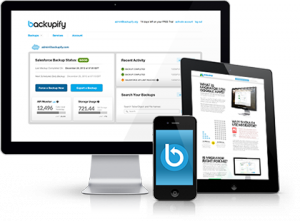
    Data security and privacy worries are among the most often cited barriers preventing businesses from moving to the cloud. Backupify hopes to address that concern by rolling out a core set of APIs that will allow Software as a Service ISVs (Independent Software Vendors) to integrate the firm’s data protection functionality into their applications.

    The aim of the Backupify Developer Platform is to make it easier for SaaS companies to offer the ability to store a secure second copy of their customer’s data off-site through Backupify, thereby assuaging their client’s security concerns. Something Backupify says “will help accelerate market acceptance of SaaS applications by allowing ISVs to continue to focus on what they do best while relying on Backupify to protect their customers’ data”.

    The Backupify functionality can be offered as an integrated component of the ISV’s SaaS solutions, or as an optional upgrade.

    Speaking about the new developer platform, Rob May, CEO of Backupify, said: “Our experience in backup and recovery solutions for Google Apps and Salesforce customers has taught us that there is tremendous demand in the market for independent data protection for all SaaS applications. Customers and ISVs have approached us over the years to support their SaaS applications, which led us to create the developer platform. We’re excited to work with leading ISVs on the initial integrations”.

    The Backupify API and initial ISV partner integrations will be available in Q2 2013, with confirmed beta phase partners including Apptivo, Freshdesk, Mavenlink, Nimble and Pipeline Deals. ISVs interested in joining the Backupify Developer Platform can find out more here.

    Photo Credit: Lightspring/Shutterstock

  • MorphLabs’ OpenStack cloud to arm service providers against Amazon

    MorphLabs is banking that service providers wanting to take on Amazon Web Services will want to take a look at mCloud Osmium, the company’s new OpenStack-based public cloud infrastructure.

    Other OpenStack distributions have been available for a while but MorphLabs claims that its offering can provide a secure, multi-tenant infrastructure that these companies can pay for on a subscription basis, and that will provide them with the billing capabilities, credit card validation and processing that they need, said Yoram Heller, VP of business development for the Manhattan Beach, Calif. based company.

    There is indeed a market for something like this. As Amazon.com’s AWS arm takes on more IT loads for customers of all sizes, it’s competing more with traditional IT outsourcing companies and hosting companies — that is just the sorts of service providers MorphLabs is targeting here. If you don’t believe that, check out the big enterprise push outlined at AWS: Reinvent, the company’s first trade show last November.

    morphlabosmiumfotoBut it’s a tall order. Heller acknowledges that no service or cloud provider offers anywhere near the scale of AWS which some estimates runs more than 250,000 servers. “No one company can beat Amazon — not even Rackspace or Dell — but the perspective is that the whole industry can compete with Amazon and that’s good for us. There are 4,000 outsourced infrastructure providers in the world,” he said in an interview.

    “Companies that are being disrupted by Amazon now could either download OpenStack and build a do-it-yourself cloud or they can get it from a vendor like Morph plus Dell, which provides an industrial-strength combination of hardware and software,” he added. That hardware is optimized to run MorphLabs cloud. Over time, that hardware will be built to Open Compute Foundation specifications, he said. Heller said the company will name two additional hardware partners soon.

    The cost to service providers can work out to about $10 per virtual machine per month — with a hardware cost of $5 to $10 per month. With markup, they can compete with Amazon on price and — Heller insisted — get better performance.

    Last March, MorphLabs and partner Dell announced mCloud Helix, an all SSD-based private cloud based on OpenStack, which it just updated. mCloud Osmium fills in the public cloud check box.

    Right now customers can source their hardware from Dell — which builds optimized gear for the cloud — and software from Morph or buy everything from Dell.

    MorphLabs is not alone in wanting to draw big service providers to its cloud. HP and others in the OpenStack cloud, and others outside it  are also targeting such customers.

    Related research and analysis from GigaOM Pro:
    Subscriber content. Sign up for a free trial.

  • Don’t Let Strategy Become Planning

    I must have heard the words “we need to create a strategic plan” at least an order of magnitude more times than I have heard “we need to create a strategy.” This is because most people see strategy as an exercise in producing a planning document. In this conception, strategy is manifested as a long list of initiatives with timeframes associated and resources assigned.

    Somewhat intriguingly, at least to me, the initiatives are themselves often called “strategies.” That is, each different initiative is a strategy and the plan is an organized list of the strategies.

    But how does a strategic plan of this sort differ from a budget? Many people with whom I work find it hard to distinguish between the two and wonder why a company needs to have both. And I think they are right to wonder. The vast majority of strategic plans that I have seen over 30 years of working in the strategy realm are simply budgets with lots of explanatory words attached. This may be the case because the finance function is deeply involved in the strategy process in most organizations. But it is also the cause of the deep antipathy I see, especially amongst line executives, toward strategic planning. I know very few who look forward with joy to the commencement of the next strategic planning cycle.

    To make strategy more interesting — and different from a budget — we need to break free of this obsession with planning. Strategy is not planning — it is the making of an integrated set of choices that collectively position the firm in its industry so as to create sustainable advantage relative to competition and deliver superior financial returns. I find that once this is made clear to line managers they recognize that strategy is not just fancily-worded budgeting and they get much more interested in it.

    Obviously you can’t execute a strategy without initiatives, investments, and budgeting. But what you need to get managers focused on before you start on those things is the strategy that will make these initiatives coherent.

    That strategy is a singular thing; there is one strategy for a given business — not a set of strategies. It is one integrated set of choices: what is our winning aspiration; where will we play; how will we win; what capabilities need to be in place; and what management systems must be instituted?

    That strategy tells you what initiatives actually make sense and are likely to produce the result you actually want. Such a strategy actually makes planning easy. There are fewer fights about which initiatives should and should not make the list, because the strategy enables discernment of what is critical and what is not.

    This conception of strategy also helps define the length of your strategic plan. The five questions can easily be answered on one page and if they take more than five pages (i.e. one page per question) then your strategy is probably morphing unhelpfully into a more classical strategic plan.

    This definition of strategy can be disconcerting to those who have spent a lifetime generating traditional strategic plans. Not long ago I facilitated a day long strategy session with the senior team of a very successful $10 billion company with an outstanding CEO. By the end of the day (in part thanks to a goodly amount of pre-work by the head of strategy), we got to a nice set of integrated choices. I congratulated the group on its great thinking and working and affirmed what I judged to be an excellent strategy.

    My enthusiasm notwithstanding, the CEO was troubled. I asked him why. “Is that all we have to do,” he asked, as if he thought he had cheated on an exam. I am sure he expected that he had to full binders and long lists of initiatives to feel that he had been thorough in this year’s strategic planning process. I reassured him that he had given strategy anything but short shrift. And that day strategy prevailed over planning. I suspect that CEO will never go back.

    So if you pass the five-page mark is time to ask: Are we answering the five key questions or are we doing something else and calling it strategy? If it is the latter: eject, eject!

  • Windows Azure now features VM Depot integration

    Microsoft Open Technologies unveiled the VM Depot public preview early last month, and the software giant has just announced that its community-driven open-source virtual machine image catalog is now integrated into the company’s cloud platform, Windows Azure.

    The new feature is available through the Windows Azure management portal and is designed to ease the handling of virtual machine images from VM Depot. The cloud platform’s users can take advantage of open-source stacks, “based on supported Linux distributions, made available by members of the community and directly provision the files as personal images straight from the Windows Azure portal”.

    To take advantage of the new functionality, users will have to choose the “BROWSE VMDEPOT” option within the “Virtual Machines” tab and select the needed files from the list of available images. Windows Azure users can also use distribution filters.

  • BlackBerry bribes — ah, rewards — app developers with a limited edition red Z10

    It’s certainly one way to make sure your app store attracts a decent number of apps — offer developers something that money can’t buy (except possibly later on through eBay). BlackBerry — formerly RIM — has produced a limited edition red BlackBerry Z10 for those developers who created “quality” third party apps for the new BB10 platform prior to launch.

    There will be just 12,000 units of the new device made, and BlackBerry estimates those developers who qualify for one (and who must also have a BlackBerry Dev Alpha A or B testing device), will receive their handsets in 6-8 weeks. The company will email successful developers and explain how to trade a Dev Alpha unit for the new device.

    Each hot-rod red Z10 will have the words “BlackBerry Developer” engraved on it, and come with a unique serial number.

    Announcing the move at the BlackBerry Jam developer conference in Amsterdam today, BlackBerry’s VP of developer relations Alec Saunders said that early developers will be “the only ones that will have these devices because they’re the ones that earned them”.

    He did however, say the phone will also be made available to new developers, provided they get their apps accepted by 28 February, so there’s still a chance you can get your hands on one if you act quickly.

  • IER REPORT: Beyond the Congressional Budget Office

    WASHINGTON D.C. — The Institute for Energy Research released today a groundbreaking study that assesses the recent Congressional Budget Office analysis of revenues gained by opening federal lands and waters for oil and gas development. The study, conducted by Dr. Joseph Mason, a professor at the Louisiana State University and the University of Pennsylvania’s Wharton School, offers contrasting projections of the potential revenue impacts, job creation, and overall GDP growth that energy resource development on federal lands would provide.

    “As the United States looks for ways to generate much-needed revenue to fill trillion-dollar budget deficits, many Washington lawmakers are calling for punitive energy taxes that would result in fewer jobs and diminished private sector investment. This approach is both wrongheaded and counterproductive. Before adopting this course, policy makers deserve to know the staggering economic potential lying dormant under our feet and off our shores because of restrictive federal policies on our vast domestic energy resources,” IER President Thomas Pyle said upon release of the study.

    “America is no longer asking whether we have the energy to fuel our economy, or where we will get it. Today, we know where the energy is, and we have the technological capability and the private capital to develop it. What we lack, however, are the policies from Washington that could reverse course, unleash the private sector to produce the domestic energy we need, and get America on the road to a real recovery with good-paying jobs.”

    The study’s findings demonstrate that opening federal land that is currently closed-off because of statutory or administrative action would lead to broad-based, lasting economic stimulus.

    “This economic impulse could help break the U.S. economy out of its sluggish post-recession malaise without any increase in direct government spending,” Professor Mason notes in the study’s introduction.

    “As Congress again turns its attention to the means through which our ongoing budget crises — from the debt limit to budget sequesters to the simple act of funding our government beyond the current budget resolution — there will be no doubt renewed efforts to address revenue concerns by punitively taxing the oil and gas industry in pursuit of modest revenue gains. As this analysis notes, though, the revenue potential inherent to expanding access to resources found on Federal lands and waters is orders of magnitude greater than that which is measured by the Congressional Budget Office.”

    Among the studies key findings:

    • GDP would increase by $127 billion annually for the next seven years, and $450 billion annually for the next thirty years.
    • The cumulative 37-year increase in GDP would be $14.4 trillion.
    • 552,000 jobs would be created over the next seven years, with almost 2 million jobs annually for the next thirty years.
    • Job gains would be felt in high-wage, high-skill employment like health care, education, professional fields, and the arts.
    • $32 billion in annual wage increases over the next seven years, with a cumulative $3.7 trillion increase over the a 37 year cycle.
    • The federal government stands to receive $2.7 trillion more in tax revenues over the next 37 years, while state and local tax revenues equal $1.1 trillion in the same time period.

    To read the full report, click here.

    ###

  • OUYA Android Game Console To Launch At Retail In June With Amazon, Best Buy, Target And GameStop

    Ouya_Family_1024x1024

    The little Android-based gaming console that could is in on track for March as promised for Kickstarter backers, but the public launch in June looks to be an equally splashy affair with retail support from some of the biggest U.S. chains. OUYA announced today to backers that it would be selling the console to the general public beginning in June at Amazon, Best Buy, Target and GameStop.

    Pre-orders begin today for retail partners (they’re currently live at Best Buy, Amazon and Target), with pricing set at $99.99 for the console and one controller. Additional controllers are available as well, for $49.99 each (the console supports up to four controllers at one time.

    OUYA founder Julie Uhrman sat down with the Wall Street Journal to discuss the upcoming launch and some of the details around it, laying out that Kickstarter backers would get their units first, followed by pre-order customers who ordered through the OUYA website in April, and then wide retail release including physical store presence beginning in June. She reiterated some of the details around launch day content previously announced, including the fact that there will be around 200 titles coming to OUYA as of right now, with Final Fantasy 3 one of the premiere titles from launch partner Square Enix, which will feature exclusive content.

    Uhrman also revealed that part of the funds the company raised on Kickstarter are going towards directly supporting game development. “There are games that we are supporting today,” she said, but she remained mum about any specific software OUYA itself was backing for the platform. Uhrman also said that while she couldn’t reveal specifics about how many pre-orders the console currently has, the number made since the Kickstarter campaign definitely exceeds the 68,000 backers it picked up during the crowdfunding effort. That, she told the WSJ, was a key factor in attracting big retail partners.

    OUYA has come a long way from its origins as a project many were skeptical would ever be anything other than a vaporware dream. The company shipped out its developer units on time, and then worked to redesign the controller in response to user feedback about ergonomics, components used and control location. Now, it looks poised to deliver on its original timeline and hit full scale production shortly after. It’ll be well worth watching how the OUYA competes with this year’s crop of new consoles from players like Sony, Microsoft and Nintendo, since we’re in a period of transition for each of those companies.

  • Carriers finally get a cut of Skype Credit sales, starting in Russia

    Mobile operators have what might charitably be termed an interesting relationship with VoIP services, particularly the market leader, Microsoft’s Skype. These services are partly to blame for the decline in voice revenue, and there’s been all sorts of net-neutrality-busting throttling and premium pricing going on in various countries as the carriers try to dissuade users from going all-IP.

    That strategy met with only limited success, so last year Skype was able to confidently team up with the mobile billing company Mach on direct operator billing for Skype Credit. And now it’s here, starting in Russia: as of today, Skype users in that country can pay for credit through their normal mobile phone bill or pre-paid account balance.

    According to a Mach spokeswoman, the same opportunity will be extended to Skype users in the U.S. and Canada later this month, and other countries will follow. Mach, which provides a billing gateway, has direct agreements with carriers in Canada and Russia. In the U.S. it is partnering up with Payvia, which has similar arrangements there.

    “As well as our existing users benefiting from this new payment option, we expect direct operator billing to attract new customers who are looking for more convenient ways to manage their spend,” Skype payments chief Jason Macklin said in a statement.

    No carriers are being quoted by name, but “leading mobile operators” are apparently playing ball. Mach lists Orange, Telefonica, T-Mobile, Telus and Verizon Wireless as customers.

    It should go without saying that the operators will get a cut of the Skype Credit purchases, although how much they get seems to be a tightly-guarded secret. The credit will cost the same as if it was purchased through more traditional means.

    For Skype, it potentially means more reach. For the carriers, it means they get some kind of revenue stream beyond data usage (which is usually flat-rate these days) out of the ‘over-the-top’ technology that’s so disrupted their core business. It may just be that everyone’s a winner here.

    Related research and analysis from GigaOM Pro:
    Subscriber content. Sign up for a free trial.

  • Huawei 4Afrika brings Windows Phone 8 to the growing African market

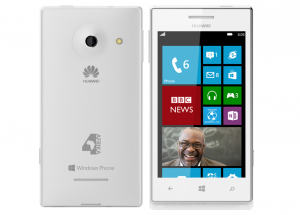
    On Tuesday, Huawei unveiled a new smartphone running Windows Phone 8 aimed at the “rapidly-growing” African market. Dubbed 4Afrika, the device is based on the Ascend W1 unveiled at CES 2013 in Las Vegas, and is marketed as an “affordable option” for developers, first-time smartphone buyers, small businesses and students.

    The 4Afrika is part of larger initiative which, by 2016, plans to deliver tens of millions of modern mobile devices (smartphones and tablets) into “the hands of African youth”. The initiative also intends to bring one million small and medium local enterprises online, and help 200,000 locals succeed in entrepreneurship and employability.

    In case the Huawei Ascend W1 doesn’t ring a bell, prospective buyers can expect a similar device to the HTC Windows Phone 8S in terms of specifications. By implication, the 4Afrika is not a speed demon nor a flagship smartphone, but it’s pretty decent hardware-wise.

    Specs include a 4-inch display with a resolution of 800 by 480, a dual-core 1.2GHz Qualcomm Snapdragon processor, and 4GB of internal storage. The 4Afrika also features front and back-facing cameras and comes in at 10mm thick.

    The 4Afrika is the first step in driving the African smartphone adoption, which according to Microsoft, represents 10 percent of the entire phone market. The smartphone will be available in Angola, Egypt, Ivory Coast, Kenya, Morocco, Nigeria and South Africa in late-February. The 4Afrika comes with a market-specific app store and ships with custom apps made by local developers.

  • Version 2.2.6 Now Available for BlackBerry 10 and PlayBook

    WordPress for BlackBerry OS10Version 2.2.6 of WordPress for BlackBerry 10 and PlayBook is now available on the BlackBerry World.

    What’s New?

    The number one priority is to make the app more stable, and WordPress for BlackBerry now runs beautifully on both BlackBerry 10 devices and the PlayBook.

    • Improved support for connecting over HTTPS.
    • Stability improvements. We continue to make the app even more stable. In this release we fixed more than 20 bugs.
    • Code cleanup and optimization.

    What’s Next?

    Development is continuing at a very rapid pace. We are already marching towards the next big release of the app. If you would like to get involved please visit make.wordpress.org/mobile.

    What would you like to see improved in the app? Post a comment here or follow us on Twitter at @WPBlackBerry to get in touch!

    IMG_00000007
    IMG_00000008
    IMG_00000009
    IMG_00000012
    IMG_00000010
    IMG_00000005

  • Get live TV and PVR working in XBMC

    When Team XBMC recently announced the launch of XBMC 12.0 FINAL, fans of the media center alternative rejoiced. Version 12.0 didn’t just extend to support to even more platforms — including the Raspberry PI and Android — it also introduced a number of new high-end features too, including support for HD audio as well as live TV and PVR.

    PVR — in case you didn’t already know — stands for Personal Video Recorder, and allows you to turn your PC into a tool for recording all your favorite TV shows. However, while XBMC 12.0 adds support for PVR, it takes a little setting up. Here’s what you need to do.

    The key thing to understand is that live TV and PVR capabilities aren’t actually built into XBMC 12.0; instead, it’s been designed to work in tandem with various third-party tools that offer this functionality. That means you’ll need to install an additional program if you plan to use this functionality with XBMC.

    There are a number of third-party options available to you depending on which platform you’re running XBMC on, but we’d recommend NextPVR if you’re running Windows and MythTV if you’re running Mac or Linux.

    Configure the Back-End

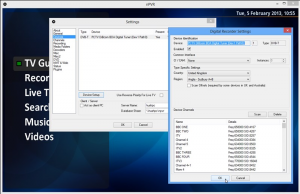
    In this guide we’ll focus on using NextPVR: once installed, launch the program. Right-click in the program window and choose Settings. Switch to the Devices section and verify your TV tuner card has been detected. Select it and click Device Setup.

    Now set the Type Specific Settings dropdown menu to your country and — if known — transmitter. UK and Australian users should tick the Scan Offsets box as recommended. Finally, click Scan. Wait to see what channels are picked up — if some are missing and you’re sure the tuner is connected to a powerful enough aerial or transmitter, you may find the configuration file for your chosen region is outdated. If you know what the correct frequencies are (UK users can click here) you can manually update the transmitter configuration file yourself — you’ll find it in the appropriate folder under C:\Users\Public\NPVR\Tuning — or you can simply select All Regions — Frequencies from the Region dropdown list in NextPVR and scan using that setting. The latter option is simpler, but much slower.

    Once the channels have been successfully scanned and are in place, switch to the Decoders tab and verify decoders have been set for MPEG2 Video and — if applicable — H.264 Video. Once done, check the other tabs for any key settings (you may wish to choose a different directory to store recorded programs in under Recording, for example) click OK and close NextPVR.

    Set Up XBMC

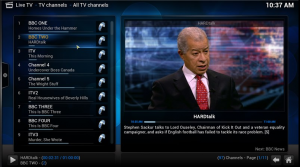
    With the TV tuner and PVR now setup, you can install and launch XBMC. You’ll be told that PVR has been enabled without any add-on, then prompted to select one. Pick NextPVR from the list and you should find it works out of the box, giving you access to live TV through XBMC’s Live TV menu while also allowing you to configure (and later watch) recordings directly from XBMC too. If subtitles are appearing on-screen, you can switch these off from within XBMC itself: click the sound icon on the live TV playback controls and disable Subtitles.

    XBMC 12.0 FINAL is available now as a free, open-source download for Windows, Mac and Linux. Live TV and PVR services require a compatible TV tuner plus separate free back-end tool such as NextPVR 2.5.9 for Windows, or MythTV 0.26 for Linux and Mac.

    Photo Credit: holbox/Shutterstock

  • New Relic raises $80M from Insight, T. Rowe Price. Aims for 2014 IPO

    Data Nerd Express_Lew CirneHaving spent last few decades building startups, Lew Cirne, founder and chief executive of the San Francisco-based software company, New Relic, knows one thing: building a company takes a long time and often needs patient and deep pocketed investors. And while sales for his company are growing at rapid clip, he just raised $80 million in funding from Insight Venture Partners and T.Rowe Price to turbocharge his way towards a 2014 public offering.

    Previous investors including Benchmark Capital participated in this round as well. Insight and T. Rowe Price accounted for three-fourths of the latest round of funding. The company has so far raised about $115 million, and after this round is valued at $750 million. Cirne had previously started Wily, which he sold to CA for $375 million. He started New Relic to offer network application monitoring as a cloud-service back in 2008. He declined to share the company’s revenues but they are estimated to be in the range of tens-of-millions of dollars.

    “We are aiming to eventually go public and all the pieces are in place for us,” Cirne said in a conversation. Cirne is betting that company will keep the current trajectory and will go public, perhaps as soon as 2014. He wants to take a page from the play book of single-product companies VMWare and Salesforce which took relatively simple, but fast-growing products  – virtualization software and on-demand CRM – to build large software companies.

    “We are at a point we have a large market and have a strong story so we want to put the foot on the gas,” said Cirne. According to him, the company tripled its revenue growth in 2012 and doubled its customer base during the year. New Relic customers include Comcast, Sony, ESPN, Nike, and E*Trade.

    New Relic is one of the growing number of startups that are capturing the upside presented by technological shift to the cloud and the mobile. “Our next area of focus is mobile, and mobile visibility,” Cirne said. “Virtually every one of our customers is asking for more mobile intelligence.”

    The company recently announced a brand new iPhone app that is getting positive reviews from New Relic customers. In addition, the company is looking to expand its presence in Europe and also ramp-up its sales efforts. The company currently has 200 employees and it plans to add another 100 in next few months.

    When I asked Cirne if he is going to go out and make acquisitions, he said his preference is to build products in-house but again, he knows time is of essence and will be opportunistic because “sales are very important to us as well.” With a valuation of $750 million it has some flexibility when it comes to making acquisitions.

    My colleague Derrick Harris wrote about Cirne’s management strategy and how he turned New Relic into a sales machine. New Relic was named to the GigaOM Structure 50 list in 2011 and was one of our picks for cloud  startups to watch.

    Related research and analysis from GigaOM Pro:
    Subscriber content. Sign up for a free trial.

  • President Obama’s Message to the People of Kenya

    Watch this video with Swahili subtitles

    In these videotaped remarks, President Obama delivers a clear message to the people of Kenya: the upcoming elections are a historic opportunity for Kenyans to stand together, as a nation, for peace and progress, and for the rule of law. The President has strong ties to the people of Kenya. From visiting his father’s village to touring the country as a U.S. Senator, he has a deep and personal interest in seeing Kenya flourish.

    Kenyans have made remarkable progress since the devastating violence that followed the elections five years ago. Lives and communities have been rebuilt, the economy has rebounded, and Kenyans have peacefully stood together to pass a historic constitution and advance important political reforms. While the international community has assisted these efforts, the Kenyan people have stood together to solidify the rule of law and put Kenya on a path to greater prosperity.

    As Kenyans prepare for the March elections, President Obama urges the people of Kenya to put aside tribal and ethnic differences; to clearly reject intimidation and violence; to address electoral disputes through Kenya’s courts, rather than on the streets; and to come together as a nation on the 50th anniversary of Kenyan independence. It is a moment to put strife and impunity firmly in the past, and to embrace a bright and peaceful future.

    read more

  • Microsoft says you don’t care about online safety, ‘despite multiple risks’

    Do you really care about security on the interwebs? According to the latest Microsoft Computing Safety Index (MCSI), most of us don’t. Of the 10,000+ PC, smartphone and tablet users surveyed, 55 percent experienced multiple online risks, but only 16 percent took proactive safety measures.

    The numbers keep piling up. When it comes to theft of account information or passwords, 47 percent of surveyed users said they find it a reason for concern. However, just 33 percent of respondents are actively fighting online theft by using secure websites, and only 28 percent of surveyed users steer clear of using open Wi-Fi hotspots on mobile devices.

    Furthermore, computer viruses are a reason for concern to 48 percent of respondents. However of the surveyed users, only 53 percent say they install antivirus software and 44 percent have active firewalls on their machines.

    For the non-believers, Microsoft reveals some interesting findings regarding identity theft. Based on the MCSI data, the software giant says that 45 percent of surveyed users worry about having their identity stolen, but only 34 percent employ a PIN to secure their mobile devices, and just 38 percent actually try to educate themselves about the newest counteractive measures.

    According to Jacqueline Beauchere, Microsoft’s incoming chief online safety officer, the shift from traditional PCs to modern mobile devices, such as smartphones and tablets, does not translate into a change in the security of usage patterns. Beauchere says: “Mobile devices often have just as much, if not more, valuable personal information stored on them as a home computer, making mobile devices equally attractive to data-stealing criminals.”

    Not all is lost however, as Beauchere points out: “The latest MCSI results demonstrate that no matter where or how people access the Internet, exercising safer online habits is essential. There are steps that people can take and technologies that they can employ to help prevent them from becoming a victim”.

    Truth be told, users can take a number of security measures to protect their digital endeavors, but that also involves a change in habit. Using two-step authentication with a Dropbox or Google account adds an additional barrier in getting to the goodies, that some users might find as a hassle or unnecessary precaution.

    Changing passwords frequently is another simple and proactive security measure, but it’s easier said than done. You have to train yourself to remember each and every new password, which can be really frustrating when dealing with complex ones, and avoid using a previous password at every change. For some users that’s a drag.

    I for one tend to steer clear of paranoid security solutions. I use two-step authentication whenever possible, I try to avoid online purchases on foreign devices, I employ relatively long complex passwords and use multiple email accounts to separate my interwebs activities. But I tend to rely more on having a safe usage pattern independent of software, not to solely rely on the latter.

    Seeing as it’s “Safer Internet Day”, what security plans do you have in store for your digital selves?

    Photo Credit: Korn/Shutterstock

  • Morning Advantage: When Customers and Employees Clash Online

    Recently, a pastor in St. Louis dined with a party of 10 at Applebee’s. When her check came with an automatic 18% tip already added (standard for large parties), she crossed it out and wrote a note in its place that said: “I give God 10%. Why do you get 18%?” The waitress showed the receipt to a co-worker, who snapped a photo and posted it online. The rest, as they say, is history. The pastor was subjected to a vitriolic attack in the court of public opinion. The waitress was fired (at the pastor’s request).

    The moral of the story? According to Conor Friedersdorf at The Atlantic, “In America, where ‘the customer is always right,’ a confrontation between a customer and an employee, mediated by a manager, is almost never going to end in satisfaction for the employee, no matter how badly the customer behaved.” Still, he argues that “10,000 digital tongue-lashings and a note on their permanent record” imposes quite a sentence on entitled or belligerent customers. While he agrees that businesses should hold employees accountable for exposing customers to Internet ridicule, Friedersdorf hopes that the transparency that technology brings will make the customer of tomorrow think twice before behaving badly.

    SHE WORKS HARD FOR THE HUMANA

    Everybody’s Working for the…Health Care Benefits (The Washington Post)

    One of the most obvious demographic groups that will benefit from “Obamacare” are underemployed 20-somethings, who can now piggyback on their parents’ health insurance policies longer than they could in the past. But a smart analysis from Sarah Kliff in The Washington Post may be equally interesting to this cohort: She reports on survey data showing that many older workers stay in their jobs (or plan to stay in their jobs) longer than they would otherwise, primarily because they need the employer-provided health insurance benefits. This may change as some older workers decide to ditch their jobs and sign up for Obamacare, which while more expensive than employer-subsidized coverage, should still be moderately affordable for middle-income workers. If the newly-available insurance leads to a wave of retirements, it could lead companies to have to hire — creating another possible benefit for 20-somethings currently mired in their 17th unpaid internship.— Dan McGinn

    EXPOSE YOURSELF

    How to Make Irrelevant Ideas Relevant to Your Innovation Task (Knowledge@Wharton)

    If you’re working on a creative project that calls for breakthrough innovation, make sure you take a lot of breaks to engage in outside activities such as talking with acquaintances in other fields or reading articles on unrelated topics. That way you expose yourself to “peripheral knowledge” that might work its way into your brain, say Wharton management professor Martine Haas and doctoral student Wendy Ham. Their research shows that this kind of knowledge can influence breakthrough innovation. Examples of the value of “irrelevant” information: At Reebok, the cushioning in a basketball shoe reflects technology borrowed from intravenous-fluid bags. Qualcomm’s color-display technology is rooted in microstructures of a butterfly’s wings. IDEO developers designed a leak-proof water bottle using the technology from a shampoo bottle top. — Andy O’Connell

    BONUS BITS:

    From the Monday Morning Quarterbacks

    The 10 Super Bowl Commercials That Blew Up the Biggest in Social Media (Ad Age)
    That Was a Great Blackout (NPR)
    How Oreo’s Brilliant Blackout Tweet Won the Super Bowl (CNET)

  • U.S. Treasury headwinds for emerging debt

    Emerging bond issuance and inflows have had a strong start to the year but can it last?

    Data from JPMorgan shows that emerging market sovereigns sold hard currency bonds worth $9.6 billion last month while companies raised $51.2 billion (that compares with Jan 2012 issuance levels of $17.5 billion for sovereigns and $23.9 billion for corporates). Similarly, inflows into EM debt were well over $10 billion last month, very probably topping the previous monthly record,  according to JPM.

    But U.S. Treasury yields are rising, typically an evil omen for equities and emerging markets. Ten- year U.S. yields, the underlying risk-free rate off which many other assets are priced,  rose this week to nine-month highs above 2 percent. That has brought losses on emerging hard currency debt on the EMBI Global index to  2 percent so far this year. (there is a similar picture across equities, where year-to-date returns are barely 1 percent despite inflows of around $24 billion). Historically, negative monthly returns caused by rising U.S. yields have tended to lead to outflows.

    The S&P500 U.S. equity index is trading at five-year highs, however, despite Treasuries’ creep higher. That would appear to indicate greater confidence in the growth outlook.  Support for emerging markets may also come from Japanese retail cash that is fleeing a falling yen. Morgan Stanley analysts, for instance, do not expect significant outflows just yet, noting that “the nature of inflows overall (into emerging debt) has been more structural than in past years and therefore tends to be much stickier”. They add:

    We believe that EM investors should not be overly concerned. The main reason for this is the expectation of a range-bound UST going forward, with only 25 bps further widening projected. Neither the pace nor the extent of this change seems disruptive to us, even with a potential temporary overshoot on the upside.

    But some steps to protect returns look warranted. MS analysts, for instance, noted that 60 percent of the sovereign debt index is made up of investment grade credits that trade at very tight spreads over Treasuries (see their graphic below). They recommend positioning in longer-duration 10-year bonds especially in high-beta, higher-yield names that offer more of a spread cushion to Treasuries.

    JPMorgan analysts also advise holding onto overweight positions in emerging dollar debt.  They suggest focusing on corporate debt rather than sovereigns because of the yield pick-up. Within the sovereign asset class, higher-yield names such as Venezuela could prove a better bet in the current Treasury environment instead of stronger, low-beta credits such as Brazil, whose yield attraction diminishes as Treasury yields rise, JPM says. They also reckon the current Treasury sell-off is a temporary one, as likely budget spending cuts looming after March 1 will constrain debt supply from the United States.


  • Can Microsoft make it in Africa with the Huawei 4Afrika Windows Phone?

    Once upon a time, Microsoft could count on platform dominance around the world, because Windows ruled in the age of the desktop. In emerging economies that platform dominance was usually maintained through rampant ‘piracy’ of Windows – a fact that Microsoft could never openly condone, but from which it clearly benefited.

    That was then, this is now. Mobile computing is now the growth business and, for those in emerging economies who previously never managed to get their hands on PC hardware, smartphones are their first computers. And what’s running on such handsets in Africa, the most untapped market of them all? Not Windows – which is why Microsoft has just launched a concerted campaign, called 4Afrika, to change that situation.

    Windows Phones for Africa

    The lynchpin of this scheme is the Huawei ’4Afrika with Windows Phone 8′ device. Microsoft has already released lower-end Windows Phones in African markets, such as the Nokia Lumia 620, but those are relatively expensive – in Nigeria, for example, that device is expected to cost around $250. The Huawei 4Afrika phone will cost $150.

    It would be interesting to know how heavily Microsoft is subsidizing this phone, because the Huawei 4Afrika is a variant of the $300 Ascend W1, which targets the European market. The 4Afrika phone has a 480×800-pixel screen, a dual-core 1.2GHz Snapdragon processor, a 10mm-thick case and 4GB internal storage, along with front- and rear-facing cameras. Standby time – a big deal in markets where power can be unreliable or hard to come by – is rated at 420 hours.

    According to a Microsoft blog post, the handset also comes preloaded with “custom apps created by African developers for African consumers”.

    Not bad for the price, you may think. But look at the local prices for cheap smartphones – and by this I mean the likes of Nokia’s semi-smart Asha devices but also BlackBerry and Android phones – and you’ll see handsets priced around $80. That’s almost half the price of the Huawei 4Afrika.

    According to Ian Fogg, senior principal analyst at IHS Screen Digest, that discrepancy could take the Huawei 4Afrika out of reach for many:

    “This is a cheap smartphone for Windows Phone, but it’s still significantly more expensive than the entry-level Android smartphones in the market or the Nokia Asha devices, which Nokia are putting head-to-head with entry-level Android.”

    However, Fogg pointed out that Microsoft’s tight reference platform for Windows Phone 8 meant the Huawei 4Afrika would give a much better experience than those cheaper Android phones, which may use cheaper and less powerful components.

    Wider campaign

    It’s also worth noting that 4Afrika is a scheme that goes beyond phones. Microsoft will also be working with authorities and ISPs in Kenya and elsewhere to deliver cheap wireless broadband using experimental white space technology and solar-powered base stations. The company will also launch an online hub in April for small businesses, giving them free services and, for some, free domain registration.

    As Ali Faramaway, Microsoft’s VP for the Middle East and Africa, put it in a separate blog post:

    “When we look at the world, many see China or the BRIC countries as the next big opportunity for growth. At Microsoft, we view the African continent as a game-changer in the global economy. We believe deeply in the potential of technology to change Africa, and we equally believe in the potential of Africa to change technology for the world.”

    Whether or not Microsoft succeeds in ensuring that technology is Microsoft-based, is up for debate. But it’s certainly worth a shot and, if 4Afrika does really accelerate the rollout of connectivity on the continent, all the better.

    Related research and analysis from GigaOM Pro:
    Subscriber content. Sign up for a free trial.