Category: News

  • A safer next-gen battery is used with solar panels for the first time

    The unnerving capability of lithium ion batteries to catch on fire emerged as headline news last month, as Boeing was forced to ground its futuristic 787 Dreamliner FLEET after two batteries caught on fire. But the next generation of lithium ion batteries are promising to be safer, and a few of them are already starting to be used in real-world situations in the power grid, electric vehicles and gadgets.

    Six-year-old startup Seeo — which is backed by Vinod Khosla, Google Ventures and others — has installed its first battery system to act as energy storage in conjunction with a solar panel system developed by SunEdison, according to Seeo CEO Hal Zarem, who I interviewed last week. The solar battery installation is a trial for now, but a sizable one: on the level of kilowatts and tens of kilowatts, explained Zarem. For comparison’s sake, the Nissan LEAF uses a 24 kilowatt hour battery, while an average cell phone will use 2,000 to 3,000 milliamp hour batteries (far smaller than a kilowatt hour of capacity).

    SeeoBatteries, like the one Seeo has installed for SunEdison’s solar system, can act as storage for the energy produced by solar panels, so that when the sun goes down (or behind a cloud) the battery can then offer up the stored power. Utilities, building owners and even home owners are starting to see the benefits of having battery storage systems connected to solar systems, because power can be far more smooth and reliable. Likewise solar installer SolarCity has been working with Tesla’s batteries to sell a home battery system with its solar panels in certain markets.

    The next-gen tech

    So what makes Seeo’s batteries safer? It largely involves improvements to the electrolyte, or the medium that shuttles lithium ions back and forth between the cathode and the anode to charge and discharge the battery. Traditional lithium-ion battery electrolytes are mostly made of liquids, while Seeo is using a solid dry polymer based electrolyte, which feels like plastic to the touch.

    The polymer is non-flammable and when combined with using lithium foil as the anode, the battery can be ultra light weight and also have a high energy density, or amount of energy that can be stored per a given weight. During an interview at Seeo’s headquarters last week I picked up and compared two battery packs — one made by Seeo, and one that used traditional lithium ion batteries — and the Seeo battery felt about three times lighter.

    If traditional lithium ion batteries are overcharged they can have a margin of error in the danger zone of about 20 percent above the max voltage of the battery, explained Zarem. In contrast, Seeo batteries have a margin of error of 100 percent over the voltage. The batteries also won’t burst into flames if something penetrates it (for example, during a car crash).

    Seeo isn’t the only one working on solid electrolytes for batteries. It’s actually a growing field for innovation, and startups like Sakti3, and Imprint Energy are working on this technology, as are researchers at Oak Ridge National Laboratory.

    What’s next

    Seeo has just started commercializing its technology and working with customers to test out its batteries. The company has built out a pilot production line at its headquarters in Hayward, Calif., which can make 4 MW hours worth of batteries using traditional manufacturing machines like coaters. I toured the company’s pilot line last week and the team is indeed heads down churning out small levels of Seeo batteries.

    SeeoBut to get to the next-level of manufacturing, which involves hundreds of megawatt hours — the kind that could start to actually change the game for solar energy storage, or electric vehicles — Seeo plans to build a new factory somewhere in the U.S. this year, close enough to the Hayward site to create easy collaboration. It could end up being built in Hayward, says Zarem, but the company is still in the process of figuring out the best location.

    Seeo could have to raise some sort of funding to get such a plant built, and probably has already started raising such funding. But on that funding note Zarem wouldn’t comment. Raising funding could be difficult in 2013, after so many advanced battery companies, like A123 Systems, struggled in 2012. Eventually Seeo also wants to build an even larger plant, but that would likely be developed outside of the U.S., in a low cost manufacturing part of the world, said Zarem.

    Along with Google Ventures, and Khosla Ventures, Seeo also has investors Chinese firm GSR Ventures, and Presidio Ventures, a fund managed by Japanese giant Sumitomo. So clearly, Seeo has some strategic connections in overseas markets.

    Seeo’s Zarem has an interesting perspective on the past couple of years of battery innovation. A generation of large battery factories were built out in recent years, he said, some using U.S. government funds to meet an anticipated market for electric cars (like A123 Systems). Unfortunately that electric car market didn’t emerge as quickly as expected, but it’s coming, as is energy storage for clean power.

    Sometimes the companies that are the first to market either aren’t the right ones, or they’re too early, says Zarem. Of course, he’s hoping that Seeo has timed it just right.

    Related research and analysis from GigaOM Pro:
    Subscriber content. Sign up for a free trial.

  • Infographic: the periodic table of smartphones

    CNET has a detailed report on the mining of rare earth minerals (also called rare earth elements) and created this infographic that shows how they are being used inside the iPhone (and also other smartphones.) And that is why I thought this graphic was worth sharing — so at least we know what is being used and where. Rare earth metals are likely to be a major source of contention in coming years. China is a major supplier of these minerals. (via Randy Krum)

    The Periodic Table of iPhone: Rare earth metals and how they are used inside smartphones

    Related research and analysis from GigaOM Pro:
    Subscriber content. Sign up for a free trial.

  • Want more from YouTube? Try Freemake Video Downloader 3.5

    Rival developers Ellora Assets Corporation and DVDVideoSoft Ltd have released major updates for their freeware video download tools for Windows PCs. Ellora’s Freemake Video Downloader 3.5.0.1 makes YouTube downloading even easier by embedding handy download buttons into the web pages themselves.
    In the meantime, DVDVideoSoft’s Free Studio 2013 v6.0, a collection of video, music and photo tools, debuts a brand new interface and reworked Facebook uploader tool.

    Freemake Video Downloader 3.5’s main claim to fame is to make it possible to save — and convert — video from a wide variety of online sources. Version 3.5 targets the number one video website — YouTube — by integrating the program more tightly directly into the YouTube site itself on compatible web browsers (Internet Explorer, Firefox and Google Chrome).

    Once installed, users will be able to trigger Freemake Video Downloader directly from Download buttons found on single videos, channels, playlists, artist pages and user pages, including favorites, uploads, history and more.

    The new build also expands its coverage of supported YouTube categories to include both YouTube Music and YouTube Education. Freemake also promises to rip artist videos and MP3s direct from artist pages too. The update is rounded off by another minor improvement — the ability to resume interrupted playlist downloads.

    Also released is DVDVideoSoft Ltd’s Free Studio 2013 v6.0. The new release integrates a brand new interface into its YouTube downloading component, which the company claims has been built based on user suggestions and feedback.

    The new build also promises a reworked — and correctly functioning — tool its Free Uploader to Facebook component. A problem with the mistiming of edited video in Free Video Dub has been corrected, while Free Audio Converter has also been improved for stability purposes.

    Both Freemake Video Downloader 3.5.0.1 and Free Studio 2013 v6.0 are available as freeware downloads for PCs running Windows XP or later.

    Photo Credit: cybrain/Shutterstock

  • Getting the new Office? Grab a quick start guide from Microsoft

    Last week was the launch of the new Office 2013…ah Office 365…well, you get the message. Not everyone will make the move, but for those who do, they will find a product similar in many ways to Office 2010, but also different in other ways. For instance, the cloud is built-in via SkyDrive integration, there is a new Start screen and a bit more.

    Thankfully, Microsoft is attempting to make the transition as simple as possible. You can head out to the local bookstore, or over to Amazon, and buy a guide — there are doubtless plenty of good ones already available. But, if you want something free and easy to get then the company has made a series of “Quick Start Guides” available for you.

    Microsoft announced that “to help ease the transition, we’ve put together nine handy Quick Start Guides that introduce you to the newest versions of Microsoft Word, Excel, PowerPoint, OneNote, Outlook, Publisher, Access, Project, and Visio”.

    The guides are in PDF format and will open right in your web browser, but you can also save them to your computer for future reference. You can also zoom into screenshots to get a better look.

    Office 2013/365 is not tremendously different from the 2010 version, but there are new features like the “Reader” mode. The company is, of course, encouraging upgrades as it would be expected to do. In this case, it may make sense to follow that advice — the Office 365 Home Premium five license deal makes it a good deal for families, but it is up to each of you to make your own decision.

  • Set System Restore points from the command line

    Windows System Restore is usually an excellent technology. Your PC creates Restore Points automatically at key times, and if disaster strikes then you can restore your system settings or key files in a click or two. It all seems very reliable — until, that is, you need to use a Restore Point and then your system hasn’t been creating any for quite some time.

    The reality is there are all kinds of problems which can affect System Restore. At the simplest, another user might have accidentally turned it off. But it can also be disabled via Windows policies, or just stop working altogether if you have issues with WMI or your Windows services. And that’s why it might be useful to have a copy of QuickSystemRestore around as a backup plan.

    The program is a tiny (96KB) tool, no installation required, just download the executable somewhere safe. And then, when you run it as an administrator, it’ll try to create a Restore Point for you.

    That’s simple enough, of course. But life gets more interesting if that creation attempt fails, because the program doesn’t just give up, or make an Event Log entry you’ll never, ever read. Instead it tries to repair things, and get your PC working again.

    This starts very simply, for instance by activating System Restore if it’s currently turned off, and restarting the necessary services.

    But if that doesn’t help then the program will try more advanced repairs for System Restore itself, and the WMI Service. And if these fail it’ll warn you of the problem and suggest you reboot, just in case that might resolve the situation.

    One annoyance here is that, if you forget to run QuickSystemRestore as an administrator, it won’t alert you to the problem. Instead it’ll display misleading alerts suggesting that System Restore is somehow at fault, which isn’t exactly helpful.

    Set QuickSystemRestore up correctly, though, and this won’t be an issue. You might then use Task Scheduler to manually run the program every day or two, perhaps, and if anything does happen to System Restore you can be sure that it’ll quickly be restored to full working order.

    Photo Credit: Lilya/Shutterstock

  • IBM adds analytics-specific boxes to PureSystems line

    IBM is again expanding its PureSystems line of converged hardware, this built specifically for analytics. When the  company debuted the first PureSystems, which combine compute, networking and storage in April,  Big Blue said had spent three years and $2 billion developing the line.

    The company’s new PureData System for Analytics features Netezza technology, which enabling analytics inside databases. The New York Stock Exchange is already using the system to spot trading peculiarities that might warrant investigations, said Phil Francisco, vice president of big data product management at IBM.

    “They keep track of every element of trading activity on their trading floors daily,” Francisco told me. “… And they’re able to do analysis on seven years of data.” The system also monitors systems-level data and shows if there’s enough capacity to handle major changes in trading volumes.

    To capitalize on growth markets and do business with companies with lower IT infrastructure budgets, IBM is also releasing a miniature version of the PureApplication system for quickly deploying applications.

    Also new is a PureFlex converged system — with compute, networking and storage all in one — targeting managed service providers. The system precludes setup and system administration, which can cut costs. It also simplifies the process of adding capacity on infrastucture in the data center, Francisco said.

    IBM arrived to the converged-hardware party well after Oracle  unveiled its Exadata Database Machine, a database appliance and several specialized boxes, including the Big Data ApplianceEMC is also in this market with the Greenplum Data Computing Appliance.

    In October, following the introduction of the PureData line, my colleague Stacey Higginbotham questioned  whether big data needs a specialized box. The real development, she wrote, was not the technological achievement but the acknowledgment that providing easy-to-use services is important.

    Related research and analysis from GigaOM Pro:
    Subscriber content. Sign up for a free trial.

  • Two years and three CEOs later, publisher JV Bookish is ready to help users find their next book

    Bookish, which is backed by big-six publishers Hachette, Penguin and Simon & Schuster and intended to promote book discovery and sell books, was supposed to launch in the summer of 2011. Nearly two years and three CEOs later, the site is finally scheduled to make its debut Monday night. With a book recommendation algorithm, original editorial content and a database of 1.2 million titles and 400,000 authors, Bookish is designed to be a one-stop shop for readers looking to connect with authors and find their next book. The company is headed by Ardy Khazaei, who previously led media startups WEBook and MyHound.com and was VP of electronic media at HarperCollins. (Bookish’s first CEO, Paulo Lemgruber, left the company in October 2011; the second CEO, Caroline Marks, left in September 2012.)

    I got a demo of Bookish at the company’s trendy, book-filled offices in Manhattan’s Flatiron District last week, and had a chance to use the site further on Monday when it was prematurely available online for several hours as it was being tested. Overall, I think the long-delayed Bookish is off to a promising start.

    Bookish has the opportunity to shape book discovery and offers publishers a chance to directly engage with readers. It also allows them to tiptoe into direct sales. I’m less intrigued by the original editorial content: I’m not sure it differentiates itself enough from other book-related content on the web to draw users to the site for the first time. Once those users make their way to the site, though, they’ll find a clean, easy-to-use design, and an algorithm that may well find them their next book — even though it’s limited to less than a quarter of the books on the site for now. Here’s my overview of the site.

     Screen Shot 2013-02-04 at 3.51.22 PMThe basics: Books and authors

    While only three of the big-six publishers are financially backing the site, the other three — Random House, HarperCollins and Macmillan — are making their books available through it, along with 10 other publishers including Scholastic and Houghton Mifflin. In total, that’s 1.2 million unique titles spanning 18 genres (fiction and literature, children’s, cookbooks, and so on), and 400,000 authors have profile pages. The book pages include basic information, a preview of the first chapter, related news and videos, and a roundup of any “must-read” lists that the book has appeared on (for more on those lists, see below). Each book page also includes purchase links (more on that below, too).

    Algorithm-generated book recommendations

    Online book discovery is a huge problem for publishers, and Bookish tackles it with a recommendation algorithm that lets users input up to four titles to find what to read next. “We’re very much a technology company,” Karen Sun, an MIT grad (and book blogger) who is heading the company’s recommendation engine, told me. “This is probably the largest venture in the book space, in terms of data.” Sun explained that while Amazon and Goodreads primarily deliver book recommendations based on “collaborative filtering” — namely, a user’s purchasing or rating and reviewing history as well as those of other users — Bookish doesn’t have that user or purchase data yet. Instead, it relies on “deep, introspective” data: “Recommendations are based on the books and understanding of the books.” The recommendation looks at features like the authors, editors and illustrators who contributed to a book, the awards a book has won, and genre and publication date, then layers on a machine-learning component that parses user and professional reviews to try to distill themes, concepts and sentiments. Insights from the editorial team are included, too.

    Screen Shot 2013-02-04 at 2.33.34 PM

    A user who liked The Help, for instance, receives recommendations for Hotel on the Corner of Bitter and Sweet by Jamie Ford — another women’s fiction title that features race relations — and The Guernsey Literary and Potato Peel Pie Society, a book that, like The Help, includes an aspiring female author. Type in Malcolm Gladwell’s The Tipping Point and the engine pulled up four similar “big ideas” books, but also two Spanish-language titles that were out of place even if the subject matter was similar (and you’ll see a Spanish-language edition of The Room in the recommendations for The Help above).

    For now, Bookish’s recommendation engine works with only about 250,000 of the 1.2 million books on the site. Sun says the engine will improve over time, and will eventually integrate reader reviews and user actions — other books users have looked at and rated on the site.

    Screen Shot 2013-02-04 at 2.45.28 PME-commerce: Essential, but…

    Each book on the site can be purchased in print or digital formats directly through Bookish or from another retailer — there are affiliate links to Amazon, Barnes & Noble, Books-A-Million, IndieBound, Apple and Kobo.

    Distributor Baker & Taylor is handling all of Bookish’s direct sales. For now, ebooks purchased through Bookish are only available in EPUB and PDF formats, for reading on iPad, Android, Nook and desktop — no Kindle.

    Bookish seems to want to stress that it’s not cutting into other retailers’ sales, even though a serious direct-sales outlet is something that book publishers desperately need.

    “We want to be able to say you can buy [a book] here and it’s reasonably priced. We’re not trying to steal sales away from other places,” CEO Khazaei told me. Publishers probably don’t care about taking sales from Amazon, but they may not want to sour relationships with retailers like Barnes & Noble and the independent bookstores represented by IndieBound.

    Bookish’s print and ebook prices appeared to match those offered by Amazon, though I wasn’t able to test many titles. Khazaei told me that “I don’t know how the pricing decisions are made, really,” Khazaei said. “I assume [Baker & Taylor] is tracking [prices on other sites] but we just leave it in their hands.” While the site seems like an obvious place for publishers to run special sales on both print and digital books, that doesn’t seem to be a priority for now.

    Original editorial content along with the algorithm

    the onion book of known knowledgeBookish has seven full-time editors who each manage different genres and update those sections daily with original book coverage. The site is also soliciting pieces from well-known authors and other public figures. In one ongoing feature, for instance, editors from The Onion review books. Other editorial features at launch include a column by Eat, Pray, Love author Elizabeth Gilbert and an interview between bestselling thriller authors Michael Connelly and Michael Kortya. In addition to that content, the site’s editors are curating columns and lists of books like “The Biggest BFF Breakups in YA Books” and “Big Ideas.”

    Advertising, revenue and partnerships

    Bookish is collaborating with USA Today’s books website. Its original editorial content will be syndicated on USA Today’s website, and the technology that Bookish uses to let readers view the first chapter of a book and to offer book recommendations will also be included on USA Today’s site. In exchange, Bookish will feature USA Today’s book bestseller lists on bookish.com.

    In addition to book sales, Bookish will get revenue from advertising. For now the site’s ad slots are taken up with books from the three launch partners, but eventually the company will expand advertising to other publishers and to companies from outside the book business. Prior to its launch two years ago, Bookish had announced an advertising and content syndication deal with AOL Huffington Post, but that’s off the drawing board for now. A company spokeswoman told me Bookish is “in discussions about continuing to work with AOL in the future.”

    Not a focus: Social, self-publishing

    Other publishers can sign an agreement with Bookish to add their titles to the site. (Khazaei told me Bookish doesn’t charge publishers anything to join, but they presumably have to fulfill a number of requirements to be included.) However, self-published authors can’t add their books. “The focus right now is on traditionally published titles,” Khazaei said.

    Also at launch, the social features that are a key part of Goodreads’ mission are absent from Bookish. Users can’t friend or follow each other — the focus is on a reader’s individual interests. I found that refreshing: Just because you’re Facebook friends with someone doesn’t mean that he or she shares your book preferences, and I prefer the algorithm-driven approach.

    Related research and analysis from GigaOM Pro:
    Subscriber content. Sign up for a free trial.

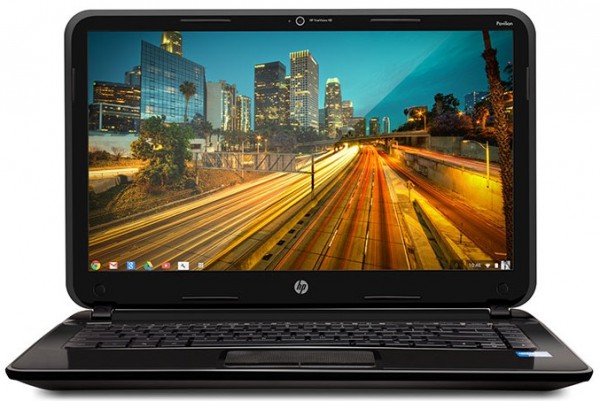
  • HP releases the chunkiest Chromebook

    Is it my imagination, or does each new Chromebook get bulkier than the last? Today HP joined the Google operating system family, introducing the heaviest model (1.8 kg/3.96 pounds) with largest display (14 inches). Lenovo’s ThinkPad Chromebook, announced in mid-January, is a tad lighter but the Acer C7, with smaller screen, is thicker. Perhaps the problem is this: PC manufacturers adapt low-cal Windows notebooks to Chrome OS; new Acer, HP and Lenovo models are more licensing plays than any attempt to innovate.

    For PC manufacturers looking to offer something other than Windows, pay nothing for an operating system or capitalize on Google’s bulging brand name, Chrome OS is enticing option. The lack of real investment, which demonstrates no sincere commitment, is wrong way to win or satisfy customers. Samsung proves the better Chromebook partner, by at least making some effort around system design, including adapting ARM processors.

    Too Little

    Last week, responding to rumors about the HP Pavilion 14 Chromebook, David Hoff posts to Google+: “I’m hopeful manufacturers also cater to the high end/power user segment by providing more than 2 GB of memory. To date, I’ve not heard of any machines that match the Samsung 550 in terms of performance. I’d like to see a machine with 8 GB of RAM, as my tab sprawl has doubled”.

    He’s right. Simply doubling memory to 4GB makes Samsung Series 5 550 Chromebook much more usable than newcomers. I moved from top-line MacBook Air to the 550 last May and found performance more than adequate. The Series 3 model feels sluggish, by comparison, particularly how Chrome OS refreshes tabs to keep memory from running out. That Chromebook has 2GB of fixed RAM; no easy upgrades, if at all.

    If the operating system is free to license, what’s a couple bucks more for 4GB RAM? Because the Acer and HP models (presumably the Lenovo, which isn’t yet for sale) are based on Windows machines, at least memory is upgradeable, unlike the Samsungs, which I consider to be more pure Chromebooks.

    RAM is basic, and misses the bigger problem: real effort by most PC manufacturers to release compelling and original Chromebook designs or to offer beyond basic hardware.

    HP Pavilion 14-c010us Chromebook specs: 1.1GHZ Intel Celeron 847 processor; 14-inch LED display with 1366 x 768 resolution; 2GB of RAM (upgradeable to 4GB); Intel HD graphics; 16GB SSD; three USB ports; HDMI port; WiFi N; Bluetooth; Ethernet; and Chrome OS. Weighs 3.96 pounds. Price: $329.99.

    The Pavilion 14 Chromebook is based on the Pavilion 14 Sleekbook, which packs, at the base $399.99 price: dual-core AMD processor, 4GB of RAM, 500GB hard drive and Windows 8 64-bit.

    Some Google+ posters see the problems I do: “The HP Pavilion 14 Chromebook’s bigger screen means heavier weight and poorer batter life”, Richi Jennings says. “Also, it’s the same actual resolution as its smaller competitors”.

    Specs underwhelm, while the Pavilion hefts up, without offering real advantages for it. I certainly don’t want lesser screen resolution on larger display.

    Steve Hall asks the right question: “Doesn’t this kinda miss the point of being a Chromebook, then?” Yes, it does. Jeff Dunn shares similar sentiment: “HP joining the Chromebook game, but it seems to me like it’s missing the point. Hope I’m wrong”. I wish that you were.

    Too Late

    HP is a big partner for Google to gain, because the OEM is, along with Dell, among the most loyal to Windows. “Looks like more and more manufacturers are fleeing from Windows”, Norbert Rittel opines. Brandon Padgett asks: “Who’s next?”

    Doesn’t matter. There is a lot of excitement around Chromebook, which looks like a hit in the making. But same could be said about netbooks four years ago. Numerous analyst firms predicted the portables would easily take 10 percent of PC sales. Now netbooks are virtually gone. Strangely, by the specs, Chromebooks aren’t far removed.

    I see in Chromebook a similar approach to netbooks: Manufacturers taking a cheapskate approach. Prices and configures underwhelm. But the OS is different and promises much if utilized. OEMs are only good for the platform if they make it more appealing. Instead they are true to character, by offering as little as possible to eke out pennies more margins.

    Google really needs to step up the game here, before Chromebook momentum is game over. The market won’t sustain these low-powered computers once the excitement wears thin, and it will. PC manufacturers aren’t just looking for a free ride, meaning paying no Windows licensing fees. They want to cut component costs to the bone, something they think is possible because of Chrome OS seemingly lighter spec requirements.

    Using Chromebooks full-time for nearly 10 months I can attest that more is better. This is a browser running on Linux after all, and it largely depends on life-sucking Adobe Flash for many web apps.

    It’s time for some Google leadership, which we saw with the first Samsung Chromebooks. The difference is proven. Android tablets were dead on arrival before the search giant took charge on numerous fronts, such as establishing better screen-size standards, relaunching the app market as Google Play and releasing not one, but two, exciting tablets — Nexus 7 and 10, with partners ASUS and Samsung.

    Chromebook looked good going into the holidays, with release of the affordable and slim Samsung Series 3, which packs ARM rather than Intel processor. Somebody put thought into that mobile, which contrasts against the thoughtless models coming from the aforementioned three OEMs.

    Chromebook is a seed looking for earth. Google must plant it, water it and nurture it. Otherwise, the Windows 8 storm will someday wash away the crop.

  • How social media is becoming as important a live event as the live event itself

    I won’t ask you if you missed the Super Bowl last night. But did you miss Twitter? Good luck re-living that today.

    With every major event we now experience as a country, whether it’s the Super Bowl or the presidential inauguration, it becomes more evident that the conversation on social media is as tied to the event as is the process of physically tuning into the broadcast. There’s nothing new about this — the rise of social media and the second screen has been clear for years — but as soaring numbers for social media sharing are revealed after each event, we shake our heads at just how quickly things have changed.

    Even within a year, the connection between television events and their small screen counterparts has grown at a remarkable rate (13.7 million Super Bowl-related tweets in 2012 versus 24.1 million last night, and from 100 million active Twitter users in September 2011 to 200 million in December 2012).

    That growth is changing how we view and consume media and how advertisers work to reach us. Suddenly, they can fairly reliably cross-promote between television and online, and consumers are increasingly sucked into experiencing both events in real time. And I say events, because watching Twitter during an event like the Super Bowl is an experience in itself.

    One predicted trend that hasn’t come into existence yet is the merging of the television and social experiences into one, as Om once predicted and brought to my attention this morning. People are still pretty much watching television on televisions and tweeting from phones or laptops. As we wrote this morning, the majority of Super Bowl viewers did so through traditional broadcast methods, and tweeting from your TV still hasn’t exactly caught on.

    But with every event comes the inevitable blog posts from Twitter and Facebook and Instagram about how this was the most-tweeted or the most-photographed or the most-shared event EVER. Frankly, those posts will only be newsworthy if the numbers ever decline, but that seems unlikely at this point. The dual forces of television and social media are dragging us into experiencing live events as they happen, turning on its head the idea that portable computing devices and streaming will let us watch whatever we want whenever we want. And they are setting different standards for how viewer engagement is measured: we all know the Nielsen ratings are a bit of a joke in this day and age. With Twitter’s reported acquisition of social tv analytics company Bluefin Labs, it’s something everyone is interested in figuring out.

    My friend’s attempt to watch last week’s heart-wrenching Downton Abbey episode a day later was cheapened when a pivotal plot point was spoiled by a parody account for the Dowager Countess on Twitter (obviously do not click that link if you live under a rock and haven’t watched yet). It was a rough way to find out. And the experience cured my friend of wanting to DVR an episode ever again.

    Because if you care about the content and you’re tied to the internet as so many of us are, saving anything for later is a losing battle. And the rapid wit of the Oreo jokes on Twitter during the Super Bowl can’t really be appreciated at a later date. Even as the Dowager Countess parody tweet ruined the episode for my friend, it probably entertained thousands of Downton fans who felt more in the know when they saw it, and felt more connected to the show as a result. There’s nothing like seeing a witty remark from someone you follow about an event you’re also following — suddenly it’s a joke you share with other people. And that experience is extremely hard to replicate after the fact.

    Most of us will have to accept the fact that seperating live events from their social media counterparts is a losing battle at this point, but for brands like Oreo, the knowledge that they have a dual-platform audience creates real possibilities. And as they proved last night, can be a delicious combo, both for advertisers and witty twitter users who want in on the joke when it happens.

    Related research and analysis from GigaOM Pro:
    Subscriber content. Sign up for a free trial.

  • Amiigo and its exercise database want to make your fitness device look dumb

    The fitness-tracking incumbents might want to pay attention to Salt Lake City-based Amiigo. The personal fitness startup’s eponymous device isn’t yet available, but it has generated a lot of buzz and money (almost $300,000 on Indiegogo and an undisclosed amount of venture capital), and it promises to make the Fitbit (see disclosure), Jawbone Up and every other fitness-tracking device look quaint by comparison. The key to its appeal is cleverly using data to deliver a personal experience the others can’t yet touch.

    If you’ve read anything about Amiigo since its launch in October, you’ve might have read all about how it places sensors (an accelerometer, skin-temperature sensor and pulse oximeter, to be exact) into a wristband and shoe clip in order to figure out what exercises someone is performing and how well, hard or often he or she is actually doing them. What you might not know is how that process actually works. So I asked co-founder Abe Carter to explain.

    All about the database

    The core of Amiigo’s promise isn’t actually part of the device at all. Rather, it’s a database full of baseline information, which Amiigo calls reference data, for hundreds of different activities. It turns out, Carter explained, “there’s a generally accepted way that the vast majority of exercises and activities are performed.”

    So, when users are out jogging or lifting weights or rowing, let’s say, Amiigo is clocking the motions they’re making and how often they’re making them. When they open the Amiigo app, they’ll not only be spared the hassle of entering data on what activity they just performed and how long they did it, they’ll actually be greeted with all that information and more. If you’re lifting weights, Carter explained, Amiigo will know that you were doing squats and therefore burned a whole lot of calories (even though you might have taken just a few steps), as well as how hard you were working, how many reps and how long you took resting in between sets.

    amiigo 2

    But more importantly, Amiigo’s database grows smarter as users teach it about a variety of new activities. Initially, the app will still rely on reference activities with similar profiles (swimming, for example, instead of my homemade activity of laying on my belly and thrashing my arms and legs) in order to gauge intensity and calories burned, but it will eventually come to recognize the unique characteristics of the new activity, too. It’s all a matter of time and data: “You don’t know exactly with a sample of one how well that person was performing that activity,” Carter explained.

    Better personal data helps everyone

    Over time, all of this data lets users track at a very granular level their performance in specific activities rather than just how many times they’ve done it and for how long each session. Furthermore, it helps eliminate an innate desire to cheat the system — and the social competition features of almost all fitness-tracking platforms — by entering false information. Carter says social workouts have proven to be more effective than working out alone because of the motivation factor, but some jerk claiming he’s doing 2-minute miles can upset whole game dynamic when the socialization is merely virtual.

    Going forward, Carter said Amiigo has plans to use all the data it’s collecting for bigger and better things than just personal data. He mentioned building analytics tools atop the aggregate data from users, or using it to help spot the early onset of certain diseases. These could include, for example, tracking changes in motion to identify Parkinson’s disease (already the subject of a study using voice data from phone calls) or, presumably, tracking changes in cardiovascular data to identify heart disease.

    All of Amiigo’s promises are just theoretical, of course — it still needs to collect all that user data and prove it works when the devices are finally available — but they do point in the direction that I think the personal health field needs to take. As I’ve explained before (as has my colleague Stacey Higginbotham), all the connected devices and personal data in the world are of relatively little use if they’re not easy to use and tied to a service that’s actually valuable. And while Fitbit, Jawbone Up and other fitness trackers have certainly pioneered a hot new field, they’re still relatively limited in what they can track and the data they present, all the while requiring a fair amount of legwork from users.

    I don’t suspect Amiigo will render all other fitness devices obsolete, but it should give them something to think about.

    Disclosure: Fitbit is backed by True Ventures, a venture capital firm that is an investor in the parent company of this blog, Giga Omni Media. Om Malik, founder of Giga Omni Media, is also a venture partner at True.

    Related research and analysis from GigaOM Pro:
    Subscriber content. Sign up for a free trial.

  • Twitter reportedly acquiring Bluefin Labs

    Twitter appears to have acquired Bluefin Labs, a social media analytics company that attempts to understand how social media conversations and interactions take place around television. The news of Twitter’s acquisition was first reported by Business Insider. Neither Twitter nor Bluefin have responded to requests for comment.

    For Twitter, working with a company like Bluefin, whose CEO JP Maheu will be speaking at PaidContent’s conference in April, makes perfect sense. As Twitter has emphasized its ability to connect users with media and especially live television events, it has still struggled, like other companies including Facebook, to figure out how to measure the scope of those social media interactions. Do you measure success by tweets per minute? Tweets mentioning a particular show? People voting for categories or outcomes on a particular show through Twitter? It’s still a question the company is figuring out, and one that Bluefin could help it answer as it works to build up monetization and partnerships in marketing and media.

    An excellent profile of Bluefin Labs ran in the Boston Globe in November that explained how the Cambridge-based company attempts to analyze human speech patterns to understand social media activity:

    A Cambridge start-up called Bluefin Labs is marrying the computational power of machines with the interpretive guidance of humans to make sense of — and profit from — the fire hose of nonstop social media. The company’s work builds on the research of its two cofounders, MIT guys who have dedicated their professional lives to teaching machines to understand human language. Now they are using that knowledge to teach machines to understand what we really mean when we tweet or post about everyone from President Obama to Honey Boo Boo. The outcome just may be as important to the president as it is to that cringe-worthy pint-size product of reality TV.

    Bluefin Labs was founded in 2008 and has offices in both Cambridge and New York City. The company most recently raised a $12 million Series B funding round in January of 2012 led by Time Warner Investments along with SoftBank Capital and repeat investors Redpoint Ventures and Lerer Ventures.

    Update: AllThingsD is also reporting the acquisition, and puts the price Twitter will pay at more than $70 million.

    Related research and analysis from GigaOM Pro:
    Subscriber content. Sign up for a free trial.

  • Digital First Media is working on paywalls, even though it really doesn’t want to

    Plenty of newspapers have been jumping headlong into the paywall business recently, and many of them claim that the introduction of subscription plans has been the best thing that ever happened to them. Not everyone is quite as enthusiastic, however: Digital First Media CEO John Paton, for example, makes it abundantly clear in a blog post announcing his chain’s new strategy that he would rather be doing just about anything else than tinkering with paywalls, but he is doing so anyway.

    Paton, who took over Digital First Media in 2011 and has published a number of manifestos about the need to put the web first — both at DFM and in his previous job at the Journal Register Co., a unit of DFM that recently filed for bankruptcy for the second time in 4 years — starts his announcement by saying he doesn’t like paywalls and thinks most publishers are implementing them incorrectly (Note: We are going to be discussing paywalls and other forms of monetization at our paidContent Live conference on April 17 in New York). As Paton puts it in his post:

    “I think they can be a dangerous management distraction to the real job of adapting a legacy business to the realities of an Internet world… you don’t transform from a broken model by tweaking it – you build something else. I think paywalls, meters if you like, are exercises in tweaking not transforming. Most paywalls in the US are simply initiatives in subscription price hikes – bundling digital with print with no clear plan for sustainable growth.”

    That said, Paton admits that since he is the CEO of a company that needs to find new sources of revenue, he is experimenting with paywalls, or what he calls “the Subscription Project.” Part of this involves trying to fix the existing paywalls or subscriptions plans at some of the chain’s newspapers — paywalls that Paton inherited when he took the job of CEO (when paidContent’s Staci Kramer interviewed him about what he planned to do with them, he said they would remain until he figured out whether they worked).

    Digital First is experimenting with a Google survey

    Newspaper paywall

    Paton says in his post that the performance of these paywalls at 22 of the company’s newspapers was “abysmal.” After watching them for a year, he says they had brought in just $300,000 in revenues — not enough to make a difference at a company whose annual revenues are close to $1 billion. Paton says this failure is now internally referred to as “Paywall 1.0.” The second version of this effort is coming soon, the Digital First CEO said, after doing some research with paywall operator PressPlus into best practices around charging subscribers for digital content.

    Meanwhile, Paton said the company is also experimenting with a different kind of wall around some of its content — namely, a “survey wall” operated in partnership with Google and its consumer survey unit. At all 75 newspapers belonging to DFM’s MediaNews Group unit, a group that includes the Detroit News and the Denver Post, readers will be asked to fill out a short survey after reading a certain amount of content. Google has been promoting this idea as an alternative to traditional paywalls.

    According to Paton, the Google survey experiment is beating the paywall experiment in terms of revenue growth, although he adds that both “cause traffic issues.” And he said Digital First Media is planning a future test that will combine digital subscriptions for some of the chain’s print products and mobile apps with Google’s survey wall. In the end, he says:

    “It is too soon to say what will work and what won’t. But I think we can say that emotional arguments over what something is worth in a market economy is a near worthless waste of time at the expense of finding real solutions to the problem.”

    With Digital First Media now experimenting with paywalls, and the Washington Post — another prominent holdout on the idea — reportedly considering a subscription wall as well, it looks like the only major players who remain steadfastly against the trend are The Guardian in Britain and USA Today, where publisher Larry Kramer has confessed that the paper simply isn’t unique enough to convince people they should pay money for it.

    Post and thumbnail images courtesy of Shutterstock users Daniilantiq and Voronin76

    Related research and analysis from GigaOM Pro:
    Subscriber content. Sign up for a free trial.

  • The Best Props at TED

    Jill-Bolte-Taylor's-brain

    TED2013, “The Young. The Wise. The Undiscovered,” begins in just 20 days and we at the TED Blog are gearing up to bring you live reporting on each of the 70 speakers who’ll be ascending the stage, not to mention assorted news from the scene in Long Beach, California. One thing we hope to see more of at this amazing event: props. There’s something so bold about a speaker who steps on stage with a prop. When wielded with finesse, a prop can make a good talk that much more captivating.

    To inspire any speakers thinking along these lines, here are some of the most eye-opening, innovative and humorous props from TEDs past, from a human brain to a parrot puppet.

    Jill Bolte Taylor’s stroke of insight
    Brain researcher Jill Bolte Taylor got an unwelcome surprise one morning as she got ready for work — a pain in her left eye that escalated to a loss of balance. When her right arm became paralyzed and she could no longer produce words, she realized that she was having a stroke. As she tells her tale at TED2008, all about the wonder of the human brain, she produces one on stage — replete with spinal cord.

    Susan Cain: The power of introverts
    Writer and self-described introvert Susan Cain believes in the power of quiet personalities. In this talk, she shares that, as a child, her favorite “social” activity was reading and that she brought a suitcase full of books with her to summer camp. As she sounds a call to action at TED2012 for society to help introverts thrive, she reveals her old suitcase. And yes, it’s still filled with books.

    Amy Tan: Where does creativity hide?
    “How do I create something out of nothing?” novelist Amy Tan asks. The answer has to do with a belief that there are no absolute truths. In this talk from TED2008, Tan shares that she is constantly questioning, embracing uncertainty and immersing herself in her own fictional world. What’s her “muse?” A surprise that emerges from her handbag at the very end of her talk.

    Andy Puddicombe: All it takes is 10 mindful minutes
    Andy Puddicombe, a monk, uses juggling as an analogy for practicing mindfulness. Equating three orange balls with thoughts at the TEDSalon in London, he shows how focusing on them or relaxing too much make juggling and talking impossible; how an anxious thought will pop up again and again; and how a nagging thought can dog us.

    Hans Rosling: The magic washing machine
    Hans Rosling uses an on-stage washing machine to tell the story of his mother buying her own, when he was 4-years-old. Rosling argues it’s one of the most revolutionary inventions we have: most women today still wash clothes by hand, like his grandmother used to. (At the end of his talk, a surprise emerges from the washing machine!)

    Ainissa-Ramirez-blowtorch

    Ainissa Ramirez: A sputnik moment for STEM education
    At TED2012, Ainissa Ramirez straightened a piece of bent wire with a blowtorch to demonstrate atoms’ ability to rearrange. In her talk, Ramirez explained that the rare earth elements we depend on now are being quickly depleted—and argues that science education could provide the key to solving that crisis. (This talk became the TED-ed lesson, “Magical metals, how shape memory alloys work.”)

    Tom Rielly delivers a comic sendup of TED2006
    Tom Reilly’s rollicking mockery of the 2006 TED speakers, which closed out the conference, features a “scream bag” (a shoulder-bag one screams into so as not to disturb other audience members), dolls, oversized playing cards, an interactive chart propped on an easel, a $100 bill, a prototype of a granola house with a Sun Chip roof and a parrot puppet. Naturally.

    Tune in to the TED Blog for live coverage of TED2013 beginning on February 25. And read much more about “The Young. The Wise. The Undiscovered” »

  • Honoring Rosa Parks on the 100th Anniversary of her Birth

    Rosa Louise McCauley Parks was born on February 4, 1913. Her life inspired millions of people and challenged the conscience of our Nation. Her refusal to give up her seat on a bus on December 1, 1955, inspired a civil rights movement that led to the passage of the Civil Rights Act on July 2, 1964. “When I made that decision," she later said, “I knew that I had the strength of my ancestors with me."

    We stand on the shoulders of Rosa Parks, and so many other leaders who struggled and worked to ensure our country’s founding principles of life, liberty, and the pursuit of happiness are achievable for everyone.

    President Barack Obama sits on the Rosa Parks bus

    President Barack Obama sits on the famed Rosa Parks bus at the Henry Ford Museum following an event in Dearborn, Michigan.

    April 18, 2012.

    (Official White House Photo by Pete Souza)

    read more

  • Plexxi and Boundary team up to deliver a model for the application-aware network

    When it comes to software defined networking, or any other panacea for the challenges posed by scaling our networks of computers, the end goal is pretty simple. How can as few people as possible oversee as many computers as possible while ensuring everything runs efficiently? But when the ideal ratio is  probably closer to one person running 100,000 machines it’s also a tall order.

    Yet, that’s inevitable for companies such as Google, Microsoft, Amazon, Yahoo, Facebook and others. Even as Netflix outsources most of its IT operations to Amazon, Amazon must figure out how to economically scale its business — and having the old industry standard of one systems administrator managing 500 or maybe 1,000 servers isn’t going to let AWS keep dropping prices. This is why a partnership between data center networking hardware company Plexxi and network monitoring company Boundary intrigues me.

    The two companies have created a means for customers who have Plexxi gear installed in their networks to use data provided by Boundary’s monitoring service to automatically adapt the network in real time to the demands of an application. So if Boundary determines that the network flows it’s monitoring are slowing down because the database isn’t feeding information fast enough to the CPU, Plexxi can widen the available bandwidth between those two units until the bottleneck is resolved.

    Having covered IT for over a decade, I can tell you that I’ve seen a lot of marketing around this stuff, but once you dug deeper, the caveats and clunky integrations stole a lot of the possible benefits. But the ability to share information using APIs, plus both companies hewing to the idea that they are creating open platforms has made integration relatively simple.

    Boundary's service discovers a latency problem.

    Boundary’s service discovers a latency problem.

    Plexxi begins to address the problem by changing the physical network.

    Plexxi begins to address the problem by changing the physical network.

    “We’re two companies that share a vision around the abstraction of what we call affinities — stuff that wants to be grouped together,” said David Husak, Plexxi’s CEO. “Boundary can look at the activites of those services and derive affinities, and then Plexxi can do something with it. This is not exclusive between Boundary and Plexxi, but we’re both performing and rallying around this idea of affinity abstraction and that’s what makes it powerful.”

    That doesn’t mean there aren’t caveats. This only works for those using Plexxi gear, so people running in cloud environments such as Amazon’s EC2 can’t do this yet. And Plexxi’s gear is pretty new on the ground, so it’s unclear how big the customer base it. One also has to subscribe to Boundary’s service, but there are hundreds who use the free version and 80-something customers on the paid version today.

    And if this doesn’t work for most people, that might be alright because startup Lyatiss, a company I covered last month is trying to do something similar with its software. It’s stuff will work in Amazon’s EC2, although so far it only has the monitoring component as opposed to the automatic scaling element. However, thanks to APIs, an acceptance that vertical integration doesn’t work in servers, networking or in storage, and the demands of scale out data centers we may be closer than ever to application-aware infrastructure. The kind of IT that when it’s broken (or approaching broken) can right itself.

    That’s pretty cool, and it’s exactly what we’ll need if we want our computing to scale.

    Related research and analysis from GigaOM Pro:
    Subscriber content. Sign up for a free trial.

  • The Orp Smart Horn AKA The Smorn Is Cooler Than It Sounds

    4bf103a5ad79a035e5f75753a8820b7f_large

    High atop Weathertop where the Kings of Old Middle Earth once surveyed their kingdoms, the Smorn leers knowingly at the vale below. His hand rubs the grass and sniffs the air – hobbits had been here, for certain. He raises his long snout and begins to howl, the sound echoing off the swart hills and into the darkness below.

    JK all the way. Actually, the Orp Smart Horn AKA The Smorn is a bike horn built by Tory Orzeck of Portland, a former GE Plastics and Nike designer who, after a run in with a few nasty cars, decided to build a “hearable” horn in a small, rechargeable package. The Smorn can blast trucks as they pass or, using the Wail Tail trigger, you can move the decibels and pitch up and down.

    The horn blows out a 76 dB tap or you can hit a 96 dB blast to wake sleepy drivers out of their texting stupor. The project has six days to go and is near its $90,000 goal so you’re almost guaranteed product when it funds. $45 gets you a Smorn in white, blue, orange, or “snot green.” $55 gets you a Glorp – a glow-in-the-dark model.

    The Smorn also has four front LEDs can strobe, and you recharge it via USB. It is also waterproof and you can set a special Pulse mode that will beep regularly as you ride down the street, keeping people aware of your presence.

    Tory wanted to solve the problem of bikers getting hit by drivers who were oblivious to the cyclists around them. He writes:

    We live here in Portland, Oregon, considered one of the most bike friendly places in the world. There are bike paths, bike lanes and designated bike friendly roads throughout the city. But no matter what, our rides mean sharing the road with cars.

    Having said that, bicycle versus vehicle accidents have steadily increased in Portland as more people take to the road on their bikes.

    Our project was prompted by both this phenomena as well as a few particularly well documented accidents in Portland involving cyclists and commercial trucks. The problem was that the cyclist was neither seen nor heard.

    While I know that Frodo and Bilbo will never have to fight the evil Smorn in their travels towards Mordor, it is nice to know that Strider would be able to find them if they pulled the Wail Tail in a time of need.


  • Alabama Hostage Standoff Over, Gunman Reported Dead

    The hostage standoff in Alabama involving a five-year old boy and an unstable man is reportedly over.

    Few details are emerging at this time, but early reports say that Jimmy Lee Dykes, the 65-year old veteran who boarded a school bus last week, shot the driver to death, and kidnapped a five-year old boy is dead. The boy, named only in news reports as Ethan because of his age, is reported to be safe.

    Dykes took Ethan to an underground bunker at his home, where the two have been for the past week. Police and FBI said they were being cautious about revealing too much to the public, but did say Dykes seemed to want his story to be heard. Ethan’s family have been waiting with bated breath the past week, praying for his safe release and communicating with both captor and captive through a ventilation duct. They also provided special requests for the boy along with his medication; he’s reported to be living with autism and ADHD.

    This is a breaking and developing story; we will keep you updated as details emerge.

  • WSJ moves special sections online, adds expert chatter and Google Hangouts

    When newspapers print a special sections about a specific field of business, the features can be catnip for advertisers who jump at the chance to reach a narrow audience segment interested in, say, 401K’s or real estate or retail. The challenge for publishers is how to replicate that high value product online.

    The Wall Street Journal is attempting to do this with the launch today of six new digital verticals that match the special sections that appear in the Journal’s print edition every month or so (Wealth Management, Retirement, Energy, Leadership, Health Care, Small Business). According to senior editor Larry Rout, the idea is to ensure this content doesn’t sink as quickly when it goes online.

    To keep up the chatter around the special topics, the Journal is asking a stable of thought leaders and public personalities — including Dilbert creator Scott Adams and author Amy Tan — to blog and offer opinions in a live stream. The site is also hosting periodic “Google Hangouts” where business experts will chat and take questions from viewers.

    The idea is fine in theory but will anyone actually show up in the online verticals? After all, the web is awash with financial and business chatter, meaning the Journal Reports may have a hard time standing out. On the other hand, Rout says the Reports’ contents have done very well when published as individual stories on the WSJ website; placing that content in dedicated verticals and combining it with marquee personalities and the WSJ brand mean the Reports have a chance to gain online traction. We’ll check back in half a year to see how it pans out.

    Related research and analysis from GigaOM Pro:
    Subscriber content. Sign up for a free trial.

  • Preventing Violence: President Obama Asks Americans to Stand Up and Say “This Time It’s Different”

    President Obama delivers remarks following a roundtable on reducing gun violence in Minneapolis, Minn., Feb. 4, 2013.

    President Barack Obama delivers remarks following a roundtable discussion with local leaders and law enforcement officials on how to reduce gun violence, at the Minneapolis Police Department Special Operations Center in Minneapolis, Minn., Feb. 4, 2013.

    (Official White House Photo by Pete Souza)

    President Obama was in Minnesota today, where he met with men and women who are on the front line of the fight to prevent more tragedies like the ones in Newtown and Aurora: local police officers, community leaders, and people who themselves had been victims or whose families had been victims of gun violence. 

    The roundtable was part of the Obama Administration's ongoing conversations with Americans on all sides of this debate about how we can work together to keep our kids safe, help prevent mass shootings, and reduce the broader epidemic of gun violence in this country. President Obama was eager to hear from those gathered at the Minneapolis Police Department's Special Operations Center because they know firsthand the awful consequences of this epidemic, and they know what works, what doesn’t work, and how to move forward without regard for politics. Afterwards, the President described the discussion as productive:

    One of the things that struck me was that even though those who were sitting around that table represented very different communities, from big cities to small towns, they all believe it’s time to take some basic, common-sense steps to reduce gun violence. We may not be able to prevent every massacre or random shooting.  No law or set of laws can keep our children completely safe. But if there’s even one thing we can do, if there's just one life we can save, we've got an obligation to try.

    That’s been the philosophy here in Minneapolis. A few years back, you suffered a spike in violent crime involving young people.  So this city came together. You launched a series of youth initiatives that have reduced the number of young people injured by guns by 40 percent — 40 percent. So when it comes to protecting our children from gun violence, you’ve shown that progress is possible. We've still got to deal with the 60 percent that remains, but that 40 percent means lives saved — parents whose hearts aren't broken, communities that aren't terrorized and afraid.  

    read more

  • The Boy With The 3D Printed Robohand Is Back And Better Than Ever

    We brought you word last month that two men were working on an open source prosthetic hand that could be created with any 3D printer. The first hand was being tested out on a little boy named Liam who was born without any fingers on his right hand. The team had already made some amazing progress, but the latest iteration is the best yet.

    The team behind the robohand recently uploaded a video of Liam getting used to the latest version of the robohand. This particular build is “powered via cables and return bungees.” According to Liam’s mother, his new hand “was a huge hit” among the teachers and fellow students at his school. In response to the hand, the boy’s doctor said that he would not require any operations.

    Now that the hand is in the public domain, the two designers are now facing massive demand from others around the world who need help in getting a robohand to a loved one or friend. They’re working around the clock to do so, but the team is in need of more funds to continue work on the project.

    If you would like to download the robohand for yourself and make your own, it’s available on Thingiverse. If you want to donate to the team behind it, you can do so here. All the money will be used in helping bring this new technology to other people around the world.

    [h/t: 3ders]