Category: News

  • So that 128GB iPad? It’s real, and it’s available from Apple on Feb. 5

    If 64GB isn’t enough storage space for you to deal with on your iPad, Apple’s got another option for you. Starting next Tuesday, Apple will begin selling a 128GB iPad, the company announced Tuesday. It will come in black or white and will be available with Wi-Fi only for $799 or Wi-Fi + Cellular for $929.

    It’s unusual to move from an Apple rumor to actual product in the course of just a few days, but that’s what happened this week. In a press release, Apple framed the move to release its biggest-ever capacity mobile device as a way to help professionals in a variety of industries replace their traditional computers with the iPad; it mentioned the need for designers, the recording industry and professional athletes to use software on their iPads that requires a lot of storage space.

    “With more than 120 million iPads sold, it’s clear that customers around the world love their iPads, and everyday they are finding more great reasons to work, learn and play on their iPads rather than their old PCs,” said Philip Schiller, Apple SVP of Worldwide Marketing, in a statement. “With twice the storage capacity and an unparalleled selection of over 300,000 native iPad apps, enterprises, educators and artists have even more reasons to use iPad for all their business and personal needs.”

  • OpenTable gobbles up Foodspotting

    The best-known site for online restaurant reservations will acquire one of the original food photo mobile apps, Foodspotting, both companies announced Tuesday morning. OpenTable will get the three-year-old San Francisco-based company for $10 million in cash.

    “We’re so happy to have found a home for Foodspotting where our community can continue to thrive while our entire team continues to focus on creating great dining experiences,” Alexa Andrzejewski, co-founder and CEO of Foodspotting, said in a statement. “While working with OpenTable as partners we realized we could create more intelligent, seamless and beautiful experiences if we had the opportunity to integrate our products more deeply.  We look forward to contributing our mobile, social and design expertise in ways that will delight both diners and restaurants.”

    Andrezejewski will join OpenTable as a lead user interface designer. Foodspotting, currently available for iOS, Android and Blackberry users, will remain a standalone product.

    In his own statement, OpenTable CEO Matt Roberts said he looked forward to using Foodspotting to add ”more visually compelling content to help people decide where to dine and discover dishes they’ll love.”

    OpenTable and Foodspotting first worked together starting in May 2012, when Foodspotting added the ability to book restaurant reservations through OpenTable from within the Foodspotting app. In recent months, Foodspotting appeared to lose its original buzz, as dozens of food-related apps and mobile photo networks like Instagram became the go-to app for snapping and sharing pictures of food. OpenTable appears a good fit for Foodspotting’s original mission, however: to find the best dishes in a given city.

    In joining OpenTable, Foodspotting brings 10 employees and 3 million dishes spotted since the app first went live in 2010.

  • Real Drift Life: The House Of Tuerck!

    Ryan Tuerck

    The House Of Tuerck, the place where professional drifter, stunt guy and all around hoonigan Ryan Tuerck lives. Nestled in the New Hampshire hillside, Tuerck has managed to build his own little slice of drift car heaven complete with explosions, ramps and of course, a bulldozer. Check it out after the jump.

    Source: Youtube.com

  • Outlook.com users can finally receive Mega confirmation emails

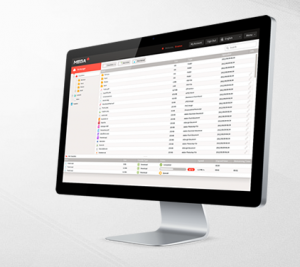
    Right after Kim Dotcom launched Mega on January 19 I succumbed to temptation and registered for a new account. My initial foray was, however, short lived as no confirmation email arrived in my Outlook.com inbox. Clearly, Microsoft’s service and Mega did not play well together.

    Dotcom shed some light on the matter when he posted the following on Twitter: “Don’t use Hotmail to register on Mega. They have mysteriously black holed emails from our domain. Gmail works fine”, He shortly followed this up with: “We are working on the ‘confirmation email’ issue. Some mail services react allergic to an unknown domain sending millions of confirmations”. Intrigued by the issue I asked Microsoft for a statement concerning the confirmation email issue with Outlook.com accounts.

    A spokesperson for the software giant acknowledged the issue and confirmed that it has since been fixed, stating the following for BetaNews:

    As you may have seen, Kim Dotcom has updated his Twitter followers, explaining that Mega is working on the “email confirmation” issue that has impacted some email providers. To-date, the existing issue that we became aware of has been resolved per Mega’s request.

    Today I verified Microsoft’s response and, indeed, a Mega confirmation email finally made its way into my Outlook.com inbox after registering. But there’s still an issue and this time, as per Dotcom’s second tweet, it lies at Mega’s end. Although the newly created account is confirmed, the cloud service says that the email address and/or password is incorrect, after displaying a vague “something went wrong” message.

  • Ex-Googler launches security startup NetCitadel

    NetCitadel, a company based in Mountain View, Calif., emerges today from stealth mode with a network-security virtual appliance that intends to simplify the security complexities of cloud computing.

    NetCitadel Co-Founder and Chief Engineer Vadim Kurland’s experience on Google’s network-operations team inspired the new product, said Mike Horn, NetCitadel’s CEO and another co-founder. As is the case with other companies operating large data centers, Google’s cloud infrastructure was often in flux. “They’re really these dynamic environments that are changing frequently,” Horn said. As Kurland developed network security to fit the Google infrastructure, he figured other companies faced similar challenges and might want external providers to take care of that responsibility, Horn said.

    The process of rolling out a security update over a security network is tedious. For example, a system administrator must find out about a firewall change request, such as adding another server. Then he or she needs to figure out the impact of the change, update the firewall or firewalls, deploy the change and make sure everything was done correctly.

    Enter NetCitadel’s Security Orchestration Platform, a virtual appliance that automates that process, Horn said. As a result, network-security staff can focus on more critical matters than manual, time-consuming policy changes. Besides firewalls, the Security Orchestration Platform can also manage a network’s routers and switches.

    Comparable offerings from Cisco and Juniper Networks support only cloud instances but not virtualization, or vice-versa, and they don’t accommodate network-security devices from other suppliers, Horn said.

    NetCitadel was formed in 2010 and raised capital from venture-capital company NEA in 2011 – Horn wouldn’t say how much. It has since taken on 25 employees. Current customers include financial-services institutions, retailers and a university, Horn said. An annual subscription costs $25,000 or more per year.

  • Manufacturing Jobs and the Rise of the Machines

    The story of how technological progress is affecting employment — whether, in other words, the robots are eating our jobs — is clearly an important one. But who’s telling it correctly? I believe that technological unemployment (and underemployment) is a real and growing phenomenon.

    But since Erik Brynjolfsson and I appeared on 60 Minutes in January for “March of the Machines,” a story that examined the labor force implications of advanced digital technologies like robots and other forms of automation, we’ve been accused of being unclear on the concept.

    For example, the Association for Advancing Automation said in response that we “are missing the bigger picture” by not recognizing that American companies are “successfully implement[ing] automation technologies instead of going out of business or sending manufacturing overseas.” They add: “American manufacturing’s embrace of robotics will ensure a new manufacturing renaissance in this country.”

    If the A3, or anyone else, thinks that lots more manufacturing jobs will accompany this renaissance, they’re just dead wrong. The facts are too clear, and they all point in the other direction. For example:

    • Manufacturing employment has been on a steady downward trend in the U.S. since 1980 (it increased some after the end of the Great Recession, but this boost appears to be leveling out).
    • Manufacturing jobs have also been trending downward in Japan and Germany since at least 1990 and, as I wrote earlier, in China since 1996.
    • Manufacturing employment decline is a global phenomenon. As a Bloomberg story summarized: “Some 22 million manufacturing jobs were lost globally between 1995 and 2002 as industrial output soared 30 percent. … It seems that devilish productivity is wreaking havoc with jobs both at home and abroad.”

    Rob Atkinson, president of the Information Technology and Innovation Foundation, is another of our detractors. He takes the argument up a level across industries. Even if total manufacturing employment goes down because of automation, he writes, other industries will pick up the slack by employing more people. This is because:

    “…most of the savings [from automation] would flow back to consumers in the form of lower prices. Consumers would then use the savings to buy things (e.g., go out to dinner, buy books, go on travel). This economic activity stimulates demand that other companies (e.g., restaurants, book stores, and hotels) respond to by hiring more workers.”

    Fair enough, but what if those other companies are also automating? One of the most striking phenomena of recent years is the encroachment of automation into tasks, skills and abilities that used to belong to people alone. As we document in Race Against the Machine, this includes driving cars, responding accurately to natural language questions, understanding and producing human speech, writing prose, reviewing documents and many others. Some combination of these will be valuable in every industry.

    Previous waves of automation, like the mechanization of agriculture and the advent of electric power to factories, have not resulted in large-scale unemployment or impoverishment of the average worker. But the historical pattern isn’t giving me a lot of comfort these days, simply because we’ve never before seen automation encroach so broadly and deeply, while also improving so quickly at the same time.

    I don’t know what all the consequences of the current wave of digital automation will be — no one does. But I’m not blithe about its consequences for the labor force, because that would be ignoring the data and missing the big picture.

  • Vine is the best we’ve seen in social video, but is it good enough?

    If I’m being totally honest, I’d tell you I don’t like video. Sure, I’ll settle in to watch a movie at the theater, but when it comes to short clips posted on the web? I’ll pass. I’d much prefer to scan text than watch a video, and unless your clip is a few seconds long, I’m not going to wait for it to buffer. Got a transcript? Please post.

    I probably have less tolerance for video than most people, but in looking through the number of social video products in just my first six months at GigaOM and watching companies struggle for traction, I was convinced video still has hurdles to overcome before it becomes a successful social product on mobile. Which is why Vine, Twitter’s new video-sharing service that debuted last week, has me somewhat intrigued. It’s not clear that Vine is the answer to the social video problem, but it does appear that the service has solved a number of obstacles inherent to video that have traditionally kept it from mainstream success. And despite myself, I had fun putting together my first Vine.

    The benchmark for that success, of course, is Instagram. The company that became the poster child for social photo-sharing proved there’s money to be made in translating a new medium to the masses on mobile; at least for the entrepreneurs. Instagram’s success hinged on simple editing that made your photos look beautiful, a fast and reliable product experience, and a strong sense of user community. But when Om asked Instagram co-founder Kevin Systrom last November at GigaOM’s Roadmap conference whether Instagram would ever tackle video, Systrom outlined his reservations about the medium:

    “No one wants to sit outside at a ballpark waiting for a video to load while there are 100,000 people around you wandering and you’re trying to get network signal. It’s hard enough for us to push an image down to you, I can only imagine a moving image,” he said. “[Videos] are just innately harder to produce and consume.  In order to consume a video you don’t swing past it and then you’re done. You actually have to sit and engage with it and watch it the full length — I think that’s one of the harder parts of consuming. And producing, you’re sitting there trying to frame the shot and you’re trying to get the interesting part of the video in it, but it turns out that no one wants to sit there editing a video for four minutes on their small little device. So I think what we have to do is figure out the balance of production and consumption that makes it really interesting and fast to do.”

    The genius with Vine is that you can upload only six seconds of footage. Six seconds is nothing — more like an animated GIF. And Vine’s editing process is stupidly simple. Our data networks might not be much faster than they were in November when Systrom expressed doubts, but uploading or downloading six seconds of video is going to be much easier than uploading or downloading a three minute video to YouTube. And the editing process is about as simple and intuitive as you could imagine — hold your finger down to capture video, lift it up to pause recording, and keep pausing and lifting until you hit six seconds of footage. Upload, share, and you’re done. I completely understood how it worked on my first try.

    People are fascinated by Vine right now, as evidenced by VinePeek, the site that loops Vine videos as they’re uploaded. It’s mesmerizing in the way Chatroulette was — it gives you a peek into other people’s lives. The concern for Twitter is that Vine will go the way of Chatroulette, and people will quickly lose interest amid a sea of naked men. Some users already have their doubts – the footage is mundane, it’s completely new territory for Twitter to take on, and naked pics are already cropping up and causing issues.

    But frankly, acquiring the three-man Vine team for a non-disclosed amount seems like a relatively small investment on Twitter’s part. Because there’s potential for a huge payoff for the company that finally gets social video right.

  • Samsung unveils the Galaxy Express, a rehashed and unexciting 4G LTE smartphone

    Another day, another Galaxy smartphone. On Tuesday, Samsung unveiled a new handset as part of the company’s ever expanding Galaxy lineup, this one dubbed the Galaxy Express.

    The new device slots in-between the Galaxy S III Mini and the Galaxy S III, with similar design characteristics including the traditional rounded corners. Samsung could have named the new device the Galaxy S III Average, as the handset features a 4.5-inch Super AMOLED Plus display with a resolution of 800 by 480 and a 1.2GHz dual-core processor, both of which are in-between the specs of the two S-branded smartphones.

    The Galaxy Express also sports 1GB of RAM and a decently-sized 2,000mAh battery. The device comes with 8GB of internal storage and a microSD card slot that can house up to 32GB of extra storage. On the back there is a 5MP camera with LED flash, while a 1.3MP shooter takes care of the business up front.

    One of the highlights of the Galaxy Express is 4G LTE cellular connectivity, although judging by past models there’s a very good chance that an HSPA+ variant will also be available so as to reach more markets worldwide.

    Other specs include: Wi-Fi 802.11 a/b/g/n; Wi-Fi Direct; MHL, NFC (Near Field Communication); USB 2.0; Bluetooth 4.0; GPS with Glonass support. The usual array of sensors, such as light and proximity ones; accelerometer; digital compass and gyro are also onboard.

    The Galaxy Express comes in at 132.2 x 69.1 x 9.3 mm and 139.1 grams. It’s basically shorter, narrower and thicker than the Galaxy S III and longer, wider and thinner when compared to the Galaxy S III Mini. Only the weight is heavier than for the other two.

    Samsung did not provide any details regarding the availability and pricing of the new smartphone.

    It really comes as no surprise that the newest announced member of the Galaxy lineup ships with Android 4.1 Jelly Bean and Touch Wiz on top. Samsung also throws in some branded apps including ChatOn, AllShare Play, and S Beam.

  • Shutter lets you schedule automatic PC shutdowns and more

    Shutting down your PC is often simple and straightforward. You finish what you’re doing, save your work, close any applications and hit the shutdown button: done.

    Sometimes, though, life is more complicated. Maybe you want to leave your PC running and have it automatically close at a particular time, say; when a program has finished running, or on some similar event. And that can be more difficult to organize — unless you get a little help from Shutter.

    This compact tool comes in a tiny 430KB download, and there’s no installation required, no adware or any other concerns: just unzip it and you’re ready to go.

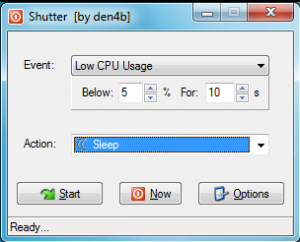
    And, while there’s no local help, the straightforward interface means you’re unlikely to have any major questions about its core functionality. Take the default “Countdown” event, for instance: all you have to do is set a timer to 5 minutes, 1 hour or whatever, choose the action you’d like performed at the end of that time (Shutdown, Sleep, Hibernate, Logoff and so on), and click Start. Shutter will begin the countdown and carry out your chosen action after the defined time.

    Countdowns are just the start, though. You can also tell Shutter to activate at a specific time; if your CPU usage drops below a certain level; if your battery is low; when a user is inactive; when a window closes, or a process stops; when a ping is no longer returned, when a file exceeds a given size, and more.

    Despite its name, Shutter isn’t just about shutting down. You can alternatively have the program sleep or hibernate your system, turn off your monitor, mute or unmute the master volume, play an alarm, and more.

    And the Options dialog reveals even more power. You can have the program run specific programs when the defined event occurs, for instance, play a sound, or close named windows. There are lots of ways to fine tune things, including the ability to restart an event when it’s been triggered. You even get a web interface to control the program remotely.

    Yet all of this comes in a tiny program, requiring less than 1MB hard drive space and 3MB RAM, which is entirely free for personal use.

    If we go looking for problems, then the fact that there have been no updates since 2010 might be a minor issue. There’s also no local documentation, and the online help isn’t particularly good (although you won’t need it very often).

    For the most part, though, Shutter is a very capable shutdown tool with a great deal of features and options, and it’s well worth a closer look.

  • Engine Yard vet starts Cloud Foundry consultancy

    Dr. Nic Williams, a “developer’s developer” who was also VP of engineering at Engine Yard, is on to new things and a new Platform as a Service. He’s founded Stark & Wayne, a consultancy that will focus on helping companies deploy the Cloud Foundry PaaS that VMware spun off to the Pivotal Initiative.

    starkandwayneWilliams appears tightly aligned with Cloud Foundry —  one of two customers mentioned on his web page is the Pivotal Initiative and he is working out of the Pivotal Labs office in San Francisco. Pivotal Labs, now part of EMC, is contributing technology to the Pivotal Initiative. Confused? Sorry.

    Stark & Wayne is thus far a one-man show. According to  Williams blog post, the company name comes from “the two most famous fictional tool creators – Tony Stark and Bruce Wayne. Every developer can be a super hero. You just need the right tools. Batmobile optional.”

    The goal of the startup is to help companies adopt PaaSes. And that’s important — many developers within companies love the freedom and flexibility of building and deploying their applications on a third party pay-as-you-go platform but often their corporate IT overlords are not so enamored of the model. That’s because sticky questions arise if, for example, your PaaS of choice goes away. 

    Per Williams’ blog post announcing his move:

    “If you’ve used Heroku for your pet projects, then we want to bring you Cloud Foundry for your work projects. We also want to work with you on your projects. If your workplace cares about continuously improving development and operations, then you qualify.”

    VMware pushed Cloud Foundry as an open-source foundation for other PaaSes  like AppFog, Uhuru, Stackato, and others. Presumably the Pivotal Initiative will continue down that path although it’s not saying.  Salesforce.com’s Heroku is another market leader. It is unclear how much traction Engine Yard has relatively speaking although Oracle bought a stake in it in November.

  • Shhh, DataGravity gets $30M from Andreessen Horowitz et al to democratize info analytics

    Secretive startup DataGravity wants to give customers an easy all-in-one way to wring value from their data and has $30 million in fresh cash to make that happen. Andreessen Horowitz led a new Series B round with contributions from Charles River Ventures and General Catalyst Partners. The latter two ponied up $12 million last April to back the startup founded by EqualLogic veterans Paula Long and John Joseph.

    The new money will fund sales and marketing activities for the product that has not yet reached beta. The Nashua, N.H. company now has 30 employees and will probably hit 45 to 50 within the year as it biulds out those go-to-market activities, Long said in an interview.

    Goal: make info analytics easier for the masses

    Long is coy about product details — it took quite a bit to get her to say they’re working on an appliance — but DataGravity is ripping a page out of EqualLogic’s playbook. Take a tech area that is now way too hard and too expensive for many smaller businesses to use productively and then make it easier for them to buy and deploy an all-in-one solution. The idea is that solution — whether it’s an EqualLogic SAN or a DataGravity information appliance, meets the needs of 80 percent of the market.

    Putting a data scientist into every array

    “The idea at EqualLogic was that storage was really complicated and you needed expensive storage admins who understood foreign protocols. We wanted to make it simple enough that an IT admin with broad knowledge could do storage. Now it’s really expensive to do data intelligence without a putting a staff together including data scientists and four or five products,” Long said.”In EqualLogic we put an A+ storage admin into every array, now we want to put an A+ data scientist into every array.”

    Indeed, most companies doing advanced data analysis need the database, an ETL tool, analytics software and some sort of data visualization tool set, not to mention very pricey data scientists.

    Andreessen Horowitz partner Peter Levine is sold. “DataGravity is all about going from dumb storage to intelligent storage. Now storage is just blocks and files with no contextual meaning until an app or a database does something with that dumb data. These guys are moving into the world of intelligent storage,” he said in an interview.

    As part of this funding Levine will join General Catalysts’ David Orfao and Charles River’s Bruce Sachs on the DataGravity board.

    The strategy certainly worked for EqualLogic, which was founded in 2001 and sold to Dell  six years later for $1.4 billion in cash. Now we’ll see if Long and Joseph can replicate that success.

  • Samsung rolls out a limited edition Garnet Red version of the Galaxy Tab 2

    Red seems to be the in color for mobile devices at the moment. First Verizon gave the world a red edition of Nokia’s mid-range Lumia 822 smartphone, and now Samsung has introduced a Garnet Red version of its popular Galaxy Tab 2 slate. This isn’t the first Samsung device to come in the bloody hue — AT&T offered a Garnet Red edition of the Galaxy S III last summer.

    Currently only available for the US market, the striking tablet comes with a matching case and Android 4.1 Jelly Bean onboard, in place of Ice Cream Sandwich. All the other specs remain the same, such as the 7 inch 1024 by 600 screen, 1GHz dual-core processor, 1GB RAM, and 8GB of internal storage.

    “This new eye-catching version of the Galaxy Tab 2 offers endless entertainment in the palm of your hand, while the stylish Garnet Red look will set you apart from the crowd,” Samsung senior vice president Michael Abary said. “The Garnet Red version of the Galaxy S III has been incredibly well-received, so we are happy to make the same brilliant color available for our Galaxy Tab 2 as well”.

    The tablet is available from the likes of Amazon, Walmart, Office Depot, Fry’s Electronics and Toys R Us, and priced at around $220. If you like the look of it, you’ll want to act quickly as the Garnet Red edition will only be available for a short time.

  • RetroShare lets you build your own invitation-only social network

    Social networks are great, in theory. But then you run into problems with other users, advertising, spam, unexpected and unnecessary interface redesigns, security issues, privacy problems and the list goes on.

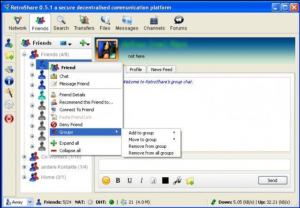
    If you’re in the mood to try something different, then, you might be interested in RetroShare. It’s a cross-platform, open source tool which provides a rich set of features — instant messaging, voice chat, forums, channels, file sharing and more — but in a peer-to-peer form, so you only get to connect to people that you’ve specifically invited.

    Unsurprisingly, getting this all set up requires a little work. RetroShare encrypts you connections with GPG (GNU Privacy Guard), for instance, so you’ll need to generate a key to establish your identity, then exchange keys with friends when authenticating your connection. This isn’t difficult (creating a key is just a matter of filling in a form, and you only need to exchange keys once), but it’s undeniably more complicated than signing up with Facebook.

    And there may be issues in connecting from behind a firewall, too, although it all depends on your setup: if UPnP is working then all should be well, if not then there may be some further configuration necessary (the official documentation explains more).

    Once everything is working, though, browsing the RetroShare toolbar will quickly reveal a very rich set of features. You get file sharing, for instance. Instant messaging. Chat rooms. An email-type system, forums, channels and more.

    We’re not just talking some pre-built configuration, either. You can add as many forums as you or your friends would like to use, for instance. Each of them get your choice of custom name and description. Messages within them can be authenticated, or anonymous (so a network of work colleagues could allow anonymous messaging to encourage users to speak openly, for example). And if you’ve a lot of forums then you can even subscribe to your favorites, say, making it easier to find new messages to you at some later date.

    The core file sharing mechanisms are just as versatile. You can attach files to individual messages, for instance, or share entire folders and allow others to browse them. A detailed Transfers window keeps you up-to-date with your own downloads and there are plenty of useful configuration options (you can set a maximum number of simultaneous transfers to avoid sapping your bandwidth, for example).

    And of course all this is decentralized, peer-to-peer, so there’s no central server, no-one else monitoring things: it’s just you and the people you’ve invited.

    RetroShare won’t be for everyone, then. And if you really just want a simple way to display last night’s photos to as many people as possible then maybe Facebook really is the best solution, after all.

    But, if you’d like something more private, more secure, an environment which is just for you and those you invite, then the program could be the ideal choice. Just keep in mind that there will be quite an initial learning curve as you figure out how everything works.

    Photo Credit: Oleksiy Mark/Shutterstock

  • Diagnostic and benchmarking tool AIDA64 adds support for new processors, including Intel’s Atom Z2760

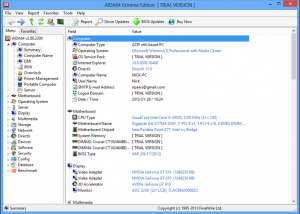
    Budapest developer FinalWire Ltd has released AIDA64 Extreme Edition 2.80.2300 and AIDA64 Business Edition 2.80.2300, new versions of its streamlined Windows diagnostic and benchmarking tools. The Extreme Edition is aimed at home users, while the Business Edition is designed to work with small and medium scale enterprises.

    Version 2.80 is a relatively minor upgrade, refreshing and improving the benchmarking and diagnostic tool’s support for newer technologies, including the Intel Atom Z2760 and OCZ Vector SSD.

    FinalWire is keen to promote the fact that AIDA 2.80 now boasts optimized benchmarks for Intel’s low-powered Atom 2760 (“Cloverview”) processor. It also adds preliminary support for AMD’s upcoming “Richland” APU and Intel’s next-generation Atom processor, codenamed “Valleyview”, which Intel promises will double the performance on its low-powered chip range when it debuts towards the end of the year.

    In addition to extending support, AIDA 2.80 also improves its support of Intel’s “Haswell” range of APUs and its “Lynx Point” PCH. There’s also support for APP SDK 2.8, OpenCL 1.2 Update, OpenGL ES 3.0 and Simple Firmware Interfaces.

    SSD controller support has also been extended to include the OCZ Vector and Indilinx Barefoot 3 SSD ranges. Version 2.80 also adds details for a selection of newer GPUs, including the AMD Radeon HD 7470 and 7870 “Tahiti LE”, and nVIDIA’s GeForce GT 635M and GTX 680MX.

    Since AIDA 2.0 was released, the tool has added support for Windows 8 and Windows Server 2012 RTM editions, integrated enhanced UPS support, plus added support for numerous other chipsets, processors, SSD drives and motherboards, along with updated standards such as ACPI 5.0 and CUDA 5.0.

    Free function-limited trials of both AIDA64 Extreme Edition 2.80.2300 and AIDA64 Business Edition 2.80.2300 are available to download for PCs running Windows 95 or later. Hardware system requirements are minimal, and the full versions can be purchased with prices starting at $39.95 (Extreme Edition) and $79.95 (Business Edition).

  • GAIN Fitness unbundles the exercise class with new platform – and new funding

    Plenty of new apps promise to put a personal trainer in your pocket, but GAIN Fitness doesn’t just want to offer quality workouts, it plans to provide a whole marketplace of them.

    With its new strategy, GAIN won’t focus on promoting its own line of exercise apps but will partner with other fitness experts, training centers and franchises to provide the underlying technology for their content.  For example, it’s created a basketball app with the Peak Performance Project in Santa Barbara, Calif. and a weight-training app with DF Keifer, a nutrition and training expert. Soon, the workouts won’t just be available as in-app purchases, but as stand-alone apps in Apple’s app store.

    Since launching in 2011, the company said it’s logged about two million users (on the Web and iOS) and about 600,000 downloads.  From within its iPhone app, yogis, weight-lifters and other exercise enthusiasts have been able to buy (for $1 to $7) workouts that include audio coaching from trainers, animated illustrations and video, personalization options and progress tracking.

    But after two years of offering its workouts under one umbrella, founder and CEO Nick Gammell said GAIN Fitness plans to take a platform approach.

    “Fitness is an industry of niches,” said Gammell, who formerly worked at Google. And while GAIN’s initial course was to aggregate the different markets, “in the past year, we’ve focused on creating a tech platform and features that can be useful across different types of fitness instruction,” Gammell continued.

    In addition to launching the new marketplace on its website, Gammell also said the company had raised $550,000 on top of the $650,000 round it had previously announced, bringing its total amount raised to $1.2 million. Funders include InterWest Partners, former Square COO Keith Rabois and Practice Fusion co-founder Matthew Douglass.

    GAIN PACK

    GAIN’s pitch to potential partners is that with its technology, it can provide a higher quality app in less time and with more exposure. Each deal is different, Gammell said, but they all include a revenue share and co-marketing.  So far, it’s attracted five partners but it plans to release a new app every month going forward.  And its pricing strategy could entice partners reluctant to cheapen their products in an App marketplace that favors apps in the $1 to $2 range.

    Instead of charging users a subscription fee or a higher flat fee, GAIN lets people pick and choose the kinds of exercises they want, a la carte. For example, aspiring yogis can pay $6.99 for a basic yoga class and then purchase additional $3.99 “packs” on balance, strength or focus areas.  Strength trainers can purchase packs that target their glutes or abs, or push them to a higher level.

    For users who want a convenient way to exercise while traveling or coping with a busy schedule, GAIN provides the ability to buy and customize the content most relevant to their level and goals. And for companies and franchises that have made their names with pricey offline classes or cheaper (but still potentially pricey) DVDs, the company’s approach could be a way to reach a greater audience.

    GAIN will have to prove to consumers that its paid apps are better than other free and lower-priced options. And it will need to convince more “celebrities,” popular trainers and organizations to join its site. That could be a challenge if companies have deep enough pockets and think their brand is big enough to stand alone. But given the rise of quantified self-type tracking devices, like the Fitbit and Nike Fuelband, it’s clear that consumer interest in fitness-related technology is growing. It seems only natural that they’d have a strong appetite for quality mobile fitness content as well.

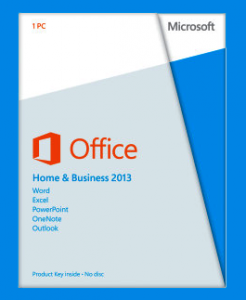
  • Microsoft Office 2013 now available to consumers

    After teasers and tweets, it’s really no secret that today is the big day when Microsoft launches Office 2013. The suite has already been available for TechNet users since mid-November, but in typical Microsoft fashion the consumers are the last to get their hands on the goodies.

    Office 2013 Home and Student, Home and Business, and Professional, as well as Office 365, are currently available for purchase in different markets, including United States, United Kingdom, Germany and Australia, with pricing adjusted depending on the region.

    US pricing goes as follows: Office Home and Student 2013 is the cheapest available version at $139.99, while Office Professional 2013 goes for broke at a whopping $399.99. The in-between, Office Home and Business 2013 is available for purchase at $219.99.

    Prospective customers can also purchase individual Office 2013 products, such as Word 2013, Excel 2013 and PowerPoint 2013 for $109.99 or $79.99, with the latter pricing available with a non-commercial license. In contrast to the previously mentioned products, OneNote 2013 goes for less, $69.99 or $49.99, respectively (again the second price is for the non-commercial license).

    Microsoft also offers Outlook 2013, Publisher 2013 and Access 2013 for $109.99, Visio Standard 2013 runs for $299.99, Visio Professional 2013 and Project Standard 2013 go for $589.99, with Project Professional 2013 topping the charts at $1,159.99.

    At a first glance Office 365 Home Premium is the cheapest entry to the club, but unlike its other siblings Microsoft demands $99.99 for a one-year subscription to use the office suite, whereas the others come without an expiration date. The upside, however, is that Office 365 Home Premium can be run on 5 PCs or Macs and it comes with 27GB of cloud storage via SkyDrive. Office 365 University is available for $79.99, $20 less than the standard edition.

  • Morning Advantage: What Google Tells the Government About You

    Google just added new information to its “Transparency Report” to tell users how the company handles government requests for personal information (like what you provide when you sign up for a Google Account, or the contents of an email) — which, according to Shara Tibken at CNET, is happening more and more often: “In the second half of 2012, Google received 8,438 U.S. requests for information, up 6 percent from the first half of 2012. Globally, Google received 21,389 requests, up 2 percent from the first half of the year.” Google’s Chief Legal Officer David Drummond wrote in a blog post that “it’s important for law enforcement agencies to pursue illegal activity and keep the public safe. We’re a law-abiding company, and we don’t want our services to be used in harmful ways. But it’s just as important that laws protect you against overly broad requests for your personal information.”

    In a nutshell, Google will review requests for your information (and will verify that there’s a search warrant) before complying, and will notify users about legal demands when possible.

    SELF-MADE WOMEN

    China Produces Outsized Numbers of Super-Rich Women (Reuters Magazine)

    Women are making huge gains in the middle class around the world, but at the summit of wealth and economic power, they are almost entirely absent. Except in China. Half of the women in the world who earn their way to billion-dollar fortunes are in China, writes Chrystia Freeland. One explanation is that China’s family structure helps women get to the top. Close connections between generations mean grandmothers often help raise grandchildren, and there’s little stigma for Chinese mothers who don’t take care of their children. Plus the one-child policy means smaller families and thus less time spent nurturing them. — Andy O’Connell

    THE MBA’S REDUCED ROI

    MBA’s Salary-Enhancing Power Slashed (The Financial Times)

    Bad news for MBAs. The paper’s latest global business school rankings show that students are shelling out more money for their degrees but earning less when they graduate. One bright spot: the gap between salaries paid to female MBAs and those paid to their male counterparts is narrowing. But in a shrinking compensation pool, that’s not much comfort. Oh, and the rankings: HBS (which is, of course, the parent organization of HBR) ousts Stanford for the top spot. — Alison Beard

    BONUS BITS:

    Say What?

    Smart Organizations Should Also Be Stupid, Says New Theory (Science Daily)
    Building the Telepresent Robotic Boss of the Future (POPSCI)
    What Twitter Really Looks Like (The Atlantic)

  • Startup Gridco wants to build a next-gen power grid that looks like the Internet

    Will tomorrow’s power grid look much more like the Internet than it does today with decentralized and distributed networking? That’s the idea behind Gridco Systems, a startup founded by Naimish Patel, a serial entrepreneur who previously was the co-founding CTO of optical networking company Sycamore Networks. Patel and his team are using digital solid state transformers and software that ingests data in real time to create a new type of distributed control and power electronics networking product for utilities that looks far more like an Internet network product than a utility tool.

    Three-year-old Gridco is selling this networking gear and software to utilities to enable them to have greater control over their networks and to be able to maintain a greater degree of reliability, more similar to the reliability that Internet companies currently have, and utilities rarely have. The promise is that potential utility customers can have self-healing, and smarter grids, so when one section of a grid goes down, other areas of the grid can route around that section and the overall system can maintain function.

    With old-school electromechanical grid equipment, which is the dominant form of grid power electronics today,  it’s hard to create this type a resilient grid. The sector needs digital control systems, says Patel, to enable the installation of widespread solar panels and wind turbines. These type of new solid state transformers are new, and so is the combo of using them with more sophisticated digital networking tools.

    Gridco has raised a little over $20 million so far, from investors including General Catalyst, North Bridge venture partners, Lux Capital, and RockPort Capital. This is a Series A round, so you can imagine that the company might raise quite a few more rounds before it matures.

    Patel tells me he wanted to create a product in the power grid industry because of the “massive opportunity” for “an industry that sorely needs it.” He likes “solving big problems,” says Patel, as does his investors. The team is still a small group, though Patel wouldn’t name how many employees the company has. The company also was mum on all details of its technology.

    “The network could embody the best of telco networks, delivering higher degrees of reliability to the distribution network,” says Patel. Patel wouldn’t tell me which utilities were trialling its technology, but said the company is engaged in talks around pilots for a variety of vendors.

    The clear draw back of this technology is that because it’s a replacement product, meant to replace the current old mechanical transformers, utilities — and their rate approval boards — might take awhile to justify the investment.

  • There’s something you should know about Apple

    Panic in Cupertino: Headless chickens run around smacking into one another, because they don’t know they’re dead.

    That’s the fundamental problem with Apple, and this situation is largely independent of recent stock price declines that analysts, bloggers, reporters and other writers can’t opine enough about. Falling shares are part of a necessary correction, as reality displaces perception. To understand what’s happening now, you need to look into the past — three years, which by Internet counting is like a lifetime.

    Three years. I want you to repeat “three years” like a mantra while reading this analysis. That’s all it took for Apple’s recent rise and about all it could take for the fall. The company isn’t going away and surely will remain successful for a long time — just more as a niche brand, as it was before. That is, unless CEO Tim Cook and company do something dramatic, like apply the “David Thinking” that spurred success in the past, while giving up status quo approach for the future (that’s something I don’t expect).

    History Lesson

    In September 2009, the Financial Accounting Standards Board changed reporting rules that greatly benefitted Apple. Beforehand, the company deferred a portion of iPhone revenue over 24 months, rather than put it all on the books at once. Reasoning: iPhone buyers commit to two-year contracts for subsidized pricing (they pay less than devices cost) and Apple delivers iOS updates over time. The new rules let Apple realize revenue immediately, and the company adopted the change with fiscal 2010 first quarter results. Three years ago this month.

    The change was dramatic. Apple beat analyst revenue consensus by more than $3.5 billion, reaching $15.6 billion. The company didn’t stop there, but revised earnings reports going back two years, essentially raising revenue after the fact. “Not since the Soviet Union, have I seen any entity so brazenly try to rewrite history”, I accused. There was blatant (although not illegal) manipulation in the restatement, and its breadth and suddenness.

    The past revision was huge. For example, for fiscal fourth quarter 2008, Apple reported $7.9 billion revenue and net profits of $1.14 billion. The company shipped 6.9 million iPhones, but only reported revenue of $806 million. The revised figures raised revenue to $11.52 billion and net profit to $2.25 billion. The difference: $3.62 billion revenue and $1.11 billion net income. Apple didn’t report the revised results in those past quarters. You can change the historical record, but not the past or decisions Apple investors made three months or eight quarters earlier.

    The accounting change, along with iPad and iPhone 4 sales success, hugely lifted Apple revenue and profit in 2010. So much that in April 2011, I posted a chart showing the gains. During calendar 2010, Apple revenue rose from $13.5 billion in first quarter to $26.7 billion in the last and profit from $3.1 billion to $6 billion. So, both nearly doubled. iOS revenue more than doubled — and then some — to $15.9 billion from $6.4 billion.

    Margin Call

    Since, Apple is nothing short of an amazing money making machine, and that’s more than about accounting changes. For calendar 2012, revenue reached $164.7 billion. The difference ($88.46 billion) is more than Apple total revenue for calendar 2010 ($76.24 billion). Profit more than doubled, from $16.7 billion to $39.58 billion. If things are so good now, why is the share price so bad?

    Apple’s problem isn’t past or present, but the future and whether its decline will be as fast as the meteoric rise. Three years. The stock chart above shows steady overall climb, beginning in early 2009 through November 2011, when a steep ascent started. Apple shares soared 94 percent, before reaching a record high in September 2012. As Apple shares rose, analysts, bloggers, reporters and other writers chattered about the stock reaching $1,000 (all time high was $705.07) and market cap reaching 1 trillion. I looked askance as usual, but, that’s just me. So given the hype, Apple’s decline since is quite shocking. At close of market today, shares are down 36 percent.

    While shares fall, revenues rise. Except Apple missed Wall Street consensus two quarters in a row, which causes some people to be nutty about the stock. Meanwhile, during calendar fourth quarter, gross margin plummeted to 38.6 percent from 44.7 percent a year earlier and 40 percent from Q3. The company forecasts gross margin between 37.5 percent and 38.5 percent for calendar first quarter.

    iPad already tugs margins downward, as iPad mini cannibalizes larger slate sales. By my math, iPad category average selling prices fell 12.3 percent quarter on quarter — from $535 to $467. Year over year, iPad ASPs are down $101, Apple’s CFO admits. Only the company’s inability to manufacture enough minis to meet demand kept matters from being worse. “Our iPad units grew faster than our iPad revenue in the December quarter”, he says. “We would expect iPad ASPs to be down quite a bit in the March quarter on a year-over-year basis for the same reasons”.

    Feel the Pinch

    Something else risks margins. In November 2011 analysis “Apple is the new Dell“, I recounted how real-time manufacturing gave the Windows PC maker supply chain advantage over competitors. Apple has accomplished similar feat by using economies of scale and sheer influence to lock in lucrative component price deals that lock out competitor access.

    As I explained then about these competitors: “They’ll adapt and improve Apple’s supply-chain recipe, just like Dell’s PC competitors did a decade ago. As significant, as more manufacturing capacity comes online, Apple won’t as easily get the best prices or, by monopolizing supply, shut out competitors producing smartphones, tablets and other connected mobile devices. As components become more readily available and for lower costs, competitors can improve margins and still lower selling prices against products like iPhone and iPad”. That situation absolutely is underway right now.
    But there’s something more: All the bad buzz about Apple fosters perceived weakness that suppliers and other partners will exploit. You must understand market retribution dynamics. The powerful are often punished when weakened. Microsoft and Nokia are examples. As Apple’s reputation and share price fall, so will its muscle. Apple’s success makes it unpopular in many quarters, and nowhere more than among partners that felt gave away more than than wanted or received less of the gravy than they feel deserved. The situation makes way for competitors like Samsung, which already is a major component supplier, to lock in some good deals of its own.

    All this happens as Apple’s most important, iPhone, faces increased risk. During calendar fourth quarter, iOS smartphone share fell to 22 percent from 23.6 percent a year earlier, according to Strategy Analytics. Meanwhile, Android rose to 70.1 percent from 51.3 percent. For all 2012, iOS nudged up to 19.4 percent from 19 percent share, while Android reached 68.4 percent, up from 48.7 percent. The differences between the quarter and year, strongly suggest sales surge at the end, for Android, which forebodes poorly for Apple when iOS got big lift from iPhone 5’s recent launch.

    During calendar Q4 iPhone revenue rose to $30.67 billion from $16.25 billion three months earlier. The device accounted for 56.3 percent of all Apple revenue and 52.7 percent a year earlier. Any risk to iPhone hurts the whole company.

    What’s a Year?

    All this leads me back to the three years theme and how quickly a company’s fortunes can change and how fast the collective human brain is to forget. Hell, not even three years but one. Or less. As previously mentioned, in 10 months Apple shares rose 94 percent (leading to predictions about how high they could go) only to fall nearly 40 percent in another five (leading to speculation how low the stock will fall).

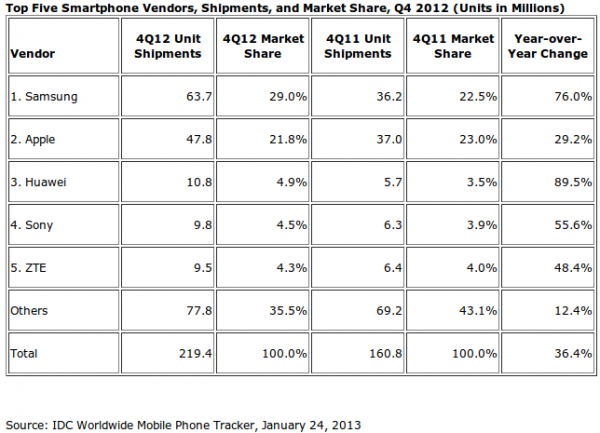
    Apple rival Samsung is startling example, too. In fourth quarter 2011, Apple actually shipped more smartphones than Samsung — 23 million and 22.5 million, respectively, according to IDC. A year later, Samsung shipments rose 76 percent, with 63.7 million smartphones to Apple’s 47.8 million.

    But Samsung claimed glory sooner, in Q1 2012, beating out Nokia in global handset shipments and Apple in smartphones, according to Strategy Analytics. The South Korean manufacturer’s rise was fast, ah hum, like Apple’s. In just 10 quarters, Samsung went from a bottom-feeding 5 percent smartphone share to top-dog 29 percent.

    Nokia invented the smartphone in the mid-1990s and was the undisputed global handset leader for years, even after Apple released iPhone. But in just three years, the Finnish-phone maker’s fortunes collapsed. Smartphone share in Q4, according to strategy analytics: 3 percent. Three years earlier: 39.2 percent. Many of the markets Nokia dominated three years ago belong mostly to Samsung and somewhat to Apple.

    Research in Motion is another example, with smartphone share ahead of Apple in Q4 2009 — 20.2 percent to 16.4 percent, respectively. Three years later, Strategy Analytics lumps RIM with Other.

    We forget how fast fortunes are made or lost. Apple’s rise is a three-year story, and it’s fall can be just as fast — as impossible as such decline might seem to many. Cloud-connected devices form a highly complex and dynamic market. Anything can happen. Apple won’t go down easy, but I promise that there will be a pileup of competitors, and even partners, seeking to do just that.

    Photo Credit: Joe Wilcox

  • Building for scale: Boundary processes 5 terabytes of data daily

    Looking back on his first year at the helm of the network monitoring company, Boundary CEO Gary Read (pictured) sees progress by all sorts of metrics, but still has his eye on the future.

    Whereas application-performance-management providers such as AppDynamics and New Relic help clients zero in on problematic code inside applications, Boundary looks out for issues slowing down the network, including the application itself.

    Based in San Francisco, Boundary has more than doubled its workforce, going from 12 employees to 28 since Read joined the company last January. Since launching in November 2011, Boundary has grown its clientele to 600 customers, 76 of whom pay for the company’s services. And the amount of data flowing into the company’s infrastructure from clients has grown substantially, from less than half a terabyte to more than 5 terabytes daily. For comparison Facebook stores 1 percent of that amount every 24 hours, according to a November post from the social networking company.

    Amount of network and application data Boundary has processed per day in recent months

    Amount of network and application data Boundary has processed per day in recent months

    Annual revenue has gone up, too, although Read declined to provide figures.

    Some infrastructure hiccups have accompanied all that growth.

    “So definitely as you continue to scale the system, it’s very difficult to test a system like this to unlimited scalability, and so as you continue to push more and more data then it will show itself in different parts of our platform, and different tiers in the application may start to run out of horsepower, or we may start to hit certain limitations in particular areas,” Read said. “We’ve seen that twice already … . In one case, we had to use solid-state disks instead of physical disks. … In another case, we’ve had to add more servers and more processing thru that infrastructure, to deal with us starting to get to capacity limits in what we could be processing.”

    More challenges could lie ahead, Read said.

    As more clients sign up for monthly or yearly contracts, more data is entering the equation. Boundary could open a second data center, exclusively for paid users, to offer better service, Read said. A service that processes one gigabyte is available to users free of charge.

    “With just the sheer volume of data being dealt with so very, very quickly, and so much insight given quickly into that data, this is something where we’re really starting to move into ground that’s never been attacked before,” Read said. And as that data grows it seems so far Read has been able to scale Boundary’s infrastructure. So far he said that the amount the company spends on infrastructure is declining as a percentage of revenue, which is to be expected since the company over-provisioned on its hardware in the early days.

    However, as time passes and Read contemplates adding more capacity, he’s confident that Boundary can continue to scale both the infrastructure and its business model. Given how useful network monitoring can be for cloud-based applications Boundary should prepare for more customers and more competition, such as the newly launched Lyatiss.