Category: News

  • Payvment Shuts Down, Team Reportedly Acquired By Intuit

    Facebook ecommerce platform company Payvment announced that it is shutting down as its team joins a new, unspecified company. The platform will be shut down on February 28.

    The company in question is Inuit, according to TechCrunch, though it’s unclear why this piece of information was left out of the announcement, and why Intuit itself did not make an announcement.

    On Payvment’s home page, the company says:

    As part of this transition, you will have one month to transfer your store to Ecwid, which will allow you to continue selling on Facebook. Ecwid is a global leader in Social Commerce with over 200,000 sellers in 174 countries and a robust Facebook application very similar to Payvment. For details, visit ecwid.com/payvment.

    Payvment and Lish stores and the Payvment Dashboard will be active through February 28, and on March 1, the service will shut down. People will be able to transfer their stores to Ecwid from one click from the dashboard. More FAQs here.

  • Charity Tillemann-Dick shares the harrowing story of living between life and death

    At TEDMED 2010, opera singer Charity Tillemann-Dick told the story of a revolutionary, life-changing surgery — a double lung transplant. While a doctor had warned her that she would never sing again, Charity Tillemann-Dick: Singing after a double lung transplantCharity Tillemann-Dick: Singing after a double lung transplantshe revealed what it felt like to get her voice back. “We need to stop letting disease divorce us from our dreams,” she said.

    Now, three years after her first transplant (she has since had another), Tillemann-Dick has given a second talk, “Discourses from the undead,” filmed at TEDxMidAtlantic in December. In the talk above, she takes a stark look at death. sharing the vivid dreams that she had while she was in an unconscious state after her surgery — a time when her doctor said that survival was unlikely. Having “spent many a night in death’s guesthouse,” Tillemann-Dick  shares meaningful lessons that she believes to be from the next world, and gives thanks.

    “While [death’s] sting is real, good can come from it,” she says. “Death is as much a part of life as love, birth and happiness.”

    Far too few people are organ donors, and Tillemann-Dick attributes this not to disregard but to our lack of conversation about death. She says it’s time to talk about death. Will you join her?

  • Did Apple Reduce Vine’s Visibility in the App Store Following Porn Controversy?

    It looks like Apple may have decided to back away from Twitter’s new Vine video-sharing app, just a little bit.

    It appears that Apple has stopped promoting the app as an “Editor’s Choice” selection. Vine isn’t even highlighted in the App Store’s social networking section. It’s not a “new and noteworthy” app either. That’s odd, considering that Vine is the number one free social networking app and the number four overall free app in the entire App Store.

    As you may have heard, Vine finds itself in the middle of a porn controversy. Just days after launch, we told you that Vine has become a pretty hot destination for six-second porn clips.

    Although we don’t think that the porn is that huge of a problem for the Vine app in and of itself (it’s not really that visible and is often hidden behind a click-through warning screen), we noted that it could be a problem for Vine’s chances of survival within the App Store.

    Apple has always held a pretty strict no nudity policy for its approved apps, even banning photo-sharing apps like 500px because Apple thought the app made it too easy to find pornographic images.

    It’s important to note that Apple has yet to ban Vine, even though it clearly contains its fair share of porn. Apple has also let the Twitter app hang around for years, even though Twitter also allows nudity in its posts. Apple and Twitter are partners, as Twitter is fully integrated into iOS. Maybe Apple won’t be as drastic as to ban Vine altogether, but it sure looks like the’ve reduced its visibility in the App Store.

    [Business Insider via The Verge]

  • UCLA to play key role in worldwide effort to map human brain

    UCLA’s Laboratory of Neuro Imaging (LONI) has entered into a partnership with academic centers from Europe and around the world in a massive, unprecedented effort to understand the human brain.
     
    The European-led Human Brain Project (HBP), announced Jan. 28, will pull together all the world’s existing knowledge about the brain and reconstruct it, piece by piece, in super-computer–based models and simulations. The 10-year, 1.19 billion–euro ($1.6 billion) effort is backed by the European Commission and will begin with 87 partners in 27 countries.
     
    UCLA’s LONI has long been at the forefront in developing computational algorithms and scientific approaches for the comprehensive and quantitative mapping of brain structure and function. As a result, the laboratory is perfectly positioned to play a similar role as part of the HBP.
     
    “This is an ambitious and worldwide collaborative effort to understand the human brain and the diseases that attack it,” said Arthur Toga, LONI’s director and a professor of neurology at UCLA. “Our role will be to focus on harmonizing all of the data that will be pouring into our computers. The trick will be to find a way to aggregate all this information in order for it to be useful. We will be receiving brain images and all the data that goes with it, both recent data as well as images that were done years ago.
     
    “Combining disparate data is difficult,” he added, “so sophisticated new computer algorithms will be needed.”
     
    LONI’s portion of the HPB funding will be approximately $10.8 million. In addition to UCLA, other U.S. institutions involved in the project are Yale University, the University of Tennessee and the Seattle-based Allen Institute for Brain Science.
     
    The HBP will provide new tools to help scientists understand the brain and its fundamental mechanisms and to apply this knowledge in future medicine and computing.
     
    Central to the project is information and computing technology. The HBP will develop information and computing technology platforms for neuroinformatics, brain simulation and super-computing that will make it possible to combine neuroscience data from all over the world, to integrate the data in unifying models and simulations of the brain, to check the models against data from biology, and to make the data available to the world scientific community.
     
    The ultimate goal is to allow neuroscientists to connect the dots leading from genes, molecules and cells to human cognition and behavior.
     
    Combining such data is LONI’s expertise. Since the 1990s, the lab has been building universal brain atlases, each describing sub-populations with similar characteristics in health and disease. The algorithms written and constantly updated by LONI take millions of brain images and modify them to make a certain number of brains look “the same” in order to describe, for example, a specific population, such as right-handed females, or to show the early stages of Alzheimer’s disease.
     
    “Thus, we are well positioned to contribute to these important and challenging goals,” Toga said.
     
    The Laboratory of Neuro Imaging at UCLA, which seeks to improve understanding of the brain in health and disease, is a leader in the development of advanced computational algorithms and scientific approaches for the comprehensive and quantitative mapping of brain structure and function. It is part of the UCLA Department of Neurology, which encompasses more than a dozen research, clinical and teaching programs. The department ranks in the top two among its peers nationwide in National Institutes of Health funding.
     
    For more news, visit the UCLA Newsroom and follow us on Twitter.

  • Food for thought: Killing a cow is the least effective way to make a steak

    Innovation could utterly transform the way meat is created and consumed in the world, making it more efficient and removing some of the problems like greenhouse emissions. While I didn’t get a chance to attend The Intersection conference at the Googleplex recently, a sentence from notes on a discussion between VC Steve Jurvetson and Microsoft co-founder Nathan Myhrvold at the event stood out for me on the subject of meat and innovation: “Killing a cow is the least effective way to make a steak.”

    Over the years the meat industry has delivered efficiency in animal raising, slaughtering and meat production through factory farming, which reduces the time it takes for animals to mature with corn-based diets, antibiotics, hormones and other industrial feeding and slaughtering techniques. But maximizing the efficiency of industrial meat production has led to a lot of unintended negative consequences and a growing movement of people who will pay more for organic, local meat or will forgo meat altogether.

    But what if you could reduce, or eliminate, the whole traditional meat production industry completely? That’s the idea behind new types of plant-based proteins, so-called in-vitro meat production and more integral approaches to reducing meat consumption. Because the world’s population is rapidly growing to 9 billion by 2050, and developing countries have emerging middle classes that want a higher standard of living, alternative protein and meat production could find a market in the developing world first.

    Here’s three new technologies being developed that can reduce eating animals:

    • Peter Thiel’s Breakout Labs invested in a food startup called Modern Meadow, which aims to combine in-vitro meat with 3D printing. The idea is to print out a meat product from biological materials.
    • Beyond Meat is a startup backed by Obvious Corp — the group that created Twitter — which is creating next-gen plant-based meat substitutes. The product is on sale in a few select locations at Whole Foods in Northern California.
    • Foodpairing is a food industry research company and app developer that has broken down flavor to its molecular components and compiled databases that can identify vegetable or seafood ingredients that reinforce the flavor of different meats, or can act as a substitute for a meat entirely.

  • Self-Replicating 3D Printers Are Among Us

    Self-replication has always been a pipe dream of futurists and technologists. Why should we have to waste time and resources making new parts for a broken down machine when the machine can just make the replacement parts itself? It’s not exactly feasible in most industries as of yet, but it is entirely possible in the 3D printing industry.

    Objet recently showed off how its researchers experiment with minor design changes to its 3D printers. The team will create multiple “ABS-like parts that are drilled, assembled and then used as short run end-parts in an Objet Desktop 3D printer to test a new design tweak.”

    For printers from a professional design 3D printer company like Objet, 3D printed parts can only do so much. The smaller companies like MakerBot, however, have already created 3D printers that can make be made almost entirely by another 3D printer. There are other “indie” 3D printers that have found success on Kickstarter based on the promise of an open source design that can be created by other 3D printers.

    All that being said, it probably won’t be long before industrial 3D printers can replace their own parts. We might even be able to upgrade older printers with newer 3D printed parts in the near future. The constantly evolving nature of 3D printing technology makes everyday an adventure in innovation.

  • StarStar Me vanity phone numbers land on 3rd U.S. carrier: T-Mobile

    Perhaps personalized dialing codes are the new ringtones. As with ringtones in the past decade, carriers are getting excited over a vanity phone number service called StarStar Me, created by mobile marketing startup Zoove, and its potential to provide an alternative revenue stream beyond voice and data plans.

    For $3 a month, T-Mobile customers can sign up for their own personal alphanumeric code. When that code is dialed, preceded by two taps of the “*” button, from any U.S. mobile number it will ring that customer’s phone. Customers who download the StarStar Me app from the iTunes or Google Play stores will also be able to use StarStar Me’s call management features, which can be used to send callers an automated voice message or SMS and even a link.

    It’s a neat idea, and one that could put some service revenue in carriers’ pockets. But there are some inherent limits to how big such a service could scale, especially when compared to other blockbuster carrier services of the past like ringtones. While anyone can set a Prince song as their ringtone, only one U.S. mobiles subscriber can have the StarStar Me code “**PRINCEFAN.”

    Still if that one Prince fan pays $3 a month into perpetuity for that short code, I’m sure his carrier won’t complain. And StarStar Me isn’t lacking for customer interest. Zoove said it has received hundreds of millions search queries for personalized dialing codes in the last 90 days, and while it isn’t revealing how many people have signed up for their own StarStar monikers, Zoove said that 100,000 calls have been placed to existing codes to date.

    So far Sprint, Verizon Wireless and T-Mobile all now offer the StarStar Me service. So if AT&T does sign on with Zoove in the future, its customers might find the pickings for available codes slim.

  • Katy Perry: In Drag With Moustache on Ellen

    Ellen Degeneres celebrated her 55th birthday last week, and Katy Perry was on-hand to liven up the Ellen show. Instead of singing for the president however, Perry covered her famous bosom with a vest as she dressed in drag.

    Perry donned a Richard Dawson-esque suit and bowtie as she impersonated a game show host, complete with creepy 70s moustache. She and Degeneres invited audience members to play “Grab Ellen’s Bust,” a simple quiz show that tested contestants’ knowledge of Ellen trivia.

    Though a cross-dressing Katy Perry might sound entertaining, the highlight of the event is actually one of the audience members invited to be a contestant. Watch as she loses her mind when Degeneres touches her in an attempt to prevent her from falling over:

  • 2013 Buick Verano Premium: RideLust Review

    2013 Buick Verano Premium

    Thumbs Up: Comfortable ride, quiet cabin

    Thumbs Down: Turbo engine and manual transmission, but little entertainment value

    Buy This Car If: You prefer to row your own gears, yet want comfort over performance

    Buick’s Verano sedan was built to deliver the fuel-sipping advantages of a compact, while serving up more content than buyers in the class are used to. While the Verano was new for the 2012 model year, a turbocharged variant, dubbed the Verano Premium, has been introduced for 2013. Now that GM brand Pontiac is history, the company is hoping that Buick can pick up some of the enthusiast buyers left in the cold by Pontiac’s shuttering.

    2013 Buick Verano Premium

    The Verano Premium, then, becomes the most affordable performance option in the Buick catalog. Its forced-induction 2.0-liter four-cylinder cranks out 250 horsepower and 260 pound feet of torque, and even gives buyers the choice of a six-speed manual gearbox. What’s noticeably absent, however, is a sport suspension or supportive sport seats, which makes us wonder exactly what demographic Buick was going for. We’re certain the Verano Premium with the six-speed automatic transmission will be a best-seller, but we can’t imagine Buick delivering many manual transmission examples.

    2013 Buick Verano Premium

    The Verano is a good-looking car, and it reminds us of a three-quarter scale Buick Regal. The Verano’s grille is even more prominent, however, extending all the way to the edge of the hood. Headlights are large (or perhaps this is just a proportional thing), which represents an odd styling departure from today’s mainstream smaller-is-better automotive lighting trend.

    2013 Buick Verano Premium

    In profile, the Verano’s daylight opening is similar in shape to the Regal’s without being a direct copy. Both are trimmed in chrome and both sport a blacked-out B-pillar for a cleaner look, but the Verano sports a sharper angle on its C-pillar trim. The compact Buick sports a styling line that sweeps up from the rocker to match the lower angle of the rear door, while the Regal uses a similar styling trait on its front door; the difference is subtle enough, however, that neighbors will likely ask you how you like your new Buick Regal.

    2013 Buick Verano Premium

    The biggest difference between the Verano and its bigger brother comes at the rear, where the smaller sedan gets chrome tail light trim (as opposed to a chrome trim strip on the Regal), a flat trunk lid and larger tail lights. The rear fascia shape is decidedly different, too, with the Verano going angular to the Regal’s round.

    Dash

    Inside, the Verano’s dash does a good job of reminding occupants that this is no ordinary compact. It’s not full-on luxury, to be sure, but it is an eye-pleasing blend of colors, textures and shapes. The crash pad, for example, is finished in a color to match the Verano Premium’s interior, while the dash upper and lower are finished in black plastic and vinyl. There’s the obligatory faux wood, too, but thankfully this is kept to a minimum and offset by the metallic trim used to highlight the center stack. Our only criticism here is the same criticism we have for most high-end GM vehicles: the center stack is an overly complex blend of multi-function buttons that’s far from user-friendly. Sure, any buyer will get used to this in time, but it’s not nearly as intuitive as the controller-type input systems used by Infiniti, Audi, BMW and others.

    2013 Buick Verano Premium

    Though we’re less than fond of the peppermint-candy-blue used by Buick to light its instruments and controls, we otherwise liked the Verano’s dials. Both tachometer and speedometer use markings that you’d expect to see on a precision gauge or fine watch, and like the dash itself they do a good job of conveying an upscale message. We like the chrome trim on the instrumentation, too, along with the large and comprehensive driver information display.

    2013 Buick Verano Premium

    Front seats, however, fall short of expectations. Buick calls them “sport seats,” but they don’t come close to meeting our standards for lateral support. You sit “in” sport seats, but you sit “on” the front chairs in the Verano, which aren’t even that comfortable for long-distance driving. Seat cushion and seat back are far too soft to be comfortable, and even the driver’s seat lacks lumbar support. Buick claims the seats use “leather appointed trim,” but the upholstery feels suspiciously like vinyl to us. While we can come up with plenty of reasons to buy the Verano Premium, its front seats are not among them.

    2013 Buick Verano Premium

    Rear seats are equally soft and plagued by a short seat cushion, but they’re comfortable enough for the daily carpool commute. There’s about as much legroom as you can expect from a compact sedan, and headroom is ample for those six-feet tall and under. Like the front seats, the rears are “leather appointed,” but feel the same as the front seats to us. Especially at this price point, we’d much rather have a premium cloth seat option.

    2013 Buick Verano Premium

    Power comes from a turbocharged 2.0-liter four-cylinder engine, rated at 250 horsepower and 260 pound feet of torque. Buick offers the Verano Premium with the buyer’s choice of a six-speed automatic or six-speed manual transmission, though we can’t imagine the row-it-yourself option will see many takers. It’s surprisingly quick, reeling off a 0-60 mph time of just 6.6 seconds, but its suspension isn’t up to carrying much speed into corners. Fuel economy isn’t bad as long as you accelerate with care and upshift often; the EPA says to expect 24 mpg combined (20 mpg city, 31 mpg highway) from the manual Verano Premium and 24 mpg combined (21 mpg city, 30 mpg highway). We saw an indicated 23.5 mpg in mostly-city driving.

    2013 Buick Verano Premium

    Ride quality is best summed up as “plush,” and in this regard the Verano has more in common with Buick’s LaCrosse than it does with the sportier Regal. Accelerate hard, and there’s noticeable lift from the front end; brake hard, and there’s plenty of dive. The Verano’s steering is nicely weighted, but there’s little feel and too much play off-center. Turn-in is leisurely, and there’s plenty of body roll in corners when the Verano is pushed harder than it wants to go, but that’s the trade-off for a cushy ride. Brakes have decent pedal feel, and we’re sure they’re capable of delivering acceptable stopping distances.
    If you test drive it thinking “compact luxury sedan,” you won’t be disappointed; if you’re expecting anything resembling a sport sedan, chances are the Verano Turbo won’t live up to your expectations.

    2013 Buick Verano Premium

    The Buick Verano Premium doesn’t have many in-class competitors, and that alone will help Buick generate sales. If you really want a Regal Turbo or Regal GS and simply can’t swing the payments, the Verano Premium gives you a reasonable alternative. A few suspension upgrades will likely dial in the handling, though we’re not sure much can be done to improve the steering. Still, the car is quick enough, and with a drop in ride height, stiffer springs and firmer dampers, we suspect it would be more than moderately entertaining to drive.

    2013 Buick Verano Premium

    Buick supplied the Verano Premium for our review. Base price on the Premium trim level was $29,990, including a destination charge of $885, and options on our car included the $900 Power Sunroof and the $795 Audio System With Navigation for a total sticker price of $31,685.

    For comparison, an Acura ILX 2.4 Premium (which has the larger engine and manual gearbox, but isn’t available with navigation) would sticker for $30,095, while an Acura ILX 2.0 Tech Package (which has the less powerful engine mated to a five-speed automatic transmission, but includes navigation) would list for $32,295. Audi’s upcoming A3 Sedan, as well as the soon-to-be-released Mercedes-Benz CLA, will also compete against the Buick Verano, but neither model has been priced yet.

  • Google SafeSearch Changes Hit the U.K., Australia, New Zealand, and More

    Back in December, we told you that Google had made a change to its SafeSearch feature in the U.S. that made it impossible for users to entirely disable SafeSearch when searching for Images on the site.

    Now, that modified SafeSearch is making its way to other countries.

    Long story short, Google has prevented users from disabling SafeSearch altogether in Image search. It’s important to note that this is different from Google censoring NSFW content. That’s all still there, in fact, it’s just that users must now be very specific in their queries in order to access it.

    For example, a Google Image search for “boobs” will now yield SFW results, by default. In order to find NSFW results for that query, you must now add a modifier – let’s say “boobs porn” or “boobs nude” for instance.

    Users used to be able to turn SafeSearch off, completely. There a little box at the top right of SafeSearch that used to allow users to pick their level of SafeSearch: “STRICT,” “MODERATE,” and “OFF” completely. But now, Google only allows users to filter all explicit results.

    What’s more, Google users are no longer given the option to turn off all types of SafeSearch filtering within the Search Settings.

    If all of this sounds a little confusing – that’s because it is. Google has fragmented their Image search in an attempt to keep NSFW materials from popping up without and explicit search.

    But here’s the gist of it, in plain English: A search for ‘boobs” in the U.S. now yields SFW results, as Google Image Search is now defaulted to “MODERATE” level. Users are not allowed to fully turn off SafeSearch. In order to see those NSFW results, users have to be more specific with their searches.

    And now, that SafeSearch functionality has spread to other English-speaking countries.

    Here are your SafeSearch options for Google.co.uk, Google Australia, Google South Africa, and Google New Zealand:

    And here are the options in Germany:

    Note the difference? We’ve tested this for other non-English-speaking countries like France and the Netherlands and have seen the same results. I’ve reached out to Google for confirmation and will update this article accordingly.

    “We are not censoring any adult content, and want to show users exactly what they are looking for — but we aim not to show sexually-explicit results unless a user is specifically searching for them. We use algorithms to select the most relevant results for a given query. If you’re looking for adult content, you can find it without having to change the default setting — you just may need to be more explicit in your query if your search terms are potentially ambiguous. The image search settings work the same way as in web search,” Google told me back in December when we first reported on the changes to SafeSearch.

    Still, Google has fragmented Image search and ultimately made it worse. Here’s what I said in regards to that last month:

    Ok, so the point here is that users need to be specific with their searches. Got it. Apologies for the frankness, but if I want to find blowjob images, I now have to search “blowjob porn.” There is now no way that I can edit my own personal settings to make a search for just “blowjob” yield all results, both NSFW and otherwise.

    In essence, Google is fragmenting their image search. A “no filter” search is a true search of the most popular images across the web. U.S. users no longer have this option. We’re now only given the choice between filtered results for “blowjob” or the most popular results for “blowjob porn.” That smattering of all results, both NSFW and SFW for the query “blowjob,” cannot be achieved anymore.

    Plus, is there really a question about what I’m looking for when I search “blowjob?” Do I really need to provide any more detail?

    It seems like a big gripe about a small change, and it is in a way. But one could make the argument that this actually is a form of censorship. If I go to Google images and search “blowjob,” I want to see the best of what the web has to offer – all of it. Not what Google thinks I should see based on their desire to prevent adult results unless users are super specific.

    Go ahead and try a search for “blowjob” on Google Images right now. Those aren’t really very relevant results, are they? Users should see the most relevant results for their searches, no matter what. And they should have the option to simply turn off the SafeSearch filter, which they all had just a couple of days ago.

    Google’s SafeSearch support page gives us steps for disabling SafeSearch, but it really only tells us how to turn off SafeSearch Filtering. That still leaves us with a “MODERATE” level SafeSearch and no true way to see all web results, both NSFW and SFW at once.

    Is your country’s SafeSearch been changed recently? Let us know.

  • 128GB iPad Could Be In The Works

    Some are speculating that Apple might release a 128GB iPad model this year.

    As previously reported, a complete redesign is expected to grace the iPad 5, which is expected to be launched in October. A report from iLounge claims to have seen a “supposedly accurate” model of the iPad 5, saying it will be smaller than past (non-mini) models.

    Separately, developers have discovered a reference in to 128GB iOS devices in the code in a beta of iOS 6.1. 9to5Mac reports:

    Following the latest beta release of the upcoming iOS 6.1 iPhone, iPad, and iPod touch operating system, developers have begun tearing away at the software to see what secrets it may hold about the future of Apple’s devices. @iNeal made the discovery that iOS 6.1 beta 5 holds a reference to compatibility with 128GB iOS devices. Jeff Benjamin dug up the code that @iNeal is referring to, and he has provided screenshots of the evidence. He notes that iOS 6.0 does not include the “128″ system partition code.

    Update: We understand that this 128GB code is also found in iOS 6.1 beta 3, which was released in early December.

    Still, this may not mean that we’ll be seeing the 128GB model this year. ZDNet’s Adrian Kingsley-Hughes is particularly skeptical.

    Apple released iOS 6.1 today for iPads, iPhones and iPod Touches, bringing LTE capabilities to more carriers.

  • Test driving BitTorrent Sync

    Who outside Hollywood doesn’t like BitTorrent? There’s another reason for you to, with the new PC-to-PC file synchronization app. It is free, but for now “pre-alpha”, meaning users should beware of the potential dangers — bugs, crashes. You know the routine. It is also only available in private beta, so if you are interested then you will need to request an invitation.
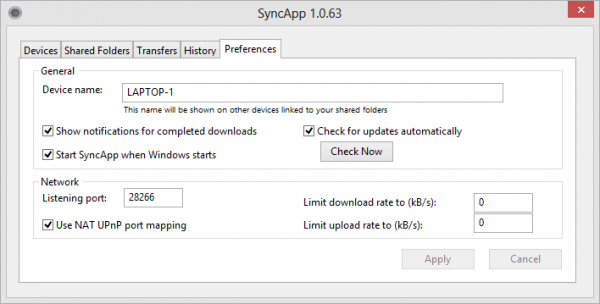
    Once you gain access then you will find the app is available for Windows, OS X and even Linux. The download file is small — just under 500 KB for the Windows version.

    When you get it installed you will discover a fairly straight-forward app with several tabs across the top that can be used to set up and control the app. While there is Devices, Shared Folders, Transfers, History and Preferences, users will really only need to concern themselves with two of these options.

    First you need to setup your sync, which is done from within Shared Folders. Simply click the Add button to begin. The first thing you will notice: a “key” is generated, or, as BitTorrent refers to it — “Shared Secret”. Write this down because you will need it for your other computer(s). Once you accomplish this then you can browse to the folder(s) you wish to keep synchronized. Depending on your file size the indexing could take some time. Coffee break!

    The other tab that will concern most users: Preferences. Here you can make some personalization options, like starting the app when Windows boots and checking for updates.

    When you move to other computers you will only need to enter the key that was generated on the first device. BitTorrent also takes security into consideration. The invitation includes some details — “Sync synchronizes your files through peer-to-peer (p2p) protocol. The devices in sync are connected directly using UDP, NAT traversal, UPnP port mapping, and relay server. If your devices are in a local network, Sync will use LAN for faster synchronisation. For better security all the traffic between devices is encrypted with AES 256 using private key created on the base of your Secret — a random key that is different for every folder”.

    Bear in mind that this software is not yet ready for general release. However, I didn’t find any real problems with it, aside from rather slow indexing of my shared folder, but that is likely due to the file size. There is no word yet on when BitTorrent Sync will launch for general use.

    Photo Credit: Modella/Shutterstock

  • Calling All Hackers: Google Wants You To Break Chrome OS At Pwnium 3

    Pwnium is the annual hacker competition where Google invites coders from around the world to find security holes in Google Chrome. That changes this year as Google wants hackers to break both of its Chromium projects.

    Google announced today that Chrome will be one of the browsers hackers can take on at the annual Pwn2Own Competition. This year’s competition is hosted by HP’s Zero Day Initiative alongside Google, the latter of which will be underwriting a portion of the winnings for all targets – including non-Chromium browsers. The event will last between March 6-8 in Vancouver, BC. You can register here.

    At the CanSecWest conference on March 7, Google will be hosting its own competition – the third annual Pwnium. Instead of hacking Chrome, however, Google will task hackers with breaking Chrome OS. The company will be offering rewards in the following categories with up to $3.14 million in prize money up for grabs:

  • $110,000: browser or system level compromise in guest mode or as a logged-in user, delivered via a web page.
  • $150,000: compromise with device persistence — guest to guest with interim reboot, delivered via a web page.
  • Hackers attempting these challenges will have to use a base Wi-Fi model of the Samsung Series 5 550 Chromebook. You are allowed to use any installed software, including the kernel and drivers. You can also use a virtual machine if you do not have the required hardware.

    Last year’s big winner was a teenage hacker who went by the alias of Pinkie Pie. It’s unknown if he will be bringing his skills back to Pwnium 3 to take on the much more difficult task of cracking Chrome OS. Either way, it’s going to be interesting to see if anybody can crack Chrome OS.

  • Five Reasons to Tune In to BlackBerry 10

    Media quotes from BlackBerry 10

    The BlackBerry 10 launch event is just two days away! We can’t hide our enthusiasm, as evidenced by all the BlackBerry 10 content on the Inside BlackBerry Blog. While we’ve given product and feature demos to show you how great we think BlackBerry 10 is, don’t just take our word for it — check out some of the accolades BlackBerry 10 has been receiving from tech blogs and online media:

    1. “RIM invited developers to a “porting party” to bring their apps to BlackBerry 10 before launch. Experts of the OS were constantly on hand to help with the process…RIM was able to reach its goal of approving an astounding 15,000 apps over the course of one weekend.”Mashable

    2. “The new BlackBerry 10 looks very good…It’s loaded with great stuff. In fact, its keyboard is so terrific that I wish every manufacturer had it…”Gizmodo

    3. “What we found [with BlackBerry 10] was a mobile OS that has a lot of charm, and that actually felt pretty far along in terms of its level of completion…the camera features, including the ability to select better frames for individual faces and components of a shot, feel amazing in practice, and they have a clear use value instead of seeming like novelty gimmicks.”TechCrunch

    4. “The most significant feature in BlackBerry 10, from an enterprise perspective, is probably BlackBerry Balance, which lets corporations create two separate on-device “personas,” one for corporate data and one for personal information. BlackBerry Balance isn’t exactly new–we’ve know about Balance for more than a year–but the version of Balance in BlackBerry 10 has many new features and a polished interface.”CIO

    5. “Combined with gesture support, RIM may have indeed simplified the smartphone user experience in several key ways.”BGR

    You’ve heard it from us, and now you’ve read some the media reviews on BlackBerry 10. Give us your thoughts in the comments below.


    Every BlackBerry 10 detail, update, and feature, as soon as it’s released: BlackBerry.com/BlackBerry10. Test out BlackBerry 10 features hands-on, watch exclusive video interviews with the minds behind BlackBerry 10, and receive product and carrier updates straight to your inbox. Sign up today!

  • Etsy Had A Really Good Year In 2012

    2012 was a good year for Etsy, to say the least. CEO Chad Dickerson took to the company blog this morning to share some stats about the year as Etsy’s growth continues to accelerate.

    “Growth of highly-personal shopping categories like wedding goods and home decor was strong in 2012,” an Etsy spokesperson tells WebProNews. “Jewelry, our #1 category, is still hugely popular, but others, like clothing and housewares, are quickly gaining steam. Furniture was the fastest-growing category on Etsy this year, growing 134% year-over-year.”

    Here are some more highlights from Dickerson’s post:

    • Overall sales by the community in 2012 grew 70.3% over the previous year, to $895.1 million from $525.6 million in 2011.
    • Sales in December 2012 were 72.9% higher than 2011 (compared to 69.9% from Dec 2010-Dec 2011).
    • Sales in November 2012 sales increased by 74.9% over the previous year (compared to 65.7% from Nov 2010-Nov 2011).
    • New buyers increased by 83% in 2012.
    • 10 million new members joined Etsy last year, nearly doubling the total number of members to 22 million around the world, in nearly 200 countries.

    Etsy will celebrate its 8th birthday this year. Since opening in 2005, the site has seen over 14 million shoppers buy over 100 million items.

    Etsy has only made more moves in recent months to help its growth continue. Consider that it only laumched its iPad and Android apps in the last two months. The site also continues to expand into more languages.

    Last week, Etsy announced its acquisition of Mixel.

  • A chef, a writer, a TV host — TED Fellow Eddie Huang is much more than all three in one

    Eddie-Huang

    Eddie Huang might be the TED Fellows’ first working chef. Then again, he might be a few other things too. Huang “defies description,” according to a feature last week in The New York Times. The profile captures his refusal to be categorized in any manner – be it by his Taiwanese heritage, by his deep love of hip-hop or by his status as a triple-threat chef, writer and television host.

    Yes, Huang is a chef — he pioneered Cheeto-fried chicken and is the chef and co-owner of the New York City Taiwanese bun shop BaoHaus. However, as Huang tells the Times, “I have more to say as a writer than from behind a wok.”

    Huang writes the blog Fresh Off the Boat, where he discusses everything from race representation in shows like Girls to what it was like growing up in suburban Orlando. And tomorrow, Random House will release his memoir, also called Fresh Off the Boat, which fellow chef Anthony Bourdain describes as “mercilessly funny.”

    Last October, Vice launched Huang’s exploratory food and travel show, also titled Fresh Off the Boat — an online series with new segments every week. And to further complicate his classification, Huang was also once a corporate lawyer and, after being laid off, turned to stand-up comedy.

    “My only goal as a comedian was to stomp the life out of the model-minority myth,” Huang tells the Times. “I want to prove you don’t need to have academic syntax to be intelligent.”

    Read lots more about TED Fellows »

  • Hefner’s Secretary Dies: Mary O’Connor Worked at the Playboy Mansion For Over 40 Years

    Mary O’Connor, the longtime secretary of Hugh Hefner, has died. Hefner is the publisher of the popular men’s magazine Playboy. O’Connor worked at the Playboy mansion for over 40 years.

    The specific cause of O’Connor’s death has not been released, but it appears that she had been sick in the days leading up to her passing. On January 26 Hefner tweeted that his wife, Crystal, was visiting O’Connor, who was “not doing very well.”

    Hefner then announced late last night that O’Connor passed away:

    It’s clear that O’Connor was well-loved by the many girls who passed through the doors of the Playboy mansion. Current and former playmates are tweeting their condolences and expressing their love for O’Connor:

    In addition to her work for Playboy, O’Connor made multiple appearances on the reality show The Girls Next Door:

  • Law Enforcement Officials Discuss Keeping Our Communities Safe

    Watch this video on YouTube

    Today, President Obama and Vice President Biden continued the conversation about reducing gun violence in a meeting with law enforcement officials.

    No group is more important in helping make our communities safer, President Obama said, because they recognize that it’s not only the high-profile mass shootings that need to be addressed, but also the everyday gun violence that happens in cities and towns across the country.

    That’s why part of the conversation that we're going to be having today relates not only to the issue of new laws or better enforcement of our gun laws, it also means what are we doing to make sure that we've got the strongest possible law enforcement teams on the ground?  What are we doing to hire more cops?  What are we doing to make sure that they're getting the training that they need?  What are we doing to make sure our sheriff's offices in rural counties have access to some of the resources that some of the big cities do in order to deal with some of these emergencies?  

    Two weeks ago, President Obama issued 23 executive actions to help reduce gun violence, and called on Congress to pass laws that will help keep guns out of the wrong hands, ban assault and high-capacity magazines, make our schools safer, and increase access to mental health services. Read more about the plan here.

    read more

  • Beachfront automates app building for Roku, Google TV, Samsung and LG

    Distributing video content to connected TV platforms just got a bit easier: Beachfront Media, the company behind the video discovery site Mefeedia, added an option to build apps to Roku, Google TV, Samsung and LG to its Beachfront Builder offering. Some of the first publishers mentioned by Beachfront for taking advantage of this are the lifestyle TV network Plum TV and YouTuber Tyler Oakley, but a bit of digging unveiled that College Humor seems to be on board as well.

    Beachfront Media launched its Beachfront Builder in private beta last summer, initially focusing on Android and iOS apps based on a number of preformatted templates. Building apps is completely free, but publishers that want to monetize their apps need to become premium customers, which involves revenue share as well as a startup fee. Premium customers can elect to run their own ads against their content, have Beachfront sell inventory for them, or take advantage of both.

    Monday’s announcement extends this model to connected TV platforms, which should help publishers who can’t afford to spend a ton of money to develop their own apps for a number of connected devices. But it looks like some bigger publishers are making use of Beachfront for their videos as well: A quick search on Google Play revealed that Beachfront Media also distributes College Humor’s Android apps.

    Beachfront Media started out with a SEO-focused video portal called Mefeedia, but has been focusing on video distribution and monetization in recent months. The company announced earlier this month that it distributed three billion videos on various platforms in 2012.

  • Inside PricewaterhouseCoopers’ Annual CEO Survey

    PricewaterhouseCoopers unveiled their annual CEO survey at this year’s meeting of the World Economic Forum at Davos. The survey offers a broad sentiment sample from over 1300 CEOs from 68 countries. The report is available online, as is a really rich interactive tool that allows you to slice the data and see how your company compares with some of the global sentiment. We caught up with PwC U.S. Chairman and Senior Partner Bob Moritz in Davos to find out what he found surprising about the report and understand how his company is using data differently itself. An edited version of the interview transcript appears below.

    What do you see as the mood at this year’s Davos?

    A bit of optimism but it’s definitely cautious optimism. We’re a heck of a lot better at this event than we were here over the last three or four years, and that’s probably because there’s no one catastrophic or imminent issue that’s on the table.

    That correlates with what your survey reports.

    Definitely. Of the CEOs surveyed, 50%-plus said things will stay the same for their companies. Last year, 50% said things would get worse. So on a year-over-year basis, that’s good. What’s really interesting is the CEO’s confidence in increasing revenue year over year is down. Why is that, when you have a more stable view? There are two reasons for this, based on our hypothesis and some of the feedback we’ve gotten here. One is we’ve got some hangover problems: European issues, the fiscal cliff issue that got kicked down the road. We haven’t really tackled some of the crosshair issues that need our attention. The second is that in a sustained low-growth environment, the pie isn’t getting any bigger, so everyone’s competing for a smaller slice of that pie. So you have to innovate, do things better, and customer service becomes more important. 82% of the CEOs in the survey said they were going to spend time changing their customer strategies in 2013.

    Some of that focus on customer strategy in the survey translates into increasing use of analytics and big data.

    When CEOs talk about customer strategy you have to figure out what they really mean. One thing is identifying the customer and what product offerings you want to make — there, the innovation piece is really important. Second, how do you interact with customers more effectively to get higher retention and a longer-term relationship with them? And third, how do you interact with customers both personally and enabled by technology?

    One example of a client using data to change the nature of their customer relationship comes from a large mortgage insurer. They had been using their agents just to sell insurance, and typically those agents would be contacted by customers after they already selected a house and needed to buy mortgage insurance. We worked with the insurer to supply the agents with more data so they could contact clients further upstream, say three months before the purchase. Then they could provide information on the insurance, obviously, but also on the demographics of the area, comparable homes with insurance info, data on schools — that kind of thing. The data turned what had been a transaction into a service and an experience.

    How are you using data in new ways at PwC?

    One interesting thing we are doing now because of increasing access to data is hiring different kinds of people. We’re hiring outsiders more than ever before. As I mentioned, CEOs today need help with customer service and we’re hiring for that. We’re also hiring more doctors. If you want to go after the health care system, you need to understand what information is needed at diagnosis, how does it then go through the supply chain, etc. That’s analytics, big data, predictive data and we’re making a lot of hires there.

    Let’s jump back to the survey for a second. What was most surprising to you about the report?

    The lack of M&A activity was surprising, especially when you look at the cash on the balance sheets. After dissecting the issue, we expect that people will be looking at deals in 2013 but they’ll be smaller. And any M&A activity that does happen will probably be towards the end of 2013 given the uncertainties. Another big surprise was the variability by country of the confidence levels. The last surprising thing for me was the extent to which people are still focused on cost management initiatives. It was 80-something percent last year. This year it’s still in the 70s.

    And what are the uncertainties — the crosshair issues you mentioned — that you don’t think people are dealing with?

    When you look at political agendas, there’s increased uncertainty in Europe with what Cameron said about putting the EU membership to a vote. When you look at how we are going to tackle the healthcare issue around the world, are we really focusing on it on a long-term basis with a long-term plan? No we’re not. The reality is you need all parties — politicians, local communities, and business — and you need more leadership. You can’t allow people to manage by the numbers and the demographics and social media to see what the next big ideas we should follow. It’s definitely important to engage and dissect that info, but it’s more important to take it, step back, and then say this is what we’re doing and explain it to those constituencies and move the ball forward.