Category: News

  • Why Man-Made Global Warming is a load of cobblers; Pt 1

    Via Prison Planet.com » Sci Tech

    James Delingpole
    London Telegraph
    May 28, 2010

    Just been reading Climate: The Counter Consensus (Stacey International) the new book by Bob Carter – that’s New Zealand’s Professor Robert M Carter to you, mate: he’s one of the world’s leading palaeoclimatologists – and it’s a cracker. By the end, you’re left feeling rather as I did after the Heartland Conference, that the scientific case against AGW is so overwhelming that you wonder how anyone can still speak up for so discredited a theory without dying of embarrassment.

    All the same, it’s good to be reminded now and again why the “consensus” thinking on AGW simply doesn’t stand up. There are so many excellent examples from Prof Carter’s book, I might be forced to spread them out over several blogs.

    Take his chapter on the oceans. The other day some troll or other was brandishing a figure he’d got from NOAA, showing that the sea was warming. Well bully for you troll, but if you understand at all how climate works that fact does precisely zilch to support the case for AGW. Why?

    The good Prof explains:

    The ocean covers more than 70 per cent of the Earth’s surface and over much of its area it is 3-5km deep. Comprising water, which is one thousand times denser than air the ocean has far more mass than the atmosphere – notwithstanding that the atmosphere covers the entire planet and is 50 km high to the top of the stratosphere. The result of this is that the ocean has a much greater heat capacity than the atmosphere, specifically 3,300 times more. Put another way, all the heat energy contained in the atmosphere is matched by the heat content of only the upper 3.2 metres of the worldwide ocean.

    Another consequence is that water requires much more energy to heat it up than does air. On a volume/volume basis, the ratio of heat capacities is, of course, 3,300 to 1. One practical result of this is that it is almost impossible for the atmosphere to exert a significant heating effect on the ocean, as is often asserted to by promoters of global warming alarm. For to heat one litre of water by 1 degree C will take 3,300 litres of air that was 2 degrees hotter, or one litre of air that was 3,300 degrees hotter, neither of which is a very common scenario in our every day weather system. Instead it is the ocean that controls the warmth of the lower atmosphere, in three main ways: namely, through direct contact, by infrared radiation from the ocean surface and by the removal of latent heat by evaporation.

    Full article here

    Why Man Made Global Warming is a load of cobblers; Pt 1  260310banner2

  • Children, 4, ‘to be fingerprinted to borrow school books from library’

    Via Prison Planet.com » Prison Planet

    Andrew Hough
    London Telegraph
    May 28, 2010

    Children as young as four could be fingerprinted to take out books from a school libaray.

    Students in Manchester are having their thumbprints digitally transformed into electronic codes, which can then be recognised by a computer program.

    Under the scheme, pupils swipe a bar code inside the book they want borrow then press their thumb on to a scanner to authorise the loan. Books are returned in the same way.

    The scheme is being trialled on junior classes at Higher Lane Primary in Whitefield, Bury, Greater Manchester.

    Officials confirmed it is due to be extended to all pupils at the school, one of the areas largest primary schools, with 453 pupils aged four to 11.

    Full article here

    Children, 4, to be fingerprinted to borrow school books from library 150410banner7

  • BioBrite Sunrise Clock Advanced Model, Charcoal

    The Charcoal SunRise Clock is derived from medical research on light and human behavior. In the early morning, the biological clock is sensitive to low intensity light. So, waking to a slowly increasing light can result in a smoother, more natural transition to wakefulness. It features an audible back-up alarm, the ability to set dawn and dusk cycles of 15, 30, 60, or 90 minutes, fade to nightlight, adjustable display brightness and more. Comes with hand made opal glass globe. One year manufacturer?s warranty.

    View BioBrite Sunrise Clock Advanced Model, Charcoal Details

  • Everybody out of the Water


    The great technological achievement was to learn how to drill a well one mile down.
    Except they did not bother to develop the hardware to properly shut down after an accident that was all but inevitable.
    Even the blind, dumb and stupid now knows that this must be done.  That it was not done should mean an industry wide shutdown and general assessment of costs until this problem is satisfactorily fixed.
    And do not even think of putting one of these suckers in the Arctic.
    It is clear that a number of things went wrong.  It is also clear that that is inevitable and assigning blame is a cheap human exercise.  The prospect of failure should have been imagined at the next level and countered and so on up the top.  Just as that is impossible in the airline industry, it is impossible in this industry.
    Yes the signals were there and they were dismissed.  They died.
    We need technology that allows the shutting in of a runaway well.  If that means installing a temporary large enclosure over top of the well head that permits the escape of excess fluids in an accident, then so be it.  There is a safe time to install such a rig before the well is spudded and a safe time to extract the rig once the well is complete and fully rigged for production.
    The blow out preventers need to be rigged in a fail safe mode.  This one failed merely because of a loss of hydraulic pressure which was a completely predictable failure mode.  Other modes may also have been in play here but this was the one up front.
    BP’s New Legacy: Everyone Out of the Water!
    By Nick Hodge | Thursday, May 27th, 2010
    Michael Steele’s having a bad year.
    The embattled Republican National Committee Chairman has had to battle opposition to his leadership within his own party, defend his organization’s $2,000 tab at a Hollywood strip club, and explain away his use of the term “honest injun” to Native American groups…
    But when BP’s Deepwater Horizon oil rig exploded in the Gulf of Mexico last month and began what’s now looking to be the worst environmental disaster in American history, Steele’s year got a whole lot worse.
    That’s because Steele is the guy who’s forever immortalized on tape leading the 2008 Republican Convention crowd of over 20,000 in a resounding chant of “Drill Baby Drill!” — an image that clearly resounds from the last presidential race.
    So imagine how he’s feeling today.
    Every corner of Washington can’t distance themselves from the offshore drilling industry fast enough.
    The industry that was once celebrated as perhaps the savior of domestic energy production is now public enemy # 1 in almost every corner of the country.
    Washington to Wasilla… Wall Street to Main Street… Everywhere you turn, politicians and pundits are falling over themselves trying to get as far away as possible from deep sea drilling.
    And every time CNN or MSNBC or Fox News — yes, even Fox News — wants to show viewers how much lawmakers and talking heads were in love with offshore oil just a short time ago, they’ll cut right to the clip of Michael Steele.
    “Drill Baby Drill!”
    This guy can’t catch a break.
    And if you think it’s only Democrats who are vilifying deep sea drilling, think again…
    Just check out this quote by a prominent U.S. politician:
    …this tragedy should remind us that America needs a real, comprehensive energy plan… which includes more of everything: more clean and renewable sources of energy such as nuclear power, wind, and solar energy, more alternative fuels, more conservation, and more environmentally responsible development of America‘s energy resources.
    Want to take a guess at which tree-hugging liberal said it?
    Al Gore? Nancy Pelosi? John Kerry?
    Nope. These words belong to House Minority Leader John Boehner, a Republican from Ohio.
    And how about this assessment of the aftermath of the BP Spill by a leading cable news commentator:
    …it’s not a matter of if they’ll be a disaster of some kind resulting of this kind of offshore drilling, it’s only a matter of when. This verifies that argument and becomes a powerful factor in the debate over what to do next. I don’t see any way around the political reality that this will set back the cause of offshore drilling in the United States
    Which member of the left-leaning media said this?
    Anderson Cooper? Rachel Maddow? Keith Olberman?
    Think again — this statement was uttered by none other than Fox News’ ultra-conservative Brit Hume…
    It seems like we’ve finally found something to unite the parties.
    On both sides of the aisle, the tide has turned shockingly fast. Gov. Schwarzenegger of California — who had supported deep sea drilling off his state’s coast — has now recently changed his mind and spoken out against it.
    President Obama — who, in late March, finally relented against increasing pressure to approve more offshore oil projects and gave the OK to rigs in Alaska, the Eastern United States, and the Gulf — is now backpedaling and freezing all new permits for the time being.
    And a CNN public opinion poll shows that support for offshore drilling has dropped 17% nationally between August 2008 and May 2010.
    It’s clear that the oil game is about to change… possibly forever.
    But what does that mean?
    Well, first of all, it means that deep sea oil will take a hit — a hard hit — for quite a while.
    But it won’t die; there’s simply too much oil in the ocean to let it all go, no matter how many disasters occur.
    “An oil spill here or there hasn’t gotten in the way of oil extraction anywhere,” states Peter Maass, journalist and author of the 2009 book Crude World: The Violent Twilight of Oil.
    In the short term, don’t expect to see many new rigs popping up from your beach chair this summer; at least in the short term, oil companies are going to be forced to move inland.
    That means outlets like the oil sands in Utah are going to see increased attention and exploration. So far, 32 billion barrels have been identified. Oil companies undoubtedly will start sending in teams looking for more.
    But perhaps the greatest beneficiary from the BP disaster will be oil shale deposits — particularly ones in North Dakota‘s Bakken region.
    The good news just keeps on coming out of this domestic oil hot spot. Brigham Exploration Co. announced yesterday positive results from two more of its wells in its core Bakken acreage.
    That was enough to send its share price up 11% on Wednesday.
    Every day, the barrel estimates just keep going up in the Bakken region. And with oil companies staying out of the water for the time being, odds are we’ll be seeing a lineup at the North Dakota state border as the petro barons fight for a piece of what’s bubbling up from the shale.
    So then what’s the play?
    Well in the coming weeks, stay tuned to Energy and Capital for a new report detailing three small American companies making big moves into the Bakken region.
    This is, without a doubt, one of the rarest opportunities to exploit public sentiment for profit that I’ve ever come across.
    You’ve heard it before, but it bears repeating: Crisis breeds opportunity.
    We’ve got the crisis — now prepare for the opportunity.
    Watch for this new report appearing soon. 
    Call it like you see it,
  • Australian Gyms Swapping Out Pop Songs With Cover Versions To Avoid Ridiculous Royalties

    Just recently, we wrote about how a ridiculous ruling by the Australian Copyright Tribunal, boosted the royalty rates that gyms needed to pay if they played any music covered by the Phonographic Performance Company of Australia (PPCA). In some cases it went from less than $1 per class to $1 per participant per class. At the time, we noted that gyms were switching to music that wasn’t part of PPCA, and apparently that includes swapping out popular songs for cheap cover versions. This is, of course, similar to what happened years ago with various music video games when record labels and bands demanded too much money to be in the games. Eventually, they figured out they were doing more harm to themselves by shutting themselves out of a market, but it’s not clear if the PPCA is ever going to realize that.

    Permalink | Comments | Email This Story


  • Lake Tanganyika Warms


    I find the arguments trotted out here to be unconvincing.  In fact the proxy measures the lakes productivity and we are arguing that the control variable is temperature.  A far more important variable in the twentieth century must be local population which has steadily risen and surely surpasses anything over the past 1500 years.
    The information is valuable but the causation argument is at best specious.  Throw that away and we have an increasing impact of human development inducing productivity changes and that is hardly a surprise.  This looks like an international grant application written before Climategate and dreams of international funding to manage so called global warming.
    It is also a reminder of the extraordinary productivity of lakes in the tropics.
    Actually this reminds me that artificially inducing inversion is an excellent strategy for optimizing the productivity of these lakes.  It would also be far more practical to do just that here than on the open ocean.
    The idea is to induce the deep nutrient rich water to rise to the surface and blend with surface waters.  An artificial tube of neutral buoyancy can make that happen and once the flow is established, it should be self sustaining provided the tube is large enough to provide little friction or resistance to the flow.
    In this way the surface water productivity and volume can be strongly increased.  Perhaps air can also be injected into the base of these columns to assist in increasing the oxygen content of the lake.
    20th-Century Warming In Lake Tanganyika Is Unprecedented
    by Staff Writers
    Tucson AZ (SPX) May 25, 2010
    Lake Tanganyika’s surface waters are currently warmer than at any time in the previous 1,500 years, a University of Arizona researcher and his colleagues report online in Nature Geoscience.

    The rise in temperature during the 20th century is driving a decline in the productivity of the lake, which hosts the second-largest inland fishery in Africa.

    “People throughout south-central Africa depend on the fish from Lake Tanganyika as a crucial source of protein,” said study co-author Andrew S. Cohen, a UA professor of geosciences. “This resource is likely threatened by the lake’s unprecedented warming since the late 19th century and the associated loss of lake productivity.”

    This is the first detailed record of temperature and its impacts on a tropical African ecosystem that allows scientists to compare the last 100 years with the previous 1,400 years, Cohen said.

    The team attributes the lake’s increased temperature and the decreased productivity during the 20th century to human-caused global warming.

    “We’ve got a global phenomenon driving something local that has a huge potential impact on the people that live in the region and on the animals that live in the lake,” he said.

    The annual catch of the Lake Tanganyika fishery is estimated at about 198,000 tons per year, more than 20 times greater than the U.S. commercial fishery in the Great Lakes, he said. The nations of Burundi, Tanzania, Zambia and the Democratic Republic of Congo border the lake, which is the longest lake in the world and the second deepest.

    The surface waters of Lake Tanganyika are the most biologically productive part of the lake. For the 1,400 years before 1900, those waters were no warmer than 75.7 F (24.3 degrees C). Since 1900, the lake’s surface waters warmed 3 degrees F, reaching 78.8 degrees F (26 degrees C) in 2003, the date of the researchers’ last measurement.

    The researchers used sediment cores from the lake bed to reconstruct the 1,500-year history of the lake. The scientists analyzed the cores for chemicals produced by microbes and left in the sediments to determine the lake’s past temperature and productivity.

    Because sediment is deposited in the lake in annual layers, the cores provide a detailed record of Lake Tanganyika‘s past temperatures and productivity and of the regional wildfires.

    The instrument record of lake temperatures from the 20th century agrees with the temperature analyses from the cores, Cohen said.

    The cores were extracted as part of the UA’s Nyanza Project, a research training program that brought together U.S. and African scientists and students to study tropical lakes. The National Science Foundation funded the project.

    “A big part of our mandate for the Nyanza Project was looking at the interconnectivity between climate, human activity, resources and biodiversity,” said Cohen, who directed the multi-year project.
    Lake Tanganyika and similar tropical lakes are divided into two general levels. Most of the fish and other organisms live in the upper 300 feet (about 100 meters). At depths below that, the lake waters contain less and less oxygen. Below approximately 600 feet, the lake water, although nutrient-rich, has no oxygen and fish cannot live there.

    During the region’s windy season, the winds make the lake’s surface waters slosh back and forth, mixing some of the deep water with the upper layers. This annual mixing resupplies the lake’s food web with nutrients and drives the lake’s productivity cycle, Cohen said.

    However, as Lake Tanganyika warms, the upper waters of the lake become less dense. Therefore, stronger winds are required to churn the lake waters enough to mix the deeper waters with the upper layer. As a result, the upper layers of the lake are becoming increasingly nutrient-poor, reducing the lake’s productivity.

    In addition, warmer water contains less dissolved oxygen, reducing the quality of the habitat for some fish species.

    Other lakes in Africa are showing similar effects to those the team found in Lake Tanganyika, he said.
    The finding has implications for lakes in more temperate climates.

    “Increasingly, lakes in the U.S. are warming and they’re behaving more like these African lakes,” Cohen said. “There’s a potential for learning a lot about where we’re going by seeing where those lakes already are.”
  • Prince of Persia iPhone Game Takes You Back To 1989 [IPhone Apps]

    You’ve probably heard by now that the Prince of Persia film is a complete wash-out, but thankfully ye olde retro Prince of Persia game for the iPhone and iPad has just been released today. More »


    Prince of PersiaVideo gameiPhoneGamesPlatform

  • Venice Now in 3D in Google Earth

    Google is on a quest to recreating the world inside Google Earth. It’s not satisfied with just the oceans and mountains, it wants everything to be in 3D. For a while now, cities have gotten some of the attention as well and Google, with the help of the community, is recreating the cities of the world in three dimensions. Once a city is complete enough, Goo… (read more)

  • NBA Update: Artest Buzzer Shot Gives LA Lakers Lead 3-2

    Beating the buzzer, Ron Artest, now a superstar, helped beat Phoenix Suns. The Los Angeles Lakers were seen in a difficult position after Kobe Bryant’s shot rebounded but Artest never left things hanging as his last second buzzer shot helped them for a clear win, with a score 103-101. The LA Lakers now have a lead of 3-2 in the Western Conference Finals.

    Even thought Bryant had scored 30 points with 11 rebounds and nine assists, in the last, Artest was to be tagged as the hero, even after the last scoring basket being just the second basket all night. The scoring basket was a rebound, being a difficult one by Bryant, but Artest quickly reacting rolled into the lane, grabbing the ball and throwing a hideous shot, which ended up scoring for the Lakers.

    “That was a Lucky Shot”, shouted Phoenix striker.

    Things changed at the Staples Center when opponent team’s Jason Richardson threw a three pointer with only 3.5 seconds to spare. The crowd was already angry as Artest missed the baskets quiet a few time as they shouted to ask him to spot shooting.

    But then after, Artest, had the whole stadium running his name. It was stunning and surely unbelievable as the buzzer rang with Artest’s ball inside the basket.

    Related posts:

    1. Kobe Bryant Felt ‘Jovial’ After Losing
    2. 2nd Straight Game Miss for Black Mamba
    3. NBA Playoff 2010 Set To Start on April 14

  • Deal of the Day: SmrtGuard is 50% off for Yearly Subscriptions!

    You’ve probably seen us talk about SmrtGuard before. It’s a great application which allows you to remotely backup important information off your device, as well track it if you loose it. Here’s a full rundown of SmrtGuard’s great features:

    • Remote OTA Backup (manual or scheduled) PIMs, Call logs, Emails
    • Remote OTA Restore PIMs, Call logs, Emails
    • Remote Data Wipe (including microSD)
    • Remote Tracking (lowjack) and Locating – see it on our companion website that comes with the account
    • Remote Listen – Listen to your thief or be a spy
    • Remote Lock
    • Remote Audio Ping (to help you find the device)
    • Personal Guardian (send out distress call with push of a button)
    • SIMCard Guardian – alert send out when unauthorized SIM is used (GSM based phone only)
    • Loved-one Tracking – Great for couples and families with smartphones to track each other

    Normally SmrtGuard’s Yearly Subscription would cost you $49.95, however to celebrate SmrtGuard’s 1st Birthday they are offering the yearly subscription at 50% off! This means today only you can grab a copy for $22.50! Simply follow the link below to get more details on the app or to purchase it.

    Visit the BBSync Store and Check Out SmartGuard’s Yearly Subscription at 50% off today only

    You’re reading a story which originated at BlackBerrySync.com, Where you find BlackBerry News You Can Sync With…

    This story is sponsored by the new BlackBerry Sync Mobile App Store. Grab your free copy today at www.GetAppStore.com from your BlackBerry.

    Deal of the Day: SmrtGuard is 50% off for Yearly Subscriptions!

    Related posts:

    1. SmrtGuard For BlackBerry Updates To v2.15 We received word that SmrtGuard updated to v2.15 and…
    2. Be Smart And Keep Your Guard Up, SmrtGuard Updated to v2.25! SmrtGuard users, please open your SmrtGuard and you will…
    3. Update Alert: SmrtGuard v1.95 Available, Update Now The SmrtGuard team notified us yesterday about v1.95 is…
  • Fossilized Egg Shells Yield DNA

    I am optimistic that we are going to be able so substantially restore a wide range of presently extinct bird species wiped out over the past two centuries.  First of we actually have great collections of dried eggs collected by naturalists during those times.  This can provide the necessary DNA.  Thus while replicating older DNA will be a profound challenge, our lost Moa and Dodos and passenger pigeons are really the low hanging fruit.
    These can all be replicated and cloned out using skills already in place or presently soon to be available.  It is not a gimme but it is seemingly in striking range.
    We have a wide range of extinct birds that we want to see restored and present knowhow is telling us that it is all possible.
    Most of the chatter has been about dinosaurs and of course mammoths.  Yet we have inflicted real extinction on a wide range of critters ourselves just in the past two centuries. Restoring some of the populations seems reasonable and we may do a lot better this time.  Perhaps we can really discover just how the passenger pigeon got wiped out.
    Somehow we will not be restoring the North American locust anytime soon though.
    I also think that a lot of money and resources will be available.
    FOSSILIZED EGGSHELLS YIELD DNA
    These ancient DNA samples could open the door to cloning long-extinct species.
    By Jennifer Viegas Tue Mar 9, 2010
    DNA samples from the eggshells of extinct birds, like this elephant bird egg, could provide valuable insight into the evolutionary histories of a number of animal species.
    Natural History Museum, London 
    THE GIST:
    For the first time, scientists have successfully extracted DNA from fossilized eggshells.
    Since many of the eggshells belonged to extinct birds, it may now be possible to learn more about mysterious prehistoric species.
    Eggs retrieved from cold climates could lead to recovery of very ancient DNA.
    In a scientific breakthrough that opens a window to now-extinct animals from the prehistoric past, researchers have just successfully recovered DNA from several fossilized eggshells collected from Australia, New Zealand and Madagascar, according to a new study in the latest Proceedings of the Royal Society B.
    While dinosaur eggs remain a challenge, the scientists have already collected DNA for the largest bird that ever lived — the elephant bird Aepyornis — that stood around 10 feet tall and weighed around 880 pounds. Attempts to retrieve DNA from elephant bird bone previously failed, so eggshells may prove to be a more reliable source.
    In the future, everything from prehistoric penguin eggshells to those of tiny birds could be mined for DNA, particularly since few research limitations seem to exist.
    “Furthermore, we were able to isolate DNA from eggshells from three countries, each with very different climate conditions,” added Oskam, a researcher at Murdoch University‘s Ancient DNA Lab.
    She and her colleagues obtained DNA from extinct moas and ducks from New Zealand, extinct elephant birds from Madagascar, and an emu and owl from Australia. The oldest eggshell belonged to an emu that lived 19,000 years ago.
    Basic materials within eggshells — calcium carbonate and an organic matrix — break down very slowly, helping to explain why shells don’t compost well. The structure wards off decay, which protects contents right after the egg is first laid, but then facilitates preservation of the eggshell itself over millennia.
    Oskam explained that the “moa eggshell has 125 times lower microbial contamination when compared to moa bone. This highlights eggshells as an attractive substrate for ancient DNA work, especially whole genome studies.”
    She believes that reviving an extinct animal is unethical, so cloning of now-extinct birds is unlikely. She hopes, however, that the gathered genetic information might provide better evolutionary histories for extinct species. It could also enable researchers to non-invasively investigate the past biodiversity of many birds, including modern ones, like penguins.
    Oskam suspects eggs retrieved from cold environments, such as in the Arctic and Antarctica, could lead to “DNA of much greater antiquity.”
    Many dinosaur eggs have been found, including entire nests full of eggs. “It would be extremely exciting to extract DNA from a dinosaur egg,” Oskam added. But she also suspects that completely mineralized fossils, meaning those that have turned into rocks, pose challenges not yet possible to overcome.
    “Since the last dinosaurs died out 65 million years ago, it is safe to say we are nowhere near approaching these sorts of ages,” she said.
    “It’s wonderful that nearly three decades after the first successful analysis of ‘ancient’ DNA, we are still discovering new sources of paleogenetic data,” Beth Shapiro, an assistant professor of biology at Pennsylvania State University, told Discovery News.
    “It’s particularly exciting that DNA appears to survive for a relatively long time in eggshells preserved in warm environments,” Shapiro added. “There is no doubt this discovery will expand both the geographic and taxonomic range of research in our field, and as such will make a considerable impact.”
    Oskam and her team are already using eggshells to study how people interacted with the giant moa when the Polynesians first came to New Zealand about 800 years ago. The large bird unfortunately may have been an easy dinner on legs, since it went extinct just 300 years later
  • STM type Junctions Harvest Solar Energy


    I think this is something we might get a bit excited about.   It appears to be a new and novel approach to collecting and converting solar energy into direct current.  Real world efficiency is not even attempted yet, but this promises to be interesting.
    The device concept started out as a rectifier and that is also important.
    What screams at me is the prospect of converting infrared into solar energy and generally broadening the consumed spectrum.  This can result in a gross jump in general solar cell energy efficiencies.  We always drew from too narrow a band of the spectrum and simply left most of the energy alone. This approach promises change.
    STM-type junctions harvest solar energy
    May 18, 2010
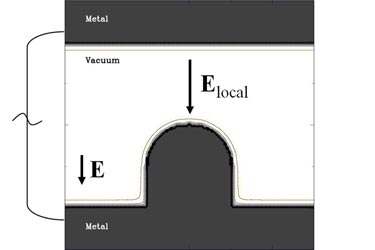
    Researchers from Belgium, Korea and the US are investigating the possibility of using metal-vacuum-metal junctions of a type similar to those found in a Scanning Tunnelling Microscope to harvest solar energy. In the design, two metals are separated by a vacuum gap of a few nanometres. One metal is extended by a sharp tip, while the other is essentially flat.
    The group has found that these junctions can be used to rectify AC voltages for frequencies that go from the infrared up to the visible. This opens up the possibility of building optical diodes to couple photonic and electronic circuits. It also provides a solution for converting the energy of solar radiation into useful DC current.
    The rectification properties of the junctions considered in this work can be traced to their geometrical asymmetry. The electric field of the incident radiation is magnified by the sharp tip, which results in a significant circulation of current in the junction when the field is oriented downwards. The flat metal that faces the tip, however, does not magnify the field of the incident radiation and a smaller circulation of current is achieved when the field is oriented upwards. There is therefore a net flow of DC current when these junctions are subject to an oscillating field.
    This idea works as long as the electrons can cross the junction before the field present in the junction changes sign. When the gap spacing is of a few nanometres only, the time taken by electrons to cross the junction is of the order of a femtosecond (this is the typical estimate of tunnelling times). This makes it possible to rectify radiation with frequencies up to 1015 Hz.
    Simulation and analysis
    To explore the concept in more detail, the researchers performed quantum-mechanical simulations of asymmetric metal-vacuum-metal junctions. They considered the rectification of monochromatic radiation as well as the rectification of a full distribution of frequencies in order to simulate a focused beam of solar radiation. The scientists found that a significant rectification of incident radiation does indeed occur for frequencies ranging from the infrared up to the visible.
    The team also analysed the efficiency with which the energy of incident radiation is converted by the device. They obtained quantum efficiencies as high as 25% for this energy conversion and the results suggest that even better performances can be expected if larger protrusions are considered.
    The occurrence of polarization resonances in the tip also improves the rectification properties of the junction. Therefore, it appears that the dependence of these polarization resonances on the material and the physical dimensions of the tip could be used to control the frequencies at which the device is especially efficient for the energy conversion of electromagnetic radiation. This opens up the possibility to build diodes of the type presented in this study for the rectification and energy conversion of infrared and optical radiations.
    Further details can be found in Nanotechnology.
    About the author
    Dr Alexandre Mayer is a research associate in the Department of Physics at the University of Namur-FUNDP, Belgium. He is sponsored by the National Fund for Scientific Research (FNRS) of Belgium. Moon S Chung is professor of physics at the Ulsan University, Korea. Brock L Weiss is assistant professor of physics at Pennsylvania State University, US. Nicholas M Miskovsky and Paul H Cutler are professor Emeritus of physics at Pennsylvania State University. This work results from a long collaboration between these different authors. The numerical simulations discussed in this work were achieved using the Inter-university Scientific Computing Facility (ISCF) of Namur.
  • On Rupert’s iPad: Times, Sky TV Show Different Charging Approaches


    Rupert Murdoch with Times and Sky iPad apps

    The Times joined the Financial Times as the only national UK newspaper with a news app for iPad’s international launch Friday morning.

    Yes, it’s pay-for, but there’s an entirely different pricepoint from the new websites, which will soon charge £1 a day, £2 a week or free with print…

    It’s £9.99 every 28 days. But (and here’s where it may fall down) – these payments don’t link up with website payments. That means anyone who is paying to access the website must also pay the extra tenner a month for the same content on iPad, and vice versa.

    Now, this may well be a result of an inability to link Apple’s iTunes Store billing systems with News Corp.‘s own. But the Financial Times, which uses its own payment technology rather than Apple’s, has a platform-agnostic, pay-once strategy across its outlets.

    “It is a shame and I feel it is somewhat of a scam,” wrote one early iTunes Store reviewer. “I like the look and feel of the app but will definitely not purchase again unless this is changed.”

    A Times spokesperson tells us: “The Times iPad edition is a separate product to the new website, which is why it is priced differently. It is an edition of the paper edited and developed specifically for the iPad, which can be downloaded and read offline, for example.”

    Of course, if an iPad reader is not the same customer as a web reader, then this isn’t a problem – something everyone’s yet to find out as the device beds down.

    The Times’ iPad announcement today is accompanied by a story on how the iPad “may rewrite the future of newspapers”.

    Its iPad app comes with “editions” for updates; a screengrab shows its “11pm edition”. Just as with the new websites, the iPad editions retain a strong Times newspaper brand identity, without resorting to a lazy, page-turner replica. Users rate it 3.5/5. The paper has now taken its existing iPhone news apps off the store.

    Other UK newspapers have not embraced iPad’s international day one…

    —The Guardian, though its has a photojournalism app, says it has no iPad news app, despite Apple’s main advertising campaigns heavily featuring the Guardian.co.uk website.

    —There’s no evident Daily Express app, despite that paper’s early promise to release one.

    —The Metro freesheet is due to release an app.

    —Telegraph.co.uk was saying nothing either way yesterday, perhaps suggesting an upcoming release.

    —At least the Cheshire-based Congleton Chronicle is in full force, rolled out on the iPad version of Exact Editions’ existing iPhone app.

    Elsewhere in News Corp (NYSE: NWS). BSkyB (NYSE: BSY) has updated its Sky Mobile TV iPhone app for iPad, with a hefty price premium…

    Whilst the iPhone app costs just £6-a-month to non-Sky TV customers, for live Sky Sports channels, Sky Sports News and Sky News, the iPad app asks non-TV customers £35 a month and for TV customers to pay an extra £6.

    This strategy is clearly designed to drive subscriptions to the satellite pay-TV service as a whole, rather than to consider the iPad in isolation. The app also uses in-house billing technology rather than iPhone OS’ auto-renewals.

    But Sky Mobile TV at least ventures a multi-platform charging mechanism that The Times has not managed to deploy. The equivalent, for The Times, would have been to charge £10 a month, or even more, to non-subscribed readers, but to drop or reduce the charge for website subscribers. Still, News International is being pretty upfront that models may change as it learns over the course of time.


  • Download Dropbox 0.8.64 with Selective Sync

    Dropbox has proven a very popular cross-platform file syncing service. Its simplicity has enabled it to stand out from the crowd and the swiftness with which it adopts new platforms and devices, having recently been made available for Android and iPad devices, has also made it universal. And things are getting better, an upcoming version brings one of… (read more)

  • Shannon Price’s Husband in Critical Condition

    Shannon Price’s husband, former child star Gary Coleman is hospitalized and in critical condition. He is in a “serious medical problem” according to his family.

    Gary Coleman, 42 years old, was admitted in Utah Valley Regional Medical Center to the Provo facility Wednesday after going through surgery for head trauma. He got in a fall from his home in Santaquin, 55 miles south of Salt Lake City. The family did not want to release further details about the Gary’s current condition.


    Shannon Price and her father released a statement to KUTV-TV on Thursday and said that Gary Coleman was taken to the hospital and ask for prayers from supporters saying, “we hope those prayers are answered and that Gary will be able to recover and return home soon.”

    This is the third time for Gary Coleman to be hospitalized this year. First he suffered seizures that occurred during a TV interview on the Insider. He also had a heart surgery last fall and that the surgery became complicated due to pneumonia. He is suffering with a kidney disease.

    Related posts:

    1. Gary Coleman Was Admitted to Hospital Because of a Serious Medical Condition
    2. The Vice President, Joe Biden’s Son Hospitalized
    3. U2’s Lead Singer Undergoes Emergency Back Surgery

  • Goby and TripAdvisor: Two Great Mobile Apps for Your Upcoming Travels

    World Wide Wade
    Wade Roush wrote:

    It’s almost Memorial Day weekend, when thoughts turn to vacation and summer road trips, so I thought I’d write briefly today about two cool travel-related mobile apps, both hailing from the Boston area.

    But first, I want to take a moment to remind you that June is Innovation Month in New England. Similar to the Mass Mobile Month initiative that Xconomy led back in March, Innovation Month is a grassroots social-media campaign designed to draw attention to the unusual abundance of technology-and-entrepreneurship events planned around New England in June. Scott Kirsner of the Boston Globe is the unofficial coordinator of the effort, which is now in its second year. He blogged yesterday about how people in the startup ecosystem around Boston can get involved in promoting Innovation Month activities.

    Our own Xconomy Summit on Innovation, Technology, and Entrepreneurship (XSITE) on June 17 is just one of about two dozen events already listed at the New England Innovation Month website. I’m also looking forward to the Ad Club’s Branded in Boston event on June 24, where I’ll be making an appearance.

    If, for some reason, you run out of technology events to attend next month, there are a bunch of great mobile apps these days that can help you find other fun things to do and fun places to go—not just in June, but throughout the year. I want to write about two of them today: the brand new TripAdvisor app for the iPhone, and the nifty Goby app, which is available for both the iPhone and the iPad.

    Both apps are free. Newton, MA-based TripAdvisor, which I profiled in February, launched its iPhone app just this week, to take the place of a previous, more limited app called Local Picks. Boston-based Goby, which I profiled shortly after its launch last September, released its iPhone app in March, and came out with an iPad version shortly thereafter.

    TripAdvisor iPhone app screenshotThe TripAdvisor app, like the TripAdvisor website, is great for figuring out how you’re going to get to a place, and where you should stay or eat once you get there. The Goby app is a bit different.Once you’re in a place, it’s a fantastic resource for exploring what fun things there are to do there.

    For TripAdvisor’s iPhone offering, the company’s programmers have done the seemingly impossible: they’ve shrunk down the massive information resources of the TripAdvisor website and made them easily navigable on the small screen. This program, which is essentially a self-contained, “appified” version of what you’ll see if you surf to the TripAdvisor site in the iPhone’s browser, includes listings and customer ratings and reviews for popular hotels, restaurants, and attractions in thousands of cities around the world. (In fact, the app is available in 13 languages.)

    With all this information at hand on your phone, there’s much less excuse for reserving a table at a bad restaurant or a room at a subpar hotel. But if you do wind up having a bad experience, the TripAdvisor app includes a simple interface for entering ratings and writing reviews. Which makes a lot of sense on a mobile device. After all, why not contribute your commentary while your feelings are still fresh (or raw, as the case may be)?

    The only thing that doesn’t work quite as well on the mobile app as it does on the Web is TripAdvisor’s flight search engine. The same flight data is all there. But it’s just a lot easier to wade through the Web-based search engine, refine your search, and compare your options when you’re using …Next Page »

    UNDERWRITERS AND PARTNERS


  • America’s Global Outlook, at an ‘Inflection Point’

    Ben Rhodes, right, in the Oval Office with Director of Speechwriting Jon Favreau and President Obama (White House photo)

    “We’re at an inflection point,” Ben Rhodes observed about the United States’ global outlook, a year and a half into the Obama presidency.

    Rhodes speaks from a unique vantage point. He’s the deputy national security adviser for strategic communications, a title that obscures his importance as one of President Obama’s closest and most influential foreign policy advisers. He’s been with Obama since the beginning of his presidential campaign, helping shape and explain the contours of Obama’s foreign policy. And he’s the author of the National Security Strategy of 2010, that policy’s foundational text.

    Image by: Matt Mahurin

    Image by: Matt Mahurin

    The Washington Independent spoke with Rhodes about the document, its implications for American national security, and the “inflection point” it addresses. A lightly edited transcript follows.

    The Washington Independent: The National Security Strategy pledges, “We must pursue a rules-based international system that can advance our own interests by serving mutual interests.” How do you build a constituency in the U.S. for that, after decades of that system being caricatured — sometimes accurately — as ineffectual?

    Ben Rhodes: The tradition in the United States is actually the opposite. Look at the moment of our maximum global power after World War II. We had a clean slate and we chose to build an architecture of international institutions, international standards, international rules, to include the United Nations, to include NATO, to include international financial institutions, treaties, and to apply our power to strengthening that architecture so that it could solve common problems. And I think there was basically a pretty broad, bipartisan consensus that America was served well by an international architecture that could keep the peace and advance prosperity. Sure, there was skepticism about it — there’s always some skepticism about the international order in parts of the American political culture — but I think there’s a broad tradition of support for that because I think the American people are smart enough to know that if we don’t act within that context, we bear a far greater burden ourselves.

    TWI: So this is a matter of reminding people of what’s worked in the past.

    Rhodes: We’re at an inflection point. We’re clear-eyed about the shortcomings. We’re not starry-eyed about the efficacy of the international system as it is today. As the president has said many times, it’s in some instances buckling under the weight of challenges it wasn’t designed for. However, that presents you with a choice. And that choice is you can say there are emerging challenges like terrorism, like nuclear proliferation, climate, a global economy that’s more interwoven. We can deal with those challenges by saying that the international system is fatally flawed and we’re going to step outside the lines and deal with these issues on our own on an ad-hoc basis. Or you can say we are going to channel our strength and influence to reshaping an international order where we can effectively deal with these challenges.

    TWI: Secretary Clinton said at the Brookings Institution yesterday that the document’s main takeaway should be its assertion that American power is fundamentally tied to the sources of our strength domestically. But we’re still in the midst of extraordinarily challenging economic times, and there are parts of the dignity promotion section about food security, global health and priorities that previous strategies considered peripheral. Is the agenda too ambitious?

    Rhodes: No, I don’t think so. We’re actually demonstrating this kind of collective action, in our first 15 months, that we’re trying to describe in the actual document. So international economic coordination can no longer be effectively implemented through the G-8, it’s got to be a broader spectrum of nations at the table, to include both China and India, but also your South Africas, your Brazils, your Indonesias, so it’s the G-20. Climate change can’t be dealt with simply by the Kyoto signatories. You’ve got to bring in all major economies, again, to include China, to include India. So that’s the framework we’ve tried to begin through the Major Economies Forum, through the Copenhagen Accord. It includes us, India, China. So we’re already trying to broaden the circle responsibility to deal with these challenges.

    There is a rebalancing of the application of American resources that this administration is pursuing that we describe in the document. We’re rebalancing in terms of the capabilities that we apply to our problems, in the sense that we are prioritizing investments and factors like education, clean energy that have been under-resourced over the years. Our commitment to draw down in Iraq and our plans to go over the hump in Afghanistan will represent a long-term rebalancing of our military deployments, which obviously take up a good deal of resources. So we have already begun to see shifts in resources that we project over time.

    The second and very important thing, and this gets back to your first question, is an international order that can successfully deal with challenges necessitates less of an allocation of American resources. You were talking about how you make your case to the American people. You make the case to the American people that collective action is far cheaper to America than unilateral action. I mean, that’s just a fact. And if you look at something like the Food Security Initiative, certainly it’s going to take resources, but we pursue that through the G-8 and into the G-20 to try to leverage greater international action.

    Similarly, if you look at the thrust of the dignity promotion and the development policies, a lot of it is trying to see capacity in partners. So that we’ll focus development policy on the kind of economic and social progress that we see as a human rights issue as well as a security issue and a prosperity issue. But frankly, by focusing on building the capacity of our partners, we’re trying through our investments to see progress that will diminish the necessity of foreign assistance over time, insofar as we’re building up the ability of nations to not just combat individual diseases, but to develop their own public health systems. We’re not just trying to help them feed their people in a humanitarian emergency, but the premise of the Food Security Initiative is to help them develop the technique and technologies that will allow them feed themselves over time.

    So I think again the burden sharing is a critical aspect of the kind of force multiplication that you can get, again, through an effective international order. Similarly, just as we want more responsible action by a broader circle of nations, we want more capable partners, so that over time that’s the means through which we’re managing these problems.

    TWI: I noticed some similarities between the National Security Strategy and the Army/Marine Corps Field Manual on Counterinsurgency, from the focus on legitimacy of action; on taking responsibility for promoting dignity in at-risk populations; and in its recognition that too much hard power can be counterproductive. Did you draw on any of the counterinsurgency lessons of Iraq and Afghanistan when writing the document?

    Rhodes: Yeah, absolutely. As the president alluded to at West Point, the war in Afghanistan today is very different in some ways than the war that began nine years ago, as it relates to the nature of the fight and the tactics of the enemy and the lessons that we’ve learned in the application of our power in Afghanistan. And certainly the same would be true in Iraq, that we ended up fighting a war that was different than the kind of war that we, that many people felt like we’d be fighting at the beginning.

    So the lessons, I think, we all learned included the importance of the legitimacy of our actions, as it relates not just to the international community but most immediately from the populations of the countries within which we’re operating. So that certainly informs Gen. McChrystal’s approach in Afghanistan, but it informs, again, our approach more broadly, as it relates to Iraq and also other partners that we’re also going to be having to cooperate with on security issues going forward.

    TWI: As a strategic communicator, what do you want someone living in Miran Shah, in the tribal areas of Pakistan, who might be caught between the Haqqani network and a government program to degrade that network, to get out of this document?

    Rhodes: That the United States is not seeking to control events where they live. Nor do we view their future narrowly through a purely counterterrorism lens. In the first instance, we’re trying to develop the capability in their local area, as well as their national government, to manage the threats within their borders rather than the United States doing so. In the second instance, that we have a broader agenda. We want to speak to their aspirations. America cannot by itself deliver a better life, but it can tilt the scales, as it were, in the direction of greater opportunity, greater human dignity.

    We don’t simply have a negative agenda. We have a positive agenda that is focused upon both the capacity of their institutions to manage problems, as well as the dignity that they seek in their own lives.

    TWI: If, as the document says, the force of American values is foundational for guiding international cooperation, is there a tension with its embrace of indefinite detention without charge?

    Rhodes: Let me take a step back and look at the issues that are touched by this.

    We do believe that post-9/11 there were new realities that Americans were going to have to deal with as it related to terrorism and our response to it. Part of the problem is that we have not been able to, as a nation, forge sustainable, durable approaches to dealing with those issues that were effective and that were in line with our values. Now what we’re trying to wrestle with as an administration is the fact that we do need to recognize that there are unique threats that we’re now facing, but that we have to approach those threats and how we deal with them in line with certain principles. And what this administration has said is there may be circumstances where certain individuals who uniquely pose a threat that is demonstrable but that precludes criminal prosecution.

    Now, we need to figure out a way to deal with this issue in a way that builds in oversight, that is not simply subject to the decisions of one person or the executive branch, but that is basically embedded in the principles of checks and balances, of oversight, of judicial review, that are at the core of our system. And as the document makes clear at the end, in some of these issues are going to take the actions of all three branches of government, because the executive branch alone can’t make these decisions. That’s been part of the problem in the past. So there needs to be buy-in from the executive branch and from the legislative branch and trying to forge a framework that, again, is durable, that can stand up to the test of our laws, that can protect our security and that, again, can be sustained for future administrations so that we’re not continuing to deal with these issues on an ad-hoc basis but rather within a framework that can absorb the threat of terrorism without overturning the principles of our system.

    TWI: Do you expect the guy in Miran Shah to understand that?

    Rhodes: I think so. If you are demonstrating that you’re affording rights to individuals and that you are operating within America’s system of checks and balances, of review and oversight, then that’s the case that you make. But I mean, that’s something that we still need to work at as a country. And again, that’s a responsibility that falls squarely on the executive branch but also falls on all three branches of government because this touched on very fundamental but new issues.

    TWI: Peter Feaver, who helped write the 2006 NSS, blogged that he had some deja vu reading the 2010 version. His document called for “effective, action-oriented multilateralism to address the challenges of the day: to ’strengthen alliances to defeat global terrorism and work to prevent attacks against us and our friends’ and to ‘develop agendas for cooperative action with the other main centers of global power.’” Is it fair to say there’s some overlap with the 2006 document?

    Rhodes: I’d say a couple of things about that. Number one, there’s always certain forms of continuity in American foreign policy. Number two, there were approaches that were pursued in the latter years of the Bush administration that are certainly closer to the approaches that we’ve pursued than some of the decisions that were taken in the first years of the Bush administration.

    But number three, there are also clear distinctions in the approaches that this administration has taken. I mean, I don’t think anybody could stack up the priorities that are embedded in this document as it relates to the focus on the domestic economy as a source of our strength in the world; as it relates to how we define our enemy as narrowly as “al Qaeda and its affiliates”; as it relates to our efforts to end the war in Iraq; as it relates to our focus on climate change and clean energy. I could kinda stack up a whole on a whole number of issues.

    And that’s not even meant to be a criticism of Peter’s document, which I think is a good document. It’s meant to say that this document uniquely represents the worldview and the priorities of this president and this administration, which are different in some respects from the previous administration. And I also do think that, again, the cooperative approaches that we’re trying to foster are ones that we believe do represent more specifically the challenges of our times: the global economy, the focus we place on our nonproliferation agenda, the centerpiece of our efforts to apply pressure to nations like Iran. So, you know, I think that, sure, there are areas of continuity in American foreign policy, areas of continuity to, again, the latter years of the Bush administration, and then there are areas of increased distinction and different priorities that are natural to any worldview.

    TWI: Finally, one of the criticisms I’ve seen of the National Security Strategy is that it doesn’t prioritize amongst its wide-ranging goals. As a foundational text across the national security bureaucracy, how will the government know how to implement the document?

    Rhodes: Within the document you have a clear sense of the focus of the administration and how that relates to resource allocation. We’ve sent pretty clear signals about areas that are going to be prioritized going forward, while also recognizing the limits of what any one nation can do around town. Which again gets to some of the rebalancing around our military deployments, it gets to some of the burden sharing that we’re trying to foster, it gets to some of the deficit reduction that’s embedded in health care and other things that we’re doing.

    On implementation, the Bush documents are much shorter. We made the decision to encompass what really are our key priority initiatives, so that the things that are listed in here represent our priorities This document can basically serve as a measuring stick that I think we would be happy to turn to in six months or a year or several years and say: How did we do in implementing this part of what we said was fundamental to our National Security Strategy? I think that it does stake out those priority areas that are important to us, that are important to American national security, and that we expect to measure ourselves against going forward. So it starts as a strategy document and then it turns into an implementation document.

    Now, aside from that, I think these are actions that need to be taken in concert with other nations. And to try to make them into a list wouldn’t kind of effectively capture the nature of national security in 2010. We are moving in a concerted way on just about everything that is in that document. So I think we’re providing the blueprint.

    TWI: Oh, good, because that allows me to make the Jay-Z reference.

    Rhodes: Yeah, exactly. Blueprint 4: the National Security Strategy.

  • Google Buzz gets Windows Mobile web-app

    Google Buzz on Windows MobileIts not a full-blown mobile client, but at least Google has gone to the effort to make their HTML5-based Google Buzz app a bit more dumbed down for Pocket Internet Explorer.

    The XHTML website is suitable for Android pre-2.0, Blackberry, Nokia S60, and Windows Mobile browsers and can be accessed by visiting buzz.google.com in your phone’s browser.

    Now all we need is a reason to run another twitter clone …

    Via MSMobiles.com


  • USGS Survey Finds Contamination in Public Wells

    A new study reveals that 105 million Americans drink from contaminated wells, but further research is needed to explain the health effects of specific contaminants.

    USGS Water Contaminants

    By Heather Rousseau
    Circle of Blue

    More than one-third of the U.S. population uses drinking water from contaminated public wells, according to a 14-year-long study by the U.S. Geological Survey that was released late last week. The study, Contaminants in Groundwater Used for Public Supply, which compiled untreated water samples that were taken between 1993 and 2007, found that 20 percent of the public wells surveyed contained at least one natural or man-made contaminant above government standard concentrations.

    Roughly 80 percent of the wells contained multiple contaminents at concentration levels that were near or above standards. But these levels don’t necessarily cause health concerns, according to one USGS scientist.

    “Detections of contaminants does not necessarily indicate a concern for human health because USGS analytical methods can detect many contaminants at concentrations that are 100-fold to 1,000-fold lower than human-health benchmarks,” said Patricia Toccalino, a lead scientists and hydrologist for USGS.

    “Detections of contaminants does not necessarily indicate a concern for human health because USGS analytical methods can detect many contaminants at concentrations that are 100-fold to 1,000-fold lower than human-health benchmarks.” (Repeats above paragraph)

    “Assessing contaminants in these small amounts helps to track emerging issues in our water resources and to identify contaminants that may warrant inclusion in future monitoring,” Toccalino told Circle of Blue.

    Dieldrin was found at levels that exceed the health benchmarks set by USGS and the U.S. Environmental Protection Agency in roughly three percent of the samples taken. The unregulated man-made contaminant is a potential carcinogen that can have negative effects on a person’s liver and central nervous system if he is exposed to it at high concentrations for a long period of time. Of the 932 wells USGS sampled, higher levels were found in unconfined and shallow aquifers in the Northern Atlantic and coastal plains such as Delaware and New York as well as other principal aquifers in the Southeast U.S.

    The EPA evaluated Dieldrin and determined that it should not be regulated “in part because it has been banned for a long time” says Patricia Toccalino, lead scientist and Hydrologist with USGS.

    Although the unregulated, man-made contaminant was banned in 1987, it degrades slowly, which might be one reason why it’s still detected, according to Toccalino.

    Though it is not required that utility services treat the water for Dieldrin, it is possible that different treatment facilities do remove the insecticide.

    “The research about the health risk of trace amounts of contaminants in water is something that is still being researched. Public water systems are required to treat contaminated water under the Safe Drinking Water Act, if you do that it dramatically reduces the health risks, “ said Cliff Treyens, public awareness director for the National Groundwater Association.

    A smaller study on treated drinking water revealed that man-made organic contaminants were still found in the water at close to pre-treatment levels. Research does not yet fully explain the health risks involved with interactions between multiple contaminants or the health effects on even a single contaminant.

    Until further research is done, Toccalino said the public should approach their water utility for the best available information.

    “The number one thing is to contact your water utility every year to receive your watery quality report.”

    Although the United States has increased population nearly 200 percent in the last 50 years (seen on the horizontal x-axis), the amount of U.S. soil devoted to agricultural use (vertical y-axis) has decreased, as has the income percentage of the GDP from agriculture (size of ball). However, despite these cuts in overall U.S. agricultural production, some contaminants, such as Dieldrin–banned in 1987–have not degraded and remain in the water table at levels that exceed the human health benchmarks.

    Heather Rousseau is a reporter for Circle of Blue. Reach Rousseau at [email protected]. Read more about USGS’ study.

  • Swizz Beatz and Alicia Keys Engaged and Soon-to-be Parents

    Grammy winner Alicia Keys confirmed today that she and her producer boyfriend, Swizz Beatz are engaged to be married and expecting their first child together.

    Musicians Swizz Beatz and Alicia Keys have been together since 2008. This will be the first marriage and child for the 29 year old Grammy winner Alica Keys. Swizz Beatz on the other hand, has two other children from previous relationships.

    The engagement was announced after Alicia Keys, 29, and her 31-year-old fiance, real name Kasseem Dean or most popularly known as Swizz Beatz, attended the Black ball in London, in aid of Keys’ Keep a Child Alive charity. Their representatives told People.com that the couple “are expecting a baby and are engaged to be married in a private ceremony later this year.”

    Alicia Keys is a famous American singer and songwriter. She has won 12 Grammys in her music career and she recently appeared as a mentor on “American Idol” a few weeks ago. Swiss Beatz is a famous American record producer, DJ, and rapper who has worked with Jay-Z, Gwen Stefani and Beyonce, etc.

    Related posts:

    1. Alicia Keys and Swizz Beatz are now Engaged and will be having a Baby! What about Mashonda?
    2. Bono’s Words For Alicia Keys
    3. Simon Cowell Getting Married