Blog

  • Here’s The Full 5-Minute Batman: Arkham Origins Trailer

    On Friday, Warner Bros. Games revealed a short teaser trailer for Batman: Arkham Origins that showed a small preview of Batman facing off against Deathstroke. Now the full trailer is out, and those looking for nearly five minutes of a pre-rendered Batman fighting a pre-rendered Deathstroke are in for a treat.

    Here’s the official synopsis from WB Games:

    Batman: Arkham Origins features an expanded Gotham City and introduces an original prequel storyline occurring several years before the events of Batman: Arkham Asylum and Batman: Arkham City. Taking place before the rise of Gotham City’s most dangerous villains and assassins, the game showcases a young, raw, unrefined Batman as he faces a defining moment in his early career as a crime fighter that sets his path to becoming the Dark Knight. As the story unfolds, witness identities being formed and key relationships being forged.

    You can argue that prequel stories sometimes don’t work out, but Batman has a pretty good track record when it comes to origin stories. Even if the game does nothing to stand apart from its predecessors, the story told in Arkham Origins has the potential to be pretty good.

    Batman: Arkham Origins will be out on October 25 for Xbox 360, PS3 and Wii U. A spin-off title called Arkham Origins Blackgate will launch the same day for the 3DS and Vita.

  • Sony Xperia Tablet Z finally hits the shelves

    Four months after Sony unveiled the Xperia Tablet Z, the Japanese maker announced that the fondleslab is now finally available to purchase worldwide through online and brick and mortar stores. Despite the fact that the Xperia Tablet Z hits the shelves later than initially planned — March 1 — the company says that this hasn’t affected consumer demand.

    “Xperia Tablet Z has received an incredibly positive response since it was announced and this is demonstrated by the strong pre-orders the product has received”, says Sony’s Tomokazu Tajima. The tablet touts some attractive specifications, namely the IPX5/7 and IP5X ratings for waterproofing and dustproofing, respectively, the low weight of only 495 grams and the 6.9 mm thickness.

    The Xperia Tablet Z sports a 10.1-inch TFT display with a resolution of 1920 by 1200. Power comes from a 1.5 GHz quad-core Qualcomm Snapdragon S4 Pro processor backed by an Adreno 320 GPU (Graphics Processing Unit), 2 GB of RAM and a 6000 mAh battery. The tablet ships with 16 GB or 32 GB of internal storage and a microSD card slot which can extend the storage capacity by a further 32 GB (for a total of 48 GB or 64 GB).

    An 8 MP back-facing camera capable of 1080p video recording is available on the back, while on the front the Xperia Tablet Z sports a 2.2 MP shooter that can also record 1080p video. Other noteworthy specs include 4G LTE cat3 (100 Mbps download and 50 Mbps upload speeds) and HSPA+ cellular connectivity. The device measures 266 x 172 x 6.9 mm.

    The Xperia Tablet Z goes for $499.99 in 16 GB trim and $599.99 for the 32 GB version. Available colors include black and white, however the latter can only be had on the more expensive model.

  • Justin Bieber Booed at Billboard Awards Show

    Justin Bieber has been getting some bad press for the past few months, starting with his “diva-like behavior” while touring in London. Now, it appears that the music world may have begun to turn on him as well.

    This weekend at the Billboard Music Awards, Bieber was awarded the first ever Milestone Award. The award, which was sponsored by car manufacturer Chevrolet, was meant to go to an artist who had demonstrated “musical ingenuity and innovation” over the past year. Bieber was nominated for the award along with Taylor Swift and Bruno Mars.

    When Bieber took the stage to accept the award, the crowd reaction was mixed, with a large contingent of boos that could easily be heard. The pop singer seemed to react to the jeers, rambling on in his acceptance speech about how he should “be taken seriously.”

    “And basically, from my heart I really just want to say it should really be about the music,” said Bieber. “It should be about the craft, the craft that I’m making. This is not a gimmick, I’m not – this is not a gimmick. I’m an artist and I should be taken seriously and this, all this other bull should not be spoken of.”

  • Brady Bunch Reunion At Ohio Amusement Park

    A “Brady Bunch” reunion took place at an Ohio amusement park over the weekend to mark the 40th anniversary of the episode that took place there in the ’70s.

    The famous episode was filmed at King’s Island, which is not far from Cincinnati. Barry Williams, Christopher Knight, and Susan Olsen showed up to celebrate with some roller coaster rides and also held four shows during their stay, where they answered fans’ questions and reminisced about the good old days.

    The episode was one of the most popular for the show, up there with the family’s vacation to Hawaii. Audiences seemed to enjoy seeing the Bradys get out of their oddly-built house (can we say “no toilets”?) and into real-world situations.

    “I think everybody, at some point in their life, wanted to be a Brady,” Williams said. “Their whole family seemed so perfect. They were so nice. I think it resonates with the child in all of us to want to be Brady.”

  • Google’s latest media player hits the FCC

    Google_FCC_Media_Player_H840

    We know that Google is going to introduce a new TV set-top box of some sort, and we are hoping that it will get released by the end of the year. It looks like that may happen since a new media player just passed the FCC. Unfortunately we don’t have too many details at this point, but the device is called the Google H840 and it “functions as a media player”. It also supports WiFi 802.11 b/g/n. The name of the device is obviously a codename, but the model number is H2G2-42. No pictures were filed, so this is all we have to go on.

    I know a lot of people have been holding out on buying a Google TV box with the hopes that Google will introduce something soon. Sounds like everyone’s prayers are about to be answered. Lets just hope it’s not another bust like the Nexus Q.

    source: FCC
    via: Liliputing

    Come comment on this article: Google’s latest media player hits the FCC

  • YouTube Celebrates 8 Years, Has A Billion Monthly Users

    YouTube has now been around for eight years, having launched in May of 2005. Google acquired it the following year.

    The company put up a blog post celebrating the landmark, thanking users, and sharing a few stats. The YouTube Team writes:

    When YouTube’s site first launched in May 2005, we never could have imagined the endless ways in which you would inspire, inform and entertain us every day.

    Today, more than 100 hours of video are uploaded to YouTube every minute. That’s more than four days of video uploaded each minute! Every month, more than 1 billion people come to YouTube to access news, answer questions and have a little fun. That’s almost one out of every two people on the Internet.

    They also mention that millions of partners are creating content for YouTube.

    There are certainly plenty of things on the horizon for the site. It recently introduced YouTube Subscriptions, where users can subscribe to channels starting at $0.99 per month, which could be the beginning of something much bigger for YouTube.

    The company also announced a new way for businesses to get more out of YouTube last week at Google I/O, which could be the beginning of something else much bigger in ecommerce.

    New YouTube channel designs are rolling out to everyone on June 5th. Last week, YouTube channels in good standing with over 1,000 subscribers became eligible for live streaming.

    Check out the YouTube Trends Map to track current video popularity.

  • Unlocked Samsung Galaxy S III gets a taste of Android 4.2.2, thanks to leaked firmware

    Samsung_GT-I9300_Android_4.2.2


    Despite it aging at a fast rate (in Android years at least), the Galaxy S III smartphone is still one hell of a smartphone. So that’s why Samsung has been hard at work ensuring its most successful device to date will continue to receive prompt updates in order to keep things current. With that in mind— a leaked Android 4.2.2 firmware has surfaced for the unlocked variant of the device, courtesy of the fine folks at SamMobile. As expected, the leaked firmware is based off an incomplete version of the imminent update— but fortunately it appears that Samsung is pretty much done ironing out the bugs and should have the finished Android 4.2.2 build by the time June rolls around. Aside from the fact it is an incomplete version, the update does bring a ton of new goodies for the device including a new lockscreen, new S Voice, Driving Mode and a revamped Settings UI, among other things.

    If you are a GT-I9300 owner and want more deets on the mouthwatering firmware, hit the break to grab the download link, as well as full instructions on how to flash the update to your device. 


    Android 4.2.2 flashing instructions:

    •  Unzip the file
    • Open Odin 3.04 (already included in the firmware package)
    • Restart phone in download mode (Press and hold Home + Power + Volume down buttons)
    • Connect phone and wait until you get a blue sign in Odin
    • Add I9300XXUFME3_I9300OJKFME1_HOME.tar.md5 to PDA
    • Make sure re-partition is NOT ticked
    • Start flash, sit back and wait a few minutes.
    • If you encounter any issues with the firmware (Any FC, Bootloop etc)
    • Boot into recovery mode (Home+power+vol up)
    • Choose to wipe/factory reset. (THIS WILL ERASE ALL OF YOUR DATA INCLUDING YOUR INTERNAL SD CARD!)
    • Then choose reboot and you should be good to go!


    Android 4.2.2 firmware

    source: SamMobile 

    Come comment on this article: Unlocked Samsung Galaxy S III gets a taste of Android 4.2.2, thanks to leaked firmware

  • eBay Deal of the Week: 1988 Lamborghini Countach

    1988LamborghiniCountach_1

    A few weeks ago I was down at Cars & Coffee in Los Angeles, CA. This is a gathering that occurs every weekend and brings with it some of the greatest cars ever produced. Aside from such things as the odd new McLaren, Ferrari 458s and old muscle cars, one car in particular really stood out. It was a 1988 Lamborghini Countach like the one you are viewing here. This is a car that has the capacity to basically stop people in their tracks. It’s wedge shape is iconic and even though the car is now 25 years old, it’s stood the test of time incredibly well. This particular car went through a major service in 2005 totaling a whopping $40,908 and according to the seller, is ready to go. If you’re interested in owning a piece of automotive history then don’t hesitate and click through to view more pics.

    Source: eBayMotors.com

    1988 Lamborghini Countach_7

    1988LamborghiniCountach_2

    1988LamborghiniCountach_3

    1988LamborghiniCountach_4

    1988LamborghiniCountach_5

    1988LamborghiniCountach_6

  • Your Old Galaxy S III May Soon Look More Like A Galaxy S4

    Samsung has another hit with the Galaxy S4, but not everybody buys the latest and greatest mobile devices. Some people are perfectly content with buying last year’s Galaxy S III. Luckily, they won’t have to be jealous of the Galaxy S4 for much longer as many of the same features will soon be added to the S III via software update.

    SamMobile got its hands on the Android 4.2.2 update for the Galaxy S III and found that it contains many of the software features introduced with the Galaxy S 4. Unfortunately, that means many of the new features of the S4 that are dependent on hardware won’t be making it over. Despite that, there’s still some good stuff in store for those who are deciding to hold onto their Galaxy S III.

    Here’s the list of new additions courtesy of SamMobile:

  • New S4 Lockscreen: Multiple Widgets, two Unlock effects (Ripple and Light), improved ripple effect than Android 4.1.2, ability to change clock size and set a personal message
  • New Screen modes (From S4): Adapt Display and Professional Photo
  • Daydream
  • Driving mode
  • Actionable notifications
  • New Additions in Notification Center
  • Completely revamped Settings UI (Tabbed interface – Exactly like the S4)
  • Addition of Voice controls (Let’s you control various parts of the phone using voice commands – Galaxy S4 feature)
  • Gallery modes have white background (When changing gallery modes to 3D the background changes to white)
  • Full screen Samsung apps
  • New S-Voice (from S4)
  • New smart switch widget
  • If you’re more of a visual kind of person, SamMobile has also released a video walkthrough of the new Galaxy S III firmware:

    On a final note, you can grab the firmware here if you can’t wait for Samsung to release it. The leaked 4.2.2 update is still an early build, however, so amateurs may want to wait for Samsung to release the official update later this year.

  • Small Businesses in Rural MN Using Facebook

    Last week I got to spend a couple of days in Lac qui Parle County. LqP is home to a ARRA-funded fiber to the home network. It’s also home to a couple of businesses who are making good use of Facebook and other social media channels. I thought it might be fun to hear from two businesses (The Cellar Door and Crazy About Purses) about how and why Facebook has been working for them:

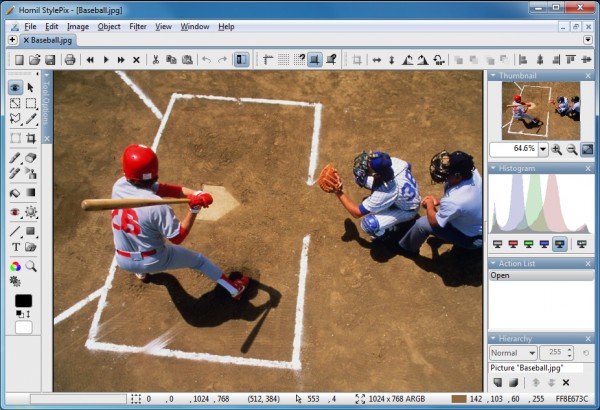
  • Hornil StylePix is a powerful yet easy-to-use free image editor

    Designing a great image editor has always been a tricky balancing act. It’s important that the program has real power, plenty of useful functionality, and delivers more than you’d expect in every area. But at the same time, it should ideally be lightweight, easy to use, the kind of tool you can be using productively in just a few minutes.

    Most image editors fall short in at least one area, of course, but there are occasional exceptions. And Hornil StylePix is a great example. This lightweight and portable program concentrates on the core editing essentials — transforms, color and image corrections, painting, text tools and more — so isn’t weighed down with functions you’ll never need. But the features you do get are very well implemented, with a host of powerful options helping to deliver far more control than you might expect from a free tool.

    Just launch the program and clues to its extra functionality are immediately obvious. There are bulky toolbars top and left, a thumbnail browser, multiple panels and some very lengthy menus, and browsing these reveals extra capabilities everywhere you look (the Filter menu has 13 entries, for instance, and clicking the Color option alone provides another 18).

    This doesn’t mean StylePix is complex, though. The interface is generally well designed, and in our experience the program’s extra features don’t get in your way. If you’re in a hurry then you can carry out all the usual basic edits — crop, resize, rotate, color tweaks, brightness and contrast correction, text and annotation options — just as quickly as with anything else.

    Life gets more interesting when you move beyond the basics, though, because StylePix just has so much to offer. So if you just want to draw a line on a photo, say, then you could simply click the Line button and drag your mouse across the image. But you can also customize this by choosing the line type (straight or curve), the color (solids, presets, gradients and more), width, alpha blend, blending mode and a whole lot more.

    Similarly, if you need to add a caption to an image then you could just select the Text tool, click on the photo and start typing. But if you need more, then you can choose your preferred typeface, its size, width, kerning or tracking, paragraph alignment and so on. Once you’ve defined your caption, then it’s added as a vector, which means you’re able to reposition and resize it to suit your needs. And if you want to edit that caption later, it’s not a problem – click it, select whatever you want to change — right down to individual characters — and you can resize that, change color or generally tweak whatever you like, without affecting anything else.

    The program is just as comprehensive elsewhere (selection types include auto selection, color range, rectangular region, circular region, lasso region, polygonal region, layer selection, channel selection and quick mask, for instance), and StylePix also includes plenty of features to help keep this manageable. The Batch Processing option, for instance, combines multiple actions to speed up operations, so for example you can add several layers (including watermarks) to a set of images in a single operation.

    If there’s one area where StylePix is a little underpowered, it’s probably in the program’s file format support. It can open the standard file types (JPG, PNG, GIF, TIFF and so on), plus a few less common extras (ICO, WMF), but there’s no support for RAW or PSD files.

    Otherwise, though, Hornil StylePix works very well, delivering a host of editing, selection, drawing and annotation tools in a straightforward and easy-to-use interface. Give it a try.


  • Ziff Davis snaps up NetShelter from inPowered

    NetShelter, a digital advertising network that focuses on tech publications, has been purchased by Ziff Davis for an undisclosed sum.

    The name and activities of the company may not be familiar to you, but it’s responsible for delivering nearly 16 billion ad impressions per year on 150 consumer and business tech sites, including BetaNews, SlashGear, TechSpot, CrackBerry, Android Central, MacRumors and Neowin.

    The purchase makes a lot of sense for Ziff Davis and adds at least 155 million global readers to the company’s growing ad sales portfolio.

    Vivek Shah, CEO of Ziff Davis, said: “The acquisition of NetShelter fully returns Ziff Davis to the dominant market position in the technology vertical. We will combine our best-in-class ad targeting capabilities and trading desk expertise with what our marketers need most today: High-quality, high-impact inventory that’s available at scale on trusted sites frequented by tech enthusiasts.”

    Photo Credit: bloomua/Shutterstock

  • New York Times CEO calls digital pay model “most successful” decision in years

    In a commencement address to business students at Columbia University, New York Times CEO Mark Thompson hailed the company’s digital subscription strategy and dismissed skeptics who say media outlets can’t reinvent themselves.

    “[T]he launch of the pay model is the most important and  most successful business decision made by The New York Times in many years. We have around 700,000 paid digital subscribers across the company’s products so far and a new nine-figure revenue-stream which is still growing.”

    Thompson added that media pundits predicted that the Times’ subscription model, which is based on a so-called “metered paywall,” would be a disaster when it launched in 2011. Since then, he noted, it’s become a standard for the rest of the newspaper industry.

    “In modern media, you could make the case that the best way forward is to listen carefully to what the industry has to say and then do the exact opposite.”

    Thompson also equated disruptions in the news business to what’s happening in other industries, like high tech and car rental, and said that risk-taking is the secret of America’s culture of innovation and entrepreneurship.

    Commencement speeches are, by nature, restricted to this sort of soaring stuff. A skeptic, however, might note that the New York Times‘ digital subscription model has already begun to plateau and that the company is still shedding ad dollars and assets. Likewise, Thompson, who arrived from the BBC only months ago, still has to prove he can run an institution that isn’t supported by mandatory contributions from the public.

    But the tone of Thompson’s speech is the right one, and it’s welcome to see the New York Times waving its banner not just in the safe halls of Columbia’s journalism school but amongst the MBA crowd as well. If you want to read more of what he said, here’s a longer excerpt:

    The American news business is living through revolutionary times. For The New York Times, which I joined six months ago, it means catapulting the Grey Lady into a world very different from the one in which she spent her first century and a half: multimedia, multi-platform, multi pretty much  everything.

    There are some things we’re not going to take risks with. The quality, authority and accuracy of our journalism. Our values, including the time-honoured but still vital tradition of keeping our journalism independent from the commercial interests of the company. In the age of so-called ‘native’ advertising in which the boundary between editorial and commercial content is more and more frequently blurred, that tradition of maintaining a clear line between the journalism and the business of The New York Times is more important than ever.

    But we will not secure the future of The Times without the kind of bold innovation – in products and services, in
    business-model – which is intrinsically and necessarily risky. Two years ago The Times launched a new digital pay model, essentially asking users of The Times on digital to do what more than a million print users of the newspaper were already doing, which is to pay a regular subscription in return
    for extensive access to our journalism.

    The consensus among the experts was that it wouldn’t work, was foolhardy in fact and not needed. People just weren’t prepared to pay for high quality content on the internet and, besides, wasn’t digital advertising enough – wouldn’t it grow until, just as with print advertising in the golden age of physical newspapers, it alone was enough to support America’s newsrooms?

    In fact the launch of the pay model is the most important and most successful business decision made by The New York Times in many years. We have around 700,000 paid digital subscribers across the company’s products so far and a new nine-figure revenue-stream which is still growing. Much of the rest of the US newspaper industry is now following suit. And developing this pay model, launching a suite of new subscription products to attract additional new subscribers, is central to our plans for the future

    What’s interesting, though, was that initial widespread skepticism. It won’t work. It’s mad. They’re barking up the
    wrong tree.

    In many ways, the thing that gets disrupted in a disruptive age is the conventional wisdom. Wherever you end up, in this country or abroad, starting your own business or joining an established company large or small, you’ll bump into conventional wisdom and all the apparently excellent advice that flows from it. But the definition of a disruptive age is one in which the discontinuities outnumber and overwhelm the continuities and in which predictions based on the past or the smooth projection of current trends into the future frequently prove unsound. Conventional wisdom tries valiantly to keep up, to recalibrate in the light of recent developments, but because it cannot foresee transformational breakthroughs or the kind of behavioral and business-model pivots which digital technology makes possible, it never can.

    Take my industry. The movies are finished. TV advertising is dead. Exactly what happened to music will happen to TV. Nobody wants news anymore. No one will ever pay for anything on the internet. Not just said, but said widely and widely believed. And – for the most part and within the time horizon which the prophets themselves were suggesting – just plain wrong.

    All of the strategically successful things I’ve been involved in – whether a set of new TV channels or developing the BBC’s digital on-demand service, the i-Player – have had this thing in common: that, at the point of launch, pretty much everyone not involved in the project has agreed that it was going to be a total disaster. In modern media, you could make the case that the best way forward is to listen carefully to what the industry has to say and then do the exact opposite.

    Related research and analysis from GigaOM Pro:
    Subscriber content. Sign up for a free trial.


  • Pinterest Adds Relevant Info To Pins, Gives ‘Pin It’ Button To Mobile Apps

    Pinterest has introduced what it refers to as “more useful pins”. Essentially, they’re adding relevant information to certain types of pins so people can take action on the pins that they like.

    For example, if you see some cookies that you are interested in trying to bake, you might be able to see the recipe. If someone posts an interesting movie-related pin, you might be able to see a review.

    The company has partnered with a bunch of sites, which will provide this information. There are three types of pins, which will take advantage.

    There are product pins for things like clothing and furniture, which include pricing, availability, and where to buy the item. This info is updated on a daily basis. The initial partners for this category include: Anthropologie, Asos, BHLDN, eBay, Etsy, Free People, Home Depot, Modcloth, Neiman Marcus, Nordstrom, Overstock, REI, Sephora, Shopify shops, Shop Terrain, Sony, Target, Urban Outfitters, Walmart, Wayfair, and Zulily.

    Next are recipe pins, which include cook times, ingredients and servings. Initial partners for these are: 101 Cookbooks, Better Homes and Gardens, Bon Appetit, Chobani, Country Living, Delish, Epicurious, Good Housekeeping, Leite’s Culinaria, Martha Stewart Living, MyRecipes, Naturally Ella, Nestlé Very Best Baking, Real Simple, Simply Recipes, Skinny Taste, The Girl Who Ate Everything, The Kitchn,What’s Gaby Cooking, Whole Foods Market and Woman’s Day.

    Finally, there are movie pins, which include content ratings, cast members, etc. Info comes from Flixster, Netflix and Rotten Tomatoes.

    The new pins are only available in the new Pinterest design.

    If you think your site has something to contribute in the way that all of these sites do, you can learn more about rich pins and making your own site’s Pinterest experience better here.

    In addition to the new types of pins, Pinterest has finally made the ‘Pin It’ button available to mobile apps. You can see it in action in apps from Behance, Brit+Co, Etsy, Fotopedia, Jetsetter, Modcloth, Snapguide, TED, The North Face and Zulily.

  • Before Hiring a Design Partner, Consider This

    Design is a service, not a magic spell. There are designers who do it well, and those who do it poorly; some produce profitable outcomes, and some waste money. More and more companies view design as an important strategic element of their business and are seeking partners to help them understand how it can help. If you’re setting out to do so, you’ll need to confront uncertainty about how to get the most value from the investment and carefully consider what you’re setting out to achieve. An effective client-partner relationship arrives at solutions that aren’t just creative, but useful. The following considerations will help the design you buy yield results that are actionable and effective.

    Understand your need. Designers are problem solvers, and this worldview has enabled them to move from the world of making objects into the world of defining strategy and influencing consumer behavior. A designer can provide you with beautiful forms, but can also help you frame the problem, understand your consumer, and identify ways forward. The most successful relationships start with intention and truthfulness, with the client assessing exactly what they need from design and then seeking out a partner who fits where they are in the process. Clients who don’t do this waste tremendous capital engaging design firms that specialize in tactical solutions to solve strategic problems, and vice-versa — Arnell famously failed to capture Tropicana’s brand heritage when it took the orange-impaled-by-straw off the carton, and parent company Pepsi was forced to revert to the old packaging.

    Engage constantly. Even the most effective design team will eventually get on a plane and go home. You, on the other hand, are in for the long haul. It’s your job to pour what you know into the project and travel with the team: think of it as an equal partnership. The outcomes will only work in the long term if both sides combine their expertise into a rich body of shared experience and understanding. Ziba’s service innovation and retail design work with Umpqua Bank, for example, continues to be relevant and productive years after it was completed, with the bank adding dozens of branches and tens of billions in holdings. This reflects the Umpqua team’s investment during the design process, as well as CEO Ray Davis’s continued efforts to champion its results.

    Address your biases. Design can be messy, and it doesn’t pull punches. The design team you partner with will believe you hired them as outside experts, and use this position to push you and challenge assumptions. They may debate or call into question foundational aspects of your business, or propose and discard radical hypotheses in a single conversation. You and your team must prepare to recognize your biases and be willing to break them. Other writers on HBR have delved into the topic of understanding bias extensively in the past, and it’s a critical driver of successful design outcomes. Only this degree of self-awareness, combined with meaningful openness can deliver solutions that are both effective and able to function in your organization.

    Understand your capacity to act. A good design partner will push you beyond your comfort zone, in a way that produces amazing, energizing new ideas. Once you’ve reached consensus on which idea to activate, it is critical to push the pause button and honestly assess whether your organization is able to execute the chosen solution. Hopefully, you’ve already done some of this work up front. You should understand the solution’s cultural impact, its technological and operational feasibility, and its viability in your business. Vijay Govindarajan and Chris Trimble have written at length on the challenges of execution in their book, The Other Side of Innovation. If your organization cannot execute the solution because it’s unable to make necessary changes, then it’s the solution that needs to be adjusted, at least in the short term. This may frustrate your design partner, but don’t let it be an excuse to back down or walk away. Respect their engagement and effort, and ask them to help you mold the solution into something you can activate.

    Successful design outcomes require intentional beginnings, consistent work throughout, and rigorous maintenance following delivery. Don’t expect that simply hiring a design partner will magically unlock new revenue streams and markets. Understand your competencies, set clear goals, and hire a partner whose skills align with your desired success. Design done right will still feel like work, but with intention applied — especially at the beginning of the process — the results should be worth it.

  • 2 FBI Agents Killed in Training Exercise

    The FBI this week revealed that two special agents died during a training exercise on Friday, May 17.

    Special Agent Christopher Lorek, 41, and Special Agent Stephen Shaw, 40, died while training off the coast of Virginia Beach, Virginia. The two were part of the FBI’s Hostage Rescue Team, an elite group within the bureau’s Critical Incident Response Group, which is based out of the FBI Academy in Quantico, Virginia. The cause of the deaths has not been released, and the FBI has stated that the incident is under review.

    “We mourn the loss of two brave and courageous men,” said Robert Mueller, FBI director. “Like all who serve on the Hostage Rescue Team, they accept the highest risk each and every day, when training and on operational missions, to keep our nation safe. Our hearts are with their wives, children, and other loved ones who feel their loss most deeply. And they will always be part of the FBI Family.”

    Lorek was a 17-year veteran of the FBI, having joined in 1996. Shaw had joined the FBI in 2005.

    The FBI describes the Hostage Rescue Team as a national counterterrorist unit. The group responds to “extraordinary” hostage crises and other law enforcement situations within the U.S.

  • Yahoo! Inks $1.1 Bln Deal for Tumblr

    Yahoo! has agreed to buy Tumblr for about $1.1 billion cash. Tumblr will operate as a separate business and David Karp will remain CEO. The transaction is expected to close in the second half. New York City-based Tumblr is a micro blogging service.

    PRESS RELEASE

    SUNNYVALE, Calif. & NEW YORK–(BUSINESS WIRE)–Yahoo! Inc. (NASDAQ: YHOO) and Tumblr announced today that they have reached a definitive agreement for Yahoo! to acquire Tumblr.

    Per the agreement and our promise not to screw it up, Tumblr will be independently operated as a separate business. David Karp will remain CEO. The product, service and brand will continue to be defined and developed separately with the same Tumblr irreverence, wit, and commitment to empower creators.
    With more than 300 million monthly unique visitors and 120,000 signups every day, Tumblr is one of the fastest-growing media networks in the world. Tumblr sees 900 posts per second (!) and 24 billion minutes spent on site each month. On mobile, more than half of Tumblr’s users are using the mobile app and do an average of 7 sessions per day. Its tremendous popularity and engagement among creators, curators and audiences of all ages brings a significant new community of users to the Yahoo! network. The combination of Tumblr+Yahoo! is expected to grow Yahoo!’s audience by 50 percent to more than a billion monthly visitors, and to grow traffic by approximately 20 percent.
    The deal offers unique opportunities for both companies. Tumblr can deploy Yahoo!’s personalization technology and search infrastructure to help its users discover creators, bloggers, and content they’ll love. In turn, Tumblr brings 50 billion blog posts (and 75 million more arriving each day) to Yahoo!’s media network and search experiences. The two companies will also work together to create advertising opportunities that are seamless and enhance the user experience.
    Total consideration is approximately $1.1 billion, substantially all of which is payable in cash.
    “Tumblr is redefining creative expression online,” said Yahoo! CEO Marissa Mayer. “On many levels, Tumblr and Yahoo! couldn’t be more different, but, at the same time, they couldn’t be more complementary. Yahoo is the Internet’s original media network. Tumblr is the Internet’s fastest-growing media frenzy. Both companies are homes for brands – established and emerging. And, fundamentally, Tumblr and Yahoo! are both all about users, design, and finding surprise and inspiration amidst the everyday.”
    “I’ve long held the view that in all things art and design, you can feel the spirit and demeanor of the creator. That’s why it was no surprise to me that David Karp is one of the nicest, most empathetic people I’ve ever met. He’s also one of the most perceptive, capable entrepreneurs I’ve ever worked with,” continued Mayer. “David’s respect for Tumblr’s community of creators is awesome. I’m absolutely delighted to have him join our team.”
    David Karp, CEO of Tumblr, addressed the Tumblr community, “Our team isn’t changing. Our roadmap isn’t changing. And our mission – to empower creators to make their best work and get it in front of the audience they deserve – certainly isn’t changing. But we’re elated to have the support of Yahoo! and their team who share our dream to make the Internet the ultimate creative canvas. Tumblr gets better faster with more resources to draw from.”
    The transaction, which is subject to customary closing conditions, is expected to close in the second half of the year.
    Conference Call
    Yahoo! will host a conference call at 9:00 a.m. Eastern Time today to discuss this announcement. A live webcast of the conference call can be accessed through the company’s Investor Relations website at http://yhoo.client.shareholder.com/events.cfm?CalendarID=8. In addition, an archive of the webcast will be accessible for 90 days through the same link.
    About Tumblr
    Tumblr is a media network powered by an army of independent creators and home to an audience of more than 300 million unique visitors. Founded by David Karp in 2007, Tumblr is headquartered in New York City.
    About Yahoo!
    Yahoo! is focused on making the world’s daily habits inspiring and entertaining. By creating highly personalized experiences for our users, we keep people connected to what matters most to them, across devices and around the world. In turn, we create value for advertisers by connecting them with the audiences that build their businesses. Yahoo! is headquartered in Sunnyvale, CA, and has offices located throughout the Americas, Asia Pacific (APAC) and the Europe, Middle East and Africa (EMEA) regions. For more information, visit the pressroom (pressroom.yahoo.net) or the company’s blog (yahoo.tumblr.com).
    This press release contains forward-looking statements that involve risks and uncertainties concerning Yahoo!’s proposed acquisition of Tumblr (including without limitation the statements contained in the quotations from management in this press release), as well as Yahoo!’s strategic and operational plans. Actual events or results may differ materially from those described in this press release due to a number of risks and uncertainties. The potential risks and uncertainties include, among others, the possibility that the transaction will not close or that the closing may be delayed; and that the anticipated benefits to Yahoo!, including projected growth in audience and traffic, and benefits to users and advertisers may not be realized. More information about potential factors that could affect Yahoo!’s business and financial results is included under the captions, “Risk Factors” and “Management’s Discussion and Analysis of Financial Condition and Results of Operations,” in the Company’s Annual Report on Form 10-K for the fiscal year ended December 31, 2012 and Quarterly Report on Form 10-Q for the quarter ended March 31, 2013, which are on file with the Securities and Exchange Commission (“SEC”) and available at the SEC’s website at www.sec.gov.

    The post Yahoo! Inks $1.1 Bln Deal for Tumblr appeared first on peHUB.

  • Want To Learn More About Google Glass? Watch These Videos

    As Google I/O was wrapping up on Friday, Google was busy uploading the first of its developer videos to its YouTube channel. As part of the first wave, Google Glass developers who couldn’t make it to I/O got a chance to learn how to develop for and hack Glass.

    Now Google has finally uploaded the final two Glass sessions from Google I/O – one of which deals with developing for the Mirror API while the other is a casual fireside chat with the Glass team.

    First up is Building Glass Services with the Google Mirror API with Alain Vongsouvanh and Jenny Murphy:

    The Google Mirror API is a simple but powerful set of RESTful APIs for building Glassware. In this session we’ll review some first principles for Glass development, paradigms of the Google Mirror API, and the rapid track from concept to prototype. We will cover both standard use cases and ones that push the boundaries of the API.

    Finally, the Fireside Chat with the Glass Team brings together key members of the Glass development team at Google X to talk about their experiences:

    Join several key members of the Glass team as they discuss the path that brought them here. We’ll discuss why Glass is so important to the evolution of wearable technology and how developers can most effectively engage in the ecosystem.

  • NSA Utah Data Center Facing Unexpected Energy Taxes

    nsa-data-center

    An artist’s illustration of the plans for the NSA data center at Camp Williams in Utah.

    The National Security Agency (NSA) finds itself facing millions of dollars in taxes on the electricity usage in its Utah data center as a result of a new law passed by state legislators, according to the Salt Lake Tribune.

    The new law, known as HB325, was signed into law by Gov. Gary Herbert on April 1. It allows the Utah Military Installation Development Authority (MIDA), which was set up to put select military properties on the public tax rolls, to collect a tax of up to 6 percent on Rocky Mountain Power electricity used by the Utah Data Center.

    The NSA has said it will spend up to $1.5 billion on the Utah data center, which is approaching completion of its first phase after nearly four years of construction. The project will have a power capacity of 65 megawatts, making power a big component of its operations.

    “Long term stability in the utility rates was a major factor in Utah being selected as our site for our $1.5 billion construction at Camp Williams,” wrote Harvey Davis, NSA director of installations and logistics, in an April 26 email obtained by the Tribune. “HB325 runs counter to what we expected.”

    Lot of Computing Horsepower

    The 1 million square-foot Camp Williams facility in Bluffdale, Utah will house a 100,000 square foot data center, while the remaining 900,000 SF will be used for technical support and administrative space. Wired has estimated the Utah Data Center would consume $40 million of electricity a year, which translates into about $2.4 million annually in additional taxes under HB325.

    The Utah project has raised concerns in some quarters about domestic surveillance and the types of data that will be gathered and stored at the Utah facility. Officials in Utah have publicly touted the project as a boost to the local economy, creating 10,000 construction jobs.

    One thing is clear: The NSA is bringing a lot of computing horsepower to bear on its mission in Utah. The facility will include both air-cooled and liquid-cooled IT gear, according to construction specs. The agency is also reported to be deploying server-side Flash memory to speed their data collection, according to Sterne Agee analyst Alex Kurtz.

    “We have learned through multiple sources that the National Security Agency will deploy Server Side Flash in their reported $2 billion data center in Utah (code name “Bumblehive”) as part of their data ingest architecture,” Kurtz wrote in an April 24 research note, in which he speculated that Flash specialist Fusion-io could eventually benefit from the NSA requirement.

  • Yahoo buys Tumblr for $1.1 billion

    As has been widely rumored over the last few days, Yahoo has paid $1.1 billion for blogging platform Tumblr. In recent times this is the most paid for an Internet acquisition since Facebook bought Instagram for $1 billion last year.

    Founded by David Karp in 2007 from a bedroom of his mother’s New York apartment, the attraction of Tumblr has always been its clean interface and ease of use, which allows people to be up and blogging within minutes. The service has around 217 million users worldwide and is the 24th most popular site in the US according to research company Quantcast.  The company employs 175 people and claims to have more than 100 million blogs.

    Tumblr has been slow to attract advertisers though, earning $13 million in 2012 when it had hoped to have revenue of $100 million by 2013. Yahoo brings the opportunity to attract more advertising but this may be at the expense of the site’s sleek look. In the past Karp has been critical of the way other sites implement ads. Like Facebook and Google+, Tumblr already allows brands  to set up their own pages. At the moment Tumblr embeds sponsored posts into the main stream in a way that’s subtle but also effective — particularly on the smaller screens of mobile devices.

    A more overtly commercial approach isn’t likely to go down well with the free thinking creative types that Tumblr attracts. Initial reaction to the news on the web points to a lot of unhappy Tumblr users.

    Yahoo, headed by ex-Google executive Marissa Mayer, will be seeking to use Tumblr to sprinkle some corporate stardust on its aging brand by adding social media and a mobile-friendly platform. It will also be looking to the acquisition to attract younger users to other Yahoo products and get the company back in touch with the cool kids. However, this deal may invoke a sense of deja vu in anyone who remembers Yahoo’s purchase of Geocities in 1999. At the time Geocities was the third most visited site on the web but under Yahoo’s ownership it withered and died, shutting up shop a decade later.

    Mayer says on the new Yahoo blog (on Tumblr of course) that Tumblr will continue to operate as a separate company with Karp as CEO and she promises, “not to screw it up”.

    Addressing the Tumblr community David Karp says, “Our team isn’t changing. Our roadmap isn’t changing. And our mission — to empower creators to make their best work and get it in front of the audience they deserve — certainly isn’t changing. But we’re elated to have the support of Yahoo! and their team who share our dream to make the Internet the ultimate creative canvas. Tumblr gets better faster with more resources to draw from.”