Blog

  • 7 July inquests to investigate role of MI5 and police

    Via Prison Planet.com » World News

    Adam Gabbatt
    London Guardian
    Friday, May 21, 2010

    The inquests of the 7 July suicide bombers will investigate the role of MI5 and police prior to the 2005 terrorist attacks, a coroner said today.

    Lady Justice Hallett told the royal courts of justice in central London that the hearings into the deaths of the four bombers would not be heard at the same time as those of their 52 victims.

    However some survivors of the blasts were disappointed when the coroner refused their request to be able to cross-examine witnesses.

    Hallett had been asked to decide what form the inquests would take ahead of the hearings later this year.

    7 July inquests to investigate role of MI5 and police 130510banner3

    Last month counsel for the Security Service and the home secretary said disclosing MI5 files about the four suicide bombers to the families of those killed in the London attacks would be “impossible”. MI5 argued that investigating claims that it could have prevented the atrocities would involve “handing over the keys” to MI5’s Thames House headquarters.

    At this morning’s hearing, Hallett admitted there was “some force” in the security service’s argument that the sensitivity of evidence about its intelligence should restrict the inquest’s investigations. However, the coroner said she wanted to “conduct such investigations as are possible”, adding that MI5 had offered its full co-operation.

    Full story here.

  • Why Germany's Rescue Plan for European Debt is Doomed

    Germany’s Parliament voted today to approve a $185 billion contribution to $1 trillion bailout plan designed to calm the debt crisis sweeping through euro-zone states. Many analysts doubt that the emergency fund will help troubled countries like Greece avoid defaulting on their debt. But the fund could buy time for Greece to manage an “orderly restructuring,” whereby it would agree to pay current boldholders a certain fraction of the promised loans. (Read an explainer of the Greek debt crisis here).

    The bailout is horribly unpopular in Germany. But that’s a little ironic, because it’s ultimately designed to save not only Greece and Portugal, but also the entire European Union. It’s essentially a bailout for the euro. And no European country benefits from the euro’s regime more than Germany.

    The common take on Europe’s mess is that Greece’s debt crisis might be Europe’s problem, but surely it’s Greece’s fault. The EU didn’t force Greek tax evaders to be evasive. It didn’t force the government to regularly spend 50% of GDP while it collected a little more than a third of domestic product in taxes. The country got drunk on its own red ink. It made its own hangover, right?

    Well, Steven Pearlstein spins things differently. The problem isn’t just the profligate peripheral states like Portugal, Italy and Greece. The problem is at the heart of Europe, both metaphorically and geographically speaking. The problem is Germany.

    To understand why, you have to understand the German economic machine. Follow the money. Germany is Europe’s leading exporter of goods. It runs a huge trade surplus, which means more money is coming into the country than going out. That should make wages rise, along with the currency value, and Germans should spend their valuable income on products from other countries, shrinking the trade gap. But that’s not happening. Germany’s currency cannot adjust with respect to its European trading partners because they’re all on the same currency. The euro is strangling Germany’s neighbors, who need to devalue their currency so that wages and prices can up to 20%. But it’s also keeping Germany’s trade surplus alive.

    Here’s Pearlstein:

    What Germans won’t accept is that they wouldn’t have been able to sell
    all those beautifully designed cars and well-engineered machine tools
    if Greeks and Spaniards and Americans hadn’t been willing to buy those
    goods and German banks hadn’t been so willing to lend them the money to
    do so. Nor will they accept that German industry was able to thrive
    over the past decade because of a common currency and a common monetary
    policy that, over time, rendered industry in some neighboring countries
    uncompetitive while generating huge real estate bubbles in others.

    What’s the solution? Well, we’ll need more than an emergency plan. We’ll need extraordinary action on the part of the European Central Bank. We’ll need the ECB to stop worrying and learn to love expansionary monetary policy. Pearlstein says the European Central Bank needs to do something like the US Federal Reserve did in late 2008: bring down interest rates and buy up assets, like Greek bonds.


    Email this Article
    Add to digg
    Add to Reddit
    Add to Twitter
    Add to del.icio.us
    Add to StumbleUpon
    Add to Facebook


    European UnionEuropean Central BankUnited StatesGreeceEurozone

  • New UK govt to curb CCTV, scrap ID cards, help open source

    Via Prison Planet.com » Prison Planet

    Nate Anderson
    Ars Technica

    Friday, May 21, 2010

    The Britain of today is watched constantly by CCTV cameras, is preparing for a national ID card, slaps a “crown copyright” on most government data, and can now censor websites and eventually boot people off the Internet.

    According to the new Liberal Democrat/Tory coalition government, that’s all about to change. The coalition today released its unified policy statement (PDF), and for techies and privacy advocates, there’s lots to like.

    • We will scrap the ID card scheme, the National Identity register and the ContactPoint database, and halt the next generation of biometric passports.
    • We will outlaw the fingerprinting of children at school without parental permission.
    • We will adopt the protections of the Scottish model for the DNA database.
    • We will review libel laws to protect freedom of speech.
    • We will further regulate CCTV.
    • We will end the storage of internet and e-mail records without good reason.
    • We will create a level playing field for open-source software and will enable large ICT projects to be split into smaller components.
    • We will create a new “right to data” so that government-held datasets can be requested and used by the public, and then published on a regular basis.
    • We will introduce measures to ensure the rapid roll-out of superfast broadband across the country. We will ensure that BT and other infrastructure providers allow the use of their assets to deliver such broadband, and we will seek to introduce superfast broadband in remote areas at the same time as in more populated areas. If necessary, we will consider using the part of the TV license fee that is supporting the digital switchover to fund broadband in areas that the market alone will not reach.

    That last bit about broadband is a change from current Labour policies, which proposed a (hugely unpopular) 50p per month tax on broadband connections to help fund universal broadband infrastructure. The new proposal draws that money from the already-existing TV license fee.

    In addition, the Lib Dems have separately pledged to roll back the worst excesses of the recent Digital Economy bill that brought Web censorship and possible Internet disconnection to the UK. At a party conference over the weekend, they asked ministers to “take all possible steps to ensure the repeal of those sections of the Digital Economy Act 2010 which are inconsistent with the policy motion ‘Freedom, creativity and the internet‘.”

    Full story here.

  • Technological advances keep Intel’s Atom a contender in handhelds

    By Charles King, E-Commerce Times
    Intel Atom processor logoIntel’s next-gen Atom processor-based platform (formerly “Moorestown”) caused quite a stir in the news and among mobile computing aficionados. On the technical side, Intel seems to have delivered the goods. The platform includes Intel’s Atom processor Z6xx Series Family (formerly “Lincroft”), the Platform Controller Hub MP20 (formerly “Langwell”) and a dedicated Mixed Signal IC (MSIC) (formerly “Briertown”).

    It adds 3D graphics, video encode and decode, and memory and display controllers into the single system-on-chip (SoC) design. Also included are the MP20 Platform Controller Hub and a dedicated MSIC, integrating power delivery and battery charging, and consolidating a range of analog and digital components.

    What does this mean in plain English? That the new Atom platform is simply the best performing solution for handheld computing devices Intel has ever developed.

    How much better? Try >50x reduction in idle power, >20x reduction in audio power and 2-3x power reductions in browsing and video compared to the previous-generation Atom (a.k.a., “Menlow”) processor. These efficiencies translate into >10 days of standby, up to two days of audio playback and four to five hours of browsing and video life with common 1500mAh batteries.

    Along with power savings, Intel’s new Atom platform offers highly enhanced audio/video features that are critical to consumer experience and satisfaction. How enhanced? Compared to “Menlow,” the new platform delivers 1.5-3x higher compute performance, 2-4x richer graphics, >4x higher JavaScript performance and support for full HD 1080p high-profile video decoding and 720p HD video recording.

    Compared to Menlow, Intel hit the ball out of the park with the new Atom, most analysts seemed to agree, but many were less impressed with the platform’s commercial prospects. That was not particularly surprising given the turmoil in the mobile marketplace that began with Microsoft’s February announcement of its Windows Phone 7 Series OS, followed by the weeks of hype leading up to Apple’s April iPad launch and its acquisition of Intrinsity, and HP’s purchase of Palm and the reported cancellation of its Windows 7-based Slate tablet.

    Given those events, the conventional wisdom on Intel’s new Atom platform appears to be that 1) Apple’s dominant mindshare in all things mobile makes it the company to beat; 2) close relationships with Apple and smartphone market leader RIM make ARM-based microprocessors virtually unstoppable; and 3) despite impressive improvements, Intel’s new Atom is simply too late to the mobile game to be a viable player.

    So is the conventional wisdom particularly wise? I have my doubts. Certainly Apple, as well as leading smartphone vendor RIM, deserves applause for some terrific product and service offerings. Apple, in particular, has seized the public imagination regarding the smartphone and tablet experience to a remarkable extent. Plus, the company’s App Store has defined the critical role a deep application portfolio plays in platform success.

    However, recent APD Group research suggests first quarter sales of Android-based phones blew past iPhone sales. If Android’s success continues, it could indicate that Apple’s single-vendor development and manufacturing model faces significant barriers in the global market for handheld computing.

    In addition, though the iPad has enjoyed extraordinary sales to date, it is the lone occupant of an essentially nascent market that will be crowded with enticing new products by the holidays. Some of these will almost assuredly be based on the new Intel Atom platform.

    What about ARM? Can Intel really hope to prevail against so dominant a competitor? That’s certainly problematic, especially given ARM’s deep client roster. However, the sizable semiconductor investments of one of its most important customers — Apple — could mean future problems for ARM. More importantly, a core (no pun intended) Intel strength is its ability to play the long game, as was clear in the company’s response to AMD’s Opteron processor.

    How so? AMD’s singular pursuit of 64-bit x86 computing solutions allowed the company to develop a sizable market and mindshare lead. Though it initially dismissed Opteron, Intel eventually dove into the market with a vengeance and eventually left AMD in its wake. That point is worth remembering in still-evolving markets like mobile computing.

    The new Atom platform demonstrates, yet again, Intel’s ability to effectively adapt to changing circumstances by leveraging its considerable intellectual and human capital.

    This is not to say that the new Atom platform will be a slam-dunk success. Mobile computing is far less homogeneous than the PC, laptop and server markets, with a technologically diverse vendor ecosystem and highly (some might say wildly) differentiated global customer groups. In other words, it’s a world that will be harder to engage with and work within than the more predictable PC/server networks Intel is used to.

    Yet that same world is also populated with dynamic, astute vendors and customers willing to embrace new innovations. Bottom line: Known and unknown challenges aside, I believe the potential opportunities for the new Atom platform are enormous, and worth every bit of Intel’s time, effort and investment.

    Charles King is principal analyst for Pund-IT, an IT industry consultancy that emphasizes understanding technology and product evolution, and interpreting the effects these changes will have on business customers and the greater IT marketplace.

    This story was originally published on E-Commerce Times.

    © 2010 ECT News Network. All rights reserved.

    © 2010 BetaNews.com. All rights reserved.

    Copyright Betanews, Inc. 2010


    Add to digg
    Add to Google
    Add to Slashdot
    Add to Twitter
    Add to del.icio.us
    Add to Facebook
    Add to Technorati


    Intel AtomMicrosoftAppleIPadIPhone

  • Why the Toyota-Tesla Deal Makes Sense

    Toyota is interested in the electric car market too. The company announced a new partnership with and sizable equity investment in the young American electric car company Tesla. Although Toyota has had great success with its hybrid vehicles, it had not shown much intention of entering the electric car space — until now. The move is a good one for both automakers.

    The two companies “intend to cooperate on the development of electric vehicles, parts, and production system and engineering support,” according to the press release. Toyota will also purchase $50 million in Tesla equity. Additionally, Tesla will purchase an old factory in California that had been formerly used as apart of the now defunct Toyota-GM partnership.

    Smart for Toyota

    Puts Automaker Immediately into the EV Race

    Two of Toyota’s chief competitors — GM and Nissan — are on the verge of releasing mass market plug-in electric vehicles. Toyota’s ability to leverage Tesla’s electric car expertise should significantly condense the time it would have taken Toyota to produce a vehicle of its own. Even though the company still won’t get a new electric car out as quickly as GM and Nissan, there’s little doubt that Toyota will now produce a high-volume electric car before too long.

    Cheap Foray into the EV Market

    Not only does Toyota now have Tesla’s expertise at its fingertips, but it came relatively cheap. If it were to attempt to develop an electric vehicle platform on its own from scratch, the investment would have been far more significant than the $50 million piece of Tesla it purchased. This also hedges Toyota’s risk: if the electric vehicle market turns out to be a dud with consumers, the company would have wasted a huge investment developing its own expertise and infrastructure.

    Helps Public Image

    After the accelerator fiasco, Toyota could use a strong dose of good public relations. Since electric cars are associated with environmental protection and green aspirations, it will likely give Toyota’s public image a little boost.

    Smart for Tesla

    Toyota Is a Partner You Want

    In fact, this deal is arguably even better for Tesla than Toyota. The company was created in 2003, and is still a relatively small operation. By trading some of its engineering expertise for some of Toyota’s production and distribution knowledge, its business model should strongly benefit. No auto company has been as successful as Toyota over the past few decades.

    Boosts Its Brand

    The majority of Americans have probably never heard of Tesla, but almost everyone has heard of Toyota. Tesla should be able to leverage Toyota’s popularity to create greater awareness of its own brand. Although Tesla has focused on luxury electric vehicles up to now, its aspirations to make mass market vehicles will be more easily achieved through better brand recognition.

    Helps Sustain Its Growth

    This deal should allow Tesla to continue to grow quickly. First, there’s the investment. $50 million might not sound like a huge amount of money for a big automaker, but for a small one, that can go a long way. Moreover, for Tesla this deal is all about expansion. Tesla plans to build its Model S as a higher volume family car than its Roadster. Toyota’s knowledge will help this effort succeed, as the Japanese automaker knows all about manufacturing cheaper vehicles with widespread consumer appeal. But this is just the beginning for Tesla. The Model S will only occupy a small part of the factory — leaving lots of room for additional new models, according to the New York Times.

    Partnerships like this aren’t always easy. It’s fairly likely the culture of each firm is quite different. Toyota is an established Japanese automaker, while Tesla is a young American start-up. But if Toyota and Tesla manage to work well together, then they should both reap huge dividends through their cooperation.


    Email this Article
    Add to digg
    Add to Reddit
    Add to Twitter
    Add to del.icio.us
    Add to StumbleUpon
    Add to Facebook


    ToyotaModelSElectricVehicleTesla MotorsElectric car

  • Lindsay Lohan Story

    Actress Lindsay Lohan missed her probation hearing which was related to her drunken driving case from 2007. An arrest warrant was issued by the court since she missed the hearing but Lindsay who is in France currently avoided arrest after returning from there, she secured a bail of $100,000.


    According to Lindsay’s lawyer, she was unable to fly back from France to US for hearing since her passport got stolen. Now she has been totally banned from drinking alcohol with other conditions on her probation.

    Lindsay will have to wear a bracelet which is a alcohol monitoring bracelet, and also she should appear for weekly drug tests. When she missed her appointment for hearing, Judge Marsha Revel issued an arrest warrant against Lindsay and she also imposed other conditions on her bail. According to Revel, Lindsay has a history of missing appointments and this is not the first time.

    According to some sources, she could have come if she wanted because she had obtained a replacement for her passport which was stolen. She did not come because she did not want to come for the hearing. Earlier she was also sentenced to one day jail and some community service as well.

    Related posts:

    1. Passport Theft Leads To Arrest Warrant – Lindsay Lohan Fails To Appear Before LA Court
    2. California Judge issued a warrant for the arrest of Lindsay Lohan
    3. Lindsay Lohan: Stuck in France + Misses a Court Hearing = Arrest Warrant Issued

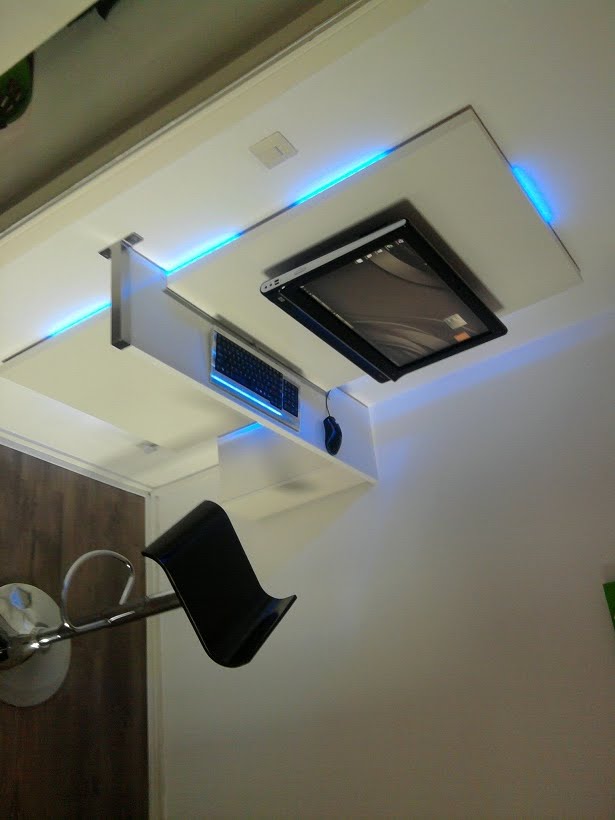
  • Wall mount computer workstation, pc desk

    Materials: Ikea: VIKA AMON tabletop (150 x 75cm), EKBY BJÃRNUM bracket, EKBY JÃRPEN shelf (119 x 28cm), MALM nightstand (white), 2 x DIODER multicolor LED-strips. Non-Ikea: HP Touchsmart600 (computer), Vogel’s Wallmount, 2 x Aluminium decorative strips (100cm), One ordinary shelf bracket, 2 hinges, Enermax Crystal aluminium keyboard

    Description: First I made a frame with 4 slats on the back of the tabletop to move it about an inch from the wall. Then I made a hole in the tabletop for the flatscreen-wallmount. (The tabletop isn’t strong enough to hold the screen, so I put the Vogel’s wallmount straight on the concrete wall.) After that I put the DIODER LED-strips on the frame behind the tabletop and hung the tabletop on the wall with wooden slats, a bit like this.

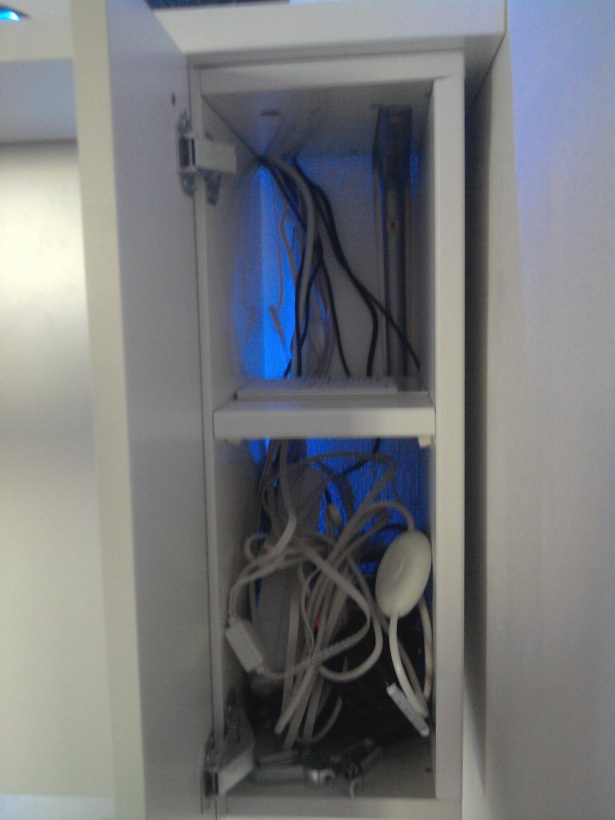
    I took the EKBY JÃRPEN shelf and sawed a piece out of it to fit over the tabletop. Then I made a little cupboard for the cables from an old MALM nightstand and screwed it to the EKBY shelf. I made a door in the cupboard with 2 hinges and a little shelf inside.

    Then I put the shelf on the wall with one EKBY BJARNUM bracket and one ordinary bracket inside the cupboard.

    And as a finishing touch I put the aluminium decorative strips between the EKBY shelf and the tabletop.

    I hope you’ll like the result!

    ~ FritZz81, Netherlands


  • Snoreben – Say Goodbye to Snoring and Hello to a Quiet Comfortable Nights Sleep

    The Snoreben is an FDA approved Class 1 Medical Device developed to stop snoring and significantly improve your quality of sleep. It is specially designed to help anyone of any age, who suffers from Obstructive Sleep Apnea, alar collapse (collapsed nostrils), deviated septum (bent nose) and damaged or narrow nostrils and other nasal disorders. The Snoreben is made from medical grade Latex Free Silicone for maximum comfort while sleeping to ensure you receive the much needed quality sleep necessary to wake refreshed and revitalized. This will allow you to carry out daily activities with a clear mind and enjoy a full, healthy and happy lifestyle.

    View Snoreben – Say Goodbye to Snoring and Hello to a Quiet Comfortable Nights Sleep Details

  • L.A home of Jesse James for Sale

    After two months of Sandra and Jesse’s break up, Sandra moved out of their L.A home and according to the sources Jesse has put his home for sale now. The two story beachfront home was the home for Jesse and Sandra for 5 years since they got married.

    According to the source, he bought a house in Austin, Texas and after selling his house in L.A, he will be soon moving to Texas. Sandra and Jesse were spotted in two different locations in Austin the same day. Jesse was with his daughter Chandler in a speed shop and Sandra was with her son Louis in her favorite shops and restaurants.

    A friend of Jesse said, Jesse still thinks their (Sandra and Jesse) relationship will get better as the time goes by. He said Jesse’s mind set is still the same and he thinks Sandra will come back to his family soon.

    Well, whatever may Jesse think, I think he does not realize what he has done. He betrayed Sandra who loved him and his kids so much. He can never get a woman like Sandra again in his life.

    Related posts:

    1. Jasse James’ Two-story Beachfront Property in California for Sale
    2. Sandra Bullock and Jesse James Split : Bullocks Leaves Mansion With Her Wardrobe
    3. Jesse James and Sandra Bullock Split because of Michelle “Bombshell” McGee

  • Play Pac-Man on the Google Homepage

    Google has done some pretty amazing doodles over the years adorning its homepage with beautiful graphics to mark important events or occasions. From the first doodle, designed by Sergey Brin and Larry Page themselves, to the gorgeous graphics Google has been getting us used to lately, things have progressed. But, whatever came before it, nothing will prepare you for the latest Google doodle, if you can call it that anymore.

    It marks the 30th anniversary of Pac-Man, a game few hav… (read more)

  • Solar photovoltaic silicon technologies combine

    Natcore Technology and Vanguard Solar combine to advance the efficiency of solar energy conversion.  Natcore Technology is the exclusive licensee, from Rice University, of a thin-film growth technology enabling room-temperature growth of various silicon oxides on silicon wafers in a liquid phase deposition (LPD) process.  Natcore’s acquisition of Vanguard Solar will close after appropriate due diligence.  …

    …   “The first-generation products from Vanguard’s method could produce 15%-16% efficiencies at module costs of 60¢ to 70¢ per watt. It is anticipated that second-generation technology could achieve 20% efficiencies at even lower costs per watt.

    The investment for production facilities is projected as low as $10 million to $15 million per 100-megawatt to 150-megawatt production capability, as compared with current costs of as much as $250 million for standard solar-cell production facilities.

    Vanguard’s production equipment would be designed for insertion into an existing roll-to-roll film-coating line of the sort that has been displaced by the emergence of digital photography. All production materials are widely available and dramatically cheaper than silicon and other thin film systems.

    If successfully developed, the process would enable a very cost-efficient production capability in large-scale facilities.”   …

    Via Natcore: Solar Science Portfolio Expands.

  • Bret Michaels back in Hospital

    Rocker Bret Michaels is back in Los Angeles hospital after having a warning stroke. It was just yesterday we saw him talking to Oprah and today he is in hospital again, this is really shocking news for the fans.

    According to the news posted on Bret’s website he was taken back to the hospital after he complained numbness on the left side of his body, face and hands. According to doctors it is a warning stroke. Tests showed Bret has a hole in his heart which can operated and treated. But this was shocking news to his family and friends.  Doctors said this is not related to the brain hemorrhage which he had last month.

    Last few weeks have been tough on Bret and his family, but he is in good spirits and hopes everything will be fine in no time. His representative Janna thanked all his fans and people on his website for supporting Bret in tough times. Bret will be fine and he will be back soon in front of us. Janna also said “He is up, walking, talking, continuing his daily rehab and very happy to be alive.”

    Related posts:

    1. After Brain Hemorrhage Bret Michaels is Now Stable
    2. Bret Michaels Press Conference and Bret Michaels Updates
    3. Bret Michaels Has A ‘Warning Stroke’

  • Europe Rallies Back, But Germany Is Down As Country Falls On Its Sword

    The German sacrifice of voting yes to provide support for the eurozone bailout has buoyed European indices.

    Germany’s DAX, showing signs of sacrifice, down around .8%

    Dax 521

    UK’s FTSE, flat

    France’s CAC, roughly flat

    Italy’s MIB, up 1.32%

    Spain IBEX, up 1.48%

    Portugal’s PSI, up .67%

    Join the conversation about this story »

  • HP Slate not dead?

    HP Slate not dead yet. We don’t normally cover desktop Windows, but with all Microsoft’s OS’s now intermingling so much, this particular story did catch our eye.

    According to Digitimes, the HP Slate, shown off at CES earlier this year, has not in fact been killed by HP’s purchase of Palm.

    According to Monty Wong, vice president of personal computing systems group at HP Taiwan, who they interviewed, the TabletPC is still expected to hit the market before HP’s financial year ends in October this year. 

    We went on to promise consumers could see a wide range of software and application support at launch for the mobile computing device.

    Read more at Digitimes here.


  • PIADC: Soon to Close?

    Plum Island Animal Disease Center The Plum Island Animal Disease Center (PIADC), located off the northeast coast of Long Island in New York, is one of the United States federal research facility that is responsible for the research and diagnosis to protect United States animal industries and exports against catastrophic economic losses caused by foreign animal disease (FAD) agents that are accidentally or deliberately introduced into the country. U.S. Department of Agriculture (USDA) has an important job in the PIADC for they help protect farm animals, farmers and ranchers, and the nation’s farm economy and export markets.

    The USDA took over this island for about 50 years and was closed to the public because of the risk associated viruses. It was first introduced to the media in the year 1992. And now, the Department of Homeland Security had announced that this island will be closing soon.

    There are a lot of species in the island, also, there are many wild and rare flowers and these are just some of the reasons why the conversation groups are advocating that the PIADC should be close. But the officials are still hoping that the Plum Island will remain as is.

    Related posts:

    1. 75% of New Diseases Come from Animals
    2. Anti-depressants May Help Improve Cardiovascular Health
    3. New England Floods Slow, Still Dangerous

  • Tesla se asocia con Toyota para fabricar eléctricos

    tesla-s.jpg

    No es un secreto que Tesla Motors está necesitando dinero e inversiones para mantener a flote la producción futura del Tesla S. Tesla ha logrado un acuerdo con Toyota y básicamente la marca de eléctricos tendría que adquirir la planta de Freemont, California, cerrada desde hace unos meses por Toyota, por ineficiente, para desarrollar allí la base de futuros modelos de eléctricos.

    El intercambio de tecnología que vendrá permitirá que Tesla y Toyota perfeccionen sus conocimientos sobre coches eléctricos y tecnología de baterías, aunque creo que en términos prácticos la que más gana por ahora con esto es Tesla, quién podrá impulsar aún más al Tesla S. A Toyota no le interesa el coche eléctrico lo suficiente, por ahora, pero podría hacer uso de mejor tecnología para las baterías que usa en sus híbridos.

    Todo esto, mientras Tesla ha prometido cotizar en el mercado de valores y sigue esperando un crédito de parte del gobierno de Obama, de 465 millones, en apoyo a la construcción del Tesla S, un coche eléctrico más o menos accesible y que daría empleo a unas 10.000 personas.

    Vía | Automotive News


  • Well, We Didn’t Get A Euro-Lehman, And The Liquidation Selling Is Now OVER

    So Europe’s week is over and we didn’t get a Lehman, so that’s good.

    And the liquidation selling is now over?

    Why do we think that?

    Check out the big snapback in Apple (AAPL), which is up over $5 this morning. That stock had been getting killed on the sell-the-winners trade. At least today, nobody is doing that.

    chart


    We included Apple in our 12 bellwether charts to watch to see when the meltdown is over >

    Join the conversation about this story »

  • Janet Jackson’s new Haircut

    Janet Jackson appeared with her new look with the new hair cut she got, she chopped her locks. At present she is promoting her movie “Why did I get married too?” and the photographers caught her when she was leaving Cecconi restaurant in London.

    Janet says she decided to get this new look because of a new man in her life who is a wealthy businessman from Qatar Wissam Al Mana. Though they did not confirm the news about their relationship, they were spotted when they were eating together at restaurant. Janet is busy promoting her movie in London which was stopped because of her older brother Michael Jackson’s death.

    Janet broke up with her boyfriend, Jermaine Dupri after 7 years of relationship last summer and now she is news with Qatari businessman. She had been seen with him in many times in different restaurants, and they did not deny the news about their relationship either. We are not sure if this is true or not but the way she changed her whole look tells us something is going on for sure!

    Related posts:

    1. Janet Jackson’s New Super Short Hair
    2. Michael Jackson’s Kids Are Not Safe?
    3. Katherine Jackson says Grandchildren to Move Out

  • Movie Tickets Reach $20 [Movies]

    Starting with Shrek Forever After, three AMC theaters in New York will begin selling $20 adult movie tickets on their IMAX screens. Even for a loose-moneyed film buff like me, that’s just too much. More »


    IMAXMoviesArtsFilmmakingFilm Formats

  • The Post-Blair Intelligence World

    Today is Dennis Blair’s last day in the office as Director of National Intelligence. His farewell message to the intelligence community workforce is admirably chipper, calling them “true heroes, just like the members of the Armed Forces, firefighters, and police whose job it is to keep our nation safe.” For excellent backstories on some of the active policy issues implicated in Blair’s departure, Marc Ambinder has an impressively comprehensive post. Mark Hosenball too. Undersecretary of Defense for Intelligence James Clapper, who’s dual-hatted as Blair’s deputy for the massive Defense Department-hosted intelligence apparatus, appears to be a leading candidate to replace Blair, but I’ve been warned against reading too much into any one candidate.

    Many of the murmurings I’ve heard from intelligence veterans have concerned the untenability of the DNI position, an intended fix to the old CIA-centric intelligence leadership that’s created an odd hybrid of management over 16 agencies without correlative budgetary authority and a perhaps naive distance from active intelligence operations. If people on TV are upset that a series of failed-but-attempted domestic terrorist attacks have happened on “Blair’s watch,” as I’ve heard more than one cable pundit say over the past 18 hours, they’re misunderstanding the DNI. S/he’s not supposed to prevent those attempts from happening. S/he’s supposed to organize, structure and resource the intelligence community so relevant agencies can prevent those attempts from happening. That’s why the Senate intelligence committee report that found a disorganized National Counterterrorism Center — something the DNI is responsible for — was damaging. What the DNI should also be doing is focusing the intelligence community around answering why these domestic terror attempts are happening, particularly using American citizens as operatives.

    If that operational distance sounds untenable, that might be because five years of unhappy experience since the 9/11 Commission sought greater intelligence consolidation is prompting a re-think in intelligence circles. When I asked a veteran career intelligence officer with experience in various intel agencies what he made of Blair’s departure, the response I got back started with “Good!” Like several intelligence officers who serve out in the dangerous parts of the world, the prospect of an increasingly top-heavy bureaucracy distanced from field concerns is an unpleasant one.

    “Blair’s biggest move was to try to grab turf from CIA over station chiefs, instead of doing serious work like developing a plan to better integrate [intelligence community] bureaucracies, where joint-minded personnel and promotion policies could create positive change. But that’s hard work and not sexy,” the intelligence officer emailed. “The current system creates bureaucrats whose focus is building their empire — more bodies, more money — all in the name of national security. His position was created to fix the intelligence bureaucratic failures, but growing bureaucracies to fix bureaucracies is a losing bet.”

    In fairness to Blair, you can find an effort at “joint-minded personnel and promotion policies” — or, at the least, a commitment to the idea of them — in his August 2009 National Intelligence Strategy (PDF).

    But don’t expect either the Obama administration or Congress to have any appetite for root-and-branch restructuring of the DNI position. That would be a major structural reform five years after the last major structural reform, and the national agenda is already too clogged to tolerate such a thing. Instead, expect the confirmation hearings of whoever ultimately replaces Blair to be a colloquy on what statutory changes are necessary to make the Office of the Director of National Intelligence a more coherent structure.

    Whether that’s ultimately a laudable goal is up for debate. In 2007, a former senior intelligence analyst, Robert Hutchings, testified to Congress that the creation of the DNI itself reflected what he called a “Coordination Myth” about intelligence. That myth, he said, was

    that it is somehow possible to “coordinate” the work of hundreds of thousands of people across dozens of agencies operating in nearly every country of the world. Anyone who has worked in complex organizations knows, or should know, that it is possible to coordinate only a few select activities and that there are always tradeoffs, because every time you coordinate some activities you are simultaneously weakening coordination among others. To cite just one example, the creation of the National Counterterrorism Center may have enhanced interagency coordination among terrorist operators, which is a good thing, but it has surely weakened coordination between them and the country and regional experts. The net result is that the Intelligence Community is probably stronger in tactical counter- terrorist coordination but is surely weaker in strategic counterterrorism. While we are looking for the next car bomb, we may be missing the next generation of terrorist threats.

    Anyone observing the current debates over drone strikes, increased radicalization and their relationship surely recognizes the current relevance of Hutchings’ fear. When I asked him what he thought about the next DNI, he quipped, “Please quash those burgeoning rumors that I will be tapped.”