Blog

  • China’s MeituKiss phone catered to females equipped with 8-megapixel front camera

    meitukiss_chinese


    China’s Meitu Corporation has announced a phone designed specifically for women, called the MeituKiss HD. The phone will challenge the Oppo Ulike 2′s front-facing 5-megapixel camera with 8-megapixel cameras on both on the front and back of the device. Also equipped with a “face beautifying” feature, the phone is clearly marketed to women who love to take photos of themselves. Despite the impressive camera specs, for some reason the MeituKiss can only shoot video at up to 720p.

    The MeituKiss also includes a 4.5-inch 720p HD screen, MediaTek’s 1.2GHz quad-core processor, 1GB of RAM, dual-SIM support, Android 4.2, 8GB of internal storage, and a microSD memory card slot for extra space. The phone runs at CN¥ 2,199, equivalent to around $360 USD, and comes in either pink or white. Preorder sales begin today for the first 18,888 devices, and a full launch will follow on June 6.

    Source: Engadget

    Come comment on this article: China’s MeituKiss phone catered to females equipped with 8-megapixel front camera

  • Chef Killed Over Meal In German Restaurant

    One of the realities of working in the food service industry is that sometimes you have to deal with dissatisfied, angry customers. Every server, cashier, or chef in the world could probably tell you horror stories about customers who have reacted poorly to a meal or service they found less than satisfactory. Almost never, however, do such incidents come to violence, and even more rarely do they end in a death.

    Unfortunately, though, once such incident on the German vacation island of Sylt came to just such a tragic end. Two as-yet-unidentified men ate in a restaurant owned by 57-year-old Miki Nozawa, a highly-regarded chef known primarily for his particular Japanese-Italian fusion style. For unknown reasons, they were unhappy with the beef and fried noodle dish Nozawa prepared. After a brief confrontation, they left the restaurant without paying.

    Ordinarily, that would be the end of such a story – frustrating for all parties, but neither tragic nor newsworthy. Unfortunately, however, it seems that Nozawa encountered the two men later that evening in a bar. The men exchanged words, and then blows. Nozawa suffered at least one blow to the head and was rushed to the hospital, where he died of trauma to the brain and internal bleeding.

    Nozawa was, according to his ex-wife, good-natured man who would not have started a fight with the two men. She said that the men asked for a refund on their meal and believes that the attack was racially motivated.

    No charges have been filed against the two men, as authorities on the island are still investigating the incident.

  • Time Warner Cable considers buying a stake in Hulu

    Time Warner Cable Hulu Equity Stake
    We may now have a clue about how Time Warner Cable plans to implement its own Aereo-like service. Unnamed sources have told Bloomberg that Time Warner Cable is considering buying an equity stake in Hulu and “could offer Hulu to its customers as a bundled service inside and outside of the home with its current products,” meaning customers could access their favorite shows on Hulu without paying a monthly subscription fee for Hulu Plus. Under the plan being discussed, Time Warner Cable would take a 33% stake in Hulu with the rest held by co-owners Disney, Comcast and News Corp. Time Warner Cable CEO Glenn Britt recently said that the cable industry’s “structure needs more flexibility” and that he wants to offer customers “smaller, more affordable packages” that don’t cost them upward of $100 a month.

  • Chris Rock, Eminem To Team Up On Rapper’s New Album?

    Last month we brought you news that rapper Eminem was working on a new album. The long-rumored album was all but confirmed by Dr. Dre, a long-time collaborator and producer for Eminem.

    Now it seems that Eminem may have brought in a rather unique collaborator: comedian Chris Rock. Late last week The Daily Loud posted a photo of the two in the studio together on Twitter:

    In a recent appearance on The United States of Hip Hop Rock confirmed that he had been in the studio with Eminem, but declined to say what his role in the new album would be.

    The new album will be Eminem’s seventh studio album, and his first since 2010′s Recovery.

  • Why Google thinks the GPU is the engine for the web of the future

    For years, the internet provided users with static clumps of information stored and refreshed in databases on the back end. But as interactive games, animations and fancy scrolling have become popular, graphics have become fancier and screens richer. Throughout this evolution, hardware components on users’ devices have gotten more capable, but now Google seems to think the GPU is the best tool for the internet of tomorrow.

    At a talk at the Google I/O conference on Thursday, Googlers Colt McAnlis (pictured), a developer advocate working on Chrome games and performance, and Grace Kloba, the technical lead on Chrome for Android, gave developers some tips for making better use of the GPU. Doing some of these things can help websites display their graphics as soon as possible and become optimized for “touch events” such as scrolling without sacrificing performance.

    Chrome developers can split up many website components into GPU layers, each of which can be subdivided into a bunch of tiles for an entire page — think of a grid overlaid on top of the page. Instead of asking the CPU to upload the pixels to the whole screen area, the GPU caches those tiles inside its memory when a page is accessed and then serves up select tiles in response to user behavior, such as scrolling. This approach “allows the CPU to drink margaritas and essentially chill out while the GPU does all the heavy lifting,” McAnlis said.

    But there’s a tradeoff to this layering approach. Making many layers can result in entirely too many tiles, and the GPU “has a static, non-growable memory resource in its texture cache,” McAnlis said. “If the cache is full, you have to push old tiles out of the cache before you put new tiles in.” And that can result in a decrease in performance.

    In short, developers have to figure out the right number of layers for each page. For example, if a user ends up not using a tile that is loaded and cached on the GPU, it’s a waste of a GPU compute cycle. Developers can learn more about the use of GPU inside Chrome in the Chromium Project’s design documents and get insight into GPU use with the Trace Event Profiling Tool. Developers can also run experiments through Chrome, McAnlis said.

    To demonstrate good use of layers, McAnlis pointed, perhaps unsurprisingly, to a Google site, the mobile version of the Google I/O conference site. “Look at the source code,” he said. “It’s a great example.” The header is its own layer, he said, and it expands and contracts and adjusts the times of conference sessions as the user scrolls up and down the page.

    The winners on the web over the next few years will be the sites that can serve rich, compelling content as fast as possible. It looks like Google believes taking full advantage of the GPU might be the best way to accomplish that goal.

    Related research and analysis from GigaOM Pro:
    Subscriber content. Sign up for a free trial.


  • Android is just the beginning: How Bluetooth is preparing for the internet of things

    Last night at Google I/O, Bluetooth scored a major victory for connected consumers when Google said it would support the Bluetooth Smart Ready platform natively in Android. This was functionality that iOS devices already have, and it should mean that Android users will get more functional apps to go with their Bluetooth-enabled devices.

    As someone who spends a lot of time playing with connected home and personal devices this is fabulous news. I had started gathering research for a post about how as an Android user I feel like many of the popular connected devices are leaving me out in the cold with lame apps, while iOS users get sparkly interfaces and more functionality. The Hue app, the WeMo app, the BlueBulb app and the FitBit are all examples of this iOS first and foremost (and sometimes only) mindset. Or when it comes to specific devices such as the Wahoo Blue heart rate monitor my colleague Kevin Tofel wrote about last year, the Android support only extends to a few devices.

    But one reason for the focus on iOS for many devices, especially those containing Bluetooth, is that native support and easy integration between the radio and the app wasn’t there. But with this announcement, which means developers will find it easier to build Android-based apps for connecting to Bluetooth devices, all that changes.

    Then app developers building software for Bluetooth enabled gadgets no longer have an excuse. Although, as seems to be the case with Hue and WeMo which both work with Wi-Fi, perhaps they just think iOS users are more likely to buy their gear, so they’ve skimped on Android resources for the time being. Hue lightbulbs are also exclusively sold in Apple stores, which may also contribute to the meh nature of its Android app.

    Bluetooth is serious about the internet of things.

    While the Android news is great for the growing number of people toting those devices, it’s just one element in The Bluetooth Special Interest Group’s plans to make the radio technology ubiquitous for the internet of things. Bluetooth is already making huge strides in personal area networking compared with other standards I covered as far back as Jan. 2011. Bluetooth radios are set to be in 2.5 billion new devices this year, according to Mark Powell, executive director of the Bluetooth SIG, who I met with on Wednesday. That’s one fourth of the 10 billion Bluetooth radios that have shipped in the lifetime of the technology, according to ABI Research provided by the Bluetooth SIG.

    bluetoothabi

    Clearly Bluetooth is popular, and the acceptance by Google of the overarching Smart Ready application development framework will enhance the experience for more consumers, but Powell also detailed plans to create a secure end-to-end network layer for Bluetooth. That technology could ensure that communications between certain devices stay private, an important consideration for medical or personal data.

    He also said that in addition to the profiles for data that the SIG had developed for formatting data (for example, it has a running profile that tracks the data associated with steps so an app developer doesn’t have to figure that out), it’s developing a service discovery layer. This will become more important as we get more connected devices and want them to talk to each other without human intervention. For example, if you have four connected Bluetooth lightbulbs in a room, you might want to turn them on all at once instead of individually programming them.

    This is a concept I explored with Mike Kuniavsky, a principal in the Innovation Services Group at PARC, in a podcast in March. Foley also noted that in addition to the low energy specification the SIG released it’s working on extending the range of Bluetooth in some flavors to 100 meters. That means it can be used in the home, and not just as a personal area network, but for devices communicating between rooms. Combine that with the end-to-end security and suddenly my Z-wave door locks look like the wrong choice.

    However, I won’t sweat that just yet. Even as Bluetooth beefs up for the internet of things, it won’t become the sole radio technology connecting my gizmos and gadgets to the web any more than Wi-Fi is my sole means of accessing the internet. However, Bluetooth has really grown up and moved well beyond its early days as a connection technology for wireless headsets and computer peripherals. Even if I’m not bullish on the future of the Bluetooth mouse, I’m bullish on Bluetooth.

    Related research and analysis from GigaOM Pro:
    Subscriber content. Sign up for a free trial.


  • World’s largest Bitcoin exchange accused of violating U.S. financial law

    Mt. Gox Bitcoin Accusations
    Things have been very up-and-down for Bitcoin lately and the virtual currency’s road coud be getting even rockier now that the United States federal government is getting involved. IDG News reports that the U.S. District Court in Maryland this week order the seizure of Bitcoin exchange Mt. Gox’s funds because it allegedly “failed to register as a ‘money transmitting business’ in accordance with 18 U.S. Code 1960.” The court-issued warrant alleges that Mt. Gox owner Mark Karpeles denied that his firm exchanged currency or “transmitted funds based on instructions to customers” in a questionnaire supplied by Wells Fargo back in 2011. Wells Fargo issues such questionnaires to determine whether clients it works with need to register as currency traders with the U.S. Treasury Department.

  • NVIDIA’s Shield Mobile Gaming System Feels Like The Way Android Games Should Be Played

    IMG_8796

    NVIDIA brought its new Shield handheld gaming system to Google I/O this year and showed off a near-production device. The Shield made its debut at CES this year, surprising most since it’s a consumer handheld device from a company that generally makes internal components. But it has some neat tricks up its sleeve, including a Tegra 4 chipset, 2GB of RAM, a 5-inch 720p display and 16GB of internal storage.

    The Shield units available at I/O this week were all running Android and showing off Android games with hardware controller support, and none were demoing the PC game streaming that NVIDIA said would be coming to Shield as a beta when it comes to retail in June.

    My experience with the NVIDIA was limited to just a few games, including the Epic Citadel demo that always gets trotted out to demonstrate amazing graphics capabilities on mobile devices. There were also a couple of playable cart racers in action, and all of the above performed well and really showed that the hardware is capable of rendering high-quality video smoothly and without any apparent effort. For a device that’s essentially a smartphone without the actual phone powers, but with more physical buttons for $349, that’s an important achievement to be able to claim.


    Shield does its Android job well, and the hardware feels great to these gamers’ hands. Buttons are slightly clicky and the ergonomics are solid, and the thing doesn’t take up too much more space than an Xbox controller when the screen is folded down and it’s in travel mode. There’s mini-HDMI, which was outputting gameplay to a small HD television, and a micro-USB slot for charging. The onboard screen boasts “retinal” quality 294 PPI pixel density, which means video and games look silky smooth.

    Maybe the best part is that NVIDIA has gone for a pretty near stock Android Jelly Bean experience, which a rep from the company told me was a conscious choice they made after first trying a more involved widget overlay that ended up making for a much less pleasant experience. Navigating the stock Android with hardware controls (you can also always use the touchscreen) is also surprisingly intuitive.

    All that said, this is a strange device with a market that’s probably going to be pretty niche. Really, it almost seems like a reference device designed to show off the power of Tegra, but NVIDIA is actually shipping the thing, so those of us like me who actually have a hankering for this kind of hardware will really be able to buy it even if it doesn’t become a runaway success.

  • Tableau prices its stock at $31 per share for Friday’s IPO

    Tableau Software has priced shares for its initial public offering on Friday at $31. The company is offering up 5 million shares, while stockholders are offering 3.2 million shares. Tableau Co-founder and CEO Christian Chabot will ring the opening bell on the New York Stock Exchange, where the company will list under the symbol “DATA.”

    That’s an apt ticker symbol for a company that is in some ways a bellwether for the current fascination with all things data. Tableau isn’t a big data company, per se, but its visualization software breathes life into many big data calculations. Its focus on making software that’s easy to use and that creates visually captivating charts has turned people from numerous professions into amateur data analysts. (I’ve even used it in the past, including for the first time in 2011.)

    Christian Chabot

    Christian Chabot

    As Chabot told me during a conversation in 2011, “In any field of human endeavor . . . there are a hundred to a thousand more people who understand the data of that field more than they understand reporting and analytics.”

    Anytime you read about a hot new visualization or analytics startup promising the moon, you’re also seeing the results of what Tableau has sown in terms of the user experience. Many of those same companies will be quick to tell you how limited Tableau’s capabilities are. It’s memory-bound, it doesn’t have a database, it’s not available in the cloud (or on the Mac operating system), it can’t do predictive analytics. All true.

    Of course, if it raises the kind of capital it expects to by going public, it can build and buy a lot of those capabilities. If pricing stays flat all day Friday, Tableau stands to make $155 million from its 5 million shares.

    If investors have really bought into the company and the concept of a data-driven world, then who knows. Machine-data expert Splunk wnet public in 2012, flying the big data banner, and saw shares peak at 91 percent above its original asking price of $17.

    I’m not suggesting Tableau is the biggest name in data, or even that it will some day become it. This next-generation analytics field is very young, with startups and larger vendors alike sometimes competing against themselves to win wholly new accounts than trying to displace legacy vendors within large enterprises. And every month, it seems, I come across some new startup that was built with the same principles in mind as Tableau, but with the advantage of having today’s best practices baked into its software.

    But Tableau definitely commands a lot of the mindshare. How it fares as a public company could be a strong indicator of just how powerful the data movement is, and how well it capitalizes on a new influx of cash will determine how long it stays on the top of customers’ minds.

    Related research and analysis from GigaOM Pro:
    Subscriber content. Sign up for a free trial.


  • Google’s new Hangouts app will soon support SMS

    Google Hangout SMS integration confirmed
    Google on Wednesday announced a new application, known as Hangouts, during its annual I/O Developers Conference that looks to unify the company’s existing chat and video services. The application was released for Gmail, Android, iOS and Chrome, and it supports Google Talk, Google+ Hangouts and Google Messenger. Dori Storbeck, community manager of Google+ Hangouts and Chat, confirmed on Thursday that SMS integration is also “coming soon,” noting that is it one of the company’s “most requested features.” Adding the ability to send and receive SMS messages will help Google further compete with Apple’s iMessage service and BlackBerry’s upcoming cross-platform BBM app.

  • Powerball Jackpot Now at $550 Million

    So, remember the other day when I asked you what you would do if you won the $360 million jackpot? Well, apparently you guys didn’t wish hard enough because no one won, meaning all that money spent on (losing) tickets goes into the jackpot pile, giving us a new total of $550 million (with a $350 million cash option). With that, the famous O’Jays chorus comes to mind:

    “Money, money, money, money. Money!!!”

    The jackpot is getting so much attention that, according to ABC News, folks in foreign countries tried to get in on the fun:

    When pots reach record levels, say lottery officials, phone calls start coming in from all around the world to Powerball’s Iowa headquarters. “We start getting inquiries from Canada and Europe from people wanting to know if they can buy a ticket,” Neubauer told ABC News. “They ask if they can FedEx us the money.”

    The answer is: “Sorry, no. You have to buy a ticket in a member state from a licensed retail location.”

    That means, for our Canadian friends, if you live near one of the border states– anyone will do, as they are all Powerball participants–you can drop down and hit up anyone of the convenient stores you arrive at. As for our European friends who want a shot at all that glory, well, the next drawing isn’t until Saturday, which means you have time to buy a plane ticket and try your luck.

    Just be sure to bring cash, because you can’t buy these tickets with credit/debit cards.

  • Google Says All 2,000 Glass Explorers Have Been Invited To Pick Up Their Device

    google glass

    Today, Steve Lee of the Google X and Glass Team, announced that as of last week, all 2,000 developers who signed up for the Glass Explorer program at last year’s I/O conference have now been invited to pick up their devices from Google’s offices in Mountain View, New York City or Los Angeles.

    Of course, not everyone has to actually pay the $1,500 to get them if they don’t want to, but it’s safe to say that most of these developers will be picking them up and dropping down the cash.

    Lee also noted that the 8,000 #ifihadglass “winners” who still have to pay their way will start getting theirs soon. The importance of having the device in the hands of those who will be building apps, the only way that we’ll ever know what the device is capable of, was not an easy thing to do. You can’t really seed a device that sits on your face quietly, thus the need for an Explorer program that was announced last year. Lee said: “This isn’t something that we could have worked on in some secret lab; it had to be out in the real world.”

    Lee also noted that Glass will receive monthly software updates with bug fixes and new features, which means that we can expect another one to come sometime in early June, similar to the one on May 8th. The experience wasn’t completely overhauled with the last update; the introduction of a “long press” for search was handy.

    As we’ve walked around the I/O conference, it’s been commonplace to find someone stopping to take a picture or slide through the timeline in front of their place. There are still a lot of questions to be answered as to whether this is a device that will catch on for consumers, but watching its evolution in the earliest days is fun.

    Something that’s interesting to note is that Google executives, like Larry Page and Vic Gundotra, haven’t been sporting their Glass, specifically on stage yesterday for the keynote. Some feel like this was a way to tone down the hype about the product, letting developers take over the “spokesperson” role for Glass.

  • Evernote and Twitter announce Google Glass apps

    With Google I/O in full swing, and Glass a hot topic of discussion these days, two companies have revealed plans to release apps for Google’s new wearable computing system. Social network Twitter and note-taking giant Evernote are both on board with the intriguing futuristic gadget.

    Evernote’s Andrew Sinkov announces that the company is “excited to unveil a first look at the Evernote experience on Glass”. Sinkove goes on to explain “our current implementation focuses on two actions. First, you’ll be able to quickly capture a photo or short video and send it to your Evernote account from the Google Glass sharing menu. Second, you can choose a note from Evernote Web and send it directly into the Glass Timeline so that you have it available right in your field of view when you need it”.

    Evernote says it believes that wearables are the next frontier in consumer technology, and it plans to adapt to this range of devices.

    Meanwhile Twitter, not to be outdone, unveiled its own Glass app, which is predominantly used for photo sharing. “With Twitter for Google Glass, you can share photos to Twitter. The Tweet will automatically include the text, ‘Just shared a photo #throughglass‘” says Shiv Ramamurthi, an engineering manager for the company.

    Beyond photos, the company also plans for the ability to keep up with your feed, including notifications of direct messages and tweets from those you follow.

    Like it or not, and reactions are all across the board, it seems wearable computing, like Glass and smartwatches, is here for the long term. Are you ready for it?

  • iTunes 11.0.3 offers faster performance and improved MiniPlayer views

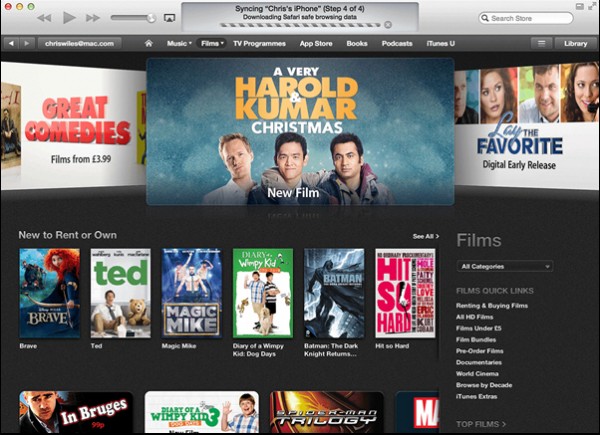
    Loved and loathed in just about equal measure, iTunes is installed on a huge number of computers around the world. It has been a while since the last update, but now iTunes 11.0.3 has been unveiled and there are a few important changes that make it worthy of installing, including new MiniPlayer views.

    In the initial update to iTunes 11, many users were disappointed to find that the progress bar has vanished from the MiniPlayer. In the most recent update, this has been reinstated and it is also possible to have album art displayed while playback controls are hidden.

    Album art can also be displayed in songs view and improvements have been made to the handling to multi-disc albums. To make those compilations, concept albums and other multi-parters easier to manage, iTunes now treats them as a single album rather than two or more.

    These are the most obvious changes, and all of them are cosmetic ones that should be immediately apparent. Apple also claims that this latest update helps to improve performance for people with large music libraries. There are no figures to elaborate on what constitutes a large library, but faster searching and sorting is promised.

    You can find out more and download a copy of the app — which is available for OS X and Windows — by paying a visit to the iTunes review page.

  • Talent Strategies for the Post-Loyalty World

    An interview with Ben Casnocha and Chris Yeh, coauthors of the forthcoming HBR article “The New Employer-Employee Compact.”

    Download this podcast

    A written transcript will be available by May 24.

  • Leap Motion Talks New Beta, We Go Hands On With Motion-Controlled Google Earth

    leap-motion-google-earth

    Leap Motion was showing off its still unreleased gesture motion controller for computers at Google I/O 2013. The demo unit allowed you to use the controller to navigate Google Earth, and the functionality felt ready for prime time to me, as this was the first time I’d ever used the Leap Motion. The controls seemed intuitive, and within a few minutes I was flying around the globe pretty handily, though I did have some trouble finding San Francisco.

    I asked about Leap Motion’s recent announcement that it would delay launch in order to further beta test Leap, and as you can see in the video the company is keen to note that the hardware is solid, but there’s a need for more testing around the consumer experience. Leap seems very confident they can deliver by their new anticipated ship date of late July, however.

    The tech is impressive regardless of whether it hits a little later than anticipated, but it’ll be interesting to see if the extended beta has an effect on how it’s eventually received by consumers.

  • LulzSec hackers sentenced for attacking Sony, News Corp and the CIA

    LulzSec hackers sentenced
    A U.K. judge has sentenced four members of hacking collective LulzSec, an offshoot of hacking group Anonymous, for their role in taking down various corporate and government websites between February and September 2011, ZDNet reported. Judge Deborah Taylor sentenced 26-year old Ryan Ackroyd, 20-year old Jake Davis, 18-year old Mustafa al-Bassam and 21-year old Ryan Cleary in a London courtroom on Thursday.

    Continue reading…

  • President Obama Is Headed to Baltimore – Learn Why

    On Friday, President Obama is headed to Baltimore, Maryland to talk early childhood education, infrastructure and ensuring hard work leads to a decent living.

    Watch the video below to learn more about what he’ll be doing in Baltimore, and check back on this post for updates from the trip – we’ll post them all here together. 

    read more

  • Leaked Microsoft ‘Scroogled’ video may be the best yet

    We don’t often cover leaks here at BetaNews — we want confirmation on things. So, when I saw a Microsoft Scroogled video making the rounds I was initially skeptical, though it looked authentic enough. It turns out the video is real and a Microsoft spokesperson I contacted, while refusing to issue a statement, did acknowledge as much.

    “It was an internal video that was leaked” I was told, but further comment was refused. I am not sure why because while I found the last two releases of Scroogled videos to be ridiculous — simply jokes depicting Office beating up on Google Docs and giving consumers no reason why to choose Office 365 over the Google Solution.

    While this one also does nothing to promote the Microsoft alternative, it does at least attempt to show why users may want to avoid Google. It also does so in a clever fashion — utilizing the search giant’s own “Now Everywhere” campaign against it.

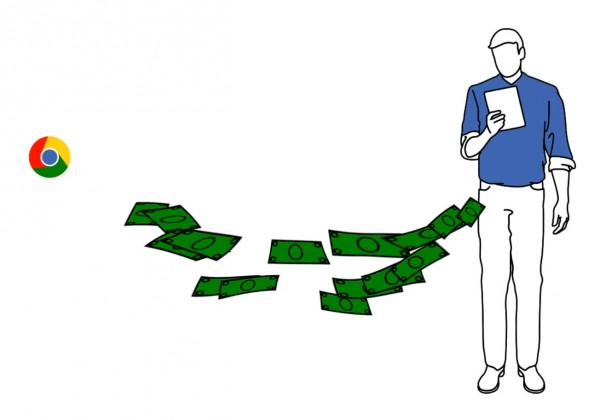
    The ad is entirely animated, showing the Chrome “bouncing ball” as it hits different devices and grabs money from users — all set to Beethoven’s symphony. The little emblem even sucks cash right out of a user’s pocket.

    The only question is why was this internal, while videos that attempt to make no point other than humor using B-list celebrities were pushed to the masses? Microsoft’s attacks on Google may remain ineffectual, and perhaps contribute to the company’s recent problems, but sometimes they do provide amusement.

  • Former Groupon CEO Andrew Mason, App.net’s Dalton Caldwell join YC as part-time partners

    Famed Silicon Valley incubator Y Combinator announced Thursday that it’s added a new full-time partner and five part-time partners, and among those five are former Groupon CEO Andrew Mason and App.net’s Dalton Caldwell.

    The incubator, which was extensively profiled by the New York Times Magazine recently, has emerged over the past few years as a powerful force in the early-stage startup scene in Silicon Valley. The group has both full-time and part-time partners who advise startups in the program, and Caldwell and Mason are both young, notable faces in the technology world.

    Caldwell was the founder of the music-sharing service Imeem and now runs App.net, an open developer network for apps. I profiled Caldwell back in December, when he talked with me about his evolving attitudes toward the Valley ecosystem and the benefit of paid services.

    Mason departed from Groupon about three months ago in a fairly memorable firing announcement that included jokes about Battletoads and fat camp. Mason wrote in a blog post that he would be launching a new company when he moves to San Francisco. “I’ve accumulated a backlog of ideas over the last several years, my favorite of which I’ll be turning into a new company this fall,” he wrote.

    And in more entertaining news, Mason wrote that he will also be recording motivational business music in L.A. Hopefully he got a coupon for the recording studio fees. From Mason’s blog post:

     I came to realize that there was a real need to present business wisdom in a format that is more accessible to the younger generation. It was with this in mind that I spent a week in LA earlier this month recording Hardly Workin’, a seven song album of motivational business music targeted at people newly entering the workforce.  These songs will help young people understand some of the ideas that I’ve found to be a key part of becoming a productive and effective employee.  I’m really happy with the results and look forward to sharing them as soon as I figure out how to load music onto iTunes, hopefully in the next few weeks.

    Related research and analysis from GigaOM Pro:
    Subscriber content. Sign up for a free trial.