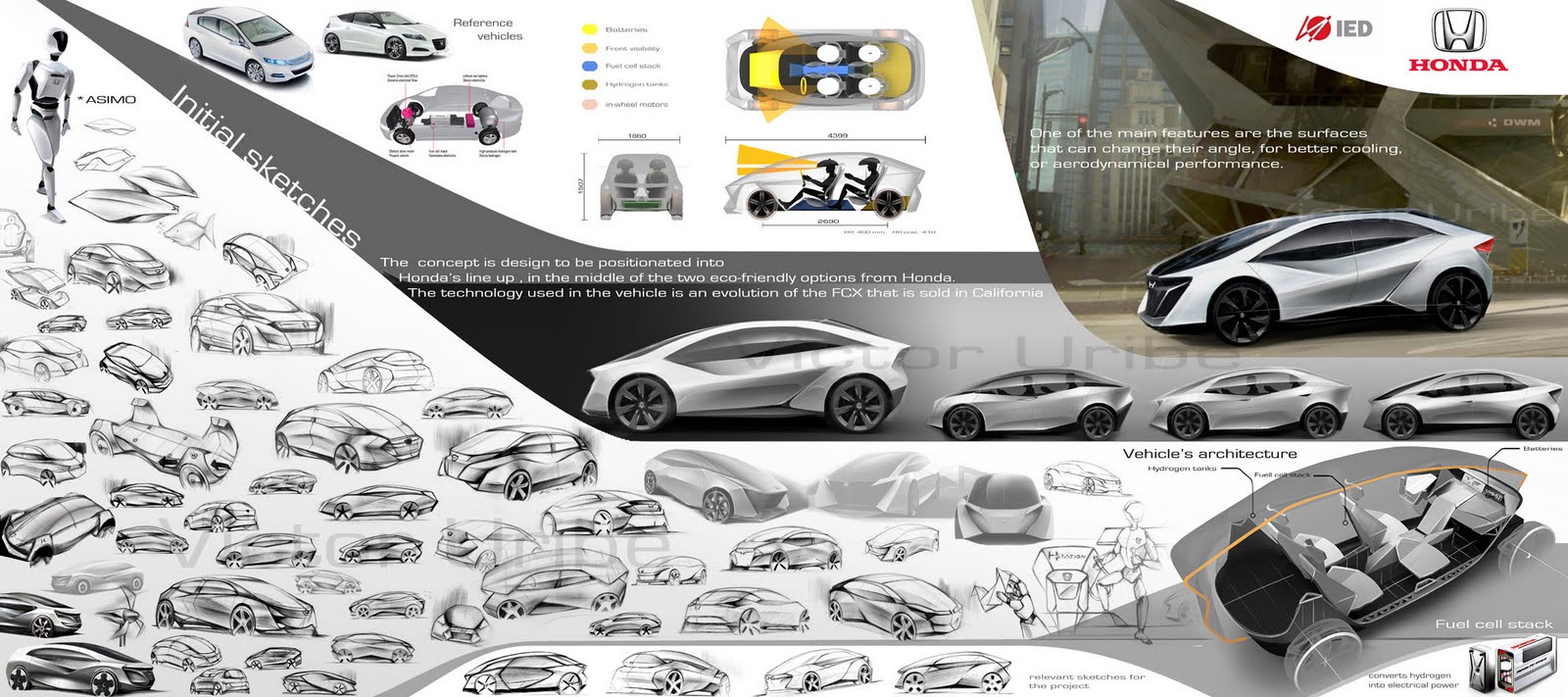
So,the other day we had a pre-presentation, just to see how the project is going on. i still have to refine some details, but overall, is coming out nicely.

So,the other day we had a pre-presentation, just to see how the project is going on. i still have to refine some details, but overall, is coming out nicely.

Eco Factor: Vehicle powered by a hydrogen internal combustion engine.
Students of the Los Altos Academy of Engineering in Hacienda Heights east of Los Angeles have developed a one-of-a-kind vehicle that runs on a hydrogen internal combustion engine. The vehicle uses a four-stroke engine that has been converted to burn hydrogen without the use of gasoline.
What is there to say? CBS2’s David Goldstein got the video evidence.

Latest traffic data from the Association of American Railroads says much about a rebound in tangible economic activity within the U.S. as well as lingering overcapacity in the economy.
The Association of American Railroads said the seven top-tier Class I railroads in the U.S. and Canada, plus some regional lines that also report traffic through the trade group, originated 387,283 new carloads of bulk commodities and equipment for the week ending April 24, up from 384,252 units a week earlier.
Their new intermodal pickups of 264,375 were almost even with the 264,593 they had in the April 17 week. But for just the five U.S.-owned Class Is and a few others, intermodal loadings of 212,347 units in the latest week were the highest so far this year.
In all, the continent’s major railroads loaded 13.9 percent more containers and trailers last week than for the same week last year, and 16.5 percent more cargoes in bulk railcars. That put intermodal traffic up 9.9 percent for the first 16 weeks of 2010, while carloads were up 7.6 percent.
Those latest gains, and the steady increases that have persisted throughout the spring, are prompting many rail industry officials to say the economy is finally on firm footing. But they point out that traffic remains well below the levels of just two years ago, before the worst of the recession kicked in, and that is keeping lots of rail equipment sidelined.
It’s an example of how economic activity is picking up… but U.S. interest rates can be kept low since there is still a substantial output gap in the U.S. economy, ie. we’re not bumping up against the economy’s full output based on current capacity yet. Yes, this is just rail, but it’s an example of what is going on in many other industries — growth, less overcapacity, but continued overcapacity nonetheless.
Join the conversation about this story »
Erin Kutz wrote:
Back in November, Bruce gave San Diego readers a preview of our list of “under-the-radar” deals—startup transactions worth less than $1 million, based on data provided to us by private company intelligence platform CB Insights. We’ve been tracking them in our other cities for months, but we didn’t see much activity in San Diego again until February, when there were enough of those smaller deals to merit a story. Good news: we’re back again this month with a roundup of March’s under-the-radar funding.
In March, the San Diego area also saw four under-the-radar deals, ranging from $250,00 to $750,000. Three transactions were based in debt, and one was an equity offering ($450,000 that went to BeamOne, a provider of electron beam sterilization services for medical and pharmaceutical companies). All four financings went to companies in the healthcare space.
The number of under-the-radar financings in the San Diego area in March remained fairly constant, compared to February. In contrast, both Boston and Seattle had under-the-radar lists that ballooned compared to February, while the number of startup deals they inked that were worth more than $1 million shrunk for the month. So we’re seeing a degree of consistency in San Diego for February and March not seen in Seattle and Boston.
San Diego’s top under-the-radar deal, at $750,000 in an offering of debt, options, and warrants, went to Tracon Pharmaceuticals, a company whose website says that they’re developing treatments for cancer and age-related macular degeneration. The under-the-radar lists in other cities have often attracted startups that are too young and stealthy to have put out any information on themselves yet. One such company showed up on the San Diego list: Digital Healthcare Systems. I couldn’t find a website for the startup, but the SEC filing for the deal says it was incorporated in 2009 and used to be called MyAfterCare.
The one familiar startup on the list was Novocell, a biotech company that Denise wrote about in October when it attracted a $20 million award from the California Institute for Regenerative Medicine to fund its developing of cell therapy for type 2 diabetes. The San Diego-based company raised $304,242 in debt and warrants funding.
Below is the full breakdown of San Diego’s under-the-radar funding in March.
| Tracon Pharmaceuticals | San Diego, CA | A developer of treatments for cancers and age-related macular degeneration | Debt* | $750,000 |
| BeamOne | San Diego, CA | A provider of electron beam sterilization services for medical and pharmaceutical customers | Equity | $450,000 |
| Novocell | San Diego, CA | A developer of stem cell engineering technology designed to treat diabetes and other chronic diseases | Debt* | $304,242 |
| Digital Healthcare Systems | San Diego, CA | A stealthy company formerly named MyAfterCare | Debt | $250,000 |
*Includes some options or warrants
UNDERWRITERS AND PARTNERS

Eco Factor: Hybrid bicycle assisted by a 240W electric motor.
Lexus has announced the details of its innovative Hybrid Bicycle Concept that will debut at the Great British Bike Ride this weekend. The carbon fiber hybrid concept features a 240W electric motor and includes an eight-speed transmission. The motor is fueled by a 25.9V lithium-ion battery and includes a regenerative braking system as well.
Super Street Fighter IV is hitting hard with the numbers. Capcom has released an official statement earlier today, stating that they have now shipped a million copies worldwide literally just three days since its launch.
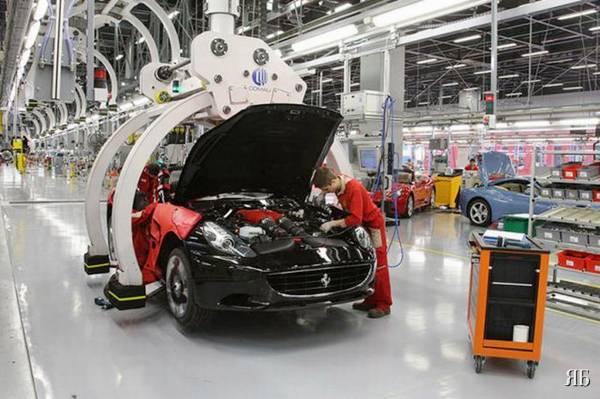
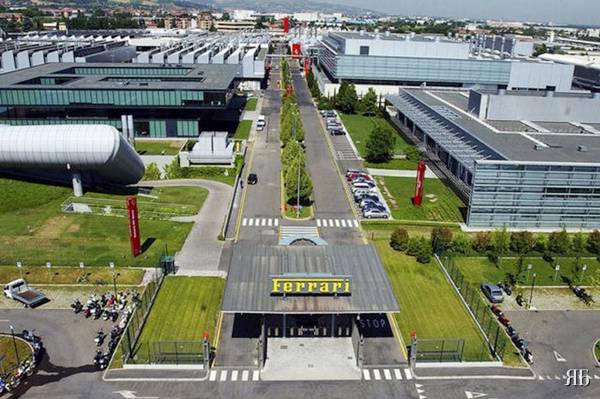
How to build a Ferrari. Ferrari’s Factory
Ferrari S.p.A. is a sports car manufacturer based in Maranello, Italy. Founded by Enzo Ferrari in 1929 as Scuderia Ferrari, the company sponsored drivers and manufactured race cars before moving into production of street-legal vehicles in 1947 as Ferrari S.p.A..
Throughout its history, the company has been noted for its continued participation in racing, especially in Formula One, where it has enjoyed great success

Maranello is a town and comune in the region of Emilia-Romagna in northern Italy, 18 km from Modena, with a population of 16,841 as of 2009. It is best known as the home of Ferrari S.p.A. and the Scuderia Ferrari Formula One racing team. Maranello was also home to coachbuilding firm Carrozzeria Scaglietti, now owned by Ferrari.
Maranello has been the location for the Ferrari factory since the early 1940s, when Enzo Ferrari transferred operations from the Scuderia Ferrari Garage and Factory in Modena, which had been his base of operations dating back to Scuderia Ferrari’s days as an arm of Alfa Romeo, due to bombing during World War II.
Initially the factory in Maranello was a base not only for Scuderia Ferrari but also for Auto Avio Costruzioni, the machine tool manufacturing business started by Enzo to tide the company over whilst Alfa Romeo’s ban on Enzo Ferrari’s making cars bearing the Ferrari name was in force.
Ferrari Factory – view from inside, photo gallery

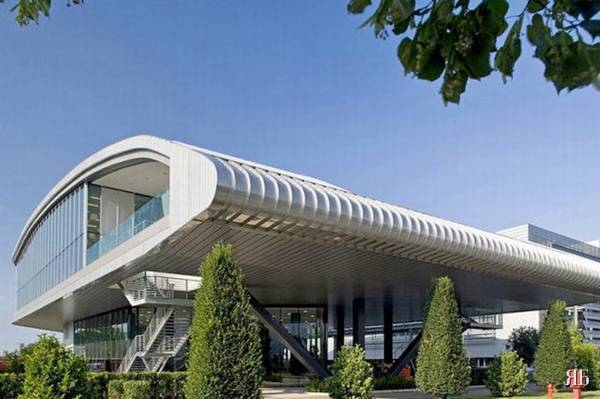

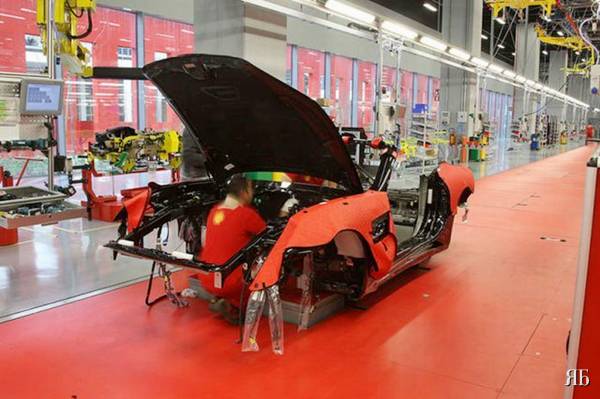
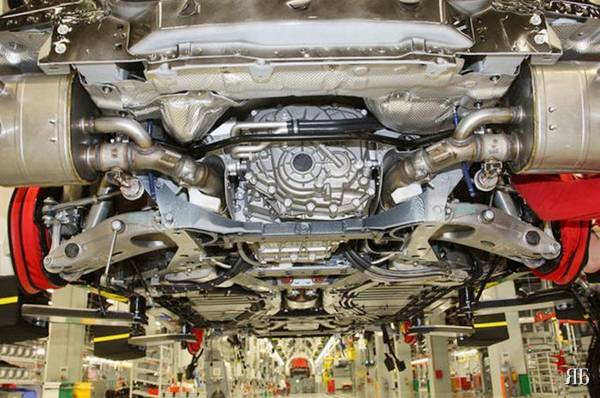
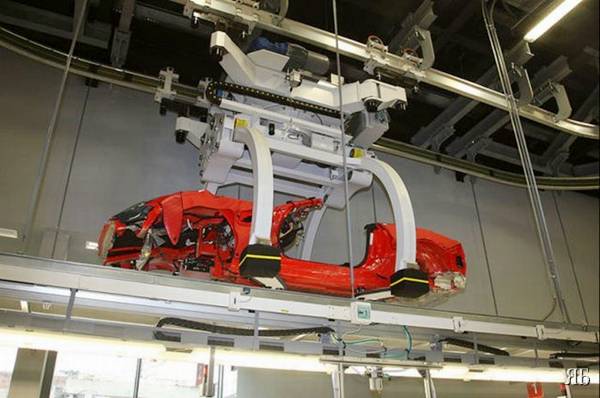


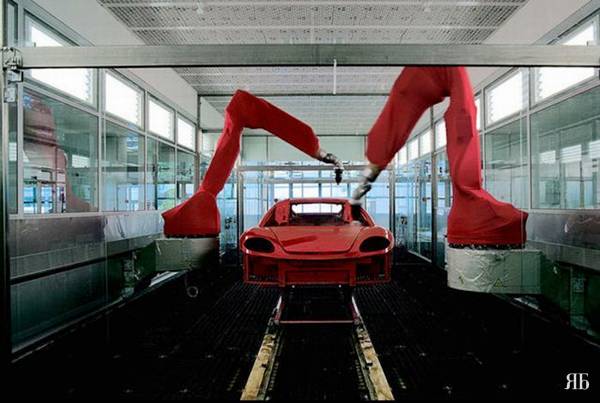


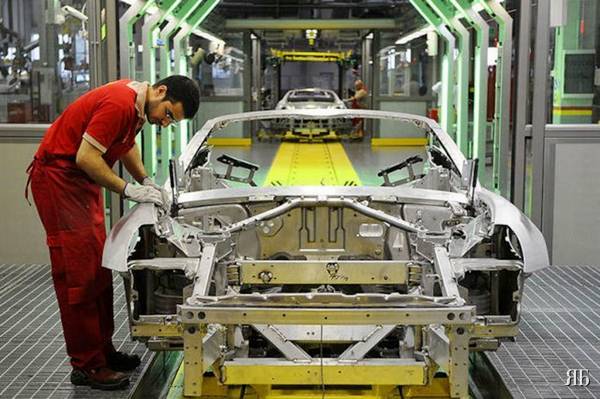


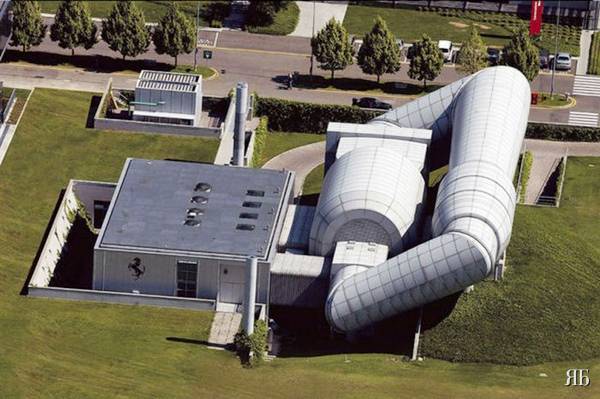

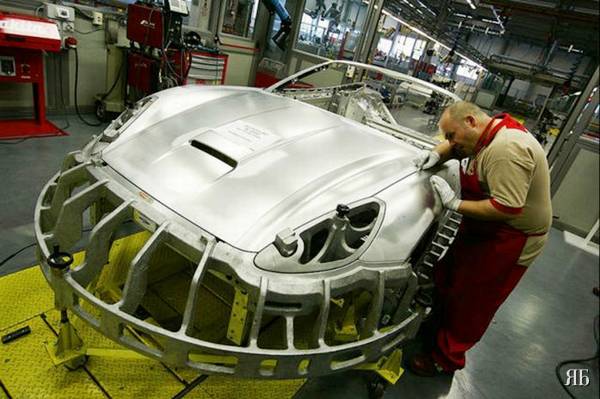
The public museum Galleria Ferrari, which displays sports and racing cars and trophies, is also located here. The Ferrari 550 Maranello and Ferrari 575 Maranello are named after the town. Maranello Kart, an Italian kart chassis, is also named after the town.
Near Maranello is the town of Fiorano Modenese where the Fiorano Circuit is located, a private track owned by Ferrari for its car testing. (from Wiki)
Thank you Cris for the email!


Could walking or running generate enough energy to power your cell phone or GPS device? Dr. Ville Kaajakari has developed an innovative piezoelectric generator prototype small enough to be embedded in the sole of a shoe that’s designed to produce enough power to operate GPS receivers, location tags and eventually, even a cell phone…
Continue Reading Piezoelectric generator creates power from shoes
Tags: GPS,
MEMS,
Piezoelectric,
Renewable Energy
Related Articles:
We recently wrote about how India had proposed changes to its copyright law that included a few surprisingly good ideas (and a few really bad ones). However, some other countries have been changing their copyright laws as well. Earlier this year, a friend involved in these things told me to keep an eye out for Chile’s new copyright laws, suggesting that I would be pleasantly surprised. Michael Scott points us to a brief description of the recently approved changes to copyright law in Chile… and, like India, it looks like a mix of good and bad. And, contrary to what I had hoped for, the bad seems to outweigh the good. To be fair, the summary is very cursory, so perhaps there’s more to the changes than what’s written. But the report highlights three changes, and from the summary, it seems like one change is good, one is bad and one is probably neutral.
The changes that will soon go into effect can be divided into three groups: the establishment of a new framework of exceptions and limitations to copyright and related rights, the incorporation of new offences, increased penalties and the consecration of new tools intended to prosecute crimes against intellectual property, and an extensive chapter on the liability of Internet Service Providers (ISP).
The first one is obviously the “good.” More and better exceptions — a la fair use — is an unquestionably good thing. But, looking at the few details provided, it doesn’t look like broad fair use-style exceptions were added. Instead, the exceptions look pretty limited:
For example, extending the framework of action for libraries and nonprofit archives in terms of the reproduction, translation and digitization of a particular work allows for it to be used for criticism, illustration, teaching or research purposes and also expands the use of works that aim to benefit a person with visual or hearing impairment.
Those are good exceptions, but those a pretty small subset of the type of exceptions that any good copyright law should have.
The “bad” is the second one. Increasing penalties makes little sense when penalties for violating copyright law are already way out of line with the “harm” done. The “neutral” one is the last one, concerning liability for service providers. Creating good safe harbors for service providers, so they’re not blamed for the actions of their users, is definitely a good thing. But the devil is very much in the details — and what the requirements are for a service provider to qualify for those safe harbors. While the report says “the ISP must meet certain requirements in order to be exempted from liability,” it does not detail what those “certain requirements” are.
Permalink | Comments | Email This Story

Eco Factor: Prototype kitchen saves energy and water.
Whirlpool has unveiled a green kitchen prototype at this year’s edition of the Eurocucina kitchen showcase at Milan Design Week. Dubbed GreenKitchen the prototype features an impressive set of water and energy saving fixtures.

Lateral Transfer of Genes from Fungi Underlies Carotenoid Production in Aphids
Nancy A. Moran and Tyler Jarvik
Carotenoids are colored compounds produced by plants, fungi, and microorganisms and are required in the diet of most animals for oxidation control or light detection. Pea aphids display a red-green color polymorphism, which influences their susceptibility to natural enemies, and the carotenoid torulene occurs only in red individuals. Unexpectedly, we found that the aphid genome itself encodes multiple enzymes for carotenoid biosynthesis. Phylogenetic analyses show that these aphid genes are derived from fungal genes, which have been integrated into the genome and duplicated. Red individuals have a 30-kilobase region, encoding a single carotenoid desaturase that is absent from green individuals. A mutation causing an amino acid replacement in this desaturase results in loss of torulene and of red body color. Thus, aphids are animals that make their own carotenoids.
“A survey of the draft aphid genome identified more than 10 genes of lateral transfer origin. However, the carotenoid synthetic genes were overlooked because the survey was designed to detect bacterial genes in the eukaryotic genome. In comparison with prokaryote-prokaryote and prokaryote-eukaryote lateral gene transfers, less attention has been paid to eukaryote-eukaryote lateral gene transfers. Although such transfer events might have been relatively rare, the recent explosive accumulation of eukaryotic genome information opens a new window to lookinto unexplored dynamic evolutionary processes.”
Science 30 April 2010:
Vol. 328. no. 5978, pp. 624 – 627
DOI: 10.1126/science.1187113
PERSPECTIVES, EVOLUTION:
A Fungal Past to Insect Color
Takema Fukatsu
Many animals recognize and respond to the environment, foods, and enemies by making use of visual cues. Hence, animal body color is an ecologically important trait, often involved in prey-predator interactions through mimicry, aposematism (colors that warn), and crypsis (camouflage) (1). In the pea aphid Acyrthosiphon pisum, an insect that destroys plants by feeding on the sap, red and green color insects frequently coexist in natural populations (see the figure). Among its major natural enemies, lady beetles preferentially attack red aphids on green plants (2), whereas parasitoid wasps deposit eggs in green aphids more frequently (3). It has been hypothesized that these opposite predation and parasitism pressures maintain the color variation in natural aphid populations. This represents one of the classical views on the evolutionary ecology of animal color polymorphism (1). On page 624 of this issue, Moran and Jarvik (4) report an unexpected layer interwoven under this well-known evolutionary scenario: Genes transferred from a fungus to the aphid genome underlie the red and green coloration.
National Institute of Advanced Industrial Science and Technology (AIST), Tsukuba 305-8566, Japan.
Science 30 April 2010:
Vol. 328. no. 5978, pp. 574 – 575
DOI: 10.1126/science.1190417
The Pundit’s thoughts:
Golden Rice, Golden Sorghum, Golden Banana, and now the Natural Golden Aphid.

 According to the Bible, the meek are supposed to inherit the earth. But it doesn’t say anything in there about the ninth inning of a close ballgame.
Embattled Pirates closer Octavio Dotel(notes) got a vote of confidence Thursday from manager John Russell, and Dotel also got the night off at Los Angeles. Dotel could use the rest: he’s allowed 14 hits and 13 runs over his last six appearances, pushing his ERA up to 10.61. Some of the damage occurred in non-critical spots and Dotel only has two blown saves on the year, but that’s no just excuse – despite a zesty 12 strikeouts on his resume, he’s been a mess over the last two weeks.
Of course if you ask Dotel, those non-save appearances shouldn’t be held against him.
"I understand that I have to get my work done, but I’ll be honest, I hate that," Dotel said. "I don’t have the same intensity. I don’t have the same adrenaline. I don’t have the same feeling for the game. I shouldn’t be that way because it is my job. I’ve got to come and do my job."
If and when Russell decides he wants to do something about the struggling Dotel, Evan Meek(notes) is ready in waiting. The unheralded Meek has been superb in 11 appearances this year (one run allowed over 15 innings), and Meek retired the Dodgers in order Thursday for his first save of the year. Casey Blake(notes) popped up, James Loney(notes) grounded out, Ronnie Belliard(notes) struck out, and no one made solid contact. Nice closing debut from someone who had six career saves entering the night – all in the minors.
At 6-0 and 225 pounds Meek doesn’t look imposing on the mound, but he’s got the other things you look for in a closer. He’s striking out a batter per inning – 15 whiffs in 15 frames. His average fastball this year checks in at 94.5 miles per hour. Meek’s control was an issue earlier in his career but he’s only walked four men this season. Home runs, no worries – he’s given up just five in 75 career innings (Dotel has already yielded three this year).
If you’re hedging against Dotel or just looking for another quality reliever and possible saver down the line, Meek is someone you want to audit Thursday night and Friday morning. While we’ll take Russell at his word and assume that Dotel will get the next Pirates save chance, closers don’t come with infinite leashes, especially closers on one-year contracts. Losing leads in the ninth inning has an emotional effect on a team. And it’s been three weeks since Dotel had a scoreless inning. Be proactive, gamers.
There’s your appetizer from the Thursday baseball schedule. I’ll be back a little later to finish this story, filling in another 1,000 words or so.
Early Friday, House Republicans tried, but failed, to amend a bill about municipal mandate relief to delay both the state’s in-school suspension law and the raise the age law until 2012. The amendment also would have required a two-thirds vote in the House and Senate to pass any future local mandates.
“This is much-needed mandate relief for our towns,” said Rep. Vincent Candelora, R-North Branford, of the amendment.
The in-school suspension law was passed in 2007, but its implementation has been delayed for various reasons. It is set to go into effect July 1, and the law’s proponents say it will help keep students in school and out of trouble. Out-of-school suspensions would still remain an option for students who are a danger to themselves or others.
Some people, however, argue that the in-school suspension law is an unfunded mandate. There are concerns over costs, space and staffing at schools.
The raise the age law, passed in 2007, has also been delayed. Many say the initiative will also be costly for cities and towns. The law would force local police departments and the state’s court system to treat 16- and 17-year olds as juveniles.
Rep. Brendan Sharkey, D-Hamden, said the Republican amendment, which was voted on at 12:45 a.m., was not well timed or well crafted.
The amendment was tacked on to a bill that would make state marshals responsible for removing and storing possessions from evicted tenants. Cities and towns currently are responsible for clearing such possessions.
The bill also includes a provision that gives public agencies the option of posting the minutes of meetings on municipal web sites. Currently, the agencies are required by law to post such minutes.
The bill passed 103-33, and the House adjourned shortly before 1 a.m.
Carl Weissman wrote:
Seattle has, from my point of view, carved out its position as the No. 3 biotech market in the U.S. behind Boston and the San Francisco Bay Area. Michigan is currently an outsider looking in. Where does Michigan want to be in this hierarchy, and what will they need to do to get there?
Michigan will not supplant either Boston or the San Francisco Bay Area in spots #1 and #2. (Neither will Seattle, San Diego, Washington DC, North Carolina’s Research Triangle, or anyplace else for that matter…) So what can Michigan do to get into the echelon of the above mentioned geographies?
First, create a business tax structure which is friendly to startup, R&D oriented, money-losing businesses. I personally know nothing about the tax code in Michigan, but it will have a significant head up on Seattle at least if companies which are high tech/biotech and are losing money and spending R&D dollars to completely offset their tax burden with the R&D dollars spent in Michigan. Venture capital investors hate cash burned in their companies for things like taxes that yield no productive technology or product development. This is small potatoes in the grand scheme of the budget of a state. The taxes collected from such companies in the state of Washington do not make a dent in the state budget, but they do make an appreciable and negatively noticed dent in the budgets of Washington startups.
Second, set up a state-backed mechanism to support venture capital investment in biotech startups in Michigan. The State of Wisconsin Investment Board, which manages public employee retirement funds, has done something like this. Michigan’s program can be equity based, as in investments by state pension funds into companies that locate in Michigan, or it can be grant funding that matches venture investment dollars at some rate. It could even take the form of investment in top tier venture funds, but not into their main funds. Instead, the state could approach top tier venture firms with the idea of investing in a “side fund” that would strictly invest in companies that would locate in Michigan. However, the state would need to avoid the pitfall of having any say in the investment decisions or limiting the scope to only technologies generated in Michigan. Both create money-losing situations that do not yield sustainable successful companies.
Third, invest heavily in the state’s research institutions. In the case of Michigan, this means the University of Michigan (at the exclusion of Michigan State) if the expectation is that viable biotechnology is going to be developed based upon those investments. Those investments should focus on attracting “rockstar” researchers to Go Blue land. Ann Arbor is a fantastic place—once you attract more of those world-renowned scientists, if the environment of entrepreneurship at a state and university level stays positive, they will stay, and they will create technologies and startups, and their students and post-docs will go on to extend the same.
Finally, create a personal tax structure and state infrastructure that is attractive to anyone thinking about relocating to Michigan. The taxes on individuals need to be on the low side of reasonable. The K-12 public education system (the one thing that most biotech employees think about most in considering whether to move somewhere) needs to be top-notch—among the elite nationally. Highly educated scientists are very interested in making sure their children get access to the very best education possible.
If Michigan succeeds in the four areas above, they have the possibility of creating a biotech utopia. Michigan could even aspire to unseat Seattle in the No. 3 position.
[Editor’s note: To help launch Xconomy Detroit, we’ve queried our network of Xconomists and other innovation leaders around the country for their list of the most important things that entrepreneurs and innovators in Michigan can do to reinvigorate their regional economy.]
UNDERWRITERS AND PARTNERS

The Greek government has agreed in principle to $30 billion of money-saving austerity measures, which will be required if the country is to receive financial support from the IMF.
“We have basically agreed, and as it stands now announcements will come during the weekend,” said the official, adding that the final details on the package will be completed on Friday.
The austerity measures, which will range from pension overhauls to wage cuts, come at the end of two weeks of talks between the Greek government and a visiting “troika” of negotiators from the IMF, the European Central Bank and the European Commission.
“There was not much room for us to negotiate,” the Greek official said. “This is the way the IMF works—if you want the money, you go by their terms. “
However, Greek labor unions vowed to fight further cuts in spending and entitlements. Union actions such as strikes and protests aren’t expected to derail government overhauls. But political commentators say labor unrest, combined with Greece’s slow-moving bureaucracy, might cause roadblocks that delay the implementation of austerity policies.
The hard part will be getting the Greek people to agree. Greek bonds yields, especially the two-year yield, have eased back substantially from their recent peaks, but remain elevated with the 10-year just below 10% and the 2-year at 12.9%. Still, it might be too early to think that much has changed.
Join the conversation about this story »

Bought a Chumby One and aren’t sure what to do with it? Turn the device into a 3G router! It’s quick and you’ll need nothing but a Chumby One, a 3G USB modem, and these instructions. [BunnieStudios via Make] More »
Luxury Off-Road Touring Machine
Arv Voss, Canadian Auto Press
The Range Rover models from Land Rover are the original luxury SUVs and they continue to this day to be equally at home off-road or parked next to the valet stand at the Four Seasons Hotel. The first production Land Rover was introduced at the Amsterdam Auto Show in April of 1948 with permanent four-wheel drive, a canvas roof and optional doors — it was really anything but luxurious. Land Rover and Range Rover were actually Sport Utility Vehicles (SUVs) before the phrase was coined to describe utilitarian modes of transportation that were alternately employed in the sport of exploring vast reaches of wilderness. Initially of course, there was no need for a class designation since there were only a handful of such vehicles in production.

2010 Range Rover Sport HSE
Range Rovers are rugged, four-wheel drive vehicles that get the job done with purpose. The original Range Rover model in the Land Rover lineup didn’t come along until 1970, first appearing and winning a gold medal for coachwork at the annual Earl’s Court Motor Show in London, fulfilling the need of a more polished and refined vehicle in the family.
The Range Rover reigns as the top-of-the-line vehicle for the Land Rover group, and was only the third all-new Range Rover in 32 years when it was thoroughly updated in 2002; it received a refresh for 2010. A somewhat smaller and more athletic Range Rover Sport was introduced in 2006 as a competitive, high-performance SUV that offered Land Rover’s Terrain Response system with a supercharged V8 in top-trim, establishing a new standard for SUV performance and agility; the supercharger was added to the top-line Range Rover shortly thereafter. The Range Rover Sport, which actually rides on the LR4 chassis architecture, is capable of traveling long distances at high speeds, but is equally comfortable tackling varying road surfaces — or no road at all.
The Range Rover Sport HSE, the entry trim level of this model, is shorter than the full-size Range Rover in both wheelbase and overall length and tips the scale at roughly 135 kilos (300 pounds) less. It derives its power from either a normally aspirated 5.0-litre, 32-valve V8 engine with a distributorless ignition system and sequential multi-port fuel injection, or a supercharged version of the same engine. The normally aspirated engine develops 375 horsepower at 6,500 rpm and 375 pound-feet of torque at 3,500 rpm, while the supercharged engine develops 510 horsepower and 461 pound-feet of torque; both engines offer significantly greater output for 2010. Power is delivered to all four wheels via a six-speed, electronically controlled automatic transmission with a locking torque converter and Normal, Sport and Manual (CommandShift) shift modes. The Torsen torque-sensing centre differential monitors torque bias between front and rear axles dependent upon available traction. The drive configuration is permanent four-wheel drive with four-wheel electronic traction control, Terrain Response system and two-speed electronic transfer gearbox.
The appearance of Land Rover models in general has dramatically improved over the past few years as designers have softened lines and contours. Ground clearance, a critical factor for serious off-roading, was increased providing substantial approach and departure angles and yielding greater off-road capability than its predecessors. Safety features, functionality and ergonomic issues were given the “royal treatment” as well.
The Sport model, as already mentioned, is somewhat smaller and more agile. Visual enhancements for the 2009 model year were minimal, but improvements made last year included the addition of power-folding exterior mirrors, an eight-way power seat in the front-passenger position, a power tilt and telescoping steering wheel, a tray with a rubber mat bottom surface located in front of the navigation screen, as well as a new finish for areas of the centre stack, console, and glove box release. Improvements for the 2010 model year include the more powerful engines, as mentioned, and striking exterior design modifications along with a redesigned interior with new levels of refinement and craftsmanship. The steering wheel was redesigned with paddle shifters added for supercharged models. Chassis refinements include active damping, new brakes and Terrain Response updates. Technology advancements include an available surround camera system with tow assist and High Beam Assist.
The spacious interior features an elegant and revolutionary design format with a variety of styling and texture cues, sporting a blend of rich woods and leathers, suggestive of fine yachts. Both HSE and Supercharged models offer luxury leather upholstery in a variety of colours, and the choice of Straight Grained Walnut, Angire Wood or Black Lacquer. There is a $430 charge for the Black Lacquer, but all other interior colour choices, some with two-tone leather, and any of the 14 exterior colours are no charge options.
My test Range Rover Sport HSE was a normally aspirated model that provided all of the qualities and amenities of an upscale luxury sedan (and then some), while maintaining its legendary off-road capability. The price tag of my Stornaway Grey metallic unit with Ebony premium leather trimmed interior was reflective of its luxurious attributes — at a base price of $73,200 — certainly not everyone is destined to own one. The final sticker totaled $82,270 after adding the cost of the Luxury Package, rear seat entertainment system, SIRIUS Satellite Radio, and transportation charges; the 20-inch alloy wheels are part of the Luxury Package.
The Range Rover Sport HSE tends to make a statement regarding one’s level of success or achievement. It affords those who own it the opportunity to travel luxuriously amidst regal appointments even when traversing wilderness trails. It is indeed a “lifestyle” vehicle that offers a much more positive experience than ever before. Acceleration and power are much more than adequate. The driving position adds to the security of operation — the Range Rover Sport has no top-heavy feel, as do many other SUVs.
The ride is smooth and stable with admirable cornering characteristics. One must keep in mind however, that the Range Rover is designed as an off-road vehicle and as such, does not possess the same cornering characteristics as a low-slung sports car. By the same token, you wouldn’t want to take the sports car for an off-road ride through woods and streams.
Ergonomically, controls are logically placed and easy to use, and the number of switches has been reduced. The driving position offers excellent command of the road and functional controls. The navigation system provides both on- and off-road guidance, while front and rear park sensors help to prevent unwanted contact. What might well be optional equipment and features on other vehicles comes not surprisingly, as standard equipment on this regal SUV. A CD player for instance, is standard along with a 60/40 split folding rear seat, a rear cargo cover and a tilt and slide sunroof with privacy shade. There’s a lot more, but space here is limited.
The Range Rover Sport HSE is “a rather exceptional vehicle,” according to the folks at Land Rover — a typical British understatement. In my opinion, it’s a luxury vehicle that’s not taxing and is not a pretend off-roader, but actually capable of traversing the wild country, while being truly at “home on the range.” Ground clearance is up to 22.6 cm (8.9 inches), while the maximum gradient is 45 degrees. I must add here that it is doubtful that those who pay the price for a vehicle of this magnitude are going to be willing to expose it to the cosmetic hazards that serious off-roading has to offer. But, should one be so inclined, the off-road versatility provided by Range Rover Sport’s improved Terrain Response system takes the chore out of programming multiple systems for optimum performance. Setting a console knob to one of five available positions adjusts throttle response, optimizes the transmission’s gear changes, positions the air suspension at the appropriate ride height, and sets the centre and rear differentials (when so equipped) in a mode right for the road or trail surface. Various parameters associated with on- and off-road performance, like anti-lock brake functions and hill descent control settings, are also altered by each Terrain Response setting. The five available modes are Grass/Gravel/Snow, Mud and Ruts, Sand, and Rock Crawl.
The Range Rover Sport’s substantial price does include a comprehensive warranty for four years or 80,000 km, along with sport sedan-like handling characteristics, rapid acceleration and responsive braking, plus luxurious interior appointments. On the negative side, the inside edges on console wood trim are sharp and the oversized fancy aluminum wheels are quite vulnerable when parallel parking – and are even more susceptible to damage in off-road exercises. Despite these shortcomings, the Range Rover Sport HSE provides a pretty special ride — anywhere!


HP is killing its Windows 7 “slate” tablet project, says TechCrunch, citing a source “briefed on the matter.” More »


