Blog

  • How to keep a graham cracker crust from getting soggy

    Keep a graham cracker crust from getting soggy

    Graham cracker crusts are easy to use, whether you bake them yourself or buy them at the store, because they take a lot less prep time and quite a bit less baking time than more traditional pastry crusts do. The drawback to them is that they got soggy very easily, a problem that is usually only made worse by the fact that the fillings placed in graham cracker shells tend to be custards, puddings and creams.

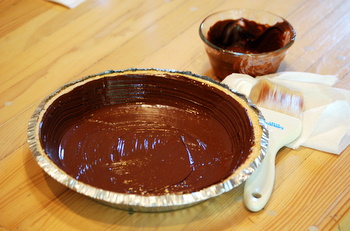
    Fortunately, there are a couple of quick fixes that can prevent a graham cracker crust from getting soggy. When you have a no-bake filling, such as the one on this Caramel Banana Cream Pie or this Fresh Strawberry Pie, you can line the inside of the graham cracker crust with melted chocolate. This creates a waterproof barrier between the crust and filling, and will keep the crust in perfect condition even after the pie is sliced. You can use any kind of chocolate, simply brush it on with a pastry brush (or spread it very thinly) the chill it for a few minutes to set before filling.

    If you have a pie that doesn’t go well with chocolate, or one that needs to be baked with its filling already in place, there is another trick to use. This time, brush the inside of the graham cracker crust with a lightly beaten egg white and pop it into the oven at about 350F 3-5 minutes to let it dry. The egg white has the same effect as the melted chocolate (although chocolate is sturdier overall), keeping moisture out of the crust.

  • Kaelin among Canada Gairdner Award recipients

    William Kaelin, professor of medicine at Dana-Farber Cancer Institute, has been named one of seven recipients of the 2010 Canada Gairdner Award. The award, which was created in 1959 to recognize and reward the achievements of medical researchers whose work contributes significantly to improving the quality of human life, is among the most prestigious awards in biomedical science.

    Kaelin’s research seeks to identify the molecular mechanisms that allow cells to detect a shortage of oxygen and respond by making new red blood cells and blood vessels. His work may pave the way for therapies that manipulate oxygen to treat diseases ranging from heart disease and anemia to cancer.

    “Bill has made groundbreaking discoveries that have transformed our understanding of many forms of cancer,” said Edward J. Benz Jr., the Richard and Susan Smith Professor of Medicine, professor of Pediatrics, and professor of pathology at Dana-Farber. “His work has also pointed the way to new strategies to find better therapies for these tumors. He is very deserving of this recognition and has also brought honor to the Dana-Farber.”

  • Europe court rules UK may not suspend benefits to wives of terror suspects

    [JURIST] The European Court of Justice (ECJ) ruled Thursday that the UK may not restrict government benefits to the spouses and families of suspected terrorists. The challenge was brought by three women whose husbands’ names appear on the UN list of terror suspects that have been linked to al Qaeda, the Taliban, or Osama bin Laden, resulting in their assets being frozen pursuant to an EU regulation. Under a regime established by the UK Treasury in 2006, terror suspects’ spouses could only receive government benefits under certain conditions, including withdrawing only 10 pounds in cash for each family member, sending a detailed monthly expense list and receipts to the Treasury, and accepting that giving cash to their husbands would be a criminal offense. The ECJ struck down the Treasury’s interpretation of the EU rules, finding that it does not fulfill the purpose of combating international terrorism. The case will now return to the UK Supreme Court for a final ruling.
    In January, the UK Supreme Court ruled that executive orders allowing the government to freeze the assets of five suspected terrorists are illegal. The men involved in the court’s inaugural case argued that the government exceeded its power when the Treasury froze their assets without the approval of Parliament. The Supreme Court’s ruling affirmed a 2008 High Court ruling, which found that the Treasury may not freeze the assets of the five suspected terrorists without the approval of Parliament. The seizures were conducted pursuant to two Orders in Council, the Terrorism (United Nations Measures) Order 2006 and the Al Qaeda and Taliban (United Nations Measures] Order 2006. The orders implemented UN resolutions requiring UN member states to freeze the assets of people on the UN list of suspected terrorists. The High Court rejected the orders because they were not subject to parliamentary scrutiny before they came into force.

  • Lindsay Lohan Tyler Shields “The Dirty Side Of Glamour” Photos

    Lindsay Lohan is drowning her sorrows in high fashion and heel over head in a forthcoming coffee table book from celebrity photog Tyler Shields.

    “Everyone has an idea of Lindsay Lohan and last night I had the pleasure of working with her she is a huge art lover and simply wanted to create some and that is exactly what we did! This is just a taste more to come… Lindsay Will have a few crazy shots in my upcoming book The Dirty Side of Glamour,” Tyler remarked in a blurb on his blog this week.

    Glad to see Lindsay’s alleged rampant drug use hasn’t negatively impacted her flexibility. With her finances in a tailspin, we’ve got a feeling she’ll be on her back and in this position quite a bit in the years to come….


  • Lifetime achievement award presented to Spengler and Buckley

    The New England Office of the U.S. Environmental Protection Agency (EPA) has awarded the Harvard Extension School’s John Spengler and George Buckley an Environmental Merit Lifetime Achievement Award in recognition of their exceptional work and commitment to the environment. The award recognizes the two as outstanding environmental advocates who have dedicated their lives toward preserving and protecting the New England region’s natural resources.

    Spengler is director of the Sustainability and Environmental Management Program at Harvard Extension School and Akira Yamaguchi Professor of Environmental Health and Human Habitation at the Harvard School of Public Health. Buckley is assistant director of the Sustainability and Environmental Management Program. They received their awards at a special ceremony in Boston on April 22, the 40th anniversary of Earth Day.

    “This is well-deserved recognition for Jack Spengler and George Buckley,” said Michael Shinagel, Harvard dean of Continuing Education and University Extension. “Their commitment to the environment transcends the classroom and provides an inspiring model for our graduate sustainability and environmental management students to follow.”

  • Walton appointed assistant professor of African American religions

    Social ethicist and African American religious studies scholar Jonathan Walton has been named assistant professor of African American religions at Harvard Divinity School (HDS), effective July 1.

    Walton is currently an assistant professor of religious studies at the University of California, Riverside. His research addresses the intersections among religion, politics, and popular culture.

    “Harvard Divinity School is among the premier centers of theological education and hubs of academic inquiry,” Walton said. “I am honored and humbled to join such an amazing scholarly community, particularly since HDS has a proven track record of neither resting on its reputation nor being lulled asleep by its laurels. Its continued commitment to recruiting and cultivating cutting-edge scholars of religion in general, and of American religion in particular, makes it the place I want to be.”

    To read the full story, visit the Harvard Divinity School Web site.

  • Kick-Ass launches on US PSN today, in Europe next week

    Seen the movie yet? Yes or no, it just so happens that today is the day that its accompanying video game, Kick-Ass: The Game, will be swinging its boot straight up PSN’s rear end, figuratively.


  • Taking biofuels to the next level

    President Barack Obama toured and met workers at a POET refining ethanol plant in Macon, Missouri Wednesday as part of his trip to Missouri, Iowa, and Illinois. POET is the largest ethanol producer in the United States, and has recently announced plans to produce 3.5 billion gallons of advanced cellulosic biofuels by 2022.  CAP’s Jake Caldwell has the story in this repost.

    There is no question that the United States must reduce its dependence on oil. One-fifth of the oil consumed in the United States is imported from nations that are “dangerous or unstable” for travelers, according to the State Department. And since surface transportation is responsible for 65 percent of oil use in the United States, this task will require us to meet the challenge of oil use in the transportation sector head-on.

    We will need to employ a variety of important measures to reduce oil use, including significantly more efficient fuel economy standards, investments in public transportation and high-speed rail, and smart growth development efforts. The production and use of alternative fuels, including natural gas and advanced biofuels, are also key components of a strategy to diversify our sources of energy for transportation. And each of these steps, taken together, can increase energy independence by reducing oil use by millions of barrels.

    President Obama and his administration, including Secretaries Thomas Vilsack and Steven Chu and Environmental Protection Agency Administrator Lisa P. Jackson, have demonstrated great leadership in promoting the production of advanced biofuels in a more innovative and efficient manner, while ensuring that we maintain the existing infrastructure for the current generation of biofuels.

    Yet there is still much more work to be done.

    The current generation of biofuels producers, the advanced biofuels industry, Congress, and the Obama administration should work together to promote this important energy sector with the following policy goals and recommendations:

    Support sustainable biofuels. Bring advanced, cellulosic biofuels—made from agricultural waste, wood chips, or dedicated energy crops such as switchgrass produced in rural America—to commercial scale on as rapid a timetable as possible. Ensure a stable long-term market for advanced biofuels by making investments in the infrastructure needs of the current generation of biofuels.

    Push for comprehensive, bipartisan clean energy and climate legislation in Congress that establishes a price on carbon pollution. The biofuels industry must raise its visibility and high-level support for federal clean energy and climate legislation. An economywide price on carbon will help reduce greenhouse gas emissions and reinforce a predictable price signal that will drive innovation and investment to produce cleaner fuels, create jobs, and deliver more renewable energy from rural communities.

    Increase support for the current national Renewable Fuel Standard. The RFS II will require better funding and interagency strategic implementation of the program, particularly regarding its emphasis on rewarding biofuels’ performance characteristics. Congress should also ensure that legislative definitions of “renewable biomass” adhere to certifiable environmental and land use safeguards on ecologically valuable and vulnerable public and private lands and provide a means to measure lifecycle greenhouse gas reductions.

    Support loan guarantees for the construction and deployment of advanced biofuel refineries. The U.S. Department of Agriculture’s Biomass Crop Assistance Program has in the recent past been the sole federal source of loan guarantees to develop, construct, and retrofit commercial-scale advanced biorefineries attempting to produce cellulosic biofuels at commercial levels, and it should receive an additional $300 million toward this goal. This core funding will allow the program to issue loan guarantees for biorefinery projects established primarily in rural communities.

    Provide incentives to farmers to begin growing advanced biofuel crops. The USDA’s Biomass Crop Assistance Program provides funding to producers and farmers of renewable energy crops of up to 75 percent of the cost of establishing the energy crop and annual payments for up to 15 years for crop production, and should receive additional support.

    Encourage farmer-owned and farmer-operated biorefinery and biofuel plant cooperatives and biomass enterprise zones. Direct producer payments and other targeted incentives can help farmers engaged in the establishment of farmer and locally owned biorefineries and biofuel facilities, but should be temporary and phased out over a 10-year period, and should have majority local ownership. Farmers will also need technical and financial assistance to encourage them to pool resources and enter into larger biomass enterprise zones that would maximize economies of scale and regional geographic proximity. Biomass enterprise zones could facilitate the co-location of biomass growing, production, and processing. And marketing alliances could encourage collaboration on facility construction, storage, and transportation infrastructure to enable biobased products to enter the retail market efficiently.

    Dedicate $300 million for five USDA regional feedstock research centers. These research centers will ensure appropriate biofuel feedstocks and supply chains are available in different regions of the country, and support other Department of Energy bioenergy and biomass programs. Biomass growers are primarily located in rural areas, and the costs of collecting and transporting biomass means that many production facilities are also in these communities, providing jobs and raising regional revenues.

    Import tariff phase down. The United States should gradually begin the phase down of the current 54 cent-per-gallon tariff on imported biofuels as Congress and RFS II provide a mandate for the biofuels industry to reach 36 billion gallons by 2022. All countries must take reciprocal action to remove trade restrictions on sustainable biofuels.

    Spur consumer demand and retail infrastructure. The United States must create requirements and strong incentives to make biofuel blends reliably available at filling stations by promoting the installation of new blender fuel pumps and distribution infrastructure that allow drivers to choose between traditional 100 percent gasoline blends and 85 percent biofuel blends. It should increase renewable fuel infrastructure grants to $100 million in each fiscal year.

    Mobilize government purchasing power. The federal government spends more than $230 billion annually on products and services and is a major consumer of transportation fuels. The United States should fully implement the existing Farm Bill biobased purchasing program to use the government’s purchasing power to increase market demand for biobased fuels and products.

    Biofuels and other types of biobased energy are not the only solution to all of the world’s energy and transportation challenges. We also need an array of energy sources from sun, wind, geothermal, and other renewable technologies. Most importantly, we need comprehensive, clean energy and climate legislation that puts a price on carbon pollution, and will allow sustained private and public investment in renewable energy and cleaner fuels.

    But with the right safeguards, biofuels can play a direct role in diversifying our energy sources and contribute to cutting our oil dependence, enhancing our national security, and spurring economic growth and development, particularly in rural communities.

    Jake Caldwell is the Director of Policy for Agriculture, Trade and Energy at American Progress.

    Related Post:
  • Google Announces ‘Place Pages’ for Android Phones

    Google has announced the release of their mobile-optimized Place Pages for Android handsets.  Users now access all of the same great information found on the desktop client in a tidy and mobile friendly format.  Searching for a business or place in will bring up location, ratings, hours of operation, pictures, and what the public is saying about the place. 

    If you are looking at a restaurant you’ll be able to see price levels, dining style, what to wear, and whether or not alcohol is served.  And since it’s Google we’re talking about here, there are handy maps to guide you to the location with panning, zooming, and street level.  Use Place Pages to learn more about pretty much any business, point of interest, neighborhoods, and landmark.

    Might We Suggest…

    • Fear Not, Sprint Shall Provide the Nexus One
      These days, you can never take a customer service rep at their word; most have no idea what they’re talking about. However, that doesn’t mean their words can’t excite you. On the heels of today’s hear…


  • 08 Sircus – Autumn/Winter 2010 Collection

    Kiminori Morishita is the designer behind 08 Sircus. His expertise extend from Tokyo to Paris and now has his own company, Kiminori Morishita Garments Lab Inc. 08 Sircus is one of the new labels under the company and is now in its 2010 Winter collection. For the season, Morishita offers contemporary looks with a play on solids and patterns. Wools and knits uniquely stand out in patterns and colors such as purple, grey, and blue. The suits and outerwear are also loose in style, giving off a more masculine touch to the range.

    Continue reading for more images.


  • Motorola is in the black and selling phones


    Now here’s a turnaround I never expected. According to a recent results filing, Motorola is working its way back into solvency and is turning a profit and shipping devices like crazy. The company took a slight loss in mobile sales – about $192 million – but that’s far lower than $550 million last year.

    In truth, the company has only three phones on the market – the Cliq, the Droid, and the Devour. However, it’s abundantly clear that their decision to go all Android all the time was a great one and that the marketing Verizon has pushed behind the Droid has really brought the company back to life. I, for one, am glad. Motorola hitched their wagon to the RAZR for far too long and almost lost their shirt in the process. The fact that they’re able to push out a monster release and are currently popular is an amazing feat.

    via Electronista


  • Save Dotnia as UK PM candidates in 3D Dot Game Heroes

    SouthPeak is cooking up a little extra something for next month’s 3D Dot Game Heroes release in the UK. They’ve made three characters inspired by the candidates for UK Prime Minister.

  • Quincy Jones A Favorite To Replace Simon Cowell On “American Idol?”

    According to a new poll conducted by TV Guide Magazine, critically-acclaimed music legend Quincy Jones has emerged as the fan favorite to replace Simon Cowell when the acid-tongued Brit departs American Idol next month.

    In the poll, Jones, Adam Lambert, Jamie Foxx were listed among 10 potential candidates in the running to take their place in the soon-to-be vacant chair. Forty percent of voters chose Jones — who lent his talents to three of Michael Jackson’s solo efforts, including the world’s best-selling album Thriller — as the perfect replacement for Cowell.


  • Submitting Items for the Ready for the World Passport is Now Easier!

    It’s time to begin submitting your events, activities, speakers and programs to be included in the Ready for the World Passport for the fall semester of the 2010-11 academic year.

    Faculty, staff and students are urged to use an electronic form to quickly and easily provide information about events related to the international and intercultural initiative. The form is found at http://www.utk.edu/readyfortheworld/passport/.

    For several years, Ready for the World Passports have helped promote campus activities and initiatives. The Passport is a great personal planner that is distributed free to students, faculty and staff. It is often used as a recruitment tool and serves as a valuable record of the extensive programming that supports Ready for the World goals.

    In order to produce the Passport in time for spring semester distribution, information about your unit’s spring programs is needed by Friday, July 2. These events might include, but are not limited to, films, lectures, exhibits, campus-wide activities, etc.

    Remember that Ready for the World encompasses both international AND intercultural efforts. In addition to wide-ranging intercultural activities across campus, this year’s theme is civility. We are especially interested in any initiatives or activities that are planned that target this theme.

    The Passport provides free advertisement for programs, so please take advantage of this opportunity to broadcast information to the campus community and beyond.

    Any questions about the Passport, should be addressed to Amy Blakely at [email protected] or (865) 974-5034.

  • On Palm’s generous pre-deal grants…

    By now, the news that Hewlett-Packard (HPQ) has agreed to buy Palm (PALM) is well known. But one of the things we like to do here at footnoted is look at the filings for interesting patterns once a deal is announced. It didn’t take us long to find this 8-K that was filed on April 16 shortly after 5 pm.

    The filing was short and sweet: one executive was leaving and the company was implementing a retention program for “certain key employees” that gave them restricted stock — and, for two employees, SVP for Global Operations Jeffrey P. Devine and CFO Douglas C. Jeffries, an additional $250,000 cash bonus.

    While the 8-K didn’t mention how many restricted shares the executives got, Form 4s for six executives, including Mssrs. Devine and Jeffries, were filed around 7 pm that same day. They all show that the grants were unusually generous: ranging from 175,000 RSUs for SVP for Worldwide Sales Dave Whalen to 275,000 for Devine.

    Granted, it was no secret that Palm was being shopped around, even though CEO Jon Rubinstein was widely quoted last week as saying that Palm could remain independent. Given this, one could argue that Palm was doing what it needed to do to maintain some semblance of calm in the company’s executive offices.

    Still, both the timing and the sheer generosity do seem somewhat unusual. Although we looked back a few years, we couldn’t find other similar grants of restricted shares to Palm executives. The only thing that comes close is the 215,000 restricted shares that Rubinstein received when he was tapped to be CEO last year.

    It’s hard to calculate the exact paper-profit since we don’t know what HP plans to do about these shares and won’t know until additional merger documents are filed. In the proxy that Palm filed last August, it states that “If the successor corporation refuses to assume or substitute for the award, the award will vest in full and become immediately exercisable.” But assuming all of those options vest immediately, the April 16 grants to those six executives add up to just over $8 million. In the proxy, the shares that are subject to vesting and held by Mssrs. Devine and Jeffries are valued at $3 million and $1.9 million respectively, though that was way before this current grant.

    One other quick thought about that late Friday 8-K. It was filed the same day that Palm filed this 8-K which noted that the company was lowering its revenue guidance. Now maybe this is all just one giant coincidence. After all, as we say often enough, hindsight is always 20-20. Still, it’s hard not to argue that the series of filings at Palm represents an interesting and unusual pattern.

    ————

    Please help footnoted improve by taking our annual survey. Reader feedback is important to us. All questions are optional, but we will choose one winner at random for a free quarterly subscription to FootnotedPro, a $3,000 prize.

  • Ice Discovered on Asteroid, Suggests Earth’s Oceans Came From Space [Space]

    Water ice and organic molecules have been discovered on an asteroid’s surface for the first time. Researchers glimpsed the ice on 24 Themis, a frosty rock that could be the key to understanding how Earth became the blue planet. More »


  • New Resin Tested to Stop Dental Decay Before Drilling and Filling

    Researchers from the Case Western Reserve University School of Dental Medicine are testing a new noninvasive resin polymer material to infiltrate tooth enamel to seal and stop the spread of dental decay.

    The noninvasive dental resin could be a new product in the dentist’s medicine cabinet — along with fluoride varnish, dental sealants and the tooth brushes and dental floss for oral hygiene — to ward off and stop tooth decay from spreading and destroying the tooth’s surface.

    Dental researchers Jin-Ho Phark and Silas Duarte are interested in a resin material produced by DMG (Deutsche Material Gesellschaft), a German dental products company. They discussed the new product in the article, “Caries Infiltration with Resins: A Novel Treatment Option for Interproximal Caries,” in the journal Compendium of Continuing Education in Dentistry.

    The researchers will clinically test the resin product on 40 adolescences who have completed their orthodontic treatments and have just had their fixed braces removed within the past three months.

    What interests the researcher is how much this product can reverse white spots, or the beginning lesions associated with dental decay resulting from hard to clean areas. They also want to see if the resin holds up over the two years the subjects would be in the study.

    Narrow spacing between teeth is another problem area to keep clean. The resin polymer may help to keep the teeth healthy.

    If current noninvasive methods, like flossing and fluoridation, do not work, then dentists must use invasive procedures and go in and remove the decayed areas by drilling. Drilling weakens the teeth and over time fillings need to be replaced every 7 to 10 years, which requires more enamel removal and further weakening of the teeth.

    “The idea is to develop a product that at a minimum delays decay or prevents it,” Phark said.

    He added, “We also want to find a product that is an intermediary treatment between noninvasive and invasive treatments.”

    If interested in participating in the study to test the new material, contact Phark at [email protected].

    For more information contact Susan Griffith, 216.368.1004.

  • Acer tablet to come with Windows Mobile Shell UI

    acer-mid-patent-20100429

    Acer has told Yahoo! that they will be releasing a full like of Mobile Internet Devices that will be running version 4.0 of their Shell UI, previously seen on their Windows Mobile devices such as the Acer M900. It is not known if the devices will run Windows Mobile or not.

    The device should arrive by the end of May and will all include 3G data and software which will allow the devices to interact with each other.

    Via Engadget.com


  • GM introduces Chevrolet to Korea with the Camaro

    2010 Chevrolet Camaro

    Giving the Chevrolet brand a global presence is a key strategy at the new General Motors Company, however, in South Korea GM continues to sell its current global Chevy lineup under the Daewoo brand. Well, all that’s about to chance with the introduction of new Camaro, which will go on sale in Korea in 2011.

    Click here to get prices on the 2010 Chevrolet Camaro.

    “According to our market research, half of all Koreans are familiar with the brand and more than 80 percent are aware of Chevrolet’s distinctive logo,” said GM Daewoo Auto & Technology President and CEO Mike Arcamone. “This is indicative of the positive brand image that already exists among consumers in Korea toward Chevrolet. We see tremendous upside with its introduction.”

    Click here to read our review on the 2010 Chevrolet Camaro.

    Click through for the press release for more details.

    Review: 2010 Chevrolet Camaro LT V6:

    Review: 2010 Chevrolet Camaro V6 LT Review: 2010 Chevrolet Camaro V6 LT Review: 2010 Chevrolet Camaro V6 LT Review: 2010 Chevrolet Camaro V6 LT

    Press Release:

    GM to Bring Chevrolet to Korea

    Will launch GM’s leading global brand to strengthen its position in domestic market

    Busan, Korea – Chevrolet, General Motors Company’s leading global vehicle brand, will be introduced in Korea in 2011. GM Daewoo Auto & Technology President and CEO Mike Arcamone made the announcement today at a press conference held in conjunction with the opening of the Busan International Motor Show.

    “The introduction of Chevrolet will enable us to provide our customers an array of exciting new vehicles from the brand’s global lineup, giving them more driving options,” said Arcamone. “This will help GM Daewoo increase our sales and market share in the domestic market while generating additional revenue, strengthening our employees’ job security, creating new jobs and resulting in additional investment in Korea. We regard it as a key to our long-term success.”

    As an example of the products that Korean consumers can expect, GM Daewoo introduced the new Chevrolet Camaro at its motor show stand. The popular sports car will go on sale in Korea in 2011.

    Arcamone also emphasized that today’s announcement is about brand coexistence, not brand replacement. “Our decision to launch Chevrolet is in the best interest of GM Daewoo and Korea,” he said.

    Founded in 1911 and named after famous race car driver Louis Chevrolet, Chevrolet is one of GM’s four core brands. Last year, Chevrolet accounted for 44 percent of GM’s global sales and registered a 21 percent increase in sales from the previous year.

    “GM is bringing the new brand to Korea to enhance our presence in the domestic market,” said GM International Operations President Tim Lee. “Last year, 3.3 million Chevrolet vehicles were sold in 130 markets worldwide, making it the fourth most popular passenger car brand globally.”

    The success of products such as the new Chevrolet Cruze global compact sedan and the next-generation Chevrolet Spark mini-car has played a key role in Chevrolet becoming one of the fastest-growing vehicle brands in the world. Chevrolet sales in 2009 were twice those in 2005.

    “Chevrolet has enjoyed success in mature markets in North America and Europe, as well as in emerging markets in Asia Pacific and Latin America,” said Lee. “We are confident that it will drive us into a new era in Korea.”

    – By: Omar Rana


  • VAT Would Be Nice, but It’s Not Magical

    The VAT may resolve the debt crisis, but for politicians it’s too soon to be right.

    That’s the headline of this David Ignatius piece in the Washington Post suggesting that the value-added tax is an idea before its time. Perhaps. But he writes:

    By ruling out a VAT when it could keep the federal deficit in check,
    politicians have all but guaranteed that the debt crisis, when it
    comes, will be more damaging. But by then, everyone will be clamoring
    for a VAT, so it will be safe to endorse it.

    The value-added tax could be an effective revenue-generator and tax-code-transformer, but this language is a bit strong. The VAT isn’t some uniquely magical elixir to deficititis. It’s just an efficient tax. Politicians could introduce it at a revenue-neutral level (you could off-set a first-year rate of 5% with reductions to corporate or income taxes) and then scale it up to 10% in the next few years as the economy gained steam, at which point it would start making real money.

    But VAT-or-bust is overstating the case a bit. Repealing the Bush tax cuts for more than the top 5% sometime in the next five years could save more than $100 billion annually. Broadening the tax base by eliminating tax expenditures would save the government a slice out of the $900 billion of cash it passes up each year. Not to mention a carbon tax, defense cuts, Social Security means-testing, PAYGO, Medicare reform … the list goes on. If we focus on one item to the exclusion of all else, we’ll fail to appreciate the unique opportunity of a deficit commission which is to evaluate the entirety of our Rube Goldberg tax system and skewed spending preferences. In the long term, medical inflation matters much more than any other thing. In the short term, all those other things should be on the table.


    Email this Article
    Add to digg
    Add to Reddit
    Add to Twitter
    Add to del.icio.us
    Add to StumbleUpon
    Add to Facebook