Blog

  • Mary Kay Henry ‘Almost Certain’ To Be Next SEIU President

    Mary Kay Henry ‘Almost Certain’ To Be Next SEIU President
    WASHINGTON — The race to become the next president of the nation’s fastest growing labor union became clearer on Wednesday after one of the candidates…

    Emma Ruby-Sachs: Gay Rights v. Free Speech, the Round Up
    The Supreme Court heard oral arguments yesterday on the validity of the Washington state law requiring the release of names on petitions submitted in support…

    Pavel Somov, Ph.D.: Gravity & Levity of Uncertainty
    As of this writing moment, the Earth’s human population is estimated to be 6,841,451,100. All of these 6.8 billion people are in the same exact…

    Quincy Tea Party Protest Draws Police In Riot Gear During Obama Speech (VIDEO)
    Tea Party protesters in Quincy, Illinois who did not follow a Secret Service agent’s orders were met with 15 police officers dressed in riot gear…

    Rep. Luis Gutierrez: Why the Rush on the Puerto Rico Statehood Bill?
    H.R. 2499, the Puerto Rico statehood bill was brought to the House this week after a surprise announcement last Thursday. Debate on this bill has…

  • Conservatives’ bogus attacks on Obama’s appeal to minorities: “Race card,” “Southern Strategy,” “racist”

    Conservatives’ bogus attacks on Obama’s appeal to minorities: “Race card,” “Southern Strategy,” “racist”

    After President Obama released a video message highlighting 2010 efforts to turn out the vote among minorities, right-wing media responded with inflammatory rhetoric, including claims that Obama is playing the “race card.” Those media figures have ignored that Republicans have issued similar appeals to minority voters.

    Obama’s 2010 election strategy includes getting young people, women, minorities out to vote

    Obama: “[M]ake sure that the young people, African-Americans, Latinos, and women” vote. From President Obama’s April 23 videotaped appeal to his supporters outlining Democratic Party strategy for the 2010 elections:

    In 2010, it will be up to each of you to ask folks like Claudia to stay involved, and to explain why this year the stakes are higher than ever. It will be up to each of you to make sure that the young people, African-Americans, Latinos, and women who powered our victory in 2008 stand together once again.

    Conservative media’s inflamed reaction: Strategy “disses white guys,” shows Obama “regime at its racist best”

    Drudge: “Obama plays race card.” The Drudge Report linked to an article about the video with the headline, “Obama plays race card: Rallies blacks, Latinos for ‘10 upset.” Drudge’s headline was echoed by conservative blogs such as Gateway Pundit and The Daily Caller.

    Ingraham: Obama “goes to the race card.” On the April 26 edition of Fox News’ The O’Reilly Factor, guest host Laura Ingraham asked of the video, “What’s with the racially charged rallying cry?” adding that it shows Obama “doesn’t have any other cards to throw down so he goes to the race card.” Guest Mary Katharine Ham similarly claimed that Obama is making a “race-based pitch to his voters.”

    Limbaugh: “The regime at its racist best.” Rush Limbaugh said of the video on his April 26 radio show: “This is the regime at its racist best. What’s the regime doing? Asking blacks and Latinos to join him in a fight. What is a campaign if not a fight? He’s asking young people, African-Americans, Latinos, and women to reconnect. To fight who? Who’s this fight against? … We’ve never had a president like this, who has purposely come to divide people. But he has, and he is. With that video, seeking to reconnect young people, African-Americans, Latinos, and other women for 2010. Against who?”

    FoxNews.com: Obama “left white, middle-age male voters in his rear-view mirror.” In an April 26 article, FoxNews.com stated that “President Obama left white, middle-age male voters in his rear-view mirror Monday in launching his first midterm election pitch, calling on “young people, African Americans, Latinos and women” to deliver for Democrats in November.”

    Wash. Times‘ Pruden: “Obama wants to join the sordid ranks of the race hustlers.” Washington Times editor emeritus Wesley Pruden wrote in his April 27 column that “Race-baiting never goes out of style,” adding: “Barack Obama wants to join the sordid ranks of the race hustlers, like the Revs. Jesse Jackson and Al Sharpton, if not necessarily the race baiters. Maybe there’s only a small distinction between hustling and baiting, but once the toxic stuff is let loose, it doesn’t matter what you call it.”

    Wash. Examiner: “Obama disses white guys.” The front page of the April 27 edition of the Washington Examiner carried the headline “Obama disses white guys: Rallies blacks, Latinos, women.”

    Fox’s Gutfield: “Not since third grade basketball have I ever felt so left out.” Fox News host Greg Gutfield wrote in an April 27 Big Hollywood post:

    He knows he has the black vote, for political and sentimental reasons. Young people are green enough dismiss the debate between big and small government, so Obama can get ‘em too. Women – primarily those shielded from conservativism through an intense combo of psychotherapy, grad school deployment, self help books and dating wusses -could end up in O’s pocket too.

    That leaves Latinos — who the President believes he’ll win, once he drops the “A” bomb. I.e. Amnesty.

    And who’s left? White dopes like me.

    See, in the post-racial world, it’s Obama who sees race. He looks at me, and sees someone he can’t win over.

    […]

    But still, I feel Obama looks at me, and just sees an AWG, or “angry white guy.” Which is why I’m not on his list.

    Not since third grade basketball have I ever felt so left out.

    Actually, this is worse. Back then, I was picked last. Now I’m not even on the team.

    Carlson compares video to “Nixon’s Southern Strategy.” On the April 27 edition of Fox News’ Special Report, contributor Tucker Carlson said: “So how is this different substantially from Nixon’s Southern Strategy? What he’s doing is, saying, ‘You have reason to fear on racial grounds, therefore vote for me.’ I think he is using racial anxiety for political gain.”

    Contrary to conservative media outrage, Republicans have also appealed to minorities

    Steele, Gingrich have called for GOP outreach to minority voters. As Media Matters for America has detailed, Republican National Committee chairman Michael Steele told The Washington Times in February 2009 that he planned to specifically target Hispanic and black voters as part of a new “urban-suburban hip hop” outreach program, saying, “We need messengers to really capture that region – young, Hispanic, black, a cross section … We want to convey that the modern-day GOP looks like the conservative party that stands on principles. But we want to apply them to urban-surburban hip-hop settings.” Similarly, at the June 2009 Senate House GOP Fundraising Dinner, Gingrich urged Republicans to “reach out to African Americans, to Koreans, to Vietnamese, to Chinese, to Indians, to Latinos.”

    Sargent: RNC adopts “Rush Limbaugh/Matt Drudge line” over Steele’s minority outreach. In an April 28 blog post, The Plum Line’s Greg Sargent noted that the Republican Party’s description of Obama’s remark as “an appeal based on class warfare and race” comes in the wake of Steele’s April 19 statement that Republicans “haven’t done a very good job” of giving African-Americans a reason to vote for them and “have lost sight of the historic, integral link between the party and African-Americans.” Sargent added: “Now the RNC is attacking Obama for minority outreach. In so doing, the RNC is essentially adopting the Rush Limbaugh/Matt Drudge line over Steele’s previous call for more racial sensitivity.”

    Republican strategist, Fox host also counter line of attack

    Republican Blakeman: Obama “not being divisive at all.” On the April 26 edition of Fox News’ America Live, former Bush administration official Brad Blakeman responded to host Megyn Kelly’s asking if Obama was “playing the race card” by saying, “I say Republicans should do exactly the same thing. The president was not being divisive at all; he was stating the obvious. … So I don’t think the president was being racist at all.”

    Fox’s Smith: Conservatives “getting all weird” about Obama “appealing to his base.” On the April 27 edition of Fox News’ Studio B, host Shepard Smith pointed out that Obama is “appealing to his base, like politicians always do,” adding, “It’s hilarious to me that people are all kind of weirded out by the fact that a politician is appealing to his base in an election. I mean, what’s wrong with them?” Smith also said, “The right’s getting all weird about this, though, isn’t it?”

  • Scott Rothstein’s COO Charged In Connection With Ponzi Scheme

    Scott Rothstein’s COO Charged In Connection With Ponzi Scheme
    The chief operating officer of Scott Rothstein’s former law firm has been charged with consipring to launder money from with his $1.2 billion Ponzi scheme, according to the a report in The Miami Herald.

    Civilian Pleads Guilty For Lying To FBI About Post-Katrina Shootings
    A man who was on the scene of the deadly police shootings of unarmed civilians on Danziger Bridge in the days after Hurricane Katrina pleaded guilty today to lying to an FBI agent about what happened that day, and for illegally possessing a firearm.

  • Strickland Leads Kasich in Ohio

    Strickland Leads Kasich in Ohio
    A new Quinnipiac poll in Ohio finds Gov. Ted Strickland (D) leads challenger John Kasich (R) in the race for governor, 44% to 38%.

    Said pollster Peter Brown: “Although Gov. Ted Strickland remains ahead, there are a couple of numbers that might be of some concern to his re-election committee. Only 37% of voters say he has kept his campaign promises and the race remains close even though 62% of voters don’t know enough about Kasich to have an opinion of him.”

    Democrats Hold Small Leads in Ohio Senate Race
    A new Quinnipiac poll in Ohio finds Lee Fisher (D) leading Rob Portman (R) in the U.S. Senate race to replace retiring Sen. George Voinovich (R-OH), 40% to 37%.

    Jennifer Brunner (D) also edges Portman, 40% to 36%.

    Fisher and Brunner face off in a primary next week for the Democratic nomination. A poll yesterday had Fisher pulling away in the race.

  • Europe Is Finished Unless It Changes The Rules Fast

    The current Greek crisis has shown all too starkly the limits of the euro zone’s sanction and support mechanisms. If the monetary union is to have a future, it needs new rules to keep members in line and bail them out if necessary.

    Europe is in the worst crisis of the postwar era. For months, the governments of the European Union member states have proven to be incapable of developing a convincing solution for the serious debt problems of individual countries, as well as for the reduction of imbalances within the monetary union. Uncertainty among investors has grown in recent weeks, which is primarily attributable to the helplessness of political leaders, and only secondarily to the influence of speculators.

    The banking crisis of the fall of 2008 teaches us that case-by-case bailout packages approved in response to market pressures fail to have the desired effect in the event of a massive crisis of confidence. At the time, it took the comprehensive approach of the Financial Market Stabilization Act to finally bring about stabilization in Germany. Today, the euro zone needs a common strategy that successfully combines sound public finances with solidarity between member states.

    Continue reading at Der Spiegel >

    Join the conversation about this story »

  • Rail proposal in Mass. could be nation’s first high-speed project, LaHood says

    ClimateWire: A planned high-speed commuter rail service connecting New Haven and Hartford, Conn., and Springfield, Mass., could become one of the nation’s first completed rail projects, Transportation Secretary Ray LaHood said Monday as he encouraged officials in Connecticut and Massachusetts to work together and with the federal government to move the project along.

    “All of us have the same goal, the same desire, and that is to have high-speed, real high-speed rail service in the corridor, in the heart of New England,” said Connecticut Gov. M. Jodi Rell (R). “If we can meet a timetable and be aggressive as we have planned, then I think we will be the first in the nation to accomplish that.”

    Connecticut, which is submitting studies to federal officials for funding, anticipates that the train will be operating by 2014 or 2016. The federal government has already given $40 million to the state, which is being used to build a second set of tracks in certain areas. Connecticut transportation commissioner Joseph Marie said the state will apply for a second, more substantial round of funding. The state must also match 20 percent of the federal funding.

    There once was Amtrak service that covered the New Haven-Hartford-Springfield network, but it ended 40 years ago. Efforts to revive the rail line have been hindered because of stretches with just a single track. The next step to the project, according to planners, would be linking western Massachusetts to Boston with its own high-speed rail. The Connecticut project could also be extended past Springfield.

    The service would help the thousands of commuters between Massachusetts and Connecticut or those who drive to New Haven to catch trains to New York or Washington (Susan Haigh, AP/Boston Globe, April 27). – JP

  • Stop Trying to Kill Social Security

    Stop Trying to Kill Social Security
    Worried about the deficit? Wall Street is the problem, not Social Security.

    Worried about the deficit? Wall Street is the problem, not Social Security.

    15 Ways I Oppress Rich, White Conservatives Like Glenn Beck and Rush Limbaugh
    The election of Obama has been difficult for rich, white conservatives. It’s time for me, as a black man, to make amends.

    The election of Obama has been difficult for rich, white conservatives. It's time for me, as a black man, to make amends.

    Can You Stomach Gluten? How Giving Up Grain May Better Your Health
    An increasing amount of stores, companies and personal care products are catering to people with gluten intolerance.

    An increasing amount of stores, companies and personal care products are catering to people with gluten intolerance.

    Can Switching to Hybrid Cars and Organics Really Save the World, or Is It Just Lazy Environmentalism?
    Heather Rogers’ new book, ‘Green Gone Wrong,’ explores whether we can save the world simply by swapping our polluting products for greener ones.

    Heather Rogers' new book, 'Green Gone Wrong,' explores whether we can save the world simply by swapping our polluting products for greener ones.

    Why an 81-Year-Old Widow from Iowa is Marching to Bring the Banks Under Heel
    Ferol Wegner wasn’t the type of person who would normally protest against the banking industry. But that was before she lost 30 percent of her pension in the economic downturn.

    Ferol Wegner wasn’t the type of person who would normally protest against the banking industry. But that was before she lost 30 percent of her pension in the economic downturn.

  • Being Rude to the Deficit Hawks

    Being Rude to the Deficit Hawks
    I worked at the Economic Policy Institute (EPI) for 6 ½ years. During this time, the credibility of my work and that of my colleagues was often impugned by describing EPI as “labor backed.” This was partially true, we got…


    Economic Policy InstituteRobert RubinUnited StatesCitigroupPeter Peterson

    VIDEO Jerusalem: A Great Model For Arizona
    I don’t know what we would do without Al Jazeera. Like the Israeli media, it goes where the American media fears to tred. Check this out. The occupied areas of Israel (including Arab East Jerusalem) have a segregated road system….


    IsraelEast JerusalemUnited StatesMiddle EastWarfare and Conflict

    Do Critics Have a Better Idea for Iran Policy?
    Here is the lede of Kori Schake’s slam against current US efforts to keep Iran from getting the bomb: The Obama administration is talking tough on Iran. Despite allowing the Iranian government to escape sanction for a year of not…


    IranKori SchakeMiddle EastPresidency of Barack ObamaGovernment

  • Despite Once Being Fierce Gun Control Advocate, McCain Introduces Bill To Force D.C. To Weaken Its Laws

    Despite Once Being Fierce Gun Control Advocate, McCain Introduces Bill To Force D.C. To Weaken Its Laws
    Facing a primary from ultra-conservative former congressman J.D. Hayworth, Sen. John McCain (R-AZ) has been veering far to the right. He went as far as to claim that he never called himself a “maverick.” McCain has reversed his positions on a host of issues, from climate change to immigration, in an attempt to appease […]

    McCain2 Facing a primary from ultra-conservative former congressman J.D. Hayworth, Sen. John McCain (R-AZ) has been veering far to the right. He went as far as to claim that he never called himself a “maverick.” McCain has reversed his positions on a host of issues, from climate change to immigration, in an attempt to appease right-wing voters; he is now doing the same on gun control.

    Yesterday, McCain and Sen. Jon Tester (D-MT) introduced legislation that would force the District of Columbia to weaken its gun laws:

    The Second Amendment Enforcement Act aims to change the District’s gun laws by repealing the city’s registration rules, amending federal law to allow D.C. residents to buy guns in Maryland and Virginia, while also allowing law-abiding Washingtonians to transport firearms in the District. The legislation would also alter city laws that recommend guns be kept unloaded and either unassembled or locked in homes.

    Some may ask why a Senator from Arizona and a Senator from Montana would introduce legislation that impacts the District of Columbia,” McCain said in a statement. “It’s simple — we believe that residents across this country should be able to exercise their constitutional right to have access [to] firearms to protect themselves.”

    News of bill “was met with outrage from city officials,” especially considering D.C. recently gave up a chance at receiving voting rights in the House of Representatives for the first time in history after gun-rights advocates tacked on an amendment similar to McCain and Tester’s.

    As Jonathan Cowan, president of the center-left think tank Third Way, noted, McCain’s sponsorship of the bill will “go down as the most spectacular and blatant reversal in Senator McCain’s political career.” In the early 2000s, McCain was a spokesperson for Americans for Gun Safety, a campaign headed by Cowan that encouraged states to enact stricter regulations. McCain cut ads on the group’s behalf, urging states with pending legislation to close the so-called gun show loophole, which allows people to purchase guns without a background check.

    In 2001, McCain “rattled the gun-rights lobby” when he sponsored national legislation to eliminate the loophole. In a speech on the Senate floor at the time, McCain blasted states that hadn’t cracked down on illegal guns, saying, “We all know…[this] very dangerous loophole” needs to be closed:

    We need this amendment because criminals and terrorists have exploited and are exploiting this very obvious loophole in our gun safety laws. We need this amendment because our second amendment rights do not extend to criminals who violate our laws and terrorists who hate this country. … We need this because every one of the 15 leading gun trafficking States in America has not taken action to close the gun show loophole.

    Hats off to John McCain,” famed White House reporter Helen Thomas wrote in a 2001 column, noting, “Gun-control advocates have a powerful new voice in the Senate.” The National Rifle Association was “bristling” over the gun show campaign, and “accused McCain of trying ‘to bootstrap on the Sept. 11 tragedy.’”

    McCain reiterated his support for closing the loophole as recently as May 2008, when he told an NRA meeting, “I believe an accurate, fair and instant background check at guns shows is a reasonable requirement.” His moderate stance on gun control earned him scorn from gun-rights advocates during the 2008 campaign, with Gun Owners of America accusing McCain of “working with the enemy.” The group also gave McCain an ‘F’ for 2004 and 2006.

    McCain’s pandering to the far right doesn’t seem to be helping him much, and his campaign opponent keeps calling out his flip-flops. So, McCain may end up losing the election along with his integrity.

  • Republicans hope to win three symbolic Senate seats

    Republicans hope to win three symbolic Senate seats
    Every now and then, there comes a congressional race so fraught with history and symbolism that it becomes as much about sending a message as winning a seat.

    McConnell doesn’t fear voter backlash for GOP blockade on regulation talks
    Will voters punish Republicans this fall for constantly slowing down the work of Congress?

    To woo voters, Democrats plan to cast selves as party of results
    Democrats plan to run in the November midterm elections as the party of “results” after passing a health-care overhaul and will cast Republicans as political obstructionists, Democratic National Committee Chairman Tim Kaine said Wednesday.

    Oil spill burned in Gulf of Mexico, in hope of saving coast
    The Coast Guard and BP set fire to a portion of the crude oil floating in the Gulf of Mexico on Wednesday in a bid to limit the impact of a widening slick, which federal officials said could touch shore in parts of the Louisiana delta as early as Friday evening.

  • Protected Belize reef provides model for conservation

    ClimateWire: A ban on fishing in the marine reserve at Glover’s Reef in Belize has made it a prime spot for wildlife to flourish and for researchers to see the natural workings of the reef ecosystem. But even more, it offers a test case for the prospects of similar “no take” reserves around the world.

    The 17,500-acre area with no fishing is just 20 percent of the 87,000-acre marine protected area in Glover’s Reef, an atoll about 28 miles off the Belize coast. In the rest of the region, some restricted fishing is allowed. Partly because of that, scientists say Glover’s Reef is one of the healthiest of its kind, with plentiful fish populations.

    For example, shark populations remained steady at the reef while they dropped around the rest of the world, according to an annual shark study in the Caribbean. A study of live coral published in February’s Proceedings of the National Academy of Sciences found that marine protected areas help coral populations, although it can take decades for the results to be known. The no-take approach builds up fish stocks, which then repopulate nearby fisheries, and helps revive the entire region.

    Still, officials say it can be difficult to enforce the fishing restrictions. And the region has been heavily polluted and cover coral is low. A recent analysis found that 63 percent of Belize’s reefs are threatened by human activity (Erik Olsen, New York Times, April 26). – JP

  • EV mass market: Brussels Outlines Plans for Electric Cars TNR.v, CZX.v, RM.v, LMR.v, WLC.v, LI.v, CLQ.v, SQM, FMC, ROC ORE.ax, ABN.v, HAO.v, HEV, AONE

    There are Electric Cars, safe technology for reliable batteries and Lithium availible for them: there is no execuse not to start Electric Mobility revolution today.
    EV mass market will be started with standardization for safety and recharging infrastructure for Electric Cars. Hydrogen is lighting years away from mass adoption on cost and needed infrastructure crucial points. All the talk about dirty EVs is the old song from the Oil lobby guys. Electric Car is the only viable alternative to Oil driven CE, which is available today. By the way, every Hydrogen car needs a battery as well. Lithium supply for the batteries is not a question of existence or dependence on anybody’s political will, it is available in safe locations and there is no excuse not to advance Electric Cars now. Last events in Europe reminded about the feeling to be Grounded – with ash this time, how the world is going to live with Oil above 150 USD/barrel?

    Bloombeg Businessweek:

    Brussels Outlines Plans for Electric Cars
    Saying that cross-border standards for safety and rechargers will be critical to the success of electric vehicles, the European Commission has laid out a timetable
    By Leigh Phillips
    The European Commission on Wednesday (28 April) outlined a plan to get electric cars off the drawing board and onto the streets of Europe.
    Central to the EU’s plan for shifting away from the internal combustion engine is developing a series of European standards that everyone will adhere to.
    “Without strong standardisation work, I think it will be difficult to develop a market for electric cars,” said industry commissioner Antonio Tajani.
    “These aren’t just curiosities in motor shows any more. They are being keenly awaited by European citizens. It’s important for citizens to be able to cross borders and still charge their cars.”
    Ensuring that there is a standardised charger is core to the strategy. Brussels does not want citizens to be as frustrated with their green vehicle as they are with a hair dryer in a foreign hotel when they’ve forgotten to buy an adapter.
    The commission hopes to have electrical safety standards outlined by the end of 2010.
    Then, next year, standards for the recharging of cars will be developed, and the following year, 2012, the commission wants to analyse the risks involved when such cars are involved in collisions.
    The commission believes that hydrogen fuel-cell cars are one of “most promising options.”
    Responding to the plan announced today, Ian Williamson, the vice-chair of the UK Hydrogen Association said he was pleased with the strategy: “Hydrogen battery hybrid vehicles will be key to creating a low carbon transport infrastructure throughout Europe because, unlike pure electric vehicles, they offer consumers the same range, speed and fuelling times of conventional vehicles.”
    Green groups cautiously welcomed the news while underscoring that electric cars are only truly green if the electricity used comes from genuinely renewable sources. If the electricity is coming from coal-fired power plants, for example, this is just pushing the carbon emissions away from the vehicle but not tackling the root of the problem, they say.
    “The Commission hasn’t addressed two of the most critical issues, namely ensuring that the extra electricity needed will boost renewable sources and the need for smart meters in every vehicle to keep track of consumption and the carbon intensity of electricity,” said Jos Dings, director of Transport & Environment, a green transit NGO.
    “These two issues will be critical to ensuring that electric cars actually reduce emissions.”
    Provided by EUobserver—For the latest EU related news”
  • Toyota realiza recall da Sequoia nos EUA


    Como uma medida preventiva para os consumidores, a Toyota está convocando os donos norte-americanos de seu utilitário esportivo Sequoia 2003, para consertar um problema relacionado à fraca aceleração (não é o mesmo problema do Corolla). Estima-se que sejam convocados cerca de 50 mil donos desse veículo. Em declaração oficial, Steve St.Angelo, o novo chefe do controle de qualidade da divisão norte-americana diz o seguinte:

    “A Toyota está investigando as reclamações dos clientes com mais afinco, para que possamos dar uma resposta rápida aos problemas que identificamos em nossos veículos”.

    Nesse recall será atualizado o sistema de controle de estabilidade do Sequoia, Sem tal atualização, o sistema de estabilidade pode ser ativado automaticamente em velocidades baixas e desnecessárias, segundo a montadora.

    Via | Inside Line


  • The 50 Best Restaurants in the World

    Noma, in Denmark.  The best restaurant in the world.

    Noma, in Denmark. The best restaurant in the world.

    Apparently people who know water know restaurants. S. Pellegrino has just released its annual list of the 50 best restaurants in the world, of which eight reside in the US.

    However, unless you live in NYC (6), Chicago (1), or Napa (1), this list can be considered destination dining.

    The full list of 50, along with a brief rundown on the criteria, can be found here.

    Related posts:

    1. The 10 Worst Bachelor Party Cities
    2. The Craziest Apartments in the World
    3. The 10 Horniest Countries in the World

  • After Groupon’s Big Round, LivingSocial Nabs More Cash, Too

    Turns out collective buying isn’t the only path down which LivingSocial is following local coupon hotshot Groupon. Less than two weeks after Groupon closed a $135 million Series C round from Digital Sky Technologies and Battery Ventures, LivingSocial has raised a $14 million Series C round led by new investor Lightspeed Venture Partners and including U.S. Venture Partners, Grotech Ventures and Revolution Capital. No, those numbers aren’t really in the same ballpark, but LivingSocial has its eyes on the No. 2 spot in a fast-growing market.

    LivingSocial had previously raised a $25 million Series B round in March and a $5 million Series A-1 round in January. But although that may lead you to think CEO Tim O’Shaughnessy had spent every waking minute of 2010 raising money, the company also has a few product announcements today. One, it’s launching neighborhood deals, first in Seattle with three “hyperlocal” offerings per day; and two, it’s adding four new markets — Portland, Ore., Orange County, Calif., Charlotte, N.C. and Philadelphia — for a total of 18 U.S. cities.

    “Admittedly it’s an easy business to get into. It’s a hard business to scale, ” said O’Shaughnessy of the many, many collective buying sites — what we like to call the Groupon groupies. O’Shaughnessy said LivingSocial doesn’t launch into a new market without having feet on the ground there to sell to merchants directly. As for Groupon, he said, “They’ve made a great business, have awesome traction, and a lot of money. More power to them.”

    For more background on LivingSocial, see the story I wrote about their last funding round in March. Heck, it’s not even out of date!

    Related content from GigaOM Pro (sub req’d):

    Social Advertising Models Go Back to the Future

  • Dr. Drew Production Company

    Addiction specialist Dr. Drew Pinsky — the Los Angeles-based call radio show host, who in recent years has emerged as one of the most recognizable faces in reality TV — is forming a own production company to produce even more docu-series featuring the celebrity doctor and his pals.

    The first project on the roster for the newly-formed Dr. Drew Productions is an unscripted pilot on which couples will decide if they want to reunite or separate, entitled Estranged With Dr. Drew, The Hollywood Reporter said Thursday.

    Dr. Drew is the star of VH1’s Celebrity Rehab and Sober House. He also hosts MTV’s 16 & Pregnant, Teen Mom, and Sex … With Mom and Dad.


  • 10 Things You Need To Know Before The Opening Bell (GS, PG)

    Elin Whispering To Tiger Woods

    Good morning. Here’s what you need to know:

    • Sovereign debt spreads are narrower across the board, suggesting a day of breathing room after the madness of this week.
    • Goldman Sachs (GS) may be nearing a settlement with the SEC, according to the New York Post.
    • UK traders are buzzing about their own sovereign debt risks, and fears that S&P will reduce its ratings next. The origin, according to FT Alphaville, is a specific Barclays report, though there doesn’t seem to be much to it.
    • Speaking of the UK, the Labour party is in serious damage control mode after the Prime Minister’s horrendous gaffe yesterday, when he called a little old lady a bigot. Word from the Labour party is that yes, immigration questions are perfectly legitimate. A major debate is scheduled for tonight.
    • BONUS: A new report from UK’s Daily Mirror claims Tiger Woods has enumerated the exact number of women he cheated with. The number is… wait for it… 121.

    Join the conversation about this story »

  • Water and Wine

    This is another fine article by Tom Philpott.  What he has picked up on here is a chap who has the operation and resources to find better ways to do things.   Much of this is out there but having it done for you is how we all learn.
    The first lesson for every farmer is that simply paying attention to water alone will hugely impact on the quality of your output and general efficiency.  That was not obvious.  Using that as an anchor soon folds other beneficial changes into the operation.
    I am particularly impressed by the application of sheep in vineyards and by extension into orchards.  These always present unsatisfactory cultivation propositions. Simply using sheep eliminates all that and even grinds up the leaf debris.  Other animals can also be applied but each has its pluses and minuses.
    My father told of the apparent use of geese to keep a patch of strawberries weed free and this is not too different.
    Without question, all farming derived from a long history of some form of mixed farming.  Lack of mechanization limited that approach but did not limit the lessons.
    One lesson though is that we are stewards of the land for a brief lifetime.  This past generation both corrected a lot of past errors, but also created plenty of new ones.  In this article we see the real shape of the future that can extend into the millennia.  Wise husbandry is a continuing process and one can understand how a farmer selling his farm is often very careful of the operational qualities of the buyer.
    WATER INTO WINE
    Interview with ‘Growing Green’ water steward Mike Benziger 2

    26 APR 2010 2:23 PM
    An April 13, the Natural Resources Defense Council (NRDC) announced the four winners of its second annual “Growing Green” awards, which honor leaders in the sustainable-food world in four categories: “thought leader,” “producer,” business leader,” and “water steward.” I interviewed “thought leader” Fred Kirschenmann here and “business leader” Karl Kupers of Shepherd’s Grain here. Now I turn my attention to Mike Benziger, who brought home the “water steward” prize for his work at Benziger Family Winery.
    ————-
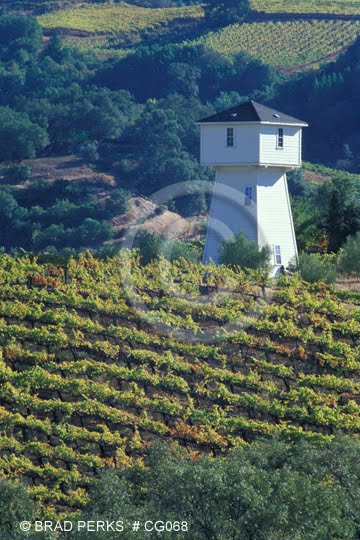
    Mike Benziger on the family farm.When Mike Benziger and his family began growing grapes and making wine in 1970s-era Sonoma County, the prevailing agricultural style could be described as “scorched earth.” Agrichemical concoctions fed the vines, killed the pests, and flattened the weeds; plentiful well water provided easy irrigation.
    But such practices not only kill soil, they also deaden wine. Over time, the Benzigers began to rethink modern viticulture. One motivation was improving the product, making it stand out from the gusher of wine coming out of Sonoma. Another was the sinking water table on Sonoma Mountain, where the family keeps its vineyards. Faced with surging water costs, the family began searching for new farming methods that didn’t treat water as a cheap and easy resource. Thus started an odyssey that inspired the family to convert its Sonoma property to biodynamic growing practices in the mid-1990s — and that won Mike Benziger recognition from the NRDC as a “water steward.” I caught up with Mike last week via phone.
    Q. Tell us about how Benziger saves water.

    A. It all started because we were running out of water — our wells were dropping. Necessity really was the mother of invention. We’re located on Sonoma Mountain, and water recharge was not happening anywhere near as fast as we were using the water. The bottom line in California is there’s probably not going to be enough water to go around.
    So, what are we going to do to address that? You throw climate change into that mix, and the problem gets that much more critical. There’s a saying in the wine business: wine is for loving, but water is for fighting. But it turns out that when you use significantly less water in the field, you can actually raise the quality of wine. There’s not a tradeoff between water use and wine quality. Of course, there are economic benefits, too — one of the biggest costs we incur at our facility is for pumping water out of the ground.
    So we looked to the vineyard first. Far and away, our growing practices used the most significant quantities of water. So, by designing vineyards that needed less water, by not planting in areas that had an excess demand for water, and by planting plants that were smaller, by planting plants that were less thirsty, by planting plants that had rootstalks that went deeper and pulled water from lower soil depth, we saved a lot of water.
    And we quickly found that by irrigating less and using less inputs, our grapes, olives, and other products were more concentrated in flavor, higher in quality, and had a longer shelf life to it.
    Q. Benziger is well-known in the industry for being certified biodynamic. Talk about the relationship between biodynamic growing practices and water conservation.

    A. When we first moved into our property in 1980, we hired the best advisors. And they told us, “Hey, you better get rid of all of the natural things in your vineyards and push them out to the other side of the fence. We don’t want any competition in your vineyards. Let’s get rid of all the insects, let’s get rid of all the weeds, let’s get rid of all the birds. We need to have this under control. Only vines should be in a vineyard area.”
    Over time, we did a pretty good job of killing everything. One day, we went outside and we didn’t hear a peep: we didn’t see an insect, we didn’t hear a bird, our soils were eroding because they were dead, and quite frankly, our wines were hit and miss. And that’s when we knew we needed to look for some farming practices that maybe treated the land with a little bit more respect.
    In about 1994-95, we started to look around for different farming practices. Biodynamic farming resonated with us because it did two things: it regenerated the land, meaning it built biological capital, and it individualized our product. And that was the thing that really, really attracted us. By farming this way, and by looking at biodynamics as a closed system of agriculture, we were able to individualize — make our property more distinctive over time.
    Biodynamics means recycling all the products within your property, and reducing the use of imported inputs … including water. Over time, our philosophy came to never ever feed the vine, but to only take care of the soil. When you feed the vine, when the food for the vine is put on the surface of the soil and then dripped in with an irrigation system, the roots stay right where the food is, which is right in the first eighteen inches. If we take care of the soil, the roots go deeper to find the nutrients the plant needs — the nutrients aren’t all there at the surface. The goal is to get the roots to explore the entire soil profile and to eventually get down to where more permanent sources of water are, which in our case, tend to be down below six to eight feet. Once we can tap into that, then we can really delay our irrigations and save hundreds of thousands of gallons of water.
    When the roots reach the lower depths, we can really tap into what I call the Holy Grail: and that is in being able to showcase what is called in the wine business the terroir of the property … the sense of place, the sense that the wine came from somewhere specific.
    Q. Animals are integral to biodynamic farming. What kind of animals are on your farm?

    A. In biodynamic farming, you try to eliminate the use of inputs by enabling natural systems, through use of  plants and animals. We use plants as habitat areas to bring in good insects that eat the bad bugs, which eliminate the need for pesticides, and we bring in the caretakers of soil biology and that eliminates the need for fertilizer.
    So we have cows, which provide the manures for our compost, and sheep, which are out in the vineyards every day during the fall, winter, and the early part of spring. With every step, sheep do three things: they eat, they shit, and they till. They’re pretty cool animals and they really invigorate the soil biology by keeping the grasses down low, that way we don’t have to bring our machinery in early when compaction is a problem. They also provide the ability to turn their manures into grasses under, so that they break down and they keep the soil biology humming. They also put little dents, not too many, but little dents in the soil that act to hold water and help to recharge the soil aquifer faster. The other thing they do, which is really important, is they take care of disease protection by turning under with their paws all the litter that’s left over from last year that usually has mildew and other bacteria in it; they turn it under and the soil bacteria take care of it right away.
    Virtually all farms had animals for 10,000 years. They’ve been pushed off most farms over the last hundred years because we decided that monocrops are more efficient. But we really didn’t look hard enough to see the real reasons why our ancestors were using animals
    Q. What else are you doing to reduce water use in the winemaking process?

    A. We’ve constructed wetlands that recycle 2-3 million gallons of water a year. All of the winery waste water and some of the grey water on our facility is captured in a pond and then, by gravity, it’s recycled through this large wetlands that acts as a kidney that cleans the water to an incredibly high level — to where it looks good enough to drink. That’s the water that we then use for landscaping, and we then use for irrigation. It’s used twice.
    In the actual winemaking process, we recently invested in what’s called “all-vibration technology.” We’ve eliminated all belts and all screws. And that right there, eliminated, I think, 18-20 percent of the water use for harvest last year alone, just converting out of belts and screws to these very easy-to-clean, very efficient vibration tables. They clean up almost by themselves.
    Then there’s cleaning wine barrels. You can imagine how hard it is to clean a 60-gallon barrel and get it all clean on the inside when there’s only a little hole to work through. In the past, we used up to 25 gallons per barrel. But with the new technologies that we’ve invested in, which is based on steam, we’ve been able to get that to below 5 gallons per barrel.
    Q. Benziger is obviously known most for its wine — what else is grown on your Sonoma Mountain land?

    A. Yeah, we grow about 30 different types of vegetables and we make olive oil and we make honey. We have about 100 lamb. We sell all of our olive oil in the tasting room, then we supply local restaurants with vegetables and beef. We’re also trying to make on a regular basis what I call an estate meal, which is a meal made entirely off the property of the lamb or the beef or the chicken with all the vegetables that we grow, with the olive oil and the honey, tasted alongside the wines that are made right there in that system, and to see if there’s an overlap or a crossover in the flavors or the profiles or the textures of the wine or the olives oil or even the veggies.
    Q. Sounds like an old-school diversified Mediterranean farm — olive groves, vineyards, vegetables, meat, all growing right on top of each other.

    A. Our property is 85 acres and less than 40 of it are in grapes. Then the other 35 or 40 are the biological support system for the grapes. The grapes are the lead character in the play. A lot of the time, [all the supporting actors] makes the lead character interesting. I don’t want to give the impression we think we’re perfect in terms of sustainability — we can always do better! But it turns out that by doing things like conserving water and improving soil health, we make better wine. So we’re committed.
    Q. Please recommend a few relatively inexpensive examples of your wines. Nothing too fancy — I work at Grist!
    A. First, I’d try the 2009 Benziger Sauvignon Blanc –– that’s just hitting the markets right now. Then I would recommend the 2006 Benziger Sonoma Country Cabernet Sauvignon. And then we have another one called Signiterra that’s a blend of Merlot and Cabernet Sauvignon that is a biodynamic property in transition — that is an awesome wine. Those would be the three that I would recommend.
  • Layar Launches Store for Augmented Reality Layers

    Augmented reality is being touted as the new hotness. I’m sure most of you have heard of the augmented reality browser, Layar. Basically, Layar offers a window through which to view the world, where handy hints and information are displayed over the top in real-time.

    The Amsterdam-based company released Layar last year for both Android and iPhone, and a number of interesting “layers” have already made their way into the application. The layers mentioned in that post were created by interested developers, but today, Layar opened up a store for selling layers.

    Layers in the store so far include a layer by travel-guide publisher Berlitz that points out hotels and places to shop, and EyeTour are offering a layer for tourists in Puerto Rico. There is also a layer for Disneyland and Disney World.

    I guess the most obvious use for augmented reality is to make sense of an unfamiliar city, so it makes sense that the first layers are targeted at tourists.

    However, commercialising layers like this will hopefully mean some really useful and innovative layers will appear in the browser in the future — especially when there are already 1.6 million copies of the reality browser floating around.

    Currently, the store accepts PayPal in the U.S., U.K., Canada and Australia, and offers a 60/40 split between developers and themselves, respectively.

    Can you think of any layers you’d like to see (or would purchase) in the future?

    For more info on (and screenshots of) the new paid layers, you can check out Layar’s site, here.

    [via Mobile Beat]