Blog

  • HP: We’re doubling down on webOS

    HP: Doubling DownOur friends over at Engadget were able to get on the horn with Brian Humphries, HP VP of Strategy and Corporate Development, and Palm CEO Jon Rubinstein, and they had a pretty positive picture painted for them. According to their chat, HP plans to be “doubling down on webOS,” which Engadget confirmed with Rubinstein, saying “that was the whole point.” webOS is our singular most favorite part of Palm and the part we worried most about with the HP merger. Additionally, Rubinstein and most of the Palm executive staff will be staying on board, so for now it seems like Palm will continue to be Palm, but with the assets of the world’s largest technology company behind them.

    So what will HP be doing with Palm and the “prized asset” that is webOS? Engadget was told that they intend to scale the OS “across multiple connected devices.” Tablets, anyone? Additionally, Rubinstein believes that HP wouldn’t be taking Palm and webOS “unless they were willing to make the kind of investment necessary to win.” Considering that HP is currently nowhere near winning in the smartphone marketplace (the lone smartphone OS they use, Windows Mobile 6.5, is due to die a slow painful death), the purchase of Palm isn’t just for IP considerations.

  • Teaching Money with Children’s Literature

    Introduction:

    The resources that are listed below are great examples of materials that can be used in a second grade classroom for a unit on money.  The topics range from counting coin values,  to addition and subtraction of monetary values, and comparing monetary values. Included below are books that can be used in the classroom, places to find printable materials, and other sites where students can practice their money skills.

    Text Annotations: 

    1. Let’s Find Out About Money by Kathy Barabas, illustrations by David Swann

    1326211.gif

    This book about money and the U.S. Mint captivates children’s curiosity about where money comes from.  It shows the reader the process of making money and the texts and photographers are extremely realistic.

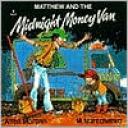
    2. Matthew and the Midnight Money Van by Allen Morgan, illustrations by Michael Martchenko
     20620519.JPG

         This story is about a boy named Matthew who is looking for Mother’s Day gift for his mom when one night the Midnight Money Van shows up in a rainstorm of pennies.  The man who drives the van offers to give Matthew some of the money if he helps clean up the mess.  Matthew agrees and he ends up on an adventure looking for gifts to buy for his mom at the Midnight Mall.

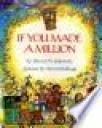
    3. If You Made a Million by David Schwartz, illustrated by Steven Kellogg
     books.jpg

         This story is a follow up to the book How Much is a Million, and explores the idea of accomplishing odd jobs and tasks in order to earn payment.  The more in depth topics such as spending and saving and the history of money itself are contrasted with the silly illustrations by Kellogg. However, the real question being answered is how much does one million dollars look like and what would it be spent on.

    4. A Chair for my Mother by Vera Williams

     books1.jpg

         A young girl explains how in her home is a big glass jar where her mother places all the coins that she receives in tips and her grandmother places all of her savings from a day at the market.  The money in this jar is going to be spent on a beautiful armchair because the rest of their furniture burned up in a fire.  When the jar is full, the family rolls the coins in wrappers and exchanges them for bills before heading out on their shopping trip.

    5. My Rows and Piles of Coins by Tololwa Mollel, illustrated by E.B. Lewis

    039575186101_sx140_sy225_sclzzzzzzz_.jpg

    Saruni is a little boy who wants to buy a bicycle to help his mother carry food back and forth from the marketplace.  He works for his mother in the marketplace and saves his money for a long time.  This book touches on the savings of money and goal- setting.  Young children will be able to identify with the main character and his wish to own something of such high value, like a bicycle.

    Web Annotations:

    1. Piggy Bank

    http://www.funbrain.com/cgi-bin/cr.cgi

    This game gives the students the sale price and the amount of money paid for the imaginary item.  The students then must fill in how many dollar bills, quarters, dimes, nickels, and pennies the person would receive back in change.  At the beginning of the game the student can choose the difficulty level and the country’s currency that they would be using.
    2. Create- A- Coin

    http://www.usmint.gov/kids/games/makingChange/

    This game allows students to create their own coin.  He or she can design what letter they want the coin to have on it, what picture is in the middle of the coin, the shape of the coin, and the lettering inside the coin.  The student only has to click and drag the tools for making the coin onto the workspace.
    3. Coin Quiz

    http://www.eduplace.com/kids/mw/practice/quiz.html?qzid=hmm05_ep/gr2/1406&qseq=5,6,4,0,8,9,10,1,11,12&at=0&fb=tr&score=40&curq=4&UNIT=6

    This website gives students two different examples of coins and the student has to choose which amount of coins matches the amount given to the student in number form.  The pictures on the site are of real coins and are colored either silver or bronze.  If the student answers the question correctly another question pops up but if they answer wrong they have the opportunity to do the problem again.
    4. Matching Number Value to Word Value

    http://www.quia.com/mc/4918.html

    This interactive website displays 16 boxes, half with a written number value such as $.31 and half with the written word value such as thirty- one cents.  The directions ask the student to match the number value with the correct word value.  When the student makes a correct match the two boxes are filled with another color to show that they have already been used.  If the student does not make a correct match nothing happens at all.  There are options on the side of the board that allow the student to change the size of the font in the boxes, to show the answers, and to restart the game.

    5. Falling Money

    http://fen.com/studentactivities/Piggybank/piggybank.html

    This is a colorful game that has students click on amounts of money as they fall from the top of the screen.  The student is given a total amount of money and when the money figures fall, the students have to click on the numbers in order to add them up inside the piggy bank.  When the student gathers enough money to match the amount given a new amount appears and the piggy bank on the side has a green line at the bottom indicating that the money is increasing in the bank.
    Additional Resources:

    1. Money Review Power Point

    http://www.allentownsd.org/EETT/secondgrade.htm#Money

    This is a downloadable power point that gives teachers a handful of review questions including amounts of money in picture form that the students must choose what number value it is, addition and subtraction of money amounts, and word problems containing amounts of money.

    2.  Printable Money Templates

    http://www.moneyinstructor.com/play.asp

    This is a link to multiple printable money templates that teachers can use in the classroom.  The templates have pictures of real bills and coins and there are a handful of bills and coins on each sheet.  If laminated, this money could be reused in the classroom.

    3. Money Worksheets

    http://www.mathworksheetwizard.com/grade2/grade2money.html

    This is a great site for printable worksheets on coin addition, money words problems, and counting money.  At the top of the page the site give the option to have the worksheets in U.S. dollars, British currency, or Euros.  Each of the worksheets is just a page long and some of them are more difficult than others.

  • Anti-Piracy Group Says: ‘Child Porn Is Great’ Since It Gets Politicians To Block File Sharing Sites

    For many years, we’ve seen the entertainment industry make totally bogus and unsubstantiated claims about file sharing sites being hotbeds of child pornography in an effort to get them to regulate or shut down those services. Of course, the actual evidence shows that file sharing porn is no worse than what’s on the wider internet. But that doesn’t stop the entertainment industry from making such bogus claims — and it seems like they’re gleefully admitting it these days. Jamie Love points us to an account of an event in Sweden, entitled “Sweden — A Safe Haven for Pirates?” put on by the US Chamber of Commerce, where someone from the Danish “Anti-Piracy” group spoke out about how great child pornography is, because it makes it easy for them to get politicians to block or shut down file sharing sites.


    “Child pornography is great,” the speaker at the podium [Johan Schluter] declared enthusiastically. “It is great because politicians understand child pornography. By playing that card, we can get them to act, and start blocking sites. And once they have done that, we can get them to start blocking file sharing sites”.


    Of course, this is no surprise, but having him say so directly is a bit surprising. He goes on to admit that the entertainment industry is planning to use child porn as a wedge to demand “a giant filter” for copyright:


    “One day we will have a giant filter that we develop in close cooperation with IFPI and MPA. We continuously monitor the child porn on the net, to show the politicians that filtering works. Child porn is an issue they understand.”

    Of course, those filters don’t actually work, and using them to force entire sites to be blocked, despite them having a relatively tiny proportion of such content isn’t just dishonest and underhanded, but dangerous. We’re all in favor of trying to stop child porn, but you do that by focusing on the source, not by putting up filters willy-nilly in a misguided attempt to get politicians to also protect your business model.


    Either way, it’s incredibly disgusting to have anyone claim that child porn is “great,” just because it can be improperly exploited for the sake of protecting another industry’s business model. That he’s basically admitting that he doesn’t remotely care about stopping child pornography, but prefers to use it to his advantage is downright sickening.

    Permalink | Comments | Email This Story


  • Palm to Land in HP’s Hands for $1.2B — webOS Will Be Resurrected

    Updated: After weeks of speculation that Palm could fold or be acquired, a buyer has come forth — HP has announced that it’s agreed to purchase Palm for $5.70 per share, or roughly $1.2 billion. The deal, which adds Palm’s patent portfolio and the webOS operating system to HP’s coffers, could subsequently give webOS a new lease on life for current and future smartphones, if not other mobile devices.

    Palm wowed many with webOS when it first introduced the platform at the 2009 Consumer Electronics Show, but the excitement has since turned to disappointment. Sales of Palm phones running atop it were hampered by a 6-month exclusive launch with Sprint which was bleeding customers, and by the time Palm could take its Pre and Pixi handsets to Verizon, that carrier had committed $100 million in advertising — to the Motorola Droid. Add to that the fact that webOS hasn’t attracted the widespread attention of developers and you can see why consumers have turned their backs on Palm. Om has chronicled Palm’s journey in detail.

    So HP could save Palm’s smartphone platform, but perhaps a more interesting scenario would be for HP to combine Palm’s webOS with HP’s hardware design and experience. The company is already preparing its Slate device with Microsoft Windows 7, but as I’ve said repeatedly, cramming a desktop operating system into a mobile device isn’t optimal. Now that HP is about to own the webOS operating system, perhaps we should be looking for a different slate tablet from HP — one that runs webOS and multitasks like a champ.

    Update: After listening in on the conference call featuring Tom Bradley, EVP of HP’s Personal Systems Group and a former CEO of Palm’s software group, HP has essentially spent $1.2 billion to buy Palm’s webOS and patents.

    Bradley emphasized that HP plans to release smartphones, tablets and
    maybe even netbooks using webOS and that it will back the platform
    with a significant sales effort as well as a heftier R&D budget than
    Palm was spending.

    Words and phrases used repeatedly in the call such as “accelerate” (HP’s entry into mobile computing) “cloud-based services” and “integrated customer experience” made it apparent that HP is planning to develop a mobile computing platform that it can link with its other products.

    Bradley noted that it plans to do this in both the consumer and the enterprise realm. When asked if HP will pursue a content strategy akin to Apple’s Bradley said, “We’re not content creators but we are access providers,” and then declined to go into specifics.

    He also declined to elaborate on what the acquisition might mean for HP’s relationship with Microsoft, which is a strategic partner of HP’s. As for why HP didn’t decide to focus its efforts on Android, Bradley said that he believes the mobile market is still in its early stages and stressed that with HP’s backing and investment in webOS, he believes it will be a more compelling platform.

  • ‘Twilight’ provokes love and hate in equal (lucrative) measure

    Bryce-dallas-howard-1

    In case anyone needed more proof of the power of the Twilight franchise (did you?), there’s a survey out today from Fandango that found that Bryce Dallas Howard is the "most anticipated villain" of the summer blockbuster season. She is? Yes, says 31 percent of the vote. The actress (and Ron Howard offspring) plays the revenge-minded vampire Victoria in the upcoming Eclipse, the third movie in The Twilight Saga. What’s most surprising is that Howard edged out Mickey Rourke, who plays the mayhem-minded Whiplash in Iron Man 2. (He has a Whopper named after him—doesn’t that count for something? Just 29 percent, that’s all. Geez, the guy’s an Oscar nominee!) Other villains to look forward to, according to the poll, are Sam Rockwell (also Iron Man 2), Val Kilmer (MacGruber) and Eric Roberts (The Expendables). On the flip side, Robert Downey Jr. leads the pack of "most anticipated summer movie heroes" with 35 percent of the vote, followed by Angelina Jolie in the action thriller Salt, Russell Crowe in Robin Hood and Jaden Smith in The Karate Kid. The "summer" season at the box office launches May 7.

    —Posted by T.L. Stanley

  • C/D: Next Jeep Grand Cherokee SRT8 all but confirmed

    Filed under: , , , ,

    2011 Jeep Grand Cherokee – Click above for high-res image gallery

    We’re expecting awfully big things from the new 2011 Jeep Grand Cherokee, which is rumored to begin initial production early next month. This will be the first totally new design to roll out of Chrysler’s design and engineering departments since America’s number three automaker was bailed out by the federal government and Italy’s Fiat, so it had better be good.

    And if a new Pentastar 3.6-liter V6 is good and the expected 5.7-liter Hemi V8 is better… well then, a suitably enlarged 6.4-liter version of the well-liked Hemi would be best of all, right? According to the Car and Driver crew, just such a beastie is currently in development, though Chrysler is reportedly neither confirming nor denying its existence in the product pipeline.

    If true, C/D’s currently imaginary Grand Cherokee SRT8 would get an unadulterated and naturally aspirated power figure that’s well over 500 horsepower and possibly a tad more than the BMW X5 M’s towering 555-horse rating. Rumor has it that Jeep wants its SRT8 to be the quickest SUV on the market, which would mean besting the aforementioned German’s 4.0-second run to 60.

    Also on the menu would likely be fully adjustable air suspension to keep things planted when the going gets twisty and an appropriate steroidal injection to the standard 2011 Grand Cherokee’s already attractive sheetmetal. If it’s indeed coming to market – and we have reason to believe that it will – we wouldn’t expect to see the GC SRT8 before 2012 at the earliest.

    [Source: Car and Driver]

    C/D: Next Jeep Grand Cherokee SRT8 all but confirmed originally appeared on Autoblog on Wed, 28 Apr 2010 15:58:00 EST. Please see our terms for use of feeds.

    Read | Permalink | Email this | Comments

  • The next big thing? Smart-grid technologies, advanced batteries stand out in cleantech space

    If cleantech is the innovation focus du jour, where should forward-thinking investors — and research labs hoping to tap into a strong current of market pull — look for the next hot market? Think ‘integration,’ specifically IT and cleantech, says Kef Kasdin, general partner with Battelle Ventures and Innovation Valley Partners. “Smart-grid technologies — deploying networking technologies to enable better energy utilization and to obviate the need to build more fossil fuel power plants — offer significantly differentiated, breakthrough technologies,” she says.

    Kasdin, an experienced VC exec, focuses on investments in communications and energy technology. She also seeks to identify promising technologies, projects, and synergies with the National Laboratories that Battelle Ventures’ sole limited partner, Battelle Memorial Institute, manages or co-manages for the U.S. Department of Energy. Kasdin takes a broad view of the cleantech sector, and the portfolio at Battelle Ventures includes companies developing solar, energy storage and efficiency, and smart-grid technologies. “We expect that innovative ideas for achievement in smart-grid technology will attract the attention of those who invest in the cleantech sector,” she says.

    Those ideas include integration of renewable technologies, such as solar and wind, on the existing electricity grid, which also will require intelligence in the grid network. Advanced energy-cell and battery technology is another area of concentration within the fund. “In order to make electric vehicles practical and affordable, game-changing innovations that address the shortcomings of traditional chemical cells are needed,” Kasdin explains. “We’re seeing new developments with solid-state lithium technology with the potential to enable large-format batteries that are substantially smaller, cheaper, safer, and more powerful than is possible with existing rechargeable chemical battery technology.”

    Breakthrough solutions will draw VC interest in new offerings in the cleantech space, she adds. But entrepreneurs must have a buttoned-up business plan and an executive summary that addresses the issues critical to any investor. “Show how the technology will generate returns for the investor, as well as how the solutions will have a game-changing impact on the marketplace,” Kasdin advises.

    Source: NASVF

    Editor’s Note: Hear more from Kasdin and other experts during our six-week webinar series, “Start-Up Boot Camp for University TTO Professionals and Inventors,” beginning June 3. Click here for more details.

  • Matt Singer – Natural Canvas Brief

    Matt Singer is a former Jack Spade designer who now has his own line for both men and women. As part of his first collection, he created this Natural Canvas Brief. According to singer, items such as this bag draw inspiration from materials that improve with age—two-ply cotton oxford shirting and heavy cotton canvas. These straightforward shapes employ superior natural materials and thoughtful construction. Available now at Matt Singer’s website.


  • Here’s what angels look for when making investment decisions

    Before you seek angel financing, examine this list of must-have requirements from Susan Preston, author of Angel Financing for Entrepreneurs and an angel herself:

    • A solid potential for return. Angels want to know how your company will make money, when it will turn profitable, and when they can expect a return on their investment. Back up those promises of profitability with financial documents that include an income statement, a balance sheet, and cash flow statements.
    • A good plan for the cash. Investors want to make sure their money will be spent wisely. If you’ve founded, say, a consumer product company, show how the money will be used to design, develop and distribute your product. And emphasize your thriftiness: angels don’t want to see their money used for big salaries or fancy office space.
    • A winning attitude. Get fired up. Angels want to see passion. They want to see you’re committed to your concept and company and you’ll stay the course when obstacles arise.
    • A seasoned team. Angels want to see a strong management team that’s capable, experienced in their industry and, more important, open to suggestions and opinions. “If I don’t think that a CEO or founder is coachable, I won’t invest,” Preston says.
    • A competitive edge. An angel will want to know that you can capture market share quickly and beat out competitors as you ramp up. If your product or service is fairly unique, an angel will want to see you’ve secured patents, copyrights, or trademarks to protect your IP.
    • A well-defined exit strategy. Investors will want to know exactly how you plan to make them money. Just saying “IPO” or “acquisition” might not be enough. Learn how other companies in your industry have returned profits to investors and identify potential suitors for your business.

    Source:  The Wall Street Journal

  • Psychology of Technology: N.E.I. is the New T.M.I.

    One of America’s most cherished rights is citizens’ right to privacy, as former Supreme Court Justice Harry Blackmun noted, “the right to be let alone.” Passions are stirred by debates about the right to privacy and it has become a political hot potato in recent years due in part to the domestic wiretapping controversy, identity theft, and data mining on the Internet. Yet these days, a growing swath of America, mostly the young and tech savvy, are not only unconcerned about their privacy, but actively eschew that right. They seem to believe in N.E.I. (Never Enough Information) rather than the more familiar T.M.I. (Too Much Information, for those who were just rescued from a deserted island).

    This desire on the part of young people to be an “open book” began in the ancient days of the 20th century (and probably long before) when the dominant form of media was television. Reality-based shows, such as MTV’s Real World and Big Brother, in which the lives of young people were broadcast for all the world to see, were the forbearers of today’s movement to make lives embarrassingly public. The growing wave of social media that caters to N.E.I. has included MySpace, Facebook, YouTube, and Twitter, and is now pushing the I-don’t-care-about-privacy envelope with Google Latitude, Foursquare, Blippy, and DailyBooth.

    Why the shift from privacy to publicity? What is motivating people to want to share information about themselves that is, at best, of little interest or value to others and, at worst, could be used against them (think drunken Facebook rants and embarrassing photos)? I could argue that it is simply the natural extension of one’s own community (family and friends share everything, right?) afforded us by the long tentacles of the Web and social media. But I’m too cynical of people’s motives and new technology to accept such a positive rationale for this behavior. I see several possible explanations focusing on both the changing world in which we live and how we are feel about said world.

    Despite appearances to the contrary, the decline of the nuclear family and the neighborhood, the mass migration caused by job mobility, and loss of national unity due to political polarization has caused many of us to feel more substantially disconnected than ever before. Social media and the ability to share ourselves so completely makes us feel connected with others, however superficial that connection may be.

    We live in a time of tremendous ambiguity and flux. The uncertain economy, global instability, and political unrest can cause use to feel powerless. When we share information about ourselves — and believe that others find it worthwhile — we feel valued, important, influential.

    It’s pretty easy to feel insignificant in this everyone-else-seems-to-be-rich-and-famous world. When we share information, whether a comment to a blog post, our location, our opinion on amazon, or what we purchase on Blippy, it proves that we exist, that we matter, that we are, literally and metaphorically, a recognizable dot on the map.

    This N.E.I. phenomenon could be explained by the rise in narcissism among young people these days fostered by a popular culture of “it’s all about me,” where self-importance, self-promotion, and exhibitionism are the road to being “somebody.” Need I say anything more than Jersey Shore?

    We also live in a world that has grown more impersonal as the size of the Web has expanded exponentially. When we share so much about ourselves, we feel a sense of intimacy (however false it may be) despite revealing nothing of real consequence about ourselves.

    How about our culture’s obsession with the insignificant and the irrelevant? Perhaps triviata is the new opiate of the masses, preventing us from having to confront the existential vacuum that exists in our souls and the scary world that exists beyond our grasp.

    Whatever the explanation for the rise of this N.E.I. movement, there’s always going to be someone out there who really believes in T.M.I. and reminds us that sharing information doesn’t really have anything to do with who we are or our place in the world. Pleaserobme.com (motto: Raising awareness about over-sharing), for example, posted Foursquare location information showing when people are away from their homes. As the site’s name implies, would-be burglars can simply log on and not only have an easy time relieving these N.E.I. believers of their worldly possessions, but also remind them in a very real-world way that they really do exist and they really do mean something to someone.b7,

    This post was submitted by drjim.


  • TVR to come back with new Corvette-engined roadster

    TVR Tuscan S

    The Russian owner of TVR, Nikolai Smolenski, has revealed plans to revive the brand with a new Corvette-engined model to be manufactured in Germany. The new model is likely to be built by Gullwing, which currently produces the AC MkVI.

    Smolenski bought TVR from its long-time owner, the late Peter Wheeler, in 2004 but was unable to keep production going and the company fell-apart in 2006.

    Speaking to AutoCar Smolenski said that he is working on a new model that will have a modified version of the traditional steel backbone chassis and independent suspension used on original TVR models.

    “We looked at every engine available — including making our own — and decided that the Corvette was the most powerful off-the-shelf design going,” he said. “Fitting it to our chassis allows us to meet all current regulations and is not too big a step.”

    Smolenski said that the first new-generation TVR models will be convertibles. TVR also has plans to build a hybrid concept.

    – By: Kap Shah

    Source: AutoCar


  • How to make the perfect elevator pitch for your IP

    Though it may take many years to develop an exciting new technology, successfully attracting a licensee or investor often comes down to a matter of a few critical minutes, if not seconds. And for most tech transfer professionals and faculty inventors, compressing a complex technical achievement into a quick, compelling, and effective “elevator pitch” is an unfamiliar skill and a difficult challenge. That’s why we’ve asked a veteran technology investor — who’s given and heard hundreds of these pitches — to share his know-how and provide a blueprint for grabbing your prospect’s attention and securing that all-important first meeting. Join Eric Nicolaides, founder and Managing Partner of Wildcat Venture Management, on Tuesday, June 15th for this how-to distance learning workshop: The Perfect Elevator Pitch: Sell Your IP in 3 Minutes or Less! Nicolaides will provide inside insights and step-by-step guidance for polishing your presentation and ensuring it hits the right hot buttons. Here’s what you’ll learn in this unique session:

    • Elements of the perfect elevator pitch
    • The 3 key questions you MUST answer about your IP in your pitch
    • Supplemental information: what’s too much, what’s too little
    • How to grab the investor’s attention in the first 40 seconds
    • Examples of good pitches, great pitches, and poor pitches
    • Inventor vs TTO staff: Choosing the right “pitcher”
    • List of do’s and don’ts to consider while crafting your pitch
    • How to “close” and secure a firm follow-up meeting

    CLICK HERE to register and for complete program details.

    ALSO COMING SOON:

  • MIT files amicus brief in Stanford IP ownership case

    The Massachusetts Institute of Technology is urging the U.S. Supreme Court to review an IP case that MIT says could have an adverse impact on the nation’s well-established success under the Bayh-Dole Act. MIT’s Office of the General Counsel filed an amicus curiae, or “friend of the court,” brief with the nation’s top court in Stanford University v. Roche Molecular Systems, Inc., et al. (For additional background on the case, see this previous eNews post.) MIT argues that the case could jeopardize the important relationship between the federal government and research universities. Senior administrators say MIT, which is not a party to the case, is taking the unusual step of getting involved because issues raised in the case go to the heart of the Institute’s culture of innovation and the success. “MIT is an undisputed leader when it comes to transferring research breakthroughs into products and services that benefit the world, and it is therefore fitting that the Institute add its voice in this important case,” says Lita Nelsen, director of MIT’s Technology License Office.

    Stanford sued Roche in 2005 for patent infringement. A federal district court denied Roche’s claim that it owned the IP in question, but the appeals court disagreed, saying that Stanford lacked complete ownership of the patents due to the ambiguous wording of an agreement that Stanford required all of its researchers to sign. The MIT brief argues that the success of the Bayh-Dole Act is threatened by the federal appellate court’s ruling. MIT says the appellate court, in its formalistic reading of the Stanford agreement, failed to consider the “clear sequence of ownership rights” defined by Bayh-Dole. “Had the court considered the import of the Bayh-Dole Act to the federal question of patent assignments, the court would have found that the chain of title led to Stanford and stopped there,” the brief states. MIT also says that if the appeals court ruling stands, it could divert the ownership of patents away from universities and the federal government. The brief asks the Supreme Court to review the case. At a minimum, the brief says, the Supreme Court should ask the federal government to weigh in on the matter.

    Source:  MIT news

  • Palm: A History In Links


    Palm Pre

    Hewlett Packard was such a logical buyer for Palm (NSDQ: PALM) that it seemed unlikely to ever happen. After the market closed Wednesday, though, the companies announced that HP has a deal to pay $1.2 billion for the troubled smartphone-maker. It’s been a monster roller-coaster ride for Palm and its shareholders. A quick look here at our most recent coverage on paidContent and mocoNews; You can also dig through the Palm archives.

    »  HP Buys Palm For $1.2 Billion
    »  Palm’s Back-Up Plan If Its List Of Buy-Out Candidates Shrinks To Zero
    »  RadioShack Gives Up On Palm
    »  Palm’s Struggles Will Handicap Its Ability To Ward Off Upcoming Competition

    »  Palm Adds A Retention Program For Key Employees, As SVP Abbott Quits
    »  Hedge Fund Manager Falcone Buys Stake In Palm
    »  Is Palm Putting Itself Up For Sale?
    »  Palm’s Stock Dives As Analyst Downgrades Target Price To $0
    »  Palm Issues Warning That Their Phones Aren’t Selling Like Hotcakes
    »  Analyst Predicts Bright Future For Palm’s WebOS
    »  Palm Raises $359.9 Million; Confirms Handset Launches
    »  The Palm Pre May Or May Not Be Meeting Expectations
    »  Earnings: Palm’s Financial Results Sink Without Revenues Flowing In From Pre Yet
    »  Palm To Pay New CEO Jon Rubinstein Up To $1.7 Million A Year; Colligan’s Departure Is Costly
    »  Palm To Pay New CEO Jon Rubinstein Up To $1.7 Million A Year; Colligan’s Departure Is Costly
    »  The Reviews Are In: The Palm Pre May Be As Good As The iPhone
    »  Palm Increases Public Offering, Sets Pricing
    »  Palm Investor Predicts The Day The Pre Will Overtake The iPhone


  • Newly enacted tech transfer law seen to boost Philippines R&D, economy

    On the heels of a South African law regulating IP from that country’s publicly funded research (see this article), the newly enacted Philippine Technology Transfer Act of 2009 also is expected to hasten the process of technology commercialization and broaden the scope of protection for IP rights in the island nation’s government R&D institutions (RDIs) when it takes effect later this year. “We are optimistic that this new law, a landmark policy on technology transfer, will revolutionize the commercialization of technologies generated by research funded by taxpayers’ money,” says the Philippine government’s Science Secretary Estrella Alabastro.

    According to a document released by the Philippines Department of Science and Technology (DOST), the initiative was needed because the existing tech transfer system is characterized by a lack of well-defined and unifying policy, insufficient investment, weak private-public collaboration in R&D and commercialization, and insufficient IP support in RDIs. Such conditions have resulted in a low rate of patent application in the Philippines. Despite the enactment of the country’s IP Code in 1998, RDIs have lacked well-defined IP policies and support systems to protect and utilize their IP. According to DOST, of 2,972 patent applications filed in 2005, only 210 were by local researchers. Of these, only 15 local patents were granted and only one patent was granted for an RDI. These trends were repeated in 2006 and 2007.

    The new law is designed to help take technologies to market, to prevent the “brain drain” of science and technology professionals out of the Philippines, and to encourage students to pursue R&D studies. A key provision in the law offers incentives to researchers by providing them with a share in royalties from their inventions and allowing them to launch their own start-ups. The law also provides a national framework to promote efficient and coordinated tech transfer — similar to the Bayh-Dole Act in the U.S. DOST and the Philippines Intellectual Property Office are preparing for the bill’s implementation.

    Source: Business Mirror

  • HP Buys Palm For $1.2 Billion


    Palm HQ Logo

    After all the speculation, HP has agreed to buy Palm (NSDQ: PALM) for $1.2 billion, or roughly $5.70 a share.

    Palm, which was running short of cash and struggling to compete against the Apple’s and Google’s of the world, will now have HP’s deep pockets and worldwide scope. While HP is no stranger to the mobile phone world—with its line of iPAQ phones—it has a lot of catching up to do and could benefit from branching out to phones and tablets from its a laptop and PC driven line-up.

    Generally, Palm’s technology is viewed as solid, it was just poor timing that hurt the smartphone-makers’ chances. Of all the rumored potential acquirers from Dell to HTC and Huawei, HP was never considered a likely candidate. Palm’s current chairman and CEO, Jon Rubinstein, who received a bit of flak for Palm’s recent poor performance, is expected to remain at the company. Release.

    In a brief statement on Palm’s web site, they point out that HP is one of the largest technology companies in the word, adding: “Can you say “webOS acceleration”? We’re pretty excited, and pleased we surprised the world again.”

    Over the past year, Palm’s stock had been trading as high as $18 a share to more recent lows around $3-$4 for a total market capitalization of around $781 million. After a brief pause in trading, Plam’s stock surged 27 percent to $5.90 a share. The transaction has been approved by the HP and Palm boards of directors, but is still pending customary closing conditions and the approval of Palm’s shareholders. Under the agreement, Palm shareholders will get cash for each share. The transaction is expected to close during HP’s third quarter ending July 31.

    HP will be hosting a live audio webcast for analysts and shareholders to discuss HP’s agreement to acquire Palm. It can be found here.


  • School Bus Fleets Use Technology to Minimize Idling (and fuels costs and pollution!)I

    school buses

    Idling buses  and trucks waste lots of fuel and add to pollution.  Can technology provide a solution ?

    You bet !

    " …  The Provider, a school bus operator in Brentwood, N.H., … first embraced wireless navigation technology from Navman Wireless … thinking that it could helps with better tracking the mileage and hours related to individual busing contracts."

    " … realized that excessive idling … could be addressed and controlled with the technology. …  When an alert is triggered, dispatchers call the driver in question … because idling wastes fuel. …"

    " … Navman Wireless, says his company … tracking 110,000 vehicles. … Navman Wireless estimates that it saves about 552 million pounds of carbon dioxide emissions across the fleet it manages. Most of those savings are calculated based on reduced fuel consumption."

    Via:  SmartPlanet  LINK


  • Hewlett-Packard To Buy Palm For $1.2 Billion

    After months of rumor and speculation, Hewlett-Packard announced today that it will indeed purchase Palm Inc. for a grand total of $1.2 billion.

    HP had been one of several companies rumored to be interested in acquiring Palm, whose smartphone sales have been lackluster in recent months. The acquisition of Palm gives HP an inroad into the growing handheld market.

    Says a VP from HP:

    Palm’s innovative operating system provides an ideal platform to expand HP’s mobility strategy and create a unique HP experience spanning multiple mobile connected devices.

    The deal is expected to be completed by the end of July.

    Hewlett-Packard buys Palm for $1.2 billion [MarketWatch]

  • EatSmart Precision Pro Kitchen Scale

    Have you ever come across a recipe that had the amount of an ingredient listed in grams and wondered how to measure it? Are you counting calories as part of a weight loss program and want to be precise about your serving sizes? Then you need the easy to use EatSmart™ Precision Pro Kitchen Scale! I know, I sound like an infomercial, but this scale really does rock.

    At $25.00, the EatSmart Precision Pro Kitchen Scale is a good value. It holds up to eleven pounds or five kilograms, and is accurate to +/- 1 gram. My favorite feature is the “Tare” feature, which means a button that lets you zero out the scale after you’ve put weight on it. Say you want to weigh something like cereal or blueberries. Put a bowl on the scale, press the Tare button, then add the food. The display will show you the weight of just the food in grams.

    The scale also comes with a guidebook to calorie counting that consists of a list of common foods and their Calorie Factor, meaning how many calories are in one gram of that food. So, let’s say you weigh dry roasted almonds and get a weight of 15. The calorie factor in the guidebook is 5.97, so your portion of almonds is 15 x 5.97 = 89.55 calories. There are also blank lines in the back of the book to put in foods you regularly eat that aren’t listed. The guidebook explains it all really well.

    Whether you want to be precise in your flour measurement for bread or want to find out how many potato chips are really in a serving, a good food scale is a must-have. My old twist-a-dial food scale is in the garage sale box and my EatSmart Precision Pro Kitchen Scale has taken it’s place! Thank you so much to EatSmart for sending me the scale to review. I love it!

    Reblog this post [with Zemanta]
  • Ohio Universities, P&G sign research collaboration agreement

    The University System of Ohio and Cincinnati-based Procter & Gamble have inked an agreement that simplifies the legal process they use to negotiate research projects. “For the first time, with just one agreement we are unleashing the collective power of Ohio’s universities to help turn ideas into products and products into jobs,” says Ohio Governor Ted Strickland, who proposed the deal in his 2010 State of the State address. The project also increases industry-financed research spending — a key goal of Ohio’s 10-year Strategic Plan for Higher Education. The Chancellor’s Office and Attorney General’s Office negotiated the agreement in coordination with Ohio’s public universities and P&G.

    When considering a specific project, the parties will start with the contract framework and will only negotiate unique terms, such as scope of work and financial issues. The process is designed to enable faster collaboration — 12 to 18 months ahead of similarly positioned universities in other states. “We will continue to do everything possible to streamline the legal process in the service of innovation,” says Attorney General Richard Cordray. “Getting things right matters, but simplicity and speed are just as important.”

    Modeled after a structure that the University of Cincinnati and P&G pioneered in 2005, the agreement governs terms and conditions that are standard in research projects between industry sponsors like P&G and Ohio’s public universities, such as the treatment of IP and confidential information. The agreement helps to promote co-ops, internships, and postdoctoral fellowships through new research projects and creates opportunities for similar agreements between the University System of Ohio and other companies. All 14 universities within the state systems will participate in the deal with P&G.

    Source:  Gov Monitor