Blog

  • The Best Sport Roadster Comparison

    The Best Sport Roadster Comparison

    The Motor Trend Editors leave the test gear behind and take four hot roadsters – the 2010 Audi TTS, 2009 BMW Z4, 2010 Nissan 370Z and the 2009 Porsche Boxster S – to the hills of Southern California to determine which is the best of the group.

  • Impressions from Dallas: What I heard at the Broadband Properties 2010 Summit

    Bill Coleman and I are in Dallas this week to participate in the Broadband Properties 2010 Summit, “Toward a Fiber-Connected World.” We came to hear from federal NTIA and RUS officials about the FCC’s new National Broadband Plan and also to touch base with others in the Rural Telecommunications Congress’s Broadband Forum. Here are some highlights from the well attended and lively meeting:

    Joe Savage, President of the Fiber to the Home Council, shared an overview of fiber deployments world-wide. Founded in 1991, FTTH Council focuses on eliminating barriers to FTTH deployments in America. He reported that the FTTH Council has spawned two “sister councils” – in Europe, and the Asian Pacific. Today, the US has 18 million homes passed with fiber and 8 million subscribers. Europe has 3 million subscribers and Asia Pacific 30 million. That said, the North American market is the fastest growing; subscriptions have doubled in the past two years and are projected to reach 200 million by 2013. South America is seen as the market next best positioned for growth.

    We also heard from Rob Curtis, who has been working hard on the development of the National Broadband Plan in his capacity as Director of Network Strategy and Deployment for the FCC. Rob told us his research team has determined that a total of 14 million Americans in 7 million housing units currently do not have access to broadband, as defined by the goals of the new National Plan of 4 Mbps per second down, and 1 Mbps up. His team has calculated the cost of closing this gap to be $24 billion.

    Interestingly, he reported that the gaps in availability and the cost of addressing them are very closely aligned – so much so, that it is almost possible to predict cost of deployment from density, and/or density from cost of deployment.

    Rob said that serving these unserved 14 million Americans is not going to happen by relying on the market alone. The maps his team has developed show that most places where population densities yield an acceptable ROI on infrastructure investments are being served. Further, his report shows that the 250,000 most expensive to serve households account for about half the $24 billion cost – meaning a per household cost of about $56,000.

    “Why should we be concerned about those hard-to-reach households?”, someone asked. “Shouldn’t folks who choose to live at ‘the end of the road’ accept that part of the price of that choice is no broadband connectivity?”

    An audience member speculated that if the folks at the end of those roads were offered $50,000 to move, they’d probably turn it down. “Let them drive to the nearest coffee shop with a wireless hot-spot,” someone said. Rob pointed out that the National Broadband Plan doesn’t call for 100 per cent coverage, but rather something short of that, which could significantly reduce the cost of closing the availability gap his research had uncovered.

    What’s the likely fate of the National Broadband Plan? FCC staffer Curtis suggested that the recommendations directed at his agency will undoubtedly be easiest to implement, but added that very intentional efforts are being made to seed plan supporters across federal agencies with a key role to play in the plan’s success, including at Transportation and HUD.

    A number of other fairly high level federal officials attended the conference, including Jonathan Adelstein, Administrator of the Rural Utilities Service (RUS) and Anne Neville, Director of NTIA’s National Broadband Mapping Program. They were engaged, active listeners, as well as presenters. No doubt they were gratified to hear, both in the corridors and in more formal settings, the many people who echoed the observation by Appalachian Regional Commission’s Telecommunications Initiative Manager, Mark DeFalco, that “This administration has a very strong focus on wanting to solve the broadband problem.” DeFalco’s comments reflected a palpable sense I picked up that many summit participants view the federal government as an ally, not an adversary, in this work.

    What is Broadband? The Rural Telecommunication Congress portion of the meeting opened with this question. Like many other economic development entities and policy bodies, Blandin Foundation has grappled with this problem from the very beginning of our broadband initiative. After months of work to agree on a number, our Broadband Strategy Board finally gave up, and approved a vision statement for our overall initiative that instead used the language of “ultra high speed.”

    Penn State University extension educator Bill Shuffstall asked for a show of hands of those in the room who don’t have broadband. No one raised their hand. Then someone asked, “How do you define broadband?” After the knowing laughter died down, Bill bravely said, “Broadband is not a number. It’s having the capability to do what you want to do when you want to do it.” Lots of folks nodded, and I thought about how his formula is pretty close to where we’ve landed on that at Blandin as well – we say that communities define for themselves what level of broadband service they need.

    Leon Conner, Executive Director of the Southern George Regional Information Technology Authority, had a slightly edgier formula: “Broadband equals efficient access to information. Information is knowledge, and knowledge is power.”

    Like a red thread, the ongoing need to educate policy makers and the public about the benefits of broadband was a theme throughout the meeting. Richard Lowenberg, founder of the 1st Mile Institute in Santa Fe (which he describes as a “think (and do) tank”), called for a more integrated, cross-sectoral approach to this challenge, one that brings together people from transportation, medicine, energy, farming, education, health care –all the many sectors that can benefit from broadband enabled technology.

    Brent Legg from Connected Nations, which has been awarded the contract to create Minnesota’s broadband map, agreed that local leadership teams are key for bringing broadband to hard-to-serve places. I thought to myself how Blandin’s approach of creating and supporting cross sectoral leadership teams at the community level has born this out.

    Extension educator Shuffstall called for more learning, in addition to more top-down educating. Learning requires innovation, which implies a willingness to try stuff that may not work. If you are going to be a learner, you need to be ready to fail.

    The need for local technology planning was another theme of the meeting. Attendees pointed out that other key infrastructure sectors – water, sewer, roads, land use – all benefit from ongoing – often mandated – planning efforts. But because in the U.S. broadband is still regarded as private (not public) infrastructure, deployment decisions are market-based, and the community voice is often missing.

    Broadband as “essential infrastructure.” Many participants in the RTC called for broadband to be designated as “essential infrastructure.” Galen Updike, Telecom Development Manager for the State of Arizona, pointed out that the designation would help remove right-of-way barriers to deployment. David Villano, Assistant Administrator for RUS’ Telecommunications Program seemed to agree when he called broadband an “essential tool for the future of human resource and economic development in our nation.”

    The rural/urban divide is here to stay. ARC’s Mark DeFalco called the rural/urban broadband access gap an “economic issue, pure and simple.” Mark characterized the high cost/low density problem of rural deployments a “problem in search of a solution,” and said that he sees the Federal Broadband Plan as the roadmap to that solution.

    Many participants seemed to agree that it is unrealistic to expect rural/urban parity. While the Federal Broadband Plan calls for 100 Mbps to be available to 100 million American households by 2020, they are unlikely to be rural households. Arizona’s Updike hastened to add that while it may be unrealistic to expect rural/urban access parity, that doesn’t mean that rural needs are less – they are just more challenging to meet.

    What is the role for state government in all of this? NTIA’s Anne Neville suggested that an important role of states is to create incentives for state agencies break out of their silos and to understand that “thinking broadband” is part of their core mission.

    Otto Doll, CIO for the State of South Dakota, said flatly, “You need to prove that you’re going to make their lives simple and save money. Unless you can do both, they’re not that ready to listen.”

    The charismatic Graham Richard, former Mayor of Ft. Wayne Indiana (and, I’m proud to say, a former keynoter at one of Blandin’s annual broadband conferences), was also the keynote speaker here. He wowed the audience with his story of how he leveraged broadband technology to turn Ft. Wayne city government into a lean, results-producing, citizen-focused driver of an economically thriving city – a story he captured in his book, “Performance is the Best Politics.”

    Mayor Richard’s core message was also about the power of local leadership to drive change. His challenge to the audience (and I felt he was looking directly at me as he said it): “convene, connect, collaborate.” We’ll be trying to do a lot of that as we implement our Minnesota Intelligent Rural Communities BTOP grant.

  • For Discussion: Advice to Tea Partiers

    By Andrew Ward

    The Cato Institute has an interesting video laying out some advice to activists in the Tea Party:

    1. Republicans aren’t always your friends.
    2. Some tea partiers like big government.
    3. Democrats aren’t always your enemies.
    4. Smaller government demands restraint abroad.
    5. Leave social issues to the states.

    Here’s their video:

    What do you think?

  • Republicans Agree to Vote for Cloture, Start FinReg Debate

    Senate Minority Leader Mitch McConnell (Ky.) has distributed a press release stating, if circuitously, that Republicans will agree to start formal debate on Sen. Chris Dodd’s (D-Conn.) financial regulatory reform proposal:

    I appreciate the efforts of Sen. Shelby to work toward a bipartisan solution on an issue that will have an impact on nearly every American. The time afforded by my Republican colleagues and Sen. Ben Nelson was instrumental in gaining assurances from the Chairman that changes will be made to end taxpayer bailouts and the dangerous notion that certain financial institutions are too big to fail.

    Unfortunately, Sen. Shelby believes that continued talks on a number of provisions affecting Main Street will not bring the negotiators any closer to an agreement. Now that those bipartisan negotiations have ended, it is my hope that the majority’s avowed interest in improving this legislation on the Senate floor is genuine and the partisan gamesmanship is over. I remain deeply troubled by a number of provisions in this bill and will work aggressively in the days ahead to ensure that the majority does not use our mutual interest in regulating Wall Street to extend the federal government’s unwanted hand into Main Street.

    That means that Senate Democrats will not need to force an all-night filibuster, as they threatened to do earlier today.

    It does not mean that Republicans agree to the bill, of course. The GOP is working on changing the resolution authority provisions before formal debate starts. And once on the floor, the bill will go through numerous, and possibly substantive, amendments proposed by both Republicans and Democrats. For a guide to those changes, see TWI’s roundup here.

  • State Rep. Deb Mell presses colleagues to legalize civil unions

    Posted by Michelle Manchir at 3:20 p.m.

    SPRINGFIELD — State Rep. Deb Mell took to the floor of the Illinois House today to promote legalizing gay marriage in Illinois, but longstanding resistance to gay rights issues at the Capitol and election-year politics make approval unlikely.

    “I am aware that our governor and many of you on both sides of the aisle
    do not consider me equal to you and our relationship equal to the
    relationships you share with your spouse,” Mell told her colleagues today. “I think we are more alike than we are
    different.”

    The remarks by Mell, the daughter of Chicago Ald. Richard Mell, 33rd, and sister of former Illinois first lady Patti Blagojevich, came after she publicly announced her engagement last night on a Chicago TV news program. Mell said she likely will go to Iowa to state her vows with Christin Baker, her partner of nearly six years. Baker was with Mell today as the lawmaker gave her speech.

    Legislation to legalize civil unions passed a House committee nearly a year ago, but the sponsor, Rep. Greg Harris, D-Chicago, said today that he’s still trying to muster up the 60 votes needed to send it to the Senate.

    Illinois has been slow in approving gay rights measures — it took more than 30 years to win approval of a law that outlaws discrimination against gays and lesbians by landlords, real estate agents, employers and lenders. Then-Gov. Rod Blagojevich, Mell’s brother-in-law, signed that bill in 2005.

    Gov. Pat Quinn, who succeeded his former running mate Blagojevich as governor last year, voiced his support for civil unions today.

    “I favor civil unions,” Quinn said. “I think that’s an issue that we could pass in Illinois, I hope, you know, soon.”

  • U-Calgary nano-based vaccine ‘cures’ mice with type 1 diabetes

    Using a nanotechnology-based vaccine, researchers at the University of Calgary in Alberta were able to “cure” mice with type 1 diabetes and slow the onset of the disease in mice at risk for the disease. Their study, co-funded by the Juvenile Diabetes Research Foundation (JDRF), provides new insights into understanding how to stop the immune system attack that causes type 1 diabetes and could have implications for other autoimmune diseases. The study was published in Immunity.

    Pere Santamaria, MD, PhD, professor in U-Calgary’s department of microbiology and infectious diseases and director of the Julia McFarlane Diabetes Researchers Center, and colleagues sought to stop the autoimmune response that causes type 1 diabetes without damaging the immune cells that provide protection against infections — a process called antigen-specific immunotherapy. Type 1 diabetes is caused when certain white blood cells — called T-cells — mistakenly attack and destroy the insulin-producing beta cells in the pancreas. “Essentially there is an internal tug-of-war between aggressive T-cells that want to cause the disease and weaker T-cells that want to stop it from occurring,” explains Santamaria, who is a JDRF Scholar.

    The researchers developed a vaccine comprised of nanoparticles coated with protein fragments — peptides — specific to type 1 diabetes, which are bound to molecules that play a key role in presenting peptides to T-cells. The nanoparticle vaccine worked by expanding the number of peptide-specific regulatory T-cells, suppressing the immune attack that destroys beta cells. The expanded peptide-specific regulatory cells shut down the autoimmune attack by preventing aggressive autoimmune cells from being stimulated by either the peptide contained in the vaccine or by any other type 1 diabetes auto-antigen presented simultaneously on the same antigen presenting cell.

    The research also provided insight into the ability to translate the findings in mice into therapeutics for people with diabetes: nanoparticles that contained human diabetes-related molecules were able to restore normal blood sugar levels in a humanized mouse model of diabetes. According to Teodora Staeva, PhD, JDRF program director of immune therapies, a key finding from the study is that only the immune cells specifically focused on aggressively destroying beta cells — or, alternatively, regulating these cells — responded to the antigen-specific nanoparticle vaccine. The treatment did not compromise the rest of the immune system. “Dr. Santamaria’s research has provided both insight into pathways for developing new immunotherapies and proof-of-concept of a specific therapy that exploits these pathways for preventing and reversing type 1 diabetes,” Staeva says.

    If the paradigm on which the nanovaccine is based holds true in other chronic autoimmune diseases, nanovaccines might find general applicability in autoimmunity, Santamaria says. The nanoparticle vaccine technology has been licensed by Parvus Therapeutics, Inc., a biotechnology company spun out from University Technology International LP, the tech transfer and commercialization center for the University of Calgary.

    Source: Nano Patents and Innovations

  • GMO statistics Part 8. False alarm causes harm

    False-positive mammograms have negative effects

    (From breastcancer.org)

    The number of false positives from mammograms are a major issue in the breast cancer screening debate. When a mammogram identifies an abnormality that looks like a cancer but turns out to be normal, it’s called a false positive.
    Ultimately the news is good: No breast cancer. But there is a cost to false positives: psychological stress and extra tests and procedures. A false positive requires follow-up with one or more doctors and usually more tests. The study reviewed here underscores what many women know: Worrying that you might have breast cancer and waiting to find out for sure causes a huge amount of anxiety.
    No screening test is perfect. A screening can raise a false alarm when there is no problem. A screening also can falsely reassure when there is a major problem. Mammograms are no exception. To make up for these limitations, you need more than mammography. You also need to:

    • practice breast self-examination
    • get regular breast exams by a doctor
    • in some cases, get another form of breast screening, like ultrasound or MRI

    This challenge that comes with breast cancer screening is NOT a good reason to delay or give up screening. The challenge should motivate doctors to find even better ways to screen for breast cancer—techniques that minimize false positives and false negatives.

    In the meantime, you can minimize how a possible false alarm affects you and maybe even lower the risk of a false alarm in the first place.

    Ask your doctor if one mammography center is better than another. Staff members’ skill and the technology used at the center can affect the accuracy of mammogram readings.

    Insist that your current mammogram be compared with older mammograms when being read. This has been shown to affect the quality of a mammogram interpretation.

    Ask if the center routinely has a second person review any suspicious mammograms before the final interpretation is made. This also has been shown to improve the mammogram accuracy.

    Know that there is always a chance that your mammogram may suggest breast cancer when there is no cancer. If your mammogram suggests cancer, take a deep breath and remember this fact. Then do what you need to do to find out for sure as quickly as possible.

  • PopCap Gets Serious About Social

    Outside of Pixar, PopCap Games may have the best track record for pumping out hits. From Bejeweled to Peggle, it’s hard to find a dud in the company’s lineup. But the casual games world is evolving from a downloaded, solitary experience to a social one. Can PopCap keep its hot streak going in the age of Facebook?

    To find out, we did a quick video interview with PopCap Co-founder John Vechey and CEO David Roberts last week. Some highlights:

    • PopCap launched a one-minute version of Bejeweled called Bejeweled Blitz on Facebook. According to the company’s fact sheet, more than 100 million games of Blitz are played each day, and separately, Vechey told me that the average game session lasts a whopping 43 minutes (remember, that it’s a one-minute game!).
    • In the future “All of our games will be somewhat social,” according to Vechey.
    • PopCap is excited about Facebook’s Open Graph movement and believes it will be a powerful recommendation tool for people who might not be familiar with PopCap’s lineup.
    • According to Roberts, if a game isn’t fun with just programmer art and no sound, there is no amount of “spicing it up” that can make it so.

    For more on the social web, check out our in-depth piece, There’s No Stopping Facebook over at our subscription research service, GigaOM Pro.

  • That’s right, it’s another theme change!

    A photo of a cup of coffee.
    Image via Wikipedia

    If you’ve been reading MomCooks for a while, you’ve probably noticed that I get bored with my blog theme really easily. I’m always on the lookout for new themes that fit what I need to have on the page and help me express my personality. This coffee theme is perfect!  I love the coffee cup icons, the coffee cup photo at the top right, I don’t even mind the sponsored links in the footer since they are for coffee products.

    I also changed the tagline under the blog title just for this theme, but I haven’t yet changed the 125×125 button. If anyone wants to make me a new button and doesn’t charge a fortune, let me know 🙂  It’s not that I didn’t like the graphic of the Mom wearing the chef hat, I just like the coffee graphic more.

    So, that’s it! My 4 year old and I are headed out to check out a new store that opened nearby called “Produce and More”, the sign on the front says “Eat more, pay less”, so that’s definitely worth checking out!  Since I started Weight Watchers 3 weeks ago I’m eating more fruit and veggies, so I hope this place has good prices and a decent selection.

    Have a great rest of your day!

    Reblog this post [with Zemanta]
  • Natural, Man-Made and Imagined Disasters by Nils-Axel Mörner

    Article Tags: Nils-Axel Mörner

    An event that gives catastrophic effects on human lives and living conditions is usually termed a disaster. A disaster or catastrophe usually takes us with surprise, by that increasing the negative effects. The boxing-day tsunami is a terrible example of a disaster taking us with total surprise and giving rise to catastrophic effects all around the Indian Ocean. This was a disaster generated by totally natural forces, and we couldn’t have done anything about it as such. What our human societies had missed, however, was the establishment of an
    effective warning system.

    We have to learn to live with natural disasters; earthquakes, volcanic eruptions, avalanches, tsunamis, cyclones, floods, draughts, blizzards, wildfires, etc. They are all parts of terrestrial system and we cannot change them, but we can prepare for them in terms of warning systems, evacuation plans, aid organization, etc. We may also avoid habitation at spots that cannot be protected.

    This seems less feasible, however, as humans, through history, have shown to chose even the most dangerous places for their living (like slopes of active volcanoes, fault zones, foots and slopes of active slides, tops of active coastal cliff erosion, repeatedly flooded areas, etc.). Sometimes we are able to make precautional work like coastal protection, dikes against flooding, bypasses for possible mudflows and other efforts to try to diminish the effects of a potential catastrophe. We also have to make careful risk assessments. This implies temporal and spatial cover of past events.

    Click PDF file to download FULL essay from Nils-Axel Mörner

    Read in full with comments »

    File attachment: DisasterAdvances.pdf


  • Corker on GOP FinReg Alternative: ‘I’m Not Sure What the Purpose of It Is’

    Matt Corley at ThinkProgress picks up on a bizarre statement from Sen. Bob Corker (R-Tenn.) on financial regulatory reform. On CNBC this morning, Corker admitted that he is “not sure what the purpose of” the Republican alternative plan for financial regulatory reform is.

    If written well and carefully considered, the Republican bill might have helped to define the parameters of reform, with the ultimate bill presumably falling between it and Sen. Chris Dodd’s (D-Conn.) bill. But the Republican alternative reform proposal just adopts the Dodd bill’s architecture. The two are so close, and with differences either so trivial or so glaring, as to give little insight into the concessions Democrats are in the final stages of making.

  • Steve Carell Leaving “The Office?”

    Steve Carell plans to exit his Golden Globe-winning role as paper company manager Michael Scott on NBC’s The Office once the show’s seventh season on NBC wraps in 2011.

    In a BBC Radio interview this week, promoting Carell’s new comedy Date Night, the comedian, 47, revealed that his contract with the NBC sitcom only runs through season seven and it looks unlikely that he’ll opt to stay on longer.

    “I don’t think so. I think that will probably be my last year,” Carell replied when quizzed on his possible future with the series.

    The actor certainly won’t be basking in retirement when he bids “Happy Trails” to The Office — Carell reportedly has 10 comedy movie projects in the works.


  • 2011 Hyundai Sonata Hybrid

    2011 Hyundai Sonata Hybrid

    The 2011 Hyundai Sonata Hybrid is the Korean company’s first shot at the hybrid segment and it’s not messing around.

    The Sonata Hybrid boasts the highest combined horsepower output of any hybrid sedan in its class and an expected best-in-class EPA highway rating of 39 mpg, not to mention the first use of lithium-polymer batteries in the automotive industry. That’s pretty strong out of the gate.

    Here are the basics: The Sonata Hybrid combines Hyundai’s 169-horsepower, 2.4-liter Theta II inline-4 with a 30-kilowatt electric motor. This particular Theta engine runs on the Atkinson cycle and uses continuously variable valve timing along with several friction-reducing technologies to boost efficiency by 10 percent compared to the standard Theta power plant.

    This hybrid powertrain’s combined output of 209 hp tops all sedans in the class, while the Sonata Hybrid also happens to be one of the lightest midsize hybrid sedans at 3,457 pounds.

    Like the Toyota Camry and Ford Fusion hybrids, the Sonata Hybrid can run on electric power alone, but Hyundai also claims its car can achieve 100 km/h (62 mph) in the electric mode. This is one of the reasons why the Sonata delivers such an impressive highway mileage number.

    Photo gallery with Hyundai Sonata Hybrid

    The six-speed automatic transmission comes from Hyundai, but this application puts an electric motor in place of the torque converter, creating a hybrid powertrain that is more efficient and less costly than the CVTs used by its competitors, Hyundai says.

    More conventional elements of the Sonata Hybrid include a regenerative brake system, start/stop technology and an electric air-conditioning compressor.

    2010 New York: 2011 Hyundai Sonata Review
    Hyundai introduced the 2011 Sonata Hybrid at the New York Auto Show and it will include breakthrough lithium polymer batteries in its technology.

    The vehicle will display unique approaches in hybrid powertrain design, battery technology and vehicle appearance. The Sonata Hybrid is Hyundai’s first hybrid in the U.S. market.

    2011 Hyundai Sonata Hybrid Inside Review

  • Russia makes public 1940 Katyn massacre documents

    [JURIST] The Russian government on Wednesday made public documents relating to the 1940 Katyn Massacre in which 20,000 Poles were killed by the USSR. While the documents were previously available to historians, political officials, and victims’ families, this is the first time that copies of the original documents have been made available to the general public. Russian President Dmitry Medvedev chose to make the documents public as relations between Russian and Poland have apparently improved following the April 10 plane crash that killed Poland’s president. Among the documents is a 1940 note signed by Joseph Stalin ordering the execution of Polish “nationalists and counter-revolutionaries.”
    The 1940 killings have long been a point of tension between the two governments, with Russia originally blaming the Nazis and only acknowledging responsibility in 1990. In February, the Polish government joined a class-action lawsuit against Russia filed in the European Court of Human Rights (ECHR) by 13 Polish citizens who are relatives of the victims. In January 2009, victims’ relatives were denied an appeal to the Russian Supreme Court to reopen investigations into the killings. The court reasoned that the Soviet-era criminal code to be applied to the killings places a 10-year statute of limitations on the proceedings.

  • HP Buys Palm: How It Changes Everything [Hp]

    Rejoice: HP is buying Palm! If the boring beigeness of HP doesn’t kill it in the process, this could only be good for anyone looking for a neat solid smartphone that beats Google and Apple in many areas. More »


  • How the AT&T iPad 3G data plans will work

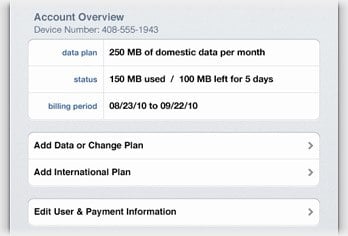
    iPad AT&T 3G Account OverviewSo the 3G is set to launch this Friday at 5:00 PM, and AT&T has finally got on the ball and given full details on how their 3G data plan for the iPad will work. First order of business, you get two data plans that work in the US – the charges are automatically billed on a monthly basis, but you can start and stop that at any time right from the iPad 3G, and both options are contract-free:

    • $14.99 per month for 250 MB
    • $29.99 per month for unlimited data
    • Unlimited access – no added cost – to AT&T’s 20,000+ Wi-Fi Hot Spots

    That third one is a nice bonus. Basically, if you have an active iPad 3G subscription, then you get access to any AT&T Wi-Fi hotspot at no additional cost. The plans renew every 30 days, which starts on the date and time of the purchase, and charges appear like normal on your credit card bill. You can make changes to your plan at any time, which starts a new 30 day window. To manage all this, you go to the Cellular Data area under Settings on the iPad.

    For those of you thinking about starting out with that $14.99 250MB plan, the iPad will actually alert you when you’ve got 20 percent of your data left, then again at 10, and finally once more at zero. As each alert pops up, you have the option to add more data, if you so choose.


    Tags:
    ,
    ,
    ,
    ,
    ,
    ,

    How the AT&T iPad 3G data plans will work originally appeared on Gear Live on Wed, April 28, 2010 – 12:10:58


  • How Real Is That Olive Garden Cooking School?

    We’ve all seen the Olive Garden ads where the popular chain of Italian eateries touts the Olive Garden Culinary Institute of Tuscany, a picturesque cooking school in Italy where they claim to educate chefs and develop new products. But, like many others, the folks at Jaunted.com wanted to know just how reality stacks up against the advertisements.

    To their surprise, they found that the Culinary Institute isn’t a complete load of PR bull.

    Writes Jaunted:

    It is indeed a group of beautiful rustic buildings (even a pool!) in the region of Tuscany, close to Siena, and it does indeed host Olive Garden cooks, managers, and waiters from their chain restaurants every so often, but it’s not a full-time Olive Garden cooking school.

    They explain that it’s actually called the Tuscan Culinary Institute, and while it was created by O.G., the restaurant only uses it a handful of times during the year — mostly in the winter — for training and menu development.

    The site of the school, known as the Riserve di Fizzano, is available for visitors who want to tour the school or even take classes.

    Is There Really an Olive Garden Cooking School in Tuscany? [Jaunted]

  • HP To Buy Palm for $1.2 Billion

    Breaking news, fresh off of the wire: HP just finalized agreements to buy Palm for $1.2 billion dollars.

    HP’s $1.2 billion dollar purchase breaks down to roughly $5.70 per share of common stock. While this is spot on with the $1.2-$1.3 billion pricetag Palm was rumored to be shopping around as of late, it’s still a mammoth difference from what Palm was trading at just months ago. In October 2009, Palm was worth about $17.46 per share; by January of this year, that was down to $13.41. It has, unfortunately, been a downward spiral ever since.

    And for all you webOS fans out there: Don’t worry — it doesn’t look like the platform is going anywhere just yet. It appears that the companies plan to continue the development of webOS, leveraging HP to “rapidly accelerate the growth” of the platform.

    HP has seemingly been lightening their efforts in the pocketable mobile space lately — but with the iPAQ line and countless Pocket PC handsets behind them, they’re by no means strangers to it.

    However, the smartphone space might not be HP’s only interest here – given HP’s recent desire to take on Apple in the tablet space (with the HP Slate) and that Windows-powered tablets just don’t seem to sell, might we see a webOS-powered tablet sometime in the future? Paired with the proper hardware, webOS could easily make for an absolutely incredible tablet experience.

    Even if HP abandoned webOS altogether (which, again, doesn’t appear to be the plan right now), they just bought them selves a monstrous card to play: Palm’s patent catalog. It’s a porcupine tactic: It’s hard to make a big dent in the smartphone biz when every company around can throw patent infringement suits at you — but when you’ve got hundreds upon hundreds of patents (or quills) in your armory, people are going to be a whole lot more careful about stepping on you.

    Contrary to previous whispers, it appears that CEO Jon Rubinstein will be staying with the company. To quote the release, “Palm’s current chairman and CEO, Jon Rubinstein, is expected to remain with the company.”


  • Kia Forte Earns 2010 “Top Safety Pick” by IIHS

    Kia Forte Earns 2010 “Top Safety Pick” by IIHS

    Kia Motors has announced that its compact Forte sedan has received a “Top Safety Pick” status for 2010 by the Insurance Institute for Highway Safety.

    This is the third model from the Hyundai/Kia line-up to receive this prestigious title for 2010, with the other two being the Kia Soul and the all-new Hyundai Sonata.

    It is important to note that this rating only applies to Forte’s built after October 2009, as the automaker made revisions to the car’s B-pillar and roof to qualify it for the award.

    For a vehicle to qualify for the rating, it must score the top rating of Good in frontal-offset, side-impact, and rear-impact crash tests. New for 2010, a car must also score a good rating in its roof-strength test that measures occupant protection in the case of a rollover.

    The car must also be equipped with electronic stability control (ESC), standard equipment in the Forte.

    With the new standards implemented for 2010, there are only 31 vehicles in the market that qualify for the Top Safety Pick, a low number compared to that of 2009. Other cars in the compact segment that earned the top rating are the Volkwagen Golf, Toyota Corolla, Subaru Impreza, Scion xB, and Nissan Cube.

    2010 Kia Forte Video Review

    Have a look at the video of Kia’s Chief Design Officer, Peter Schreyer, as he talks about some of the exciting styling characteristics of this completely redesigned model.

    2010 Kia Forte Koup Movie

    Source: Kicking Tires

  • Higher Water Prices Needed Globally, OECD Says

    A report from 30 of the richest countries in the world says raising water rates will help protect and maintain the precious resource for the future.

    Water prices should rise to encourage less waste and pollution as well as to fund improvements to supply systems, according to three studies released by the Organization for Economic Cooperation and Development.

    As fast-growing cities are expanding beyond the limits of their water supply, some experts argue that higher prices will delay the cost of expensive system expansions and maintain existing supply lines.

    “Putting a price on water will increase the awareness of the scarcity and make us take better care of it,” said OECD Secretary-General Angel Gurria.

    The OECD, a network of high-income economy countries, surveyed residential and agricultural water prices in each of its 30 members. A 2008 Global Water Intelligence/OECD survey of water prices in 261 cities found that Copenhagen had the highest combined water and sewer rates globally.

    Though higher prices can lead residents to conserve, it can also bring financial instability to a water utility if price increases are poorly implemented. Many cities in the U.S. are facing revenue shortfalls because customers are conserving too much, according to a Circle of Blue survey.

    Because price increases are publicly and politically unpopular, conservation education programs and rebates for water-wasteful appliances are common alternative measures utilities take. However, water conservation is not the only justification for higher prices. Many utilities need to replace aging infrastructure or install new treatment plants, but insufficient funding is a major obstacle.

    This creates what is known as the low-level service trap.

    Governments charge too little for water, leaving the utility short of cash to invest in the water system. Meanwhile customers are reluctant to pay for poor service and resist price increases, forcing the price to stay low. As a result, revenues are low and the government cannot improve the service.

    “We were in a vicious cycle,” said Virgilio Rivera, a director of Manila Water, to the Guardian.

    Manila Water, a private company, took over the water supply system in the Philippine capital in 1997 when the government service was privatized. The company raised prices to 30 pesos per cubic meter, up from 4.5, according to the Guardian. There was public anger at first, but Manila Water doubled the number of connections in the city by 2003. The city’s poorest residents, who used to buy expensive water from tanker trucks, now pay one-tenth of what they used to for water.

    The OECD says that farmers also need to pay more. Agriculture uses roughly 70 percent of global water supplies and much of that is wasted through leaky pipes and inefficient irrigation techniques. Infrastructure improvements and conservation will be needed to double agricultural production by 2050–an increase in output necessary to feed the world’s growing population, the report states.

    Source: OECD, Guardian

    Read more from Circle of Blue about water prices and water usage in the U.S.