Blog

  • Mohamed El-Erian: If Greece Isn’t Solved In The Coming Days, The Problem Will Grow More General

    PIMCO co-chief Mohammad El-Erian is on CNBC this afternoon talking to Maria Bartiromo.

    His first point: unlike US equity investors, he is concerned about Greece, and says that if Greece isn’t solved very fast, then this is a problem that will become a problem soon.

    He says there’s nothing to feel good about until you see creditors step up to make concessions, and until some body step up to manage the bailout.

    As for where he is investing client money, he’s looking for quality — so Germany and high-grade corporates.

    He reiterated a point he’s been making recently that Greece is Europe’s subprime — tiny, but with the potential to metastasize.

    Join the conversation about this story »

  • 2010 Cadillac CTS-V

    2010 Cadillac CTS-V

  • 2010 Cadillac CTS Coupe

    2010 Cadillac CTS Coupe

    This great video of 2010 Cadillac CTS Coupe gets your heart pumping in excitement as it shows the CTS evolution over the years.

  • GM Posts New Chevy Volt Video; Tries to Simplify Explanation of EREV Tech

    As we get closer to the launch of the Chevy Volt extended range electric vehicle (EREV), it’s becoming clear that GM has some hard work ahead of themselves trying to figure out how best to explain to the average consumer everything from EREV fuel economy to how a range-extender system works.

    In a new short video, GM walks you through what they think could be just about the average daily commute for many people — plus they use some fancy graphics from Google Earth to make sure you are wowed by flying and zooming over the world as we learn about Volt commuting!

    (more…)

  • Leinenkugel Joins GOP To Unseat Feingold

    Janesville, WI.

    “I believe this is Russ Feingold’s last summer as Senator,” Dick Leinenkugel said today while announcing his intentions to run in the Republican primary for the US Senate.

    Leinenkugel, who recently served as the Wisconsin Secretary of Commerce for Governor Jim Doyle (D), is most known for his family’s beer brewing business.

    Click on link wi-senate-race-leinenkugels-on-tap to read Fox News Correspondent Steve Brown’s exclusive interview with Dick Leinenkugel.


  • 2010 Cadillac SRX vs 2010 Lincoln MKT Comparison

    2010 Cadillac SRX vs 2010 Lincoln MKT Comparison

    From the 2009 Detroit Auto Show, Cars.com’s Mike Hanley takes a first look at the 2010 Cadillac SRX and 2010 Lincoln MKT

  • Reworking the Universal Service Fund

    Changing the Universal Service Fund (USF) is right at the top of the list of National Broadband Policy Broadband Action Plan. In their own words, they plan to “Carry out a once-in-a-generation transformation of the Universal Service Fund over the next ten years to support broadband service. This will be achieved by converting existing subsidy mechanisms over time from “POTS” (plain old telephone service) to broadband, without increasing the size of the fund over the current baseline projection.”

    That’s a tall order. Now some of what they plan to do is expand upon already successful programs, such as the E-Rate program and Rural Health Care Program. Those programs have worked well in the past. I think the most interesting changes will come with the new Connect America Fund created to “extend broadband service to unserved areas of the nation and to ensure affordable broadband service in high-cost areas where support is necessary”.

    Last week the FCC kicked off their Universal Service Reforms by inviting “public comment on the use of an economic model to precisely target support for areas where there is no private-sector business case for carriers to provide broadband and voice services”. They also want to hear ideas on “how to quickly provide consumers in unserved areas with broadband access while the Commission is considering final rules to implement fully the new CAF funding mechanism”.

    TeleCompetitor recently ran an interesting article that outlines industry chatter about the changes. I think they sum up the highlights…

    In effect, the competitive landscape will broaden beyond the traditional marketplace, to include a new regulatory/policy marketplace, where broadband carriers of all types compete for USF. The national broadband plan advocates for this process to be complete by 2020. The battle lines are already forming.

    I think we’re starting to industry posture for the battle with recent announcements of mergers and purchases. Any change is expected (according to the Action Plan) to transition over 10 years. And when the transition will actually start has yet to be decided. The FCC seems to be making this a top priority, but some folks, such as Rep. Bart Stupak predict that “lawmakers would not follow through on their plans this year to create a fund that would expand broadband access nationwide”.

    So we watch, and hopefully respond to the request for ideas, if you have any.

  • 2010 Cadillac BRX Crossover Spy Shots

    2010 Cadillac BRX Crossover Spy Shots

    After mediocre success with its midsize SRX crossover, Cadillac is refocusing its efforts on the growing compact SUV segment. The 2010 Cadillac BRX, or CTX as it may be called, is a smaller two-row SUV built on a modified version of GM’s midsize sedan platform

    Caught testing in suburban Detroit, the Cadillac BRX looks as though it will borrow most of its design cues from the Provoq concept shown at the 2008 Detroit Auto Show. The chevron-shaped grille remains largely intact and the overall shape of the greenhouse hasn’t changed.

    With so much camouflage over the rear end it’s impossible to tell if the production version of the Cadillac BRX will get the retro tail fin lights in back like the concept; but chances are good.

    One element of the concept that’s guaranteed not to show up is the Provoq’s hydrogen fuel-cell drivetrain. In its place will be a couple of gas-burning V6s and traditional automatic transmissions. They’ll send power to the front wheels most of the time, with some power sent to the rear wheels on all-wheel-drive models.

    Entry-level models will most likely come with the 2.8-liter V6 currently used as the base power plant in the European CTS sedan.

    With only 210 horsepower, the 2.8-liter V6 looks more like a nod to fuel economy above all else. For those who can afford the extra gas, a 3.6-liter V6 will be offered as well. It should deliver closer to 300 hp and use a six-speed automatic transmission.

    By the time the 2010 Cadillac BRX goes on sale next year, it will have a formidable list of competitors.

    Similar compact luxury SUVs like the Audi Q5, BMW X3 and Mercedes-Benz GLK-Class will all be competing for the same buyers. Cadillac needs to deliver more than just a more fuel-efficient SUV; it needs to have standout styling as well. Look for the introduction of the final production BRX at next year’s Detroit auto show.

  • 2010 Cadillac SRX Crossover Unveiling

    2010 Cadillac SRX Crossover Unveiling

  • Face-Lifted Volkswagen Tiguan Appears in Beijing

    The Beijing auto show gave us a chance to see a face-lifted version of the Volkswagen Tiguan. As seen above, the Tiguan now wears the same corporate grille first seen on the latest Golf and now making its way onto the rest of the lineup. A 2010 Tiguan is shown below for reference.

    The new grille is wider and shorter, the fog light surrounds receive chrome rings, and the lower grille wears new horizontal slats. VW hasn’t said when we’ll see the changes, but we expect the new grille to appear on American Tiguans for model year 2011. A long-wheelbase version is also slated for the Chinese market, but it will almost definitely be exclusive to the LWB-loving country.

    Related posts:

    1. 2009 Volkswagen Tiguan – Short Take Road Test
    2. Volkswagen Tiguan Performance Concept – Auto Shows
    3. 2009 Volkswagen Tiguan SEL 2.0T 4MOTION – Short Take Road Test
  • Not aging fast enough? Drink a soda!

    by Tom Laskawy

    American as apple pie. But how bad for us is soda?Hoo boy. The American Beverage Association isn’t going to like this news one bit. Food companies now add significant amounts of phosphates to soda and other processed foods. And now researchers have found evidence that phosphates may accelerate aging (via Science Daily):

    High phosphate levels may also increase the prevalence and severity of age-related complications, such as chronic kidney disease and cardiovascular calcification, and can also induce severe muscle and skin atrophy.

    “Humans need a healthy diet and keeping the balance of phosphate in the diet may be important for a healthy life and longevity,” said M. Shawkat Razzaque, M.D., Ph.D., from the Department of Medicine, Infection and Immunity at the Harvard School of Dental Medicine. “Avoid phosphate toxicity and enjoy a healthy life.”

    “Soda is the caffeine delivery vehicle of choice for millions of people worldwide, but comes with phosphorous as a passenger” said Gerald Weissmann, M.D., Editor-in-Chief of the FASEB Journal. “This research suggests that our phosphorous balance influences the aging process, so don’t tip it.”

    This has nothing to do with sweeteners, food coloring or any other previously established badness associated with soda and processed food—it’s a “new and improved” risk.

    And what, pray tell, are these phosphates doing there in the first place? According to other scientists, food companies starting adding them at high levels only in the last 20 years:

    …[W]hile a moderate level of phosphate plays an essential role in living organisms, the rapidly increasing use of phosphates as a food additive has resulted in significantly higher levels in average daily diets. Phosphates are added to many food products to increase water retention and improve food texture.

    “In the 1990s, phosphorous-containing food additives contributed an estimated 470 mg per day to the average daily adult diet,” he said. “However, phosphates are currently being added much more frequently to a large number of processed foods, including meats, cheeses, beverages, and bakery products. As a result, depending on individual food choices, phosphorous intake could be increased by as much as 1000 mg per day.”

    “Increase water retention and improve food texture”?! That’s worth shaving years off our lives for sure! We’re all lab rats now.


    Related Links:

    Ask Umbra on fertility awareness, grilling, and Earth Day pledges

    Scientists show ‘growing’ fuel is waste of energy

    Ask Umbra’s Earth Day book giveaway


  • Hertz Gobbles Up Dollar Thrifty

    Consolidation continues to hit the rental car market as Hertz announced today that it has agreed to a $1.2 billion purchase of Dollar Thrifty Automotive Group.

    When completed, it should make Hertz the second-largest rental car company in the country in terms of market share. Currently, Enterprise dominates the market with a 53% market share, followed by Avis’ 20% share. Adding Dollar Thrifty should give Hertz a 23% share and allow it to jump ahead of Avis.

    Says the guy from Hertz:

    Dollar Thrifty also has a strong international presence, complementing our global footprint, which enables us to utilize a recognized brand to accelerate our leisure rental strategy in Europe and other markets

    Hertz to buy Dollar Thrifty for $1.2 billion [Reuters]

  • Graham’s unhappiness stalls climate change bill

    From Green Right Now Reports

    Senator Lindsey Graham. Image: lgraham.senate.gov

    Senator Lindsey Graham. Image: lgraham.senate.gov

    A climate change bill already under fire from environmentalists will not be introduced Monday and may not be unveiled any time soon after Republican Senator Lindsey Graham of South Carolina abandoned talks over the weekend.

    Graham had been working with Senators John Kerry (D-Mass.) and Joe Lieberman (I-Conn.) on the legislation, but announced on Saturday that he was leaving the effort because of Democratic intentions to prioritize the push for an immigration reform package, a move he described as a “cynical ploy” designed to curry favor with Hispanic voters.

    According to Lieberman, Graham is open to returning to the cause, but his future involvement seems tied to the position the immigration talks will be given on the overall agenda.

    “Lindsey couldn’t have been stronger this morning about his commitment to going forward on this bill,” Lieberman said on Sunday. “But he needs it to be separated from immigration reform because he thinks that’s necessary if we’re going to have a real chance to get it adopted.”

    Until now, Graham has been the only major Republican working with the White House on the thorny climate change issue. In recent days, he reportedly became unhappy when Senate Majority Leader Harry Reid (D-Nev.) discussed moving a debate on comprehensive immigration reform ahead of the environmental legislation deliberations. (Reid has been accused of making this change to shore up support from Hispanics as he faces a re-election campaign in Nevada.)

    Even before the immigration talks became an issue, Graham was feeling heat from his own party for participating in climate and energy legislation. A March Gallup poll revealed that the percentage of conservatives who believe climate change is real had declined from 50 percent in 2008 to 30 percent this year.

    After Graham’s announcement, Kerry and Lieberman postponed a scheduled Monday news conference and did not offer a new date. The two pledged to continue working on the issue and expressed hope Graham would rejoin them.

  • Daley cool to idea of National Guard troops on Chicago streets

    Update by Hal Dardick at 3:26 p.m. with Quinn comment, homicide rate; originally posted by Hal Dardick at 1:56 p.m.

    Mayor Richard Daley today reacted coolly to the idea that the National Guard be called out to help slow the violence on Chicago’s streets, as two state representatives had suggested a day earlier.

    “Everybody knows their frustration, when one crime is one too many in any community — any death or any injury,” Daley said, taking a quick break from an international municipal conference to address the issue. “But like anything else, you have to look at long-term solutions. You can’t just put something temporary in there.”


    “People have to get involved in their community, family by family and block by block,” he added. “Like anything else, that is the  key. The community must be as upset as anybody else.


    "And so you have to look for long-term solutions. There’s no quick band aid. You just can’t think you’re going to fix it in one weekend and walk away," Daley said. "And that’s what the problem would be.”

    Daley’s remarks came a day after state Reps. John Fritchey and LaShawn Ford, both Chicago Democrats, held a news conference to suggest the National Guard be deployed in Chicago to quell the violence, at a time when the city’s murder rate is on the rise. They said as many people have been slain in the city this year as U.S. soldiers in Iraq and Afghanistan combined.

    While the city’s homicide rate is on an uptick in the early part of this year, it is generally down from years past, when more than 500 people a year were killed.

    Gov. Pat Quinn said today that he will not deploy members of the National Guard to help patrol city streets unless requested to do so by Daley. Quinn said it could be counter productive to police efforts, as law enforcement officers and military personnel are trained differently.

    The governor suggested the National Guard could be most helpful by providing intelligence assistance and the use of helicopters for aerial surveillance. But even that step would be extraordinary, and Quinn said it would not happen without a request from Daley — a possibility that seems remote.

    Quinn was asked if the crime situation rose to the level of needing the National Guard, since the homicide rate is not higher than in years past.

    "One homicide is too many in my book, and I think we should always look for every way to coordinate our public safety resource in Illinois at every level to make sure we have safe streets and safe communities and safe people," Quinn said.

    Ousted Gov. Rod Blagojevich was summarily dismissed by the mayor when he suggested sending in the National Guard two years ago, so Quinn took pains to try to stay on the mayor’s good side.

    "It is, I think, imperative that any governor work always with local law
    enforcement," Quinn said. "The notion of trying to step in, in any way step on the
    toes of people who are on the front line every day fighting crime in
    tough neighborhoods, I think is really not the way to go."


    Mark Donahue, president of the city police union, said more police officers are needed, at a time when hundreds are retiring while hiring is slowed.

    “Members of the Chicago Police Department can handle the situation with the proper resources,”Donahue said. “Right now, the proper resources needed are more police officers.”


    Donahue also noted police officers are schooled in the federal and state constitutions.


    “With the guard coming in, it’s making a statement that your constitutional rights will be diminished,” he said. “They don’t have the training that Chicago police officers do.”


    The mayor also sounded his familiar theme of needing more gun control laws and suggested Fritchey and Ford back him in those efforts.


    “This is all about guns, and that’s why the crusade is on,” Daley said. “We hope to get their cooperation in Springfield.”


    Police Supt. Jody Weis, who was at the mayor’s side today, a day earlier said bringing in the National Guard was not necessary.


    “Less than nine percent of the city blocks are really our problem areas,” Weiss said today, reiterating a point he had made earlier. “We can focus on that less than nine percent. That’s what we are going to do this summer.”


    Daley also asked some rhetorical questions about how the National Guard would operate on the city’s streets.


    “You put them on for a weekend, without ammunition?” he asked. “Think of the repercussions you have to look at. . . . A fully automatic weapon? It’s just the idea. You have to be very careful when you look at that. But everybody is open to suggestions. You need more resources, of course. . . . It’s something to think about, you can always think about it.”


    Daley made his comments minutes after delivering opening remarks at the Richard J. Daley Global Cities Forum, attended by dozens of mayors stretching from suburban Channahon to Johannesburg, South Africa.


    This year the conference is focused on public-private partnerships.


    “Not long ago, it was very rare for mayors and other local government officials to truly travel outside their cities,” Daley said. “Nowadays, creating worldwide partnerships to help us share experiences and best practices with each other is a critical part of the hard work of any mayor in the world.

  • Top 5 ways for Android to close the gap – #5

    Part Five of a five-part series, “Top 5 ways for Android to close the gap.” See also:

    1. Get Another Killer Phone to Market

    2. Serve Up Some FroYo

    3. Get Nexus One Into Stores

    4. Make Android Entertaining!


    5. Define A Killer App

    BlackBerrys kill Email. iPhones kill Apps. Nokia N-Series devices killed Multimedia in their heyday. Windows Mobile killed MS Exchange access back when nobody else really did.


    So what do Android phones kill?


    Android does a lot, but I’ve yet to see a single ad or other piece of marketing that really defines what makes Android phones killer. Marketing is huge when it comes to selling consumer tech, and while “Droid Does” is nice and all, I really don’t think the average consumer has any idea why he wants an Android phone. Until that happens, Google is not going to close the gap on BlackBerry, Apple and Microsoft in the battle for American smartphone market share. 


    Think about it – Everyone knows BlackBerry means Email. That’s a no brainer. RIM’s day in the sun may or may not have passed now that other smartphones do enterprise reasonably well, but everybody knows what BlackBerrys are all about, even if they’ve never used one (RIM’s install base is so huge that even if they’re on the decline, it’ll be at least a few years before that base really erodes).


    And everyone knows iPhone means entertainment. Even if you hate all things Apple and cringe every time you hear indie folk-pop, thanks to those iPhone ads on TV, the phrase “There’s an app for that,” is likely emblazoned on the surface of your brain for years to come.


    So what about Android? Why doesn’t the general phone buying public associate Android with a Killer App (or, Killer Feature)? 


    It’s an important question to consider. When Google launched Google Maps with Navigation, the standalone GPS makers suffered at the hands of Wall Street. I figured we’d start seeing TV and Web ads touting this killer feature along the lines of, “Buy a smartphone, get a Turn-by-Turn GPS unit free.” Did I miss the ad campaign? Seriously, maybe I did. If not, I have no idea why not: Free turn-by-turn voice navigation is a huge selling point, and was more or less Android’s domain in the US (save for a few Nokias only available unlocked/off-contract in America).


    Similarly, Speech-to-Text rocks on Android phones that support it. So why don’t I see TV ads showing how cool, easy, efficient, and safe (please don’t talk while you’re driving, though) it is to command your Droid with your voice. I’d love to see an ad showing some totally together woman strutting down the street dictating text messages and tweets to her HTC Incredible via voice while a sea of bumbling iPhone/BlackBerry/Whatever users around her keep bumping into everything – lampposts, parked cars, one another – because they’re walking head down while tapping away at their devices.


    Or widgets and customizable home screens? HTC’s kind of headed down that path with their current “You” campaign, but that’s more about HTC as a brand than Android devices in particular. Why not get people to think “Information I WANT, not just a bunch of icons, right there on the home screen,” when they think “Android”?


    Maybe it’s just me, but “A bare knuckled bucket of does,” doesn’t do much for me. It’s negative, not positive – tell me what Android does that other devices don’t, not just that it “does it all.” Give me something very specific, and very cool, to associate with Android. Navigation, speech-to-text, widgets … something! I really think that when people are able to word-associate on a product without even thinking about it, that product has a much better chance of selling. 


    BlackBerry? EMAIL!

    iPhone? APPS!

    Android? Um … a bucket of knuckles?


    I know it’s not quite as easy to market Android as it is, say, iPhone because Android is an operating system deployed across multiple devices, and not an actual product that’s for sale. Android’s an open source OS that’s skinned and tweaked and versioned umpteen different ways by manufacturers and carriers, as well, which makes it even harder to boil it down to a slick marketing slogan. But, hey, that’s why big companies pay big ad agencies big bucks: To hammer brands and products into our collective consciousness.


    Android does a ton of things really well. But outside of the hardcore enthusiasts, I really don’t think folks quite know what to associate with Android – other than “Google,” perhaps. And so long as you can Google from an iPhone, BlackBerry, or most any other phone, “Android means Google” ain’t gonna be enough.


    There’s no lack of killer apps and features for Android devices. So pick a few, Google, and market the heck out of them. Actually, wait. Stick to engineering and hire an ad agency to do the marketing for you. Considering how quickly the whole, “We’ll sell Nexus Ones ourselves!” experiment is going, maybe you should stay away from the whole retail marketing thing for awhile.


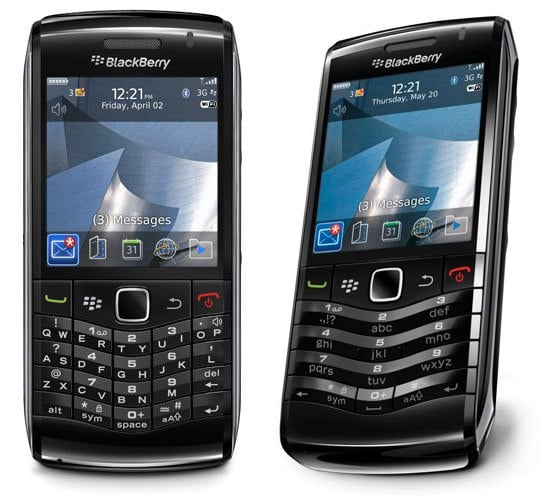
  • BlackBerry Pearl 3G coming in May with 802.11n

    BlackBerry Pearl 3G

    is finally looking to bring something even better to their consumer handset line than the BlackBerry Pearl (which has been around for over three years now,) and the BlackBerry Pearl 3G looks to be a worthy follow-up. This will be the first BlackBerry, Pearl or otherwise, to sport 802.11n Wi-Fi, and it will also boast a 3.2 megapixel camera, 256MB storage (with microSD expansion up to 32GB,) GPS, and a 360 x 400 display. Even more interesting is that, aside from the multiple colors you can choose from, you also get to choose between two difference keyboard layouts. You get the numberic 14-key or the SurePress 20-key. You’ll be able to get a BlackBerry Pearl 3G sometimes in May, likely from both AT&T and T-Mobile.


    Tags:
    ,
    ,
    ,
    ,
    ,
    ,
    ,
    ,
    ,
    ,
    ,
    ,

    BlackBerry Pearl 3G coming in May with 802.11n originally appeared on Gear Live on Mon, April 26, 2010 – 10:53:44


  • Hanson Chats About New Album “Shout It Out” On “The TODAY Show”

    Children of the ’90s will almost certainly remember Hanson. The clean-cut and good-natured trio was made up a group of brothers who tasted music stardom with their hit ‘97 single “MMMBop.” (Hated it!) Well Isaac, Taylor, and Zac Hanson aren’t exactly flopped-haired blondes anymore. These days, the musicians pass their times basking in the joy of being married dads — couple of them even have facial hair!

    Proving that at least some ex-child stars manage to stay off dope (We see you Lindsay Lohan), the guys talk about their families, their new CD Shout It Out, and growing up in the spotlight in this video from The TODAY Show Monday.

    Visit msnbc.com for breaking news, world news, and news about the economy

    Hanson’s debut single, “Thinking ‘Bout Somethin,” was released to digital outlets on Friday and the band starts its “Shout it Out” Summer in Burbank on July 21.


  • Mike Stanton hits homer No. 7 … then 8 … then 9

    http://a323.yahoofs.com/ymg/ept_sports_fantasy_experts__26/ept_sports_fantasy_experts-600654163-1272303752.jpg?ymIS2CDDpD3NOEKW

    Florida Marlins outfield prospect Michael Stanton(notes) single-handedly destroyed the Carolina Mudcats on Monday, belting three homers and driving in seven runs. That makes seven hits, five home runs and 11 RBIs over the past two days for the 20-year-old. He’s gone deep nine times for Jacksonville in 17 games, and he’s now batting .338. Double-A pitching doesn’t seem to be much of a challenge for him this year.

    You’ll recall that Stanton impressed everyone in spring training, hitting .286/.355/.714 over 28 at-bats. In the image above, he’s admiring the flight of a home run hit against Francisco Liriano(notes) on March 15. He entered the season ranked No. 3 on Baseball America’s top prospect list, behind only Jason Heyward(notes) and Stephen Strasburg(notes), so it’s not as if expectations were low. 

    If you’re in a larger league and looking for a mid-season lottery ticket in the power categories, keep Stanton in mind. He hit 39 homers at Single-A in 2008 and 28 across two levels last year. He’s already in the player pool, too. (Just don’t mistakenly add this dude). In the past, Ks have been a serious issue for Stanton (144 in ’09), but he’s walked as often as he’s struck out this season. Both of Florida’s corner outfielders are struggling, so a May/June Stanton call-up no longer seems farfetched. 

    Photo via Getty Images

  • Ninth Circuit affirms class certification in Walmart gender discrimination case

    [JURIST] The US Court of Appeals for the Ninth Circuit on Monday affirmed certification of the largest class action lawsuit in US history against Wal-Mart for allegedly discriminating against female employees. The 6-5 en banc ruling upholds a previous decision by the Ninth Circuit that the lawsuit could go to trial despite the large size of the class. The case was filed in 2001 by female Wal-Mart employees who contend that Wal-Mart’s nationwide policies violate Title VII of the Civil Rights Act of 1964, alleging that women employed by Wal-Mart are paid less than men in comparable positions and wait longer for management promotions than men, despite their higher performance ratings and seniority. In a statement, Wal-Mart said that they are going to proceed by reviewing their options:
    We disagree with the decision of the sharply divided 6-5 court to uphold portions of the certification order, and are considering our options, including seeking review from the Supreme Court. It is important to remember the court did not address the merits of this case. The court reiterated, “our findings relate only to class action procedural questions; we neither analyze nor reach the merits of Plaintiffs’ allegations of gender discrimination.” The court further noted that the trial court “has the discretion to modify or decertify the class.”The certified class, which in 2001 was estimated to encompass more than 1.5 million women, includes all women employed by Wal-Mart nationwide at any time after December 26, 1998. The Ninth Circuit granted an en banc rehearing to Wal-Mart last year. According to the order, a majority of the Ninth Circuit judges, excluding the three judges who heard an earlier appeal in which class certification was upheld, voted in favor of an en banc hearing. A three-judge panel of the Ninth Circuit originally ruled against Wal-Mart’s appeal of the class certification in February 2007, then issued a new opinion in conjunction with its decision in December 2007. Wal-Mart appealed to the Ninth Circuit in 2005, arguing that the six lead plaintiffs were not typical or common of the class. Wal-Mart also objected to the size of the class certified, which it says would violate its due process rights. Wal-Mart argued that its stores operate independently and should be sued individually, while plaintiffs’ lawyers countered that individual lawsuits would be impractical. The district court also rejected Wal-Mart’s claim that the class size was “impractical on its face” and approved a statistical formula for paying damages if discrimination is proven.

  • Motricity Reports First Quarter Net Loss As IPO Still Awaits


    Motricity mCore Marketplace announced at CTIA 2010

    Motricity, which is in the increasingly tough business of providing back-end infrastructure to U.S. wireless carriers, lost $1.5 million on revenues of $29.1 million in the first quarter 2010, according to an SEC filing.

    The Bellevue, Wash.-based company, which filed its registration papers back in January and is seeking $250 million in a public offering, reported that revenues increased by almost 25 percent compared to the same period a year ago, while the company’s losses narrowed significantly to $1.5 million from $69.7 million.

    Most of Motricity’s current business is focused helping carriers sell mobile content, such as ringtones, applications and other services, to its end-users. However, that business is increasingly at risk as customers go directly to the web for content, or download applications from third-parties. In March, Motricity announced a three-part overhaul of its carrier offerings that attempts to bring them—and their customers—up to speed in the areas of applications, advertising and social networking. The company did not mention these new services in the filing, likely because they are too new to register any revenues.

    Despite these overall trends, Motricity said storefront revenues continue to rise. In the first quarter, the company said managed service revenues increased $700,000, or 3.3 percent to $20.9 million. However, the amount of revenues obtained on a per transaction fell because one of its carriers converted a contract to a fixed fee arrangement. In the first quarter, user-based fees made up about 52 percent of revenues vs. 76 percent in the year-ago period. In addition, the average monthly number of users on the company’s “non-messaging based solutions” decreased to 34.4 million from 34.5 million in the comparable period of 2009.

    Related