Blog

  • To Attract New Grads, Hire Like a Start-Up

    Something astonishing is happening to the market for young, smart labor. The luster of big prestigious firms, particularly on Wall Street, has dimmed: “The End of Wall Street as They Knew It,” goes a recent New York Magazine headline. A few months ago at Davos, CEOs complained about the brain drain affecting their companies.

    Where are all these people going? Increasingly to start-ups, which seem to have captured the public imagination, particularly among millennials (ages 18 to 29). In an opinion piece, Deloitte CEO Barry Salzberg says that millennials are increasingly thinking of finance, consulting, and corporate jobs as a “a tragedy of wasted minds.” Instead, they want “a career that actually matters” and “to know how they will make a positive difference in the world if they join your business.” According to a recent PayScale survey, Entrepreneurial Studies is now one of the most popular majors among this generation. And so, despite lacking resources, brand name, and job security of larger firms, start-ups are incredibly alluring — in fact, they get away with paying average salaries that are often 30 percent below market.

    How do start-ups accomplish this? We’ve noticed two main trends. First, start-ups have mastered the art of marketing themselves effectively toward millennials (many are run by them). Job descriptions and career pages at start-ups tend to emphasize meaning and impact. For example, a recent job ad by the dating start-up Grouper (which you can see online here) promises that work there will let you make a “dent in the universe.” The implication is twofold: that the world will benefit from your work, and that there’s personal glory in it for you.

    GrouperHiringHBR.png

    At Amicus, a different start-up that uses technology to help non-profits raise money more effectively, the first thing candidates see when they reach the careers page is that a cow will be donated in their name if they’re selected for the job. This appeals to recent graduates’ sense of humor and humanitarianism.

    AmicusHiringHBR

    Start-ups also carefully choose language that imbues their roles with meaning and excitement. A few years ago, it was trendy to look for people who were “coding ninjas” and “rock stars.” Today it’s “hackers” and “hustlers.” One of our clients advertised a position at their recently opened New York office as “‘The Wolf’ from Pulp Fiction.”

    But start-ups do more than just good marketing. A recent graduate put it best when he told us he wanted to work at a start-up because, “I’ll be managing a budget from day one and I’ll be doing something I actually believe in.” At start-ups, talented youth are given big responsibilities right off the bat. Whereas corporations often require a slow and painful process of “climbing up the ladder,” start-ups aren’t afraid to give young hires lots of ownership.

    Start-ups are also increasingly geared at solving social problems near and dear to millennials’ hearts. Amicus is one great example, among others like Silicon Valley’s TenderTree. Even start-ups that aren’t directly working on social issues tend to emphasize that they are doing something to improve the world. Airbnb, which allows users to rent rooms from other users, emphasizes that it is creating a more unified community and helping to build relationships through its service.

    Of course, in an economy that is still very much in recovery, most recent graduates are lucky if they can get a job at all. It is only the most talented and sought-after grads that have the luxury of choosing start-ups over Wall Street and corporate jobs. But the trend here is clear: Though Goldman Sachs and McKinsey were the top choices for Ivy League graduates five years ago, tech start-ups have now taken that place.

    In order to avoid being left behind, large corporations would do well to listen to the millennial ethos that emphasizes change and personal impact. Some specific steps these corporations should take:

    • Weave company values and impact-driven language into recruiting material, and overall company messaging.
    • Emphasize the company’s vision and mission to employees on an ongoing basis. Involve them in strategy conversations to make candidates feel they are a part of something they can impact.
    • Offer ample room to grow, and some leeway for employees to pursue their own ideas — like Google’s “20 percent time” policy.
    • Get better at identifying and promoting young talent early on. They likely won’t wait around for more than a year for that first promotion.
    • Consider offering sexy (often low-cost) perks, like start-ups do (e.g., free massages or an Uber car allowance). If this isn’t possible at the corporate level, give managers leeway to bestow these perks on a one-off basis, as rewards for exceptional work.
    • Offer equity in addition to salary. Millennials like to feel as though they have skin in the game.

    Unless corporations adapt their recruiting practices quickly, we will continue to see a brain drain away from corporations and toward start-ups — a trend that over the long term means the beginning of the end for the large company genus.

  • Connectify brings its broadband channel bonding service to the cloud

    Coming off a successful Kickstarter campaign to fund its Dispatch broadband aggregation software, Connectify is returning to the crowd-funding site for the next iteration of its product. This time around, the Philadelphia startup is developing a cloud-based packet parsing and channel bonding service called Switchboard designed to speed up video and other high-bandwidth content to your Mac or PC.

    According to Connectify, Dispatch — which went live in December — has some inherent limitations. While it was able to aggregate multiple wireline and wireless connections into a single fat pipe, allowing your Windows-based PC to take advantage of every available internet link, Dispatch could only ship certain types of content over one of those connections at any given time, Connectify President Bhana Grover said in an email.

    “This worked fantastically with multi-threaded applications like web browsing and Bittorrent,” Grover said. “But the feedback we got from our backers and customers was that they wanted a more robust connection aggregation technology: one that could speed up video streaming, uploads, and VPNs… and was Mac-compatible, too.”

    Switchboard basically works like a virtual private network (VPN). All of your internet connections — whether Wi-Fi, 3G or 4G — link to Connectify’s servers in the cloud. Those servers then go about dismantling content or files into their component packets and routing them over those different connections. Over Dispatch, a Netflix movie would stream over the highest-bandwidth connection available to the PC. If you were on public hotspot or cellular network that connection might be fairly slow. With Switchboard that single Netflix stream is split between multiple connections, resulting in faster buffering and better resolution.

    Connectify has developed a prototype for Switchboard on both the PC and Mac, but it wants to raise $100,000 in funds on Kickstarter over the next month to complete its user interface, develop customer management software and deploy its first cloud-based servers. As with Dispatch, Connectify plans to sell Switchboard on a subscription basis, but due to its software-as-a-service element Switchboard is setting capacity limits as well. That means the more data you consume via Switchboard, the more you pay. Backers of the project, however, will get early discounted access to the service this fall.

    Connectify Switchboard graphic

    Related research and analysis from GigaOM Pro:
    Subscriber content. Sign up for a free trial.


  • High Road and Charter Oak Buy The Crown Group

    High Road Capital Partners and Charter Oak Equity will acquire The Crown Group from the Baer family. Crown is a coating solutions provider headquartered in Warren, Michigan. Quarton Partners provided financial advice to Crown in this transaction. No financial terms were disclosed.

    PRESS RELEASE

    BIRMINGHAM, Mich., May 14, 2013 /PRNewswire/ — Quarton Partners is pleased to announce that High Road Capital Partners has partnered with management and Charter Oak Equity to acquire The Crown Group, Inc. (“Crown”) from the Baer family, founders of Crown. Crown is a leading provider of high-quality coating services and solutions to the transportation, agriculture and general industrial end markets. Quarton Partners acted as the exclusive financial advisor to Crown in this transaction.
    “Crown’s disciplined and systematic operational approach, including the ability to seamlessly integrate itself in its customer’s supply chain and provide value-added logistics services, is highly valued by its customers for whom avoiding business interruption or delays is paramount,” said William Connell , High Road Partner. “We are excited to work with Crown’s outstanding management team and Charter Oak to drive multiple growth initiatives.”
    Frank Knoth , President of The Crown Group, said, “With the capital and operating support of High Road and Charter Oak, the management team looks forward to growing the business and continuing to provide best-in-class coating services to our customers.”
    Crown (www.thecrowngrp.com) is a leading provider of high quality coating solutions to industrial end markets. Crown is headquartered in Warren, Michigan and currently operates from seven manufacturing facilities in Shelby, Detroit, and Livonia, Michigan; Fort Wayne, Indiana; Portland, Tennessee; Greenville, South Carolina and Waterloo, Iowa. Crown’s range of coating technologies include electro-coating (“e-coating”), e-coating with powder coating topcoat and water-based wet painting.
    High Road Capital Partners (www.highroadcap.com) is a private equity firm focused on buying and building leading companies at the smaller end of the middle market. High Road Capital Partners was formed in 2007 and currently manages over $335 million of committed capital.
    Charter Oak Equity (www.charteroak-equity.com) is a private equity firm specializing in investments in middle market companies. Charter Oak Capital Partners is based in Westport, Connecticut.
    ABOUT QUARTON PARTNERS
    Quarton Partners (www.quartonpartners.com), headquartered in Birmingham, Michigan, is a premier middle market investment banking firm, serving privately held and publicly traded companies, as well as private equity firms. Quarton Partners assists its clients with mergers and acquisitions, private capital raising, restructurings, valuations and other financial advisory services. Its principals have successfully completed hundreds of engagements in a variety of industries across the U.S. and throughout the world. Quarton Partners is an affiliate of Spearhead Capital, LLC.

    The post High Road and Charter Oak Buy The Crown Group appeared first on peHUB.

  • Meet the 6 startups from the inaugural accelerator of French telco Orange

    French telco Orange has had a presence in Silicon Valley for over a decade. But on Monday night, the global giant — which has 231 million customers across 32 counties and 170,000 employees — announced its first three-month accelerator program that includes its first batch of six startups.

    OrangeThe companies range from hardware startups that can help customers in developing countries use their phones in new ways, to data companies that are focused on things like identity verification and keeping cloud-based transactions secure. The telco selected companies that were creating a positive impact “on the way we use networks to improve our lives and businesses,” said the Chairman and CEO of Orange, Stephane Richard. The 6 startups were selected out of more than 100 applicants.

    Working with startups isn’t really about funding companies — the startups have a potential to receive $20K from the program, but that’s more a token gesture than anything else. The real value of the partnership comes from the startups gaining access to Orange’s massive distribution channels, partner program and marketing heft. For example, startup Fenix International could work with Orange’s African operations to distribute its off-grid batteries.

    Because Orange has such a large footprint in the developing world, the company has a particular focus on building apps and hardware for “the bottom of the pyramid.” Orange’s Executive Director of Business Services, Vivek Badrinath, told me in an interview at the launch event on Monday night that the mobile phone is often times the first branded product that a customer in a developing country has, and that brand then has the unique ability to transition into offering core services, like mobile banking, and credit.

    2544

    During the accelerator program, called Orange Fab, the startups will have a chance to visit Paris, and at the end of the program will have a demo day to feature their progress. Here’s the first 6 out of Orange Fab:

    1). Fenix International: We’ve covered this four-year-old San Francisco-based startup many times. The team has built a battery that can be used off grid to charge mobile phones and other electronics, and which can connect to various mini power generation systems like small solar panels, a bike charger, or the grid. The target customer is an entrepreneur in a village that sells cell phone charging, and SIM cards (hence why Orange is interested). These entrepreneurs are already selling these services but often times use shoddy and toxic car batteries for charging. Fenix already has distribution deals with carriers Vodafone and MTN.

    Fenix_ReadySet_VeloPedal

    2). Re-char: Re-char is a startup that makes a kiln that turns bio waste — woodchips, agricultural waste or leaves — into a bio-based charcoal. The startup has delivered about 1,200 “climate kilns” to farmers in Western Kenya. But with the Orange accelerator program, Re-char plans to build an Android-based device that can connect to a cell phone and can test the quality of the soil, including water content, and pH levels. Farmers would use these devices, and accompanying data service, to test and figure out which plots of land are arable and how much fertilizer to buy and where to use it. Beyond the services and product for farmers, the data from the testing and field mapping could create a valuable data base that could potentially be used by fertilizer companies, non-profits or government programs.

    Re-char3). Phone Halo: This startup has built a location-based system that can use your phone to find lost belongings, like your keys or your wallet. The company uses quarter-sized button trackers that can be placed on devices — or potentially embedded in devices — to deliver an auditory ring when you need to find Phone Haloone of the lost items. The company has been working with consumer electronics companies to make third-party branded products.

    4). AlephCloud: The team at AlephCloud is focused on creating secure connections between devices and across systems from Dropbox to box to email to Amazon. With the growth in the consumerization of IT (you know, like everyone in your office buying their own iPhone and using their own Dropbox account), distributed security systems will increasingly be needed.

    5). Virtrue: Virtrue has developed an identification verification system that uses data and algorithms to verify identities across platforms. The service is intended to help companies and consumers reduce fraud and is prefaced on the idea that verified data is much more valuable than unverified data.

    6). Talkdesk: Talkdesk is software that can enable a company to set up and operate a distributed call center. The software is browser-based and offers support for sales and marketing.

    Related research and analysis from GigaOM Pro:
    Subscriber content. Sign up for a free trial.


  • EnCap Flatrock Invests $200 Mln in Cardinal Midstream

    EnCap Flatrock has invested $200 milllion in Cardinal Midstream. Cardinal Midstream is an oil producer in Dallas. Also, Mark Ward is joining Cardinal Midstream as vice president and COO.

    PRESS RELEASE

    DALLAS–(BUSINESS WIRE)–Cardinal Midstream II, LLC (“Cardinal”) announced today that the company has secured a $200 million equity commitment from EnCap Flatrock Midstream (“EnCap Flatrock”) of San Antonio to support the continued growth and development of the company’s core business. The company will pursue midstream development opportunities, in both conventional and unconventional resource plays across North America with an emphasis on areas where the management team has significant experience including Texas, Louisiana, Oklahoma and New Mexico.

    Cardinal was founded in 2008 with an initial $75 million equity commitment from EnCap Investments L.P. and EnCap Flatrock Midstream. In 2010, the equity commitment to Cardinal was increased to $280 million. Cardinal acquired and developed a substantial natural gas gathering, treating and processing system in the Arkoma Woodford Shale, and in 2012 the company sold all of its midstream assets and its natural gas contract treating business to Atlas Pipeline Partners, L.P. (NYSE: APL) for $600 million.

    With this new commitment, Cardinal is led by CEO Doug Dormer and President Marc Lyons. The company’s senior leadership team has been directly involved in the development and operation of more than $1 billion in midstream assets. Cardinal is focused on natural gas and crude oil gathering, compression and centralized production facilities, condensate stabilization, vapor recovery, and natural gas treating and processing.

    Management Perspective

    “We are very pleased to have EnCap Flatrock’s continued support and confidence. With a highly experienced core team already in place and a very successful operational track record, we have established a solid platform and are well-positioned for growth,” said Doug Dormer. “Our number one commitment is always to our customers: rapidly meeting producers’ needs for midstream facilities and providing services that will enable them to meet their own business objectives.”

    “We’ve built our company on a foundation of uncompromising commitment to excellence, putting our customers first and providing producers with lasting value,” added Marc Lyons.

    Comments from EnCap Flatrock Midstream

    “The key component of our strategy is to invest in exceptional and highly experienced management teams. Doug, Marc and the rest of the Cardinal team are uniquely qualified. They are seasoned midstream executives with deep understanding of upstream and midstream landscapes combined with an outstanding record of success. We are proud to partner with them again and look forward to this exciting new chapter in Cardinal’s growth story,” said EnCap Flatrock Managing Partner and Cardinal Midstream board member, Dennis Jaggi.

    Mack Matheson & Marchesoni PLLC served as legal counsel to Cardinal Midstream with Thompson & Knight LLP advising EnCap Flatrock Midstream.

    Mark Ward joins Cardinal Midstream as Vice President & COO

    Cardinal also announced that Mark Ward has joined the company as Vice President and Chief Operating Officer. Mr. Ward has more than 30 years of engineering, operations and project management experience in both the upstream and midstream segments of the oil and gas industry. Mr. Ward will lead the company’s operations and engineering efforts and provide support to Cardinal’s project development and commercial activities.

    In 2005 Mr. Ward established Natural Gas Consultants, LLC focusing on providing both production and midstream companies with efficient natural gas and crude oil gathering systems as well as production, liquids handling and compression facilities. Prior to forming Natural Gas Consultants, LLC, Mr. Ward was manager of business development for American Central Gas Technologies, providing rapid expansion for the company’s East Texas assets. Mr. Ward began his career with Mitchell Energy Corporation in Fort Worth as a drilling, production and reservoir engineer. His deep experience in midstream also includes gas supply engineer, and plant and project manager for Delhi Gas Pipeline.

    About Cardinal Midstream

    Headquartered in Dallas, Cardinal Midstream provides oil and gas producers with a full suite of midstream services including natural gas and crude oil gathering, compression and centralized production facilities, stabilization, vapor recovery, and natural gas treating and processing. Members of the senior management team include Doug Dormer, Marc Lyons, Mark Ward, Tim Roberts, Larry Connors and Mack Lawrence. Cardinal Midstream is backed by private equity commitments from EnCap Flatrock Midstream and is pursuing midstream opportunities across North America. Visit http://www.cardinalmidstream.com for more information.

    About EnCap Flatrock Midstream

    EnCap Flatrock Midstream provides value-added private equity capital to proven management teams focusing on midstream infrastructure opportunities across North America. Founded in 2008 by EnCap Investments L.P. and Flatrock Energy Advisors, the firm is based in San Antonio and led by Managing Partners William D. Waldrip, William R. Lemmons Jr. and Dennis F. Jaggi. With more than 100 years of midstream experience, the principals at EnCap Flatrock manage a dedicated professional staff and midstream-focused investment commitments of nearly $3 billion from a broad group of prestigious institutional investors. EnCap Flatrock is currently investing out of EnCap Flatrock Midstream Fund II, a $1.75 billion fund. Visit www.efmidstream.com for more information.

    The post EnCap Flatrock Invests $200 Mln in Cardinal Midstream appeared first on peHUB.

  • R8 V10 Plus vs Porsche 911 Turbo S vs Litchfield GT-R

    Chris Harris on Cars

    Fast, fun and all-wheel drive. Those were the parameters that Chris Harris set forth when he put together this comparison test between the R8 V10 Plus, Porsche 911 Turbo S and a Litchfield GT-R. All are stock except for the GT-R which has been tuned to the likes of 750 hp. However, does all that extra power necessarily make it better than its German rivals? Harris recently put this trio through a gaggle of tests to find out exactly that!

    Check it out after the jump.

    Source: Youtube.com/DRIVE

  • As Apple sales slow, Sharp looks to Samsung as its savior

    Sharp Earnings
    Sharp needs help. The consumer electronics company on Tuesday posted a worse-than-expected $5.4 billion loss for the previous fiscal year, and it released its plan to turn things around over the coming three years. For one thing, the company intends to tap banks for $1.5 billion in funds. Sharp also said it will look to boost smartphone display sales to Samsung as business with its top client Apple begins to slow.

    Continue reading…

  • Square Finally Makes a True POS Solution with New Card-Reading iPad Stand

    Of all the payments processed using Square nearly 50% take place on an iPad, and the average payment volume processed by iPad users doubles that of smartphone Square users. With that in mind, Square has just unveiled some new hardware for the iPad-using crowd.

    It’s called the Square Stand, and it turns your iPad into a true point of sale system.

    “Local business owners take as a given that they need an ugly, slow, expensive, and complicated point of sale system cluttering their counter,” said Jack Dorsey, co-founder and CEO of Square. “Square Stand is elegant, fast, affordable, and easy to use. Whether you’re selling cupcakes, cardigans, or cappuccinos, running your business with Square has never been easier.”

    Square Stand lets you attach your iPad 2 or 3 (versions with lighting connectors coming soon) to a adjustable stand, complete with an attached card reader. This, of course, replaces the old method of attached the smaller Square Reader to your iPad. The Stand can be secured to your countertop, and when it is all said and done it becomes a more secure, permanent, and faster POS system for your business – at least according to Square. But there’s no arguing that this new piece of hardware would make processing a high volume of transactions much less of a headache.

    Ready to use in minutes, Square Stand works with Square Register, the free point of sale application, and gives merchants access to real-time analytics, robust reporting, and a delightful experience for their customers. Square Stand features an integrated card reader that keeps information secure from swipe to payment, and easily connects to the hardware accessories businesses need, including a receipt printer, kitchen printer, cash drawer, and barcode scanner.

    Square Stand will run you $299. You can pre-order it starting today, and it will be available to purchase in Best Buys on July 8th.

    Last month, Square launched a big update to Square Register to make it much more useful to restaurants.

  • Chuck Muncie Dies: Former Running Back Was 60

    Chuck Muncie, a former running back for the NFL, has died of a heart attack. He was 60 years old.

    Muncie got his start in the mid-’70s as the third-overall pick for the Saints; he stayed with them for four years, but was ultimately unhappy with the team and moved on to the Chargers in 1980. His career seemed promising as he helped lead the Chargers’ game with 19 touchdowns in 1981. But just three years later, he tested positive for cocaine and was suspended.

    Muncie eventually sought counseling for his drug abuse and began helping others, saying, “I’m a very selfish person, and I like to feel good. One way I could make myself feel good was by helping other people. I learned, over a period of time, that was something that worked for me.”

    He tried to make a career comeback with the Vikings in 1985, but as it turned out, the drugs played a bigger role in his life than he’d let on. In 1989, he was arrested for selling cocaine. He eventually turned things around, however, and began working with convicts and drug addicts to help them change for the better. One of his biggest projects was helping to provide ex-prisoners with tattoo removals in order to help them secure jobs on the outside.

    His friends and teammates remember him as a man who would drop what he was doing to help others, and a former team doctor once said he did what he did because he genuinely wanted to make a difference.

    “Whenever we call, he makes himself available,” Bill Coysh said. “That’s what’s incredible about him. This is not a paid position. He does it because that’s how he is.”

  • Overcoming Barriers to Electric-Vehicle Deployment: Interim Report

    Prepublication Now Available

    The electric vehicle offers many promises—increasing U.S. energy security by reducing petroleum dependence, contributing to climate-change initiatives by decreasing greenhouse gas (GHG) emissions, stimulating long-term economic growth through the development of new technologies and industries, and improving public health by improving local air quality. There are, however, substantial technical, social, and economic barriers to widespread adoption of electric vehicles, including vehicle cost, small driving range, long charging times, and the need for a charging infrastructure. In addition, people are unfamiliar with electric vehicles, are uncertain about their costs and benefits, and have diverse needs that current electric vehicles might not meet. Although a person might derive some personal benefits from ownership, the costs of achieving the social benefits, such as reduced GHG emissions, are borne largely by the people who purchase the vehicles. Given the recognized barriers to electric-vehicle adoption, Congress asked the Department of Energy (DOE) to commission a study by the National Academies to address market barriers that are slowing the purchase of electric vehicles and hindering the deployment of supporting infrastructure. As a result of the request, the National Research Council (NRC)—a part of the National Academies—appointed the Committee on Overcoming Barriers to Electric-Vehicle Deployment.

    This committee documented their findings in two reports—a short interim report focused on near-term options, and a final comprehensive report. Overcoming Barriers to Electric-Vehicle Deployment fulfills the request for the short interim report that addresses specifically the following issues: infrastructure needs for electric vehicles, barriers to deploying the infrastructure, and possible roles of the federal government in overcoming the barriers. This report also includes an initial discussion of the pros and cons of the possible roles. This interim report does not address the committee’s full statement of task and does not offer any recommendations because the committee is still in its early stages of data-gathering. The committee will continue to gather and review information and conduct analyses through late spring 2014 and will issue its final report in late summer 2014.

    Overcoming Barriers to Electric-Vehicle Deployment focuses on the light-duty vehicle sector in the United States and restricts its discussion of electric vehicles to plug-in electric vehicles (PEVs), which include battery electric vehicles (BEVs) and plug-in hybrid electric vehicles (PHEVs). The common feature of these vehicles is that their batteries are charged by being plugged into the electric grid. BEVs differ from PHEVs because they operate solely on electricity stored in a battery (that is, there is no other power source); PHEVs have internal combustion engines that can supplement the electric power train. Although this report considers PEVs generally, the committee recognizes that there are fundamental differences between PHEVs and BEVs.

    [Read the full report]

    Topics: Engineering and Technology | Energy and Energy Conservation

  • Alicia Keys to Webcast the Keep Moving Experience Concert Tonight

    Tonight as part of BlackBerry Live, Alicia Keys as well as musical guests Alabama Shakes, Miguel, Maria Gadu and Cedric Gervais will be webcasting a concert beginning at 7:30 pm.

    keep-moving-panel

    The show, called the Keep Moving Experience is produced by Alicia Keys and will be performed at the BlackBerry party at Universal Studios Florida. I’ve seen a lot of musical guests that BlackBerry has hired over the years and Keys seems to be the most invested: designing a custom show from the ground up.

    Click here to tune in to the Keep Moving Experience tonight at 7:30pm Eastern.


  • Babson Capital Forms Middle Market Lender

    Babson Capital Management said Tuesday that it has formed Babson Capital Finance, which will provide loans to middle-market companies and specialized industries globally. Mike Hermsen, Managing Director of Babson Capital Management, was named CEO of BCF.

    PRESS RELEASE

    CHARLOTTE, N.C.–(BUSINESS WIRE)–Babson Capital Management, a global investment management firm with over $180 billion in assets under management, today announced the formation of Babson Capital Finance (BCF) as an operating subsidiary that will provide financing to middle-market companies and specialized industries globally. Mike Hermsen, Managing Director of Babson Capital Management, has been named as CEO of BCF, and will report to Tom Finke, CEO and Chairman of Babson Capital Management. Mr. Finke will also serve as chairman of BCF’s Board of Directors.

    Babson Capital Management has a proven 25-year history of providing capital solutions to middle-market companies, and the formation of BCF consolidates the firm’s existing global middle-market leveraged finance and energy finance investment teams into one unified platform. This strategic realignment, combined with a balance sheet backed by its parent corporation, Massachusetts Mutual Life Insurance Company (MassMutual), enables the firm to expand its origination and investments in a broad range of products, including middle-market senior and second-lien loans, unitranche, subordinated debt and private equity co-investments. In addition, BCF will manage funds and customized separate accounts for clients seeking private finance solutions for their investment portfolios.

    “We plan on establishing Babson Capital Finance as a leading global finance company serving middle market companies, especially those backed by financial sponsors and in certain specialized industries,” said Mr. Finke, who notes that many regional banks and other traditional financiers have either reduced their activity levels or withdrawn completely from the leveraged finance market in recent years due to increasing financial regulations and changing economic conditions. According to Mr. Hermsen, “As these traditional providers reduce their footprint in the leveraged finance market it presents a unique opportunity for Babson Capital Finance. As a global business with teams located in the U.S., Europe, Asia and Australia, we are well positioned to fill that void.”

    About Babson Capital Management LLC

    Babson Capital Management LLC is a leading global investment management firm with over $180 billion in assets under management as of March 31, 2013. Through proprietary research, analysis and a focus on investment fundamentals, the firm and its subsidiaries develop products and strategies that leverage our broad expertise in global fixed income, equities, alternatives, structured products, debt financing for corporations and debt and equity financing for commercial real estate. Based in Boston and Springfield, Mass., and Charlotte, N.C., with offices in New York City, Chicago, and Los Angeles, the firm’s subsidiaries include Babson Capital Europe Limited in London, Babson Capital Australia Pty Ltd in Sydney, Cornerstone Real Estate Advisers LLC in Hartford, Conn., and Wood Creek Capital Management, LLC in New Haven, Conn. Babson Capital is a member of the MassMutual Financial Group. Learn more at www.BabsonCapital.com.

    The post Babson Capital Forms Middle Market Lender appeared first on peHUB.

  • BlackBerry 10.1 comes to the Z10, Q5 smartphone announced

    BlackBerry had a pretty busy day at its Live conference in Orlando. The Canadian manufacturer announced the new Q5 smartphone, introduced the updated BlackBerry 10.1 operating system, released Enterprise Service 10 version 10.1 and detailed plans to bring BBM to Android and iOS.

    My colleague , who was at the BlackBerry Live conference, briefly went through a couple of the announcements, but let’s take a more in-depth look at what the new products bring to the table.

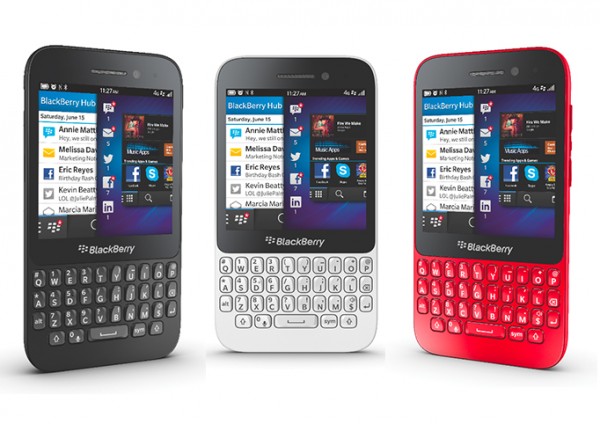
    The BlackBerry Q5 is designed to slot right under the BlackBerry Q10 in the company’s QWERTY lineup. The smartphone features a physical keyboard, a 3.1-inch touchscreen display and aims for “youthful fans that are passionate, confident and bold, and it makes it easy for them to have fun, create, share and stay connected”, says BlackBerry CEO Thorsten Heins.

    The BlackBerry Q5 comes with the BlackBerry 10 operating system, which now touts more than 100,000 apps in the store, and allows users to take advantage of features such as BlackBerry Hub, BBM, Time Shift and Story Maker, among others.

    BlackBerry 10.1

    The Finnish manufacturer announced that BlackBerry 10.1 will be available for the BlackBerry Z10 smartphone in the upcoming weeks. There are a couple of notable new features here.

    The BlackBerry Hub introduces support for PIN to PIN direct messages between BlackBerry smartphones and features improved attachment capability. Users can now customize notifications through ringtones, vibrations and even the LED light.

    The company also says that the BlackBerry 10.1 cursor should be both easier to use and more precise in operation. The operating system adds support for HDR mode, a feature already available in other platforms, as well as landscape viewing mode within the calendar app, enhanced red eye reduction in the picture editor as well as other improvements.

    BlackBerry Enterprise Service 10 version 10.1

    BlackBerry Enterprise Service is designed to allow businesses to manage BlackBerry devices. The latest update brings the software to version 10.1 and introduces a couple of new features and benefits.

    Businesses can now restrict BlackBerry 10 smartphones to work environments, which disables them for personal use, through an optional set of extended IT policy controls and settings. IT administrators are able to manage devices running BlackBerry 10 as well as previous iterations of the operating system.

    BlackBerry Enterprise Service 10 version 10.1 also brings an improved dashboard designed to make it easier for businesses to view data related to managed devices, phone support via BlackBerry and deployment in a highly available active/passive configuration.

    BBM Comes to Android and iOS

    Currently available as a BlackBerry-only affair, the Canadian manufacturer announced that BBM will also be available to Android and iOS users this Summer.

    “For BlackBerry, messaging and collaboration are inseparable from the mobile experience, and the time is definitely right for BBM to become a multi-platform mobile service”, says BlackBerry. “BBM has always been one of the most engaging services for BlackBerry customers, enabling them to easily connect while maintaining a valued level of personal privacy. We’re excited to offer iOS and Android users the possibility to join the BBM community”.

    BBM will not be a trojan horse, sent by BlackBerry behind enemy lines to bring back its former users (and possibly gain new ones) who have defected to Android and iOS. Instead, the service has to fight off similar offerings available on the platforms that rule the smartphone market today in order to gain some ground.

    BlackBerry, however, says that BBM will have a new trick up its sleeve. The service, which touts more than 10 billion messages each day, will feature the BBM Channels “social engagement platform”. With it, the company wants to connect users to celebrities, businesses and groups of interest.

    Unlike Facebook which released its messaging service after the social network, BlackBerry goes the other way around. Considering that many folks are already using different social networks, BBM Channels appears to be a futile feature at this point.

  • Confie Seguros Acquires Texas State Low Cost Insurance

    Confie Seguros has acquired Texas State Low Cost Insurance Agency of Austin. Financial terms were not disclosed. Confie Seguros is backed by ABRY Partners.

    PRESS RELEASE

    NEW YORK, May 14, 2013 – Confie Seguros, a rapidly growing national provider of personal lines insurance, today announced the acquisition of Texas State Low Cost Insurance Agency of Austin, providing a strong distribution network in Texas beyond the company’s current locations in San Antonio and Houston.

    Texas State Low Cost Insurance was founded by Hal and Reba Cooper in 1978. Michael Morris joined the firm in 1993 and took over as CEO/President in 2000. Under his leadership the company has grown to one of the most established retail agencies in the state of Texas. The company has a strong footprint on the fast growing Texas I-35 Corridor, a group of metropolitan areas that include Austin, as well as West Texas and East Texas. The company offers personal and commercial insurance from its 43 locations. Mr. Morris will continue as President of Sales and Kelly Myers will continue in her role as General Manager.

    Joe Waked, CEO of Confie Seguros, said, “Texas State Low Cost Insurance is one of the premier agencies in the state and a very well-run company. We are pleased that Mike and Kelly will continue with Confie in leading management positions to help us further build our presence throughout Texas. In addition to providing additional scale to our Texas operations, Texas State Low Cost has a long-standing reputation that will provide opportunities for us to identify strategic fill-in acquisitions throughout the state of Texas.”

    Confie Seguros expects to complete a number of important transactions in the second half of the year as it continues to build its national presence.

    Mr. Morris, said, “This transaction represents a great fit for our employees, and Confie will be a great partner with the resources to help us grow both organically and through additional acquisitions. The Confie management team and I share the same vision of providing affordable insurance to a broader group of customers throughout Texas.”

    Confie Seguros has built a national portfolio of regional auto insurance brokerages. The company was rated among the top 10 in revenues in Insurance Journal’s latest top 100 ranking of insurance agencies and in Best’s Review’s 2012 Top 20 Global Insurance Brokers.


    The post Confie Seguros Acquires Texas State Low Cost Insurance appeared first on peHUB.

  • A Visa for Transformation

    Just as America’s visa rules enabled the rapid growth of India’s information-technology companies over the last two decades, the Obama Administration’s recent drive to reform immigration regulations could prove to be a turning point for them.

    Although the Border Security, Economic Opportunity, and Immigration Modernization Bill of 2013 — introduced four weeks ago by a bipartisan group of eight U.S. senators — seeks to increase the number of visas that the US government can grant highly-skilled workers (aka H1B visas), from 65,000 to around 110,000 a year, it is likely to constraint non-American companies operating in the US. Since the new law will force employers to attest that they tried to recruit American citizens before offering jobs to foreigners, the US Labor Department can scrutinize hiring decisions after they are made. That will create uncertainty, open the floodgates to litigation, and force companies to fill jobs rather than seek talent.

    How that will help the US economy become more competitive is anybody’s guess, but these legal changes could finally force India’s information technology companies to transform themselves. For some time now, it has been obvious that these companies will have to go beyond the offshoring model that served them well in the past and develop innovative new ones.

    The major business process outsourcing and software companies, such as TCS, Wipro, Infosys, Cognizant, HCL, and Tech Mahindra, have become large and profitable, but their growth is slowing even as fierce competition is reducing profit margins. Moreover, governments, concerned about job-creation, data-security, and user-privacy, are challenging the offshoring model.

    India’s hi-tech giants clearly need to reinvent themselves. Among other things, they need to offer business solutions with pricing linked to outcomes; they need to be knowledge-providers rather than service-providers; and they need to connect with clients’ decision-makers, not just their technology heads. Above all, they need to globalize so that in the US, they think, act, and behave like American companies; in Germany, they’re German; and in China, they’re Chinese.

    America’s latest immigration reforms could ensure change, as one historical precedent testifies In 1981, the Reagan Administration forced the Japanese automobile industry to sign an agreement limiting their exports to the US to 1.68 million automobiles a year. That deal was supposed to protect America’s floundering automotive manufacturers, but it did nothing to help GM, Ford, and Chrysler become more competitive.

    Instead, the restriction dramatically boosted the Japanese companies’ fortunes, in four ways. One, the ceiling on American imports, coupled with growing demand, allowed the Japanese manufacturers to raise prices and boost margins. Two, since they didn’t have to compete based on price, they started trying to differentiate themselves. Three, the new law encouraged Japanese corporations to develop bigger cars since they could no longer sell as many small cars as they wanted to. That’s when they launched premium brands such as Lexus and Acura.

    Finally, the agreement forced the Japanese companies to localize manufacturing. They created efficient union-free factories in Tennessee, Kentucky, and South Carolina, which insulated them from currency fluctuations. Thus, US import restrictions enabled the Japanese automobile majors to transform themselves from manufacturers of cheap automobiles to competitive corporations that could hold their own in the US.

    In the same way, India’s information technology giants must bite the bullet today. They must localize work-forces and leadership teams; abandon cost arbitrage and pursue differentiation, and turn their major overseas units into hubs in a global network. That will allow them to shift from renting out intelligence to creating intellectual property. If they do so, they will be perceived not as Indian “body shops,” but as global technology giants that don’t need visas to succeed.

  • Welcome to the post-normal age of work

    It’s a now-prevalent notion that companies can advance by simply adding a social layer on top of existing business processes, integrating social tools with existing functional tools such as ERP, CRM, and HR solutions. The idea goes that this will make companies more social and therefore more productive.

    That idea isn’t going to work.

    Why? In a nutshell, social network-based communication is primarily organized around the concept of a “pull” medium — that is, a medium where individuals subscribe to whichever information sources they prefer and find useful. Traditional business processes, on the other hand, use “push” communications, where whoever created the information gets to decide whom it’s most important to. Simply put, the two parties don’t gibe.

    Perhaps more importantly, the nature of work in our era has changed. Most people now have jobs based on non-routine work, where the predefined and fixed roles of business process do not reach.

    I recently wrote a report as part of my activities in GigaOM Research, entitled “Social networks will displace business processes, not socialize them” (subscription required). In the report, I argue that we are drifting away from a business-process defined culture and towards a social network-shaped, cooperative one.

    Cooperation

    Source: Stowe Boyd/GigaOM Research

    Above we see the variance between process-oriented organizational cultures and network-oriented ones. I consider this part of the transition from post-modern (1970-2005) to what I’ll call post-normal (2005-present and beyond) economic eras. These cultures also differ in the nature of social affiliation, with a loosening of the bonds that tie people together in cooperative cultures contrasted with collaborative ones. People in cooperative organizations will have a higher number on connections, but the proportion of those that are strong ties decreases relative to collaborative cultures.

    figure2
    Source: Stowe Boyd/GigaOM Research

    Some corporate cultures are stuck even farther back in time because they are based on competition. I don’t mean competing with others in the marketplace, like Toyota competing with BMW. I am talking about a corporate culture based on zero-sum competition among workers, where one person’s advancement is someone else’s demotion. These are cultures strongly based on authority-based decision-making, and really are a holdover from the late modern era: the late industrial era.

    figure3
    Source: Stowe Boyd/GigaOM Research

    In the report, I discuss the “fit” of different psychological profiles, or archetypes, in these cultures. For example, the Entrepreneur archetype (see above) fits well in collaborative and competitive cultures, and fits the entrepreneurial culture perfectly. But Entrepreneurs won’t like working in a purely traditional, “cooperative” culture, because they like to lead collectives that are managed through consensus. A cooperative organization is too loose for them: It’s a connective, and is based on laissez-faire decision making.

    3CModelSource: Stowe Boyd/GigaOM Research

    This is the debut of the 3C model — competitive, collaborative, and cooperative. It’s a psychosocial model of organizational culture, and I hope it helps address some key issues in organizational dynamics in organizations today as social technologies and practices are being adopted. Marshal McLuhan said, “we make our tools, and they shape us.” Keeping that in mind, we see the change that social network-based communication is causing.

    Businesses are not making these changes on a whim or because individuals are made happier by cooperative work relationships. The fast-and-loose business is most in sync with the digital realities of today’s world, although most companies are still operating principally in a more traditional mode, and may even have a healthy dose of the “frozen-and-immobile” at the core. Nonetheless, businesses must move towards a more cooperative work environment because in doing so they will successfully compete in today’s fast-paced, digitally focused world. Older cultures that cling to traditional business processes will not.

    To read the full report, click here (subscription required).

    Thumbnail image courtesy of flickr user ShellVacationsHospitality.

    Related research and analysis from GigaOM Pro:
    Subscriber content. Sign up for a free trial.


  • The Lumia 925, Nokia’s New Windows Phone 8 Flagship, Sheds Excess Weight, Wants To Mess Around With Your Photos

    P1010042

    Meet the Lumia 925, the latest smartphone flagship in Nokia’s increasingly populous Windows Phone portfolio. The 925 is clearly Nokia’s answer to criticisms of its high end devices being too heavy.  At the device’s London launch earlier today, Vodafone’s Patrick Chomet – brought onstage to talk up the new Lumia which the carrier will be ranging in Europe — couldn’t avoid commenting negatively on the Lumia 920’s weight. For all the noise about the 925’s camera, its less hefty hardware is the key design difference here.

    The 925 drops a full 46g compared to the earlier Lumia 920, weighing in at 139g vs the 920’s hefty 185g. The phone feels pleasingly light in the hand, helped by its slender profile: it’s just 8.5mm thick at its thickest point (vs 10.7mm for the 920). In order to achieve a sleeker, lighter device, yet keep the 4.5-inch display, Nokia has dropped built-in wireless charging – but it’s not ditching the tech entirely. It has included wireless charging as an add-on via clip-on shells – likely sold separately — which increase the thickness of the 925 by a few millimetres but don’t appear to add too much weight back on.

    It’s a compromise but one that results in a sleeker, more attractive handset out of the box. If it’s a choice between wireless charging – which remains something of a gimmick — or a lightweight phone, most people would opt for the latter. And that’s a calculation Nokia has clearly made with the 925.

    The handset design also takes a few steps in a new direction for the Lumia range, with aluminium edging running around its four sides – a band which doubles as the phone’s antenna – coupled with a polycarbonate back. The two-tone look and feel is a definite departure for Nokia’s high end phone design. Colour options are also more subtle, with the black version having anodized, almost charcoal looking aluminium edging, while the white 925 has silver edges. There’s also a grey colourway. The trademark bright Lumia colours are reserved for the wireless charging shells — including red, yellow and cyan.


    The PureView-branded 8.7MP camera on the 925 is the other big focus here. The hardware introduces a sixth lens to the device, which Nokia says improves performance in bright sunlight. This is in addition to strong low-light capabilities, which it has touted on its other Lumia flagships – including most recently the Lumia 928.

    During the 925 launch Nokia demoed both the low and bright-light photography capabilities of the phone, inviting the press to compare the shots with photos taken on their own smartphones. The Lumia 925 came off as better at snapping in the dark than iPhones, the BlackBerry Z10, the HTC One and even the Lumia 920, pulling a brighter, more colourful image from out of the gloom. It also appeared to capture more detail in strong light conditions in Nokia’s test conditions.

    As well as the extra hardware lens, the 925 includes a new suite of camera-editing software called Nokia Smart Camera. This makes use of a burst mode that takes 10 photos at around 5MP each. It then offers a series of image-manipulation options to enhance the photo. Some of these features were a little hit and miss under the press launch lighting conditions. Others looked a little gimmicky, such as the ability to composite a series of movements into one shot. But others seemed like they could be genuinely useful, such as a feature that allows you to create the best shot by choosing from various facial expressions — much like the timeshift feature on the BlackBerry Z10/Q10. Or another that lets you remove a moving object from an image, such as a person or car passing in front of the scene you’re trying to shoot.

    The Smart Camera software won’t be exclusive to the Lumia 925 for long – Nokia said it will be pushed out to other Nokia Lumia Windows Phone 8 devices as an update in Q3. But for the moment, the Lumia 925 has the lion’s share of Nokia’s camera creativity, including some new features in its Creative Studio image editing app, such as a tilt shift and radial focus. And the Oggl app.

    One more new software addition in the 925′s screen settings allows users to tweak the colour saturation and temperature of the AMOLED screen to dial down how poppingly bright the colours are and opt for more muted, photo-realistic tones if you desire. Elsewhere, this is a business-as-usual Windows Phone 8 device loaded with the usual suite of Microsoft and Nokia apps, which include its HERE mapping and location apps and Nokia Music. It is also skinned with the new more flexible Windows Phone homescreen that allows for three different-sized live tiles.

    The 1.5GHz dual-core Snapdragon chip powering the Lumia 925 doesn’t sound that beefy, considering the proliferation of quad-core phones in the Android ecosystem at least, but it’s as top-of-the range as Windows Phone gets right now. And Nokia argues that no more processing clout is required to do all of the image processing going on under the 925′s hood.

  • Makers go to market with hardware startups for learning, play, and IoT

    Hardware accelerator HAXLR8R unveiled its newest class of startups at a demo day in San Francisco on Monday. This year’s crop of startups skewed heavily towards gadgets for learning, play, and the internet of things, with devices like a connected vibrator, bike handlebars with technicolor lights and GPS tracking, and the hardware hacker’s favorite product — a drone. The entrepreneurial teams hailed not only from the U.S. and China but also Singapore, Canada, and the U.K. After 111 days of perfecting their prototypes in Shenzhen, China, the ten teams returned to the Bay Area to pitch investors and enter the vanguard of the “hardware renaissance,” as HAXLR8R co-founders Cyril Ebersweiler and Sean O’Sullivan put it.

    In addition to seeking seed funding, many of the startups are commencing or have already launched Kickstarter campaigns. Engaging in crowdfunding may reflect the unwillingness of the VC ecosystem to fully back hardware-based efforts, but it may also speak to the lack of staying power for quirky, fun gadgets, which are a dime a dozen on Kickstarter and other similar sites. While many of the products presented at the demo day were indeed colorful, fun, and eye-catching, I wondered whether their creators had harnessed the full potential of the fast product iteration and vast component availability of Shenzhen touted by the HAXLR8R team. Many of the ideas seemed to address decidedly first-world desires or needs, rather than the stated goal of “solving real problems or creating a meaningful change to our current technological state.”

    Ironically, one way some of the startups are innovating is not so much with their product or design, but in their business model. Some of the companies are using their apps or software as a Trojan horse for the actual hardware product, while others are using platform-as-a-component plans. One company is just going for the “sex sells” strategy (literally). Here’s a recap of HAXLR8R’s inaugural class last year, and below are this year’s top six startups to watch.

    LightUp

    lightupThe brainchild of two Stanford students, LightUp is like a digital erector set. Magnetic snap blocks let kids build working circuits and learn about electronics through trial and error. Besides the physical play kits, which will be available via Kickstarter for $30-200, LightUp also has an augmented reality app that acts like a tutor and lets you visualize current flow in a circuit. The Arduino-compatible system is powered by a button battery, can be used for building all kinds of electronics projects, and will be launched at select partner schools in August.

    HEX Air Robot

    hex-air-robotChinese company HEX is betting that the FAA will follow through with opening up the skies to commercial drones in 2015. They’ve developed a modular auto-pilot system that they will sell to the DIY drone community, as well as two drone bodies, the smaller of which will debut on Kickstarter next month. Hex’s system also includes an app to launch, land, and have the drone follow the user like an airborne puppy. For photo enthusiasts, the mini HEX includes a camera, and the full-sized drone has a detachable auto-balancing arm for GoPro camera integration.

    Molecule Synth

    Honeycombs meet Legos in the build-your-own musical instrument from Molecule Synth. It has color-coded parts for pitch control, sound generation, and sensors, and can hook up to an iOS device or a keyboard. A mobile app lets users share compositions, and an upcoming Bluetooth module will give the synth drum machine capabilities. This is definitely the kit for music geeks who want a hyper-customized system, or DJs who want to out-Skrillex Skrillex.

    Helios

    Helios’ mission is to solve the dual dilemmas of safety and security for the hipster biker. Not only does the high-tech handlebar have blinker indicators for turning, it has a built-in super bright leadlight and a GPS tracker. An iOS app lets you change the blinker colors at will, and can even coordinate the indicators with turn-by-turn directions. The $199 bullhorn or drop bars also have two built-in rechargeable batteries and a dedicated battery for the GPS, giving you a 15-day window to find your bike (or probably just the removed handlebars) should it get stolen.

    Spark Devices

    Spark makes hardware connected with its Arduino-compatible Wi-Fi chip that can be embedded into existing electronics. This “core” tech is gaining traction with early adopter hobbyists on Kickstarter. For enterprise, Spark provides a cloud service that lets Spark-connected devices connect to each other or online services via a REST API. For more on Spark, check out Stacey Higginbotham’s recent post.

    Vibease

    Most other devices are smart now, so why not vibrators? Vibease has over 1,000 pre-orders for its $99 rechargeable Bluetooth vibrator. Their companion “fantasy marketplace” app aims to be the iTunes for erotica, with crowdsourced audio fantasies that synchronize with the vibrator’s intensity. The app plus licensing of the Vibease chip to other sex toy manufacturers will form the core of Vibease’s business model.

    vibease

    Related research and analysis from GigaOM Pro:
    Subscriber content. Sign up for a free trial.


  • The Boy Genius Report: What is BlackBerry thinking?

    BlackBerry Strategy Analysis
    At the company’s BlackBerry Live conference on Tuesday, BlackBerry announced what could be interpreted as zero positive news for the company. First, there’s the BlackBerry Q5 mid-range QWERTY handset that runs BlackBerry 10. Pricing was conveniently not announced. Industry watchers are chiming in saying that BlackBerry really needs to hit a $250 price point at full retail in order to compete in Asia and other similar markets. Let me spoil it for you.

    Continue reading…

  • Secure Free Instant Messaging for Enterprise: BlackBerry IM 3.0

    BlackBerry Enterprise IM 3.0 is a secure, enterprise-grade instant messaging service that borrows a lot of functionality of the popular BBM service. The service can communicate with desktop enterprise chat systems like Microsoft Lync, Microsoft Office Communication Server and Lotus (IBM) Sametime.

    Screen Shot 2013-05-14 at 12.44.19 PM

    BlackBerry Enterprise IM 3.0 launches with BES 10.1 but will also support Legacy BlackBerry devices that are deployed on BlackBerry Enterprise Server 5.0.3 and above. Some of the BBM-borrowed features include presence status like “I’m free” or “Out of office” and your presence can even be controlled by your work calendar. Search though your employee database to add contacts using LDAP, Active Directory and Global Address Lookup. Messages are securely delivered using either HTTPS or 256 bit AES encryption.

    Click here to learn more about the new BlackBerry IM 3.0