
Blog
-
Google’s new Android boss says software like Facebook Home could be blocked
-
BlackBerry expands its World: New Q5 phone and promises of BBM on iOS, Android
 What a difference a year makes. At last year’s BlackBerry World event, the company was still working on its mobile hardware and software, trying to keep developers interested in the platform. This year, it’s a whole different story: There is new hardware, more apps for consumers and updated software for the BlackBerry 10 platform.
Although it may be too late given the rise of successful third-party messaging apps, BBM is also going cross-platform. Surely, the company is gaining momentum, however, it still seems that for now, it’s competing for third place against Microsoft’s Windows Phone platform.
Here are some of the highlights coming out of BlackBerry World taking place in Orlando:
- The BlackBerry Q5. This handset with full keyboard and 3.1-inch touchscreen is targeted at select markets in Europe, the Middle East, Africa, Asia (including the Asia Pacific region) and Latin America when it launches in July. It’s really a budget device for emerging markets, but the company can’t ignore this important segment. The current Z10 and Q10 are a bit too high-end (read: high-priced) for these growth areas, and I think the Q5 is a smart play.
- BlackBerry 10.1 software for the Z10. We had hints of this update coming and it adds some nice features to current Z10 handsets: PIN to PIN messaging, an HDR camera mode, improved cursor control and support for custom notifications. Should these have been in the Z10 on launch day? Probably, but BlackBerry was under the gun to deliver and this is a solid follow up.
- BlackBerry Messenger for iOS and Android. This long-rumored expansion of BBM is now reality, or will be later this summer when it rolls out. At first, the software will support the basics: Messaging and Groups. Later, however, a full suite of BBM tools — already available on BlackBerry 10 — will arrive with screen-sharing and voice calls. Is it too little too late though: If you’re using iOS or Android now, how many friends or contacts do you know that use BBM? BlackBerry says that BBM has more than 60 million monthly active users now but that’s well below some popular third-party messaging services.
BlackBerry is also making inroads with apps, claiming 120,000 are now available for the platform. Bear in mind that a good portion of those are Android apps and not native to BlackBerry; for some that won’t matter. If customers can get the mobile apps they want on the platform, they’ll be happy and so too will BlackBerry.
The company is really in the second inning of its BlackBerry 10 ballgame and picking up steam. I don’t expect BlackBerry sales to rival those of iOS or Android any time soon, but they could present a bigger challenge to Microsoft’s Windows Phone than some have thought. I didn’t see much light at the end of BlackBerry’s tunnel last year; however, the company continues to drive forward with everything it needs to compete.

Related research and analysis from GigaOM Pro:
Subscriber content. Sign up for a free trial.- Research In Motion: future scenarios for its fate
- Carrier IQ and the continued erosion of operator trust
- What Amazon’s new Kindle line means for Apple, Netflix and online media


-
Google Ventures invests in OpenCoin, the firm behind Bitcoin exchange Ripple
This virtual currency thing just got another piece of validation: in the wake of Bitcoin’s spectacular rise, fall and wary stabilization, Google Ventures has decided to invest in OpenCoin, the company behind the Ripple distributed currency exchange.
(Quick note: We’ll be hosting some Bitcoin experts at the San Jose Tech Museum on Thursday, May 16, from 6-9pm, so be there if you’re into this stuff.)
Ripple, billed as “the world’s first open payment network”, may lack the rebel allure of Bitcoin itself, but its distributed model could patch one of Bitcoin’s chief weaknesses, namely its reliance on a few sometimes less-than-transparent exchanges. Of course, Ripple will be usable for the exchange of other currencies, too, and it arguably sits alongside other new financial technology startups such as Transferwise.
In April, OpenCoin received investments from Andreessen Horowitz, FF Angel IV, Lightspeed Venture Partners, Vast Ventures and Bitcoin Opportunity Fund. The new angel round, just one month later, comes courtesy of Google Ventures (who we hear put in less than $200,000) and IDG Capital Partners.
In a statement, IDG’s Feng Li said his firm was “excited about the prospect for a global payments system that powers instant, free and secure transactions in any currency.” OpenCoin CEO Chris Larsen, meanwhile, promised using Ripple would be “as easy as sending an email.”
Speaking of emails, OpenCoin recently sent some to those who had signed up to receive “ripples”, which will be a sort-of-currency in themselves but which will mainly be used as transaction tokens on the network, to try to stop attackers from flooding the network with tiny transactions. The company promised that those who signed up before May 9 would get given free ripples by the end of the month.
Other recent investments in this space include $5 million from Fred Wilson’s Union Square Ventures for Bitcoin transaction platform Coinbase, and a $6 million Peter Thiel-led round for Transferwise (which, it should be noted, is engaged in the global payment platform space but doesn’t deal in Bitcoin). And more money seems set to flow: also on Tuesday, New York’s Liberty City Ventures announced a $15 million fund specifically for Bitcoin-related endeavors.

Related research and analysis from GigaOM Pro:
Subscriber content. Sign up for a free trial.- Connected world: the consumer technology revolution
- The future of mobile: a segment analysis by GigaOM Pro
- GigaOM Research highs and lows from CES 2013

-
With Square Stand, Jack Dorsey & Co. reimagine the cash register
They say all revolutions start out small. Jack Dorsey’s Square is no different.
It started off with a modest card reader, turned into a little app and now the company has developed and launched Square Stand, a point of sale system that reinvents the idea of cash register with help from Apple’s iPad and Square’s software, allowing the San Francisco-based company further spread its wings in the payments business. And if there were any doubts that the company was going after payments incumbents such as NCR and Verifone, Square Stand puts it to an end.

The company announced the Square Stand at an event in a coffee shop near its offices this morning. Square Stand, simply put, is a point of sale system that allows merchants (big and small) to plug in their iPads (2 or 3, but not the 4th generation) into a stand that comes with a swivel base (so they can turn it around for you to sign for your purchase), a credit card reader and a USB hub that can in turn allow merchants to plug in everything from a scanner to a printer (for printing receipts), a cash register (the Square Stand doesn’t hold cash, just works with other devices) and even the backend ordering system into the stand. In February this year, Square introduced its Business-in-a-Box package, but this is a much simpler and is targeted at larger establishments including restaurants.
When asked why the company was making the initial device with support for only the iPad 2 and iPad 3, Dorsey pointed out that a majority of their customers were using these two devices and as a result they had to make sure they provided the biggest support. The support for iPad 4 (the newest model available, sold as just “iPad”) will come in subsequent models. The company had launched Square Register for iPad app in March 2012 and has made subsequent upgrades to the app.
Sexy cash registers?

“We have taken something that is ugly and mechanical and made it look like a consumer product that is very sexy,” said Dorsey, chief executive of the four-year-old Square, which is based in San Francisco and has raised $340 million in funding from the likes of Khosla Ventures, Citi Ventures, Starbucks, Visa and Chase. The company is part of a growing number of players including eBay and GroupOn that are looking to reinvent the offline retail business.
It hinted at its grander ambitions when it hinted at its desire to take on the likes of Foursquare and Yelp. Square said that as of today it is processing over $15 billion in payments on an annualized basis, excluding Starbucks, up from processing $5 billion on annualized basis a year ago.
Weighing in at about five pounds, the stunningly beautiful device is pristine white and is made of moulded plastic. The USB and other accessories (called the Toolkit) are perfectly matched to the stand. It will used by 13 merchants in 30 locations. The package is going to cost $299 and and is available for pre-order.
When I first saw the Square Stand, it elicited an involuntary gasp. From packaging to the final product, it is something one would expect from the Apple dream factory; but in saying so, I don’t do justice to Dorsey and his design team. While there are many companies who are following the Apple aesthetic, to me Square Stand represents a perfect harmony of hardware, software and service.
Digital receipts and mobile payments are the way of the future, but Square also recognizes that people pay with cash and credit cards, the company said at the press conference Tuesday morning. The support for third party peripherals will make this into an ecosystem. It will be on sale in July at Best Buy and other retailers.
Do small merchants care enought about how their point-of-sale devices look and will they spend money to replace their existing systems? “More important than how it looks is how it works. It is about making it work simply,” Dorsey said Tuesday.
Completing the sale
The Stand has been under development at Square for quite sometime. Dorsey said that reinventing the register and rethinking the whole retail experience has been part of company’s thinking from its earliest days. If the Square’s original card reader made it possible for mom-and-pop businesses to access the credit card payment infrastructure, with the launch of this device, Square can start to look at tapping into the big brick-and-mortar commerce ecosystem.
“Whenever people got Square (Register) on iPad, the first thing they needed was a stand. So we made one, and one that works seamlessly in a way that allows merchants to move people through the queue really quickly,” Dorsey said. “We wanted to build hardware that was high quality.” The speed of processing payments has been a key driving force behind the design of this device, Dorsey explained.
Square is one of the handful of companies that understands that there is a lot of money to be made in building this new kind of retail system. And it might have started out small, but now it doesn’t have much choice to get real big, real fast. After all it has to live up to is massive $3.25 billion valuation.


Related research and analysis from GigaOM Pro:
Subscriber content. Sign up for a free trial.- Q4 Wrap-up: SOPA and the future of digital content
- 2012: Data, spectrum and the race to LTE
- The future of mobile: a segment analysis by GigaOM Pro

-
Wikitude Places Beta Launches on BlackBerry 10
Augmented Reality leader Wikitude launches Wikitude Places for BlackBerry 10. The new service provides Location Based Services to Wikitude users and helps to build their LBS database of sights, restaurants, hotels and shops.

Along with the launch of the Places beta, Wikitude on BlackBerry 10 is also the first mobile platform to sport their redesigned user interface. Ever since BlackBerry started putting accelerometers and magnetometers in their phones, Wikitude has been there on launch to utilize the new tools.
One of the more exciting features that they’ve added is the BBM AR Chat allowing you to see where your friends are as you message them. This feature becomes even more compelling when BBM goes multi platform later this year.
Click here for more info on the Wikitude SDK.
-
Blackberry Messenger officially coming to Android devices this summer!

(Photo credit TechCrunch)
It’s been a long time coming, but the moment is finally here folks— Blackberry Messenger is officially on the way to Android devices! Announced at the Blackberry Live 2013 event, Blackberry CEO Thorsten Heins confirmed “the BB10 platform is so strong and the response has been so good that the time is right for BBM to become an independent mobile messaging platform“. As a result, the mobile giant will make BBM as a cross-platform messaging app that will be available for Android (and iOS-based) devices. Huzzah!
So now that one of the most popular and successful messaging apps is now available, it’s now just a matter of time before we see BBM hit the Play Store and on devices everywhere.
Come comment on this article: Blackberry Messenger officially coming to Android devices this summer!
Visit TalkAndroid for Android news, Android guides, and much more! -
Watch Live: Dr. Jill Biden at Navajo Technical College
On Friday, May 17th at 10:00am MT (12:00pm ET), Dr. Biden will give the commencement address to the 33rd graduating class of Navajo Technical College (NTC) — one of two tribal colleges serving the Navajo Nation.
Many of the programs at NTC are designed to help create new jobs and economic opportunities on or near the Navajo Nation, while equipping their students with the skills they need to succeed in those jobs.
You can watch live using the video player below.
-
Fastest-Growing Baby Name is ‘Game of Thrones’-Inspired
The U.S. Social Security administration (SSA) this month released its yearly lists of the most popular baby names in America. Though some mainstays dominated the lists, a few surprises are making their way from popular culture to hospital nurseries.
Perhaps the biggest surprise is the fastest-growing name for females. Fantasy fans who thought themselves original may be displeased to learn that Arya has jumped from the 711th most popular female name in 2011 to the 413th in 2012. The name is a reference to Arya Stark, a favorite character of many readers of George R.R. Martin’s A Song of Ice and Fire series, on which the hit HBO TV show Game of Thrones is based.
The fastest-rising male name for 2012 was Major, which the SSA attributes to its military association.
“I have no doubt Major’s rising popularity as a boy’s name is in tribute to the brave members of the U.S. military, and maybe we’ll see more boys named General in the future,” said Carolyn Colvin, acting commissioner of the SSA.
As for the names that are most popular, Jacob has retained its first place status on the male list, where it has been for 14 years in a row (since 1999). Sophia has topped the girls list for the second year in a row. The names Elizabeth and Liam have popped into the top 10, pushing out Chloe and Daniel.
The top 10 male names, in order, are: Jacob, Mason, Ethan, Noah, William, Liam, Jayden, Michael, Alexander, and Aiden. The top female names are: Sophia, Emma, Isabella, Olivia, Ava, Emily, Abigail, Mia, Madison, and Elizabeth.
-
iOS app team behind Clear takes a shot at photos app, Analog Camera
Yes, there is another iOS camera app getting ready to hit the App Store. But before dismissing Analog Camera as unnecessary in the world of Camera+, Instagram, Facebook’s own Camera app and countless others, it’s at least worth checking out based purely on the team behind it. Analog Camera was created by Realmac Software and the same team who created the elegant and useful Clear task-organizing app.
The app isn’t available just yet. But Realmac put up a website today with a very brief video showing how it works and what it will look like.
Realmac founder Dan Counsell told me via email that the camera app “was built with the same principles of Clear in mind.” That means employing a very simple user interface, flat, uncluttered design and an app that’s focused on one main thing; in this case taking and sharing photos.
 Analog Camera is a good-looking app. Yes, it includes filters like every other photo app, but it also allows for a quick succession of shots to be taken. Then there’s a grid for helping to more easily select the best shot taken and best filter.
Analog Camera also includes easy sharing within the app to Facebook and Twitter; so it’s a camera app with social features, but unlike Instagram does not come with its own attached social network.
Realmac expects Analog Camera to hit the iOS App Store “later this month.”

Related research and analysis from GigaOM Pro:
Subscriber content. Sign up for a free trial.- Podcast: Mobile winners and losers in 2012 and what to expect in 2013
- Analyzing the wearable computing market
- How do developers ride the Siri wave?

-
BlackBerry and the fateful Q5 pricing question

-
Cisco survey: Consumers are getting comfortable with the idea of the driverless car
The auto industry has long said that one of the biggest obstacles to commercializing the self-driving vehicle is consumer mindset: not everyone is comfortable handing the wheel to the in-dash computer while hurtling down the highway. But a new study by Cisco Systems shows that consumers around the world may be more amenable to the autonomous vehicle than everyone thought.
In a global survey of 1,514 consumers 18 years or older, Cisco found that 57 percent would put their trust in a driverless vehicle. The answers varied wildly depending on country, with 95 percent of Brazilians embracing the concept of a silicon chauffeur. In Japan skepticism is still very high with only 28 percent willing to give up direct control of their cars.

In the U.S., where many of these autonomous vehicle technologies are being tested, acceptance was above the global average at 60 percent. What’s more those Americans surveyed weren’t just a bunch of wild risk-takers: 48 percent said they would trust a driverless car to ferry around their children. In general, western Europe was less accepting of vehicle autonomy than North America, and rapidly developing regions of the world like India and China were the more enthusiastic.
Of course, consumer perception of a technology depends largely on how it’s presented to the public. Tesla founder and CEO Elon Musk last week made that very point when outlining Tesla’s future autonomous vehicle plans, saying he didn’t like the connotations of the term “driverless car” because it implies a complete ceding of control. Musk’s term of choice is “autopilot.”
But according to Andreas Mai, Cisco director of product management for smart connected vehicles, the survey didn’t sugar coat its question. Its exact text: “Imagine a car on the road that is controlled entirely by technology and requires no human driver (i.e. Johnny Cab from Total Recall). How likely would you be to ride in such a car?”
 I’m generally a proponent of connected car technologies and look forward to the day when advanced sensors and ad hoc wireless networking would largely automate my daily commute. But I have to say if presented with that question on Cisco’s survey my answer would “no.” I would be willing to give my car autonomy in many situations, but the idea of being reduced entirely to passenger status doesn’t sit well with me. If Cisco’s survey is truly representative of the public’s current mindset, then we’re a lot closer to creating a driverless highway network than I ever imagined. (For information on the connected car, see GigaOM’s infographic)
Of course, as with any industry produced survey, you do have approach Cisco’s numbers with some healthy skepticism. Cisco isn’t Ford or Google, but it certainly has some skin in this game. It produces the security software and router hardware that would be used to deliver connected and autonomous car services. In general, though, Cisco tends to produce very thorough industry reports such as its Visual Networking Index of internet traffic.
Cisco asked some other interesting questions in its survey. For instance, it found that consumers are eager to connect their vehicles to the internet of things if they can get tangible benefits. Seventy-four percent of those surveyed said they would allow remote monitoring of their driving habits if it produced savings on their insurance premiums or auto repair bills.
Another 64 percent said they would be willing to share even more personal information, such as their height and weight and entertainment preferences, for the creation of a unique driver profiles. In a such a scenario, your car could recognize a specific driver by voice imprint and adjust the steering column and seat position automatically and then immediately tune the entertainment system to favorite presets. A surprising 60 percent said they would even provide their automaker or a third-party company with sensitive biometric information like fingerprints or DNA if it could help make their vehicles secure.

Related research and analysis from GigaOM Pro:
Subscriber content. Sign up for a free trial.- Why Google Android’s Electric Vehicle Deal With GM Matters
- The fourth quarter of 2012 in cleantech
- Cleantech and investment in 2013

-
Deaf Moviegoers’ Options Grow with Expansion of New Closed-Captioning Glasses
Closed captioning has been helping deaf and hearing impaired television and movie fans for decades – but the technology has mostly been limited to the home viewing experience. Going out the the theater has traditionally posed a problem for those who require captioning, since theater companies cannot accomodate their needs by putting captioning on all their films, for all to see.
But now, new technology is helping people with these special needs enjoy the theater experience. It’s starting with Regal Cinemas, who by the end of May hope to have over 6,000 of their theaters equipped with new closed-captioning glasses.
The system is called Sony Entertainment Access Glasses, and they look like bulkier 3D glasses. What they do is project captions, which to the viewer appear to float about 10 feet or so from their eyes. This way, deaf moviegoers can watch the film and read the dialogue more conveniently. Previous systems for this have not fared so well.
The system can also help both blind and hearing impaired moviegoers. Headphones can be plugged into the receiver to boost the volume of the films for the hard of hearing. And the track can be switched to give a play-by-play of what’s happening on the screen, visually, for blind patrons.
Any theater that offers the glasses should have every movie available for captioning, says Regal.
Regal first began introducing the glasses to American moviegoers in April of 2012. Earlier this month, they announced a milestone – more than 400 theaters equipped with the tech. And, as I mentioned before, they’re planning a huge expansion in the next few weeks.
Regal Cinemas CEO Randy Smith Jr, who has a deaf son, describes the meaning of the accessibility to NPR:
“I’ve attempted to enjoy a movie with my son so many times over the last 26 years, but to no avail. After watching a movie I would try to discuss it with him. The comments he would make would in no way relate to the plot of the movie and at one point he finally confessed that as he watched the screen, he simply made up the story in his head. He didn’t really know what was going on. The fact that I can take my son to a movie when he visits at the end of June is literally bringing tears to my eyes. It would seem silly to most people but I would imagine you understand what it feels like.”

-
Microsoft’s Tami Reller: Windows Blue, or Windows 8.1, will be free to upgraders
Windows Blue, which will be officially known as Windows 8.1, will be a free upgrade to existing Windows 8 or Windows RT users, Tami Reller, CFO of the Windows business unit at Microsoft said on Tuesday. She also said attendees of the Microsoft Build Conference kicking off June 26 will get a preview version of the OS upgrade.

Tami Reller, Microsoft CMO.
Reller did not provide much more detail around when customers can get the OS upgrade, but said Microsoft is “very aware” of the holidays and would like to have the OS preloaded on hardware for that selling season. But that desire notwithstanding, buyers can get any Windows 8 device and be assured that 8.1 will be an easy update from the start button, Reller told attendees of the JP Morgan Technology, Media & Telecom Conference.
She also characterized 8.1 as an update, more than the usual product tweaks deliverable online, but less than a full new release.
Earlier remarks by Reller in the Financial Times seemed to indicate that Microsoft was rethinking Windows 8 broadly, in response to user feedback, but today 8.1 was positioned as an easy, seamless update. No new interface perks were mentioned.
Windows 8 and RT, which Microsoft launched last fall to put Windows on new form-factor and touch devices, have met mixed reviews. But Reller said it’s met its objectives — running lots of innovative devices including “detachables” where the keyboard can be snapped off to leave a touch-device; convertibles which can shape-shift from laptop to touch device; and plain old traditional laptops and PCs.
Reller also said that Microsoft’s ability to sell into enterprise accounts remains strong and is actually getting stronger. And, for all the angst around Windows 8, the company on its last earnings call said it expects to reap nearly $4 billion in Windows-related licensing revenue this fiscal year. That’s a big number even Windows bashers would have to respect.
This story was updated at 8:31 a.m. PDT with more information about Microsoft enterprise sales.

Related research and analysis from GigaOM Pro:
Subscriber content. Sign up for a free trial.- IT spending update, third quarter 2012
- Takeaways from connected consumer’s second quarter
- Controversy, courtrooms and the cloud in Q1

-
Windows Blue Officially Named Windows 8.1, Will Be A Free Upgrade
Microsoft has gone on record saying that Windows Blue was just a code name, and the final name for the Windows 8 upgrade would be different. The final name has now been revealed, and it’s not that creative.
At the JP Morgan Technology, Media and Telecom Conference, Windows boss Tami Reller announced that Windows Blue is now Windows 8.1. Microsoft’s Brandon LeBlanc later said in a blog post that the new update will “help us to deliver the next generation of PCs and tablets with our OEM partners.” He also says that Windows 8.1 will “deliver the experiences customers – both consumers and businesses alike – need and will expect moving forward.”
What does that mean? Microsoft isn’t saying yet. Prior rumors have said that Windows 8.1 will include some highly requested features, like the return of the Start button and a boot to desktop option. Both would be welcomed in business environments where employees have expressed confusion over having to learn new systems of control in the Metro UI.
A leaked copy of Windows 8.1 from March also confirmed that Microsoft would be adding some improvements to its Metro interface, including better multitasking. Internet Explorer 11 is apparently going to debut on Windows 8.1 as well.
During the original announcement of Windows Blue, Reller said that a public preview would be coming to consumers in June. At today’s conference, Reller narrowed down the date to June 26. On that date, consumers currently on Windows 8 or Windows RT will be able to download the Windows 8.1 update for free from the Windows Store.
-
Xbox 360 adds Twitch streaming games
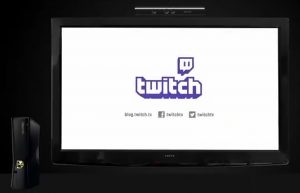 Microsoft is on the verge of announcing the next Xbox, with an event scheduled for May 21. But that has not stopped the company from continuing to update the existing model. Granted, the new console will not be released that day and, even when it does hit the retail market, many customers will continue to use the older model, so it makes sense for support to continue.
The latest addition is a new Twitch app. In a brief statement, Xbox Live chief Larry Hryb, AKA Major Nelson, alerts us that “today, we’re launching one of the most asked for apps on Xbox LIVE”. Hryb goes on to explain what to expect — “Gold subscribers in the U.S. will have access to 300 of the most popular streams from the service. Users can view top channels by popularity or individual game and the dashboard features curated channels, tournaments and shows happening now”.
The app release also ties into that upcoming announcement, as Hryb explains. “In addition to launching the app today on Xbox 360, Twitch will also host an exclusive broadcast following the May 21st #XboxRevealed event next week. I’ll moderate the broadcast live at 3p ET/12m PT live via the new Twitch app on Xbox 360 and also online at www.twitch.tv“.
Microsoft has been concentrating more on the TV side of the Xbox platform recently, adding numerous additional home entertainment options. The company aims for its console to become the ultimate living room hub — replacing various set-top boxes while also offering the most popular video games on the market. The addition of Twitch is one more piece to the puzzle.
-
W. VA. Plant Explosions: Two Injured
A distribution plant carrying highly flammable gases went up in a fireball on Monday outside of Charleston, West Virginia, injuring two people.
The fire at Airgas involved 50 tanks of acetylene which were about to be refilled, said fire officials. An investigation is pending to determine what caused the explosion, but witnesses say once the first tank went, the others followed quickly, creating fireballs that shot over 100 feet in the air.
“We felt our building shake like it’s never come close to shaking before from a storm or anything. It was enough to make us run,” said Doug Barker, who works at a nearby business.
Fortunately, the explosions occurred in a concrete-enclosed area away from the main plant and the tanks weren’t full; otherwise, there might have been many more injuries. For now, the fire is put out, but a HAZMAT crew has been sent from Kentucky to secure the area. The plant specializes in several different gases, including the acetylene, which is used for welding, as well as propane, hydrogen, helium, and nitrous oxide.
The injured workers suffered second and third-degree burns, but their condition is not known at this time.
-
CyanogenMod eclipses 5 million downloads and counting

Oh CyanogenMod, let us count the ways we love thee. If we were to actually count, 5 million and change would probably be your stopping point— but thankfully we don’t have to count because CyanogenMod has done it for us. Using the latest report from the CyanogenMod statistics feature, the total number of installs has climbed to 5,071,645. What is especially interesting is the number of official installs of 1,881,796 v.s. 3,189,849 unofficial installs. There is a slight skew there, but it makes sense if you think about it. For example, I remember my Epic 4G Touch or Sprint S II doesn’t have an officially supported CyanogenMod ROM, but there are a few unofficial ones floating around out there.
CyanogenMod has gone through many changes during its time and this number represents their dedication to their fans and the Android community. My hat is off to the CyanogenMod team, congratulations and excellent job. Not to leave out the fans, because they deserve congratulations too. This accomplishment wouldn’t be achieved if it wasn’t for their love of CyanogenMod and their dedication to the ROM. Do you use CyanogenMod as your daily driver? If so tell us what you love most about CyanogenMod in the Comments section below.
Source: CyanogenMod Stats
Come comment on this article: CyanogenMod eclipses 5 million downloads and counting
Visit TalkAndroid for Android news, Android guides, and much more! -
BlackBerry Messenger (BBM) Goes Cross-Platform Summer 2013
At BlackBerry Live 2013, BlackBerry has just made a pretty major announcement. As of Summer 2013, BBM will be cross platform. This has been discussed for some time and many have debated whether or not it will happen. On the one hand, many thought that it wouldn’t happen because it’s a crucial customer retention tool for BlackBerry. On the other hand, users want to be able to communicate with their friends, regardless of what smartphone they use.
When BBM launches for other platforms this summer, it will have Messaging and Groups features for iOS 6 users and Android users running Ice Cream Sandwich. For the following updates, other platforms will get BBM Voice, Screensharing and BBM Channels.
-
What a Good Moonshot Is Really For
More than 50 years ago, U.S. President John F. Kennedy captured the world’s imagination when he said, “This nation should commit itself to achieving the goal, before the decade is out, of landing a man on the moon and returning him safely to the Earth.” And thus, the term moonshot entered the lexicon as shorthand for “a difficult or expensive task, the outcome of which is expected to have great significance.”
The term has experienced a recent resurgence in the corporate world. Google’s moonshots include expansive projects like its driverless car and Google Glass efforts. In response to a reporter’s question, last week Yahoo! CEO Marissa Mayer said her company’s moonshot is to be “on every smartphone, every tablet, every day, for every Internet user.”
Organizations should have their moonshots. They’re a keystone of what we call a “future-back” approach to strategy, which unlike the “present forward” nature of most strategic-planning processes, doesn’t operate under the assumption that tomorrow will be pretty much like today, and the day after pretty much more of the same. In stable times, present-forward approaches help optimize resource allocation. But in turbulent times, these approaches can lead companies to miss critical market inflection points.
At the heart of the future-back process is a consensus view of your company’s desired future state.This isn’t scenario planning, where you consider a range of possibilities. This is putting a stake in the ground — specifying what you want your core business to look like, what adjacent markets you want to edge into, and the moonshots you’ll try for. And, as Kennedy did, a good future-back strategy goes well beyond the three-year planning horizons that typify most corporate strategy efforts.
A good moonshot has three ingredients. First, it inspires. Reading Kennedy’s quote raises the spirit; a more typical corporate goal of increasing return on invested capital from 13.4% to 13.9%, not so much. That kind of financial target might be important, but it’s unlikely to get people to do extraordinary things. Second, it is credible. It’s easy to assume that a moonshot is just a ridiculous stretch target. But before Kennedy made his speech he had Vice President Johnson do a detailed assessment of underlying technological trends to ensure that the goal had a reasonable chance of success. Finally, it is imaginative. It isn’t an obvious extrapolation of what’s happening today (which for Kennedy would simply have been to fly farther into space), but something that offers a meaningful break from the past.
Google’s moonshots seem to fit these characteristics. Take the driverless car, for example. It’s certainly an imaginative strategy for a company whose core business is selling advertising. It’s undoubtedly inspirational. And there are many reasons to believe that technology will make mass adoption of driverless cars conceivable in the next generation.
On the other hand, while Mayer’s goal is a good one for Yahoo!, it would seem like there’s a need for more inspiration and imagination to really get the company to return to its heyday as one of the world’s most innovative organizations. To be fair, hers was an off-the-cuff response to a question, and not a pre-planned statement, but hopefully she has something more up her sleeves.
At least a few people believe that today’s innovators aren’t bold enough, that, as PayPal co-founder Peter Thiel put it, “We wanted flying cars; instead we got 140 characters.” Twitter is no doubt a useful service, but no one would confuse it for a moonshot. Innovators with credible, imaginative, and inspiring moonshots might yet give Thiel his dream.
-
CollegeFeed wants to give students training wheels for the job hunt
LinkedIn may be just fine for job hunters who have already been to the rodeo, so to speak. But for many college students with barely a credential to their name, higher-stakes socializing on the professional networking site can be intimidating.
That’s why CollegeFeed, launched publicly on Tuesday, has built a social platform to connect college students and companies. It helps students showcase their skills and provides a Facebook-like newsfeed for keeping networking and job opportunities front and center.
“LinkedIn is good for someone who has learned how to ride a bike,” said CollegeFeed founder and CEO Sanjeev Agrawal. “But when you know how to ride a bike or swing a tennis racket, you forget how hard it was when you were beginning…We believe that [providing a career marketplace] requires going the extra mile for students, rather than saying we’ve got this site where you can hang your resume.”
Since March, the site has been beta tested by students at Stanford, Berkeley and Carnegie Mellon. This week, it will open up to students and employers nationwide.
 On the site, students are guided through the process of creating a personal profile of skills and experiences, as well as selecting companies that most interest them. From there, the site provides Netflix-like recommendations for other companies that might be of interest, job opportunities and other kinds of career-related content.
Through virtual networking events like online speaker series, students can listen to industry veterans share their experiences. And they’re offered the opportunity to win awards and show off their skills through employer-sponsored challenges on the site.
The point, said Agarwal, a former global head of product marketing at Google, is to help kickstart college students’ careers by pushing opportunities to them, rather than by forcing them to search for or seek out alumni and opportunities they probably don’t even know exist.
And for employers, who in CollegeFeed’s estimation spend up to $10,000 trying to fill empty positions, it’s a way to market themselves while getting the chance to connect with specific students. Companies like eBay can pay for various levels of placement and engagement on the site, including branded pages, innovation challenges and the ability to send content to specific students.
Last year, LinkedIn described college students as its fastest-growing demographic, and the company actively reaches out to college students through academic institutions and career experts. But other companies are quickly trying to move in to capture the college crowd. With funding from Google Ventures, MindSumo launched earlier this year to provide an online marketplace of mini competitions sponsored by companies and organizations. It gives college students a chance to show off their skills while giving companies access to new ideas and talent. AfterCollege last year updated its career site with a new social layer meant to attract college students. And TechStars-backed EverTrue is targeting colleges with a mobile app platform to connect alumni and support fundraising.

Related research and analysis from GigaOM Pro:
Subscriber content. Sign up for a free trial.- Social 2013: The enterprise strikes back
- The quantified self: hacking the body for better health
- Social media in Q1: commerce and discovery dominated


