Blog

  • The 15 Worst Mutual Fund Managers Of Q1

    david-schoenwaldThe S&P returned +4.87% in Q1.

    So which mutual fund managers cost their clients the most for investing with them instead of an index fund? 

    It’s time to check out the 15 Worst Mutual Fund Managers of Q1!

    A quick note: There are four repeat offenders on our list.

    The #1 worst mutual fund manager for 2009 was Barry Ziskin (Z Seven). And Ziskin retains the title in Q1!

    Rajendra Prasad (Prasad Growth), Connie Luecke and Randle Smith (Virtus), and Morgan Stanley‘s Michael Nolan, Helen Krause, and Arthur Robb are also on the list again.

    Now, usually, several of the worst managers manage to make money, even while they’re costing their clients boatloads by underperforming.  But this quarter, every Worst Fund Manager lost money!

    Now of course, this is just one quarter’s performance, and it’s the long-term record that matters. But when short-term returns look good, fund managers tout the hell out of them.  So we think it’s fair to do the opposite!

    15. Brendan Baker, Nigel May, and Andrew Porter

    15. Brendan Baker, Nigel May, and Andrew Porter

    Q1 return: -0.25%

    Fund: Laudus Mondrian Global Equity Instl (LGEVX)

    Size: $4,000,000

    Top holding: GlaxoSmithKline PLC, Total SA, BP Plc, Novartis AG, Chevron Corporation

    Source: Morningstar

    14. David E. Marcus and Jae Chung

    14. David E. Marcus and Jae Chung

    Q1 return: -0.60% 

    Fund: Evermore Global Value A (EVGBX)

    Size: $4,000,000

    Top holdings: NA

    Source: Morningstar

    13. Bob Becker and Benjamin Morton

    13. Bob Becker and Benjamin Morton

    Q1 return: -0.71% 

    Fund: Cohen & Steers Global Infrastructure A (CSUAX)

    Size: $94,000,000

    Top holdings: American Tower Corporation A, Vinci, East Japan Railway Co., Atlantia, Crown Castle International Corporation

    Source: Morningstar

    12. James Harries

    12. James Harries

    Q1 return: -0.72% 

    Fund: Dreyfus Global Equity Income A (DEQAX)

    Size: $10,000,000

    Top holdings: Reynolds American, Inc., Vodafone Group PLC, Zurich Financial Services AG, Deutsche Telekom AG, Deutsche Post AG

    Source: Morningstar

    11. Jonathan Compton and Ian McCallum

    11. Jonathan Compton and Ian McCallum

    Q1 return: -0.87%

    Fund: Touchstone Global Equity A (TGEAX)

    Size: $4,000,000

    Top holdings: Touchstone Institutional Money Market, Royal KPN N.V., Goldcorp, Inc., Syngenta AG, Basel, Agnico-Eagle Mines

    Source: Morningstar

    10. John Derrick, Frank Holmes, and Romeo Dator

    10. John Derrick, Frank Holmes, and Romeo Dator

    John Derrick and Romeo Dator

    Q1 return: -0.98% 

    Fund: U.S. Global Investors Global MegaTrends (MEGAX)

    Size: $26,000,000

    Top holdings: Profunds Swap Security Gs

    Source: Morningstar

    9. Michael McGowan, Aaron Visse, and Jim O’Donnell

    9. Michael McGowan, Aaron Visse, and Jim O'Donnell

    Aaron Visse

    Q1 return: -1.55% 

    Fund: Forward Global Infrastructure A (KGIAX)

    Size: $135,000,000

    Top holdings: Williams Companies, Inc., TransCanada Corporation, E.ON Aktiengesellschaft, Atlantia, Vinci

    Source: Morningstar

    8. Connie Luecke and Randle Smith

    8. Connie Luecke and Randle Smith

    Q1 return: -13.59% 

    Fund: Virtus Global Infrastructure A (PGUAX)

    Size: $88,000,000

    Top holdings: AT&T, Inc., Enbridge, Inc., TransCanada Corporation, Vodafone Group PLC ADR, Williams Companies, Inc.

    (Down from #9 worst in 2009.)

    Source: Morningstar

    7. Charles Edwardes-Ker and Thomas George

    7. Charles Edwardes-Ker and Thomas George

    Source: http://network.nationalpost.com/NP/blogs/tradingdesk/archive/2008/01/11/manager-picks-charles-edwardes-ker-and-thomas-george.aspx

    Q1 return: -2.59% 

    Fund: TDAM Global Sustainability Instl (TDGFX)

    Size: $12,000,000

    Top holdings: Procter & Gamble Company, HSBC Holdings PLC, Rio Tinto PLC, East Japan Railway Co., International Business Machines Corp

    Source: Morningstar

    6. Michael Nolan, Helen Krause, and Arthur Robb

    6. Michael Nolan, Helen Krause, and Arthur Robb

    Arthur Robb and Helen Krause

    Q1 return: -2.72% 

    Fund: Morgan Stanley Global Infrastructure B (UTLBX)

    Size: $396,000,000

    Top holdings: Atlantia, Williams Companies, Inc., GDF Suez, Abertis Infraestructuras, S.A., Enbridge, Inc.

    (Down from #8 in 2009.)

    Source: Morningstar

    5. Nicolas Huber

    5. Nicolas Huber

    Q1 return: -3.60% 

    Fund: DWS Climate Change A (WRMAX)

    Size: $74,000,000

    Top holdings: East Japan Railway Co., Quanta Services, Inc., Vestas Wind Systems A/S, Calgon Carbon Corporation, Itron Inc.

    Source: Morningstar

    4. Eric Bjorgen, Steven Leuthold, and David Kurzman

    4. Eric Bjorgen, Steven Leuthold, and David Kurzman

    Q1 return: -4.43% 

    Fund: Leuthold Global Clean Tech Instl (LGCIX)

    Size: $26,000,000

    Top holdings: China Valves Technology Inc, ADA-ES, Inc., Exide Technologies, Inc., Meyer Burger Technology AG, SMA Solar Technology AG

    Source: Morningstar

    3. David Schoenwald and Maurice Schoenwald

    3. David Schoenwald and Maurice Schoenwald

    David Schoenwald

    Q1 return: -6.93% 

    Fund: New Alternatives (NALFX)

    Size: $267,000,000

    Top holdings: Schneider Electric, South Jersey Industries, American Water Works Co Inc, Aqua America, Inc., Abengoa, S.A.

    Source: Morningstar

    2. Rajendra Prasad

    2. Rajendra Prasad

    Rajendra Prasad

    Q1 return: -13.60% 

    Fund: Prasad Growth (PRGRX)

    Size: < $1,000,000

    Top holdings: Direxion Daily Small Cap Bear 3X Shares, Direxion Daily Emrg Mkts Bear 3X Shares, China Natural Resources, Inc., Kodiak Oil & Gas Corp., STEC, Inc.

    (Prasad was also #2 worst MF manager for 2009.)

    Source: Morningstar

    1. Barry Ziskin

    1. Barry Ziskin

    Barry Ziskin

    Q1 return: -15.85% 

    Fund: Z Seven (ZSEVX)

    Size: $3,000,000

    Top holdings: Rathbone Brothers PLC, PetMed Express, Inc., Cognizant Technology Solutions Corporation A, Chocoladefabriken Lindt & Spruengli Ag, Kilchberg, RPS Group PLC

    (Ziskin was also #1 worst MF manager in 2009.)

    Source: Morningstar

    Don’t miss…

    Don't miss...

    The 15 Worst Mutual Fund Managers Of 2009

    Join the conversation about this story »

  • Google Expands Transliteration Tools and Starts Testing a Virtual Keyboard

    We may think of the web as incredibly open and universally available, but, apart from the growing problem of governments blocking or censoring things they don’t like, the language barrier is as much of a problem online as it is in the real world. Google has been working to bridge this gap mostly with its increasing… (read more)

  • Oyster Hotel Reviews: A wonderfully executed site

    I’ve been waiting for a site like Oyster for a long time. I’ve seen a few attempts at the concept, but Oyster really nails it.

    Oyster gives you a real look at a hotel. The more hotels you stay at the more you realize that the photography presented on the hotel’s site rarely matches up with the reality available at the hotel location.

    For example, here’s The Superior Room at the Lucerene in NYC really looks like. Everything from the what’s on the dresser to the type of phone to the bedside clock to the plastic cups in the bathroom. There are 96 photos in total of a single hotel room. All the details are there.

    If you’re still not sold, check out Oyster’s Photo Fakeouts section. This is where they compare marketing shots with actual shots. No models, no perfect lighting, no crops — this is what it really looks like when you’re standing there.

    Here’s what the pool at this hotel in Jamaica really looks like. Here’s a more realistic shot of another pool at a hotel in Hawaii. While we’re on the topic of pools, check out this crop out at the Sofitel hotel in LA.

    This fakeout at the Hyatt Regency in DC is criminal. Color me sad shows what this room in Vegas really looks like. Details like this matter when you are paying big bucks for a room.

    There’s a ton more to explore on Oyster. The site is really well done — one of the best executed sites I’ve seen in a long time. They get all the little things right. It’s fast, clear, and easy to get around. The photos are big and easy to browse, the copywriting is generally excellent too. It’s a model.

  • Energy and Global Warming News for April 23: GE to debut gearless offshore wind turbine; Supreme Court to look at GM crops; Big energy storage in thin films

    GE to Debut Gearless Offshore Wind Turbine to Rival Siemens

    General Electric Co., the world’s second-biggest maker of wind turbines, plans to introduce a 4 megawatt gearless wind turbine for offshore use in 2012 in a challenge to market leader Siemens AG of Germany.

    Government incentives and pricing pressure for onshore models amid the economic slowdown make the offshore market more attractive, Mete Maltepe, global sales leader for wind energy at GE, said in a telephone interview on April 20.

    Customer feedback on the offshore turbine has so far been positive, Maltepe said. GE is using technology acquired in its August takeover of the ScanWind unit of Morphic Technologies AB in Sweden to take on Siemens and Vestas Wind Systems A/S of Denmark. The purchase marked a change in tack for the U.S. company, which has mostly focused on the onshore market.

    “It’s a good turbine, the direct drive is key,” Maltepe said. In the onshore segment, “there are notable headwinds in pricing. We are reducing costs and improving the performance. There is pressure on margins and we’ll have to see if we can hold them up.”

    GE, with a 12.4 percent share of the overall on- and offshore wind turbine market by capacity, is head to head with Vestas, which in 2009 held the top spot at 12.5 percent, according to Danish consultants BTM Consult APS.

    Munich-based Siemens, with 5.9 percent of the overall market and the top spot in offshore models, is installing as many as 10 of its new gearless 3 megawatt turbines for both offshore and onshore use this year, with large-scale production planned to start in 2011. Vestas CEO Ditlev Engel on Feb. 10 declined to say if his company also plans to develop a gearless turbine.

    Direct drive or gearless turbines reduce the number of moving parts in a unit and increase reliability, helping minimize costly open-sea maintenance. Such technology accounted for about 14 percent of installed capacity last year, BTM said. Offshore wind park operators include Germany’s Enercon GmbH and Xinjiang Goldwind Science & Technology Co. of China.

    Big Energy Storage in Thin Films

    Energy storage devices called ultracapacitors can be recharged many more times than batteries, but the total amount of energy they can store is limited. This means that the devices are useful for providing intense bursts of power to supplement batteries but less so for applications that require steady power over a long period, such as running a laptop or an engine.

    Now researchers at Drexel University in Philadelphia have demonstrated that it’s possible to use techniques borrowed from the chip-making industry to make thin-film carbon ultracapacitors that store three times as much energy by volume as conventional ultracapacitor materials. While that is not as much as batteries, the thin-film ultracapacitors could operate without ever being replaced.

    These charge-storage films could be fabricated directly onto RFID chips and the chips used in digital watches, where they would take up less space than a conventional battery. They could also be fabricated on the backside of solar cells in both portable devices and rooftop installations, to store power generated during the day for use after sundown. The materials have been licensed by Pennsylvania startup Y-Carbon.

    An ultracapacitor is “an electrical energy source that has virtually unlimited lifetime,” says Yury Gogotsi, professor of materials science and engineering at Drexel University in Philadelphia, who led the development of the thin-film ultracapacitors. “It will live longer than any electronic device and never needs to be replaced.” While batteries store and release energy in the form of chemical reactions, which cause them to degrade over time, ultracapacitors work by transferring surface charges. This means they can charge and discharge rapidly, and because the electrode materials aren’t involved in any chemical reactions, they can be cycled hundreds of thousands of times. Researchers have begun developing thin-film ultracapacitor materials but have had difficulty getting high enough total energy storage using practical fabrication methods, says Gogotsi.

    Study details at least four epic droughts in Asia

    A study of tree rings provided Thursday the most detailed record yet of at least four epic droughts that hit Asia over the past millennium, including one that helped end China’s Ming Dynasty in 1644.

    Data collected over the past 15 years for the study is expected to help scientists understand how climate change can unleash large-scale weather disruptions.

    Any drastic shifts to the seasonal monsoon rains in Asia, which feed nearly half the world’s population by helping crops grow, could have serious socio-economic consequences, according to scientists at Columbia University’s Lamont-Doherty Earth Observatory.

    They mapped out past droughts and their relative severity by sampling the wood of thousands of ancient trees across Asia. Among them was a drought that caused tens of millions of people to starve to death in the late 1870s.

    “Global climate models fail to accurately simulate the Asian monsoon, and these limitations have hampered our ability to plan for future, potentially rapid and heretofore unexpected shifts in a warming world,” said lead author Edward Cook, head of Lamont’s Tree Ring Lab.

    Prior to the study, published in Friday’s edition of Science, reliable instrumental data collected in Asia — such as temperature, rain accumulations and winds — only dated back to 1950.

    The scientists pointed to some evidence that monsoon changes are driven at least in part by variations in sea-surface temperatures, with some speculation but no certainty that warming global temperatures could modify and possibly intensify these cycles.

    The Key to Fixing Global Warming? China

    It’s late November 2009, and US energy secretary Steven Chu is leaning against a fake sink in a fake kitchen. Chu is 62 years old and athletically trim with graying black hair.

    He’s wearing a rumpled pin-striped suit, argyle socks, and gold-framed glasses. Chu is a renowned physicist, a cabinet appointee, and the winner of a Nobel Prize. But that’s not why he’s now being treated like a rock star. This morning a small crowd of scientists, politicians, and local businesspeople are flocking to him because he’s got cash, specifically $75 million in stimulus funds for the Ohio subsidiary of the American Electric Power utility.

    Chu likes to ask questions — a lot of questions — and he can dive deep into the details of any science or technology issue very quickly. Today he’s touring a lab run by AEP just outside of Columbus, Ohio, that includes a model kitchen full of energy-saving appliances. Standard protocol would suggest that he smile vapidly and hustle along. But almost immediately, he starts to wonk out with Ray Hayes, the lab’s white-bearded manager. They talk power meters and the feasibility of sensors that can measure which gadget is sucking down what power. Chu is enjoying himself, his hands buried in his suit-pants pockets. A small crowd, including Ohio senator Sherrod Brown, follows the men around the room for a while, but everyone soon loses interest and strikes up side conversations. (”I didn’t know what the hell he and Ray were saying,” Brown later admits.)

    Finally Chu is ready to do what he came to do. He walks outside to a tent, where in front of AEPers and politicos he announces the grant. He knows that all politics is local, especially in Ohio, a battleground state with high unemployment and strong unions. This is “a farsighted state,” he says; he mentions Toledo as the “solar valley of Ohio” and talks about the state’s prowess in manufacturing.

    Still, he can’t help himself, and after a few minutes he departs from his prepared remarks. “I just came back from visiting China with the president,” he says, no longer reading. When he was there two years ago, there was little interest in doing anything about climate change or carbon emissions. “That is no longer true,” he says. “The president of China, the premier of China, the vice premier of China are all saying, ‘This is a very big deal for us. If we continue business as usual, continue to grow our carbon emissions, it would be devastating for the world, devastating for China.’ But they also say, ‘This is our great economic opportunity.’ And for that reason, they’re investing over $100 billion a year in the clean energy economy.”

    SEC’s climate change transparency

    Transparency is a cornerstone of our economy.

    For investors, that means being entitled to hear about the risks of an investment before making a long-term capital commitment.

    You might not commit, for example, to a computer chip-maker whose silicon costs are about to triple, or a clothing manufacturer whose factories are caught up in civil unrest overseas. Or you might invest and then pressure the company to address its issues.

    That’s why the Securities and Exchange Commission’s new climate change disclosure guidance is important. It outlines the type of information that publicly traded companies facing material effects from climate change should be disclosing.

    This is what regulators are supposed to do — get ahead of the curve as business risks and opportunities change.

    Climate change is a classic material risk to businesses.

    It is clear that a changing climate affects virtually all companies. Recent droughts and water shortages in California, for example, have led to dramatic reductions in hydropower use — and more than $1 billion in losses for the state’s agriculture industry. Melting ice in the Arctic is expected to have far-reaching effects on shipping and energy exploration.

    Climate change is also a risk because it is altering behavior. Governments at all levels, here and abroad, are mandating greenhouse gas reductions, cleaner electricity generation and energy-efficiency initiatives. Consumers are demanding change. Large emitters are facing lawsuits.

    Supreme Court to take first look at GM crops in case with NEPA implications

    The Supreme Court is scheduled to hear oral arguments Tuesday involving a federal judge’s temporary ban on a breed of pesticide-resistant alfalfa, setting the stage for the court’s first-ever ruling on genetically modified crops.

    Legal experts do not expect a blockbuster decision on the merits of regulating modified plants such as Monsanto Co.’s Roundup Ready alfalfa, but the case, Monsanto Co. v. Geertson Seed Farms, has drawn widespread interest because the justices could issue a ruling that would raise or lower the threshold for challenges under the National Environmental Policy Act.

    Environmental groups, which frequently use the statute to bring lawsuits against government agencies and industry groups, “don’t expect anything good” to come from the Supreme Court’s eventual decision, said David Bookbinder, chief climate counsel at the Sierra Club. It seems that some of the justices are “on a kick to gut NEPA remedies,” he said earlier this year during a panel discussion on environmental law at Georgetown University.

    That sense of foreboding is compounded by the fact that the case comes from the 9th U.S. Circuit Court of Appeals, a frequent source of environmental cases struck down by the Supreme Court. Last year, when the Supreme Court overturned five decisions favoring environmentalists, four had come from the 9th Circuit (Greenwire, June 25, 2009).

    The Monsanto case stems from a 2006 lawsuit in the U.S. District Court for the Northern District of California. Led by Phillip Geertson, a producer of organic alfalfa seeds from Adrian, Ore., the plaintiffs claimed that Roundup Ready alfalfa could spread its genes to alfalfa in neighboring fields, potentially preventing the other farmers from marketing their produce as organic.

    Organic farmers convinced the court that they faced a “likelihood of irreparable harm” from genetic contamination, securing a ban on planting of Roundup Ready alfalfa that would remain in place until the Department of Agriculture concludes an environmental review.

    “The court of appeals approved an injunction that is so broad that it prohibits beneficial activities that pose no risk of harm whatsoever,” attorneys for Monsanto wrote in their petition for Supreme Court review, which was granted in January. “If not reversed, the Ninth Circuit’s holding threatens to make blanket injunctions all but automatic in NEPA cases arising in that circuit.”

    Defenders of Wildlife, the Center for Biological Diversity and the Humane Society of the United States filed a friend-of-the-court brief urging the court not to accept Monsanto’s argument, saying such a ruling would hinder their ability to rely on the statute “to ensure a meaningful consideration by federal agencies of the impacts of their actions on the environment, and particularly wildlife and plants.”

    Michael Senatore, vice president of conservation law at Defenders of Wildlife, said his organization has not been involved in the issue of modified crops but wanted to weigh in because of the case’s potential impact on environmental litigation.

    “It is a NEPA case, and NEPA has fared exceedingly poorly in the Supreme Court — I think it’s 0-for-13,” Senatore said. If the organic farmers lose, he added, “we could get another adverse NEPA ruling that could have implications for the work that we do.”

    Scientist questions safety of new Westinghouse reactor design

    A former nuclear industry engineer now affiliated with anti-nuclear groups has urged the Nuclear Regulatory Commission to reject Westinghouse Electric Co.’s new AP1000 reactor design, claiming it would be “inherently less safe than current reactors.”

    Anti-nuclear advocacy groups released yesterday Arnold Gundersen’s study, which concluded that the reactor’s steel liner would be vulnerable to rust leaks. Because of a new design element in the AP1000 reactor, the study says, “there is no backup containment” behind the steel liner should a leak develop.

    Westinghouse spokesman Vaughn Gilbert said the reactor would be safe despite backup containment because its steel liner is three to four times thicker than that in any existing plant. The containment was designed to prevent the leaks that have occurred in previous generations of reactors, he said.

    “In the unlikely event that there was some corrosion, we’re confident it would be readily visible and corrected during plant inspections,” Gilbert said.

    The new reactor design would be used in several U.S. nuclear proposals currently under consideration by NRC. Southern Co., which recently received $8 billion in federal loan guarantees, plans to build two of the reactors at its Vogtle facility near Waynesboro, Ga.

    The company has received approval to begin site work, though NRC has not yet approved Westinghouse’s design.

  • Sirius XM working on an Android app

    Sirius|XM Android app

    Oh, happy day. Almost. Sirius XM is working on an Android application for its satellite radio service. And while I enjoy Internet radio as much as the next guy, I needs me some satellite radio, too. Sirius XM has a signup page to alert you when the app’s ready. Yep, they’ve got my e-mail now. Thanks to everyone who sent this in.

  • One very false positive: McAfee in full damage control mode

    By Scott M. Fulton, III, Betanews

    Blue Screen of Death story badgeMany instances of malware on Windows-based systems masquerade themselves as system services — the various independent processes that respond to requests from both the operating system and applications with functions that users typically need. Network connectivity and printing are among the more common Windows services; and if you’ve ever perused the processes list of Task Manager (or, better yet, Process Explorer), you’ll find these processes are represented by the single .EXE file that hosts them, svchost.exe.

    Any anti-virus database looking for a rogue system service will probably have to refer to svchost.exe as the process that launches it, even though that process is clearly part of Windows itself. On Wednesday, McAfee distributed a .DAT file to many of its enterprise customers that may have had a single faulty character. As a result, their anti-virus systems successfully quarantined not the service launched by svchost.exe, but svchost.exe itself.

    “Having talked to literally hundreds of my colleagues around the world and e-mailed thousands to try and find the best way to correct these issues, let me say this has not been my favorite day. Not for me, or for McAfee. Not by a long shot,” wrote the company’s executive vice president for customer support, Barry McPherson, late Wednesday. “Mistakes happen. No excuses. The nearly 7,000 employees of McAfee are focused right now on two things, in this order. First, help our customers who have been affected by this issue get back to business as usual. And second, once that is done, make sure we put the processes in place so this never happens again.”

    Wednesday’s single, solitary false positive triggered a wave of collective, true negatives from the user community. “Using PR fuzzies like ‘protect our customers from a seemingly endlessly multiplying variety and volume of attacks’ and ‘we wanted to protect our customers, as we have done successfully thousands and thousands of times before,’ you sound less concerned with your company’s screw up and more concerned about image. I pay your company to protect my computers,” wrote Mike O., “and I don’t care what you’ve done in the past. That is your job. When I am staring at a fleet of rebooting machines your past performance is meaningless. Here’s some unsolicited advice: Just stick to facts and contrition. As a customer my only concern is the answer to the question, ‘What have you done for me lately?’”

    Other users raised the question of whether the fault in the .DAT file constitutes legal negligence — something that could be prosecuted. Others questioned how they were supposed to access McAfee technical support through their non-working computers (where one of the first messages of response they see, even as of now, advises customers not to reboot their systems).

    And one message from a self-titled security geek began by sarcastically thanking McPherson for his support, before going on: “I’m angry because you wasted a day’s work for me and my colleagues. I’m angry because your ‘support’ achieved nothing. I’m angry because your apologies are meaningless because this will happen again as it has happened before. Most of all, I’m angry because there’s nothing I can do because as a geek I must merely work around the flaws in products from whichever vendor spent most time sucking up to our purchasing manager. Maybe a decision-maker will read this. Maybe not.”

    Early Friday morning, McAfee posted what it calls a “SuperDAT Remediation Tool,” that promises to suppress the driver that triggers the false positive and that forces svchost.exe into quarantine. Acknowledging the fact that computers whose svchost.exe files are already in quarantine can’t access the Internet anyway (since that’s a service hosted by that very file), McAfee advises customers to use a working computer to download the file, save it to “portable media,” then take it to the impacted computer and run it from there.

    One problem, in this era after the death of the floppy diskette, is that for many systems, “portable media” means “USB thumb drive.” And that’s another service that’s hosted by svchost.exe.

    Well before McAfee published its Remediation Tool, an independent IT specialist named David Blankenship — whose own company was affected by the false positive on Wednesday — devised his own solution and posted it to his Windows Live space. The solution involves extracting the original svchost.exe file from the Windows installation disc, copying them to a CD or USB (again, the latter may not work), rebooting the affected system (something McAfee advises customers not to do), log in as an administrator under safe mode, then restore that file to its rightful location. The procedure also involves manually restoring the corrected version of McAfee’s .DAT file.

    To be complete, Blankenship included a Step 12, which apparently many users obediently followed: “Send hate-mail to McAfee for ruining your day.”

    The damage to users’ systems is unlikely to be permanent; unless desperate users tried drastic steps without considering the ramifications, their file systems will likely remain intact. What will have been lost could be measured in a few days’ work time, but probably not the work itself.

    However, this incident does expose the reality of a single point of failure introduced into users’ systems everywhere through the introduction of what’s supposed to be a security program. The one false character in McAfee’s .DAT file (assuming that’s the cause) provided customers with more of a nuisance than most malware is capable of achieving on its own. While McAfee concerns itself, as it should, with restoring its reputation, it might also want to take the time to consider another “r” word: rearchitecture.

    Copyright Betanews, Inc. 2010


    Add to digg
    Add to Google
    Add to Slashdot
    Add to Twitter
    Add to del.icio.us
    Add to Facebook
    Add to Technorati


  • Federal climate policy should preempt state and regional initiatives

    by Robert Stavins

    In just a few days, Sens. John Kerry, Lindsey Graham, and Joe Lieberman will release their much-anticipated proposal for comprehensive climate
    and energy legislation—the best remaining shot at forging a
    bipartisan consensus on this issue in 2010. Their proposal has many
    strengths, but there’s an issue brewing that could undermine its
    effectiveness and drive up its costs. I wrote about this in a Boston Globe op-ed on Earth Day, April 22.

    Government officials from California, New England, New York, and
    other northeastern states are vociferously lobbying in Washington to
    retain their existing state and regional systems for reducing
    greenhouse gas emissions, even after a new federal system comes into
    force. That would be a mistake—and a potentially expensive one for
    residents of those states, who could wind up subsidizing the rest of
    the country. The Senate should do as the House did in its climate legislation: preempt state and regional climate policies. There’s no risk, because
    if federal legislation is not enacted, preemption will not take effect.

    The regional systems—including the Regional Greenhouse Gas Initiative (RGGI) in the Northeast and Assembly Bill 32 in
    California—seek to limit carbon dioxide emissions from power plants
    and other sources, mainly by making emissions more costly for firms and
    individuals. These systems were explicitly developed because the
    federal government was not moving fast enough.

    But times have changed. Like the House climate legislation passed last June, the new Senate bill will feature at its heart an
    economy-wide carbon-pricing scheme to reduce carbon dioxide emissions,
    including a cap-and-trade system (under a different name) for the electricity and industrial sectors.
    (In a departure from the House version, it may have a carbon fee for
    transportation fuels.)

    Though the Congress has a history of allowing states to act more
    aggressively on environmental protection, this tradition makes no sense
    when it comes to climate change policy. For other, localized
    environmental problems, California or Massachusetts may wish to incur
    the costs of achieving cleaner air or water within their borders than
    required by a national threshold. But with climate change, it is
    impossible for regions, states, or localities to achieve greater
    protection for their jurisdictions through more ambitious actions.

    This is because of the nature of the climate change problem.
    Greenhouse gases, including carbon dioxide, uniformly mix in the
    atmosphere—a unit of carbon dioxide emitted in California contributes
    just as much to the problem as carbon dioxide emitted in Tennessee. The overall magnitude of damages—and their location—are
    completely unaffected by the location of emissions. This means that
    for any individual jurisdiction, the benefits of action will inevitably
    be less than the costs. (This is the same reason why U.S. federal
    action on climate change should occur at the same time as other countries take actions to reduce their emissions).

    If federal climate policy comes into force, the more stringent
    California policy will accomplish no additional reductions in
    greenhouse gases, but simply increase the state’s costs and subsidize
    other parts of the country. This is because under a nationwide
    cap-and-trade system, any additional emission reductions achieved in
    California will be offset by fewer reductions in other states.

    A national cap-and-trade system—which is needed to address emissions meaningfully and
    cost-effectively—will undo the effects of a more stringent cap within
    any state or group of states. RGGI, which covers only electricity
    generation and which will be less stringent than the federal policy,
    will be irrelevant once the federal system comes into force.

    In principle, a new federal policy could allow states to opt out if
    they implement a program at least as stringent. But why should states
    want to opt out? High-cost states will be better off joining the
    national system to lower their costs. And states that can reduce
    emissions more cheaply will be net sellers of federal allowances.

    Is there any possible role for state and local policies? Yes.
    Price signals provided by a national cap-and-trade system are necessary
    to meaningfully address climate change at sensible cost, but such price
    signals are not sufficient. Other market failures call for supplementary policies. Take, for example, the principal-agent problem through which despite higher energy prices, both landlords and tenants
    lack incentives to make economically-efficient energy-conservation
    investments, such as installing thermal insulation. This problem can
    be handled by state and local authorities through
    regionally-differentiated building codes and zoning.

    But for the core of climate policy—which is carbon pricing—the
    simplest, cleanest, and best way to avoid unnecessary costs and
    unnecessary actions is for existing state systems to become part of the
    federal system. Political leaders from across the country—including
    the Northeast and California—would do well to follow the progressive
    lead of Massachusetts Governor Deval Patrick and Secretary of Energy and Environmental Affairs Ian Bowles,
    who have played key roles in the design and implementation of RGGI, and
    yet have also publicly supported its preemption by a meaningful
    national program.

    California’s leaders and those in the Northeast may take great pride
    in their state and regional climate policies, but if they accomplish
    their frequently-stated goal—helping to bring about the enactment of
    a meaningful national climate policy—they will better serve their
    states and the country by declaring victory and getting out of the way.

    Related Links:

    What is the social cost of carbon?

    Astute climate bill analysis from DJ Biz Markie

    What to look for in the bipartisan climate and clean energy jobs bill


  • Hollywood Park Race 5 Horse Racing Betting Pick Friday 4-23-10

    With our free pick on Friday we will select from the night racing card from Hollywood Park and make a play in the 5th race. It will be a 1 mile turf event for 3 year olds and it has been set with an optional claiming tag of $80,000. With our horse racing pick we will play on #1 Hockley to win. The 5th race at Hollywood Park is scheduled for an 11:57PM Eastern Time post and you can watch it on TVG.

    Hockley is ridden by David Flores and is trained by Eoin Harty. This three year old colt was a $560,000 purchase and is by A.P. Indy. He is coming off a win against straight maidens on March 14th on the turf at this distance. He was sent near the lead and wasn’t asked to make up ground, as he was forced into doing in his previous races. Hockley’s mommy Penny’s Fortune won 3 of 10 races on the turf during her racing career. He has a first and a second place finish in two tries at this surface and distance.

    Play #1 Hockley to win race 5 at Hollywood Park 3-1 on the Morning Line.

    Post Time at 11:57PM Eastern Time televised by TVG

    Courtesy of Tonys Picks

  • In Defense of Facebook’s Empire of "Like"

    This week, with the announcement of Google’s new plug-ins and Open Graph protocol, the Internet became Mark Zuckerberg’s playground, and his buffet. We the Users aren’t just playing around in the Facebook ecosystem. We’re also feeding it. Every time we click the “like” button by a CNN article, every time we our favorite music on Pandora and restaurants on Yelp, the hive-mind at Facebook HQ grows. Farhad Manjoo does a wonderful job explaining exactly what Facebook’s empire of “like” buttons means for the company, and us:

    It is difficult to underestimate the
    value, to Facebook, of all this activity. Now, very soon, it will also have the largest database
    connecting people to the things they enjoy, whether those things are
    news stories, restaurants, songs, books, movies, jeans, cosmetics, or
    anything else.

    This is going to freak out some folks. After all, there’s public, and then there’s public. You can make a goofy Facebook profile picture accessible to anybody with a Facebook login, but you don’t necessarily want it splashed on a highway billboard. You might be OK with friends checking out your favorite movies and music, but how would you feel about Best Buy, and IMDB, and Target knowing before you even told them because Facebook developed a proprietary information-sharing platform to help companies target consumers? We’ll hear these concerns with increasing frequency.

    But there’s reason to be psyched, not spooked, by the empire of “like.” Imagine the improvement to online shopping “if it made
    consistently good recommendations based on your known likes and
    dislikes,” as Manjoo muses. Imagine the improvements to targeted advertising: you’re
    browsing CNN on your smart phone and a mobile ad pops up with a
    happy hour coupon for a restaurant around the block you liked on Yelp. Imagine a news aggregation site that organized your friends’ favorite opinion pieces by their self-described political persuasion, so that you could break out that news feed into liberal, conservative, and libertarian. A trainable Internet that listens and remembers what we like: that’s not something to be afraid of.


    Email this Article
    Add to digg
    Add to Reddit
    Add to Twitter
    Add to del.icio.us
    Add to StumbleUpon
    Add to Facebook


  • HTC Out, Lenovo Still in as Palm Suitors

    palm for sale
    Word on rumor street today is that HTC has taken a hard look at Palm and has decided to pass on an offer according to a new article on Reuters. A source close to the discussions reportedly remarked “There just weren’t enough synergies to take the deal forward.”

    This development follows earlier reports from last week that Dell and Huawei also reached similar conclusions. However, the rumor report still leave the door open for Lenovo (or another Chinese mainland company), which kicked off the much of the recent Palm is for sale stories earlier this month. Palm nor Lenovo both declined to comment for the Reuters piece.


  • Auto Plant Makes Human Body Parts

    A once struggling auto parts plant has found new success building body parts—human body parts.

    Turner Medical in Athens, Alabama is a large production facility that makes spinal implants and surgical tools. Employees at Turner take pride in the fact the products they make improve the quality of life for thousands of trauma victims.

    They also know if it weren’t for their bosses, the company wouldn’t be around today to make those products. Formerly Turner Machine, the company used to make parts and tools for cars. But as automotive industry jobs and factories were increasingly outsourced to Mexico and China, the company’s sales declined and Turner almost went under.

    “The automotive and appliance people were more or less looking for the cheapest price,” said Charlie Tucker, VP of operations at Turner. ”You might do a job for them today and they would drop you tomorrow. The medical customers seem to be a lot more loyal they want to develop a good vendor and they work with us.”

    Tucker said the road to success hasn’t been an easy one.

    “At the lowest point in our transition we had about 30 to 35 employees,” he said.  “Our sales were down [but] once we got into the medical manufacturing, we grew very rapidly. We went from 35 people to about 90 people in less than three or four years.”

    General Manager David Brackeen has been with Turner since the late 70s, when the company started. He was 16-years old at the time and remembers making parts for carburetors and fenders. Brackeen says it’s hard to believe, he can barely hire employees to keep up with the increased demand. He manages more than 90 employees who work at the 45,000 sq. foot factory. It’s a 24/7 operation.

    “We probably doubled our staff in the past two years because of our growth,” said Brackeen. “We paid our dues to our customers and they rewarded us by putting a lot of work in here. I hired two this morning.”

    The company plans on adding more than 30 employees before the end of the year.

    Recently, civic and business leaders presented Turner Medical with the Alabama Small Manufacturer of the Year Award.

    “We take pride in what we build because it may be used on one of us one of these days,” Brackeen said.

  • 2010 Honda Pilot

    Urban SUV Boasts Bold Masculine Look
    Trevor Hofmann, Canadian Auto Press

    When Honda first came out with the Pilot I spent a week with the rather large midsize crossover, and loved it. Stylistically it left me wanting, looking much like a larger variation on the CR-V of the era, albeit not quite as daring, but it featured a well-made interior and fabulous flexibility for occupants and cargo. What’s more it drove brilliantly, with great maneuverability at low speeds, easy drivability at any speed, and even decent handling. But that was then and this is now.

    2010 Honda Pilot

    2010 Honda Pilot

    Enter the 2010 Honda Pilot, a model that was fully updated a year and a half ago for 2009, and hardly changes this year. Nevertheless it’s worth revisiting, even if you don’t care about the three new exterior colours added to the palette, Alabaster Silver Metallic, Crystal Black Pearl, and Polished Metal Metallic, or the three they discontinued, Billet Silver Metallic, Formal Black and Sterling Grey Metallic. As for me, I particularly like the Taffeta White of my tester, featuring a nice Black Leather interior; Blue has been discontinued, incidentally.

    Strangely, Honda has received some flack for the new Pilot’s exterior design, but what doesn’t work for some certainly works for me. Truly, the new Pilot’s styling is my favourite element of the 2009 upgrades. It’s a bold look that harks back to the original plethora of box-like sport utility vehicles, 4x4s that were on the scene when the SUV acronym was created, such as the Jeep Cherokee, Dodge Raider/Mitsubishi Montero, Toyota Land Cruiser, and Isuzu Trooper, which was actually rebranded as the somewhat ill-received Honda Passport, if you remember.

    Inside it’s a step up from these older utes in every way, with much more appealing design, otherworldly ergonomics, in comparison, and more high-grade features than anyone from yesteryear could have imagined in a luxury sedan, let alone an SUV offered by a mainstream entry-level brand. What’s a better comparison is how the Pilot stacks up against its current competition, and in this respect it does very well. Its interior styling is attractive in a modern, somewhat minimalist fashion, and ideal if black is your thing. Yes, there’s black plastic everywhere, although it isn’t the nice soft-touch variety that I’ve been known to laud, yet rather the harder shinier stuff that I often criticize. Obviously if less than premium plastics are a problem for you, you won’t be buying a Pilot, or a Toyota Highlander for that matter, and therefore you might want to look at one of Honda’s competitors that offers a more premium-like interior without any price hike, but this is likely not an issue with many buyers, as there are a lot of Pilots and Highlanders out there, and the Pilot offers many other attributes.

    Yes, the Pilot does some things extremely well, so well in fact that my week with the vehicle had me completely forgetting anything that bothered me at first. That same interior is wonderfully easy to live with, not to mention the centre stack, with its clear green plastic surface, is oh-so-cool looking and ultra easy to navigate. Now that we’re on the subject, the navigation system is excellent, one of Honda’s strong suits, as is the audio system. Easy to use with good sound quality, while the rear DVD entertainment system was nice to have, I suppose, but my kids only really enjoy such things during long trips, as do I. The third row seat, however, is popular with the kids anytime. It’s decent enough for smaller adults too, something that can’t be said about most sixth and seventh seats in the midsize segment (the Pilot actually offers seventh and eighth third-row seats, further setting it apart). When folded, cargo space is more than adequate, but with the third row upright space is compromised significantly compared to others in this segment, such as the aforementioned Highlander, Ford’s Flex, Hyundai’s Veracruz and GM’s Traverse, Acadia and Enclave. To be specific, the Pilot manages a mid- to full-size sedan-like 510 litres (18.0 cu ft) behind the rear seats, 1,351 litres (47.7 cu ft) behind the second row and 2,463 litres (87.0 cu ft) behind the first, whereas the Traverse, for example, measures 691 litres (24.4 cu ft) behind the third row, 1,948 litres (68.8 cu ft) behind the second and 3,296 litres (116.4 cu ft) behind the first row. Wow! That equals 30-percent more cargo volume than the Pilot.

    Of course, with a negative there’s almost always a positive, the Pilot’s being that it’s a lot lighter than the 2,298-kilo (5,066-lb) Chevy at 1,959 kilograms (4,319 lbs) in front-drive LX trim, and 358 mm (14.1 inches) shorter overall at 4,850 mm (190.9 inches) for the Pilot and 5,208 mm (205.0 inches) for the Traverse, so therefore the Honda is easier to maneuver in tight locales like back lanes, parking lots and curbside while parallel parking. It’s only fractionally longer than Chevy’s Equinox, let alone the domestic brand’s full-size Traverse, the Honda appearing large due to its blocky stance and visual height. Along with ease-of-use in confined areas, the Pilot handles well on the open road, managing corners better than many in the class and riding comfortably over rougher back roads as well as when cruising the highway. It’s quiet inside, partly due to an isolated suspension setup and also thanks to a well-insulated cabin.

    2010 Honda Pilot

    2010 Honda Pilot

    The Pilot’s 3.5-litre 24-valve V6 is hardly raucous either. It moves off the line well considering my full-load example’s 2,090 kilos (4,607 lbs), aided by 250 horsepower available at 5,700 rpm and 253 lb-ft of torque at 4,800 rpm, plus a five-speed automatic transmission with no manual mode; not that many people who buy into this segment would bother to shift on their own. There was a time, however, when a five-speed automatic gearbox would have been seen as state-of-the-art, but today it seems that five forward speeds is the minimum requirement, with most of Honda’s competitors already using six-speed gearboxes in their crossover SUVs. To be fair to Honda, they were one of the first automakers to move out of the four-speed camp, citing better performance and most importantly reduced fuel consumption with the extra gear. And truthfully, the fuel economy isn’t bad for this size of SUV at an estimated 12.7 L/100km in the city and 8.7 on the highway in front-wheel drive guise, or as was the case with my all-wheel drive tester, 13.1 L/100km in the city and 9.1 on the highway, both aided by the lower cost of regular unleaded. Its relatively thrifty mileages estimates are partially the result of Honda’s Variable Cylinder Management (VCM) system that allows the V6 to run in 6-, 4- or 3-cylinder mode, depending on need.

    If you want to do some light-duty off-roading, the Pilot’s all-wheel drive system features a driver selected Lock mode at speeds below 30 km/h, which, along with 204 millimeters (8.0 inches) of ground clearance, should be more than enough for most peoples’ needs. If you want more, you might want to look at a Ridgeline that offers similar interior room forward of the rear section but a boxed frame integrated into the otherwise unibody design. This allows the Ridgeline slightly better towing too, although an all-wheel drive Pilot is still excellent for its class at 2,045 kilos (4,508 lbs), towing almost its full weight. In front-wheel drive trim it can manage a reasonable 1,590 kg (3,505 lbs).

    That base front-drive model can do more than tow. It comes relatively well stocked until you look at the top-line Touring example I was driving. Standard Pilot LX features include power windows, power locks with keyless remote entry, heated power-remote mirrors, CD/MP3 audio, cruise control, front and rear air conditioning, automatic headlamps, tilt and telescopic steering, variable intermittent wipers, an intermittent rear wiper, tinted glass, 60/40 split-folding second- and third-row seats, a rear cargo net, roof rails, integrated trailer hitch, a tire pressure monitoring system and 17-inch alloy wheels inside 245/65R17 all-season tires.

    The second-tier EX adds trim items like body-colour door handles and mirrors, plus fog lights to the exterior, as well as ambient console lighting to the interior. Additional features include tri-zone automatic climate control, a 6CD audio upgrade with steering wheel-mounted audio controls, an eight-way power driver’s seat, heated front seats, a conversation mirror, exterior temperature gauge and security system.

    Move up to the EX-L and you’ll get leather seats and trim, a leather-wrapped steering wheel, a four-way powered passenger seat, powered glass sunroof, XM satellite radio, an auto-dimming rearview mirror, and a reverse camera with rearview mirror display. The EX-L RES adds the aforementioned rear-seat DVD entertainment system.

    My Touring tester included a few extra goodies such as the navigation system I mentioned earlier with reverse camera display, plus truly appreciated front and rear parking sensors, a handy powered liftgate (not to be confused with a hand-powered liftgate), Bluetooth hands-free, two-position driver’s side memory, a premium 6CD audio system with USB connectivity, heated second-row outboard seats, trailer connection wiring, and a 115-volt power outlet.

    All Pilots come with a full assortment of airbags standard, including side-thorax and curtain-type airbags, while ABS brakes plus traction and stability control is also standard equipment. Additionally, this Alabama-built crossover SUV is backed by a three-year or 60,000 km comprehensive warranty with powertrain coverage that covers five years or 100,000 km.

    As mentioned, while the Pilot didn’t measure up to every hope and desire I have in an SUV, I enjoyed my week behind the wheel. I took opportunity to move some furniture and other household items to storage, and everything fit well inside while what didn’t strapped onto the roof rails with ease. In other words, there might be others in this class with more interior cargo space, but the Pilot certainly measured up to my needs by its excellent balance of interior space and overall maneuverability, as well as all of its other attributes, capped off with styling that, once again, really works well for me. I left the Pilot wishing I could spend another week with behind the wheel, and this isn’t always the case with my test vehicles.

    2010 Honda Pilot
    2010 Honda Pilot
    2010 Honda Pilot
    2010 Honda Pilot
    2010 Honda Pilot
    2010 Honda Pilot
    2010 Honda Pilot
    2010 Honda Pilot
    2010 Honda Pilot
    2010 Honda Pilot
    2010 Honda Pilot
    2010 Honda Pilot
    2010 Honda Pilot
    2010 Honda Pilot
    2010 Honda Pilot
    2010 Honda Pilot
    2010 Honda Pilot

  • Lack cross-shelf

    Materials: Lack shelves, Dioder multicolor LED light strips, angle brackets, circular saw, drill, screwdriver, paint, caulk

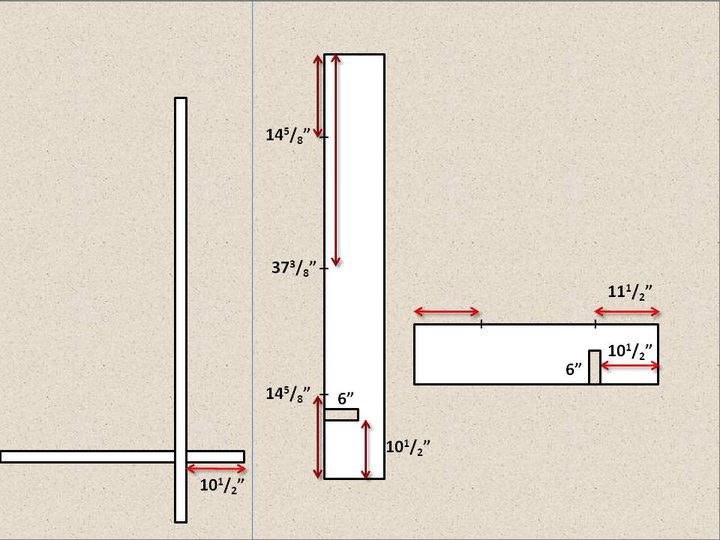
    Description: We wanted a shelf or table unit to fill a narrow vertical space adjacent to the bed. My wife conceived the fusion of two Lack shelves in an uneven cross, mounted off the wall to make the shelf appear to float. We used two Lack shelves, a 43″ and a 78″, made two hemi-lateral cuts in order to fit the pieces together, and mounted the horizontal shelf using the standard IKEA Lack bracket, though keeping it off the wall by 2″.

    The vertical shelf wasn’t going to support any significant weight, so we ditched the standard bracket and used a simple angle bracket at either end to hold it in place. The shelf brackets were primed and painted to match the wall color to give the effect of the floating shelf. The seam where the two shelves meet was finished with painter’s caulk. Finally, two sets of Dioder LED lights were mounted on the back, giving the floating shelf a cool glow. A few lazy nights to plan and two half-days on the weekend to put together, one of our favorite new additions.

    ~ Matt Tremblay, San Diego


  • A Novel Geoengineering Idea: Increase the Ocean’s Quotient of Whale Poop | Discoblog

    The fight against global warming has a brand new weapon: whale poop. Scientists from the Australian Antarctic Division have found that whale poop contains huge amounts of iron and when it is released into the waters, the iron-rich feces become food for phytoplankton. Phytoplankton absorbs carbon dioxide from the air, the algae is in turn eaten by Antarctic krill, and baleen whales eat the krill. Through this neat cycle, globe-warming CO2 is kept sequestered in the ocean. Scientists have long known that iron is necessary to sustain phytoplankton growth in the oceans, which is why one geoengineering scheme calls for adding soluble iron to ocean waters to encourage the growth of carbon-trapping algae blooms. While environmentalists have fretted over the possible consequences of meddling with ocean chemistry that way, this new study on whale poop suggests an all-natural way to get the same carbon-trapping effect: Increase the number of whales in the ocean. When Stephen Nicol of the Australian Antarctic Division analyzed the feces of baleen whales, he found an astounding amount of iron in it. New Scientist reports:
    Nicol’s team analyzed 27 samples of faeces from four species of baleen whales. He found that on average whale faeces had 10 million times as much …


  • Flash and Air Developers Finding it Easy to Port to Android.

    Androidpolice.com is reporting that with the recent huge push from Adobe, application and game developers are having a breeze of a time porting over their Air and Flash apps to Android.  Most of the feedback of the process has been positive from devs, some even saying that their apps are porting over in 10 minutes!

    This comes, of course, after the whole drama surrounding the fact that Apple has shut Adobe and Flash out of the iPhone for the time being.  Adobe has decided to push its platform to Android in a big way and we’re about to see the fruits of this effort.

    This is good news for Android as a whole being there are tons of AIR apps out there that could be ported over to our mobile devices running later versions of Android.

    Might We Suggest…

    • Adobe AIR on the Android Platform
      By Andy Rubin, Google VP of Engineering, Android

      Partnerships have been at the very heart of Android, the first truly open and comprehensive mobile platform, since we first introduced it with the O…


  • TED talk on building a greener house

    by Jonathan Hiskes

    Robotics engineer Catherine Mohr is
    tired of enviros “long on moral authority and short on data.” She’s got a smart
    TED talk
    clip
    about the greenest options for (a) wiping up a yogurt spill and (b) building
    a house. The point in each case is that the best option is often not what you’d
    expect.

    She sorta takes the
    annoying and all too common tone of “everything you’ve been trying to do out of
    good faith is wrong and stupid,” which isn’t motivating. But she brings the
    data and presents it clearly, and that’s worth a shout-out:

    Related Links:

    Astute climate bill analysis from DJ Biz Markie

    Save Bette Midler, er, Mother Nature! [VIDEO]

    How Dirty Are We Willing to Get?


  • German Fembot AILA Has No Mouth to Feed Bratwurst To [Robots]

    As the glamor shots illustrate, fembot AILA is pretty tasty. Curvy in all the right places, big eyes not seen since Zooey Deschanel, and a modern haircut that shows she’s got an awesome music collection. Shame she has no legs. More »


  • Is The Vegan Double Down Worse For You Than The Real Thing?

    A few weeks back, before KFC had even unleashed their bacon, fried chicken and salt concoction known as the Double Down, vegan website Vegansaurus had already come up with their own animal-friendly version. But while it might not harm any of your furry, feathered, scaly or insecty friends, the vegan Double Down certainly isn’t a diet item.

    According to Vegansaurus’ own numbers, here’s how the concoction breaks down, in terms of calories and fat:

    * 2 Gardein Chick’n Scallopini patties: 180 calories, 4g fat
    * 2 Tbsp Vegenaise: 180 calories, 18g fat
    * 25 percent of the batter recipe (plenty for one sandwich): 225 calories, 25g fat
    * 2 oz Follow Your Heart Monterey Jack: 140 calories, 14g fat
    * 3 strips Smart Bacon with cooking oil: 60 calories, 8g fat
    Grand total: 785 calories, 69g fat

    So how does that stand up against the real thing? Well, that depends on who you ask.

    If you go by KFC’s numbers — 540 calories, 32g fat — then the vegan version should make the list of foods worse for you than the Double Down.

    But then there are the folks who claim that the number should be closer to 1190 calories. If that’s the case, then the vegan version is a little friendlier to your waistline, though still on the same level as a McDonald’s Double Quarter-Pounder with Cheese.

    We still haven’t found anyone who has done a side-by-side taste test of the two versions. Any volunteers?

    Calorie count cage match: KFC Double Down vs. Vegan Double Down [Vegansaurus.com]

  • Watch out, Kerry—Big Ag’s not done with your climate bill

    by Tom Philpott

    The agribiz lobby: plenty of horsepower. With the support of three big oil companies in hand, Sen. John Kerry (D-Mass.) is now tailoring his climate bill to please the folks over at the Chamber of Commerce, Mother Jones’ Kate Sheppard reports.

    What about agribiz? The good senator seems intent on bringing that greenhouse-gas-spewing industry into the fold, too. “Agriculture would be entirely exempt from the cap on carbon emissions,” Sheppard reports.

    But as we learned last summer in the fight over the House climate bill, just exempting ag from the carbon cap isn’t enough. As I put it then, Big Ag’s message can be boiled down to: “screw the cap—just give us the trade!!!” In other words, agribiz interests are demanding that a generous stream of carbon-offset cash flow into what they call “production” (and I call “industrial”) agriculture.

    In short, they demand that farmers be rewarded richly for doing exactly what they’re already doing: spewing greenhouse gas while consuming plenty of agrichemicals.

    We don’t know yet how the Kerry bill will treat the question of agricultural offsets. For hints as to how it will play out, we can look again at what happened to the House’s climate legislation, named for its sponsors, Reps. Waxman and Markey.

    Like the original Mayor Daley running his Chicago “machine,” House Ag committee chair Collin Peterson (D-Minn.) wrangled and threatened and fulminated before turning Waxman-Markey into another potential cash cow for Big Ag.

    Before the bill had even made it out of committee, agriculture—a massive emitter of greenhouse gases—had been exempted from any carbon cap. By the time Peterson got done with it, it was full of goodies for agribusiness. His biggest coup was probably engineering things such that the USDA, not the EPA, runs the ag-offsets program. The EPA’s role in life—true, often honored in the breach—is to protect the environment. The USDA’s is to promote U.S. agriculture—and most of U.S. agriculture is environmentally devastating.

    And Waxman-Markey enshrined an expansive definition of offsets for agricultural practices. The practice of “chemical no-till”—essentially, replacing tillage with heavy applications of broad-spectrum herbicides and herbicide-tolerant GMO seeds—is already widely practiced in the Corn Belt, to the delight GMO seed/agrichemical giant Monsanto.

    As I wrote last summer, there’s no evidence that chemical no-till increases soil carbon content—indeed, there’s evidence that it does the opposite. Yet under Waxman-Markey, farmers stand to reap extra rewards from this dubious practice—without having to change a thing about how they farm.

    There’s no telling now whether the Kerry bill will play out in similar fashion. But with the sponsor in deal-making mode and the industrial-ag stalwart Blanche Lincoln in charge of the Senate ag committee, I fear that the Senate version will be at least as bad as the House version viz. agriculture—and possibly even worse.

    Related Links:

    EPA intern offends sensitive meat-industry souls

    Foreign Policy mag spotlights ‘peak phosphorous’

    Perpetuating the myth that climate policy is all cost