
Blog

  • Is it time to give Linux another look?

    With recent stories highlighting Windows 8’s comparative lack of sales success  it’s understandable that people start to think about other operating systems. Assuming you don’t want to throw away your old hardware and sell your soul to Apple then the obvious alternative has always been Linux.

    The International Space Station likes it, yet Linux still has only a tiny share of the desktop market — 1.2 percent as at April 2013 according to analytics company Net Applications.

    Like most people who’ve spent their working lives around computers I’ve flirted with various flavors of Linux from time to time. Suse, Debian, Linspire, Ubuntu, Mint, Puppy, been there, tried those, resisted buying the T-shirts. Each time I’ve experienced the minor problems that take hours of trawling obscure, geeky forums to solve the odd little quirks that eventually drive me back to the comfort of Windows.

    But Linux continues to make steady improvements. The latest Ubuntu for example has a sleek interface with hints of Android. And most distros now have an installation process that doesn’t require you to have an in-depth knowledge of command line switches and another system on standby to look up problems.

    The underlying code behind the various distros is still evolving too. Linus Torvalds’  announcement at the weekend of the rc-1 version of the Linux 3.10 kernel promises some major improvements. Better support for 64-bit ARM chips, SSDs and AMD power management along with improved sound drivers being just some of the highlights. A final version of 3.10 is expected in around June or July.

    All of which might have you thinking about giving Linux another go. In the past the major reasons for not doing so have been down to software. That’s no longer an excuse for plain vanilla tasks. The open source office suites like LibreOffice are now just as good as their Microsoft counterpart. If you run some specialist software that’s only available for Windows you still have more of a problem. You could use Wine but emulators are never quite the same, are they?

    The other thing that puts many people off is the sheer number of different Linux flavors. What works in Windows’ favor is its ubiquity. There are minor variations between Home and Professional versions but mostly Windows is Windows, it’s familiar and even with the love it or hate it Windows 8 the furniture hasn’t moved around too much between versions. More importantly it just installs and works nearly all the time. Until you’ve tried out some alternatives you don’t realize what an impressive feat this is.

    So, back to the original question, is it time to give Linux another look? The answer is really down to how you use it. For day-to-day web surfing, creating documents and so on there’s no reason why you should find Linux any harder to use than Windows. The problem comes if you want to run some slightly obscure hardware or software or if you need to look for support. That’s when the average user is still likely to get out of their depth. That’s the difference that a massive corporation and a huge user base makes. The day when we all run Linux desktops might be coming, but it’s a long way off yet.
  • Raspberry Pi’s camera board now available

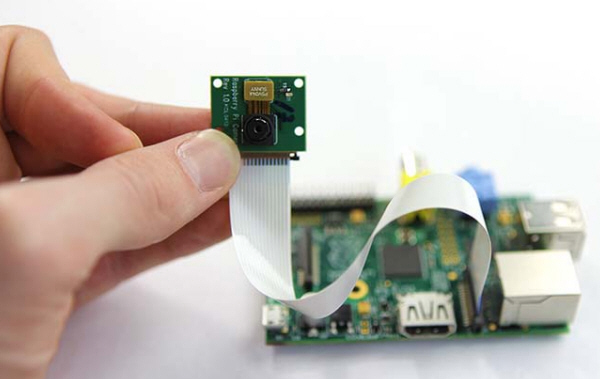
    Raspberry Pi, the popular credit card-sized ARM GNU/Linux computer, now has a camera add-on. A year in the making, the camera board consists of a small lens on a chip around the size of a postage stamp, attached to a flex cable.

    Connecting the module is just a matter of opening the camera port on the Raspberry Pi (it’s situated between the Ethernet and HDMI ports) and inserting the flex. The process is a little fiddly, but easy enough.

    The camera module is very sensitive to static electricity so you’ll need to be careful when getting it out of the box and handling it in general.

    Once connected, fire up the Pi, make sure you’re running the latest firmware, and access the configuration settings by entering: “sudo raspi-config”.

    Navigate to “Camera” in the menu and enable the board.

    Naturally, taking shots with the camera isn’t as easy as simply pressing a button. There are three applications provided: raspistill, raspivid and raspistillyuv and to use them you have to enter some commands. For example, “raspistill -o image.jpg” will capture an image, while “raspivid -o video.h264 -t 10000” will record a ten second video (without sound).

    The camera can stream video over a network on Linux, Windows and OS X.

    Although the module is a 5-megapixel camera capable of capturing 1080p video, the quality of the shots generally aren’t amazing, but you can improve the results by tweaking elements like sharpness, contrast, brightness, saturation, and ISO, all using commands. You can also turn off the Automatic White Balance and choose a mode like Sun (for shooting on sunny days), Cloud, Shade, and Fluorescent.

    There are various effects available too, such as Posterize, Watercolor, Oilpaint and Sketch.

    To encourage creativity, and show other users what’s possible, there’s a Photography Competition available to enter now.

    You can order the board from RS Components or Premier Farnell/Element14 in the UK, and it’s priced at £16.56 plus postage. At the moment it’s showing as out of stock, but more should be arriving soon. US customers should keep an eye on the Allied Electronics site.

    If you own a Raspberry Pi do you plan on getting the new camera module?

  • Nokia Confirms The Flagship Lumia 925 For T-Mobile U.S: 4.5″ AMOLED Screen, Metal Edges, Extra Lens & New Camera Software

    Lumia 925

    Fresh from last week’s Verizon Lumia device launch, Nokia has taken the wraps off a new smartphone in its Windows Phone-based Lumia range at an event in London today. The Lumia 925 is its first flagship for T-Mobile in the U.S. This means that following the Lumia 928 launch on Verizon, and factoring in Nokia’s initial launch of the Lumia 920 on AT&T last year, Nokia now has a flagship Windows Phone ranged on all three major U.S. carriers. Globally the Lumia 925 will be ranged with Vodafone in Europe, coming to markets including Germany, Italy, Spain and the U.K. (priced at €469), and in China with China Mobile and China Unicom. The device will ship in June in Europe, with a U.S. launch slated for soon after.

    The Windows Phone 8-based 4G Lumia 925 continues Nokia’s strategy of emphasising the camera smarts of its flagships Windows Phones, including PureView branding, Carl Zeiss optics and an 8.7MP lens with image stabilisation tech inside. But the camera hardware in the 925 is a little different to the 928 and 920, with one extra lens. This sixth lens improves photo performance in bright sunlight, according to Nokia, as well as sharing the low light performance abilities of its fellow flagships. In addition to that new camera hardware, the phone includes new software, called Smart Camera, that’s aimed at extending the photography experience by giving users new ways to capture and share photographs.

    The camera software on the device includes a burst mode which allows up to 10 shots to be captured at a time. The software also has three new capture modes that take advantage of this burst feature, namely: Best Shot, for composing a composite shot from the best elements of several images; Action Shot for snapping a series of stills of action shots, such as sports, that can then be edited and shared as a sequence; and Motion Focus, a Lytro-style mode that allows the snapper to pick different elements to be in or out of focus after the shot has been taken. Nokia confirmed to TechCrunch that the latter featured is the first bit of software to make use of technology Nokia acquired when it bought imaging company Scalado last July.

    “Whatever you do you can go back and edit again and again,” said Jo Harlow, head of Nokia’s smart devices unit — pictured above left, with SVP of product design chief Stefan Pannenbecker at the London launch. “The Nokia smart camera is our latest uniqie experience for our Nokia Lumia portfolio.”

    The Smart Camera software is exclusive to the Lumia 925 initially but will be pushed out as an over-the-air update called Amber to Windows Phone 8-based Lumias in Q3, the company said. Nokia looks to be trying to bolster its efforts against Samsung here, which included a raft of new camera features on its flagship Galaxy S4 device, such as Dual-Shot and Drama Shot. The lack of Instagram for Windows Phone continues to hamper Nokia’s photo-focused efforts however, but also today it announced a partnership with Oggl, Hipstamatic’s new photo community app — noting that since Oggl has a relationship with Instagram, users will be able to access the latter service via that app.

    Design wise, the Lumia 925 is the first Lumia device to include metallic trim. A silver aluminium band runs around its four edges, and doubles as the phone’s antenna — taking its cues from the iPhone’s design (but with “rigorous testing” to ensure no repeat of antennagate, according to Nokia). The mobile maker’s trademark polycarbonate clads the back of the device, so there’s a two-tone look and feel.

    Nokia says the plastic back is designed to make it feel nicer and grippier in the hand. It may also be about keeping the weight down (to 139g), since heavy handsets is something Nokia has been criticised for. It certainly felt lightweight and slender during a brief hands on. Handset colour options are muted rather than the usual bold Lumia offerings, with black, white and grey options for the plastic back. Wireless charging shells, sold separately, can reintroduce the usual Lumia splashes of yellow, cyan and red.

    Under the hood there’s a 1.5GHz Dual-Core Snapdragon chip, and 1GB of RAM. On board memory is 16GB (Vodafone will also get a 32GB variant) plus 7MB free cloud storage on Microsoft’s SkyDrive. The 4.5 inch AMOLED display has a resolution of 1280 x 768. Dimensions are 129 x 70.6 x 8.5mm. The 2000mAh battery is good for up to 12.8 hours of talk time on 3G, or up to 6.6 hours video playback, according to Nokia.

    A ‘true PureView’ Windows Phone device — codenamed EOS — has been rumoured for several months, and the Lumia 925 looks to be that device. However it certainly does not include the 41MP sensor and pixel oversampling techniques featured in the Symbian-based 808 PureView. It seems unlikely that bona fide PureView technology will ever make it to Windows Phone, not least because it’s something of a camera pro curiosity, rather than a consumer-friendly mainstream feature. Rather Nokia is extending the PureView branding — to associate it with a range of camera-centric features, not just that original huge sensor.

    Harlow closed the presentation by hinting at further new device launches from Nokia “later this summer”. “I can’t wait to see you later this summer when we will continue to bring new innovation and new experiences to our Lumia portfolio,” she said.

  • Polaris acquires HTC Sweden

    Polaris Private Equity has acquired HTC Sweden, a global developer and manufacturer of professional floor grinding systems and floor solutions. Polaris has acquired the company from Håkan and Gunn Thysell. 3i Group and former management, who held 40%, have also sold their interest in the company to Polaris.

    PRESS RELEASE

    Polaris Private Equity (“Polaris”), a leading Danish/Swedish mid-market private equity investor, has successfully acquired HTC Sweden AB (“HTC” or “the Company”), the leading global developer and manufacturer of professional floor grinding systems and floor solutions.
    Polaris has acquired the Company from Håkan and Gunn Thysell, who founded HTC in 1987 and have remained majority owners with a 60% stake. 3i Group and former management, who held 40%, have also sold their interest in the company to Polaris, in what is the firm’s sixth platform investment since the start of 2012.
    Headquartered in Söderköping, Sweden, HTC has been growing rapidly in recent years, driven by expansion into new geographic markets and the launch of new products. The company has 165 employees, and subsidiaries in the US, Germany, the UK and France, with coverage of an additional 60 countries through distribution partners. In 2012, the Company generated revenues of SEK 370m and EBITDA of SEK 58.5m.
    HTC creates value for its customers through new methods for floor preparation and floor solutions which are cheaper, sturdier, more environmentally friendly and longer-lasting compared to other options available on the market today. HTC’s strong focus on innovation has resulted in global market leadership within floor grinding machines, polished concrete (HTC SuperfloorTM) and diamond cleaning systems (TwisterTM).
    Polaris will now focus on supporting HTC in an ambitious growth strategy, based on organic and acquisitive expansion. The company will seek to consolidate its position in key geographies such as Europe and the US, as well as to extend its offering into emerging markets such as China and Brazil. Polaris will also continue the focus on innovation that has created strong customer loyalty and provided the Company with a competitive advantage.
    Peter Ankerst, Partner at Polaris, commented:
    “We are delighted to have completed the buyout of HTC Sweden. This is a highly scalable business led by an impressive, visionary management team, which has shown its credentials in recent years, growing both revenues and margins despite tough economic conditions. There are now exciting opportunities to transform HTC into a truly global leader in its field, and we look forward to helping the company deliver on these growth plans.”

    Lars Landin, CEO of HTC, added:
    “HTC has seen a strong expansion in recent years, with both the Twister and Hardware divisions contributing positively to top-line growth and earnings. Having Polaris as a new owner will give us wider access to the skills and capital resources required for the company to reap the benefits from the next stage of development which includes increased penetration and several near term growth venues.”
    Lars Landin and the rest of the management team will also invest in HTC. -ENDS-
    For further information please contact: Polaris
    Peter Ankerst, Partner
    HTC Sweden
    Lars Landin, CEO
    NOTES TO EDITORS
    +46 701 302830 [email protected]
    +46 765 266484 [email protected]
    About Polaris Private Equity (www.polarisequity.dk)
    Polaris Private Equity is a Danish private equity fund, based in Copenhagen, focusing on buy-out investments in well-established small and midcap companies in Denmark and Sweden. Polaris has €635 million under management in two funds. Polaris focuses on investments in companies with development potential and a typical turnover of €25-200 million. To date, Polaris has invested in 28 companies and exited 14. In addition, around 50 successful investments have been made within the portfolio companies.
    About HTC Sweden (www.htc-floorsystems.com)
    HTC Sweden AB (“HTC”) is the leading global developer and manufacturer of professional floor grinding systems and floor solutions, and is the number one player globally in terms of installed machines and technology. HTC is headquartered in Söderköping, Sweden with subsidiaries in the US, Germany, UK and France and covers an additional 60 countries through distribution partners. In 2012, the Company generated revenues of SEK370m and EBITDA of SEK 58.5m.
    HTC operates two divisions: Hardware – encompassing grinding machines and tools; and Twister – a diamond-based pad used in the cleaning industry. The Hardware division has been the market leader for over 20 years, while the diamond-based cleaning system, TwisterTM, launched in 2006 represents another successful invention which is rapidly gaining ground and taking market share.

    The post Polaris acquires HTC Sweden appeared first on peHUB.

  • Saban Brands Appoints Sorensen President of The Playforge

    Saban Brands has appointed Jack Sorensen as president of The Playforge, the company’s mobile social games division based in San Francisco. Sorensen will be responsible for overseeing the development of uniquely charming character-based mobile games for mass audiences.

    PRESS RELEASE

    Saban Brands has appointed Jack Sorensen as president of The Playforge, the company’s mobile social games division based in San Francisco. Sorensen will be responsible for overseeing the development of uniquely charming character-based mobile games for mass audiences. Sorensen will also lead efforts to expand, promote, and monetize The Playforge’s digital IP, including its flagship mobile title Zombie Farm, through transmedia extensions within traditional media, licensing and merchandising.

    “We look forward to Jack’s expertise and insights on our plans to deliver a steady stream of new games, new intellectual properties and new strategic collaborations this year”
    “Jack brings a wealth of experience in gaming and digital entertainment that will be a tremendous asset to Saban Brands as we work toward our goal of further expanding our reach from online and television to mobile,” said Elie Dekel, president of Saban Brands. “His extensive experience combined with his recent work as an entrepreneur and advisor in the mobile game industry make him uniquely suited to take The Playforge to the next level.”

    A seasoned executive with more than 20 years of game industry experience in both public and private companies, Sorensen brings proven skills in building and managing high growth businesses in technology and entertainment. Sorensen has managed some of the biggest brands in interactive gaming, including Star Wars, Indiana Jones, Pixar (six films), Dreamworks (two films), The Sopranos, UFC, Marvel and numerous original properties.

    “We look forward to Jack’s expertise and insights on our plans to deliver a steady stream of new games, new intellectual properties and new strategic collaborations this year,” said Vince McDonnell, co-founder of The Playforge.

    “I am honored to have been provided with the opportunity to further grow such a talented studio’s leadership position in the digital space,” said Sorensen. “Saban Brands has undertaken ambitious initiatives to expand its digital footprint in the last year and I am excited to continue that momentum in the months to come.”

    Sorensen previously served as executive vice president of Worldwide Studios at THQ, Inc., a prominent video game developer and publisher, where he was responsible for overseeing all product development, business development and development acquisitions. During his time at THQ, Sorensen managed the product slate that supported more than $1 billion in revenue.

    Prior to his role at THQ, Sorensen served as an executive in residence at Crosspoint Venture Partners, a leading technology venture capital firm, and as president at LucasArts Entertainment, where he grew its electronic games business into a Top 5 domestic publisher.

    About The Playforge

    The Playforge is a pioneer and leader in the mobile social games space and was one of the first iOS developers to sell virtual currency redeemable for virtual goods. Known for its internationally acclaimed game Zombie Farm, The Playforge specializes in developing uniquely charming character-based games for general audiences. As of the end of 2011, Zombie Farm was the No. 1 top grossing free-to-play application of all time and was in the Top 10 grossing iPhone apps on Apple’s iTunes Rewind in both 2010 and 2011. The Playforge is an affiliate of Saban Brands.

    About Saban Brands

    Formed in 2010 as an affiliate of Saban Capital Group, Saban Brands (SB) was established to acquire and develop a world-class portfolio of properties and capitalize on the company’s experience, track record and capabilities in growing and monetizing consumer brands through content, media and marketing. SB applies a global omni-channel management approach to enhancing and extending its brands in markets worldwide and to consumers of all ages. The company provides full-service management, marketing, promotion and strategic business development for its intellectual properties including comprehensive strategies unique to each brand, trademark and copyright management and enforcement, creative design, retail development, direct-to-consumer initiatives and specialized property extensions. SB is led by a superior management team with decades of experience in media, content creation, branding, licensing, marketing and finance. SB’s portfolio of properties currently includes Power Rangers, Paul Frank, Vortexx, Zui.com, The Playforge, Julius Jr., Digimon Fusion and Popples.

    Contacts

    Saban Brands
    Kelsey Lynch, 310-203-5875
    [email protected]

    The post Saban Brands Appoints Sorensen President of The Playforge appeared first on peHUB.

  • Bay City Capital Expands Team

    Bay City Capital has appointed David Beier as managing director. Beier served as a senior officer for nearly a decade in biotechnology firms, Genentech and Amgen. Most recently, he served as senior vice president of global government affairs at Amgen, responsible for global government affairs, as well as corporate communications, and philanthropy.

    PRESS RELEASE

    Bay City Capital, a leading venture capital firm focused on early-stage to growth equity investments in the life sciences, today announced the addition of David Beier, JD as Managing Director. David served as a senior officer for nearly a decade in each of the two largest biotechnology firms, Genentech and Amgen. Most recently, David served as Senior Vice President of Global Government Affairs at Amgen, responsible for global government affairs, as well as corporate communications, and philanthropy.

    “Today’s rapidly evolving healthcare industry provides tremendous opportunity for investment both in the United States and globally. David brings an extensive government affairs and public policy background, providing unique insights to our investment team”
    “Today’s rapidly evolving healthcare industry provides tremendous opportunity for investment both in the United States and globally. David brings an extensive government affairs and public policy background, providing unique insights to our investment team,” said Fred Craves, Founder and Managing Director of Bay City Capital. “David will play an integral role in moving the firm forward through the next phase of global healthcare investing.”

    During his Amgen tenure, David helped create and supervised the firm’s coverage, reimbursement, access, pricing, and healthcare economics activities globally. Earlier in his career, David was Chief Domestic Policy Advisor to Vice President Al Gore during the Clinton Administration. Mr. Beier has been a partner in a large international law firm as well as Counsel to the US House of Representatives Committee on the Judiciary. He is admitted to practice law in New York and the District of Columbia.

    “Bay City Capital has a well deserved reputation of delivering value for its investors and its portfolio companies through a vibrant platform of scientific and business acumen. Those characteristics are what attracted me to the firm,” said David Beier.

    About Bay City Capital

    Bay City Capital is a life sciences venture capital firm investing in opportunities across the various life sciences sectors in companies at all stages of development. Established in 1997, the firm has managed eight venture capital funds representing over $1.6 billion in capital commitments.

    Bay City Capital has invested in over 100 life sciences companies globally, including Epizyme, Epocrates, GenturaDx, Hyperion Therapeutics, Ion Torrent Systems, Lexicon, MAP Pharmaceuticals, Medarex, Nabsys, NextWave Pharmaceuticals, Oculex Pharmaceuticals, Pharmion, Reliant Pharmaceuticals, and Sunesis Pharmaceuticals.

    Contacts

    Bay City Capital
    Stacey M. Leaños, 415-835-9394
    Sr. Director, Marketing & Investor Relations
    [email protected]

    The post Bay City Capital Expands Team appeared first on peHUB.

  • GTCR and Rural Broadband Acquire NewWave

    GTCR has acquired NewWave Communications from Pamlico Capital. The acquisition was completed through GTCR’s previously established partnership with Rural Broadband Investments.

    PRESS RELEASE

    GTCR, a leading private equity firm, today announced it has acquired NewWave Communications (“NewWave”) from Pamlico Capital. The acquisition was completed through GTCR’s previously established partnership with Rural Broadband Investments (“RBI”). With RBI’s extensive cable experience, NewWave will continue to provide state of the art high-speed broadband, video and voice services to its cable footprint.

    “GTCR has been evaluating numerous opportunities within the cable industry”
    GTCR, in partnership with Phil Spencer, formed RBI in 2012 with the purpose of acquiring broadband infrastructure assets in small and mid-sized communities. NewWave is the 22nd largest MSO in the country passing approximately 250,000 homes and serving over 90,000 customers in rural Illinois, Indiana, Missouri and Arkansas. This is the first in a series of acquisitions being pursued by RBI, which plans to acquire 300,000-400,000 cable subscribers in small-to-mid sized rural markets to deliver a breadth of services to residential and commercial customers.

    “The acquisition of NewWave Communications is a great first step and provides us with an excellent platform to build upon,” said Mr. Spencer, CEO of Rural Broadband Investments. “NewWave has done an outstanding job upgrading its network, moving to DOCSIS 3.0 and constructing fiber to tie their markets together. These efforts give us an outstanding platform to roll out enhanced video, voice and high-speed internet services as well as advanced commercial services. In addition, NewWave has an outstanding employee base and we plan to continue to build on the great work they have done over the last several years.”

    “GTCR has been evaluating numerous opportunities within the cable industry,” stated Phil Canfield, Managing Director at GTCR. “We were very fortunate to have former FCC Chairman Reed Hundt working with us as we developed our investment thesis and sourced the team. The NewWave acquisition is an exciting opportunity and the ideal starting point from which to build our investment in the industry. We look to build a leading cable platform through increasing high-speed data penetration, growth in commercial services and accretive acquisitions.”

    Added Mr. Hundt, also a Senior Advisor to GTCR and new RBI board member, “With the transformation taking place in the cable industry and RBI’s business model to provide high speed broadband connectivity to small-to-middle sized markets and rural geographies, I think Phil Spencer will be a dynamic change leader for both the industry and RBI. I look forward to working with him and being a part of this exciting time within the cable industry.”

    GTCR’s investment in NewWave will be made from GTCR Fund X, a private equity fund with $3.25 billion of committed capital.

    Kirkland & Ellis LLP served as legal counsel and PriceWaterhouseCoopers served as accounting advisor to GTCR. SunTrust Robinson Humphrey, Inc. (STRH) served as exclusive financial advisor to GTCR. STRH and Goldman Sachs Bank USA have committed to provide the debt capital to support the transaction and will serve as Joint Lead Arrangers and Joint Bookrunners on the financing. Waller Capital Partners served as an advisor to Rural Broadband Investments.

    About GTCR

    Founded in 1980, GTCR is a leading private equity firm focused on investing in growth companies in the Financial Services & Technology, Healthcare and Information Services & Technology industries. The Chicago-based firm pioneered The Leaders Strategy™ – finding and partnering with management leaders in core domains to identify, acquire and build market-leading companies through transformational acquisitions and organic growth. Since its inception, GTCR has invested more than $10 billion in over 200 companies.

    About Rural Broadband Investments

    Rural Broadband Investments, headquartered in Overland Park, Kansas, acquires and invests in rural-focused cable systems serving residential and commercial customers in small-to-middle sized markets and rural geographies.

    Contacts

    for GTCR
    Eileen Rochford, 312-953-3305

    The post GTCR and Rural Broadband Acquire NewWave appeared first on peHUB.

  • Nokia London event liveblog

    At 10 AM BST, Nokia’s highly anticipated press event kicks off in London. Details are scarce at the moment, but what we can tell you for sure is that the Finnish phone manufacturer is preparing the “next installment”.

    What could that be? Well, yesterday, three days after the Lumia 928 was unveiled, Nokia’s UK arm teased a new Lumia Windows Phone which takes some design cues from the Verizon-exclusive handset. Speculation aside, we are looking forward to seeing what Nokia has in store for us.

    The webcast kicks off at 10 AM BST (that’s 5 AM Eastern Time) and we’ll be liveblogging it here. All updates will be in reverse chronological order, meaning the latest ones are first (and first ones are last). You’ll need to hit the refresh button to get the newest updates.

  • Cinnarch is dead — long live Antergos!

    Arch Linux is considered by many to be the Linux expert’s OS of choice. As you may or may not know, Arch Linux is a very robust rolling-release OS with bleeding edge (yet stable) packages. Arch has a really large and knowledgeable community. However, there is a price to pay to join this elite club of Linux users — a terrifyingly hard command line installer.

    Truth be told, Arch is not that difficult too install (even though it has that reputation), as long as you print out detailed instructions and follow them step by step. Unfortunately, many people do not have the time and patience for such a project. Some advanced Linux users (such as myself) just want an easy to install distro because we simply do not have the time. However, we also want to enjoy the benefits of Arch. Cinnarch was a Linux distro born to solve this dilemma.

    Cinnarch combined the rock solid base of Arch Linux with an easy to use installer and used Linux Mint’s Gnome3 fork desktop environment called Cinnamon (get it? Cinnamon + Arch = Cinnarch). Cinnamon itself was a solution to another dilemma; users that hated Gnome3.

    Unfortunately, as Cinnamon forked way too far from Gnome, it became too difficult and cumbersome to maintain for Arch Linux. So, ironically, Cinnarch decided to drop Cinnamon for Gnome3. Naming a distro after the desktop environment proved to be foolish and shortsighted. It made no sense to continue to call the distro “Cinnarch”.

    And so, Antergos is born…

    Installation

    The first public release of Antergos was announced on 12 May and is available now for download (version 2013.04.11). Being a huge fan of Arch and Gnome 3, I had to test it, so I quickly downloaded the ISO and began the install.

    The first thing you are presented with is an option to run a live session, a Command Line install or a Graphical install. I always prefer to install from within a live environment so I can play around during the install.

    Once booted to the live session desktop, I launched the Antergos graphical installer dubbed “Cnchi”. I was blown away by the polish and simplicity of Cnchi.  I was given the option to install the following desktop environments:

    • Gnome3
    • Cinnamon
    • XFCE
    • Razor-qt

    I am a huge Gnome fan so I installed Gnome3. The rest of the setup was as expected for Gnome. I set up my profile and disks and was on my way.

    Software

    I was very happy to see that Antergos was using Gnome 3.8.1. Many distros are still on Gnome 3.4 and 3.6. A quick “uname –r” in Terminal showed that Kernel 3.9.2 was already installed — impressive. Antergos provides a fair amount of default software but here are some of the major examples:

    • Chromium as the default web browser
    • Xnoise for music
    • Empathy for chat
    • Shotwell for photo management.

    These are all great choices. Curiously, there was no office suite provided. Typically, if a Gnome-based distro doesn’t supply Libreoffice, they at least supply Abiword. Strangely, there was no email client installed either (Thunderbird? Evolution?).

    Lack of Libreoffice gave me a great opportunity to use “PackmanXG”, which is Antergos’ choice of package management software.  Ubuntu users may be be in shock to see packages listed by their name only. Despite the lack of graphics, PackmanXG is very robust and easy to use. There was a plethora of packages available to the user. In particular, I was very impressed with the Arch Linux Libreoffice installer. It gave me a straightforward way to choose the aspects of Libreoffice that I wanted. It even let me choose Gnome vs. KDE integration.

    Conclusion

    Antergos is a distro that is great for both Linux beginners and Linux experts. You have stability and updated packages backed by a great community with a very easy and polished graphical installer. My only suggestion to the developers would be to include Libreoffice (Office Suite) and Evolution (email client). This will create a better out-of-the-box user experience, which is important for broader adoption. This is definitely a distro to keep an eye on and a candidate to become the definitive Gnome3 distro. In that regard, Fedora, you are on notice.

    Photo Credit: Fer Gregory/Shutterstock

  • RunKeeper overhauls its website

    If you happen to be a runner then you have a plethora of choices these days for tracking every bit of workout information that you could possibly have wanted to know, and likely some you did not. There are websites, mobile apps and even watches that know more about you than, well, you do.



    One of the most popular is called RunKeeper. The service falls into every category I named and even comes with Pebble Watch, in addition to its own watch. Now the service brings a major overhaul to the web side of things. “We created RunKeeper to be a powerful personal trainer in your pocket, but many of you look to our website to do things like drill deeper in your workout tracking, interact with friends, and connect with other partner apps” the company claims.

    RunKeeper was concerned that some feature were too buried to be useful and that some were even duplicated, making it more confusing to customers. The refresh is designed to change that.

    The company promises that it has “taken the time to give RunKeeper.com the revamping it was due (especially considering the spiffy new redesigns our mobile apps got earlier this year). Now the website offers the same inviting, fun, and helpful experience that RunKeeper for iPhone and Android do (we hope)”.

    The top navigation is simpler and more intuitive, the ‘Feed’ button will show you what your friends are up to, and the ‘Me’ button gives you activity history, fitness reports, training plans and routes.

    The new updates are a welcome change for users who already experienced many of these features in mobile form, but were likely frustrated by what the website offered.

    Photo Credits: ostill/Shutterstock

  • Super charge your health with chia seeds

    Chia seeds are an ancient fuel source used for centuries by some of the world’s healthiest people. These super seeds contain an abundance of life-enhancing nutrients such as omega-3 fatty acids and anti-oxidants. Super charge your health by incorporating chia seeds in…
  • Revitalize your backyard water garden with spring pond maintenance and cleaning

    Including a backyard water garden in your yard surrounded with colorful heirloom flowers, vegetables and fruits can increase your property value and provide you with an oasis of tranquility. Although garden pond maintenance may be an unpleasant task, it’s necessary for…
  • Splenda and sucralose proven to contribute to development of diabetes

    One of the world’s most popular non-caloric sweeteners has recently been exposed as a complete fraud. A new study published in the journal Diabetes Care reveals that Splenda (sucralose), which is commonly marketed to diabetics as a safe, non-nutritive sweetener (NNS…
  • High antioxidant diets help lower blood pressure

    If the proverbial apple-a-day seems too antiquated, then perhaps a change is in order – a handful of fresh, organic blueberries rich in antioxidant goodness, perhaps? Or maybe some nice pecans? How you get them into your diet is your business, but researchers at Penn…
  • Condoms: With over 10 billion sold annually which are eco-friendly?

    If you are like most people who care about the planet you live on then you may have wondered if condoms are recyclable and how to properly dispose of them. There are a few different types of condoms and each has a unique ecological footprint. Latex Condoms The…
  • Vegans turn into cyberbullies, threaten high school students with pictures of dead animals

    Having personal convictions about not eating meat is one thing. But forcing those beliefs on others in the form of aggressive bullying and persistent harassment is completely unacceptable – and it is exactly what a group of militant students who identify as vegan are…
  • Founder of the Euro says ‘catastrophic’ currency will self-destruct

    As more and more countries within the European Union struggle economically, the euro – the union’s common currency – becomes more embattled, with its founder now even predicting its demise. German Finance Minister Oskar Lafontaine, who was responsible the euro’s development…
  • California’s implementation of Obamacare to take place under total financial secrecy to hide payouts from public

    When the monstrous “Affordable” “Care” Act was released onto the unknowing public back in 2010, no one really knew how controlling, secretive, and wasteful it really would be. The current bill, which totals over 20,000 pages, continues to grow each year, as regulators…
  • Benghazi-gate whistleblower told ‘Shut up or be fired!’

    In her Sunday, May 12 New York Times column, serial Obama Administration apologist Maureen Dowd dutifully played her role once more, this time over the raging Benghazi scandal that, were there enough true statesmen in Congress, Hillary Clinton and the president would…
  • Blessing – and breaking – the very makeup of food

    People have been saying blessings, grace, or prayers of thanksgiving over food from time immemorial, as far back as the first human cultures. Food blessings matter a great deal to many spiritual people. Yet, today, it is possible that food blessings, how they work, and…