Blog

  • El 75% del nuevo Plan 2000E está agotado

    cochesventas.jpg
    Así es, las provisiones para el Plan 2000E se están agotando, tal y como estaba previsto. En el último Congreso de los Diputados el Ministro de Industria, Miguel Sebastián, afirmaba que alrededor del 75% del presupuesto destinado al Plan 2000E, en virtud del cual el Estado aporta 500€, las Comunidades Autónomas otros 500 € y los fabricantes los otros 1000 € restantes, estaba agotado.

    Solamente llevamos 5 meses del año 2010 y ello implica que rondando el mes de Junio agotaremos los 100 millones de € destinados a este plan. Ya se han producido más de 150.000 operaciones, un ritmo el que llevamos en España alto y que conviene que siga así, corroborado por los buenos números que están ofreciendo las marcas en este primer trimestre.

    De cualquier manera en el periódico Cinco Días, dedicado a la rama económica de la actualidad, se destaca que lejos de ser un plan que derrocha dinero público es un plan que aumenta las arcas del Estado. Ellos señalan que el estado recupera un 900% de la inversión en este plan, es decir que por cada € que regalan a los consumidores recuperan 9.

    Yo había leído una cifra similar pero menos escandalosa: que realmente de cada € que gastaban recuperaban 90 céntimos vía impuestos y demás, de tal manera que una inversión de 100 millones de € era realmente de 10 millones. El estudio de Cinco Días lo tenéis aquí, pero de ser cierto realmente no se ve ninguna razón por la cual no seguir ampliándolo.

    Vía | Diariomotor


  • The Greenhouse Gas Theory Under a Cloud by John O’Sullivan

    Article Tags: John O'Sullivan

    Climate Change, the Sun and the Albedo Effect

    A new study by a leading climate change expert proves clouds and solar radiation better explain global warming than do greenhouse gases – including carbon dioxide.

    Climate researcher, Jeffrey A. Glassman, PhD presents a compelling new analysis, ‘The Cause of the Earth’s Climate Change is the Sun‘ that uses respected peer-reviewed data that indicates the sun, not human emissions of greenhouse gases, control our planet’s climate. By employing the data as used by the Intergovernmental Panel on Climate Change (IPCC), this study cleverly refutes key IPCC conclusions, including those drawn from Lean (2000).

    The analysis finds something is clearly amiss with the IPCC model of the Earth’s climate. Glassman identifies a gaping hole of understanding about clouds where the IPCC fails to represent notable peer-reviewed cloud theories (notably Svensmark’s). Critics have accused the UN of politicising the man made global warming debate with unsubstantiated advocacy while it possesses poor levels of scientific comprehension of Earth’s climate. It officially has ‘low’ or ‘very low’ understanding of 9 of the 12 variables that impact climate (including solar climate forcing).

    Below is a summary of Glassman’s key findings:

    Source: climate-change.suite101.com

    Read in full with comments »   


  • Renault Fluence Z.E.

    Renault Fluence Z.E.

    Fluence Z.E. Concept is a statement of Renault’s intention to produce a range of zero-emission vehicles that meet the needs of all types of customer. Fluence Z.E. Concept is a genuine family car which demonstrates that attractive styling, comfort and space can go hand in hand with respect for the environment.

    Fluence Z.E. Concept is a genuine family car aimed at customers who want both roominess and style. The styling cues of Fluence Z.E. Concept combine the design language of motoring pleasure with the visual signature of Renault’s range of electric vehicles.

    Fluence Z.E. Concept possesses dynamic lines, highlighted by a fluid character line which sweeps from the headlights to the rear shoulders. It is 4,820mm long, has a wide track of 1,672 mm, is well-proportioned and exudes status-enhancing, elegant looks.

    Fluence Z.E. Concept’s warmly welcoming and refined interior is based on a combination of flowing forms, the use of soft, supple materials and a mottled ambience.

    Passengers are comfortably seated in four enveloping seats robed in light leather upholstery.

    The feet rest on a light blue translucent gel mat, while the brake and accelerator pedals, too, are covered in gel for a greater sense of comfort.

    When the doors open, the courtesy lighting recalls the luminous blue signature of Renault’s electric vehicle range.

    Fluence Z.E. Concept is powered exclusively by an electric motor located near the front axle, in conjunction with a lithium-ion battery positioned between the rear seats and the boot.

    Renault’s designers and engineers worked closely together to develop a safe, practical vehicle capable of accommodating a large enough battery to ensure good range (160km), while also providing sufficient carrying capacity to cater for the requirements of an active family (327dm3).

    Fluence Z.E. Concept is not respectful of the environment simply because it runs on electricity.

    via Renault

  • Suniva Power to install 1MW rooftop solar system on Commonwealth Games Stadium

    commonwealth games

    Eco Factor: Rooftop solar installation for Thyagaraj Stadium in Delhi.

    Atlanta-based Suniva and Reliance Industries’ Solar Energy Group has announced that the Thyagaraj Stadium, which will be used for the 2010 Commonwealth Games, will feature a 1MW rooftop solar installation created using Suniva’s thin film mono-crystalline solar cells having an efficiency up to 20 percent.

    (more…)

  • Missing Heat Hides From Climate Scientists by Doug L. Hoffman

    Article Tags: Doug L. Hoffman, Headline Story, World Temperatures

    Image Attachment
    Climate scientists have decided that as much as half of the heat energy, believed to have built up on Earth in recent years, is hiding somewhere it can not be found. By measuring the radiative energy input at the top of Earth’s atmosphere, scientists have a pretty good idea of how much energy is entering the planetary environment—the problem is figuring out where it goes. The most likely place is in the deep ocean, whose waters form a huge potential storage place for heat. Because energy is exchanged between the atmosphere and the ocean, this heat can resurface at a later time to affect weather and climate on a global scale. It has been suggest that last year’s rapidly occurring El Niño may be one way the “missing” solar energy has reappeared—the implication being more sudden El Niño events may be on the way.

    Oceans contain around 80% of the climate system’s total energy, so ocean heat is a good measure of what is happening with Earth’s climate. According to a Perspectives article in the April 16, 2010, issue of Science, “Tracking Earth’s Energy,” science has been unable to to properly track energy within Earth’s environmental system. Kevin E. Trenberth and John T. Fasullo , both scientists at the National Center for Atmospheric Research (NCAR), warn in the new study that satellite sensors, ocean floats, and other instruments are inadequate to track this “missing” heat. They fear that it may be building up in the deep oceans or elsewhere in the climate system. “The heat will come back to haunt us sooner or later,” says Trenberth, the lead author. “The reprieve we’ve had from warming temperatures in the last few years will not continue. It is critical to track the build-up of energy in our climate system so we can understand what is happening and predict our future climate.”

    As noted on the NCAR site, a Science Perspectives piece is not formally peer-reviewed, but is reviewed by editors of the journal. Science reportedly invited Trenberth to submit the article after an editor heard him discuss the research at a scientific conference. Trenberth and his co-author, Fasullo, focused on what they call a central mystery of climate change. Why, since 2003, have scientists been unable to determine where much heat energy Earth receives from the Sun is going. According to the NCAR site:

    Click source to read FULL report from Doug L. Hoffman

    Source: theresilientearth.com

    Read in full with comments »   


  • New tech sniffs out foul chicken

    NIST researchers have developed a new method of detecting minute traces of chemical compou...

    We certainly like our chicken. According to USDA statistics, Americans ate around 84 pounds of chicken each during 2008, triple the amount eaten in 1960. Poultry production is clearly a huge industry, and one that’s set to benefit from a new technology being developed at the National Institute of Standards and Technology (NIST) which detects minute traces of chemical compounds that indicate spoilage. The goal is to give industry a fast, cost effective method of identifying foul fowl without damaging the product itself… and ultimately keeping consumers safe…
    Continue Reading New tech sniffs out foul chicken

    Tags: ,

    Related Articles:


  • Danish hotel allows guests to earn free meal vouchers by generating electricity

    generator bikes_1

    Eco Factor: Exercise bikes used to generate renewable electricity.

    The Crowne Plaza Hotel in Copenhagen has stated a free meal idea as a way to boost guests’ fitness and reduce their carbon footprint by making them exercise on bikes that generate electricity as well. The bikes are attached to generators that require guests to pedal for about 15 minutes and generate 10Wh of electricity.

    (more…)

  • Global Warming for Dim Wits: A Scientist’s Perspective of Climate Change by James R. Barrante

    Article Tags: Book, James R. Barrante

    Image AttachmentSynopsis

    Human beings are not very bright. The power output of the human brain is about 40 watts, and that is indeed pretty dim. We definitely are all dim wits. This book was written for dim wits � from one dim wit to another, as they say. Its primary purpose is to address the controversy affectionately known as global warming. Written by a physical scientist with over 40 years of teaching experience, the book contains very little personal opinion, has no political agenda, and is loaded with well-documented and scientifically tested facts concerning the greenhouse gases and climate change. It contains material that you will want to share with your children.

    Global Warming for Dim Wits is written in simple language. Every attempt has been made to present the material in a way that the average person not trained in science will understand. It is the intent of this author that by the time you finish the book you will be convinced that:

    Source: universal-publishers.com

    Read in full with comments »   


  • Virtual 3D display case

    This tech called pCubee is just amazing. If you have any experience in working with 3D scanned objects, the utility is obvious and possibilities are very exciting. This is the first generation of a brand new world in display.

    From the link (and hit the link for video):

    Researchers have developed a five-paneled LCD cube that gives users the appearance that something is inside, allowing them to rotate the unit and look at an object in three dimensions. Called pCubee, it’s the result of two years of work by students at the University of British Columbia.

    “If it’s AutoCAD or 3D modeling objects, instead of looking at them on a regular desktop monitor, you can look at them inside the cube,” said Ian Stavness, a Ph.D. student at the University of British Columbia. He said that it could also be useful for museums to use for virtual showcases. The three-dimensional effect will only work, though, if 3D data for the object is available.

    (Hat tip: SculptCAD)

  • Eton Clipray keeps your cellphone charged in a power outage

    eton clipray_1

    Eco Factor: Multipurpose device uses crank-power for electricity.

    We all are so dependent on our portable electronic gear that it gets impossible to survive a power outage with depleted batteries. Eton, the makers of some of the finest American Red Cross-endorsed emergency products, has released the Clipray, which is a valued addition to your emergency kit.

    (more…)

  • Auris X competition

    auris x

    There’s a new online competition to celebrate the launch of the Auris X, with prizes including R15 000 cash and a PS3. But even if you aren’t out to win the competition is still worth checking out – it’s a challenging and entertaining game that will test your mental agility as you embark on a journey which will see you hunt for Xs all over the internet.

    It works like this:

    The game is based here, where you will find a map of South Africa. There are Xs all over the internet. You need to find them and then place them on the map you will find on the site, in order to mark your turf and eventually find a hidden Auris X Showroom. For now, you need to do is register and start hunting for those Xs. In case you need some help there are bunch of clues from Buddy the Boxer and his friend Chi Chi the Chihuahua to help you on your way.

    The hunt will take you all over the net and even back in time, you will have to answer questions, find clues and play games within the game. Some Xs are easy to find, others will really test your mental strength. The more Xs you use to mark your turf the better your chance at winning prizes worth R30 000 smackeroos!

    The prizes are:

    1st Prize: R15 000 Cash

    2nd Prize PS3 120GB Console

    3rd Prize: PSP Black

    4th Prize: Apple iPod nano 8GB – Black

    5th Prize: Apple iPod Shuffle 2GB

    Enjoy the ride, it’ll Xhilarate you! Happy hunting. You never know, there may even be an X hidden somewhere on this page!

    But what about the new Auris X?

    The Auris X is the next generation Auris, offering a sleeker and more sophisticated driving experience than its predecessors, and it’s also more fuel efficient. The idea is to deliver superb economy with minimal environmental impact, and with 74kW and 132Nm it delivers class-leading performance, along with a whole bunch of extra attention to quality and safety. For more on the Auris X including full specs, go here.

  • On new thermal power plant investment in Amasra


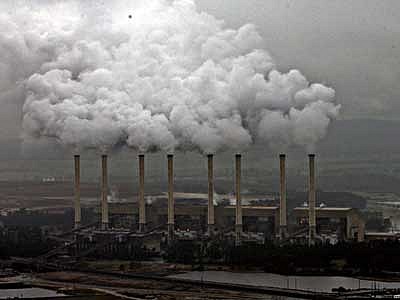
    Hazelwood, in Victoria, is Australia’s most greenhouse polluting power station, producing about the same greenhouse emissions as 3.95 million cars per year.

    Dear Colleagues

    If you wish to review the investment in Denizli province as planned by RWE of Germany for 870 MWE Combined cycle power plant, then all you have to do is open google, write “RWE, Denizli” then you get the all reports for EIA, http://www.rweturcasdenizlienerjisantrali.com/

    Then if you wish to know details of AKSA 100 MWe imported coal firing new thermal power plant in Yalova, similarly you search for “AKSA, Yalova, Enerji” in google, and you immediately reach to the respective presentation link, http://www.yalovaenerjiyatirimi.com/

    If you need information on 1200 MWe imported coal firing new Gerze Thermal Power plant investment, it is in http://www.gerzeenerjisantrali.com/

    It is so surprising that they put so much details into those reports. You can read and write your critics, and they answer to you,

    On the other case, where are the investment reports for Amasra 2640 MWe (or 1200MWe) thermal power plant investment? It is only lip service, daily emails to newspapers, media writers, who are unable to interpret those empty wording.

    When you review internet page of their UK partner, you come up with many thermal power plants but almost all of them are combined cycle. They have only three major coal firing thermal power plants in UK, Portugal and Indonesia plus very old two plants in Australia which are Hazelwood (photo) and Loy Yang B plants. However they purchased all these coal plants after construction and many years of service by the first investors. So they know how to operate the coal firing thermal power plant but they do not have any experience on their construction. Moreover most of their existing coal based thermal power plants need upgrading in ESP, FGD and ash disposal systems, due to new local requirements to stop global warming.

    All and all, we have sincere doubts on the technical qualifications of Amasra thermal power plant investment. We need to know the details, coal mine investigations, an appropriate EIA internet page with sufficient evidence, meteorology facts.

    Meteorological studies show that Amasra is in “advection inversion” that is
    a temperature inversion caused by advection as warm air passes over a cool surface, which makes impossible to construct a thermal power plant. Who cares??

    Therefore we feel that PR activities of the investors are not sufficient at this point in time, and we would sincerely advise the locals not to care about that service.

    Thank you and best regards


    Haluk Direskeneli, Ankara based Energy Analyst

  • Really Natural Books: Grow Your Own Drugs: Easy Recipes for Natural Remedies and Beauty Fixes

    Grow-Your-Own-Drugs.jpg
    Grow Your Own Drugs: Easy Recipes for Natural Remedies and Beauty Fixes is written by ethnobotanist James Wong. Wong believes, and I agree, that it’s easy to grow and make your own natural remedies. He explained to NPR:

    I think so many people have this stereotyped idea of what herbal medicine is. I think they’ve very much got a big black line in their minds that separates serious, conventional, tested, scientific medicine on one side and slightly airy, fairy, away-with-the-hippies — you know — natural-but-probably-doesn’t-work, plant-based medicine on the other. To me as a scientist, whether a chemical is found within a pill or the cells of plant is really irrelevant — that’s just packaging.

    Wong’s book has a beautiful layout with incredible photographs and recipes. Take for example:

    A few tablespoons of this garlicky vinegar in hot water make a powerful antifungal foot bath, but don’t use it on broken skin — it will hurt! The vinegar takes 1 month to infuse but will last at least 6 months to 1 year. It tastes good in salad dressings, too.

    ATHLETE’S FOOT

    Garlic Footbath
    10 bulbs garlic, peeled and finely chopped
    100 g fresh sage leaves
    2 cups (500 ml) cider vinegar

    1. Place the chopped garlic and sage leaves in a jar, then add the cider vinegar. Seal and leave to infuse for 1 month, shaking occasionally.

    USE Add 5 tbsp to a bowl of hot water, and soak feet for 15 minutes. Use 2 or 3 times a week in conjunction with “Garlic Talcum Powder” (see page 52).

    This is a great book for the seasoned herbalist and amateur alike, and it is an incredible resource I know I will refer to over and over again.  The title is pretty unique too!

    Disclosure: I was sent free samples of these products to review. No prior assurances were given as to whether the review be positive or negative.


  • ‘Shrink Wrap’ implant melts onto surface of the brain

    Neural electrode array wrapped onto a model of the brain after dissolution of a thin, supp...

    The same team responsible for the development of a flexible silicon device that wraps around a heart to record its electrical activity has now developed a brain implant that essentially melts into place, snugly fitting to the brain’s surface. Such ultrathin flexible implants, made partly from silk, can record brain activity more faithfully than thicker implants embedded with similar electronics and could pave the way for better devices to monitor and control seizures, and to transmit signals from the brain past damaged parts of the spinal cord…
    Continue Reading ‘Shrink Wrap’ implant melts onto surface of the brain

    Tags: ,
    ,
    ,

    Related Articles:


  • ACTA Text To Be Released on April 21.

    The 8th round of negotiations on the controversial Anti-Counterfeiting Trade Agreement wrapped-up in New Zealand last week, with negotiators announcing that the ACTA text will be made public next Wednesday, April 21.

    Around the world, those following ACTA have been analyzing the leaked 18 January consolidated text since it surfaced on the Internet last month. The leaked version contained much text in square brackets, indicating that there was significant disagreement between negotiating countries on fundamental issues such as ACTA’s scope. The leaked text also disclosed countries’ negotiating positions. We learnt, for instance, which countries were concerned about Three Strikes (thank you New Zealand and Canada), who wants ACTA to extend to patents, and who is proposing criminal sanctions for inciting, aiding and abetting intellectual property infringement (the EU). By comparison, the official version of ACTA will be released in an “unattributed” form; countries’ negotiating stances will not be included.

    The U.S. negotiators had made clear before this negotiating round that release of the ACTA text would be conditional upon progress being made towards agreement on substance. Friday’s joint announcement suggests that occurred:

    “Participants had constructive and intensive discussions. They provided a much improved understanding of respective national regimes and how they worked in practice. Based on this understanding, good progress was made toward narrowing existing differences, in the areas of Civil Enforcement, Border Measures, Criminal Enforcement and Special Measures for the Digital Environment. In addition the participants held constructive discussions regarding the scope of intellectual property rights covered in ACTA.”

    The official ACTA text released on Wednesday will disclose just how much progress has been made, and on what topics. Two negotiating rounds have taken place since 18 January: the 7th round in Guadalajara, Mexico, from January 26-29 focused on civil enforcement, border measures, and enforcement procedures in the digital environment and transparency, and last week’s round in Wellington, New Zealand, which covered those topics as well as criminal enforcement issues.

    The decision to make the ACTA text available for public review is a major turning point. We can now have a serious public debate about the impact of ACTA on citizens’ lives. No more shadow boxing. No more opportunities for negotiating countries to dodge answering hard questions.

    The fact that negotiators now feel compelled to make ACTA public is a testament to the dedication and hard work of all the people who have been making the case for transparency since October 2007. We’d like to thank the organizers of PublicACTA and all those who participated in drafting and signing the Wellington Declaration. We also want to remember and thank those parliamentarians and policy makers who have taken the time to understand the concerns raised by ACTA and raised their voices in support of greater transparency: the Members of the European Parliament, some members of the US Congress, the negotiating countries who supported more transparency for the public, and the civil society groups who have worked together across borders to raise awareness about ACTA.

    We look forward to analyzing the official ACTA text on Wednesday.

    In the meantime, if you’re in Europe, we encourage you to call your MEPs’ offices in Strasbourg this week and ask them to sign the Written Declaration Opposing ACTA tabled by four Members of the European Parliament – Françoise Castex (FR, S&D), Alexander Alvaro (DE, ALDE), Stavros Lambrinidis (GR, S&D) and Zuzana Roithova (CZ, EPP). More information is available here.

    Let the debate begin.

  • I drink real milk: fresh, raw, local and full of fat.

    drink raw milkI drink raw milk.

    I drink fresh, raw milkReally fresh, really raw and always in season. In essence, I drink real milk.  I’ve waxed poetic about my love of fresh cream before, but now it’s milk’s turn.

    My milk is fresh, in season, grass-fed, full-fat and locally produced.  It is rich, and luscious and creamy and it is a living food, teeming with beneficial bacteria, food enzymes and naturally occurring vitamins and minerals.  It is not fortified; it doesn’t need to be – for every mineral, every vitamin contained in that cool glass of frothy white milk was placed there by nature as it is in all truly whole and unrefined foods.  Real milk – raw milk – doesn’t need fortification as vitamins, minerals and enzymes remains intact instead of broken, denatured and destroyed through heat processing by standard pasteurization or, worse yet, the extreme temperatures reached through ultra-high-temperature (UHT) pasteurization.

    Raw milk is a living food. It is dense in food enzymes and beneficial bacteria – two components of traditional diets that are severely lacking in the standard American diet in which foods have been subject to irradiation, pasteurization and other treatment.  Raw milk, like all raw foods, contains food enzymes – notably amylase, catalase, lactoperoxidase, lipase and phosphatase1. These food enzymes play important physiological functions in the human body; notably, they help our bodies to better digest our foods.  Amylase helps our bodies to digest carbohydrates, while lipase helps us to digest fats. Lactase, though not an actual component of milk itself, but a result of the presence of beneficial bacteria in raw milk, helps to digest lactose, or milk sugar.  Raw milk is also a good source of beneficial bacteria – which are critical to human health (learn more about beneficial bacteria and lactic acid fermentation).  (…)
    Click here to read the rest of I drink real milk: fresh, raw, local and full of fat. (832 words)


    Wondering where your full feed went? Click here to learn why The Nourished Kitchenmoved to summary feeds. Don’t forget to find Nourished Kitchen on Facebook, Twitter, Flickr and
    © Jenny for The Nourished Kitchen, 2010. |
    Permalink |

    Post tags: , , , , , , , , , , , , , , , , , , , , , ,

  • Smart Energy Glass controls light on demand

    Smart Energy Glass has three modes - dark, privacy, and light

    While the idea of using photovoltaic technology in windows to harvest sunlight for conversion to energy is not new, Smart Energy Glass (SEG) is taking a slightly different approach with a solar window that can be darkened or lightened for comfort and convenience…
    Continue Reading Smart Energy Glass controls light on demand

    Tags: ,
    ,
    ,

    Related Articles:


  • Meebo Rallies Open Posse to Battle Facebook

    Web publishers want to do anything they can to encourage users to share their content, so they often end up throwing up way too many tiny icons to connect to other social sites — Twitter, Facebook, Digg, Delicious, Google Buzz. See the pictured screenshot from ClearSpring’s AddThis, which can also include options for the long tail of sharing sites including Arto, Aero and Blurpalicious. Some people call this logo overload the NASCAR problem of the social web.

    But do we really need the option of sharing on so many random services? What if those sharing widgets had a bit of intelligence about what a certain user already prefers, and just showed her the options she’s likely to use? That’s the aim of a new open platform called XAuth that is being released on Monday by Meebo, with the support of Google, Microsoft, MySpace, Yahoo, JanRain, Disqus and Gigya.

    XAuth detects whether or not a user is logged into a service, or has recently done so, by looking at his browser history. Then a publisher can prominently display those preferred social networks and communication sites, in the hope that seeing their favorite logos will make users more likely to connect and share.

    The tool will clearly be useful for Meebo, which offers a service to encourage sharing called the Meebo Bar that runs alongside the bottom of hundreds of sites, reaching an estimated 120 million users per month. But XAuth could be all the more useful if many web services choose to use the same code, which Meebo plans to open source and place under the care of the Open Identity Exchange or the OpenID Foundation. It’s promising that so many large web services have already signed on, if only for the inaugural press release.

    However, Clearspring is absent from that list of partners, as is Facebook, which would prefer that everyone used its Facebook Connect. Facebook is expected to launch its own sharing toolbar that would compete with Meebo’s as early as this week at its f8 developer conference in San Francisco.

    I think visiting a web site that knows I’m logged in elsewhere could get a little creepy. Meebo CEO Seth Sternberg said that XAuth won’t know anything about a user’s email address or login, and that it’s a way to pass data around with privacy restrictions and white-listing intact. Further, he said, XAuth could be extended in ways that make it more worthwhile for users. For instance, if you were reading an article on a newspaper’s site, it might be nice to see a feed of your social gaming activity pop up, alerting you to head back to another site to resume playing.

    Related content from GigaOM Pro (sub req’d):

    Social Advertising Models Go Back to the Future

    Meebo is backed by True Ventures, a venture capital firm that is an investor in the parent company of this blog, Giga Omni Media. Om Malik, founder of Giga Omni Media, is also a venture partner at True.

  • Gold and the Coming Short Squeeze

    Greg Canavan is the editor of Sound Money. Sound Investments, a weekly report on the best value investment ideas in the Australia share market, with a commentary on the global economy and economics. For a free four-week trial to Sound Money. Sound Investments, go here.

    A few weeks ago a momentous event occurred in the precious metals market. As we detailed in a report to paying subscribers, a London metals trader by the name of Andrew Maguire recently blew the whistle on gold and silver price manipulation orchestrated by JP Morgan.

    He provided exact details of the fraudulent trading to officials at the Commodity Futures and Trading Commission (CFTC) before and during the manipulation episodes. Unbelievably, the CFTC ignored these claims. Even further, they did not allow him to give evidence at the recently held CFTC hearings into position limits in the commodities markets.

    (The hearing was in part designed to investigate whether allowing market players to hold large positions would lead to price distortions or manipulations).

    So Mr Maguire went public and told his story to Gold Anti-Trust Action Committee (GATA) member Adrian Douglas. GATA have been claiming for years that the precious metals prices are manipulated in order to boost confidence in fiat currencies. Without the manipulation, gold prices would be much, much higher.

    There are many who dispute this claim. But to be honest their reasons are flimsy. It’s far easier to reject something out of hand than to be labelled a ‘conspiracy theorist’, as GATA and their supporters are. But if you take the time to actually think about the claims and study a bit of history, you’ll see that government manipulation of the gold price is nothing new.

    Let’s take just a few examples.

    Roosevelt’s Attempts to Manage Gold

    Soon after Franklin Roosevelt’s inauguration in 1933, he set about the highly controversial policy of ‘inflationism’. Funnily enough, the same policy is accepted wisdom today.

    His first step was to ‘temporarily’ – which actually meant permanently – end the export and hoarding of gold. The next step was to announce that the US was off the gold standard.

    The impetus for this was, as always, political. Roosevelt’s primary motivation was to appease the farmers, who were groaning under the size of their mortgage debt and were demanding higher prices for their product. His aim was therefore to raise the price level for commodities, agricultural commodities in particular.

    He became wedded to the theories of a Professor Warren from Cornell University. Warren believed that if the price of gold was increased, commodity prices would follow. Even the inflationist Keynes thought the theory was ‘rubbish’.

    But it didn’t stop Roosevelt. He arranged for the Reconstruction Finance Corporation (RFC) to purchase gold on the US Treasury’s behalf. Each day for weeks on end, the RFC would announce the price it was willing to pay for gold, a price that was always higher than the prevailing free-market price.

    Needless to say the plan did not work, commodity prices did not benefit but the policy was causing grief in other parts of the economy. And faith in the value of the US dollar was at rock bottom.

    Roosevelt convened a meeting to halt the experiment. With some of his advisers fearful of the effect of a weak dollar, Roosevelt said: ‘…if at any time the dollar should get too weak, the RFC could always reverse itself and sell some gold to the world markets’.*

    And a few days later, that’s just what they did. But it wasn’t long before the period known as the ‘gold standard on the booze’ came to an end. In January 1934, Roosevelt announced the return of the US to gold at the prevailing market rate of $35 an ounce. In nine months the US dollar had lost 40% of it value against gold.

    The London Gold Pool

    Fast forwarding a few decades and we come to the second example of blatant government manipulation of the gold price. It concerns the London Gold Pool, established in 1961 to maintain the price of gold at $US35 an ounce. The paragraphs below are taken straight from Wikipedia.

    ‘The London Gold Pool was the pooling of gold reserves by a group of eight central banks in the United States and seven European countries that agreed on 1 November 1961 to cooperate in maintaining the Bretton Woods system of fixed-rate convertible currencies and defending a gold price of US$35 per troy ounce by interventions in the London gold market.

    The central banks coordinated concerted methods of gold sales to balance spikes in the market price of gold as determined by the London morning gold fixing while buying gold on price weaknesses. The United States provided 50% of the required gold supply for sale. The price controls were successful for six years when the system became no longer workable because the world’s supply of gold was insufficient, runs on gold, the British pound, and the US dollar occurred, and France decided to withdraw from the pool. The pool collapsed in March 1968.’

    Once again, this method of controlling the price of gold to maintain faith in the value of paper currencies (or in Roosevelt’s case, to placate special interest groups) proved to be useless. A few years after the London Gold Pool collapsed, the US refused to exchange dollars for gold and the dollar price of gold went from US$35 and ounce of over US$800. It took a decade to get there but the gains, even if you participated in some of the move, were sensational.

    Today’s Gold Market

    A similar situation is unfolding today. Andrew Maguire’s revelations and subsequent testimony at the CFTC hearing, which basically conceded that 100 times more gold is traded than actually exists, will eventually produce a massive short squeeze in physical gold.

    A short squeeze means that players who are ‘short’, i.e. those that owe gold to someone else but don’t actually have any, will be forced to buy gold on the spot market to honour their contracts. Either that or default.

    We think there will at some point be a scramble for physical metal and the price will surge higher.

    This will happen because gold is like no other asset. The whole reason you own it is to avoid counterparty risk. Gold is a store of wealth and by owning physical gold you are not relying on the solvency of any other party.

    So while some might think that $100 of outstanding claims on gold versus $1 of actual gold availability is ok because that’s how other markets operate miss the point completely. They say the leverage inherent in the gold market is ok because if short sellers cannot deliver, ‘cash’ settlement is always available.

    But gold is the ultimate form of cash, and those owning physical gold do so because they want to diversify away from paper currencies. Why would they settle for a paper cash settlement?

    Up until now, hedge funds have been predominant in the gold futures market and they have been willing to settle for cash. They have simply been playing the theme that increasing monetary disorder will be good for gold. In other words they have participated in the gold bull market without actually owning bullion itself.

    But that might be about to change. Recent revelations have highlighted a weakness in the market structure. In financial markets, weaknesses eventually get exploited.

    We believe more and more large gold investors will begin to take delivery of their bullion to ensure that they actually possess what they own. The benefits of having ‘exposure’ to gold (via the futures markets or in unallocated accounts) without the costs of storage, insurance etc will soon be outweighed by the risk of not actually owning gold when its most needed.

    This move to take possession or have gold securely stored has already begun on a small scale but it will intensify. Physical gold will slowly diminish in circulation, producing the short squeeze discussed above.

    This process is known as Gresham’s Law, named after 16th century English financier Sir Thomas Gresham. Its basic premise is that bad money drives out good money. It’s happening right now and will continue to do so.

    Greg Canavan
    for The Daily Reckoning Australia

    Similar Posts: