Blog
-
Acer execs dial back the Windows 8 hate as Microsoft preps ‘Blue’
-
A video that will give you hope in the next generation
Walt Cochran, a teacher in Kansas City, shared this touching video with us for Education Week about his children — one disabled, one not — who make you think about the depth of the sibling relationship. Lindsay, 10, suffers from a form of Muscular Dystrophy called Spinal Muscular Atrophy and has been in a wheelchair since she was 2 years old. Meanwhile her older brother Trent, 12, sees his role as not just protective older brother, but as an ambassador to remind others that kids with disabilities can do anything they put their mind to with the help of technology and support of loving relationships. Really, we dare you not to shed a tear while watching this.
This video feels especially relevant today given a comment we noticed on John Legend’s performance of “True Colors,” from Caroline Playle, who gave a talk at TEDxKingsCollege. She writes, “This just made me cry. My 5 year old son has Down’s Syndrome and attends a mainstream school. The teachers and assistants have been amazing and he has lots of friends. Little people see a person — not a syndrome — and really do see my son’s true colours and strengths shining through. I hope through inclusion, both at school and within communities, we can breed a new generation of acceptance.”
Watch Legend’s performance below:

-
Amazon 3D Smartphone In The Works [Report]
A report is out from the Wall Street Journal today, indicating that Amazon is working on a new line of hardware products, which includes a smartphone with 3D display capability, an additional smartphone, and an audio-only streaming device. These are in addition to the previously rumored set-top box. Collectively, the report (which cites people familiar with the company’s plans as the source) says, the projects are known as Project A, B, C and D or “The Alphabet Projects” and are in development in Amazon’s Lab126 facility.
The one smartphone would be able to display 3D images without users having to wear glasses, and would use retina-tracking technology to let people use their eyes to navigate through content, which would appear to float above the screen like a hologram, according to the report. The device would reportedly support 4G LTE and would come with Qualcomm chips.
Finally, the Journal’s sources suggested that Amazon’s efforts could lead to a streaming music service that would compete with the likes of Pandora and Spotify, and presumably accompany the aforementioned audio-streaming device. They also indicated that the company wants to release some of the offerings in the coming months, but they could be abandoned if financial or performance concerns become too great.
We’ve been hearing rumors about Amazon smartphones for quite some time. Speculation has been happening for years. Frankly, it would make a great deal of sense alongside its Kindle and Kindle Fire devices as the company increasingly competes with Apple and Google.
In March, rumors heated up that Amazon planned to launch a Kindle Phone in Q2.
-
Fired For Fleeing Fire: 15 Lose Their Jobs
15 people were fired last week for abandoning their jobs picking strawberries in California when a wildfire got a little too close to where they were.
The Springs Fire left 28,000 acres burned and devastated a large portion of Ventura County, but that didn’t stop the foremen at a nearby strawberry farm from threatening the employees with termination if they left. The workers took off anyway due to the large amount of smoke and ash in the air.
“The ashes were falling on top of us,” one worker told NBC LA. “They told us if we leave, there would be no job to return to.”
Indeed, they were fired when they returned to their jobs on May 3rd, and contacted the United Farm Workers for help even though they weren’t part of a union.
“No worker shall work under conditions where they feel his life or health is in danger,” Lauro Barrajas of the UFW said.
Eventually, the workers were offered their jobs back, but only one person accepted.
View more videos at: http://nbclosangeles.com.
-
How Can Big Data and Analytics Spur Innovation in New Markets?
Big Data and Analytics could be the twin forces driving innovation in Asia—one provides information while the other sifts through it for precious insight. In Asia, the applications are endless: Forecasting the revenues of a new business unit; pinpointing bottlenecks in the regional supply chain; even searching for niches in unwieldy consumer markets.
But in a world of uber-statistics and change, how can companies develop the capabilities to truly distinguish between signal and noise, nuggets and the nugatory? In this interactive Harvard Business Review webinar, editor Angelia Herrin leads a panel discussion featuring global analytics experts for this interactive Singapore Sessions video webinar.
-
Crowdsourcing, not just for fundraising for one Edina company
One of my favorite things about broadband and the Internet is the ability to do things differently – not just faster. So I enjoyed an article last weekend in the Minneapolis Star Tribune on a local startup that’s using social media wisely – for market research and marketing…
But the three co-founders of Inspiration Medical already have financing. They’re using the crowdsourcing techniques to conduct the R&D and marketing work they need to bring their product to the market. And it’s a tough market: bleeders, people who, for a variety of reasons, have trouble stopping a cut from bleeding.
The company plans to launch its AllaQuix nonprescription pad that quickly stops nuisance bleeding for those on blood thinners. They are using social media to introduce their product to potential customers, and get feedback before they spend hundred of thousands on marketing.
Social media becomes a tool to help everyone’s aha idea become a reality.

-
Apple’s ‘iRadio’ ambitions hit a familiar snag

-
YouTube Paid Channels Are Here, Start At $0.99 A Month
Earlier this week, it was rumored that YouTube would roll out the oft-rumored paid channel subscriptions this week. That rumor was right on the money.
YouTube announced today that it’s launching a pilot program that sees a number of its partners offering exclusive content behind a monthly fee. It says the move to paid channels was made after its partners requested more ways to make money beyond ad revenue.
As for details, every paid channel charges a small monthly fee starting at $0.99 a month. The most expensive channel comes in at $7.99 a month. One channel, Smart.TV, gives access to 7 channels under its brand for $9.99 a month. Some channels also offer yearly subscriptions with some as low as $24.99 a year or as high as $67.99 a year.
The selection at the moment isn’t super great, but there are definitely a few standouts. For starters, film studio Asylum is offering its full movies on YouTube for $2.99 a month. My personal favorite is the DHX Retro TV channel which offers episodes of the Super Mario Bros. Super Show and the infamously bad Legend of Zelda cartoon for $2.99 a month.
YouTube notes that subscribers will be able to watch content on PCs, mobile devices and TV. They will also soon be adding the ability to subscribe via mobile devices.
For now, paid channels are only available to specific channels that YouTube picks out. In the coming weeks, however, it will open up a submission process for qualifying channels to apply for a paid channel. If you’re a YouTube creator and are interested in paid channels, you’ll want to tell Google that you’re interested today.
-
Duncanville Student Rant Caught on VIDEO
Nearly everyone who attended High School has at least one story of an upset teacher or student storming from a classroom. Bottle up hundreds of teenagers for hours each weekday and it’s bound to happen. Now that cameras are ubiquitous, however, these intense situations are beginning to pop up on the web for everyone to experience.
A student in the Dallas suburb of Duncanville, Texas this week gained internet fame for lecturing his teacher about her lecturing abilities – or, rather, her lack therof. The student, named Jeff Bliss, was recorded by a classmate as he made his way out of the class room. During his exit he complained that the teacher only handed out “packets” instead of actually teaching.
“I’m telling you what you need to do,” said Bliss. “You want kids to come into your class, you want ‘em to get excited for this? You gotta come in here and you gotta make ‘em excited. You want a kid to change and start doing better? You gotta touch his freakin’ heart.”
Dallas TV news station WFAA has interviewed Bliss, who stated that he doesn’t regret his rant and stands by his statements.
WFAA was not able to reach the teacher seen in the video, though a Duncanville school district spokesperson told them that the district is “currently addressing the situation.” The spokesperson also implied that the teacher’s classroom conduct could be investigated as well, though the student’s issues “could have been handled in a more appropriate way.”
-
Heather Graham And The Difference Between Google And Bing
As we’ve reported on several times, Google has started cleaning up its Image Search experience, sometimes making results less relevant in the process. In fact, some other things that Google is doing these days make for a much more censored experience altogether. With regards to Image Search in particular, they made it harder to find adult content, even with SafeSearch turned off.
Bing, on the other hand, is not only not doing this, but it is going out of its way to suggest that you search for adult content on some popular searches. If you go to Bing’s image search without typing a specific query, it displays the top twenty trending image searches like so:

Many of these, when clicked, come with some rather risque search suggestions. Number ten, Heather Graham, for example, suggests the following searches in bold at the top of the page: Heather Graham Naked, Heather Graham Nude, Heather Graham Tits, Heather Graham Pussy, Heather Graham Sex Scene, Heather Graham No Bra, Heather Graham Boobs, Heather Graham Sex, Heather Graham Hot, and Heather Graham Tesch.

Granted, SafeSearch is off, but this is quite a bit different than what you get from Google. Click on those explicit search suggestions, and you’ll get explicit content.
Google’s recommended searches at the top of the screen on a “Heather Graham” search are: heather graham hangover, heather graham premiere, heather graham 2013, heather graham judy moody, heather graham no makeup, heather graham husband.
Quite a bit different.
It’s worth noting that Google calls them “related searches,” and that this is without checking the “filter explicit results” option, which replaced the old SafeSearch style that was similar to what Bing still has.

Now, you can still find the type of content that Bing is recommending in Google if you specifically type the keywords that Bing is suggesting. It’s not exactly missing from the index. Google has just gone out of its way in recent months to make it more difficult to find this kind of content, electing to make people get more specific with their keywords. As we’ve seen, there are times when this approach has sacrificed the relevancy of the search.
Perusing Bing’s various trending image searches, you see similar results. Amelia Vega suggests: Amelia Vega Nude. Sloane Stephens suggests Sloane Stephens nude. Jodi Arias suggests: Jodi Arias Nude and Jodi Arias Naked. Lohan suggests: Lindsay Lohan Nude, Lindsay Lohan Naked, Lohan Bares All, Lohan Tits, Lohan Topless, Lindsay Lohan Playboy, Lindsay Lohan Spread Eagle, Lohan Wardrobe Malfunction, etc. Similar results for searches for Taraji P. Henson and Sarah Silverman. It’s not just the women though. Nick Lachey suggests: Nick Lahcey Nude, Nick Lachey Naked, etc.
The difference in how these two search engine competitors illustrates how different their philosophies are regarding certain types of content. On the other hand, we’ve seen Bing make some much more appalling suggestions recently too.
-
Rdio teams with Shazam to bring full songs to more locations

Are you a music fan? If so, then you have no shortage of solutions for both computer and mobile device. Everywhere from Pandora to Spotify offers an alternative for your PC or mobile device. Plus there are even apps that can identify a track you hear on the radio in a matter of seconds. Shazam is one of the ones that fall in the latter category.
Shazam, like SoundHound, identifies songs, while Rdio plays them for you. The two entities are joining forces in more locations now. “Now anyone with the Shazam app for iOS or Android can listen to entire songs after tagging them by clicking the ‘Listen Free on Rdio’ link”, the music discovery service tells us.
The functionality has been available in the United States, but now launches in Canada, Australia, Brazil, Mexico, and the United Kingdom.
A word of caution — you need to be an Rdio subscriber to make all of this work. However, the music service does offer a 14-day free trial, so you can try it out and decide if you wish to pony up that monthly fee, which ranges from $4.99 to $17.99 depending on the level of service you choose.
-
Manufacturing Innovation Institutes Explained in 60 Seconds
After shedding jobs for a decade, American manufacturers have added about 500,000 positions over the past three years. Production is growing at its fastest pace in over a decade. And as part of his plan to do everything he can to create jobs, strengthen the middle class, and fuel economic growth, President Obama is committed to continuing this progress, which is why he’s laid out a comprehensive agenda to make America a magnet for manufacturing.
Today, following through on a promise he made in his State of the Union, the President rolled out the first piece of that agenda, announcing competitions to establish three new Manufacturing Innovation Institutes. These new institutes, partnerships among business, universities and community colleges, and government, will develop and build manufacturing technologies and capabilities to help U.S.-based businesses and workers create good jobs.
We asked Gene Sperling, Director of the National Economic Council, to explain in 60 seconds or less why these institutes are an important part of the President’s strategy to invest in manufacturing. Hear what he had to say below.
For more information:
-
Paltrow: “I’m Never Going Again” To Met Gala
A lot of people would kill for an invite to the annual Met Gala for the Costume Institute, but Gwyneth Paltrow says she won’t be back.
The 40-year old actress attended the ball in a long-sleeved pink Valentino gown and said that the evening was too hot for her to enjoy herself.
“I’m never going again,” she said. “It was so un-fun. It was boiling. It was too crowded. I did not enjoy it at all.”
Of course, that could have been avoided had she chosen a dress that was more appropriate for the weather, but she apparently had her own agenda. Whatever it was, it didn’t include being like everyone else, because she admitted to ignoring this year’s couture/punk theme. Perhaps she just didn’t want a repeat of her wardrobe mishap at the premiere of “Iron Man 3″.
THIS IS THE WORST DAY OF MY LIFE!!! RT @usweekly: Gwyneth Paltrow on the Met Gala: “I did not enjoy it at all,” and “I’m never going again.”
— Jenny Johnson (@JennyJohnsonHi5) May 9, 2013
Gwyneth Paltrow: Take your #metgala and shove it! nym.ag/Yx6c2O
— The Cut (@TheCut) May 9, 2013
Hey Gwyneth Paltrow, do U want some crackers with your “whine”? She bashes Met Gala saying “it was so un-fun & hot.” finance.yahoo.com/news/gwyneth-p…
— CIA Spy Girl (@CIAspygirl) May 9, 2013
Gwyneth Paltrow had no fun at the Met Gala? nymag.com/thecut/2013/05… via @thecutShe should’ve hung with Frank Ocean coolne.ws/post/498739744…
— Damien Basile™ (@db) May 9, 2013
since Gwyneth Paltrow isn’t going to another Met Gala, can I have her ticket?
— Tania (@Tania_says) May 9, 2013
-
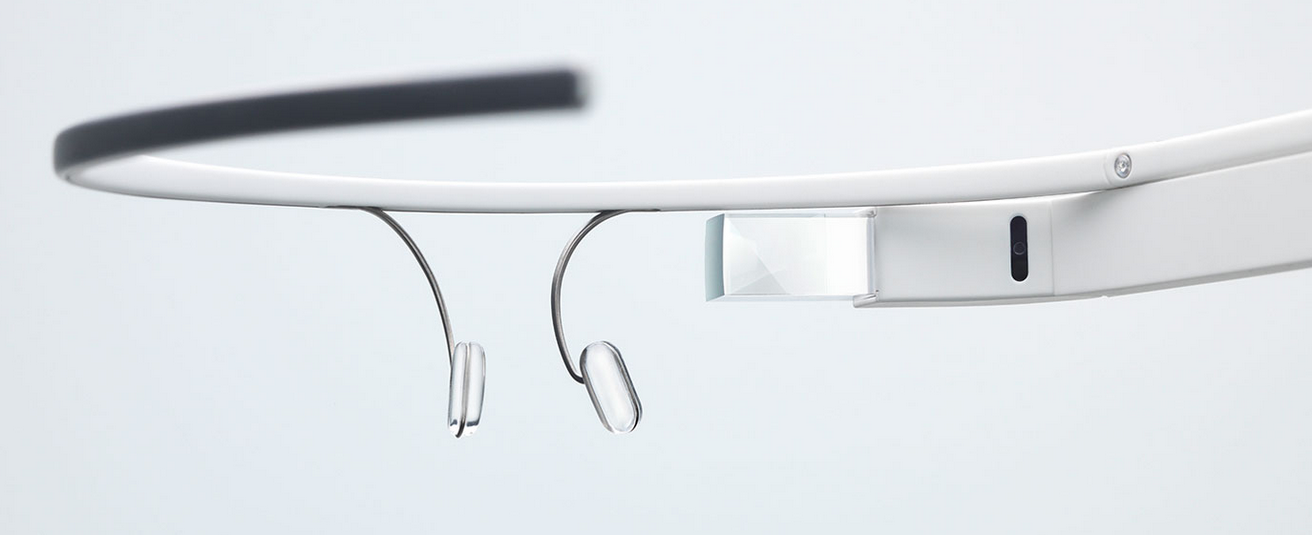
The Google Glass Wink Feature Is Real

Rumors have been circulating that Google Glass may have a feature that lets you wink to take a picture. Within the kernel source code, developers have discovered that the feature does exist deep in the code, but for most users of Google Glass, this feature is not an option on the front-end.
However, TechCrunch has confirmed with multiple sources, who wish to remain anonymous for obvious reasons, that the wink feature is indeed real and being used by a small number of engineers who were seeded with the original developer units of Google Glass. In other words, those who are developing for Glass as a part of the second wave of units (#ifihadglass) are not privy to the feature, as far as we know.
In fact, one source told us that Google actually came to a location to physically install an updated version of the software to unlock this feature, which appears in settings. Developers have already started building applications that employ the wink feature, but Google can also offer the command on an OS level.
Here’s how it works: At any time while Google Glass is on your head and turned on, the user may perform an extended wink (much like the one Lucille Bluth does repeatedly in Arrested Development*) to snap a picture instantly.
A second source explained to us that Glass actually trains itself to recognize your wink. In other words, you calibrate the tool so that Glass recognizes what your particular “wink” looks like. Without calibrating the length of a purposeful, command-giving wink, Glass would pick up each and every blink as a photo op. Obviously.
Multiple sources confirmed that the wink feature is available as an option in settings, once Google has updated the unit with the proper version of the software. The kernel also confirms this, as the code has options for “ENABLED” and “DISABLED” as well as information on “CALIBRATION,” just like one of our sources mentioned.
Sensors
Google has not clarified the exact number or names of the sensors within Google Glass, though many believe that there is both an infrared sensor on the inner portion of the headset, as well as a proximity sensor baked inside. The proximity sensor is there to handle the “waking” and “sleeping” states of your device, according to Google’s official statement.
Just like a smartphone, Google Glass will go to sleep when you put it down, halting incoming calls and messages and turning off the display (though keeping the camera button alert in case there’s a Kodak moment afoot). When you pick it up and place it on your head, it instantly wakes back up and starts receiving notifications, etc.
The infrared sensor, on the other hand, is far more mysterious. Google hasn’t really spoken up about it much, though sources around the web tend to believe that the unidentified little sensor on the inner rim of the headset is indeed an infrared camera. This would allow Glass to track eye movements to some degree. As our sources have clearly confirmed, the IR camera can at the very least detect a blink and a wink, and the possibilities beyond that are deep and wide. Just take a look at these Google patents.
Patents
The first is a patent that names Adrian Wong, Google Glass engineer, Ryan Geiss, a senior software engineer at Google, and Hayes Raffie, an interactions researcher on the Special Projects team at Google.
The title? “Unlocking a screen using eye tracking information”.
The patent broadly describes a method by which a user could unlock a display (most often referenced as a Heads-up-display on a wearable computing device) through various forms of eye-tracking. Sure, unlocking a device and snapping a picture are different, and so is the method by which this patent describes unlocking and our information concerning the Google Glass wink command for pictures.
However, be well aware that there are 26 mentions of the term infrared, and more than 100 mentions of the term HMD (head-mounted display). There also seems to be a passage within the patent that confirms the ability to decipher blinks (if only to disregard them, in this instance, but still).
To unlock a screen coupled to the HMD after a period of inactivity that may have caused the screen to be locked, a processor coupled to the wearable computing system may generate a display of a moving object and detect through an eye tracking system if an eye of the wearer may be tracking the moving object. The processor may determine that a path associated with the movement of the eye of the wearer matches or substantially matches a path of the moving object and may unlock the display. The path of the moving object may be randomly generated and may be different every time the wearer attempts to unlock the screen. Tracking a slowly moving object may reduce a probability of eye blinks, or rapid eye movements (i.e., saccades) disrupting the eye tracking system. The processor may generate the display of the moving object such that a speed associated with motion of the moving object on the HMD may be less than a predetermined threshold speed. Onset of rapid eye pupil movements may occur if a speed of a moving object tracked by the eye of the wearer is equal to or greater than the predetermined threshold speed. Alternatively, the speed associated with the moving object may be independent of correlation to eye blinks or rapid eye movements. The speed associated with the motion of the moving object may change, i.e., the moving object may accelerate or decelerate. The processor may track the eye movement of the eye of the wearer to detect if the eye movement may indicate that the eye movement may be correlated with changes in the speed associated with the motion of the moving object and may unlock the screen accordingly.
Now, take a look at this patent.
Though it doesn’t go into any detail on eye-tracking, it does reaffirm Google’s intentions to use infrared sensors within their head-mounted, wearable computing devices. A year later, that device is called Google Glass.
Next Steps
Whether Google intends to roll out this feature more broadly is still unknown.
Since Google is allowing a small number of developers to use “wink,” the company is clearly staying true to its tradition of beta testing services thoroughly before a huge roll out. In fact, anyone wearing Glass right now is undoubtedly a beta tester of the whole operation.
But wink will almost certainly raise questions of privacy. If you feel like a simple, spoken “Ok glass, take a picture” is already too much of an invasion of your privacy, imagine how you’ll feel when some Glasshole can take your picture without you ever being the wiser.
On the other hand, the wink also brings up all kinds of interesting use-cases, like the ability to determine when someone is having a seizure, for instance. People were afraid of the geolocation, and CCTV, and online banking, too, at one point in the past. And look how that turned out.
It’s too soon to tell whether Glass will fly or die, but it can sure as hell wink.
-
Google’s latest attack on TV: Paid YouTube channels launch today

-
More Wi-Fi in the sky: FCC proposes to free up airwaves for faster in-flight broadband
Think the current options for in-flight Wi-Fi suck? The Federal Communications Commission hears you.
The FCC on Thursday proposed to auction off more airwaves for commercial ground-to-plane broadband communications. We’re not just talking about a handful of frequencies here: The FCC is eyeballing a 500 MHz block of spectrum, which could boost the connection speeds available to aircraft by a factor of 100,000.
As my colleague Stacey Higginbotham explained in a recent post, current in-flight broadband is so pricey and low-bandwidth because airlines rely on expensive satellite or ground-to-air transmissions systems to link aircraft to the internet. The dominant airline provider GoGo uses what is in essence a 3G CDMA network pointed at the sky. That means a single 3Mbps EV-DO connection must be spread among all of the internet users in an aircraft. Your fancy new laptop may support gigabit Wi-Fi, but the bottleneck in the ground-based backhaul link can slow you down to dial-up speeds.
 The FCC’s plans, however, key in on a proposal Qualcomm made last year to clear a massive swathe of spectrum in the 14 GHz frequencies over which a kind of super-LTE network could be built. That network would only sport about 150 towers but each of those nodes would blast a high-powered signal into the northern horizon. Airplanes would fly between these huge crescent-shaped cells just as our cellphones move from tower to tower on the ground. But each of these aerial cells would have a whopping 300 Gbps of capacity, which would be shared among all of the planes occupying the surrounding airspace.
That’s a lot of bandwidth, but it’s conceivable that the airlines and their passengers could find a use for it. Today’s in-flight Wi-Fi is priced for the business traveler with an expense account and the inability to go four hours without email access. But these days everyone in the cabin from first-class to steerage is carrying multiple Wi-Fi-enabled devices. And they don’t just want to check email — they they want to stream video and play networked games. Airlines could also use that bandwidth to offer on-demand entertainment and live programming from the cloud, not just from their on-board hard-drives.
As for costs, a more efficient network could allow airlines to drop rates — or maybe even eliminate in-flight broadband fees entirely — to make high-bandwidth connections available to all customers. GoGo’s current network uses 160 towers, making it the same the size as Qualcomm’s proposed system. The infrastructure investment would be about the same, but by using the latest 4G network technologies and hell of a lot more spectrum, we could shove a lot more bandwidth into that infrastructure.
The 14 GHz band is currently used by fixed satellite providers as an uplink path to their birds in orbit. The FCC proposal would require that the any new in-flight network share those frequencies with its current tenants. In its notice of proposed rulemaking, the Commission said it is seeking industry comment to ensure there will be no interference between those two uses.

Related research and analysis from GigaOM Pro:
Subscriber content. Sign up for a free trial.


-
Facebook responds to low ratings for Home with planned tweaks to the app
Facebook Home launched about a month ago, and while the company has already seen nearly 1 million downloads of the app and increased engagement on Facebook from the users who have it, the app still has only a two star review on the Google Play store and some users seem frustrated.
In a session with reporters at Facebook’s headquarters Thursday, Facebook engineers outlined some planned changes and additiions to the Home app for Android in an effort to address some of the low reviews, including a way for users to keep their apps from getting reorganized during the Home download, an easier way to start conversations with friends via Chat Heads, and clearer instructions on how to use the app. My colleague Kevin Tofel wrote a more extensive review of the Facebook Home app for Android earlier this month.
Facebook Home will be updated on Thursday, but those are mainly bug fixes and performance improvements. The company said the app organization and Chat Head improvements will likely come within a few months. It’s an interesting move for Facebook to preview coming changes that don’t have timetable yet, and might indicate that the comapny wants to quell concerns about Home from the users who’ve tried it.
Facebook declined to provide data on active users of Home, so while a million people have downloaded it, it’s still unclear how many of those people continued to use it. But Cory Ondrejka, VP of mobile engineering for Facebook, said that of people who have downloaded Home (and these numbers exclude owners of the HTC First phone), overall engagement with Facebook products has increased by 25 percent, and that Chat Heads has increased use of Facebook Chat by 7 percent and messages sent by 10 percent.
“We have just about a million downloads on home,” he said. “It’s very much in line with our expectations.”
Ondrejka responded to the average two star review in the Google Play store, saying that the reviews tended to split among five star reviews and one star reviews, with most of the one star complaints coming from people who were annoyed by the re-organization of their apps on their main screen, and people who wanted easier ways to start conversations with their friends in Chat Heads from the cover feed. The comapny is also looking to add a feature that internally is called “Blues Clues,” which shows people around the app and instructs them on using different features.
“The five star reviewiers are pretty outspoken, saying things like, ‘We love what cover feed is doing,’” he said. “But we’ve spent a lot of time diving through the one star ratings.”

Related research and analysis from GigaOM Pro:
Subscriber content. Sign up for a free trial.- The fourth quarter of 2012 in mobile
- Forecast: the converged mobile messaging market
- An overview of the photo and video app market

-
Albaugh Joins Blackstone as Senior Advisor
Blackstone said Thursday that Jim Albaugh was named a Senior Advisor. He will focus primarily on the firm’s private equity activities in the Aerospace and Defense sector. Albaugh was most recently CEO and President of Boeing Commercial Airplanes at The Boeing Company.
PRESS RELEASE
NEW YORK–(BUSINESS WIRE)–Blackstone (NYSE:BX) today announced that Jim Albaugh has been appointed as a Senior Advisor. Mr. Albaugh will focus primarily on the firm’s private equity activities in the Aerospace and Defense sector, while also advising other businesses and clients across Blackstone’s diverse platforms. Mr. Albaugh was most recently Chief Executive Officer and President of Boeing Commercial Airplanes at The Boeing Company.
Joe Baratta, Global Head of Private Equity at Blackstone, said, “We are delighted that Jim has agreed to join us as a Senior Advisor. Jim’s addition to our team strengthens our expertise in the Aerospace and Defense sector and will help us pursue attractive opportunities on behalf of our limited partners.”
Jim Albaugh said, “I am excited about being a part of the Blackstone team as they look to pursue new transactions in the Aerospace and Defense sector. Blackstone’s global investing platform presents an excellent opportunity for value creation in the Aerospace and Defense sector.”
Mr. Albaugh’s prior positions at Boeing include President and CEO of Boeing Defense, Space & Security; Senior Vice President of Boeing and President of Space and Communications Group; President, Boeing Space Transportation; and President of Rocketdyne Propulsion and Power. He has also served as a director of TRW Automotive Holdings Corp. since 2006. He holds Bachelor’s degrees in Mathematics and Physics from Willamette University and a Master’s degree in Civil Engineering from Columbia University.
About Blackstone
Blackstone is one of the world’s leading investment and advisory firms. We seek to create positive economic impact and long-term value for our investors, the companies we invest in, the companies we advise and the broader global economy. We do this through the commitment of our extraordinary people and flexible capital. Our alternative asset management businesses include the management of private equity funds, real estate funds, hedge fund solutions, credit-focused funds and closed-end funds. Blackstone also provides various financial advisory services, including financial and strategic advisory, restructuring and reorganization advisory and fund placement services. Further information is available at www.blackstone.com. Follow us on Twitter @Blackstone.
The post Albaugh Joins Blackstone as Senior Advisor appeared first on peHUB.
-
This offline video game with Xbox controller support shows Chrome OS isn’t “just a browser”
I expect we’ll hear much more about Chrome OS apps next week at the Google I/O developer event. Some developers aren’t waiting to move forward with apps for Chrome OS, however, and that’s a good thing. Although it had humble beginnings as a browser-based interface on a prototype laptop in 2010, Google’s Chrome OS is poised to expand beyond the browser with true apps of its own.
Take this game in the Chrome Web Store, for example. It’s called Cracking Sands Racing and comes from Polarbit, which has already released the game for iOS and Android. That tells me it’s basically a port of the mobile version. Plus the 533 MB download and offline support verify this is an app; not a game that’s being powered by the cloud. Here’s a video of the gameplay, which is exactly what the game looks like on my Pixel:
I downloaded Cracking Sands to my Chromebook Pixel, turned off the laptop’s Wi-Fi radio, plugged in a wired Xbox 360 controller and had a ball with this.
It’s no rival to current high-end console games, of course, but it’s fun and can be placed on a Chromebook even without an internet connection. And since the game originated on mobile devices with touchscreens, I can even play it using the Pixel’s touchscreen, although I prefer using a controller.
The point here is this: Google has been working on its Packaged Apps and Native Client support for some time and I think this effort will be highly visible next week at Google I/O.
Instead of touting Chrome OS solely as a fast web experience with some web apps and extensions, I suspect Chrome OS will be shown as a true desktop operating system alternative. Developers are starting to jump on board, although I’d like to hear more from Google just how many are interested. As a full-time Chromebook user, I can’t wait to see what apps end up on the improved Chrome OS platform.

Related research and analysis from GigaOM Pro:
Subscriber content. Sign up for a free trial.- What Does the Future Hold For Browsers?
- What Google Must Do to Make Chrome OS a Success With Netbooks
- Life After Chrome: What’s Next for Android

-
YouTube launches its paid subscription channels with select partners
YouTube has officially launched a paid subscription offering, allowing select partners to charge as little as $0.99 per month for access to their content. From the YouTube blog post announcing the new intitiative:
“Every channel has a 14-day free trial, and many offer discounted yearly rates. For example, Sesame Street will be offering full episodes on their paid channel when it launches. And UFC fans can see classic fights, like a full version of their first event from UFC’s new channel. You might run into more of these channels across YouTube. Once you subscribe from a computer, you’ll be able to watch paid channels on your computer, phone, tablet and TV, and soon you’ll be able to subscribe to them from more devices.”
Partners include The Young Turks, UFC, Jim Henson Company, Mark Cuban’s HDNet and the Sesame Workshop. Not all channels are live yet, a first list of 53 initial launch partners can be found here.
Some of the new partners should come as no surprise to paidContent readers: We reported earlier this week that YouTube’s employees have been testing paid channels for the Sesame Workshop, Baby First TV and Cookie Jar TV for months.
YouTube said Thursday that it wants to make subscriptions available as a self-serve feature to select partners soon. Asked how big of a cut YouTube is taking from subscription fees, a spokesperson told me that partners get to keep “the majority share,” without elaborating further.

Related research and analysis from GigaOM Pro:
Subscriber content. Sign up for a free trial.- Connected Consumer 2011: What Not to Expect
- Connected Consumer Wrap-up: Q1 2009
- How consumer media will change in 2013