Blog

  • Dendreon’s Big Question: How Much Will People Pay for Provenge?

    Dendreon logo
    Luke Timmerman wrote:

    How much will people in the U.S. pay for a new prostate cancer drug that helps dying men live a few months longer? This is one of the tricky questions Seattle-based Dendreon (NASDAQ: DNDN) is wrestling with these days. The decision will have a significant impact on how successful Dendreon is for years to come.

    The issue is all about how much to charge for an immune-boosting treatment for elderly men with terminal prostate cancer, called sipuleucel-T (Provenge). Dendreon showed last year in a clinical trial of 512 men that this drug helped men live a median time of four months longer than those on a placebo, with minimal side effects. Dendreon is seeking clearance from the FDA to start selling the treatment, and the agency’s deadline to complete its review is May 1. If approved in the U.S., the Dendreon drug would be the first in a new class of therapies that actively stimulate the immune system to fight tumors.

    Most of Wall Street projects this drug will emerge as a billion-dollar blockbuster in a few years. JP Morgan analyst Cory Kasimov, for one, forecasts $1.49 billion in U.S. sales in 2014. But his model, and all the rest, are based on a lot of unknown factors at this time, like how much the drug will cost, and how many men will get prescriptions. Dendreon hasn’t said anything specific about its pricing plan, other than an often-repeated line about how the product will be priced similarly to “other novel biologic drugs that extend lifespan“—which is sort of a coded way of saying, “This drug will save your life, and it will be expensive like all the rest.” A spokeswoman for the company declined to comment for this article.

    Analysts have reported on a wide variety of estimates on what Provenge will cost, between $40,000 and $100,000. While different analysts use different models, I found that the expected price is about $61,714, according to the average estimate of seven analysts surveyed by Xconomy. But this is truly a guessing game at the moment. While Kasimov uses $65,000 as his estimated price per patient, he says it could run as high as $75,000 to $100,000. You can see the estimates listed from all seven analysts in the chart below.

    Analyst Affiliation Est. Provenge Price
    Source
    Ren Benjamin Rodman & Renshaw $40,000 November 12 note to clients
    Cory Kasimov JP Morgan $65,000 February 22 note to clients
    Howard Liang Leerink Swann $60,000 April 13 e-mail
    David Miller Biotech Stock Research $72,000 February 27 note to clients
    Mark Monane Needham  & Co. $50,000 April 13 e-mail
    Christopher Raymond Robert W. Baird & Co. $70,000 March 12 note to clients
    Eric Schmidt Cowen & Company $75,000 February 1 note to clients

    There are a lot of factors to consider as Dendreon makes the decision on the actual price of what would be its first marketable product. Set the price too low, and it would fail to recoup enough of the $783 million deficit the company has racked up since its founding in 1992. The company’s stock (NASDAQ: DNDN) would probably tumble. Dendreon also would probably struggle to keep up with demand from patients, leaving many of them frustrated at their inability to get a potential life-saving drug.

    But setting the price too high is obviously a perilous thing to do as well. Insurers would probably set up all kinds of red tape to ensure the drug is being prescribed in precise accordance with the FDA-approved label, creating hassles for doctors that they might prefer to avoid. Competitors …Next Page »

    UNDERWRITERS AND PARTNERS


  • Stress Relief: 5 Essentials to Create Life Balance

    Filed under: , , ,

    I’m currently going through a very busy period in my life: many work projects on the go, writing deadlines, meetings and teaching yoga classes On top of that, I’m preparing to leave for a six-week trip and what a preparation that is: visas, shots, planning itineraries, shopping for the right clothing and gear AND I have to figure out where my cats are going to stay. And on top of that, everyone is coming out of hibernation so friends are calling, emailing and texting wanting to get together for lunches, brunches and catching-up. And to top it all, my mother is in the hospital because she had her thyroid removed.

    As you can imagine, periods like this can be super stressful and tiresome, which is all the more reason to make a concerted effort to stay happy and keep sane. Here here are five essential things I do to keep balanced.

    5 Essential Things You Must Do To Have Balance In Your Life

    1. Create a to-do list
    Every morning, I look at my to-do list, I check off what I’ve already done, I add new tasks that need to be done and I place asterisks on items that are top priority. This helps me plan my day and my week. I know what needs to be done now and what tasks can wait. It is also helpful to mark down how long each task will take you to do, this way, you can hopefully avoid scheduling too many things throughout a week.

    Tip: Do not procrastinate. Avoid having one or two stubborn items that stay on your list for two months because you don’t want to do them. In fact, get to those most hated items as soon as you can. Checking them off will feel sooooo good.

    Continue reading Stress Relief: 5 Essentials to Create Life Balance

    Permalink | Email this | Comments

  • Getting in Shape is a Privilege: Sport for Women in the Developing World

    Filed under: , ,

    We’ve all heard that fat is a feminist issue, but how many of us have considered that physical activity is a feminist issue?

    At the Exercise Psychology Unit, we do research on how best to get people more active and enjoy the benefits of physical activity. However, when I watch news coverage about recent natural disasters, I am reminded that access and opportunities to engage in physical activity and sport can be a taken-for-granted privilege that is not always available outside western countries. Sadly, I have learned that due to political, socio-economic, cultural and religious barriers, many girls and women who live in socio-economically-deprived regions that are war-torn, gender-oppressed, and racist, lack these very same opportunities to be active that we so readily enjoy.

    Continue reading Getting in Shape is a Privilege: Sport for Women in the Developing World

    Permalink | Email this | Comments

  • June Hogs


    I love this story.  Dams certainly have their place but they can be overbuilt also.  This is certainly a situation were the removal is obviously well justified.
    A dam has one proper purpose.  It is called flood control.  When that is not a particular issue, energy can be collected through run of the river hydro facilities and well located dams with a working fish bypass system in place.  In fact I have posted on a horizontal turbine system that while not producing a lot of power will allow returning salmon to climb through the system back up to the top of the reservoir.
    Once again, I would be willing to take on the contract.
    We are not going to give up the Aswan or the Yangtze River dams anytime soon.  The flood control aspect is often as important as the power generation if not more so.  In time though, we may decide that we need to build more flexibility into even flood control.
    For example the Nile could be diverted into a second channel west of the present course and filling the Qattara Depression.  This could be done with diversion channels and a barrage allowing a switching back and forth of the flow of the Nile.  Done properly far to the south the Aswan could be retained for some time and possibly have its natural lifespan extended while much silt is used in the new channel and its related new farmlands.
    In time, the Aswan must be taken down because it will be simply full of mud.
    This project is going to inform us a great deal over how difficult it is to fully restore a rich river.  We need that knowledge.  The Columbia desperately needs smart thinking as does every river system.
    Officials hope dams’ removal will bring the big salmon back
    By Les Blumenthal | McClatchy Newspapers
    WASHINGTON — They were known as June Hogs — 100-pound salmon that, when stood on end, were taller than a man.
    Up until a century ago, they returned annually to the Elwha River on Washington state’s Olympic Peninsula in runs so huge that homesteaders reported that the river turned into a wiggling mass from bank to bank. One count placed their number at 392,000.
    Then, two dams were built across the river, .and the spawning grounds were blocked, giving the fish less than five miles of river to breed. Today fewer than 3,000 fish return to the Elwha.
    That’s about to change.
    In what would be the largest dam removal project ever in the United States, the federal government last week requested bids to demolish the two structures _ the 105-foot Elwha Dam, finished in 1913, and the Glines Canyon Dam, twice as tall as the Elwha Dam, finished in 1927.
    The dams won’t be blown up, but dismantled over roughly three years so the 19 million cubic yards of silt, gravel and rock behind them can be flushed downstream gradually.
    The project will cost more than $300 million. The cost of removing the dams _ $60 million to $70 million _ is only a portion of the price tag.
    Once the dams are down, it may take 10 years to re-establish the runs, but officials are determined that the fish will return. Some will be flown by helicopter to the upper reaches of the Elwha watershed. To supplement the meager number of native fish, others will be raised in a nearby hatchery and added to the runs. Eventually, the runs are expected to become wild.
    Scientists say if the salmon runs can’t be restored on the Elwha, they can’t be restored anywhere.
    More than 85 percent of the river’s salmon habitat is in the Olympic National Park, remote back country even now barely touched by man.
    “I have no doubt this will work,” said Brian Winter, the Elwha Project manager for the National Park Service.
    Winter, a fisheries biologist who’s been working on restoring the Elwha runs since 1985, said the river is a living laboratory that has been studied for decades.
    “This isn’t so much about taking out the dams, it’s about seeing the first salmon headed up stream,” he said.
    Others are calling it the “last dam summer” as demolition work is expected to begin next year.
    “All eyes, including internationally, are on it to see how a river comes back to life,” said Amy Kober of American Rivers. “The lessons we learn on the Elwha will apply to others rivers around the nation.”
    To the Lower Elwha Klallam Tribe, the removal of the dams is about more than salmon. When the dams were built, the reservoirs that grew behind them flooded the tribe’s only inland village and the “tribal creation site,” where according to legend the tribe was created.
    “We just have word of mouth about where they are,” said Robert Elofson, the tribe’s director of Elwha River restoration. “It’s been 100 years.”
    The dam removal project began in 1992 when Congress approved the Elwha River Restoration Act.
    The privately owned dams provided electricity that helped power the economy of the Olympic Peninsula, including the Bremerton Naval Shipyard and nearby paper mills.
    There were several attempts to strip funding over the years, but they failed. Former U.S. Sen. Slade Gorton, R-Wash., unsuccessfully sought to link the Elwha project to a promise that four dams on the lower Snake River would never be breached to aid salmon runs in the Columbia River basin.
    Before seeking bids to remove the dams, the Interior Department, which includes the National Park Service, spent $24.5 million on a water treatment plant for the city of Port Angeles and $69.6 million for other water facilities. Port Angeles takes it water from the Elwha and there were concerns the silt released by the removal of the dams could affect water quality.
    The Interior Department also paid $16.4 million to construct a new tribal fish hatchery. Work is also underway on some levy modifications.
    Congress has been providing roughly $20 million in funding annually and nearly $55 million in economic stimulus money was also appropriated.
    Rep. Norm Dicks, D-Wash., whose congressional district includes the Elwha, has championed the project from the beginning.
    “There’s no question we can do this,” Dicks said of restoring the runs.
    Dicks is an avid fisherman. In his congressional office is a mounted 54-pound salmon he caught in Alaska. He laughs when asked about catching a 100-pound salmon.
    No one is betting those giants will return to the Elwha.
    But to those who have been working on the restoration project for 18 or more years, the end may be in sight.
    “It’s amazing we are so close,” said Kober. MORE FROM MCCLATCHY

    Read more:

  • 15 vehicles modified to run clean on electric engines

    electric vehicle_1_klsay_69

    Automakers over the world have escalated their efforts to develop next-gen clean cars that run on electricity. While there must be many who must have already bought or are planning to purchase an EV to reduce pollution, there are several inventors who trust their skills and modify conventional vehicles to run on electric engines, giving them a personal touch as well. Check out some of these mods below, which might not be the fastest off the block, but they are sure enough to turn some heads:

    (more…)

  • Tappen Zee and Global Warming


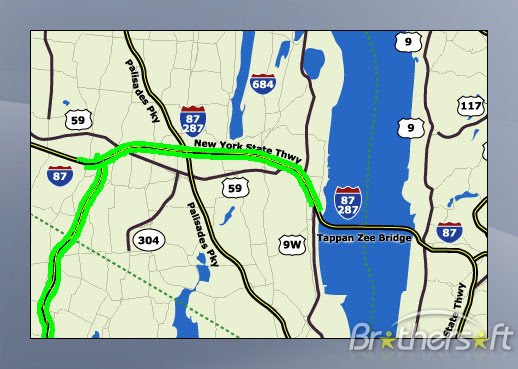
    It is always good to find what we can describe as definitive evidence that shuts down argument.  Here we have a handy oyster bed that swung in and out of existence like it was some handy toggle switch.
    The Roman and Medieval warm spells are locked in and so is the collapse of the little ice age.  They are recent enough to clear in the record.  The mid Holocene warm period is clear although the length is not mentioned.  Other records show a couple of millennia.
    This was followed by cooler climate perhaps similar to present conditions.  The 4000 – 5000 BP seems surprising in time and place but may mean that we have understated the actual warmth of the North Atlantic. 
    In fact it is becoming timely to compare several sources to try and assemble a better picture than has been bandied about.  Even this item is leaving a lot hanging and reporting on the bit they are sure about.
    This item is certainly improving resolution and opening an instructive line of inquiry.
    Hudson River Estuary, USA


    Reference
    Carbotte, S.M., Bell, R.E., Ryan, W.B.F., McHugh, C., Slagle, A., Nitsche, F., Rubenstone, J. 2004. Environmental change and oyster colonization within the Hudson River estuary linked to Holocene climate. Geo-Marine Letters 
    24: 212-224.

    Description

    The authors located fossil oyster beds within the Tappan Zee area of the Hudson River estuary, New York, USA (~ 41.13°N, 73.90°W), via chirp sub-bottom and side-scan sonar surveys, after which they retrieved sediment cores from the sites that provided shells for radiocarbon dating. Results of their analyses indicated that “oysters flourished during the mid-Holocene warm period,” when “summertime temperatures were 2-4°C warmer than today.” Thereafter, the oysters “disappeared with the onset of cooler climate at 4,000-5,000 cal. years BP,” but “returned during warmer conditions of the late Holocene,” which they specifically identified as the Roman and Medieval Warm Periods as delineated by Keigwin (1996) and McDermott et al. (2001), explicitly stating that “these warmer periods coincide with the return of oysters in the Tappan Zee.” They further report that their shell dates suggest a final “major demise at ~500-900 years BP,” which timing they describe as being “consistent with the onset of the Little Ice Age.” Because the oyster beds of Tappan Zee have not been reestablished during the Current Warm Period, we conclude that temperatures in this region today are not as warm as they were during the MWP (~ AD 600-1250).

    References

    Keigwin, L.D. 1996. The Little Ice Age and Medieval Warm Period in the Sargasso SeaScience 
    274: 1504-1508.

    McDermott, F., Mattey, D.P. and Hawkesworth, C. 2001. Centennial-scale Holocene climate variability revealed by a high-resolution speleothem δ18O record from SW IrelandScience 294: 1328-1331.
  • A Question for Koh Defenders

    by Kevin Jon Heller

    A simple question for those who believe “self-defense” and/or the AUMF authorizes the CIA to kill Americans abroad outside of armed conflict.  If Obama authorizes it, can the CIA put a bullet in the back of the skull of an American citizen believed to be affiliated with al-Qaeda while he is watching a movie in Topeka, Kansas?

    If not, why not?

  • Photo for Today – Gerf Hussein temple

    Gerf Hussein temple, originally Per Ptah (the House of Ptah), was built
    in the name of Ramesses II by Setau (the Viceroy of Kush, who was also
    responsible for the Wadi es-Sebua temple to the south).
    This free-standing section is in fact only part of the temple.
    The other part, which was rock-cut, was left in situ during the UNESCO rescue operations
    and is now flooded by the waters of Lake Nasser.
    New Kalabsha island

  • Togolese student builds working robot from old TVs

    sam10

    Eco Factor: Robot created from recycled materials.

    Sam Todo, a young student from Togo, Africa has created a fully-working robot made entirely from old TV parts and other used electronics. Dubbed SAM10, the fully-automatic robot will be able to greet people and also avoid objects in front of it.

    (more…)

  • Closing Time: Romero dominates White Sox, gets Pierzynski’d late

    http://a323.yahoofs.com/ymg/ept_sports_fantasy_experts__26/ept_sports_fantasy_experts-540843063-1271211408.jpg?ymRmr.CD3pOgaVcA

    Entering Tuesday night’s game at Toronto, White Sox hitters had struck out only 30 times all season, the lowest team total in the majors.

    Exiting Tuesday’s game, they’ve struck out 44 times. Blue Jays left-hander Ricky Romero(notes) absolutely owned them.

    Romero carried a no-hitter into the eighth inning, racking up a pair of Ks in each of his first six frames. No White Sox batter managed to hit a ball out of the infield until the seventh. Romero’s curve was untouchable, as was his change. The full arsenal was working. Chicago’s lineup was plainly overmatched — a fact that led AJ Pierzynski(notes) to pursue non-traditional methods of getting on base.

    Romero skipped a pitch in the dirt to Pierzynski leading off the eighth inning — not a bad pitch, mind you, because AJ had been hacking at similar offerings all night. But late in the game with his team trailing 4-0, Pierzynski resisted the urge to swing. When the ball hit the ground near his feet, he began hopping as if an anvil had landed on his toe. But in fact, nothing had landed on his toe. Replays were clear. He had not been hit.

    Nonetheless, Pierzynski turned and ran toward first base. Home plate umpire Tim McClelland failed to stop him. It’s not the first time AJ has deked an ump, and it likely won’t be the last. The Jays argued and McClelland’s crew huddled, but no one overruled the original call — which, again, appeared to have been made by Pierzynski. Thus the Sox had their third base-runner of the game.

    Romero found himself pitching from the stretch, and he soon fell behind Alex Rios(notes), 2-1. That’s when he made his only real mistake of the night. Romero put a changeup on a tee and Rios deposited the pitch over the left field wall, ending the no-hit bid. The next three Chicago batters were retired on groundouts, then Romero yielded to Kevin Gregg(notes) in the ninth.

    This was his final line: 8.0 IP, 1 H, 2 ER, 2 BB, 12 K, 1 HBP*. After two starts, Romero’s ERA is 1.80, his WHIP is 0.67 and his Yahoo! percent-ownership is 38.0. Go get him.

    Gregg pitched a clean inning to earn his third save, and he struck out both Gordon Beckham(notes) and Carlos Quentin(notes) in the process. He hasn’t yet walked a batter this season, and he’s decisively outperformed Jason Frasor(notes). If you’re any kind of saves speculator, then you probably added Gregg last week. 

    And with that, we bullet…

    http://a323.yahoofs.com/ymg/ept_sports_fantasy_experts__26/ept_sports_fantasy_experts-434822189-1271211367.jpg?ymolr.CDowFo0ET5 Scott Podsednik(notes) has minimal power, ordinary on-base skills, and he isn’t much of an asset defensively. Nobody ever said he was a flawless player. But he’s also swiped 30 bases in five different seasons (including ’09), and he’s leading the majors in steals right now. In the imaginary game, this makes him a person of interest.

    Podsednik stole another base on Tuesday afternoon and went 2-for-4, raising his average to .452. It was his third straight multi-hit effort. He’s batting near the top of the Royals’ lineup, immediately ahead of Billy Butler(notes), master of the RBI double. For fantasy purposes, Podsednik’s setup is excel—

    Well, OK, maybe it’s not excellent, but it’s as good as any Kansas City player’s setup can possibly be. And still he’s only owned in 33 percent of Yahoo! leagues. Of course his batting average isn’t sustainable, because this isn’t 1874. Podsednik won’t maintain the 120-steal pace, either, because this isn’t 1982. Just accept the production while it lasts. No one should be surprised if he swipes another 35 bags. He can almost be the guy that Julio Borbon(notes) was supposed to be.

    Baltimore shuffled the lineup on Tuesday, batting Matt Wieters(notes) in the cleanup spot for the first time in his soon-to-be glorious major league career. Ty Wigginton(notes) got the start at second and homered twice. The O’s wasted a solid start from Brian Matusz(notes) (7.1 IP, 6 H, 1 BB, 8 K) when the bullpen allowed a parade of hits in the eighth. No one really knows who Baltimore’s closer is on any given day, not even manager Dave Trembley. He’d like it to be Mike Gonzalez, but that wasn’t going to happen on Tuesday.

    Here’s Vin Scully in the ninth inning with Mark Reynolds(notes) digging in:

    "Reynolds had a Reynolds day. He struck out in the second, struck out in the fourth, and unloaded in the seventh."

    Naturally, Reynolds then struck out again. But Jonathan Broxton(notes) was pitching in the shadows and hitting 99 mph on the stadium radar, so the circumstances were unusually difficult. Clayton Kershaw(notes) earned the win for L.A., but he walked another five batters and needed 111 pitches to get through 5.1 innings.

    Nick Johnson(notes) hit his first homer of the season on Tuesday, going 2-for-3 in the Yankees’ home opener. He also walked twice and scored three runs. We’ll remind you that Johnson is batting second in one of baseball’s best lineups, and his home games are played in the league’s most hitter-friendly park. He’s just 19 percent-owned.

    While we’re discussing Yankees, we should also mention that Andy Pettitte(notes) frequently made Angels hitters look ridiculous on Tuesday. He struck out six and earned his second win in as many starts. New York’s schedule isn’t particularly intimidating in the weeks ahead, so there should be a few spot start opportunities.

    Florida outfielder Cody Ross(notes) is lightly owned, yet routinely useful. He went 2-for-4 against Cincinnati with a homer and four RBIs. You’ll add him eventually. Everyone does.

    With Carlos Gonzalez(notes) sidelined due to hamstring issues, Seth Smith(notes) found himself atop the Rockies’ batting order. He led an 11-run assault on the Mets, going 2-for-5 with a double, homer and three RBIs. Brad Hawpe(notes) left the game due to tightness in his left quad, so the Smith/Fowler situation may not be a worry for a few days.

    Comments are a better place whenever we mention Doug Fister(notes), so here it is: Fister pitched eight shutout innings against the A’s, striking out four. There’s still no need to add him, though. Tuesday’s win was a quality-of-opponent thing.

    No handshake for you: Octavio Dotel(notes) eventually picked up a save against the Giants, but he began the ninth by allowing a double to Nate Schierholtz(notes) and a two-run homer to Eugenio Velez(notes). The final out was recorded on a missile off the bat of Pablo Sandoval(notes). Details here

    Everybody hurts: Cliff Lee(notes) threw a 63-pitch bullpen session on Tuesday, and a simulated game is scheduled for Friday. The Seattle Times reports that "the plan is to have him back May 1 or May 2." … Early signs point to Jimmy Rollins(notes) (calf) hitting the 15-day DL on Wednesday. Be prepared for a multi-week absence. … Not surprisingly, Carlos Beltran(notes) still hasn’t been cleared to run. … Ted Lilly(notes) will make a 60-pitch rehab start at Triple-A on Wednesday. "We’ll see how he comes out of that," said Lou Piniella, "and see if he needs another one.”

    Bonus link: You’ll find a thorough review of Jake Peavy’s(notes) messy Monday outing right here at Pale Hose Pariah. The essential quote: "You just don’t want to see Peavy dipping in the high eighties too often.
    His fastest pitch was 92.5 MPH, and he sat at 89.9."

    Photos via AP Images (Romero) and US Presswire (Podsednik)

  • It’s That Time Again! Countdown To Ubuntu!

    As of this posting, the latest release of Ubuntu will be available in 15 days! This is version 10.04 (Lucid Lynx) and brings with it a few changes. The first obvious change is that Ubuntu finally got rid of their s#!t brown color, and went with a more girly purple.

    Never heard of Ubuntu? Here is a short explanation from the Ubuntu website:

    Ubuntu is an operating system built by a worldwide team of expert developers. It contains all the applications you need: a web browser, office suite, media apps, instant messaging and much more.

    Ubuntu is an open-source alternative to Windows and Office.

    Well, if it isn’t out for 15 more days, then why am I writing about it? Well, it is not so much Ubuntu that I am trying to tell you about, it is the countdown! Every time a new release of Ubuntu comes out, you can put a countdown on your site to let everyone know and do your part to spread Ubuntu!


    This year, they have four to choose from:

    Ubuntu counter

    As you can see on the right, I have already put up my counter to show my Ubuntu pride! If you have a blog, or a website, you can too! Just click on the picture above to get your code!

    Technorati Tags: ,,,,

  • Viewpoints: English teacher tossed student a lifeline, ignited love of literature

    One of President Barack Obama’s consistent education themes has been the wish that every child cross paths with that one teacher who hits the light switch and changes one’s life.

    Each time he expresses some iteration of that thought, I suspect thousands or millions think briefly of the person who held that distinction in their life. The light master.

    Or, in my case, the one who extended an imaginary sprig of verbena and, holding it to his nose, inhaled deeply in a gesture of solidarity with William Faulkner.

    That scene took place in my 11th-grade English class, oh, a few years ago. The teacher was mine for only three months, but he changed my life in a flicker of light. I thought of him Monday when – if you’ll grant me this small indulgence – I was awarded the Pulitzer Prize for commentary.

    On such occasions, one is expected to recognize those who have helped along the way. But also on such occasions, one is likely to be a bit distracted and unable to remember one’s own name, much less those who deserve mention. I would like to correct the record with one who stands out and, as it happens, is celebrating his 50th year of teaching.

    I materialized in James Gasque’s class in March of the school year for reasons that will have to wait another day. Suffice to say, I knew no one and had come from a small high school in Central Florida where, for some reason, no one had bothered to teach the diagramming of sentences.

    Thus, my fellow students at Dreher High School were way ahead of me when Mr. Gasque finally called on me to identify some part of a sentence he had written on the blackboard. His back to the class with chalk in hand, he stood poised to write my instructions.

    Every living soul knows the feeling of helplessness when a crowd of peers awaits the answer you do not know. Whatever I said was utterly ridiculous, I suppose, because all my classmates erupted in peals of laughter.

    I have not forgotten that moment, or the next, during all these years. As I was trying to figure out how to hurl myself into a fetal curl under my desk, Mr. Gasque tossed me a sugarcoated, tangerine-colored lifesaver from the good ship lollipop.

    He whirled. No perfectly executed pirouette can top the spin executed by Mr. Gasque that day. Suddenly facing the class, he flushed crimson and his voice trembled with rage.

    “Don’t. You. Ever. Laugh. At her. Again.” he said. “She can out-write every one of you any day of the week.” It is not possible to describe my gratitude. Time suspended and I dangled languorously from a fluff of cloud while my colleagues drowned in stunned silence. I dangle even now, like those silly participles I eventually got to know. Likely no one but me remembers Mr. Gasque’s act of paternal chivalry, but I basked in those words and in the thought that what he said might be true. I started that day to try to write as well as he said I could. I am still trying.

    Mr. Gasque’s even greater gifts belong to all who ever sat in his class. That sprig of verbena, a recurring symbol in “The Unvanquished,” stays in my mind because it also symbolizes the great passion Mr. Gasque brought to teaching and to the literature he loved. During my 12 weeks or so in his class, we devoured “The Unvanquished” and John Steinbeck’s “Of Mice and Men.” I remember every word and sensation.

    “I’ve always wanted to lean down from my back stoop and pluck a sprig of verbena,” he said, inhaling deeply. Exhaling and tilting his head back, he closed his eyes and seemed to drift off into some lemony-scented world where verbena is the smell of courage. I closed my eyes and followed him.

    A couple of decades later, having moved back to South Carolina, I went looking for Mr. Gasque, toting a pot of verbena. He didn’t remember me, but upon hearing my tale, asked that I speak to his class. Afterward, his cheeks streaked with tears, he presented me with two lined pieces of notebook paper – my essay on “The Unvanquished.”

    Obama is right about the power of teachers. Thank you, Mr. Gasque.

  • Viewpoints: Waxman inquisition over new health law drips of hypocrisy


    Margaret A. Bengs

    On April 21, California Rep. Henry Waxman, chairman of the House Energy and Commerce Committee, will interrogate the heads of Caterpillar, Verizon, AT&T, Deere and other corporations on their announcement that the removal of a tax subsidy on retiree drug-benefit plans in the new health care reform law will cost them hundreds of millions of dollars – AT&T alone taking a $1 billion hit.

    AT&T, which employs more than 46,500 people in California, will consider changes to its “active and retiree health care benefits.” Waxman’s planned inquisition is reminiscent of the February hearings in Sacramento and Washington, D.C., where politicians vented outrage over Anthem Blue Cross’s 39 percent rate hike.

    “Breathtaking,” Waxman pronounced it.

    What is truly breathtaking is that members of Congress, including Waxman, who preside over federal debt expected to reach $15 trillion over the next 10 years, trillions more in unfunded liabilities for Medicare and Social Security, and a $1.3 trillion budget deficit in the current year before adding the new $1 trillion health care entitlement, dare to offer themselves up as judges of sound fiscal practices.

    If we are going to cross-examine Big Business for rate hikes and cost increases, why shouldn’t we grill Congress about Big Government’s unsustainable spending binge and insolvent programs? Is the government morally pure while the private sector is evil? The money taken out of our pockets is the same, whether by a company or an IRS agent. And government’s take makes the corporate cost write-offs in question equivalent to a grain of sand on a San Diego beach.

    Federal government revenue has tripled since 1965 (in inflation-adjusted dollars) to over $2 trillion today. While real gross domestic product decreased 2.4 percent in 2009 and corporate profits fell 3.8 percent, taxes on corporate income rose 7.7 percent, according to the Bureau of Economic Analysis.

    Our state government is no better at keeping its appetite under control. California led the nation in tax hikes in 2009 with $11 billion in new taxes, according to the National Conference of State Legislatures. We have the sixth-highest state and local tax burden in the nation and among the worst business climates. Yet, we still face another $18.5 billion state budget deficit and a state pension system debt of half a trillion dollars, according to a Stanford University study.

    During Waxman’s hearing, as we watch our representatives stare down their noses at corporations, we should recall Congress’ history handling money. When the federal income tax was launched in 1913, the top bracket was only 7 percent, according to the Pacific Research Institute. Five years later the government had jacked it up to 77 percent. That rate was eventually reduced again, but rates for joint filers today range up to 35 percent.

    In 1965, congressional budgeters predicted that Medicare would cost $12 billion in 1990. Instead, it rose to $90 billion, according to a Wall Street Journal analysis. Medicaid now costs 37 times more than it did when it was launched.

    The idea that taxing the “rich” will pay for the deficits and debt politicians have run up is another pipe dream. Just to pay for the current year’s federal deficit alone, top rates would have to reach 84.9 percent, the Tax Foundation reports, and average tax payments would have to rise by almost $10,000.

    And, if you think you’re paying a lot of taxes this year, next year will be worse. President George W. Bush’s tax cuts will expire, so taxes on income, capital gains and dividends will rise – likely to depress investment just when we need it to create more jobs.

    While the new health law offers tax credits to small businesses that provide health insurance, it also imposes Medicare tax hikes on those in higher-income brackets, including a new Medicare tax on investment income, as well as taxes on medical devices and other tax increases. White House economic adviser Paul Volcker also just floated the idea of a “value-added tax” – a form of national sales tax – on top of all the taxes we currently pay.

    If we are going to hold Big Business accountable for accurate bookkeeping, we should hold Big Government accountable for its broken promises and fiscal recklessness.

    In his letter to AT&T, Mr. Waxman proclaimed that the new health care law “is designed to expand coverage and bring down costs.” Five years from now, who will summon Waxman to see if that promise has come true?

    As Ronald Reagan once said, “Government is like a baby – an alimentary canal with a big appetite at one end and no sense of responsibility at the other.”

  • Dan Morain: Groups bankroll our ballot options

    Voters going to the polls Tuesday down in Riverside County had a clear choice: Elect the California Dental Association, or the California Correctional Peace Officers Association.

    In a special election in Glendale on Tuesday, they had their pick of the Service Employees International Union or Farmers Insurance agents.

    Voters in Sacramento shouldn’t feel left out. In June, they’ll have a chance to elect the California Faculty Association, the union that represents teachers at public universities.

    Of course, the ballot doesn’t actually list dentists, unions or insurance agents. But it might as well.

    With term limits and campaign finance restrictions, more and more lawmakers represent the interests of groups that spend hundreds of thousands of dollars to elect them.

    Moneyed interests pay for attacks on candidates they suspect will vote against them, and back opponents whose votes would be more to their liking. Once in office, lawmakers know that by casting a vote that annoys an interest group, they risk having to pay at the next election.

    The Fair Political Practices Commission called independent expenditures the “giant gorilla in campaign finance” in a 2008 report. The math makes clear why they are so powerful.

    A candidate might find 100 donors who could give the maximum donation, currently $3,900. That would add up to $390,000, not nearly enough to in a state where contested legislative campaigns regularly cost far more than $1 million.

    Interest groups can spend unlimited sums on independent campaigns. In recent years, they have taken to using their money to elect legislators from their own ranks. Dentists, optometrists, insurance agents and union officials all have won seats with the help of groups that spawned them.

    In Sacramento, Assembly Democratic candidate Chris Garland is the choice of the union that represents college faculty. Garland is on leave from his employer, the California Faculty Association.

    The union of college teachers has loaded an independent campaign fund with $200,000, dedicated to Garland’s election in his primary race against Supervisor Roger Dickinson and City Council members Lauren Hammond and Kevin McCarty to succeed termed Assemblyman Dave Jones.

    Like college teachers, dentists might not come to mind when you think of Sacramento power players.

    But they can rip your teeth out, politically speaking, of course. The California Dental Association has spent $12.4 million on campaign donations and $5.8 million on lobbying in the past decade in California.

    In the Riverside special election to fill a vacant Senate seat, Assemblyman Bill Emmerson is the dental association’s darling in a field that includes former Republican Assemblyman Russ Bogh.

    Bogh and Emmerson would vote alike in almost all instances. But Emmerson is an orthodontist, who oversaw the dental association’s political action committee before winning an Assembly seat in 2004, with the help of $403,000 from the dental association.

    As a legislator, Emmerson carries bills that the dentists lobby for and regularly votes for legislation that dentists champion. In his quest to move to the Senate, Emmerson has benefited from $600,000 in dental association independent expenditures.

    In the campaign, Emmerson and the dentists faced opposition from a political action committee called Citizens for California Reform.

    Citizens for California Reform started the year by touting an initiative to make the Legislature part time. Once that stalled, the entity turned its attention to helping Bogh, raising $150,000 from three entrenched interest groups: the California Correctional Peace Officers Association, a union that represent state firefighters and a group representing optometrists.

    Why optometrists? Optometrists, who are not physicians, are involved in a nasty scope-of-practice fight. They want to be able to treat glaucoma. Ophthalmologists, who are physicians, are battling that attempt. Assemblyman Emmerson sided with the physicians. For taking that stand, Emmerson evidently must pay.

    Public employee unions generally side with Democrats. But they have friends among Republicans. No doubt, the prison guards and firefighters figured Bogh would be more open to their arguments – though you’d never guess that from television ads they aired on Bogh’s behalf.

    “Russ Bogh pledged to oppose any tax increase, said no to the car tax hike, and no to wasteful spending,” the public employees’ union-funded ad said.

    The race also attracted Indian casino money. The Morongo Band of Mission Indians, which operates a large casino outside Palm Springs, dumped $93,031 into the Senate race, siding with Bogh.

    In the Legislature, Morongo seeks approval to begin Internet gambling within California. Other casino tribes, including members of the California Tribal Business Alliance, are skeptical. The tribal business alliance answered Morongo by spending $21,605 touting Emmerson.

    Independent expenditures are not new. But as the FPPC noted, their magnitude is growing, as is their influence. It’s not an advance.

    Robert Fellmeth, a law professor at the University of San Diego who has followed Capitol politics and policy for decades, said the influence of independent campaigns leads to “tribalism” within the Legislature.

    Moneyed interests and the lawmakers they influence seek to satisfy their own narrow and immediate needs, without much thought of the greater good. Lawmakers mollify “stakeholders” without paying heed to the public at large.

    “We want public decisions to represent the broad society,” said Fellmeth. But if all lawmakers are “tribal chieftains,” he asks, then who is not at the table?

    Too often, the one missing from the table is you.

  • Editorial: For Tyreke, winning is the ultimate prize


    Tyreke Evans

    Tyreke Evans may have clinched NBA Rookie of the Year honors Monday night when he joined an elite group. By scoring 24 points, the Kings phenom guaranteed he would average at least 20 points, five rebounds and five assists for the season. Only legends Michael Jordan and Oscar Robertson and current superstar LeBron James have done the same.

    Evans is a magical athlete. Few guards his size can cut through the lane, finish with either hand, or step back and nail jumpers. And he’ll only get better in his second year, when the Kings will be looking for him to be more of a team player, both on the court and in the community.

    As Jordan demonstrated, the greatest players make their teammates better. Jordan racked up amazing statistics, but even he would say that he didn’t become truly great until he led the Bulls to the playoffs and, eventually, six championships during the 1990s. Evans needs a stronger supporting cast, but the Kings still had won only 25 games going into Tuesday night’s final game against the Lakers.

    Evans is also the face of the Kings. With that comes another kind of responsibility. As his stature grows, he’ll be courted by potential sponsors, but he’ll also be expected to give back to his community. This season, Evans has helped the hungry and helped raise awareness on diabetes. There is much more good he could do here in Sacramento.

    It would be highway robbery if the sportswriters and broadcasters who pick the winner later this month don’t choose Evans. But we aren’t losing sleep over it. Stephen Curry of Golden State and Brandon Jennings of Milwaukee are terrific, but they aren’t Tyreke. He’ll take home the hardware, then Kings fans will be hoping he makes Sacramento his home for a long, long time.

  • Editorial: Time to ground Mustang Airport

    For more than a decade in south Sacramento County, the 4,800-acre Valensin Ranch portion of the Cosumnes River Preserve and a hardly used private-use airstrip coexisted. No problems.

    A proposal for a new public-use Mustang Airport with 100 hangars and 25 tiedowns has changed all that. Now the issue has landed in the lap of the county Board of Supervisors. Either the county stands by its investment in the preserve or it allows a public-use airport with tens of thousands of flights per year. A preserve and a public-use airport simply are not compatible uses.

    The preserve borders the current airstrip on the north and west, and partly on the south. Nine nonprofit and government partners of the preserve, including Sacramento County, have invested $150 million in restoration efforts to attract birds. Anyone visiting the site today can see turkey vultures, egrets, herons, cormorants, geese, ducks, sandhill cranes, hawks – and the largest bird rookery in the county (one of the largest in the state, with 139 nests).

    To date, bird/aircraft conflicts have not been an issue because of the limited number of flights – two or three a week. That private use could continue without controversy.

    A public-use airport is another story, however.

    The Sacramento County Airport System estimates that at a typical public-use airport serving small aircraft, each plane based at the airport would generate 380 flights per year. For the proposed Mustang Airport, SCAS cut that to 190 flights per year – that means 120 airport-based aircraft (assuming five vacancies) would generate more than 20,000 flights a year.

    The proponents have offered a self-imposed limitation of 7,200 flights a year, promoting storage at a “self-reduced activity field.” That’s absurd. Such a pledge would be unenforceable.

    But the real issue is this: The preserve is designed to attract wildlife that the Federal Aviation Administration says is hazardous to aircraft. While the proposed public-use airport would not be FAA-certified, the FAA recommends that land-use planners and operators of non-certified airports follow Advisory Circular 150/5200-33B: For public-use airports serving piston-powered aircraft, hazardous wildlife attractants should be 5,000 feet from the nearest air operations area.

    The proposed public-use Mustang Airport would not comply. The expanded runway would be less than 200 feet from Badger Creek and 3,200 feet from Horseshoe Lake. Wetlands and vernal pools that attract birds abound in the 5,000-foot zone. Public safety would, of course, demand that a public-use airport discourage bird presence to diminish the potential of bird/aircraft collisions.

    At the last minute, today’s Board of Supervisors hearing on the issue was pulled. The county counsel decided that the matter should first go to the Sacramento Area Council of Governments, which acts as the county’s Airport Land Use Commission, to determine land-use compatibility. Good move.

    In the end, common sense should prevail. Almost $150 million in mostly public funds has gone into creating the Cosumnes River Preserve. A new public-use airport is incompatible with that preserve and the tens of thousands of birds it attracts each year.

  • Sharp’s four-primary-color LCD TVs go 3D

    Sharp's four-primary-color 3D TV offers 1.8 times brighter images than conventional displa...

    Anyone who has had a chance to experience 3D, whether it be at the cinema or on one of the multitude of 3D TVs hitting the market, will be aware that image brightness takes a hit thanks to the eyewear required for the 3D effect, be they passive or active shutter. Now Sharp has given its four-primary-color TVs we first saw at CES earlier this year the 3D treatment. The company says the sets not only boast the industry’s highest brightness, but also feature extremely low “crosstalk” – the undesirable double “ghost” images evident with many 3D TVs…
    Continue Reading Sharp’s four-primary-color LCD TVs go 3D

    Tags: ,
    ,
    ,

    Related Articles:


  • HTC HD2 coloured back covers now available

    DayDeal.com is now offering coloured back covers for the HTC HD2.  Meant more for personalization than protection, the covers simply snap on, but does provide a non-slip finish over the whole back of the device.

    Find more at DayDeal.com here.


  • Magic Rubik’s Cube charges depleted batteries as you play

    rubik cube charger_3

    Eco Factor: Concept charger harvests human energy for a sustainable recharge.

    Solving a Rubik’s cube isn’t that easy and we all might have tried out our skills getting in the combinations right. There have been inventors who have created specialized robots to do the job in seconds, but here is one cube that you will want to solve yourself patiently as it that generates clean electricity to recharge cellphone batteries.

    (more…)

  • Honda unveils EV-Neo all-electric scooter for business use

    honda ev neo_2

    Eco Factor: Zero-emission scooter powered by electric batteries.

    Honda has revealed the latest prototype of the EV-Neo all-electric scooter and has announced plans to being lease sales in Japan in December 2010. Designed for businesses and individual business owners providing delivery services, the EV-Neo is claimed to have excellent environmental performance with zero CO2 emissions in use.

    (more…)