
Thousands of friends, family and community members gathered here at the RBC Center to welcome home the North Carolina National Guard’s 30th Heavy Brigade Combat Team April 11…
Thousands of friends, family and community members gathered here at the RBC Center to welcome home the North Carolina National Guard’s 30th Heavy Brigade Combat Team April 11…

The North Dakota National Guard Recruit Training Battalion (RTB) held their annual Stripes for Skills testing this month…

Tech. Sgt. Tyson Hall’s hometown motto in Middleton, Wis., is the “Good Neighbor City”…

Firefighters hope to never be called, insurance companies hope to never have to pay and members of the Rhode Island Army National Guard’s 115th Military Police Company’s Quick Reaction Force hope to never have to put their training to use…

Massachusetts Army National Guardsmen, along with several veteran’s organizations and living history groups, gathered to commemorate the formation of the American militia during the annual First Muster here on the Salem Common April 10…
The Department of Defense announced the winners of the 2010 Secretary of Defense Environmental Awards today…
by Kenneth Anderson
The Washington Post editorializes today in praise of Legal Adviser Koh’s statement on drones in his speech to ASIL on March 25. It specifically focused on the self-defense distinction in the statement:
Mr. Koh’s reaffirmation of the right to self-defense — even outside the confines of an existing armed conflict — is particularly important. The Authorization for the Use of Military Force (AUMF) after Sept. 11, 2001, empowered the president to pursue those responsible for the attacks, including al-Qaeda and the Taliban. That authority may wane with time. But the right of self-defense is inherent and may be exercised against current and future enemies that pose an imminent threat, including those operating outside of traditional combat zones.
The Wall Street Journal also praised the speech – or at least the drone warfare part of it – in an editorial a week or so ago. (Unless I missed something, I don’t believe the NYT has weighed in editorially on this issue.) The WSJ’s news story on the speech, by Keith Johnson, is here; it has a nice roundup of expert opinion, including Mary Ellen O’Connell, the ACLU’s Jonathan Manes, CFR’s Brett McGurk, and me.
Economists and others weigh in on the expansion in the U.S. trade deficit.
The trade deficit widened in February, as imports bounced up more than exports after the decline in trade activity in January. As U.S. producers and retailers seek to re-stock inventories, they will pull in more imports. This is a natural part of the recovery process. But special factors, including unusually low aircraft exports and NBC’s payment for Olympic broadcasting rights, exaggerated this month’s widening in the trade gap. –Nigel Gault, IHS Global Insight
Exports have flattened out the past couple months after surging 28% in the in the initial recovery during the last eight months of 2009. Price related weakness restrained industrial materials and food. Overall capital goods exports showed only a modest gain, but only because of a big pullback in aircraft Ex aircraft capital goods exports surged, indicating that most of the upside in core capital goods shipments in February went overseas instead of into domestic investment. A good portion of the gain in imports was attributable to $0.8 billion payment for Olympic broadcast rights that temporarily boosted services but will be unwound next month. Petroleum products also saw a modest gain, as a gain in volumes more than offset lower prices. Core capital goods imports excluding were down slightly, however, a negative indication for domestic investment. –Ted Wieseman, Morgan Stanley
The U.S. trade deficit expanded due to an increased appetite on the part of American consumers for imported goods reflecting the gradual improvement in the overall economic outlook. After a sizeable reduction in inventories, the increase in sales has stimulated a need to replenish inventories strongly suggests that demand for goods produced abroad should continue in coming months. This is consistent with a broadening out of the economic recovery. –Joseph Brusuelas, Brusuelas Analytics
Despite the ongoing recovery, export growth is not keeping pace with domestic demand for imports in the U.S. A major drag on exports for February was civilian aircraft, which dropped more than 25% on the month. Still, outside of motor vehicles and aircraft, exports of capital goods grew by $1.2 billion. –Tim Quinlan, Wells Fargo
Higher oil prices and a slowly improving economy are leading to more and more money flowing out of the U.S. economy into other countries. –Naroff Economic Advisors
The underlying components of the report did not indicate that the weaker-than-expected export volumes resulted from one-time factors. Consumer goods exports excluding autos declined by 1.8% month-on-month after rising by 1.3% in January. In contrast, capital goods exports rose by 1.1% after dropping by 2.9% last month, and automotive exports rose by 2.3% after dropped by 5.7%. On the imports side, most of the strong gain resulted from a rebound in consumer goods imports. –Zach Pandl, Nomura Global Economics
A stable to moderately wider net export deficit in coming quarters would make sense in cyclical terms. With most businesses looking to stabilize or modestly boost inventories, underlying demand for imports has picked up substantially. At the same time, exports will continue to be supported by better economic conditions abroad. The net effect should be a reasonable stable level for the real net export deficit in the GDP accounts, which would contrast sharply with the enormous declines in the deficit that occurred during the height of the recession. –Joshua Shapiro, MFR Inc.
Compiled by Phil Izzo
(This guest post previously appeared at the author’s blog)
William White, the former chief economist at the Bank of International Settlements (BIS) gave an important speech at George Soros’ Inaugural Institute of New Economic Thinking (INET) conference in Cambridge. While everyone is casting about for the one magic bullet solution which would have prevented this and future crises, he placed the blame for the credit crisis on short-termism, pointing the finger most notably at economists and their models. White said that the models almost all economists use are ‘flow’ models which leave no room for ’stocks’ and thus completely miss unsustainable secular trends.
In essence, White was saying: “it’s the debt, stupid.” When aggregate debt levels build up across business cycles, economists focused on managing within business cycles miss the key ingredient that leads to systemic crisis. It should be expected that politicians or private sector participants worried about the day-to-day exhibit short-termism. But White says it is particularly troubling that economists and their models exhibit the same tendency because it means there is no long-term oriented systemic counterweight guiding the economy.
This short-termism that White refers to is what I call the asset-based economic model. And, quite frankly, it works – especially when interest rates are declining as they have over the past quarter century. The problem, however, is that you reach a critical state when the accumulation of debt and the misallocation of resources is so large that the same old policies just don’t work anymore. And that’s when the next crisis occurs.
Let me take you through my thinking on this step by step. This is a pretty long post because I want to cover a lot of topics. But they should fit together from the economic models to the likely outcome.
The topics are:
The concentration of economic models on flows
First, from a post called “Why economists failed to anticipate the financial crisis,” I echoed White’s sentiments when reviewing a widely read piece by Paul Krugman on why economist’s failed to anticipate the crisis:
Paul Krugman is a Keynesian. So, his prescription is fiscal stimulus. Have the government pump money into the economy and it will alleviate some of the pressure for the private sector. There is some merit to this argument on stimulus. Many Freshwater economists say monetary stimulus is what is needed. If the Federal Reserve increases the supply of money, eventually the economy will respond. This is what Ben Bernanke was saying in his famous 2002 Helicopter speech at the National Economists Club.
Yet, I couldn’t help but notice that Krugman mentioned the word debt only twice in 6,000 words. In fact, it is in the very passage above where Krugman uses the term for the only time in the entire article. And here Krugman refers to government debt; no mention of private sector debt whatsoever. I have a problem with that….
This economic Ponzi scheme is what I have labeled the asset-based economy. As with all things Ponzi, it must come to a spectacularly bad end. One can only Inflate asset prices to perpetuate a debt-fuelled consumption binge so far. At some point, the Ponzi scheme collapses. And we are nearing that point. We still have zero rates, massive amounts of liquidity, manipulation of short-term rates, manipulation of long-term rates, and bailouts galore a full 15 months after Lehman Brothers collapsed. This is pure insanity.
The reason economists failed to anticipate the crisis is because they were fixated on avoiding downturns and driving the economy to unsustainable growth rates by using debt to consume today what will be earned in the future. Debt is the central problem. When debt to income or debt to GDP doubles, triples and quadruples, it says you have doubled, tripled and quadrupled the amount of future earnings you are consuming in the present (see the charts here and here). That necessarily means you will have less to spend in the future. It’s not rocket science.
Private sector debt stocks have been increasing
The second post of charts I referenced above (A brief look at the Asset-Based Economy at economic turns) gives you a visual of the massive leveraging in the U.S. economy we have witnessed over the past generation. The charts demonstrate that debt has been increasing on a secular basis across the entire private sector despite numerous downturns.
Debt levels at the end of Q2 2009 are 357% of GDP, a massive increase from the 160% that prevailed in 1982. The data clearly demonstrate that since 1982 the U.S. has relied on an increase in debt, even during recession, to avoid downturns…

Government Debt
This chart is fairly benign when you look at aggregate levels as a percentage of GDP. Pundits forecasting an imminent increase in U.S. interest rates because of too much government debt have obviously not looked at these data. However, what is striking is the huge and unprecedented surge in debt as a percentage of GDP since the latest downturn hit. This discrepancy to nominal GDP cannot go on indefinitely…

Household Debt
…the increase in debt levels in the household sector are pretty astonishing. In 1952, it began at 24% of GDP, rising to around 40% by 1960, where it remained through the Ford presidency. Afterwards, it shot up again to its present 97%, four times the level a half-century ago…

Mortgage Debt
This pattern is largely the same as the previous one.

Consumer Credit Debt
Consumer Credit seems to be much more volatile than mortgage credit. You can see the fluctuations in comparison to nominal GDP are greater. And the absolute amounts are much less than in the mortgage market. The conclusion I draw from this is that,to the degree household debt levels have increased unsustainably, it is mortgage debt which is to blame.

Non-Financial Business Debt
There is a lot more volatility in capital spending as reflected in non-financial business debt levels as well. Nevertheless, there has been a secular increase in debt levels of the business sector, from 30% in 1952 to the present 78%…

State and Local Government Debt
Since the 1960s, state and local government debt levels have been basically flat as a percentage of GDP…

Federal Government Debt
This chart looks basically the same with the total government debt charts as Federal Government debt dominates. What you should notice is that debt levels are lower now than they were in the 1950s and have just passed the post 1950’s high-water mark in 1993 of 49%…

Financial Services Debt
…Not only do Financial Sector debt levels rise from negligible to percentages well over 100% of GDP, but the entire post-1982 period sees zero decline compared to nominal GDP until last quarter.
What conclusions can one draw here?

Foreign Debt

The Doom Loop of ever lower rates and increased leverage
These are not just increases in relative debt loads. We are talking about debt increasing at a rate out of all proportion to the underlying rate of economic growth. This increase in relative debt burdens is quite unhealthy and has created an ever-lower interest rates to prevent economic calamity followed by an ever-increasing severity of financial crisis, the Doom Loop.
What is the doom loop?
It is the unstable, crash-prone boom-bust lifestyle we have now been living for some 40 years, where a cycle of cheap financing and lax regulation leads to excess risk and credit growth followed by huge losses and bailouts. With interest rates near zero everywhere, the doom loop seems to have hit a terminal state where debt deflation and depression are the only end game unless serious reform measures are taken.

Source: The doomsday cycle, Peter Boone and Simon Johnson
Because these measures themselves are deflationary and depressionary (with a small-d), in my view, they will not be taken.
–Make Markets Be Markets: The Doom Loop
Low interest rates make a debt-servicing mentality seductive
Why has this debt build up has been allowed to continue? I owe these changes to the debt-servicing mentality enabled by a secular decline in interest rates.
The debt service mentality
During the boom and bubble which led up to the financial crisis, many in the financial community looked to debt service costs in the private sector as the only relevant metric to gauge whether debt levels were sustainable – both for individuals and in the aggregate. This was bubble mentality which I must take to task now now that we are seeing it crop up in discussions about public sector debts as well. If not, we will likely see some major sovereign bankruptcies in the not too distant future.
The debt service mentality goes a bit like this: Bob and Shirley are looking for a new house. They make $6,000 per month. So they can legitimately afford to pay $2,000 per month for their mortgage. With a 7% interest rate on a 30-year fixed mortgage, that means they can afford to borrow $300,000 – or just over four times income. So, if Bob and Shirley put 10% down on the purchase of a home, they can afford one that costs $330,000.
The problem is when this is the only constraint on borrowing. What happens to house affordability when Bob and Shirley’s 30-year rate drops to 5%? Suddenly, they can ‘afford’ a $375,000 loan. What if they get a 4% rate? Now, they can afford $425,000 in debt – a loan more than 40% larger than at 7% and a massive 5.9 times income. Anyone who has a mortgage recognizes this math as integral to the home buying process.
The lower interest rates go, the more affordable any debt load becomes when debt servicing costs are the only constraint. As rates drop toward zero percent, theoretically Bob and Shirley could afford to buy any house no matter how expensive. But, of course, interest rates don’t move in one direction. If rates were to move up significantly when Bob and Shirley wanted to move house, they would face a serious problem. In this sense, artificially low interest rates are toxic. And therefore pointing to debt servicing costs as the only metric of affordability and debt constraints is bubble finance plain and simple.
Here I am talking about bubble finance, not Ponzi finance. In the Ponzi finance schemes in the U.S., we saw fixed rates substituted with lower but unsustainable adjustable rates. Eventually affordability became passé as no-doc, zero-percent down, ninja loans became the norm. In the end, the Ponzi debt scheme collapsed in a heap – as it always must. That’s what we saw in the blow-off stage of the bubble after Greenspan lowered rates early this decade. But, the debt servicing mentality is what preceded it.
On the sovereign debt crisis and the debt servicing cost mentality
Another economic boom?
So, you have economists using flow models that completely disregard debt. This gives intellectual cover to the asymmetric monetary policy of flooding the system with money every time the economy hits a rough patch. As a result, private sector agents increase debt levels dramatically across the board. All of this continues for a generation because of a secular decline in interest rates which allows the servicing of ever greater debt burdens.
And don’t think for a second, this can’t continue through another cycle.
This dynamic can continue for a very, very long time. In the United States, by virtue of America’s possession of the world’s reserve currency, an increase in aggregate debt levels has been successfully financed for well over twenty-five years. Mind you, there have been a number of landmines along the way. But, time and again, these pitfalls have been avoided through asymmetric monetary policy and counter-cyclical fiscal expansion.
So, poor quality growth can continue for very long indeed. And it is this fact which allows the narrative of easy money and overconsumption to gain sway.
The boy who cried wolf
A soothsayer who counsels against this type of economic policy, but who warns of impending collapse will surely be seen as the boy who cries wolf. Think back to 2001 or 2002. Did we not witness then the same spectacle whereby the bears and doomsdayers were let out of their holes to warn of impending doom from reckless economic policy? By 2004, unless these individuals changed their tune, they were long forgotten or even laughed at – only to resurface in 2007 and 2008 with their new tales of woe….
The fact is: low quality growth does not lead to immediate economic calamity. It can continue through many business cycles. Even today, it is wholly conceivable that we could experience a multi-year economic expansion on the back of renewed monetary and fiscal expansion.
…printing money works. It does goose the economy as intended and it can induce a cyclical recovery.
Nevertheless, the recovery is likely to be of poor quality due to significant malinvestment. Debt levels will rise and capital investment will be directed toward riskier enterprises. Look at what’s happening in China. Are you telling me stimulus is not working? It most certainly is.
In the west, stimulus is also working. It is designed to stop people from hoarding cash and to consume. It is also designed to get people out of savings accounts and into riskier asset classes. it is doing just that.
The critical state
But, at some point, all of this must come to an end. In this cycle, we have already reached a critical state in which monetary policy is ineffective. As in Japan for the past decade or more, everywhere we hear that the demand for money has decreased with large business building up significant amounts of cash on balance sheets. Meanwhile small business is starved for capital.
A quote from Paul Samuelson’s 1948 textbook bears noting.
Today few economists regard Federal Reserve monetary policy as a panacea for controlling the business cycle. Purely monetary factors are considered to be as much symptoms as causes, albeit symptoms with aggravating effects that should not be completely neglected.
By increasing the volume of their government securities and loans and by lowering Member Bank legal reserve requirements, the Reserve Banks can encourage an increase in the supply of money and bank deposits. They can encourage but, without taking drastic action, they cannot compel. For in the middle of a deep depression just when we want Reserve policy to be most effective, the Member Banks are likely to be timid about buying new investments or making loans. If the Reserve authorities buy government bonds in the open market and thereby swell bank reserves, the banks will not put these funds to work but will simply hold reserves. Result: no 5 for 1, “no nothing,” simply a substitution on the bank’s balance sheet of idle cash for old government bonds.
–Obama forgot Samuelson when he told fat cats to start lending
The reason this crisis is different is that we have reached the lower bound of monetary policy, zero rates. We simply can’t lower rates anymore. In fact, because of the ineffectiveness of monetary policy, policy makers have taken to other unorthodox methods of policy to get credit growth back. None of this has yet had enough stimulative effect to increase credit. So, where are we headed?
Balance sheet recession
Recovery or not, weak consumer spending will last for years. I happen to think that we are in the midst of a weak cyclical upturn (predicated on the last shot of stimulus we could provide). But, once this particular cycle starts to fade, we are going to be in a different world, the world Japan is now in.
Listen to Richard Koo tell you about what we can anticipate going forward and why normal policy measures won’t work. He makes a very compelling argument.
Koo has suggested that Japan’s enormous public sector debt burden owes to the balance sheet recession Japan is suffering and sees a similar dynamic likely to hit the western world. This means the private sector is in a secular deleveraging trend. I outlined some of my thinking based on Koo’s model in the consumer spending post linked above.
But, the flaw in Koo’s remedy is that it relies on fiscal stimulus, which has been used to maintain the status quo ante, resulting in a misallocation of resources and continued overcapacity and economic malaise (see Revisiting the sectoral balances model in Japan).
Moreover, I see the increase in public sector debt in a balance sheet recession as a socialization of losses. If you look at any economy that has suffered steep declines in GDP, what we have seen are a reduction in tax revenue, an increase in government spending and bailouts. This is true in Ireland, the UK, and the U.S. in particular. In effect, what is occurring is a transfer of the risk borne by particular agents in the private sector onto the public writ-large. The magnitude of this risk transfer via annual double digit increases in debt-to-GDP is breathtaking.
Finally, these debt levels are unsustainable for the world as a whole. Japan has been able to run up public sector debt to 200% of GDP because it alone was in a balance sheet recession and its private sector was willing to fund this debt. But, things are vastly different now. Sovereign defaults are likely. The debt crisis in Greece is a preview of what is to come. Those debtors which attempt to most increase the risk transfer onto the public will soon find debt revulsion a very real problem. And what will invariably happen is that a systemic crisis will ensue. Fiscal stimulus is warranted, but deficit spending as far as the eye can see risks a catastrophic outcome. This is a very different world than we lived in during the asset based economy. But it also a different world than Japan has lived in over the last two decades.
There are four ways to reduce real debt burdens:
Right now, everyone is fixated on the first path to reducing (both public and private sector) debt. I do not believe this private sector balance sheet recession can be successfully tackled via collective public sector deficit spending balanced by a private sector deleveraging. The sovereign debt crisis in Greece tells you that. More likely, the western world’s collective public sectors will attempt to pull this off. But, at some point debt revulsion will force a public sector deleveraging as well.
And unfortunately, a collective debt reduction across a wide swathe of countries cannot occur indefinitely under smooth glide-path scenarios. This is an outcome which lowers incomes, which lowers GDP, which lowers the ability to repay. We will have a sovereign debt crisis. The weakest debtors will default and haircuts will be taken. The question still up for debate is in regards to systemic risk, contagion, and economic nationalism because when the first large sovereign default occurs, that’s when systemic risk will re-emerge globally
Join the conversation about this story »
Yesterday, I attended a meeting with the International Law Association in Brighton, and the Swedish nuclear programme was raised again. It is interesting that so much international attention has been given recently to what, essentially, is a but a side note in the broader Cold War narrative. Perhaps it’s because Carl Bildt, the Swedish Foreign Minister, reportedly likes to talk about it at meetings. Or perhaps it’s because Jeffrey has given me leeway to write about arcane and, for the most of you, uninteresting topics?
A while back, a friend from a Swedish ministry also asked my why I had not, in my previous posts on the Swedish programme, had not mentioned the Swedish delivery vehicle, SAAB project 1300, or the A36 tactical bomber.
I’m an aviation enthusiast. My father was, for many years, an employee of the Swedish Fortifications Administration. I spent a fair share of my childhood around air-force bases, and got familiar from an early age with the wonderful machines that SAAB has produced over the years. Of course, the SAAB J-35 Draken (‘Kite” or “Dragon’) is a favorite, and so are the JA-37 Viggen (‘Thunderbolt’) and the JA-39 Gripen (‘Griffin’).
Some of you know that I also used to have a glider certificate. I’m not sure if that makes my a lapsed pilot. But my father once managed to get a friend of his to let me fly the JA-37 simulator at the F13 flotilla for one hour. As this counts as experience, I was allowed to log this as flight time in my logbook (I did manage to land the fighter safely. My father, however, crashed and burned).
The Swedish Nuclear Bomber
So I decided to find out more about the A36 bomber. This was a single seat, single engine, delta-wing design. The company planned to use the RR Olympus engine, used in the Vulcan and later used in the Concorde, to give the plane some speed. It was, after all, only supposed to make a quick dash over the Baltic, hit the Soviet embarkation ports, and then make a fast escape back to Sweden.

The aircraft was designed to carry one free-fall nuclear weapon (carried in an internal bay). The weight of the weapon was given as no more than 800 kilograms (or 1760 lb.). Some sources puts the weight of the payload to 600 kilograms (or 1320 lb.). The internal bay was only put into design due to concerns of accidental detonations caused by high air friction.
This was a fast plane, designed to hit Mach 2.2 at high altitudes and at least Mach 1.2 at lower runs. Urban Fredriksson, a Swedish X-Plane enthusiast, has modeled the aircraft and tried it out in the simulator. According to him, the plane “flies better than OK and very close in speed and range to what it should be and it has to be landed very nose high in the manner typical of deltas.” According to one of the designers of the aircraft, the main problem the SAAB engineers faced was the shape of the canopy, which had to be “narrow and pointy” to be feasible.

The project was submitted in 1952 but was cancelled in 1957, to allow for more resources to go into the JA-37 project.
Effects testing

In 1956 and 1957, the Swedish military conducted a number of massive conventional explosions for research purposes at Nausta in Northern Sweden. The first test serious was given the code-name ‘Sirius” and involved three benyl charges (633, 6,040 and 61,000 kilograms). The military wanted to study intense pressures, and were, for some reason, also interested in the height of the mushroom cloud. According to some sources, they noted heights of between 350 and 1,020 meters.

The second series, code-named ‘Vega’, involved two benyl charges (5,000 and 36,000 kilograms). These tests aimed to explore weapons effects, and the military had therefore deployed a number of vehicles, airframes and other materials at the site.
More images from the test series are available here.
I am aware that there might be a number of new publications on the programme coming out in English sometime in the future. I listed a number of primary sources in post here but for some reason all the links are broken. They must have been moved to another part of the site.
However, if you Google, you shall find.
 Chirp , Twitter’s big developer conference, begins tomorrow in San Francisco but if you can’t make it, you can still see all the big announcements, hot debates and whatever else might happen streaming live on the web thanks to Justin.tv.
As tech investor Chris Dixon said on Twitter this morning, the Twitter drama that’s unfolding is fascinating because it’s a struggle between a product that wants to be an open protocol and a company that wants a return on more than $100 million in venture financing. You might find that drama interesting, or you might just be excited to see cool stuff get announced. Either way, it’s great news that the rest of the world will get to watch live online.
Sponsor
Bookmark the Chirp Live page on Twitter or on Justin.tv (for chat). The event begins at 9 am PST tomorrow.

The state Department of Correction has selected The Connection Inc. as the preferred bidder for the creation of 12, pre-release, sex-offender treatment beds.
The Middletown-based agency was the only agency to submit a request for proposal for the project. The deadline for submissions was March 8, and a review committee with the correction department made the recommendation to accept The Connection’s proposal.
The Office of Policy and Management had to grant the department a waiver because the process normally requires a minimum of three bids.
According to The Connection’s proposal, the beds will be located at the Cochegan House, a halfway house program the agency operates at the Corrigan-Radgowski Correctional Center in Uncasville. Correction department Commissioner Brian Murphy, however, has asked agency to look at other possible locations.
Because The Connection’s bid has been accepted, the state can move forward with contract negotiations. Murphy says there will be an emphasis on strong security for the facility.
The correction department says it will work with the Judicial Branch, which issued its own request for proposals for the sex offender beds in 2009.
The beds are expected to cost the state $1 million annually, and a contract is expected to start July 1.
Reacting to the correction department’s announcement Tuesday, Rep. Michael Lawlor, D-East Haven, chairman of the judiciary committee, said that the state will be paying more for the same proposal it received last year. In 2009, Lawlor said The Connection bid on the project, but the state went out for a second request for proposals. Now operating costs have increased, he said.
“As several of us said in December and January, there was a valid award of this contract in March of 2009 – over one year ago – and it should have moved forward,” Lawlor said in a prepared statement.
We recently discussed how Sony has decided to eliminate some rather useful functionality from their Playstation 3 — specifically the ability to run other operating systems like Linux. This annoyed a number of PS3 owners, given that thanks to a Sony "update," the product they thought they purchased is not the product currently sitting in their living room. Sony is obviously interested in keeping their hardware locked down as part of an attempt to retain control in their fight against pirates (and apparently hobbyists). But if the console you bought suddenly does less, are you due a refund? One UK PS3 owner apparently thought so, and was able to use a law created in 2002 to get Amazon to refund about 20% of his original purchase price. The law in question specifically applies to retailers not manufacturers, and requires that goods:
Given that Sony "made it known to the seller at the time of purchase" that the PS3 would be able to run other operating systems, Amazon ponied up the refund — without the user having to return the unit. Of course the refund will be kicked up to Sony, who isn’t going to want a significant chunk of the UK suddenly demanding their money back. So the question then becomes whether Sony backs down and re-instates a feature many of their customers found useful, or just points to their user agreement. Said agreement claims Sony has the legal authority to do whatever the hell they’d like if the changes are applied in order to "prevent access to unauthorized or pirated content."
Less broad consumer protection laws in the States means users here probably won’t see refunds, but you may see your obligatory dollar or two should Sony’s decision result in a class action lawsuit.
Permalink | Comments | Email This Story
When it comes to big ticket items — a television set, a car, a house – you don’t buy it without knowing the price or your monthly payment. That’s the only way to know if you can afford it.
So shouldn’t government be the same way? Can Washington D.C. really afford to pile more debt on our credit card? Judge for yourself.
When you combine the public debt — the amount we owe China and other nations — with our intragovernmental debt — what we owe social security — the interest alone is $383 billion.
That’s more than what we spend on energy, agriculture, homeland security, education and almost every other government agency combined.
So how can you judge if Washington’s next purchase is worth it?
This week, Fox News is introducing the Taxpayer Calculator. It allows us to break down programs into amounts we can understand. Take the $99 billion dollar bailout of AIG, General Motors and other failing companies. How much of your money went to those big bailouts?
CLICK HERE FOR THE FOX NEWS TAXPAYER CALCULATOR
Type in your salary. When we use $50,000, America’s median salary, this pie chart shows what portion of the Troubled Assets Relief Program (TARP) bill is paid for by that tax bracket. It then calculates how much each American pays individually for the program
In the case of a $50,000 salary, TARP would cost you $478. For top wage earners it would cost $13,000.
In addition to the Taxpayer Calculator, you can also vote. Results will tell us if the public agreed with each expenditure of their money
These numbers are based on tax returns – whether you file single or married.
All this week we will be putting a price tag on government programs – from earmarks to subsidies. Why? Because it is all your money.

The new 17 and 15-inch MacBook Pros with Core i5/i7 processors are fast. Fast. Overall I’d say they’re about 50% faster than the last gen Core 2 Duos, which is about the same bump the iMacs got with Core i7. More »

Parece que este será el año del Opel Astra, tanto en ventas como en el número de variantes disponibles; ya se ha visto la primera variante del modelo familiar y esperamos el modelo OPC de rigor. Pero ahora, nos ocuparemos del modelo GSI, del cual se reportan unas cuantas imágenes espía.
Supuestamente, este Astra GSI estará usando el motor dos litros, turbo y de inyección directa, de 240 caballos (el mismo que el del Astra GTC), mientras que el modelo visto no lleva mucho camuflaje. Sólo el necesario para ocultar un parachoques más envolvente y agresivo, mientras se puede observar también que la altura al piso ha sido convenientemente reducida. La salida de los escapes es doble, signo inequívoco de las pretensiones un poco más deportivas del GSI.
No sé vosotros, pero si bien este GSI se ve muy bien, con el dinero en mano creo que seguiré prefiriendo al GTC con el mismo motor dos litros. Es un punto de vista personal, aunque un cinco puertas un poco más deportivo cubriría otras necesidades de transporte y capacidad.
Para quienes les ha gustado esta nueva variante GSI, el nuevo Astra vez podría hacer su debut antes de finales de verano, en septiembre.


Vía | Infomotori
vegetarian vitamins
[mage lang=”” source=”flickr”]vegetarian vitamins[/mage]
[mage lang=”en” source=”article” backup=”sooper”]vegetarian vitamins[/mage]
[mage lang=”en” source=”answers”]vegetarian vitamins[/mage]
[mage lang=”” source=”youtube”]vegetarian vitamins[/mage]
[mage source=”tags”]vegetarian vitamins[/mage]
Vegetarian Vitamins is a post from the Vegetarian Vitamins Guide blog where you can find suggestions and advice from vegetarians and vegans on vegetarian diets, supplements, vitamins and overall nutrition.
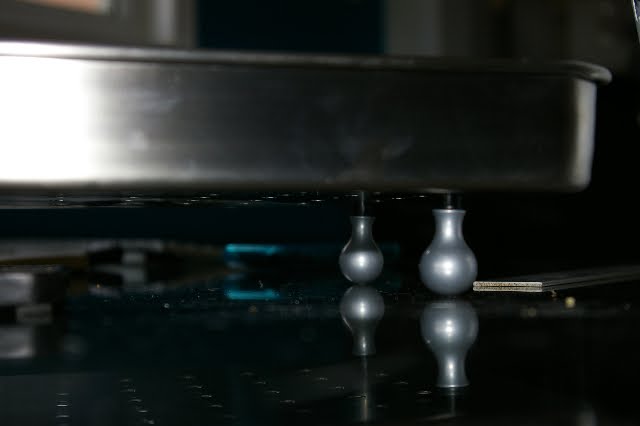
Shelemka made this catch all stationery tray from the Ikea Boholmen rinsing basket (discontinued, I believe), 4 Kosing knobs, and 4 -1/4″ x 1/4″ rubber washers.



In 2008, the government took historic measures to stabilize the financial industry by providing the Treasury unprecedented power to bail out the banks. Almost immediately after, the controversial move was despised by free-marketers everywhere. However, more pragmatic economic observers noted that they were unsavory, but unavoidable. 18 months later — surprise! — they actually appear to have worked pretty well. Andrew Ross Sorkin notes this revelation in his New York Times column today. Considering the underlying causes of the financial crisis, this should not be a shock.
Stabilizing the Market
The first important objective of the bailout was to stabilize the financial markets. That happened relatively quickly. It should have: when the U.S. government makes a choice to essentially prevent an industry from failing that goes a long way in calming markets. As soon as investors realized that the risk they feared would be covered by Uncle Sam, there was far less fear about banking. The credit crunch then began to lessen.
Several months later, the government decided to conduct a series of stress tests on the largest banks. That confirmed to the market that the Treasury would stand behind these firms. Again, investors were relieved and less worried about risk. The stress tests, thus, made it even less likely the bailouts would fail.
The Causes of the Crisis
Uncertainty drove the credit crunch. Investors and traders suddenly realized they didn’t fully understand some of the securities they owned, many of which relied on a troubled housing market. They also didn’t know how big the losses were that would hit banks that also held these bad assets.
But most banks had limited exposures to these toxic securities and the broader mortgage market. Home prices can only fall so far, so the losses slowed. When the credit crunch hit its climax, many of these assets had to be marked to prices that already reflected very serious loss levels. So some of the bank losses were unrealized at the time they were taken. That would provide banks some cushion going forward and even cause some institutions to see gains if losses turned out to be lower than anticipated.
So once investors got comfortable with the banks again, and the housing market’s bleeding slowed from a hemorrhage to a drip, they got much better. There was no systematic problem in their business models; they just made some really poor assumptions about what would happen in the real estate market. Once that mistake was in their past, they could go back to business as usual.
Not All Bailouts Worked — Yet
It should be noted, however, that not all of the bailouts worked, yet. The big banks that were given money have largely survived, because they didn’t have flagrant business strategy flaws that would limit their future profitability. Firms that the U.S. may lose money on, including Fannie, Freddie and the auto companies, are a different story. There, problems were driven by their business models. Consequently, those bailouts could ultimately fail, unless reorganization strategies work extraordinarily well and these companies manage to pay back the government over an extended time period.
Just because the bank bailout worked doesn’t mean bailouts, in general, are harmless. One statistic that’s hard to track is the damage caused to smaller banks by the government’s implicit guarantee of the bigger ones. Even though the bailout succeeded in stabilizing the economy, government support of private firms does have significant negative consequences. That’s why reform is so important to minimize the need for such bailouts in the future.


For a fourth straight year, bee hives aren’t buzzing with activity the way they should.
For no apparent reason, commercial honey bees are flying off to die, leaving beekeepers, the insect equivalent of cattle ranchers, reporting losses of half their livestock.
Outside Tucson, Arizona, Roy Wilson has been raising honey bees for five years, and puts their role as pollinators into perspective.
“It supposedly takes 120 visits to make a fully developed watermelon,” he says. “But if you don’t get those visits, you’re not gonna get that watermelon.”
Watermelon, or many other fruits, vegetables, and nuts we enjoy:
Nearly a third of America’s food supply requires pollination.
The cause of the die-off, called “Colony Collapse Disorder,” remains a vexing mystery.
At the USDA’s Carl Hayden Bee Research Center in Tucson, scientists say a number of factors are to blame, including poor nutrition, pesticides, and the parasitic Varrola mite that preys on baby bees.
While there is cause for concern, researchers are quick to add there’s no cause for panic– at least not yet. “The colonies that we have, and the ability of beekeepers to keep colonies healthy and use them to pollinate crops is still very much here with us, and United States beekeepers are extremely good at that,” says Gloria DiGrande-Hoffman, a lead researcher at the Center.
So far, there have been enough bees available to pollinate crops like apples, berries and avocado’s, and prices have remained relatively stable. But if the problem isn’t resolved, the health of the beekeeping industry could be in peril. “Beekeepers are small business people and when they experience these losses, it’s difficult for them to recover if these losses occur year after year after year,” DiGrande-Hoffman says.
Beyond that, we may see impacts on crops like almonds that are pollinated early in the year, before beekeepers have had enough time to replenish their hives.
If there aren’t enough bees to make enough visits, the result could be reduced production, and higher prices — a sting consumers will feel… in their wallet.
-Claudia Cowan, Tucson, Arizona