Blog

  • Shiller: Why the Housing Optimism?

    Yale Economist and housing market guru Robert Shiller published a piece in the New York Times on Sunday pondering why so many are bullish on the U.S. housing market. He notes that home prices have improved recently, but doesn’t find much reason to assume that they’ll continue to do so. Indeed, major obstacles stand in the way of stable home price appreciation going forward.

    Shiller points to a few indicators to support his fear that home prices could stop rising or even begin to fall again. One is the National Association of Home Builders index for prospective home buyers, which he says suggests home prices will decline. He also believes consumer psychology is very different now compared to 2006 regarding the resilience of the housing market.

    He continues by noting that the recession appears to be over and the government is pulling back its emergency measures. He then asserts:

    Recent polls show that economic forecasters are largely bullish about the housing market for the next year or two. But one wonders about the basis for such a positive forecast.

    Momentum may be on the forecasts’ side. But until there is evidence that the fundamental thinking about housing has shifted in an optimistic direction, we cannot trust that momentum to continue.

    Shiller is right to be worried about the market’s awakening. Much of it isn’t the kind of buying you want to see in a stable environment. Some reports indicate that speculative home buying has begun to heat up again. For example, house flipping is said to be regaining popularity. Even though home prices haven’t begun rocketing upward, this might indicate that they would be even lower in some regions were it not for investors making speculative bets on real estate.

    Like stocks, housing prices are based on expectations. But also like stocks, fundamentals must eventually catch up to forecasts. Those indicators remain mixed at best.

    Foreclosures are still increasing. Americans continue to lose their homes in troubling numbers, some due to unemployment, others willingly through “strategic defaults,” and some due to the subprime mortgage products that started the mess in the first place. If interest rates do increase in the months to come that could also put pressure on adjustable-rate mortgages, which have benefitted from the ultra-low rates the market has experienced over the past year.

    The Obama administration’s mortgage modification program has slowed foreclosures, but has failed to permanently prevent most. In fact, some of its meager success may turn out to be fleeting if re-defaults ramp up. Since most of the permanent modifications through March were done by temporarily lowering interest rates instead of principal, it’s pretty likely we’ll see many of those ultimately fail.

    Then, there’s the shadow foreclosure inventory. Most of the published foreclosure data is only part of the story: banks continue to hold back properties in an attempt to stabilize the market. If all severely delinquent and defaulted homes were suddenly listed for sale, prices might quickly reverse their positive trend.

    Finally, no one has any idea what will happen come May. At that time, the home buyer credit will be gone and the Federal Reserve will not have purchased any mortgage securities for several months. By then, the only government support the housing market will be left with will really be the Treasury’s foreclosure prevention program. As mentioned, through March, the effort’s results have been weak. So unless consumer buying sentiment improves significantly without any government incentive, it’s hard to see how housing inventory won’t increase quite a bit at that time. If it does that would consequently put pressure on prices and prove Shiller’s point.


    Email this Article
    Add to digg
    Add to Reddit
    Add to Twitter
    Add to del.icio.us
    Add to StumbleUpon
    Add to Facebook


  • Should Android be worried about Microsoft’s Kin One and Kin Two?

    Microsoft Kin on Verizon

    For a fleeting second — but not much more than that — I was worried. Here’s Microsoft, unveiling its new "Kin" (or KIN, if you ask them) dumber-than-a-smartphone, smarter-than-a-dumbphone pair of devices for Verizon and Vodafone. And here’s me, imagining the following conversation:

    MOM: OK, All I want is to get my daughter something that can take pictures, text, post to her Facebook and maybe that Twitter thing.

    VERIZON DUDE: Sure thing, ma’am. Here’s the Kin One. It’s new. It’s hip. It’s perfect for someone your daughter’s age. Facebook? No problem. Surf the Web Sure thing. She texts a lot? Well, this one (Kin Two) has a bigger keyboard, and a better camera, with a whopping 8 megapixels. Couple of swipes, and she’s sharing with all her friends.

    MOM: Sounds great! And it can download apps, right?

    VERIZON DUDE: Oh.

    And therein lies the problem. Taking the operating system out of the equation — be it Android, Windows Mobile, Symbian, whatever — is fine. HTC’s Sense does a pretty good job of that with Android (and a really good job in Windows Mobile). Motoblur we’re not nearly as smitten with, but the principle’s the same. Same with Samsung’s Touchwiz 3.0. Make the phone do the social networking work for you.

    But take the heart out of a platform — and these days, easily downloadable applications are the heart of any smartphone experience — and you’re left with a less-than-capable platform. Kin One and Kin Two might well be priced less than every Android phone available on Verizon. But they also will be capable of less, and that will be their downfall.

  • Porsche 911 GT3 Hybrid: el primer híbrido de carreras en llegar al podio

    porsche_911_gt3_hybrid.jpg

    Ya hemos tenido antecedentes de coches híbridos creados para competencia y que han participado con mayor o menor suerte en Europa, en las 24 Horas de Nurburgring, el evento de larga duración de turismos más importante del mundo. Podemos decir que Porsche es pionero de la participación de un híbrido en carreras y que termine llegando al podio, como en el último fin de semana con la participación del Porsche 911 GT3 Hybrid que llegó tercero en la Nurburgring Endurance Series.

    La carrera duró unas cuatro horas en las cuales el 911 Hybrid no tuvo ningún problema mecánico ni técnico con su sistema de volante recuperador de energía, el sistema que Williams había desarrollado para la Fórmula 1 el año pasado. Los pilotos asignados por Porsche al híbrido fueron Joerg Bergmeister y Wolf Henzler.

    ¿Y qué ventajas tiene un híbrido en una carrera? Muchas, sobre todo si el evento es de larga duración y si es un coche híbrido con un sistema similar al de este Porsche. Según los pilotos, los 120 Kw adicionales del motor eléctrico se notan y mucho, acelerando a la salida de las curvas. Además, el 911 híbrido requiere una detención menos en los pits que sus hermanos de gasolina para hacer repostajes.

    Con la experiencia acumulada en las carreras del campeonato alemán de resistencia en el Infierno Verde, Porsche tratará de inscribir al 911 GT3 Hybrid en las 24 Horas y, si todo sale como se espera, llevar a EEUU otro híbrido para la American Le Mans Series.

    Vía | Autoblog Green


  • Psst…Wanna buy a used Palm?

    By Carmi Levy, Betanews

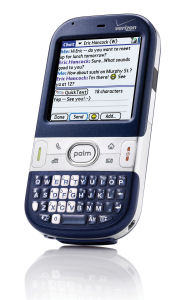
    Palm CentroAs rumors swirl around the latest chapter in Palm Inc.’s checkered journey from mobile darling to also-ran, I’ll resist the urge to place bets on which company or companies will be making an acquisition play. It almost doesn’t matter who buys Palm at this point. What matters is what that buyer does with Palm afterward, and how any acquisition would affect that company’s existing mobile strategy.
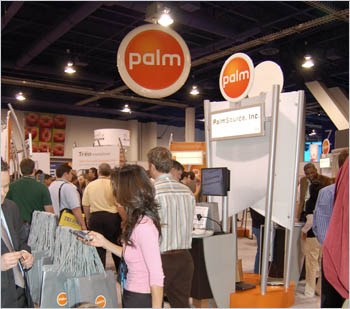
    For quite some time, it’s been obvious to everyone but Palm that it would eventually need a white knight. Palm seems to have finally clued in, as Bloomberg is now reporting that the mobile device vendor has engaged Goldman Sachs and Qatalyst Partners to find a buyer.

    I need a hero

    Although I’ve been predicting this for a while, I admit feeling more than a little sad that the end of Palm’s road is within sight. This is, after all, the plucky outfit that popularized the personal digital assistant, and had geeks everywhere taking notes in Graffiti. Unfortunately, Palm went from leader to follower when we ditched standalone PDAs for connected smartphones. Sure, the Treo 600 was a great piece of work, but after hawking essentially the same product for over six years — a long time in any business, but a hopeless eternity in tech — Palm was clearly yesterday’s news.

    This latest twist in the company’s history is a stark lesson for anyone else in tech: Take your eye off the ball once, and you risk eventually losing the game.

    PalmPalm did itself no favors by continually, and seemingly endlessly, remaking itself with spinoffs, rebrandings, acquisitions, and restructurings. The company spent so much time on its corporate image that it forgot its product image. Remaking Palm Inc. rather than Palm products diverted corporate attention from rebuilding the foundation of products that, ironically, could have sustained the image of Palm Inc., or PalmSource, or PalmOne, or whatever. Developing compelling new products that consumers and businesses wanted, and building relationships with the broader stakeholders who would have added ongoing value to those products, should have been PalmOne’s job #1.
    All the corporate gymnastics also distracted Palm from the not-so-subtle shifts that were redefining the industry it had practically created. Specifically, as platform success became ever more dependent on factors way beyond just hardware, Palm continued to bet the farm on just hardware. Instead, it should have been investing in building a community of developers who would have made a webOS-based device worth more than the sum of its parts.

    Carmi Levy Wide Angle Zoom (v.2)Great hardware. Not-so-great everything else.

    The Pre, introduced at CES 2009, was a technological home run. Its just-unique-enough design and slick webOS operating system should have been enough to get consumers out of bed in the middle of the night, and lined up around the block before dawn. And indeed, there were some developers who started lining up at the front of the queue; trouble was, Palm didn’t send anyone over to that line to start selling tickets. It assumed developers who either created the first vibrant mobile software market years earlier, or at least remembered Palm OS’ success, would naturally return to the fold. Unfortunately, Palm left its legacy products in market for so long that by the time the new stuff was ready, the developers had migrated elsewhere.

    Palm’s problem was, and is, apps. Back in the era before Internet distribution, the old Palm OS platform boasted a library of over 4,000 third-party applications. By comparison, the Palm Pre launched with barely a dozen-and-a-half third-party apps, at a time when Apple was rewriting the criteria for mobile platform success. When the Pre was announced, Apple’s App Store had 15,000 titles. By June, when the Pre began to ship, Apple boasted 50,000 titles. Today, it’s up to 185,000 with no end in sight.

    Palm? It’s just cracked a thousand titles.

    Not that I believe that total app volume is the ultimate driver of platform success. It isn’t. Apple’s App Store is home to plenty of frivolous titles that aren’t even worth a chuckle or two around the office water cooler. A smaller number of more substantive apps could just as easily sustain a healthy and vibrant smartphone platform. But image is a big thing in the minds of developers whose futures depend on which platform they’re most associated with.

    Just ask anyone today who’s known in the coding community as the iPhone developer who builds apps for webOS. You’ve seen the good kids in high school who just can’t get the more popular ones to notice them because, although they wear the right clothes, they signed up for chess club rather than track. Well, good developers can’t get noticed in any field when they’re associated with a single platform that lacks traction. Palm’s App Catalog never had a chance, because the only developers willing to risk everything on the once-and-no-future king were die-hards. Everyone else settled on developing for the sure-thing iPhone or, increasingly, Android.

    Look beyond the buyout

    Whoever acquires Palm (press rumors mention HTC, Lenovo, Dell, and even Apple and Microsoft) will gain access to not only a fairly leading-edge set of hardware designs and a promising mobile OS, but also a broad range of patents and related intellectual property.

    The key to success for that suitor will be to avoid sinking new resources into designing and releasing yet another brand new, killer phone. Palm did not fail on the hardware or OS side — its offerings are already as good as they get. Instead of putting its eggs into hardware development, Palm’s suitor would do well to actively target developers now grappling with Apple’s our-way-or-no-way approach, or Google’s fragmented-landscape mentality. Successful as these solutions are, they’re not perfect — and more importantly, neither is an ideal fit for every developer.

    There’s room for an alternative player in the still-fast-growing mobile landscape. Developers continue to hold out hope for a successful mobile platform sustained by a company that understands the way they do business, rather than building up self-sustaining provisos in its developers’ contracts. Hope is a powerful ingredient. Used well, it can produce something new and better called loyalty. But it won’t do that on its own.

    Carmi Levy is a Canadian-based independent technology analyst and journalist still trying to live down his past life leading help desks and managing projects for large financial services organizations. He comments extensively in a wide range of media, and works closely with clients to help them leverage technology and social media tools and processes to drive their business.

    Copyright Betanews, Inc. 2010


    Add to digg
    Add to Google
    Add to Slashdot
    Add to Twitter
    Add to del.icio.us
    Add to Facebook
    Add to Technorati


  • Vodka Bottle’s Programmable LED Ticker Is Worth a Shot [Vodka]

    Let’s say a vodka bottle’s fancy label doesn’t quite broadcast how awesome you are for drinking it. What then? Why, slap a programmable blue LED ticker on there like Medea did. They also, lord help us, made an instructional video: More »


  • Send free SMS with Kik

    Remember when texting was all the craze? Parents would get these enormous cell phone bills and wonder how their children could possibly use their phones enough to generate those kinds of fees. Much of it came from text messaging, before carriers offered text messaging bundles. They’ve since done that, and for a while it seemed that everyone was SMSing. Now all I hear from smartphone users is how much they loathe SMS. BlackBerry users in particular tend to prefer BBM, though with OS 5.0 the threaded SMS makes communicating via that medium a bit more palatable. In any case, if you’ve kicked your unlimited SMS plan to the curb, there might be an answer for you. Kik is a service that offers unlimited SMS — though there’s a bit of a catch.

    (more…)

  • State lawmaker proposes stricter penalties on sex offenders

    People convicted of sex crimes against minors would face longer prison sentences and more time on parole with electronic monitoring under a proposal made Monday in response to the murder of 17-year-old Chelsea King of Poway.

    The man charged with killing King was on parole after serving five years in prison for molesting a 13-year-old girl.

    “We are standing here today because our precious daughter Chelsea has inspired us, and thousands of others, to galvanize together to create a law that denies a convicted sexual predator a second chance to harm or take the life of another child,” said Kelly King, Chelsea’s mother. “Chelsea is our beacon.”

    Kelly and Brent King joined Assemblyman Nathan Fletcher (R-San Diego) in announcing a bid to change existing laws governing sex offenses. Fletcher wants to establish a new penalty of a life sentence without the possibility of parole for forcible sex crimes against those younger than 18 when there are aggravating circumstances such as torture and "kidnapping that substantially increases risk of harm to the victim."

    He also wants to increase the penalty from a minimum 15 years to at least 25 years for a forcible sex crime life that includes any one of several "minor" aggravating circumstances, including use of a weapon, simple kidnapping or drugging of the victim.

    Fletcher also proposes that registered sex offenders be barred from visiting parks where children regularly gather without the offender first getting approval from a parole agent.

    And the parole for a person convicted of a forcible sex crime against a minor would be increased from five to 10 years. Those convicted of such a crime against a child younger than 14 would face lifetime parole that included electronic monitoring of their location by parole officials, Fletcher said.

    “Violent sexual predators that prey upon children cannot be rehabilitated, and with Chelsea’s Law, we will have a criminal justice system that reflects this reality,’’ the lawmaker said.

    — Patrick McGreevy in Sacramento

  • 2010 Chevrolet Camaro, 2011 Hyundai Sonata most viewed on AutoTrader

    The folks at AutoTrader announced today that the Chevrolet Camaro once again became the most-viewed new vehicle on the site. The site also reported that Hyundai’s new 2011 Sonata midsize sedan was the most-viewed new vehicle in its class for the first time ever, surpassing competitors that include Honda Accord, Toyota Camry and Nissan Altima.

    Click here to get prices on the 2010 Chevrolet Camaro.

    “As the Camaro, Equinox, Sorento and Sonata all prove, hot new designs still are capable of drawing shopper attention on-line and in showrooms,” said AutoTrader.com President and CEO Chip Perry. “With most major automakers planning lots of new product to roll out during the course of 2010, consumers will have a lot to be excited about at their local dealership this year.”

    Click here to get prices on the 2011 Hyundai Sonata.

    Other big gains in vehicles came from a pair of crossovers – also from Chevrolet and the Hyundai/Kia group. Views of the Chevrolet Equinox were up 186 percent in views year-over-year, making it the most-viewed new vehicle in its class and the 8th most-viewed new vehicle overall. Views of the new Kia Sorent were up 268 percent year-over-year, making it the 2nd most-viewed compact crossover, and 20th overall among all vehicles.

    2011 Hyundai Sonata:

    – By: Omar Rana


  • “Law & Order: LA” Premiering Fall 2010

    Law & Order creator Dick Wolf and executives at NBC have hit the green light on another Law & Order spinoff, this one based on a crime unit in the Los Angeles, California area, TV tipsters say.

    According to a scoop from Deadline Hollywood, the network has picked up Law & Order: Los Angeles (LOLA) for 13-episodes that will premiere next fall.

    I’m not sure about this move. For me, the on-location setting in the Big Apple is a huge part of Law & Order’s lasting charm. The city is like another character in itself. Hmm — we’ll see what transpires…..

    The original Law & Order, which spawned 3 spinoffs (albeit the ill-fated Trial By Jury), has been on the air since 1990 and will likely be renewed for a historic 21st season.


  • The START of Something New

    Last week, U.S. President Barack Obama and Russian President Dmitry Medvedev signed a new Strategic Arms Reduction Treaty (START). Upon announcing the agreement, Rabbi Saperstein welcomed this major step forward in advancing U.S. security and ridding the world of the threat of nuclear weapons.

    The treaty decreases both sides’ deployed strategic nuclear warheads to 1,550, which represents a 30% reduction, among other important developments.

    The U.S. and Russia signed the START treaty in the Czech Republic on the one year anniversary of a speech President Obama delivered in Prague on the subject of nuclear non-proliferation. This address included commitments to reduce the threat of nuclear weapons and made “a world without nuclear weapons” the goal of American nuclear policy.

    Since that time, Vice President Biden affirmed this pledge in an address in Washington, D.C. (I was fortunate to have the chance to hear him give this speech!). This past week, the Obama Administration also issued what is known as a Nuclear Posture Review, a comprehensive strategy that will, for the first time, explicitly limit the conditions under which the United States would use a nuclear weapon.

    Now that Presidents Obama and Medvedev have signed the new START agreement, the Senate must ratify the treaty by a two-thirds majority. Many Senators, included Senator Kerry, Senator Merkley, and Senator Lieberman have issued statements in response to the treaty.

    You can use our action alert to write to your Senators, urging them to implement important weapons reductions and make our nation and world safer.

    And stay tuned for more nuclear news this week – diplomats from nearly 50 countries are converging on D.C. for a nuclear summit, where they will likely discuss the Nuclear Non-Proliferation Treaty, the threat of a nuclear Iran, and more.

    As always, feel free to leave a comment or email me with questions.

  • Microsoft Kin AKA Project Pink Unveiled

    Found under: Project Pink, Microsoft, Windows Phone 7, Windows Mobile, Kin, Kin One, Kin Two, Sidekick,

    Microsoft Project Pink is finally here ladies and gentlemen and from the looks of things the Project Pink devices which are dubbed as Kin One and Kin Two are not targeted at hardcore smartphone users instead these little handsets are going for the folks who love the Sidekick line of phones and are addicted to Social Networking sites like Myspace and the ever growing Facebook. The Operating System on both Kins is a version of Windows Phone 7 but dont expect to do anything impressive wit

    Read More

    Read more in mobile format

  • Head of Buildings Strategy

    London, CJA

    The Carbon Trust’s mission is to accelerate the move to a low carbon economy, by working with organisations to reduce carbon emissions now and develop commercial low carbon technologies for the future.

    Head of Buildings Strategy

    Salary: Negotiable
    Based: London
    Ref: HBS/REJ

    In this key role as Head of Buildings Strategy, you will co-ordinate and steer the Carbon Trust’s strategy on how to accelerate the transition towards low carbon non-domestic buildings.

    Working both on standalone projects and with other points of the organisation, you will use your strategic management and proven problem solving experience to draw out key technology, commercial and policy insights on how to decarbonise the building stock and unlock commercial opportunities. By building strong relationships at the highest level, you will communicate your findings to other parts of the Carbon Trust and participate in government advisory boards, advise commercial clients and present at industry conferences.

    Educated to degree level or equivalent, you will have experience of the energy and/or property sectors (knowledge of low carbon buildings and related technologies being a particular advantage) in a management consultancy or internal strategic capacity advising to board level.

    Further information available at www.carbontrust.co.uk/jobs

    Closing date: 23 April 2010.

    The Carbon Trust is committed to offering equality of opportunity for all.
     

  • Microsoft Reveals Its Pink Strategy; First Phone Named ‘Kin’


    Microsoft Kin, aka

    Microsoft (NSDQ: MSFT) unveiled the second prong of its mobile-phone strategy today, and the venue for the announcement, a night club in the obscure design district of San Francisco, speaks volumes about the target consumer.

    The project, code-named “Pink,” has been in the works for more than two years since Microsoft purchased Danger, the company known for making the Sidekick, a pop culture icon. Today, the Sidekick is being reborn as the Kin, which is being built by Sharp, and distributed by partners Verizon Wireless and Vodafone (NYSE: VOD). Separately, of course, Microsoft has Windows Phone 7, which was announced in February and is due out later this year. “This is a new deeply social phone that gives people what they want. Windows Phone 7 is about simplifying. This phone is about amplifying our life,” said Robbie Bach, Microsoft’s head of entertainment and devices division.

    In a 40-minute event, Microsoft tried to prove that it can create a cool product that could attract a teenage crowd. But neither Microsoft nor Verizon talked about how much the device would cost, which usually trumps functionality among this price-sensitive crowd. Without answers to a lot of questions, it’s hard to see how Microsoft will be able to successfully market the devices separately from Windows Phone, not to mention compete against Apple (NSDQ: AAPL) and Google’s Android, which already have a huge head start. The phones will be in stores in May.

    This big problem is that the project, which has been a big mystery for at least two years, is still somewhat shrouded in secrecy. That doesn’t bode well for Microsoft and Verizon as it tries to ramp up hype around the products.

    There’s three major concerns:

    —The introduction of Kin creates yet another mobile operating system. Will Microsoft publish an SDK so that developers can create applications for the devices, or will it remain a closed device?
    —What premium services will be apart of Kin? How much will Zune cost?
    —Immediately, a couple of big omissions were spotted on the device. It has no calendar, and some obvious features seem to be missing, like being able to upload photos to Twitter.

    The release includes two phones to start, the Kin 1 and the Kin 2, here are some of the features:

    —“The loop”: This is the community of friends, where people are prioritized on the phone by how much you contact them. They become favorites, which makes it easier to email, call or SMS those people.

    —Zune: The phone is the first to come loaded with Microsoft’s Zune music services.

    —“The spot”: The “spot” is how you drag and drop photos and other info to your loop.

    —Web interface: This is possibly the slickest feature of the phone. All of the photos and interactions you have on the phone are automatically uploaded and stored on the web. On the web, there’s a slick timeline interface, where you can track those photos or interactions by week or day.

    Related


  • Siegel And Shiller Spar Over The Huge Double Dip Question

    Prof. Jeremy Siegel and Prof. Robert Shiller both spoke on CNBC today on whether or not we were headed for a double dip recession. Siegel doesn’t see a chance of one, while Shiller is worried about global confidence levels cracking and crushing the recovery.

    • 0:20 Siegel: There is no chance of a double dip recession and the numbers show it
    • 1:30 Shiller: He’s concerned about a double dip, because confidence has been impacted worldwide
    • 3:00 Shiller: Global economy could be hit by collapse in confidence, and that is what will lead to the next downturn
    • 3:45 Siegel: Confidence may be down, but spending isn’t showing this problem, particularly in emerging economies


    Join the conversation about this story »

  • 4/12 Injury Update: Andrew Bynum

    The last update we had on Andrew Bynum came from Denver on Thursday, when he suggested that he most likely would not play in L.A.’s final two regular season games, but would almost certainly play in the Lakers’ first playoff game.

    Bynum confirmed as much after Monday’s practice, during which he ran on one of the team’s machines with 30 pounds of weight on his back.

    “It worked fine,” he said. “There was no pain. Tomorrow, (I’ll) run a little bit further, put a little more weight on.”

    Bynum’s primary concern isn’t for his left Achilles tendon, but on his game shape and conditioning, which he recognizes will take a bit of time to return. He’s already missed 11 games due to the injury.

    The 22-year-old center hopes to resume basketball activities on Wednesday, the day of L.A.’s final regular season game, which would give him several days of practice before the team’s first playoff game.

  • Votati Brasovul !

    centrul_vechi_brasovEvenimentul Zilei lanseaza o provocare : alegerea Orasului de Vis din Romania !
    Orasele participante sunt urmatoarele : Arad, Bacau, Braila, Brasov, Bucuresti, Cluj Napoca, Constanta, Craiova, Galati, Iasi, Oradea, Pitesti, Ploiesti, Sibiu si Timisoara .

    Criteriile de evaluare pentru alegerea orasului de vis sunt urmatoarele :
    1. Vot popular – pondere finala din nota 50%
    2. Evaluarea oraselor din partea vizitatorilor – pondere finala din nota 25%
    3. Evaluarea oraselor evz.ro – fiecare oras a primit, din partea evz.ro, note pentru cele sapte categorii principale – pondere finala din nota 25%

    Nota finala va fi calculata astfel : vor fi calculate pe baza votului de popularitate (50%), notele cititorului (25%) si nota evz.ro (25%).

    Eu personal am fost in majoritatea oraselor. Brasovul, Clujul si Sibiul mi se par cele mai frumoase. Inca nu inteleg ce cauta Bucurestiul printre nominalizari. Poate are cineva o explicatie …
    Eu l-as nominaliza la Orasul de Gunoi !

    Mai multe detalii gasiti aici : Orasul de vis si desigur pagina despre Brasov.
    Votati Brasovul !

    Calendarul competitiei:

    6.04-11.04 Arad
    12.04-18.04 Bacau
    19.04-25.04 Brasov
    26.04-2.05 Braila
    3.05-9.05 Cluj-Napoca
    10.05-16.05 Constanta
    17.05-23.05 Craiova
    24.05-30.05 Galati
    31.05-6.06 Iasi
    7.06-13.06 Oradea
    14.06-20.06 Piteşti
    21.06-27.06 Ploieşti
    28.06-4.07 Sibiu
    5.07-11.07 Timisoara
    12.07-25.07 Bucuresti
    26.07-1.08 Anuntul castigatorului

    Trimite si prietenilor:


    Related posts:

    1. Gheo
  • Super Nominee – Super Scrutiny.

    04.12.10 08:08 AM posted by Skip MacLure

    Senator Patrick (Leaky) Leahy (D-VT) has stated that Obama’s choice for the Supreme Court, to replace Justice John Paul Stevens who is retiring at the end of this term, should be in place for the next Supreme Court term which begins in October.


    Barack Obama and John Paul Stevens

    Umm, maybe not, Pat… there are some Senate Republicans who are going to work at their pay grade for once and just scrutinize the hell out of everything they’ve ever done. Oh, I don’t know, does the name Bork bring anything to mind? This was when Ted Kennedy opposed Judge Robert Bork’s nomination to the Supreme Court by President Ronald Reagan. Ted Kennedy stood in front of the nation and attacked Bork, lying through his eye teeth. The Republicans were completely caught off balance and by the time they did react to the attack the Democrats owned the story. The rest is history.

    History may be written here again this summer as the left stack up their leftist nominees, selected by their leftist boss, to advance through judicial activism what the left cannot win at the ballot box. How the Senate Republicans handle this process will tell us a whole bunch about who will stay in the Senate. The truth is we’ve had a gut full of Republicans making deals and pandering to our political opponents. It’s time to stand up and be counted or…? read more »

    http://www.conservativeoutpost.com/s…super_scrutiny

  • Kerpen on FOX Forum: Obama’s Secret Power Grabs

    04.12.10 11:37 AM

    President Obama seems to believe that most of his sweeping agenda to transform the country can be accomplished without even a vote of Congress.

    Updated April 12, 2010
    By Phil Kerpen – FOXNews.com

    While Congress considers sweeping new legislation to permanently institutionalize the bailouts and federal control of our financial system (right on the heels of their health care takeover, of course) several other sweeping power grabs are going on outside the spotlight of legislative debate. Indeed President Obama seems to believe that most of his sweeping agenda to transform the country can be accomplished without even a vote of Congress. The chart found here shows what the administration is up to.

    http://www.americansforprosperity.or…et-power-grabs

  • 40 years later, failure is still no longer an option | Bad Astronomy

    This week marks three related anniversaries.

    April 12, 1961: Yuri Gagarin becomes the first man in space. That was 49 years ago today.

    April 14, 1970: An oxygen tank disrupts on Apollo 13, causing a series of catastrophic malfunctions that nearly leads to the deaths of the three astronauts. That was 40 years ago this week.

    April 12, 1981: The first Space Shuttle, Columbia, launches into space. That was 29 years ago today.

    I wasn’t yet born when Gagarin flew, and I was still too young to appreciate what was happening on board Apollo as it flew helplessly around the Moon instead of landing on it. But I do remember breathlessly awaiting the Shuttle launch, and I remember thinking it would be the next phase in our exploration of space. I was still pretty young, and hadn’t thought it through, but I’m sure had you asked me I’d have said that this would lead to cheap, easy, and fast access to space, and by the time the 21st century rolled around we’d have space stations, more missions to the Moon, and maybe even to Mars.

    Yeah, I hadn’t thought it through. Of all these anniversaries, that one is the least of the three we should celebrate.

    Don’t get me wrong; the Shuttle is a magnificent machine. But it’s also a symbol of a political disaster for NASA. It was claimed that it would be cheap way to get payloads to space, and could launch every couple of weeks. Instead, it became frightfully expensive and couldn’t launch more than a few times a year.

    This was a political problem. Once it became clear that NASA was building the Shuttle Transport System, it became a feeding trough. It never had a chance to be the lean space machine it should’ve been, and instead became bloated, weighted down with administrative bureaucracy and red tape.

    More than that, though, to me it symbolizes a radical shift in the vision of NASA. We had gone to the Moon six times — seven, if you include Apollo 13 — and even before the launch of Apollo 17 that grand adventure had been canceled by Congress, with NASA being forced to look to the Shuttle. Ever since then, since December 1972, we’ve gone around in circles.

    Now, there’s a lot to be said for low Earth orbit. It is a fantastic resource for science, and I strongly think we should be exploiting it even more. But it’s not the goal. It’s like walking halfway up a staircase, standing on your tiptoes, and admiring the view of the top landing.

    We need to keep walking up those stairs. In 1961, the effects of space travel were largely unknown, but Yuri Gagarin took that chance. He was followed by many others in rapid succession. Extrapolating from his travels, by now there should be a business making money selling tours of the mountain chains around Oceanus Procellarum by now. Of the three anniversaries, looking at it now, Gagarin’s is bittersweet.

    In 1970 Apollo 13 became our nation’s “successful failure”. A simple error had led to a near tragedy, saved only by the experience, training, guts, and clever thinking on their feet of a few dozen engineers. They turned catastrophe into triumph, and now, four decades later, we can’t repeat what they did. Think on this: when the disaster struck their ship, the crew of Apollo 13 were over 300,000 kilometers from Earth. Apollo 13 may have been a successful failure, but it’s a failure we can’t even repeat today if we tried.

    I’ve written quite a bit about NASA’s future, including my support of Obama’s decision to cancel Constellation, the program that includes the next series of big rockets to take people into space. That may seem contradictory on its surface, but I support the decision because, in my opinion, Constellation was over budget, behind schedule, and had no clear purpose. The idea of going back to the Moon is one I very much strongly support, but I get the impression that the plan itself is not well-thought out by NASA. The engineering, sure, but not the political side of it. And it’s the politics that will always and forever be NASA’s burden.

    It was a political decision to cancel Apollo. It was a political decision to turn the Shuttle from a space plane to the top-heavy system it is. It was a political decision to cancel the Shuttle with no replacement planned at all (that was done before Obama took office, I’ll note). It was a political decision that turned the space station from a scientific lab capable of teaching us how to live and explore space into the hugely expensive and bloated construction it is now.

    NASA needs a clear vision, and it needs one that is sturdy enough to resist the changing gusts of political winds. I’m hoping that Obama’s plan will streamline NASA, giving away the expensive and “routine” duties it needs not do so that private industry can pick them up. The added money to go to science, again in my hopes, will spur more innovation in engineering.

    And NASA needs a goal. It needs to put its foot down and say “This is our next giant step.” And this has to be done hand in hand with the politics. I understand that is almost impossible given today’s political climate, where statesmanship and compromise has turned into small-minded meanness and childish name-calling on the Congress floor.

    But I’m old enough to remember when NASA could do the impossible. That was practically their motto. Beating the Soviets was impossible. Landing on the Moon was impossible. Getting Apollo 13 back safely was impossible.

    Of the three anniversaries, Apollo 13 is the one we should be celebrating. I’ll gently correct what Gene Kranz said that day: failure really was an option, but not an acceptable one.

    Right now, at this very moment, those feats are all impossible once again. But for a time, they were not only possible, we made them happen.

    It’s time to do the impossible once again.

  • Palm launches Hot Apps website, lets you track the competition yourself

    Palm Hot Apps website

    Launched at the beginning of February, Palm’s Hot Apps competition promises to award $1 million to the top free and paid apps in the Palm App Catalog. Since then, the competition has chugged quietly along, but today got a boost in the arm from Palm. The newly-launched PalmHotApps.com lets you, me, and anybody else with one of those fancy-pants web browser things hop onto the interwebs and track the competition for themselves.

    The website breaks down both halves of the competition, paid and free apps, listing the most-downloaded free apps since the start of the competition (currently lead by MojoJungle’s The Helicopter Game) and the highest-revenue paid apps since up to this point in the competition (YouView’s Visual Voicemail at the front). The site also tracks the progress of apps qualifying for the Hot Apps competition, rating their change in ranking from day-to-day and listing up-and-coming apps.

    We also have gotten a better idea of what it’ll take to qualify for a piece of the Hot Apps pie: More than 11,625 downloads for a free app, or more than $513.81 in revenue for a paid app. Of course, that number is bound to rise over the remaining 78 days of the competition, but it seems that the barrier for entry is rather low for the time being.

    A Hot Apps refresher: The most-downloaded free app between February 1 and June 30 will win $100,000, the #2-21 free apps will be awarded $10,000, and #22-221 will win $1,000. The highest-revenue paid app will net $100,000 at the end of the competition, while #2-21 will get $10,000, and #22-221 will win $1,000 apiece. That’s $1,000,000 total, split amongst 442 developers.

    Oh, and if that June 30 date doesn’t seem right, that’s because Palm has extended the end of the Hot Apps competition from May 31 to June 30!