Likely the most interesting element of the Kin phones, next to the Share spot, is the Kin Studio, which takes My Phone to the next level. Hopefully these features will see wider roll-out when Windows phone 7 comes along.
Likely the most interesting element of the Kin phones, next to the Share spot, is the Kin Studio, which takes My Phone to the next level. Hopefully these features will see wider roll-out when Windows phone 7 comes along.
From Green Right Now Reports

Image: greeniteconomicsummit.org
Technology experts from across the nation will gather in Tyson’s Corner, Va., on Earth Day (April 22) to discuss the latest enhancements in green computing. The Green IT Economic Summit will address changes that can combine environmentally-friendly practices with future profitability.
Research organization Forrester will unveil findings of a nationwide survey of current practices and progress toward greener services. Microsoft is scheduled to present both the innovations now being implemented through its worldwide operations and the changes that lie ahead for Green IT.
Others expected to contribute include HP, British Telecom, SRA, Marriott, Symantec, Raritan, Carbonfund, and Green Science Exchange.
Among the topics to be discussed:
Organizers hope the summit will provide attendees with good information on how to incorporate green initiatives into successful, profitable business practices.
“It is an economic summit, not a technology summit,” conference director Teresa Moraska said.
 I’ve been keeping someone to myself much too long. I’ve collected reams of notes and have a stack of material. Now I feel somewhat prodded, thanks to Rose City Reader, who posted this review of Anne Fadiman’s “Ex Libris: Confessions of a Common Reader.”
I left this comment on her post:
My copy of this book first belonged to my friend, Josephine, who was exactly twice my age when I first met her. She writes in pen in all of her books. She underlines words she doesn’t know, she makes little comments, she traces routes on maps, and on the very last page of every book she reads she signs and dates it and sometimes writes a short comment. It doesn’t matter if it’s a paperback or a gorgeous leatherbound edition from Easton Press. When I pointed this out, she shrugged and said simply she was a carnal book lover. When I was confused, she said I had to read this book and gave me her copy. In the middle of Fadiman’s essay about courtly vs. carnal book lovers, Josephine wrote in very scratchy script at the bottom of Page 40: “Mom used to use a bill to mark her place in a book. She told me to look through her books when she died. Yes, I found a few bills. I was astounded a couple of months ago to find $60 in a book I had read some time before. My mother’s daughter.” The last page is signed: “J.D.P. Jan. 16, 2009. Truly loved this book!” She was 92 years old at the time.
I first virtually met RCR after I had written a wacky story for a large publishing institution about the author Henry James and my struggles with my love/hate relationship with him. She was one of the very first people to send me an e-mail and she included her name and address. It turned out she lived around the corner from me and just a few short blocks away. We started an agreeable and sometimes hilarious e-mail exchange. We realized we had once worked together and she used to be married to someone I knew. And then she moved from the house around the corner. Into a house that had belonged to someone else I had known (and worked with).
It’s fitting that RCR would kick me in the rear to write about Josephine, because in addition to RCR’s note responding to the Henry James story, I received several e-mails and phone calls, but I got just one piece of mail. From Josephine.
I wrote way back when for the large publishing institution what her card said.
She had written a book. I tracked it down. And found a surprise inside. Then I tracked down Josephine.
After that I had always promised I would share what happened after I met her, but I kept it to myself. I got e-mails on occasion from people who had followed the story and kept in touch. They prodded me and wanted to know.
I visited Josephine every few weeks for many months, but I didn’t write a thing. Perhaps it was my own little indulgence. Or I worried I wouldn’t be able to do it justice. Or I couldn’t figure out the scope of it. Or I didn’t know where to start. Or it was apathy. Or perhaps it was my own uncertain battle with public vs. private.
I did know, however, that keeping silent perpetually disappointed Josephine, who proudly has a ham streak a mile wide.
Here’s a beginning. We’ll see if I eventually write more.
Meet Josephine.
*****
“I’m going to be stuck up for a while!” Josephine tossed back her head and laughed after I read aloud articles I had written about her and comments people sent to pass on.
 It was the first time I ever visited her in the tiny, tidy, one-bedroom apartment she shares with her granddaughter Amy not far from downtown Vancouver, Wash. She sat on a small bed with a few stacks of books around her, including “Plato’s Republic,” a nice leatherbound edition from Easton Press. Her twin bed takes up most of the room. A long, low bureau lines most of a wall under a window, and a few shelves beside it include books by Jane Austen, George Eliot, Charles Dickens and Dave Barry, and a bottle of Grand Marnier.
Amy’s bed is a twin mattress on the floor of the living room. It’s also the couch.
The first time I visited there wasn’t a chair anywhere in the apartment, so I threw my coat on the floor and sat next to it. Now I’m in the habit of looking around for a low wooden footstool and squatting on it. My coat still goes on the floor.
They now have a couple of different fold-up chairs that they bought for less than $10 at Goodwill and Target. There’s a counter that separates the small kitchen from the living room, but there’s no table.
 Josephine saves a few dollars every month to buy books. When I visited her on her birthday in December she had recently finished reading Leo Tolstoy’s “War and Peace.” She had started it in October. Now she was on Page 53 of a paperback copy of “The Pickwick Papers” by Charles Dickens. She can’t lift her arms very well and had trouble holding open the fat book, so as she finished reading each page she ripped it out and let it float to the floor.
The first time I visited I took a small jar of pickles, bread and butters. Amy made chocolate chip cookies from store-bought dough. They were warm. I had never planned to go back again. But a funny thing happened.
Josephine handed me a stack of papers that were bound with a plastic spiral fastener. It was a collection of her poems and drawings. She had it ready for me, eager to share everything with someone she had never met before, and I marveled at her openness and zeal for publicity. I was holding in my hands a volume of her personal writings, and she completely trusted me without question. I was surprised. And something else, too. Honored.
I thumbed through the pages, glancing at the words, and carelessly, without thinking, I said, “I write poetry.” It was a throwaway line, something to elicit trust, as if to say, I understand and this book is in safe hands.
“I knew that,” she said just as automatically. Startled, my attention snapped into focus. I looked at her.
“How do you know that? I didn’t tell you.”
She got a distant, wistful look in her eyes. “I knew you were a poet. I could tell from your work.” Her eyes didn’t see me, and she said it again, sounding out each word carefully and quietly while she nodded her head. “I knew you were a poet.”
Then, much to my surprise, without any segue or introduction, she broke into reciting from memory one of her poems. A stunning gift.
April is National Poetry Month. Here’s one of my favorite poems:
REQUIEM
by Josephine Paterek
Not for me the narrow confines of wood, satin and brass,
Constricted silence … forever.
Rather, expose me to the leaping roaring flames,
My spirit curling upward from the ashy residue.
Then, fling me into the cold clean salty air,
And I sink down, down,
Past the darting glittering fish,
Past the undulating kelp.
Down, down through the darkness
To roll endlessly on the ocean floor.
Part of me rides the crest of the wave, tumbling in foam,
Sliding down the green slickness of a comber.
Part of me will reach the shore,
Caressing the shingle with the tidal surge.
Restless in life
Let me be restless in death,
Joined forever to the restless sea.
Filed under: Hatchback, Infiniti, Nissan, Design/Style, Electric, Luxury

Highlighting the classic conundrum of creating a bespoke luxury car from more plebeian underpinnings is a report from Automotive News that Infiniti was forced to reject the initial designs for its version of the Nissan Leaf electric car. Apparently, those first attempts, which came in from Nissan‘s San Diego styling studio, were too similar to the standard Leaf.
According to Ben Poore, vice president of the North American Infiniti Business Unit, though, those problems are now long gone. “I was in Japan last week and saw the final three or four designs for the car,” assures Poore. “And I can tell you without a doubt that we’re going to have a uniquely Infiniti product.”
So, what kind of “uniquely Infiniti” changes can we expect from the upmarket electric vehicle? Surely there will be styling updates to bring the funky little hatchback more in line with the rest of the Infiniti lineup, and we’d also expect an interior that’s suitably upgraded with more luxurious appointments. Also, Poore suggests that the car must have adequate acceleration and performance in order to satisfy Infiniti’s more demanding clientele.
Predictably, these improvements will bring with them an increase in the Leaf’s after-federal-incentive price of around $25,000. How much more, though, remains to be seen, as does the actual release date of the Infiniti-fettled Nissan Leaf.
[Source: Automotive News – Sub. Req.]
Report: First Infiniti Leaf rejected due to staid styling, lack of luxury originally appeared on Autoblog on Mon, 12 Apr 2010 13:58:00 EST. Please see our terms for use of feeds.
Read | Permalink | Email this | Comments
(This guest post appeared at the author’s blog.)
Iceland has approximately the 101st biggest economy in the world.
Dubai is also tiny.
Greece is somewhat bigger, with the 27th biggest economy.
When Iceland, Dubai and Greece tanked, that was horrible … but not catastrophic.
Portugal – the 37th biggest economy – may be next. It would be horrible if Portugal tanks.
But Spain is also in real trouble. As the 9th biggest economy, a default by Spain could be major.
But none of these are in the same ballpark as Japan – the world’s 2nd biggest economy. Only the U.S. is bigger.
So it is newsworthy that S & P cut Japan’s sovereign credit rating in January.
And that, as Bloomberg wrote April 2nd:
Japanese National Strategy Minister Yoshito Sengoku said the country should have a greater sense of urgency about the nation’s fiscal situation, comparing it to the plight of Greece. “So far some have been crying wolf, but Greece’s situation isn’t entirely unrelated to Japan’s,” Sengoku said at a news conference in Tokyo today. “At the end of the day, Japan’s situation right now is not that good. There hasn’t been a sense of crisis about this, including from ourselves.”
***
Sengoku is not the only policy maker to compare Japan with Greece, whose fiscal woes weakened the euro and forced the government to adopt austerity measures as its borrowing costs surged. Bank of Japan board member Seiji Nakamura said in February that Greece’s example shouldn’t be regarded as “a burning house on the other side of the river.”
And AFP reports today:
Greece’s debt problems may currently be in the spotlight but Japan is walking its own financial tightrope, analysts say, with a public debt mountain bigger than that of any other industrialised nation.
Public debt is expected to hit 200 percent of GDP in the next year as the government tries to spend its way out of the economic doldrums despite plummeting tax revenues and soaring welfare costs for its ageing population.
Based on fiscal 2010’s nominal GDP of 475 trillion yen, Japan’s debt is estimated to reach around 950 trillion yen — or roughly 7.5 million yen per person.
Japan “can’t finance” its record trillion-dollar budget passed in March for the coming year as it tries to stimulate its fragile economy, said Hideo Kumano, chief economist at Dai-ichi Life Research Institute.
“Japan’s revenue is roughly 37 trillion yen and debt is 44 trillion yen in fiscal 2010, ” he said. “Its debt to budget ratio is more than 50 percent.”
Without issuing more government bonds, Japan “would go bankrupt by 2011”, he added.
***
The system of Japanese government bonds being bought by institutions such as the huge Japan Post Bank has been key in enabling Japan to remain buoyant since its stock market crash of 1990.
“Japan’s risk of default is low because it has a huge current account surplus, with the backing of private sector savings,” to continue purchasing bonds, said Katsutoshi Inadome, bond strategist at Mitsubishi UFJ Securities.
But while Japan’s risk of a Greek-style debt crisis is seen as much less likely, the event of risk becoming reality would be devastating, say analysts who question how long the government can continue its dependence on issuing public debt.
“There is no problem as long as there are flows of money in the bond market,” said Kumano.
“It’s hard to predict when the bond market might collapse, but it would happen when the market judges that Japan’s ability to finance its debt is not sustainable anymore.”
The following chart shows that Japan has the worst demographics of all, with a staggering percentage of elderly who need to be taken care of by the young:
Japan also has very unfavorable age demographics. As I wrote last October:
On the other hand, as AFP notes, Japan has some good things going for it, including a large current account surplus, and the fact that Japanese are largely financing their debt themselves:
The system of Japanese government bonds being bought by institutions such as the huge Japan Post Bank has been key in enabling Japan to remain buoyant since its stock market crash of 1990.
“Japan’s risk of default is low because it has a huge current account surplus, with the backing of private sector savings,” to continue purchasing bonds, said Katsutoshi Inadome, bond strategist at Mitsubishi UFJ Securities
And, as AFP points out, Greece is part of a currency union with strict exchange rates, while Japan has a fiat currency with flexible exchange rates:
The likes of single-currency Greece and non-eurozone countries are also different in that the latter group have flexible currency exchange rates which are more closely calibrated to their fiscal conditions, [Nomura Securities economist Takehide Kiuchi] said.
The Bank of Japan is also taking radical measures to keep interest rates low, but I don’t think that’s a very helpful approach for the long-term.
Of course, no country can be analyzed in a vacuum. It is – to some extent – a beauty contest, and bondtraders could change horses when they decide that the horse they’ve been backing is a nag.
As Bruce Krasting comments:
Japan sure looks like it is trouble. But some comparisons to the US are more troubling.
From the CIA fact book:
Japan External Debt = $2.13 Trillion
Japan Reserves = ~$1 Trillion
US External Debt = 13.45T
US Reserves = 75b
From this you get the Japanese External Debt/Reserves as 2:1. For every dollar of debt they owe outside the country they have 50 cents in a piggy bank in real reserves.
The US External Debt/Reserves is 180:1. Our reserve coverage ratio is 1/2 cent for every dollar of external debt.
GW makes the case that Japan is broke because they owe 200% debt to GDP. He is right. They are broke. But the real question of solvency come down to “Who do you that debt to?”
Japan’s GDP to external debt is 2:1.
The same ratio for the US is 1:1.
So by this calculation Japan has a much more managable debt load than the US. They owe it largely to themselves. We owe it to non US persons.
Please don’t tell me that the US has the ability to print reserves. That argument is not going to fly in 2010. We have a much bigger problem that does Japan.
And if Exeter is right, then the holders of all nations‘ bonds might get nervous and flee into cash or gold. This would drive many debt-heavy countries into default.
Join the conversation about this story »

This being proxy season, we’re coming across a lot of disclosures that don’t quite stand on their own, but which are interesting all the same. Here’s a few recent disclosures that caught our attention:
Taking a mulligan — You can’t blame Callaway Golf Co. (ELY) and its chiefs for being a little down on the recession, which has hurt business, and executive pay as well. As a result, its latest proxy tells us, the board realized last year that long-term incentive targets were being missed, restricted stock had “significantly decreased in value and all outstanding stock options were underwater and had no intrinsic value. As a result, the retention value of the outstanding awards had been materially diminished.” The solution? Adopt a “special retention incentive grant” giving the CEO $2 million in phantom shares vesting 50% in a year and the rest in two years. Can ordinary shareholders get the same deal?
A real non-compete — Under a revised version of its “Senior Executive Restrictive Covenant and Retention Plan Agreement,” advertising and marketing outfit Omnicom Group (OMC) promises annual payments of up to $1.5 million to participating execs in return for promises from them not to compete against, interfere with or disparage Omnicom when they leave. The payments would run for 15 years after termination (or age 55, if that comes later), as long as the exec has been around for seven years. To calculate, take 5% of the average of the exec’s three highest-paid years, plus 2% of the average for each year of “executive service,” up to 35%, with a maximum of $1.5 million. And, just in case the company is worried about hauntings, the payments continue even after the executive’s death — as do, we assume, the non-disparagement and non-interference clauses.
Call it translucency — The other day we ribbed CVB Financial about the $150 gift cards it gave its top executives, among other employees. Near the other end of the full-disclosure spectrum, we find athenahealth Inc. (ATHN), which helpfully filed an 8-K on Monday letting investors know that it had adopted a new Executive Incentive Plan. Less helpfully, it noted that “the compensation committee has not yet determined the criteria that will apply to the Chief Executive Officer,” making your guess as good as ours what kind of bonus Jonathan Bush could earn. Moreover, “Any and all provisions of the Plan, including underlying goals, may be cancelled, altered, or amended by the Plan Administrator at any time.” All righty, then.
We moved where, again? ACE Ltd. (ACE), the big reinsurance company, moved from the Caymans to Switzerland in mid-2008, going so far as to reincorporate there and change the currency of their shares’ par value. Yet, judging from its recent proxy filing, someone in the legal department is still getting acclimatized: In the company’s preliminary proxy and then the April 5 definitive proxy, the company systematically replaced every reference to its address at 32 Bärengasse with a reference to “Barengasse” — and as far as we can tell, the latter doesn’t exist. (ACE has it right on its Web site and in past filings.) Amusingly, Google Translate tells us the change turns “Bear Alley” into “Cash Alley.” ACE policyholders and shareholders, take note.
Oopsies — Mistakes happen, and coupling the sheer size and intricacy of a modern proxy filing with the circumlocutions and risk-shyness of modern lawyers, and your typical corporate filings load includes plenty of potential for error. The proxy filed March 31 by homebuilder Meritage Homes (MTH), for example, contained a cool 39,702 words (many of them numbers). Maybe less surprising, then, that it had to fix some errors in the summary compensation table with an amendment filed Tuesday, after transposing two columns of pay for one executive, understating Chairman and CEO Steven J. Hilton’s equity awards as $262,260 instead of the $770,760 it should have been, and understating the CFO Larry W. Seay’s equity awards as $106,842 instead of $313,999. Meritage gives no indication how the mistake happened. (Has anyone seen an amendment filed because compensation was erroneously overstated?)

Microsoft today debuted a whole new Windows Phone experience developed in conjunction with Sharp called KIN.
Billed not as a smartphone, but as a “social phone,” KIN is like the Sidekick/hiptop concept updated to fit a lifestyle based around constant social media use, which is made up of four components:
The Device

Microsoft debuted two KIN devices today, simply called KIN One and KIN Two, both made by Sharp. One is a square-shaped touchscreen QWERTY slider with a 5 megapixel video camera and 4 GB of non-exapandable memory. Two is a more traditional landscape (480×320) touchscreen slider with an 8 megapixel camera capable of 720p video, and ships with 8 GB of storage. Like the Zune HD, both devices run on Nvidia’s Tegra platform.
The UI
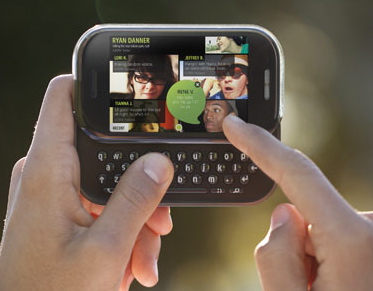
The KIN user interface follows the design ethic Microsoft debuted with Zune and Windows Phone 7: big pictures, simple, easy-to-read text, and smooth animations. The home screen is called “KIN Loop” and is actually very similar to Motorola’s MotoBLUR for Android. It takes all of the user’s favorite feeds and makes them available in real time. Rather than keep all of the social networks as separate apps, they’re actually integrated into the phone, so contact information from all the different sites is kept in the user’s native address book.
Social Sharing
Since it’s meant to be a device for people who frequently share photos, videos, and status and location updates, KIN adds a drag-and-drop social media sharing as a central part of the UI. Called “The Spot,” a small green circle permanently lives at the bottom of the screen and takes whatever content you drag onto it and funnels it to your various social networks, or lets you share that content via MMS or e-mail.
100% Content Backup
KIN Studio is one of the more impressive features of Microsoft’s new device family. Any content from the phone — photos, messages, videos, and such — is automatically backed up, chronologically logged, and geotagged in this Silverlight-based Web app.
All these things put together make up the foundation of KIN, but there is much more Microsoft stuff included. The first two KIN phones are also the first two real “Zune Phones;” that is, they include access to the Zune Marketplace and Zune Pass subscriptions, as well as Zune-powered music, and video and FM radio playback. Additionally, Local search, Web Search, and RSS functionality are all powered by Bing.
Though a video in the KIN presentation briefly showed a folder called “Xbox,” we were informed that there is no Xbox Live integration with KIN as there will be with Windows Phone 7.
Pricing of the Kin One and Kin Two have not yet been announced, but they will be available in May on Verizon Wireless in the United States, and some time “this autumn” on Vodafone in the UK, Germany, Italy, and Spain.

Sony is bringing the stunning OLED technology that revolutionized consumer displays to its line of professional monitors. The new PVM-740, available this April for $3,850, is the first field display to use an Organic Light-Emitting Diode (OLED) display panel with Sony’s unique Super Top Emission technology to efficiently deliver superb high contrast, high color images, even in ambient light.
The 7.4-inch high-resolution (960 x 540 pixels) portable monitor can fit a range of professional monitoring applications, including studio editing, ENG and EFT production, OB trucks, and even research and development. The versatile new monitor is also ideal for use in 3D camera rigs with its flip mode.
The display panel creates smooth gradation from the dark to the bright portions of scenes such as a sunrise or a sunset. The PVM-740 offers outstanding high-contrast images – for example, the deep black of a night scene can be accurately displayed and the black portion of an image is not raised even in a low-illumination edit suite. Its blur-free, quick response to fast motion is perfect for sports or camera monitoring during panning and text scrolling.
The monitor can flip a picture horizontally or vertically without frame delay. This feature is useful during 3D image acquisition using a 3D rig camera with a pair of 2D monitors. The monitor can be connected to the camera systems directly without need for an external signal converter, making system integration simpler.
Its picture contrast is greater than a CRT display, is less affected by ambient light, allowing clear images to be viewed even in strong sunlight. For further protection, the optional VF-510 ENG kit provides a viewing hood, carrying handle, and connector protector.
An AR coating provides protection from scratches and enables a high transmission rate of the internal light source to keep the picture as bright as possible, while keeping reflection from ambient light to a minimum. As a result, when used in bright lighting conditions, high contrast is still maintained even in dark areas of the picture. Sony’s unique 10-bit panel driver and ChromaTRU technologies work effectively to emulate colors and gammas of CRT monitors, and to support broadcast standards (SMPTE-C, EBU, and ITU-R BT.709).
The new monitor also adds DC/AC operations, a convenient control panel with luminous and assignable buttons, a camera focus function, a wave form monitor, 8-channel audio level meter, a variety marker setting, and native scanning capabilities.
The PVM-740 monitor is also equipped with a Sony’s unique feed-back circuit system. This system works to monitor the emitted lights all the time, and feed the monitor-result back and adjust the white balance. It also ensures color and gamma stability.
The PVM-740 is 3.8U high and half-rack wide. Using the optional MB-531 mounting bracket with a 10-degree-forward and 10-degree-backward nonstop-tilt capability, two units can be installed side by side in a 19-inch EIA standard rack. With 3/8-inch and 1/4-inch screw holes on its base, the PVM-740 can be installed in a camera system on a pedestal, for example.
The PVM-740 can display a center marker and aspect markers, and the brightness of these
markers can be selected from either gray or dark gray levels. Users can also select a gray matte to
fill the outer area of the aspect markers.
A unique native scan function reproduces images without changing the input signal’s pixel count – mapping the pixel of the input signal on the panel pixel-to-pixel. For example, when an SD signal is input, the monitor reproduces the image at picture sizes of 646 x 487 pixels in 480i and 480p, and 768 x 540 pixels in 575i and 576p. When an HD signal is input, the PVM-740 displays a center portion of the HD image.
The PVM-740 is equipped with standard interface connectors: a composite video, a 3G/HD/SD-SDI, and an HDMI interface.

It accepts most SD or HD video formats. For extra mobility, it incorporates various video interfaces as standard, including composite, SDI interface for SD-SDI, HD-SDI, 3G-SDI, and HDMI interface. With the 3G-SDI interface, it accepts 1080/50p and 1080/60p formats, which is compliant with the SMPTE 425 standard, transmitting up to 4:2:2/10-bit 1080/60p and 1080/50pvideo data using one SDI cable. As sports and live production move toward a 1080p system, this single-link 3G-SDI system can be an ideal solution.
HDMI connectivity further expands the monitor’s potential applications. For example, the PVM-740 monitor can connect with professional video systems such as Sony’s XDCAM HD,XDCAM EX, NXCAM, and HDV series. Consumer video products such as Blu-ray Disc and digital cameras can also be connected, ideal for Blu-ray video authoring or digital photo image previews.
(press release, pdf)
In 2009 we ran into some problems when failing over to the Basecamp slave database. Basecamp relies on a keeping large working set of recently-accessed data in its InnoDB buffer cache for speed. Normal MySQL replication only sends writes, not reads, to the slave. How could we ensure the data in the slave’s cache is up to date?
We contracted Percona to build a solution into their Maatkit toolset based on their experiments with SELECT query mirroring. It involves a clever usage of tcpdump to capture and replay SELECT queries from the master to the slave database.
Here’s the resulting command.
/usr/bin/mk-query-digest --statistics --iterations 4 --run-time 15m --type tcpdump
--filter '$event->{arg} && $event->{arg} =~ m/^SELECT/i'
--statistics --execute \"h=db-slave,P=3306,u=slave,p=password,D=production\"
--execute-throttle 70,30,5
The tcpdump utility captures MySQL traffic from the master and feeds the data into the mk-query-digest script. This script filters only the SELECT queries and executes them on the slave database. The throttle argument sets the percentage of time the script should execute queries on the slave, how often to check that value, and a percentage probability that queries will be skipped when the threshold is exceeded.
Here’s some sample statistical output:
# execute_executed      124668
# throttle_checked_rate     29
# throttle_rate_avg      29.84
# throttle_rate_ok          29
According to these values, the script didn’t reach the 70% query execution threshold we set. Our queries are executing on the slave cleanly.
Since we began using this tool we switched production database servers without a performance reduction.
Researchers at Hewlett Packard have claimed that Twitter, the popular microblogging service can predict Box Office behaviors of any movie with a high accuracy.
The research data includes three million tweets analyzing over 25 movies. The metrics used for the prediction are the frequency of the updates. This can be safely used to predict values with an error margin of around 0.05% only. Further, analyzing the content of the tweets could help decide the ongoing success. HP calls this tapping into collective intelligence.
Bernardo Huberman, head of the social computing lab at HP told BBC,
the system predicted that zombie film The Crazies would take $16.8m in its first weekend in the US. It actually took $16.06m.
The team forecast that romantic drama Dear John would take $30.71m in its first US weekend. It took $30.46m.
The stats from HP showed that there was a sudden rise in buzz over twitter on the launch week. This predicted the initial success. The buzz from the next week acted like reviews. HP believes if it works for movies, so could it for gadgets and every other product out there.
(Via: BBC Technology)
Take that, Washington Post poll! Ukraine has ponied up to the Nuclear Security Summit with a significant national contribution, as per a White House release:
Today, at the Nuclear Security Summit, Ukraine demonstrated its leadership, announcing a landmark decision to get rid of all of its stocks of highly enriched uranium by the time of the next Nuclear Security Summit in 2012, while the United States will provide necessary technical and financial assistance. Ukraine intends to remove a substantial part of those stocks this year. Ukraine will convert its civil nuclear research facilities to operate with low enriched uranium fuel, which cannot be used for nuclear weapons, which is becoming the global standard in the 21st century.
Ukraine is a really important country for nuclear proliferation purposes. Home to Chernobyl, the world’s foremost symbol of nuclear insecurity, it’s one of the countries that the Nunn-Lugar nuclear security program targeted for finance and technical assistance on safeguarding its Soviet-legacy nuclear materials.

After years of rumors, hearsay, and leaks, we’ve finally gotten the opportunity to play with the final product of Project Pink. These are the first real products of Microsoft’s 2008 acquisition of Danger, creators of the sidekick. So how are they?
Read on for our impressions
Update: Now with video of the Kin 2 in action – check it out after the jump.
Both phones:

Kin 1:

Kin 2:
In the end: neither of these phones are for me. They’re probably not for you, either. Microsoft is sure there’s a market here, though — one that wants social networking as the main (and in a sense, only) focus. Is it worth it to bring out hardware with a whole new platform specifically for this market, rather than working to make your current software platform (Windows Phone 7) more accessible to them? They’ll have to bring the prices in low — and I mean low — to compete. We’ll just have to wait and see how many of these they can actually push.


Engadget has published this first hands-on video with the Kin One and Kin Two handsets at Microsoft’s launch event.
They note the keyboard was pretty good, the handsets felt solid and that the user interface worked well. The browser was a bit slow however.
Of particular interest, given the small storage on both units, is that both devices could stream music from the Zune Pass over WIFI and EVDO and play it in the background.
See their full gallery here.
Shares in BHP Billiton plc are expected to jump nicely this year as higher iron ore and coking coal prices drive higher net profits, says Damian Hackett, an analyst at Canaccord Adams.
"In the current positive environment for mineral commodities and more certain global economic expansion, we suggest pricing of the “major miners” should at least match historical levels," Mr. Hackett said in a note to clients.
"As such, we are moving our near-term target price up by £3.00/share to £28.00/share, a price that should see 2011 pricing multiples back in line with historical levels."
The analyst estimated net profit to jump almost 100% for the financial year to June 2011 to US$22,538 million. He estimated that cash generation in the second half of this year will almost match the previous high from two years ago, delivering just over US$2-billion per month or US$69-million per day to the group.
 Microsoft announced a new phone this morning called the Kin. It’s all about being social: putting the stream of updates from your friends on Facebook and Twitter at the center of the experience, dragging photos to share them on the web, etc. It’s a Zune phone, it will be on Verizon exclusively and no pricing information is available yet.
At first glance this looks like a lightweight device aimed at people who don’t want to pay for an iPhone and for whom apps are less important than a strong focus on social networking. That might have made sense a year ago when Microsoft bought Danger, the makers of the Sidekick and the system the Kin seems to be built on, but does it still make sense today? I don’t think so.
Sponsor

Social networking is no longer the destination, it’s now the context. It’s the identity that people use to log-in to apps and share the results back to their friends. Mobile phones are about powerful, intriguing apps, these days. Analyst firm Piper Jaffray reported this morning, for example, that teen intent to purhase the iPhone has doubled over the last year to 31% – and that despite the cost. It’s because of the apps. The user experience plus huge store full of apps plus marketing make the Apple world very hard to beat on mobile.
Where are the apps for the Kin? There doesn’t appear to be any, other than the built-in features like automatic online backup of photos and the creation of a photo timeline.
It’s important to give people access to Facebook, Twitter and MySpace – but is that really enough anymore? I’d argue that it’s not. The Apple app store has so caught the imagination of so many people, that’s where the action and excitement are on mobile. Perhaps that’s just among the slightly more geeky though, perhaps a low-cost Facebook phone will win the hearts of millions.
Six months ago the Palm Pixi was mentioned as a low-cost app-savvy mobile phone that could increase youth use of smartphones, but it doesn’t appear that that’s happened. Probably in large part because the Palm app store is paltry. Many young people buy feature phones and supplement them with iPod Touches – for the apps. That still sounds like the smartest move for the young people being targeted by the Kin. That way you get the apps you want without a monthly data plan.
Maybe the Kin will have a strong mobile browser and support the growth of a non-native, web based app ecosystem. That’s not the way it’s being framed, though. Maybe I just don’t get the appeal: the promo copy honestly says that among the things the Kin will hold is “your drama.” That sounds frightening to me.
What do you think, do you think a social phone is sufficiently compelling for users?
 While Google has been a strong supporter of green data centers (GigaOM Pro, subscription required), the search engine giant, along with a group of tech companies, are protesting one specific data center efficiency standard: the recently updated 90.1 building efficiency standard from the American Society of Heating, Refrigerating and Air-Conditioning Engineers (ASHRAE). The objecting tech group, which also includes Microsoft, Amazon, Nokia, Digital Realty Trust, and Dupont Fabros Technology, says that because the standard is “too prescriptive” (it details specific technology that has to be used) it could cramp innovation.
Urs Hoelzle, Google’s senior VP of operations, writes in blog post on the subject this morning that the ASHRAE standard calls for specific types of cooling methods to be used “instead of setting a required level of efficiency for the cooling system as a whole.” He points out that while the ASHRAE standard requires use of outside air (called an economizer) for data center cooling, this technology can have varying degrees of efficiency, and future data center technology might not need economizers at all.
Far better than the technology-specific standard from ASHRAE, Google says the industry needs an overall data center efficiency standard, where companies can pick and choose what technology they want to use. The debate over so-called “picking winners” when it comes to technology and standards, mandates and regulations, is about as old as the tech industry itself. For example, the federal biofuel mandates dictate that a certain portion of the biofuel supply should come from cellulosic ethanol. But the problem with standards bodies and policy makers picking technologies is that in nascent industries — like green data center tech, biofuels or alternative energy — the best technologies are not always known and in particular not known by standards groups and policy makers.
Google and the group are asking ASHRAE to replace “the proposed prescriptive approach” with an “overall data center-level cooling system efficiency standard” that will “allow data center innovation to continue.” In particular, they like the Power Usage Effectiveness (PUE) metric, which Google has been using to support claims that its data centers are some of the most efficient in the computing world.
For more on green data centers from GigaOM Pro:
Report: Green Data Center Design Strategies
Clean Energy and the Cloud, Redux
Image courtesy of Flickr user ~Bob~West~’s photostream.


Much like your video game driving skills are a real-life liability, here’s how your ceaseless quest for Call of Duty-like achievements might go over in an actual war. Spoiler: poorly! Unless, of course, you nail The Trifecta. More »

 Plink, one of the winners of the second Android Developers Challenge is only too pleased to announce today that they’ve been acquired by Google. Their app works remarkably similar to Google Goggles – Snap a picture of some artwork or painting with your phone get back wikipedia-like results. Users can also order posters of said artwork. As an Android-only application, it’s a great title to show off to your iPhone-toting friends. For now, Plinkart will still be available as a download in the Android Market. Going forward, updates to their app will cease as the focus shifts to Google Goggles. We conducted an interview with PlinkArt back in December for those of you who’d like to learn more!
I was eight years old when we went on a class field trip to a Tampa theater to see “The Diary of Anne Frank.”
I knew nothing about the Holocaust. The play ended with the secret police capturing the entire family. I suppose the playwriters thought concentration camps were too much to show young American kids.
The sound of the police sirens from the play still haunt me.
Today at 10 a.m., sirens sounded for two minutes throughout all of Israel. It’s done every year.
Israelis stand and stop what they’re doing as the siren wails.
I stood on my balcony overlooking the Old City and listened. I watched the cars on the road stop as people got out and stood. Israeli flags waved proudly on many of the cars.
Anne Frank never lived to see the creation of the Jewish state.Today I can’t help wonder what she would tweet if she had a Twitter account–the 21st-century version of a diary.
Would she spend her 140 characters lamenting a new study from Tel Aviv University that suggests anti-Semitism is on the rise?
Would she agree with Israeli Prime Minister Benjamin Netanyahu, who last night compared the threat from Iran to the Holocaust?
“If we have learned anything from the Holocaust, it is that we must not be silent or be deterred in the face of evil,” he said.
Or would the young girl whose diary has become the most recognized Holocaust account in the world spend her time on Twitter looking for the voices of the voiceless–Palestinians in Gaza or the West Bank?
63 years after Anne Frank’s diary was published, Jews all over the world are finding innovatives ways to keep the memory of the victims alive.
Ends.
New production switcher announcements have become a tradition for Sony at NAB, and this year’s line-up features two new models that offer high performance at each end of the product chain.

The MVS-8000X (picture courtesy of AV Watch), available this spring, is the latest in Sony’s MVS switcher family, which has become the standard in live and control room production. The new MVS model provides a bridge from 2D 720P and 1080i high-definition production to the growing need for 1080P/59.94 3Gbps and 3D stereoscopic production capability. The DFS-900M is an entry-level, multi-format (SD/HD) switcher perfect for regional broadcasting, small remote productions, houses of worship, government and education use.
“These new switchers were developed and built using experience gained over a decade of designing and delivering market-proven systems and as a result we enjoy a well-earned reputation for leadership in high-definition production switching,” said Chris Marchitelli, senior manager of CineAlta and Production Systems at Sony Electronics.
The MVS-8000X is multi-format and fully scalable up to 5ME and 200 input/100 output, including dedicated interfaces for DME at 3Gbps 1080P/59.94. The switcher’s 3D-on-3G mode enables the full performance of 5MEs and simplified operation for 3D production. In 3D 1080i/720P mode, complex link settings are not necessary since 2D and 3D signal sources can be assigned to crosspoint buttons, enabling flexible production of 2D/3D sources. If the left and right signals are reversed, users can exchange signals easily through the switcher’s menu display. The Digital Multi Effects of the MVS system can adjust depth for 2D graphics using a newly supported Parallax menu.
The MVS-8000X processor (1080i/720P) incorporates eight keyers with digital video resizers, border generators, and advanced chroma key, all as standard; and an advanced frame memory system, including 16 channels of still and clip recording and playback, available as an option. Also available are format converters, including up-, down- and cross-conversion for both inputs and outputs; and color correction, featuring RGB and six-vector correction modes. The MVS-X offers powerful MultiProgram2 technology, which allows splitting a single ME to two Mix/Effect sections. This enables 5ME systems to perform with the equivalent capabilities of 10ME, with four keyers for each ME.

The DFS-900M, available late summer, is a multi-format HD and SD production switcher available in either 1M/E or 1.5M/E configurations, selectable by panel choice. It features a 3RU compact processor with optional redundant power supply, expandable up to 24-inputs and 12-outputs of HD/SD-SDI, or optional input/output for Analog and DVI. It also offers 4 keyers (Chroma key standard) + 2 DSK, up to 6 channels of 3D DVE (including warp), 4channels of frame memory ( video and key pairs), and up to 2 sets of multi viewer outputs that can display 4, 10, or 16 screens.
(press release, pdf)


