Blog

  • Q&A: Yusup Kamalov, Fighting for the Aral Sea

    As the Aral Sea gains global recognition as the most extreme kind of environmental disaster, Yusup Kamalov shares an expert’s perspective.

    J. Carl Ganter: Welcome to Circle of Blue Radio’s Series 5 in 15, where we’re asking global thought leaders 5 questions in 15 minutes, more or less.  These are experts working in journalism, science, communication design, and water.  I’m J. Carl Ganter.  Today’s program is underwritten by Traverse Internet Law, tech savvy lawyers, representing internet and technology companies.

    The Aral Sea, nestled in southeast Asia, between Kazakhstan and Uzbekistan, was once the world’s fourth-largest freshwater lake. But in the last 30 years, massive irrigation projects diverted millions of gallons of water from the two major rivers feeding the Aral Sea.  This was diverted for cotton fields and rice paddies.  By the early 1980’s, the Aral’s fresh water supply was completely cut off.

    The lake began to shrink drastically.  Salt and mineral concentrations rose, and the destruction of the Aral decimated the fishing industry and actually changed the region’s climate, shortening the growing season.  High winds also pick up dust from the exposed lakebed now, hurting air quality and reducing crop yields.  Many believe that the Sea is beyond salvation.

    In Nairobi, at World Water Day recently, Circle of Blue Reporter Brett Walton spoke with Yusup Kamalov.  He is chairman of the Union for the Defense of the Aral Sea and Amudarya, one of the longest rivers in central Asia.  It also feeds the Aral.

    First question, there’s a dam built between the northern and southern sections of the Aral Sea.  How effective has that been in restoring parts of the Sea?

    Of course, this dam is very effective to restore the really small, northern part of the Aral Sea, which was actually called the small sea before.  Of course it’s very effective, but unfortunately it has an impact on the rest of the sea because the rest of the sea, without this water, dissipates much more quickly than before. We are losing a big part of the sea in a very short time.

    YUSUP KAMALOV:
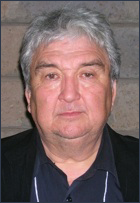
    Yusup Kamalov
    Yusup Kamalov is chairman of the Union for the Defense of the Aral Sea and Amudarya.
    Photo Copyright Brett Walton

    What are the health affects in the areas surrounding the sea from the sea’s shrinking?

    I don’t think that the shrinking of the sea has a really big impact on the health of the population. But the polluted water, which comes in by Syr Darya and Amu Darya, has a really big impact on the population.  We do also lack quality water, clean water, and we are drinking this water.  We are irrigating with this polluted water, so it does influence our health.  If you come there, you will see a lot of problem with health in general, I mean ability of people to defend themselves from diseases.  Indicators of hemoglobin in blood is very low, especially of women. There are very high levels of diseases connected to the liver and connected to salt content in people’s bodies.

    In the 1960’s when the Aral Sea was still intact, Vozrozhdeniye Island, Rebirth Island in English, was where the Soviet military was conducting biological weapons testing.  When the Sea started to shrink, that island became part of the mainland.  What is the status of that Island now?

    Unfortunately, we are not informed about the status of the Island.  We know that it’s already connected to the south part of our land, but I have no idea now about [the latest status].

    The two rivers that feed the Aral Sea mainly are used for irrigation.  Do you see any change in the farming practices of any of the countries along these rivers?

    No.  Unfortunately, there are only a few examples, so-called pilot projects, like deep irrigation in just a few farms, and in general, there are no changes.  In general, there is no big movement to save a drop of water.  There is a good example in Ferghana Valley of evolving, integrated water management, but it’s a local example.  It’s the United States, Tajikistan, Uzbekistan, and Kyrgyzstan.

    This pilot project has shown that it’s quite effective, almost without any money, to have a well-scheduled water providing system.  They saved 30 percent of the water.  They installed some measuring instruments along the canals.  It helped a lot.  That means that if the governments will pay more attention to involve new technologies, especially new economic tools to save the water, then we will have success.

    What economic tools are governments using?

    For example, Tajikistan implemented payment for water.  Kyrgyzstan too, and some part of Kazakhstan also.  Still Turkmenistan and Uzbekistan, they’re not doing anything involving water pricing, etc., because they say it could lead us to an unpredictable situation.

    There are a lot of problems in the basin between the upstream mountainous countries and the downstream countries that use water for agriculture.  A big part of this problem is dams.  Recently the World Bank said it would finance a feasibility study to see if dams are appropriate for the area.  How do you see this changing the politics in the basin?

    Of course, downstream countries are afraid of the building of such a big dam. It could be used as a political tool to push downstream countries to make certain decision.  That is why downstream countries are raising their voices against such dams.  If this instrument would be available for mountain countries, then, of course, the situation would be a little bit dangerous for downstream countries.

    For example, Tajikistan can push downstream countries to make what they want because they can save a lot of water in water storage. But they’re not [storing water], so that means that Tajikistan doesn’t have [the leverage] to confront downstream countries.  I don’t think that it would be a real big problem.

    You live in Nukus, which is a city near the Aral Sea, the former border of the Aral Sea.  How has the shrinking of the Sea changed in your life?  What changes have you seen in the region?

    There are a lot of changes, of course, in the region.  There are no more big fishing companies or fishermen, and we are observing a lot of sandstorms.  The scientists say that after 1960’s, there have been 25 times more sandstorms than before.  Of course, the wind became much stronger. I never saw that roofs could be just taken off until the 1990’s, but now it’s just a common picture.  Every year we are losing several roofs in Nukus city, every year.

    That means that the wind picks up dust and salty dust, and it’s flowing or rising to high levels of the atmosphere. I’m pretty sure that it has an impact on the global climate because the surface of the former bottom of the Aral Sea is so big. You can’t imagine how much dust is picked up by the wind every year, about 100,000,000 tons, which is the same as the activity of several volcanoes.  When volcanoes are working, and then the climate is changing.  Now nobody pays attention for this as such a big source of the dust.  I think it should be investigated in the near future.

    Where do you see the future of the Aral Sea?

    It’s a very painful question, because what does the future mean for a dead body?  Nevertheless, I hope that we will have enough water to keep the Aral Sea a certain size.  Maybe it could be three lakes, or maybe even one, but nevertheless we should save the Aral Sea. Because, as I mentioned before, the former bottom of the Aral Sea has a big impact on the global climate.  And secondly, the Aral Sea was really the source of economic prosperity for the people living around it.

    We should negotiate globally about it.  If we are not able to save such a small lake, how can we save the planet? It would be a good example for people that we can do it, even on a small scale.  If are we not able to do it, then everybody might doubt we can save our planet.  This is why we have to save the Sea.

    That was Circle of Blue’s reporter Brett Walton, in Nairobi, speaking with Yusup Kalamov, chairman of Union for the Defense of the Aral Sea and Amudarya.  To find more articles and broadcasts on water design, policy and related issues, be sure to tune in to Circle of Blue online at CircleofBlue.org.

    Our theme is composed by Nadev Kahn, and Circle of Blue Radio is underwritten by Traverse Legal, PLC, internet attorneys specializing in trademark infringement litigation, copyright infringement litigation, patent litigation and patent prosecution.  Join us again for Circle of Blue Radio’s 5 in 15.  I’m J. Carl Ganter.

  • DYK Thursday – Round Up Of April Fool Pranks Made By Google This Year

    Google has a tradition of fooling its amazing vast amount of users by it’s own creative pranks every year on April 1st. Even this year, it has played many pranks. So, I thought I would list them all in one single post.

    Renaming Google as Topeka: Google in response to the April fool prank played by the CNN (renaming Topeka, Kansas as “Google”, Kansas), wrote a post on its company blog that it is changing its name to “Topeka”. Check this post out!

    LifeSize from Picasa: This feature from Picasa lets you enlarge any image into Life Size image.

    Japanese Keyboard: Google Japan has created a keyboard with plenty of keys! Check out how it looks!

    Store anything with Google Docs: This feature from Google Docs, helps you to store anything you want! I repeat, anything. The blogpost linked above stated that,

    As with documents, spreadsheets, and files, you also share objects you’ve uploaded to Google Docs with anyone in the world. For example, do you ever wish you could CTRL+F your house keys or your TV remote? Store your keys, remotes, rail passes, and other objects you commonly lose with Google Docs, and you’ll never have to worry about finding them again. Having trouble moving your piano from New York to California? Upload it from your home in New York, then download it once you’re in California. Change your mind and want to share it with your friend in England instead? No problem. With one click you can have your piano delivered to anyone you choose, anywhere in the world.

    Chrome Sounds: Google released a new extension for Google Chrome on April 1st called as “Chrome Sounds”. This is what the Chrome blog says about the extension.

    Taking an earful of inspiration from the HTML5 audio tag, we’ve spent the past few months deep in psychoacoustic models, the Whittaker-Nyquist-Kotelnikov-Shannon sampling theorem, Franssen effects, Shepard-Risset Tones, and 11.1 surround sound research to build a cutting-edge audio-driven user interface for our users, available through a new Chrome extension. With this extension, Chrome will provide audio feedback as you browse to web pages and interact with the browser.

    A little complicated, nevertheless great extension! :P

    YouTube TextP option: This is a new filter for videos which helps you to see videos in ASCII format. This helps to reduce the bandwidth consumption, it seems!

    TEXTp is the result of months of intense transcoding efforts by our engineers, who toiled for weeks to ensure that a large chunk of videos on the platform could be reduced to their most basic elements. By replacing the images in the video with a series of letters and numbers, the videos are far less taxing on our system — and have the added benefit of promoting literacy!

    Google Translation for Animals: Okay, now there is an Android app that helps you to even translate the animal voices. You need to record the voices of the animal’s sound you want to translate and this app will translate it into human language!

    Google Books in 3D: You can now even read book in 3D. You need to put on the 3D glasses and click the option “View in 3D” and you are ready to go!

    Wow, that’s a great list of pranks! Well done, Google! We look forward from you for more such creative pranks. Wait, did I miss any other prank in this list. Then, just tell me through the comments. I will update the post with that soon!


    Announcement: Missing Mobile News in the Main RSS Feed? We have decided to remove the mobile content from the main feed, please subscribe to our dedicated Mobile News RSS Feed at http://feeds.techie-buzz.com/techiemobile. Thank you for your understanding.

    DYK Thursday – Round Up Of April Fool Pranks Made By Google This Year originally appeared on Techie Buzz written by Pramodh KP on Thursday 8th April 2010 11:36:28 PM. Please read the Terms of Use for fair usage guidance.

    Don’t miss these Related Posts:

    Join Techie Buzz on Your Favorite Social Networking Sites


  • Former U.S. President Carter Arrives in Khartoum to Monitor General Elections

    Former U.S President Carter arrives in Khartoum to monitor general elections

    10:00, April 09, 2010

    Former U.S. President Jimmy Carter on Thursday arrived in Khartoum to take part in monitoring Sudan’s General elections, slated for April 11.

    He expressed regret over pulling out of candidates of some opposition parties from the elections, especially Yassir Arman of the Sudan People’s Liberation Movement (SPLM).

    “I regret that some of the parties decided not to participate”, Carter told reporters upon arrival at Khartoum airport Thursday.

    He refused to describe his impression about the preparations for the electoral process and said that the final assessment would be after the elections.

    The U.S.-based Carter Center, which was founded by Jimmy Carter, have sent 65 observers to Sudan elections to monitor the general election in this African country besides the European Union observation team which includes 130 observers.

    The Sudanese National Elections Commission (NEC) said over 100 national and foreign observers will be monitoring the elections at all stages.

    Sudanese President Omar al-Bashir on Wednesday said he welcomes the Carter Center, and pledged to facilitate its movement in all states of the country.

    Multi-party elections, the first of its kind in more than 20 years, are scheduled to be held in Sudan on April 11, 2010.

    Source:Xinhua

  • Don’t tread on them

    More fallout from the Gadsden Flag flap.

    “Dead wrong” is what Justin Bernier called the Capitol police department’s decision to rescind approval of the Tea Party activists’ request to fly the Don’t Tread on Me” flag.

    The authorities are dead wrong to bow to political pressure from members of the legislature and deny a legitimate request to fly the Gadsden flag over the capitol,” Bernier, a Republican running for Congress from the 5th District, said in a statement.
    “Connecticut citizens have good reason to be upset when the flags of foreign countries are allowed to fly over the statehouse, but not a flag associated with our nation’s founding and with the United States Marine Corps.  This is more proof that the political class in Hartford is completely out of touch with the rest of us.”
     

    Meanwhile the Family Institute of Connecticut sent an email to its supporters decrying the Capitol police department’s decision.
    The email singles out Democratic state Rep. Michael Lawlor, one of many people who questioned whether it was appropriate to fly a flag that is now associated with the Tea Party movement at the Capitol, especially since the flag-raising ceremony was to have been followed by a political press conference (that event has now been scrapped, though the flag-raising will go on as planned. Tea Party activists are bringing their own flagpole.)

    “It is time to stand beside our Tea Party friends — for liberty and against the likes of Rep. Lawlor,” the email says.
     
     
  • And it Begins(More Viruses on Windows Mobile)

    image

    I was just counting down for this to happen. With the growth of Windows Mobile, bound to try breaking the rules and make some hacks to invade our devices.

    This virus is a very minimal virus to say the least. It does not do much, but it does cost money. The virus comes in a game called "3D Anti-Terrorist"—ironic isn’t it. When the application is installed, it also brings along a Trojan virus that uses your device to call some friends.

    The virus is said to call people at midnight and people from different countries, so you pay those high prices. I cannot get why someone would do that, but maybe they own a company that makes money from using our device to make a little profit.

    This is interesting. I was driving home the other night, had my HD2 plugged into the aux port on my car as I wanted to test what it was like playing music in the car. It was fine on the way over (and the day before), but on the way home every time ‘ABC – The Look of Love’ played, the audio would keep muting, I’d look at the phone and see it was calling the last number on my call list! What the he**!

    Thank god I noticed in time, because if the other party (poss work related) had heard me singing along to that song I’d have been screwed.

    I had no idea why it was happening at first, so I switched the phone on and off and it just continued to happen.

    Absolutely ridiculous bug… what’s the solution to this??

    And OP – thanks for bringing your issue to everyone’s attention, you’ve reminded me to put international call blocking on my account and a credit limit. If all it takes is a cheesy 80s song to dial UK mobile numbers, god only knows what a cheesy 90s song will do next.

    Did you experience this on your device yet? Are you going to try it?

    Via:WME, XDA


  • Watch: Red Dead Redemption "Multiplayer Free Roam" trailer

    Another week, another awesome trailer for Rockstar’s upcoming western epic shooter Red Dead Redemption. Get a taste of the games open world online multiplayer aspect after the jump.
     

  • Social Visualization Software Review: Swivel

    swivel_review.jpg
    As Google (Public Data Explorer) and Microsoft (Pivot) are getting into the mix of online data visualization tools, it is evident that this is a realm to carefully watch. Public data is de rigeur and blogs in this field are becoming ubiquitous, hence the perfect storm for online visualization. While public data is not necessary for online viz, it certainly makes it easy for the masses to enter the fray of data analytics.

    As we announced a few months ago, we will be starting a new feature aimed at reviewing visualization tools. There are many tools out there that suit different needs and sport varied features. This ongoing feature will hopefully shed light on these tools and if they might fit into your workflow. In the meantime, please feel free to give your opinion on this new reviewing feature in the comments section below. Should we change any of the criteria? Are there any inaccuracies? What did we miss?

    Our first software review will focus on the arguably current big three of online dataviz tools: Swivel, Many Eyes, and Tableau Public. During the next weeks, we will be publishing these in succession and culminating with a comparison of all three.

    We chose the criteria based on user comments from our previous posts. Additionally, Benjamin, Patrick (who is reviewing Many Eyes), and I collaborated on refining the list and adding features we thought were compelling. We included a list of supported charts at the end of the post.

    First, we want to focus on Swivel. Swivel was an early entrant to this field and thus is playing with the big kids in terms of online visualization. Benjamin Wiederkehr of Datavisualization.ch completed this review of Swivel.

    CRITERIA
    Cost Free as long as the data is
    public.
    $12/month for 20 Spreadsheets, 20 charts, 3 reports
    $48/month for 80 Spreadsheets, 80 charts, 20 reports
    $96/month for 200 Spreadsheets, 200 charts, 50 reports
    Every plan comes with 15 days free trial
    Free Version available Yes
    Ease of Use Easy
    Embeddable (into a web page) Yes
    Shareable Yes
    Comments / Discussion Yes (Comments for datasets, charts and reports)
    Private workgroup Yes
    Plugin Required None
    Software Required None
    Export Formats CSV, PNG
    Data Storage Unlimited
    Maturity (age of software) > 3 years
    Customer Service Swivel provides assistance on various channels. User can get in touch with customer support using the feedback form on the website or via email. Developers receive guidance on the Google Group, the API Wiki on GitHub or the Swivel Code Blog.
    Data Import Formats:
    Oracle No
    SQL Server No
    Sybase No
    DB2 No
    PostgreSQL No
    mySQL No
    Excel Yes
    Text Yes
    other CSV (coma and tab separated),
    HTML, OpenDocument, Google Analytics, Google Docs, QuickBooks,
    Salesforce.com, Custom URL (HTML Documents)
    COMMENTS
    Other features Ability to combine multiple
    charts to a sharable report. Charts can be arranged freely on a blank canvas.
    Additinal text and images can be included as well.
    Data, Charts and Reports can be saved as drafts before making them
    available to the public or the private group.
    Other users can comment on data, charts and reports.
    Pros Easy to use and solid interface
    for manipulating the data (Spreadsheet application). Simple customization
    possibilities for charts. Private groups for confidential data create a real
    value for business use.
    Cons The charting options are very
    limited and may not suffice all your business needs. Also the ability to
    customize colors and layout is very limited. Especially with a large amount
    of labels the legend as well as the mouse-over tooltip get overcrowded quickly.
    Reports can’t be exported – I could see great value in downloading these
    reports as PDF, PNG or full HTML file to integrate elsewhere.
    Reviews The thing that caught my
    attention right from the start is the clean and well-organized interface of
    this web-based application. Everything is build in HTML with some clever use
    of Javascript enhancements. The user account is also nicely organized and provides
    acces to everything within 3 clicks maximum. The introduction videos provide
    a good overview and make it really easy to get started right away. Within a
    few minutes I was able to upload my spreadsheet, choose the right data to
    chart, customized the output and shared it with the community.

    I had a bit of a struggle to understand what it was that I registered for –
    was it a paid account with the 15 days trial or is there a free account? The
    free plan isn’t indicated as such, it’s just remarked in the claim
    "Share publicly for free".

    If you need a quick way to communicate with your team members or embed
    charts in your website and don’t have the demand for complete flexibility and
    more complex chart types, Swivel might be a good fit. If you need more
    customized and complex charts you might not get everything you need from
    it.

    As a last word the application is really well executed visually and from a
    user experience point of view. If they can include more options regarding the
    output I can see it as a strong player in the online visualization game.

    For the Purists The charts have a clean look and
    a decent color scheme. Decorations are nicely reduced, the only thing a bit
    unorganized is the mouse-over tooltip. The axes are nicely labeled and the
    title and the created / updated footer gives good context to the chart at
    hand.
    For the Aestheticians The charts share a common look
    & feel and the user does not have many options for intervention. Charts
    can’t really be matched to corporate design guidelines or other preliminary
    definitions.
    Reviewer(s) Benjamin Wiederkehr
    Date reviewed 3/17/2010

    swivel_chartcustomization_4.png

    Swivel line chart with settings (click to enlarge).


    SUPPORTED CHARTS:

    line
    chart
    Yes   scatter plot Yes
    area chart Yes   bubble graph No
    bar chart Yes  
    block histogram No   word tree No
    stacked bar chart Yes   tag cloud No
    stacked area chart Yes   phrase net No
    tornado chart No   word cloud generator No
    pie chart Yes  
    donut chart No   network diagrams No
    polar graph No   matrix chart No
    candlestick plots No  
    bullet graph No   world map No
      various map projections No
    treemap No   map locations No
    mosaic plot No   choropleth map No
    heat matrix No   distorted map No
     
    dashboard widgets No   other No

    swivel_chartpreview2y.png

    Line and bar charts with live data editing (click to enlarge).

    Next week we will review IBM Many Eyes. Stay tuned and please let us know your interests and ideas in the comments below!

    Benjamin Wiederkehr is founding partner of Interactive Things where he’s responsible for everything User Experience Design and Data Visualization. He shares his passion for data visualization with the readers of Datavisualization.ch by documenting and discussing findings in this field.

    Kim Rees is a partner at Periscopic, a socially-conscious Information Visualization firm specializing in helping nonprofit organizations and like-minded companies convey important messages and elevate public awareness.


  • CorePlayer Mobile Deals with Your Favorite Multimedia Files with Ease

    Found under: Symbian, S60, Apps, LG, Samsung, Nokia, CorePlayer,

    In case you happen to own a Symbian S60 3rd edition smartphone and youre interested in getting a decent multimedia player for it then we might have the right tool for you. CorePlayer Mobile is available for purchase right now and it will cost you just a onetime fee of 22.40.The CorePlayer Mobile application will be able to play lots of multimedia files which mean that youll be able to enjoy all your favorite audio and video files while on the go straight from your Symbian S60 smartp

    Read More

    Read more in mobile format

  • Android app review contest: Week 1 recap

    One week ago we asked you to submit an app review in exchange for the chance to win the superphone of your choice and land an Editor’s position. Free phones always excite people, but we were blown away by the responses thus far.

    Thank you to everyone who took the time to submit a review. We value your contributions and it is great to see so many people excited about reviewing apps.

    In the first week of the contest, we managed to publish 25 reviews. The submissions far exceeded all our expectations and we are behind on processing the reviews.

    In order to streamline the submission process, we have switched to a hosted online form, which makes it easier to submit a review and upload screens. We have also enhanced our resources so more people will be engaged in the publishing process. For week two, our goal is to exceed 50 reviews.

    We will also be running a simultaneous contest which encourages people to request app reviews.

    Frequently asked questions

    Q: When will I get a response on my submission?
    A: We are trying to respond to every entry, so please be patient.

    Q: I already submitted a review through email? Do I need to submit it again using the online form?
    A: No, there is no need to resubmit your review. We have them all saved and are working to process them.

    Q: Can I submit more than one review?
    A: Yes, you can submit as many reviews as you would like. However, you might want to wait and make sure your first submission is published before spending your time on additional reviews.

    Q: Which apps do you want reviewed? Do you have any suggestions?
    A: You are free to review any app, but keep in mind we are looking at audience feedback. You might want to explore the request a review contest or check out our Top 3 sites for discovering Android apps.

    Q: I don’t want to become an Editor. Can I still submit a review?
    A: Yes, anyone can submit a review and still be entered to win the contest. However, keep in mind we are looking to hire two Editors.

    Q: Can the winner take the phone but not the job?
    A: Yes, the winner could turn down the invitation to become an Editor and still take the prize. The point of the contest was to locate an Editor, so hopefully this will be avoided.

    Q: How will you pick the winners of the contest?
    A: The winners will be selected on a number of criteria. We are looking at the bios people submit, the quality of the reviews, and the responses from our readers. A good review is one that can be instantly published and does not require a lot of editing.

    Tips for getting your review published

    • Proofread and spell check: If your submission is full of obvious errors it will be rejected
    • Concise and to the point: Some of the entries have been very unorganized and ramble on. Stick to the highlights of the app.
    • Be persuasive: Give me a reason to download the app. The “Final verdict” should describe who the app is for and give them a reason to try it out.
    • Engage the reader: There is no need to beg, but try to encourage a response from the reader. We like the reviews that generate a good response from the readers.
    • Follow the format: Make sure you read all the details on the original post. Browse some of the current entries for examples of what gets posted.
    • Be original: Submit a review for a lesser known app, but one of high quality. See our Top 3 sites for discovering apps to find something new.

    We need your feedback

    Take a look at some of the contest reviews we have already published. We are judging the reviewers based on user feedback so let us know what you think. Did the review suck? Did reading the review result in you downloading the app? Was there information in the review that was incorrect? Is there a competing application which gets the job done better?

    We also need feedback on the actual review format. Are they too short or too long? Are we leaving out important information? Users already complained about leaving out the app version and phone used so we have added those details to our submission form. We will continue to listen to feedback and tweak the review format over the coming weeks.

    Related Posts

  • In Memory of the Great Bear of Locktown | The Loom

    jackToday, I’m very sad to say, the artist John Schoenherr passed away. Among his honors, Schoenherr earned a Caldecott Award for his paintings for the book Owl Moon. His dark, textured artwork did justice to all manner of life, from a Canada goose to a giant sandworm.

    I met Jack when I was just ten years old, through his son Ian. He was not the typical father of your fifth-grade friends. He got up not long before noon, sat for a while at the kitchen table with some coffee, making a few jokes, and then headed to his barn, where he would paint till midnight or later. His barn was filled with dismantled MG’s, Japanese swords, a complete collection of National Geographics, snapping tortoise shells, camera equipment, years’ worth of paintings, and an atmosphere suffused with good cheer. We kids were always welcome, whether we wanted to ask questions about the latest painting on his easel, or if we just wanted to wander along his rough bookshelves and be alone in his company. I learned some of my most important early lessons about nature from Jack, and I also learned from him what it’s like to love the act of creation, day in and day out.

    jackbearThe kids in the studio eventually grew up, but kept coming back. His son Ian became a fine artist and children’s book illustrator in his own right. I’m sure that much of my interest in natural history stems from my time in that barn, too. When I got older, I was proud to come back there, where Jack was still painting, his beard gray now, his shoulders stooped, and tell him about my own encounters with walking whales and enchanting flatworms. Everyone always joked that Jack was a great bear. It wasn’t just his ursine cast that earned him that name; it was also his combination of grouchiness and loyalty. Bears are also strong, and over the past few years Jack showed amazing strength as well, as he struggled with his failing health. Now the Great Bear of Locktown has left us, but we will not forget him.


  • Use Short-Term Fitness Goals to Achieve Long-Term Fitness Goals

    Filed under: , , ,

    I don’t have six-pack abs. I have a four-pack. Correction: If the lighting is good and I’m a little dehydrated and I twist the right way, then I have a visible four-pack.
    I have a picture of me on my fridge of when I had a ripped six-pack. In the … Read more


    Permalink | Email this | Linking Blogs | Comments

  • Malibu será vendido pela GM no Brasil mesmo com retaliação comercial

    Não adiantou a retaliação comercial imposta pelo Brasil aos EUA para que a GM desistisse de trazer o sedã médio Malibu ao país.
    O Chevrolet Malibu será vendido a partir de Maio, cujo lançamento ficará entre os dias 16 e 19 do mês que vem.
    Não se sabe qual versão virá e nem a que preço, já que a taxa de importação para carros feitos nos EUA subiu de 35% para 50% devido à retaliação.  
  • SOCKDOLAGER—A Tale of Davy Crockett, Charity and Congress

    A "sockdolager" is a knock-down blow. This is a newspaper reporter’s captivating story of his unforgettable encounter with the old "Bear Hunter" from Tennessee.

    From "The Life of Colonel David Crockett", by Edward S. Ellis
    (Philadelphia: Porter & Coates, 1884)


    CROCKETT was then the lion of Washington. I was a great admirer of his character, and, having several friends who were intimate with him, I found no difficulty in making his acquaintance. I was fascinated with him, and he seemed to take a fancy to me.

    I was one day in the lobby of the House of Representatives when a bill was taken up appropriating money for the benefit of a widow of a distinguished naval officer. Several beautiful speeches had been made in its support—rather, as I thought, because it afforded the speakers a fine opportunity for display than from the necessity of convincing anybody, for it seemed to me that everybody favored it. The Speaker was just about to put the question when Crockett arose. Everybody expected, of course, that he was going to make one of his characteristic speeches in support of the bill. He commenced:

    "Mr. Speaker—I have as much respect for the memory of the deceased, and as much sympathy for the sufferings of the living, if suffering there be, as any man in this House, but we must not permit our respect for the dead or our sympathy for a part of the living to lead us into an act of injustice to the balance of the living. I will not go into an argument to prove that Congress has no power to appropriate this money as an act of charity. Every member upon this floor knows it.

    We have the right, as individuals, to give away as much of our own money as we please in charity; but as members of Congress we have no right so to appropriate a dollar of the public money. Some eloquent appeals have been made to us upon the ground that it is a debt due the deceased. Mr. Speaker, the deceased lived long after the close of the war; he was in office to the day of his death, and I have never heard that the government was in arrears to him. This government can owe no debts but for services rendered, and at a stipulated price. If it is a debt, how much is it? Has it been audited, and the amount due ascertained? If it is a debt, this is not the place to present it for payment, or to have its merits examined. If it is a debt, we owe more than we can ever hope to pay, for we owe the widow of every soldier who fought in the War of 1812 precisely the same amount.

    There is a woman in my neighborhood, the widow of as gallant a man as ever shouldered a musket. He fell in battle. She is as good in every respect as this lady, and is as poor. She is earning her daily bread by her daily labor; but if I were to introduce a bill to appropriate five or ten thousand dollars for her benefit, I should be laughed at, and my bill would not get five votes in this House. There are thousands of widows in the country just such as the one I have spoken of, but we never hear of any of these large debts to them. Sir, this is no debt.

    The government did not owe it to the deceased when he was alive; it could not contract it after he died. I do not wish to be rude, but I must be plain. Every man in this House knows it is not a debt. We cannot, without the grossest corruption, appropriate this money as the payment of a debt. We have not the semblance of authority to appropriate it as a charity.

    Mr. Speaker, I have said we have the right to give as much of our own money as we please. I am the poorest man on this floor. I cannot vote for this bill, but I will give one week’s pay to the object, and if every member of Congress will do the same, it will amount to more than the bill asks."

    He took his seat. Nobody replied. The bill was put upon its passage, and, instead of passing unanimously, as was generally supposed, and as, no doubt, it would, but for that speech, it received but few votes, and, of course, was lost.

    Like many other young men, and old ones, too, for that matter, who had not thought upon the subject, I desired the passage of the bill, and felt outraged at its defeat. I determined that I would persuade my friend Crockett to move a reconsideration the next day.

    Previous engagements preventing me from seeing Crockett that night, I went early to his room the next morning and found him engaged in addressing and franking letters, a large pile of which lay upon his table.

    I broke in upon him rather abruptly, by asking him what devil had possessed him to make that speech and defeat that bill yesterday. Without turning his head or looking up from his work, he replied:

    "You see that I am very busy now; take a seat and cool yourself. I will be through in a few minutes, and then I will tell you all about it."

    He continued his employment for about ten minutes, and when he had finished he turned to me and said: "Now, sir, I will answer your question. But thereby hangs a tale, and one of considerable length, to which you will have to listen."

    I listened, and this is the tale which I heard:


    SEVERAL YEARS AGO I was one evening standing on the steps of the Capitol with some other members of Congress, when our attention was attracted by a great light over in Georgetown. It was evidently a large fire. We jumped into a hack and drove over as fast as we could. When we got there, I went to work, and I never worked as hard in my life as I did there for several hours. But, in spite of all that could be done, many houses were burned and many families made homeless, and, besides, some of them had lost all but the clothes they had on. The weather was very cold, and when I saw so many women and children suffering, I felt that something ought to be done for them, and everybody else seemed to feel the same way.

    The next morning a bill was introduced appropriating $20,000 for their relief. We put aside all other business and rushed it through as soon as it could be done. I said everybody felt as I did. That was not quite so; for, though they perhaps sympathized as deeply with the sufferers as I did, there were a few of the members who did not think we had the right to indulge our sympathy or excite our charity at the expense of anybody but ourselves. They opposed the bill, and upon its passage demanded the yeas and nays. There were not enough of them to sustain the call, but many of us wanted our names to appear in favor of what we considered a praiseworthy measure, and we voted with them to sustain it. So the yeas and nays were recorded, and my name appeared on the journals in favor of the bill.

    The next summer, when it began to be time to think about the election, I concluded I would take a scout around among the boys of my district. I had no opposition there, but, as the election was some time off, I did not know what might turn up, and I thought it was best to let the boys know that I had not forgot them, and that going to Congress had not made me too proud to go to see them.

    So I put a couple of shirts and a few twists of tobacco into my saddlebags, and put out. I had been out about a week and had found things going very smoothly, when, riding one day in a part of my district in which I was more of a stranger than any other, I saw a man in a field plowing and coming toward the road. I gauged my gait so that we should meet as he came to the fence. As he came up I spoke to the man. He replied politely, but, as I thought, rather coldly, and was about turning his horse for another furrow when I said to him: "Don’t be in such a hurry, my friend; I want to have a little talk with you, and get better acquainted."

    He replied: "I am very busy, and have but little time to talk, but if it does not take too long, I will listen to what you have to say."

    I began: "Well, friend, I am one of those unfortunate beings called candidates, and…"

    "’Yes, I know you; you are Colonel Crockett. I have seen you once before, and voted for you the last time you were elected. I suppose you are out electioneering now, but you had better not waste your time or mine. I shall not vote for you again.’

    This was a sockdolager… I begged him to tell me what was the matter.

    "Well, Colonel, it is hardly worthwhile to waste time or words upon it. I do not see how it can be mended, but you gave a vote last winter which shows that either you have not capacity to understand the Constitution, or that you are wanting in honesty and firmness to be guided by it. In either case you are not the man to represent me. But I beg your pardon for expressing it in that way. I did not intend to avail myself of the privilege of the Constitution to speak plainly to a candidate for the purpose of insulting or wounding you. I intend by it only to say that your understanding of the Constitution is very different from mine; and I will say to you what, but for my rudeness, I should not have said, that I believe you to be honest. But an understanding of the Constitution different from mine I cannot overlook, because the Constitution, to be worth anything, must be held sacred, and rigidly observed in all its provisions. The man who wields power and misinterprets it is the more dangerous the more honest he is."

    "I admit the truth of all you say, but there must be some mistake about it, for I do not remember that I gave any vote last winter upon any constitutional question."

    "No, Colonel, there’s no mistake. Though I live here in the backwoods and seldom go from home, I take the papers from Washington and read very carefully all the proceedings of Congress. My papers say that last winter you voted for a bill to appropriate $20,000 to some sufferers by a fire in Georgetown. Is that true?"

    "Certainly it is, and I thought that was the last vote which anybody in the world would have found fault with."

    "Well, Colonel, where do you find in the Constitution any authority to give away the public money in charity?"

    Here was another sockdolager; for, when I began to think about it, I could not remember a thing in the Constitution that authorized it. I found I must take another tack, so I said:

    Davy Crockett"Well, my friend; I may as well own up. You have got me there. But certainly nobody will complain that a great and rich country like ours should give the insignificant sum of $20,000 to relieve its suffering women and children, particularly with a full and overflowing Treasury, and I am sure, if you had been there, you would have done just as I did."

    "It is not the amount, Colonel, that I complain of; it is the principle. In the first place, the government ought to have in the Treasury no more than enough for its legitimate purposes. But that has nothing to do with the question. The power of collecting and disbursing money at pleasure is the most dangerous power that can be entrusted to man, particularly under our system of collecting revenue by a tariff, which reaches every man in the country, no matter how poor he may be, and the poorer he is the more he pays in proportion to his means. What is worse, it presses upon him without his knowledge where the weight centers, for there is not a man in the United States who can ever guess how much he pays to the government.

    So you see, that while you are contributing to relieve one, you are drawing it from thousands who are even worse off than he. If you had the right to give anything, the amount was simply a matter of discretion with you, and you had as much right to give $20,000,000 as $20,000. If you have the right to give to one, you have the right to give to all; and, as the Constitution neither defines charity nor stipulates the amount, you are at liberty to give to any and everything which you may believe, or profess to believe, is a charity, and to any amount you may think proper. You will very easily perceive what a wide door this would open for fraud and corruption and favoritism, on the one hand, and for robbing the people on the other.

    No, Colonel, Congress has no right to give charity. Individual members may give as much of their own money as they please, but they have no right to touch a dollar of the public money for that purpose. If twice as many houses had been burned in this county as in Georgetown, neither you nor any other member of Congress would have thought of appropriating a dollar for our relief. There are about two hundred and forty members of Congress. If they had shown their sympathy for the sufferers by contributing each one week’s pay, it would have made over $13,000. There are plenty of wealthy men in and around Washington who could have given $20,000 without depriving themselves of even a luxury of life. The Congressmen chose to keep their own money, which, if reports be true, some of them spend not very creditably; and the people about Washington, no doubt, applauded you for relieving them from the necessity of giving by giving what was not yours to give.

    The people have delegated to Congress, by the Constitution, the power to do certain things. To do these, it is authorized to collect and pay moneys, and for nothing else. Everything beyond this is usurpation, and a violation of the Constitution."

    I have given you an imperfect account of what he said. Long before he was through, I was convinced that I had done wrong. He wound up by saying:

    "So you see, Colonel, you have violated the Constitution in what I consider a vital point. It is a precedent fraught with danger to the country, for when Congress once begins to stretch its power beyond the limits of the Constitution, there is no limit to it, and no security for the people. I have no doubt you acted honestly, but that does not make it any better, except as far as you are personally concerned, and you see that I cannot vote for you."

    I tell you I felt streaked. I saw if I should have opposition, and this man should go talking, he would set others to talking, and in that district I was a gone fawn-skin. I could not answer him, and the fact is, I did not want to. But I must satisfy him, and I said to him:

    "Well, my friend, you hit the nail upon the head when you said I had not sense enough to understand the Constitution. I intended to be guided by it, and thought I had studied it full. I have heard many speeches in Congress about the powers of Congress, but what you have said there at your plow has got more hard, sound sense in it than all the fine speeches I ever heard. If I had ever taken the view of it that you have, I would have put my head into the fire before I would have given that vote; and if you will forgive me and vote for me again, if I ever vote for another unconstitutional law I wish I may be shot."

    He laughingly replied:

    "Yes, Colonel, you have sworn to that once before, but I will trust you again upon one condition. You say that you are convinced that your vote was wrong. Your acknowledgment of it will do more good than beating you for it. If, as you go around the district, you will tell people about this vote, and that you are satisfied it was wrong, I will not only vote for you, but will do what I can to keep down opposition, and, perhaps, I may exert some little influence in that way."

    "If I don’t," said I, "I wish I may be shot; and to convince you that I am in earnest in what I say, I will come back this way in a week or ten days, and if you will get up a gathering of the people, I will make a speech to them. Get up a barbecue, and I will pay for it."

    "No, Colonel, we are not rich people in this section, but we have plenty of provisions to contribute for a barbecue, and some to spare for those who have none. The push of crops will be over in a few days, and we can then afford a day for a barbecue. This is Thursday; I will see to getting it up on Saturday a week. Come to my house on Friday, and we will go together, and I promise you a very respectable crowd to see and hear you."

    "Well, I will be here. But one thing more before I say good-bye… I must know your name."

    "My name is Bunce."

    "Not Horatio Bunce?"

    "Yes."

    "Well, Mr. Bunce, I never saw you before, though you say you have seen me; but I know you very well. I am glad I have met you, and very proud that I may hope to have you for my friend. You must let me shake your hand before I go."

    We shook hands and parted.

    It was one of the luckiest hits of my life that I met him. He mingled but little with the public, but was widely known for his remarkable intelligence and incorruptible integrity, and for a heart brimful and running over with kindness and benevolence, which showed themselves not only in words but in acts. He was the oracle of the whole country around him, and his fame had extended far beyond the circle of his immediate acquaintance. Though I had never met him before, I had heard much of him, and but for this meeting it is very likely I should have had opposition, and had been beaten. One thing is very certain, no man could now stand up in that district under such a vote.

    At the appointed time I was at his house, having told our conversation to every crowd I had met, and to every man I stayed all night with, and I found that it gave the people an interest and a confidence in me stronger than I had ever seen manifested before.

    Though I was considerably fatigued when I reached his house, and, under ordinary circumstances, should have gone early to bed, I kept him up until midnight, talking about the principles and affairs of government, and got more real, true knowledge of them than I had got all my life before.

    I have told you Mr. Bunce converted me politically. He came nearer converting me religiously than I had ever been before. He did not make a very good Christian of me, as you know; but he has wrought upon my mind a conviction of the truth of Christianity, and upon my feelings a reverence for its purifying and elevating power such as I had never felt before.

    I have known and seen much of him since, for I respect him—no, that is not the word—I reverence and love him more than any living man, and I go to see him two or three times every year; and I will tell you, sir, if everyone who professes to be a Christian lived and acted and enjoyed it as he does, the religion of Christ would take the world by storm.

    But to return to my story: The next morning we went to the barbecue, and, to my surprise, found about a thousand men there. I met a good many whom I had not known before, and they and my friend introduced me around until I had got pretty well acquainted—at least, they all knew me.

    In due time notice was given that I would speak to them. They gathered around a stand that had been erected. I opened my speech by saying:

    "Fellow citizens—I present myself before you today feeling like a new man. My eyes have lately been opened to truths which ignorance or prejudice, or both, had heretofore hidden from my view. I feel that I can today offer you the ability to render you more valuable service than I have ever been able to render before. I am here today more for the purpose of acknowledging my error than to seek your votes. That I should make this acknowledgment is due to myself as well as to you. Whether you will vote for me is a matter for your consideration only."

    I went on to tell them about the fire and my vote for the appropriation as I have told it to you, and then told them why I was satisfied it was wrong. I closed by saying:

    "And now, fellow citizens, it remains only for me to tell you that the most of the speech you have listened to with so much interest was simply a repetition of the arguments by which your neighbor, Mr. Bunce, convinced me of my error.

    "It is the best speech I ever made in my life, but he is entitled to the credit of it. And now I hope he is satisfied with his convert and that he will get up here and tell you so."

    He came upon the stand and said:

    "Fellow citizens—It affords me great pleasure to comply with the request of Colonel Crockett. I have always considered him a thoroughly honest man, and I am satisfied that he will faithfully perform all that he has promised you today."

    He went down, and there went up from the crowd such a shout for Davy Crockett as his name never called forth before.

    I am not much given to tears, but I was taken with a choking then and felt some big drops rolling down my cheeks. And I tell you now that the remembrance of those few words spoken by such a man, and the honest, hearty shout they produced, is worth more to me than all the honors I have received and all the reputation I have ever made, or ever shall make, as a member of Congress.

    "NOW, SIR," concluded Crockett, "you know why I made that speech yesterday. I have had several thousand copies of it printed and was directing them to my constituents when you came in.

    "There is one thing now to which I will call your attention. You remember that I proposed to give a week’s pay. There are in that House many very wealthy men—men who think nothing of spending a week’s pay, or a dozen of them for a dinner or a wine party when they have something to accomplish by it. Some of those same men made beautiful speeches upon the great debt of gratitude which the country owed the deceased—a debt which could not be paid by money, particularly so insignificant a sum as $10,000, when weighed against the honor of the nation. Yet not one of them responded to my proposition. Money with them is nothing but trash when it is to come out of the people. But it is the one great thing for which most of them are striving, and many of them sacrifice honor, integrity, and justice to obtain it."
  • Research Finds Beneficial Compounds In Pure Maple Syrup

    Study finds pure maple syrup contains antioxidants that are beneficial for healthNew research suggests that pouring pure maple syrup on your next order of pancakes will do much more than just give you a sugar high.

    University of Rhode Island researcher Navindra Seeram, who specializes in medicinal plant research, has found more than 20 compounds in maple syrup from Canada that have been linked to human health, 13 of which are newly discovered in maple syrup.

    During his maple syrup research, Seeram and his research team found phenolics, the beneficial class of antioxidant compounds also found in berries. These antioxidants are known to have anti-cancer, anti-bacterial and anti-diabetic properties.

    “We know that plants must have strong antioxidant mechanisms because they are in the sun throughout their lives,” Seeram said. “We already know that berries, because of their bright colors, are high in anti-oxidants. Now we are looking at maple syrup, which comes from the sap located just inside the bark, which is constantly exposed to the sun.”

    Previous research has found that maple syrup is full of naturally occurring minerals such as zinc, thiamine and calcium.

    “Maple syrup is unique in that it is the only commercial product in our diet that comes from a plant’s sap. Canada is the biggest producer of maple syrup and the U.S. is the biggest consumer,” Seeram said.ADNFCR-2035-ID-19682759-ADNFCR

  • Pro-business Obama, Expensive Refreshments, Immigration And The Census

    *Obama said what about being pro-business? At first I thought it was an April Fool’s joke, but this happened in February. In an interview with Business Week magazine, President Obama said that he and his top officials are all “fierce advocates for a thriving, dynamic free market.” In fact, the president claimed, his administration has promoted a “fundamentally business-friendly agenda.” Sure, if raising taxes, increasing rules and regulations, taking over of medical care and increasing dependence on subsidies are good for business, I guess you can call him pro-business.

    *How much would you pay for a cookie and a Coke? USA Today reports that during a three-day conference for its procurement officials (these are the folks whose job it is to buy things at the lowest possible price); NASA paid $62,611 for the 317 attendees to snack on “light refreshments.” That works out to $66 a day for coffee, soft drinks, bagels and cookies. This is just one more example of how careless bureaucrats can be when it comes to spending your money instead of their own.

    *At least they don’t all want to come here. The Pew Hispanic Center conducted a survey of how many citizens of Mexico would prefer to live in the United States. Guess what? The report says 46 percent of the population would move north if they could. Gee, that’s only another 49 million immigrants. I expected the number to be higher. Are we sure they asked the question in Spanish?

    *Can we outsource the census? The U.S. Census Bureau reports that it will spend $14 billion to count all of the people in the U.S. this year. With a total population of around 309 million, that works out to $45 a head. India, meanwhile, is also conducting a census of its population. With a total population of around 1.2 billion people, they expect it to cost $1.2 billion to count them all, or about $1 a head. Next time can we outsource our count to them?

    —Chip Wood

  • Request an Android app review, win a free Motorola Droid

    Thanks to Google’s device seeding program, we have received an extra Motorola Droid. Google has been generous in providing us with some free phones and we want to keep that charity going. In coordination with our Android app review contest, we will be giving away one free Motorola Droid (and this time it doesn’t require you own an Android phone).

    Who can play?

    This contest it open to anyone (minus our team). I already have the phone in hand and I’m willing to ship it anywhere in the world. Keep in mind this phone is for use on Verizon’s network in the United States. The Droid comes with 30 days of free Verizon service.

    How to enter

    • Leave a comment and request an app or game review (no adult content please)
    • Please only one request per person (multiple entries will disqualify you)
    • Provide an email when leaving a comment so we can contact the winner (in the email field, not the actual comment)
    • Search the comments to avoid duplicate app entries

    The winner will be randomly selected from the comments and be announced on Monday, May 3, 2010.

    Where do I find Android apps?

    There are many online listings of the Android Market. Check out our Top 3 sites for discovering Android apps or visit any of the sites below.

    Anything else?

    Help us decide which apps you want reviewed the most by using our comment voting system. Vote up the apps you want to see and bury any bogus entries. The comment system is about to get an upgrade and we need to collect some good voting data.

    Related Posts

  • Davy Crockett and the U.S. Constitution

    When you hear the name “Davy Crockett,” what do you think of?

    If you’re of “a certain age,” as the more diplomatic among us like to say, you probably think of Fess Parker wearing a coonskin cap. The incredibly popular television program in which he starred had every boy in America (and a few girls, too) clamoring for their own buckskin jacket and coonskin cap.

    A few years later John Wayne played Davy Crockett in the film The Alamo, laying down his life at the Alamo for the cause of Texas’ independence. About the same time the Kingston Trio had a hit with a song called “Remember the Alamo.” I can still remember most of the lyrics.

    But before the events portrayed in the movie and the television show, the famed frontiersman served for a couple of terms in the United States Congress—from 1827 to 1831 and again from 1833 to 1835.

    After his defeat in the 1834 election he said, “I told the people of my district that I would serve them faithfully as I had done; but if not… you may all go to hell, and I will go to Texas.” He eventually did, and died on March 6, 1836, when the Alamo finally fell to Mexican troops after an 11-day siege.

    It is an episode from his time in Congress that I want to tell you about today. Davy himself first told the tale, in a speech on the floor of the House that he later reprinted under the title “Sockdolager!”

    A “sockdolager” is one of those slap-your-forehead moments, when something suddenly becomes blindingly clear to you. That’s how Davy felt when he came to realize that his understanding of the U.S. Constitution was sadly lacking. Here’s what happened.

    Near the end of his first term, Davy decided to visit the western edge of his district to see how much support he’d get if he decided to seek reelection. To appreciate how different campaigning was back then, let me quote the beginning of Davy’s tale:

    “So I put a couple of shirts and a few twists of tobacco into my saddle-bags and put out. I had been out about a week, and had found things going very smoothly, when, riding one day in a part of my district in which I was more of a stranger than any other, I saw a man in a field plowing and coming toward the road. I gauged my gait so that we should meet as he came to the fence.”

    Can you believe it? No fancy entourage, no public relations flacks paving the way, no reporters covering the scene. Not even a buggy with a suitcase or two; it was just Davy, a horse, and a couple of saddle-bags. Life sure was different back then, wasn’t it?

    Davy introduces himself to the farmer and says, “I am one of those unfortunate beings called candidates, and ….”

    Before he could continue, the man interrupted and said, “Yes, I know you; you are Colonel Crockett. I have seen you once before and voted for you the last time you were elected. I supposed you are out electioneering now, but you had better not waste your time or mine. I shall not vote for you again.”

    Needless to say, the young congressman is surprised and asks the man why on earth not. The farmer replies, “You gave a vote last winter which shows that either you have not capacity to understand the Constitution or that you are wanting in the honesty and firmness to be guided by it. In either case, you are not the man to represent me.”

    As Davy says, when he later related the story on the floor of Congress, “This was a sockdolager!” I told the man, “There must be some mistake, for I do not remember that I gave my vote last winter upon any constitutional question.” The man replies, “No, Colonel, there’s no mistake. Though I live here in the back woods and seldom go from home, I take the papers from Washington and read very carefully all the proceedings of Congress. My papers say that last winter you voted for a bill to appropriate $20,000 to some sufferers by a fire in Georgetown. Is that true?”

    Crockett replies, “Certainly it is. And I thought that was the last vote for which anybody in the world would have found fault with.”

    Then comes the classic denouement: “Well, Colonel, where do you find in the Constitution any authority to give away the public money in charity?”

    Let me pick up the rest of this part of the story, exactly as Davy Crockett told it on the floor of Congress: “Here was another sockdolager; for, when I began to think about it, I could not remember a thing in the Constitution that authorized it. I found I must take another tack, so I said:  ‘“Well, my friend; I may as well own up. You have got me there. But certainly nobody will complain that a great and rich country like ours should give the insignificant sum of $20,000 to relieve its suffering women and children, particularly with a full and overflowing Treasury, and I am sure, if you had been there, you would have done just as I did.’

    I’d love to share the farmer’s entire response with you, but I don’t have room here. Instead, let me do two things. First, let me direct you to Davy Crockett’s complete speech. Personal Liberty Digest has created a special link to “Sockdolager!” by Davy Crockett. To see it, just click here. (And while you’re there, why not send it to a few dozen of your friends?)

    Second, let me go right to the farmer’s concluding remarks. He told the congressman, “When Congress once begins to stretch its power beyond the limits of the Constitution, there is no limit to it, and no security for the people.”

    Davy has no choice but to acknowledge the truth of what he’s heard. He tells the man, ‘“Well, my friend, you hit the nail upon the head when you said I had not sense enough to understand the Constitution. I intended to be guided by it, and thought I had studied it fully. I have heard many speeches in Congress about the powers of Congress, but what you have said here at your plow has got more hard, sound sense in it than all the fine speeches I ever heard.

    “If I had ever taken the view of it that you have, I would have put my head into the fire before I would have given that vote, and if you will forgive me and vote for me again, if I ever vote for another unconstitutional law I wish I may be shot.”

    What are the chances, ladies and gentlemen, that your congressman would ever make such an admission—or such a speech—today?

    You really should read the rest of the story. You’ll be delighted to learn that when Congressman Crockett gets back to Washington, the House has taken up a bill to appropriate money for the wife of a distinguished naval officer. Everyone who has spoken about it has declared himself in favor. It looks like it will pass unanimously when Davy Crockett takes the floor.

    To read what he says, and what happens next, please click here to enjoy Davy Crockett’s “Sockdolager!”

    And remember the story the next time your congressman votes to take your money for some government activity that is nowhere to be found in our Constitution.

    Until next Friday, keep some powder dry.

    —Chip Wood

  • Late Night: Racist to the Bottom?

    Don't hate the player…

    Is there an opposing correlation for the story of Rip Van Winkle? Seriously, if you had been asleep for the past 20 years and woke to read the news these days, you’d think the “Northern War of Aggression” played out to a much different outcome 160 years ago:

    Virginia Gov. Bob McDonnell has issued a proclamation that “quietly declared April 2010 Confederate History Month, bringing back a designation in Virginia that his two Democratic predecessors — Mark Warner and Tim Kaine — refused to do.”

    When pressed for an explanation of this patently ridiculous and tone-deaf play for voters on the farthest end of the Republican spectrum, McDonnell replied that:

    the move was designed to promote tourism in the state, which next year will mark the 150th anniversary of the start of the war. McDonnell said he did not include a reference to slavery because “there were any number of aspects to that conflict between the states. Obviously, it involved slavery. It involved other issues. But I focused on the ones I thought were most significant for Virginia.

    So McDonnell’s brilliant PR strategy to honor the sesquicentennial of his state is to celebrate its secession from the Union. Now that’s one edgy, political chess maneuver there. Not.

    Between this latest Uptighty Whitey maneuver and the continuing misplaced (and conspicuously stoked) rage of the Teabaggers at having to suffer the indignities of being governed by the country’s first black President, it’s no small wonder that this country appears to be coming apart at the seams.

    After the initial high of Obama’s election, there is now a changed atmosphere in the country. Violence is an inescapable companion to racism. And violence, or violent outbursts racially motivated, are certainly on the increase in the U.S. Threats against President Obama have increased by 400% since President George W. Bush left office, the highest numbers on record.

    What makes this situation particularly worrisome is that they come not only from fringe elements in society. Thinly disguised, they also originate from certain political leaders who seem intent on creating an atmosphere of violence and disrespect around the President and the presidency.

    Of course, having Nativist, minority vote-suppressing asshats like Hans von Spakovsky infiltrating state electoral boards isn’t going to help race relations any.

    I realize that the interwebs have been inundated with a wealth of navel-gazing theories on the source of the Teabagger frustration and anger, but I think this post (at a motorcycle forum of all places) is particularly apt:

    [I]t ain’t just President Obama. It is a lot else: If your job can be done on the Indian sub-continent, who are you better than? If China can launch a spaceship, who are you better than? If the world looks at the mighty Dollar as little better than an American Peso, who are you better than? If an immigrant can work your ass into the ground, and do it smiling for a lot less money, who are you better than?

    Because all this hate, all this violence – it’s not all about race, per se. It’s about the consumptive death of the self-aggrandizing myth of American exceptionalism. And while for the small-minded, it’s easier (and more emotionally satisfying) to point fingers at the historically vulnerable, we have no one but our failed political system to blame.

  • Longevity Secrets, Shopping Sprees and More

    Filed under:

    Each morning, we dish out a few links we love.

    Holy consumerism — research shows that women spend an average of three years of their lives shopping.

    Want a long and healthy life? Take some advice from the Okinawans of Japan — what they do and … Read more


    Permalink | Email this | Linking Blogs | Comments

  • Hair Dryers Are Being Converted Into Superman’s Worst Nightmare [DIY]

    A bunch of Danish students turned old hair dryers into mobile phone booths. They supposedly think that this is the perfect way to let people make private calls in public. I just plain think they’re trying to ruin Superman. More »