Blog

  • Op-Ed: Moving beyond dropout statistics and toward solutions

    John Legend at TED Talks Education

    John Legend hosts TED Talks Education—tonight, May 7, on PBS at 10/9c. Patricia Harrison, the CEO of the Corporation for Public Broadcasting, shares why this event is so vital. Photo: Ryan Lash

    By Patricia Harrison

    When I attended the taping of TED Talks Education last month at the Brooklyn Academy of Music, I knew I was witnessing an innovative collaboration with the potential to make a difference in the lives of many young people.

    This milestone collaboration between TED, WNET, PBS, and the CPB American Graduate “Let’s Make it Happen” initiative moves us beyond the terrible statistics — that one million young people fail to graduate every year (see more stats in the infographic below) — and toward solutions. It’s the first TED event to be broadcast on television and, with it, public media has affirmed its commitment to investing in lifelong learning in every area we serve and given power to the notion that caring communities can make a difference.

    So many of us had a school experience different from that of students today. I grew up in Brooklyn, NY, where, at the time, everyone in my community played an important role in keeping kids on track. Our parents and our neighbors wanted to know how we did on our report cards. If I brought home a “B+” my parents, aunts and uncles wanted to know who got the “A” and then asked, “Why wasn’t it you?” Everyone from the candy store owner on the corner to the man at the newsstand had an opinion about our activities and behavior — and conveyed this information to our parents. As a kid, I remember it as very annoying, but in hindsight, it was very effective. We knew they cared, so we had to care too.

    This is a very different time. During TED Talks Education, you’ll hear the stories of high school students who have dropped out — or who considered it, but ultimately decided not to. You will find that in most of these cases, what made the difference was a student having someone in their corner — a champion who cared. Establishing a culture of caring about our young people and education is essential and it all begins at a community level.

    Education and the relationship with each community has always been a core value for the more than 1,400 locally owned and operated public media stations that are dedicated to ensuring all Americans have free access to educational, commercial-free programming. Over the past two years, more than 75 public media stations in 33 states have worked in partnership with 1,000+ community and national organizations to create content that engaged with their communities. They also provided classroom resources through American Graduate to help young people stay on the path to a high school diploma.

    During TED Talks Education — which airs on public media stations tonight — we will hear from students and teachers, plus business and community leaders, who show us how we can be champions for America’s young people and turn the statistics below around.

    Grad-by-numbers-graphic-300

    Patricia-HarrisonPatricia de Stacy Harrison is the president and CEO of the Corporation for Public Broadcasting (CPB), the leading funder of public radio and public television programming in the United States. In 2011, she created American Graduate: Let’s Make It Happen, a nationwide public media initiative to help communities across the country identify and implement solutions to the high school dropout crisis. 

  • iPad Mini With Retina Display Screen Production To Start In June Or July, NPD DisplaySearch Says

    ipad-mini-tv

    The iPad mini is quickly becoming a key component of Apple’s product lineup, and according to some sources, might even be the best-selling tablet Apple makes at this point. The smaller tablet hit shelves in early November last year, and likely had a huge impact on Apple’s record tablet sales last quarter, which topped 19.5 million devices. It’s impossible not to see a Retina update in the mini’s future, and new reports (via MacRumors) claim we’ll see production begin for that device this summer.

    NPD DisplaySearch analyst says we should see display panel production begin for a Retina iPad mini beginning in June or July, which will be sourced primarily from LG Display, and specifically not from Samsung, Apple’s sometime partner, but not a display supplier for the current iPad mini. The iPad mini with Retina Display should have a 2,048×1536 pixel, 7.9-inch screen, which makes for a PPI of 324, or just about the same as that of the iPhone 5. That would make it fully compatible with apps designed for the full-sized iPad’s Retina screen, but give it an even higher pixel density at the same time thanks to the smaller screen dimensions.

    This production start date would fit with an anticipated ship date of between July and September for a Retina iPad mini, thought we’d be much more likely to see such a device arrive in the fall according to recent statements by Apple CEO Tim Cook. During the most recent Apple investor call, he told people to look to fall and 2014 specifically for exciting new product launches from Apple, which seems to indicate we might have to wait at least that long for something as exciting as an iPad mini refresh.

    A Retina screen on the iPad mini would help Apple address the only real shortcoming reviewers and critics have identified on the tablet thus far. When the first reviews hit the web, mention of the lack of a Retina display was almost universal, though few cited it as a dealbreaking oversight. Even so, the addition of that capability will likely bring at least as much praise as its absence brought raised eyebrows.

    Early rumored case leaks have shown that the next generation might be slightly thicker than the existing version, which would be in keeping with what happened between the iPad 2 and the first Retina Display iPad, which gained both girth and weight over its predecessor. I’m personally hoping that this is an early prototype; the size and weight change between the iPad 2 and 3rd gen device was very noticeable, and took away from the benefits of having a better screen.

    Apple isn’t hurting in the tablet game, but some competitors are starting to show stronger numbers than they have in the past, including Asus, which reported earnings this week. Those included 3 million tablets sold for the quarter, a larger portion of which are likely the Nexus 7 Android devices it makes for Google. NPD DisplaySearch says that the Kindle Fire line of tablets will get 300 ppi or higher displays in the next generation, too, so Apple bringing the best-of-breed display in its next-gen device makes sense in terms of helping keep its dominating lead.

  • LG rumored to be working on new tablet that will be unveiled in Q3 of this year

    LG_Tablet_Rumor


    We know that LG isn’t holding back when it comes to its plans to introduce new and cutting-edge smartphones, but it appears that LG is possibly looking to take the next step and introduce some new tablets in the near-future. According to various Korean media outlets, LG is quietly working behind closed doors and working on a new tablet that will be unveiled sometime in Q3 of this year. There are no concrete details of the upcoming device— so we don’t know about the display size, processor or operating system– at least not yet. Despite the lack of details, all indications are pointing that the Korean giant is wanting to try the whole tablet thing again after its Optimus Pad tablet, which generated lackluster sales and never seemed to gain any sort of popularity. So hopefully LG’s rumored new tablet will be able to break in and get a piece of the ever-growing tablet market share and help LG to achieve its goal of world dominance for 2013.

    Be sure to stay tuned with us as we will try to provide any further details that we may hear about this developing story…

    source: Munhwa
    via: Phone Arena

    Come comment on this article: LG rumored to be working on new tablet that will be unveiled in Q3 of this year

  • What’s driving Apple anxiety: ‘There have been no gee-whiz products in the Cook era’

    Apple Innovation Criticism
    Given its history over the past decade, it’s easy to see why investors have come to expect Apple to turn the whole tech market on its head every few years — after all, the iPhone, the MacBook Air and the iPad all respectively created mass markets for smartphones, ultrabooks and tablets. Many of these game-changing innovations are credited to the vision of late Apple co-founder Steve Jobs, whose passing in 2011 has created a sense of anxiety among some investors that the company has lost its innovative edge under the leadership of CEO Tim Cook. And given how quiet Apple has been in the first half of 2013 so far, speculative fears about the company’s ability to innovate have only grown in recent months.

    Continue reading…

  • “Girls Gone Wild” Creator Charged With False Imprisonment

    “Girls Gone Wild” creator Joe Francis was found guilty on Monday of several charges, including false imprisonment and assault, and now faces up to five years in jail.

    The charges stem from a 2011 incident in which Francis picked up three women at the Hollywood Supperclub, took them back to his home, and became physical with one of them, allegedly grabbing her by the hair and slamming her face into the floor. He eventually let the women leave, but only after threatening them and warning them not to tell anyone about what had happened.

    Francis has been accused of assaulting a woman before but hasn’t been charged with anything until now. His charges include three counts of false imprisonment, one count of assault causing great bodily injury, and one count of dissuading a witness from reporting. As for his celebrity status, it will not help him this time.

    “Whether a celebrity or not, you will be held accountable for your misdeeds,” City Atty. Carmen A. Trutanich said in a statement. “The victims in this case should be commended for their courage in stepping forward and reporting these attacks, and for not being intimidated from seeing this matter through the justice system.”

  • Star Wars Deal Hands Video Game Rights Over To EA

    Star Wars is a pretty big deal. The video games based on the classic franchise is an even bigger deal. Some of the best video games ever made have come from the franchise, and now Disney has signed a deal to put Star Wars in the hands of EA.

    As per the terms of the deal, all of the core titles in the Star Wars universe will be made and published by EA. The publisher said that it has three of its top development houses – DICE, Bioware and Visceral – all working on Star Wars games now. There have been no specific announcements, but people are already speculating what we might see from these developers.

    Gamers seem to be especially excited at the prospect of a DICE-developed Star Wars game. DICE is best known as the developers of the excellent Battlefield franchise, and some see their involvement as a sign that Star Wars: Battlefront III could soon be a reality.

    Making a new Battlefront game wouldn’t actually be all that difficult as Free Radical was working on a new entry in the series before they went bankrupt and became Crytek UK. Disney probably still owns the assets created by Free Radical and DICE could use those assets as a jumping off point for its own Battlefront game. To get a taste of what Battlefront III may look like, here’s some leaked alpha footage courtesy of Reddit:

    BF3 alphaNov from Blue_Monkey on Vimeo.

    As for Bioware, its Star Wars games could go anywhere. Some are hoping that Bioware will make a new Knights of the Old Republic game, but others feel that the studio may make a Star Wars game more in line with its recent Mass Effect series. Either way, fans are pretty happy that Star Wars will be going back to the main Bioware studio after many felt that Bioware Austin botched The Old Republic MMO.

    Visceral is the wild card of the bunch as the studio is most well known for the Dead Space franchise. It’s hard to imagine that the studio would make a horror-themed Star Wars game, let alone an M-rated Star Wars game. The studio does have some experience in making action games, however, so it’s possible that we could get a third person action game in the vein of the classic Jedi Knight series.

    With all this speculation, fans are understandably torn over whether EA was a good choice to sign a deal with. The reactions on Twitter say just as much:

  • Local news outlets get MLB clips (and money) in deal with video wire NDN

    Good news, baseball fans — you’ll be seeing more highlights of your favorite team right on your local website’s sports section as a result of a new partnership between Major League Baseball and NDN, a video wire service backed by Yankees great Reggie Jackson.

    The deal, announced on Tuesday, involves MLB delivering customized video bundles to hometown media outlets after a game ends.

    “If you’re reading a column from Dan Shaughnessy on Boston.com about Dustin Pedroia’s game wining home run, you can access video highlights right at the story page level,” said Greg Peters, CEO of NDN, by phone.

    The partnership also means extra revenue for publishers like the NY Post and the St. Louis Post-Dispatch. The papers, along with radio stations, get the video content for free and earn a cut of the advertising revenue that NDN sells for the videos.

    Jackson is involved as a frontman and an investor (other includes Google’s Eric Schmidt and actor Bill Murray) and as a veteran of the tech scene.

    “I’ve played in the tech world for a long time be it with Microsoft, Cisco or Google. The tech bug hit me about 15 or 20 years ago,” Jackson told me by phone. “I understand the value of participation and the value of attracting eyeballs.”

    For Major League Baseball, which is licensing the clips to NDN for an undisclosed amount, the deal represents a way to make money from local highlights without undercutting its core product. According to Kenny Gersh, an SVP at MLB Advanced Media, the league is providing about 30 seconds of game footage along with “ancillary content” such as post-game interviews.

    Gersh added that the deal also makes sense because many fans prefer to get baseball news through a local beat writer. So far, the

    In the bigger picture, the partnership shows the ongoing rise of syndication services like NDN and NewsCred. These companies have found a niche as middlemen, removing the friction of licensing amongst copyright owners, advertisers and publishers.

    Reggie Jackson fans: here’s a vintage (non-baseball) clip of Mr. October:


    Related research and analysis from GigaOM Pro:
    Subscriber content. Sign up for a free trial.


  • Sony i1 (Honami) coming to the U.S. this fall as unlocked only

    sony_mobile_communications

    It looks like the Sony Honami is going to be called the i1 and it will be available this fall in the U.S. as the first One Sony phone. This one (no pun intended) is all about the camera, which could possibly be the best ever in a smartphone. It will supposedly feature a 20MP CyberShot G lens and an Exmor RS Sensor. Rumors point to a body of both glass and metal with some carbon fiber.  At 10mm thick, it certainly won’t be the thinnest phone in the world, but it might be one of the best looking.

    The rest of the rumored specs include a 5-inch 1080p Reality display, a 2.3GHz Snapdragon 800 processor, 2GB of RAM, and a battery ranging from 2,700 to 3,000mAh battery. The i1 sounds like an incredible phone, but if you’re in the U.S., don’t expect it to be available on any carriers come fall. Word is that it will only be offered unlocked, which means expensive.

    source: PhoneArena

    Come comment on this article: Sony i1 (Honami) coming to the U.S. this fall as unlocked only

  • Will You Ever Be Taken Seriously?

    Your palms are sweaty. You stumble over your words. You don’t seem to be getting a clear message across. You look around the table — everyone is more senior than you — both in age and title. You wonder if you’ll ever be taken seriously. Sound familiar? If so, you are among many who experience what we call the “grey hair complex.” The grey hair complex is a self-induced state of intimidation in the presence of more senior executives. It often begins with the false conviction that you would have more credibility if only you had the physical attributes that convey a higher level of seniority. To overcome these feelings of insecurity, you need to condition yourself in three areas: mental, technical, and physical. Here’s how.

    Mental conditioning. A key factor to conveying confidence is first believing that you belong. One of our clients, Jason, struggled with this when he was first promoted to senior manager. His new position required him to spend much more face time with senior executives and at times even the CEO. Often the youngest at the table, he acquiesced to the more senior executives in meetings, and hesitated to challenge their point of view. While Jason wished for the day when the senior-level executives would see him as a peer, he refused to see himself as such. Because he did not believe that he had a place at the table, his impact was limited. Jason’s first requirement was to replace this limiting belief with one that actually helped him. When we asked Jason, “What value do you bring to the table? What’s your value proposition?” he had a hard time answering. But when we flipped the question and asked, “What would be lost if you were not at the table?” a light bulb went off and Jason was quick to list what differentiated him from the rest. His mindset shifted to what he had to offer rather than what he didn’t.

    Technical conditioning. Feeling intimidated by more senior individuals often leads to one of two outcomes: either you overcompensate by aggressively advocating your point of view and emphasizing your accomplishments or you undermine yourself by hesitating in your responses and acquiescing to others. Needless to say, neither is an effective strategy. To overcome these blunders, you must technically prepare yourself by mastering basic communication techniques. Chief among these techniques is the ability to helicopter up and to speak from the executives’ perspective, taking into account their issues, agenda, and upcoming decisions. Another is the ability to communicate value in terms of what you bring to the table and the results of your work (rather than the process). Jason often got mired in the details when communicating with higher level colleagues, and therefore missed opportunities to share his insights. To stop this from happening, he started to prepare two to three key messages before every meeting, and made sure to focus on how his group’s analytical work drove value for the organization. In essence, Jason conditioned himself for the expected, leaving his “thinking on his feet” energy for those situations that were least predictable.

    Physical conditioning. Which of your physical attributes negatively impacts your executive presence? The culprits are often dress, voice, and posture. On casual Fridays, Jason wore his version of casual — his favorite khakis with now-frayed cuffs and his scuffed up but comfortable loafers. Some said his attire made him more like a college intern than a high-potential individual. Jason reworked his Friday wardrobe to reflect a comfortable yet confident persona. After seeing himself on video, Jason also realized that his voice often betrayed him — the pace of his speech would quicken the more uncomfortable he was in a situation. With the help of breathing exercises, Jason learned how to be more deliberate with his points. He also learned to monitor his voice inflection to minimize “upspeak,” which had made his statements sound more like questions than assertions. Lastly, Jason realized that his posture was also holding him back. Instead of taking his typical stance of casually slouching back in meetings, he began to lean forward with his hands on the table, making good use of his physical presence to express himself.

    While you cannot control your audience, like Jason, there are many things within your control that you can use to enhance your impact. And not one of those things includes feigning to be older than what you really are.

  • The promise of better data has MetLife investing $300M in new tech

    The insurance industry hasn’t always been a beacon of technological innovation. Then again, its major providers haven’t always earmarked $300 million for investments in new technology and new talent like MetLife has. The strategy has already borne its first fruit in the form of a new database system and application that lets the company see everything it knows about a customer in a single place.

    The new application, called The Wall, is essentially a way to make the customer service experience more palatable for consumers and to lower the burden of hiring new representatives. Because it’s designed to look and function like Facebook, MetLife CIO and SVP of Regional Application Development Gary Hoberman told me, The Wall means new hires don’t have to be trained on complex enterprise call center software. For customers calling MetLife to discuss a claim or their coverage, it means fewer annoying waits as an agent accesses data from any of dozens of different places.

    “Instead of seeing what someone had for dinner, [The Wall is] all a customer’s transactions,” Hoberman said. Claims, records, status, possible cross-sell information (e.g., if someone lives in an apartment and might need renter’s insurance) — it’s all in there. Looking forward, he said, it might even contain other publicly available information from social media and certain mobile apps that would give the company even greater visibility into its customers’ lives.

    MetLife Screen Shot_Active Contract

    Up and running in 3 months, on MongoDB

    From a business perspective, though, the most-impressive part of The Wall is how quickly it was implemented and what a divergence from classic large-enterprise IT practices it represents. For Hoberman, who spent 16 years at Citi before joining MetLife in mid-2012, the process was eye-opening. If you told someone in the financial services industry that it would take just five days to get servers up and running for the prototype of such a big application, he said, “they’d look at you like you had two heads.”

    But that’s exactly what MetLife did. In fact, it had the entire prototype built just two weeks after devising it and the production system up and running in just three months. It came together so fast because of MetLife’s new focus on cutting-edge IT and clear mission to build a useful product rather than, as Hoberman put it, “doing big data for big data’s sake.” The tech team was willingly working nights and weekends and the leadership team was directly involved because everyone understood what a fundamental change the application could have on the business.

    “In insurance,” Hoberman said, “… working in months, not years, is really a startup mentality.”

    How big an undertaking was it? Built atop MongoDB, The Wall brings together data from more than 70 legacy systems and merges it into a single record. It runs across six servers in two data centers and presently stores about 24 terabytes of data. That includes MetLife’s entire U.S. customer base (some 45 million agreements in total), although the goal is to expand it to international customers and multiple languages, as well, and maybe even create a customer-facing version. It updates in near real time, just like the Facebook wall, as new customer data is entered.

    Building a production database system on NoSQL technology isn’t commonplace in insurance or other large industries, but it was about the only way to pull this off. Going with the relational model, Hoberman explained, would have meant figuring out a common set of schema across such a wide range of products (insurance products and terms vary from state to state and country to country) that it would have been nearly impossible to actually achieve that coveted 360-degree customer view. MongoDB let Hoberman’s team build some light schema to give the app order, but to be able to take in all the data it had available.

    Bringing in new tech, and new blood

    This is only a part of what MetLife is doing with new information technologies, though, and only a fraction of what it wants to do. With The Wall, specifically, MetLife Hoberman wants to build next-best action models that will give agents guidance on how to best deal with customers. Elsewhere, the company has already used its new centralized MongoDB system to build models for predicting attrition, and it’s using Hadoop and HBase for some other workloads where they’re a better fit.

    It’s all thanks to a company mandate to save $450 million from its bloated technology and operations budget and then invest two-thirds of it back into new technology. “We literally have a $300 million investment to decide what’s going to be the future of MetLife,” Hoberman said. It’s kind of like being in a startup, he added, only with the resources to make sure everything is done right (much like with other large enterprises embracing open source, Hoberman’s team prototyped The Wall using open source MongoDB but brought in 10gen when it came time to build a production system).

    It might be easy to mock that statement, except that Hoberman and his peers are putting their money where their mouths are by bringing in new talent, as well. It’s setting up a team in the Research Triangle region of North Carolina and bringing in employees with expertise in areas such as social, mobile and big data. And Hoberman is far less concerned with specific technical skills than he is with motivation.

    It’s all about “attitude and aptitude,” he said. “They can learn anything.”

    Related research and analysis from GigaOM Pro:
    Subscriber content. Sign up for a free trial.


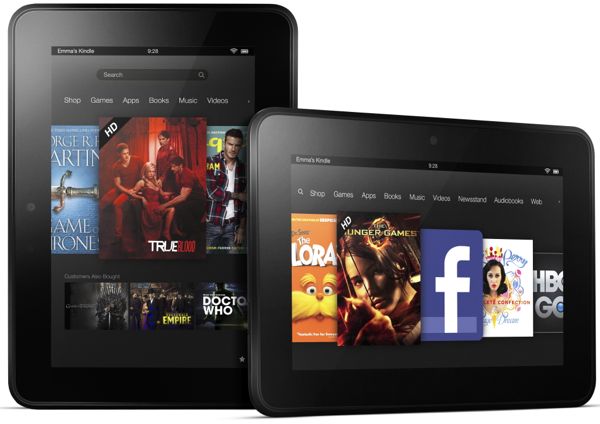
  • Does your mom want Kindle Fire HD? Now is the time

    Mother’s Day is fast approaching and, naturally, Amazon would like to sell you a holiday gift. The online retailer would really like you to purchase a Kindle Fire HD tablet, and it is making sure that this purchase will hurt your wallet just a bit less than it normally would. Amazon now places the Kindle Fire HD on its site for a temporarily discounted price.

    For this coming Mother’s Day, Amazon knocks $20 off the usual $199 price tag for the Kindle Fire HD 16 GB model. This is the 7-inch screen tablet with 1280 x 800 resolution (720p), Dolby audio, WiFi and 1.2 Ghz dual-core processor. The retailer also throws in some free cloud storage for mom to keep those family pictures.

    Amazon is following on the heels of Barnes and Noble, which announced its own discounts for the holiday, bringing the prices of the Nook down to $149 and $179, respectively — regularly $199 and $269. The Nook also now has the Google Play store, which is something the Amazon tablet lacks.

    The deal is good through the holiday — May 12th — and customers will need to use the code “FIRE4MOM” upon checkout. Of course, you can grab a discounted Fire tablet for yourself too — just don’t tell your mom.

  • Chute Opens Up With $7M Series A

    San Francisco-based startup Chute announced Tuesday it raised a $7 million Series A round of funding led by Foundry Group, with existing investors Freestyle Capital and U.S. Venture Partners also participating. The company, which came out of Y Combinator, previously raised about $3 million in funding from institutional and individual investors, including Klout co-founder and CEO Joe Fernandez. Chute provides a platform to help publishers and brands manage user-generated photos and videos.

    PRESS RELEASE

    Chute Secures $7 Million Series A Funding

    Chute continues to power the visual revolution by announcing first-to-market ad product to leverage real-time visual content. Condé Nast Traveler first customer to leverage Chute Ads for brand and user generated photos in banner units

    San Francisco, CA, May 7th, 2013 – Chute, the platform for brands, publishers, and developers to leverage real-time visual content, today announced that it has closed a $7 million Series A equity round led by Foundry Group, with existing investors Freestyle Capital and U.S. Venture Partners contributing to the round.

    The Chute platform provides its clients with the ability to better ingest, understand, manage and leverage real-time visual content while helping. Chute’s arsenal of developer tools and media platforms is what ignited Foundry Group’s interest in the company, Foundry Managing Director Ryan McIntyre said.

    “At Foundry Group, we are deeply interested in companies that provide ‘magic infrastructure’ for developers that makes it simple for them to deploy complex yet elegant functionality at scale that integrates easily with their new and existing mobile and web apps,” McIntyre said. “With over 500 billion photos taken via smartphones in 2012, Chute’s cloud media platform enables brands, publishers and developers to participate in the massive visual conversation happening every day.”

    In conjunction with its latest round of funding, Chute is announcing Chute Ads, a first of its kind product that allows brands to inject real-time visual content into digital advertising units. Chute is also announcing that Condé Nast Traveler is the first to use Chute Ads’ real-time and user-generated photo capabilities on cntraveler.com.  Chute and Condé Nast Traveler are enabling brand advertisers to meld paid, owned, and earned media efforts, thereby revolutionizing web ads by making them more interactive, personal, novel, and visual for marketers and consumers alike.

    “Chute Ads provides an innovative tactic for Condé Nast and its brands to give advertisers the ability to also be publishers,” said Craig Kostelic, Head of Digital Global Sales for Condé Nast Travel Network. “The ads encourage user interaction and provide a more engaging and immersive experience, which makes the ads more effective and more attractive to consumers. Real-time content means audiences will never see the same ad twice, and in-ad calls-to-action ensure engagement and long-term relationships.”

    Since its launch in 2012, Chute has seen substantial growth – processing and serving billions of photos for clients like NBC News, Turner, House of Blues Entertainment, Conde Nast, the NBA, and Saks Fifth Avenue. Chute continues to grow as more companies turn to visual content to help tell media-rich stories.

    The new funds will be used primarily to expand product offerings and scale operations as the company continues to expand the ways in which it is shepherding and powering the visual revolution.

    “We are known for our strength in helping brands and publishers leverage owned and earned visual content. By being the first company to complete the loop and help companies leverage owned and earned media in their paid efforts as well, we are broadening brands’ visual storytelling capabilities and helping them drive deeper relationships with audiences,” said Ranvir Gujral, Co-Founder of Chute.

    About Chute
    Chute is a mobile and Web platform that makes it easy to add photo and video functionality to any application or site. Chute works with some of the world’s biggest publishers and brands including NBCNews.com, Turner, Condé Nast, Saks Fifth Avenue, and House of Blues Entertainment, combining cloud infrastructure with extensive developer tools to provide instant media infrastructure to new and existing mobile and Web applications.  SlideChute, built on top of the Chute platform, makes it easy to collect, manage and display user-generated photos across the Web. For more information, please visit www.getchute.com.

    About Foundry Group
    Foundry Group is a venture capital firm focused on making investments in early-stage information technology, Internet and software startups. Its third venture fund of $225m was launched in September 2012 and is managed by four managing directors with over five decades of combined experience in venture capital investing. During that time they have invested in over 100 companies as institutional investors and over 50 companies as angel investors. Additionally, they have over three decades of entrepreneurial experience in founding and working in senior operating roles inside technology startups.

    The post Chute Opens Up With $7M Series A appeared first on peHUB.

  • Wall Street Going Wireless in Bid for Ultra-Low Latency

    Can wireless connectivity provide faster ultra-low latency connectivity for financial traders? (Image copyright David Neale and licensed for reuse under the Creative Commons Licence)

    Can wireless connectivity provide faster ultra-low latency connectivity for financial traders? (Image copyright David Neale and licensed for reuse under the Creative Commons Licence)

    There’s growing interest in wireless as a way to get faster connectivity for financial customers conducting low-latency trading, a trend seen in several announcements this week. 325 Hudson announced the addition of a wireless Meet Me Room (MMR) through a partnership with NexxCom. Meanwhile, Hudson Fiber Network has added ultra low-latency wireless infrastructure through ULL Networks.

    In the race to zero latency, the technologies are changing and evolving. Wireless technology providers are one avenue that fiber providers and financial customers are looking at closely as they seek ever-faster connectivity for their trading systems. Wireless can offer speed advantages over cabling, as signals can travel faster through air than fiber, and wireless transmission can allow data to move in a straighter path than fiber cabling routes (see Telecom Ramblings for a good explainer on wired vs. wireless).

    Data center providers in the New York and New Jersey markets depend on their bread and butter ultra-low latency financial customers. Hudson Fiber Network bills itself as the premier data transport provider, targeting financial, content, carrier, and enterprise clients with flexible networking solutions. 325 Hudson is strategically located on fiber-dense crossroads of Hudson Street and the Holland Tunnel, and is also emphasizing its services for financials.

    325 Hudson’s Wireless MMR

    325 Hudson, the carrier-neutral core interconnection facility strategically located on the fiber-dense crossroads of Hudson Street and the Holland Tunnel in New York City has partnered with NexxCom Wireless for the first managed wireless Meet Me Room (MMR), which will operate from the 325 Hudson rooftop. Wireless services will be made available on both a private network basis and as a managed service, initially to several key sites in New Jersey.

    The design of the wireless MMR is provided by NexxCom, and is able to minimize frequency interference, maximize roof space and optimize customer ease of wireless connections. The building’s management says it will provide the lowest latency connections across Manhattan, Northern New Jersey and beyond to support users with financial exchanges, mobile backhaul and disaster recovery connectivity needs.

    “NexxCom’s proprietary wireless technology provides the first solution where high capacity, high availability and low latency aren’t mutually exclusive,” said Sal Benti, Chairman of NexxCom Wireless. “The wireless Meet Me Room will offer the state of the art in wireless capabilities from technology to planning to provide customers with a tailored solution to suit each user’s specific needs.

    “Our clients require data center access solutions that near the speed of light; these requirements have been the driving force behind our creation of these wireless links,” said Benti. “As a result, today we can provide point-to-point wireless access between key trading firms and financial data centers at latencies that are superior to traditional optical fiber solutions.”

    The wireless MMR will enhance connectivity to subsea cables, New Jersey data centers and exchanges and provide access into long haul fiber and wireless networks to Chicago and additional western points. The wireless offering is coupled with access to multiple fiber and core transport providers and acts as a low cost alternative for first or last mile connectivity from the building-wired MMR with 325 Hudson’s interconnection facility.

    “Our partnership with NexxCom Wireless to provide the first-of-its-kind, carrier-neutral wireless Meet Me Room in New York City further exemplifies our commitment to provide our customers with cutting-edge, state-of-the-art services,” said Hunter Newby, Joint Venture Partner at 325 Hudson Street. “We look forward to bringing the submarine and terrestrial lit transport communities together with the microwave and millimeter wave community at 325 Hudson.”

    NeXXCom Wireless is a broadband wireless equipment and systems business focused on low latency and ultra broadband networks, and specifically targets firms conducting High Frequency Trading (HFT).

    Hudson Fiber Network to distribute ULL Networks

    Hudson Fiber Network (HFN) is exclusively distributing ULL Networks’ ultra low latency RF wireless connectivity capabilities within the New York and New Jersey metropolitan areas. Wireless routes will be offered for connections between major New York and New Jersey exchange points, including the Equinix NY1, NY4, NY8 and NY9 facilities, and key financial data centers in Weehawken, Mahwah and Carteret, New Jersey. Nationwide routes to Chicago facilities will also be available.

    HFN will offer ultra low-latency RF wireless services at the maximum available bandwidth of 1 Gig with latency reduction ranging from 30 to 60 percent depending on the wireless route. HFN and ULL Networks will partner together to provide additional routes in the future.

    “Our clients are some of the most influential players in the financial industry,” said Brett Diamond, President of HFN. ”By introducing this capability to our extensive lowest-latency fiber routes, we have the versatility to offer the financial community stand-alone fiber and wireless services, as well as hybrid services, based on each customer’s specific needs. Our partnership with ULL furthers our capabilities as the premier provider of low-latency services across the board nationwide, with a specific focus on the New York and New Jersey metropolitan areas.”

    “HFN was the partner of choice for ULL networks in the New York/New Jersey market,” said Ed Kopko, CEO of ULL Networks. ”Their lowest-latency fiber routes, now coupled with wireless, are simply the best offerings in market. Our best-of-breed wireless services will help HFN’s financial customer base by giving them seamless access to ultra-low-latency options in the ongoing pursuit of the highest possible performance.”

    Both of these moves target latency sensitive customers, as well disaster recovery and business continuity operations. As providers look to appeal to financials, they’ll continue to  blaze new trails in terms of technology adoption in the hopes of gaining an edge.

  • Windows 8 is such a failure Microsoft sells 100M licenses

    Judging by all the heavy criticism hitting the interwebs each day one would rightfully assume that Microsoft is on the wrong path with Windows 8. The operating system is often blamed for declining PC shipments, an user interface designed only for touchscreen devices or a scarce Modern UI app ecosystem filled with knockoffs. So, therefore, Windows 8 must be a clear sales miss, right?

    Today, Tami Reller, Windows & Windows Live CFO, boasts about 100 million Windows 8 licenses, a figure which does not fall in line with what every naysayer leads you to believe. “This number includes Windows licenses that ship on a new tablet or PC, as well as upgrades to Windows 8. This is up from the 60 million license number we provided in January. We’ve also seen the number of certified devices for Windows 8 and Window RT grow to 2,400 devices, and we’re seeing more and more touch devices in the mix”.

    That sales figure is an astonishing feat. Assuming that Microsoft charges an average of $30 per license — a number suggested by my colleague Joe Wilcox — Windows 8 generated $3 billion in revenue. That number is likely higher considering that the $15 upgrade offer ended in late-February, more than two months ago, so basically every version is available at full-price ever since. Really, $3 billion is nothing to sneeze at.

    As usual, Microsoft does not provide a sales breakdown between upgrades to Windows 8 and new devices offered with Windows 8. That leaves room for interpretation, suggesting that a significant part of the 100 million licenses sold thus far comes from upgrades.

    In Q1 2013, PC manufacturers shipped a tad over 76 million units, a number that includes devices running operating systems other than Windows 8 such as Windows 7, OS X and Linux-based distributions. The same applies to the little over 90 million PC shipments from Q4 2012. At the time, devices with Windows 8 (due to its early vintage) were likely fewer than those running other operating systems. And, despite declining shipments, Microsoft still thinks the PC is here to stay.

    “The PC is very much alive and increasingly mobile”, Reller says. “The PC is also part of a much broader device market of tablets and PCs. Windows 8 was built to fully participate in this broader and increasingly mobile device market. The PC part of the market is rapidly evolving to include new convertible devices and amazing new touch laptops, and all-in-ones”.

    Reller says that the number of apps available in the app store increased six fold since Windows 8 launched. Over the course of six months (presumably since the consumer release), app downloads exceeded 250 million. Also, users have downloaded nearly 90 percent of the Windows Store apps each month. The last figure should encourage developers to take more interest in Windows 8/RT.

    Reller also discusses Windows Blue. The Windows 8 update “will provide more options for businesses, and give consumers more options for work and play. The Windows Blue update is also an opportunity for us to respond to the customer feedback that we’ve been closely listening to since the launch of Windows 8 and Windows RT. From a company-wide perspective, Windows Blue is part of a broader effort to advance our devices and services for Microsoft”.

    Windows Blue arrives later this year and will be available “across an increasingly broad array of form factors of all sizes, display, battery life and performance”. That falls in line with the plans to offer “a new suite of small touch devices powered by Windows”, revealed by Microsoft nearly four weeks ago.

  • 12-Year-Old Calls Out Cop For Parking on the Sidewalk [VIDEO]

    Now that nearly everyone has video cameras in their pocket, videos of police doing (or failing to do) their jobs has become a staple on YouTube. Some citizens will even go so far as to test police by aggressively asserting their rights on camera, and now it seems that young adults are getting in on the action of holding the police accountable.

    A 12-year-old that identifies himself as Jeremy Drew last year approached a Las Vegas police officer to question him about parking on the sidewalk. The video, which was posted in September 2012, now has over 3.1 million YouTube views.

    In the video, the officer can be seen returning to his motorcycle with some sort of iced beverage in-hand. Drew asks him if there is some sort of emergency which would justify his parking on the sidewalk, then asks for the officer’s badge number. The officer refuses repeatedly and eventually drives off.

    (Via BoingBoing)

  • Samsung reportedly prepping ‘Galaxy S4 Zoom’ with 16-megapixel camera

    Samsung Galaxy S4 Zoom Release Date
    Among the various other smartphones and phablets Samsung will launch this year, the vendor is also readying at least three new variations on its new flagship Galaxy S4. The first is a ruggedized version of the S4 that Samsung confirmed back in April and the second is a Galaxy S4 Mini that will reportedly launch in July. Now, a third variant has emerged in a new report from SamMobile.

    Continue reading…

  • Al Pacino Quits “Despicable Me 2″ In Middle Of Recording

    Al Pacino is famous for playing the bad guy; even when he’s the good guy, he’s still kind of the bad guy. He yells a lot, he makes crazy eyes, his hair always looks like he’s been awake for 37 hours on an anger binge. He’s gravel-voiced and intimidating. So, he was the perfect choice to play a villain in a children’s movie. Unfortunately, he’s reportedly dropped out due to “creative differences” with the producers of “Despicable Me 2″, the highly-anticipated sequel to the Steve Carrell-led animated feature.

    What’s most unfortunate is that he was halfway through the recording of his part, meaning the producers were left in the lurch. They issued this statement:

    “Over the production of Despicable Me 2, there were creative differences between us and Al Pacino, who had been cast as the voice of Eduardo in the film. We have mutually decided with Al to replace the voice of Eduardo with a new actor. Universal and Illumination thank Al for his many contributions to the process and look forward to a new actor bringing this memorable character to the screen upon its release this summer.”

    In fact, knowing that they had to stick to their tight schedule in order to keep a July 3rd release date, those at the helm of the film made a quick decision and snapped up Benjamin Bratt to take Pacino’s place. No statement yet from Pacino, however.

    The film is still slated for a summer release and also stars Steve Carrell, Kristen Wiig, Ken Jeong, Miranda Cosgrove, Russell Brand, and Steve Coogan.

  • Learn More About The Infected From The Last Of Us

    The Last of Us looks more promising every time we see it. The developers at Naughty Dog may just be onto something here, and it becomes harder to wait for its June release. In the meantime, Sony is drip feeding us new trailers to keep fans satiated.

    In the latest trailer for The Last of Us, Naughty Dog discusses the inspiration for the game’s more monstrous enemies – the Infected. The name may not be unique, but the creative process that led to their creation certainly is. It’s not everyday that you see enemies based upon a real fungus that can take control of an animal’s mind.

    The Last of Us will launch June 14 exclusively for the PS3.

  • Froont wants to solve many-screen design problems from within the browser

    Froont, a Baltic-U.S. startup, has released a public beta of its in-browser responsive web design tool, which aims to automate front-end development for the benefit of designers.

    Responsive web design is all the rage right now: it basically means designing a website so that it renders nicely across a variety of device types, from the desktop to the handset (we’re into this stuff ourselves, you will have hopefully noticed). Froont isn’t the only company trying to tackle this market – Adobe is notably previewing its Edge Reflow tool at the moment – but co-founder Anna Andersone reckons her company offers a simpler experience than most.

    “Most of the other tools are template-based,” she told me. “Froont allows complete design freedom, so in the responsive design field that is quite new. There is competition from Adobe Edge Reflow, but the main difference is that Froont is an in-browser tool, which means the result is already online and can be shared easily with client and collaborators just by sharing a link, and anyone can use the design on any device.”

    Of course, this sort of work is best done on a desktop browser – in fact, Froont’s editing mode currently only works in Chrome. According to Andersone, this is because Google’s browser has better inspection tools than others.

    While Froont is clearly aimed at reducing users’ need for traditional front-end development, it’s not as though it does away with devs altogether. “You can export clean HTML code or ready CSS which can be later added to any other platform,” Andersone said. “At that stage you need to have a developer who could connect it to an existing CMS or platform.”

    Related research and analysis from GigaOM Pro:
    Subscriber content. Sign up for a free trial.


  • Porsche 997 GT3 RS Rally Porn

    Porsche GT3 RS

    It’s unfortunate, but the majority of us live out our automotive lives through other people who are a lot cooler than we are. Case in point, the driver of this wickedly bad-ass Porsche 997 GT3 RS. This is a vehicle that those of us with little means dream about when we’re staring at the ceiling at night. It makes all the right moves, all the right sounds and ignites the soul to a level that few cars can match. Click through and check it out after the jump.

    Source: Youtube.com