Blog

  • Washington Post Ombud: Anonymous Comments Have Their Place

    With some newspaper folks claiming that anonymous comments are evil and somehow bad for America, it’s nice to see someone from the business step up and defend the value of anonymous commenters. The Washington Post’s ombudsman, Anderw Alexander recently wrote a good defense of anonymous commenters. The first half details all the bad that comes along with anonymous commenters — the vile and nasty comments — but then points out that an outright ban is the wrong response:


    For every noxious comment, many more are astute and stimulating. Anonymity provides necessary protection for serious commenters whose jobs or personal circumstances preclude identifying themselves. And even belligerent anonymous comments often reflect genuine passion that should be heard.

    He also points out that allowing anonymous commenters has helped to build up a much larger community at the WaPo site, where those users tend to be more loyal and spend more time, even if it’s not known who they are specifically. But I think the point highlighted above is key. We all can remember the awful anonymous comments, because those stick out in our memory. But that creates this anecdotal belief that anonymous comments are awful. Yet, as I look through the anonymous comments that we get at Techdirt every day, the vast majority of them are quality comments. Yes, there are some terrible ones, which may be more memorable, but we have anonymous commenters who provide tremendous value — and it would be a shame to cut them off, just because of a few troublemakers.

    Permalink | Comments | Email This Story


  • Will The iPad Blend? Watch and Find Out. | Discoblog

    hardware-01-20100127

    Over the last few days, questions surrounding the iPad have normally been along the lines of: When will I get my paws on one? What apps should I get? What if I break it? But the question over at the blender company Blendtec has been more straightforward as everyone wondered, “Will it blend?”

    Over the last few years, the company has been producing videos that showcase the industrial strength of their commercial blenders. In this video, they set out to find if Apple’s tablet can be blended into an iPad smoothie by chucking it into the “Total Blender” and turning in on. Needless to say, we gripped the edges of our table and wept a little (ok, a lot) as the brand-new iPad was smashed to smithereens.

    Past “Will it Blend” videos have shown objects like glow sticks or an iPhone being demolished by the roaring blender. Blendec’s website proudly states:

    The Total Blender two jar package includes both the standard 2-quart BPA-free jar, as well as the new BPA-free 3-quart jar featuring a precision tuned 4” blade and a patented fifth side. This larger five sided jar / 4″ blade combination creates a more powerful blending vortex, allowing you to power through tougher blending tasks with ease in less time.

    Are you ready? Then watch what happens here.

    Related Content:
    Discoblog:  iPad Arrives—Some Worship It, Some Critique It, HP Tries to Kill It
    80beats: Apple’ iPad Tablet: It’s Here, It’s Cool, and It’s Slightly Cheaper Than Expected
    Discoblog: Weird iPhone Apps (our growing compendium of the oddest apps out there)

    Image: Apple


  • Administration Initiative to Eliminate Improper Payments Starts to Come into Focus

    On March 22, the Office of Management and Budget (OMB) released new guidance for implementing President Obama’s recent Executive Order 13520, which instructs the federal government to reduce improper payments to individuals and businesses. The initiative attempts to use transparency, public participation, and executive branch accountability to reduce "payment errors" and eliminate "waste, fraud, and abuse" in major federal programs. The guidance, however, is incomplete, and OMB will have to work to fill out the program’s details.

    An improper payment can consist of any funds wrongly disbursed by the federal government to an individual or business as a program beneficiary, grantee, or contractor. The government improperly distributes billions of dollars every year – it improperly expended nearly $100 billion in Fiscal Year 2009, according to the recently released guidance – for reasons ranging from a basic data entry mistake to a failure to verify a beneficiary’s qualification for funds. The administration’s initiative, which builds upon reforms made in 2002, targets "high-priority" programs, or those that repeatedly report improper payments above a certain percentile threshold. The guidance, however, fails to specify that threshold.

    The Improper Payments Information Act of 2002 (H.R. 4878), along with the Recovery Auditing Act passed the same year, requires federal agencies to account for the root causes of error in programs susceptible to "significant improper payments" in their annual performance reports to OMB. The Obama administration’s program goes further by requiring all federal agencies with a "high-priority" program to set a goal to reduce improper payments to an acceptable percentage of disbursements or total disbursed funds and publically report on that goal semi-annually. Each agency is also to designate a Senate-confirmed official who will answer for the agency if it fails to meet its goal.

    The Nov. 22, 2009, executive order lays out several new public disclosure requirements, greatly enhancing accountability in federal payments to private entities. By May 20, OMB, acting in conjunction with the Treasury and Justice departments, is required to begin publishing certain information online, including the names of the designated agency officials, the current and historical amounts of improper payments, their proportion to total agency payments, and the successful recovery rates and amounts of those payments. OMB will also have to publish the causes of the improper payments, each agency’s targets for reducing and recovering improper payments, and the entities that have received the greatest amount of outstanding improper payments.

    Along with this catalog of information on the administration’s initiative, the head of each agency will have to make public a report submitted to the agency’s inspector general each quarter on any improper "high-dollar" disbursements. The guidance unfortunately fails to specify what constitutes a "high-dollar" disbursement, but the report will include any actions the agency has taken or plans to take to recover the funds, as well as what steps the agency will take in the future to prevent a similar occurrence. To further engage the public, OMB, again acting in conjunction with the Treasury and Justice departments, is required by the end of May to establish a central Internet database for collecting and sorting public tips on the suspected fraud, waste, or abuse of government-disbursed funds. Each agency will have to provide a clearly marked link on its homepage for the public to access this database.

    With project due dates still a few months away, it is hard to tell whether OMB will be ready to implement the requirements in time. Indeed, the new guidance released in March is more of a skeletal structure for the implementation of E.O. 13520, with many details left to flesh out before the executive order’s full transparency measures can be put into place.

    Photo in teaser by flickr user wintersoul1, used under a Creative Commons license.

    The White House: Executive Order 13520


    Office of Management and Budget: Memorandum on Improper Payments


    U.S. Congress: Improper Payments Information Act of 2002


    For Updated News and Information:

  • Could a Better Carrier Have Saved Palm?

    Palm has fired the creators of its ineffective Pre advertisements, but tossing Modernista overboard isn’t going to right this sinking ship. Palm’s hoped-for comeback is floundering, not merely because of the bad advertising campaign, but because of bad timing, an ill-chosen launch partner and a lack of developer support. Above all, Palm’s experience proves that even in the world of dumb pipes, the carrier can still make or break the brand.

    At CES 2009, when Palm announced its plans to rise from ashes much like the proverbial phoenix, everyone applauded. Palm was a beloved brand and many believed that a new operating system, revamped hardware and marketing blitz would help the company stage a comeback. But Palm’s webOS-powered devices aren’t selling well in carriers’ stores. Instead of pushing them as high-value handsets, carriers are holding the equivalent of fire sales to rid themselves of excess inventory. Advertising Age blames Palm’s marketing missteps.

    But the choice of a strong launch partner may have had more of a role.  Motorola, which is also attempting a comeback, provides a counterpoint to Palm’s failures so far with the success of its Droid and Backflip handsets. Mark Sue, an analyst with RBC, credits some of Motorola’s success to the support of its carrier partners today in a research note.  But for Palm, a 6-month exclusive launch with Sprint as the carrier struggled with subscriber churn didn’t help. And that exclusive window meant that the other CDMA carrier in the U.S. — Verizon Wireless — had time to pump $100 million into a marketing blitz to promote the Motorola Droid, not Palm phones.

    So now Palm is trying to stay in the game by engaging customers at the point-of-sale with brand ambassadors in Verizon and Sprint retail locations. Enabling sales staff to understand the benefits webOS brings to a device is a step towards recovery but the road will be long. The problem is that many consumers enter a phone shop already knowing which device they want based on marketing they’ve already seen.

    As a former Palm Pre owner — I waited in line on launch day for the innovative device and shared first impressions — I agree that advertising efforts didn’t help matters. But choosing a different partner or limiting exclusivity to a single carrier for less than a half-year — nearly a full product lifecycle on some mobile tech calendars — could easily have vaulted Palm into a formidable challenger.

  • Here’s The Bag Of Tricks New York Uses To Hide Its Crippling Deficit

    thomas dinapoliWhile New York ignored creative accounting that led to the financial crisis, the state was busy hiding its own debt.

    Comptroller Thomas DiNapoli released a report that suggests the deficit could be much higher than the reported $9 billion. At this point, no one knows:

    “New York needs to stop playing games with the deficit,” DiNapoli said. “The state dips into dedicated funds here and shifts money over there, all to cover cash shortfalls and avoid making the difficult decisions needed to align spending with revenues. The end result is the state’s real fiscal condition is impossible to pin down. Every time the game is played, taxpayers lose.”

    To lessen the general fund deficit, the state borrowed money from dedicated funds for highways, veterans, and everything else.

    If something is broken or decrepit in New York, you can bet it’s funding has gone to the debt furnace.

    How New York Hides Its Soaring Deficit >

    Redirecting $34.3 billion from a fund designated for health care

    Redirecting $34.3 billion from a fund designated for health care

    Source: New York State Comptroller

    Taking 65% of the Highway And Bridge Trust Fund and moving it into the general fund — $22 billion

    Taking 65% of the Highway And Bridge Trust Fund and moving it into the general fund -- $22 billion

    Source: New York State Comptroller

    Sweeping $3.7 billion from other dedicated funds into the general fund

    Sweeping $3.7 billion from other dedicated funds into the general fund

    Magenta represents the Environmental Protection Fund.

    Source: New York State Comptroller

    $850 million sucked out of the Environmental Protection Fund

    $850 million sucked out of the Environmental Protection Fund

    Source: New York State Comptroller

    Next year’s budget shifts $40 million in COSTS to the Environmental Fund (such as park operation)

    Next year's budget shifts $40 million in COSTS to the Environmental Fund (such as park operation)

    Source: New York State Comptroller

    Taking another $100 million in unspecified sweeps

    Taking another $100 million in unspecified sweeps

    Wall Street accountants work hard to make the quarter.

    Image: http://scams.wikispaces.com/file/view/Bonneteau_-_March%C3%A9_aux_Puces_de_Clignancourt.JPG/78501159/Bonneteau_-_March%C3%A9_aux_Puces_de_Clignancourt.JPG

    Source: New York State Comptroller

    Hiding around $1.5 billion each year in outstanding short-term loans

    Hiding around $1.5 billion each year in outstanding short-term loans

    Source: New York State Comptroller

    Adding to long-term borrowing that costs $1 billion yearly in interest

    Adding to long-term borrowing that costs $1 billion yearly in interest

    Source: New York State Comptroller

    Funding Indian Gaming, while pretending it pays for itself

    Funding Indian Gaming, while pretending it pays for itself

    Source: New York State Comptroller

    Creating special funds like Wine Industry Marketing & Promotion, and then sucking most back to the general fund

    Creating special funds like Wine Industry Marketing & Promotion, and then sucking most back to the general fund

    Image: Socially Superlative

    Source: New York State Comptroller

    So how bad is the New York state deficit? No one knows.

    So how bad is the New York state deficit? No one knows.

    Image: AP

    Read more: Meet The 899 NY State Employees Who Earn More Than David Paterson

    Join the conversation about this story »

  • Claypool announces independent bid for Cook County assessor

    Posted by John Byrne at 10:05 a.m.; last updated at 12:30 p.m.

    Cook County Commissioner Forrest Claypool, who announced last year he would quit rather than wage a much-anticipated challenge to Board President Todd Stroger, said today he will instead try to mount an independent campaign for Cook County assessor.

    Claypool’s target this time is another fellow Democrat, Joseph Berrios, who is a member of the county tax Board of Review and county Democratic Party chairman. Berrios won the February primary for the assessor’s post and already faces Republican and Green Party candidates for the office that sets the value of private property for tax purposes.

    Claypool said his earlier run for board president was focused in large part on reforming the county health care system. With the subsequent creation of the independent county health board, Claypool said he had a less compelling reason to run again.


    Claypool said he didn’t run in the Democratic primary against Berrios in large part because he was hopeful another candidate, Raymond Figueroa, would win instead of Berrios.


    "Right now there is a different challenge, and that is to prevent Joe Berrios and the Democratic machine from taking back an office that has long been used to support and fund and help insiders at the expense of average taxpayers who are already suffering," Claypool said.

    The commissioner was joined today by U.S. Reps. Mike Quigley and Jesse Jackson Jr., who both endorsed him.

    Claypool ran unsuccessfully against Stroger’s father, then-incumbent President John Stroger, in 2006. Last year, Claypool opted not to run for the Democratic nomination against Todd Stroger, saying he would resign from the board and return to the private sector.

    But rumors began circulating after Berrios’ Democratic primary victory for assessor that he was considering running as an independent.

    Outgoing assessor James Houlihan praised Claypool last week during a news conference to make the allegation that Berrios was trying to slow the review process at the tax board to delay bills until after the Nov. 2 general election. Berrios claimed it was Houlihan slowing down the process and said Claypool should have run in the primary if he wanted the job.

    Making an independent run for office is daunting because it takes at least 25,000 signatures on petitions to get on the ballot.

  • All together now

    HERE’S an interesting new research result from the Asian Development Bank Institute’s Willem Thorbecke:

    Many argue that the yuan needs to appreciate to rebalance the People’s Republic of China’s trade. However, empirical evidence on the effects of a CNY appreciation on the People’s Republic of China’s exports has been mixed for the largest category of exports, processed exports. Since much of the value-added of these goods comes from parts and components produced in Japan, the Republic of Korea, and other East Asian supply chain countries, it is important to control for exchange rate changes in these countries. Employing dynamic ordinary least squares, or DOLS, techniques and quarterly data, this paper finds that exchange rate appreciations across supply chain countries would cause a much larger drop in processed exports than a unilateral appreciation of the yuan.

    China has been arguing that America’s use of the full value of Chinese exports, rather than figures adjusted to reflect China’s value-added, vastly overstates the extent of the Chinese current account surplus. It’s important to consider the structure of Chinese production when thinking about these policy choices.

  • Teaching Earth Science with Children’s Literature: Living Sunlight

    sunlight.jpg

    Summary:

    Living Sunlight How Plants Bring The Earth To Life, a book written by Holly Bang and Penny Chisholm. This book introduces kids to photosynthesis in a simplestic way. In the book it discusses how plants and animals take in the sunlight to grow and make food for the child who then eats the plants and drinks the sunlight and grows. Throughout the book the pulse of the child is seen as the pulse of the world and the warmth of the child is seen as the warmth of the sun. The colorful illustrations in the book are great for first and second graders. In conlusion this book can be used to teach students about the science cirrculum.


    Curriculum Connection:

    1.4(a) plants need air, water, light and a place to grow. The book describes how the sunlight melts glaciers, warms the land and create your winds . (c) The book then goes on to describe that the secret starts in green plants because they suck up H2o from the earth plants and can be classified on a variety of characteristics. (2.5a) With adquete food, shelter, space or cover the plants trap the energy as little packets.  

    Additional Resources:

    Water experiments: Surface tension is one of water’s most important properties. It is the reason that water collects in drops, but it is also why water can travel up a plant stem, or get to your cells through the smallest blood vessels. Water experimetns allows you to experiment with surface tension using just a few household items.

    People and Space: Students will understand preservation of food and space-saving storage, also what dehydration means and how dehydrated foods can be consumed by mixing the food with saliva from the eater’s mouth or by adding water

    The Living Earth: Discuss glaciers, how they change the land and how the planets structure changes

    General Information:

    Book: Living Sunlight

    Author: Holly Bang & Penny Chisholm

    Publication Date: 2006

    Pages: 1-30

    Grade Range: 1-3

    ISBN: 3 3082 01074 2996


  • BofA’s Francisco Blanch: Oil Will Rise Above $100 In Early 2011

    Early 2011 could see oil rise above $100 says Francisco Blanch, Head of Commodities Research at Bank of America-Merrill Lynch.

    Why? Blanch explains on Bloomberg TV that the increased global demand for fuels accompanied with a recovering global GDP should be enough to push prices higher.

    Join the conversation about this story »

  • Big companies teach too

    David Omoyele of Ink Audio read REWORK and had a beef with a passage in the book that suggests big companies don’t teach. He sent an email pointing out three examples to prove his point: 1) Apple offers free workshops at its retail stores. 2) Microsoft teaches via online lessons. 3) Gibson, one of the largest guitar sellers, offers “tone tips” like this one on how types of finishes affect the guitar’s tone.

    More examples come to mind too: Nikon offers digital tutorials on its cameras. Dove conducts free Self-Esteem Workshop for Girls 8-12 years old designed to “promote new ways of thinking about beauty, body image and self-esteem.

    So David’s got a point that big companies can and do teach.

    Still, what percentage of these big co. budgets are going toward teaching vs. traditional marketing/advertising that hypes features? Big companies may be dipping their toes in these teaching waters but small businesses have a unique chance to dive in all the way and deliver more direct, personal lessons. And that can be a great way to turn customers into superfans. It remains one of those areas where small definitely has an advantage.

  • Exxon Mobil paid no federal income tax in 2009 – Steve Martin lives!

    exxon-mobilThe joke goes, The economy is so bad Exxon Mobil laid off 25 Congressmen.  If only.

    Turns out the economy is never really bad for the oil giant, and the last thing they would want to do is cut off support to members of Congress who allow them to pull off the remarkable trick of making $45 billion in profits last year but paying no federal income tax.  Think Progress reports the stunning news, which, sadly, is not a Steve Martin routine:

    Last week, Forbes magazine published what the top U.S. corporations paid in taxes last year. “Most egregious,” Forbes notes, is General Electric, which “generated $10.3 billion in pretax income, but ended up owing nothing to Uncle Sam. In fact, it recorded a tax benefit of $1.1 billion.” Big Oil giant Exxon Mobil, which last year reported a record $45.2 billion profit, paid the most taxes of any corporation, but none of it went to the IRS:

    Exxon tries to limit the tax pain with the help of 20 wholly owned subsidiaries domiciled in the Bahamas, Bermuda and the Cayman Islands that (legally) shelter the cash flow from operations in the likes of Angola, Azerbaijan and Abu Dhabi. No wonder that of $15 billion in income taxes last year, Exxon paid none of it to Uncle Sam, and has tens of billions in earnings permanently reinvested overseas.

    Mother Jones’ Adam Weinstein notes that, despite benefiting from corporate welfare in the U.S., Exxon complains about paying high taxes, claiming that it threatens energy innovation research. Pat Garofalo at the Wonk Room notes that big corporations’ tax shelter practices similar to Exxon’s shift a $100 billion annual tax burden onto U.S. taxpayers. In fact, in 2008, the Government Accountability Office found that “two out of every three United States corporations paid no federal income taxes from 1998 through 2005.”

    Media Matters adds:

    Even though Exxon doesn’t contribute anything to the federal government, it spends millions of dollars trying to control it.  According to the Center for Responsive Politics, Exxon Mobil spent a whopping $27,430,000 on lobbying in 2009 alone.

    Oh, and you’ll be delighted to know that, as the Financial Times reports today “ExxonMobil, the world’s largest international oil company, has agreed to pay the US government $32.2m in a settlement to resolve claims that it knowingly underpaid royalties owed on natural gas produced from federal and native American leases, the justice department said on Monday.”

    Someday, ExxonMobilShellChevronConocoPhilips will be one big company making tens of billions of dollars in profit, while paying no federal income taxes and spending millions spreading disinformation aimed at keeping us addicted to their toxic product.

    And if this reminds you of an old Steve Martin joke — then you are right.  From SNL in 1978:

    You.. can be a millionaire.. and never pay taxes! You can be a millionaire.. and never pay taxes!

    You say.. “Steve.. how can I be a millionaire.. and never pay taxes?”

    First.. get a million dollars. Now.. you say, “Steve.. what do I say to the tax man when he comes to my door and says, ‘You.. have never paid taxes’?”

    Two simple words. Two simple words in the English language: “I forgot!” How many times do we let ourselves get into terrible situations because we don’t say “I forgot”?

    Let’s say you’re on trial for armed robbery. You say to the judge, “I forgot armed robbery was illegal.” Let’s suppose he says back to you, “You have committed a foul crime. you have stolen hundreds and thousands of dollars from people at random, and you say, ‘I forgot’?” Two simple words: Excuuuuuse me!!

    Well, it’s ain’t armed.  But it is robbery.

  • First Solar headed for demise

    Anyone who has invested or is thinking of investing in a technology stock should read Bronte Capital’s explanation of why it is shorting First Solar Inc. of Tempe, Ariz. As Bronte admits, First Solar is a great company. Its breakthroughs in producing low-cost solar panels have changed the economics of the solar-energy industry. Moreover, it is profitable—probably as profitable as the rest of the solar industry put together.

    So why don’t the good folks at Bronte Capital like the firm’s prospects? As they point out, a successful tech company needs to do two things: change the world and keep out the competition. Changing the world is the easy part. It’s the competition that kills.

    Applied Materials Inc.—the nanomanufacturing company that is “the most important company in the world you have never heard of,” according to Bronte Capital—is taking dead aim at First Solar’s competitive advantages. By Bronte’s reckoning, the technologies that Applied Materials is developing are likely to erase the cost advantage that First Solar has enjoyed, especially when coupled with falling prices for semiconductor ingot. This does not bode well for First Solar, a company that Bronte Capital greatly admires, but that it believes is headed for demise.

    Freelance business journalist Ian McGugan blogs for the Financial Post.

  • Breakfast Bubbly: 5 Alternatives to the Classic Mimosa

    2009_05_06-Mimosa.jpgThe mimosa is just about the most virtuous cocktail we know; nothing nefarious about orange juice and the dainty effervescence of champagne. But as far as pre-noon brunch drinks go, it’s not the most inventive. Enter these five adaptations that up the danger a bit.

    Read Full Post


  • Caso Toyota piora ainda mais: EUA quer aplicar multa recorde na empresa


    A NHTSA, Departamento dos Transportes Norte Americano, quer fazer com que a Toyota sofra a penalidade máxima por causa dos acontecimentos recentes com a empresa, envolvendo um recall de milhões de veículos no mundo inteiro, e muita dor de cabeça para a companhia.

    A multa deve ser superior a 16 milhões de dólares, e a alegação é que a montadora não informou o governo sobre os defeitos de seus carros, incluindo problemas de aceleração e outras coisas, que causaram dezenas de mortes.

    Mesmo com a confirmação praticamente certa, a Toyota ainda não se pronunciou a respeito da declaração, mas se isso realmente se concretizar, vai ser a maior multa civil já aplicada a uma fabricante de automóveis na história dos EUA. O secretário de transportes norte-americano, Ray LaHood, faz revelações bombásticas a respeito do problema que gerou esse recall. Veja logo após o link.

    Segundo documentos obtidos da montadora japonesa, foi descoberto que a Toyota já sabia dos problemas nos aceleradores desde o fim de setembro de 2009, mas só chamou os carros para o conserto no final de janeiro desse ano, e tal negligência causou o problema de 2,3 de veículos e mais de 100 mortes, segundo a NHTSA. Ray LaHood afirma o seguinte:

    “Agora há a prova de que a Toyota falhou em suas obrigações legais. Pior ainda, sabendo, esconderam um defeito perigoso durante meses às autoridades norte-americanas e não agiram para proteger milhões de condutores e as suas famílias. Por essas razões, queremos a pena máxima possível sob a legislação existente”.

    Via | Autoportal


  • Liberian President Sirleaf Joins Senegal in 50th Independence Anniversary Celebrations

    Liberia Government (Monrovia)

    Liberia: President Sirleaf Joins Senegal in 50th Independance Anniversary Celebrations

    5 April 2010
    ——————————————————————————–
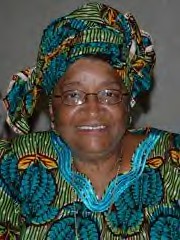
    President Ellen Johnson Sirleaf has described the inauguration in Senegal of the African Renaissance Monument as a symbol that represents the lifting of the African flag.

    She stated that it is a testimony to Africa’s freedom and the continent’s ability to choose its own destiny. The President urged African Governments to bury the past of slavery and colonialism and to continue forging ahead into the future. The Liberian leader was speaking in Dakar, Senegal, following the inauguration of the African Renaissance Monument, which coincided with the 50th Independence Anniversary of the country.

    In a speech at the Independence Day event, the President of Senegal, Abdoulaye Wade, called on the Senegalese people to continue the unity that has brought them so many accomplishments over the years. President Wade stated that the success of the celebration was a result of the patriotism of

    the Senegalese people – a sentiment which he believed would enhance development. Senegal, he said, is for all Senegalese.

    He expressed heartfelt gratitude to all delegates and ordinary people who joined the Senegalese to celebrate their anniversary.

    The occasion brought together more than ten African Presidents and representatives of several Governments and organizations around the world, including the United States, Asia, Europe, and the United Arab Emirates. The dignitaries included the President of the African Union, the President of

    Malawi, former Nigerian President Olusegun Obasanjo and Rev. Jesse Jackson, Sr. of the Rainbow Coalition of the United States.

    The celebration, which took place from the 3rd to the 4th of April, also included a parade in which military hardware including helicopters, armored-vehicles, amongst others, were put on display to demonstrate Senegal’s preparedness to defend its sovereignty.

    In another development, the Liberian community in Dakar, Senegal, appealed to President Ellen Johnson Sirleaf to facilitate their return to Liberia. According to the President of the community, James Kolleh, most of them are languishing in Dakar without jobs and schooling, and that their return to Liberia will enable them to go to school.

    The Liberians said they were proud that President Johnson Sirleaf attended what they described as an historic and colorful celebration. The President assured the Liberian Community in Dakar that the Liberian Government wouldwork with its embassy in Dakar to begin formulating plans for their gradual return.

    The President’s delegation, which included the Minister of State for Presidential Affairs, Dr. Edward McClain, Representative Haja Fata Siryon of Bomi County, and the Secretary General of the Federation of Liberian Youths (FLY) Mr. Jerry Tarbolo, returned to the country Sunday afternoon.

    Copyright © 2010 Liberia Government. All rights reserved. Distributed by AllAfrica Global Media (allAfrica.com).

  • Apple Store Goes CODE RED After MacBook Pro Request [Apple]

    Well, what to make of this? A man walks into an Apple Store in Santa Monica, asks for a 2.66GHz MacBook Pro, and suddenly security gets thrown into high alert. Beware the “forerunner,” my friends. More »


  • T-Mobile HTC HD2 comes into, goes back out of stock

    htchd2outofstock


    Its appears demand for the HTC HD2 on T-Mobile USA remains very high. FuzeMobility reported yesterday that the handset has come back into stock online at T-Mobile.  Fast forward 24 hours, and it seems that supply is now pretty much gone, with the Out of Stock sign now firmly back in place.

    Neither HTC nor T-Mobile has released any further figures on the sales of the monster device, but I think it would be reasonable to suppose that sales may have reached at least 100 000, of course largely dependent on supply, and certainly beating sales of the Nexus One over the same period.

    Does your local T-Mobile have a secrets stash of HTC HD2?  Let readers eager to grab the device know below.


  • What is Your Bank Worth To You?

    Mike Konczal, bank-blogger extraordinaire, has a piece titled “What Are You Worth to Your Bank?” that I find sort of puzzling.

    Here’s the answer that Konczal comes up with, after some head scratching:

    But anyway, we went out for drinks and it quickly got crazy and financial equations were being written down on napkins. The question at hand was, “How much is a customer worth to a commercial bank?” This is what we came up with:

    There’s whatever you pay in fees. Whatever you having in your checking and savings account is lent out, and the spread is going to be at least 2.5 percent, so they make a ballpark 2.5 percent off whatever you keep in your accounts. And whenever you pay with a credit card or a debit card, your bank is making at least 1.7 percent of the transaction, paid for by the merchant.

    So let’s assume there’s this family. Let’s say they make $60,000/year, so they take home about $3,500 a month after taxes. They don’t live month to month, but they certainly live quarter-to-quarter, and they keep three months worth of money in their checking and savings account, so about $10,500 through the year. Let’s also say that they spend half their money on essentials. Two-thirds of the remaining budget, goes through a credit card or a debit card when it is spent, so they put $1,155 through a card in a month. They are very clever and somehow manage to dodge all fees.

    How much are they worth as a customer? A quick check tells us: $498.12.

    Maybe you can relate to this budget. So here’s a good question: Do you feel you get half a grand worth of service from your bank?

    This doesn’t make much sense to me.  For starters, it assumes that you do not cost your bank anything, which is not likely to be true.  They have to spend money clearing your checks.  They need a customer service agent to deal with you.  Probably you enjoy having branches and ATMs available.  You use computer time and bandwith for your online banking.  Your withdrawals and deposits must be recorded and audited.  Insurance must be paid to the FDIC, and regulators complied with. And so forth.

    Now, obviously, many of these things have threshhold effects–you can add one additional customer without adding branches or customer service agent.  But there is a marginal cost to providing services to you, which means that $498.12 is not what you are “worth” to your bank; it is, in theory, the revenue you provide them.  But when I look at bank income statements, it seems like the top line differs rather dramatically from the bottom line.  And my understanding is that customers with moderate balances aren’t all that lucrative for banks–which is why they don’t particularly encourage low-income customers to sign up for their services.

    Conversely, Konczal implies that leaving your money with your bank is somehow costing you almost $500 a year.  But that would only be true if you, yourself, could go out and get a better riskless return on your money, which you can’t.  Especially not if you want the right to pull all your money out at a moment’s notice.  Your alternative to the bank, if you want guaranteed principal return and perfect liquidity, is sticking the stuff under your mattress.  And while it may be gratifying to know that the mattress doesn’t really get much out of the transaction, it also won’t pay you any interest at all–not even the pitiful percentage I get from Citibank.

    Konczal has done a lot of good work on the scuzzy ways that banks maximize things like overdraft fees.  But I don’t think that this is the right way to look at checking account pricing.


    Email this Article
    Add to digg
    Add to Reddit
    Add to Twitter
    Add to del.icio.us
    Add to StumbleUpon
    Add to Facebook


  • Adam Carolla picked as favorite to win Long Beach Pro/Celebrity Race

    Filed under: , , ,

    If you’re desperate to bet on these things, a Vegas pro has laid out the odds for the Toyota Pro/Celebrity Race that takes place before the Toyota Grand Prix of Long Beach in two week’s time. In the number one spot, at 11-1, sits Adam Carolla, which gives him the same odds as pro Marty Nothstein and ahead of the odds smacked down on celebrity-cast-as-pro Keanu Reeves, who’s at 12-1.

    It also puts Carolla at the head of the celebrity class, before “Chuck’s” Zachary Levi, skateboarder Tony Hawk, Mr. Megan Fox – otherwise known as Brian Austin Green, and soon-to-be-Predator-hunter Adrien Brody. The field of Scion tCs will blast around the 1.97-mile circuit on April 17, and to paraphrase Gone in 60 Seconds, “Go, Carolla, go.”

    [Source: Las Vegas Advisor]

    Continue reading Adam Carolla picked as favorite to win Long Beach Pro/Celebrity Race

    Adam Carolla picked as favorite to win Long Beach Pro/Celebrity Race originally appeared on Autoblog on Tue, 06 Apr 2010 09:58:00 EST. Please see our terms for use of feeds.

    Permalink | Email this | Comments