We are aware that several media outlets are airing footage depicting gunfire from a U.S. helicopter and claiming that this footage was recorded during an incident in 2007 in which two Reuters reporters were killed. At this time, we are working to verify the source of the video, its veracity, and when or where it was recorded. The incident presumably associated with this video was investigated in 2007, and the releasable portions of that investigation are available [here].
The link will take you to a U.S. Central Command webpage containing a plethora of internal inquiries in response to the apparent incident. I’m not at a place where I can go through them all immediately but will update as soon as possible.
Colin Furze and his flame-throwing scooter – Click above to watch the video after the break
Public Service Announcement: Apparently, it is illegal to mount a reverse-pointing flame thrower on the back of a scooter in the United Kingdom. Who knew? Not our man Colin Furze of Lincolnshire, England, that’s for sure.
The 30-year-old Furze created a wicked awesome video of himself and the scooter, which allegedly showed him using the two-wheeler on the highway with the flame thrower attached. Want to see for yourself? Done. Click on past the break. Police spotted the videos on the Interwebs and promptly arranged to meet up with him.
According to Lincolnshire Police, “A man was arrested on suspicion of possessing an object converted to a firearm on Thursday. He was released on unconditional bail.” That man is reported to be none other than Furze. Maximum penalty if found guilty? A prison sentence of five to seven years at Crown Court. What kind of world do we live in when an “anti-tailgating” flame thrower lands a man in jail?
Right-wingers love to tear down the Kennedys; it’s one of their favorite sports. And smearing a central figure in America’s pantheon of Democratic leaders, John F Kennedy, is crucial. If they can reduce the regard with which JFK is held by Americans, the contribution of subsequent family members is correspondingly reduced, in their view. Even further, Democratic party values like encouraging scientific exploration, a strong role for our federal government in civil rights enforcement, and robust diplomacy as a pillar of our national defense: all these are rooted in the Kennedy presidency.
But in a non-reading era when many Americans get their history from television, and trust The History Channel to bring us a true version of events, should The History Channel air a flawed, prurient, and untruthful docu-drama like Surnow’s?
Much like Theodore Sorensen, a first-person witness to conversations portrayed in the script that never actually happened, Thurston Clarke debunks a critical scene between President and Mrs Kennedy, which simply could not have occurred:
We have a scene during the Berlin Crisis, again in 1961, when Jackie has this confrontation with him and says, “I’m gonna take the kids and go to the Cape.” He tries to keep her prisoner in the White House, and this is a big long scene. It’s an important scene in the screenplay; it’s trying to make him out to be this controlling figure and Jackie as someone in a prison who wanted to get out of the White House.
She was already in Cape Cod all summer. She wasn’t in the White House during the Berlin Crisis. He was going up to Cape Cod every weekend to see her. It is a complete and utter fabrication, something made up that bears no resemblance to the truth but is presented to put him in the worst possible light.
Complete and utter fabrications don’t belong on The History Channel, do they?
As a historian, Thurston Clarke is broken-hearted by the presentation of fiction as historical fact:
If you are a historian and you care about the truth, this is very hard stuff to read. And if it is filmed the way it’s written, it will be just heart-breaking.
Mr Clarke warns us that the anniversary of the Kennedy presidency is beginning this year. Alarmingly, this smear job may be the first in a salvo of attempts to tear down the Kennedy presidency, and with it the values it brought forward in American discourse.
And I think this is an effort to derail and tarnish Kennedy before we get to these fiftieth anniversary memorials to his presidency. And I think that is what this is about.
Which raises, I think, a very important point: what are the historical sources for these fictional accounts? Who are the witnesses to these conversations that never occurred? What primary documents and eyewitness reports have been used, or misused, in developing this flawed script? What artificial timelines have been developed to justify the fictions central to the narrative?
And what is any of this doing on The History Channel, anyway? Can historians make a claim of truthfulness on content produced for The History Channel? What expectations should all Americans have that what we see on The History Channel is fact-based?
Please welcome Thurston Clarke in comments; please keep questions and commentary civil and to-the-point of the subject at hand. Thank you!
(To join the Brave New Films campaign to Stop the Kennedy Smears, go here.)
New York Health Commissioner Richard Daines is on an Empire State road show, promoting Governor David Paterson’s pet budget proposal: taxing sugary drinks. Last week, Daines and New York City’s head nanny Thomas Farley penned an op-ed about the supposed health benefits of a soft drink tax. But when the Syracuse Post-Standard described Daines’ pitch to New York legislators, a slightly different approach was emphasized:
Several state legislators, including Sen. Dave Valesky, D-Oneida, oppose the tax. But Daines said legislators have not come up with good alternatives to close the state’s budget gap. He said the Senate has been talking about closing the gap by collecting more revenue from cigarettes sales on Indian reservations or refinancing bonds the state got through a 1998 settlement with the tobacco industry.
“Those are pretty shaky revenue sources,” Daines said. … “Every bit of legitimate revenue we can bring in will reduce the amount of borrowing.”
The state budget office estimates such a tax would raise $1 billion a year when fully in effect … an estimate based, Dr. Daines says, on industry price elasticity models. Earnings would go to stave off health services cuts…[Daines] is gambling that the tax proposal might be revived during 11th-hour budget negotiations, when lawmakers are desperate.
Gee, commissioner, is the tax really about fighting obesity? Or is funding health-care bureaucracy the real name of the game?
Not all New Yorkers are buying Daines’ assertion that a soft drink tax is for everybody’s well being. The Times interviewed one Queens supermarket owner who hit the nail on the head:
Mr. Eusebio, the tax opponent, recommended that Dr. Daines devote his time to promoting a “holistic diet” and educating young people about the benefits of exercise.
“Educating people helps them more than taxing them,” Mr. Eusebio said. “If taxation was a form of diet, New Yorkers would be the healthiest people on the planet because we are the most overtaxed people on the planet.”
Tear down the iPad, and you see that the internals are quite similar to the iPhone’s, albeit nested behind a giant battery.Tear down Apple’s new A4 processor, though, and you see just how deep the similarities run. More »
If we had to pick just one cause behind the failure of the Palm Pre to really catch on with the general public, it’d have to be that increasingly bad advertising from ad firm Modernista that tried and failed to introduce webOS to the world. We won’t link you to them to refresh your memory – you don’t want that. What we will link you to is a report from AdAge: the relationship between Palm and Modernista is over.
Palm is, quite obviously, now in the market for a new ad partner. The new partner will be working with a Palm that has lost a lot of momentum in recent months and has tons of excess inventory to move. Modernista’s ads for Palm have improvedrecently, so we can’t help but wonder if the parting of ways is more over money than anything else.
Several months ago Cadillac also dumped Modernista, a move that came as part of GM’s restructuring and an effort to cut costs. Modernista is a small independent firm with only a few major clients, and thus charges more than some of their larger Madison Avenue competitors. For their part, Palm has already shifted their focus to point-of-sale advertising (in-store ads and training for store staff) and cut back on expensive television advertising, leaving that to the carriers instead.
“The earth beneath our feet usually feels solid and firm. Yet a million times each year-an average of once every thirty seconds-somewhere around the world the ground shakes and sways. We call this an earthquake.”
Earthquakes written by Seymour Simon is a great nonfiction book for children. The pictures alone can make a statement. They are so powerful, that even younger children could look at this book and realize how serious Earthquakes really are. The book starts by explaining what an earthquake is, and how and why they occur. There are picture graphs throughout the book to help children get a better view on where earthquake zones are, where plates in the earth’s crust are, and also where earthquakes have already occurred. Seymour Simon also explains how scientists predict earthquakes, and how much damage they can inflict. I think this book is perfect for young readers, because the pictures will draw them into the book and interest them. Like I said, the pictures are very powerful, and any child flipping through this book will want to know how the damaged in the pictures happened.
Curriculum Connections
Earthquakes by Seymour Simon is a perfect book when introducing severe weather conditions to your class. (VA SOL ES 13.c) The book can be used as a read aloud, picture walk, or just in your classroom library. The pictures alone are extremely powerful, and the children will want to read about what happened. There is plenty of information in this book to get a basic understanding on how, why, and where earthquakes happen. It also allows children to see how scientists predict earthquakes. (VA SOL ES 13.b) I think this book is so powerful that it might influence children to want to make a difference, or maybe see themselves as scientists in the future.
Additional Resources
Become a geophysicist…a geo What? Here children get the chance to see what needs to be done to become a earthquake scientist. There is information on what you need to do in high school, college, where you would go for graduate school, and the types of jobs you would have. This is a far stretch for younger children, but it allows them to see how they can make a difference, and also allows them to see themselves as a scientist.
Latest Quakes This website allows you to see where the latest earthquakes took place, and how powerful they were. There is a link that says, “Past 8-30 days of earthquakes” so the children can go to this site and see how frequent earthquakes really are.
Earthquake Photo Collection Nothing is more effective than a picture. The children get a chance to really see how powerful earthquakes really are by looking through this website. This website could also be a resource for the teacher, to print off pictures to use in his/her lesson plans.
New Digg CEO Kevin Rose is wasting no time in changing the direction of the site. He’s killing the DiggBar and welcoming back previously banned domains. But the big challenge he faces is to restart Digg by making it more social, real, personalized and engaging.
The DiggBar is a controversial tool that framed content with Digg branding when a user clicked through from a link on the Digg site. Though Digg had publicly defended the bar in the past, Rose was none too kind in a blog post.
Framing content with an iFrame is bad for the Internet. It causes confusion when bookmarking, breaks w/iFrame busters, and has no ability to communicate with the lower frame (if you browse away from a story, the old digg count still persists). It’s an inconsistent/wonky user experience, and I’m happy to say we are killing it when we launch the new Digg.
Further, Rose said all previously banned domains would be unbanned, another concession to Digg’s critics. The site had previously drawn fire for capriciously targeting sites for various infractions but now Rose said the only filtering will be done automatically and be targeted at malware, virus and terms of service violations. Both changes will happen at a later, non-specified date when Digg launches its version 4.0 redesign.
New Digg CEO Kevin Rose
But these tweaks are only the start of bringing Digg back to its previous heights of growth and influence. In the last day I’ve been thinking about what Rose can really do to change Digg for the better, but it strikes me that Digg’s big problem is it’s a last-generation social site. I’m not trying to be harsh, but the company is experiencing declining traffic and influence, it missed its chance(s) to get bought, and just swapped CEOs. Digg, founded in 2004, sits somewhat awkwardly between the search era and the social era.
Sure, users have friends and posses and there are popular kids, but the dynamics of the site prevent it from harnessing the kind of active link sharing that Twitter and Facebook have run away with. I’ll admit I’ve never been in the Digg in-crowd, but the closest thing I’ve seen to a community on the site is a mob or a gathering of Diggnation groupies at a live taping.
A place where you use a silly moniker as your user ID just doesn’t feel like true socializing in these days of Facebook, Google, OpenID and (to some extent) Twitter. There’s a value to anonymity, but true social interactions are the kind of powerful things that keep you coming back. Endorsing a piece of content with your own name in the context of your known interests for an established group of friends or readers is quite powerful. Digg has already integrated with Facebook Connect, and Rose could probably do more with social norms to encourage users to be themselves on the site.
Digg actually has a lot in common with YouTube. Both sites are plagued with crude and unproductive semi-anonymous comments (though Digg users were rather nice to departing CEO Jay Adelson yesterday). They are user-generated content sites rather than social networks. That’s not a bad thing, but it’s accentuated on Digg because the user groups have dramatically different goals. Active users control the content. Readers come to get a sampling. Publishers hope they can game the system or at least benefit from it. Neither Digg or YouTube has really been able to cultivate a community of user-generated content consumers. YouTube, however, has the benefit of hosting videos that people actually watch, while Digg users click off site to go experience linked content. Digg had previously tried to grab for departing users with the DiggBar, but now it will have to figure out better ways to keep them around.
And in that respect, I do think Digg’s big long-awaited relaunch is a good idea. It’s supposed to make the site more personalized — so each user would see a customized news feed of stories he or she is likely to be interested in. That could go a long way towards more useful and real interactions and sharing around the site. And that, in turn, would bring back the quality traffic and network effects that a modern social web experience offers. I’m not sure if a social retrofit is even possible, but at least Rose seems motivated to chuck out past efforts and, hopefully, try something new.
Rumor: With little to go on other than the usually trustworthy “Ninja” reports the Boy Genius Report has posted an article referencing upcoming RIM and Motorola smartphones heading to Sprint. What makes the report so interesting is that amidst the flurry of new Blackberrry and Android releases, the mythical Palm “C40” has apparently popped up in the Sprint system yet again, signifying that Palm may be readying their first all-new device since last fall’s Pixi.
With the stock price dropping and ominous rumors swirling, the time seems nigh for Palm to release a compelling new piece of hardware as its nears the one-year anniversary of the original Pre Sprint launch. If the Sprint internal inventory system proves correct, the long-rumored C40 stands to be the first new CDMA hardware from Palm since the Pre and Pixi Plus launched with Verizon in January. It is conceivable that Sprint may even be taking an uncharacteristic pass on the Pre Plus and Pixi Plus refreshes and heading straight for an entirely new form-factor device.
One of our biggest complaints about the way intellectual property policy is handled around the world is how little of it is evidence-based. It almost appears entirely based on the idea that patents and copyrights must be “good” and thus “more” must be “better.” Yet there is, at this point, overwhelming evidence of the harm caused by these policies, and there is almost never any attempt to actually address that and reconcile this with the fact that the Constitution is clear that copyrights and patents are only there to help “promote the progress.”
Given all this, it’s interesting to hear, via Jamie Love, that the USPTO has hired economist Stuart Graham to the newly created position of “chief economist.” Love notes that Graham’s appointment comes with the mandate to compile economic data while doing a true economic analysis of patents for the USPTO. This seems like a good thing. I did a quick search on Graham’s previous research and came up with a a listing of some of his research — and at a first pass, it bodes well. He’s done work on how post-grant opposition to patents can improve quality of patents (pdf) and also has done research on patents in the pharmaceutical world, noting that there is a disconnect between patents and actual product development. In fact, that same study found that increased R&D doesn’t appear to be an indicator of greater product development at all. This is an important finding — because plenty of studies have shown that patents may increase R&D in an area, but there’s is little evidence (if any) that patents actually increase innovation in any area. A while back, he also looked into the economic evidence on software patents (pdf) and appears to be at least skeptical of the need for software patents — though, he also admits that a lot more evidence is needed there (and worries that there could be harm in just getting rid of software patents too).
Anyway, he’s done a lot of research in this area, and definitely does seem to really be focused on evidence-based policy. Hopefully, having him on staff at the USPTO, and continuing to do this kind of work, while introducing a more evidence-based approach to how patents really impact “progress,” the USPTO can start to move away from supporting the faith-based approach of “patents must be good for innovation and progress,” towards focusing on policies that actually do lead to greater innovation.
With no practice to cover on Monday, we dialed up 710 ESPN’s Andrew Siciliano for a lil’ chat about hoops.
Siciliano and I discussed an on-plane story about his “L.A. Sports Live” partner Mychal Thompson, went over calls he received about the Lakers, discussed the Cleveland vs. Orlando argument in the East and more.
Today is April 5, 2010, the one year anniversary of North Korea’s failed attempt to launch a satellite into orbit. Depending on how you count them, this was either the DPRK’s second or third attempt to launch a satellite. (I favor calling it the third satellite attempt but, as fellow-wonk contributor Josh Pollack points out, North Korea only claimed it was a missile launch.) We have had numerous discussions of the U’nha-2 launch and, I am sure since I have more to say, we will have many more. What I am most interested, however, is the July 4th 2006 launch. I would love to know what that missile looked like. Apparently, the US government knows, presumably because they photographed it on its launch pad. I don’t suppose I can convince them to publish an image of that missile. If they did, we could learn a great deal about how the DPRK is developing their missiles. But perhaps some privately owned hi-res satellite took an image of it, much like they did with the U’nha-2. If they did, please, please, please publish it. (I will have more to say about the implications of knowing what the 2006 “Tae’podong-2” looked like later.)
No, folks, we weren’t kidding when I said I was giving away my original Nexus One. And to prove it, we’re giving you a sneak peak at the first batch of contest entries. (And, no, there’s nothing wrong with it, and I don’t know about any super secret Nexus One that’s coming out.)
Oh, so now you want to enter? OK. Go here and read up on the particulars. You have until the end of the month to get your entry to me, and you guys and gals get to vote once come May. Check out the first batch after the break.
As you may have guessed by now, we’re very excited over the prospect of a reinViggenatedreinvigorated Saab. Our thinking is, now that Trollhattan is free of General Motors, it will get back to the business of making niche three- and five-door hatches coveted by post-grad Ivy League types with mega-potent turbos blowing into longitudinal, slanty I-4s spinning the front wheels. Even if our entire Saabian wish list isn’t fulfilled, a fully independent Saab can only result in better focused cars. For instance, the 9-7X SUV will stay dead and buried.
Of course, even if the 9-7X was something of an abomination, that doesn’t mean that there aren’t Saabophiles out there that seek the all-weatherness of all-wheel drive combined with a lot of cargo hauling capability. While we suggest those people first seek out a Volvo C303, Saab’s thinking different. Badly translated reports are fluttering that not only is Saab building a 9-5X (Saab chose to brand their AWD vehicles with XWD, or “Cross-Wheel Drive” – a fancy way of saying Haldex version 4.0) that will presumably be a performance variant, but they’re also apparently set to build a XWD-equipped 9-5X SportCombi (station wagon) that will do battle with up-armored station wagons like the Audi Allroad and Volvo XC70.
The 9-5X SportCombi will be separate from the apparently still forthcoming Saab 9-4X, an actual SUV-looking CUV built on the same platform as the Cadillac SRX. It looks as if the 9-4X will be the only new Saab product not built in Sweden. One more little tidbit: As Saab wrestles itself back to its former glory, they might just be dropping the hyphenated names. Meaning that the next 9-3 might actually be billed as the Saab 93, and that this whole time we’ve been talking about the new 95X. Time will tell.
Doing research to attract more women to our Mobile Summit on May 7, 2010, I revisited some of ReadWriteWeb’s past articles on gender and tech. In January, we discussed “‘Sexy Girls,’ Smart Women and Tech” in an open thread where we asked for readers’ opinions and had an open discussion on women’s issues, like whether it’s true that some good-looking women get flaunted as sex symbols, while other women get overlooked, are underpaid and not taken seriously.
Sponsor
Commenters, among other really interesting discussion points, asked for stats to back up statements. In Harvard Business Review Magazine this month I stumbled across a rather depressing recent study [PDF download], which, on the bright side confirms that looks have little to do with pay scale, ability to secure a leadership role, or smarts. However, on the dark side, it showed gender still very much does matter.
Findings of the study show women’s transcendence to leadership roles has not occurred, inequality remains entrenched in terms of pay, career advancement, as well as career satisfaction. Shockingly, study respondents weren’t just any other Joanne or Joe Schmo in the workforce. The study tracked the smartest and brightest grad students from elite MBA programs, around the world, from 1996 to 2007. These are motivated and talented men and women.
In the words of Harvard Business Review, “Pipeline’s Broken Promise, examines the past two decades in which leaders have counted on parity in education, women’s accelerated movement into the labor force, and company-implemented diversity and inclusion programs to yield a robust talent pipeline where women are poised to make rapid gains to the top. ”
The survey took into account experience, time since MBA, first post-MBA job level, industry and global region of work at the time of survey, and found that:
Men were twice as likely as women to be at the CEO/senior executive level.
Men’s pay out paced women’s.
Men significantly outpaced women moving up the career ladder when starting out in similar level roles.
These findings are not specific to any industry, including technology. Even I was shocked looking across this Microsoft org chart. For some reason seeing things in list format made the differential of men to women in Microsoft management even more striking. Note this isn’t for lack of women candidates as women make up almost half (49.9% in October 2009) of the workforce – no, we aren’t leaving work to have babies either!
I am stereotypical myself. I personally have clawed my way all the way to middle management after 20 years working in the tech industry, while men younger than I hold more senior roles. Is this simply because I am a woman? These findings would say, “Well, yes.” So what is it about men and women? Will there ever be a time where women aren’t looked on as women in the tech industry, but just as smart people with skills that fit a certain role, best?
I personally know a lot of extremely smart women, all of whom that have had to go out on their own to make it above the glass ceiling. So is it just men in management holding us back?
I find this study pertinent, not just to my own work experience, but also as we are a month away from the Mobile Summit in San Francisco on May 7. Looking to encourage a stronger female presence, we felt compelled to get out and ask women and men alike the following questions so please take the survey – it is just three questions.
Canadian Android fans can now pre-order the Sony Ericsson Xepria X10 thanks to an offer from Rogers Wireless. The X10 will be offered for $149.99 with a 3-year contract. Customers who take place in an upgrade promotion will be able to redeem a free Sony Ericsson MW600 wireless headset.
Customers who pre-order by April 9, should see their device ship the week of April 12, 2010.
When Sony Ericsson announced the Xperia X10 many Android fans placed it at the top of their list, but that was five months ago. The 1 GHz Snapdragon processor, 4 inch display, and 8.1 megapixel camera sounded tempting at the time, but the phone is already looking outdated compared to newer Android 2.1 devices.
One of the glaring omissions of the X10 is the lack of multitouch support. Sony Ericsson plans to eventually upgrade the X10 firmware to Android 2.1, but a hardware limitation will prevent the device from gaining multitouch implementations.
If you are located in North America, then Rogers might be your only choice to get the X10. The company has a Canadian exclusive on the phone and no U.S. carrier has announced support for the device.
For those of us that complain about U.S. carrier contracts and data caps, go check out those Rogers rate plans. Ouch!
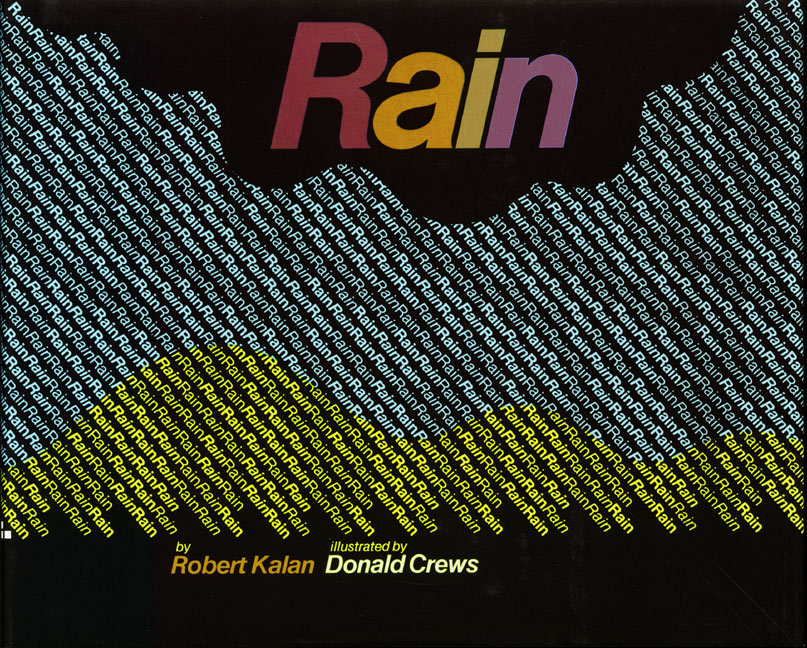
Rain, written by Robert Kalan and illustrated by Donald Crews, explores what rain looks like in different types of landscapes and in different types of weather. There is “rain on the red car” and “rain on the green trees” and at the end of the book there is a beautiful landscape with a rainbow. This book simply explains how rain can start all of the sudden and how rain and weather can effect different things in the world like grass, trees, flowers, houses, cars, and the road. This book is also a great example for teaching students their colors. It starts off showing a clear blue sky, then adding a bright sun, then it adds a few clouds, and then it begins to rain. The book has very few words and draws the readers attention to what is happening in the story: the rain!
Curriculum Connections
This book is a great introduction to weather observations like watching how, when, and where rain starts, and before that how the sun shines, and how clouds can cover the sun (VA SOL K.8 a). This is also a nice example of how to show students that rain can help things like plants and flowers grow (VA SOL 1.7 a).
Additional Resources 1. Rain Lesson Plan– This website offers a lesson plan about the rain/water cycle. It also incorporates the Nandi folklore tale “Bringing the Rain.” This site also has a nice craft to make to go along with the water cycle.
2. Water Cycle– This page is a great printout for older students to complete the water cycle. There is a reading passage to complete fill-in-the-blank parts as well as a picture of the water cycle.
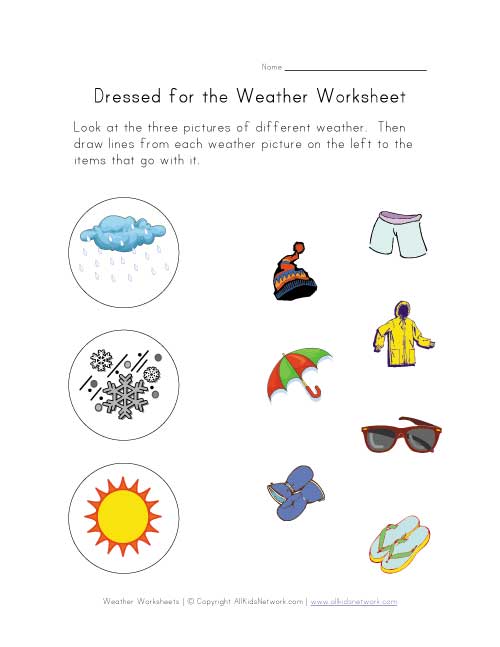
3. Weather Worksheet– This worksheet is a great idea for younger students who are just learning about weather. They match the items with the appropriate weather symbol.
General Information
Book: Rain Author: Robert Kalan Illustrator: Donald Crews Publisher: Harper Collins Publication Date: 1991 Pages: 32 Grade Range: K-2 ISBN:0688104797
Leaf has just announced a new professional-level 56 megapixel digital camera back with the world’s widest medium format internal rotating sensor, touchscreen display, 16-bit color and 12-stop dynamic range. The Aptus-II 10R is compatible with most of the Hasselblad V series as well as other camera systems from the likes of Mamiya and Fuji via an adapter…


 With no practice to cover on Monday, we dialed up 710 ESPN’s Andrew Siciliano for a lil’ chat about hoops.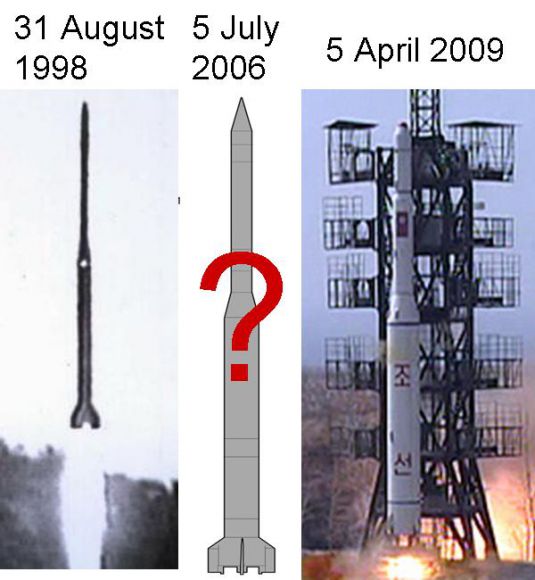

 As you may have guessed by now, we’re
  Doing research to attract more women to our