Blog

  • Google Fiber Is Coming to Shawnee, Kansas

    Google has just announced another expansion of their Fiber service – one that’s pretty close to “home base.”

    Home base being Kansas City, the location of Google’s Fiber’s first installment. The next town to be blessed with Google’s super-fast internet is Shawnee, Kansas, which is located south-west of Kansas City. Google won’t have to expand their service that far to accomodate the people of Shawnee.

    “Shawnee, which is right outside of Kansas City, is known as a tight-knit community and a great place to do business. We’ve also been impressed by Shawnee’s vision to keep their citizens informed and involved using the Internet. Recently, the City modernized their website, so that locals can easily access city info—from crime maps to fiscal reports to streamed audio of city council meetings.

    This is a great example of how access to information via the web can help make communities stronger. Google Fiber—and widespread connectivity throughout Shawnee—will be a great complement to the great work the City is already doing,” says Google Fiber Community Manager Rachel Hack.

    Google says that they don’t yet have an estimate on when things will get underway.

    Today’s announcement comes during a period of many expansion announcement for Google Fiber. Last month, Google announced that Fiber would we coming to Austin, Texas by mid-2014. Less than two weeks later, it was Provo, Utah that was added to the list.

    On the heels of Google’s 1Gbps advances, other ISPs have announced plans to up their game. We’ve just recently seen ISPs in Vermont and Tennessee detail plans for Gigabit internet. Not to be outdone, AT&T has also announced plans to build a 1Gbps Fiber network in Austin. Call it the Google Fiber effect, but it has people thinking. And acting.

    [Image via Facebook]

  • Rat-Meat Ring Busted, Almost 1,000 People Arrested

    Rat meat is passing for mutton in China these days.

    Police have discovered a ring of criminals who were using spices to flavor rat, mink, and fox meat at marketplaces. So far, 904 people have been arrested, and nearly 20,000 tons of tainted or fake meat has been confiscated.

    The arrests came after a sharp crackdown in food safety measures in Shanghai and Jiangsu after sudden outbreaks of bird flu, which is a major problem in China right now. Health officials there recently updated the death toll from H7N9–a new and particularly virulent strain of the disease–to 27, the latest victim a 55-year old man. 26 people have recovered from the virus. Scientists have confirmed that the flu is being passed to humans from chickens.

    Food safety is a growing concern in China, as is the safety of the drinking water. More than 16,000 rotting pigs were reportedly found in a main water source in Shanghi in March; officials believe overcrowding of a nearby pig farm was to blame.

    “Food safety crimes are still prominent, and new situations are emerging with new characteristics,” the Ministry said in a statement.

  • Reuters – Temasek In Talks for Stake in Markit Group

    Singapore state investor Temasek Holdings Pte Ltd is in talks to buy a stake worth around $500 million in London-based financial data provider Markit Group, Reuters reported.

    (Reuters) – Singapore state investor Temasek Holdings Pte Ltd is in talks to buy a stake worth around $500 million in London-based financial data provider Markit Group, a source familiar with the deal said.

    If talks are a successful, a deal could happen over the next “few months”, the source told Reuters. He declined to be identified because the talks are not public.

    Temasek has in the past made money by investing in companies before they are listed and this investment follows the same pattern, the source said, hinting that Markit Group may eventually sell shares to the public.

    Temasek will likely buy the stake from financial institutions that already own part of Markit Group, the source said.

    There has been speculation in the British press that Markit may decide to list on the stock market. However the Financial Times quoted officials there as saying they have not made any decision to pursue a public listing.

    Markit Group began life in 2001, working out of a barn in St. Alban’s, a commuter town 20 miles north of London. Founded by Canadian Lance Uggla, the group provides financial data and trade processing services, primarily for the credit market.

    Temasek, which manages a portfolio of $160 billion, has heavily invested in financial services, which account for 31 percent of its assets.

    “An investment in Markit would be an indirect exposure to the financial services industry, which is core for Temasek,” said Song Seng Wun, an economist at CIMB.

    A Temasek spokesman said in a statement it does not comment on market speculation. The news was first reported by Sky News.

    A spokeswoman for Markit declined to comment.

    Private equity firm General Atlantic (GA) took a minority stake in the company in January 2010. GA reportedly bought a 7.5 percent stake for $250 million, valuing the company at $3.3 billion. The rest of the company is owned by its employees, private investors and various financial institutions.

    Uggla formed the company with a group of colleagues who had worked together in credit trading at Canada’s TD Securities. According to its website it now employs more than 2,800 people and is headquartered in London.

    The post Reuters – Temasek In Talks for Stake in Markit Group appeared first on peHUB.

  • Avast! adds VPN protection, improves stability and performance

    Avast Software has released avast! Free Antivirus 8.0.1488 and avast! Internet Security 8.0.1488 for PCs running Windows XP or later. Version 8.0.1488 is the first notable update since version 8 was released at the end of February.

    Version 8.0.1488 adds one major new feature to the security tool’s roster: a SecureLine component, which provides protection for users browsing over Wi-Fi via VPN. The feature isn’t provided free, but comes with a free 24-hour trial that can be activated at any time. Thereafter, access costs from $7.99 a month.

    VPN is used to encrypt data prior to it being transmitted over the internet — although primarily used by businesses, it’s also increasingly used by security conscious users who wish to use “open” Wi-Fi networks — often public — where data can be easily intercepted by other network users. VPNs also allow users to surf anonymously and fake their location to bypass web services limited to specific geographic locations.

    The new SecureLine feature is installed by default with the main avast! Package, but isn’t switched on. Once installed, users should double-click the avast! Notification area icon and choose SecureLine under the Security tab. From here, clicking the Activate link opens a window where users can start the free 24-hour trial or purchase a SecureLine license for $7.99 a month or $59.99 for a full year.

    After activating, users can manually connect to the VPN at any time, choosing the location closest to them or picking an alternative location — at time of writing, nine locations are provided: Dallas, Miami, New York and Seattle in the US, London, Frankfurt, Amsterdam and Prague in Europe, and Singapore. Users can also instruct SecureLine to automatically start whenever users attempt to connect to an insecure Wi-Fi network.

    Version 8.0.1488 also comes with the promised of improved compatibility with Screen readers, and improvements to the Software Updater component. It also fixes several unspecified user-interface glitches and comes with the usual promise of improved stability and performance.

    avast! Free Antivirus 8.0.1488 is available now as a freeware download for PCs running Windows 2000 or later. Users can upgrade to the Pro version with additional sandboxing and online shopping protection for as little as $19.99 for a one-user, one-year license through the Downloadcrew Software Store, a saving of 50 per cent on the MSRP — a two-year, single-PC license is also available. Three-PC licenses for one year and two years are also available.

    avast! Internet Security 8.0.1488 is also available as a free trial download for PCs running Windows 2000 or later. This version adds firewall and anti-spam protection to the features found in avast! Pro Antivirus, and a one-year, single-license version costs just $29.99 at the Downloadcrew Software Store, a saving of 40 per cent on the MSRP. A three-PC license is also available for $41.99, again saving 40 per cent off the MSRP.

  • Reuters – Bramson Raises Stake in 3i

    Activist investor Edward Bramson has raised his stake in UK private equity company 3i to 4.9 percent, piling pressure on Chief Executive Simon Borrows just weeks before he marks his first year in charge of the troubled firm. Sherborne Investors, the investment vehicle run by the media-shy entrepreneur, now controls just over 47.5 million shares in 3i, acquired at a cost of around 127 million pounds ($197 million), Sherborne said in a statement on Friday. New Yorker Bramson is famous for forcing through management shake-ups at his target companies and raised 207 million pounds in November to buy shares in an unspecified listed company it considered undervalued.

    (Reuters) – Activist investor Edward Bramson has raised his stake in UK private equity company 3i to 4.9 percent, piling pressure on Chief Executive Simon Borrows just weeks before he marks his first year in charge of the troubled firm.

    Sherborne Investors, the investment vehicle run by the media-shy entrepreneur, now controls just over 47.5 million shares in 3i, acquired at a cost of around 127 million pounds ($197 million), Sherborne said in a statement on Friday.

    New Yorker Bramson is famous for forcing through management shake-ups at his target companies and raised 207 million pounds in November to buy shares in an unspecified listed company it considered undervalued.

    In 2011 Bramson led a boardroom coup at British firm F&C Asset Management, ousting the chairman and pursuing a root-and-branch shake-up of the 144-year old company after years of share price underperformance.

    Within weeks of Sherborne’s fundraising he set his sights on 3i, already in the throes of an extensive turnaround plan after a phase of poor share price performance and weak results from its buyout business.

    Since appointing Borrows last May, 3i has cut jobs and streamlined strategy to focus on its northern European roots in an effort to prop up its stock value, which has rebounded by more than 70 percent in the past 12 months.

    3i shares were down 0.2 percent at 332.5 pence by 0909 GMT on Friday, having risen by 53 percent this year.

    The post Reuters – Bramson Raises Stake in 3i appeared first on peHUB.

  • Reuters – Permira Extends Lock-up Period for Hugo Boss

    Hugo Boss said on Friday private equity firm Permira has now committed itself to holding on to its remaining shares in the German fashion house for nine months, compared with six months previously, Reuters reported. The news comes after Hugo Boss said earlier on Friday that Permira was selling a further 10 percent stake in Hugo Boss, reducing its holding to about 56 percent and cashing in on an investment whose share price has doubled since it first invested in 2007.

    (Reuters) – Hugo Boss said on Friday private equity firm Permira has now committed itself to holding on to its remaining shares in the German fashion house for nine months, compared with six months previously.

    The news comes after Hugo Boss said earlier on Friday that Permira was selling a further 10 percent stake in Hugo Boss, reducing its holding to about 56 percent and cashing in on an investment whose share price has doubled since it first invested in 2007.

    Permira was not immediately available for comment. (Reporting by Maria Sheahan; Additional reporting by Arno Schuetze; Editing by Peter Dinkloh)

    The post Reuters – Permira Extends Lock-up Period for Hugo Boss appeared first on peHUB.

  • After a Tragedy, the Conundrum of Corporate Donations

    Every time there’s a tragedy — be it 9/11, Hurricane Sandy, or the Boston Marathon bombing — there’s an expectation that corporations will do something to aid the victims. “Something,” however, has gotten ever more complex. After all, how do you support those affected without looking like you are cashing in? And, in the case of Boston, who are you raising money for? Unlike Hurricane Sandy, for instance, where the Red Cross was an obvious recipient, this was an event where individuals’ homes weren’t destroyed; their bodies were.

    In the days after the bombing, John Hancock, a marathon sponsor and mainstay in the Boston business community, donated $1 million in cash, which became the “cornerstone donation” for the creation of The One Fund Boston. I suspect this charity was created for a couple of key reasons, aside from the obvious goal of helping those affected by the incident.

    First, for those inside — and importantly outside — of Boston, the fund becomes a focal point for those wishing to help out. People were talking about “Boston” — the city, the marathon. It’s that one word that is on people’s minds. They aren’t thinking “Red Cross” or “United Way”; One Fund Boston provides a direction for people’s generous impulse.

    Second, in the wake of September 11th, a slew of charitable organizations appeared. Many were legitimate, but just as many were simply raising funds to cash in on the tragedy. Creating One Fund Boston enabled the city to get ahead of those sorts of abuses.

    For Adidas, another Boston Marathon sponsor and an integral member of the running community, doing something meant creating a t-shirt for which the proceeds would go to One Fund Boston. Ever the smart marketers, they had the shirt out almost immediately; they priced the shirts at $26.20 reflecting the 26.2 miles of the marathon; and the company logo was prominently displayed on the sleeve as you can readily see in the picture below.

    Adidas shirt

    With people not knowing how or where to donate money, Adidas provided a focus and the product was successful beyond measure, selling out within a day according to Businessweek. Through the sale of this shirt, Adidas donated more than $1 million dollars, a company spokesperson told the Huffington Post.

    Not to be a naysayer, but let’s ask a question: Why create the t-shirt and not simply give a donation? With a market cap of $21 billion and more than $2 billion cash on hand, it’s not like Adidas couldn’t give the money themselves and take the accompanying tax write-off.

    The answer, in part, has to do with why any company engages in a cause marketing campaign: it generates goodwill, it provides significant and overwhelmingly positive PR, and, in this case, for as long as those t-shirts last, the purchased item acts to promote Adidas as a corporation that cares. A donation is a one-time event with no visual reminder; a t-shirt lasts forever.

    But this doesn’t necessarily mean that Adidas is simply being opportunistic. The reasoning behind creating a tangible product as a memorial actually has a lot to do with how we behave as consumers.

    After a tragedy, there is a natural need for a talisman, something physical to hold on to in order to control your fear. A psychology theory, called terror management theory, hypothesizes that a function of culture is to help lessen anxiety around death. Awareness of one’s own morality is heightened after violent events like Boston, and people look for ways to manage their fear of the inevitable. One way fear can be lessened is by bolstering your self-esteem, which we often do by acquiring possessions.

    In other words, we go shopping. Buying and wearing the t-shirt increases your positive sense of self (while assuaging your terror) because it reminds you that you have helped others while simultaneously demonstrating to others that you are a caring person. This is something that writing a check simply cannot do.

    So which is the better corporate response — John Hancock or Adidas? And what are other types of aid should companies consider?

    Both a direct donation and a sponsored product are acceptable, within context. Even though I am not a big fan of attaching donations to the purchase of a thing because it tends to do more to propagate sales for the corporation than it does to raise funding for the charity, we cannot negate people’s urge to have something physical to hang on to. I give Adidas kudos for making clear that their donation is based on profits, not the total cost of the shirt; better would be if they said “$10 from the sale of this t-shirt goes to the One Fund Boston.”

    In terms of John Hancock and One Fund Boston, the issue is going to be one of transparency: about how much money is raised (there is a tally of funds prominently displayed on the website) and about how the money is being distributed and to whom.

    And while donating money can help, it’s important for companies to remember that other ways to provide support should be considered, based on their unique market position. For example, after Hurricane Sandy, Home Depot not only donated $1 million, which including cleaning and building supplies, but they also organized volunteers and used their stores as drop-off sites for donations. Did this generate goodwill for the company? Yes. Was that the only reason the company did it? I don’t think so. I’m not that cynical.

    It’s also important to remember that, unlike other heartbreaking events, the need for immediate funding seems less acute in Boston. People will need assistance over the long term, learning how to walk again, laugh again, and maybe even run again. We have all heard the heartwarming stories of people who were injured vowing to run the marathon. Maybe there is a company that can donate a lifetime supply of shoes, or a sports company with trainers that can help people access the skills or therapy needed.

    In the end, each individual company needs to think long and hard about their own expertise and how they might use it for good after this tragedy and others. Now is not the time for gimmicks; it’s the time for tangible, transparent help that actually makes a difference.

    A version of this post originally appeared on the author’s website.

  • 2010-13 Toyota Tundra Loose Windshield Dam – TSB

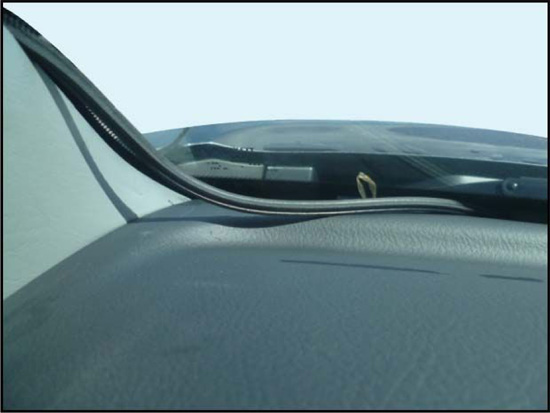
    Toyota has issued a technical service bulletin for 2010-13 Toyota Tundra trucks where the windshield dam becomes visible. There is no immediate safety concern.

    2010-13 Loose Windshield Dam - TSB Excess Showing

    Does your 2010-13 Toyota Tundra have some excess windshield stripping showing? Now there is a TSB to address this issue.

    The windshield dam loose/visible T-SB-0040-13 is for pickups with this problem. Toyota explains that some of these trucks may exhibit a “condition where a deformed windshield dam, or some weatherstrip may be loose between the A-pillar garnish and windshield glass. Normally, the windshield dam is not visible and is only necessary for production. Over time, the dam adhesive may lose adhesion and deform. There is no functional concern with the windshield sealing and there is no need to replace or reseal the windshield if there are no complaints of water/air leaks.”

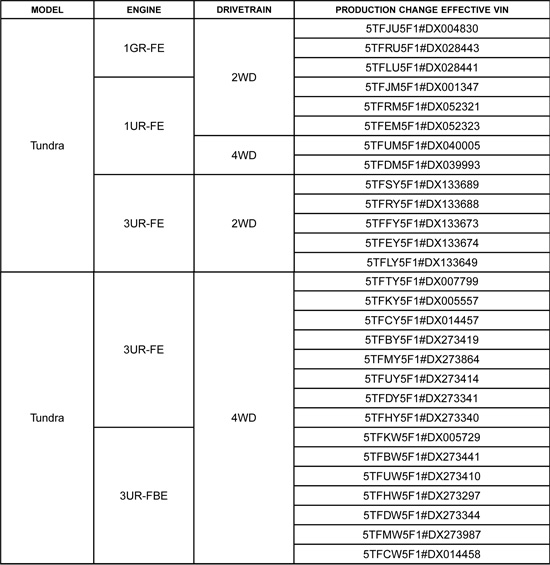
    This TSB applies to only the models produced BEFORE the production change effective VINs below.

    2010-13 Loose Windshield Dam - TSB VINS Effective

    Like other TSBs this repair is covered under the Toyota Basic Warranty of 36 months or 36,000 miles whichever comes first. It is also limited to only the repair described below.

    The repair process is as follows:
    1. Confirm the dam is loose.
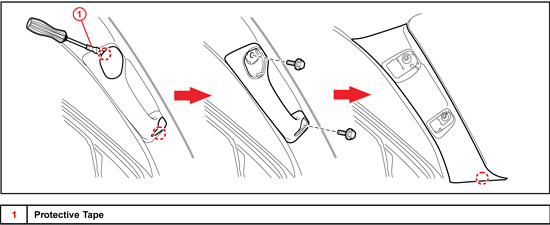
    2. Remove the front pillar garnish by removing the two claws and two assist grip plugs.
    2010-13 Loose Windshield Dam - TSB Removal
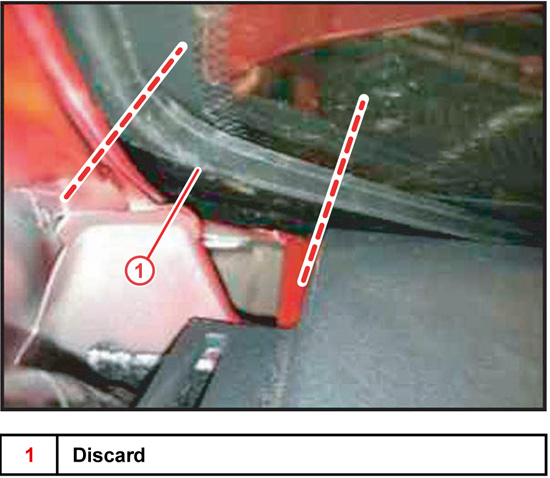
    3. Using scissors or a utility knife cut the center section of the dam and tuck in the loose ends
    2010-13 Loose Windshield Dam - TSB Cut
    4. Reassemble the vehicle.
    5. Verify that the windshield dam is no longer visible.

    With any repair, if you don’t completely comfortable doing it on your own, it is STRONGLY recommended you visit your local Toyota dealership to have this issue taken care of.

    Anybody have this happen to them? Is it just annoying or have you noticed anything else?

    The post 2010-13 Toyota Tundra Loose Windshield Dam – TSB appeared first on Tundra Headquarters Blog.

  • Google’s Schmidt thinks YouTube has crushed traditional TV

    Google YouTube
    Google chairman Eric Schmidt has declared that Internet video has crushed traditional television. In a meeting with advertisers on Wednesday, the former chief executive said that “the future is now” for YouTube. Google’s popular video sharing website recently passed a billion unique monthly visitors, however Schmidt’s eyes are focused on the future. He noted that once YouTube expands to more third world countries, the number of visitors will be much larger.

    Continue reading…

  • LG Working On A Nexus 5, Wants Deeper Partnerships On TVs And Glass, Report Claims

    google-nexus-4

    LG is an Android smartphone OEM that, like many others, finds itself in the shadow of Samsung. But it scored an impressive hit with the Nexus 4, the $300 unlocked Google-branded Android reference phone it released last year, and according to the Korea Times, it’s already working on a follow-up with the search giant.

    The new report claims that LG is working on a new Nexus-branded smartphone, and that LG also wants to add to its existing partnership with Google for TV products, and would like to be closely involved in future developments like Google Glass. LG clearly sees the value of being closely associated with Google, as it managed to pull into third place in the global smartphone race in Q1 2013 according to IDC and Juniper.

    LG’s Optimus G and the Nexus 4 helped it gain some ground in the smartphone war, although it still trails far behind Samsung and Apple, who hold 32.7 percent and 17.3 percent of the global market respectively, compared to LG’s 4.8 percent. Recent estimates have put sales of both the Optimus G and the Nexus 4 at somewhere north of 1 million, which, while once again trailing devices by LG and Apple, are impressive enough. Especially in the case of the Nexus 4, LG proved that it could make a strong seller out of a line that usually has more limited consumer appeal.

    In the past, we’ve seen reports that an LG Nexus 5 was in the works, with the code name “Megalodon.” This isn’t just an upgraded version based on the LG Optimus G Pro, but a truly new device with a very powerful quad-core 2.3GHz Qualcomm Snapdragon 800 processor on board. Recent rumors indicate we might see a Nexus 4 variant at Google I/O in two weeks, with a 32GB storage option and both LTE and CDMA cellular wireless bands on board. The current Nexus 4 maxes out at HSPA+, but it does have an LTE-capable radio, early hacks revealed.

    There’s very little downside to LG building a new Nexus device, and Google might be more inclined to let them, given the success of the last one. It’s possible we’ll hear more about this at I/O, but given that the Nexus 4 only arrived late last year, we might have to wait a little longer, too.

  • BC Partners Makes $1.3 Bln Offer for Allflex

    Electra Partners said Friday that it has received a $1.3 billion binding offer for Allflex Holdings. BC Partners is the buyer, Electra says. Allflex makes and distributes plastic and electronic animal identification tags. The sale will generated gross proceeds of $630.5 million for Electra Partners’ clients, including Electra Private Equity which will receive $398 million on the close of the deal. This represents a gross return of 15x original cost and an IRR of 28%. Rothschild advised Electra Partners and Allflex.

    PRESS RELEASE

    Electra Partners today announces it has received a binding offer for Allflex Holdings (“Allflex”), the world’s leading manufacturer and distributor of plastic and electronic animal identification tags, from funds advised by BC Partners.
    The offer is subject to consultation with the relevant works council in France and certain regulatory approvals. If the offer is accepted, and reflecting current exchange rates, acceptance of the offer will generate gross proceeds of US$630.5 million to clients of Electra Partners. This includes Electra Private Equity PLC who will receive US$398 million (£256.7 million) on closing, representing a gross return of 15x original cost (including income) over the 14 years of investment; an IRR of 28%.
    Electra Partners and Allflex were advised by Rothschild.
    Electra Partners first invested in Allflex in 1998 investing US$46 million in the US$160 million buyout of the company. The business has since been refinanced a number of times such that total cumulative proceeds receivable by Electra Partners’ clients after completion of this transaction will amount to US$835 million.
    Over the 14 years of Electra Partners’ ownership, Allflex has seen strong organic and acquisitive growth driven by increased focus on food chain traceability and mandatory regulations controlling the spread of animal diseases. To capitalise on increasing demand, Allflex introduced new products, extended tagging to more species, and expanded into new geographical markets such as China and Africa.
    David Symondson, Deputy Managing Partner at Electra Partners, said:

“Allflex is an excellent business which has proved to be a first-class investment for Electra Partners delivering strong returns at each of the refinancings over the years and now at the sale. Over this time, the company has become the leading global provider of animal identification tags with an expanded product range which includes RFID and tissue sampling tags.

“As with the sale of Capital Safety Group, which we sold last year for a 6.5x multiple, Allflex is another proven example of Electra Partners creating substantial value for clients by transforming international businesses into truly global leaders in their fields.”

David Symondson and Rhian Davies were responsible for the investment in Allflex. 

Electra Private Equity PLC has already issued a statement in relation to the impact of the sale of its interest in Allflex.

The sale follows a busy start to 2013 for Electra Partners in which it has announced the realisation of its investment in esure, which generated a 3x return, and three new investments: UBM Data Services (now called AXIO Data Group), a portfolio of secondary private equity funds, and CALA group.

Electra Partners refers to Electra Partners LLP acting on behalf of Electra Private Equity PLC and other clients.

    The post BC Partners Makes $1.3 Bln Offer for Allflex appeared first on peHUB.

  • Mainsail Partners Invests in Netchemia

    Mainsail Partners has made a $6.5 million equity investment in Netchemia. Prairie Village, Kan.-based Netchemia provides cloud-based talent management software specifically developed for K-12 school districts and institutions.

    PRESS RELEASE

    Netchemia LLC, the leading provider of cloud-based talent management software specifically developed for K-12 school districts and institutions, announced an equity investment from Mainsail Partners to support the company’s growth plans.
    The investment is part of a long-term, collaborative partnership that will allow Netchemia to tap Mainsail’s deep operational expertise and further bolster its market position. Mainsail is a San Francisco growth-equity firm focused on backing “bootstrapped” companies that have not previously taken outside capital.
    The majority of the current $6.5 million investment will be used to accelerate Netchemia’s growth and enhance and expand the company’s product offering. More than 1,100 K-12 school districts and institutions in 42 states — ranging in size from fewer than 100 students to those with tens of thousands of students — use Netchemia’s TalentEd cloud-based software-as-a-service (SaaS) platform.
    Netchemia, which was founded in the Kansas City area in 2001 and works exclusively in K-12 education, is one of several growing startups in the Midwest’s “Silicon Prairie” region.
    “We are excited to announce a partnership with Mainsail and the next phase of our company’s growth,” Netchemia co-founder and CEO Carlos Antequera said. “This investment will allow Netchemia to accelerate its product development and team-building plans. It was important for us to find an investor who shared our vision and had extensive company-building experience.”
    Netchemia’s TalentEd K-12 Strategic Talent Management Suite delivers simple, innovative and affordable management solutions for applicant tracking and hiring (TalentEd Recruit & Hire) and performance evaluation (TalentEd Perform) without any hardware to buy or software to install.
    TalentEd applications are flexible and fully customizable to empower school districts of all kinds and sizes to improve efficiencies, reduce costs, increase transparency and ultimately achieve positive educational impacts.
    “Carlos and his team recognized the opportunity to leverage technology to improve the process of managing talent for school administrators,” said Stephen Wolfe, a Mainsail Partners principal. “We have a great deal of respect for entrepreneurs like Carlos who have proven they can grow their businesses rapidly and do so profitably. We look forward to working with the team to build the leading K-12 talent management platform.”
    “As the value of talent management becomes more evident to educators, there is increased momentum in the marketplace to make a difference,” added Antequera. “We recognize the enormous importance of talent management in education; that finding, hiring and developing the best teachers and school leaders is fundamental to improved schools and high student achievement. It is a key part of our current national discussion over education.”
    In addition to reinforcing the highly-collaborative, results-oriented experience to a rapidly growing customer base, the partnership with Mainsail provides Netchemia the freedom to continue expanding within its product development, client success, sales, marketing, and executive teams, Antequera said.
    About Netchemia
    Netchemia is a leading provider of cloud-based talent management software specifically developed for K-12 educational organizations. We believe that by providing school districts with intuitive software to recruit, hire, develop and retain the best teachers and school leaders, we can help them dramatically affect student achievement.
    Netchemia’s TalentEd K-12 Strategic Talent Management Suite delivers simple, innovative and affordable management solutions for applicant tracking and hiring (TalentEd Recruit & Hire) and performance evaluation (TalentEd Perform) to more than 1,100 educational organizations across the nation. TalentEd frees school leaders to focus on what’s important — finding and developing the best teachers and staff and helping them grow. To learn more, visit www.netchemia.com.
    About Mainsail Partners
    Mainsail Partners is a leading growth equity firm that invests in successful “bootstrapped” businesses and builds them into great companies. Mainsail, based in San Francisco, makes a select number of investments each year and leverages the deep operational expertise of its team to add value to its portfolio companies. The firm has raised over $350 million in committed capital from leading institutions, endowments, executives and entrepreneurs. Two of Mainsail’s portfolio companies were ranked on the 2012 Inc. 500|5000 list of fastest-growing private companies in the U.S. For more information, visit www.mainsailpartners.com.

    The post Mainsail Partners Invests in Netchemia appeared first on peHUB.

  • Haas to Head A.T. Kearney’s PE Practice in Americas

    A.T. Kearney said Thursday that it named Robert Haas to lead the firm’s private equity practice in the Americas. Haas also has responsibility for A.T. Kearney’s M&A practice in the Americas, the firm said.

    PRESS RELEASE

    Global management consulting firm A.T. Kearney today announced that Robert (Bob) Haas will lead A.T. Kearney’s Private Equity Practice in the Americas.
    A.T. Kearney has successfully supported private equity funds and their portfolio companies since the private equity industry began, bringing not only PE expertise, but industry and deep functional expertise to its clients. Under Mr. Haas’s leadership, A.T. Kearney will leverage its unparalleled capabilities in corporate strategy, revenue growth and operational improvement to help private equity funds make attractive investments, generate profit growth in their portfolios, and deliver superior returns to their investors.
    Daniel Mahler, lead partner for the Americas notes, “Bob is uniquely qualified for this role based on his vast experience driving profit growth for companies in a wide variety of industries, as well his expertise in private equity and corporate M&A.”
    According to Mr. Haas, “The changing dynamics of the Private Equity industry fit well with A.T. Kearney’s unique capabilities. A.T. Kearney’s deep industry knowledge and operations transformation experience deliver an unmatched combination of strategic insights and tangible EBITDA improvements to our clients.”
    Mr. Haas began his career with A.T. Kearney in 1996 and was elected to partner in 2003. In addition to his expertise in private equity, he has served global clients in the consumer goods, healthcare, high-tech and financial services industries on strategic and transformational issues such as corporate strategy, M&A, and enterprise transformation and restructuring. In addition to Private Equity, Mr. Haas has responsibility for the Mergers & Acquisitions Practice in the Americas.
    Mr. Haas is based in A.T. Kearney’s New York office.
    About A.T. Kearney
A.T. Kearney is a global team of forward-thinking, collaborative partners that delivers immediate, meaningful results and long-term transformative advantage to clients. Since 1926, we have been trusted advisors on CEO-agenda issues to the world’s leading organizations across all major industries and sectors. A.T. Kearney’s offices are located in major business centers in 39 countries.
    To learn more about how A.T. Kearney can deliver immediate results and growing advantage to the private equity industry and its key stakeholders, please visit: http://www.atkearney.com/private-equity.

    The post Haas to Head A.T. Kearney’s PE Practice in Americas appeared first on peHUB.

  • Weekly Wrapup: Apple eschews skeumorphism? And the problems with Path

    Taking a cue from Apple, we mixed it up this week on the GigaOM Weekly News Wrapup show by taking over a small conference room and recording the podcast at GigaOM HQ. A good time was had by all as we talked Apple’s possible new mobile design direction, the billion dollar slap fight between Microsoft and Amazon, and a lively discussion over a Path way less taken (bonus: Caddyshack!).

    (Download this episode)

    GigaOM Podcasts RSS feed

    iTunes

    Stitcher Radio

    SHOW NOTES:
    Hosts: Chris Albrecht, Tom Krazit
    Guests: Erica Ogg, Barb Darrow, Eliza Kern

    Design changes for iOS 7

    Say what? Microsoft Azure’s a $1 billion dollar business?

    Path doesn’t have a registered user problem, it has a trust problem

    Related research and analysis from GigaOM Pro:
    Subscriber content. Sign up for a free trial.


  • TEDxCERN is about to begin — watch along

    TEDxCERNFor the past 59 years, the European Organization for Nuclear Research — better known as CERN — has been a nucleus of innovation, bringing us both the World Wide Web in 1983 and last year’s discovery of what appears to be the Higgs boson. Today, CERN will host its first TEDx event, with speakers ranging from Nobel Prize laureate astrophysicist George Smoot to Britney Wegner, the 18-year-old winner of the Google Science Fair. The event will feature thinkers working hard to understand our universe, showing how physics intersects with, well, almost any discipline of thought out there.

    TEDxCERN will not be a closed door event. More than 25 universities, laboratories and organizations around the world will be tuning in. In fact, anyone anywhere in the world with a curiosity about how and why the universe exists is welcome to watch through a free webcast.

    The webcast begins at 13:45 (CEST) — that’s 7:45am (EST) to anyone living on the East Coast — and will run until 20:00. Watch here »

    Below, some TED Talks to get you hyped for the event:

    Still not sure if you want to watch? Read 6 reasons to tune in »

  • Scenes from Data Center World 2013

    ironmountain-robot

    “Can I recycle your data center equipment?” asks Rita the Robot, who drew the attention of passers-by at the Iron Mountain booth at the Data Center World Spring 2013 Conference in Las Vegas. (Photo: Rich Miller)

    More than 1,000 data center professionals from 26 countries around the world gathered this week in Las Vegas for Data Center World Spring 2013 at the Mandalay Bay conference center. The event featured more than 60 educational sessions, panels, and interactive presentations addressing IT to facilities topics. For highlights of this eek’s conference, check out our photo galleries of the keynote presentations and expo hall.

  • Deliv Names Hart to VP of Logistics

    Deliv said Thursday it appointed Michael Hart to VP of Logistics. Hart recently worked at Amazon where Deliv says he played a major role within the last mile delivery group. Palo Alto, Calif.-based Deliv offers a same-day delivery service that uses a fleet of crowdsourced delivery drivers.

    PRESS RELEASE

    Deliv, the same-day, low cost delivery service that partners directly with large retailers and leverages a crowdsourced community of drivers, today announced the appointment of Michael Hart to VP of Logistics.
    Deliv recruited Hart from Amazon where he played a major role within the last mile delivery group. He brings more than 15 years of progressive supply chain and logistics operation experience to Deliv, including operational and managerial roles at FedEx, Skyway Freight, APX Logistics and Newgistics, where he devised and facilitated roll outs of major eCommerce-based logistics programs.
    Deliv’s differentiated same-day delivery service partners directly with large multichannel retailers in the same way UPS and FedEx do by appearing as a same-day delivery button at checkout, alongside standard and expedited shipping options. The cost of same-day delivery by Deliv is the same or less than any other shipping option a retailer offers. Deliv’s community of crowdsourced drivers, dynamic routing technology and unique visual GPS tracking of all orders ensure superior white glove service for consumers.
    “The Deliv crowdsourced model not only disrupts the last mile market, it also has the potential to help businesses optimize their supply chain,” said Hart. “The commoditization of same-day shipping enables unit inventory levels to be lowered, so retail store inventory can be reduced and selections increased. These changes translate to improved bottom line performance as well as improved customer experience.”
    ” Michael Hart is an extremely important strategic hire for us. He’s one of the world’s leading experts in last mile logistics,” said Daphne Carmeli , founder and CEO of Deliv. “We’re thrilled to welcome him on board and look forward to his invaluable guidance as we disrupt the transportation industry and transform local eCommerce.”
    About Deliv
    Deliv partners with national multichannel retailers to provide low-cost, high quality same-day delivery via its quality-controlled fleet of crowdsourced drivers. The company is headquartered in Palo Alto, California and is backed by some of Silicon Valley’s leading venture capital firms.

    The post Deliv Names Hart to VP of Logistics appeared first on peHUB.

  • Amazon taps Germany for cloud and machine learning engineers

    Amazon has announced the launch of a new development center for cloud technologies in Germany, with locations in both Berlin and Dresden.

    According to a statement from the company, the 70-plus engineers that Amazon will hire will work on technologies for supporting various hypervisors, management tools and operating systems. This is effectively a major expansion of the development team Amazon has already had in Germany since buying Berlin-based Peritor last year – a purchase that led to the release of the OpsWorks devops toolkit this February.

    The engineers, who will be hired over the next year, will also develop machine learning technologies to be used across Amazon’s business.

    “Locating the development of key parts of the Amazon Web Services cloud in Germany speaks to the broad set of talent here and the investment we are making in the country,” the managing co-directors of the new Amazon Development Center Germany, Ralf Herbrich and Chris Schlaeger, said in a statement.

    Amazon’s big European data center is located in Dublin, Ireland, although it also has a couple of edge locations in Germany (Frankfurt, to be precise) for content delivery purposes. The company also already has teams of AWS sales and business personnel in Germany.

    Related research and analysis from GigaOM Pro:
    Subscriber content. Sign up for a free trial.


  • PostImage lets you take, edit and share screengrabs with ease

    While the ability to capture and share an image of your screen is extremely useful, it’s not exactly an area where Windows has excelled. Under DOS pressing PrtSc sent an image of your screen to the printer; under Windows 3.x the grab was copied to the clipboard; after more than 20 years, Windows 8 added the ability to save an image by pressing Win+PrtSc; and that’s about it.
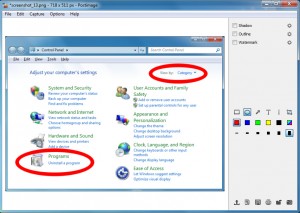
    If you’d like something a little more capable, then, it’s probably best to forget Microsoft and look for a third-party solution. And if you’re particularly interested in sharing screengrabs then PostImage could make an excellent choice.

    After a simple and adware-free installation, PostImage runs in the background, consuming a reasonable 10MB RAM. Press PrtSc at any point and you’re able to choose a rectangular area of the screen which you’d like to capture, or you can press Alt+PrtSc to capture the currently active window.

    While this sounds fairly standard, the area capture is at least very well implemented. Once you’ve defined a rectangle, PostImage displays its dimensions in pixels, for instance. And you can freely resize and reposition this until it matches whatever you need.

    After grabbing something, you’re able to work on it with the PostImage editor. The program can crop or rotate the image; annotate it with shapes, arrows or captions, or add a shadow, outline, even a watermark (text or image-based).

    When you’re finished (or if you don’t need to edit the screengrab at all), PostImage provides many different ways to share it with others. You can upload it to the PostImage server (postimg.org) and receive a direct link. There are options to share the link via Twitter, Facebook or Reddit, while an Email tool opens your default New Message dialog, with the image link already inserted.

    And there are a few other options, too, ranging from the simple (Save, Print) to the more surprising, in particular a tool which uses Google to find images which resemble your capture. We grabbed our Start menu on a Windows 7 test PC, for instance, and PostImage opened a web page with the search results for “Windows 7 start menu”, and links to similar images.

    PostImage clearly isn’t going to appeal to everyone. The program doesn’t have the extended capture types you’ll sometimes see elsewhere (freehand, say). You can’t configure the hotkey. And the program is short on automation options. You might want to always save an image, maybe print or upload it, but there’s no way to set a default action — you must select it manually, each and every time.

    If you just need a more convenient way to take and share simple grabs of your desktop, though, PostImage works very well. It’s free, compact and easy to use, with a capable editor and plenty of image sharing options. So even if you need a little more power, this is a program to watch: it’s not even at version 1.0 yet, and we’ve no doubt that there’s plenty more to come.

    Photo Credit: Iaroslav Neliubov/Shutterstock

  • Ericsson trials HetNet-friendly ‘City Site’: Would you like ads with your base station?

    As cities get more populated and data usage increases, cracks start to show in traditional mobile network layouts – they just can’t handle the load. Many see the solution in so-called heterogeneous networks, or HetNets, which involve a range of different cell types rather than simply relying on the macro-cells we know and love (or loathe, depending whose skyline they’re ruining).

    Ericsson is a keen HetNet proponent and the Swedish networking giant has just launched a commercial trial of what it calls the City Site “integrated solution” in Nanning, the capital of China’s Guangxi region, alongside China Mobile. The four-meter-high (13-foot) package includes a standard Ericsson base station in this case, along with an integrated multidirectional antenna.

    The “Omni Antenna” in question is rather short-range (up to a couple of hundred meters) and relatively close to the ground, which fits in nicely with what Ericsson is trying to achieve here: network densification, a central tenet of HetNet architecture.

    HetNets will need to involve not only a variety of cell sizes and types – from macro-cells to pico-cells to Wi-Fi offload points — but also cells at different levels and layers, in order to solve the challenges presented by specific locations. Tall buildings are a challenge when you’re trying to serve thousands of people on street-level, and this kind of thing may be part of the solution.

    But densification isn’t the only thing that’s going on here. Ericsson’s City Site design also allows add-on modules for video ad screens, clocks, touchscreen real-time information displays and so on. The company told me this could “provide high performance broadband coverage together with fulfilling a city’s needs for de-clutter, aesthetics and add-on applications like information or advertising.”

    This is a good indicator of how we can expect to see our ever-increasing mobile broadband requirements change the cityscapes around us. I’m not sure it really amounts to de-cluttering, though — ads aside, there’s something to be said for discreetly sticking cells on lampposts and other existing street furniture.

    Related research and analysis from GigaOM Pro:
    Subscriber content. Sign up for a free trial.