Blog
-
Microsoft expands Surface RT and Surface Pro availability to over 25 markets
-
CW comes to Xbox, no cable subscription required
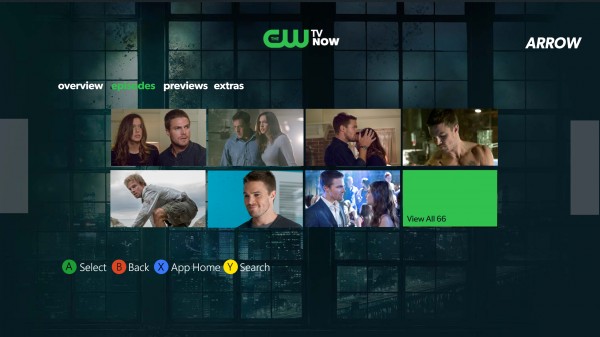
If TV shows and Xbox are your things, today is your lucky day. Xbox Live has been busy adding content to its Gold offering in an effort to beef up its entertainment features and bring in the non-gaming audience by positioning the console as a living room entertainment hub.
Today, Xbox Live chief Larry Hryb announces that the latest outlet to come on board is the CW network. This is also a unique offering in that, unlike channels such as HBO and ESPN, the CW will not require customers to verify a paid TV service subscription from a cable or satellite provider. The new app will offer shows ranging from “full episodes to previews and interviews, and is unique in that it will offer next-day episodes free with your Xbox LIVE Gold subscription” according to Hryb.
The new CW offering also utilizes Xbox Smartglass for some of its most popular content, such as The Vampire Diaries. “As viewers tune into The CW app on Xbox this Friday for the latest episode titled ‘The Originals’, they can access an exclusive Xbox SmartGlass experience that will provide exciting new content via their smartphone or tablet not available to any other viewers” Hryb explains.
Microsoft also plans a giveaway that will be conducted via Facebook and feature custom “Vampire Diaries” and “Supernatural” Xbox 360 consoles. Details of how to enter were not included in the announcement.
Like other Xbox entertainment options, CW does require a Gold subscription, but with no paid TV subscription required, this offering seems geared towards cord-cutters, and with HBO contemplating a similar offering for its GO service, this could spell trouble for the providers. That is really the most intriguing part of this latest offering.
Photo Credit: Major Nelson
-
Taxing Internet sales is the right thing to do

The fight to keep brick and mortar commerce subsidizing e-commerce is in a crucial stage today.
You never heard of that fight? It also goes under the guise of fighting “Internet sales taxes”. A bill (the “Marketplace Fairness Act”) is moving along in the Senate that requires merchants with $1 million or more in revenue to collect any sales taxes due in the state of the buyer.
The buyer is already responsible for such taxes, called “use taxes” when paid by the buyer. Real businesses actually pay these taxes, but only a small proportion of consumers, sometimes known as “suckers”, pay them. It’s rare for anyone to get in trouble (although I did once in 1986).
I am, by inclination, a small-government type, a quasi-libertarian. A new way to tax people for engaging in commerce is not what I’m usually looking for. That’s not the issue here: sales taxes are applied at stores with physical presence in the state but not those selling remotely. This is inherently unfair to the brick-and-mortar businesses. I’m probably all for cutting sales tax rates to “starve the beast” but I’m not for taxing commerce sold one way and not the other.
Would online sales taxes help or hurt small business? Some would be helped, some would be hurt. Small businesses operating in the venue of big businesses like eBay would be hurt because the auctioneer clearly does more than $1 million in revenue. For this reason, eBay has started a “spam your congressman” campaign to oppose the legislation. Amazon.com, on the other hand, actually supports the new law. Amazon and its local affiliates have been the target of states for not collecting such taxes from out-of-state customers and perhaps company execs think that they’re well-positioned to benefit from an environment where everyone has to collect them.
The main complaint about such taxes used to be based on the legal reason why, back before e-commerce, courts found that out-of-state merchants were not obligated to collect them: It was too great a burden. There’s no credible case left for the substantial burden argument. Software and Internet services are very capable of determining sales taxes owed based on an address.
Now the complaint is the burden to small business. Well, if you’re doing your own e-commerce collections and have under $1 million in revenue it’s not a problem for you. The $1 million ceiling for the exemption is likely to create some perverse incentives for companies near that number, perhaps to split into multiple businesses so as to stay under the limit. Personally, I wouldn’t even support the limit. Everyone who does e-commerce above the level of emailing “send me a check and I’ll mail it you” uses outside services which are, or should be, perfectly capable of collecting such revenues.
I’ve seen some really lame complaints about this: “Local businesses use the local services that the taxes pay for; a business out of state doesn’t”. True, but sales taxes are consumption taxes. The buyer pays, not the merchant. That’s why the buyer has to come up with the money. And the buyer is in the state where the taxes are due.
Lame complaint #2: “Internet buyers are already paying for shipping, why should they also have to pay taxes?” They should pay for shipping because they are getting the item shipped. Taxes have nothing to do with this. And there are lots of circumstances, more and more lately, where shipping costs are not directly charged. I’m an Amazon Prime customer and one of the things I get is 2-day shipping included on most of the items I buy.
I would respect the arguments of businesses and Republicans organizing against sales taxes for remote Internet sales if they showed some concern for the injustice that the system creates for local businesses. Is there a better solution? I’m willing to listen.
Photo Credit: 3Dstock/Shutterstock
-
Can chip companies profit off the maker movement? TI is betting on it
TI launched a new version of its BeagleBone development board Tuesday that cuts the price in half and offers a lot more functionality. It also launched a $50 sensor board bundle packed with on-board motion and environmental sensors as well as GPS. The moves are aggressive, and they put TI’s new BeagleBone Black in direct competition with Arduino boards and the Raspberry Pi developer computers.
The details on the new BeagleBone board are here, but basically TI is offering a 1 GHz ARM processor plus the connectivity and power components on a single board for $45. That’s a lot of compute power for a little price. While the Raspberry Pi costs $35 it doesn’t have as many ports built in, and Adrian Valenzuel, marketing director of TI’s Sitara ARM processor product line, said it also isn’t as open.
When pressed, he said that people who build with the Pi can’t buy the hardware that comprises the Pi board on the open market, unlike with the TI board. He’s right. The chip on the Pi is built by Broadcom, but it’s not something that anyone can simply order and play with. On the flip side, Atmel, the company that makes the processors on the Arduino boards, sells those components and has released software supporting the Arduino community.

And while some people might be content to play with $35 Pis, there are plenty of people thinking about pro-quality projects that might want to get even more granular than the board, and try their hand at tweaking the components around the processor. That’s TI’s sales pitch as it moves down market to the class of makers who love the power of the Pi over the ubiquitous (in Maker circles, anyway) Arduino.
TI’s hope is that by getting people playing with its board it can sell components and attract a user base that wants to play with its hardware. It may never be a huge business, but it’s one that chip makers are paying attention to. Earlier this year AMD introduced its GizmoSphere board, a $200 board and developer community for makers.
While none of the companies involved are willing to share any sense of how these products may help them financially, it’s clear that chip firms are eying the maker community as a market worth paying attention to, especially as the internet of things heats up.

Related research and analysis from GigaOM Pro:
Subscriber content. Sign up for a free trial.- Analyzing the wearable computing market
- Cloud computing’s impact on chip and hardware design
- Cloud computing infrastructure: 2012 and beyond


-
The BeagleBone Black Is A New Single-Board Computer That Can Brew Beer

While the Raspberry Pi is great for educating kids about computing, can it brew a mean beer? The BeagleBone Black can. Trevor Hubbard, an engineer at Texas Instruments, uses the new, next-gen board to control heat exchangers and monitors to handle beer temperature remotely.
The board itself is quite cool. It runs a AM335x 1GHz ARM Cortex-A8 processor with graphics accelerator and has two 46-pin headers for IO, making it ideal for monitoring and robotics. The board itself costs $45 and is available now.
It can run Android and Ubuntu linux and connects to the Internet via Ethernet or a USB Wi-Fi dongle. Interestingly, the entire board is open source, allowing you to download and tweak the design to suit your needs.
The company was founded by Jason Kridner and Gerald Coley, two TI engineers. The headers allow for multiple styles of input and output including serial connectivity, timers, and digital I/O. While not as inherently simple as the Raspberry Pi, it’s still a formidable board.
Hubbard, who recorded a video about his project, shows how he can control his beer temperature remotely using a BeagleBoard, the Internet, and a taste for bubbly hops. There is, I’d wager, not much more a man could ask for.
-
Audible offers free book to Windows 8, Windows Phone users
 Audible, a leading choice in the audio book market and a company that was purchased by Amazon back in 2008, is now working with Microsoft to drum up new business for both entities with offers to both the PC and mobile platform. The Amazon subsidiary has long offered free book deals in a number of forms, including the many podcasts sponsored with its advertising.
Today Microsoft announces that customers of both Windows 8 and Windows Phone can grab a free audio book with no subscription or credit card required. “Audible has apps for Windows 8 and Windows Phone that let you download and listen to books on the go. With over 135,000 titles from classics to New York Times bestsellers, you can enjoy endless hours of entertainment” says Microsoft’s Kristina Libby.
Of course, there is a catch — there always is. In this case it is not a huge one, but important none-the-less. The fact is, you only have three books to choose from.
- The Power Trip by Jackie Collins.
- American Sniper by Chris Kyle or the classic by F. Scott Fitzgerald.
- The Great Gatsby, narrated by Jake Gyllenhaal.
The offer is also only good for a limited time, and while promotional supplies last, though I am unsure how digital supplies run out. I suppose Microsoft has struck a deal to cover the cost of a certain number of books. However, if you are interested in any of the titles, then this is the time to act.
Photo Credit: Mmaxer/Shutterstock
-
Google outbids Apple for natural language engine Wavii

-
MoboSens, a Square-like tool for eco warriors, lets you crowdsource water pollutants
Clear water doesn’t always equal clean water. Toxins such as nitrates and arsenic can reside in water that looks perfectly potable, but thanks to a research project at the University of Illinois at Urbana-Champaign, the power of sensors, smartphones and supercomputers will create a water quality monitoring project that can tell you if your water is safe to drink as well as track a community’s water over time.
The project, called MoboSens, relies on a large sensor plugged into the audio jack on a smartphone. It looks like an ugly (and huge) Square dongle, but instead of taking payments it senses water quality using a microeletromechanical (MEMs) sensor inside the dongle. The goal is to eventually use the MEMs packed into the device to measure nitrate, heavy metal, carcinogens, and bacteria in water.
The data is shared with an app running on the smartphone and then sent to the cloud for detailed analysis and storage. People interested in participating can support the project on Indiegogo through May 11. The project also won second prize at the Vodafone Wireless Innovation Project awards ceremony last week.
I like this project because it taps into what is awesome about the intersection between consumer technology and science. Companies such as RootMetrics and Waze, which use smartphones to crowdsource data about cell service and traffic, respectively, are more consumer friendly examples of this trend. This project adds more tailored sensors for the phone but taps into the same benefits of crowdsourcing.
Meanwhile on the back end, the data goes to people with the compute power and expertise to use it to focus on more than just the water at hand, making it possible to draw conclusions about overall water systems. In this sense, MoboSens is trying to do for the environment what doctors are doing through a combination of smartphones and sensors to offer a view of our collective health.
These projects take the notion of gathering personal data and empowers people to contribute it for the benefit of all. That’s the real promise of the internet of things.

Related research and analysis from GigaOM Pro:
Subscriber content. Sign up for a free trial.- Analyzing the wearable computing market
- Carrier IQ and the continued erosion of operator trust
- Connected world: the consumer technology revolution

-
A new contender enters the fray: First Firefox phone now available

-
HTC expected to get Android 4.2.2 update in July… but no further updates after that

Is the HTC One X smartphone not going to get a taste of Key Lime Pie? It certainly appears to be the case as a mysterious tweet from an insider indicated that HTC would be providing the Android 4.2.2 update as its final update for the smartphone— not the Android 5.0 update that was expected by the masses.What’s even more baffling is there’s no reasoning for why the update wouldn’t hit the device either. Could it be a potential delay of the Android 5.0 launch by Google? What about memory limitations for Sense + Android 5.0? Perhaps the real likelihood is well, it might be too much work to try and stuff new software into increasingly “outdated technology”. It sucks, but that’s likely the real culprit… if it’s true that is.
Naturally we will need to wait for the official word from HTC before we can jump to any real speculation that is. On the flipside, at least reports are indicating the Android 4.2.2 + Sense 5 update will hit devices from July. A bit of a silver lining for One X owners we suppose.
source: LlabTooFer Twitter | Gotta Be Mobile
Come comment on this article: HTC expected to get Android 4.2.2 update in July… but no further updates after that
Visit TalkAndroid for Android news, Android guides, and much more! -
Apple CEO Tim Cook Hypes The Fall, Downplays The Summer On New Hardware

Apple CEO Tim Cook doesn’t generally talk too specifically about upcoming product plans, but he went out of his way to put an unusually fine point on when to expect new products than he usually does. Cook kicked off today’s Apple earnings call talking about how Apple is looking forward to exciting product news in the fall, and throughout 2014, and then reiterated the exact same thing during the Q&A period.
“I don’t want to be more specific, but we’ve got some really great stuff coming in the fall and across all of 2014,” Cook said later when asked if he could expand upon his earlier statements. Clearly, he didn’t expand, but he firmly reiterated what he’d said earlier. It seemed pretty apparent that Cook intended to manage expectations relative to Apple’s product release cycle in a much more direct way than Apple has in the past.
The statement on the surface seems designed to cool rumors and speculation that we’ll see a new iPhone (or perhaps multiple new models) at or around Apple’s upcoming WWDC 2013 event. Reports sourced from Apple’s supply and manufacturing partners have suggested a ramp-up in preparation for a June-ish consumer release, although just this past week some analyst chatter began to suggest that the iPhone 5S specifically might get pushed back to a (*gasp*) fall release.
Cook also wouldn’t go so far as to eliminate entirely the possibility that we’ll see new products before the fall, but he clearly wanted to put the spotlight on later this year and the entirety of next year in terms of product innovation. Whether that means we’ll only see modest changes before September, with big bombshells like the rumored iWatch sometime later, or whether we won’t see anything before autumn, remains to be seen.
Apple almost never spills any beans about what its product plans are, so it’s worth getting excited about fall based on Tim’s willingness to talk about that specific period, as well as his mention of “new product categories.” Still, unless he’s purposefully trying to throw us off the scent, people eager for new Apple products might also want to sleep through the summer.
-
Internet speeds increased 28% in the U.S. in 2012, cyberattacks tripled

-
Google Honors Internet Pioneer Danny Cohen
Google uploaded a new video to its Tech Talks YouTube channel: a Festschrift honoring internet pioneer, Danny Cohen. It lasts for nearly three and a half hours, and consists of numerous Internet hall of fame inductees (including Google’s own Vint Cerf) and other internet pioneers talking about Cohen.
Cohen is known for developing the first real-time visual flight simulator on a general-purpose computer back in the sixties, as well as developing the first real-time radar simulator. Additionally, he was the first to implement packet video and packet voice when he adapted the flight simulator to run over the ARPANET.
Those who speak about Cohen in the video include: Vint Cerf, Larry Roberts, Leonard Kleinrock, Robert Kahn, Barry Wessler, Ivan Sutherland, Bob Sproull, Chuck Seitz, Bob Parker, Larry Miller, Stephen Casner, Bob Braden, Deborah Estrin, Paul Losleben, Patrice Lyons, Eve Schooler, Bob Felderman, Neil Gershenfeld, Jim Mitchell, Ron Ho, Professor J. Finnegan, Ashok Krishnamoorthy, Barbara Tversky, and David Cohen.
The even took place on March 2.
-
Pioneering ed tech accelerator ImagineK12 ups startup funding to $100k each
As we’ve noted before, ed tech accelerators have been popping up all over in the past few months. But Imagine K12 — a two-year-old startup program often referred to as the “Y Combinator of ed tech” — just upped the ante for the competition.
Instead of receiving $20,000 upon acceptance into ImagineK12, startups will now receive $100,000 each, thanks to a new Start Fund, the accelerator said. The newly-created Start Fund is funded by big name Silicon Valley types, including Y Combinator founder Paul Graham, Yahoo co-founder David Filo, Angela Filo, LinkedIn CEO Jeff Weiner and Chegg CEO Dan Rosensweig, as well as the NewSchools Venture Fund and GSV Asset Management. Startups will receive up to $20,000 from ImagineK12 and a convertible note for $80,000 from the Start Fund.
Since launching in early 2011, the accelerator said its 39 startups have raised more than $30 million in funding and it claims that its products are used by more than 10 percent of U.S. teachers.
Tim Brady, a co-founder of Imagine K12, said their goal is to not only give accepted ed tech startups a longer runway for adoption, but to make education more welcoming to entrepreneurs.
“It has a reputation as a difficult sector,” he said. “One of our over-arching goals is to make entrepreneurship in education as attractive as it is in other sectors.”
While $100,000 would certainly be difficult to turn down, other ed tech accelerators offering less capital aren’t without their selling points for aspiring education entrepreneurs. For obvious reasons, Silicon Valley is a great place to build a company, but education startups could also be well-served by building networks in other parts of the country.
Socratic Labs and Kaplan’s new TechStars-powered ed tech accelerator, both of which are based in New York City, offer education entrepreneurs the chance to experiment within the country’s largest K-12 school district and in the backyard of major content companies. And Boston-based LearnLaunchX is in close proximity to plenty of publishers, colleges and universities.

Related research and analysis from GigaOM Pro:
Subscriber content. Sign up for a free trial.- Facebook’s IPO filing: ideas and implications
- Crowdfunding’s rapid growth and future opportunity
- Web startups: How to guard against security breaches

-
Push Your Team to Think Globally
Frits van Paasschen, president and CEO of Starwood Hotels & Resorts, on his decision to move corporate headquarters abroad for a month.
-
Apple sees big boost from Asia Pacific growth

-
Apple Reports Record Quarter, Made $43.6 Billion In Q2
In its second quarter earnings report, Apple says that it made $43.6 billion in revenue and $9.5 billion in profit. Apple pulled in more revenue than Q2 2012′s $39.2 billion, but it made less than last year’s $11.6 billion profit. The company also noted that 66 percent of its revenue came from international sales.
“We are pleased to report record March quarter revenue thanks to continued strong performance of iPhone and iPad,” said Tim Cook, Apple’s CEO. “Our teams are hard at work on some amazing new hardware, software, and services and we are very excited about the products in our pipeline.”
For hardware, Apple sold 37.4 million iPhones in the quarter. It’s a noticeable increase from the 35.1 million iPhones sold in the year-ago quarter. It also sold 19.5 million iPads, which is a pretty sizable increase from the 11.8 million iPads sold in the year-ago quarter. The company’s saw a small decrease as it sold a little under 4 million Macs compared to the year-ago quarter’s 4 million Macs.
“Our cash generation remains very strong, with $12.5 billion in cash flow from operations during the quarter and an ending cash balance of $145 billion,” said Peter Oppenheimer, Apple’s CFO.
Apple expects the following earnings results for Q3 2013:
- revenue between $33.5 billion and $35.5 billion
- gross margin between 36 percent and 37 percent
- operating expenses between $3.85 billion and $3.95 billion
- other income/(expense) of $300 million
- tax rate of 26%
Apple will be be live streaming its Q2 2013 financial results conference call today at 2:00 p.m. PST/5:00 p.m. EST. You can listen in here.
-
Nativo Receives $3.5 Million in Series A Funding Led by Greycroft Partners
Nativo, a Los Angeles, Calif.-based startup whose software strives to make it easier for online publishers to run sponsored content, has raised $3.5 million in Series A funding led by Greycroft Partners. Other investors in the round include e.ventures and existing investor Signia Venture Partners. The company previously raised $1.8 million in seed capital from Signia and other angel investors.
PRESS RELEASE:
Nativo (formerly PostRelease), a leading innovator in native advertising technology, announced today a $3.5-million Series A round of funding led by Greycroft Partners with participation from e.ventures and existing investor Signia Venture Partners. This new round of funding builds on a $1.8-million investment of seed capital from Signia and other angel investors.
“We have worked hard to build an amazing platform and, as a result, have received exceptionally positive marketplace feedback,” said Nativo President and CEO Justin Choi . “The support for accelerated growth expressed by this latest round of funding is further evidence of the significant opportunities we see in the native advertising space.
Greycroft’s deep experience in media makes them the perfect strategic partner. We’re excited to be working with them.”
The focus of the Series A funding is on accelerating the expansion of the Nativo platform that enables publishers to easily activate and control native advertising across their media properties. Native advertising is one of the primary trends in digital advertising, yet a significant pain point for publishers seeking to deploy native ads in a way that is easy to scale across various content management systems as well as mobile and desktop devices. The Nativo platform is rich in technology, and the funding will support further expansion of the development team as well as additional publisher support and operations staff.“Given our close relationship with publishers, we knew that native advertising was emerging as a major advertising category, and we were looking for interesting companies in this space. We were very impressed with the technology and traction that the Nativo team had already generated,” said Alan Patricof, Managing Director of Greycroft. “The early feedback we’ve already received has validated our view that we are backing a category leader.”
With Nativo, advertising operations costs to deploy native ads can be reduced since a piece of sponsored or branded content can be entered once and automatically formatted to be native across all of a publisher’s sites. Each placement is matched to the look and feel of each publication, regardless of site type or device. The platform makes this process extremely easy, while facilitating the sale of native advertising with data for geographic and device targeting, auto-optimization, analytics and reporting, and support of third-party ad tags for tracking.
Nativo provides a platform for publishers to unlock a premium revenue stream, immediately monetize their mobile traffic and rapidly deploy native ads without having to incur the cost of building their own custom solution.About Nativo
Nativo is a rapidly expanding advertising technology company that connects two of the most significant trends in online advertising: branded content and native ads. The Nativo platform enables publishers to easily activate, deploy and manage content-based native placements across their media properties. Nativo extends the reach of branded content with never-before-possible scale, targeting and in-depth analytics. Already leveraged by over a thousand publications, Nativo has established itself as the leading platform enabling this next generation of advertising. For more information, visit www.nativo.net.
About Greycroft Partners
Greycroft Partners is a leading early stage venture capital firm focused on investments in digital media. With offices in the two media capitals of the world – New York and Los Angeles – Greycroft is uniquely positioned to serve entrepreneurs who have chosen us as their partners. Greycroft leverages an extensive network of media and technology industry connections to help entrepreneurs gain visibility, build strategic relationships, successfully bring their products to market, and build successful businesses. Greycroft manages $400MM and has made over 75 investments in leading companies including Babble, Buddy Media, Collective, Huffington Post, Klout, M5 Networks, Maker Studios, Paid Content, Pulse, and Trunk Club. For more information, please visit the Greycroft Partners website at www.greycroft.com.
About Signia Venture Partners
Headquartered in Menlo Park, CA, Signia Venture Partners is an early stage fund dedicated to helping passionate entrepreneurs realize their vision and build impactful, high-growth ventures. More information about Signia can be found at http://www.signia.vc/ or @signiavc.
The post Nativo Receives $3.5 Million in Series A Funding Led by Greycroft Partners appeared first on peHUB.
-
A gallery of JR mania: The artist takes Manhattan

Artist JR’s Inside Out photo truck is parked in Times Square in New York City through May 10 for a project he calls “Art vs. Advertising.” Photo: Instagram.com/newyorkermag
TED Prize winner JR rolled into New York this weekend for the premiere of his documentary, INSIDE OUT: The People’s Art Project, at the Tribeca Film Festival. But that was far from the renegade artist’s only stop.
 JR's TED Prize wish: Use art to turn the world inside outWith a photobooth truck in tow, he performed actions in Red Hook and the Rockaways, two areas hit hard by Hurricane Sandy in the fall. Now, JR is parking the truck in Times Square for a full two weeks, through May 10. Oh, and did I mention that he’s also taking over the Instagram account @newyorkermag for seven days to post some of the best images he captures through it all?
This has been an exceptionally busy time for JR. In addition to the documentary and New York actions, JR also recently released the digital book, The Wrinkles of the City, Los Angeles – an ode to the inhabitants of the city who’ve lived there for decades, through myriad cultural changes. Right before heading to New York, JR stopped in Berlin, where he and his crew similarly pasted 15 walls with images of older Berliners. At the same time, JR also released an app which allows fans to browse Inside Out projects across the world through a beautiful map.
See images of all of the above in this gallery.
Are you or someone you know interested in launching a worldwide project on the scale of Inside Out? Nominations for the 2014 TED Prize are open, from now until June 1 »

JR takes a self portrait of his team on the red carpet of the Tribeca Film Festival. The documentary, “INSIDE OUT: The People’s Art Project,” premiered on April 20. TED’s own Anna Verghese was on hand and said of the premiere, “Alastair Siddon’s film is a glowing testament to the passion and commitment of the hundreds of thousands of people JR’s wish has inspired worldwide.” Photo: Instagram.com/jr/

A shot of Inside Out posters on what used to be a boardwalk in The Rockaways. Photo: Instagram.com/jr/

Residents of Red Hook paste up Inside Out images — as JR announces that he’s taking over The New Yorker’s Instagram account. Photo: Instagram.com/jr/

The Inside Out truck stationed in Times Square. Says TED’s Anna Verghese, who was there as it parked, “Hundreds of people descended upon Times Square to share their faces and stories. It’s a great reminder of the power of art to start a conversation.” Photo: Instagram.com/jr/

An arial shot as more people paste their Inside Out images in the center of Times Square. Photo: Instagram.com/jr/

An image of a building in Los Angeles, included in JR’s iPad book, “The Wrinkles of the City, Los Angeles.” Photo: JR-art.net

Another view of a pasted building in Los Angeles. Photo: JR-art.net

The wrinkles of Berlin. Photo: JR-art.net

A screenshot of a new app that lets you look up INSIDE OUT projects by their location. Photo: JR-art.net

-
Sony Xperia Z released to AOSP

Sony announced today that they have opened the software code for their Sony Xperia Z smartphone to the Android Open Source Project. The software has been uploaded to Sony’s GitHub. Between that and information available at Sony’s Developer World site, external developers should have everything they need to get started. The project will be overseen by the same people who were over the Sony Xperia S AOSP. Sony points out that the software is not intended for everyday use and several apps and services one might expect on a standard smartphone are not present. Hit the break for a short video about the project and some shots of what is included in the code.
Click here to view the embedded video.
source: Sony Mobile
Come comment on this article: Sony Xperia Z released to AOSP
Visit TalkAndroid for Android news, Android guides, and much more!