Blog

  • In Boston, a Week of Amateurs Ends in a Day to Thank Professionals

    “They may be amateurs, but they’re lethal amateurs,” Tom Ridge, former secretary of Homeland Security, told Andrea Mitchell of the Boston Marathon bombers, hours after one suspect had been killed and hours before another would be captured.

    In a way, this whole crazy episode was about amateurs. Amateur bombers, amateur sleuths, amateur reporters. But it was also a day for professionals: doctors, law enforcement, journalists. And despite making a few mistakes, there’s no doubt that in this case, the professionals came out looking much better.

    In an apologia for Reddit on Techcrunch, Mike Masnick points out that both the amateur sleuths and the professional journalists made errors. And that’s true, especially on CNN (and others who claimed a suspect had been arrested on Thursday) and the New York Post (which published photos of innocent people Redditors had mistakenly identified as being suspects). But this is a false equivalency: media professionals also reported plenty of facts that were true. At places like the Boston Globe, NPR, NBC, and heck, even the Watertown Patch, professional journalists were getting it right. And as far as I can tell (and someone who followed the subchannel more closely can correct me if I am wrong) all Reddit really figured out was the logo on the black golf hat worn by one of the suspects. Hardly a coup. Worse, in some cases, crowdsourcing came dangerously close to — maybe even became — mobsourcing, accusing many innocent people of simply “being brown by a bomb,” as one critic succinctly put it.

    It would be easy to make condescending remarks about the crowdsourced sleuthing in this case, and a lot of people have. To which I say: of course! They’re amateurs! Professionals, whether in law enforcement or in journalism, have training, experience, and expertise. Not that the public didn’t play a role; they played a very important one. Of course journalists rely on witnesses, and many witnesses relayed their first reports through social media, where anyone could read them. And law enforcement has relied on the public’s help since the days of the wanted poster.

    Last night was no different: a huge break in the case came after a Watertown resident noticed something amiss in his boat. Seeing blood and that the shrinkwrap over the boat had been torn he did what was either the bravest or the stupidest — perhaps both — thing he’s ever done, and lifted the cover to discover the suspect. He promptly called in the professionals. They arrived with the sorts of tools only professionals have access to: helicopters, thermal imaging cameras, and robots.

    Of course, the immediate aftermath of the bombing was an essential collaboration between the pros and the amateurs: citizens and trained first-responders alike rushed to help those wounded by the blasts. The difference there is that any of us may be able to stanch bleeding, at least a little, or keep someone conscious, or comfort someone wounded. But not any of us can amputate a leg, administer a blood transfusion, or surgically remove shrapnel. We don’t blame the amateur providing CPR for not being able to to perform surgery, and we should not blame the crowd for being unable to perform the job of the FBI. But we can blame them for spreading misinformation that causes innocent people to be hurt, spreads panic, or interferes with the ability of the professionals to do their jobs.Yesterday, for instance, many on twitter were listening to the police scanner and reporting what they heard as fact. As professional police-beat reporters know, there’s a lot of stuff on the scanner that turns out to be wrong. And while for a lot of truly sensitive information, the FBI uses an encrypted channel, there are risks to relaying the movements of police in real time. You could watch, in real-time, as one by one people on twitter listening to the scanner realized that they weren’t adding to the flow of information, they were actually muddying the waters with misinformation. They were learning, rapidly, a little of what it’s like to be a professional.

    In a 2008 HBR article, Rakesh Khurana and Nitin Nohria define a profession thus:

    True professions have codes of conduct, and the meaning and consequences of those codes are taught as part of the formal education of their members. A governing body, composed of respected members of the profession, oversees members’ compliance. Through these codes, professional institutions forge an implicit social contract with other members of society: Trust us to control and exercise jurisdiction over this important occupational category. In return, the profession promises, we will ensure that our members are worthy of your trust — that they will not only be competent to perform the tasks they have been entrusted with, but they will conduct themselves with high standards and integrity. On balance we believe that a profession, with well-functioning institutions of discipline, will curb misconduct because moral behavior is an integral part of the identity of professionals — a self-image most are motivated to maintain.

    In an emergency, when so many of us are feeling like if we just had something to do, some role to play, some way to help, we’d feel so much better, it’s very tempting to jump into action. With so much information is freely available, it can even feel a little like we know what we’re doing. That can be dangerous.

    Still, Masnick, in the TechCrunch piece, was right about one thing: the amateur-sleuthing, amateur-reporting genie is not going back in the bottle. But maybe next time we can be a little better at accepting that sometimes, the best way to help professionals is to simply get out of their way.

  • Report: Facebook is Iowa’s Mystery Data Center Prospect

    fb-nc-470

    Will a huge data center like this one rise in Altoona, Iowa? Local sources say Facebook is the company behind Altoona’s Project Catapult. This is a look at the Facebook data center in Forest City, North Carolina. (Photo: Rich Miller)

    One of the longest-running mysteries in the data center industry appears to be solved. Facebook is the company behind a $1.5 billion data center project bound for Altoona, Iowa, according to the Des Moines Register. The paper cited “legislative sources” in the report, which follows more than a year in which state and local officials described the company only with the codename Project Catapult.

    The data center would be Facebook’s fourth company-built project, with the others located in Oregon, North Carolina and Sweden. It would also be the third major Internet data center project in Iowa, joining a Google facility in Council Bluffs and a Microsoft data center in West Des Moines.

    The company behind Catapult has an option on land in Altoona and has submitted site plans to local officials showing phased construction of three data centers, each 466,000 square feet in size. The site plan was originally approved last June, but there were few signs of activity over the summer. The mystery company made site visits to Altoona in both September and October, and by November officials in Altoona were working on “fine details” to finalize a deal.

    The company also scouted sites in Nebraska, where officials are using a codename of Project Edge. Nebraska’s leading candidate had appeared to be Kearney, Nebraska, where local officials were confident enough about their chances that in late March the city council approved spending $1.7 million to acquire land for the project.

    Much of the speculation in Altoona has focused on Facebook, as the multi-building site plan submitted in Altoona is similar to the site plans for Facebook’s project in Oregon and North Carolina. The potential use of solar arrays and fuel cells in Altoona moved Apple up the list of suspect companies.

    The Des Moines Register reported that the project includes a request for wind energy production tax credits that would require legislative action.

    At the local level, Altoona officials are considering a new water rate that appears to have been developed for the data center project. The city is establishing a new water rate for customers that use more than 9 million gallons of water within a 30-day billing cycle, in which the customer would pay 6 cents per 1,000 gallons for the first 9 million gallons and 3 cents per 1,000 gallons after that.

  • Weekly Address: America Stands with the City of Boston

    President Obama speaks to the American people about the act of terror at the Boston Marathon that wounded dozens and killed three innocent people on Monday, and says that through it all, Boston’s spirit remains undaunted and Americans have proven they refuse to be terrorized. 

    Transcript | Download mp4 | Download mp3

    Learn more:

  • YoWindow for iOS: a User-Friendly, Animated Weather App

    Keeping an eye on the meteorological conditions for your location or for a place where you want to go is always useful, as it can help you avoid unpleasant surprises, and can also prove fun to do, especially if you have the right app for that.


    On the iPhone, one such application already exists; it’s called YoWindow and has been p… (read more)

  • Review: Way Better Snacks delivers non-GMO, gluten-free, sprouted grain chips that are ridiculously delicious

    My search for a healthy snack chip has led me to a phenomenally great-testing product from a company called “Way Better Snacks,” makers of Sweet Chili Tortilla Chips. Let’s get the basics out of the way first: These chips are Non-GMO Project verified, certified gluten…
  • Security theater moves to Act Two following arrest of Boston marathon bombing suspect

    I’m trying to get a grip on the full spectacle of the police state theater we have all just witnessed in Boston. Where to begin? Do we begin with the “lockdown” order that forced 400,000+ Bostonites to stay off the streets and hide in their homes while nobody admits…
  • President Obama: “We’ve Seen the Character of Our Country Once More”

    President Barack Obama makes a statement at the White House (April 19, 2013)

    President Barack Obama makes a statement at the White House following the capture of the second suspect in the Boston Marathon bombing, April 19 2013. Seated in the background are Jay Carney, Lisa Monaco, Christine Abizaid, and Ben Rhodes. (Official White House Photo by Pete Souza)

    After a daylong manhunt that saw police searching door-to-door through Boston, law enforcement officials captured the remaining suspect believed to be responsible for Monday's bombing at the finish line of the Boston Marathon. He was ultimately found in Watertown, Massachusetts.

    In a statement from the James Brady Briefing Room after the arrest, President Obama commended the response from the state and local police and federal investigators.

    "We owe a tremendous debt of gratitude to all our outstanding law enforcement professionals," he said. "These men and women get up every day, they put on that uniform; they risk their lives to keep us safe — and as this week showed, they don't always know what to expect. So our thoughts are with those who were wounded in pursuit of the suspects and we pray for their full recovery."

    While tonight's arrest closes one chapter in this tragedy, we're still left with many questions about these young men. President Obama pledged to put the full weight of the federal government behind finding answers.

    "I've instructed the FBI and the Department of Homeland Security and our intelligence community to continue to deploy all the necessary resources to support the investigation, to collect intelligence, and to protect our citizens," he said. "We will determine what happened. We will investigate any associations that these terrorists may have had. And we'll continue to do whatever we have to do to keep our people safe."

    It's been a long week, and the events in Boston have in some ways overshadowed another tragedy — the explosion that took the lives of at least 14 people in West, Texas and wounded more than 200. Before the President closed, he made sure to remind the people of that community that they hadn't been forgotten.

    "Our thoughts, our prayers are with the people of West, Texas, where so many good people lost their lives; some lost their homes; many are injured; many are still missing," he said. "I've talked to Governor Perry and Mayor Muska and I've pledged that the people of West will have the resources that they need to recover and rebuild. And I want everybody in Texas to know that we will follow through with those commitments."

    Read the full remarks here. Watch the video here.

    Learn more

  • HTC reportedly prepping ‘metal-alloy’ smartphone for June launch

    HTC reportedly prepping ‘metal-alloy’ smartphone for June launch
    HTC is rumored to be preparing to release a mid-range variant of its critically acclaimed One smartphone. Earlier reports claimed that the device, codenamed M4, was similar to the HTC First without the integration of Facebook Home, however this my not be the case. According to Digitimes, the M4 will be equipped with a “metal-alloy chassis” that is being supplied by Catcher Technology. The latest rumors suggest that the mid-range smartphone will feature a 4.3-inch 720p HD display, a 1.2GHz Snapdragon 400 processor and an “Ultrapixel” rear camera. The device may also include 16GB of internal storage, 1GB of RAM and Sense 5 atop Android 4.2.2 Jelly Bean. Shipments of the HTC M4 are reportedly scheduled to begin in June with wider availability in the third quarter.

  • Nintendo executive claims digital sales are soaring

    Nintendo executive claims digital sales are soaring
    Nintendo’s new Wii U has been labeled a flop with estimated sales of only 55,000 units domestically in the month of March. Nintendo of America’s chief executive Reggie Fils-Aime isn’t worried, however. The executive told GamesIndustry.biz that digital downloads are soaring and fast becoming a “notable contributor” to the company’s bottom line, a trend he believes will continue.

    Continue reading…

  • 10,000 game developers now on board with OUYA

    ouya_console

    If you’re on the fence about picking up a OUYA console when they become available in the next few months, you should know that OUYA has reached 10,000 developers officially on board for their console. That’s an extraordinarily large number of developers working to bring their games to the little Android-powered box. If game selection has been one of your worries for the console, I think you can safely put that fear to rest.

    The OUYA box has received quite a bit of interest from partners, developers, and consumers alike, and the anticipation for that June 4th release just keeps growing with news like this. Are any of you picking up one of these? Let us know in the comments.

    source: Games Industry

    via: Phandroid

    Come comment on this article: 10,000 game developers now on board with OUYA

  • Blackstone withdraws Dell bid, points to company’s ‘deteriorating’ PC business

    Blackstone ends bid for Dell as PC industry continues to suffer
    Blackstone Group has withdrawn its bid for Dell less than a month after proposing a last-minute offer for the struggling computer company. The private equity firm withdrew its bid after “discovering that Dell’s business was deteriorating faster than previously understood,” Bloomberg reported. Blackstone previously offered the company $14.25 per share to counter a previous bid from founder Michael Dell and Silver Lake Management’s amounting to $13.65 per share. Investor Carl Icahn is also interested in the company and offered to purchase an additional $2 billion worth of Dell’s stock at $15 per share, and to provide $2 billion of cash equity financing.

  • Viacom loses major copyright suit against YouTube

    Viacom loses major copyright suit against YouTube
    Good news for Daily Show fans: You’ll still be able to watch clips of Jon Stewart on YouTube. The Los Angeles Times reports that Viacom has lost a major copyright suit against YouTube after “a federal judge in New York on Thursday ruled that YouTube had not violated Viacom’s copyright even though users of the popular online site are allowed to post unauthorized video clips from some of Viacom’s most popular shows.” U.S. District Judge Louis L. Stanton dismissed Viacom’s lawsuit and said that a safe-harbor provision within the Digital Millennium Copyright Act protects YouTube from copyright infringement charges. In response to the ruling, Google’s general counsel Kent Walker said that “this is a win not just for YouTube, but for people everywhere who depend on the Internet to exchange ideas and information.”

  • Hyper-connected, real-time news is a good thing — but so is accuracy

    The tragedy that befell Boston earlier this week and its ensuing fallout has resulted in a lot of debate. I mean, everyone is talking about last night’s events. Here are two comments I overheard while having coffee at two different locations in San Francisco today.

    “Twitter and (other) social networks are really good at this news thing for first 30 minutes and then everything goes crazy – speculation, rumors and the worse part is the role television plays in it all.” (#1)

    “If you watch television and Twitter at the same time, you know how woefully behind television is, and that is when start to wonder, what the role of media is in this future where Twitter is the primary medium.” (#2)

    Admittedly, San Francisco is a city that teeters on the naked end of the social media, and so its obsession with it is quite extreme. Nevertheless, it still reminded me of something I wrote last year about amplification and the role media has to play in this increasingly social and hyper-connected world in which random bits of information flow to-and-from nearly infinite nodes.

    The point I made in my earlier post was “the media person’s role is no longer just reporting news. Reporting through sharing and curation are going to be vital roles for us to play in the future.” I should add one more thing to the list — being careful and analytical in the near real-time world we live in today. The nodes are now part of the process and as such the process — but not its true objective of accurately informing — has to evolve.

    Because otherwise it is just creating a bigger mess than one has to report on. The media’s role is changing and evolving as our behavior on the internet is changing. And the sooner we realize it, the better it will be; not just for media but also for the society it is supposed to serve.


  • Your weekend reading: A marathon to remember, income inequality a subway ride away

    It’s been a hard week for many Americans, as the Boston bombings continue to raise more and more questions. Here is some weekend reading as you await answers.

    A poignant ode to the city of Boston, its annual marathon and the victims of the April 15 bombings. [NY Review of Books Blog]

    Far, far away in another American city, income inequality varies from block to block. The New Yorker has released an insightful data visualization of city income by subway stop. [New Yorker] Find out more »

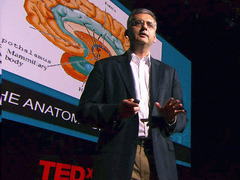
    Andres Lozano: Parkinson's, depression and the switch that might turn them offAndres Lozano: Parkinson's, depression and the switch that might turn them off

    Scientists find a new approach to reversing memory loss, with potential benefits for brain disorders like Alzheimer’s. [Sci Tech Daily] Meanwhile, back at the ranch: Andres Lozano and his team are working on very precise deep brain stimulation to correct dysfunction from similar brain disorders.

    Galileo’s public condemnation is often invoked to defend new or unverified science. But as Adam Gopnik writes for the BBC, Galileo taught us a more important lesson: the value of the experimental method, the essence of what science is. [BBC.co.uk]

    A plan has been approved to build the world’s largest optical telescope in Hawaii. [NY Times] But will it be any match for the awesomely named European Extremely Large Telescope?

    JR's TED Prize wish: Use art to turn the world inside outJR's TED Prize wish: Use art to turn the world inside out
    JR and his team bring the project “Wrinkles of the City” to Berlin, with photographs of the elderly pasted on 15 walls throughout the city. [JR-Art] Watch JR make his 2011 Prize wish »

    Would you like to go to Mars? Would you like to go to Mars to be filmed for a reality TV show? Would you like to go to Mars to be filmed for a reality TV show, knowing you probably won’t come back? Your dream has come true »

    A deeper look at the feats of Felix Baumgartner, everyone’s favorite record-breaking skydiver. [Vanity Fair]

    Ron Mueck’s exhibition opened this week at the Fondation Cartier pour l’art contemporain. Watch a fascinating video of him constructing his work »

  • Anonymous calls for ‘Internet Blackout Day’ to protest CISPA [video]

    Anonymous calls for 'Internet Blackout Day' to protest CISPA
    The Cyber Intelligence Sharing and Protection Act (CISPA), which passed the House of Representatives this week, has drawn a lot of criticism from activist groups such as the Electronic Frontier Foundation for potentially undermining users’ online privacy. In particular, the EFF has said that the bill gives Internet companies the right “to monitor user actions and share data – including potentially sensitive user data – with the government without a warrant” and also “overrides existing privacy law, and grants broad immunities to participating companies.”

    Continue reading…

  • Bing answers malware critics

    Earlier this week word hit the web that Bing search results display more malware than Google. Naturally, Microsoft disagrees. “AV-TEST’s study doesn’t represent the true experience or risk to customers. In other words, the conclusions many have drawn from the study are wrong”, David Felstead, Bing senior program manager, says. Okay, why?

    Felstead elaborates: “By using the API instead of the user interface, AV-TEST bypassed our warning system designed to keep customers from being harmed by malware. Bing actually does prevent customers from clicking on malware infected sites by disabling the link on the results page and showing the…message to stop people from going to the site”.

    He goes on to explain that Bing displays links from infected sites because most are legitimate sites that normally don’t host malware but have been hacked. It is a plausible, but not fully satisfactory, answer. “We warn our customers rather than suppressing the result for both completeness and educational reasons”, Felstead states.

    Then, in true Scroogled fashion, he points out a search term that can be entered into Google that results in malicious results.

    In fairness, Felstead also points out that Microsoft is “still waiting on answers to many of our questions” on the methodology of these tests. In other words, this is a “he said, she said” matter that we will likely never have real answers on. In the end it boils down to which engine you prefer and the good sense to not click on results that claim to provide the moon to you.

  • Microsoft confirms smaller Windows 8 devices coming soon

    During yesterday’s earnings conference call, departing CFO Peter Klein says that Microsoft is “working closely with OEMs on a new suite of small touch devices powered by Windows. These devices will have competitive price points, partly enabled by our latest OEM offerings designed specifically for these smaller devices, and will be available in the coming months”.

    The rumors are true, and, presumably, because of the context Klein makes the statement, these devices will run Windows 8 — rather than RT or Embedded. For example, he refers to support for new Intel processors, Haswell and Bay Trail Atom. The former is expected to ship with back-to-school ultrabooks and convertibles. The latter is designed for smaller touch devices, including tablets. During Intel’s earnings call this week, CEO Paul Otellini predicted that for touch-screen notebooks running the new Atom processor, “prices are going to be down to as low as $200”. Merry Christmas!

    Plan A Underway

    The point: Don’t count out Microsoft or its PC partners just yet. Windows 8 is a work in progress, and that’s by design, while OEMs have yet to step up with the right devices. There is no Plan B, because A is still underway and will be until new hardware reaches the market for the two key selling seasons of the year, back to school and Christmas. I want to restate: There is no Plan B, contrary to what writers Adrian Kingsley-Hughes and Jay Greene, among others, say is necessary.

    Many Plan B advocates presume Windows 8 is a failure because PC shipments reached record lows during Q1, following a disappointing fourth quarter. But this trend, spending on smartphones and tablets displacing PCs, started long before Windows 8 shipped, and Microsoft prepared.

    “Consumers and businesses are increasingly shifting their focus to touch and mobility, and as a result, they want touch-enabled computing devices that are ultrathin, lightweight, and have long battery life”, Klein says. But the duh statement is obvious but oft overlooked. “While Windows revenue has been impacted by the transition from the traditional PC to a new era of computing devices, the overall addressable markets are growing, and we are excited by the opportunities ahead of us”.

    The market for PCs, tablets and ultramobiles will grow 79 percent from 2012 to 2017 — 467.2 million to 836 million units — according to Gartner. Android and iOS are largely confined to tablets, while Windows dominates personal computers and the fledgling ultramobiles. Gartner’s data, which puts Android way ahead of Windows, and Apple platforms just slightly behind, misleads by including smartphones. When doing actual apples to apples comparisons, the PC market (including ultramobiles) rises from 351.1 million last year to 368 million in 2017. Tablets go from 197.2 million to 468 million during the same time frame.

    The point: The addressable market for Microsoft grows, as Windows gains tablet share. Certainly Apple won’t snag share going the other way, certainly not with OS X, based on recent market share trends. Microsoft’s Plan A objectives are the same: Get a touch-oriented OS out the door and enable OEM partners to bring different size and form-factor designs to market.

    Downsizing Windows

    Right now, there are two dramatic shifts underway: Falling tablet prices and consumer shift to 7-7.9-inch models; both are intertwined. NPD DisplaySearch predicts that tablets in that size category will account for 45 percent of shipments this year. That’s where Microsoft sees partners headed, but running a desktop operating system.

    The process is arduous. “We built Windows 8 with touch and mobility at the center of the experience, which positions us well in this new era”, Klein says. “However, the transition is complicated, given the size of our hardware and software ecosystem. We still have an immense amount of work to do, yet we feel good about the foundation we have laid and are optimistic about the long term success of Windows”.

    Windows 8’s focus on touch is a hot topic of debate. Today, colleague Wayne Williams asks “Do you users really want touchscreen PCs (Because I don’t)“, while in December developer Robert Johnson asserts “Touchscreens on laptops make complete sense“.

    I love Surface Pro. Touch and Windows 8 deliver great user experience. But there aren’t yet enough touchscreen choices available at prices that woo buyers from tablets. Wayne’s problem isn’t the touchscreen but how little he can do with tablets. Give him an affordable touch convertible or slate running Windows 8, and his opinion might change. Even yours.

    This discussion would be moot, if not for a fundamental shift in Microsoft product development that I explained last month.

    “With Windows 8, we are setting a new, accelerated pace for updates and innovations, as we focus on making the Windows experience richer and better”, Klein says. “Since launch we have delivered several important updates to improve our mail, storage, search, music, and video services”.

    Photo Credit: Federico Rostagno/Shutterstock

  • Mobile accelerator Tandem bulks up with 2 new partners, 3 new startups

    Silicon Valley’s Tandem Entrepreneurs has always been a small operation, focusing attention on a dozen or so mobile technology startups each year, but it’s showing signs of getting bigger. On Friday Tandem announced it has brought on two new partners: former BlackRock Asia-Pac Chairman Rohit Bhagat and Doug Ellis, co-founder of online advertising tech company Turn.

    Considering that before these new additions Tadem had a roster of only three partners, that’s significant growth. Tandem typically accepts into its accelerator program three or four early-stage startups each quarter, making a $200,000 investment in each, as well as providing office space and mentoring.

    With its newly bulked up team, though, Tandem plans to host and invest in a larger number of companies each year and expand its scope to more countries – while still maintaining its focus on mobile. Last year, Tandem closed its second fund, raising $32 million.

    Tandem on Friday also revealed the three companies that make up its latest accelerator class:

    • Tile: Tandem’s first mobile hardware investment, Tile has developed a small mobile tracking device that can be attached to any personal or important item, even pets.
    • Swoopt: Currently in beta, Swoopt has developed fantasy sports gaming and tournament software for the mobile phone.
    • HomeTapper: This startup is developing a rich-media experience for real-estate listings on the tablet.

    Tandem is accepting applications for its summer class until May 1.

    Related research and analysis from GigaOM Pro:
    Subscriber content. Sign up for a free trial.


  • Fitbug vs. Fitbit: activity trackers in trademark tussle

    Fitbit activity trackers are popping up in pockets across the country but, apparently, U.K.-based Fitbug believes it deserves some credit for its rival’s adoption.

    FitbugIn a lawsuit filed with the U.S. District Court for Northern California, Fitbug accuses San Francisco-based Fitbit (see disclosure) of trademark infringement that is causing “irreparable harm and damage” to the company.

    Aside from the name similarity, Fitbug alleges that Fitbit’s logo, imagery and packaging bear a “striking resemblance” to early Fitbug marketing material and have caused “consumer confusion.”

    Fitbug was founded in 2005 and Fitbit came along in 2007. Both digital health companies make wearable devices that track users’ activity and sync with web and mobile services to help users increase their fitness. And as evidence of customer confusion, the complaint says that, in the last year, it’s received more than 200 customer service inquiries from Fitbit customers and that several news reports and blog posts have mixed up the two services.

    Fitbit, mobile healthIn response to the allegations, James Park, Fitbit’s CEO and co-founder said in a statement:

    “Fitbit is very proud of our fantastic products and reputation, which we have earned solely through the tremendous efforts of the Fitbit team. We are surprised by the allegations contained in Fitbug’s complaint. We are confident of our legal position in the case and look forward to addressing the allegations in court.”

    This is hardly the first time that companies have to come to blows over similar names. A few years ago, Facebook sued parody site Lamebook (and ultimately settled). Although the dispute never reached legal proportions, Chicago-based programming bootcamp Code Academy last year changed its name to Starter League partly because of confusion with online coding startup Codecademy.

    Fitbug, which says it has two U.S. Trademark Registrations, is asking the court to require Fitbit to cease the use of its logo and refrain from conduct that causes confusion with Fitbug’s brand and services.

    Disclosure: Fitbit is backed by True Ventures, a venture capital firm that is an investor in the parent company of this blog, Giga Omni Media. Om Malik, founder of Giga Omni Media, is also a venture partner at True.

    Related research and analysis from GigaOM Pro:
    Subscriber content. Sign up for a free trial.


  • Apple warned not to stay quiet, must do ‘something by September’

    Apple warned not to stay quiet, must do 'SOMETHING by September'
    This has certainly been a pretty quiet spring for Apple so far, as the company has made more headlines for reported product delays than actual product releases. While Apple has remained silent, its share price has continued to plummet, plummeting from a high of over $700 in September all the way down to below $400 this week. Barron’s points us to a new note from Barclays analyst Ben Reitzes, who makes a fairly bullish case for Apple that assumes that the company “does SOMETHING by September and lifts itself from an almost ‘frozen state’ during the March quarter.”

    Continue reading…