Blog

  • Do consumers really want touchscreen PCs? (Because I don’t)

    I own an iPad, which I love dearly. I use it for lots of things — games, email, browsing the web, social networking, writing, viewing photos and video, and remote accessing my PC. The iPad, like all tablets, is a true jack of all trades and a master of some too.

    But, try as I might, I can’t use it for “real” tasks. While it’s fine for writing small-ish articles on, I could never write a novel on it — and I’ve tried. For some reason, I just can’t connect with typing on a touchscreen in the same way I do when typing on a proper full-size keyboard. And I could never imagine attempting detailed Photoshop work on a touchscreen either (well, not without a fine stylus at least).

    Maybe it’s just because I’ve been using a keyboard and mouse combo for so long that the old control method has become part of who I am when working. I sit down in front of my PC and the mouse and keyboard are there, in my hands without my ever really having to think about what I’m doing.

    Touch is more deliberate. Of course I can zip around the iPad, switching apps, firing off emails and zooming in and out without thinking about it. It’s intuitive, but it’s not as fast or as comfortable. And when you put your fingers on the screen, you’re obscuring the view in a way a diminutive mouse cursor doesn’t.

    When I’m working I’m at least twice as quick on my PC as I am on my iPad, and I’m usually doing lots more tasks at the same time too.

    My point is while I love touch for lots of things, I can’t imagine it ever being the primary method of interacting with all the tech in my life and I really don’t see the purpose of touchscreen PCs.

    Is It Just Me?

    The problem I have is I just don’t think there’s a need for touchscreen on PCs. It adds a third control method that’s not required. And an awkward third control method at that. I know touch is useful for swiping through open apps in Windows 8, and performing other tasks in the OS (and admittedly it can be a little easier than using a trackpad at times), but I want to look at a screen directly ahead of me and interact with what it’s showing me without stretching my arms out to it.

    I asked around in our newsroom and my colleague Mihaita Bamburic agrees (so it’s not just me!), saying: “I share the same view. Touch is confusing because you have to reach out and then retract your arms in order to fully use it. I think we find it most convenient when the movement of our arms is done on the same level most of the time. Think about it, we move our left or right arm to the side to reach for the mouse and one stays on the keyboard at all times. It’s natural to do so, it’s habit. Now, with touchscreen PCs, we have to raise the left or right arm to do stuff, which I find tiresome in the long run”.

    Dire PC sales suggest — to my mind at least — that people don’t want to buy new computers with touchscreens and the touch-friendly Windows 8, because, well, they don’t need touchscreens. Touch is essential on tablets and mobile phones, but on PCs, where the issue of gorilla arm remains a problem, it’s not necessary, and it adds a lot of extra cost for no real gain.

    As Isabelle Durand, Gartner principal research analyst, says: “The majority of consumers remain unwilling to pay the price premium for touchscreen capabilities on PCs at this stage”.

    Frankenstein Hybrids
    Microsoft bet the farm on touch. It came up with an OS that works brilliantly on touch devices and not as well on bog-standard PCs (it’s not bad on them — far from it — but it’s not as good).

    There are rumors that Microsoft is considering allowing users to skip the Start screen and restore the Start menu in the next version of Windows 8, which a lot of mice and keyboard users will appreciate, and which is clearly a good idea, but PC manufacturers aren’t going to stop pushing touchscreens on us. It’s the future, you see. Isabelle Durand again: “Touchscreens and Windows 8 will represent key opportunities for PC manufacturers in the second half of 2013”.

    According to the latest Touch Panel Market Analysis Report from NPD DisplaySearch, which was released a couple of days ago, manufacturers believe the penetration of touchscreens in notebook PCs is going to grow from under 3 percent last year to over 12 percent this year. Growth triggered, naturally enough, by Windows 8.

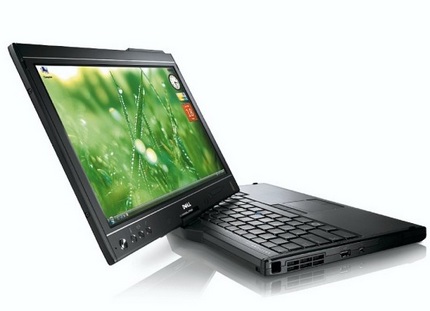
    To drive this growth many manufactures are coming up with new types of PCs, such as flip and convertible models that can be both PCs and tablets. Great, except isn’t that a bit like saying cars are great, and motorbikes are great, so here’s a car made up of two motorbikes stuck together. It can be an uncomfortable car, or it can be two slightly rubbish motorbikes.

    Er, can’t I just have a great car AND a great motorbike?

    Another analogy: touch is like 3D in the cinema. A few great movies came out which made excellent use of the third dimension — well, Avatar — and suddenly every film was 3D, including plenty which just didn’t work with an added dimension. Movie studios like 3D because they can charge more for people to see it, but consumers are less keen (a friend of mine runs a cinema and says 2D versions of movies are much more popular than their 3D counterparts, most of the time). 3D is a fad that’s now slowly dying out and hopefully touch — on devices where it really doesn’t serve any great purpose — will be too. But somehow I doubt it.

    So my question for you is this: am I just swimming pointlessly against the tide here? Should I be forcing myself to fully embrace touch and accept it’s here to stay — on all devices — or do you feel the same? Comments below please.

    Photo Credit: nrt/Shutterstock

  • Will gold’s glitter dim in India?

    Indians have reacted to the latest gold prices falls by — buying more gold. And why not? Aside from Indians’ well known passion for the yellow metal (yours truly not excluded) gold has by and large served well as an investment: annual returns over the past five years have been around 17 percent, Morgan Stanley notes.

    Now, gold’s near 20 percent plunge this year has wiped some $300 billion off Indians’ gold holdings, Morgan Stanley estimates in a note (households are believed to own about 15,000 metric tonnes of gold). So is the gold rush in India over?

    Possibly. Indian gold imports have doubled to around 3 percent of GDP in the past five years. That rise is partly down to greater wealth which translates into more wedding jewellery purchases. But the more unpleasant side of the equation is India’s inflation problem. Look at the following charts from MS that shows how negative real interest rates have encouraged savings in gold rather than financial instruments:


    Signs now are that inflation is ebbing — wholesale price growth in March slowed to the slowest in more than three years. The fall in oil and industrial metals prices, if sustained, should see this process continue. The government has also been slashing spending to bring its huge budget deficit under control. Morgan Stanley writes:

    Over the past five years, real rates have been largely negative. The source of negative real rates has been the high fiscal deficit. Fiscal support is unwinding and real rates are turning up. This will cause gold appetite to recede.

    So while Indians’ emotional attachment to gold may not be tarnished,  it could be less in demand as an inflation hedge. In fact, demand could fall by as much as two-thirds, MS reckons.  Gold savings have averaged 2.5% of GDP over the past three years versus 1.5% in the preceding 20 years.  So even a return to trend levels  would be very significant.

    If Indians do buy less gold in future, some of their cash could find its way into stocks and bonds — MS calculates a 100 basis-point  fall in demand relative to GDP will add $15 billion to liquidity and savings.  That’s at least one of the reasons Mumbai stocks are on track for their best week since early December.

  • Samsung Galaxy S4 coming soon to Verizon

    Unveiled in mid-March, the Samsung Galaxy S4 is one of the most eagerly awaited smartphones to be sold this year. Major mobile operators across the world have already announced pre-order offers, but one big player has yet to reveal any details concerning the Galaxy S4.

    Verizon, one of the largest mobile operators worldwide and second-largest in the US, is expected to sell the Galaxy S4 in the upcoming period but, until Friday, the big red did not disclose any details concerning the date of availability.

    In a Twitter post, Verizon has finally announced that the Galaxy S4 is headed to its network and arrives in May. As you might expect, the smartphone ships with 4G LTE cellular connectivity out-of-the-box and is big red-branded.

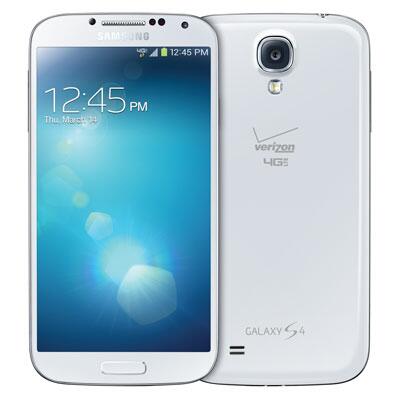
    The US mobile operator has also posted a picture of the Galaxy S4 in white trim, which shows the smartphone carrying the Verizon and 4G LTE logos on the back. There appears to be no other branding other than on the back of the device

    Verizon has also said that it will “soon” reveal more details, likely about pre-orders and the official sales date.

  • Listen to grassroots wisdom to tackle hunger

    Mitch and Vendell representing the Caribbean Union of Fisherfolk Associations. Picture: Anne Philpott/DFID

    Mitch Addison Lay has come all the way across the ocean to Dublin to tell us about the Caribbean Union of Fisherfolk Associations and their worries about diminishing fish stocks close to the shores of many of their islands. He was first and foremost a red snapper line fisherman but had worked hard to bring unity across his fellow Caribbean fisherfolk. The experience had taught him that, “It’s easier to get politicians to listen than to get fisherfolk together”. He told us that fishing for him and his fellow fisherfolk is “a way of life, which is not economic, but an entire life for us, socially and culturally”.The Dublin Conference on Hunger, Nutrition and Climate Change has been different in its determination to bring people who are immediately affected by these issues to ensure they meet policy makers. The messages generated will then feed into the post Millennium Development Goals (MDG) framework discussions. The conference is made up of ‘grassroots’ participants, many of whom are leaving their home country for the first time. These include pastoralists from Ethiopia, Malawian farmers, Arctic peoples and a group of Mongolian cattle herders. The other half of policy makers come from non-governmental organisations (NGOs), governments and UN agencies.

    The opening ceremony urged us all to “listen up” and started with Eamon Gilmore, the Irish Foreign Affairs Minister telling us how he felt a deep empathy for women headed small holders as he grew up on a small farm, run by his mother where weather was the determining force in their livelihoods – if it rained and a crop spoiled they would go hungry. The President of Ireland, Michael Higgens spoke of Ireland’s “deep compassion for others experience of hunger” due to their own history of famine.

    Runa Khatun from Shushilan NGO in Bangladesh with colleagues. Picture: Anne Philpott/DFID

    The day was spent listening to people telling their own stories of the impact of climate change, hunger and nutrition – and the relationship between them all. We also heard from World Vision youth ambassadors who spoke about hopes for their adult lives – Alex Nallo came from Palestine to urge action in tackling these issues which would have an impact on him in his 40’s. He said there will be “limits to their inventiveness” to deal with the combined stress of all three. Runa Khatun, representing Shushilan NGO in Bangladesh, said that they were women who classified themselves as extremely poor and vulnerable to floods who wanted to increase their resilience to disasters by organising together, and a combination of cash and food helped to improve their collective quality of life.

    I was nominated as a policy champion for one of these learning circles and needed to define, determine and articulate the lessons of empowerment we gained. Although empowerment was hard to define, key themes were emerging such as dignity, participation and knowledge, as well as discussion of what outcomes were empowering. We also tackled how to get there in terms of a collective process to a receptive environment and we were tasked to deliver a one minute video address – a real challenge when tackling a subject as complex as empowerment.

    Nick Dyer, Policy Director at DFID with Mary Robinson. Picture: Anne Philpott/DFID

    DFID’s Policy Director Nick Dyer met Mary Robinson earlier in the day and as well as discussing how we would work together towards the ‘Nutrition for Growth’ event on 8 June, she outlined her vision for wider use of clean energy in low income countries and how climate justice is a cause worthy of global solidarity.

    UNICEF rounded off the day by launching a new report on the status of stunting worldwide and successful nutrition responses. The report reminded us that one in four children globally are stunted, robbing them of critical life chances in many areas of their lives and their mental and physical potential. 80% of these children live in just 20 countries making targeting of simple and proven steps easier such as improving women’s nutrition, early and exclusive breastfeeding, providing additional vitamins and minerals as well as appropriate food in pregnancy and the first 2 years of a child’s life. The report ends on a hopeful note showing that stunting is reducing in specific contexts. In Maharashtra state in India, the percentage of stunted children dropped from 39% in 2005 to 23% in 2012 largely because of support to frontline workers who focus on improving child nutrition.

    On this hopeful note, Joe Costello, the Irish Minister for State for Trade and Development, spoke of 2013 being the moment to mobilise for nutrition. He linked this conference at the end of the Irish EU presidency with our own ‘Nutrition for Growth’ conference at the start the UK G8 presidency – and the need to continue to pitch high for delivery for the 870 million hungry in the world. The Dublin event highlighted just how far we have come to bring attention to the issue of malnutrition – and how we now need to tackle it.

  • Eliminate adware with the Junkware Removal Tool

    If you regularly try out freeware tools then you’ll know many come bundled with annoying adware. This can use all kinds of dubious tactics to install itself on your PC, and getting rid of these irritations later can be a problem (even if you remove the core code, remnants usually remain to clutter your system).
    Fortunately there are plenty of tools around to help clean up your PC — and Junkware Removal Tool is just about the simplest we’ve ever seen.

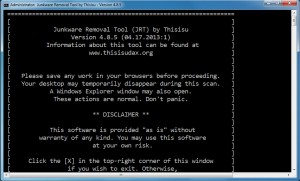
    The program arrives as a tiny (538KB) executable, no installation required, so it’s ready to go immediately. On launch it opens in a console window — there’s no GUI here, no options or settings to consider — and with the tap of a key it’ll start scanning your system.

    This isn’t a particularly quick process, but then Junkware Removal Tool does do quite a thorough job, checking running processes, loaded modules, browsers, the Registry and more.

    And it supports removing a reasonable number of products, too, at least for a product managed by a single developer. The Junkware Removal Tool names the following, as examples: Ask Toolbar; Babylon; Browser Manager; Claro / iSearch; Conduit; Coupon Printer for Windows; Crossrider; DealPly; Facemoods / Funmoods; iLivid; Iminent; IncrediBar; MyWebSearch; Searchqu; Web Assistant. (The program change log reveals support for several others, too.)

    One issue we noticed is that the scanning process is rather more intrusive than you might expect from this kind of tool. It will close any open Explorer or browser windows, for instance, which can be annoying: to avoid problems, it’s best if you close these yourself before launching a scan.

    You also get precisely no control at all over its final actions. Forget ideas of reviewing a final report, deciding to keep this, or remove that: Junkware Removal Tool simply deletes any remnants of its target products, and displays a text file showing you precisely what actions it’s taken.

    This does make the program exceptionally easy to use, though. Just tap a single key to launch its scan, and there’s nothing else to do.

    And in our tests Junkware Removal Tool also proved very effective, safely removing active adware from one system, and cleaning up the remnants still remaining on another.

    The program still wouldn’t be our first choice for an adware remover; it just doesn’t support enough products, and we like to have more control over the removal process. But it’s capable enough that you should probably keep a copy around, just in case your first line tools fail and you need a little extra assistance.

    Photo Credit: Stephen Finn/Shutterstock

  • Apple loses out to premium Android tablets

    UK polling company YouGov has released the results of its latest Quarterly Tablet Tracker  for the first three months of 2013. It shows that consumers now see Android tablets as equal in quality to the iPad and as a result their makers are eating into Apple’s share of the premium market.
    Although it still has the largest slice of the UK’s tablet market, Apple has seen its share drop by 10 percent in the past 12 months. Despite the launch of the iPad Mini and 4th generation iPad, Apple now has 63 percent of the market compared to 73 percent this time last year.

    The main reason for the drop seems to be the emergence of strong new competitors which have taken sales not just from Apple but from the obscure budget brands too. Google’s Nexus 7 has grabbed 8 percent of the market in under a year, while the Kindle Fire has taken 5 percent. Since the beginning of 2012 Samsung has also more than doubled its share from 4 percent to 10 percent.

    There is some good news for Apple with the iPad Mini taking 4 percent of the market and generating the highest customer satisfaction scores.

    Looking at the overall picture, the Quarterly Tablet Tracker shows that 18 percent of the UK adult population (more than 8 million people) now own a tablet. This is an increase of 5 percent over the last quarter of 2012, no doubt fueled by the Christmas period.

    Of course Apple still has a huge share of the tablet market largely thanks to its head start. But that dominant position is only likely to slip further as the big-name Android makers raise their game.

    Photo Credit: Adam Radosavljevic /Shutterstock

  • Defraggler 2.14 checks multiple drives

    Piriform has released Defraggler 2.14.705 and Defraggler Portable 2.14.705, a minor, but noteworthy, update of its freeware defragging tool that allows users to both defrag entire drives and individual files.

    Version 2.14 adds support for UDF file systems, plus allows users to defrag their drive’s free space on a schedule while also improving its search tools and navigation.

    Users can now schedule the Defraggler 2.14 to defrag a drive’s free space at set intervals: simply select Settings > Schedule, then enable a schedule for the selected drive and choose Freespace or Freespace (allow fragmentation) from the ‘Defrag type:’ dropdown menu.

    Multiple drives can now be analysed with a single click too: simply select the drives from the top pane using the [Ctrl] or [Shift] keys, then click the Analyze button to perform an analysis on each drive in turn. The results for each drive can then browsed as normal by clicking the drive’s entry.

    Defraggler 2.14 extends its file-system support to UDF, which is commonly found on rewritable CDs and DVDs – this complements existing support for FAT/FAT32, NTFS and exFAT file systems.

    Defraggler’s Search tool allows users to target specific files for defragmenting — the tool now implements better searching using wildcards. 64-bit Windows users should also find the shell extension options are improved too.

    The GUI has been tweaked to provide better navigation, while a minor bug has been fixed in the monthly scheduler along with other non-specified minor improvements and bug fixes. Defraggler 2.14.705 and Defraggler Portable 2.14.705 are both available as freeware downloads for PCs running Windows XP or later.

    Photo Credit: Sergey Mironov/Shutterstock

  • Obama pursues astonishing abuses, expansion of federal power, says U.S. Senator

    While tens of millions of Americans believe President Obama may be the most divisive president since Abraham Lincoln, at least one U.S. senator thinks he may be the most abusive in terms of wielding power. Granted, Sen. Ted Cruz, R-Texas, is a political opponent,…
  • The Boston murders: a cult of lies called government

    (NaturalNews)Yesterday, I covered the mystery of the pressure-cooker bomb. Where are all the holes in the remains of the cooker that should be there, owing to the fact that ball bearings and nails were packed around the explosive material, and all this shrapnel would have been driven…

  • Plenty of Americans bypassing medicines to cut back on spending

    A new study has shown that Americans on a tight budget often bypass dosages of expensive prescription medication or use a lower amount than was prescribed by their physician. As expected, the absence of insurance coverage is one of the major reasons behind patients…
  • More U.S. states looking to legalize gold and silver as currency while ditching dollars

    As the U.S. government continues to crank out dollars like they were Monopoly money, more and more states – fearing an eventual collapse of the currency, most likely – are looking at ways to legalize and utilize gold and silver as currency. Shunning trust in the Fed…
  • CISPA is back – Big brother tries yet again to invade your online privacy

    Recent cyber attacks on media giants such as the New York Times and The Washington Post have escalated concerns for strict internet regulations that would prevent future attacks. This has led the House of Representatives to pass the highly controversial Cyber Intelligence…
  • Chlorinated water, pesticides linked to food allergies

    A chemical used in pesticides, antibacterial soap and water chlorination increases people’s risk of developing food allergies, according to a study conducted by researchers from the American College of Allergy, Asthma and Immunology (ACAAI) and published in the college’s…
  • Associated Press refuses to use ‘abortion’ tag to describe baby-killing abortion murderer

    When is murder not murder? Apparently whenever the mainstream media (MSM) says it isn’t. Enter the case of abortion “doctor” Kermit Gosnell. Now, the heads of politburo at The Associated Press, one of the world’s largest newswire services, have decided their reporters…
  • Social networks inform parents about vaccine choices

    A study published in the journal Pediatrics (April 15, 2013) has determined that parents’ vaccine choices are often informed and influenced by online social networks. Parents who choose not to vaccinate according to the recommended vaccination schedule are much more…
  • Smart phone app ‘Fooducate’ could be the beginning of the end of GMO

    One of the biggest obstacles holding people back from eating healthy is easy access to resourceful information, about chemicals in foods, or natural remedies and supplements, and about new choices to make right at the store. If only technology made something for your…
  • Total media blackout now under way on most likely suspects in Boston marathon bombing

    In a story that’s almost as explosive as the actual bombing itself, the mainstream media is waging a total media blackout on the photos of “The Craft” private military operatives who were present at the Boston marathon bombing. NaturalNews.com and InfoWars.com have…
  • Nine foods that lower blood pressure

    High blood pressure (BP) or hypertension is considered a high risk factor for heart attacks and strokes as well as kidney failure. Many have high BP, but most don’t know as it doesn’t usually have its own symptoms. Blood pressure readings are in two sets of numbers…
  • How to beat sciatica naturally

    Even though up to 90 percent of Americans suffer from sciatica, there is hope. Made up of low back spinal nerves L4 through S2, the sciatic nerve is the largest nerve in the human body and runs from the hip, down the back of the thigh, to the inside of the leg and finally…
  • Latest breaking news on Boston marathon bombing cover-up: Boston under militarized martial law

    The false flag theater of the Boston marathon bombing continues in the mainstream media. So far, government agents have killed one of the “suspects” (i.e. patsies) by running over him with a vehicle. A manhunt is under way for the second “suspect” who will also likely…