Blog

  • Internet Explorer ‘Catching Fire’ with The Hunger Games

    Later this year, November 22nd to be exact, part two of The Hunger Games, titled The Hunger Games: Catching Fire, will hit the big screen. Microsoft’s Internet Explorer team has partnered with Lionsgate to set up a new IE-optimized website for the sequel to the blockbuster movie with the hope of not only getting you excited about the film but also about the “browser you loved to hate”.

    The Hunger Games Explorer launches on the heels of the MTV Movie Awards which premiered the trailer. Microsoft’s Roger Capriotti says “with the global launch of The Hunger Games: Catching Fire trailer, fans can now visit The Hunger Games Explorer to be immersed in this world, track every development of The Hunger Games: Catching Fire, including tweets, exclusive images and videos, and then share their thoughts and excitement with others around the world creating a global conversation”.

    Meanwhile, Lionsgate’s Danielle De Palma claims “The Hunger Games Explorer is not only a place for fans to spark the conversation around Catching Fire, it is also a destination for us to continue to provide fans with new content, experiences and unprecedented behind the scenes access”.

    When fans enter The Hunger Games Explorer they can manipulate the website to customize Catching Fire info to the exact way they want it. You can tailor and filter content in and out of the stream, pull in fan blogs and tweets in addition to messages from the Capitol, and interact with other fans across the globe.

    While the site is optimized for Internet Explorer, it works with every other web browser, and probably just as well. Still, it was created by the IE team, along with Lionsgate’s RED Interactive Agency and, given the anticipation for the movie, it is still a win for Microsoft.

  • Reuters – Alpiq Asks for Improved Offers for Power Plants

    Swiss company Alpiq has asked for improved offers for two Czech power plants after bids were well below its expectations, Czech newspaper Hospodarske Noviny reported on Monday. The newspaper cited a partner in one bidding group, Petr Paukner, as saying that bids for the two plants together came in well below 400 million euros ($523.90 million).

    (Reuters) – Swiss company Alpiq has asked for improved offers for two Czech power plants after bids were well below its expectations, Czech newspaper Hospodarske Noviny reported on Monday.

    The newspaper cited a partner in one bidding group, Petr Paukner, as saying that bids for the two plants together came in well below 400 million euros ($523.90 million).

    Paukner is owner of Czech energy trader Carbounion Bohemia, which is bidding for the Alpiq plants with two other companies. He was not available to comment.

    Alpiq declined to comment on the newspaper’s report. Hospodarske Noviny said three bidders remained and had to submit improved offers by Wednesday.

    The three bidders are the PURS group, consisting of Czech companies Carbounion, E-Invest and Sokolovska Uhelna; Czech energy holding EPH; and investment group Carpaterra Capital Partners.

    EPH declined to comment on the report, while Carpaterra could not be reached.

    Alpiq’s two Czech plants up for sale have electricity capacity of 529 MW and heating capacity of 1,072 MW.

    ($1 = 0.7635 euros) (Reporting by Jason Hovet and Jan Korselt; editing by Keiron Henderson)

    The post Reuters – Alpiq Asks for Improved Offers for Power Plants appeared first on peHUB.

  • Saudi Aramco Energy Ventures Backs Sekal

    Saudi Aramco Energy Ventures, the venture arm of Saudi Aramco, has put an undisclosed amount of money into Sekal AS, a provider of support and automation software for the oil and gas industry. Details of the financing were not disclosed. Sekal is based in Sandnes, Norway, with offices in Aberdeen and Houston. Other owners in the company include IRIS, Statoil Technology Invest, and SåkorninVest.

    PRESS RELEASE
    Saudi Aramco Energy Ventures LLC (“SAEV”), the corporate venturing subsidiary of Saudi Aramco, today announced the closing of an investment into Sekal AS, a company that offers real time decision support and automation software, together with related consultancy and support services to the oil and gas industry.

    The company is commercializing two software solutions, DrillScene and DrillTronics, used in drilling operations where rigs have real time data streaming capabilities. DrillScene is a self‐calibrating system that provides real‐time early warnings of impending problems in drilling operations. The driller can respond quicker to take corrective actions, reducing down‐time and improving performance. DrillTronics provides added automation and safeguard features to existing drilling control systems and actively controls key elements of the operation, such as draw‐work, top‐drive and mud pumps.

    CEO of SAEV, Ibrahim Buainain said: “We are delighted to announce SAEV’s latest investment. We believe Sekal’s technology is truly superior to competing alternatives in the market, and will have a significant impact in increasing efficiency, reducing downtime and reducing costs in Saudi Aramco’s drilling operations.”

    About Saudi Aramco Energy Ventures ‐ Saudi Aramco Energy Ventures LLC (SAEV) is the corporate venturing subsidiary of Saudi Arabian Oil Company (Saudi Aramco), the world’s leading integrated energy company. Headquartered in Dhahran with operations in North America and Europe, SAEV’s mission is to invest globally in start‐ups and high growth companies with technologies of strategic importance to its parent, Saudi Aramco.

    For more information about SAEV, please visit www.aramcoventures.com

    About Sekal – Sekal supplies solutions that employ real time data from a rig to perform advanced monitoring and automated drilling by utilizing advanced models. The solutions provide value by early detection of downhole condition deterioration, either as a monitoring service or as a fully integrated solution with the drilling control system. The result is a safer and more efficient drilling process. The company was incorporated in 2011 with headquarters in Sandnes, Norway, and offices in Aberdeen and Houston. The main owners are IRIS, Statoil Technology Invest, SåkorninVest and now Saudi Aramco Energy Ventures.

    The post Saudi Aramco Energy Ventures Backs Sekal appeared first on peHUB.

  • Dish challenges SoftBank with $25.5 billion Sprint bid

    Dish challenges Softbank with $25.5 billion Sprint bid
    Dish Network has been looking to make serious inroads in the mobile market and it looks like the company has identified an appealing new option. Dish on Monday announced that it is challenging SoftBank’s plans for a Sprint merger with a bid of its own — $25.5 billion in total, which consists of $17.3 billion in cash and $8.2 billion in stock. The proposed Dish deal would give Sprint shareholders $7.00 per share, which represents a healthy premium over SoftBank’s offer of $4.03 per share. Sprint shares were up more than 12.5% in Monday’s pre-market session on the news. Dish’s full press release follows below.

    Continue reading…

  • Reuters – LVMH Fund Buys Stake in R.M. Williams

    A private equity fund sponsored by French luxury brand LVMH Group has snapped up just under half of Australia’s R.M. Williams in deal aimed at helping the bushwear firm expand further overseas, Reuters wrote. The sale of the 49.9 percent holding was valued at around A$52 million ($55 million), said a source close to the deal who was not authorised to speak on the record. Singapore-based L Capital Asia, which is also backed by Groupe Arnault, the holding company of LVMH chairman and chief executive Bernard Arnault, and Malaysia’s YTL Corp, specialises in developing distinctive but affordable brands in the Asia-Pacific region.

    (Reuters) – A private equity fund sponsored by French luxury brand LVMH Group has snapped up just under half of Australia’s R.M. Williams in deal aimed at helping the bushwear firm expand further overseas.

    The sale of the 49.9 percent holding was valued at around A$52 million ($55 million), said a source close to the deal who was not authorised to speak on the record.

    Singapore-based L Capital Asia, which is also backed by Groupe Arnault, the holding company of LVMH chairman and chief executive Bernard Arnault, and Malaysia’s YTL Corp, specialises in developing distinctive but affordable brands in the Asia-Pacific region.

    Last year it took a 50 percent stake in upmarket Australian food store Jones the Grocer.

    Ken Cowley, chairman and owner of R.M. Williams, which is known for its elastic-sided boots, will retain the majority holding. He said L Capital had committed to retaining Australian manufacturing for the firm’s products.

    The 81-year-old Australian company has more than 50 stores around the world. The transaction is expected to be completed by mid-May and new board members announced at that time.

    ($1 = 0.9522 Australian dollars) (Reporting by Jane Wardell; Editing by Edwina Gibbs)

    The post Reuters – LVMH Fund Buys Stake in R.M. Williams appeared first on peHUB.

  • Reuters – Warburg Pincus Takes Stake in Avtec

    U.S. private equity firm Warburg Pincus LLC has bought a minority stake in Indian engineering equipment maker Avtec Ltd, but the terms of the transaction were not disclosed, Reuters reported. The investment will provide an exit to British investor Actis and will be utilised to fund future growth of the company, Avtec said in a statement. In 2005, Actis invested $17.8 million to buy a 30 percent stake in the company, promoted by diversified C.K. Birla Group.

    (Reuters) – U.S. private equity firm Warburg Pincus LLC has bought a minority stake in Indian engineering equipment maker Avtec Ltd, but the terms of the transaction were not disclosed.

    The investment will provide an exit to British investor Actis and will be utilised to fund future growth of the company, Avtec said in a statement.

    In 2005, Actis invested $17.8 million to buy a 30 percent stake in the company, promoted by diversified C.K. Birla Group.

    Last week, Warburg Pincus sold its controlling stake in India’s Alliance Tire Group to KKR & Co. LP. .

    Ernst & Young advised Avtec and Actis in the transaction, the statement said. (Reporting by Indulal PM; Editing by Gopakumar Warrier)

    The post Reuters – Warburg Pincus Takes Stake in Avtec appeared first on peHUB.

  • Marathon Capital Adds Tim Meyer

    Chicago-based Marathon Capital has added Tim Meyer as a managing director. He will focus on for expanding the firm’s investor contacts and private placement capabilities across the pension, endowment, foundation and institutional debt and private equity channels, the firm said in a statement. Meyer has worked previously in various roles at firms including Duff & Phelps, CRT Capital, and BMO Capital Markets.

    PRESS RELEASE
    Marathon Capital welcomes Tim Meyer, Managing Director, to its Bannockburn office. Meyer will report to Gregg Elesh, Chief Investment Officer, and is responsible for expanding Marathon Capital’s investor contacts and private placement capabilities across the pension, endowment, foundation and institutional debt and private equity channels.

    Meyer has over 20 years of private placement experience with companies including Duff & Phelps, CRT Capital, BMO Capital Markets, ING Barings and SPP Hambro & Company. Meyer’s cumulative experience includes over 125 completed transactions representing the full spectrum of available corporate equity and debt structures.

    “Tim’s decades of pertinent experience in private placement and private capital raising will make him a superb resource both to Marathon Capital and its clients,” says Gregg Elesh, Chief Investment Officer of Marathon Capital.

    Marathon Capital is a leading financial advisory and investment banking firm focused on providing financial advice in the areas of M&A, capital raising of debt and equity, project finance, tax equity, financial restructuring, recapitalization, bankruptcy and workout situations in the energy sector. Marathon Capital is one of the most active advisors in the North American Power and Infrastructure market with deep expertise in the renewable energy segment.

    The post Marathon Capital Adds Tim Meyer appeared first on peHUB.

  • DISH wants to buy Sprint for $25.5 billion

    DISH Network, the satellite pay-tv company has decided it wants to buy Sprint Corp and has offered $25.5 billion for the beleaguered third placed wireless carrier. They are offering $7 a share, or about $4.76 a share in cash and about $2.24 in DISH stock. That’s 13 percent or about $5.4 billion higher than the $20.1 billion offered by Softbank of Japan.

    The cash component of DISH’s proposal is an 18% premium over the $4.03 per share implied by the SoftBank proposal while the equity portion represents approximately 32% ownership in the combined DISH/Sprint versus SoftBank’s proposal of a 30% interest in just Sprint, DISH claimed  in a press release. DISH CEO and chairman Charlie Ergen said:

    “The DISH proposal clearly presents Sprint shareholders with a superior alternative to the pending SoftBank proposal. Sprint shareholders will benefit from a higher price with more cash while also creating the opportunity to participate more meaningfully in a combined DISH/Sprint with a significantly-enhanced strategic position and substantial synergies that are not attainable through the pending SoftBank proposal.”

    hollywood_reporter_13_charlie_ergenDISH is trying for a complete makeover from its slow growing Pay-TV business and has been acquiring spectrum to build a nationwide LTE network, though from the looks of it, it will take it a long time to actually roll out the network. It recently asked FCC for a four year extension to build out its network.

    PS: A full analysis of the news to follow. In the interim here is the DISH website where they outline the entire proposal and have explained their bid in  detail.

    Related research and analysis from GigaOM Pro:
    Subscriber content. Sign up for a free trial.


  • gMaps for Windows Phone features updates to Driver Mode, Latitude and Street View

    Even though Google has yet to release an official Google Maps app for Windows Phone, third party developers already offer a number of competent alternatives. One of the most popular ones, and my personal favorite, is gMaps which comes with a comprehensive feature set and, bar its name, could even pass as the real deal.

    Today, DreamTeam Mobile, the team of developers behind gMaps, announced a new update to the popular Google Maps client. The app now touts further improvements for Driver Mode, Latitude and Street View. Let’s go through each, one by one, and see what changed.

    Driver Mode

    The gMaps app, which is now at version 2.1, allows users to enable or disable Driver Mode simply by tapping on the location. When the functionality is active gMaps displays a small black car and when it is disabled the app shows a red arrow.

    When enabled, Driver Mode now also positions the location of the user towards the bottom of the screen as to display more of the map ahead. There are also a couple of bug fixes related to this functionality, including clipped objects/route and “proper rotation of the map pushpins and other objects”.

    Latitude

    By contrast, Latitude in gMaps has undergone less noticeable improvements. According to the team of developers, the only change relates to a decrease in mobile data sent by the app to the Latitude backend. This will likely be felt by users when roaming or outside of Wi-Fi coverage.

    Street View

    gMaps now comes with support for “full 360-degree panoramic Street View” and the ability to move around when using the feature, with the help of navigational arrows. The app also provides the option to enable high quality (HQ) tiles, which “makes panoramas just great” according to the developers.

    gMaps is available to download from the Windows Phone Store. The app is free and ad-supported. There is also a paid version which runs for $2.49, but forgoes ads.

  • UK audit office probes 4G auction results

    The UK’s National Audit Office is to look into the recent 4G spectrum auction, which pulled in £2.34 billion ($3.62 billion) against a government forecast of £3.5 billion.

    The news was first broken by The Guardian (see disclosure) on the weekend, and was subsequently confirmed to me by the National Audit Office (NAO) itself on Monday morning. The upcoming investigation was triggered by member of parliament Helen Goodman, who complained that the government “failed to get value for money” in the auction.

    “It’s a little early to say exactly what we’re going to be looking at,” a spokesman for the NAO told me. “We will soon be in a position to put a remit of the study and a timescale on our website.”

    This should be an interesting one. The telecoms regulator Ofcom, which has hailed the result as a success, has always been crystal clear on the fact that its auction was not designed to raise the maximum revenue possible (everyone has learned their lessons from the £22.5 billion 3G auction a dozen years ago, which nearly crippled the industry), but rather to keep the market competitive and make sure as many people as possible get coverage.

    As for the source of the £3.5 billion figure floated by the government, there seems to be a disturbing amount of buck-passing going on. As I wrote on the auction’s completion in February:

    “The reserve price for the auction was £1.3 billion, although the government had budgeted for it to bring in £3.5 billion. Does that make the result disappointing? That depends on whether you see the government forecast as politically motivated or focused on the actual worth of the spectrum. There was never much justification given for the £3.5 billion figure, and no-one appears to be taking responsibility for it — today the Treasury told me to take my questions about the figure’s rationale to the Department for Culture, Media and Sport (DCMS), and the DCMS told me to ask the Treasury.”

    Now, according to The Guardian, the Treasury is claiming the figure came out of the Office for Budget Responsibility. Whoever came up with it, I’ve not seen a scrap of the rationale behind it.

    It is worth noting that the £3.5 billion figure was floated last year at a time when the Chancellor of the Exchequer, George Osborne, was trying to maintain that the national deficit would fall, not rise, in 2013. Without the predicted boost from the spectrum auction, the margin would have been much smaller. And, as it turned out in last month’s Budget statement, the deficit for 2013 is indeed up on that for 2012, not down.

    Disclosure: Guardian News & Media, which publishes The Guardian, is a minority investor in GigaOM.

    Related research and analysis from GigaOM Pro:
    Subscriber content. Sign up for a free trial.


  • White House Taxpayer Receipt

    It’s April 15th, Tax Day. Millions of families all across the countries have already filed their taxes or maybe some folks are just getting around to it today. Whether you’ve planned ahead or rushing to get them done, you deserve to know how your tax dollars are being spent.  

    In his 2011 State of the Union Address, President Obama promised that, for the first time ever, American taxpayers would be able to go online and see exactly how their federal tax dollars are spent. And for the third year in a row, he’s keeping that promise. As long as he’s in office, every hardworking taxpayer will be able to jump online to see exactly how their tax dollars are being spent.

    Just enter a few pieces of information below, and the Taxpayer Receipt will give you a breakdown of how your tax dollars are spent on priorities like education, veterans benefits, or health care. The online tool has been updated to reflect current spending. 

    Launch the Taxpayer Receipt 

    read more

  • YouTube adds a VHS simulator to select videos

    The VHS is about to celebrate its 57th birthday, and in honor of that milestone, Google has added a new tape mode to some of the videos on YouTube.

    Although it’s not widely available at the moment, a few clips have a tape icon under them which, which clicked, makes the videos look as if they are playing on a VHS recorder.

    In addition to the distortion, screen noise, and occasional screen roll, YouTube has faithfully captured the wobbling pause effect beautifully.

    In a Google+ update discussing the new addition, YouTube says: “Not too long ago, the video tape was the media of choice for living rooms around the world. In celebration of the 57th birthday of the first commercial video cassette recorder, check out a fun VHS mode for the YouTube player to relive the magic feel of vintage video tapes”.

    To see it in action, try this video.

  • SBIA Comments to Tax Reform Working Groups

    The Small Business Investor Alliance has submitted public comments to the House Ways and Means Committee Working Groups on Tax Reform. The comments discuss the tax reform goals of the lower middle market; explain how lower middle market funds are structured to prevent unnecessary tax compliance costs and make several recommendations to the committee to retain flexibility in partnership tax structures.

    PRESS RELEASE

    The Small Business Investor Alliance (www.sbia.org) today submitted public comments to the House Ways and Means Committee Working Groups on Tax Reform. The comments discuss the tax reform goals of the Lower Middle Market; explain how Lower Middle Market funds are structured to prevent unnecessary tax compliance costs; and make several recommendations to the Committee to retain flexibility in partnership tax structures.

    “Tax writers have an opportunity to draft a tax code that encourages investment in small businesses through targeted incentives and reduced compliance costs,” said Brett Palmer, President of the Small Business Investor Alliance (SBIA), the premier organization of lower middle market private equity funds and investors. “Small business investors play an integral role in making capital available to our nation’s job creators and we are making sure tax writers hear their story before they end up on the proverbial chopping block. The best way to generate jobs in our country is to promote smart tax policy that supports investment in small businesses.”

    SBIA comment letter #1 urges tax writers to keep the capital gains rate low and to make targeted tax relief to those that invest directly in “qualified small businesses.” SBIA offers recommendations that change the definition of “qualified small businesses” aiming to reduce compliance costs for investors and encourage direct debt and equity investments in small businesses. SBIA also makes it clear that smaller funds would be hit hardest if Congress changes the tax treatment of carried interest, and argues that Congress should preserve interest debt deductibility as a necessary business expense.

    SBIA comment letter #2 was in response to the Committee’s recent tax reform discussion draft, which proposes major changes to partnership tax law. Because the partnership structure is the most common tax structure for private equity funds, any negative changes to partnership taxation will have a drastic effect on the ability of Lower Middle Market private equity funds to pool capital from investors and make it available to growing small businesses.

    About the Small Business Investor Alliance:

    The Small Business Investor Alliance (SBIA) is the premier organization of lower middle market private equity funds and investors. SBIA members provide vital capital to small businesses nationwide, resulting in economic growth and job creation. SBIA has been playing a pivotal role in promoting the growth and vitality of the private equity industry for more than 50 years.

    The post SBIA Comments to Tax Reform Working Groups appeared first on peHUB.

  • Reuters – Thermo Fisher Nears $13bn Life Tech Deal

    Thermo Fisher Scientific is nearing a deal to buy genetic testing equipment maker Life Technologies for close to $13 billion, writes Reuters. Life Technologies’ board chose Thermo Fisher over Sigma-Aldrich Corp, a maker of chemicals for research laboratories, and a private equity consortium consisting of Blackstone Group, Carlyle Group, KKR and Temasek Holdings, writes Reuters.

    Reuters – Thermo Fisher Scientific Inc is nearing a deal to buy genetic testing equipment maker Life Technologies Corp for close to $13 billion, according to four people familiar with the matter, in what would be one of the year’s biggest corporate takeovers.

    The acquisition would catapult Thermo Fisher into the hot field of genetic sequencing, where researchers, drugmakers and doctors are uncovering the genetic factors underpinning diseases to better tailor treatments to the patients.

    Life Technologies’ board met on Saturday to review three takeover offers. It chose Thermo Fisher over Sigma-Aldrich Corp , a maker of chemicals for research laboratories, and a private equity consortium consisting of Blackstone Group LP , Carlyle Group LP, KKR & Co LP and Temasek Holdings, the sources said on Sunday.

    The final price being negotiated is in the region of $75 per share, valuing Life Technologies at close to $13 billion, one of the sources added. A deal could come as soon as Monday, though negotiations could yet fall apart as terms are being finalized.

    Life Technologies, Thermo Fisher, Sigma-Aldrich and the private equity consortium did not respond to requests for comment.

    Analysts have previously said the combination of Waltham, Massachusetts-based Thermo Fisher and Carlsbad, California-based Life Technologies would create an unparalleled life sciences company and put Thermo on the road to $20 billion in revenues.

    Life Technologies would be Thermo Fisher’s biggest acquisition since the $12.8 billion merger in 2006 of Thermo Electron and Fisher Scientific International that created the world’s largest maker of scientific equipment and laboratory instruments.

    A deal at $75 per share would represent a premium of 36 percent on Life Technologies’ closing share price on Jan. 17, the day before it announced it had mandated Deutsche Bank AG and Moelis & Co to assist in a strategic review.

    The stock closed at $68 on the Nasdaq on Friday, up 39 percent so far this year on speculation about a possible deal. The S&P 500 Index is up just 11.4 percent in the same period.

    PERSONALIZED MEDICINE

    Life Technologies, which has a market value of $11.6 billion and debt of about $2.4 billion, explored a sale after previous attempts by Chief Executive Gregory Lucier to boost the value of the company’s shares and capture more market share from rival Illumina Inc proved unsuccessful.

    Illumina had already demonstrated the appeal of gene-sequencing companies that help analyze a person’s genetic blueprint to develop personalized medical treatment. Drugmaker Roche Holding AG had made a $6.8 billion hostile offer for Illumina last year but walked away when the company demanded a higher price.

    Life Technologies had also attracted interest from Roche and industrial and healthcareconglomerate Danaher Corp, sources previously told Reuters. Yet in the end it was only Thermo Fisher and Sigma-Aldrich that saw enough synergies to pursue a merger.

    Thermo Fisher’s products range from the most basic scientific equipment, such as test tubes, to advanced mass spectrometry equipment used to determine the chemical structure of molecules. It also sells chemicals, agents and antibodies used in the manufacturing and research of biotech medicine, and has enhanced its portfolio of environmental safety products for testing air and water quality and food safety in recent years.

    The Life Technologies deal would boost Thermo Fisher’s presence in scientific research, genetic analysis and applied sciences. Thermo Fisher has been quite acquisitive in recent years, buying Phadia for $3.5 billion in 2011 and Dionex for $2.1 billion in 2010.

    Life Technologies had sought a higher price from bidders after receiving committed offers last Tuesday, the people familiar with the matter said. They asked not to be identified because the matter is not yet public.

    The private equity consortium also raised its offer on Friday from $65 to about $67 per share, short of Thermo Fisher’s bid, one of the people said.

    The price and structure of the offer from Sigma-Aldrich, which has a $9.2 billion market value and has been working with Morgan Stanley on the offer, could not be determined. Morgan Stanley declined to comment.

    At 15.2 times projected 12-month earnings, Life Technologies already trades at a premium to its peer group, which averages 13.9 times projected 12-month earnings, according to Thomson Reuters data.

    Life Technologies is also the product of the combination of two companies – Invitrogen, a maker of cultures used in the manufacture of biotech medicines, and the genetic testing company Applied Biosystems.

    Paulson & Co, a top Life Technologies shareholder which has a stake in the company of more than 8 percent, would be supportive of a deal at $75 per share as it stands to make a profit of about $400 million, according to two people familiar with the hedge fund manager. Paulson declined to comment.

    The post Reuters – Thermo Fisher Nears $13bn Life Tech Deal appeared first on peHUB.

  • LVMH-backed Fund Buys Stake in R.M. Williams

    A private equity fund sponsored by French luxury brand LVMH Group has snapped up just under half of Australia’s R.M. Williams, writes Reuters. The sale of the 49.9 percent holding was valued at around A$52 million ($55 million), writes Reuters.

    Reuters – A private equity fund sponsored by French luxury brand LVMH Group has snapped up just under half of Australia’s R.M. Williams in deal aimed at helping the bushwear firm expand further overseas.

    The sale of the 49.9 percent holding was valued at around A$52 million ($55 million), said a source close to the deal who was not authorised to speak on the record.

    Singapore-based L Capital Asia, which is also backed by Groupe Arnault, the holding company of LVMH chairman and chief executive Bernard Arnault, and Malaysia’s YTL Corp, specialises in developing distinctive but affordable brands in the Asia-Pacific region.

    Last year it took a 50 percent stake in upmarket Australian food store Jones the Grocer.

    Ken Cowley, chairman and owner of R.M. Williams, which is known for its elastic-sided boots, will retain the majority holding. He said L Capital had committed to retaining Australian manufacturing for the firm’s products.

    The 81-year-old Australian company has more than 50 stores around the world. The transaction is expected to be completed by mid-May and new board members announced at that time.

    ($1 = 0.9522 Australian dollars) (Reporting by Jane Wardell; Editing by Edwina Gibbs)

    The post LVMH-backed Fund Buys Stake in R.M. Williams appeared first on peHUB.

  • Reuters – CVC Mulls Betfair Takeover Bid

    CVC Capital Partners is in talks about making a takeover offer for the British online gambling firm Betfair, writes Reuters. CVC said it had held preliminary discussions with investors Richard Koch, Antony Ball and other partners about Betfair, which could include an offer for the firm by funds advised by CVC together with the two men and partners, writes Reuters.

    Reuters – CVC Capital Partners, the private equity firm that owns Formula One, said it was in talks about making a takeover offer for the British online gambling firm Betfair.

    CVC on Monday said it had held preliminary discussions with investors Richard Koch, Antony Ball and other partners about Betfair, which could include an offer for the firm by funds advised by CVC together with the two men and partners.

    Koch, a co-founder of international strategy consultancy LEK Consulting, holds a 6.5 percent stake in Betfair. Ball is a non-executive director at Luxembourg-listed investment group Brait and is the co-founder of its private equity business.

    Betfair, which operates an online exchange that allows gamblers to bet against each other, declined to comment on CVC’s statement when contacted by Reuters.

    Shares in Betfair have risen 6 percent in the last three months, but they are still trading at almost half the group’s 2010 listing price. The stock closed on Friday at 699.5 pence, valuing the company at just over 725 million pounds ($1.11 billion).

    Betfair has been losing market share in Britain where the online gambling sector is highly competitive in recent months. Many analysts believe the company has suffered from failing to identify clearly if it regarded itself as a gambling or a technology company.

    Betfair is in the process of pulling back from markets providing almost a quarter of its revenues to focus on areas where gambling regulations are clearly defined in a bid to reduce uncertainty and volatility for its investors.

    The firm recently said it would pull out of Germany and Greece because of problems over licences and punitive tax rates.

    The post Reuters – CVC Mulls Betfair Takeover Bid appeared first on peHUB.

  • OpenCoin Secured Angel Funds

    OpenCoin has closed an angel round of funding from Andreessen Horowitz, FF Angel IV, Lightspeed Venture Partners, Vast Ventures, and Bitcoin Opportunity Fund, an investment vehicle for Bitcoins and Bitcoin-related companies. OpenCoin is the company developing the Ripple protocol. Ripple is a distributed open source payments system and its native math-based virtual currency is called ripples.

    PRESS RELEASE

    OpenCoin announced that it has closed an angel round of funding from Andreessen Horowitz, FF Angel IV, Lightspeed Venture Partners, Vast Ventures, and Bitcoin Opportunity Fund, an investment vehicle for Bitcoins and Bitcoin-related companies. The investment will be used to expand the Ripple protocol, a virtual currency and payments system that makes it fast, easy and essentially free for anyone in the world to trade any amount of money in any currency.
    OpenCoin is the company developing the Ripple protocol. Ripple is a distributed open source payments system and its native math-based virtual currency is called ripples (XRP). Ripple enables free payments to merchants, consumers and developers; the ability to pay in any currency; no chargebacks; and instant global payments. Ripple can accommodate any currency, including dollars, yen, euros, and even Bitcoin, making it the world’s first distributed currency exchange. Ripple is currently in beta.
    OpenCoin is led by financial technology pioneer Chris Larsen (E-LOAN, Prosper) and veteran developer Jed McCaleb (eDonkey, Bitcoin Exchange Mt. Gox) along with a team of well-known developers, advisors and investors behind some of the world’s leading technology companies.
    “We believe that Ripple will change the way the world thinks about and uses currency through universal access to a trusted, transparent and easy to understand multi-currency financial tool,” said OpenCoin CEO Chris Larsen. “We are excited to welcome these visionary investors and will use the funds to grow our team and accelerate the launch of Ripple.”
    “Our world has moved into a digital era, and it is time that we embrace a digital currency that can accommodate today’s global commerce needs while laying the groundwork for future evolution,” added OpenCoin CTO Jed McCaleb. “Now, wherever there is internet, there is Ripple. The future is here.”

    About OpenCoin
    OpenCoin, Inc. is a privately funded company based in San Francisco. The OpenCoin team includes fourteen employees and is led by veteran industry founders and developers. OpenCoin developed the Ripple protocol, a virtual currency and distributed open source payments system.
    About Ripple
    The Ripple network is a distributed open source global payment network. It enables free payments to merchants, consumers and developers; the ability to pay in any currency; no chargebacks; and instant global payments. Ripple can accommodate any currency, including dollars, yen, euros, and even Bitcoin, making it the world’s first distributed currency exchange. Ripple’s goal is to make it the best way for people to send money to anyone, anywhere. Ripple is currently in beta.

    The post OpenCoin Secured Angel Funds appeared first on peHUB.

  • AIS Completes Refinancing

    American Internet Services has completed a $43,500,000 refinancing of its senior credit facilities with Fortress Credit Corp, an affiliate of Fortress Investment Group. AIS is a hosting, cloud, and colocation provider headquartered in San Diego, California. DH Capital served as exclusive financial advisor to AIS.

    PRESS RELEASE

    DH Capital, an investment banking firm serving companies in the Internet infrastructure, communications, and SaaS sectors, is pleased to announce it served as exclusive financial advisor to American Internet Services LLC (“AIS”) on the recently completed $43,500,000 refinancing of its senior credit facilities with Fortress Credit Corp., an affiliate of Fortress Investment Group. AIS is a premier hosting, cloud, and colocation provider headquartered in San Diego, California providing services from its facilities in that market as well as Phoenix, Arizona to companies throughout the Southwestern US.
    “DH Capital was extremely helpful in this process,” said AIS CEO Tim Caulfield. “We are especially pleased with the result achieved and the effort put forth by the DH Capital team. Partnering with Fortress as our senior debt lender will provide the company with the capital necessary to continue to execute our growth plans.”
    “It has been our pleasure to assist Tim and the AIS team with this refinancing. AIS’ state-of-the-art facilities and managed, cloud, and colocation services allow the company to seamlessly provide a robust package of IT services to its clients,” commented Townsend Devereux, Partner of DH Capital. “The senior credit facility from Fortress will permit AIS to continue to further build upon its existing, world-class capabilities.”
    DH Capital has long served as a trusted advisor to Internet infrastructure and communications companies, providing M&A advisory and private capital placements. DH Capital maintains the largest dedicated team of professionals covering the managed hosting and data center sectors and has advised companies on 48 transactions with a combined value in excess of $4.9 billion.
    About AIS
    Founded in 1989, AIS provides tailored data center and cloud service solutions to companies that require the best in security, compliance, connectivity, and customer service. AIS manages all aspects of IT infrastructure so that customers can focus on their core business. The company’s exclusive AIS Customer Advocacy™ service professionals have designed, implemented, and supported tailored packages for cloud, colocation, network connectivity, disaster recovery, high availability, and IT security for more than 600 enterprises worldwide. Backed by private equity firms Seaport Capital, Viridian Investments, and DuPont Capital Management, AIS operates SSAE 16-compliant, SOC 1-, 2-, and 3-audited, redundant facilities in San Diego, Los Angeles and Phoenix.

    About Fortress
    Fortress Investment Group LLC is a leading, highly diversified global investment firm with over $53 billion in assets under management as of December 31, 2012. Founded in 1998, Fortress manages assets on behalf of over 1,400 institutional clients and private investors worldwide across a range of investment strategies — private equity, credit, liquid hedge funds and traditional fixed income. Fortress is publicly traded on the New York Stock Exchange.

    About DH Capital
    DH Capital is a private investment banking partnership serving companies in the Internet infrastructure, communications, and SaaS sectors. Headquartered in New York City with offices in Boulder, Colorado, the firm’s principals have extensive experience and proven abilities in capital formation, finance, research, business development and operations. DH Capital provides a full range of advisory services to companies and financial institutions, including mergers and acquisitions, private capital placements, financial restructuring, and operational consulting. DH Capital has completed more than 100 M&A transactions and private capital placements totaling more than $6.4 billion in value.

    The post AIS Completes Refinancing appeared first on peHUB.

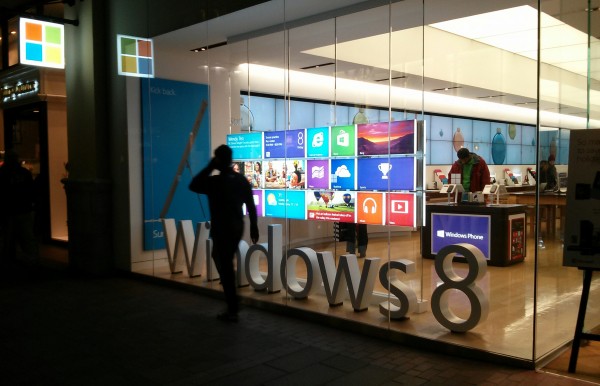
  • So is Windows 8 Microsoft’s ‘biggest failure ever’?

    There are lots of questions concerning Windows 8 — does Microsoft need to make changes to it? Is the OS responsible for the death of the PC? How many copies has it actually sold? And last Friday financial-services company The Motley Fool asked the question in my headline, which I know a lot of people have been pondering too — is Windows 8 Microsoft’s biggest failure ever?

    Like all tech firms, the software giant has had its fair share of hits and misses. Microsoft isn’t the greatest risk taker out there, but it does make gambles occasionally that don’t pay off and it has experienced some major flops over the years. People talk about Vista, but there have been plenty of other past disasters, including Windows Me, Microsoft Bob, Zune, Kin… But is Windows 8 its worst catastrophe to date?

    As always, it’s a matter of opinion. There’s no question that Windows 8 hasn’t been a success on any real level. Sure Microsoft made money from it, selling those 60 million licenses early on, but Windows 8 is an incredibly important operating system for Microsoft. It’s what ties the company’s entire future together — computers, tablets, smartphones — and if it doesn’t work, the whole company strategy will inevitably start to crumble.

    In this video, Andrew Tonner, a tech/telecom analyst at The Motley Fool discusses whether Microsoft is a good tech investment (spoiler alert — he recommends steering well clear), and he certainly doesn’t pull any punches in his analysis. He discusses the shrinking PC market, touching on the IDC and Gartner reports, and admits that a weak economy and factors like slowing growth in emerging markets are partially to blame, before laying into Windows 8 for its role in the decline. He states that “people simply don’t seem to like the platform very much”, talks about how precarious Microsoft’s position is, and then delivers his killer line:

    There’s a reason this company basically has generated zero returns for investors over the last ten years, and that’s because they [Microsoft] simply don’t get where technology is going any more.

    Ouch.

    Personally I think that’s more than a tad harsh. Windows 8 was inspired because Microsoft saw where technology was going and wanted to get there fast. It just may not have chosen the best route in its scramble to embrace tablets and touch.

    BetaNews readers love a great debate, especially on the topic of Windows 8, and Andrew Tonner has raised two interesting topics I’d love to get your views on. Do you think Windows 8 is Microsoft’s biggest failure, or is it just a slow burner? And do you agree with him that the firm doesn’t get where technology is going any more, or is he just plain wrong? As always, leave your comments below.

  • Teradata to connect Hadoop and data warehouses, roll out new appliance

    Teradata on Monday said it will let data-warehouse appliance owners quickly and easily supplement analysis of data stored in the appliance with data processed in Hadoop. The idea is to make it easier for more users to benefit from Hadoop and keep performance high.

    Teradata also announced the new Active Enterprise Data Warehouse 6700, which comes with fast Mellanox InfiniBand networking gear and Intel Xeon X5 processors The box provides 40 percent better compute performance than the previous model, the 6690, and can handle up to 61 petabytes of data.

    Teradata’s Enterprise Access to Hadoop is easier to use than mere Hadoop connectors, said Chris Twogood, vice president of product and services marketing. Business analysts can easily transfer data easily on their own, without calling on Hadoop experts, he said. At the same time, mission-critical data can stay inside the data warehouse and other data, such as tweets and log files, can stay in the Hadoop cluster.

    The connection between a data warehouse and Hadoop distribution is helped along by a partnership Teradata formed with Hortonworks last year.

    Several other vendors offer support for running SQL queries on Hadoop, including EMC’s Greenplum, IBM’s Netezza and Microsoft with its SQL Server. One moving part here is whether to split up appliances for data warehousing and Hadoop implementations. For Teradata, the answer to the splitting question is a resounding yes. With customers as large as Apple, eBay and Wal-Mart running the company’s gear, the Teradata way should hang around for a while.

    Related research and analysis from GigaOM Pro:
    Subscriber content. Sign up for a free trial.