Blog

  • Google Acquires Funf Creators Behavio

    Google has apparently acquired Behavio, which received a fair amount of attention at SXSW last year. The startup produced FunF, an “open sensing” framework for Android.

    This is described as “an extensible sensing and data processing framework for mobile devices…the core concept is to provide an open source, reusable set of functionalities, enabling the collection, uploading, and configuration of a wide range of data signals accessible via mobile phones.”

    GigaOm confirmed the acquisition with Google, though says Google objected to the term “acquisition” simply electing to indicate that the team would be joining Google.

    Behavio has posted the following message on its site:

    We are very excited to announce that the Behavio team is now a part of Google! At Behavio, we have always been passionate about helping people better understand the world around them. We believe that our digital experiences should be better connected with the way we experience the world, and we couldn’t be happier to be able to continue building out our vision within Google.

    We would like to thank all of you who have followed and supported us and our work over the past few years — from academia, through our open source project, and into our work at Behavio. In addition, we would like to express our appreciation to the Knight Foundation as well as the organizers and judges of the SXSW Accelerator, who believed in our vision and in us, and gave us the push that started the wild and amazing ride of the past year. Finally, thanks to all of you who have given us your advice, your support and, most valuably, your time.

    In the comings days we will be shutting down our closed alpha program. Going forward, we will continue to maintain the Funf open source project, and look forward to working on exciting things within Google.

    -The Behavio Team

  • Facebook Home Now Live in Google Play

    Facebook_Home

    Facebook Home is live in the Play Store. If you need a refresh on what Facebook Home is: check it out here and here, and come on back. The app only works for a handful of devices at the moment, but I would expect the numbers to grow soon.  The only device I have that can even download it on is the Asus Transformer TF300T. However when I click on the app, I get: “Thanks for installing Facebook Home. Your device is not supported yet. You’ll get a notification when Facebook Home is ready for your device.” There are probably going to be a few more devices that get the same treatment, but at least it shows that work is being done to get the app on more devices.

    Enough of the yapping head on past the break for my denial screenshot and the link.
    (more…)

  • The Desktop Twitter User Will Soon Be A Thing Of The Past

    Twitter is all about gut reactions and snappy statements. The very nature of the social network requires that people have access to it all times. This is leading to an increasing number of people using Twitter on mobile devices.

    In a new survey conducted by Strategy Analytics, the firm discovered that Twitter users are migrating from the desktop to mobile devices at an ever increasing pace. The latest report – “Social Network Profile: Who Uses Twitter?” – surveyed 6,500 people from the U.S. and Europe. The survey found that the number of people sending out tweets from a desktop computer decreased from 77 percent to 64 percent in just eight months. During the same period, the number of people tweeting from mobile devices increased from 56 percent to 71 percent.

    “The immediacy of Twitter communications requires devices which are close to hand at every waking moment,” notes David Mercer , VP, Digital Consumer Practice. “By definition this suggests mobile phones and tablets should be preferred devices for Tweeting and the survey evidence points clearly in this direction.”

    Interestingly enough, the survey found that mobile Twitter use is highest in the UK with the U.S. coming in second. Italy, France and Germany round out the top five respectively. As for demographics, the survey found that Twitter is most popular among the affluent, as well as teenagers and students.

    The demographic findings could explain why Facebook is losing popularity among teenagers while Twitter’s own popularity is only increasing. It could also explain why celebrities like Justin Bieber are so popular on the service.

  • Apple target slashed again, choppy waters expected in Q2

    Apple Earnings Preview Q2 2013
    Apple (AAPL) is set to post its results for the second fiscal quarter later this month and sell-side analysts are getting antsy yet again. RBC Capital Markets’ Amit Daryanani on Friday maintained his Outperform rating on Apple shares, but he trimmed his price target to $550 from $600 ahead of what he thinks may be a disappointing quarter for iPhone sales.

    Continue reading…

  • Why do people who won’t eat without checking Yelp ignore their doctor’s ratings?

    From consumer health sites like ZocDoc and Vitals, to ratings agencies like Consumer Reports, consumers have plenty of options when it comes to finding reviews about doctors, hospitals, health plans and medication. But while reviews and ratings are beginning to help guide patients’ decisions and give providers feedback, a report out this week from PricewaterhouseCoopers shows that most people aren’t taking their medicine.

    According to the report, 48 percent of the 1,000 individuals surveyed (who represent the U.S. demographic population) said that they read health care reviews online, while just 24 percent have written a review. Of those that have read reviews, 68 percent said that they used them to choose where to get health care.

    It’s worth noting that those numbers are much higher than ones released by the Pew Internet & American Life Project in a report earlier this year. According to Pew, just one in five Americans have consulted online reviews for treatments or drugs, doctors, or other providers.  And just three to four percent have posted reviews of their own.

    The PwC report included reviews for health plans, which the Pew report didn’t, and PwC asked more specific questions about a wider set of health review sources, which could have partly contributed to the difference in their findings.

    But both reports point out that despite consumers’ willingness to use reviews to guide other big purchasing decision (Pew says 8 in 10 Internet users consult reviews), they generally don’t bring that same approach to health care.

    According to PwC, some of the reasons for the slow uptake include:

    • Too many options – Consumers may find it too difficult to sift through all the various sites and may not know how to identify the most accurate information.
    • Personal relationships trump individual reviews – Research has shown that when it comes to relationships with advisors, like doctors and financial advisors, people weigh trust over reviews.
    • The perception that they don’t have a choice – Potentially because of the complexity of the health care system and the recognition that health plans can limit their options, many consumers don’t believe that they have the ability to choose their hospitals. But as consumers shift to high-deductible plans, that perception is changing — and as they begin to enroll in state health exchange this fall, it will change even more, the report said.
    • Few trusted sources – Consumer Reports topped the PwC’s list of sources for health care reviews but, for the most part, patients don’t know where to turn for the most reliable information.

    Choosing which doctor to see for a chronic condition or which hospital to use for a serious procedure are obviously far more complicated decisions than picking a restaurant for dinner or a new television for your living room. So it’s understandable that people may be more reticent to use health care reviews and ratings.

    But as consumers continue to play a bigger role in health care decisions, they will need more transparency and information about services and providers, as well as better mechanisms for getting their voices heard. As ratings and reviews in health care mature, they’ll need to adapt to fit the industry –  for example, PwC recommends giving patients the option to search by “patients like me” or providing customer service representatives to help consumers navigate through information and make decisions.

    Related research and analysis from GigaOM Pro:
    Subscriber content. Sign up for a free trial.


  • ‘Internet Kicker’ Signed To Detroit Lions

    The Detroit Lions have signed Havard Rugland, also known as “Kickalicious” (or “YouTube Sensation” or “Internet Kicker”).

    Rugland, from Norway, has signed a contract with the team, and will compete with the recently signed David Akers (a star in his own right) for the job to replace kicker Jason Hanson, who just retired after 21 seasons with the team.

    Here’s a video of Rugland in action:

    Lions insider Tim Twentyman writes in a blog post:

    The Lions brought Rugland in for a tryout last month but did not sign him at the time. Lions head coach Jim Schwartz said at the NFL League Meetings last month that the team first learned about him from the internet video and through league channels.

    Rugland is 6-foot-2 1/2 and 240 pounds and became familiar with the sport only a couple years ago. He has been training with former NFL kicker Michael Husted in San Diego since November of 2012 and has followed the career former NFL kicker and native Norwegian Jan Stenerud, one of only three kickers currently in the Pro Football Hall of Fame.

    Rugland reportedly tried out with the Browns and Jets before signing with the team.

  • Grady Hatton Dies; MLB Player Was 90

    Grady Hatton, a Major League Baseball player and a manager for the Houston Astros, has died at the age of 90. According to the Associated Press, Hatton died on Thursday, April 11 at his home in Warren, Texas.

    Hatton made his major league debut for the Cincinnati Reds in 1946. He went on to play third and second base for a variety of teams during his 14-year career, including the Chicago White Sox, Boston Red Sox, St. Louis Cardinals, Baltimore Orioles, and Chicago Cubs. Hatton ended his playing career in 1960, with a .245 batting average. He also hit 91 home runs during his major league career.

    Hatton became the manager of the Houston Astros in 1966. He coached the team to a 164-221 record during his two and a half years as manager, and was replaced mid-season in 1968. After stepping down he became a scout for the Astros and later scouted for other MLB teams.

  • Take Part in Robert Rodriguez’ Short Film: Two Scoops

    As part of the BlackBerry Keep Moving Project, filmmaker director Robert Rodriguez is enlisting help from the public to appear in the short film by submitting a photo of themselves as one of the many missing person posters. He also needs help designing the film’s monster.

    Submit your photo for the films many prop missing person photos or if illustration and costume design interest you, design the film’s monster that the twin female leads will be hunting. Weather you help with as one of the film’s victims or villains you’ll be taking part in an amazing collaborative project.

    Click here to lend your likeness or your talents to Robert Rodriguez’ Two Scoops film.

    Click here to follow Robert Rodriguez on Twitter for updates on the movie.


  • No SQL or DynamoDB: Airbnb goes with Memcached for Neighborhoods feature

    One of Airbnb’s neat features, Neighborhoods, shows people elegant pages on neighborhoods within big cities that can help them choose exactly where to stay. Actual homes where visitors can stay the night are directly tied to the neighborhood pages. The idea sounds obvious, but it took some engineering tinkering to figure out how to make it all work accurately and quickly.

    On the Airbnb Nerd Blog on Thursday, engineers Andy Kramolisch and Ben Hughes, who worked on Neighborhoods and previously founded NabeWise, a neighborhood guide for American cities, explained the back-end process of aligning locations with neighborhoods.

    Behind the scenes, Kramolisch said, a cartographer carves out the borders of neighborhoods. Then it’s time to match up hosts’ homes with the neighborhoods listed on Airbnb. On the site’s back end, Kramolisch said, the latitude and longitude of available homes are regularly associated with the various neighborhoods in a given city, if those neighborhoods are represented on Airbnb, through an internal system called Glop, short for Genome Location Pipeline. “For example, say you list your place, which is located at (12.333568650219718, 45.43647998034738). The next time Glop runs, it will correctly identify your listing as being in San Marco,” he said.

    It’s not as if Neighborhoods works with “insane amounts of data,” Kramolisch said. Still, up-to-date data on places to stay in neighborhoods needs to be served up quickly, so users aren’t kept waiting in front of their screens. Data changes fast, and an SQL database wouldn’t work because of “mass updates,” Kramolisch said. So an internal NoSQL database in cooperation with Amazon Web Services’ managed DynamoDB NoSQL database service was considered. But DynamoDB couldn’t handle Airbnb’s storage needs. So the engineers turned to the Memcached key-value store for quickly serving up data by keeping it in memory.

    In going with Memcached, Airbnb is making the same choice as Facebook, Etsy and other companies that operate at webscale. Location is the top criterion for Airbnb travelers, Kramolisch says, and the fast service Memcached enables — 35 milliseconds on average, to be precise — is the kind of solution that could help Airbnb focus on giving customers more of what they want from the site, when they want it.

    Related research and analysis from GigaOM Pro:
    Subscriber content. Sign up for a free trial.


  • Facebook Home hits Google Play, HTC First up for order

    Facebook Home, which CEO Mark Zuckerberg announced on April 4, and leaked as three APK files shortly after, today officially hit the Google Play store and the HTC First, announced at the same event, can officially be ordered through AT&T. The social network today pushes out a new launch page designed to make a splash with its live background of endless video.

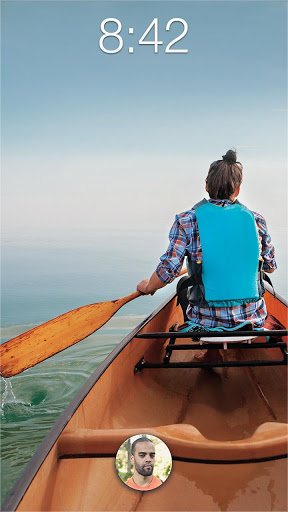
    The Google Play app describes itself as “the mobile experience that puts your friends at the heart of your phone”. It essentially functions in the same way as any other launcher app for Android, bringing Facebook front and center on your homepage. From the moment you unlock your device you will be bombarded with a steady stream of photos, posts from friends and notifications of all sorts — it’s like a full-screen Windows 8 Live Tile totally dedicated to Facebook.

    The company describes the app thus: “With Home, everything on your phone gets friendlier. From the moment you turn it on, you see a steady stream of friends’ posts and photos. Upfront notifications and quick access to your essentials mean you’ll never miss a moment. And you can keep chatting with friends, even when you’re using other apps”.

    The HTC First can now also be ordered through AT&T for $99 with free shipping. That price, of course, includes a two-year contract, but if you wish to go month-to-month then you can lay out the full $449 for the 4.3-inch handset.

    A word of caution about the links provided above — while all worked for me, some were inaccessible by others here at BetaNews. Perhaps the rollout is not totally complete as of this writing. Of course I would also warn anyone who wishes to turn their phone into a Facebook platform to think twice, but that is only personal opinion and not advice.


  • Hope you’re ready developers, the Pebble smartwatch SDK is here

    After a delay, the software development kit (SDK) for the Pebble smartwatch is now live. On Friday, the watch maker publicly released the SDK and documentation, which was originally scheduled for when the watches started shipping. This means that owners of the Pebble watch — one of the hottest KickStarter projects in 2012 with more than 68,000 backers — can soon look forward to applications for their timepiece.

    In case you’re not familiar with the Pebble, here’s a quick description from the SDK page:’

    “Pebble is a customizable, Bluetooth-enabled smartwatch that connects to iPhone and Android smartphones. It features a 144×168 1-bit display, a 3-axis accelerometer and a Cortex-M3 ARM microprocessor. Pebble can be customized by installing new apps developed with its Software Development Kit. The SDK allows developers of all experience levels to build Pebble-enabled applications using a number of popular programming languages and technologies.”

    Developers should be able to tap into the Pebble accelerometer for their apps while also taking advantage of the sensors and data on a paired iPhone or Android device. For now, the SDK appears to support custom watch faces but will be expanded for functional applications.

    RunKeeper was previously reported to be one of the first applications to work with the unique smartwatch, perhaps allowing for runners to glance at their wrist for pace, time and distance information, for example. So let’s go developers: It’s time for some Pebble watch faces!

    Update: This post was updated at 3:02 pm to specify the SDK is only for watch faces at the moment.


    Related research and analysis from GigaOM Pro:
    Subscriber content. Sign up for a free trial.


  • Google TechTalks Takes A Trip To Sesame Street

    One of the challenges facing our nation and many others is getting children excited about science and other STEM fields. Google definitely has an interest in advancing STEM education as the next generation of its employees will come from the children of today.

    One group that’s helping to bring STEM education to children around the world is Sesame Workshop, the non-profit organization that produces Sesame Street and other educational programming around the world. In the latest Google TechTalk, Nadine Zylstra, VP Sesame Street Production & Programming and Supervising Director of Sesame Street, breaks down how their show teaches STEM subjects to children, and how best to convey these subjects to developing minds.

    If you want to learn more about Sesame Workshop’s STEM initiative, check out the non-profit’s latest math-focused material.

  • New Twitter Music app sort of released today

    twitter_music

    Jumping into the online music market, Twitter appears to be in the process of releasing a new Twitter Music app today. Reports indicate the app has been released, but only certain people can get it, mostly celebrities, and only those with iOS devices. Apparently the rollout will continue during this weekend’s Coachella music festival and then culminate with widespread availability next week.

    The app is Twitter’s attempt to provide an online streaming music service. Suggestions for artists and tracks will be compiled from data connected to a user’s Twitter account, like who they may be following. Music will stream from within the app via third-party services like iTunes or SoundCloud. Videos will also be available through music video service Vevo. The new app is based on the We Are Hunted music recommendation platform, which Twitter just announced they had purchased last year.

    It is unclear what plans are in place to roll the new app out to Android users. The browser based version of the service currently displays an “Invitation Only” message.

    source: AllThingsD

    Come comment on this article: New Twitter Music app sort of released today

  • HTC called ‘not so brilliant’ as top execs remain despite plummeting sales

    HTC Sales Analysis
    When a company goes from being a leading Android vendor to posting its worst-ever earnings in just a handful of quarters, it might be time to start asking some difficult questions. Such is the case with HTC (2498), which found itself in The Financial Times’ sights this week in an article which draws attention to the fact that the company’s top management remains unchanged despite this monumental slump. Contrary to its “Quietly Brilliant” slogan, FT calls the company “not so brilliant” as chairwoman Cher Wang, CEO Peter Chou and co-founder HT Cho have all remained onboard since HTC launched in 1997. The report notes that while some minor changes have been made, rivals including Nokia (NOK) and BlackBerry (BBRY) both saw major shakeups play a large role in their respective comeback attempts. Will the new HTC One find success and help HTC’s top brass weather the storm? The next few quarters may shape the future of this small but scrappy vendor.

  • Yellow Pages Launches Free Business Finder BlackBerry 10 Native App

    Yellow Pages has launched their free business finder app on BlackBerry 10. The app was coded natively for the new platform but is also available for legacy BlackBerry devices.

    Here are some of the new app’s features:

    • Business, person and reverse phone look-up
    • Local proximity based search, using GPS
    • Homepage categories added for quick navigation
    • Local deals displayed on homepage when available
    • Refine your search results and find businesses with photos, videos, reviews and deals
    • Read user reviews and option to write and share your own reviews
    • View videos, photos, ads and visit websites (where available)
    • Get directions
    • Business details that include hours of operation, payment methods and more…
    • Type ahead functionality for the “What” and “Where” boxes
    • Share listing results with others via e-mail, sms, Facebook or Twitter

    Click here to download Yellow Pages for free from BlackBerry World.

    http://appworld.blackberry.com/webstore/content/825/


  • J.C. Penney’s Real Problem: The Shrinking Middle Class

    Ron Johnson’s office seat has barely cooled off following his departure as business observers everywhere dissect what went so dreadfully wrong at J.C. Penney. The former Apple executive was too Silicon Valley for the Plano, Texas, retailer. He was arrogant. He didn’t test his ideas, maintaining the Apple mantra that customers don’t know what they want until you show it to them. He approved marketing campaigns that told loyal Penney’s shoppers that “you deserve to look better,” basically telling them that they looked less than glamorous wearing the brand they had trusted and been comfortable with for years. He hoarded information so that individual store merchandisers didn’t know how various lines were performing. He mocked J.C. Penney’s ways of doing things. He abandoned the discounting customers had come to expect from retailers. And he, and most of the team he recruited, were commuter leaders, jetting back to California after cramming in marathon work sessions at headquarters.

    These factors certainly couldn’t have helped. I think, however, there’s one major reason behind J.C. Penney’s sudden swoon that not enough commentators are picking up on. There’s one big reason JCP would never be “Bloomingdale’s for the mass market,” as Johnson wanted it to be, and that’s because the mass market is gone. Because the middle class is gone, or at least rapidly going.

    This reflects a troubling development in our economy, what some have termed the “hourglass economy.” This means that companies can reach both high-end and low-end consumers, but there’s no longer a broad middle to appeal to.

    For years, a fundamental problem that Penney’s has grappled with is that their historical base of middle-income households is shrinking. If you compare charts showing how various slices of our economy are doing, you’d see growth at the bottom and growth at the top of the income spectrum, and shrinkage in the middle. Penney’s is not going to be able to overcome a demographic reality that is causing its historical customer base to go away. Indeed, economic forces are leading many employers of what would at one point have been middle-class jobs to push the economic risks to their employees, further limiting their disposable spending capacity.

    That doesn’t mean JCP is doomed. In 2004, former CEO Alan Questrom was applauded for turning around the store which had hit on hard times. He was replaced by the soon-to-once-again-take-the-reins Myron Ullman, who managed to continue the store’s evolution, introducing more hip brands and giving shoppers a reason to turn up. Among his more interesting initiatives was to leverage capabilities that Penney’s had long developed as a catalog company into the emerging world of Internet retail. Indeed, in 2009, reporters at Businessweek admiringly observed that J.C. Penney “gets” the net, holding its own even against competitors such as Kohl’s and Target. He was widely regarded to have led a successful strategy by the time Penney’s board, seeking something new, turned to Johnson.

    But Kohl’s and Target, like Walmart, appeal to the growing segment of consumers at the lower end of America’s economic spectrum. If JCP continues to focus on the shrinking middle class, it’s only reasonable to assume their sales will also continue to shrink. I think Penney’s management needs to once again get back into the heads of its core consumers. They need to understand those consumers’ entire sets of experiences and make doing business with Penney’s better again. But they also need to decide where they are going to find growth again. In an hourglass economy, it’s unlikely to be their traditional middle-income consumer. Who could they appeal to and how? I’d consider things like making life easier for super-stressed moms. Perhaps considering the whole household in their approach (the company is big in household goods) — maybe even offering services that would help newly formed households get set up. Skinny jeans and Euro-fashions don’t strike me as the route to the future.

  • Chromebook Pixel LTE arrives today

    Yesterday, Google posted a public notice that “folks who ordered the Chromebook Pixel LTE from Google Play will start receiving them as early as Friday, April 12th”. If that’s you, I’d like to hear about it.

    Jay Munsterman got his LTE model a day early and “it is sweet! For anyone else that prefers a Dvorak or non-qwerty keyboard: the keys pry off and reattach easily. And if you have both an ARM Chromebook and a Pixel you do end up with 1.1TB of Drive space”. So much for today then. The Pixel comes with 1TB free Google Drive storage for three years.

    Google started selling the WiFi-only Chromebook Pixel on February 21, with shipping times of six to seven weeks for the LTE model, which is just about right. Both models are pricey — $1,299 and $1,449, respectively — particularly compared to other Chromebooks. Judging by reaction from commenters here and posts across the Web, including Google’s own social network, many people question the value of such a pricey computer that runs a browser and web apps.

    But some of the bloggers and journalists who actually reviewed Chromebook Pixel went on to buy one. Writing for GigaOM, Kevin Tofel opines “Naysayers be damned: Why I bought a Chromebook Pixel. Nearly every Chromebook Pixel review says you shouldn’t buy one. But as someone who took a 60-day web-only challenge in 2008, I’m ready for exactly what the Pixel offers”.

    In his review for CNN, Zach Cumer explains: “Google loaned me a Pixel for this review, and I liked it so much that after I returned the review model I purchased my own. I’ve been using it for more than a month, but it only takes turning the computer on once to realize how different it is from anything else out there”.

    When reviewers buy their own — and something so outside mainstream computing — that’s helluva endorsement. I am breaking up my review into several parts — one and two — with a third coming sometime soon.

    I won’t make a decision on keeping Chromebook until after finishing my review process. I’m leaning that way, but applications matter to me. I’d like to see some more in critical productivity areas, and applications will be critical focus of my next review post.

    BetaNews readers give a sharply-pointed thumbs down. To our buying poll, 77.5 percent of respondents say they won’t purchase Chromebook Pixel — that’s highest “no” response ever for the question asked about any product here. Yet, looking at blogs and social network posts, those people plunking down the bucks are extremely satisfied with Chromebook Pixel.

    Ryan Gibson‘s “Pixel arrived” April 9. “I’m astonished with the build quality, heck even the box just oozes with quality and thought”. He chose the “Wi-Fi version, LTE isn’t available within the UK and then there is the differing frequency bands between countries”.

    Ariel Ruff: “There has been a lot of talk about why Google’s new Chromebook Pixel is ‘the best laptop you’ll never buy’. After proving this notion wrong by actually purchasing one, I’m going to go one step further and give you a look at what the Chromebook Pixel is all about and how it shakes out as a laptop PC solution”. He writes a brief review I highly recommend.

    He wraps up: “Google’s first laptop is quite a shocker. And while owners might be early beta testers, what an awesome beta they get to be part of. We won’t truly know what the future of the Pixel might hold until Google tells us at their upcoming Google I/O event. But one thing’s certain, limited software selection aside, the Pixel definitely lives in the top 3 section of the best laptops out there chart”.

    The “limited software selection”, whether enough or not, will partly determine Pixel’s future in my digital lifestyle and how I ultimately recommend it to others. Price is a barrier there, which directly relates to touchscreen utility. I’ve used a Chromebook as my primary PC since May, with the exception of February spent with Surface Pro. Touch is natural on the Microsoft tablet, but I rarely find use on the Google laptop. I don’t yet see the value of touch for the price.

    But the passion of early buyers, my own generally great experience and Who’s Who list of early adopters — including Uglydoll creator David Horvath, Don MacAskill, SmugMug CEO, and Linux creator Linus Torvalds — may sway me yet.

  • First impressions of Facebook Home for Android are a surprising “Like”

    Color me surprised: Facebook Home is actually a well designed, slick piece of software. The launcher became available in the Google Play store on Friday afternoon, as expected, and I installed it on my Galaxy Note 2, which is one of five Android phones that initially support the app. Prior to Facebook Home availability, I had installed the updated Facebook Messenger app as well, finding it to be easy to use and filled with some nice features.

    In no particular order, here are my first impressions of Facebook Home:

    • Having news feed updates and photos on the lock screen almost compel you to double-tap and “Like” these items. There’s simply no barrier between you and the content and I found myself swiping and liking far more than I usually do. (Mission accomplished, Facebook.) I can zip through my news feed very quickly with Facebook Home.
    • On the 5.5-inch display of the Note 2, some pictures look like 8-bit .BMP files but that’s not the software’s fault. It’s past time for some phone upgrades with better cameras for some of my friends!
    • Upon installing Facebook Home, Google Play noted that no additional permissions are required to use the app. That means Facebook made good on its permissions promise of last week. It also means that whatever permissions you allowed in Facebook carry over to Facebook Home.
    • The launcher is very responsive; no less so than the native TouchWiz on my Note 2 or compared to other third-party launchers such as Apex or Nova.
    • The PIN security I have set on my Note 2 still works with Facebook Home.
    • Chat Heads aren’t bothering me as much as I though they would, although I’ve only had a pair on screen at the same time. It’s easy to remove them in the settings or you can drag them to the bottom of the display to hide them.
    • Native Facebook notifications look outstanding on the Home screen. Unfortunately, all other notifications still appear in Android’s notification bar, which isn’t viewable from the Facebook Home screen by default; you can change this in the settings. The HTC First, however — as reviewed by my colleague Om — does integrate system notifications on the Home screen.
    • It’s simple to rid your Android of the Facebook Home screen and go back to your phone’s native launcher.
    • The overall design is super clean and will bring what I think is the best Facebook experience to Android yet. It’s actually shame if this doesn’t come to iOS; though I don’t think it will, at least not in this form.
    • This may have been part of Messenger prior, but I really like the Voice Memo function after testing it out with a few folks. You simply tap and hold a record button, speak aloud your message, let go of the button and send it. The recipient will get an audio file that plays back right in their Messenger app.

    So will I keep Facebook Home? The answer is a definite maybe, which is different from when the software launched. At the time, I said I wouldn’t likely be using it. However, I don’t use that many widgets on my Android phone — if you do, you won’t want this launcher — and I am a Facebook user. Perhaps Facebook has found a home on my phone after all; at least until Google Now expands to become a launcher and information center on its own.

    Related research and analysis from GigaOM Pro:
    Subscriber content. Sign up for a free trial.


  • How to Switch from an Older BlackBerry Smartphone to Your New BlackBerry Z10 [VIDEO]

    With the BlackBerry Z10 smartphone now launched in over 40 countries worldwide, many are making the jump from a BlackBerry 6 or 7 smartphone to a BlackBerry Z10 powered by BlackBerry 10. In order to help you make the transition seamless, we’ve put together a video outlining options and the steps that you can take to transfer your data. Check it out below for the full scoop:

    [ YouTube link for mobile viewing ]

    Learn more information on switching devices at www.blackberry.com/deviceswitch. For more How To articles, tips, and tricks, head over to the BlackBerry Help Blog.

  • Why a Warby Parker flagship retail store is a big moment for online brands + Co-founder on video

    A few years ago when I floated the idea that Amazon would one day experiment with the idea of a retail store in order to project the Amazon experience, it was universally ridiculed. I am still standing behind that idea, especially now that Amazon has created a slew of Amazon-branded products: Kindles of many types, possibly a phone sometime in the future, Amazon video and music services and most importantly Amazon publishing. Google might be eying a move into brick and mortar store, too. This show-rooming trend is going to gather momentum in years to come.

    And while Jeff Bezos thinks about the retail experience, some of the younger, more nimble and fashionable online brands are ready to experiment. The first one — Warby Parker, the online eyewear company that is challenging the existing giant Luxotica, which has started copying Warby’s online tactics for its brands like Lenscrafters. The upstarts from New York are not taking it lying down and have just opened their first physical flagship store (beyond its showrooms) at 121 Greene Street in Soho district of New York.

    NeilBlumenthal

    But this isn’t just another retail store, co-founder Neil Blumenthal told us in a conversation a couple of weeks ago. Instead, the company is using sensors, Wi-Fi and other new technologies to understand how people use their retail space and take that data and marry it with their online sales trends and other information. As a result they can come up with unique business trends, that not only lead to more interesting pricing models but also help give its design and sales teams vital intelligence.

    “It is very clear to us who we are,” Blumenthal said. “We are a lifestyle brand that sells chiefly to consumer. It is a hundred year old concept and we use the same traditional metrics, because there isn’t really any fiddling with the business model.” So how should one value Warby Parker? How about like Michael Kors, Blumenthal countered. (The stock market places a value of $11.4 billion on Michael Kors fashions, about 22 times next year’s ending March 31, 2014, earnings of $2.45 a share, or 4 time sales of about $2.83 billion.)

    Warby Parker wants to go where no online brand has gone before — toe-to-toe with off-line brands. And while the business might be traditional, there is nothing traditional about the Warby Parker approach. The company is slowly bulking up its data group and now with three years of data plus a deeply ingrained design aesthetic, Warby Parker can do things non-Internet native companies like Luxotica can’t do — just yet. (It is one of the reasons we love these guys and invited them to speak at our RoadMap conference in 2012, where the company first talked about its offline-online philosophy. To learn more about RoadMap 2013 see here)

    Warby Parker is building the next generation retail experience for a quantified society, one that marries the digital and the physical, data and emotion. I wouldn’t be surprised that 121 Greene becomes the destination for offline companies looking to think differently.

    Neil is convinced we are going to see more brands jump from online to offline, giving the old guard some serious headaches. I agree with him and if I wasn’t in love with what I do, I would be building such a business. Blumenthal who recently raised a boatload of money and signed up folks like J. Crew CEO Mickey Drexler, feels that the recent trend of venture capitalists backing away from commerce is just plain silly.

    “More people are talking online today than yesterday,” he said. “There is a lot of money to be made in e-commerce and we are a company that is going to do that.”

    Here is my video conversation with Neil, captured on my RX-1 without the help of a mike. 😉

    Related research and analysis from GigaOM Pro:
    Subscriber content. Sign up for a free trial.