Blog

  • B&N rebrands PubIt! as Nook Press, and adds new features to make self-publishing easier

    Barnes & Noble has rebranded its digital self-publishing platform, PubIt!, as Nook Press, and has added some new features that aim to make self-publishing an ebook faster and easier. The company aims to compete with Amazon’s KDP and other self-publishing tools.

    B&N Nook MediaNook Media’s primary new feature is a tool that allows authors to write, format and edit, and preview ebooks directly in a web-based platform (see image at left). “It’s an end-to-end solution, from content creation to reaching the customer,” Nook Media’s VP of digital content Theresa Horner told me. “What we are trying to do here is make self-publishing simple. You can come to the product, write, edit and publish into EPUB without ever knowing any bit of technology.” Authors who already have their title as a Microsoft Word file upload it, preview it as an EPUB and can sell it right away.

    Barnes & Noble has also added a “quick start” option that lets authors test the product without entering all their vendor information at the start. And authors can “safely and quickly invite their network of friends and editors to read and comment on any NOOK Press project in a secure environment.”

    Royalties haven’t changed: Ebooks can be priced between $0.99 and $199.99. Those priced between $2.99 and $9.99 get a 65 percent royalty, while those priced under $2.99 or above $9.99 receive a 40 percent royalty. By contrast, Amazon’s KDP pays a 70 percent royalty on most ebooks between $2.99 and $9.99 and a 35 percent royalty on those under $2.99 or over $9.99.

    Nook Press is currently only available to authors in the U.S., though they can opt to sell their titles in the U.K., the only other country where Nook operates.

    Related research and analysis from GigaOM Pro:
    Subscriber content. Sign up for a free trial.


  • AT&T offers up global Wi-Fi hotspot access if you have an international data plan

    AT&T is trying to sweeten the pot for mobile customers who opt for its pricey international data roaming plans. AT&T has entered into an agreement with international hotspot aggregator Boingo to access its global wireless network for customers with international plans.

    Subscribers of AT&T’s 300 MB or 800 MB international data plan will now get free access up to 1 GB of Wi-Fi data primarily  in airports and public places in major European cities as well as in select cities in Argentina, Australia, Brazil, Canada, Chile, China, Columbia, Japan and New Zealand. (You can find a complete list on AT&T’s site.) In February, AT&T inked a similar deal with The Cloud to give international customers access to 16,000 hotspots in the U.K. To access those networks, customers subscribing to a global data plan only need download AT&T’s international app.

    That may sound like a perk, but it’s really not much of one when you consider what AT&T charges for these international plans: $60 for a 300 MB bucket of data and $120 for 800 MB. If customers know their primary mobile data use is going to be over Wi-Fi they can by a much cheaper Wi-Fi-only plan with no restrictions and access to much bigger hotspot footprint. For instance, Boingo offers its own $35-per-month plan that covers two devices and provides unlimited access to 200,000 hotspots in Europe, the Middle East and Africa.

    Still, AT&T certainly isn’t alone in charging exorbitant rates for mobile data roaming. All of the U.S. carriers have pretty much priced global data plans beyond the reach of ordinary travelers – at least travelers who want to use their smartphones as they would ordinarily. Adding Wi-Fi access is a nice touch, but it doesn’t fix the broken global data roaming system.

    Related research and analysis from GigaOM Pro:
    Subscriber content. Sign up for a free trial.


  • Live blog: Google Fiber comes to Austin, Texas

    Anticipation has been building deep in the heart of Texas as Google prepares to announce that Austin has become the second city to take part in its Google Fiber project to bring gigabit internet connections to the masses. The formal event is scheduled to kick off at 9am PT, and I’ll be live-blogging the proceedings here.

    In the meantime, check out our stories on what this could mean for Austin and broadband development in general.

    Related research and analysis from GigaOM Pro:
    Subscriber content. Sign up for a free trial.


  • Authenticator for Windows Phone hints two-factor verification will come to Microsoft accounts

    Microsoft has released an app for Windows Phone called Authenticator, which is designed to generate security codes associated with two-factor authentication. Nothing special so far, other than Microsoft’s name being associated with the app. What is noteworthy is that, according to the release notes, you can use Authenticator “to help keep your Microsoft account secure”. Is Microsoft finally taking the user’s security seriously?

    At the time of writing this article two-factor authentication is not avilable for my Outlook.com account. But this suggests that, eventually, Microsoft will enable the extra security measure for its cloud services, presumably sometime soon and likely for Outlook.com first of all. Currently users have to rely on the complexity of their passwords in order to insure the safety of their Microsoft accounts, whereas Google users, for example, have had the option to use two-factor authentication for quite some time.

    Also, according to the release notes, Authenticator “implements industry-standard security code generation and may also work with other services and providers”. Guess what? It really does work with “other services and providers”.

    I have two-factor authentication enabled for my Google account and I can confirm that Authenticator can indeed be used to generated security codes for Currents, Gmail, Google+ or YouTube. In the app’s reviews, user Srikanth also confirms: “This is a very easy to use app. This also works with Google’s 2-step authentication. The QR code scanner works great. Very convenient!”. Currently the app has a five-star rating, which is hardly surprising.

    Using Authenticator, I scanned the QR code generated by Google and shortly after the app provided security codes. No matter whether you choose Android or iPhone for “mobile application” under two-factor authentication in the Google account, the search giant’s cloud services recognize the security code provided by Authenticator.

    This is clearly one of the best app releases coming from Microsoft thus far and will allow Google users to more comfortably use two-factor authentication on Windows Phone. Previously the safest way to do so was to receive security codes via text messaging, a not so modern solution in this day and age. Reviewer Chien-Jon sums it up nicely: “No more texts from Google”.

    Authenticator is available to download from Windows Phone Store.

    Photo Credit: Jirsak/Shutterstock

  • Joel Osteen: Hoax Hasn’t Upset Him, “Nothing Has Changed”

    Earlier this week, a late April Fool’s hoax made its debut, alleging that popular U.S. pastor Joel Osteen had renounced Christianity. Osteen is the pastor of a mega-church in Houston, Texas, and has a worldwide broadcast ministry that has made him one of the most recognizable Christian figures in the U.S.

    The elaborate hoax involved a fake blog, YouTube videos, and a fake Twitter account (which has now been suspended) that laid out the fake Osteen’s reasoning for no longer believing in Christianity. From the fake blog:

    I believe now that the Bible is a fallible, flawed, highly inconsistent history book that has been altered hundreds of times. There is zero evidence the Bible is the holy word of God. In fact, there is zero evidence “God” even exists.

    Though Osteen and his ministry have not officially acknowledged the hoax, Osteen gave an interview to ABC and confirmed that he is still a Christian.

    “All is well,” said Osteen. “I still have my faith, nothing has changed.”

    Osteen also stated that he isn’t upset about the hoax, and that it is somewhat amusing.

    “I’m really not angry,” said Osteen. “I don’t feel like a victim. I feel too blessed that life is too short to let things like this get you down.”

  • Promising to remake cloud databases for web scale, ParElastic gets $5.7M

    Cloud computing and scalability are often mentioned in the same sentence, but often not when talking about databases. Especially not MySQL databases. A Boston-based startup called ParElastic hopes to change that, and has raised a $5.7 million Series A led by General Catalyst Partners (former VMware CTO Steve Herrod’s new home) to help fund its cause.

    ParElastic sits in between the application and the underlying database and lets developers scale without having to resort to complicated sharding or maybe even moving the database back in-house where they can run it on a bigger server. Architecturally, Founder and CEO Ken Rugg told me, ParElastic’s Database Virtualization Engine is similar to a parallel database system, although it functions more like middleware that manages multiple database instances as one and is designed for operational rather than analytic workloads.

    Because it intelligently balances database load and distributed data across servers, ParElastic is ideal for multitenant situations where multiple users, applications or services are accessing the database simultaneously, Rugg added.

    parelastic-architecture-chart

    Now, anyone familiar with the next-generation database market might think they’ve heard this story before, and they kind of have. The NoSQL database movement rode into town on the promise of high scalability, and the NewSQL movement furthered that story by bringing scale-out performance to SQL. Some of these databases are even available as cloud services.

    However, Rugg explained, there’s a big difference between these options and what ParElastic does. Namely, while NoSQL and NewSQL options require deploying an entirely new database and likely rewriting some application code, ParElastic’s software just overlays customers’ existing cloud databases. Rugg said about half of its early users are running standard MySQL versions on Amazon Web Services, while the rest are spread across cloud providers such as Rackspace, Joyent and LiquidWeb.

    Some ParElastic users actually manage existing SQL services such as Amazon’s Relational Database Service and Google Cloud SQL. One even uses it to manage an in-house database environment. And technically, Rugg noted, ParElastic could manage cross-cloud database deployments but, because of the inherent latency hit that would entail, “we wouldn’t recommend that.”

    However, he said, the biggest beneficiary of ParElastic aside from the company itself might well be AWS. It is by far the most widely used cloud in the world, but when users reach the limites of their single database instances, Amazon usually tells them to look into sharding or perhaps transitioning to DynamoDB. “None of those are really too friendly for Amazon keeping their customers moving forward in their cloud,” Rugg said.

    Further, although certain cloud providers offer better CPU, IO or network performance than AWS does (Rugg cited Rackspace as being particularly strong on IO performance, for example, and ProfitBricks as looking promising on the network front), “Amazon is sort of the lowest common denominator in a number of ways,” Rugg explained. The economics and performance requirements vary from application to application, of course, but ParElastic could help stitch together a number of commodity AWS instances to provide suitable performance at a lower cost than might be possible using the biggest, fastest instances from other providers.

    Having watched the cloud market unfold as it has, though, Rugg and ParElastic aren’t banking on AWS — which has a reputation for launching services that compete with startup ecosystem partners — as the future of the business. By supporting other cloud providers that are gaining acceptance (aside from the ones Rugg noted, Google has been impressing some with the performance of its Compute Engine service), ParElastic is in a pretty good position to handle whatever cloud-database market shifts might occur.

    “Even if Amazon comes out and says ‘We’re going to replace you with something we built back in the lab,’ that puts us in a great position in terms of validating the market,” Rugg said.

    ParElastic’s existing investors — Point Judith Capital,  CommonAngels and LaunchCapital — also participated in the Series A round, which brings the company’s total venture capital to $8.7 million.

    Related research and analysis from GigaOM Pro:
    Subscriber content. Sign up for a free trial.


  • Cloud storage security service BoxCryptor previews business-friendly new version

    BoxCryptor, the German startup that provides added security for information held in cloud storage vaults such as Dropbox, SkyDrive and Google Drive, is previewing a new version of its client-side encryption tool.

    The new version of BoxCryptor is more explicitly aimed at teams. It includes new features such as the ability to share file access permissions without sharing private passwords, and to share files with entire teams with a single click. BoxCryptor 2 also does away with the original version’s mapping of files to folders, a system that meant every folder and project required the setting-up of a new BoxCryptor drive – now, there’s just one drive.

    Another compliance-friendly new feature for businesses is the option to have a master key covering everything encrypted by employees, just in case someone leaves suddenly or goes rogue.

    The update comes as BoxCryptor finds itself up against an increasing range of rivals such as Viivo and DigitalQuick. CipherCloud closed a $30 million investment round last December, and Symantec is also now in the Dropbox encryption game. In short, everyone’s clicked that consumer cloud services will be used in business, like it or not, and their consumer-grade security leaves a market opportunity for more serious users.

    According to BoxCryptor CEO Andrea Wittek, the full version of BoxCryptor 2 will come out sometime this quarter. The technical preview, launched on Tuesday, can be downloaded for Windows and Android.

    Related research and analysis from GigaOM Pro:
    Subscriber content. Sign up for a free trial.


  • Xbox Special Event Planned For May 21 [Report]

    After Sony revealed the PlayStation 4 in February, everybody turned to Microsoft expecting a reveal of the next Xbox. Previous rumors suggested an April showing, but a new report says that we won’t be seeing anything about the new console until May.

    Paul Thurrot revealed during the latest “What the Tech?!” podcast that Microsoft would be unveiling its next Xbox on May 21. The Verge was able to confirm the date with sources close to Microsoft saying that the event was originally schedule for April, but was pushed back to May for an unknown reason.

    There wasn’t much more information revealed about the console, but Thurrot did throw out one interesting tidbit – the price. He claims that the next Xbox will retail for $500, but will only cost $300 if the consumer chooses to go with a subscription service. A subscription model would be nothing new for the company as it already offers the Xbox 360 for $99 with a two-year contract that has the consumer paying a monthly fee for Xbox Live.

    Interestingly enough, Thurrot also says that the internal Microsoft documentation he has mentions the always online requirement that stirred up quite a bit of controversy last week.

    As for the event itself, The Verge’s report says that Microsoft will be holding a small event in May to officially unveil the console and a few of its core features. The company will be saving most of its big announcements, however, for E3 in June.

    [h/t: NBC News]

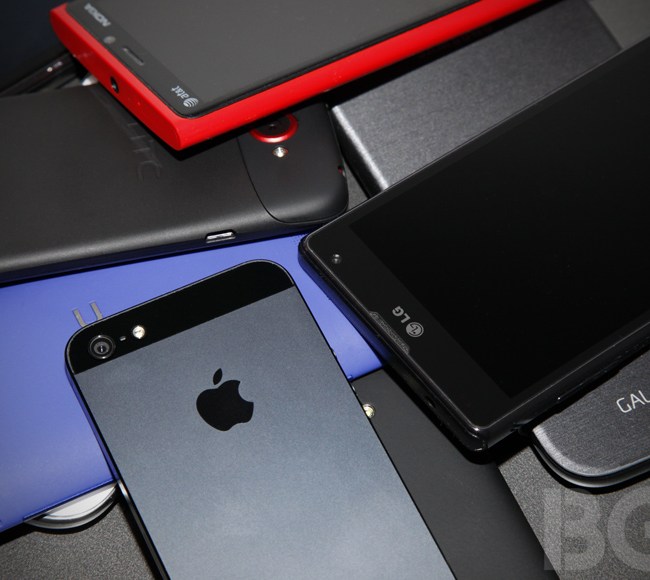
  • Steep Apple, Samsung price cuts blast rivals across the globe

    Apple Samsung Price Cuts
    A string of recent iPhone and Galaxy price cuts has rocked the phone markets from Europe to Brazil to India. This is the season for price cuts from Apple (AAPL) and Samsung (005930), and we see the same thing every year. But this time around, the cuts are more severe than we have ever seen before. Some pricing on Galaxy S models in Asia have dropped by nearly 50% as Samsung battles back against the insurgency of upstart brands like Micromax and Karbonn. The Galaxy S III’s price in Europe has plunged by nearly 40% from June 2012 as Samsung prepares to debut the Galaxy S4. Apple’s iPhone 4 has dipped to just $270 in Brazil. In India, Apple now offers to pay 7,000 rupees for old smartphones from consumers who trade them in towards an iPhone 4 — probably the most aggressive promotion Apple has ever launched over there.

    Continue reading…

  • Pandora now has 200 million music lovers

    If you have followed me for anytime now then you probably already know that I am a happy Pandora customer. The music app gets me through my days in my lonely office of one. It turns out, I am not the only fan of the streaming service as I have 200 million friends joining me.

    Pandora announces that it has passed that milestone after eight years in the market. While the personalized radio service came online back in 2005, it took until July of 2011 to reach the first 100 million users, but growth has obviously expanded exponentially since then.

    Pandora founder Tim Westergren says, “We started this company to help people discover and enjoy music they love, and to help artists reach and grow their audiences. Only in our wildest dreams did we imagine what it would become. It is now clear that radio is changing, and that’s great news for music fans and for the tens of thousands of working artists who now have a home on the air”.

    There are also some rather interesting statistics that come along with the announcement. For instance, Pandora claims that it streams 200 million songs before 10 am daily, listeners have personalized their stations with more than 25 billion thumbs, last month Pandora played more than 100,000 unique artists and more than 1 million unique songs and more than 140 million listeners have tuned in to Pandora on a mobile device.

    Statistics for how many of those customers were on paid accounts versus free were not included in the announcement. Personally, I find the $3.99 fee a small price for the lack of ads and unlimited mobile streaming — I listen on my phone as opposed to my PC.

    Photo Credit: Regissercom/Shutterstock

  • Dim sum looks tasty for Africa

    The rising yuan, which hit its highest last week since China’s FX market was set up in 1994,  should boost demand for China’s offshore “dim sum” bond market, and Africa may join in the action.

    Trade between China and Africa totaled $200 billion last year, and Standard Chartered expects that to hit $325 billion by 2015, so it makes sense for African governments and companies to hold assets denominated in the renminbi, or yuan as the currency is also known.

    Nigeria for instance said in 2011 it would start to hold yuan in its central bank reserves, and Standard Chartered analysts said in a note that Nigeria and Tanzania’s central banks each bought 500 million yuan of a 3.5 billion yuan dim sum bond launched by China Development Bank last July. Standard Chartered says:

    As the use of the CNY (yuan) as a trade-settlement currency becomes more widespread, more African central banks are likely to look to diversify their foreign exchange reserves to include the CNY.

    Angola has also invested in dim sum bonds, Standard Chartered adds, while Kenya and Ghana have shown an interest in holding yuan in their reserves. Asian central banks have also been buying Chinese government debt, as China opens up its markets to international investors.
    Next up is likely to be South Africa. The country’s central bank will be able to invest up to $1.5 billion in dim sum bonds, following an announcement at the BRICS summit in Durban last month.
    Just as the Bank of England has said it plans a currency swap with the People’s Bank of China, to improve liquidity in the somewhat slow-starting offshore yuan bond market in London, African countries could have their own bilateral swaps. According to Standard Chartered:

    South Africa and Nigeria will likely be first; we estimate that a three-year bilateral currency swap of around $20 billion is likely between China and South Africa.

    African sovereigns have enjoyed massive demand for the few dollar-denominated bonds which they have issued in the past few years, and Standard Chartered says countries like South Africa and Nigeria could even launch yuan-denominated debt. African corporates who have business in China may also issue, but that may be some way off:
     For now, dim sum bond issuance by African governments or corporates outside of South Africa or Nigeria is not likely until the market has deepened and broadened enough to foster significant appetite for African debt denominated in the CNY from Singaporean and Hong Kong investors, who account for around 80 percent of demand in the dim sum market.


  • Blackstrap will turn your Pocket or Instapaper articles into a $15 print book

    Saving something to read later, in Instapaper or Pocket, doesn’t mean that you’ll ever actually get around to reading it. A company called Blackstrap aims to fix that: It will print all of your read-later articles into a $15 book. “If an article deserves a little time, then Blackstrap it: choose the ones you want to linger over and we’ll print, bind and send them to you, to enjoy undistracted,” the company says.

    Blackstrap’s Tyler Fonda tells the Huffington Post, ”We had been thinking a lot about slowing down the digital flow. So we formed an LLC called Molasses in honor of that thought. Blackstrap is the most distilled, viscous version of molasses. We thought that was fitting for this product.”

    To make your book, you log into your Pocket, Instapaper or Twitter account through Blackstrap and then select which articles you want in print form. (On Twitter, you’re selecting links from tweets you’ve favorited.) Each book can be up to 74 pages long. Shipping in the U.S. is free. Turnaround time is 10 to 15 days, though the company told me it’s working on making that faster.

    Blackstrap says its service doesn’t run afoul of copyright law: You can only print an article from a given URL once, and the company’s terms and conditions specify that users can’t make copies of their books. “We believe that the service we provide is merely allowing our customers to ‘space-shift’ digital content they are interested in reading offline,” Fonda told HuffPo.

    So is anybody actually going to use this? $15 plus the wait for shipping seems like a lot for a service that can largely be replicated by printing articles at your desk — and the blog-to-book services that sprang up around the time that blogs got popular never really took off. It made me think, though, that Pocket and Instapaper should consider adding an option that would let users export all their saved articles into a single PDF. At the very least, as the image shows, Blackstrap’s resulting product is a slim volume that can fit neatly into that stack of magazines you also never get around to reading.

    Related research and analysis from GigaOM Pro:
    Subscriber content. Sign up for a free trial.


    • There’s cash in that trash

      There’s cash in that trash.

      Analysts at Bank of America/Merrill Lynch are expounding opportunities to profit from the burgeoning waste disposal industry, which it estimates at $1 trillion at present but says could double within the next decade. They have compiled a list of more than 80 companies which may benefit most from the push for recycling waste, generating energy from biomass and building facilities to process or reduce waste. It’s an industry that is likely to grow exponentially as incomes rise, especially in emerging economies, BofA/ML says in a note:

      We believe that the global dynamics of waste volumes mean that waste management offers numerous opportunities for those with exposure to the value chain. We see opportunities across waste management, industrial treatment, waste-to-energy, wastewater & sewage,…recycling, and sustainable packaging among other areas.

      There is no denying there is a problem. Around 11.2 billion tonnes of solid waste are produced by the world’s six billion people every day and 70 percent of this goes to landfill. In some emerging economies, over 90 percent is landfilled.  And the waste mountain is growing. By 2050, the earth’s population will reach 9 billion, while global per capita GDP is projected to quadruple. So waste production will double by 2025 and again from 2025 to 2050, United Nations agencies estimate.

      And in emerging markets, challenges and opportunities are both enormous, BofA/ML says. Just Brazil for instance needs investments of $180 billion in this sector. For one, recycling is less widespread. Second, as countries grow richer they produce more rubbish. Third, all big emerging countries have multi-billion dollar plans to improve waste disposal.

      Lets look at some of the opportunities BofA/ML has identified:

      – Disposal and recycling of municipal solid waste (rubbish, in common parlance) is currently worth $400 billion but over the next decade,  $87 billion in investments are expected in this sector.

      – Waste-to-energy (energy recovery from waste): One ton of rubbish can create 500-750 kilowatts of power. This market is worth $7.4 billion in 2013 and  could grow to $81 billion by 2022.

      – Sustainable packaging: Accounts for a third of solid waste in developed countries. Worth almost $109 billion in 2011, the market is expected to grow to $178-212 billion by 2015-18.

      – e-waste (discarded electrical or electronic devices):  Recycling/reuse of e-waste components was worth $13.9 billion in 2012 but could grow to between $25 and 44.3 billion by 2017-20. One example of how lucrative this can be – -recycling one million mobile phones can recover 24 kg of gold, 250 kg of silver and more than 9,000 kg of copper.

      Wastewater and sewage treatment:  The biggest investments are needed in the developing world but in the United States alone, infrastructure of $1 trillion could be needed over the next 25 years, BofA says, citing research from the American Waterworks Association.

      To profit from all this clearly needs a long-term commitment. Companies highlighted by BofA/ML range from sewage treatment firms Copasa in Brazil and Severn Trent in Britain;  waste-to-energy firms China Everbright and UK’s Pennon and sustainable packaging producers U.S. Rock-Tenn and Hong Kong’s Lee & Manpaper. The analysts add:

      Although it is difficult to accurately gauge the link between such exposure and share price performance, we still consider waste-related  exposure an important and positive point to track, given that waste is a sustainability megatrend with a 20-25 year lifespan.

    • Google in the hot seat again as Microsoft, Nokia, and Oracle file new antitrust complaint with the EU

      Google_Antitrust_Comlaint_Nokia_Microsoft_EU

      Looks like Google might be in the hot seat again because competitors filed a new antitrust complaint against them in the EU alleging that the Android OS gives an unfair advantage for Google apps. The complaint was filed by Fairsearch Europe, which consists Microsoft, Nokia, and Oracle. Lead lawyer for Fairsearch said that Google is using Android “as a deceptive way to build advantages for key Google apps in 70 percent of the smartphones shipped today,”  He is referring to the fact that Android OEM’s have a contractual obligation to place Google-branded apps such as Maps, YouTube, and Drive in “prominent default placement on the phone.”

      I guess if anyone is an expert with this kind of complaint, it’s Microsoft since they were already a victim for similar occurrences.  Back  in 2004, they were fined €497 million (or $600 million) for bundling Windows Media Player with its operating system. Then they failed to bundle competing web browsers with Windows 7 Service Pack 1, which cost them the €561 million (or $732 million).

      No comments to this new case specifically, but Google spokesman Al Verney said the company continues “to work cooperatively” with the commission.

      sources: NY Times / Fairsearch Europe (PDF)
      via: TheVerge

      Come comment on this article: Google in the hot seat again as Microsoft, Nokia, and Oracle file new antitrust complaint with the EU

    • Windows XP Users Only Have A Year Of Official Support Left

      Windows XP remains one of the most popular operating systems on the planet, especially for businesses that don’t feel like upgrading to Windows 7 or 8. That popularity will surely continue for years to come, but Microsoft won’t be along for the ride starting next year.

      As per its support schedule, Microsoft announced that it’s dropping extended support for Windows XP in April 2014. That means that businesses and users alike have a year to upgrade to Windows 7 or Windows 8. Doing so will ensure that users continue to receive support in the form of security updates and patches from Microsoft.

      Of course, Microsoft would love nothing more than to move more people to Windows 8. The new OS isn’t doing that well among consumers (except for gamers), but a forced upgrade from Windows XP may at least push some companies into buying bulk Windows 7/8 licenses.

      There are some problems with that though. In April of last year, we looked at how forcing users to upgrade to Windows 7 or 8 was going to cause some headaches for businesses that rely on Windows XP and its compatibility with older software. Upgrading to a newer OS would require more than just buying a bulk license – it would require the company to rewrite core software.

      As companies plan on upgrading from Windows XP, there are some companies waiting to pounce on those unsure of Windows 7 or 8. One in particular is Canonical, stewards of the Ubuntu Linux distribution. The company has been pushing Ubuntu’s enterprise capabilities for some time now, and the allure of a free OS would certainly be appealing to some.

      While we certainly can’t see what the future holds, we can at least look back on a good 12 year run for Windows XP. It was arguably the most popular Windows OS ever released, and it reigned during the golden age of PCs. Those days are long gone, but we can at least look back fondly at that green hill desktop that reminded us that the grass truly was greener on the other side of the personal computing revolution.

    • Google Play has more downloads, but iOS still rakes in most of the profits

      Sometime last fall, Apple’s iOS App Store and Google’s Play reached rough parity in the total number of apps they offer for download. But the two mobile app stores remain unequal in other ways: While Google Play accounted for a majority of worldwide mobile app downloads during the first quarter of 2013, Apple continues to rake in almost all the profits: it claimed 74 cents for every dollar spent on apps during the quarter, according to a report by Canalys published Monday.

      This is basically mirroring the dynamic we’ve seen play out between Android handset makers and the iPhone maker: Apple takes in a vast majority of the profits in the smartphone industry while Android device makers sell far more handsets.

      Here’s the stat breakdown on Android versus iOS downloads in the Canalys App Interrogator report:

      Worldwide, Apple’s App Store accounted for the largest indexed proportion of revenue between the four stores, at around 74%, while the Google Play store saw the greatest number of downloads, accounting for about 51% of the stores’ collective total, with Apple close behind.

      Google has a bare majority of downloads, but that will likely get bigger as Android is by far the leading mobile platform by volume. What’s less certain is how quickly Android app downloads will be able to draw away the revenue advantage that Apple (and its developers) so clearly enjoy. Android app downloaders have historically demonstrated a preference for free apps.

      As I wrote earlier this year, Google’s app marketplace is indeed starting to catch up to Apple’s in a variety of metrics, including quality of available apps, better store management and app curation. But the revenue factor is a huge one: as long as developers can continue to count on iOS device owners being more likely to spend money on apps, the longer it will take for the Android platform to attract high-quality, popular and exclusive app hits that make iOS users feel like they’re missing out.

      Related research and analysis from GigaOM Pro:
      Subscriber content. Sign up for a free trial.


    • Anyone can mine for bitcoins, even you

      Although the decentralized digital currency first appeared in 2009, Bitcoin’s popularity has really taken off in recent weeks and the value of the coins has skyrocketed since January. The world’s largest Bitcoin exchange, Mt. Gox, currently has the currency listed as being worth $209 per coin.

      Although you can purchase bitcoins, the real way to get your hands on some is to mine for them using a computer. The process involves solving a complex mathematical algorithm and it becomes harder to find blocks of bitcoins as time goes on because there’s only a set number of them in the system (the total number of bitcoins in existence will never exceed 21 million).

      Anyone can mine for bitcoins, although attempting to find coins on your own is now very difficult because so many people have jumped onboard the digital gold rush in recent weeks. Check out the Bitcoin mining profitability calculator to see the average generation time for a solo block.

      You can however, increase your chances of making money by joining forces with others and mining in a pool.

      The trouble is, although it seems everyone is talking about Bitcoin at the moment, understanding what it is, and how to get started may seem a bit confusing to first timers. I’d recommend you read this article on Business Insider, browse the official FAQ and watch this excellent video from Duncan Elms which will tell you everything you need to know about the digital currency.

      To join in on the Bitcoin craze you’ll need a wallet, and a miner. Launch GUIMiner and go to File, New Miner. Choose the type you want, and then give your miner a name. Select a server and go to the website to create an account and then create a worker or copy the details of the one created for you. Log into GUIMiner using the worker details, and then click the Start Mining button.

      50Miner is also very good.

      Are you a bitcoin miner? And if so what has your experience been like? Have you made any real money from it?

      Photo credit: ppart/Shutterstock

    • Kanye West Sued Over ‘Gold Digger’ Sample

      As Kanye West prepares to become a parent and expends his mental energy on crafting joke names for his progeny, he certainly doesn’t have time to go to court over one of his biggest hit songs.

      TMZ is reporting that a lawsuit has been filed over West’s 2005 hit ‘Gold Digger’. The lawsuit claims that West sampled a small portion of a 1974 Thunder & Lightning song titled ‘Bumpin’ Bus Stop’. Thunder & Lightning singer David Pryor wrote and sang the song, and now his children are suing West for his use of the sample. Trena Steward and Lorenzo Pryor are suing for money and an injunction on sales of ‘Gold Digger’.

      The sample in question comes from the beginning of ‘Gold Digger’. As West is saying “Get down girl, go ‘head, get down,” a voice in the background can be heard saying “get down” repeatedly. Steward and Pryor claim this is sampled from ‘Bumpin’ Bus Stop.’ The sample comes in at around the 33-second mark in the ‘Gold Digger’ video below:

      (Image courtesy Matthew Field/Wikimedia Commons)

    • LittleBits beep and blip from MoMA Design Store window displays

      Kids marvel at a moving shark, powered by littleBits. Photo: courtesy of Ayah Bdeir

      Kids marvel at a moving shark, powered by littleBits, in the MoMA Design Store window. Photo: courtesy of Ayah Bdeir

      If you pass a MoMA Design Store in New York City today, you’ll notice a slew of entrancing kinetic sculptures in their windows – a giant shark swimming after a lure and a cyclist powering a cardboard ferris wheel. Ayah Bdeir: Building blocks that blink, beep and teachAyah Bdeir: Building blocks that blink, beep and teachEach of these sculptures is powered by littleBits, the Lego-like electronic toys created by TED Fellow Ayah Bdeir. LittleBits snap together with magnets to beep, light up and power motors. MoMA Stores have been carrying the educational toys since January.

      Bdeir tells the TED Blog that her collaboration with MoMA actually began two years ago, when littleBits were featured in the MoMA exhibit, “Talk to Me: Design and the Communication between People and Objects.” When she heard the toys would be carried in the store, she quickly thought about fantastical window displays.

      “We are huge fans of MoMA and the MoMA store,” she explains. “So we decided to pitch them an even bigger idea: what if we designed our own window display, entirely made with littleBits … Every single piece of the installation is made with littleBits — not a single external motor, or robotics platform, or programming whatsoever. The largest wheel and the smallest ‘lil guy are all animated with littleBits. It’s so mesmerizing.”

      Watch a video of the making of these window displays »

      LittleBits featured in the windows of the MoMA Design Store. Photo: courtesy of Ayah Bdeir

      LittleBits featured in the windows of the MoMA Design Store. Photo: courtesy of Ayah Bdeir

    • Unify Your Global Company Through a Common Language

      One of the biggest challenges facing any company in global expansion mode is how to maintain swift and sure communication. The more countries you enter, the more languages you encounter, and soon enough, your once lean, streamlined enterprise is slowed by translation issues.

      What do you do?

      Hire interpreters? That sounds easy, but the bigger you get, the harder that is to manage. My company, Rakuten, Inc., operates in 13 countries, spanning a dozen languages. I’d need a standing army of translators to manage now, and my plan involves adding many more countries. That’s not a cost-effective strategy.

      Translation software? That’s fine for short bursts of communication, but would you trust a more complex discussion to the software? Would you launch a new product with software delivering orders to everyone from development to marketing? Would you communicate with your compliance department that way? As anyone who has ever chuckled over the hilarious mistakes of AutoCorrect knows, software is most certainly fallible.

      At Rakuten we faced this challenge and have embraced a solution that not only improved our communication as a company, but it propelled us into the ranks of global expansion leadership. I call it Englishnization. It is the commitment to English as the company’s official language.

      I made no cultural judgment when I picked English. I don’t think English is “better” than any other language. It was purely a practical choice, drawn from my own experiences in the global marketplace. The most talented individuals in industries such as technology and finance spoke English, either as a first or second language. Many had been educated in English-speaking institutions. Try thinking about this in terms of your own global business efforts. Imagine a conference room of individuals drawn from the far corners of the globe to work in your company or to do business with you. What language are they most likely to have in common? Now picture this group engaged in brainstorming, negotiations, or expansion planning. What promotes the best and most effective free flow of ideas — a common language or the latest translation software?

      I began Englishnization in 2010. I made the announcement in English. I held that day’s board meeting in English. Within 24 hours of my announcement, all the signs in headquarters from the elevators to the cafeteria had been switched over from Japanese to English. Word rippled from headquarters in Tokyo across our global offices. I was 100% serious. Englishnization was happening.

      Englishnization has three phases: All workers are required to take a two-hour 200-question test (TOEIC) to assess their reading and listening comprehension of business English, and continue to take the test until they’ve passed. Those who fail to meet the standard risk demotion. A second phase involves bringing in outside help to coach employees on how to study and manage learning English. The last phase makes English the language of meetings — in Tokyo and all over our global flow chart.

      Our results so far: Since we started looking at TOEIC scores, the company-wide average has moved from 526.2 points in October 2010 to 737.3 out of a possible 990 in February 2013. In just over two years, the average employee has improved his or her TOEIC score by 211.1 points. Some have improved their scores by over 400 points. Beyond the scores, virtually all of our internal meetings are now conducted in English. Also, today, 30% of new hires are non-Japanese, and 50% of new engineers are non-Japanese. The vast majority do not speak Japanese, but they do speak English. These employees are communicating in English regularly with the employees in our Tokyo headquarters as well as our overseas subsidiaries and partner companies. English is also helping us to attract and hire the best and the brightest talent all over the world.

      I will not say it has been easy. The pressure on my employees to learn English and integrate it into daily business life has been intense. I have had to reflect on and refine my process in order to take into account the human impact of this effort. But it is clear to me that Englishnization moves us forward in the global marketplace in away that translators and translation software could never manage. When I give a weekly address to all employees — in English — everyone worldwide can receive and act on that information instantly. There’s no waiting around for the translation. When I post using social media, whether it is through Twitter or our internal social media tools, I can engage and connect immediately. When employees need to collaborate, they can do so across national borders. Our global company is unified not just by ownership and corporate purpose, but by language.

      I have been called many things since I launched Englishnization. Some Japanese executives called me stupid. Some of my colleagues told me I was crazy. I’m sure my employees muttered many more colorful phrases about me in a variety of languages.

      But the one thing I am not called is wrong. As difficult, stressful, and crazy as Englishnization has been, it has been the right move for Rakuten. We communicate as one. We manage and innovate with speed and precision, and that will only increase with our English skills. We are fully and truly global. Meanwhile, plenty of globally expanding competitors are still lost in translation.