
Blog
-
Apple’s vision of a tablet-laptop hybrid finally comes into focus
-
One year in, it’s almost like Facebook never bought Instagram. When will that change?
It was one of the biggest acquisitions of the Web 2.0 internet world, and for a generation of startup founders who grew up in the post-iPhone app world, Facebook’s purchase of the Instagram for a staggering $1 billion set a new precedent. The acquisition was a landmark for the technology community in terms of the amount of money a company would pay for a simple app, and it also underscored the importance of photos on social media by setting off a series of “photo wars” and new tensions among the big web companies including Twitter and Facebook.
But for Instagram and its users themselves? Things haven’t actually changed all that much — so far.
 One year ago on April 9, 2012, Mark Zuckerberg announced on his Facebook wall (where else?) that the not-yet-public Facebook would acquire Instagram. Founded in 2010 as a pivot from a location-based app called Burbn, Kevin Systrom and Mike Krieger’s Instagram turned into a scrappy mobile startup that seemed like the antithesis of Facebook’s ubiquitous web platform. It seemed like an odd match, and the even if the sale was a defensive move to keep Instagram out of Twitter’s hands, Zuckerberg explained why the duo still made sense:
“This is an important milestone for Facebook because it’s the first time we’ve ever acquired a product and company with so many users. We don’t plan on doing many more of these, if any at all. But providing the best photo sharing experience is one reason why so many people love Facebook and we knew it would be worth bringing these two companies together.”
The fears that came with the purchase
 I wasn’t yet a tech reporter when I heard about the Facebook acquisition, but I remember having an instant sense of fear when I heard the news. Instagram was one of the first apps I eagerly downloaded when I got my first smartphone in August 2011. In the 20 months since then, I’ve shared more than 700 photos on the service, or on average, more than a photo a day. When I heard the news, my immediate worry was that Facebook would kill the app I’d grown to love, a tool that I have used to document my favorite memories over the past year.
And needless to say, I wasn’t alone in this fear. A quick Google search for “Will Facebook ruin Instagram” brings up at least five articles by that title on the first page of results. To say that people were aprehensive is putting it mildly.
What’s stayed the same
But now a year after the deal was announced, the essential core of Instagram — being able to quickly take and share mobile photos that look good, upload instantly, and generate positive social feedback from friends — hasn’t really changed. Sure, there have been signs that Instagram is under new ownership, such as the terms of service debacle in December. But the threats of quitting Instagram seemed overblown, and for now, my feelings about the app I first downloaded remain the same. Instagram still feels like a fast, efficient, and creative world within the app.

Mobilize 2012: Om Malik – Founder and Senior Writer, GigaOM Mike Krieger – Co-Founder, Instagram
Before the Facebook acquisition, Systrom said the company was aiming to hit 100 million users, and the app went ahead and met that benchmark in February of this year. The acquisition didn’t slow user growth, but it didn’t triple the predictions either — presumably once you start reaching large enough numbers, it’s hard to keep growing at earlier paces. But the app continued to do well, likely strongly influenced by the jump to Android just days before the acquisition that turbocharged usage and the increased support from Facebook’s servers to handle increased capacity.
So far, we haven’t seen a designated Instagram tab appear on Facebook profiles. And aside from larger photos on the revamped timeline (for all photos, not just those from Instagram), and integrated likes on photos, there hasn’t been much in the way of preferential treatment for the photo app, as Zuckerberg noted in March. Of course this could, and probably will, change over time. But for now, we haven’t seen anything too radical.
What’s changed
However, we have seen some changes to the platform over the past year. They might not be ones that casual users would notice, or changes that alter the core experience of Instagram. But they do hint where the company could be headed, and how the two companies are interacting so far:
- It set off the battles among the web giants. Over the past year we’ve seen the launch of apps and products like Twitter’s photo filters, Twitter’s video service Vine, Flickr’s re-launched mobile app, and the rise of Snapchat. The Instagram acquisition came as Facebook realized it didn’t have a lock on how people shared photos, or as Om wrote, “Facebook was scared shitless and knew that for first time in its life it arguably had a competitor that could not only eat its lunch, but also destroy its future prospects.” But the acquisition didn’t slow down Facebook’s competitors, and suddenly Instagram was pulled into the ongoing struggles between Twitter and Tumblr and Apple and Facebook. Instagram had previously been friendly in allowing users to cross-post content to a variety of sites like Tumblr and Twitter, and Twitter co-founder Jack Dorsey was an early investor in Instagram. But with reports that Twitter failed at acquiring Instagram just before Zuckerberg succeeded, relations between the companies deteriorated later in the year.
- Instagram has to play by Facebook’s rules now. Until December, we hadn’t seen many consequences from Instagram’s new owners, but when Instagram updated its terms of service and people thought their Instagram photos of their kids could end up on billboards, they freaked out. Intentionally or not, Instagram had gone down Facebook’s “do it now, ask permission later” path, and as it has with Facebook, it got Instagram in trouble. While it seems people’s proclamations of swearing off Instagram didn’t really last, it served to remind causal users of the app that the acquisition had really taken place.
 Say hello to the web. Prior to the deal, Instagram’s founders had said repeatedly that they had no interest in moving Instagram to the desktop, but the company did launch desktop profiles in November and photo-viewing and feeds in February. It’s hard to tell if those additions have changed the service much, but as we wrote before it’s the ability to upload photos via desktop that would change the alter the experience more dramatically — that so far, the founders have said they’re not interested in adding.
Looking forward to the next year of Facebook + Instagram
So what will happen to Instagram over the upcoming year? Facebook has been through some serious changes since the acquisition – there was the botched IPO, the dramatic improvement of the speed and user experience on mobile, the launch of e-commerce products with the Karma acquisition and Gifts, the launch of Graph Search, the revamp of Newsfeed and tweaks to Timeline, and a new Home on Android.
Post-IPO, the company is building up its service as an advertising network, and doubling down on ways to make money. It seems like Instagram could be the next target for that. Emily White, Sheryl Sandberg’s protege at both Google and then Facebook where she worked on AdWords and then Facebook’s mobile partnerships, just announced last week that she’s joining Instagram’s team to be director of operations for the group. White’s joining Instagram could do for the group what Sandberg’s arrival did for Facebook: hello, monetization and advertising. We’ve already seen celebrities using their large followings on Instagram for brand endorsements.
But if users flipped out over terms of service (that a lot of people don’t even read anyway), it’s easy to imagine the outrage that would come if and when mobile ads started appearing in the Instagram feed. That could be the tipping point for many users who haven’t seen big changes over the past year. But it also could be the way for Facebook to start making up the billion dollars it spent on those photos of yours.

Related research and analysis from GigaOM Pro:
Subscriber content. Sign up for a free trial.- The fourth quarter of 2012 in mobile
- Readers weigh in: future prospects for Twitter
- Consumer privacy in the mobile advertising era


-
Mapping While Driving Ruled Illegal in California
Thanks to a recent court ruling by a California appellate court, it doesn’t matter that you were only checking your smartphone to update Google Maps. That’s because the law, as it currently reads, bans any sort of hands-on use of phones while driving.
The case comes on an appeal from the Superior Court of Fresno County. Last year, Steven Spriggs was cited for violating section 23123, which bans the use of wireless technologies while driving.
Specifically:
Section 23123, subdivision (a) provides: A person shall not drive a motor vehicle while using a wireless telephone unless that telephone is specifically designed and configured to allow hands-free listening and talking, and is used in that manner while driving.
Spriggs argued that the statute was only enacted to limit talking on a cellphone, and didn’t originally apply to any other use of the device. Also, since the state had to amend the rules later to add language banning texting while driving, it supports his claim that the original intent of the law only applied to conversing while driving.
But the court rejected that claim.
“Our review of the statute‟s plain language leads us to conclude that the primary evil sought to be avoided is the distraction the driver faces when using his or her hands to operate the phone. That distraction would be present whether the wireless telephone was being used as a telephone, a GPS navigator, a clock or a device for sending and receiving text messages and emails,” said judge Kent Hamlin.
Furthermore:
Neither the plain language of the statute nor the legislative history support the conclusion that section 23123, subdivision(a), was designed to prohibit hands-on use of a wireless telephone for conversation only. Notably, the legislative history acknowledges that the statute as worded does not eliminate a “potentially more significant” distraction of carrying on a conversation while driving. The statute instead focuses on the distraction a driver faces when using his or her hands to operate the phone, specifically including “the physical distraction a motorist encounters when either picking up the phone, punching the number keypad, holding the phone up to his or her ear to converse, or pushing a button to end a call.” That distraction would be present whether the phone is used for carrying on a conversation or for some other purpose.
Basically, the law in vague enough to cover any sort of hands-on use of the wireless device. This includes mapping in any form.
Of course, if someone wanted to program their route into Google Maps and then never touch it again while driving, that would be ok. If they wanted to make alterations to the route, they would presumably have to pull over first.
In the end, the court ruled that the law may have been enacted arbitrarily and could very well need retooling – but that’s a job for the legislature, not the court.
“It may be argued that the Legislature acted arbitrarily when it outlawed all ‘hands-on’ use of a wireless telephone while driving, even though the legal use of one‟s hands to operate myriad other devices poses just as great a risk to the safety of other motorists. It may also be argued that prohibiting driving while using ‘electronic wireless communications devices’ for texting and emailing, while acknowledging and failing to prohibit perhaps even more distracting uses of the same devices, is equally illogical and arbitrary. Both arguments should be addressed to the Legislature in support of additional legislation barring any use of those other devices in other than a hands-free manner, or in support of a repeal or amendment of section 23123 to allow the ‘hands-on’ use of wireless telephones for other purposes while driving,” says Hamlin.
As of today, 39 states ban texting while driving for all drivers, and another 6 ban the practice for novice drivers. But a recent survey from AT&T found that nearly 50% of people do it anyway – even though 98% acknowledged that it is indeed wrong to do so. A rule like this banning mapping will likely be ignored by even more people than that.
[California v. Steven R. Spriggs via Digital Trends]
[Photo via ~W~, Flickr] -
Samsung bets big on digital ink: $399 Galaxy Note 8.0 hits US on April 11
Samsung’s Galaxy Note 8.0 arrives in the U.S. later this week the company announced on Tuesday. Starting April 11, the 8-inch Android tablet with digital ink support arrives on retail shelves and on the web for ordering at $399.99. Amazon, Best Buy & Best Buy Mobile, h.h. gregg, Newegg, P.C. Richard & Son, Staples and TigerDirect.com are Samsung’s retail partners for the Galaxy Note 8.0.
Most of the hardware specifications and pictures line up with what we saw back in January:
- 8-inch LCD with 1280 x 800 resolution
- 5 megapixel rear camera, 1.3 megapixel front camera
- 2 GB of memory, 16 GB of storage (up to 64 GB microSD expansion supported)
- Android 4.1.2 with Samsung TouchWiz
- A 1.6 GHz quad-core processor
- S-Pen and supporting software
The 8-inch tablet is basically a super-sized version of the Galaxy Note 2 smartphone, owing largely to its digitizer support for the S-Pen and similar features. Like the Note 2, the new Note 8.0 supports hovering with the pen for drill-down information in many apps and the ability to run two applications on the screen at one time. I love this feature on my Note 2, but I can see even more value on the larger display of Samsung’s new tablet. Of course, the Note 2 works with cellular voice calls; the same can’t be said of the Note 8.0.

Surely the $399 Galaxy Note 8.0 will be compared heavily to Apple’s $329 iPad mini. I’ve already seen comments and reviews that the Note 8.0 is too expensive by comparison. Even without getting my hands on Samsung’s new slate, however, I find that to be a short-sighted viewpoint.
Yes, the tablet is $70 more. For that premium, you’re getting a slightly higher pixel density, digital pen support, ability to upgrade the memory with a microSD card. Are those features worth the $70? That’s up to you and how you use your mobile devices, of course.

Related research and analysis from GigaOM Pro:
Subscriber content. Sign up for a free trial.- How to deliver the next-generation web experience
- The fourth quarter of 2012 in mobile
- What to watch in mobile in 2013

-
Microsoft Is Scroogling Again, And This Time It’s About Android
That didn’t take long. Just when we thought Microsoft was wrapping up the whole “Scroogled” thing, they’re back with a big new campaign, this time taking on Android.
Scroogled, as you may or may not know, started as a holiday themed attack against Google over Google Shopping results. While it was Microsoft launching the bitter campaign, Google was painted as the Scrooge-like character. You know, Scrooge? Scroogled? Get it?
Obviously, now that we’re well into April, the word “Scroogled” has a non-holiday themed connotation.
“You can interpret it however you would like,” Microsoft senior director of Online Services, Stefan Weitz, recently told us.
My interpretation is that Microsoft is spending a lot of money to make consumers think that Google is screwing them.
And that continues today with the new campaign against Android, which just happens to coincide with a complaint Fairsearch.org filed with the EU regarding Android, saying that Google uses it as a “deceptive” and competitive advantage. Microsoft, is of course, a major force behind the seventeen-Google-competitor FairSearch coalition.
The Scoogled campaign isn’t quite about that, however. It’s about Google sharing personal info with app makers. The campaign goes like this:
When you buy an Android app from the Google app store, they give the app maker your full name, email address and the neighborhood where you live. This occurs without clear warning every single time you buy an app.
If you can’t trust Google’s app store, how can you trust them for anything?
Obviously, this is a plea to get you to try WIndows Phone. Here are the new ads:
“Unlike Google, Windows Phone Store doesn’t share your personal information with app makers,” Microsoft says. “Google hands over details about you to app makers without any clear warning, placing your personal information in the hands of unknown third parties. The privacy breach could potentially lead to spam and online harassment.”
“It’s not necessary for an app maker to have your full name, email address and neighborhood, so Windows Phone Store refrains from passing on this sensitive information,” the company adds.
As reported in February, the issue at hand had caught the attention of lawmakers.
It wasn’t all that long ago that Microsoft was facing some privacy criticism of its own. Here’s an excerpt from a UPI article from October, sharing comments from Consumer Watchdog, a privacy advocacy group that often criticizes Google in a fashion that in some ways really isn’t all that different than the Scroogled strategy (remember Eric Schmidt the evil ice cream man?):
John M. Simpson, who monitors privacy policies for Consumer Watchdog, said although Microsoft has stated in emails and blog posts it won’t use the information in targeted advertising, the Services Agreement does not.
“What Microsoft is doing is no different from what Google did,” Simpson said. “It allows the combination of data across services in ways a user wouldn’t reasonably expect. Microsoft wants to be able to compile massive digital dossiers about users of its services and monetize them.”
Microsoft is taking every chance it gets to attack Google. Last week, while no “Scroogled” campaign was involved, the company spoke out against Google’s Enhanced Campaigns AdWords offering.
Image: Scrooged
-
Specs for Samsung Galaxy Mega 6.3 now confirmed

Yesterday we got a better understanding of the specs for the Samsung Galaxy Mega 5.8, but only a general idea for the Galaxy Mega 6.3. The Mega 6.3 will have a 6.3-inch PLS HD display, a 1.7GHz a dual-core CPU, an 8MP rear camera, 2MP front camera, and a 3,200mAh battery. The RAM is listed at 1.5GB, which is very odd since most phones have either 1GB or 2GB, and nothing in the middle. It will me much thinner than the Mega 5.8 as it comes in a 7.9mm as opposed to 9.7. We can expect to see it in two versions, with (GT-9205) and without (GT-i9200) LTE and will be available in your choice of black or white.
The Galaxy Mega line appears to be aimed at the budget conscious consumer that wants a phone with a larger display, which is a good market to be in right and now and a very smart move by Samsung.
source: SamMobile
Come comment on this article: Specs for Samsung Galaxy Mega 6.3 now confirmed
Visit TalkAndroid for Android news, Android guides, and much more! -
Accelerate Your IT for Better Business Results
With the emergence of cloud computing, big data and IT consumerization, many data centers and organizations have redesigning their IT infrastructure. One of the biggest drivers within the modern data center is to design an environment capable of scalability, agility and of course efficiency. In creating such an infrastructure, many organizations are working with new types of converged technologies which can help achieve greater amounts of density.
Based on a recent IDC study, customers who have implemented a converged infrastructure have been able to:
- Shift more than 50 percent of their IT resources from operations to innovation—flipping the ratio from 70 percent of your people and budget focused on operations to 70 percent dedicated to innovation to improve customers’ experience, increase employee productivity, and make the business more competitive.
- Cut time to provision applications by 75 percent. Based on the IDC research study, it takes IT organizations 20+ days to deploy a new application in traditional environments—and only five days in a converged infrastructure—a 75 percent decrease.
- Reduce downtime by 97 percent. Go from an average of 10 hours of downtime per year down to less than 20 minutes.
There are truly direct benefits in working with evolving converged infrastructure solutions. HP’s Converged Infrastructure is able to offer data centers the flexibility and capability to expand as needed. The core functions of a data center are all tied into one framework where management overhead is reduced and efficiency is increased.

[Image source: HP – Accelerate your IT for better business results]
Download HP’s white paper on the HP Converged infrastructure to see how this technology can bring direct benefits to your organization. This includes:
- Accelerate innovation
- Accelerate responsiveness
- Accelerate cloud
- Accelerate security
- Accelerate disaster recovery
- Accelerate ROI
In HP’s white paper, you are able to see how intelligent and efficient technologies – like the converged infrastructure – can not only improve management processes; the infrastructure can also help drive business, reduce operating risks and lower costs.
-
Andy Johns Dies; Producer Was 61
Record producer and sound engineer Andy Johns has died at the age of 61.
The cause of Johns’ death has not been made public, though a Billboard report quotes guitarist Stacy Blades as saying Johns was hospitalized last week for “liver trouble.”
Johns began his career in 1969, when he engineered and produced the Jethro Tull album Stand Up. He went on to produce dozens of albums throughout the 70s, 80s, 90s, and 00s, including albums from the band Free. During the 70s, Johns engineered some of the most well known albums from Led Zeppelin and the Rolling Stones, including Led Zeppelin II, Led Zeppelin III, Led Zeppelin IV, Houses of the Holy, Sticky Fingers, Exile on Main St., and It’s Only Rock ‘n’ Roll. Johns also engineered albums from Joni Mitchell and Eric Clapton.
Queen guitarist Brian May wrote a tribute to Johns on his blog:
Ouch.
So sad to hear of the passing of Andy Johns …
great record producer.
Lovely guy – patient, skilled, funny, encouraging, sharp …
all the qualities you want in someone who is getting your music on to tape.I remember him as one of the Olympic Studios team in Barnes …
playing around with varying tape speeds and early phasing … with George Chiantz …He went on to become one of the very top rock producers in the world.
Condolences to all the family. Andy was such a great guy.
RIP.
Bri
Other rock stars have added their tributes to the internet, building the consensus that Johns was one of the best sound engineers in the world.
RIP Andy Johns. 1 of the great engineer/producers of our time; Free, Zeppelin, Rolling Stones, the list goes on. He will be sorely missed.
Zeppelin, Stones engineer Andy Johns dead at 61 http://t.co/URZjwwWhjA RIP ANDY! one of the greats ive ever worked with!!
We are very sad to hear of the passing of Andy Johns. A great talent. He recorded the horns for us on ‘What A… http://t.co/lSRXOtsuEc
-
Record high 60,000 apps deleted from the Google Play Store in February

Android competitors like to point to Google’s Play Store as a source of spam. There’s no question that Google’s approach of vetting apps later does provide an environment in which spam can enter into the equation, but Google isn’t a company that tolerates such apps. Turns out there was some serious purging in February as nearly 60.000 apps were removed from the Play Store. This is the highest such number for a month ever, and we have no idea how many of these apps were actually deleted by Google themselves. The total represents apps that were deleted from publishers as well, but since the number is so high, you have to assume Google played a big role in them.
Why the deletions? Google isn’t going to tell us anything about it, but it could be from spam as well as other violations from their Terms of Service. It probably isn’t all about spam, but Google does have a section in their TOS regarding spam:
Spam and Placement in the Store
Developers are important partners in maintaining a great user experience on Google Play.
- Do not post repetitive content.
- Product descriptions should not be misleading or loaded with keywords in an attempt to manipulate ranking or relevancy in the Store’s search results.
- Developers also should not attempt to change the placement of any Product in the Store by rating an application multiple times, or by offering incentives to users to rate an application with higher or lower ratings.
- Apps that are created by an automated tool or wizard service must not be submitted to Google Play by the operator of that service on behalf of other persons.
- Do not post an app where the primary functionality is to: Drive affiliate traffic to a website or provide a webview of a website not owned or administered by you (unless you have permission from the website owner/administrator to do so)
- Do not send SMS, email, or other messages on behalf of the user without providing the user with the ability to confirm content and intended recipient.
60,000 does seem like a high number of apps, but when you consider that the Play Store is approaching a million apps, I can’t imagine too many people noticing them.
source: TechCrunch
Come comment on this article: Record high 60,000 apps deleted from the Google Play Store in February
Visit TalkAndroid for Android news, Android guides, and much more! -
Kentucky Route Zero Episode One for Linux Review
 Gamers have a real clear understanding of what a game should be like, and most of the time it’s all about a gimmick in gameplay separate titles in the same genre. We would like to say that Kentucky Route Zero is a point-and-click adventure, but the truth is it’s so much more than an adventure.
Older gamers will remember that there wa… (read more)
-
Microsoft extends anti-Google efforts to Europe as it files a new antitrust complaint

-
Buttercup and Westley’s Plunge into Dry Quicksand, Explained
Dry quicksand‘s prevalence in nature may be debated, but it has been created by scientists – so it exists. Of course, if you’ve ever watched The Princess Bride or Mad Max: Beyond Thunderdome, you know dry quicksand’s potentially devastating effects.
Well, here’s a nice demonstration into the Jenga-like principles behind dry quicksand from geologist Matt Kuchta.
[Matt Kuchta via BoingBoing]
-
MongoDB FTW: Fast-growing 10gen hires first CFO
10gen, the creator and proprietor of the extremely popular MongoDB NoSQL database, is growing up fast and on Tuesday announced it has hired Sydney Carey as the company’s first-ever chief financial officer. Carey comes from enterprise software company Tibco where she was executive vice president and CFO.
According to 10gen CEO Max Schireson, Carey’s presence will be important for the company, which has more than 200 employees and should top 500 in the next couple years. While she helps grow and build the corporate infrastructure in the finance, legal and HR departments, Schireson can spend more time working directly with customers, partners and products.
Carey told me she’s excited about getting back into a high-growth company, especially one like 10gen that has a disruptive technology and open-source business model. Granted, open-source business models do bring their own unique set of challenges on top of those associated with startup businesses, she noted, but they also open up doors for new business.
“I think 10gen has all the elements there to make that a really good fit for me,” Carey said.
Schireson said Carey’s hire isn’t indicative of a forthcoming 10gen IPO, but that is something on which the company is focused. However, he added, some great companies have went public rather late in their lives, so 10gen isn’t rushing that decision and is instead keeping its attention of product development. The company has raised $86 million in venture capital since launching in 2007.
The addition of Carey is just the latest in a series of executive hires at 10gen that includes a handful of veteran big data and database industry vice presidents, as well as Senior Vice President of Worldwide Sales Phillip Carty.
Despite some criticism of its ability to scale beyond a handful of nodes, MongoDB is easily the most-used NoSQL database around, largely because it’s so easy for even novice NoSQL developers to work with and performs well with smaller data volumes. And the MongoDB ecosystem that 10gen helped catalyze is big, growing and potentially very lucrative. There are a handful of popular cloud services around such as MongoLab and MongoHQ, and Rackspace just bought its way into the mix by acquiring ObjectRocket.
Schireson said 10gen might consider some acquisitions that help advance the company’s MongoDB mission, but isn’t really looking at buying its way into the position of a one-stop NoSQL shop right now.
“Right now we’re 100 percent focused on MongoDB,” he said. “Everything we do is somehow related to that.”

Related research and analysis from GigaOM Pro:
Subscriber content. Sign up for a free trial.- The fourth quarter of 2012 in cloud
- How devops can reduce cycle times
- AWS Storage Gateway jolts cloud-storage ecosystem

-
How to Create Your Reason
Here’s a tiny question: what do you do when reach the edge of heartbreak? Consider the story of my good friend Priya. Let go from a successful career in finance, with no new opportunities on the horizon, Priya bravely decided to write a book about careers and meaning. One long year later, Priya’s blown through her savings, broken up with her partner, moved back to her parents’ place, and generally feels like her so-called future just went Vesuvius.
Life, liberty, and the pursuit of…whatever. Ah, screw it: what’s the point, anyways? In that sentiment, Priya’s hardly alone. If you’re under the age of 35 and/or worth less than a few dozens of millions, you probably get the sinking feeling, by now, that you’re being written off by today’s leaders. Here’s the inconvenient truth…you are.
I don’t mean to get post-Bieber power ballad emo on you, but the great danger of this great hurricane of a never-ending crisis is that our will to live is quietly diminished. Not in the sense of jumping screaming off the nearest bridge — but in the less noticeable yet perhaps more lethal sense of resigning ourselves to mediocrity, triviality, lives we don’t want because they don’t feel they count. Hence: the great obligation you and I have right here, right now, then, children of the hurricane, isn’t merely to give up on life — but precisely the opposite: to redouble our furious pursuit of lives well lived.
I believe that each and every one us is here for a reason. Go ahead: get it out of your system. Roll your eyes, purse your lips, LOL, luxuriously wallow in cynicism for a moment — and then consider what tends to happen to those that have no great, abiding reason to be here. They sink, ineluctably, into depression; life seems to pass them by; they feel powerless, hopeless, fatalistic, and finally, come to see themselves as refugees from life; not creators of lives.
You and I know: homo economicus is about as good a role model as the love child of Freddy Krueger and Alien. Each and every one of us needs more than mere stuff and trinkets if we are to fully pursue happiness. We know: we need friends, security, stability, status, respect if we are to have a fighting chance at glimmers of contentment, delight, joy. Yet there is a truer need still: a reason to live fully, wholly, searingly; a reason that elevates us, at our best, past the mundane, and into the noble, good, and true. And unless this need is answered, our lives will always feel somehow reduced, lessened, blunted, a masterpiece seen through a veil of gauze, achingly incomplete. Each and every one of us is here for a reason; and it is that reason that anchors our stretching branches firmly in the soil of life.
So here’s the deal, broski. You and I don’t need a reason merely for romantic reasons; to add a celestial veneer of bogus miracle to the dreary predictability of our lives. Each and every one needs a reason for the most pragmatic of reasons: to evoke the best, noblest, and truest in us; and so to persevere in the pursuit of lives well lived. The tiny miracle of life is us — and whom we can choose to become.
So here are my five tiny rules for creating your reason.
Total surrender. Everyday for the last year, Priya’s gone to the café and…checked her Facebook. The self-help books and the mystical gurus will tell you: just imagine hard enough, and the life you so fervently desire will — poof!! — manifest. Let’s be honest: it’s a pleasant fairy tale for the nail-bitingly insecure. The simple truth is: If you want to live a worth living, you have to do a lot (lot) more than merely wish for it: you have to work for it. And not merely in the brain-dead sense of “80 hours a week, at a job you hate, with people you hate, for a boss you want to stab, doing work that makes you want to projectile vomit, to benefit sociopathic shareholders that would rather see you miserable, fat, broke, and dead than fulfilled.” I mean work for it in a more profund sense: you must work to create a reason that demands from you nothing less than the furious, uncompromising pursuit of a life well lived; and if, like Priya, your so-called reason’s leading you to spin your wheels and go nowhere fast…it’s probably not one powerful enough to surrender to.
Absolute clarity. A reason is not a purpose. Priya’s real mistake is that she’s confused a purpose — writing books — with a reason: why the books must (not should, but absolutely, totally, must, or else your whole life will feel empty, wasted, pointless, over) be written. Imagine you were a master stonemason. Your purpose might be to build a great cathedral. But your reason might be to approach the divine, to leave a legacy, or simply to do great work. A purpose, then, is a set of accomplishments — but a reason is the animating force behind them; it is the “why” that gives sense to the “what”; and without it, all our “whats” may end up being empty, barren, senseless in the terms of a life that feels well lived. Priya, like many people I know, is a stonemason with a blueprint — but no incendiary, unstoppable, inescapable reason to begin building.
Real life. So if, like Priya, you can’t quite seem to put your finger on your reason, how do you begin? Here’s the trick. The reason isn’t found, or discovered. It is created. It is the great act of a life; the culminating act that joins our choices and decisions into a trajectory that resonates. A purpose is what you make: a book, a company, a bonus. A reason is what you live: knowledge, art, enlightenment, and more. What do you want your life to be? What is it that you want to live? When it comes not just to stuff, but to life, what is that you want to enact? You can’t answer this question like Priya’s been trying to: “books”. You must answer it in a more fundamental sense — “knowledge,” “art,” “education,” “enlightenment.” All these are better answers, in Priya’s case. They’re tiny steps beyond purpose, and towards the beginnings of a reason.
Radical simplicity. You can’t create your reason if your life is, pardon my French, full of bullshit. The answers above share one thing in common: they’re radically simple. Worthy, enduring, fulfilling reasons always are — because the timeless truths of life, which reasons exist to illuminate, are deceptively simple. So, forgive me, beancounters, but (as Priya still thinks) a reason is not a corporate mission statement (“To leverage my educational assets and optimize my career path!!”): it is the very opposite: a radically simple statement of why your life matters enough to you to fully, dangerously live it…past the edge.
Brutal honesty. You can’t create your reason if, pardon my French, you are full of shit. There are many reasons; but not all reasons are created equal. And you probably can’t create a worthy one if you’re not brutally honest with yourself about it. Raising a family and imbuing it with love; this is a grand and timeless reason; it elevates life. Vidal Sassoon’s reason: to bring art back to hairdressing? That’s a fantastic one. Pixar’s reason: creating heartwarming stories that bring people of all ages together? Works for me. Making minigames for advertisers to sell stuff to people they don’t really want to buy with money they don’t really have to live lives they don’t really feel? That’s a sucky reason, because it impoverishes life. Of course, the minigame maker might feel, in the moment, his work is rewarding — and it may be lucrative. But it isn’t likely to feel whole, for the simple reason that it’s reason is wanting in terms of meaningful human outcomes. The point here is not to create arbitrary divisions between which reasons are valid and which are lacking. The point is to start asking yourself, really: what is your reason? What would make it “good”? If you want to grab the top job at that megabank — why? If your reason is “to make a big pile of money,” you might want to think again. Why do you think, having made his billions, Bill Gates is trying to fix the world? He needs a bigger, better, truer reason.
Perhaps it’s true. Not all of us successfully create our reasons. But that is precisely why we must try. For it is in the reasonless that we see the power of life’s reason: the reason gives sense to life, and without sense, life feels like a maze, a trap, a game, an absurdity. We need a reason, because our reasons are what liberate us from lives that feel senseless.
Yet, Priya’s little parable tells us: reasons aren’t rational; they are larger than that: they are constructive. They aren’t tidy equations and models of life — yet nor are they mere wishes nor affirmations. They are the words in the language of life and death; words that come to compose the untidy, messy, often contradictory, thoroughly inconclusive stories we tell ourselves about what it means to have lived. And so they matter because they allow our lives, finally, to make startling glimmers of sense amidst the cruel senselessness and insensible beauty of the searing human experience. Only a reason has the magic to ignite, in the void, the spark; that comes to make a life feel that it has been more than accidents of fate colliding with chance.
And so it seems to me that you and I — the sons and daughters of the Lesser Depression, the orphans of modernity — we have three choices. We may retreat. We may revolt. Or we may rebel. We may retreat into digiphoria; the cold, joyless comfort of softly glowing screens. We may revolt, turning away in disgust, and become, in time, something like the leaders we scorn. Or we may rebel — and choose, here and now, even in the full fury of the storm, to answer the awesome challenge of lives well lived.
Reason is rebellion. It is through the creation of reasons to live fully that we rebel — and ignite lives worth living, instead of merely resigning ourselves to those that feel as if they aren’t. In reason, we rebel against immovable destiny, and gain a measure of freedom back from the stars.
Grace, then, is born in reason. And it is grace that gives us, finally, the power to love. To, through the heartbreak, the grief, and the joy, breathe life into possibility, and so breathe possibility into life. And that is what a life that feels burstingly whole, achingly full, timelessly true, is really all about: the power to love. And only a reason as solid and true as bedrock can give it you.
So allow me to ask you again: what do you when you reach the edge of heartbreak? Here’s my tiny answer: you create a reason to take you past the edge of heartbreak. And into big love, mighty grace, searing meaning, and limitless purpose. Hence, my question: what’s your reason?
-
Nokia Lumia 920 is the most popular Windows Phone device
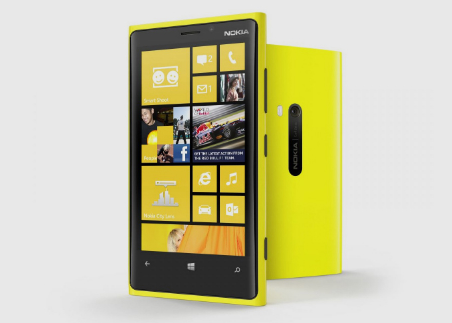 AdDuplex, which touts itself as the “largest cross-promotion network for Windows Phone and Windows 8 apps”, released a new monthly report which shows the Nokia Lumia 920 as the most popular Windows Phone device currently available. The handset holds a 14 percent market share among devices running Microsoft’s smartphone operating system.
According to the report, the Lumia 920 dethroned the Lumia 800, “by a very small margin”, for the title of the most popular Windows Phone device. The 920 was released worldwide in November 2012. The latter made its way onto the market one year earlier and also holds approximately a 14 percent market share among Windows Phone handsets, albeit slightly lower when it comes down to actual numbers.
The report is based on data collected by AdDuplex on April 4 from 494 Windows Phone apps that run the second version of the AdDuplex SDK (Software Development Kit). Even though it may not be as accurate as an official report coming from manufacturers, the data provided by the network does reveal some interesting statistics for users to gorge on.
AdDuplex also provided an app installations graph for the Lumia 920 which shows “a few bumps”, suggested to be “related to supply problems”. It is worth noting that said bumps occurred in the first half of January, around February 22 and just before March 22. Also, the Lumia 920 is just now starting to be available worldwide, after months when the handset was restricted to a lesser number of markets.
Market share for other devices is as follows: Lumia 710 — 13 percent, Lumia 610 — 11 percent, Lumia 820 — 8 percent, Lumia 620 — 7 percent, Lumia 900 — 4 percent, HTC Windows Phone 8X — 4 percent, Windows Phone 8S — 4 percent, Lumia 822 (the Verizon-branded version of the Lumia 820 — 3 percent. Other devices make up 18 percent of the Windows Phone market.
According to AdDuplex, Nokia holds an 80 percent market share among Windows Phone manufacturers, followed by HTC with 14 percent, and Samsung with 5 percent. Other makers such as LG, Huawei or Dell do not pass the 1 percent mark in Windows Phone share.
The network says that Nokia holds the highest market share in Argentina while the lowest is in Japan, for Windows Phone devices. In the US, the Finnish manufacturer’s devices currently occupy approximately a 65 percent market share in the Windows Phone realm.
AdDuplex also provided some data as to the adoption of the two major Windows Phone versions. Windows Phone 8 currently runs on 43 percent of all Windows Phone devices, while Windows Phone 7 takes up the remaining 57 percent. It is worth noting that the newer smartphone operating system was released in late-October, 2012.
Windows Phone 8 is most popular in France with an approximate market share of 70 percent, while Windows Phone 7 is most popular in Mexico with an estimative market share of above 95 percent. For both versions the numbers are compared to Windows Phone as a whole.
Surprisingly, in the US the most popular Windows Phone device is the Lumia 822 at 22 percent market share, followed by the Lumia 920 at 20 percent market share. The Windows Phone 8X takes third spot with 16 percent market share.
In the US, Nokia has a 66 percent market share among Windows Phone manufacturers, while HTC and Samsung hold a 26 percent and 7 percent, respectively, in market share. Most Windows Phone devices sold in the US are on AT&T (with 43 percent market share), Verizon (30 percent) and T-Mobile (22 percent).
AdDuplex also says that it has spotted a number of new devices bearing the RM-860 (which AdDuplex says is the Lumia 928 rumored for Verizon), RM-892, RM-893 and RM-877 (on AT&T) moniker. Those codenames are indicative of Nokia devices, and may suggest that newer models are coming.
-
CISPA Is Looking Better, But Privacy Proponents Still Aren’t Satisfied
Rep. Adam Schiff announced on Friday that he would be introducing a pro-privacy amendment to CISPA that would force companies to remove any identifiable information from data it shares with the government. Surprisingly enough, the bill’s authors seem to be taking this amendment, and other pro-privacy amendments, seriously.
The Hill reports that House Intelligence Committee Chairman Mike Rogers and ranking member Dutch Ruppersberger will be adding a number of amendments to CISPA during its markup this week. Rogers insists that CISPA is “not a surveillance bill” and the proposed amendments will reportedly clear up any misconceptions people have about it.
So, what kind of misconceptions will these amendments clear up? The first would strictly limit what government agencies could use the collected information for. Opponents suggest the current CISPA would allow government agencies to use collected information for non-national security purposes. The amendment would make it clear that any information collected under CISPA must be used only for national security purposes.
Another amendment would make sure companies are held to the same standard as government agencies. In other words, it would require companies to use any information they receive from government agencies for cybersecurity purposes only.
One of the more interesting amendments would forbid companies from launching retaliatory attacks against those who launch attacks against them. It’s not exactly a pro-privacy amendment, but it would help keep trigger happy companies under check while the authorities investigate cyberattacks.
Privacy proponents are obviously happy to see CISPA being improved, but they still have one major issue with the bill. They feel that any information obtained by the government should be sent to a civilian agency, like the Department of Homeland Security. The current bill isn’t exactly clear on which agency companies would share information with, but one interpretation sees CISPA allowing companies to share information directly with NSA, a spy agency with little governmental oversight.
The currently proposed amendments don’t address all the problems, but it shows that the House Intelligence Committee is at least wanting to address some of the problems privacy proponents have with CISPA. That’s more than what the committee did last year as it passed CISPA without even allowing arguments for proposed amendments to be heard.
-
Report claims Apple’s next-gen iPad won’t launch until this fall

-
Building a Better Bitcoin
How much is a bitcoin worth?
Well, it’s worth whatever somebody will pay for a unit of the online currency, which as I write this is $209, up from $142 last Friday, $44 a month ago, and $4.93 a year ago. This huge run-up — the latest spike began with EU’s botched rescue of Cyprus’s banks — has led to much talk of a bitcoin bubble.
The word “bubble” has been greatly overused in recent years. My understanding is that you’re in a bubble when the price of an asset becomes completely detached from its intrinsic value. It’s a bubble when the price you pay for share of stock cannot conceivably be recouped from the earnings of the company (this was Cisco in 2000) or the price you pay for house cannot conceivably be recouped from rental earnings (this was Phoenix in 2005). The only way you can avoid losing money on your investment is for a greater fool to come along — in the case of real estate, a greater fool backed by an even-greater-fool lender — and take the asset off your hands.
Bitcoins have no intrinsic value. They lay claim to no stream of future earnings. A price of $198 per bitcoin is surely not justified by the fundamentals. But neither is a price of 10 cents. There are no fundamentals.
So as an asset, Bitcoin (I’m trying to follow Maria Bustillos’ rule of capitalizing the system but lowercasing the coins) is clearly in a bubble, and always has been. But maybe asset pricing is the wrong lens to be looking through here. A dollar bill lays claim to no stream of future earnings, yet nobody says there’s a “dollar bubble” because somebody’s willing to give you a candy bar for one. This even though a dollar is almost certain to buy you less in a few years than it does now. According to the Bureau of Labor Statistics, a 2013 dollar has one-tenth the purchasing power of the 1950 version.
By contrast, bitcoins have been skyrocketing in value. This sounds like a good thing, but for a currency it’s really not. An economy where bitcoins were the means of exchange would have experienced 98% deflation over the past year. No one would be able to repay any loans, or really do business at all. What we want out of a currency is not price appreciation but stability. Monetary economists differ on whether the optimal stability is inflation of 0% or in the low single digits. Nobody thinks 98% deflation is healthy, and all but a small minority seem to think any deflation at all is a bad thing.
So … bitcoins are without intrinsic value as assets, yet they have risen too fast in value to be much use as a currency. Kind of makes your head hurt, doesn’t it? But it also sounds a bit like a familiar commodity, gold, that’s also been on a roll, with its dollar price quintupling over the past decade. Gold has, over time, not been the greatest of assets to invest in. It’s not the greatest of currencies, either: Back when the gold standard was widely adhered to, nations struggled regularly with deflation. There’s persuasive evidence that the primary cause of the Great Depression was a refusal to unlink currencies from gold until too late. Still, gold has held onto its purchasing power over time. It remains something that people turn to in times of financial uncertainty such as now. And while there are skeptics these days who talk of a gold “bubble,” they don’t really mean it. That is, they may expect the price of gold to decline from the current $1,575 an ounce, but they don’t expect it to suddenly lose most of its value, as assets tend to do when real bubbles burst.
There are some key differences between gold and bitcoins: Gold is a shiny metal that can be made into jewelry, electronic components, and dental fillings — meaning it has some intrinsic value, albeit nowhere near $1,575 a troy ounce. Bitcoins are made of otherwise valueless digits. And while mankind has treated gold as a store of value for millennia, bitcoins were first unleashed upon the world in January 2009, by a mysterious and pseudonymous cryptographer (or cryptographers).
But there are important similarities. Both bitcoins and gold are pretty much impossible to counterfeit. (That is, whatever fakes you might be able to produce won’t get past an expert.) Also, bitcoins are “mined” — by computers that have to solve a tough mathematical problem in order to free a block of 25 coins. This isn’t exactly the same as gold mining, but in one crucial aspect it’s the same. Unlike dollars, which can be created at will by the Federal Reserve, the supply of both bitcoins and gold is determined by forces outside the control of elected or appointed government officials. Given the long history of governments debasing their currencies to the point of worthlessness, the limited-supply, non-governmental nature of gold and of bitcoins has its attractions.
Bitcoins actually have an advantage over gold in this regard, because bitcoin mining generates a steady, predictable increase in supply, whereas the gold supply grows in fits and starts. Bitcoin creation is thus a bit like Milton Friedman’s “k-percent rule,” which proposed that the money supply be made to grow automatically at a steady rate that averts both inflation and deflation.
The advantage of a “quasi-commodity money” like Bitcoin, writes University of Georgia economist George Selgin, “is precisely that by resorting to it one can avoid leaving the management of money either to central bankers or to the blind forces of nature. Instead, supply is determined once and for all by artificially-arranged resource constraints.”
The question, really, is whether you can pick the right “resource constraints” ahead of time. Friedman’s rule of a steady percentage increase in the money supply proved problematic when the Federal Reserve actually tried it from 1979 to 1982 — it wasn’t clear which measure of the money supply was the right one to target. Since then the focus has moved on to inflation or, recently, nominal-GDP targeting.
With Bitcoin it’s the supply that’s targeted, with steadily decreasing returns to mining and the number of bitcoins set to top out at 21 million around 2040. From the Friedman perspective, this is not a great k-percent rule. Instead, it’s a recipe for severe deflation — fewer coins chasing around after a growing number of things available for sale. The flipside of deflation is rising prices for bitcoins in other currencies, which is what we’re witnessing now. Prices have risen so far, so fast, that it seems inevitable that they’ll collapse at some point (because remember, they have no intrinsic value). That doesn’t have to be the end: Bitcoin already survived a price boom and bust in 2011. But far fewer people were paying attention then, and on its current trajectory the market seems destined to become dominated by gamblers and greater fools.
Then again, lots of important financial innovations start out like that. They become topics of public fascination, prices are bid up to crazy levels, then they crash. Sometimes that’s the result of design flaws, but often it’s just because we don’t know how to use them yet. The infamous 1720 South Sea Bubble in Great Britain springs to mind. It wasn’t that publicly traded corporations such as the South Sea Company were such horrible things, just that nobody really knew how to behave around them. Eventually, we figured it out. Sort of.
I tend to agree with Felix Salmon’s verdict that Bitcoin would be better off if it had been “designed to be used primarily as a payments mechanism, rather than as a store of value and a unit of speculation.” (The 21-million-coin limit seems like the most obvious flaw in this regard.) But I also know that nobody really knows what the right currency for this networked, globalized age will be. It’ll take experimentation, trial and error, and the occasional financial bubble to get us there.
-
Joe Montana’s Son Tries Out For the NFL
It can be hard following for children following in the footsteps of a parent. However, when that parent is NFL legend Joe Montana, following in his footsteps could be all but impossible. Not that Nate Montana isn’t trying.
According to an NFL.com report, Nate Montana was part of the NFL Super Regional Combine this week at Cowboys Stadium in Dallas. Unfortunately, analysts are calling Nate a “long shot” who has a “weak throwing arm.”
Nate Montana went to Notre Dame, his father’s alma mater, in 2008 and joined the football team as a walk-on. The quarterback found himself lacking in play time, and transferred to Pasadena City College in 2009, where he red-shirted for one year. He went back to Notre Dame in 2010, before transferring twice more, to the University of Montana in 2011 and West Virginia Wesleyan in 2012.
During his year with West Virginia Wesleyan, Nate racked up 2480 passing yards and 19 touchdowns with the Division II program. As slim as his chances are of making a career in the NFL, it’s clear that his passions lie in football.
-
Google Glass In Strip Clubs? Probably Not.
While Google Glass may not be widely available to consumers yet, it will be soon, and developers are already coming up with interesting apps for the device. As availability approaches, however, it’s becoming clearer that there will be a lot of society-implemented restrictions that come along with it.
We’ve already seen legislation seeking to ban driving while using Google Glass (and other similar devices). But it will certainly not stop there. NBC News has an interesting article about venues that won’t let you in if you’re wearing one. Vegas, in particular is one city where you’re bound to run into some problems. That goes for Casinos, but also strip clubs, as you might expect. Rosa Goligan reports:
“We’ve been dealing with the cellphone videoing and the picture taking over the years and we are quick to make sure that that doesn’t happen in the club,” Peter Feinstein, managing partner of Sapphire Gentlemen’s Club in Las Vegas, told NBC News, explaining that hosts check in any electronics a patron brings that could be used for filming.
“As the sale of [Google Glass] spreads, there’ll be more people using them and wanting to use them at places such as a gentlemen’s club,” Feinstein explained. “If we see those in the club, we would do the same thing that we do to people who bring cameras into the club.”
The movie theater is another place where you might end up having to check your Glass by the door (or at least leave it in your car), as Goligan notes. Major media corporations and film studios already have to deal with their content appearing illegally on sites that sometimes end up in search results. This could add another layer to their issues with the technology giant.
Beyond content protection, some venues likely just won’t accept the device for etiquette reasons. As we know, some restaurants have a problem with people using their smartphones to take pictures of their food. We’ve already seen some take issue with Glass in particular.
The Atlantic recently ran an article about a bar owner who said this on Facebook:
Last night around 9:45 two people walked into the bar. Looked me square in the eye, and acting as if everything was normal they ordered beers.. Oh did I mention they were wearing Google Glasses! In public! In A BAR!
Perhaps this was more a comment on the fashion aspect of Google Glass, but clearly the device is making some people uncomfortable. Perhaps that will change once it becomes widely available. Don’t forget, Google’s working on the fashion obstacle too.
If Google manages to make the device more closely resemble actual glasses, one has to wonder how easy it will be to enforce any action against them. I wonder how they’ll enforce the inevitable contact lens version. That glass-while-driving ban might run into some simliar obstacles.
Well, if the cops are wearing their own Google Glass, they might be easier to detect.


