Blog

  • Email Is Not Free

    My job description does not include managing email flow. Yours probably doesn’t, either. But it’s increasingly a big part of the work we do. In fact, in a single week last fall, I received 511 emails and sent 284. Almost 160 emails a day is ridiculous. Even if I was efficient and processed each email in 30 seconds, it would still take almost an hour and a half.

    That same week, I further analyzed the activity in my inbox: 235 of my inbound emails were from people within the company, close to 46%. Colleagues copied me on 172 emails — the FYI culture that digitally drowns most executives. Another 47 emails had documents for my review.

    These numbers were personally daunting, but I needed a more holistic view. By asking for the same information from others in the company, I found that my volume was slightly above average, but some of our senior executives were receiving close to 550 emails and sending almost 800 in a week. With an average of 32 words per email — about two sentences — many were likely superfluous update emails.

    Anecdotally this clearly affected our company’s efficiency, but we had all the data points to calculate the bottom-line financial impact. By calculating average typing speed, reading speed, response rate, volume of email, average salary, and total employees, we were looking at a seven-figure price tag to quantify our email pollution. A “free and frictionless” method of communication had soft costs equivalent to procuring a small company Learjet. Each individual email ate up 95 cents of labor costs.

    Upon further analysis, we learned that all of the departments had approximately the same volume of email, except for one. The outlier had only one-third of the typical email volume. Not only that, but each message had an average of 140 words, or roughly three paragraphs — one-third of the emails and each four times longer. Why?

    I have spent time at a startup, a large consulting firm, a small PR firm, and the White House. During the arc of my career, the amount of email noise was often inversely correlated with the availability of alternate communication channels, as well as an organization’s relative digital literacy. I’ve also found that an open office plan decreased overuse of email, since removing the physical barriers to communication dramatically lowers email reliance.

    These traits were all present in our outlier group. They had an open and egalitarian office, with no individual offices. Every screen had an array of windows open — Skype, GChat, Campfire, Dropbox, Yammer, and Google Docs — the right technology for the right situation. And, the team was staffed with digitally savvy employees, most of whom have lived half of their lives plugged into the Internet.

    This is what a digital office should be. It is the paradigm I want to see ingrained in our entire company’s DNA. Email is the killer app of a generation… to a fault. For many employees it likely was their entrée into a digitally networked world, and has devolved over the last decade into a bloated and messy Franken-system. Mobile and frictionless, with no perceived cost, everything goes through email. The quick lunch invite, the short status update, the confirmation of receipt, the FYI email copying seven others, the surreptitious blind copy, and the list goes on. Our bad behavior has been compounding annually with very little hindrance.

    The good news is that tools exist to fix this mess — collaboration software, social communities, instant messenger, telepresence, all powered by the omnipresent cloud. A few months ago, we moved the entire company to Google Apps, improving mobility and collaboration. Immediately, there was a massive shift in communication culture. One employee summed it up best when she commented that a “collaboration bomb exploded” in the office. Walking around the office now, you can see everyone using instant messenger to communicate. There’s no need to email documents with collaborative editing in Google Docs. Early results are anecdotal, but initial data shows that it has been successful at decreasing our email abuse and increasing collaboration. My own email use has gone down by about 15%.

    To me, email is the most abused method of communication in every office environment. And the widespread perception that it has no incremental cost is chronically damaging workplace efficiency. The challenge we are facing isn’t an aversion to technology, but change. There is an entrenched level of comfort with email, making it habitual and a communications crutch. We have to take a holistic view and see email as one of many channels for collaboration. Adopt a breadth of tools to connect people, teach them the appropriate use of each and encourage smarter use of the right technology.

  • Autism in black and white: NIH grant helps scientist study disorder in African Americans

    The National Institutes of Health has awarded Dr. Daniel Geschwind, director of the UCLA Center for Autism Research and Treatment, a five-year, $10 million grant to continue his research on the genetic causes of autism spectrum disorders and to expand his investigations to include the genetics of autism in African Americans.
     
    The new network grant, which will fund collaborative work by Geschwind and experts at other autism centers around the country, is part of the NIH’s Autism Centers of Excellence program, which was launched in 2007 to support coordinated research into the causes of autism spectrum disorders (ASD) and the discovery of new treatments.
     
    Autism spectrum disorders are complex developmental disorders that affect how a person behaves, interacts with others, communicates and learns. According to the Centers for Disease Control, ASD affects approximately one in 88 children in the U.S.
     
    Geschwind’s award will allow him to build on his earlier work identifying genetic variants associated with an increased susceptibility to autism while adding an important new emphasis. The research network he leads — which also includes scientists from the Albert Einstein College of Medicine, Emory University, Johns Hopkins University, Washington University and Yale University — aims to recruit at least 600 African American families who have a child diagnosed with an ASD for genetic testing.
     
    While nearly all previous research on the genetics of autism has focused on subjects of European descent rather than those of African or other ancestries, it is critical to study different populations to understand if current genetic findings in ASD can be generalized to a broader population, said Geschwind, a professor of neurology, psychiatry and genetics.
     
    To that end, he will look for gene variants associated with autism in Americans with African ancestry and then test the genetic risk factors identified in European populations to see what role they may play in the disorder in people of African descent.
     
    Because individuals are typically a mix of different ancestries, the research group will use statistical methods that enable them to identify chromosomal markers for different ancestral origins. Genetic data generated by the study will be made available through the Internet to the larger research community.
     
    The work will also include an evaluation of disparities in the diagnosis of autism and in access to care. The scientists will be carrying out this study with UCLA as the hub.
     
    The award to Geschwind follows on the heels of several large ACE awards to various researchers at UCLA’s Center for Autism Research and Treatment (CART) last September. At that time, CART was the only NIH Autism Center of Excellence in the nation to be awarded renewed funding for the next five years. The funding to CART supports ongoing research focused on examining genes’ link to behavior, developing clinical interventions for those severely affected by autism, and explaining why autism affects more boys than girls.
     
    This network grant will help further the work of CART, in conjunction with other UCLA programs in autism by enabling scientists to approach the study of ASD from both a research and clinical perspective. Together, these ACE grants aim to foster new ways to diagnose patients earlier and tailor treatments to each individual to create the best outcomes.
     
    CART and the UCLA Department of Psychiatry and Biobehavioral Sciences are part of the Semel Institute for Neuroscience and Human Behavior, a world leading, interdisciplinary research and education institute devoted to the understanding of complex human behavior and the causes and consequences of neuropsychiatric disorders. The UCLA Department of Neurology, with over 100 faculty members, encompasses more than 20 disease-related research programs, along with large clinical and teaching programs. These programs cover brain mapping and neuroimaging, movement disorders, Alzheimer’s disease, multiple sclerosis, neurogenetics, nerve and muscle disorders, epilepsy, neuro-oncology, neurotology, neuropsychology, headaches and migraines, neurorehabilitation, and neurovascular disorders.
     
    For more news, visit the UCLA Newsroom and follow us on Twitter.

  • Google Drive For iPhone Gets Landscape Editing

    Google has launched an update (1.3.0) for its Google Drive iPhone app. It now includes the ability to edit documents and spreadsheets in landscape.

    In addition to that, the app now loads faster and has quicker editing support, according to Google. The update also comes with some minor bug fixes.

    The app is compatible with iPhone, iPod touch, and iPad, and requires iOS 5.0 or later. It’s optimized for iPhone 5.

    Last week, Google launched Quickoffice for iPhone (as well as Android) to complement an iPad app launched back in December. Edits can be made to files using Quickoffice, and those files can be saved back to Google Drive.

    [via 9to5google]

  • Here’s Facebook’s Other, More Interesting Ad for Home

    Last week, Facebook unveiled Facebook Home, the company’s Android takeover “app family” that basically turns any phone that installs it into a Facebook Phone. Home turns your Android homescreen into a Facebook experience, with a scrolling news feed, integrated Facebook messaging, and more.

    Shortly after the big reveal, Facebook released an ad for Home. Now, they’ve finally released the other ad – the one that Zuckerberg introduced during the event. The ad, called “Airplane,” attempts to impart the message that having Facebook Home integrates the experience of Facebook into every little aspect of your life. But it’s a little strange. Check it out:

    Kind of odd, huh?

    Facebook Home will become available on April 12th.

  • Miranda Lambert Wins Four ACM Awards For “Over You”

    The 48th Academy of Country Music Awards were held this weekend in Las Vegas. While co-host of the ceremonies Luke Bryan walked away with the Entertainer of the Year award, singer Miranda Lambert won four different awards Sunday night, shutting out Taylor Swift, who was nominated for five awards.

    Lambert, who is famously married to ACM Awards co-host Blake Shelton, won awards for both writing and performing the song “Over You.” The song also won the Single of the Year Award. Lambert also won the award for Female Vocalist of the Year, an award she has won for four years running. Reba McEntire and Loretta Lynn are the only other artists to have won the Female Vocalist of the Year award four or more times.

    Lambert was also nominated for Entertainer of the Year, the award that Bryan won.

    “I can’t comprehend anything that’s happening right now,” said Lambert shortly after the awards ceremony. “I actually voted for, I was rooting for Carrie [Underwood], because I’m such a fan of hers and I’m so jealous of her voice and her legs and everything else she has.”

  • Acer Iconia A1-810 tablet gets outed, flaunts its 7.9-inch display to the general public

    Acer_Iconia_A1_810


    Move over iPad Mini, Nexus 7 and Galaxy Note 8.0— Acer is bringing a new player to the mini tablet arena. A mysterious Acer Iconia A1-810 has been revealed to the general public and looks to have the standard goodies including a 1.2GHz MediaTek dual-core chip, 7.9-inch IPS display with a 1,024 x 768 resolution + 1GB of RAM, a 5MP rear camera + a VGA front-facer, a 3,250 mAh battery and 16GB of on-board memory. Sure the competition may have some better specs inside, but at least the device will ship with Android 4.2 out of the gates.

    As of now, it appears that French retailer Rue Du Commerce is the only place that is officially listing the device available for order at this point, though we’ll see if other countries and markets will get the device as well. It is expected the Iconia A1-810 will cost about €199 (about $259) and ship sometime in June.

    source: Android Authority

    Come comment on this article: Acer Iconia A1-810 tablet gets outed, flaunts its 7.9-inch display to the general public

  • BlackBerry 10 and the end of the “U-Turn” Button

    As more and more of my friends get their hands on a BlackBerry Z10, I find myself referring to an earlier Inside BlackBerry Blog post – “There’s No Button like Home”- about the device’s lack of a home button. Users migrating from a BlackBerry device or competitive devices needed more information on how using BlackBerry 10 Flow keeps you moving, and BlackBerry users in particular wondered how and why they would navigate apps without the much-adored “Back” or “U-Turn” button.

    uturnbutton

    Without belaboring the “how” part of using BlackBerry 10 Flow (explained in this video), I’d like to focus on why the U-turn button is no longer needed with BlackBerry 10. We frequently note that this function is due to the goal to “keep you moving forward” but what does that really mean?

    • It means that the user experience of your mobile operating system should adapt to you and not the other way around.
    • It means taking the human desire to reach higher and be more and packing it into a smartphone.
    • It means a smartphone that says “I agree with you, star-reacher. Let’s go and be more.”
    • It means knowing where you’ve been and how it impacts you, then using it to propel you beyond your expectations.
    • It means plunging fearlessly into apps and being able to peek into the correspondence that mean the most at any time, day or night.
    • It means BlackBerry 10 is more than a slogan or ad – it’s a movement, and a movement forward.

    I hope this clears things up. If you have any questions about how BlackBerry 10 keeps you moving forward, shout them out in the comments.

  • Samsung readies its biggest phablet yet: Galaxy Mega 5.8 specs leak

    Samsung Galaxy Mega 5.8 Specs
    Because the 5.55-inch display on the Galaxy Note II just isn’t huge enough, Samsung (005930) is reportedly preparing to launch an even more massive phablet in the coming months. Following up an earlier report, SamMobile claims to have confirmed specs for the upcoming Galaxy Mega 5.8 with an unnamed source. According to the report, the mid-range Galaxy Mega 5.8 will feature 5.8-inch display with 960 x 540-pixel resolution, a dual-core 1.4GHz processor, 1.5GB of RAM, an 8-megapixel rear camera, a 2-megapixel front-facing camera, a 2,600 mAh battery and Android 4.1.2 Jelly Bean. The Galaxy Mega 5.8 is reportedly set to debut in May or June this year ahead of the even larger Galaxy Mega 6.3.

  • Serious question: Is it too late for HP Project Moonshot to disrupt anything?

    Hewlett-Packard said its first “Generation 2″ Project Moonshot server, based on Intel’s( intc) Atom Series 1200 chip is available as of Monday with other versions running chips from Calxeda, AMD, Applied Microand Texas Instruments to come.

    The goal of Project Moonshot, as initially stated last year, is to offer a super energy-efficient and compact servers capable of running the world’s biggest webscale (and biggest enterprises)  at a fraction of the cost. HP said it shipped a number of early versions for customer proofs of concept last year but today’s news represents broad availability of what HP execs called a  ”software-defined server designed for the data center.”

    The new server puts 4,500 Proliant servers in one HP 1500 enclosure. Compared to traditional Proliant servers, this iteration uses 89 percent less energy, 80 percent less space and is 97 percent less complex than the former state of the art at 77 percent less cost.

    It’s understandable given HP’s huge server installed base in enterprises why it lays out that comparison, but companies might be more interested in how Moonshot boxes compare with webscale servers from what used to be no-name rivals like Quanta, Inventec, Quanta. The notion of BYO servers is also spreading.  In January, Rackspace the big hosting and cloud provider, for exmaple, said it would start building its own servers.

    That trend puts traditional server vendors  like HP,  Dell and IBM in a tough spot.  It’s good to see HP willing to cannibalize its installed base., the question is whether those big web-scale workloads have already set sail on no-name servers.

    I will update this story as needed throughout rest of today’s HP web conference.

    Related research and analysis from GigaOM Pro:
    Subscriber content. Sign up for a free trial.


  • DOE: Questions for Energy Secretary Nominee Ernest Moniz

    This week, President Obama’s nominee to succeed energy secretary Steven Chu will face questions before the Senate Committee on Energy and Natural Resources in which senators are expected to pose a number of questions to Dr. Ernest Moniz about his …

  • Recognizing Sexual Assault Awareness Month

    Every April, we recognize Sexual Assault Awareness Month. This year, with rape in the headlines nearly every day, we speak out with even greater urgency to honor survivors and prevent sexual violence.

    We know the devastating the statistics: 1 in 5 women and 1 in 71 men have been raped in their lifetimes. That’s 18 million women in this country who have been raped, and more than 1 million rapes that occur every year. The vast majority of these assaults occur when the victims are under the age of 25, and those under the age of 18 are at the greatest risk. These numbers are real, but they don’t tell the whole story. They don’t tell of the broken trust when the attacker is a friend, a trusted colleague, or a family member.  They don’t tell of the suicidal feelings, the depression, or of the PTSD. And, they don’t tell of the courage survivors demonstrate when they work every day to put their lives back together.

    Across the federal government, we are working to support survivors and to prevent sexual violence. Last year, the Department of Justice modernized the definition of rape used to collect our nation’s crime statistics. This year, the Department of Justice is working with law enforcement agencies to implement this change and develop new guidelines for investigating sexual assault cases. The Office on Violence Against Women is funding training that will help communities address their backlogs of rape kits and improve prosecution of sexual assault crimes. The Office of Victims of Crime is supporting the development of a telemedicine center that will help bring sexual assault forensic exams to victims in rural and isolated communities.

    read more

  • Solar financing startup Clean Power Finance raises $37M from Google Ventures, Kleiner

    There’s one area of solar that is going gangbusters in 2013, and that’s companies that are financing and installing solar panels on rooftops. On Monday morning solar financing startup Clean Power Finance announced that it has raised a round of $37 million in growth equity from investors including Google Ventures, Kleiner Perkins and Claremont Creek Venture.

    Odds are, it’s a pretty safe bet, even for the venture capitalists that have been scared off by the lack of consistent returns in cleantech investing. Last year there were a record-breaking 3.3 gigawatts worth of solar panels — or 16 million individual solar panels — installed in the U.S., making solar power the fastest-growing energy source domestically, according to Solar Energy Industries Association and GTM Research.

    Eagle Roofing SolarBlend tiles2

    The reason that solar panels exploded last year was due to a few factors: the price of solar panels dropped dramatically, companies have been offering financing deals that cover the upfront costs of the systems (like Clean Power Finance), and some states have been offering strong incentives to get panels installed. It’s not a coincidence that states like California with the best subsidies for solar panels had the most installations last year.

    Clean Power Finance is a solar software and financing company, and it can put money into a variety of solar installers across the country. It originally grew its business on providing Software-as-a-Service tools to solar installers to start the sales, rebate, and lead-gen processes, but more recently started providing financing agreements like power purchase agreements (PPAs) for rooftop solar for home owners. A PPA is a contract over a time to buy the solar power as a service, and commonly avoid having to pay the upfront installation fee.

    Solar installer SolarCity, which has a similar business model to Clean Power Finance, went public last December and its stock is trading around $18.50 Monday morning — $10 above its debut price. Sungevity, another solar financing and installation company, was able to raise a large round of $125 million of equity and project finance earlier this year.

    Loving solar a little too much

    Loving solar a little too much

    Clean Power Finance previously raised funds from Clean Pacific Ventures, Sand Hill Angels and founder Gary Kremen, who is a long time entrepreneur and investor, and who previously founded of Match.com. Clean Power Finance raised another $25 million from Google Ventures, Kleiner Perkins Caufield & Byers, and Claremont Creek Ventures back in 2011.

    Solar financing and installation is one of the few bright spots in cleantech investing. It’s a business model innovation, which is based around solar panels becoming a low cost commodity, and banks or corporations becoming comfortable putting up the upfront funds for the installation. In contrast solar manufacturing innovation has proved to be far tougher as an investment category (Solyndra, Miasole, etc.). The solar module manufacturing industry is also seeing mass bankruptcies this year, precisely because the cost of solar modules has gotten so low.

    Related research and analysis from GigaOM Pro:
    Subscriber content. Sign up for a free trial.


  • Facebook Home pre-release gets leaked, gives Android users a half-baked taste of sweet glory

    Facebook_Home_apk_Leak


    Sure Facebook Home is going to be one heck of a game-changer for Android devices, but not only do we still need to wait a while for it to come out— Facebook Home is only going to be available for a handful of devices, at least for the initial launch. Fortunately, some enterprising folks went ahead and brought the awesome launcher to the masses. Paul O’Brien of MoDaCo’s details that using any Android device with a maximum resolution of 1,200 x 768, users will have the ability to use a pre-release version of the ROM by installing 3 special files.

    Of course using the special build of the app doesn’t come without a few catches. The first is that since this is a pre-release version of Facebook Home, meaning the ROM is not exactly stable, is missing a feature or two and is a little bit on the slower side. The second catch is users will need to ensure that Facebook is completely uninstalled from their device prior to installing the ROM since the leaked files are re-signed and can’t just be installed over the top of an existing installation. This means that those of you with a device that has Facebook pre-installed will probably need to have Root access and remove the Facebook from your phone just to be on the safe side.

    Ok— so now that you’ve gotten the disclaimer, we’re sure that you’re itching to try it out for yourself, right? Head on down to the source link to grab the full deets and instructions for yourself.

    source: MoDaCo

    Come comment on this article: Facebook Home pre-release gets leaked, gives Android users a half-baked taste of sweet glory

  • Margaret Thatcher, Fighter

    Margaret Thatcher is dead. For most Britons of my generation she was the dominant political figure. People either loved her or hated her and she seemed, if anything, to thrive on that conflict. Her consensus-minded opposite numbers in Europe (mostly male) certainly regarded her with disapproval. She was too strident, an iron lady, not for turning, all the stereotypes applied to strong-minded women in power.

    Part of her crime, perhaps, was to be a conservative. It would have been far more convenient for most women’s rights and civil rights activists to be able to point to a socialist as a female role model. Thatcher was towards the hard right of the conservative party, someone who wanted to reverse the socialist experiment of Britain’s post-war years. But the socially progressive were very much wedded to that model. For these people, Shirley Williams of Britain’s Labour Party was a far more agreeable role model for women.

    So why was Britain’s first woman Prime minister a true-blue Tory? After all, Labour politicians were, on the face of it, much more supportive of women in politics.

    Part of the answer, perhaps, was plain old cynical politics. Conservatives got to look progressive because they had a woman as leader, and a reasonable number of non-conservatives might vote also for her party because she was a woman. In a first past the post system, that would be good electoral math.

    Having a woman front the economic policies of the conservatives might also perhaps have made their platform seem a little more palatable. Conservatives were generally seen as representing the interests of the privileged establishment. Conservative politicians were often the product of Britain’s elite public schools and they mostly sounded as if they had a silver spoon in their mouths. You would not say that about a grocer’s daughter from Grantham (even if she did affect a “posh accent” and had been to Oxford).

    Branding and packaging considerations aside, it’s clear that Thatcher was driven, highly motivated, and astute. She could play hardball politics with the best of them, an ability that many men found hard to resist, if you are to believe the riotously popular diaries of Alan Clark (a maverick conservative and notorious womanizer who formed part of Thatcher’s coterie).

    Psychologists might make something also of the fact that she was very much encouraged in her ambitions by the men in her life. Her father, Alfred Roberts, was a stalwart of local politics in Thatcher’s hometown of Grantham, a local alderman and sometime mayor, and encouraged her to aim high. Her rather older than she husband Denis (whose apocryphal letters in Private Eye caused merriment to a generation of readers) provided the financial security that allowed her to pursue a career in politics.

    Any and perhaps all of the above could be advanced to explain Thatcher’s success. But at the end of the day, perhaps none of those reflections matter as much as the fact that Thatcher represented a set of ideas whose time had come.

    By the 1970s, Labour had arguably run out of steam. After decades of leading a progressive social agenda it had created an economy in which organized labor held a disproportionate share of power. Britain was over-regulated, overtaxed, and under-productive. With an economic model severely challenged by the oil-price shocks of the 1970s and with the massive oil reserves in the North Sea yet to come on line, British voters were receptive to Thatcher’s idea that Britain needed to get back to work the old-fashioned way.

    Her formula reshaped Britain’s economic orthodoxy and became for two decades and more the dominant logic of politics. And if the financial crisis caused some to question that logic, it remains largely intact. Arguably, it was her very success in realizing her ideas that undid her. As long as she represented a work in progress, much could be forgiven. But once she had achieved her big goals, the sound and fury sounded increasingly shrill. It was a pity, perhaps, that she was so brutally cast aside (in, essentially, a palace coup), but it may have been inevitable.

    Fighters like Thatcher are almost doomed not to recognize when their time is up; it’s what makes them so good at achieving their goals.

  • Facebook responds to privacy concerns, says Home shouldn’t be a concern

    Facebook Home Privacy Response
    Facebook (FB) unveiled Home last week, an Android software suite that transforms a handset’s home screen into a real-time graphical representation of users’ Facebook timelines. The new software has seen mixed early responses from pundits and bloggers, many of whom have expressed concerns over how Home might impact users’ privacy. Privacy concerns surrounding Facebook products are nothing new — concerns are justified, of course— and Facebook had a response to users’ worries ready to go. In a nutshell, Facebook says Home “doesn’t change anything related to your privacy settings on Facebook, and your privacy controls work the same with Home as they do everywhere else on Facebook.” Facebook’s full privacy Q&A can be found by following the source link below.

  • Google Cracks Down On Short-Term Loan Ads

    Google has reportedly cracked down on payday loan services using AdWords, which are in violation of its policies and government regulations.

    TheDrum.com reports (via Search Engine Land) that Google has pulled all Moneysupermarket ads as part of the crackdown, which is the result of increasing government pressure on Google.

    The publication shares a statement from a Google spokeswoman, who said, “We have a set of policies which govern what ads we do and do not allow on Google. We have strict policies for those advertising short term loans, and make it very clear that advertisers need to comply with local regulations and be transparent about their fees, implications of non-payment and collection practices. If we discover sites that are breaking this policy we will take appropriate action.”

    Here’s what Google says about short-term loans in its AdWords policies:

    Short-term loans are defined as secured or non-secured loans with a duration of 60 days or less. Google doesn’t allow websites for short-term loans that don’t include all of the information below (includes lenders, lead generators, and aggregators of short-term loans):

    • Legitimate contact information or physical address (P.O. box addresses are not acceptable)
    • Compliance with other state or local regulations related to short-term loans
    • Prominent disclosure of the following on the landing page, meaning that it’s shown in the same font type, size, and color as the base text on the landing page and presented in a way that is clear and conspicuous to users:
      • APR
      • Implications of non-payment, including the following:
        • Financial implications (whether fees are charged and/or interest rates are raised)
        • Collection practices
        • Potential impact to users’ credit score
        • Renewal policy information, including if the renewal is automatic and if there are fees associated with the renewal

        Aggregators/lead generators may provide sample implications from their network to satisfy the above requirements. Implications of non-payment should be grouped together in one location on the landing page.

    Google has different policies for Japan, Singapore, the UK and the US. These can all be found here.

    Advertisers who have had their accounts suspended are advised to review the guidelines, remove all unacceptable content from ad text and their websites, provide users with accurate info about business, products and services, ensure that their sites contain all info required by state and local lawas, and be transparent about the products or services being promoted.

  • Your Least Engaged Employees Might Be Your Top Performers

    Some of the most engaged employees in your organization are your worst performers. And some of the least engaged are your highest performers.

    This conclusion comes from new research by the consulting firm, Leadership IQ. The study “matched engagement survey and performance appraisal data for 207 organizations.” According to CEO Mark Murphy (who I interviewed via email), “We had long suspected that high performers might not be as engaged as has traditionally been assumed. But seeing that, in 42% of cases, high performers were even less engaged than low performers was a bit of a shock.”

    This conclusion runs contrary to conventional wisdom as well as many studies (including this one from Gallup) that show high engagement — that is, how much employees are committed to their work — correlates with better bottom line results, including productivity and profitability.

    You could think of these low performers as hamsters on a wheel, spinning fast but actually going nowhere. Conversely, high performers may be coasting like swans on a pond, just gliding by. You don’t see their effort because it’s below the water. As Murphy says, “in our study, high performers gave very low marks when asked if employees all live up to the same standards.”

    While low performers may be more engaged, their efforts may not be as productive, especially since it’s the higher performers — disengaged though they may be — who are doing all the work. The underperformance of the former undermines the effort of the latter. This is especially true, according to the study, when low performers are not held accountable for poor performance. These employees may not even know they are doing a poor job.

    Naturally when poor performers are allowed to slide by, it erodes the morale of high performers who feel, again according to the study, “helpless about the trajectory of their careers.”

    “We had seen plenty of cases where managers avoid dealing with low performers (because they believe the conversation will be difficult), and instead assign work to the employees they enjoy — i.e. high performers.,” says Murphy. “And as a result, they end up ‘burning out’ those same high performers they enjoy so much.”

    While I find Leadership IQ’s findings linking high engagement to poor performers to be contrarian, it is not usual for good performers to feel lost in the system. This is a comment I hear not infrequently in my coaching work.

    So what to do about it? Murphy offers two suggestions. “First, leaders need to set very explicit, and behaviorally-specific, expectations for performance. These expectations need to define and delineate good, great, and even poor performance so employees and managers can clearly define and differentiate best practices, teach those practices to others, and then hold people accountable accordingly.”

    Doing this, according to Murphy, “gives high performers confidence that their manager understands the meaning of ‘high performer’ and it holds the manager accountable to actually differentiate employees on the basis of their performance.”

    Second, Murphy suggests regularly monthly meetings (perhaps lasting no more than 20 minutes) that ask managers about what’s going on in the workplace and how motivated they feel. As Murphy says, “If a company CEO were told that their best customers were unhappy, it’s a safe bet that CEO would be on a plane within hours. If we truly believe that people are our most important asset, shouldn’t we pay a bit more attention to the engagement of the best of those people?”

    Senior management needs to communicate more clearly, hold people at every level accountable for results, and actively invest time and resources in the talents of high performers.

    All too often companies do not know their employees are unhappy until they leave. Exit interviews reveal that they leave because they did not believe anyone cared. Research has confirmed the old saw that people leave bosses, not companies. That makes holding bosses accountable for employee engagement critical.

    Senior leaders need to do a better job of teaching managers how to be better managers. And they also need to apply such standards to themselves.

  • 7 Die in Brewery Accident in Mexico City

    Reuters is reporting that seven people have died in a brewery accident in Mexico City. Beer company Grupo Modelo stated that seven workers were killed in an accident involving a tank that was being cleaned and receiving maintenance. The details of the accident have not been released.

    According to the report, a Grupo Modelo spokesperson stated that, “Modelo is deeply sorry for this accident and will support the affected families permanently.”

    Grupo Modelo is the maker of beer that included Modelo, Pacífico, and Corona. Corona is the best-selling beer from Mexico, and the top imported beer in the U.S. Last summer, Anheuser-Busch InBev (ABI) announced that it would fully acquire Modelo for just over $20 billion. ABI is the maker of the best-selling U.S. beer, Bud Light.

    In January 2013, the U.S. Justice Department filed a civil antitrust lawsuit to block the merger. The Justice Department claims that the U.S. beer market is highly concentrated, with 39% of beer sales in 2012 going to ABI, and another 7% going to Modelo. There is worry that ABI, which is a price leader for the U.S. beer industry, is seeking to eliminate competition from Modelo, which “aggressively” prices its imports.

  • Remembering Margaret Thatcher

    Margaret-Thatcher-redo
    Margaret Thatcher, the Prime Minister of the United Kingdom from 1979 to 1990, passed away today after suffering from a stroke. The longest-serving Prime Minister of the 20th century, Thatcher also holds the distinction of being the only woman to hold the post. She has died at 87-years-old.

    Below, some TED Talks that examine Thatcher’s legacy — in politics, social policy, even science funding.

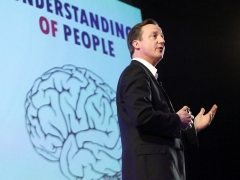
    David Cameron: The next age of governmentDavid Cameron: The next age of governmentDavid Cameron: The next age of government
    “We have lost a great leader, a great prime minister and a great Briton,” current Prime Minister David Cameron said of Thatcher today, upon returning to the UK from a European tour to pay tribute to the so-called “Iron Lady.” In this talk given at TED2010, Cameron shares his thoughts on how governments will need to adapt as global power dynamics shift toward individuals.
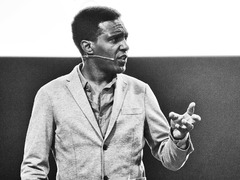
    Lemn Sissay: A child of the stateLemn Sissay: A child of the stateLemn Sissay: A child of the state
    In this talk from TEDxHousesofParliament, British poet and playwright Lemn Sissay talks about growing up as a “ward of the state,” without parents to care for him. As he says, “Margaret Thatcher was my mother.” A moving talk about why so many people who grew up this way feel the need to hide their pasts.
    Elizabeth Pisani: Sex, drugs and HIV -- let's get rationalElizabeth Pisani: Sex, drugs and HIV — let's get rationalElizabeth Pisani: Sex, drugs and HIV – let’s get rational
    At TED2010, public health expert Elizabeth Pisani shares a counter-intuitive policy that Margaret Thatcher was the first to put into practice – the creation of a national needle exchange program for intravenous drug users to prevent the transmission of HIV.
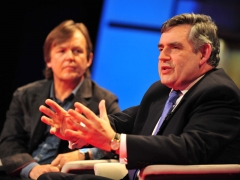
    Gordon Brown on global ethic vs. national interestGordon Brown on global ethic vs. national interestGordon Brown on global ethic vs. national interest
    Gordon Brown, Prime Minister from 2007 to 2010, has revealed himself to be a great admirer of Thatcher because she was a “conviction politician.” In this Q&A that followed Brown’s talk on wiring the web for global good at TEDGlobal 209, TED Curator Chris Anderson asks Brown how he balances the needs of his own citizens with the needs of the world.
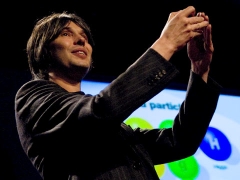
    Brian Cox: CERN's supercolliderBrian Cox: CERN's supercolliderBrian Cox: CERN’s supercollider
    At TED2008, physicist Brian Cox shares a funny anecdote about getting funding for the Large Hadron Collider at CERN from Margaret Thatcher. Apparently, Thatcher said to him, “ If you guys can explain, in language a politician can understand … what this Higgs particle does … you can have the money.”

  • Emerging markets’ export problem

    Taiwan’s forecast-beating export data today came as a pleasant surprise amid the general emerging markets economic gloom.  In a raft of developing countries, from South Korea to Brazil, from Malaysia to the Czech Republic, export data has disappointed. HSBC’s monthly PMI index showed this month that recovery remains subdued.

    With Europe still in the doldrums, this is not totally unsurprising. But economists are growing increasingly concerned because the lack of export growth coindides with a nascent U.S. recovery. Clearly EM is failing to ride the US coattails.

    Does all this confirm the gloomy prediction made last month by Morgan Stanley’s chief emerging markets economist, Manoj Pradhan. Pradhan reckons that a U.S. economy in recovery would be a competitor rather than a client for emerging markets, as  the world’s biggest economy tries to reinvent itself as a manufacturing power and shifts away from consumption-led growth. It is the latter that helped underwrite the export-led emerging market boom of the past decade.

    It’s early days yet. Yet the impact of the U.S. rebound this time does appear different from the past.

    Typically, a recovery in the United States leads to a rise in demand for all sorts of products – chemicals,  home furnishing, clothing, footwear, light manufacturing,  electrical appliances, machinery and equipment, transport – and this leads to a broad-based rebound in imports, analysts at UBS say. That has not happened in this cycle, and imports from  EM in particular have lagged. The answer, according to UBS, lies in the kind of things the United States has been importing. Look at their chart below  – most in demand are heavy machinery and transport equipment because the rebound is centred on construction, autos and infrastructure. UBS says:

    The US does not need EM to supply into these sectors – these are the sectors that it can supply to itself, or potentially import from other ‘industrialised’ economies such as Germany…. Our initial analysis suggests that EM may not be able to fully participate in the cyclical upturn in the United States.

    The competitive advantages of emerging markets kick in with consumer sectors such as household appliances, phone handsets and clothing. But U.S. demand for these is stagnant, possibly because of deleveraging by households and also due to the relatively weak pace of job creation.


    The U.S. recovery could yet broaden out to other sectors as it gathers pace.  But until this happens, the economic recovery in  emerging markets will be subdued.

    There is another hope though — China. Taiwan is a case in point. Its 3.3 percent export improvement last month was down to China.  Taiwanese exports to China rose 5.2 percent on the month after a 21 percent jump in February.  Taiwanese exports to the U.S., on the other hand, fell 1.9 percent, adding to a 12 percent slump in the previous month.